Melbourne
Hidden laneways full of street art and cafés, world-class coffee and food, and a passion for sport and culture.
- Best time to go
- March to May and September to November, for mild, settled weather
- Local time
- –
- Currency
- Australian Dollar (AUD)
- Reading time
- 4 min
- Language
- English

Melbourne grew rich in the gold rush of the 1850s, and its Victorian boulevards, arcades and grand public buildings date from that boom. Today it's Australia's cultural capital, known for its laneway cafés, live music, galleries, festivals and an almost religious devotion to sport, from Australian Rules football to the Australian Open tennis.
The city is built on the lands of the Wurundjeri and Bunurong peoples, along the Yarra River and the shores of Port Phillip Bay. It's easy to explore, with a free tram zone in the centre, and it's the base for some of Australia's great road trips.
The top 9 in Melbourne
- 1
The laneways and arcades
Photo: Philip Mallis, CC BY-SA 2.0, via Wikimedia Commons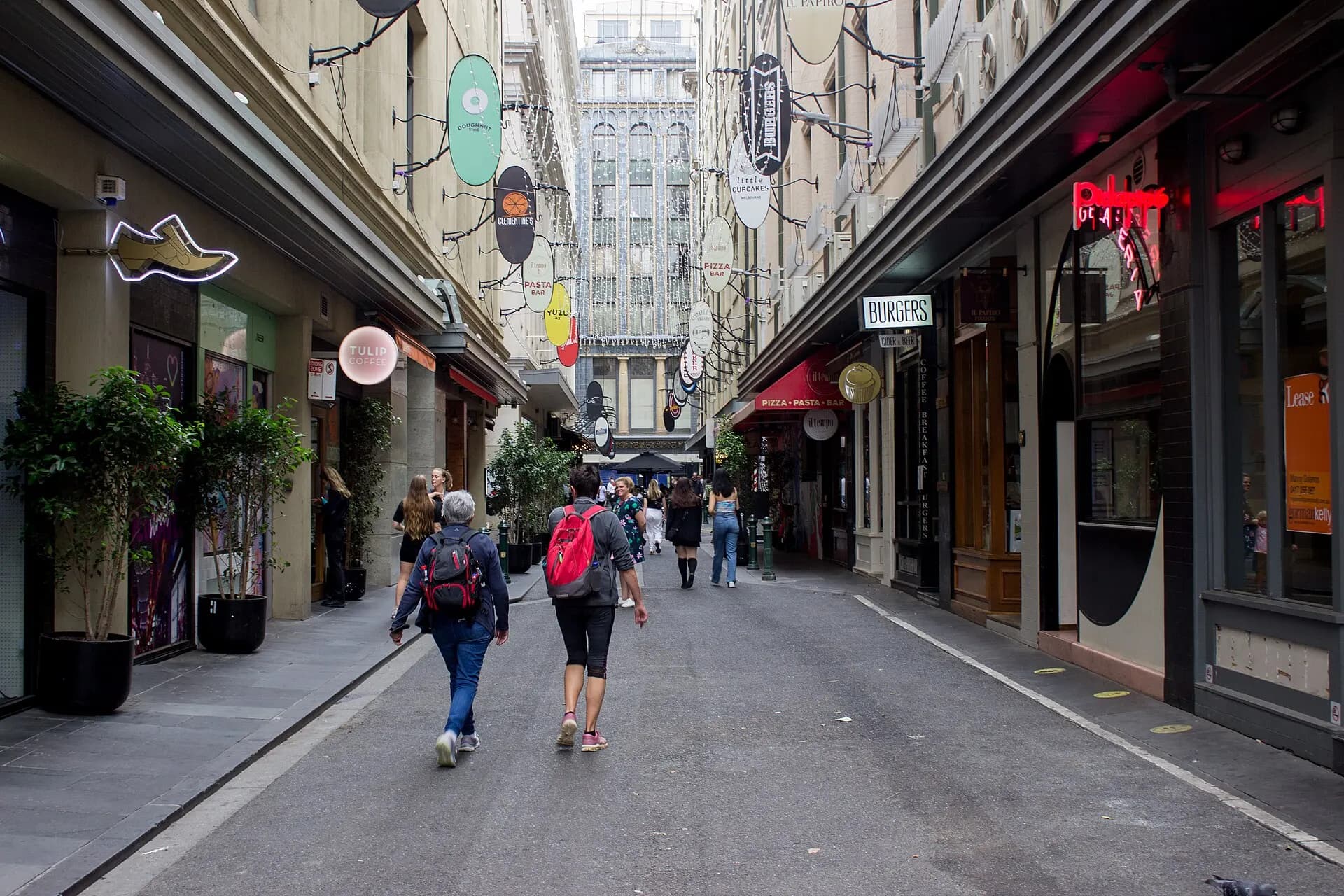
A network of narrow lanes and Victorian arcades between the main streets, packed with tiny cafés, boutiques and bars. Degraves Street and Centre Place are famous for coffee, and the Block Arcade and Royal Arcade are beautifully ornate.
- 2
Hosier Lane and street art
Photo: Bernard Spragg. NZ from Christchurch, New Zealand, CC0, via Wikimedia Commons
A lane covered from top to bottom in constantly changing graffiti and street art, opposite Federation Square. AC/DC Lane and others nearby are also covered in murals.
- 3
Federation Square and the Ian Potter Centre
Photo: -wuppertaler, CC BY 4.0, via Wikimedia Commons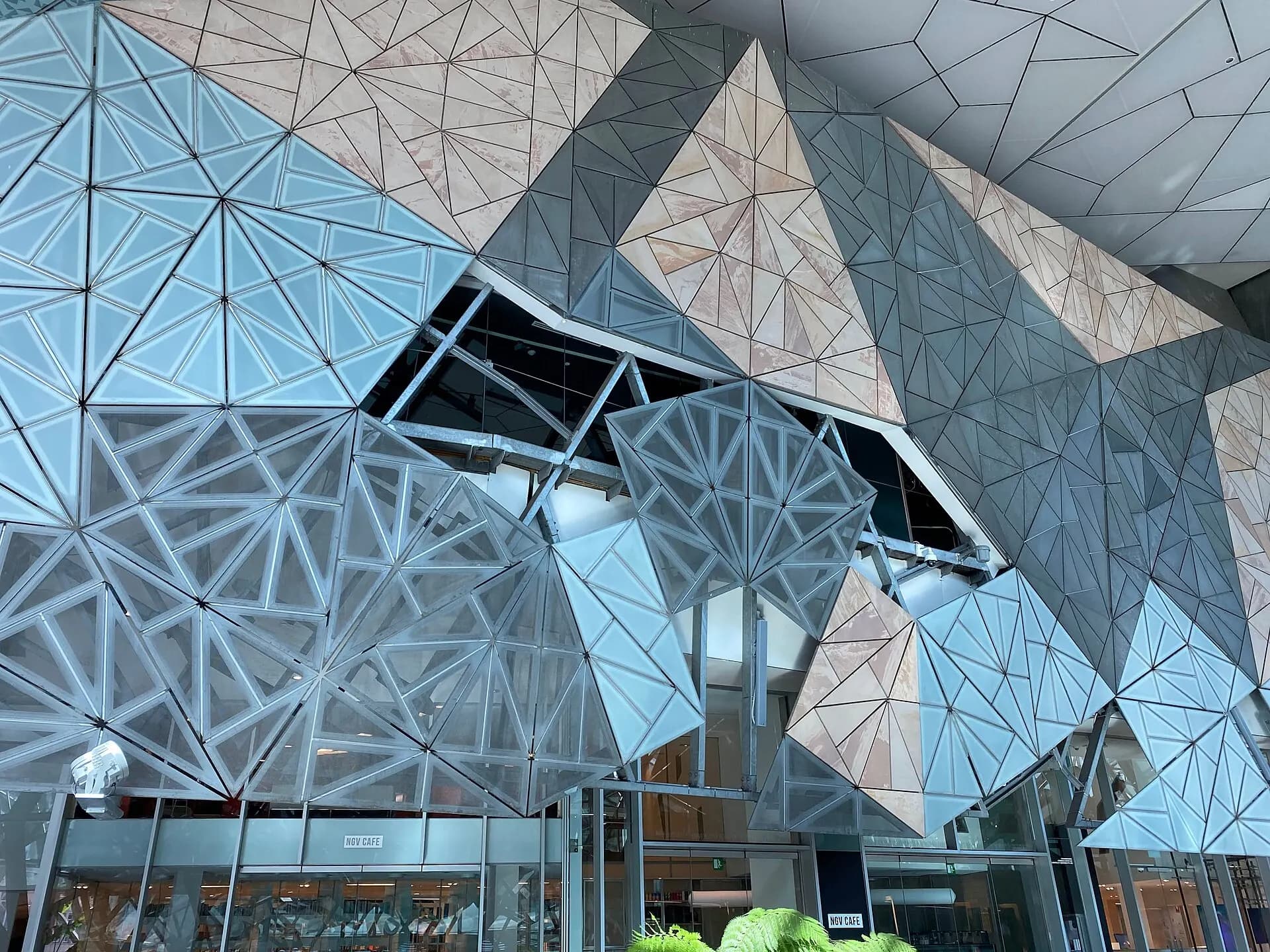
The city's main public square, with striking modern architecture, cultural centres and the Ian Potter Centre, which holds the National Gallery of Victoria's Australian art collection, including works by Aboriginal artists. Flinders Street Station stands opposite.
- 4
The National Gallery of Victoria
Photo: Lakeyboy at English Wikipedia, Public domain, via Wikimedia Commons
Australia's oldest public art museum, on St Kilda Road, with a stained-glass ceiling in its Great Hall and a superb international collection. Entry to the permanent collection is free.
- 5
The Royal Botanic Gardens
Photo: Wpcpey, CC BY-SA 4.0, via Wikimedia Commons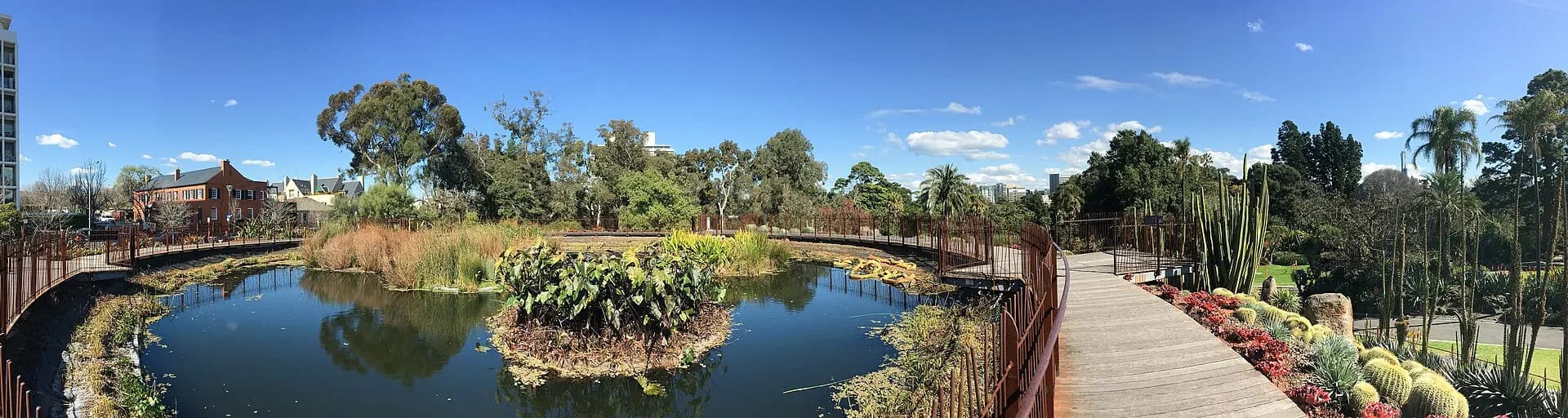
Beautiful gardens beside the Yarra, with lakes, lawns and plants from around the world, and the Shrine of Remembrance, a war memorial with a balcony overlooking the city, on its edge.
- 6
Queen Victoria Market
Photo: S3074865, Public domain, via Wikimedia Commons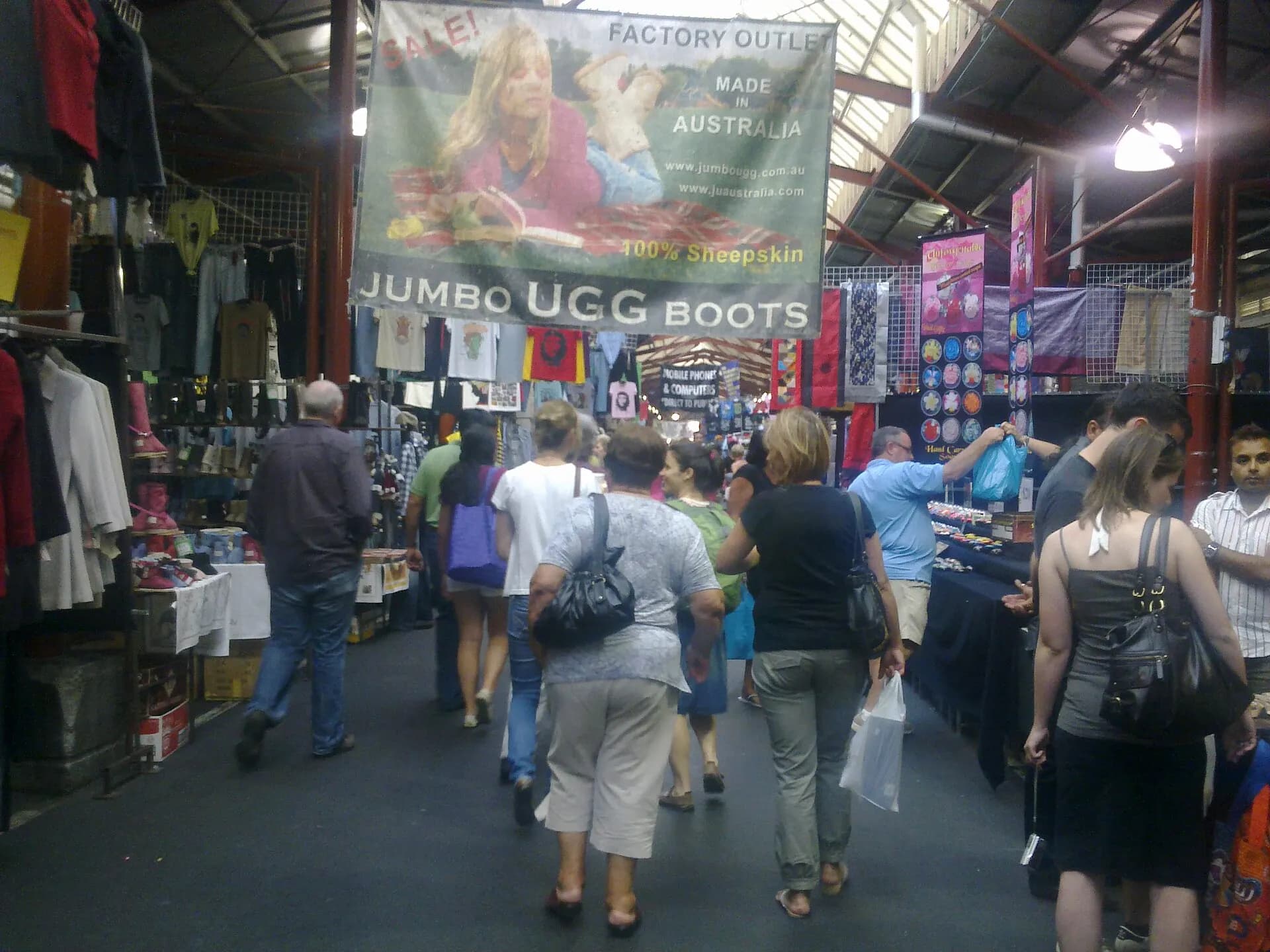
A huge open-air market dating from 1878, with fresh produce, delicatessens and clothing stalls, and night markets with street food on summer evenings. Its deli hall is the place to try Australian cheeses and the market's famous hot jam doughnuts.
- 7
The MCG
Photo: Dietmar Rabich, CC BY-SA 4.0, via Wikimedia Commons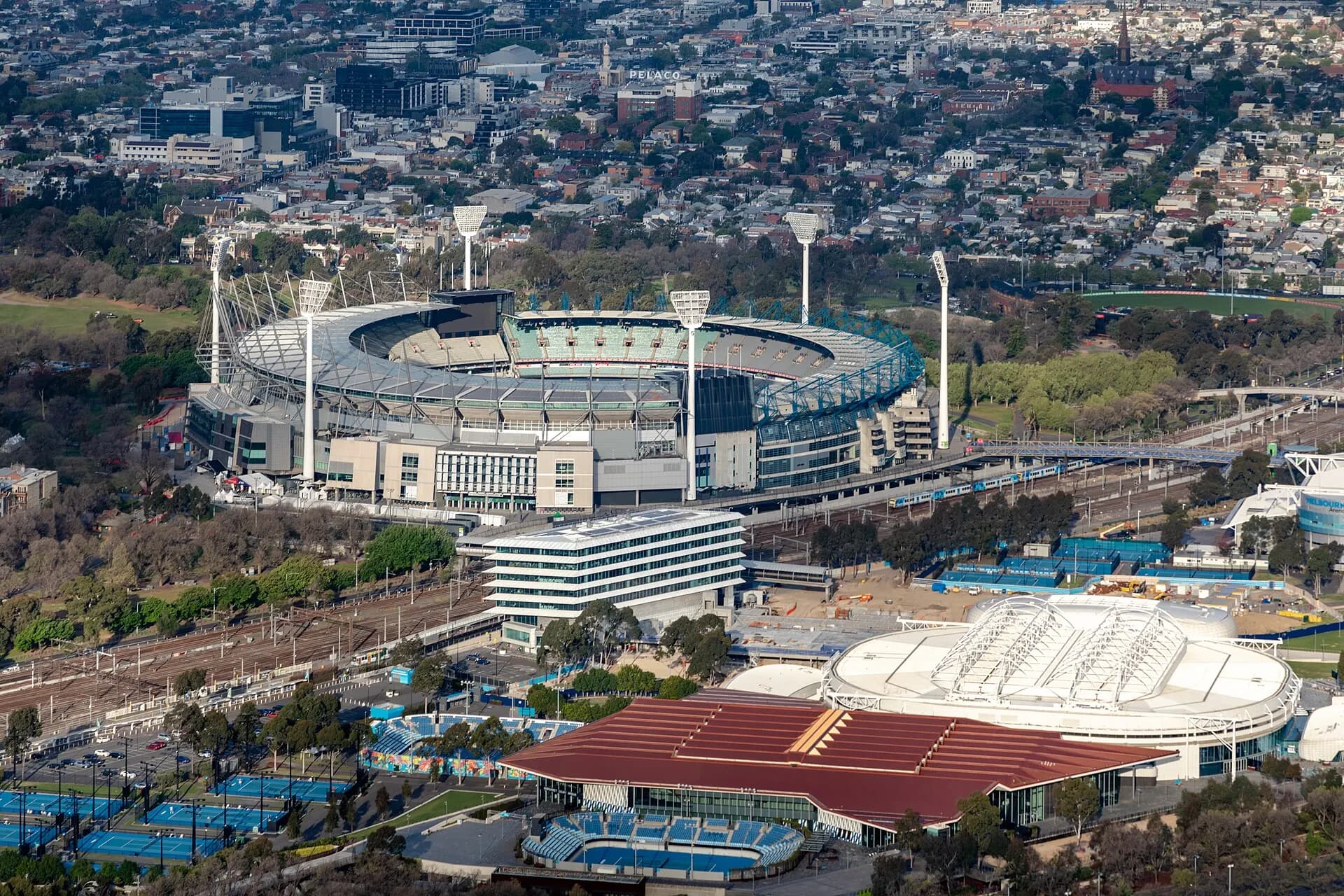
The Melbourne Cricket Ground, one of the largest stadiums in the world, is the heart of Australian sport. Watch a game of Aussie Rules football in winter or cricket in summer, or take a tour and visit the Australian Sports Museum.
- 8
St Kilda
Photo: Dietmar Rabich, CC BY-SA 4.0, via Wikimedia Commons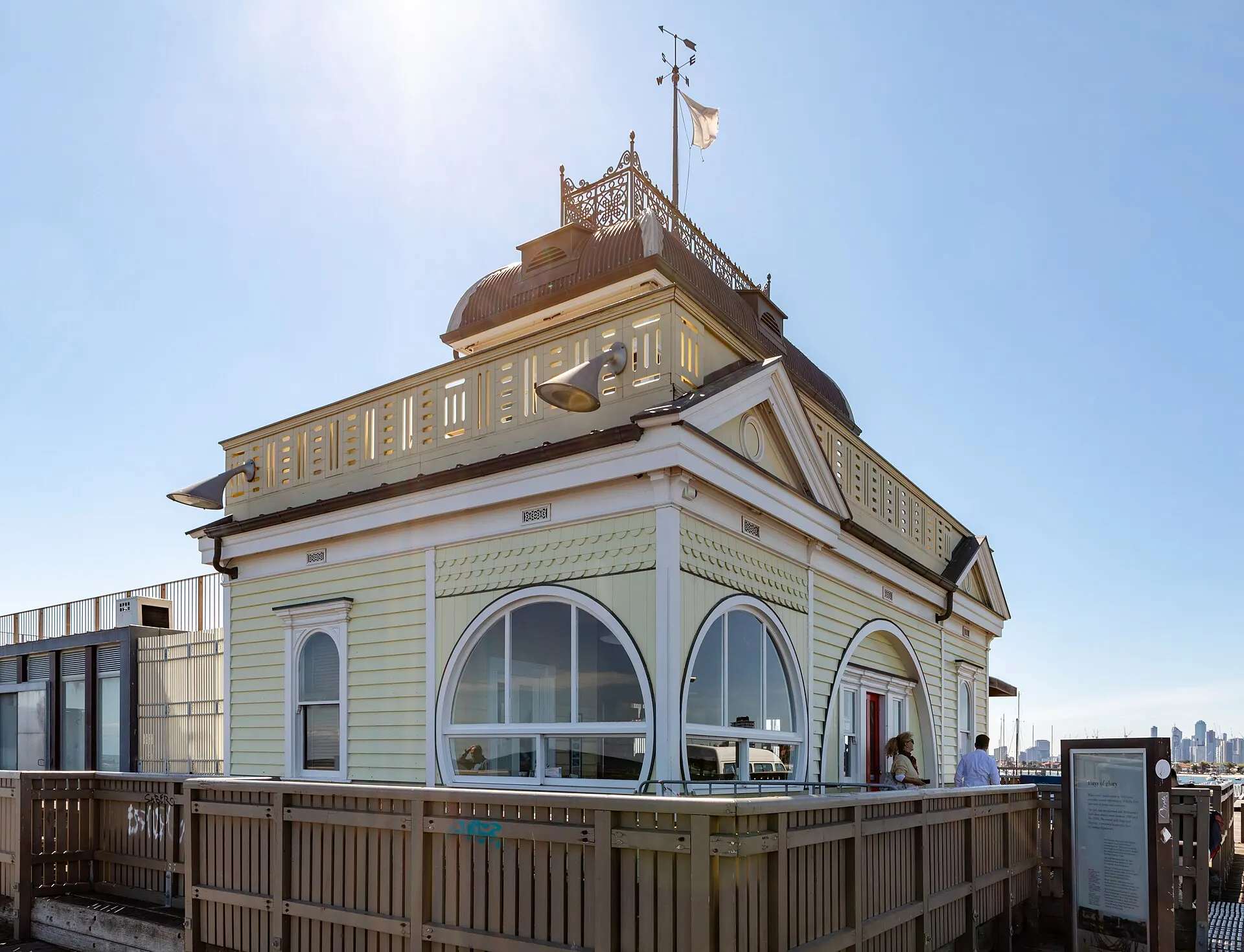
A bayside suburb with a palm-lined beach, the historic Luna Park amusement park, cake shops on Acland Street and a pier where little penguins come ashore at dusk.
TipWatch the penguins quietly from the viewing area, and never use flash.
- 9
Fitzroy and Collingwood
Photo: Mat Connolley (Matnkat), CC BY 2.5, via Wikimedia Commons
Inner-city neighbourhoods full of vintage shops, bookshops, cafés, live music venues and street art, especially along Brunswick and Smith Streets. They're at their liveliest in the evening.
When to go
Melbourne is famous for its changeable weather, with "four seasons in one day". Autumn, from March to May, and spring, from September to November, are generally mild and pleasant. Summer, from December to February, is warm with occasional very hot days. Winter is cool and grey but full of football, theatre and festivals. Major events include the Australian Open in January and the Melbourne Cup in November.
Getting around
Melbourne has the largest tram network in the world. Trams are free within the central Free Tram Zone; beyond it, you'll need a myki card or another accepted payment method. Trains and buses reach the suburbs and beaches. The centre is flat and walkable.
Melbourne Airport is about thirty minutes from the centre by the SkyBus.
Local tips
- Most visitors need a visa or an electronic travel authority to enter Australia; check the government website.
- Carry a jacket: the weather can change quickly.
- Tipping isn't expected, but rounding up for good service is appreciated.
- Order a flat white: Melbourne's coffee culture is serious.
- Touch on and off with your myki card outside the free zone; inspectors are common.
- The sun is strong even on cool days; wear sunscreen.
Eat and drink
Melbourne's food reflects waves of immigration: the Italian cafés of Lygon Street, the Greek restaurants of Lonsdale Street, Vietnamese pho in Richmond and Footscray, and Chinatown, one of the oldest in the Western world. Its brunch culture is legendary, and the Yarra Valley and Mornington Peninsula wine regions are nearby.
Day trips
The Great Ocean Road, one of the world's great coastal drives, follows the coast west past surf beaches and rainforest to the limestone stacks of the Twelve Apostles, best done over two days. Phillip Island, about two hours away, is famous for its Penguin Parade, when little penguins waddle ashore at sunset. The Yarra Valley offers wineries and hot-air balloon flights, and the Dandenong Ranges have tall forests of mountain ash and the historic Puffing Billy steam railway.
Where to stay
The central business district, inside the free tram zone, puts the laneways, galleries and theatres on your doorstep. Southbank, across the river, has hotels with views, the Arts Centre and riverside restaurants. Fitzroy and Collingwood suit travellers who want cafés, bars and live music, while St Kilda offers beach life and a relaxed mood, about twenty minutes from the centre by tram. South Yarra and Prahran, around Chapel Street, are known for shopping and nightlife.
Culture and events
Melbourne has a packed calendar. The Australian Open tennis fills January, the Melbourne International Comedy Festival takes over theatres in autumn, and the AFL Grand Final in September is the city's biggest sporting day. White Night and the Melbourne Food and Wine Festival bring the city out at night, and the Arts Centre, the Forum and countless small venues host theatre and live music every week.