Uganda
Africa's greenest safari country, where you can track mountain gorillas and chimpanzees, watch the Nile burst through a rock gorge and paddle a crater lake in a single trip.
- Best time to go
- June to August and December to February, the drier months; April, May and November are wetter but quieter, with discounted gorilla permits from 2027
- Local time
- –
- Currency
- Ugandan Shilling (UGX)
- Reading time
- 17 min
- Language
- English and Swahili

Winston Churchill called Uganda the "pearl of Africa", and the phrase has stuck because it still fits. Straddling the equator on a high plateau between the Rift Valley lakes and Lake Victoria, the country is greener and more varied than the classic savannah destinations to its east. In a fortnight you can sit an hour with a family of mountain gorillas in a misty rainforest, follow chimpanzees through the canopy, cruise past hippos and elephants on the Nile and the Kazinga Channel, look for lions lounging in fig trees and stand where the White Nile slides out of Lake Victoria on its long journey to the Mediterranean. Add snow-capped equatorial mountains, terraced hills, crater lakes and a lively, friendly capital, and it's easy to see why travellers who come for the gorillas leave talking about everything else.
Most people fly into Entebbe, on the shore of Lake Victoria, and the stops below follow a big loop that suits a two- to three-week road trip: Entebbe and Kampala, east to Jinja and the waterfalls of Mount Elgon, then north-west to the rhinos of Ziwa and Murchison Falls, south through the chimpanzee forests of Kibale and the foothills of the Rwenzori, across Queen Elizabeth National Park and down to the gorilla forests and lakes of the far south-west. With ten days or less, skip the east and concentrate on the western circuit. Across the border, our Volcanoes National Park guide covers gorilla trekking in Rwanda, a few hours' drive from Lake Bunyonyi, and the Maasai Mara guide covers the big-game plains of neighbouring Kenya.
The top 18 in Uganda
- 1
Entebbe Botanical Gardens
Photo: https://www.flickr.com/photos/31379880@N05/, CC BY 2.0, via Wikimedia Commons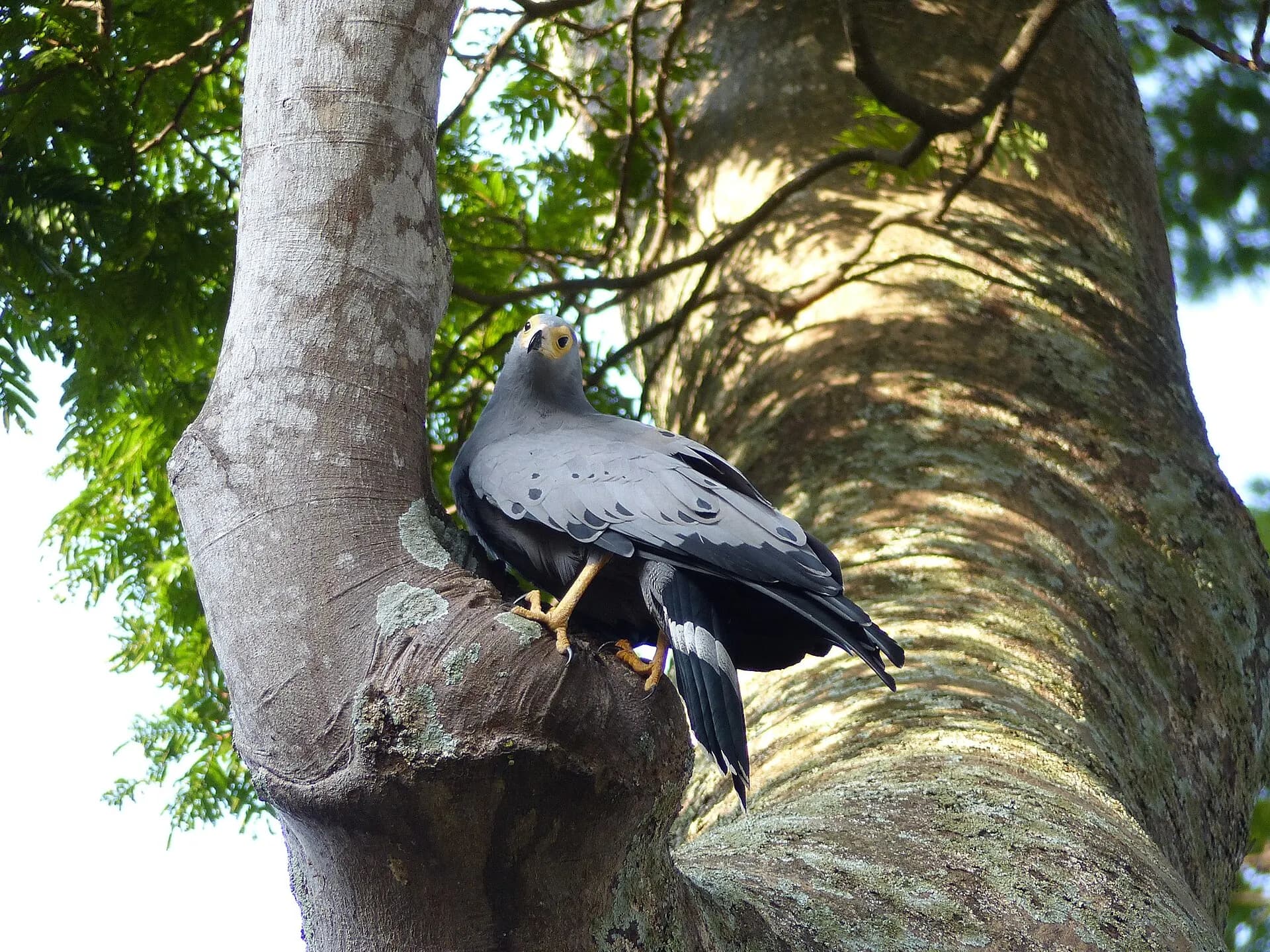
Laid out at the end of the nineteenth century on the lakeshore of what was then the colonial capital, the botanical gardens are a peaceful introduction to Uganda's plants and birds. Shady paths wind between giant trees, palms, a patch of genuine rainforest and the lake edge, and the bird list is long: great blue turacos, hornbills, kingfishers and fish eagles are all regular. Black-and-white colobus monkeys and vervets often turn up in the trees. It's an easy first or last afternoon, since the airport is only a few minutes away.
TipCome in the early morning or late afternoon, when the birds are most active and the heat is gentler.
- 2
Uganda Wildlife Conservation Education Centre
Photo: Ssemmanda will, CC0, via Wikimedia Commons
Next door to the botanical gardens, the centre widely known as the Entebbe zoo began as a holding place for orphaned and confiscated animals and is now run as a conservation and education centre. Its lakeside enclosures, arranged by habitat from wetland to savannah and forest, hold animals that were rescued from the illegal wildlife trade or can't be released, including lions, chimpanzees, rhinos, shoebills and many smaller species. It's particularly worthwhile for anyone who won't have time to see a shoebill in the wild, and for families with young children.
TipThe centre offers behind-the-scenes encounters and keeper sessions for an extra fee; check the official site for what is running.
- 3
Ngamba Island Chimpanzee Sanctuary
A forested island in Lake Victoria, about an hour by speedboat from Entebbe, is home to a group of orphaned chimpanzees, most of them rescued from traffickers as infants and unable to return to the wild. The sanctuary is run by a conservation trust, and visitors watch from a raised platform as the chimps emerge from the forest for their supplementary feeds. Overnight stays in the island's tented camp allow longer programmes, including caregiver experiences and forest walks with the younger chimps.
TipDay trips are timed around the feeding sessions, so book in advance through the sanctuary and ask about boat departure times.
- 4
Kasubi Tombs
Photo: not not phil from SF, CA, US, CC BY-SA 2.0, via Wikimedia Commons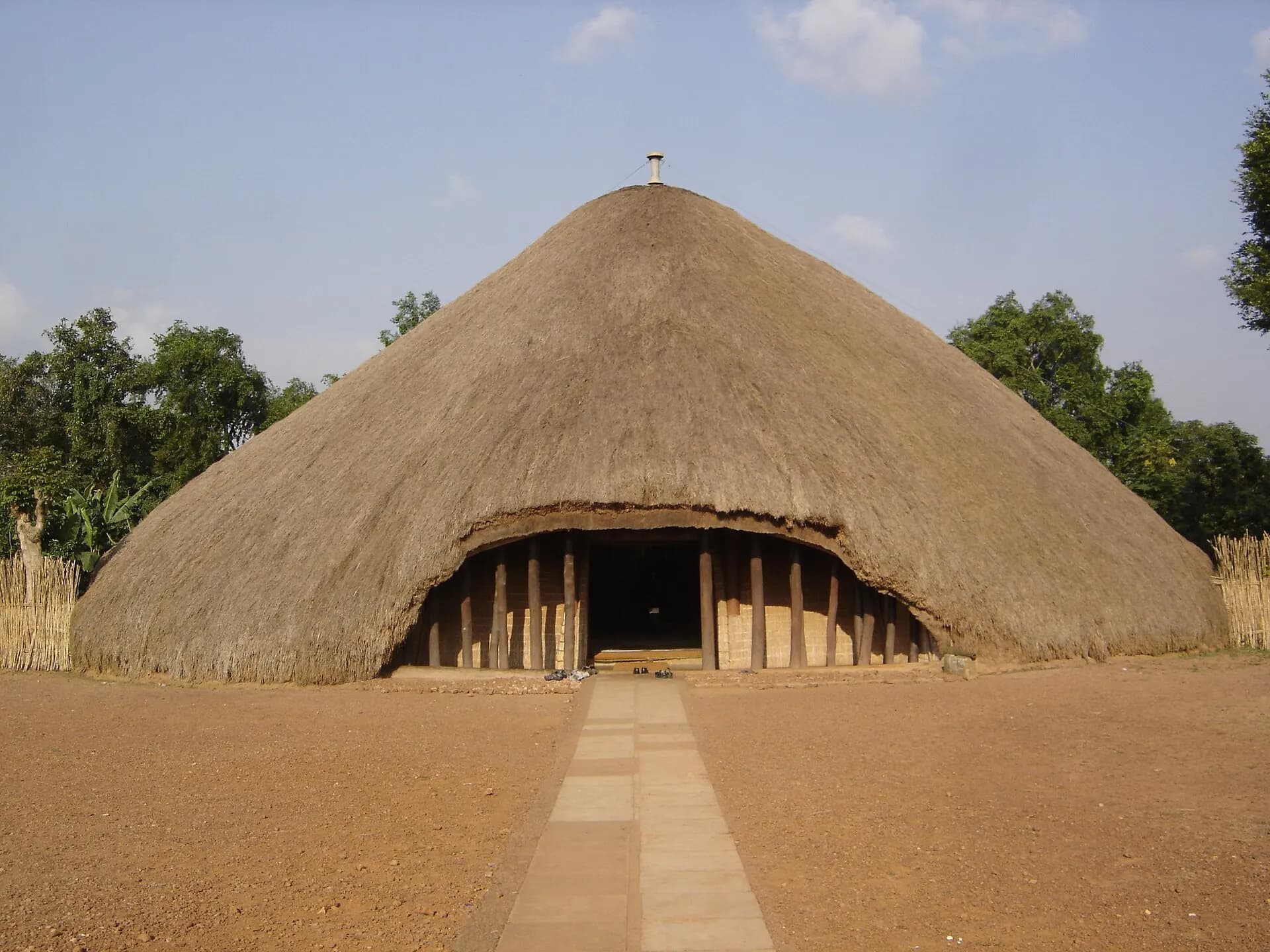
On a hill in western Kampala stands the burial place of four kabakas, the kings of Buganda, the largest of Uganda's traditional kingdoms. The main building, Muzibu Azaala Mpanga, is a vast domed hut of wood, reeds, wattle and daub under an enormous thatched roof, a masterpiece of Ganda building tradition. It burnt down in 2010, which saw the site placed on UNESCO's list of World Heritage in Danger; after a painstaking reconstruction using traditional materials and techniques, it was removed from that list in 2023. Guides explain the royal rituals, the role of the widows and descendants who still look after the tombs, and the symbolism of the bark-cloth and spears inside.
TipRemove your shoes before entering the main tomb, dress modestly, and ask before photographing inside.
- 5
Namirembe Cathedral
Photo: RomanDeckert, CC BY-SA 4.0, via Wikimedia Commons
Crowning Namirembe Hill, one of the hills Kampala grew across, the Anglican cathedral is the oldest in Uganda. The present red-brick building, with its domes and arched windows, dates from the early twentieth century, replacing earlier churches of thatch and timber, one of which was destroyed by lightning. The graves of early missionaries and of Bishop James Hannington, killed in 1885, lie in the grounds, and the terrace gives one of the best views over the city's tangle of hills, red roofs and traffic.
TipSunday services, with hymns in Luganda and English, are open to visitors; arrive early and dress respectfully.
- 6
Owino market
Photo: Alvinategyeka, CC BY-SA 4.0, via Wikimedia Commons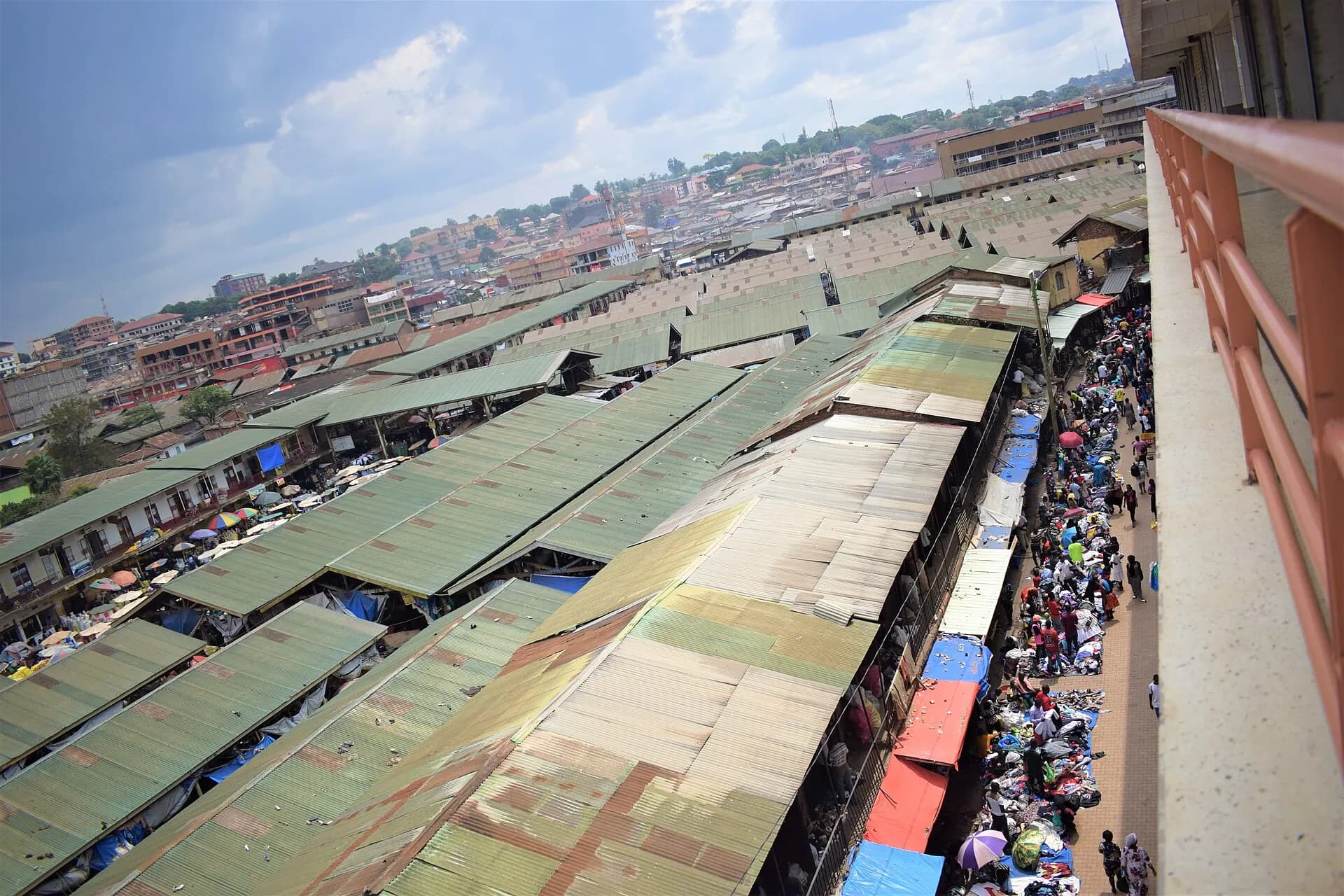
Officially St Balikuddembe Market, Owino is Kampala's largest and most chaotic market, a maze of narrow alleys near the old taxi parks where thousands of traders sell everything from second-hand clothes and shoes to fabric, pots, spices, dried fish and mountains of fresh fruit. It's noisy, crowded and occasionally overwhelming, but it gives a real sense of how the city works, and bargain hunters love the stacks of secondhand clothing. Bright kitenge cloth bought here can be sewn into a shirt or dress by a tailor in a day or two.
TipGo with a local guide if you can, carry only what you need, and keep phones and cash out of sight.
- 7
Uganda National Mosque
Photo: Alvinategyeka, CC BY-SA 4.0, via Wikimedia Commons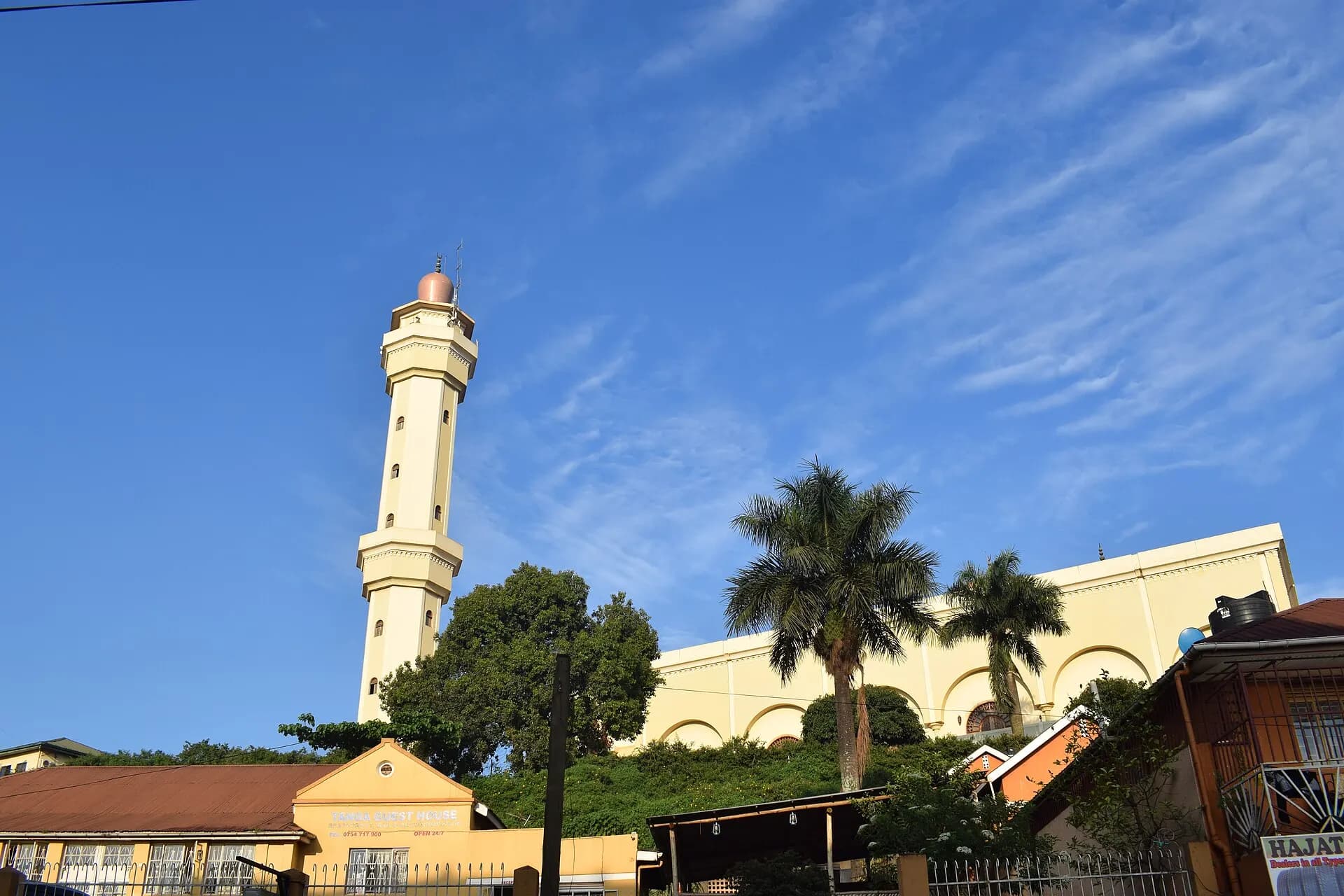
Still called the Gaddafi Mosque by most Kampalans after the Libyan leader who funded its completion, the national mosque sits on Old Kampala Hill, where the colonial administrator Frederick Lugard built his fort in 1890. Finished in 2006, it is one of the largest mosques in East Africa, with a vast prayer hall decorated with Moroccan-style tiles, carpets and stained glass. The highlight is the climb up the tall minaret, nearly three hundred steps, for a panorama over all of Kampala's hills.
TipGuided visits are offered outside prayer times; women are lent a headscarf and wrap at the entrance, and everyone removes their shoes.
- 8
Jinja and the source of the Nile
Photo: Dror Feitelson, CC BY-SA 3.0, via Wikimedia Commons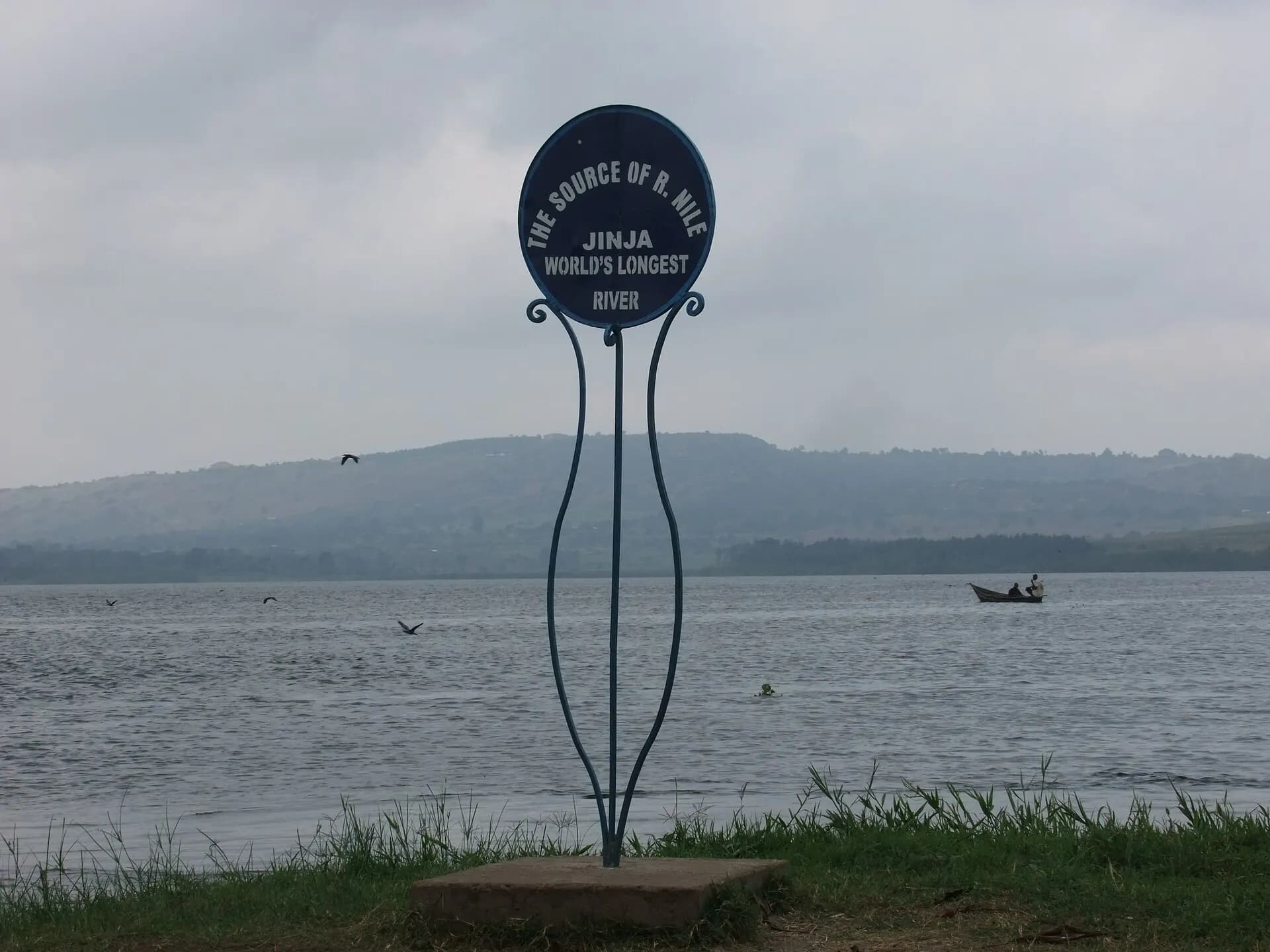
About two hours east of Kampala, Jinja sits where the White Nile leaves Lake Victoria. In 1862 the British explorer John Hanning Speke reached the spot and declared it the source of the Nile, and a monument on the west bank marks his visit. Short boat trips run to the point where the river begins to flow, past birds, fishermen and a small island. Jinja itself is a laid-back town of faded art deco shopfronts and has become East Africa's adventure capital, with white-water rafting, kayaking, tubing, river boarding, bungee jumping, quad biking and mountain biking along the river.
TipBook rafting with well-established operators that use safety kayakers, and ask how recent dams have changed the rapids before you choose a trip.
- 9
Sipi Falls
Photo: Sandra Aceng, CC BY-SA 4.0, via Wikimedia Commons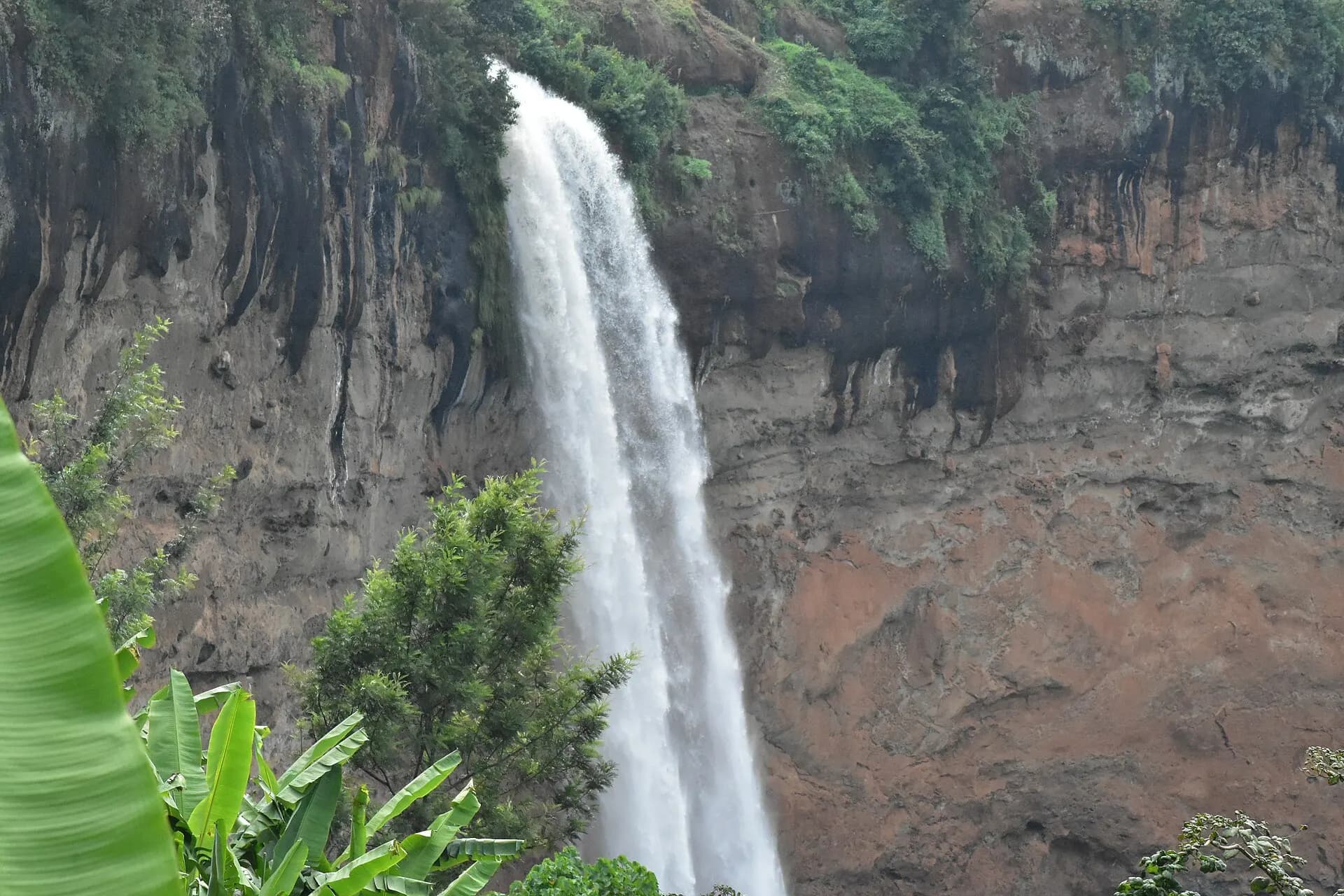
On the north-western slopes of Mount Elgon, near the Kenyan border, the Sipi River drops over a series of three main waterfalls in a landscape of steep cliffs, banana groves and coffee farms. The tallest fall plunges around 100 metres into a gorge, and local guides lead half-day hikes linking all three, with chances to swim at the base of the lower falls in the dry season. It's a cool, scenic escape after Kampala, a great place to learn how the region's excellent arabica coffee is grown, roasted and brewed, and a base for abseiling and rock climbing.
TipUse guides from the local guide associations in the village; paths can be slippery and steep after rain.
- 10
Ziwa Rhino Sanctuary
Photo: Moongateclimber, CC BY-SA 3.0, via Wikimedia Commons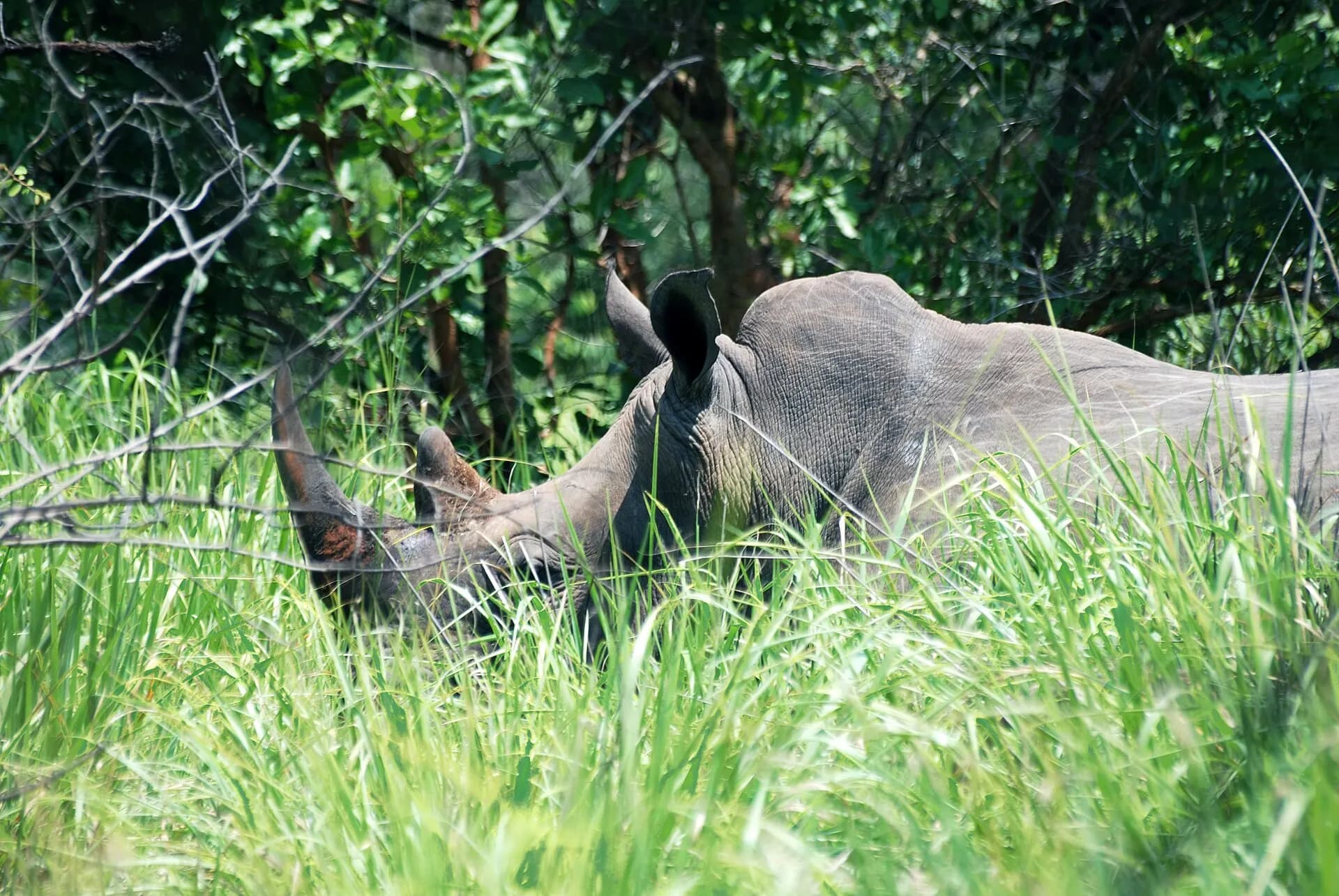
Uganda's rhinos were wiped out by poaching by the early 1980s. At Ziwa, a large fenced ranch on the road between Kampala and Murchison Falls, a small founding group of southern white rhinos brought in from Kenya and the USA has been breeding steadily since 2005, with the aim of eventually returning rhinos to the national parks. Rangers lead walks to see the animals on foot, usually getting surprisingly close, and the sanctuary also offers birding walks and shoebill trips into the nearby swamp.
TipMake it a stop on the drive north rather than a detour; the walks take two to three hours.
- 11
Murchison Falls National Park
Photo: Jingo Faizal, CC BY-SA 4.0, via Wikimedia Commons
Uganda's largest national park is split by the Victoria Nile, which, after a long calm stretch, forces its way through a cleft in the rocks only about seven metres wide and plunges some 45 metres in a roar of spray. You can see the falls in two ways: from a launch trip upstream from Paraa, gliding past hippos, crocodiles, elephants and huge numbers of birds, and on foot from the trail to the top of the falls, where the noise and power are astonishing. North of the river, game drives on the Buligi tracks bring Rothschild's giraffes, elephants, buffalo, Uganda kob, lions and, with luck, leopards. A morning boat trip downstream towards the Lake Albert delta is one of the best chances anywhere of seeing the shoebill.
TipThe Paraa ferry links the two halves of the park and runs on a set timetable; check the times so you don't get stranded on the wrong bank.
- 12
Kibale chimpanzee trekking
Photo: Giles Laurent, CC BY-SA 4.0, via Wikimedia Commons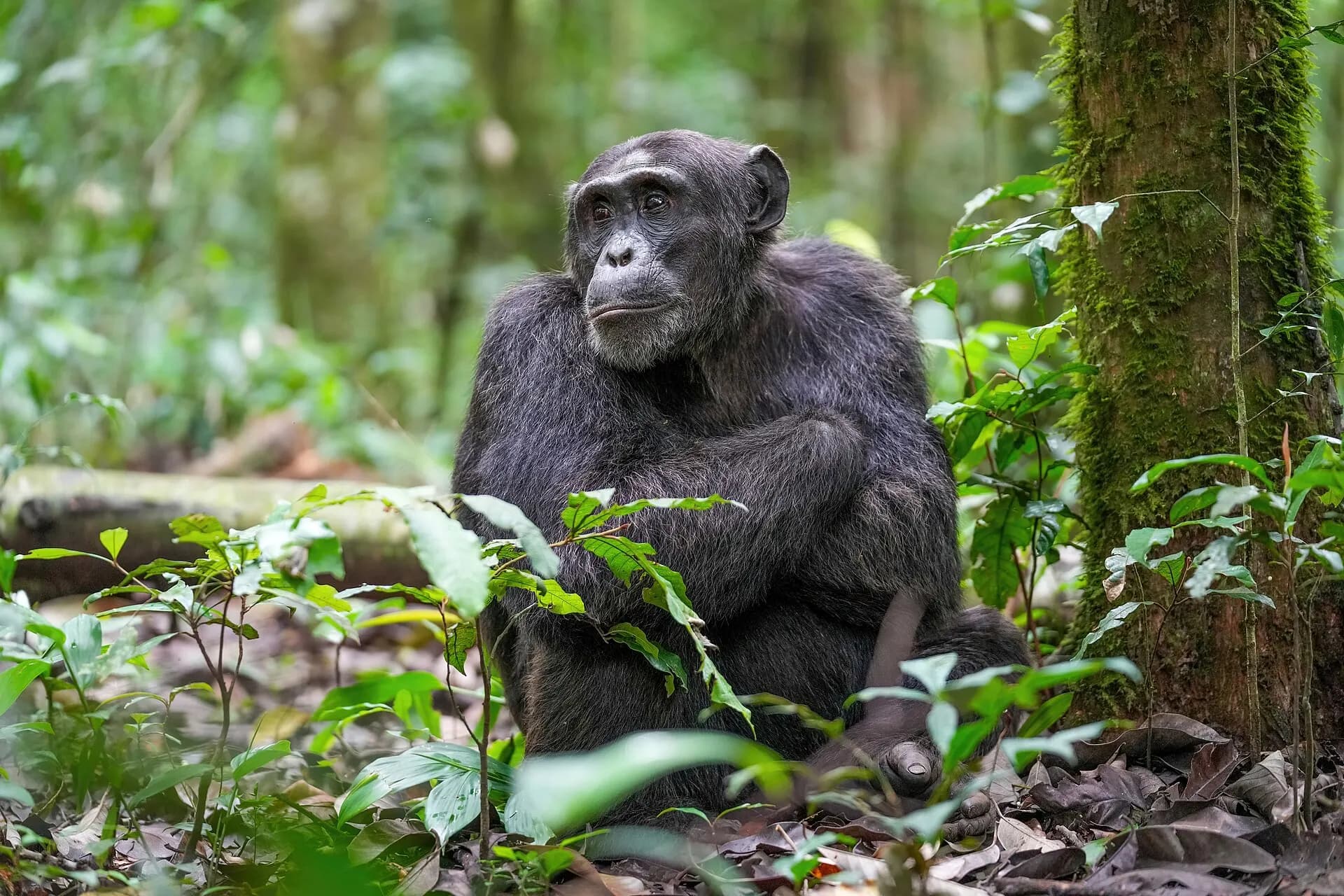
Kibale protects a block of moist tropical forest near Fort Portal that holds one of the highest densities of primates in Africa, with thirteen species, including red colobus, L'Hoest's monkeys and grey-cheeked mangabeys. The star attraction is its chimpanzees. Treks leave from Kanyanchu, and once the rangers find the habituated community you spend an hour with the chimps as they feed, groom, squabble and hoot through the forest. Under the Uganda Wildlife Authority tariff for 2027–28, chimpanzee tracking in Kibale costs US$250 for foreign non-residents, with a cheaper low-season rate in April, May and November, and a longer chimpanzee habituation experience is also offered. Just outside the park, the community-run Bigodi Wetland Sanctuary is a superb walk for birds and monkeys.
TipMorning treks give the best chance of seeing chimps active; wear long trousers tucked into socks against ants.
- 13
Rwenzori Mountains
Photo: Vincent Mugaba, CC BY-SA 4.0, via Wikimedia Commons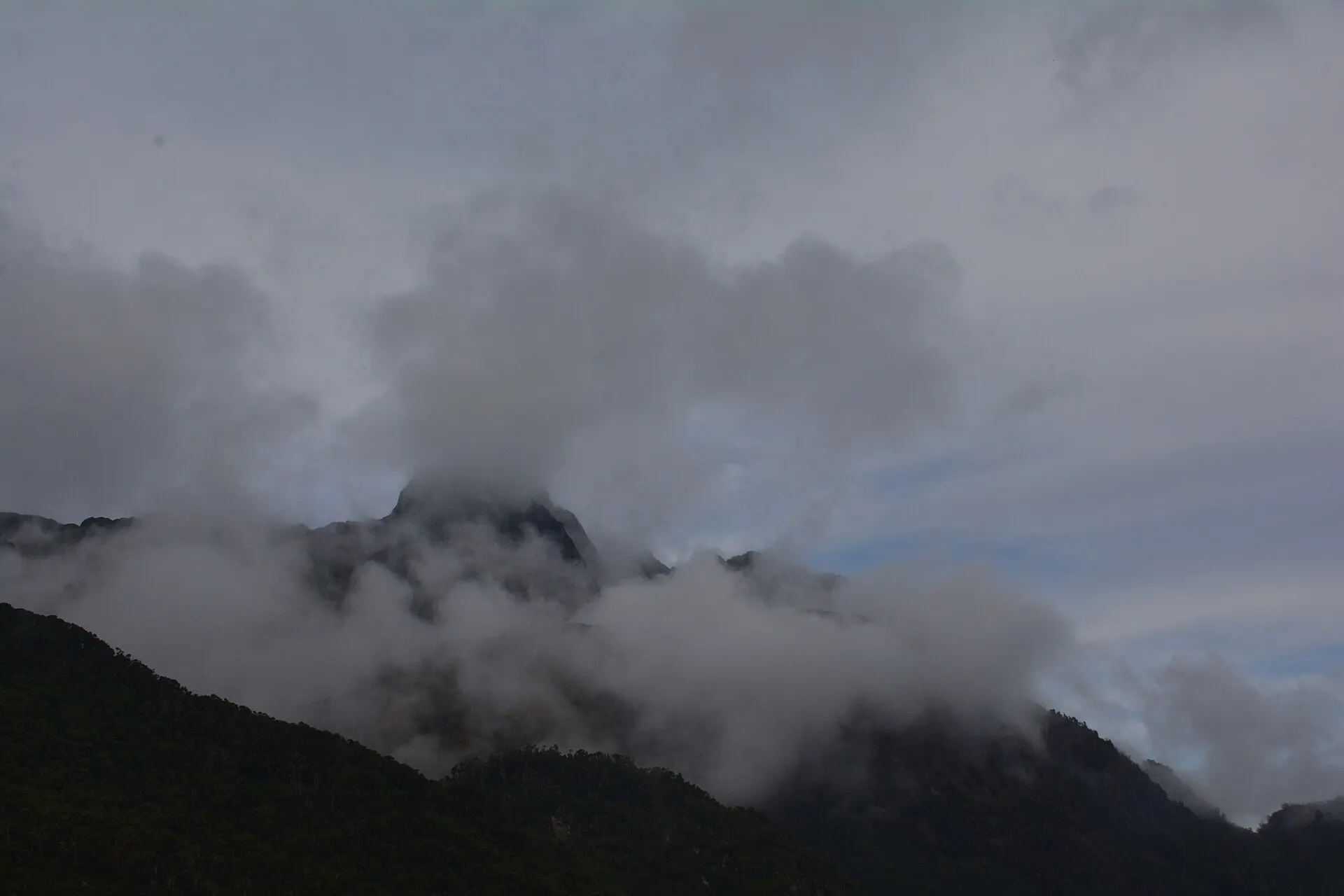
Rising to 5,109 metres at Margherita Peak on the border with the Democratic Republic of the Congo, the Rwenzori are the legendary "Mountains of the Moon" that ancient geographers believed fed the Nile. They're a world apart: valleys of moss-hung forest, bogs, giant groundsels and lobelias, and, at the top, glaciers that are shrinking fast. A full circuit with a summit attempt takes a week or more of tough, muddy trekking with porters and guides, but shorter day hikes and two- to three-day treks from the trailheads near Kasese give a taste of the mountains. The national park is a UNESCO World Heritage Site.
TipBook through an established outfitter and expect deep mud even in the drier months; gaiters and rubber boots are standard kit.
- 14
Kazinga Channel
Photo: BalukuBrian, CC BY-SA 4.0, via Wikimedia Commons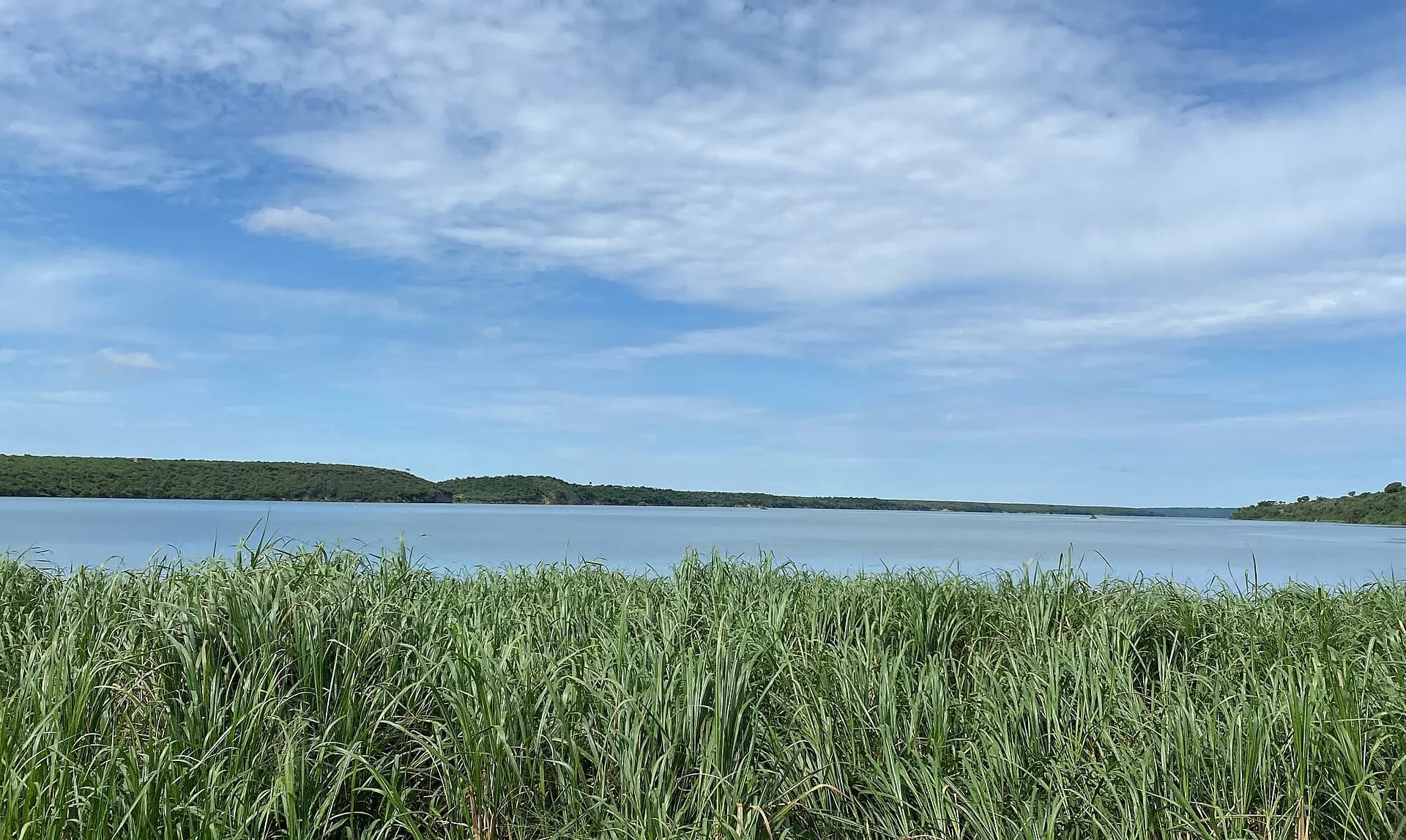
Queen Elizabeth National Park, at the foot of the Rwenzori, mixes savannah, crater lakes, forest and wetland, and its heart is the Kazinga Channel, a natural waterway of about 32 kilometres linking Lake George and Lake Edward. Boat trips from below the Mweya peninsula run along the banks, where hippos crowd the shallows, buffalo and elephants come down to drink and pied kingfishers, pelicans and fish eagles are everywhere. Game drives on the Kasenyi plains bring Uganda kob, lions and hyenas, and the forested Kyambura Gorge has its own chimpanzees.
TipThe afternoon cruises tend to see the most animals at the water's edge; sit on the shore side of the boat.
- 15
Ishasha sector
Photo: Charles J. Sharp, CC BY-SA 4.0, via Wikimedia Commons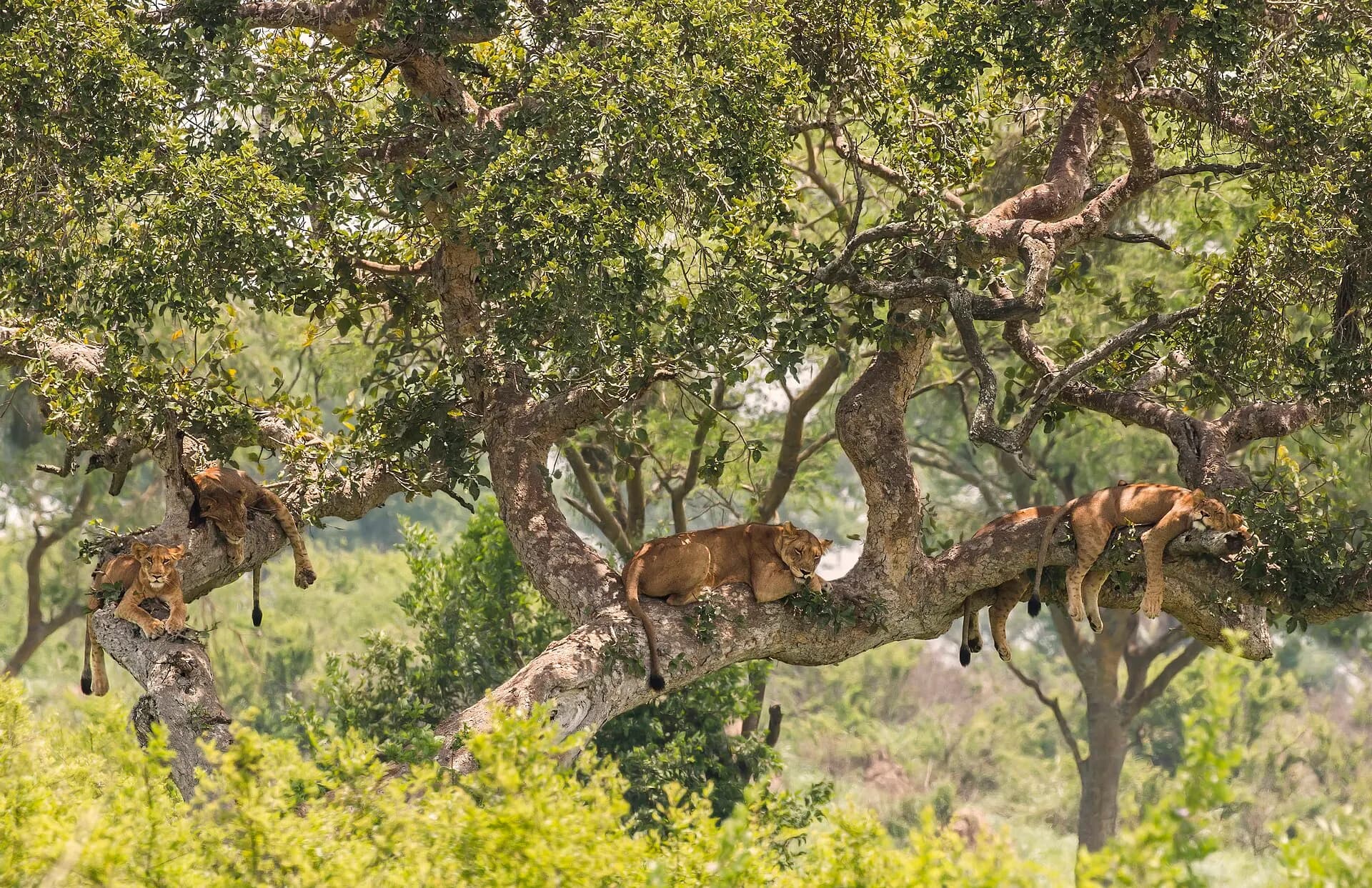
In the remote southern corner of Queen Elizabeth National Park, the Ishasha sector is famous for its lions, which climb into the spreading branches of fig and acacia trees to doze through the hottest part of the day. Nobody knows quite why: perhaps to escape biting flies, catch a breeze or keep watch over the herds of kob and topi below. Spotting a tawny tail hanging from a branch is one of the great sights of an East African safari, and Ishasha is also a natural stopover between the Kazinga Channel and Bwindi.
TipSightings are never guaranteed; a ranger guide knows the favourite trees and recent movements.
- 16
Bwindi gorilla trekking
Photo: Charles J. Sharp, CC BY-SA 4.0, via Wikimedia Commons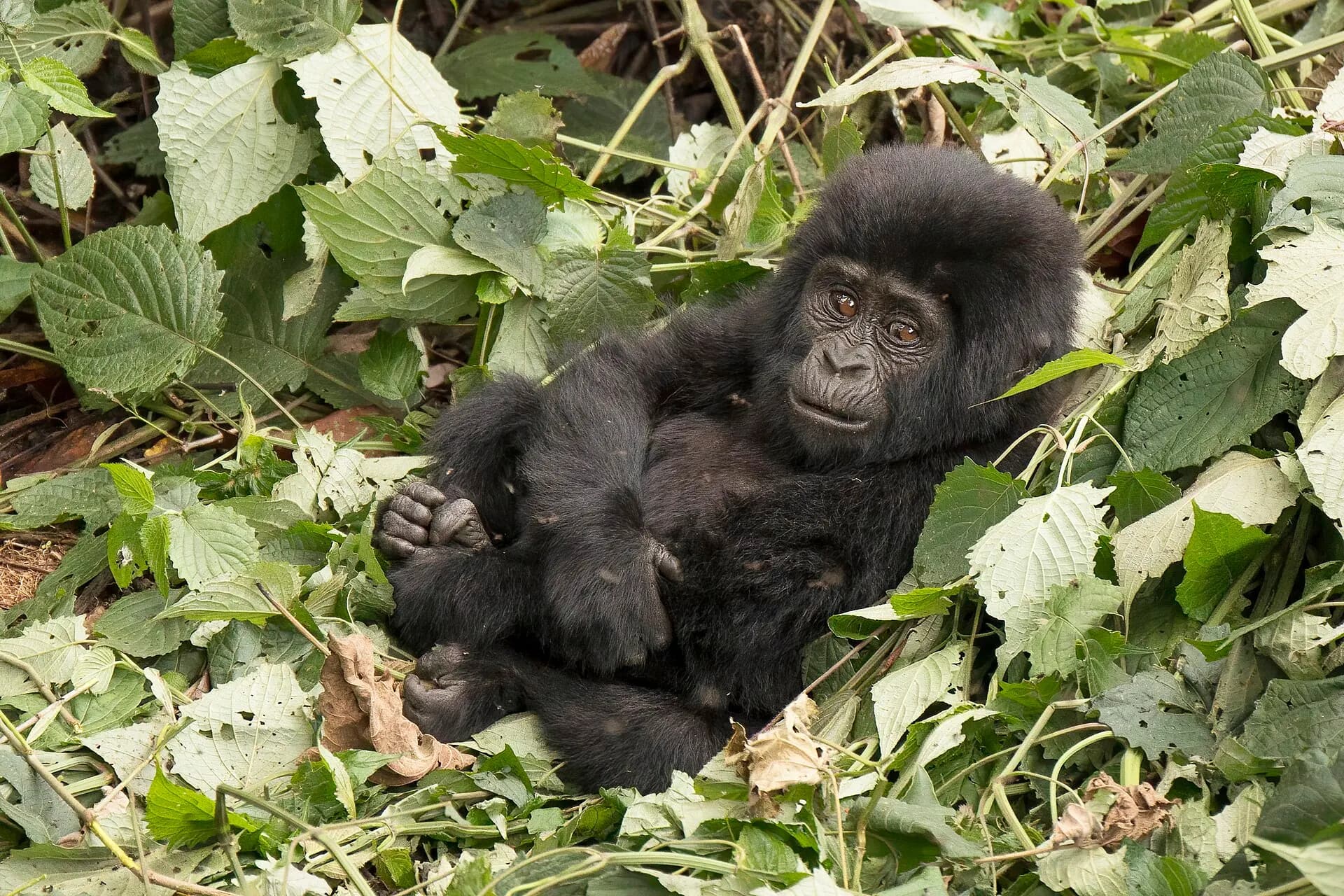
Bwindi Impenetrable National Park, a UNESCO World Heritage Site, protects an ancient rainforest of steep ridges and valleys that holds roughly half of the world's mountain gorillas, with many habituated families. Treks start from four sectors, Buhoma, Ruhija, Rushaga and Nkuringo, each with its own groups, and can take anywhere from an hour to most of a day of hiking through thick undergrowth before you reach the family. You then have one hour with them, at a distance of around ten metres, in groups of no more than eight visitors. Under the UWA tariff, a gorilla permit costs US$800 for foreign non-residents, and from January 2027 a low-season rate of US$600 applies in April, May and November. The longer gorilla habituation experience, spending several hours with researchers and rangers alongside a family that is still getting used to people, costs US$1,800. Permits are limited and sell out months ahead in peak season.
TipMake sure your permit and your lodge are in the same sector, since the drive between sectors can take hours. Hire a porter: it supports local families and helps on the steep slopes.
- 17
Mgahinga Gorilla National Park
Photo: Dylan Walters, CC BY 2.0, via Wikimedia Commons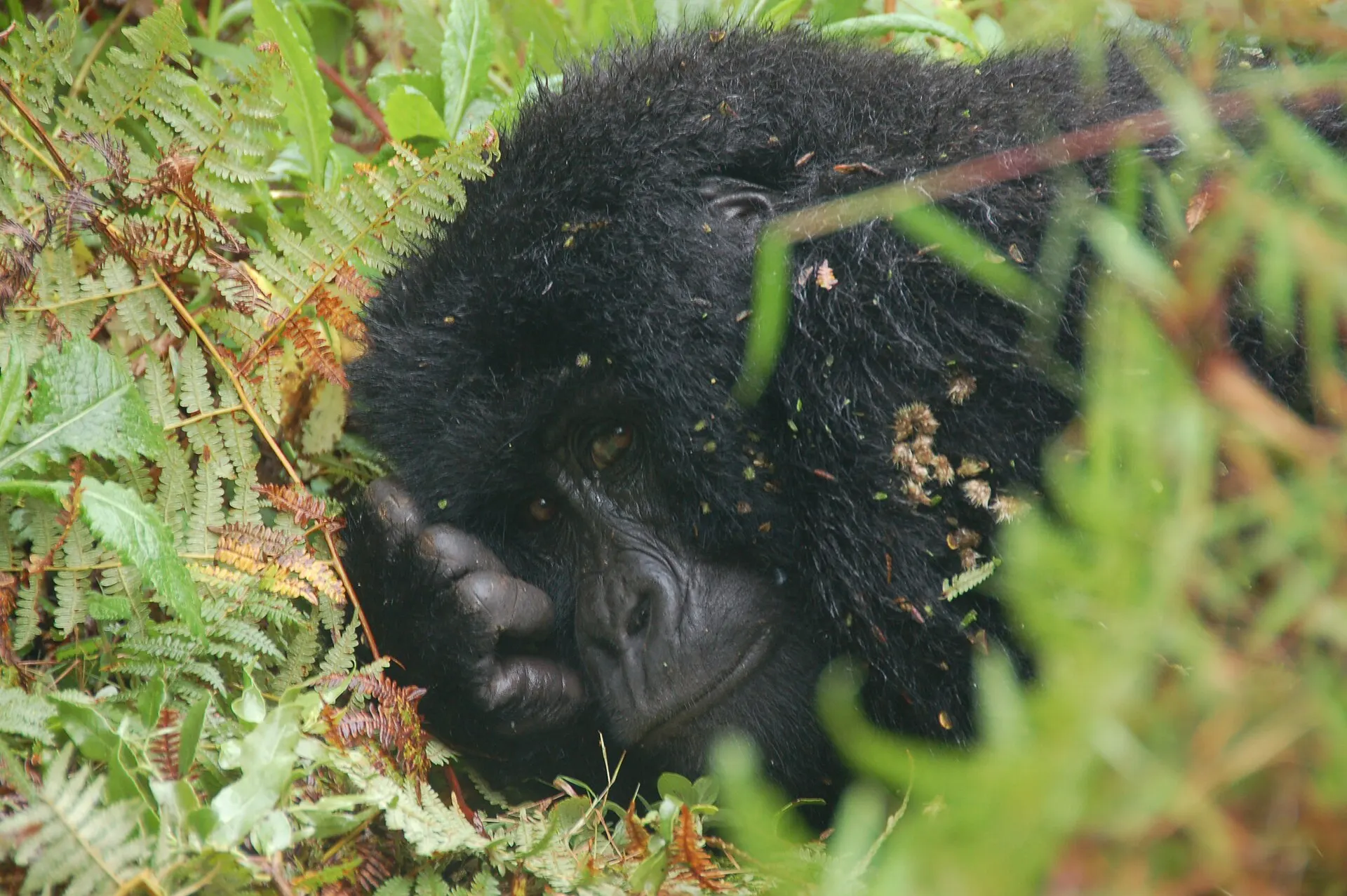
Uganda's smallest national park covers the Ugandan slopes of three of the Virunga volcanoes, Muhavura, Gahinga and Sabinyo, at the point where Uganda, Rwanda and the DRC meet. It has a habituated gorilla family, but its special treat is golden monkey tracking in the bamboo forest, which costs much less and is lively and fun. Fit walkers can climb one of the volcanoes in a day: Sabinyo's summit is shared by all three countries, and Muhavura has a small crater lake at the top. The park's Batwa trail, led by members of the Batwa community who once lived in these forests, explains their traditional life.
TipGorilla treks here are sold through the same UWA system and at the same price as Bwindi; check availability for both when planning.
- 18
Lake Bunyonyi
Photo: Thomas Fuhrmann, CC BY-SA 4.0, via Wikimedia Commons
After the forests, Lake Bunyonyi is the place to slow down. The lake winds between steep terraced hills near Kabale, dotted with more than twenty islands, and its cool climate, lack of crocodiles and hippos and the low-key lodges along its shore make it a favourite spot for swimming, canoeing and doing very little. Dugout canoes and motorboats visit the islands, including the tiny Punishment Island, with a sad history of exclusion, and local guides lead walks through the hill villages. It's an easy drive from the southern Bwindi sectors and Mgahinga, and from here it's not far to the Rwandan border.
TipSwimming is generally considered safe, but check locally and never swim after drinking; the water is deep and cold.
When to go
Uganda can be visited all year, thanks to its altitude and equatorial position: days are warm and nights fresh, especially in the south-west, where temperatures drop sharply at night. The main dry seasons, from June to August and from December to February, are the most popular for gorilla and chimpanzee trekking, since forest trails are less muddy and roads easier. They're also the best months for game viewing in Murchison Falls and Queen Elizabeth, when the grass is shorter and animals gather near water. The long rains fall roughly from March to May and the short rains from October to November. They rarely last all day, the landscape is at its greenest, lodges are quieter and some offer discounts, and from January 2027 UWA charges lower gorilla and chimpanzee permit fees in April, May and November. Birders often prefer the wetter months, when migrants are present and many species breed.
Getting around
Most visitors travel with a driver-guide in a 4x4 or safari minibus arranged through a Ugandan tour operator, which removes the stress of long drives, potholes, police checkpoints and finding remote lodges, and means someone else handles permits. Distances are long, and journey times are often slower than the map suggests: allow a full day between Kampala and Bwindi, or between Kampala and Murchison Falls with a stop at Ziwa. Self-drive 4x4 hire with rooftop tents is popular with experienced travellers, but avoid driving after dark, when unlit vehicles, pedestrians and animals make the roads dangerous.
Scheduled and charter flights from Entebbe reach airstrips near Bwindi, Kihihi and Kisoro, as well as Murchison Falls, Kasese and other parks, saving many hours on the road. Public buses and shared minibus taxis connect the main towns cheaply but are slow, crowded and have a poor safety record. In Kampala, motorcycle taxis known as boda bodas are the fastest way through the traffic; if you use them, choose app-based services that provide helmets. Uganda drives on the left.
Local tips
- Most nationalities need a visa, which must be applied for online through the official government portal before travel; beware of look-alike sites that charge extra. The East African Tourist Visa, at US$100, covers multiple entries to Uganda, Kenya and Rwanda over 90 days.
- In October 2026 the UK FCDO noted that a yellow fever vaccination certificate is no longer mandatory for entry to Uganda, but vaccination is still recommended, and other countries on your route may require the certificate. Take malaria precautions everywhere in the country.
- Uganda's Ebola outbreak was declared over by the World Health Organization in August 2026, but outbreaks continue in neighbouring DRC. Check your government's latest travel and health advice before you go, and follow any screening at the border.
- The UK FCDO and other governments advise extra caution near the DRC border in the west and south-west. Security personnel accompany gorilla treks in Bwindi and Mgahinga as a matter of routine; use registered operators and don't join tours that cross into the DRC.
- Carry clean, recent US dollar notes for permits, tips and some lodges; older notes and small denominations are often refused. Ugandan shillings are best for everyday spending, and mobile money is widely used.
- Thin plastic carrier bags are banned in Uganda, so bring a reusable shopping bag.
- Ask before photographing people, and never photograph military or police installations. Same-sex relationships are criminalised under Ugandan law, and public displays of affection are frowned on for everyone.
- Gorilla and chimpanzee rules are strict: don't trek if you have a cold or other illness, keep your distance, wear a mask if asked, and never eat or drink near the animals.
Gorilla and chimpanzee permits
Permits are issued by the Uganda Wildlife Authority, and the number for each gorilla family each day is strictly limited, so book well ahead, especially for June to September and December to February. Most travellers let their tour operator secure permits as part of a package; independent travellers can book through UWA's reservation office, and full payment is required to confirm a booking. Under the tariff running from January 2027 to June 2028, a gorilla tracking permit in Bwindi or Mgahinga costs US$800 for foreign non-residents, US$700 for foreign residents and US$500 for other African nationals, with a low-season rate in April, May and November. The permit includes the park entrance fee for the day and a contribution to community development around the parks. Chimpanzee tracking in Kibale costs US$250 at full rate, and a few other sites, including Kyambura Gorge in Queen Elizabeth and the Budongo forest reserve south of Murchison, offer chimp walks with slightly lower success rates. Prices and rules can change, so check the latest tariff on the UWA website before you book.
Eat and drink
Ugandan food is hearty and simple. The staple is matoke, green cooking bananas steamed in banana leaves and mashed, served with groundnut sauce, beans, beef or chicken stew. Other staples include posho, a stiff maize porridge, sweet potatoes and cassava, and on Lake Victoria and the Nile, tilapia and Nile perch are grilled or fried whole. The great street snack is the rolex, a chapati rolled around a fried egg omelette with tomato, onion and cabbage, sold from roadside stalls everywhere; luwombo, meat or groundnuts stewed in banana-leaf parcels, is a Buganda speciality for special occasions. Tropical fruit is superb, from small sweet bananas and pineapples to jackfruit and passion fruit.
Uganda is one of Africa's biggest coffee producers, with robusta grown in the lowlands and arabica on the slopes of Mount Elgon and the Rwenzori, and Kampala has a growing café scene. Local lagers are widely available, and waragi, a gin-like spirit traditionally distilled from bananas or millet, is mixed into cocktails. Drink bottled or treated water.
Where to base yourself
On a road trip you'll change lodges often, so think in terms of regions. Entebbe is quieter, closer to the airport and easier for first and last nights than Kampala, which is best for a day or two of museums, markets and nightlife. Jinja has riverside lodges for adventure activities, and Sipi has simple guesthouses with views of the falls. In Murchison Falls, the choice is between lodges near the Nile at Paraa and those on the southern side. Fort Portal and the crater lakes around it make a beautiful base for Kibale, with lodges perched above crater rims. In Queen Elizabeth, Mweya is ideal for the Kazinga Channel, and Ishasha has a handful of tented camps. For gorilla trekking, stay in the sector where your permit is: Buhoma, Ruhija, Rushaga or Nkuringo, or Kisoro for Mgahinga. Lake Bunyonyi offers everything from island cabins to backpacker lodges.
A short history
The fertile lands north and west of Lake Victoria supported powerful kingdoms, among them Buganda, Bunyoro, Toro, Ankole and Busoga, long before Europeans arrived. Arab and Swahili traders reached the court of Buganda in the mid-nineteenth century, followed by explorers searching for the source of the Nile and then by rival Protestant and Catholic missionaries, whose converts became embroiled in court politics; the young Christians executed in the 1880s are remembered as the Uganda Martyrs at the shrine of Namugongo, outside Kampala. Britain declared a protectorate in 1894, ruling largely through the kingdoms. Independence came in 1962, but the following decades were marked by upheaval, including the brutal dictatorship of Idi Amin in the 1970s and civil war, which devastated the economy and the wildlife. Since the late 1980s the country has been relatively stable, and conservation has helped gorilla, elephant and other animal numbers recover, making tourism one of its most important industries.
Responsible travel
The money from permits and park fees is the main reason Uganda's gorillas and chimpanzees are protected, and a share of the revenue goes to communities around the parks, so following the rules matters. Choose operators and lodges that employ local guides and staff, hire porters on treks, and buy crafts directly from community groups, such as those around Bwindi and Mgahinga, including Batwa-led initiatives. Visit animal sanctuaries that rescue and rehabilitate wildlife rather than places that offer handling or performances. Keep to the speed limits in parks, stay on tracks and keep your distance from animals. Water is precious in rural areas and plastic waste hard to deal with, so carry a refillable bottle and a filter.