Volcanoes National Park
Misty volcanoes and bamboo forests where you can sit an hour with a family of wild mountain gorillas.
- Best time to go
- June to September and December to February, the drier seasons
- Local time
- –
- Currency
- Rwandan Franc (RWF)
- Reading time
- 4 min
- Language
- Rwandi and English
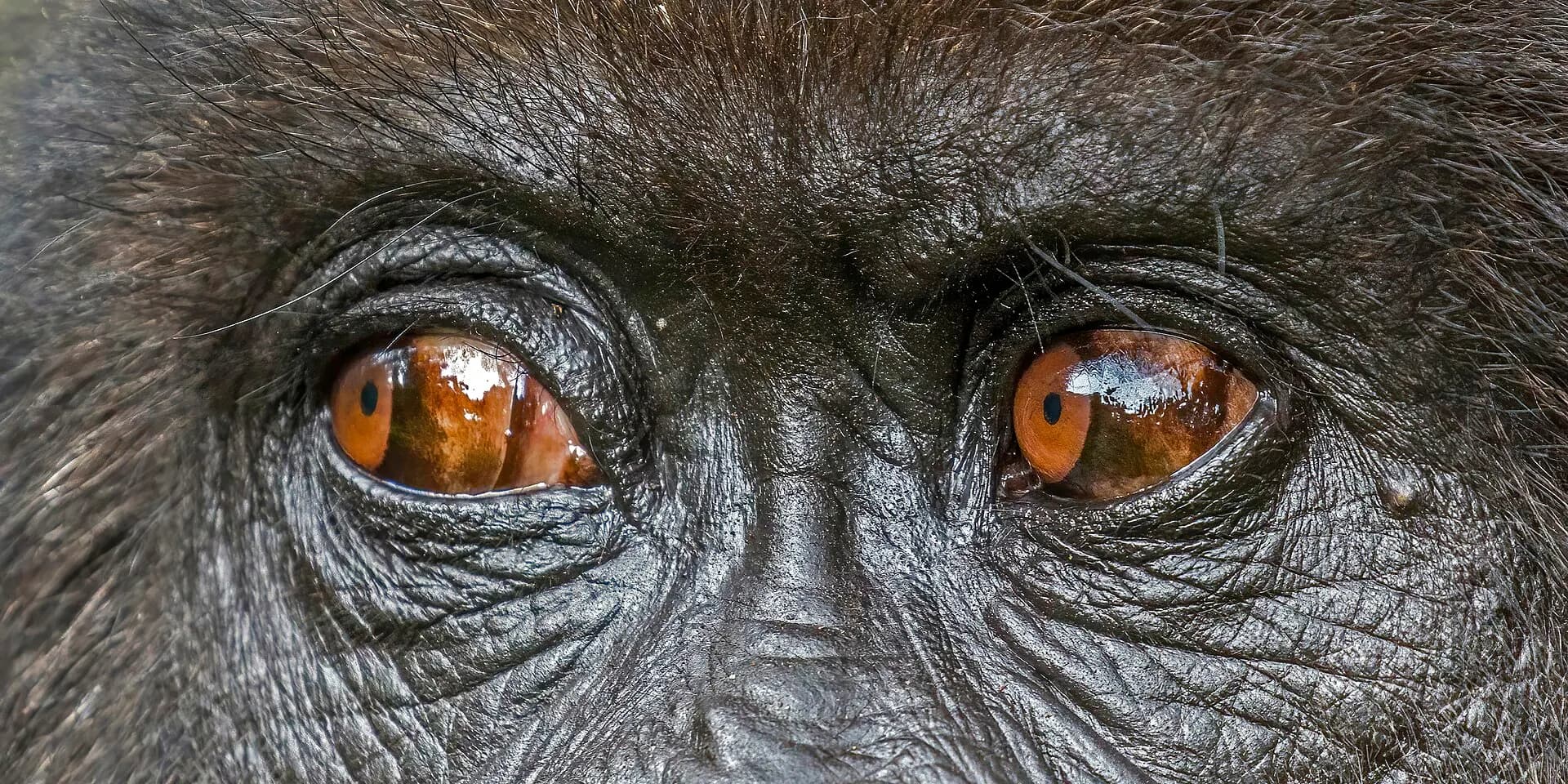
Volcanoes National Park, in north-western Rwanda, protects the Rwandan side of the Virunga Mountains, a chain of volcanoes on the borders with Uganda and the Democratic Republic of the Congo. Its slopes of bamboo forest, rainforest and alpine vegetation are home to mountain gorillas, which survive only in the Virunga range and Uganda's Bwindi forest. It was here that the American scientist Dian Fossey studied the gorillas for nearly two decades, and conservation has since helped their numbers rise.
Gorilla trekking is a once-in-a-lifetime experience: after a hike through the forest with expert trackers, you spend an hour quietly watching a gorilla family feeding, playing and resting a few metres away. Permits are limited and expensive, with the fees supporting conservation and local communities.
The top 7 in Volcanoes National Park
- 1
Gorilla trekking
Photo: Charles J. Sharp, CC BY-SA 4.0, via Wikimedia Commons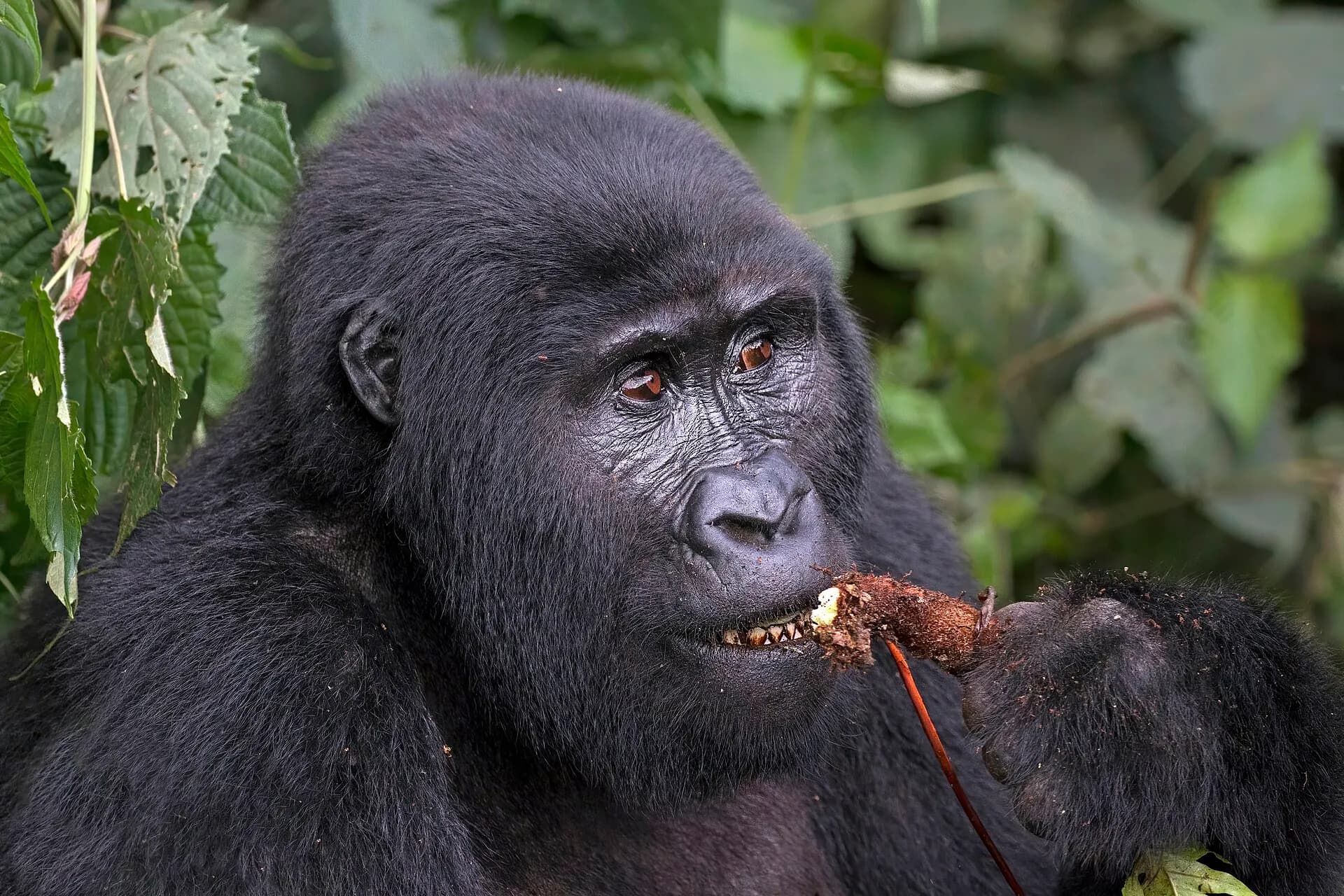
Each day, small groups of up to eight visitors are assigned to habituated gorilla families and led by guides and trackers into the forest. Treks can take from under an hour to several hours over steep, muddy slopes, and the visit with the gorillas is limited to one hour.
TipBook permits months ahead, keep at least several metres from the gorillas, and follow your guide's instructions at all times.
- 2
Golden monkey trekking
Photo: Charles J. Sharp, CC BY-SA 4.0, via Wikimedia Commons
Golden monkeys, a rare primate with bright orange-gold fur, live in the bamboo forests of the park. Treks to see them are shorter and less strenuous than gorilla treks, and the playful monkeys are fascinating to watch.
- 3
Dian Fossey's grave and the Karisoke site
Photo: Fanny Schertzer, CC BY 3.0, via Wikimedia Commons
A hike up the slopes of Mount Bisoke and Karisimbi leads to the ruins of the Karisoke Research Center, founded by Dian Fossey in 1967, and the cemetery where she is buried among the gorillas she studied, including her favourite, Digit.
- 4
Mount Bisoke
Photo: Alex Niragira, CC BY-SA 4.0, via Wikimedia Commons
A volcano with a crater lake at its summit, at about 3,700 metres, reached by a steep day hike through bamboo, rainforest and giant lobelias.
- 5
Mount Karisimbi
Photo: SIBOMANA Constantin, CC BY-SA 4.0, via Wikimedia Commons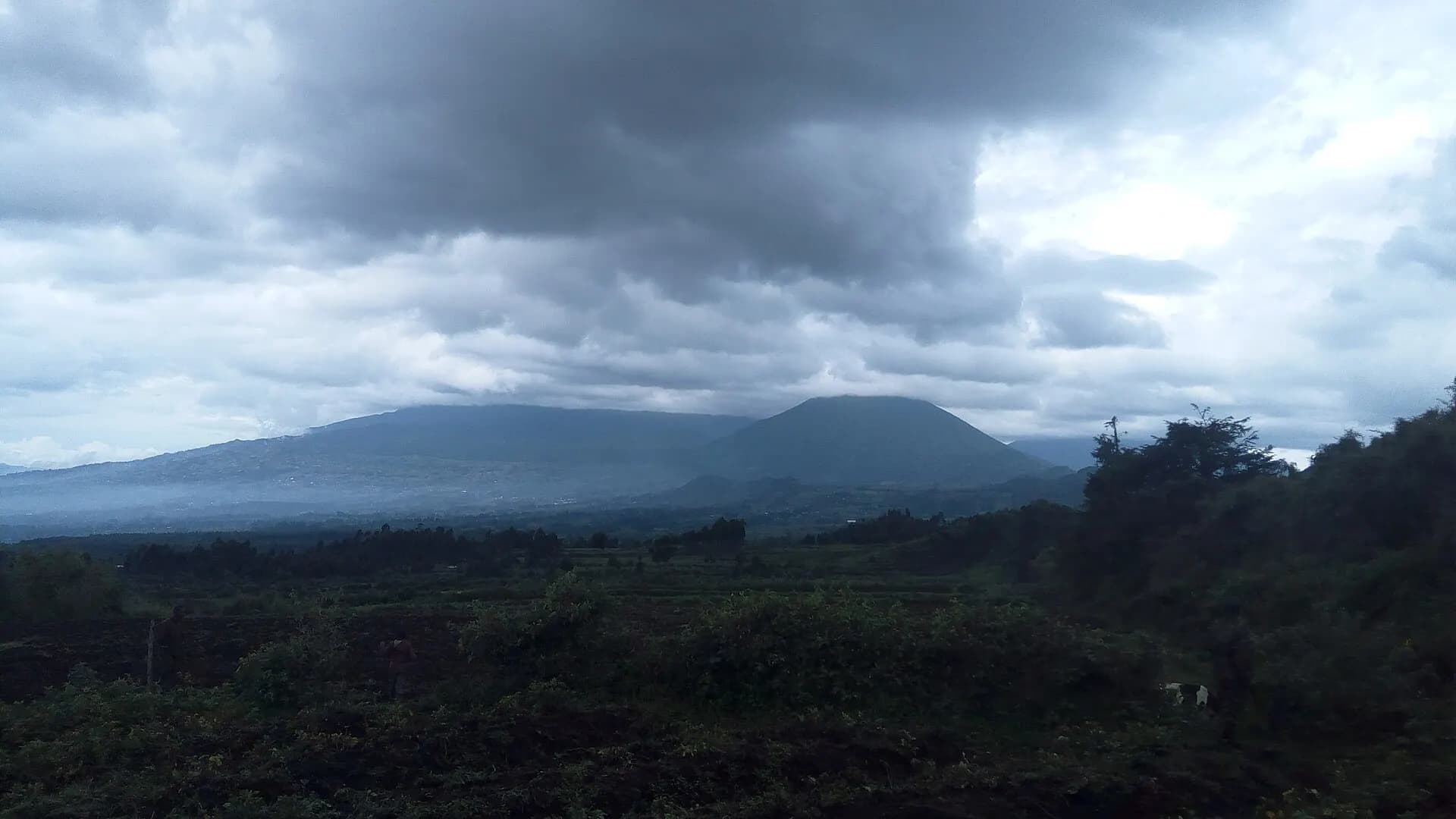
The highest of the Virunga volcanoes, at 4,507 metres, climbed on a demanding two-day trek with a night camping on the mountain, in cold, often wet conditions.
- 6
The Ellen DeGeneres Campus of the Dian Fossey Gorilla Fund
A research and education centre near the park, with exhibitions about gorillas, the biodiversity of the Virungas and the fund's conservation work.
- 7
The twin lakes Burera and Ruhondo
Photo: Joseph Lionceau, CC BY-SA 4.0, via Wikimedia Commons
Two scenic lakes south-east of Musanze, surrounded by terraced hills, with views of the volcanoes, ideal for boat trips and relaxing after treks.
When to go
The drier seasons, from June to September and December to February, offer the easiest trekking conditions. The rainy seasons, from March to May and October to November, make trails muddy and slippery, but gorilla trekking continues all year, and the forest is lush. Kwita Izina, a ceremony to name newborn gorillas, takes place each year, usually in September.
Getting around
The park headquarters at Kinigi is about two to three hours' drive from Kigali, Rwanda's capital, on good roads. Most visitors travel with a driver-guide or tour operator, who arranges transport to the trekking starting points. Kigali International Airport has flights from Africa, Europe and the Middle East.
Local tips
- Book gorilla permits well in advance through the Rwanda Development Board or a licensed operator.
- You must be at least fifteen years old to trek gorillas.
- Don't trek if you're ill, as gorillas can catch human diseases; masks may be required.
- Wear long sleeves, trousers, gloves and waterproof boots against nettles and mud; porters can be hired to help and support local communities.
- Single-use plastic bags are banned in Rwanda.
- Check visa requirements; many visitors can get a visa on arrival or apply online.
- Bring a rain jacket: showers are frequent even in the dry season.
- Pack snacks and water for the trek; you can't eat near the gorillas.
- Tipping guides, trackers and porters is customary.
Eat and drink
Lodges serve international and Rwandan dishes, such as brochettes, grilled skewers of goat or beef; isombe, cassava leaves cooked with peanuts; and matoke, cooked plantains. Rwandan coffee and tea, grown in the hills, are excellent.
Where to stay
Accommodation ranges from guesthouses in Musanze (Ruhengeri), the nearest town, to eco-lodges and luxury lodges at the edge of the park with views of the volcanoes. Staying near Kinigi makes the early-morning start at park headquarters easier.
Beyond the park
Kigali, Rwanda's clean, modern capital, is home to the Kigali Genocide Memorial, a moving place to understand the 1994 genocide against the Tutsi and the country's recovery. Lake Kivu, in the west, has beaches and lakeside towns. Nyungwe Forest, in the south, offers chimpanzee trekking and a canopy walkway, and Akagera National Park, in the east, is a savanna park with the Big Five.
Mountain gorillas
Mountain gorillas live in family groups led by a dominant silverback male, with several females and their young. They spend their days feeding on leaves, stems, bamboo shoots and fruit, resting, grooming and playing. Their numbers fell to a few hundred in the 1980s because of poaching and habitat loss, but strict protection, community conservation and carefully managed tourism have helped the population grow to over a thousand across the Virunga and Bwindi regions. Fees from gorilla permits fund park protection, and a share goes to communities living around the park.
What to expect on a trek
Treks begin with an early briefing at the Kinigi park headquarters, where visitors are assigned to a gorilla family according to fitness. Trackers set out at dawn to locate the gorillas, and your group follows, often through farmland before entering the forest. Once you reach the gorillas, you leave bags and walking sticks behind and spend an hour observing them. Keep your voice low, don't eat or drink near them, and if a gorilla approaches, stay still and follow the guide's lead. Photography is allowed, but flash is not.