Phuket
Thailand's largest island: Sino-Portuguese shophouses, hilltop temples, a long chain of west-coast beaches and boat trips into the Andaman Sea.
- Best time to go
- November to April, the dry season with calm seas
- Local time
- –
- Currency
- Thai Baht (THB)
- Reading time
- 10 min
- Language
- Thai

Phuket is Thailand's largest island, joined to the mainland by a bridge at its northern tip and fringed on its west coast by a string of sandy bays facing the Andaman Sea. It is one of the most visited places in Asia, and parts of it are unashamedly built up, but there is more here than resorts: a historic town of colourful shophouses built on tin-mining wealth, a strong Peranakan food culture recognised by UNESCO, forested hills, Buddhist temples and easy boat trips to some of the finest seascapes in the country.
Most travellers base themselves on one of the west-coast beaches and make day trips from there. The beaches differ a great deal in character, from the crowds and nightlife of Patong to the quieter coves of the south and the long, empty sand of the north, so it is worth choosing carefully. Come in the dry season if you want calm water; in the monsoon, the sea along the west coast can be genuinely dangerous.
The top 14 in Phuket
- 1
Phuket Old Town
Photo: Christophe95, CC BY-SA 4.0, via Wikimedia Commons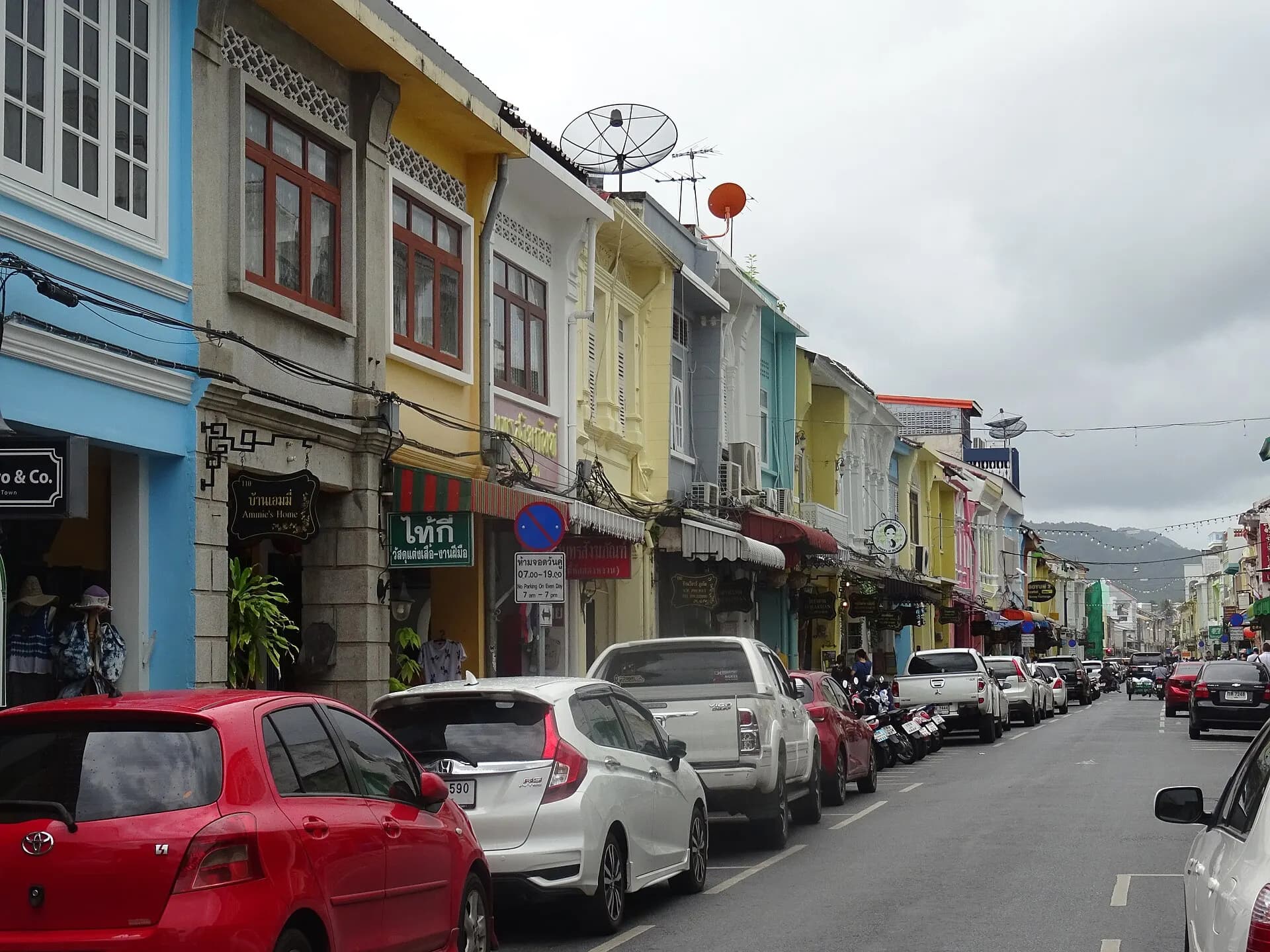
The historic heart of Phuket Town, a grid of streets lined with restored Sino-Portuguese shophouses, painted in pastel colours, with shuttered windows and shaded five-foot walkways in front. Thalang, Dibuk, Krabi and Romanee roads are the prettiest, with Chinese shrines, old mansions, cafés and small museums such as the Thai Hua Museum, housed in a former Chinese school. On Sunday evenings, Thalang Road closes to traffic for the Lard Yai walking street market, with food stalls, crafts and street performers.
TipWalk the old town in the early morning, before the heat, or come on a Sunday from late afternoon for the market; it is busiest after dark.
- 2
Wat Chalong
Photo: CEphoto, Uwe Aranas, CC BY-SA 4.0, via Wikimedia Commons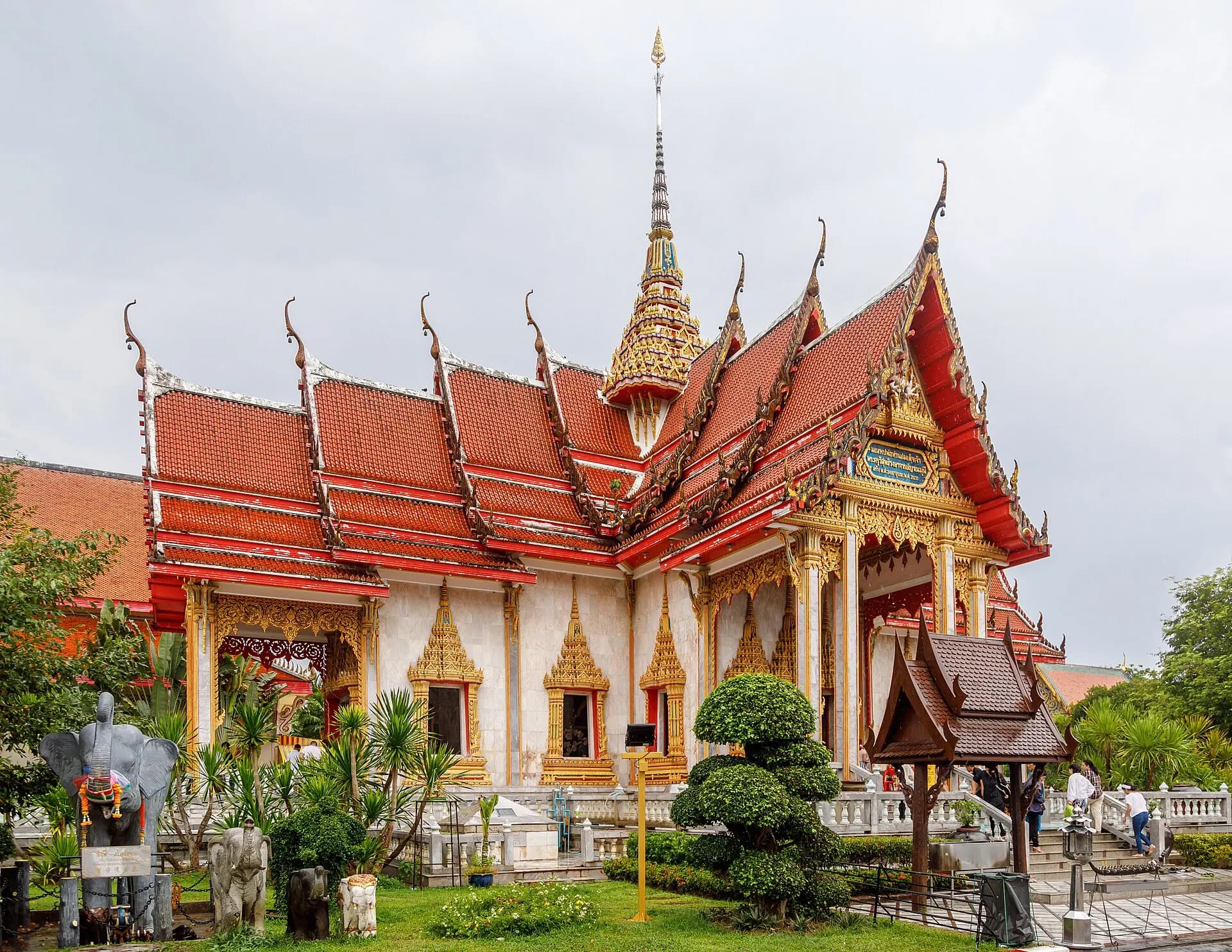
Phuket's most important Buddhist temple, properly Wat Chaiyathararam, a large complex of ornate halls south of Phuket Town. Its tall chedi is said to hold a relic of the Buddha, and inside you can climb through floors of murals and statues to a balcony over the grounds. Locals come to make merit and set off strings of firecrackers in thanks for answered prayers.
TipCover shoulders and knees, and take off your shoes before entering the halls.
- 3
The Big Buddha
Photo: Subhrajyoti07, CC BY-SA 4.0, via Wikimedia Commons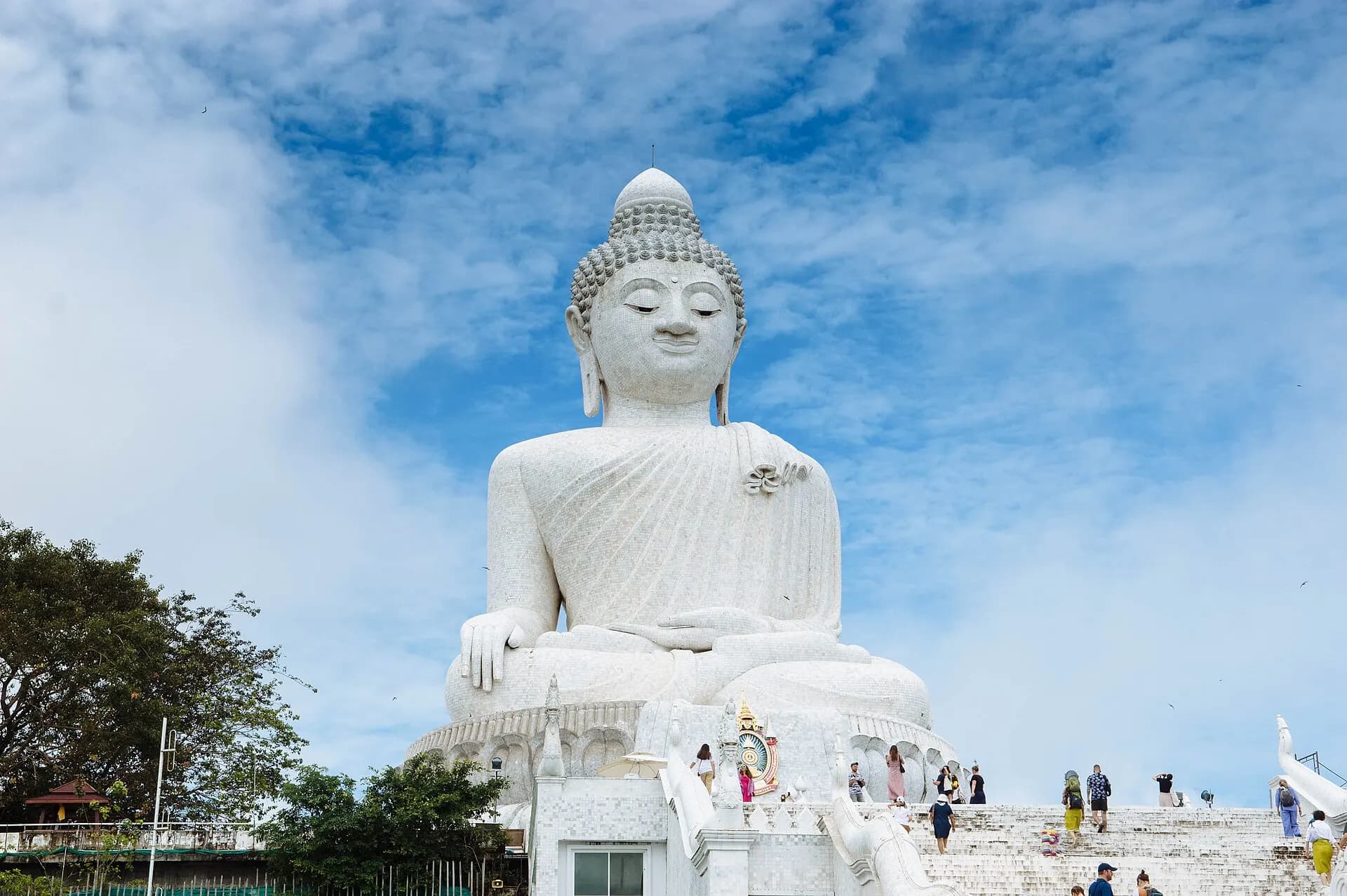
A seated Buddha around forty-five metres tall, faced with white Burmese marble, on the summit of Nakkerd Hill between Chalong and Kata. The views stretch over Chalong Bay and the west coast. The site is a working religious place built with donations, and modest dress is required; sarongs are usually available at the entrance.
TipCome in the early morning or late afternoon for softer light and fewer tour groups, and take care on the steep, winding access road if riding a scooter.
- 4
Promthep Cape
Photo: edwin.11, CC BY 2.0, via Wikimedia Commons
The rocky southern tip of the island, Laem Phromthep, is Phuket's classic sunset viewpoint, with a small lighthouse, a shrine surrounded by hundreds of elephant figurines left as offerings, and a path out along the headland. It gets very crowded at sunset, but the view over the sea and the small islands offshore is still lovely.
- 5
Nai Harn Beach
Photo: ADwarf, Public domain, via Wikimedia Commons
A sheltered-looking bay near the south of the island, backed by a freshwater lake with a path around it, and less developed than most west-coast beaches. In the dry season the water is calm and clear; in the monsoon it can have powerful waves and strong currents.
- 6
Kata Noi
Photo: Jacek Lesniowski, CC BY-SA 3.0, via Wikimedia Commons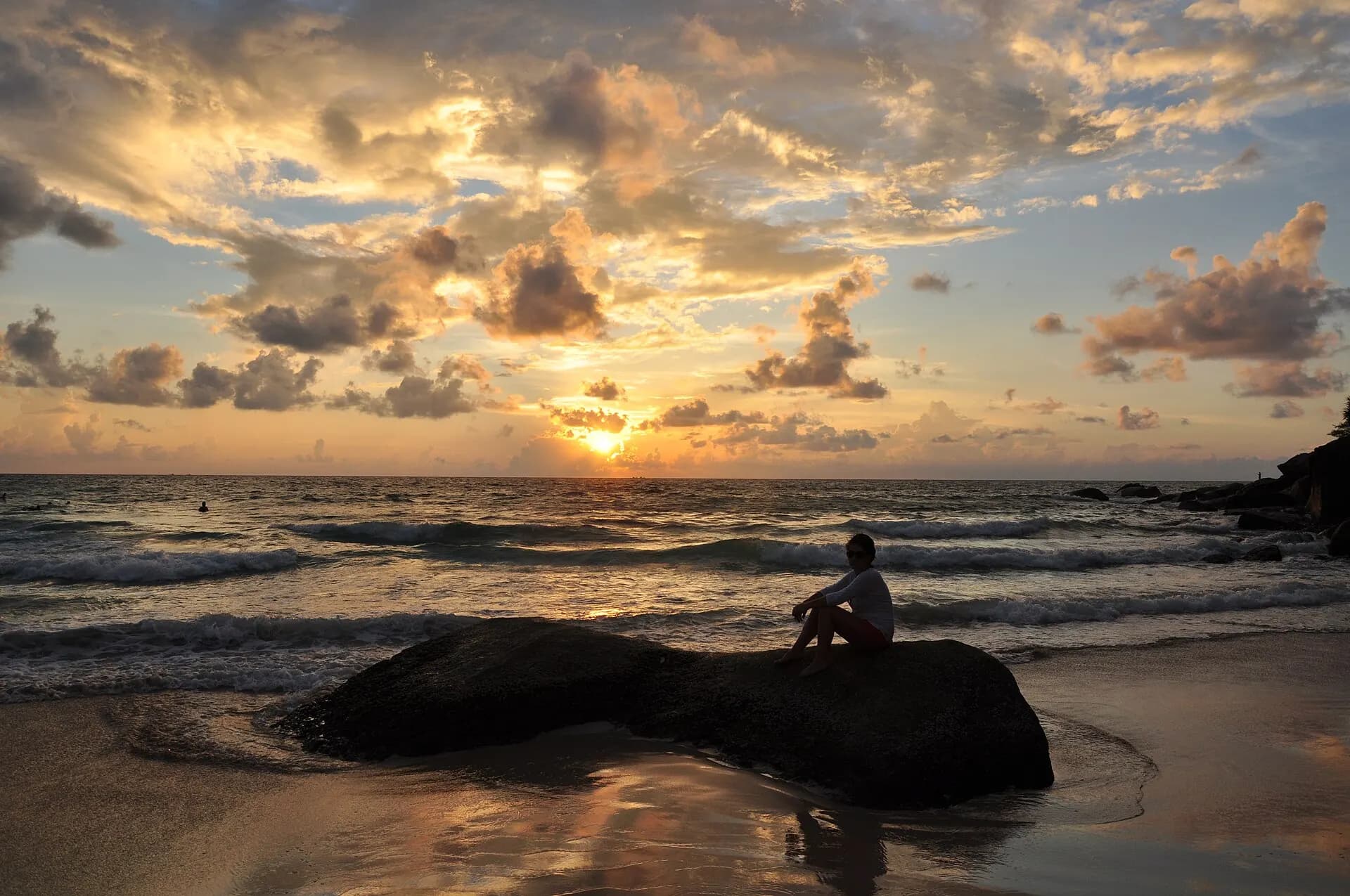
A small, pretty bay just south of Kata, enclosed by green headlands, with a quieter, more relaxed feel than its neighbours and good snorkelling around the rocks at the southern end in calm weather.
- 7
Kata Beach
Photo: Radek Kucharski, CC BY 2.0, via Wikimedia Commons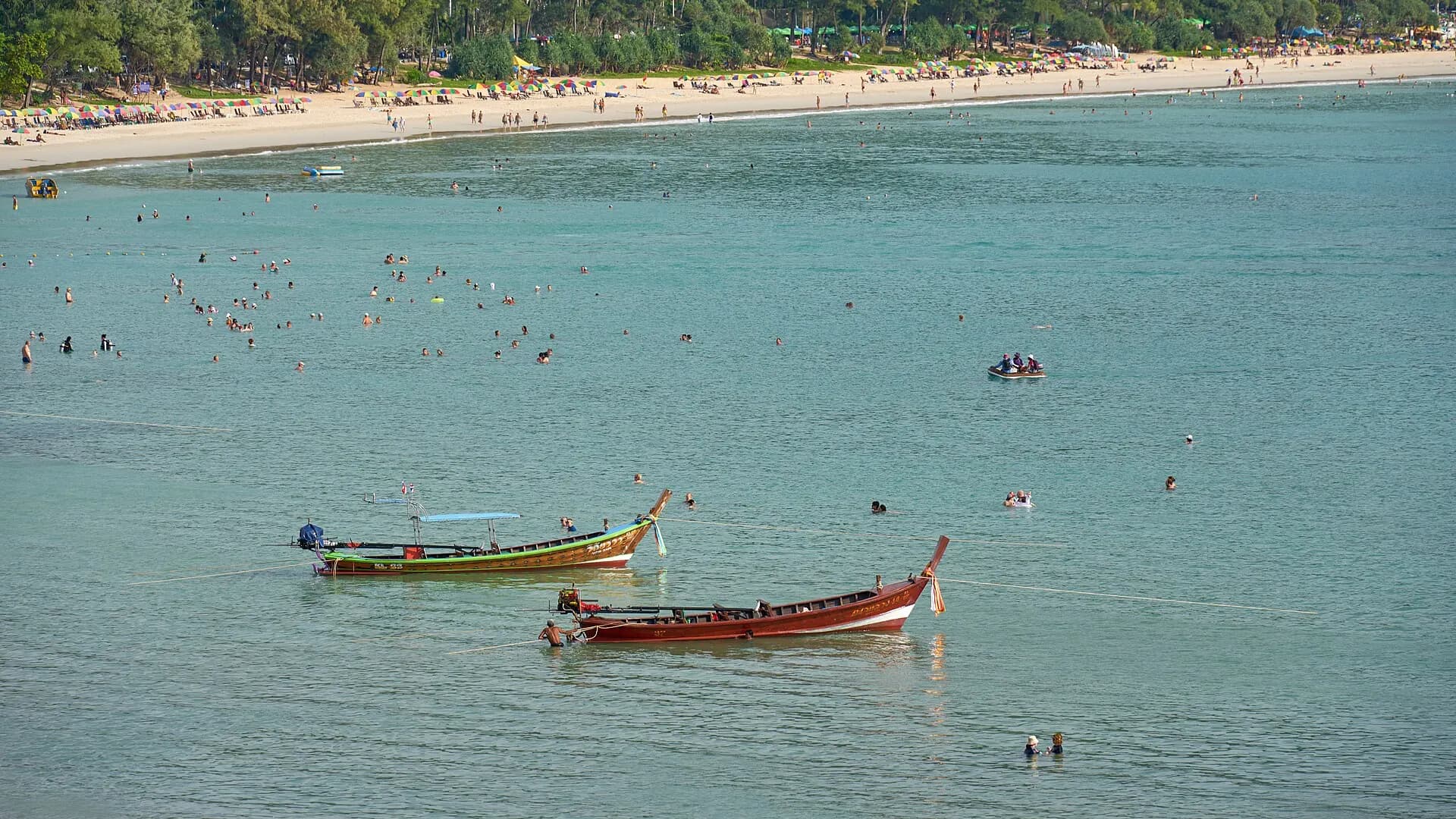
A curving bay of soft sand with a small island, Koh Pu, offshore, popular with families. In the monsoon months it is one of the island's main surfing spots, with surf schools renting boards, but that also means rough water and rip currents.
- 8
Karon Beach
Photo: Pather alexiy, CC BY-SA 3.0, via Wikimedia Commons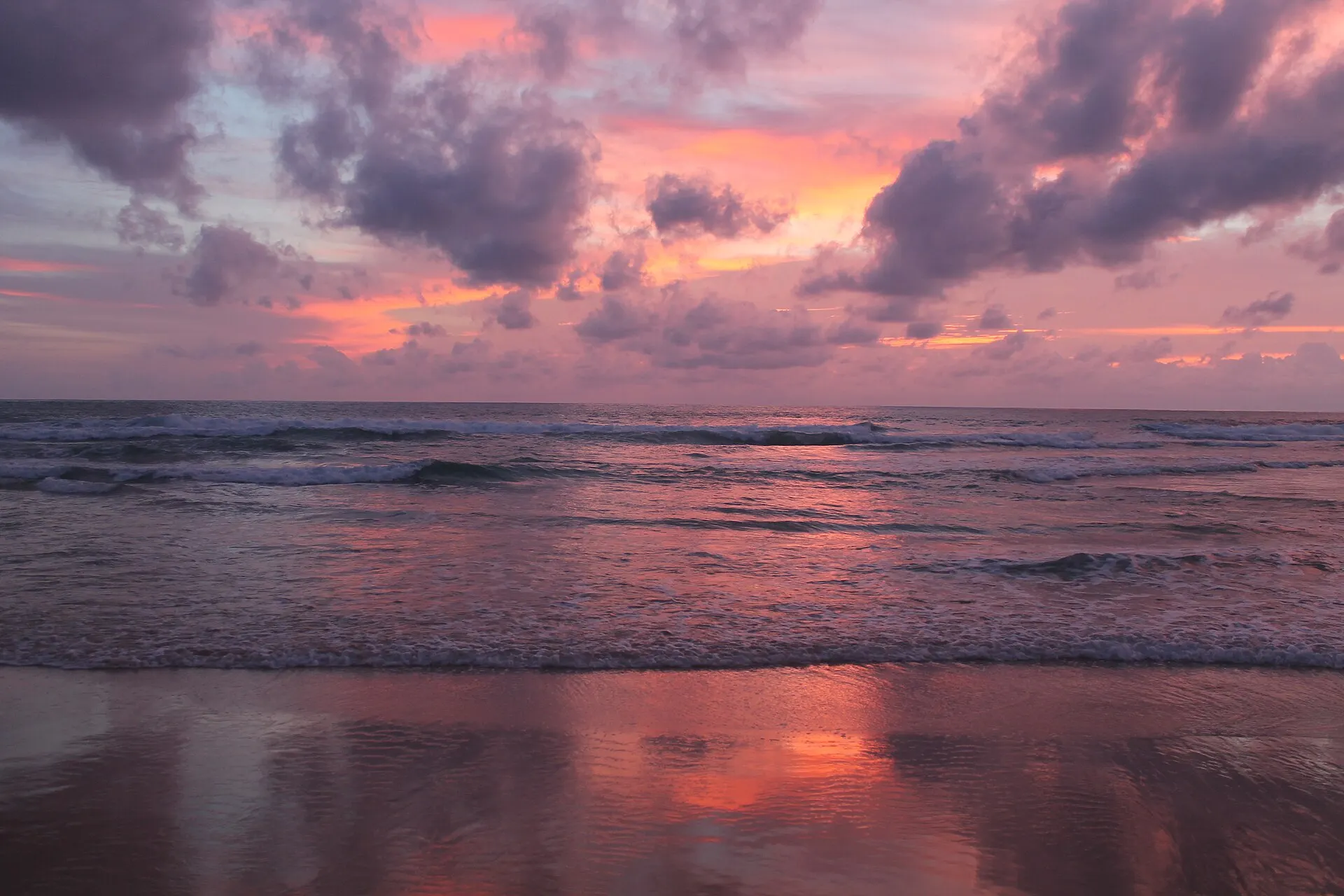
One of Phuket's longest beaches, with wide, squeaky sand and a strip of hotels behind the road. It looks inviting, but Karon has a strong shore break and dangerous rip currents in the monsoon, and drownings happen here most years; swim only between the flags when lifeguards are on duty.
- 9
Freedom Beach
Photo: Joachim Lutz, CC BY-SA 4.0, via Wikimedia Commons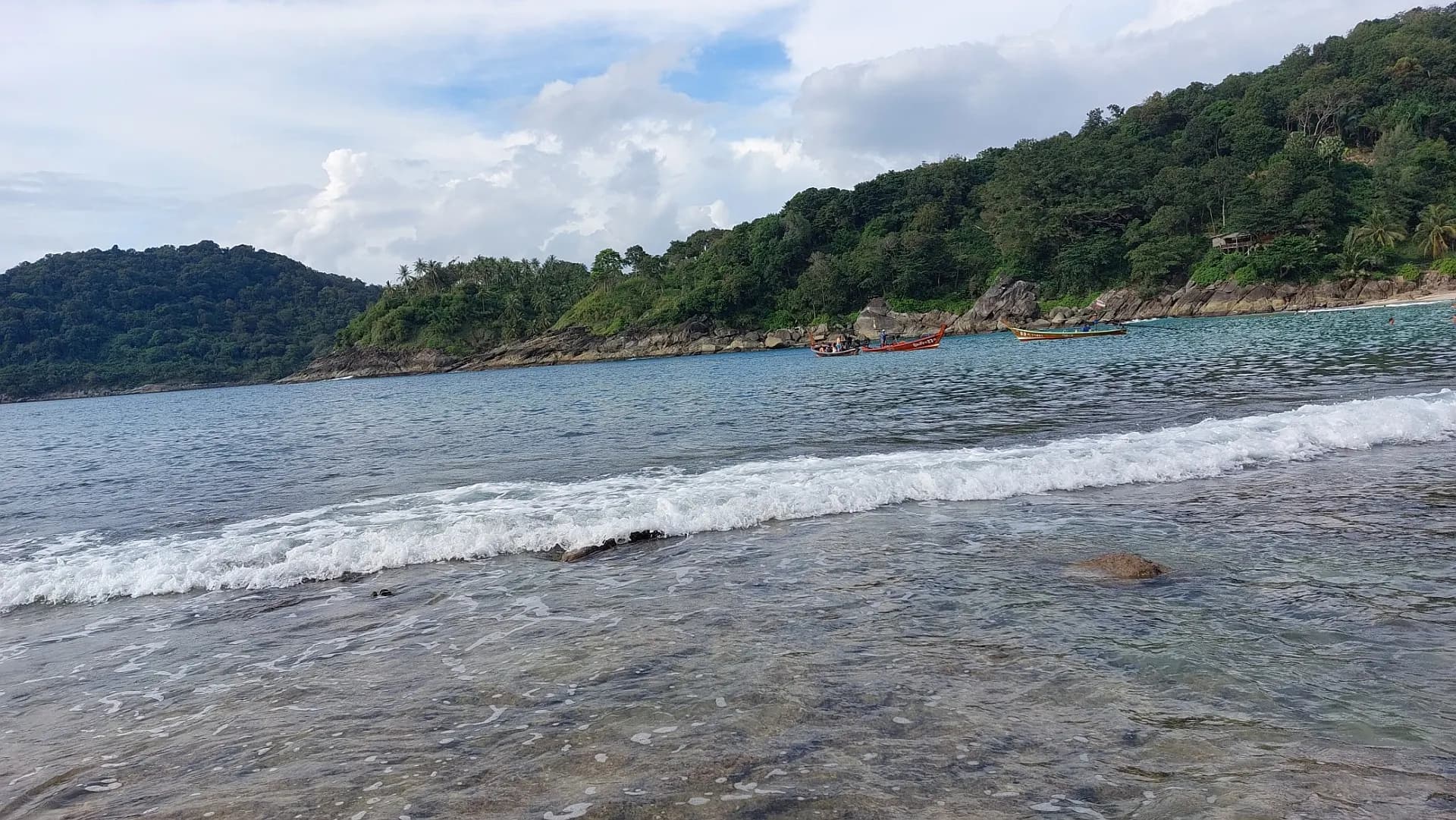
A small cove of fine white sand and clear water tucked between jungle-covered headlands south of Patong. It is reached by longtail boat from the southern end of Patong Beach, about ten minutes away, or by a steep trail down from the road over the hill, which may close after heavy rain. It can be busy in the middle of the day.
TipAgree the longtail fare and pickup time before setting off, and check whether a land entry fee is being charged on the trail.
- 10
Patong
Photo: Arnaud-Victor Monteux, CC BY-SA 4.0, via Wikimedia Commons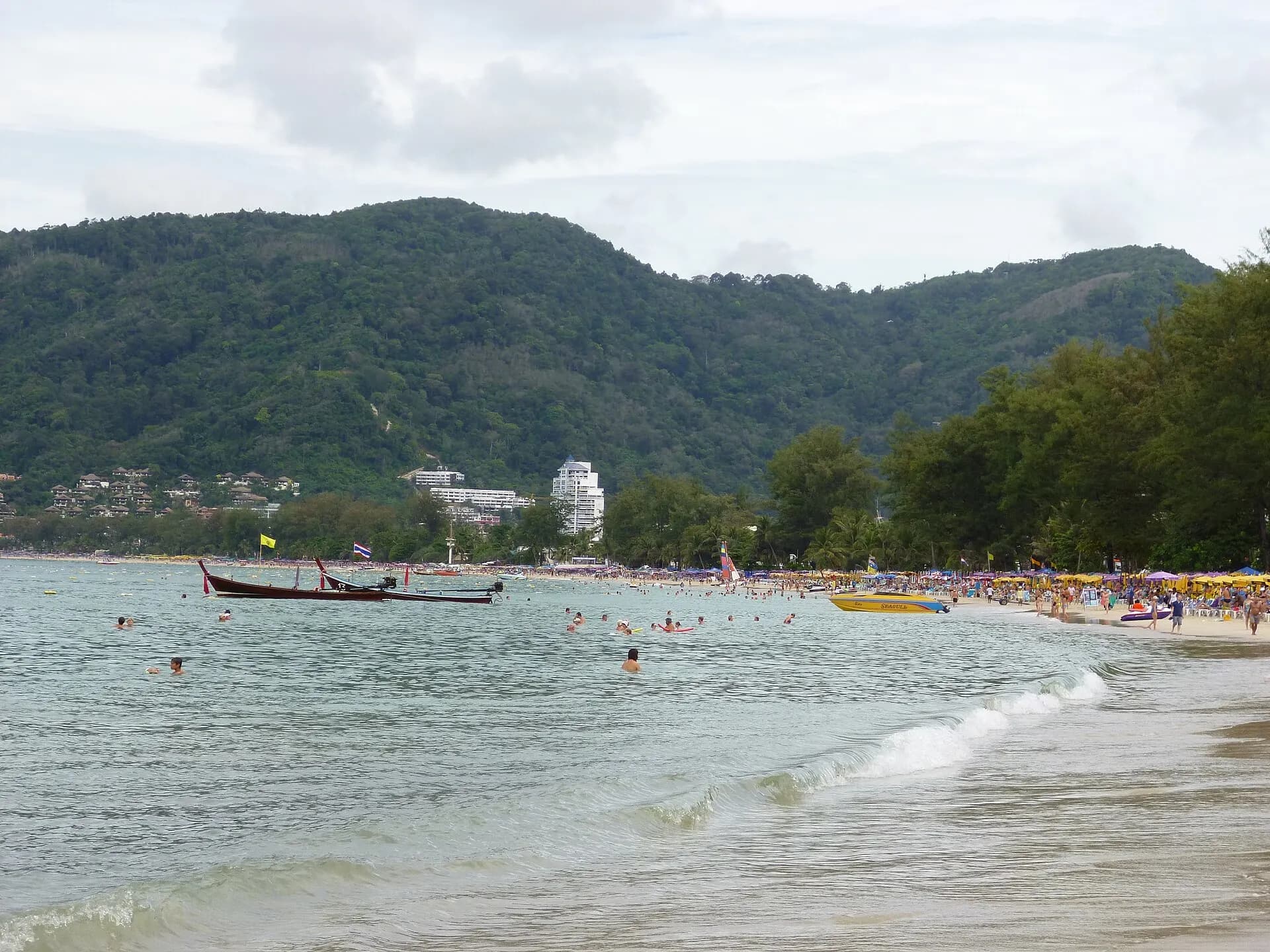
Phuket's largest and busiest resort: a long beach crowded with sunbeds, parasailing and jet skis, backed by hotels, shopping malls and Bangla Road, a pedestrianised strip of bars and clubs that roars late into the night. It is lively, convenient and has every kind of food, but it is not the place for peace and quiet or for the island's best water.
TipAvoid renting jet skis; disputes over claimed damage are a long-standing problem.
- 11
Kamala Beach
Photo: govertvissers, CC BY-SA 3.0, via Wikimedia Commons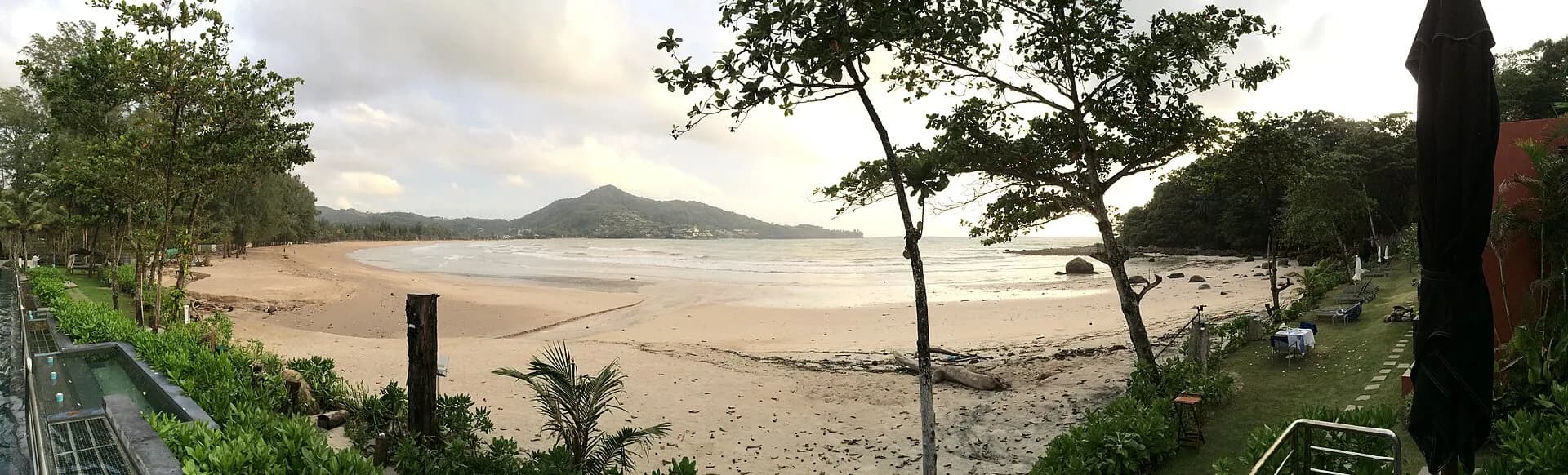
A calmer bay north of Patong, with a Muslim fishing village at its heart, a mosque, small seafood restaurants and resorts on the hills around it. Kamala was badly damaged by the 2004 tsunami and has been rebuilt; a memorial stands near the beach.
- 12
Sirinat National Park and Mai Khao
Photo: Michelle Maria, CC BY 3.0, via Wikimedia Commons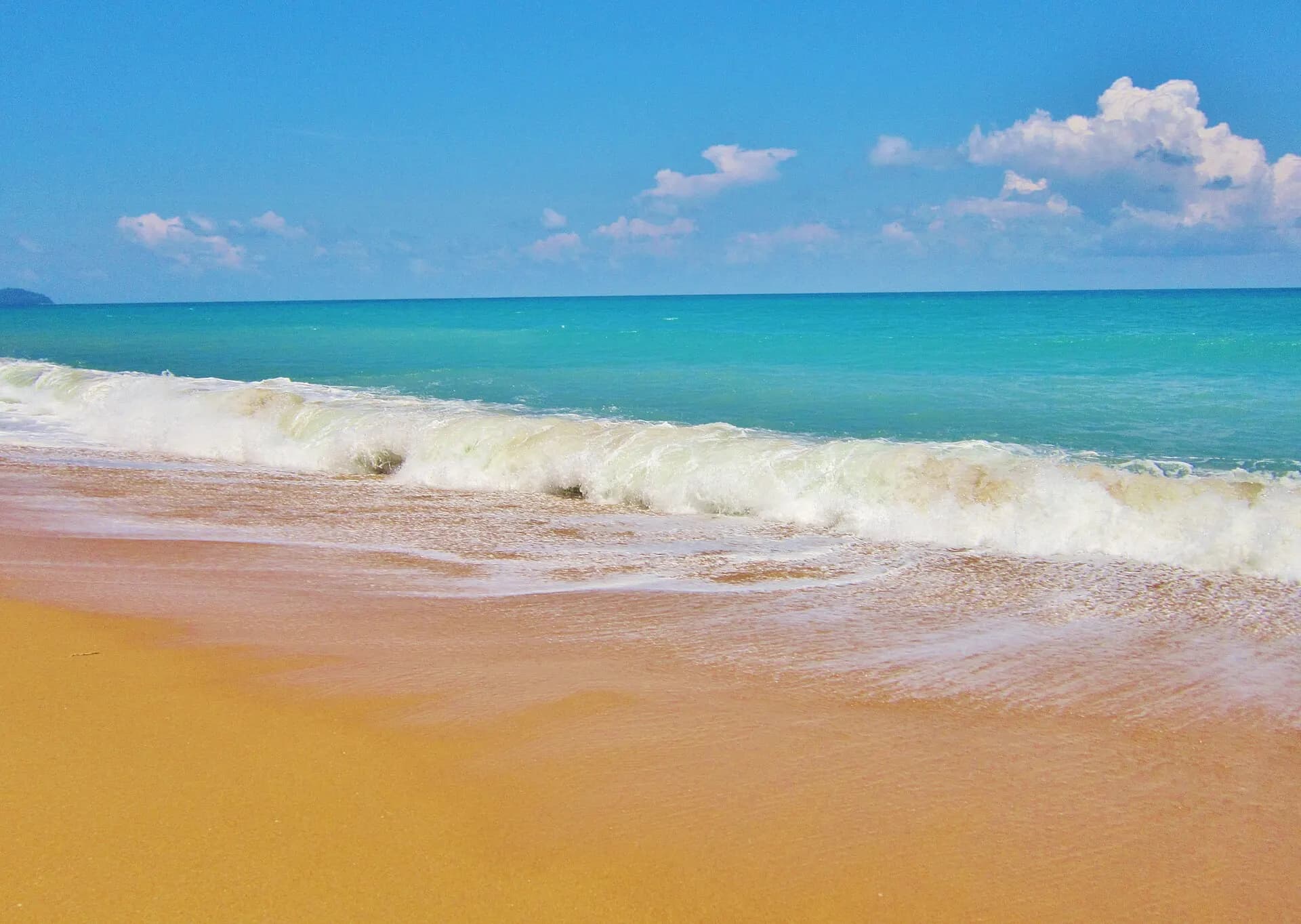
The north-west coast, protected as Sirinat National Park, includes Nai Yang Beach, shaded by casuarina trees, and Mai Khao, Phuket's longest beach, with planes flying low overhead into the nearby airport. Mai Khao is one of the few places in Thailand where endangered leatherback and other sea turtles still come ashore to nest, usually between November and February. Nests are monitored by park staff and volunteers.
TipIf you find a nest or turtle tracks, keep your distance, use no lights or flash, and tell the park office.
- 13
Phang Nga Bay (day trip)
Photo: Robert Haandrikman, CC BY 2.0, via Wikimedia Commons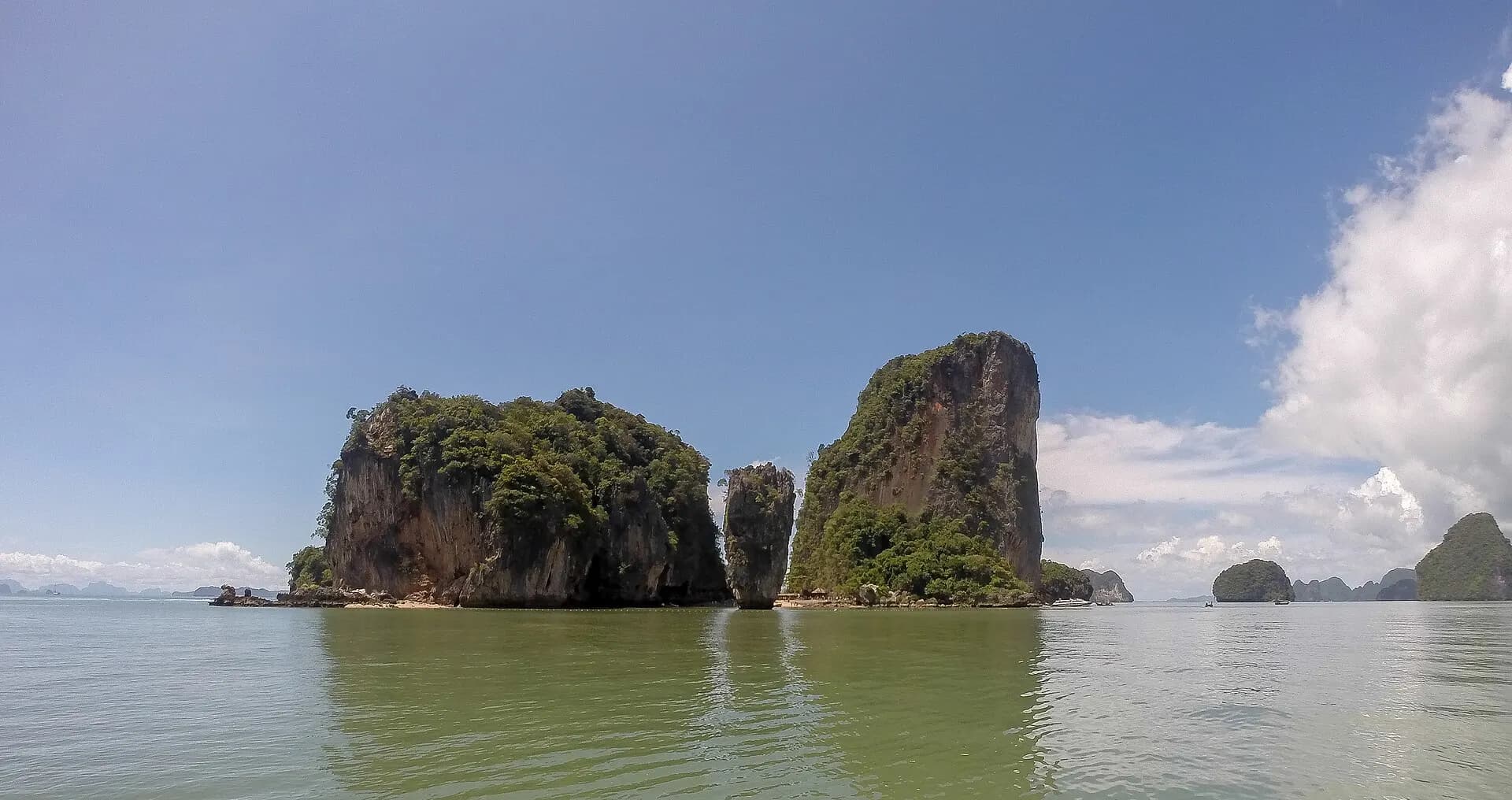
A day trip by boat or by road and boat from Phuket, across the water in Phang Nga province: a vast, sheltered bay of mangroves and sheer limestone islands, part of Ao Phang Nga National Park. Tours visit Khao Phing Kan, known as James Bond Island after its role in The Man with the Golden Gun, paddle sea canoes into hongs, hidden lagoons inside the islands, and stop at Koh Panyi, a Muslim fishing village built on stilts. National park fees apply.
- 14
Similan Islands (day trip, seasonal)
Photo: Lakshmi Sawitri, CC BY 2.0, via Wikimedia Commons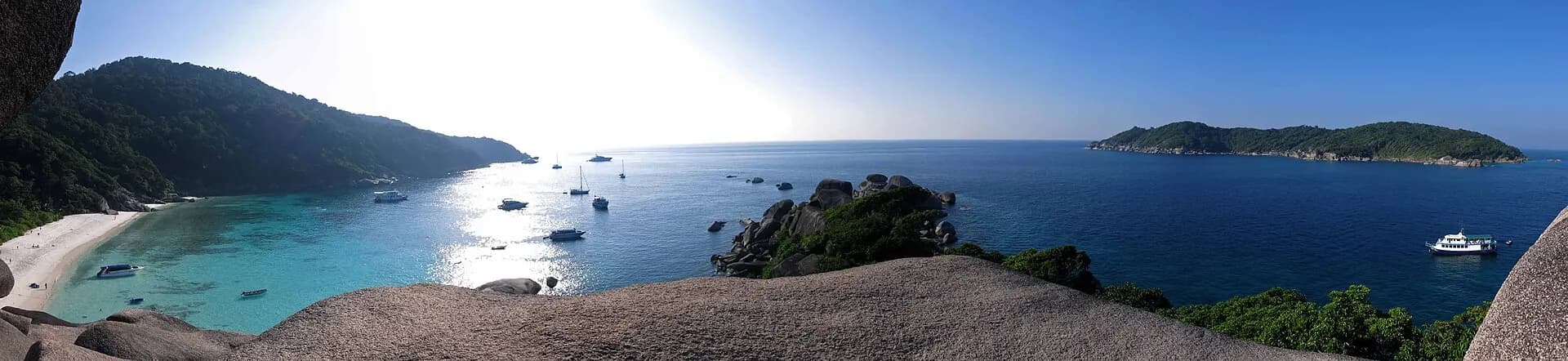
A chain of granite islands about seventy kilometres north-west of Phuket, protected as Mu Ko Similan National Park, with white sand, boulders and some of Thailand's best diving and snorkelling. The park closes every year from 16 May to 14 October to let the reefs recover and to avoid the monsoon; the 2026 to 2027 season runs from 15 October 2026 to 15 May 2027. Entry is by e-ticket, bought in advance or before 8am on the day, and daily visitor numbers are capped, so book with a licensed operator. Most trips leave from Khao Lak, north of Phuket, with transfers from Phuket hotels.
TipSpeedboat crossings can be rough; take seasickness tablets if you need them, and bring reef-safe sunscreen.
When to go
The dry season, from November to April, brings sunshine, calm seas on the west coast and the best conditions for swimming, snorkelling and boat trips; December to February is the most comfortable and the busiest, with higher prices. March and April are the hottest months. The south-west monsoon, from roughly May to October, brings heavy showers, humid days and big swells on the west coast, with red flags flying on many beaches for weeks at a time. The rain usually comes in bursts rather than all day, prices fall and the island is greener, but some boat trips are cancelled and the Similan Islands are closed. The Phuket Vegetarian Festival, in the ninth lunar month (usually late September or October), fills the old town with processions and strict vegan food stalls.
Getting around
Phuket has no railway or metro, and the island is bigger than many visitors expect: the drive from the airport in the north to the southern beaches can take an hour or more in traffic. The air-conditioned Phuket Smart Bus runs from the airport down the west coast through Surin, Kamala, Patong, Karon and Kata to Rawai, and other lines link Patong with the bus terminal in Phuket Town; check the timetable and live tracking online, as times vary with traffic. Traditional blue wooden songthaew buses run from Phuket Town to the main beaches during the day. Within the old town, the free Dragon Line electric shuttle runs a loop of stops. Grab and Bolt work across the island and are usually cheaper than taxis and tuk-tuks, which charge fixed, often high, fares; agree the price first. Many visitors rent scooters, but roads are busy and hilly, and accidents are common; ride only if you are experienced, licensed and insured, and always wear a helmet. Boats to the islands leave from Rassada Pier near Phuket Town and Chalong Pier in the south.
Local tips
- Complete the Thailand Digital Arrival Card online before arriving.
- Obey red flags on the beach; they mean no swimming, and they are there for good reasons.
- Check whether a scooter rental includes insurance, and keep your passport rather than leaving it as a deposit.
- Carry small notes for songthaews, markets and national park fees.
- Dress modestly at temples, covering shoulders and knees.
- Book licensed boat operators with life jackets, and check the weather before island trips.
- Drink bottled or filtered water, and use plenty of sunscreen.
- Expect afternoon traffic jams over the hills between the beaches and town.
Eat and drink
Phuket's food reflects its Hokkien Chinese, Peranakan, Malay and Thai heritage, and the island is a UNESCO Creative City of Gastronomy. Try mee hokkien, thick yellow noodles fried with seafood and pork; moo hong, pork belly braised with black pepper and garlic; oh tao, a fried oyster and taro omelette; and khanom jeen, rice noodles served with fiery southern curries for breakfast. Dim sum shops in the old town open early, and Phuket pineapples are famously sweet. The beach towns have seafood restaurants of every price; choose places where you can see the fish on ice and ask the price by weight before ordering.
Where to stay
Kata and Karon suit families and those who want a beach with some life but not too much. Kata Noi, Nai Harn and Rawai in the south are quieter, with Rawai good for longer stays. Patong is for nightlife and convenience. Kamala, Surin and Bang Tao, further north, are calmer, with many larger resorts. Mai Khao and Nai Yang are near the airport and peaceful, while Phuket Town offers boutique hotels in old shophouses, good food and lower prices, but no beach.
Tin, trade and the old town
Phuket grew rich on tin. From the nineteenth century, thousands of migrants, many of them Hokkien Chinese from Penang and southern China, came to work the mines, and the wealthiest merchants built the shophouses and mansions of the old town in the Sino-Portuguese style seen across the Straits settlements. Intermarriage with local Thais and Malays created the Baba, or Peranakan, culture, still visible in the island's dress, festivals and food. Earlier, in 1785, the island was the scene of a famous defence against a Burmese invasion led by two sisters, Thao Thep Kasattri and Thao Si Sunthon, honoured by the Heroines Monument on the road to the airport. Tourism replaced tin as the island's economy from the 1970s.
Swimming safety and the monsoon
Every year, swimmers drown off Phuket's west-coast beaches, mostly during the south-west monsoon, when strong surf creates rip currents, narrow channels of fast water flowing out to sea. Karon, Kata, Patong, Surin, Kamala, Nai Harn and Nai Yang can all be affected, and many victims entered the water while red flags were flying. Swim only where lifeguards are on duty, stay between the flags, and stay out entirely when the red flag is up. If you are caught in a rip, don't swim against it: float, stay calm, raise an arm for help, and swim parallel to the shore until you are out of the current. Alcohol and night swimming are a dangerous combination at any time of year.
Elephants and wildlife
Elephant rides and shows were once a fixture of Phuket tourism, and some camps still offer them. Training elephants to carry riders or perform involves harsh treatment, and the animals are often kept chained. If you want to see elephants, choose a sanctuary where they are watched from a distance and free to roam, with no riding, shows, bathing with tourists or performances, and read recent independent reviews before booking. The same applies to tiger and monkey attractions and to photos with wild animals such as slow lorises, gibbons or iguanas on the beach, which are illegal and cruel.
Responsible travel
Phuket's rapid growth has put pressure on its water supply, coral reefs and beaches. Use reef-safe sunscreen, don't touch or stand on coral, never feed fish, and choose boat operators that respect national park rules and moor on buoys rather than anchoring on reefs. Take your rubbish with you, refuse single-use plastics where you can, and keep well away from nesting turtles at Mai Khao. Be respectful in temples and in the island's Muslim villages, dressing modestly away from the beach.