Chiang Mai
Hundreds of temples inside an old moated city, night markets, mountain views and the gentle pace of northern Thailand.
- Best time to go
- November to February, for cool, dry days and clear mountain views
- Local time
- –
- Currency
- Thai Baht (THB)
- Reading time
- 4 min
- Language
- Thai
Chiang Mai was founded in 1296 as the capital of the Lanna kingdom, which ruled northern Thailand for centuries, and it still feels distinct from Bangkok: cooler, greener and slower. Its old city is a square ringed by a moat and the remains of brick walls, with more than thirty temples inside, many built in the graceful Lanna style with sweeping roofs and carved wooden gables.
The city is a base for exploring the mountains of the north, with trekking, waterfalls, hill-tribe villages and ethical elephant sanctuaries within reach. It's also famous for its markets, its cooking classes and its festivals, especially Yi Peng, when lanterns fill the night sky.
The top 9 in Chiang Mai
- 1
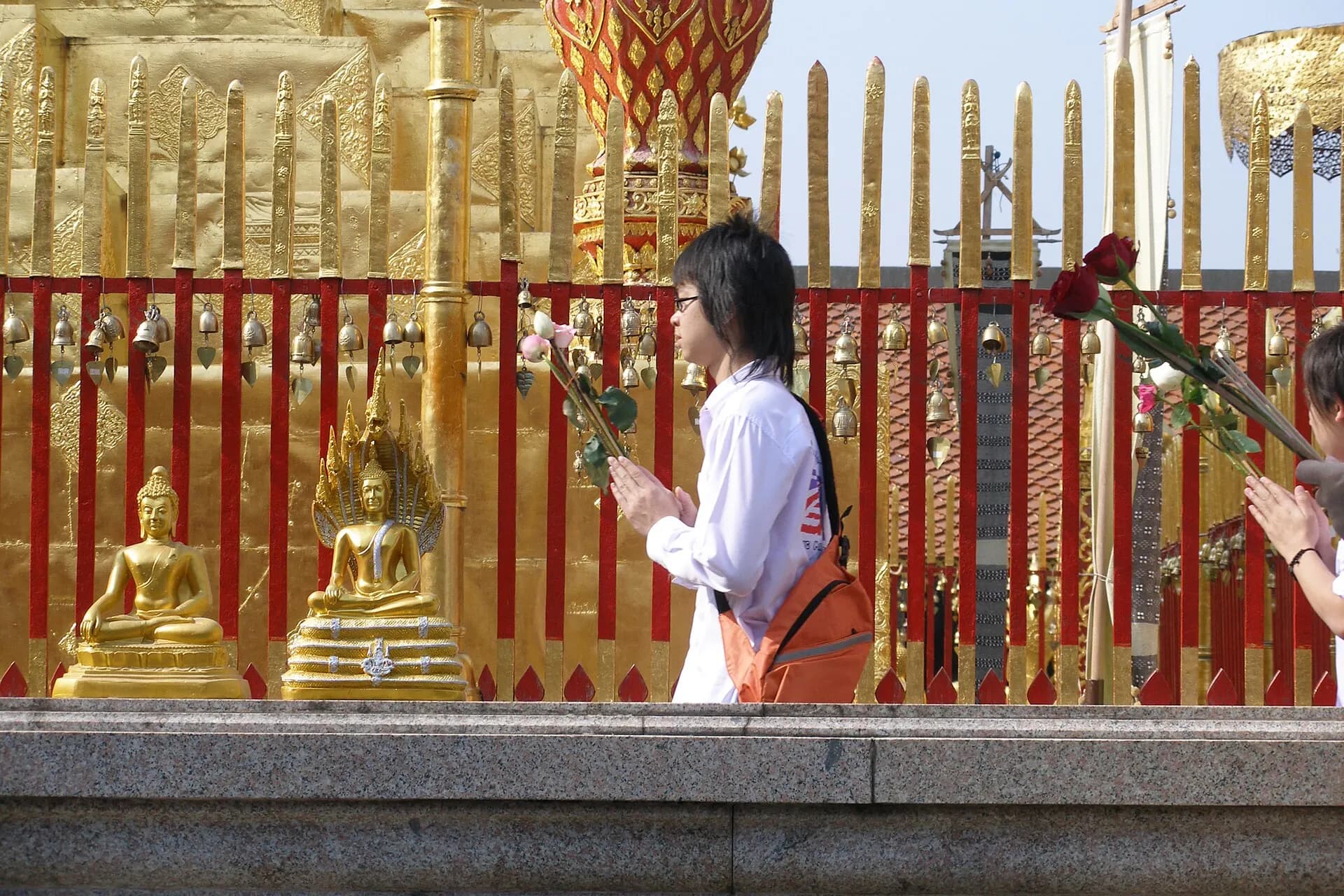
Wat Phra That Doi Suthep
Photo: Philip Nalangan, CC BY 4.0, via Wikimedia Commons
The city's most sacred temple, high on the mountain of Doi Suthep, with a gleaming golden chedi said to hold a relic of the Buddha. A staircase of more than three hundred steps, flanked by serpent-shaped balustrades, climbs to it, and the terrace looks out over the whole city.
TipGo early in the morning, when it's cool and monks are chanting; dress modestly with shoulders and knees covered.
- 2
Wat Chedi Luang
Photo: Diliff, CC BY-SA 3.0, via Wikimedia Commons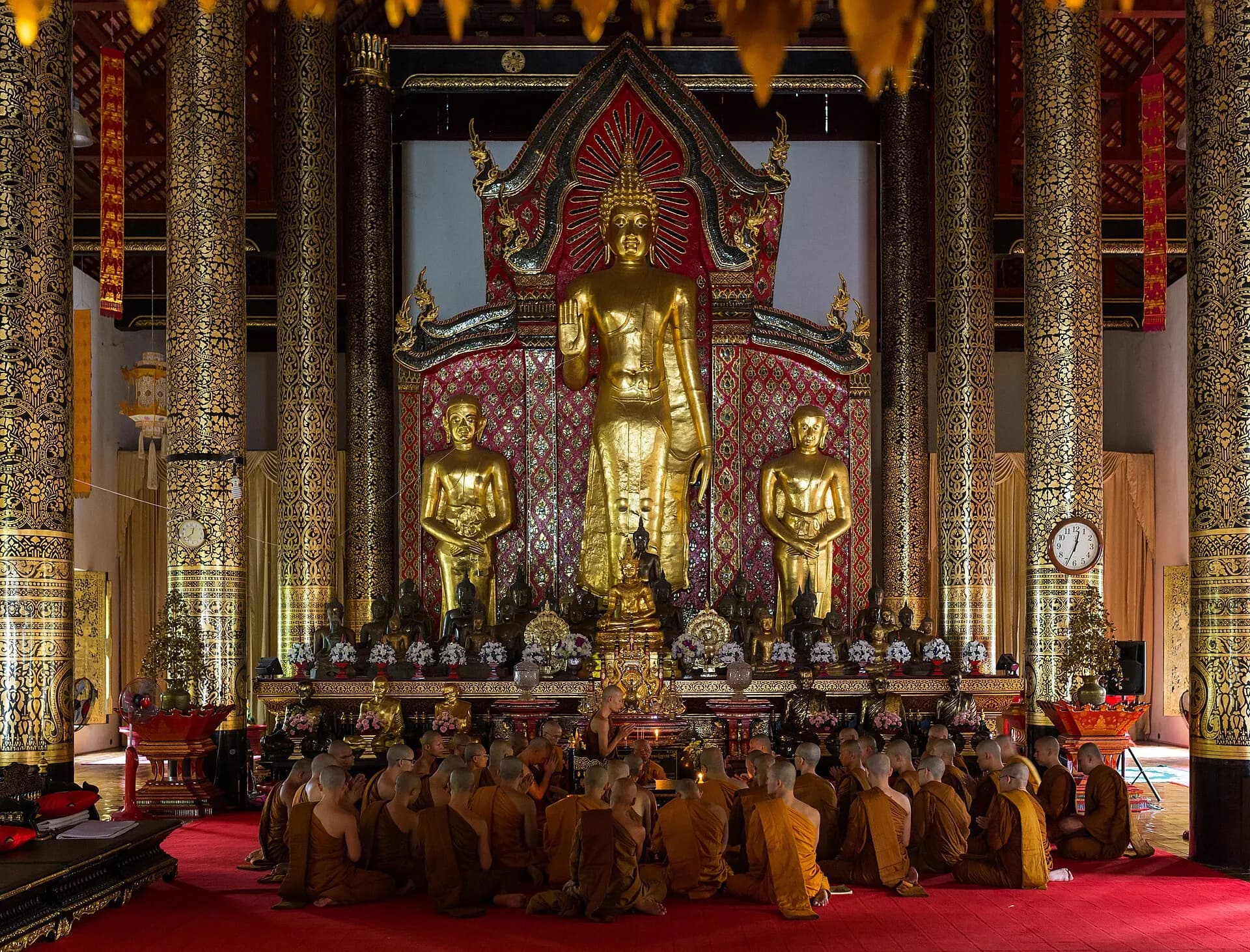
In the centre of the old city stand the massive ruins of a fifteenth-century chedi, once the tallest structure in the Lanna kingdom, partly destroyed by an earthquake. It once housed the Emerald Buddha now in Bangkok. Monk chats, informal conversations with novice monks, take place here on many afternoons.
- 3
Wat Phra Singh
Photo: Stefan Fussan, CC BY-SA 3.0, via Wikimedia Commons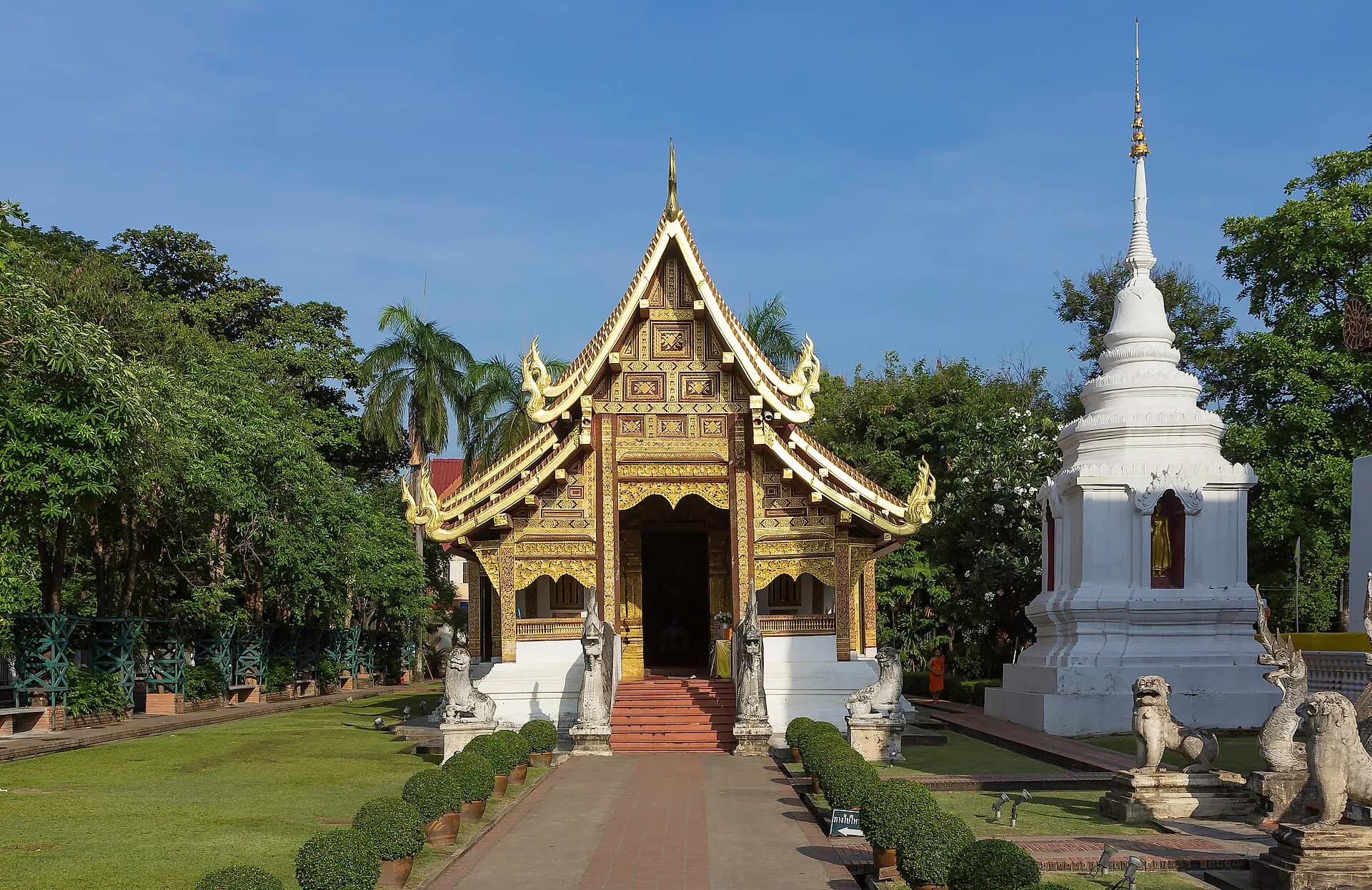
The most revered temple in the old city, with fine examples of Lanna architecture and a small chapel, the Viharn Lai Kham, decorated with beautiful murals depicting everyday northern life. It houses the Phra Buddha Sihing image, paraded through the streets at Songkran.
- 4
The old city
Photo: Stefan Fussan, CC BY-SA 3.0, via Wikimedia Commons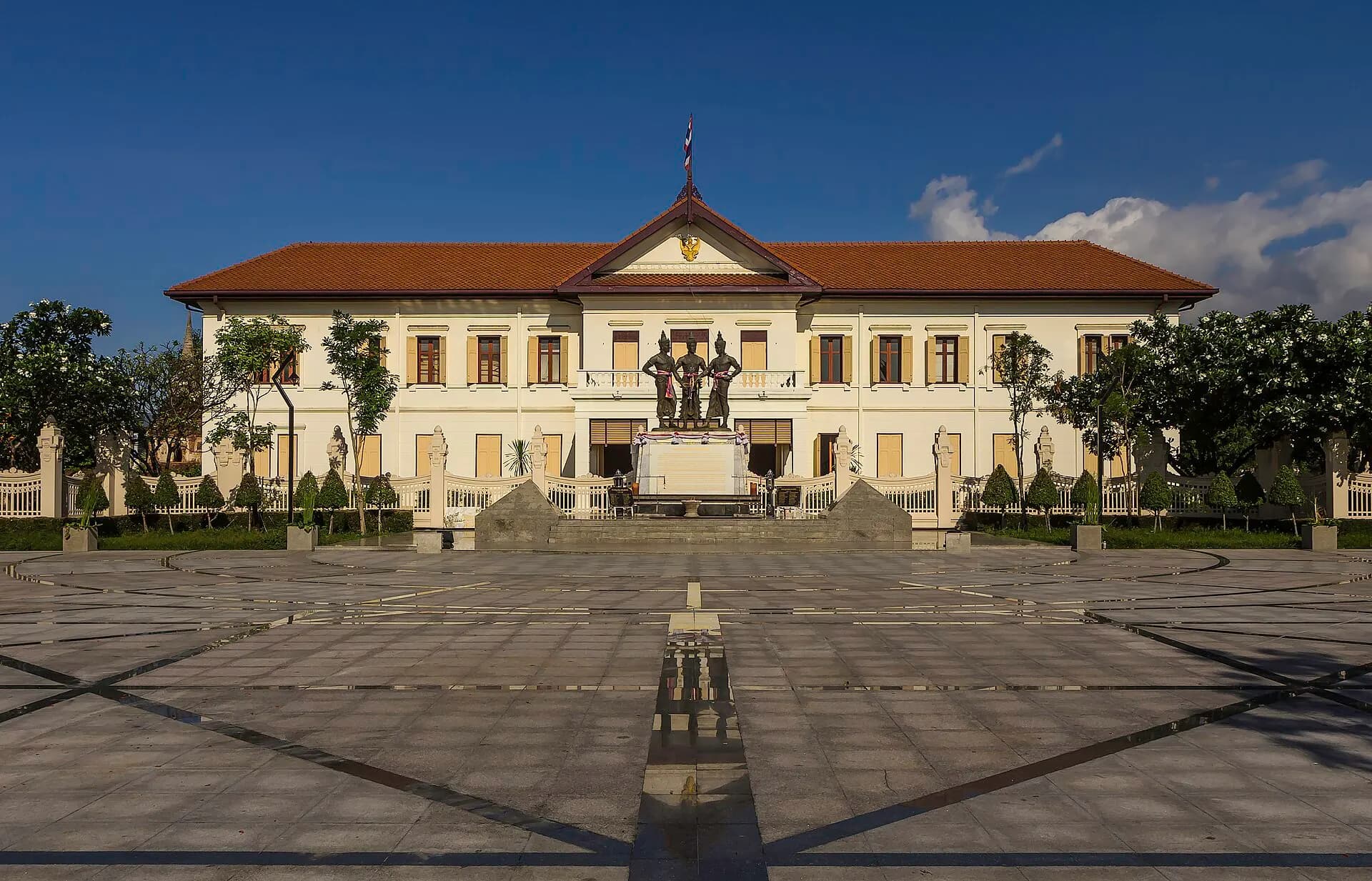
Inside the moat, quiet lanes are lined with temples, guesthouses, cafés and massage shops. The Tha Phae Gate, on the eastern side, is the most famous of the old city gates, and the Three Kings Monument honours the city's founders.
- 5
Wat Umong
Photo: Immanuelle, CC BY 4.0, via Wikimedia Commons
A forest temple on the edge of the city, with tunnels dug into the hillside in the fourteenth century, lined with niches holding Buddha images, set among trees and a lake. It's peaceful and less visited than the temples in the centre.
- 6
The Sunday Walking Street and Night Bazaar
Photo: Jakub Hałun, CC BY-SA 4.0, via Wikimedia Commons
On Sunday evenings, Ratchadamnoen Road through the old city becomes a vast market of handicrafts, clothes and street food, stretching from the Tha Phae Gate. The Night Bazaar, east of the old city, runs every night, and the Saturday market on Wualai Road is famous for silverwork.
TipArrive early, around five or six, before the crowds become very dense.
- 7
Nimmanhaemin
Photo: F.Borromini, CC BY-SA 4.0, via Wikimedia Commons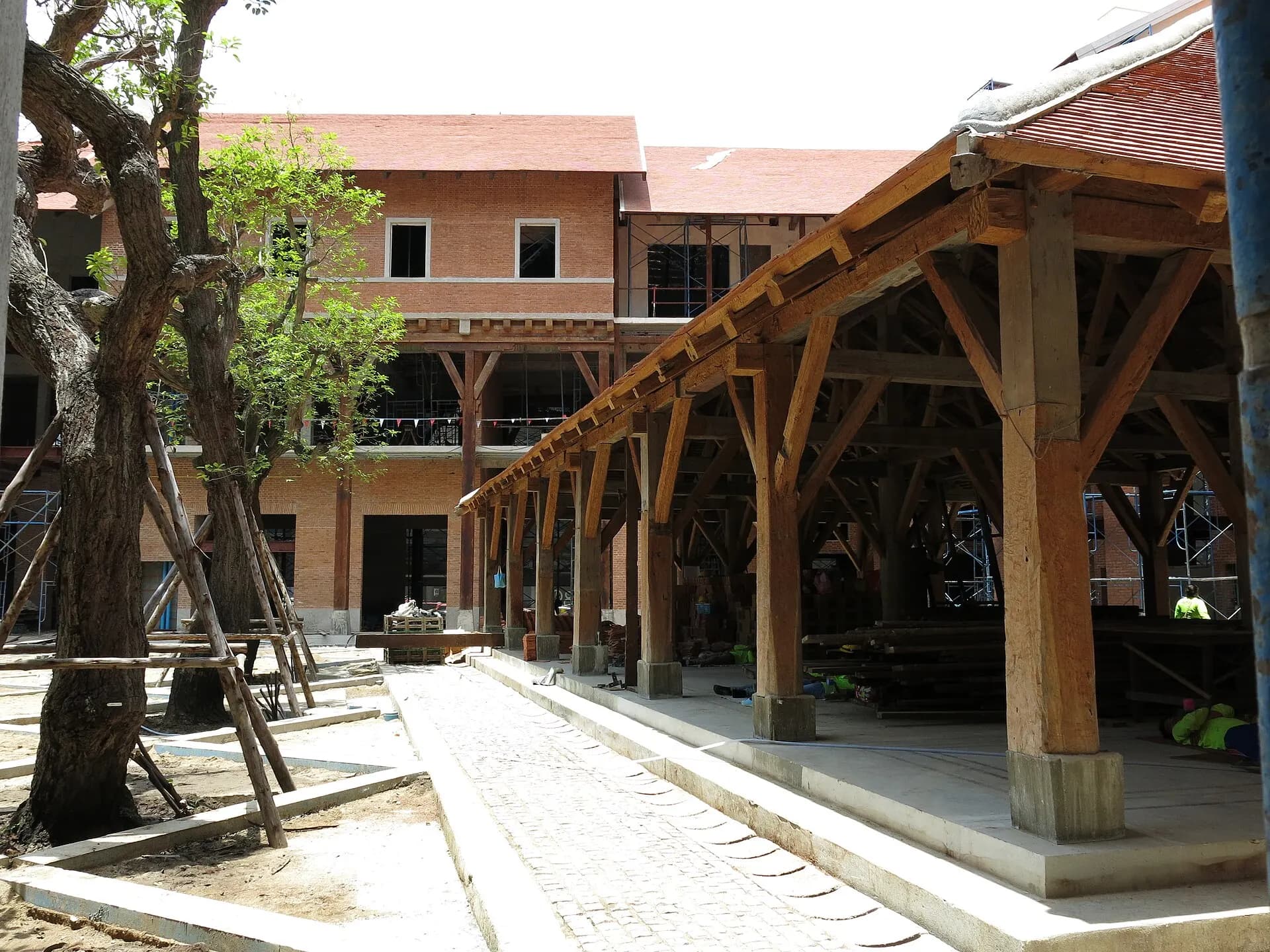
A modern neighbourhood west of the old city, popular with students and digital nomads, with coffee shops, galleries, boutiques and some of the city's best restaurants and bars.
- 8
Doi Inthanon National Park
Photo: ํีนาถชนน์ ลำภูเงิน, CC BY-SA 4.0, via Wikimedia Commons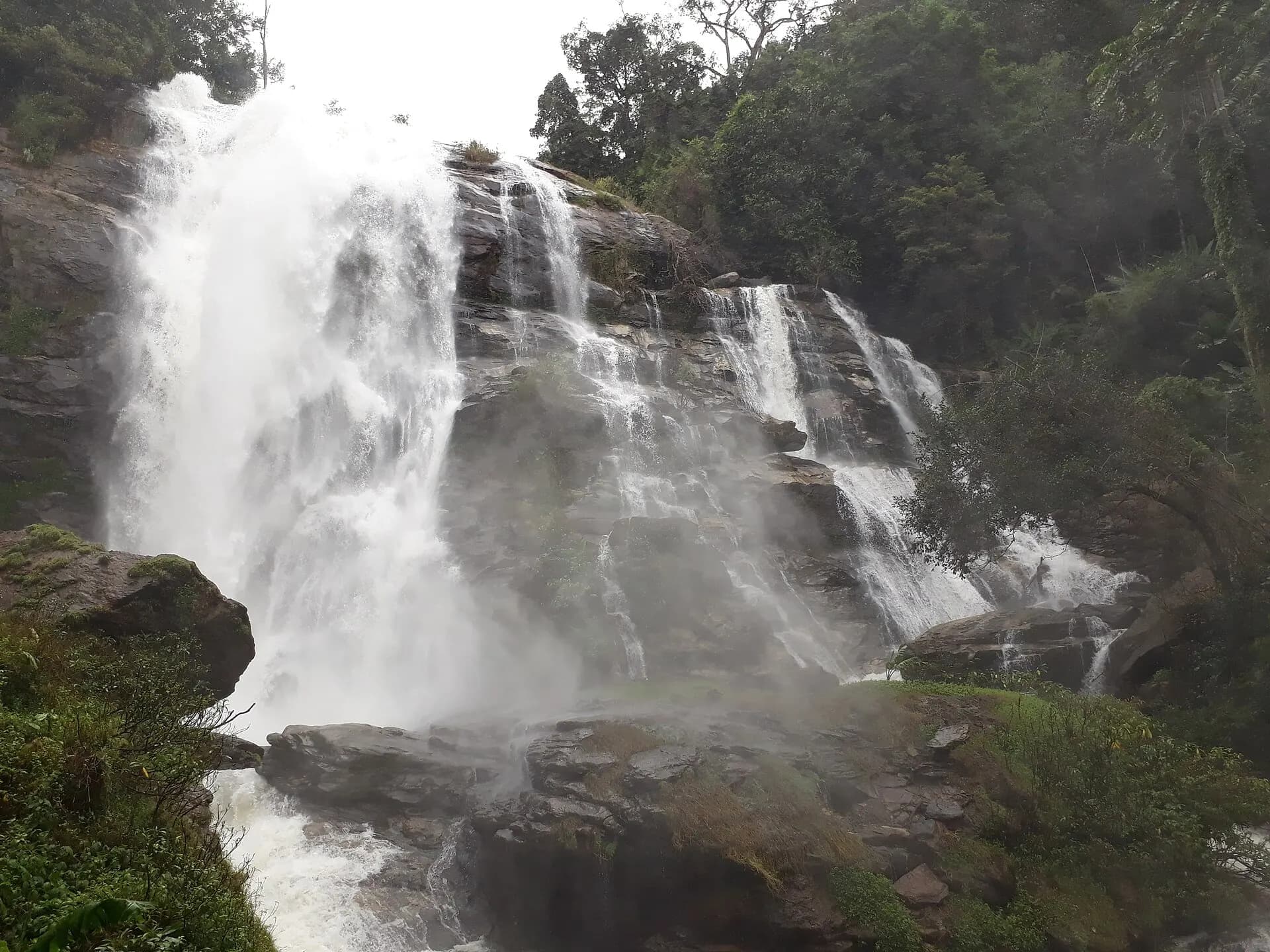
Thailand's highest mountain, about two hours from the city, with cool cloud forests, waterfalls such as Wachirathan, walking trails and the twin royal chedis set in flower gardens near the summit. Hmong and Karen villages grow coffee and vegetables on its slopes.
- 9
An ethical elephant sanctuary
Many elephant camps around Chiang Mai once offered riding and shows; today, the best sanctuaries let you observe rescued elephants feeding, bathing and walking freely, without riding or tricks. Choose carefully, and look for places where the elephants' welfare clearly comes first.
TipAvoid any place offering rides, shows or painting; these practices harm the animals.
When to go
The cool season, from November to February, is the best time to visit, with warm days and cool evenings. Loy Krathong and Yi Peng, usually in November, are celebrated with floating lanterns on the river and thousands of sky lanterns. From March to April, it's hot and the burning season fills the air with smoke, often with serious air pollution. The rainy season, from May to October, is green and quieter. Songkran, the Thai New Year in mid-April, brings huge water fights to the moat.
Getting around
The old city is compact and walkable. Red shared taxis, songthaews, are a cheap way to travel around the city; agree on the price before you get in. Ride-hailing apps work well, and many visitors rent scooters, though you need a valid licence and a helmet. For the mountains, hire a driver or join a tour.
Chiang Mai International Airport is only a short drive from the old city. Overnight trains and buses link the city with Bangkok.
Local tips
- Check entry requirements, and complete the Thailand Digital Arrival Card online before arriving.
- Dress modestly at temples, and take off your shoes before entering temple buildings.
- Women should not touch monks or hand things to them directly.
- Avoid the smoky season if you have breathing problems, and check air quality forecasts.
- Carry cash for markets and songthaews.
- Respect the monarchy; criticising the royal family is a serious offence.
Eat and drink
Northern Thai cooking is distinct from the rest of the country. Try khao soi, curry noodle soup with crispy noodles on top, the city's signature dish; sai ua, a spicy herb sausage; nam prik ong, a tomato and pork chilli dip with vegetables; and khan toke, a traditional dinner of many dishes shared on a low tray. Chiang Mai is famous for its cooking schools, and its coffee, grown in the surrounding hills, is excellent.
Beyond Chiang Mai
Chiang Rai, about three hours north, is home to the dazzling White Temple (Wat Rong Khun), a contemporary temple of white plaster and mirrored glass, as well as the Blue Temple and the Golden Triangle, where Thailand, Laos and Myanmar meet on the Mekong. Pai, a small town in a mountain valley reached by a winding road with hundreds of bends, is known for its relaxed atmosphere, hot springs and canyon views. The Mae Sa valley and the Sticky Waterfall, where you can walk up the limestone cascades, make easy half-day trips from the city.