Zermatt
A car-free Alpine village at the foot of the Matterhorn, the most famous mountain in the world.
- Best time to go
- July to September for hiking; December to April for skiing
- Local time
- –
- Currency
- Swiss Franc (CHF)
- Reading time
- 4 min
- Language
- German and French
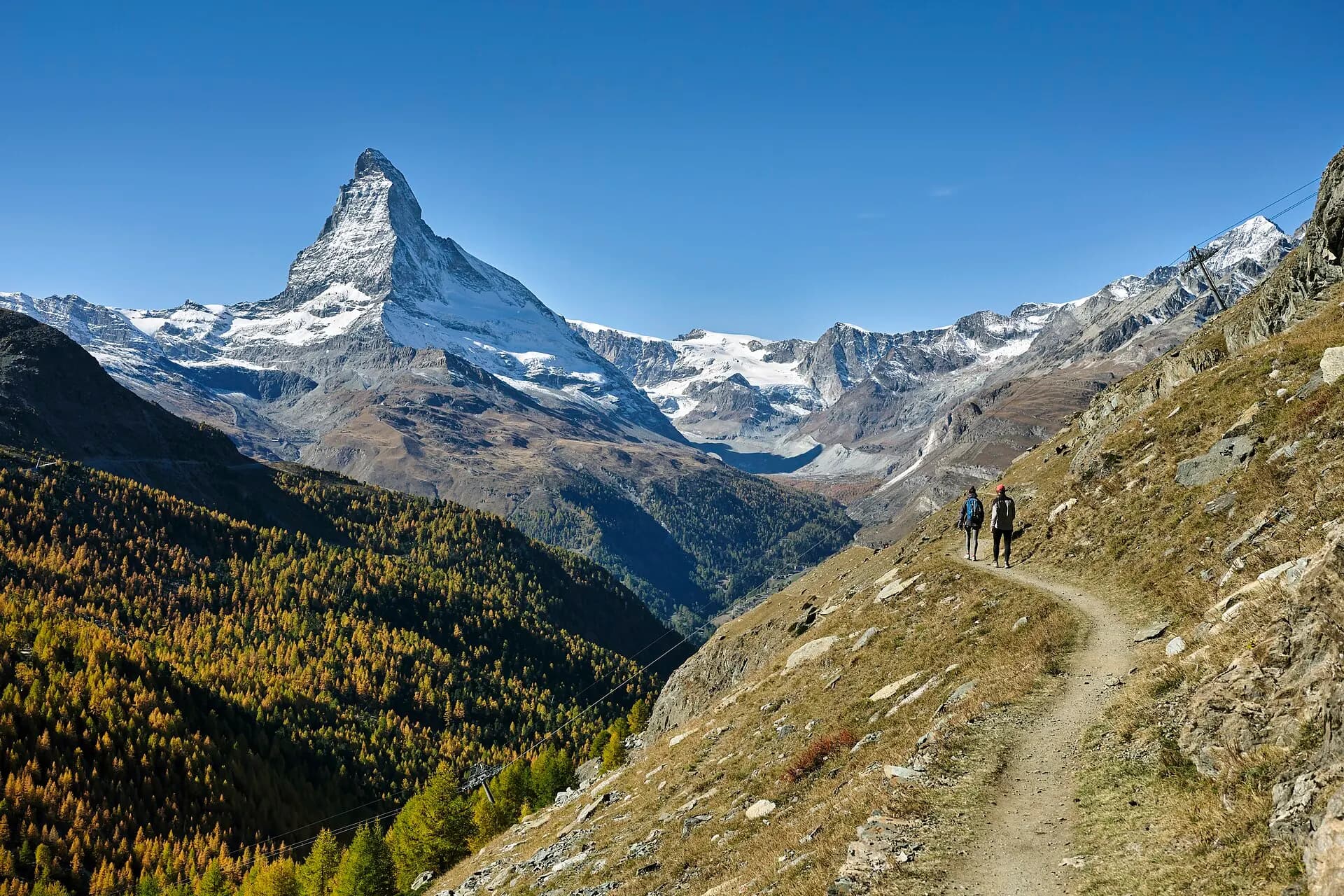
Zermatt is a mountain village at the head of a valley in the Swiss canton of Valais, beneath the pyramid-shaped Matterhorn, one of the most recognisable peaks in the world. The village is car-free: visitors arrive by train, and the streets are shared by electric taxis, horse-drawn carriages and pedestrians. Surrounded by more than thirty peaks over four thousand metres, it's one of the great mountain resorts of the Alps for both skiing and hiking.
The first ascent of the Matterhorn, in 1865, ended in tragedy when four of the seven climbers died on the descent, and the village's museum and cemetery tell the story of mountaineering here. Today, railways and cable cars carry visitors high into a world of glaciers and summits.
The top 8 in Zermatt
- 1
The Matterhorn
Photo: Carsten Steger, CC BY-SA 4.0, via Wikimedia Commons
The 4,478-metre peak rises alone above the valley, its faces glowing pink at sunrise. Climbing it requires experience, fitness and a mountain guide, but its views from below are spectacular from almost everywhere in Zermatt.
TipFor the classic sunrise view, walk to the Kirchbrücke bridge in the village centre at dawn.
- 2
The Gornergrat
Photo: Kabelleger / David Gubler (http://www.bahnbilder.ch), CC BY-SA 3.0, via Wikimedia Commons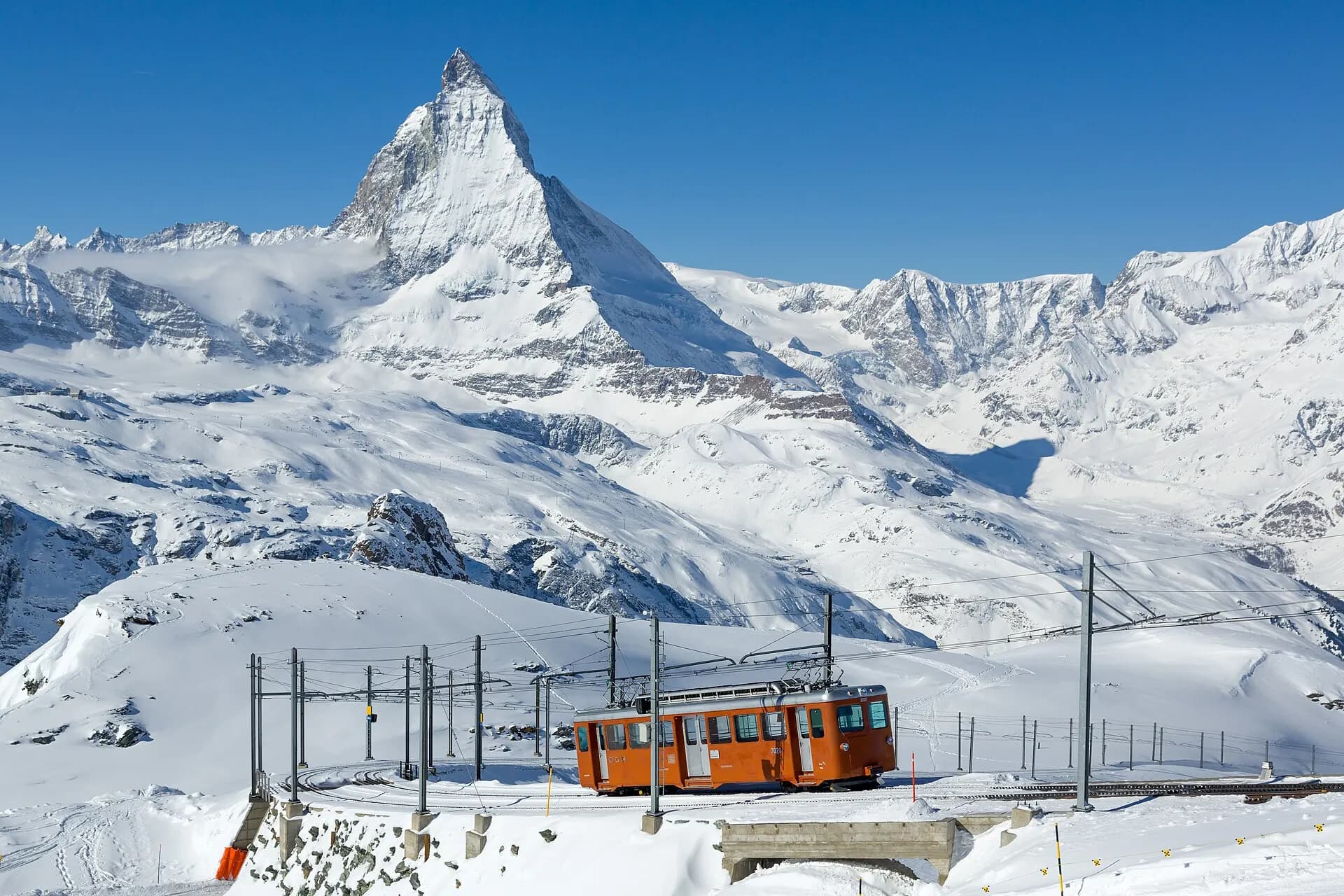
A cogwheel railway, open since 1898, climbs from Zermatt to a viewpoint at over three thousand metres, with a panorama of the Matterhorn, Monte Rosa, Switzerland's highest mountain, and the vast Gorner Glacier.
- 3
The Matterhorn Glacier Paradise
Photo: Roy Egloff, CC BY-SA 4.0, via Wikimedia Commons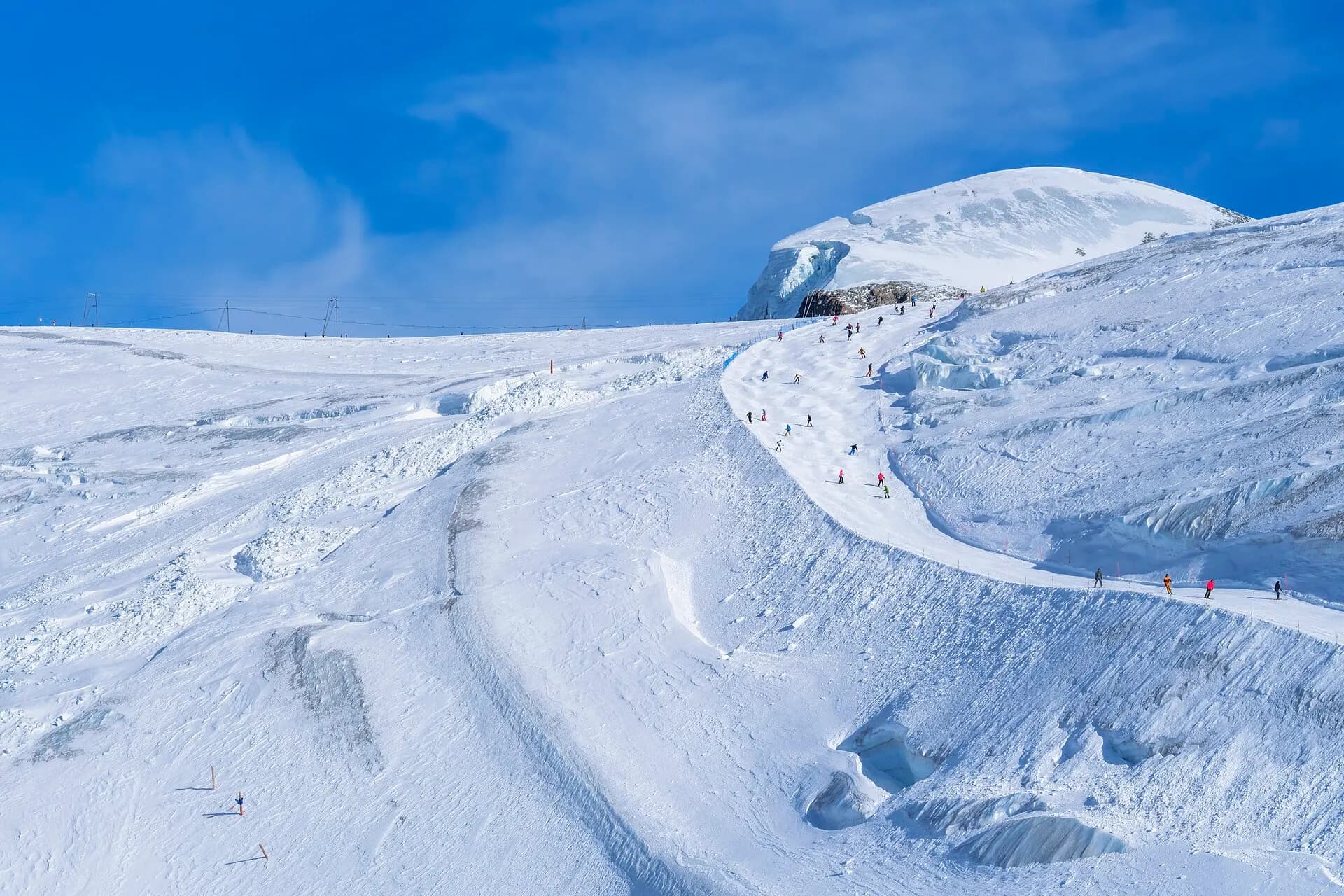
The highest cable car station in Europe, on the Klein Matterhorn at almost 3,900 metres, with a viewing platform overlooking peaks in Switzerland, Italy and France, an ice palace carved inside the glacier, and summer skiing.
TipThe altitude is high; move slowly and drink water if you feel light-headed.
- 4
The Five Lakes Walk (5-Seenweg)
Photo: Giles Laurent, CC BY-SA 4.0, via Wikimedia Commons
A walk of around nine kilometres from the Blauherd lift station past five mountain lakes, several with famous reflections of the Matterhorn, including the Stellisee and Grindjisee.
- 5
Riffelsee
Photo: Giorgio Galeotti, CC BY-SA 4.0, via Wikimedia Commons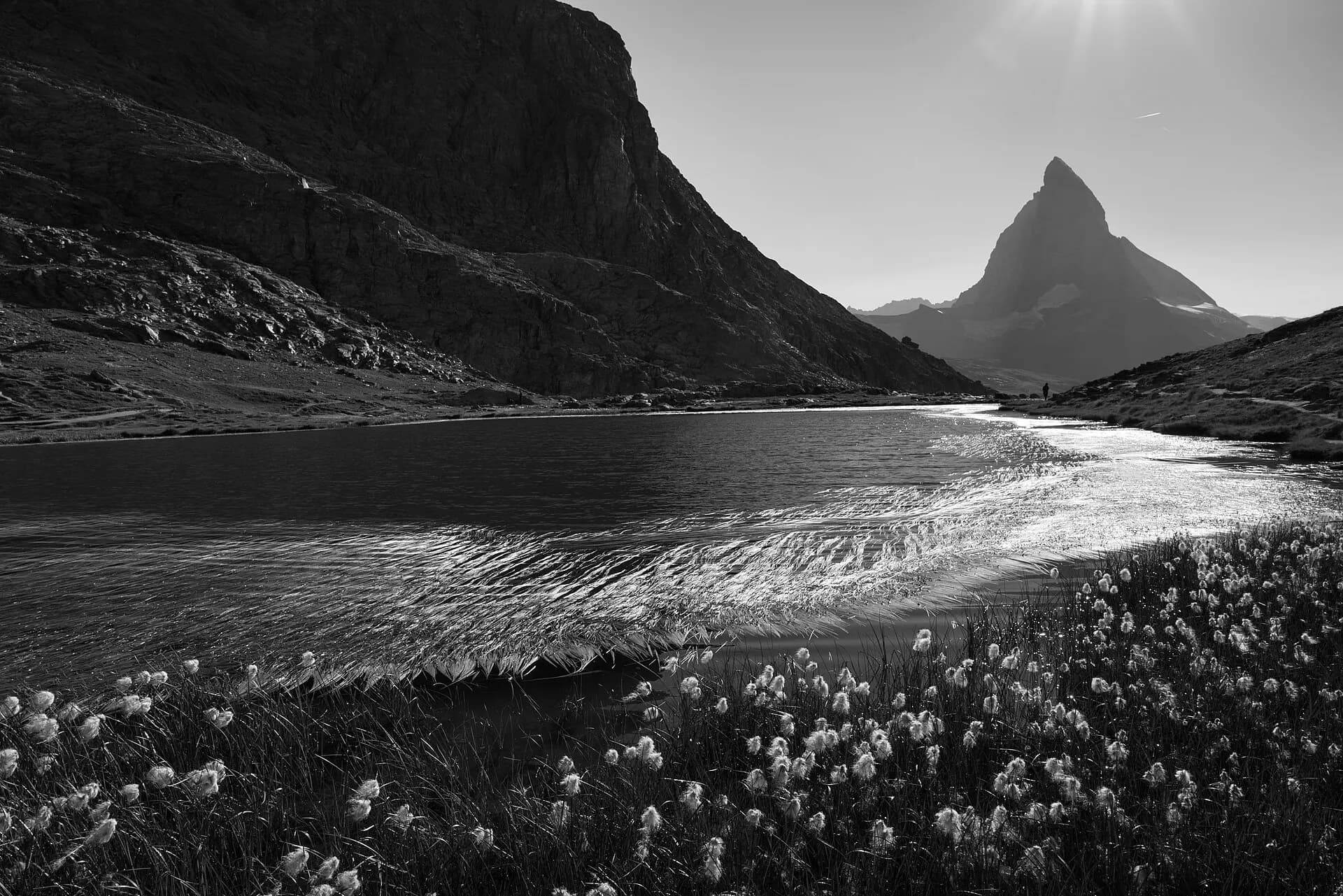
A small lake near the Rotenboden station of the Gornergrat railway, where on calm mornings the Matterhorn is mirrored perfectly in the water.
- 6
The Matterhorn Museum and old village
An underground museum, the Zermatlantis, recreating the old village and telling the story of the first ascent. Nearby, the narrow lanes of the old village have dark wooden barns and granaries on stone stilts to keep out mice.
- 7
Gorner Gorge
A narrow gorge where the Gornera river has carved through green serpentine rock, explored on wooden walkways just above the rushing water.
- 8
Sunnegga and the Leisee
Photo: Daniel Reust, CC BY-SA 4.0, via Wikimedia Commons
An underground funicular climbs in minutes to Sunnegga, with a small lake, a playground and views of the Matterhorn, popular with families.
When to go
Summer, from July to September, is the hiking season, with wildflowers in the meadows and all lifts open. Winter, from December to April, is ski season, with runs connecting to Cervinia in Italy; summer skiing is also possible on the glacier. Spring and late autumn are quieter, with some lifts closed for maintenance.
Getting around
Private cars must be left in Täsch, five kilometres away, where a shuttle train runs to Zermatt every twenty minutes. Trains from Visp link Zermatt with the Swiss rail network, and the Glacier Express, a famous scenic train, runs to St Moritz. In the village, everything is walkable, with electric buses and taxis.
Local tips
- Switzerland is expensive; the Swiss Travel Pass and Peak Pass can save money on transport and lifts.
- The Matterhorn is often hidden in cloud; check webcams before buying lift tickets.
- Bring sunglasses, sunscreen and layers for high altitude.
- Stay on marked trails and check conditions; glacier travel requires a guide.
- Switzerland uses the Swiss franc, though euros are often accepted.
- Book accommodation early for peak ski weeks and summer.
- The village is quieter in May and November, when some hotels close.
Eat and drink
Valais cooking is hearty and cheese-based: try raclette, melted cheese scraped onto potatoes; fondue; rösti; and air-dried beef, Walliser Trockenfleisch. Mountain restaurants on the slopes serve lunches with views, from simple huts to gourmet terraces. Local wines from the Valais vineyards, such as Fendant and Cornalin, are excellent.
Where to stay
Zermatt has hotels for every budget, from chalets and apartments to grand luxury hotels, many with views of the Matterhorn. Book a room with a Matterhorn view if you can; waking up to it is unforgettable.
Mountaineering
Zermatt is one of the world's great mountaineering centres, with the Zermatt Alpine Center providing guides for the Matterhorn and many other peaks, from easy four-thousanders such as the Breithorn to multi-day tours. The Haute Route, a famous high-level route of glacier and mountain passes, links Chamonix with Zermatt.
Skiing
Zermatt's ski area, the Matterhorn Ski Paradise, is one of the highest in the Alps, with runs up to almost 3,900 metres and a long season from late autumn to spring, plus year-round skiing on the Theodul Glacier. Pistes cross the Italian border to Breuil-Cervinia and Valtournenche, so you can ski into Italy for lunch; bring your passport and an international lift pass. The three main sectors, Sunnegga-Rothorn, Gornergrat and Matterhorn Glacier Paradise, suit all levels, with long, scenic red runs and challenging off-piste for experts with a guide.
Hiking
In summer, around four hundred kilometres of marked trails start from the village and the lift stations. Popular routes include the walk from Rotenboden down past the Riffelsee to Riffelberg, the Matterhorn Glacier Trail between Trockener Steg and Schwarzsee, which passes ice-polished rock, and the hike up to the Hörnli Hut, the base camp for Matterhorn climbs, at 3,260 metres. The Europaweg, a two-day high trail from Grächen, includes the Charles Kuonen bridge, one of the longest pedestrian suspension bridges in the world.