Lucerne
A medieval lakeside city of wooden bridges and painted houses, with paddle steamers at the quay and mountains on every side.
- Best time to go
- May to October for lake and mountain trips; December for Christmas markets
- Local time
- –
- Currency
- Swiss Franc (CHF)
- Reading time
- 10 min
- Language
- German and French
Lucerne sits where the River Reuss flows out of Lake Lucerne, with the Old Town on one bank, the railway station and concert hall on the other, and a ring of mountains behind. It's small enough to cross on foot in twenty minutes, yet it holds two of Europe's oldest covered wooden bridges, a near-complete line of medieval walls and towers, streets of painted houses and one of the most affecting monuments in Switzerland. For many travellers it's the first taste of the country: under an hour by train from Zurich, compact, and remarkably beautiful.
The city's other great asset is its position. Paddle steamers leave from the quay in front of the station for villages around the lake, and from those piers cogwheel railways, cable cars and funiculars climb to Pilatus, Rigi, Stoos and the Bürgenstock. Engelberg and the glaciers of Titlis are a short train ride south. You could spend a week here and take a different boat and mountain every day.
The top 14 in Lucerne
- 1
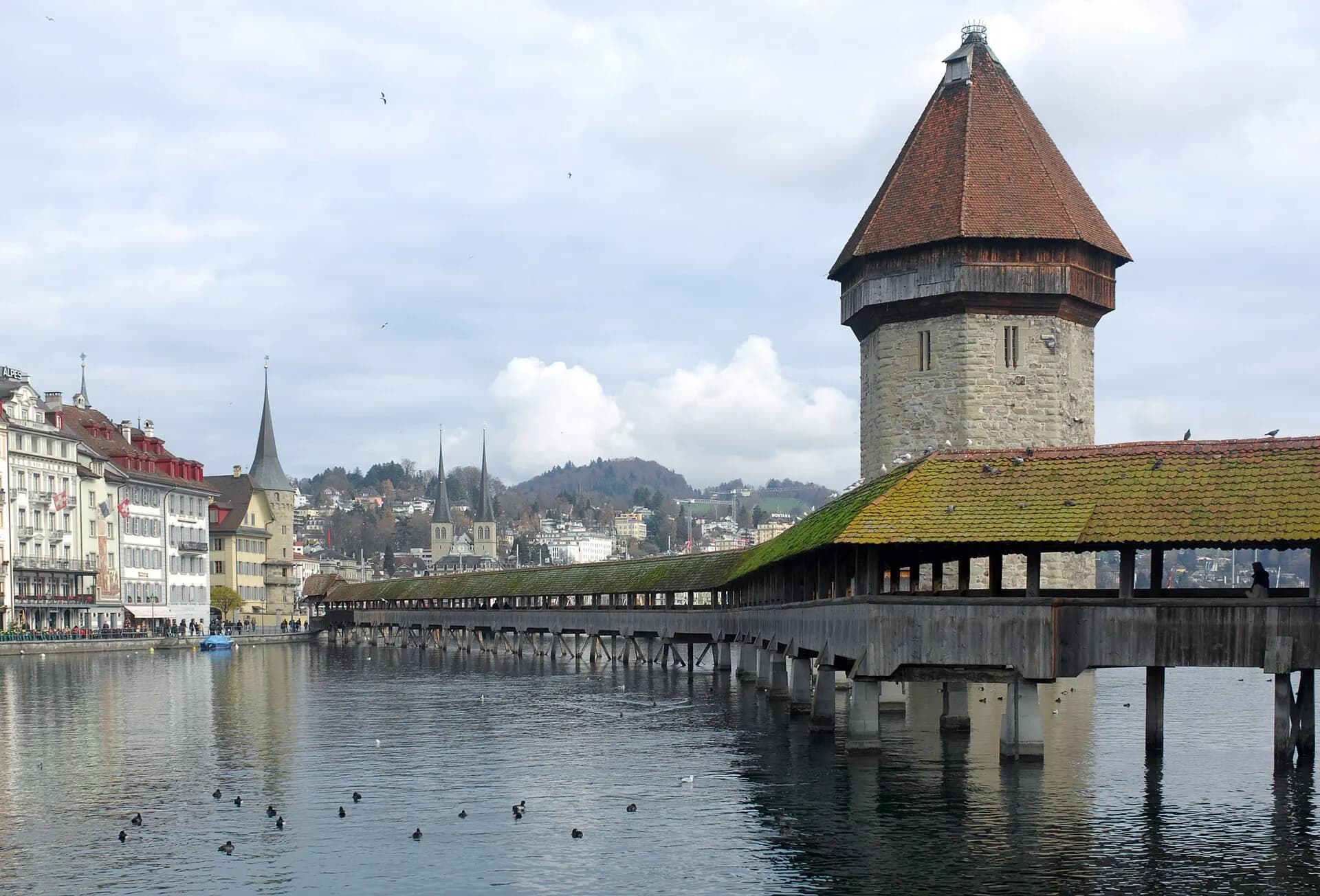
Chapel Bridge and Water Tower
Photo: Ermell, CC BY-SA 4.0, via Wikimedia Commons
The Kapellbrücke, a covered timber footbridge built in the fourteenth century as part of the town's defences, angles across the Reuss beside the octagonal stone Water Tower, which has served as an archive, prison and treasury. Painted panels from the seventeenth century under the roof show scenes from Swiss and Lucerne history. A fire in 1993 destroyed much of the bridge and many of the paintings; it was rebuilt quickly, and the scorched panels that survived are still in place.
TipCome early in the morning or after dark, when the bridge is quieter and floodlit.
- 2
Jesuit Church
Photo: Reinhold Möller Ermell, CC BY-SA 4.0, via Wikimedia Commons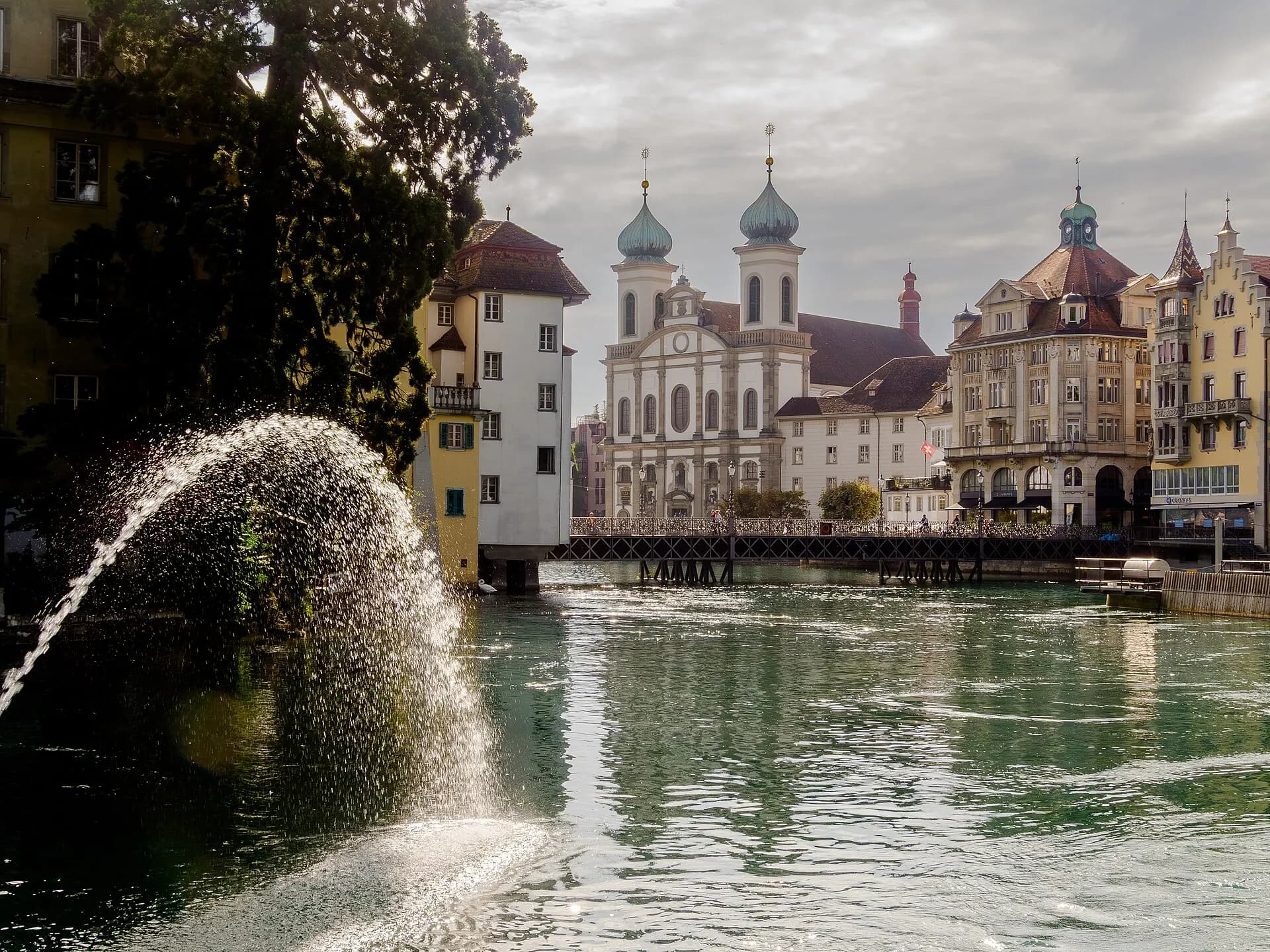
On the left bank of the Reuss, the twin onion-domed towers of the Jesuit Church mark one of the first large Baroque churches built in Switzerland, dating from the 1660s and 1670s. Inside, the white and pink stucco and the bright ceiling are a contrast to the dark wood of the bridges outside. It's free to enter, but remember that it's a working church.
- 3
Spreuer Bridge
Photo: JoachimKohler-HB, CC BY-SA 4.0, via Wikimedia Commons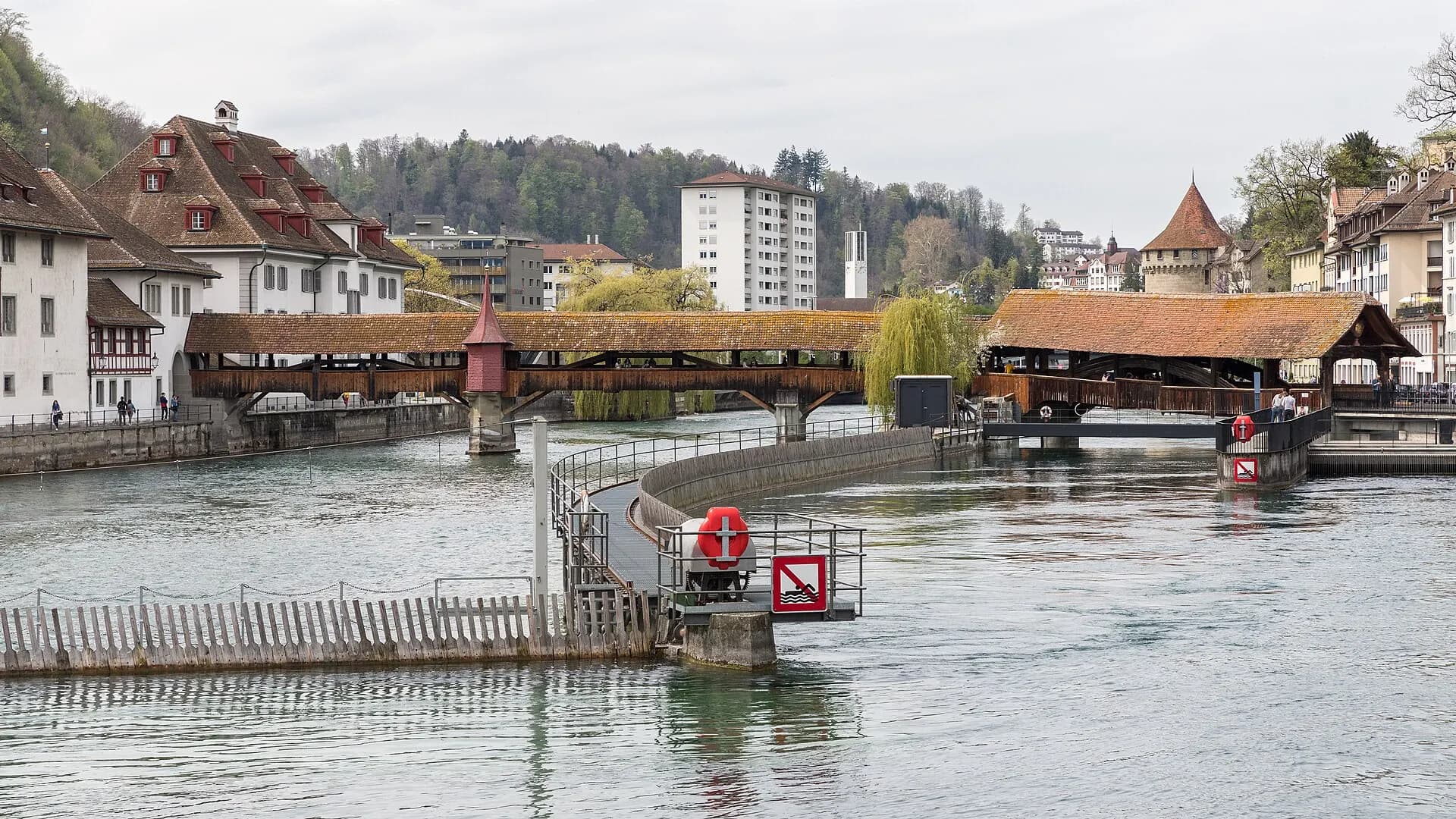
A short walk downstream, the second covered bridge is smaller, quieter and in many ways more remarkable. Its roof panels form a seventeenth-century Dance of Death cycle by Kaspar Meglinger, in which a skeleton comes for people of every rank, from the pope to the farmer. Beside it, the needle dam that regulates the lake level still uses wooden needles set by hand.
- 4
Old Town squares and painted facades
Photo: MatthiasKabel, CC BY-SA 3.0, via Wikimedia Commons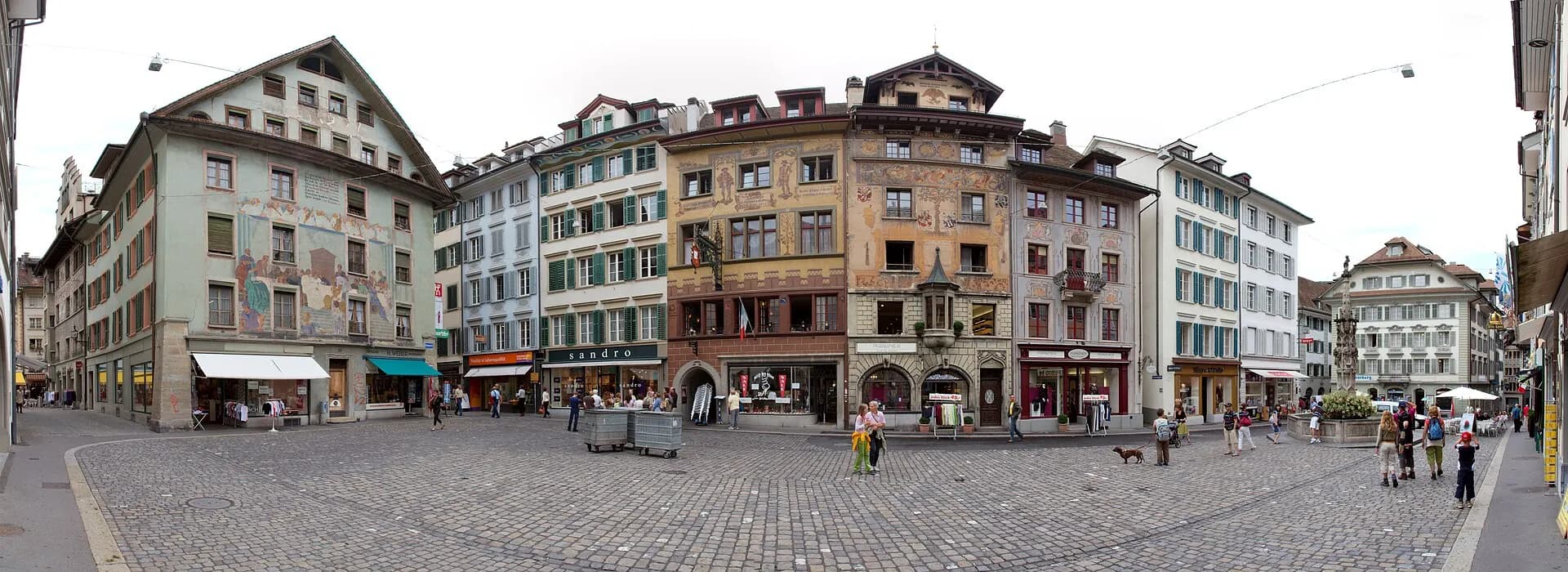
On the right bank, a tight web of lanes links the Kornmarkt, with its Renaissance town hall and arcades where markets are still held, the Weinmarkt with its fountain, and the Hirschenplatz. Many of the guild houses and townhouses carry painted facades with coats of arms, allegories and scenes from local history. Wander without a plan; the whole area is pedestrianised.
- 5
Musegg Wall and towers
Photo: JoachimKohler-HB, CC BY-SA 4.0, via Wikimedia Commons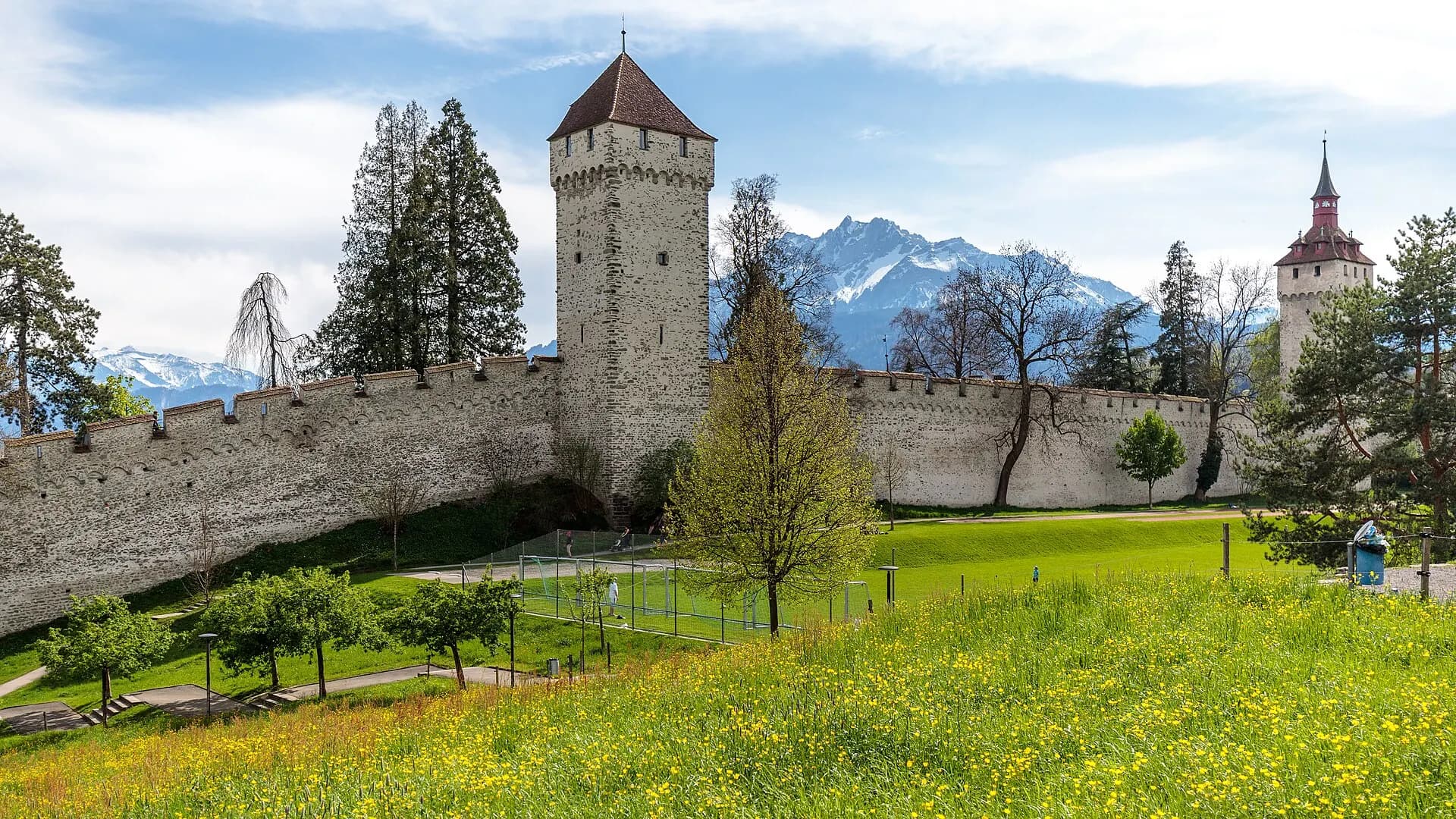
Most of the town wall built along the hill above the Old Town in the fourteenth and fifteenth centuries still stands, with nine towers. Several towers and parts of the wall walk are open to the public in season (from the beginning of April to the beginning of November), including the Männli, Schirmer and Zyt towers. The Zyt tower holds the oldest clock in Lucerne, whose dial was meant to be read from the lake, and by tradition it strikes the hour a minute before the other clocks in town.
TipThe walls are closed in winter, and the stairs are steep and narrow. Check museggmauer.ch for current hours.
- 6
Lion Monument
Photo: Godot13, CC BY-SA 4.0, via Wikimedia Commons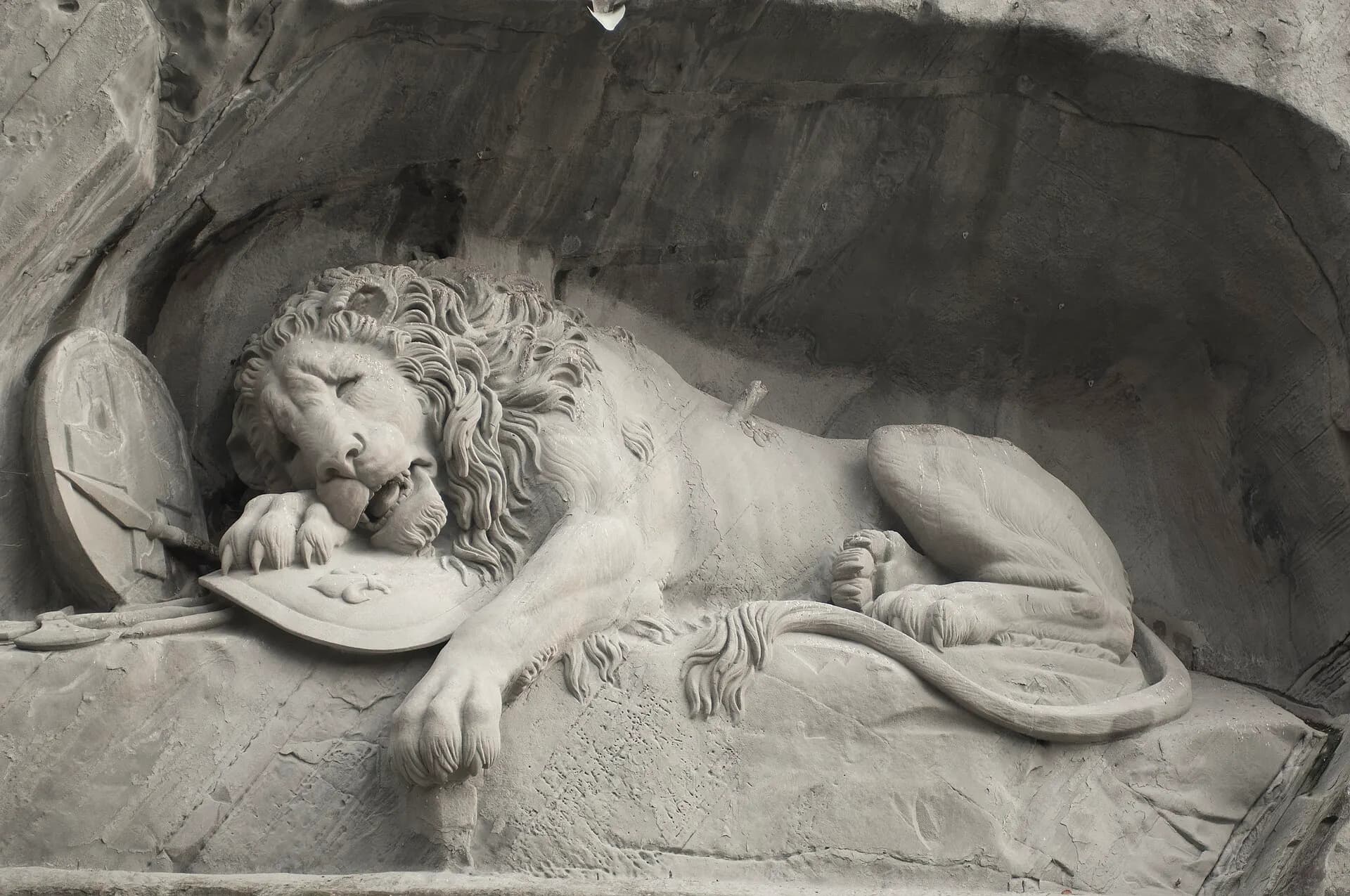
A dying lion carved into a sandstone cliff above a small pond, designed by the Danish sculptor Bertel Thorvaldsen and finished in 1821. It commemorates the Swiss Guards killed defending the Tuileries Palace in Paris in 1792, and the wounded animal, a spear in its side, sheltering a shield with the French lilies, is genuinely moving. Mark Twain called it the most mournful and moving piece of stone in the world. The Glacier Garden, with potholes ground into the rock by meltwater in the last ice age, is next door.
- 7
Rosengart Collection
Photo: WES1947, CC BY-SA 3.0, via Wikimedia Commons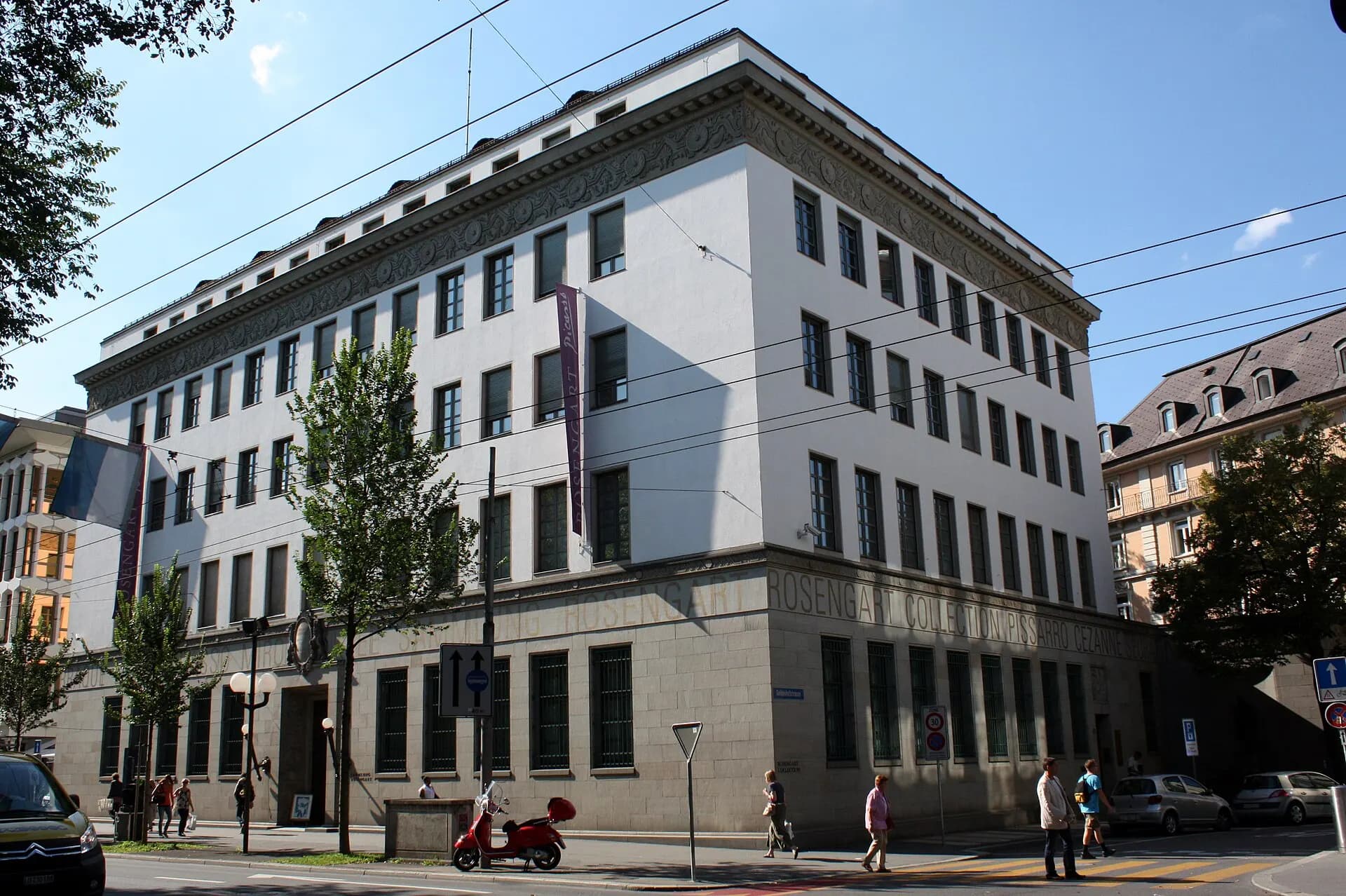
A short walk from the station, a former bank building holds the private collection of the art dealers Siegfried and Angela Rosengart. Its strengths are Pablo Picasso, with paintings, drawings and photographs of the artist by David Douglas Duncan, and a large group of works by Paul Klee, along with Impressionist and modern pieces by Monet, Cézanne, Matisse, Miró and others. It's a manageable size for an hour or two.
- 8
KKL Luzern and the lake steamers
Photo: Sputniktilt, CC BY-SA 3.0, via Wikimedia Commons
The Culture and Congress Centre, designed by Jean Nouvel, sits on the lakefront beside the station under a huge, thin flat roof that seems to float above the water. Its concert hall, admired for its acoustics, is the main stage for the Lucerne Festival. In front of it, boats of the Lake Lucerne Navigation Company leave for every corner of the lake, including five restored paddle steamers built between 1901 and 1928, the largest such fleet on any Swiss lake.
TipThe long trip to Flüelen, through the fjord-like Lake Uri, is the most dramatic sailing; check which departures are steamers in the timetable.
- 9
Swiss Museum of Transport
Photo: Andrew Bossi, CC BY-SA 2.5, via Wikimedia Commons
On the lake shore east of the centre, the Verkehrshaus is Switzerland's best-known museum, covering railways, roads, ships, aviation and space, with real locomotives, cable car cabins and aircraft, a planetarium and plenty for children to climb into. Allow at least half a day. It's a pleasant walk along the shore, or a short ride by bus, train or boat.
- 10
Rigi
Photo: Tobi 87, CC BY-SA 3.0, via Wikimedia Commons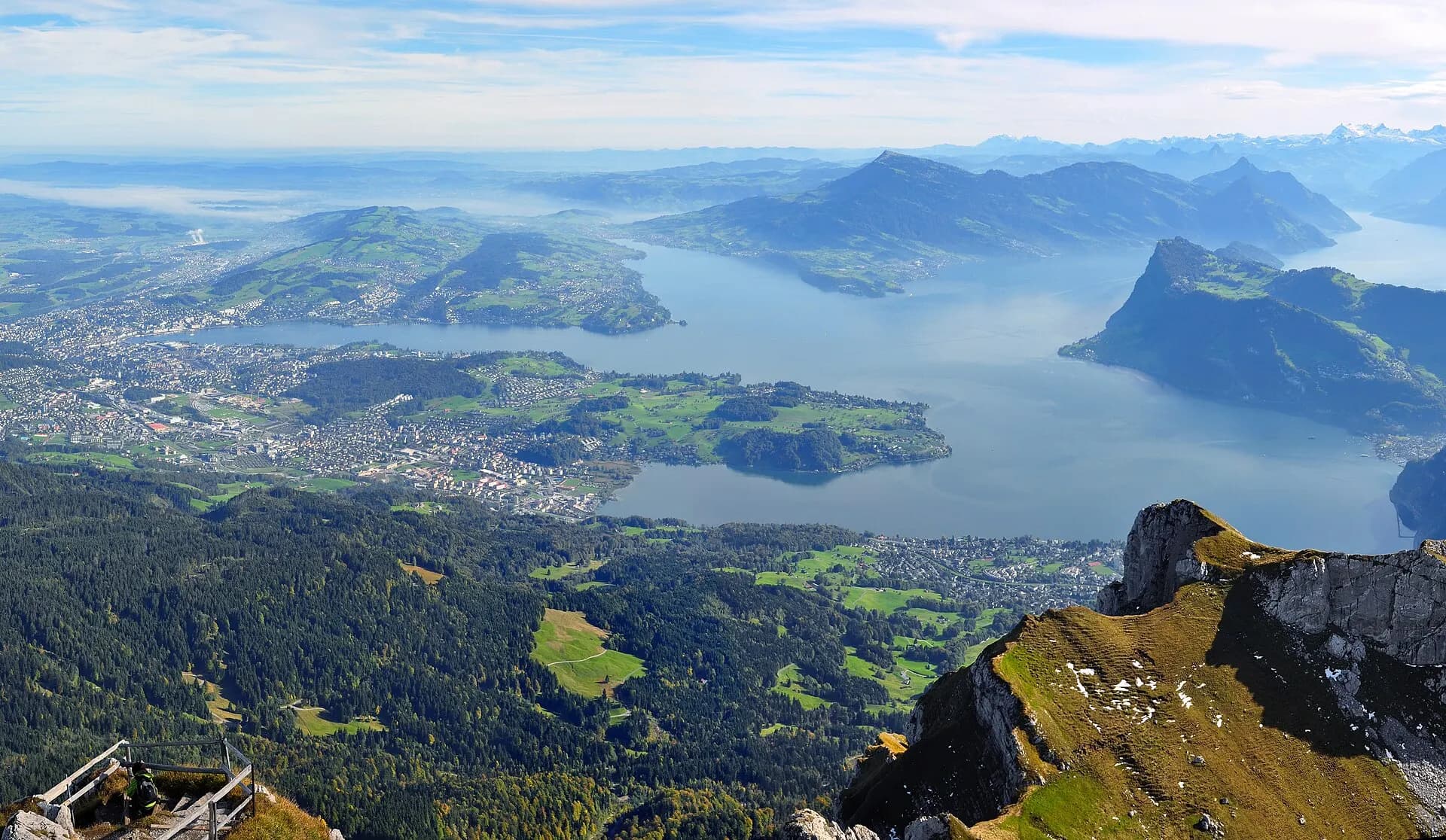
Known as the Queen of the Mountains, Rigi rises between Lake Lucerne and Lake Zug, and its summit at Rigi Kulm has views across the lakes to the Alps. Europe's first mountain railway opened here in 1871, climbing from Vitznau on the lake, and a second line comes up from Arth-Goldau; a cable car also links Weggis to Rigi Kaltbad. A classic loop is the steamer to Vitznau, the cogwheel railway up and the cable car down to Weggis. The slopes are good for gentle walking in summer and sledging in winter.
- 11
Stoos
Photo: Pakeha, CC BY-SA 4.0, via Wikimedia Commons
Above Schwyz, the Stoosbahn, opened in 2017, is the steepest funicular in the world, with a maximum gradient of 110 per cent; its round cabins tilt so passengers stay upright. At the top is the car-free village of Stoos. In summer, a chairlift and a short walk lead to the Klingenstock, from where a ridge trail runs to the Fronalpstock, with wide views over Lake Lucerne. The ridge walk is exposed in places and suits sure-footed hikers.
- 12
Bürgenstock and the Hammetschwand Lift
Photo: Leiju, CC BY-SA 3.0, via Wikimedia Commons
The Bürgenstock is a wooded ridge on a peninsula in the lake, reached by boat from Lucerne and a funicular from the pier at Kehrsiten. A cliffside path, the Felsenweg, leads round to the Hammetschwand Lift, an outdoor glass-and-steel elevator from 1905 that rises about 153 metres up the rock face to a summit viewpoint, the highest outdoor lift in Europe. The lift and path are seasonal and close in winter and bad weather.
- 13
Pilatus
Photo: Ermell, CC BY-SA 4.0, via Wikimedia Commons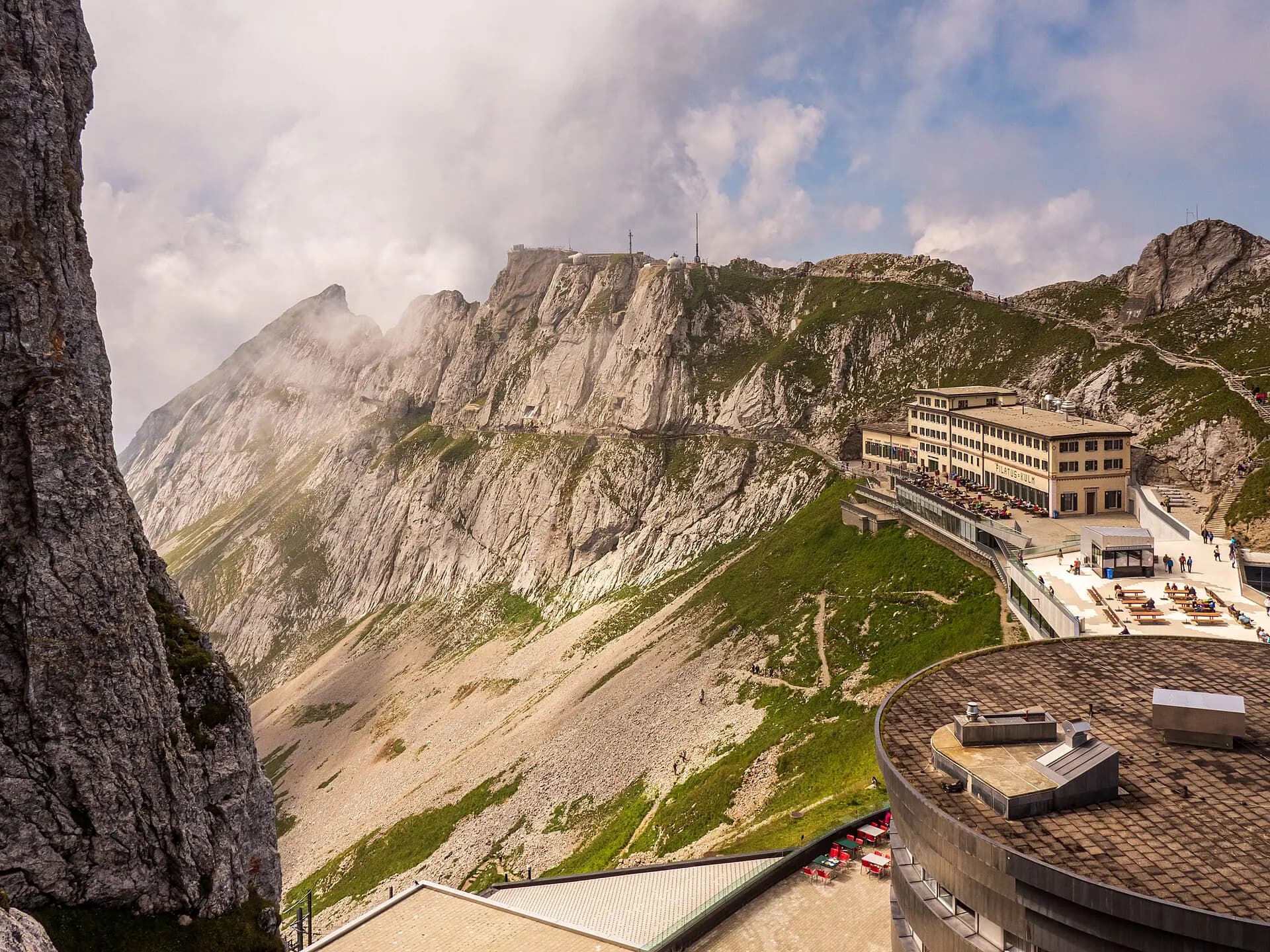
Lucerne's own mountain, rising steeply to the south-west of the city. The Golden Round Trip combines a boat to Alpnachstad, the cogwheel railway up and the panorama gondolas and the Dragon Ride aerial cableway down to Kriens, with a bus back to town, or the same in reverse. The cogwheel railway, opened in 1889, is the steepest in the world, at up to 48 per cent, and runs only in the warmer months (in 2026 from 11 May to 29 November), so the full round trip is a May to October outing. The gondolas and cable car close for maintenance in late autumn (in 2026, 19 October to 27 November).
TipIn winter, Pilatus is reached only by the gondolas and cable car from Kriens.
- 14
Mount Titlis and Engelberg
Photo: ASaber91, CC BY-SA 4.0, via Wikimedia Commons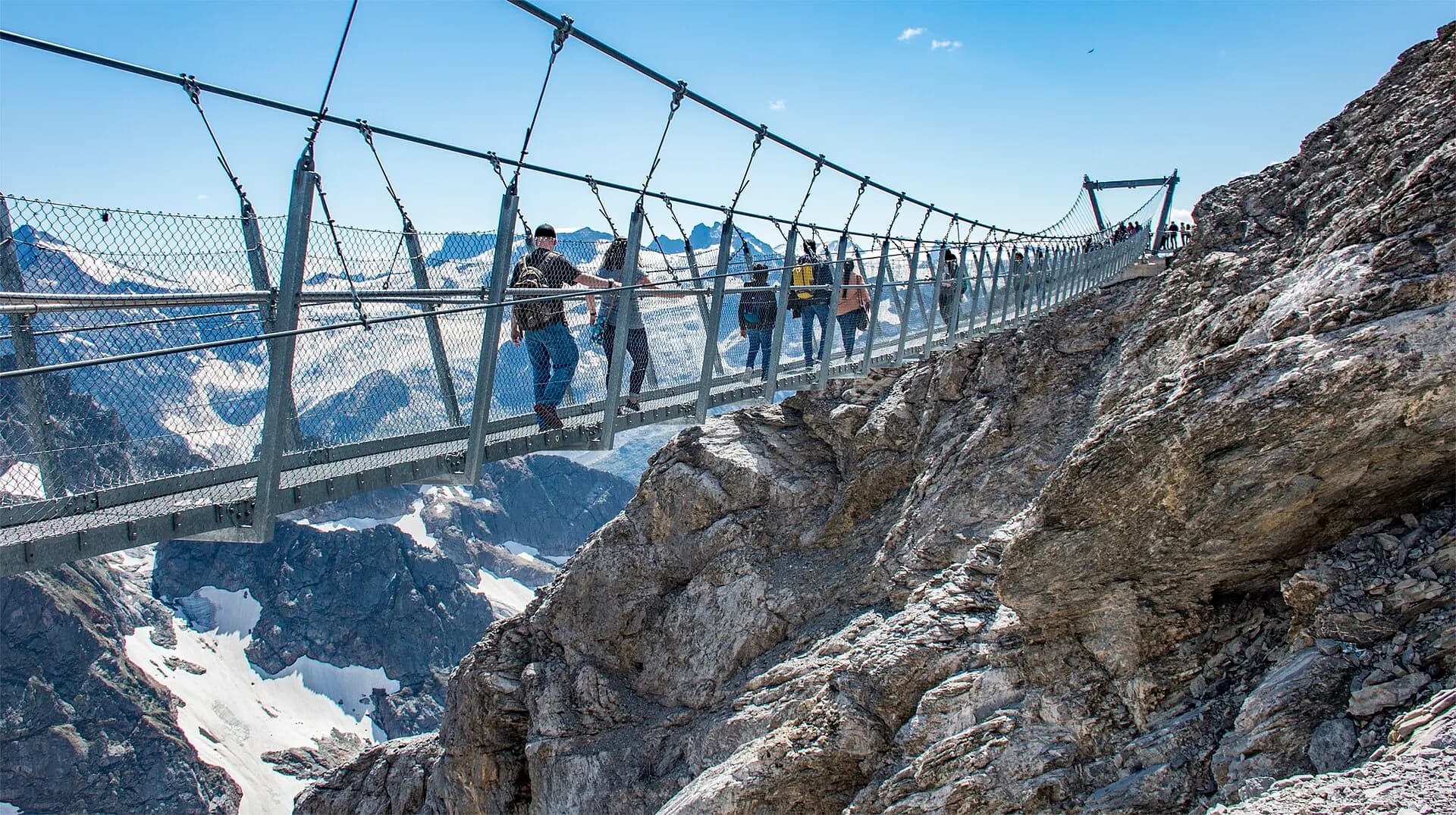
South of the lake, the monastery village of Engelberg sits at the foot of Titlis, a 3,238-metre peak with glacier ice all year round. Cable cars climb in stages to the summit station, where you'll find the Cliff Walk suspension bridge over a sheer drop, a cave cut into the glacier and, in summer, the Ice Flyer chairlift over the crevasses and a snow park. The summit area is a building site until a new peak station opens, planned for 2029, and from mid-August to mid-December 2026 the revolving Rotair cabin is replaced by a non-rotating cable car.
TipEngelberg is about 45 minutes from Lucerne by train; take the first lifts for the best visibility.
When to go
May to October is the main season, when all the mountain railways and steamers are running and the lake is warm enough for a swim by July. Summer is busy and hotels are expensive, especially during the Lucerne Festival in August and early September. Late spring and early autumn are calmer, but some lifts close for maintenance in spring and November, so check before you plan a mountain day. Winter is quiet and often grey in the city, though Rigi, Stoos and Engelberg have snow, and the Christmas markets fill the Old Town in December. Lucerne Carnival (Fasnacht), in the weeks before Lent, brings brass bands and masked parades onto the streets for six days.
Getting around
Trains run from Zurich and Zurich Airport roughly every half-hour, taking under an hour, with direct links to Bern, Basel and Interlaken over the Brünig Pass on the Luzern–Interlaken Express. The Old Town is best on foot, and local buses cover the rest. Hotels give guests a Visitor Card Lucerne with free public transport in the city zone and some discounts.
The lake boats are the best way to reach most excursions. The Swiss Travel Pass covers the scheduled boats and the trains and buses around the lake, and also the Rigi and Stoos railways; Pilatus and Titlis are discounted rather than included. The regional Tell Pass covers most boats, trains and mountain lifts in Central Switzerland and may be better value if you plan several peaks. Compare it, the Swiss Travel Pass and the Half Fare Card against your actual plans before buying.
Local tips
- Boats leave from piers in front of the station; check the pier number for your destination, as departures are split between them.
- Look at the mountain webcams in the morning before committing to a summit ticket, and switch to a lake day if the peaks are in cloud.
- Most mountain lifts have maintenance closures in spring and late autumn; check dates on the operator's site.
- Swim only at marked lidos or the lakeside bathing areas, and stay out of the Reuss, whose current is strong.
- Drinking fountains around town give clean, cold water; bring a bottle.
- Shops close early on Saturdays and most are shut on Sundays, except at the station.
- Switzerland uses the Swiss franc; cards and contactless payment are accepted almost everywhere.
Eat and drink
The local speciality is the Luzerner Chügelipastete, a large puff-pastry vol-au-vent filled with veal, mushrooms and cream sauce, sometimes with raisins. During carnival, look for Fasnacht doughnuts and the thin fried pastries called Fasnachtschüechli. Lake fish such as perch and whitefish appear on menus around the lake, and mountain restaurants serve rösti, Älplermagronen and cheese dishes. The Old Town has old guild-house restaurants and cosy bars; the Neustadt and the streets behind the station are livelier and less touristy. Eating out is expensive, so lunch menus and supermarket picnics by the lake are good ways to save money.
Where to stay
The Old Town and the area around the station put you on foot from the boats and trains. The grand nineteenth-century hotels along the Schweizerhofquai and Haldenstrasse have lake views and prices to match. Budget options include hostels and simpler hotels in the Neustadt. For a quieter stay, villages on the lake such as Weggis and Vitznau combine waterfront hotels with direct access to Rigi, and Engelberg suits travellers who want to be in the mountains. Book well ahead for July, August and the festival weeks.
Lake Lucerne and the birthplace of Switzerland
Lake Lucerne is called the Vierwaldstättersee in German, the lake of the four forest cantons: Lucerne, Uri, Schwyz and Unterwalden. Its shores are where the Swiss Confederation took shape. According to tradition, representatives of Uri, Schwyz and Unterwalden swore an oath of alliance on the Rütli meadow, on the shore of Lake Uri, in 1291, and the story of William Tell is set nearby, around Altdorf and the Hohle Gasse at Küssnacht. The Rütli can be reached by boat and is still a place of national symbolism, especially on 1 August, Swiss National Day. The Swiss Path, a walking trail around Lake Uri, connects many of these places.
Music and the Lucerne Festival
Lucerne has a strong musical tradition. Richard Wagner lived for six years at Tribschen, a villa on the lake shore that is now a small museum, and the Lucerne Festival, founded in 1938, is one of the most important classical music festivals in the world. Its summer season brings leading orchestras and conductors to the KKL in August and September. Smaller festivals and concerts run through the year, and the KKL has a full programme outside the festival season too.
Responsible travel
Lucerne's Old Town and bridges are crowded on summer days when tour groups arrive, so visiting early, staying overnight and exploring the lake villages helps spread the load. Using the boats, trains and buses instead of a car is easy and avoids the city's limited parking. On the mountains, keep to marked trails, close gates behind you, give way to cows and take all your rubbish home. Treat the Chapel Bridge and its paintings with care, since the 1993 fire showed how fragile they are, and respect services and quiet in the churches.