Interlaken and the Jungfrau Region
Two lakes, a valley of waterfalls and the great wall of the Eiger, Mönch and Jungfrau, all linked by trains, boats and cable cars.
- Best time to go
- June to September for hiking; mid-December to March for skiing
- Local time
- –
- Currency
- Swiss Franc (CHF)
- Reading time
- 9 min
- Language
- German and French

Interlaken sits on a strip of flat land between two lakes, Thun to the west and Brienz to the east, in the heart of the Bernese Oberland. The town itself is the gateway rather than the main event: just to the south rise the Eiger, Mönch and Jungfrau, three of the most famous mountains in the Alps, and beneath them lie the Lauterbrunnen valley with its waterfalls, the car-free villages of Wengen and Mürren, and the resort of Grindelwald. Narrow-gauge railways, cogwheel trains and cable cars connect almost everything, so you can reach glaciers at over three thousand metres without a car.
The region has drawn travellers since the early nineteenth century, when painters, poets and the first mountaineers came for the views, and the grand hotels along Interlaken's main street date from that era. It's now one of the busiest corners of Switzerland, especially in summer, so it pays to start early, watch the weather and plan around the most popular spots.
The top 17 in Interlaken and the Jungfrau Region
- 1
Interlaken and the Höhematte
Photo: Paebi, CC BY-SA 4.0, via Wikimedia Commons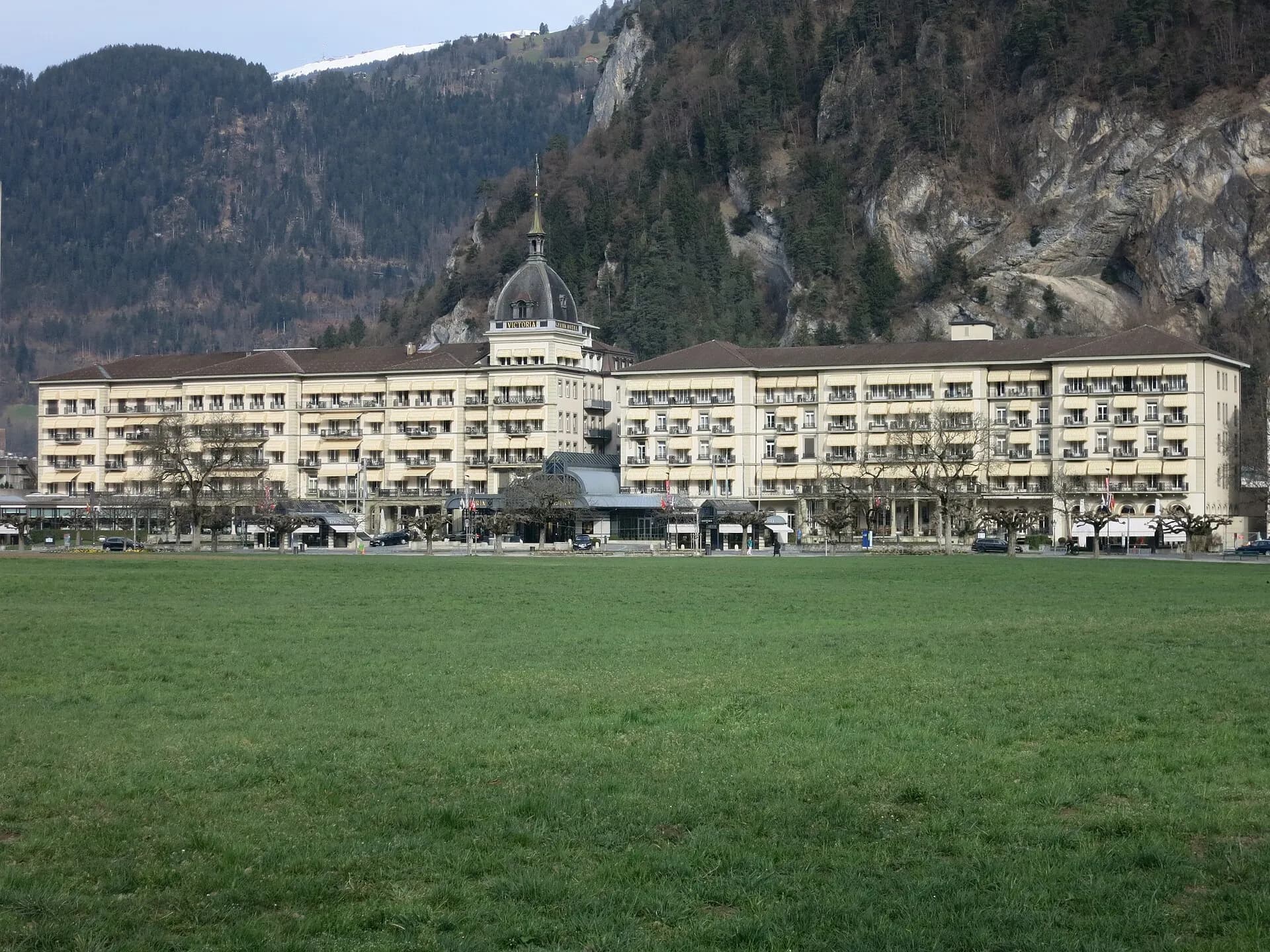
A large open meadow in the middle of town, protected from building since the 1860s, with a clear view up the valley to the snow-covered Jungfrau. Paragliders drift down to land here on fine days, and the grand hotels and casino line the Höheweg beside it.
- 2
Harder Kulm
Photo: Giles Laurent, CC BY-SA 4.0, via Wikimedia Commons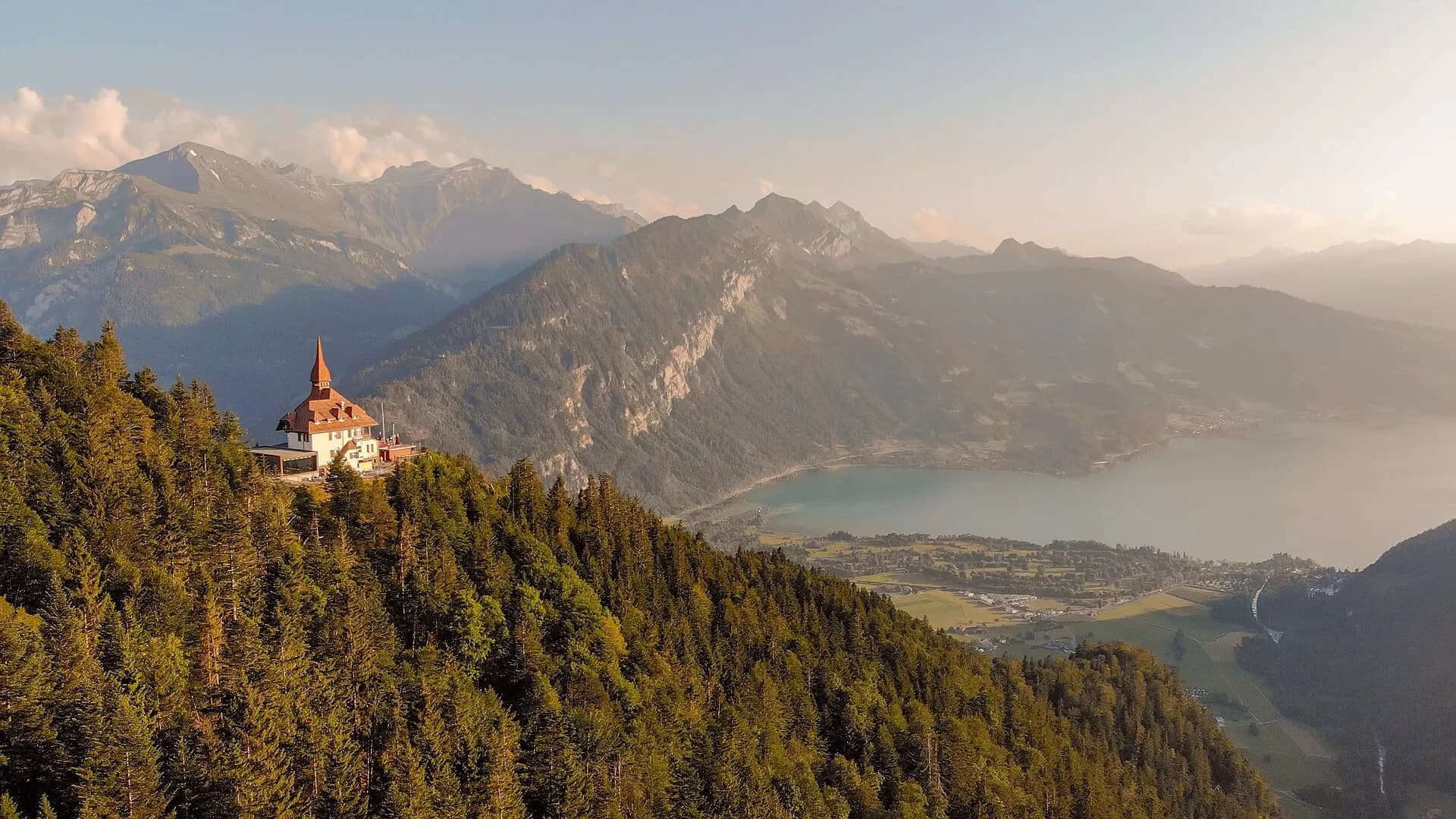
A funicular climbs from Interlaken through the woods to a viewpoint at around 1,320 metres, with a platform jutting out over the slope. It's the easiest way to see both lakes and the Eiger, Mönch and Jungfrau in one panorama, and a good choice for an evening trip.
- 3
Lake Thun and its castles
Photo: JoachimKohler-HB, CC BY-SA 4.0, via Wikimedia Commons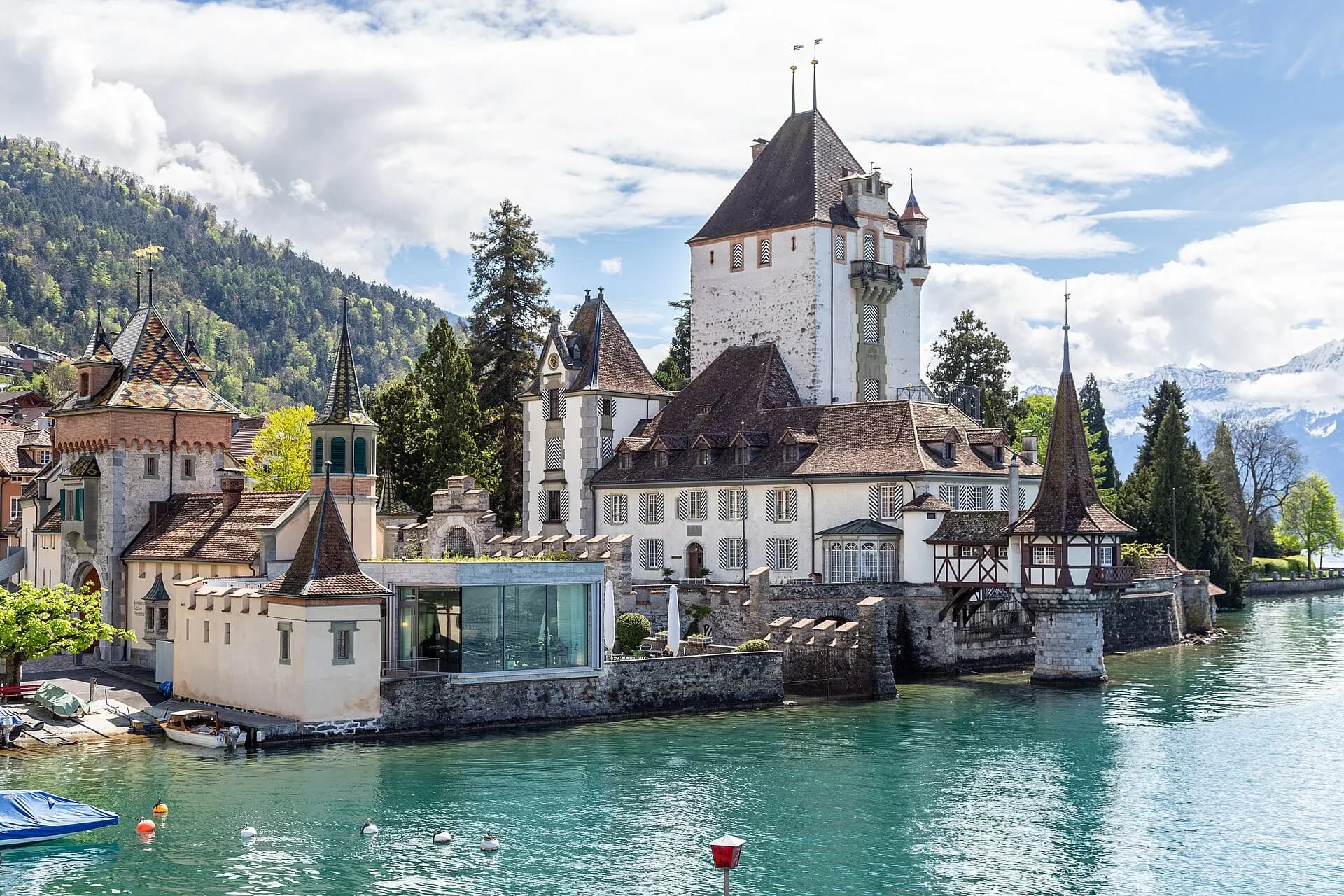
The larger of the two lakes, with gentler shores, vineyards and a string of castles, including lakeside Oberhofen, Spiez on its bay and Thun at the western end. Boats from Interlaken West stop at the villages along the way, and some summer services are operated by historic paddle steamers.
- 4
Iseltwald
Photo: Andrew Bossi, CC BY-SA 2.5, via Wikimedia Commons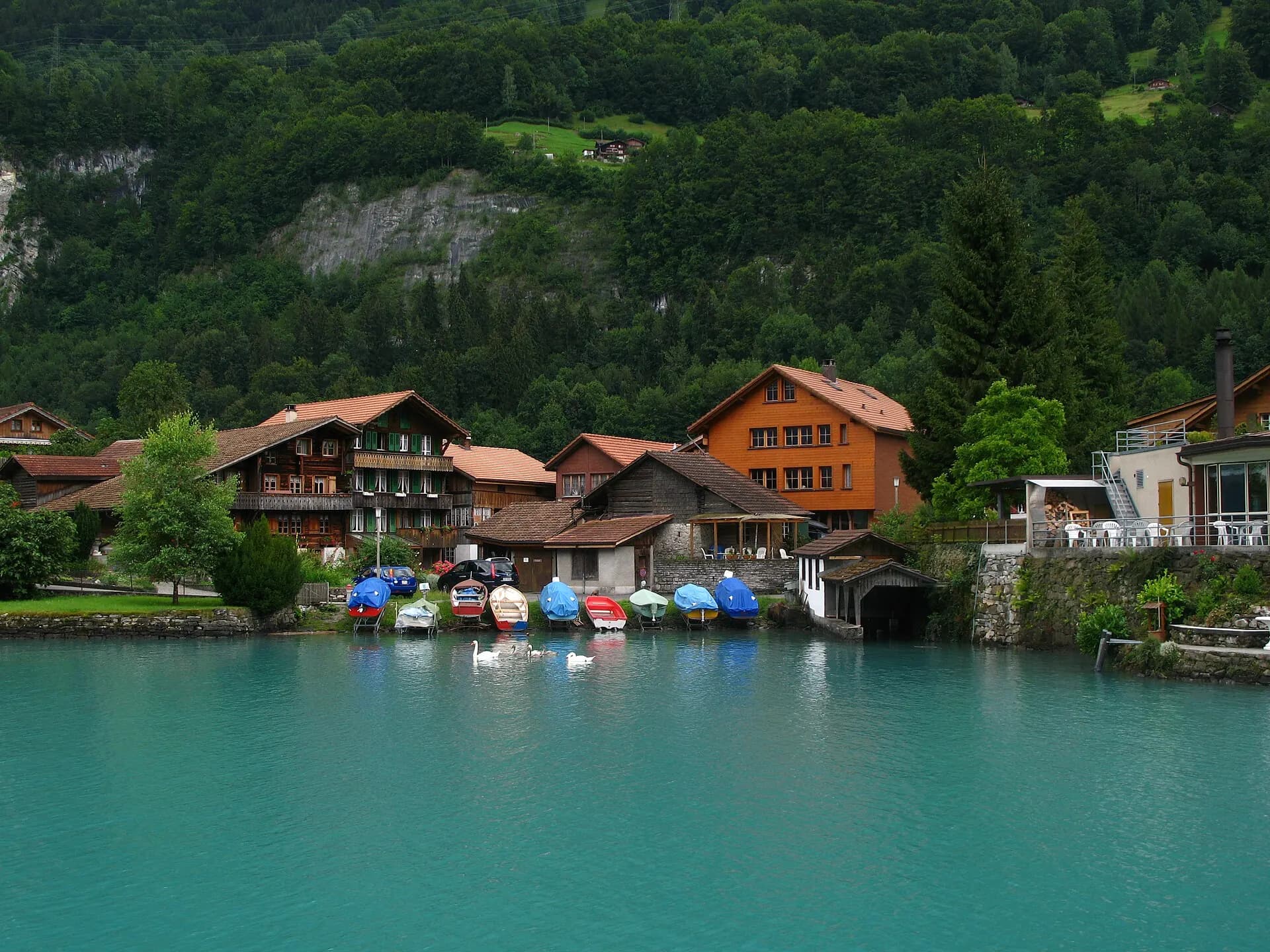
A small fishing village on a peninsula on Lake Brienz, known for the turquoise colour of the water. A wooden pier made famous by a Korean television drama became so crowded that the village now charges a small fee through a turnstile to walk onto it.
TipArrive by boat or the local bus rather than by car, and visit early or late in the day.
- 5
Giessbach Falls
Photo: JoachimKohler-HB, CC BY-SA 4.0, via Wikimedia Commons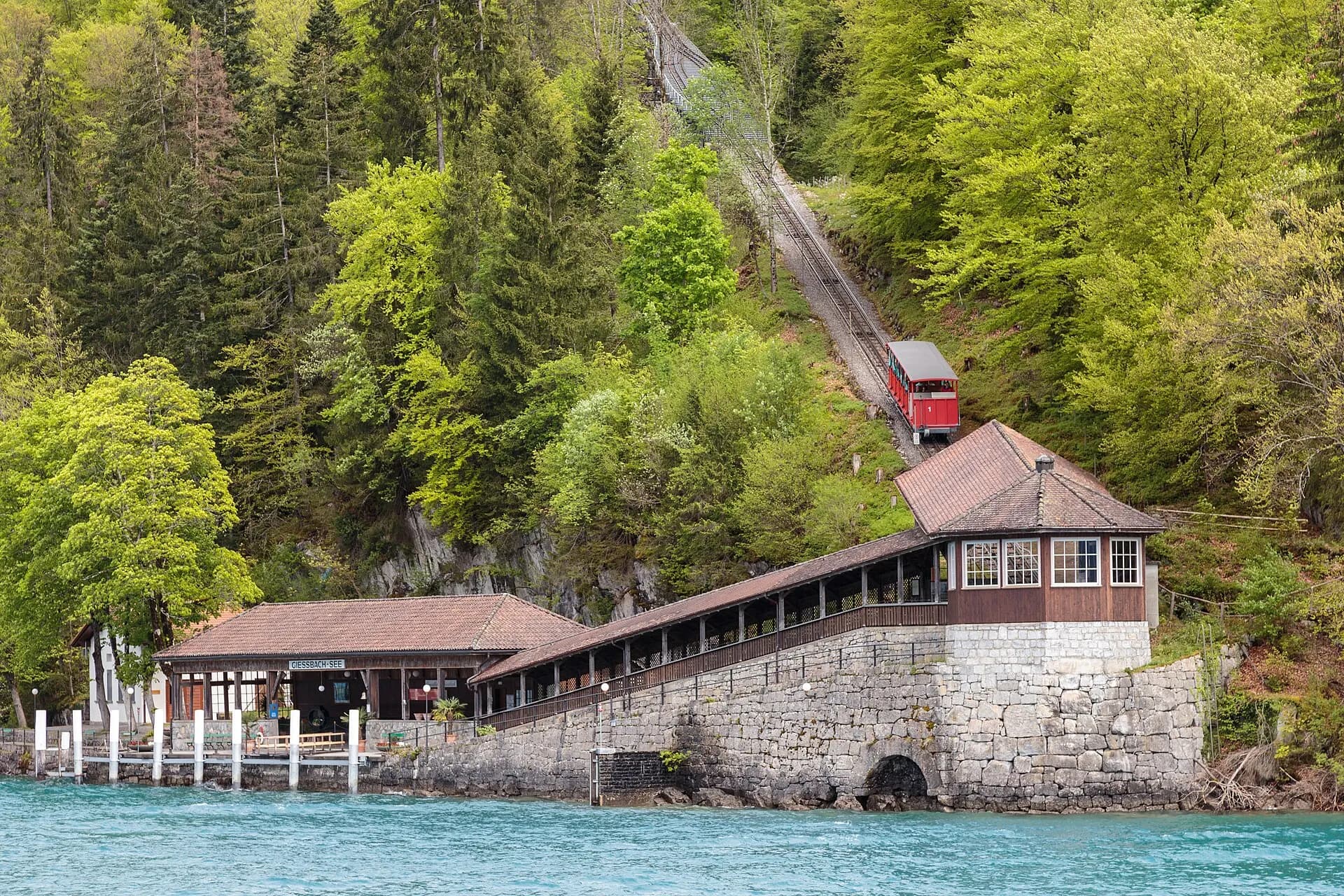
A waterfall that tumbles down the forested slope in fourteen stages above Lake Brienz, with a footpath that passes behind one of the cascades. A historic funicular, one of the oldest in Europe, links the boat landing with the grand hotel beside the falls in the warmer months.
- 6
Brienz
Photo: Roland zh, CC BY-SA 3.0, via Wikimedia Commons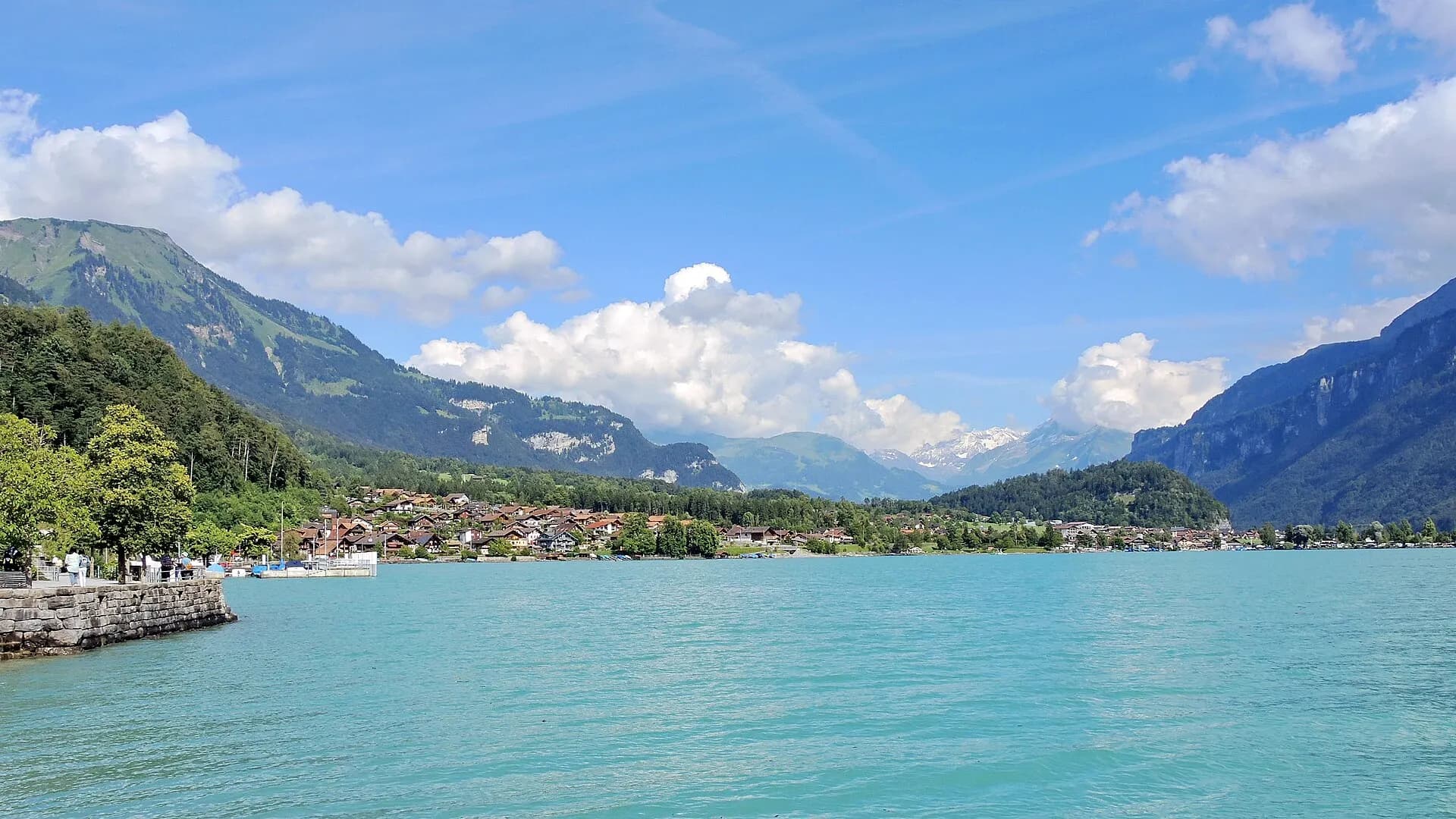
A lakeside village of dark wooden houses at the eastern end of the lake, known across Switzerland for its woodcarving school and workshops. In summer, a steam cogwheel railway climbs from here to the Brienzer Rothorn, a summit with wide views over the lake and the Alps.
- 7
Ballenberg Open-Air Museum
Photo: Chme82, CC BY-SA 3.0, via Wikimedia Commons
More than a hundred historic farmhouses, barns and workshops from all over Switzerland, moved here and rebuilt in a large park, with farm animals, gardens and craft demonstrations. It opens from spring to autumn and easily fills half a day.
- 8
Schynige Platte
Photo: JoachimKohler-HB, CC BY-SA 4.0, via Wikimedia Commons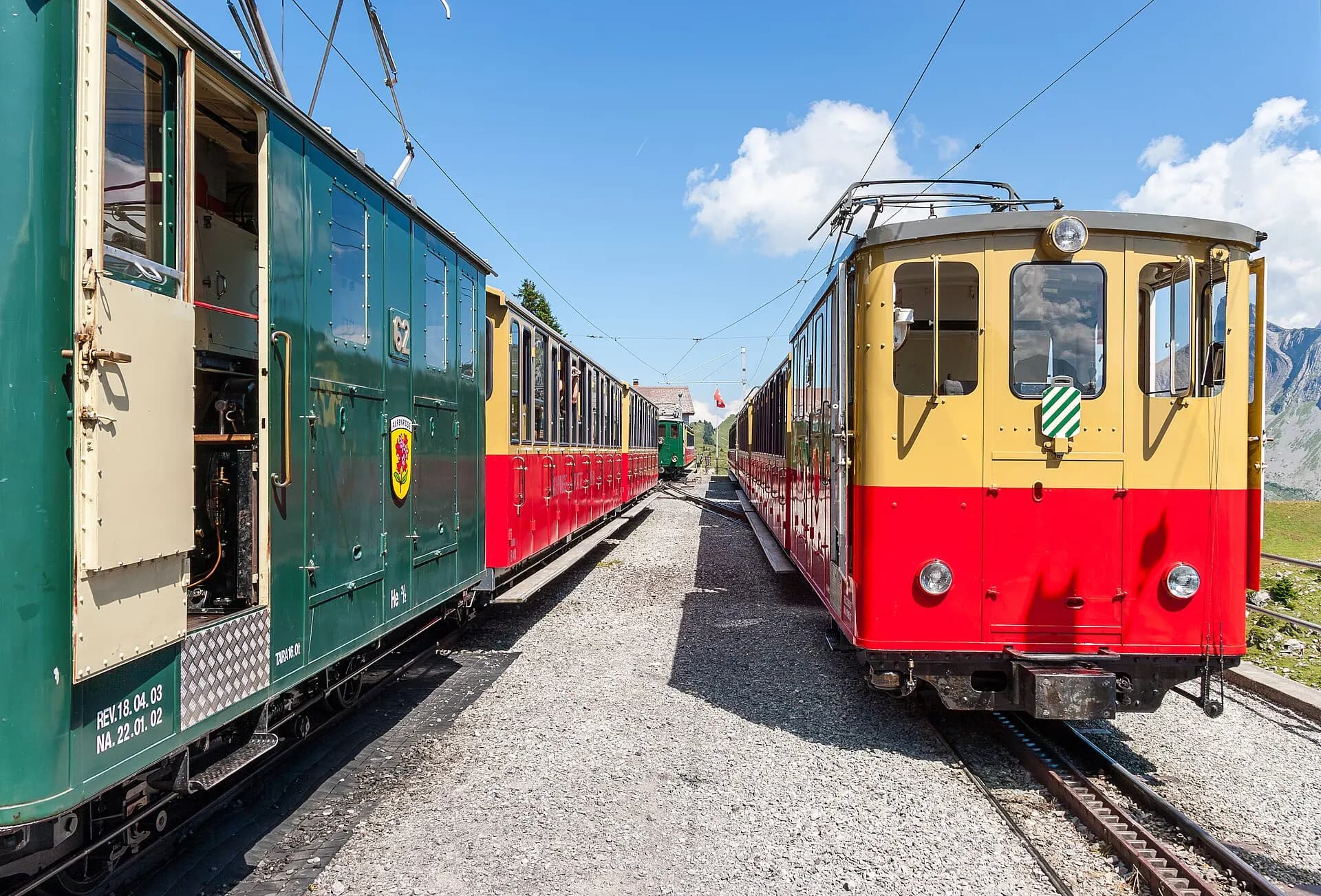
A vintage cogwheel train from Wilderswil climbs to a ridge at almost two thousand metres, with an alpine garden of several hundred mountain plants and one of the best views of the Eiger, Mönch and Jungfrau. The line runs from late spring to autumn only.
TipThe ridge walk to the Faulhorn and on to First is one of the region's classic day hikes.
- 9
Lauterbrunnen and Staubbach Falls
Photo: kuhnmi, CC BY 2.0, via Wikimedia Commons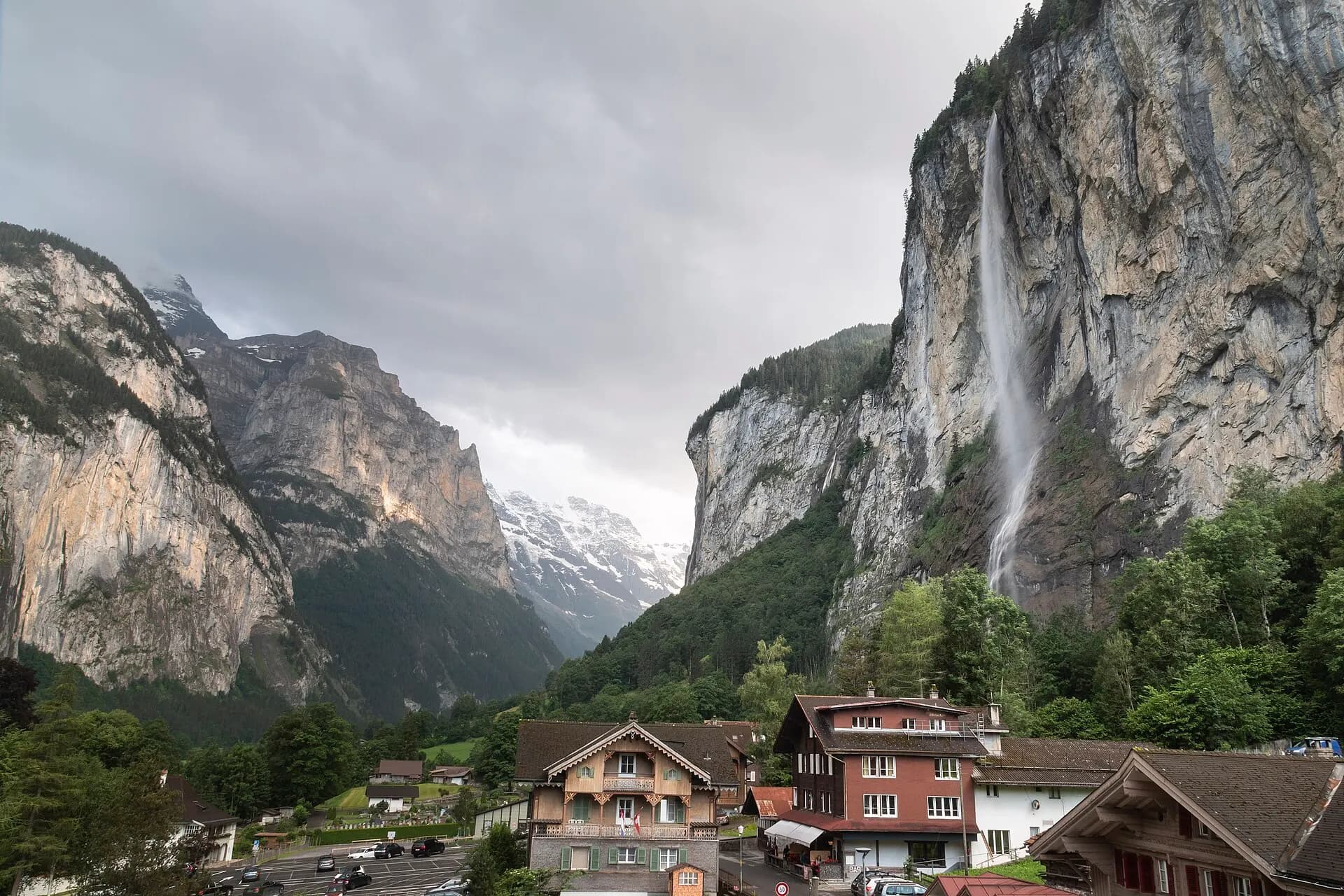
Lauterbrunnen lies on the floor of a deep glacial valley with sheer rock walls, where dozens of waterfalls pour over the edge. The Staubbach Falls drop almost three hundred metres right beside the village, turning to spray before they reach the ground.
- 10
Trümmelbach Falls
Photo: Simisa, CC BY-SA 3.0, via Wikimedia Commons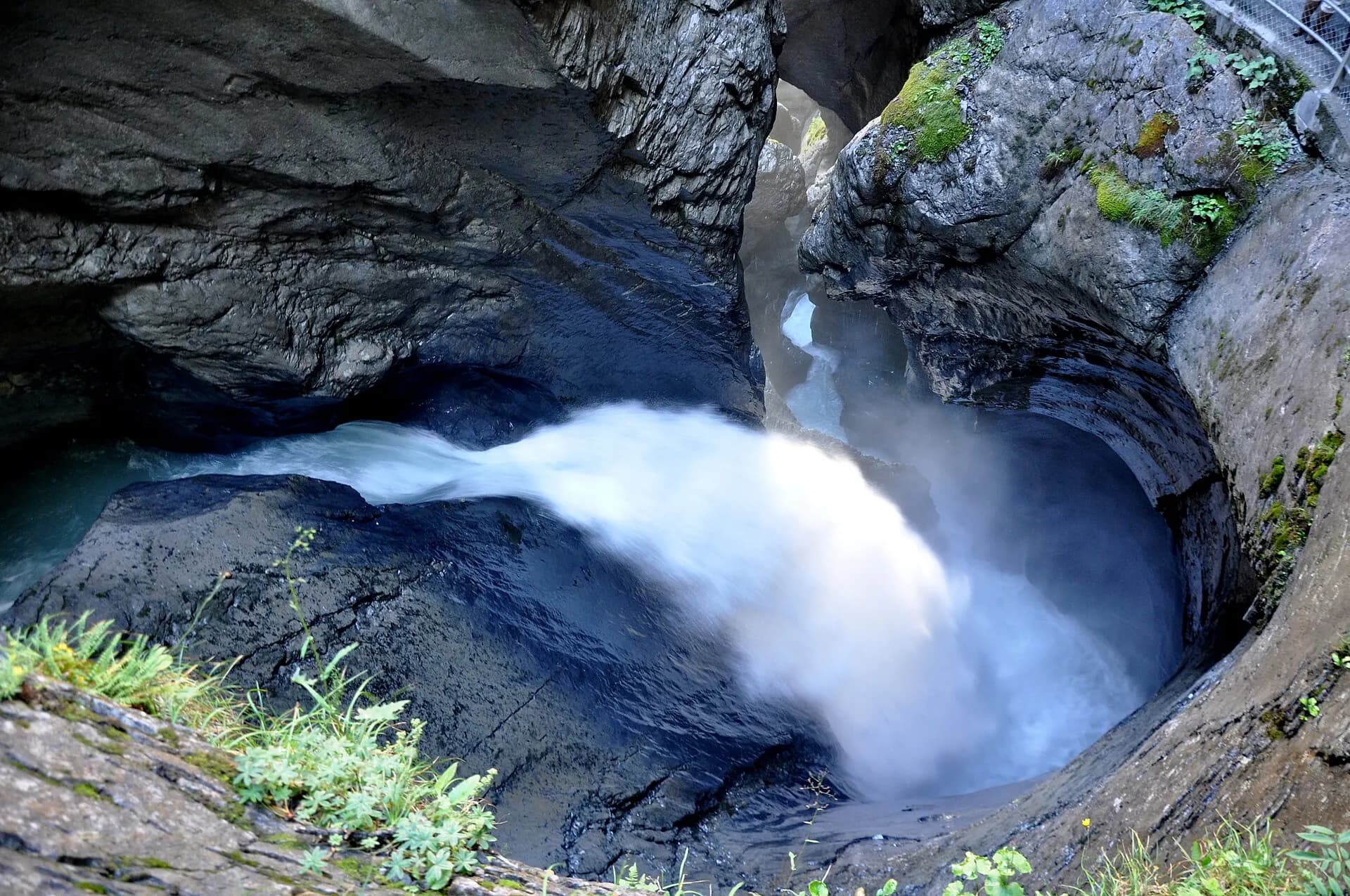
Ten glacial waterfalls thunder through corkscrew channels inside the mountain, carrying meltwater from the Eiger, Mönch and Jungfrau. A tunnel lift and walkways take you into the rock beside them. They open from spring to autumn and are at their most powerful on warm summer days.
TipBring a waterproof layer; the spray inside is heavy and it can be cold.
- 11
Mürren and Gimmelwald
Photo: VasuVR, CC BY 4.0, via Wikimedia Commons
Two car-free villages on a sunny terrace high above the Lauterbrunnen valley, facing the three great peaks across the gorge. Mürren has hotels, shops and a lift to Allmendhubel; Gimmelwald, below it, is a tiny farming hamlet of wooden houses and hay meadows.
- 12
Schilthorn and Piz Gloria
Photo: Ximonic (Simo Räsänen), CC BY-SA 3.0, via Wikimedia Commons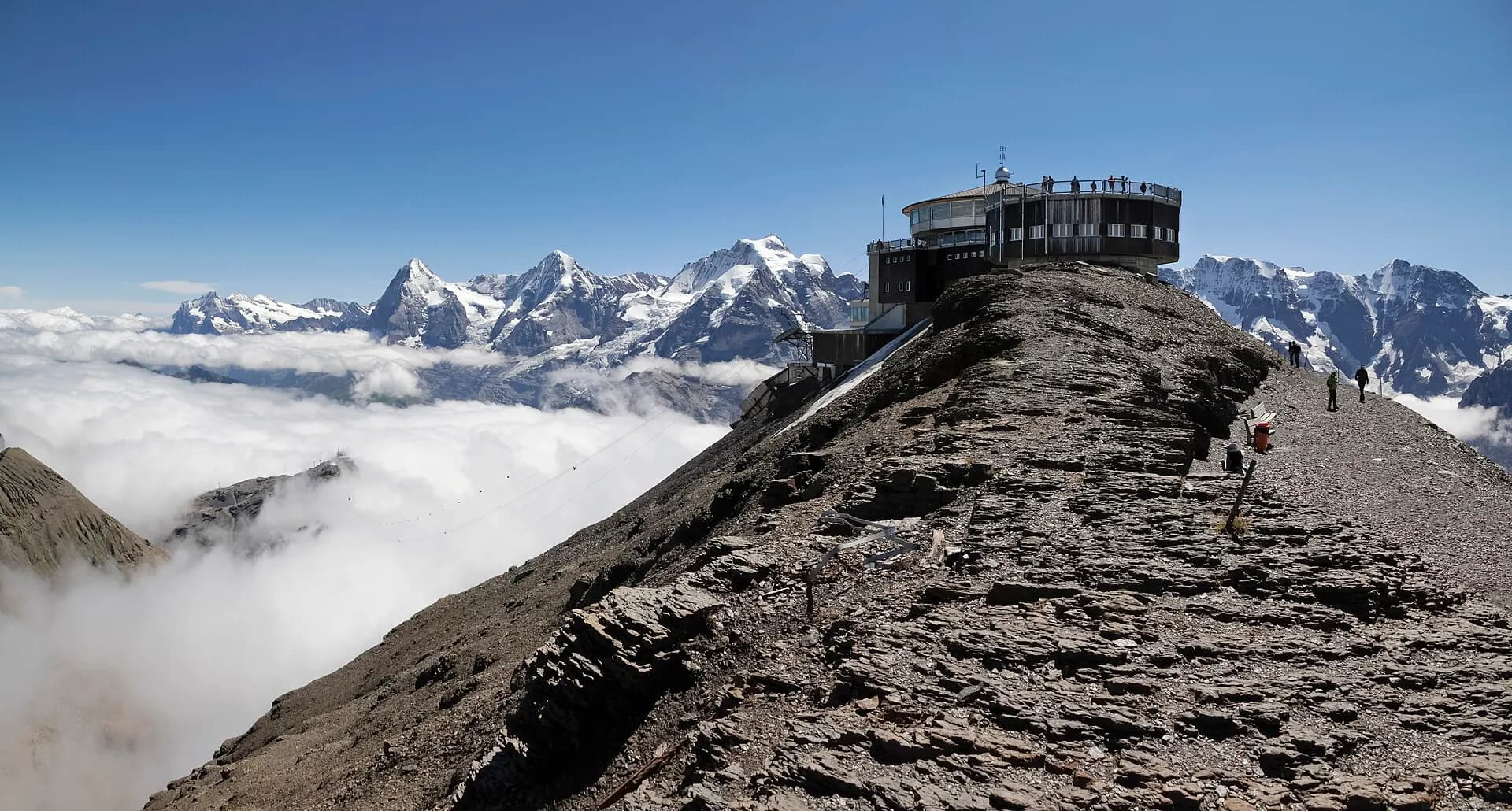
A cable car climbs in stages from the valley via Mürren and Birg to a summit at 2,970 metres, crowned by the revolving restaurant used in the 1969 James Bond film On Her Majesty's Secret Service. The panorama takes in more than two hundred peaks on a clear day, and at Birg a rock-ledge walkway, the Thrill Walk, clings to the cliff.
- 13
Wengen
Photo: W. Bulach, CC BY-SA 4.0, via Wikimedia Commons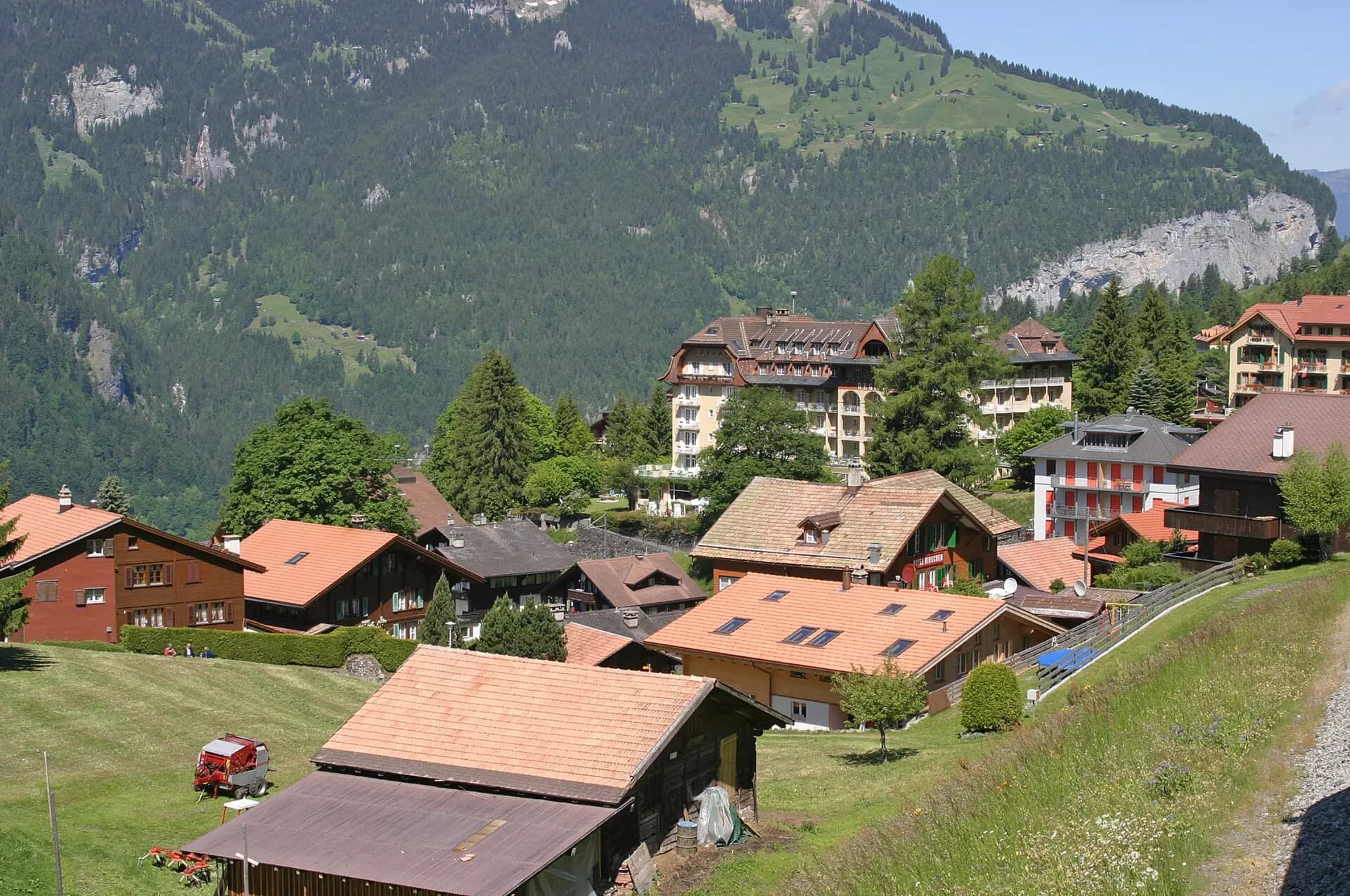
A car-free village on a shelf above Lauterbrunnen, reached only by the cogwheel train, with chalets and old hotels looking straight down the valley. In January, it hosts the Lauberhorn, one of the longest and most famous downhill ski races in the world.
- 14
Männlichen
Photo: W. Bulach, CC BY-SA 4.0, via Wikimedia Commons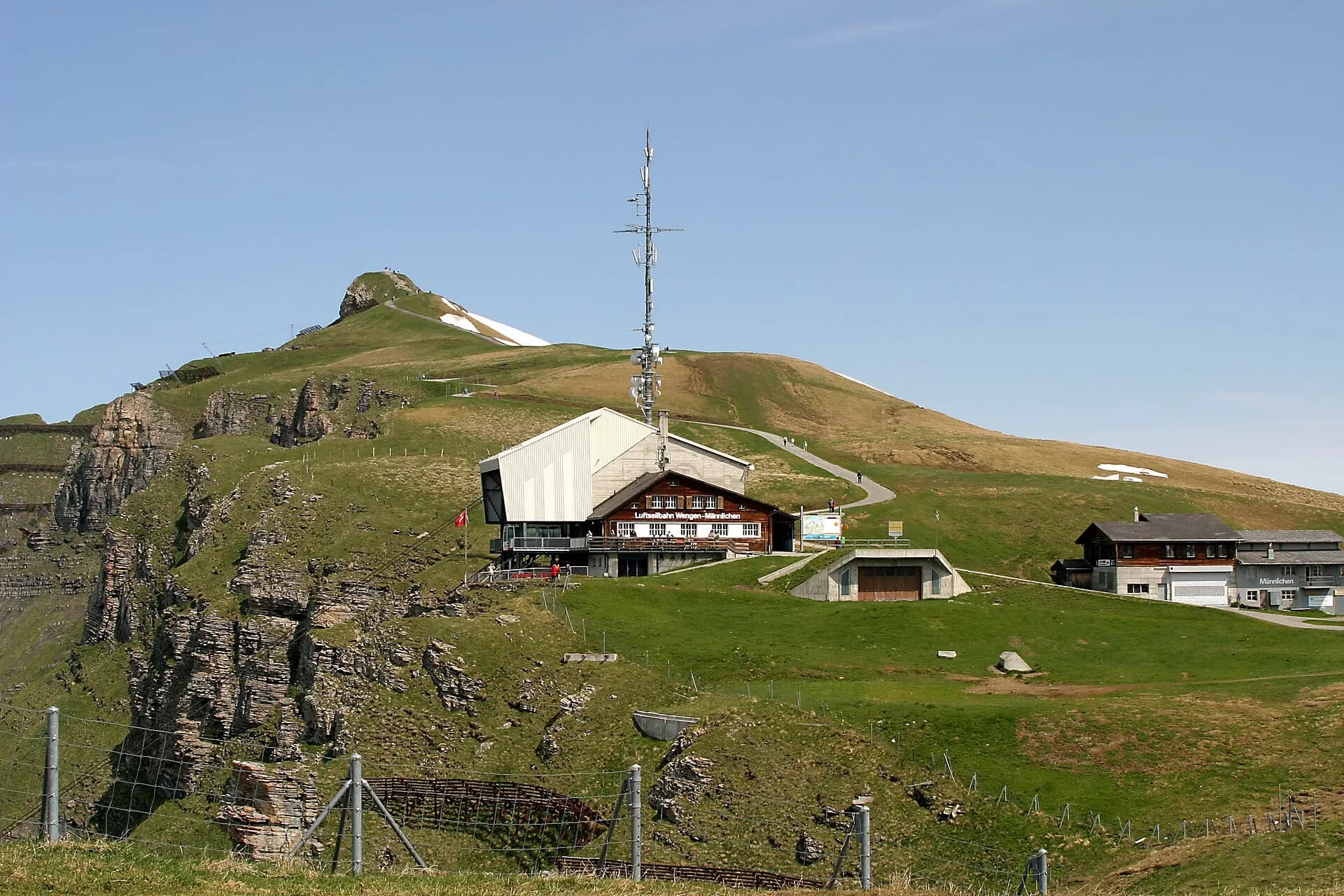
A broad ridge between Wengen and Grindelwald, reached by cable car from either side, with a short trail called the Royal Walk to a crown-shaped lookout. The gentle panorama trail from here to Kleine Scheidegg, with the Eiger's north face ahead, is one of the easiest high walks in the Alps.
- 15
Grindelwald
Photo: Leonhard Lenz, CC0, via Wikimedia Commons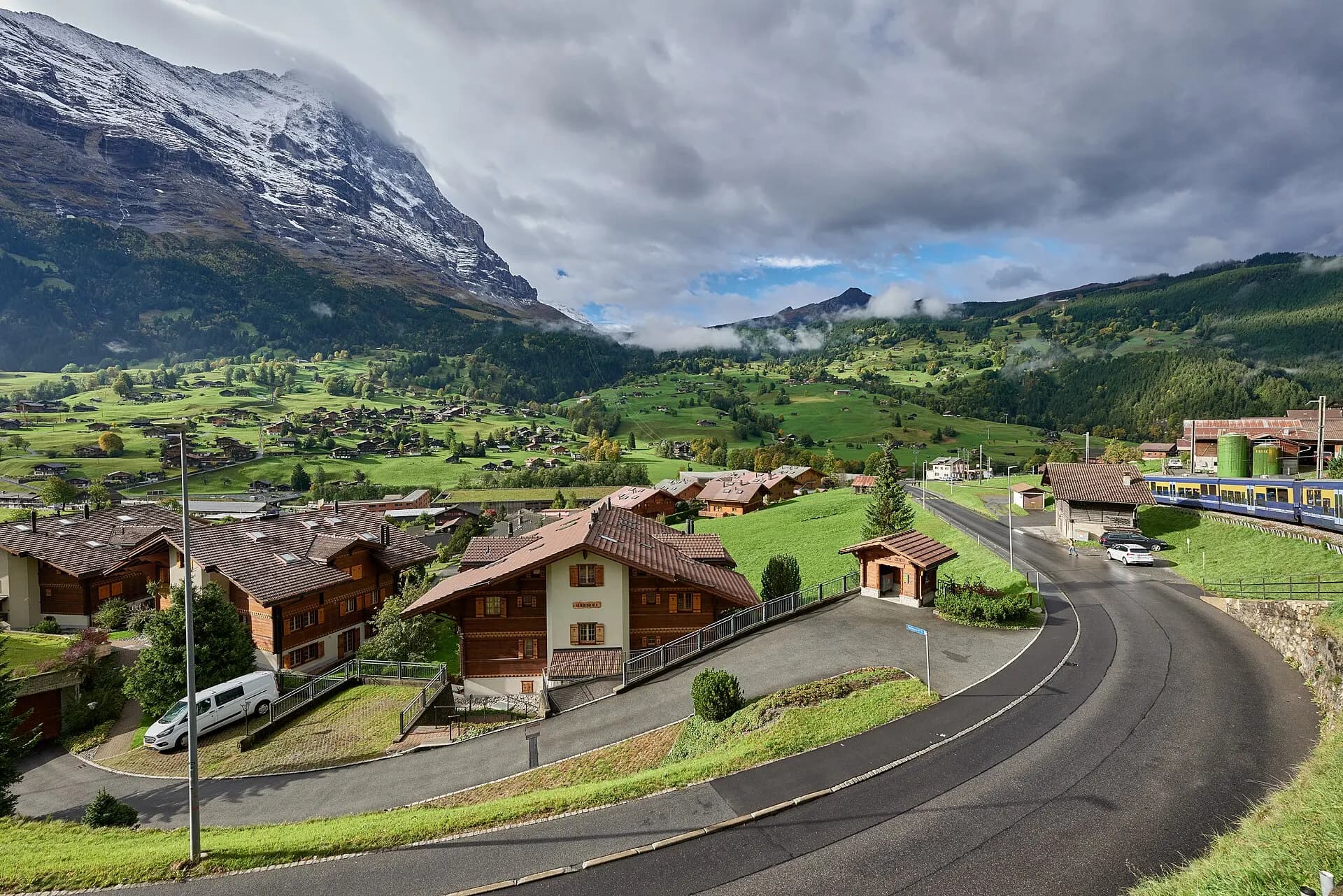
A busy resort in a green bowl of meadows directly beneath the dark north face of the Eiger, one of the great challenges of mountaineering history. It's the base for the Eiger Express, the First gondola and countless hikes, with plenty of hotels and restaurants.
- 16
First and the Cliff Walk
Photo: Paradise Chronicle, CC BY-SA 4.0, via Wikimedia Commons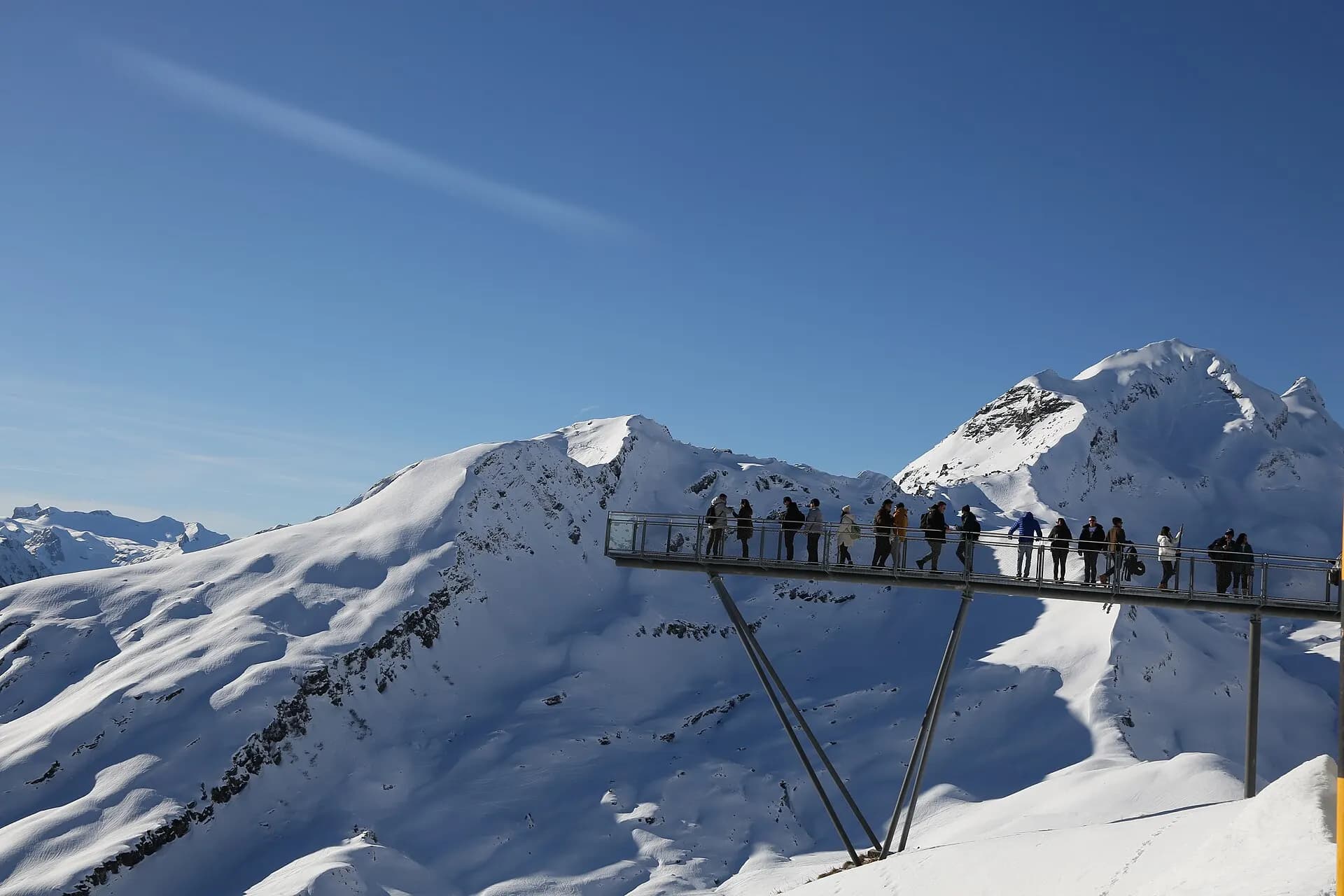
A gondola rises from Grindelwald to First, where a steel walkway, the Cliff Walk, is bolted to the rock face with a platform hanging out over the drop. From the top station, an easy hike of about an hour leads to the Bachalpsee, a mountain lake with the Schreckhorn and Wetterhorn reflected in it; adventure rides lead back down in stages.
- 17
Jungfraujoch
Photo: Xxlstier, CC BY-SA 4.0, via Wikimedia Commons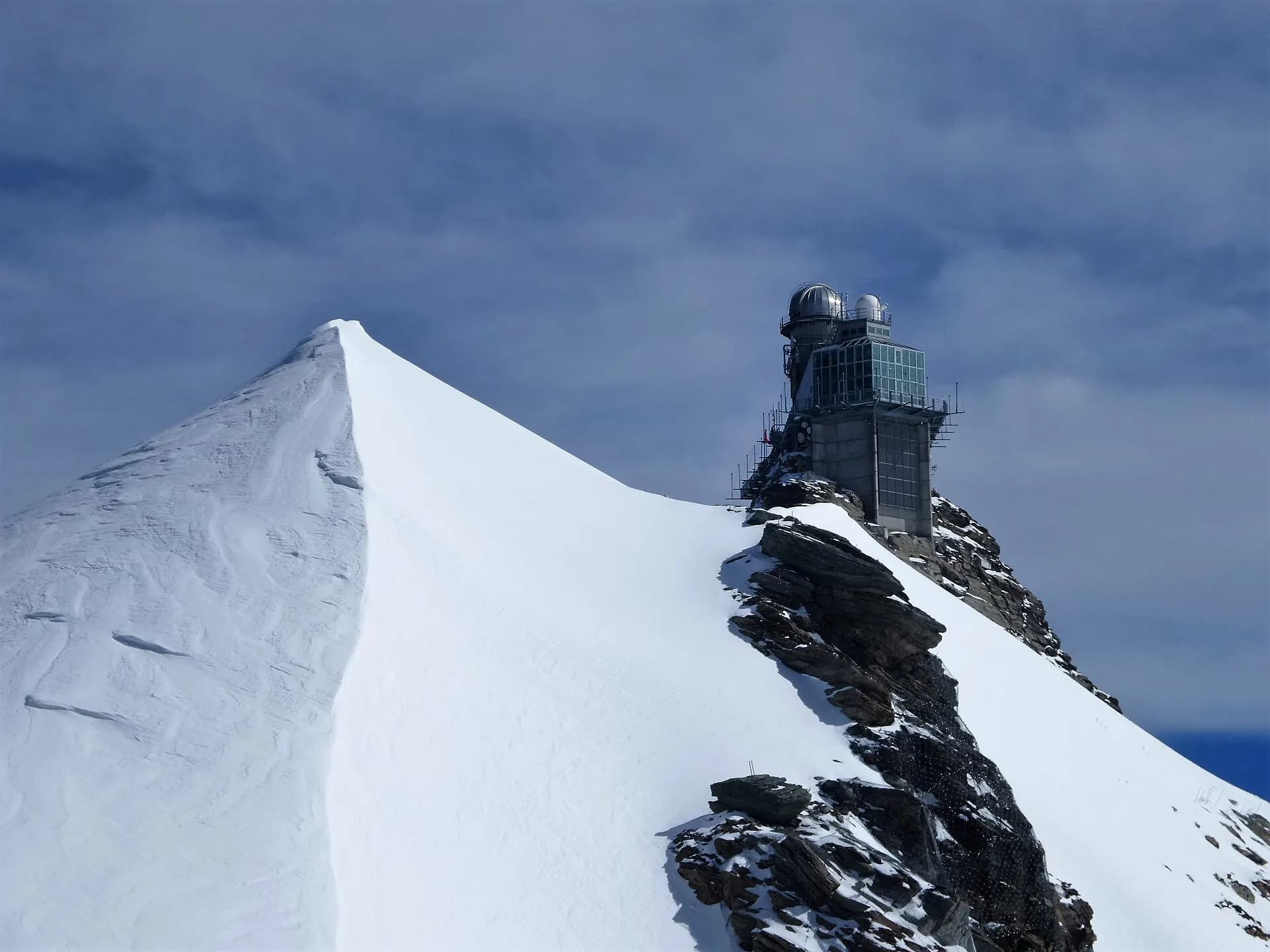
Europe's highest railway station, at 3,454 metres, on the saddle between the Mönch and the Jungfrau. The fastest route is the Eiger Express gondola from Grindelwald Terminal to the Eiger Glacier station, then the Jungfrau Railway, opened in 1912, through a tunnel inside the Eiger and Mönch. At the top are the Sphinx observation deck over the Aletsch Glacier, the longest glacier in the Alps, and an ice palace carved into the glacier.
TipIt's an expensive trip; go only on a clear day, and look into the early-morning discount.
When to go
Summer, from late June to September, is the season for hiking, with all the mountain railways running, alpine flowers in the meadows and the lake boats on full timetables; it's also the busiest time, especially in July and August. September is often the best compromise, with settled weather and fewer people. Winter, from mid-December to March, brings skiing and sledging around Grindelwald, Wengen and Mürren. Spring and November are quiet, but some lifts, the Schynige Platte railway, Trümmelbach Falls and Ballenberg close outside their seasons.
Getting around
Interlaken has two stations: Interlaken West, near the boat landing for Lake Thun, and Interlaken Ost, the hub for Lake Brienz boats and the Bernese Oberland Railway. The train splits at Zweilütschinen, with one branch going to Lauterbrunnen and the other to Grindelwald. From Lauterbrunnen, a cogwheel train climbs to Wengen and on to Kleine Scheidegg, and a cable car and short railway reach Mürren; the bus to Stechelberg connects with the Schilthorn cableway. Interlaken is about two hours by train from Zurich and under an hour from Bern.
Wengen and Mürren are car-free, and parking in Lauterbrunnen and Grindelwald fills quickly, so it's easiest to leave a car in Interlaken or come by train. The Swiss Travel Pass covers the trains to Lauterbrunnen, Wengen, Grindelwald and Mürren and the lake boats, but most of the higher mountain railways and cable cars, including Jungfraujoch, are discounted rather than included. The regional Jungfrau Travel Pass, valid for three to eight days, covers most trains, lifts and boats in the area, with a reduced fare for Jungfraujoch.
Local tips
- Check the webcams on the Jungfrau Railways and Schilthorn websites before buying a summit ticket; if the peaks are in cloud, change your plan.
- Jungfraujoch tickets are priced by date and demand, so the cost varies. In summer, a paid seat reservation is required on the Jungfraujoch trains, and the early-morning Good Morning Ticket gives a discount.
- Compare the Swiss Travel Pass, the Half Fare Card and the Jungfrau Travel Pass for your exact plans before buying.
- At high altitude, walk slowly and drink water; the air is thin at Jungfraujoch.
- Bring layers, sunglasses and sunscreen even in summer: it can be below freezing on the glacier while it's warm in the valley.
- Keep to marked trails, close gates behind you and give way to cows on the alpine pastures.
- Book accommodation well ahead for July, August and the Christmas holidays.
- Switzerland uses the Swiss franc; cards are accepted almost everywhere.
Eat and drink
Bernese Oberland cooking is hearty mountain food: fondue and raclette, rösti with a fried egg or cheese, Älplermagronen (macaroni with potatoes, cheese, cream and apple sauce) and sausages from local butchers. Alpine dairies sell their own Alpkäse, a firm mountain cheese made in summer from cows grazing high pastures. Mountain restaurants at Männlichen, First, Schynige Platte and the Schilthorn serve lunch with a view, and Brienz is known for meringues and trout from the lake. Prices are high, so picnics from supermarkets are a sensible way to save money.
Where to stay
Interlaken has the widest choice, from hostels to grand old lake-view hotels, and the best transport links for day trips. For mountain atmosphere, stay in Wengen or Mürren, where evenings are quiet once the day visitors leave, or in Grindelwald, which has more hotels and chalets. Lauterbrunnen has a large campsite and simpler guesthouses on the valley floor. Most hotels in the region give guests a card with free local buses and some discounts.
Hiking
The region has some of the most rewarding and accessible hiking in the Alps, because trains and lifts do much of the climbing for you. Easy favourites include the Männlichen to Kleine Scheidegg panorama trail, the walk from First to the Bachalpsee and the path from Mürren down to Gimmelwald. Longer classics include the Eiger Trail along the foot of the north face, from Eigergletscher down to Alpiglen, and the ridge from Schynige Platte to the Faulhorn and First. Mountain huts serve food and some offer simple beds. Check that lifts are running on your chosen day, and turn back if the weather changes.
The Eiger and the Jungfrau Railway
The north face of the Eiger, a sheer wall of rock and ice about 1,800 metres high, was one of the last great unclimbed faces of the Alps. Several attempts in the 1930s ended in tragedy before the first ascent in 1938, and its history still draws climbers and readers. Even earlier, engineers had begun boring a railway tunnel through the mountain: the Jungfrau Railway took sixteen years to build, and its windows cut into the face give passengers a glimpse of the drop. Today's Eiger Express, opened in 2020, has cut the journey from Grindelwald to the top considerably.
Winter
The Jungfrau Ski Region covers three areas: Grindelwald and Wengen, linked over Kleine Scheidegg and Männlichen, and Mürren and the Schilthorn on the other side of the valley. Runs suit all levels, with long, scenic slopes beneath the Eiger. Grindelwald is also known for long sledge runs and winter walking paths, and Interlaken itself is quiet in winter, with the lake boats on reduced timetables.
Responsible travel
The Jungfrau region's villages are small, and the pressure of visitors on a few famous spots is real. Iseltwald introduced its pier fee and restricted coach access in 2023 after residents were overwhelmed, and Lauterbrunnen has debated a charge for day visitors who arrive by car. Travelling by public transport, staying overnight rather than racing through on a day trip, and spreading your visit across quieter places and times all help. In the villages, keep off private gardens and farmland when taking photos, keep drones grounded unless you know they're allowed, and take all your rubbish with you from the mountains.