Belgrade
A battle-scarred, late-night capital on the meeting of the Sava and the Danube, where Ottoman ramparts, socialist monuments and floating bars share the same riverbanks.
- Best time to go
- May, June and September for warm days and outdoor terraces; July and August for river life if you can take the heat
- Local time
- –
- Currency
- Serbian Dinar (RSD)
- Reading time
- 13 min
- Language
- Serbian

Belgrade stands on a ridge above the point where the Sava flows into the Danube, a site so strategic that it has been fought over, by one count, well over a hundred times and razed dozens of times. Celts, Romans, Byzantines, Hungarians, Ottomans and Austrians all held it, and in the 20th century it was the capital of Yugoslavia, bombed in 1941, 1944 and again in 1999. The result is not a pretty old town in the Central European mould but a layered, slightly rough-edged city where a Habsburg-era boulevard leads to an Ottoman fortress and a brutalist tower block looks across the river at a glittering new waterfront.
What visitors remember most is the mood. Belgrade lives outdoors and late: cafés spill across the pavements from morning, grilled-meat restaurants fill at midnight, and in summer the riverbanks turn into a string of floating clubs. It is also good value compared with most European capitals, and city buses, trams and trolleybuses have been free to ride since January 2025. Three days covers the main sights; add a fourth for Novi Sad and the wine town of Sremski Karlovci, or a longer run down the Danube to the Iron Gates.
The top 15 in Belgrade
- 1
Kalemegdan and Belgrade Fortress
Photo: Petkozaric, CC BY-SA 4.0, via Wikimedia Commons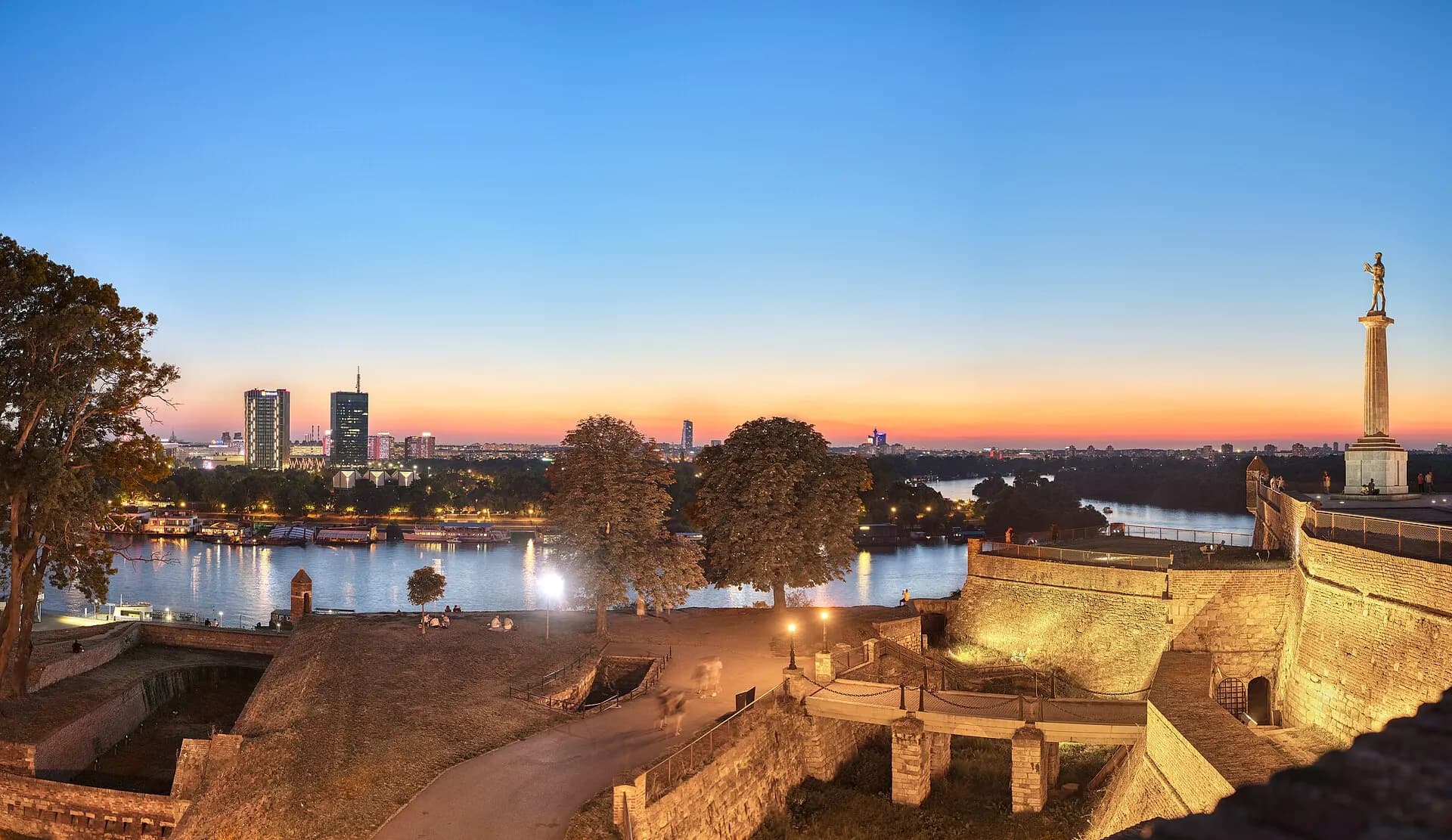
The fortress is where Belgrade began, and its walls, gates and bastions record nearly every power that held the city, though most of what stands today is 18th-century Austrian and Ottoman work. Kalemegdan Park, laid out on the old firing ground in front of it, is the city's favourite place for an evening stroll. Walk through the Upper Town to the Pobednik (Victor), a bronze nude by Ivan Meštrović raised in 1928, which stares out over the confluence of the two rivers towards New Belgrade. The view from the ramparts at sunset is the classic Belgrade moment.
Within the walls you will also find the Military Museum, a ditch full of old tanks and guns, the small Ružica Church in the Lower Town with chandeliers made from spent cartridges and swords, and the Roman Well, which is not actually Roman. Entry to the park and most of the fortress grounds is free; the museum, towers and underground tours charge separately.
TipCome in the late afternoon, watch the sunset from the Pobednik terrace, then walk down to the Lower Town and the Nebojša Tower by the Danube as the lights come on across the river.
- 2
Knez Mihailova Street
Photo: Pudelek (Marcin Szala), CC BY-SA 3.0 rs, via Wikimedia Commons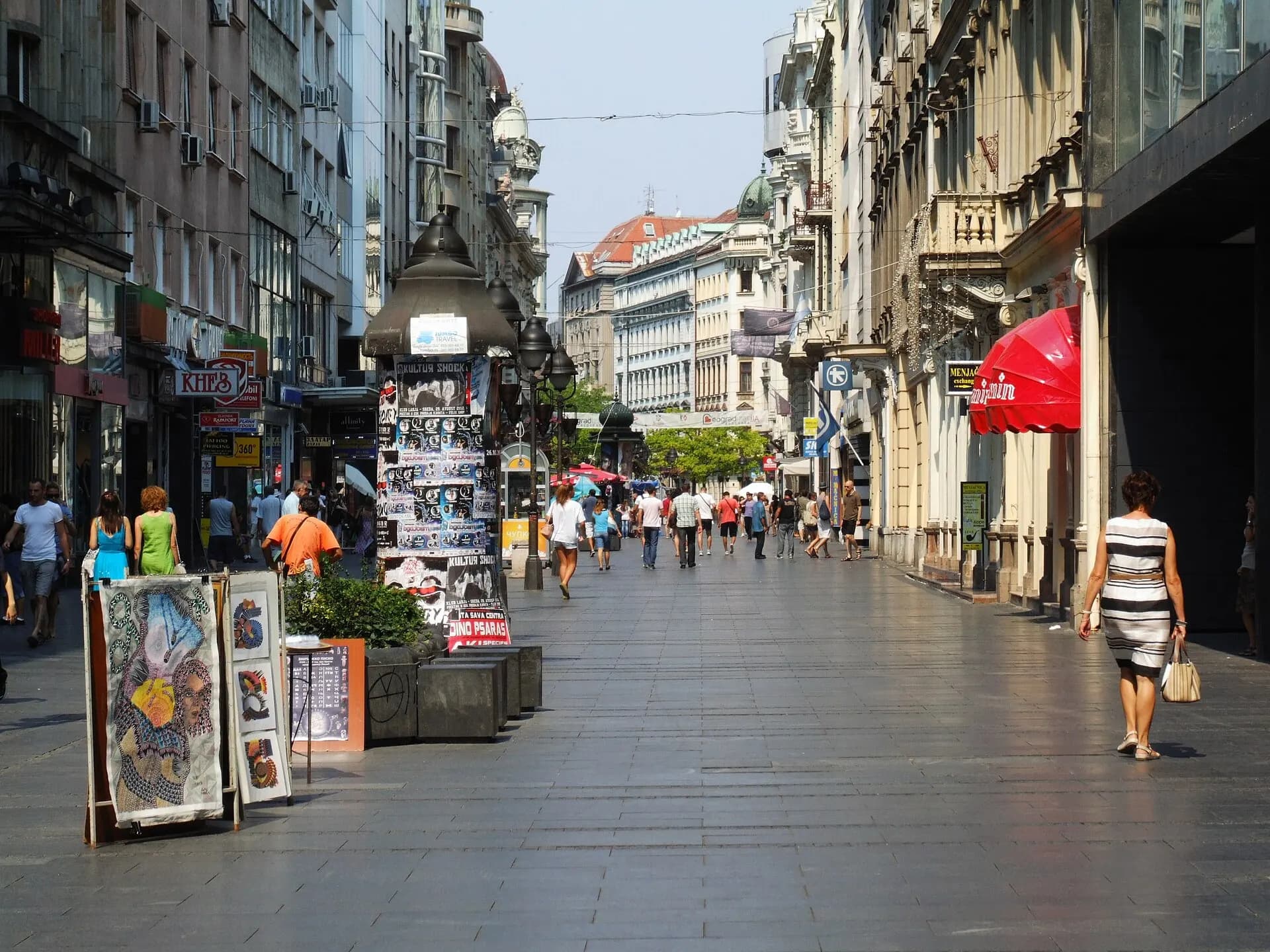
The city's main pedestrian street runs from the fortress gates to Republic Square, lined with 19th-century mansions built as Belgrade shed its Ottoman look and tried to resemble Vienna. Today it is a parade of shops, bookshops, ice-cream stalls and street musicians, busy from mid-morning to late at night. A short detour west brings you to the Cathedral Church of St Michael, the seat of the Serbian Orthodox Church, and opposite it the Kafana "?", one of the oldest taverns in the city, which got its odd name in 1892 after the church objected to its previous one.
- 3
Republic Square and the National Museum
Photo: Imeao, CC0, via Wikimedia Commons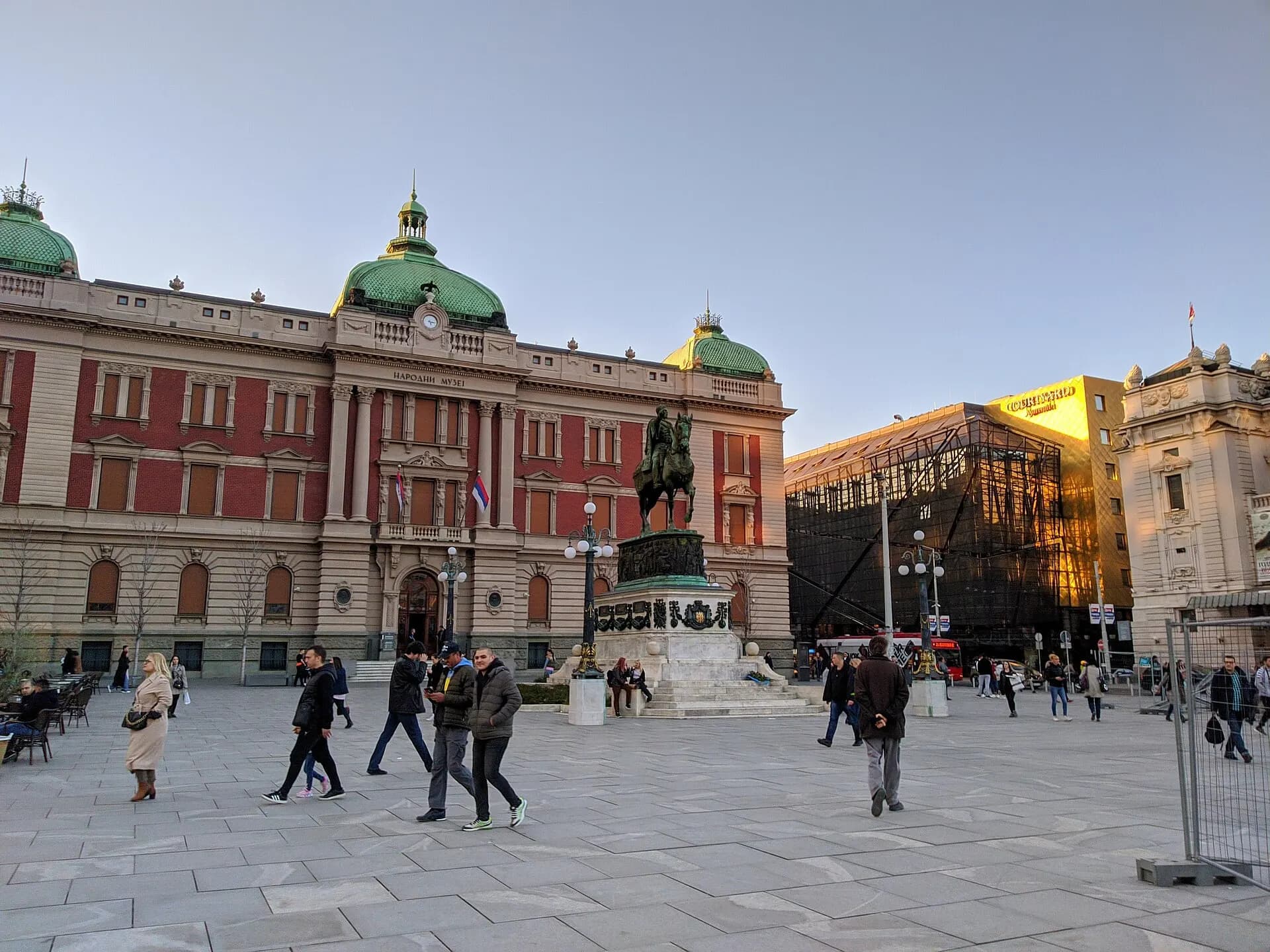
Republic Square, with its equestrian statue of Prince Mihailo Obrenović, is the usual meeting point for Belgraders ("by the horse"), and the National Theatre stands on one side. The National Museum of Serbia, the country's oldest, reopened in 2018 after a renovation that took some fifteen years. Its collection runs from the Neolithic figurines of Vinča and the strange fish-faced sculptures of Lepenski Vir through Roman silver and gold to medieval Serbian icons and frescoes, ending with Serbian painting and a strong selection of European art, including works by Renoir, Monet and Picasso.
TipThe museum is usually closed on Mondays; check the website for current hours and temporary exhibitions before you go.
- 4
Skadarlija
Photo: Nikolina Šepić, CC BY-SA 4.0, via Wikimedia Commons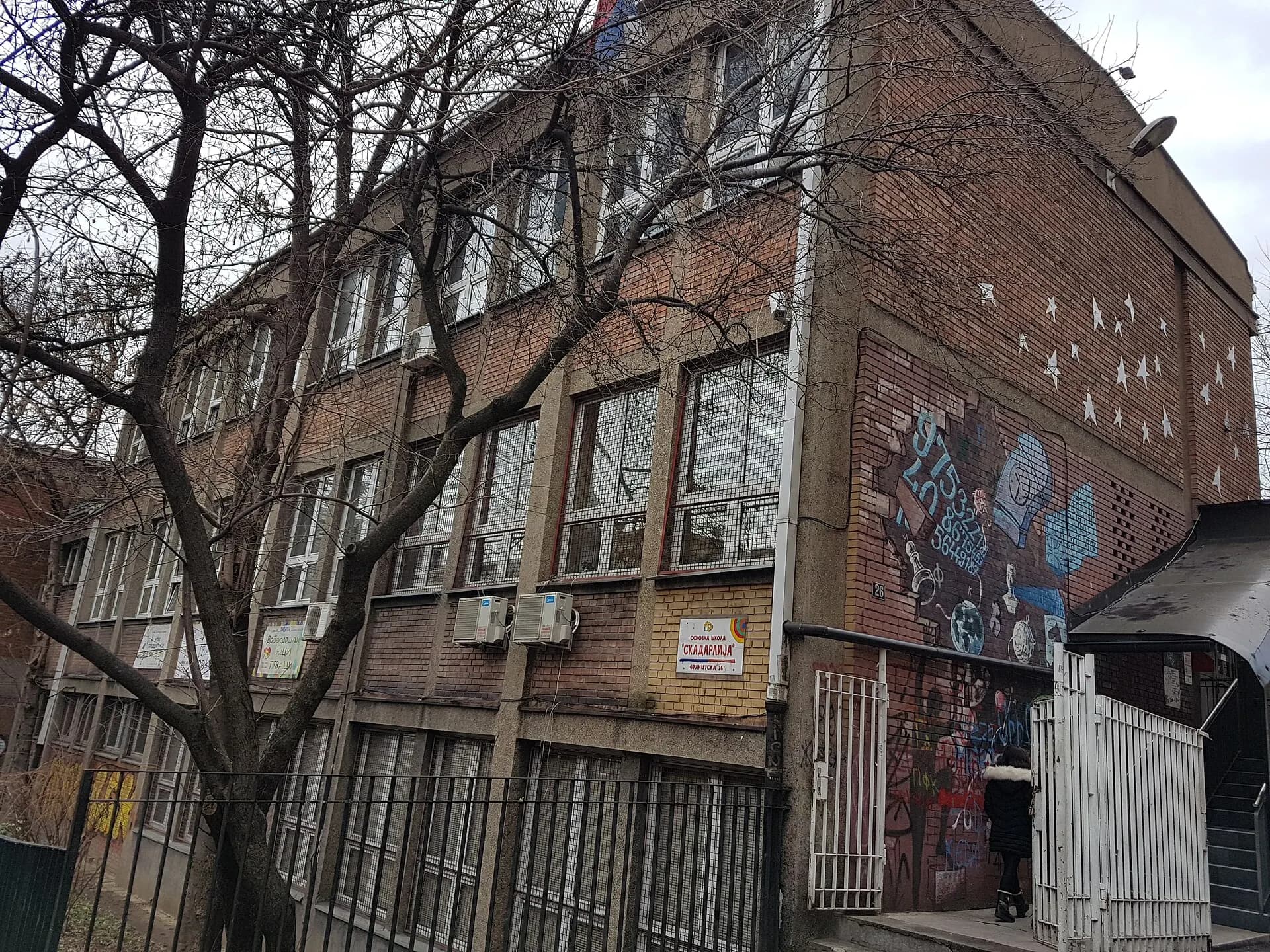
This short, sloping cobbled lane, once home to Roma settlers and later to poets, painters and actors, is Belgrade's bohemian quarter, or at least its fond reconstruction of one. Old kafanas such as Tri šešira (Three Hats) and Dva jelena (Two Deer) serve grilled meats and plum brandy while strolling tamburica bands play at the tables. It is touristy, especially in the evening, but it is cheerful and the food is honest. The Bajloni market at the top of the street is a good, very local place for fruit, cheese and honey.
- 5
Nikola Tesla Museum
Photo: Miomir Magdevski, CC BY-SA 4.0, via Wikimedia Commons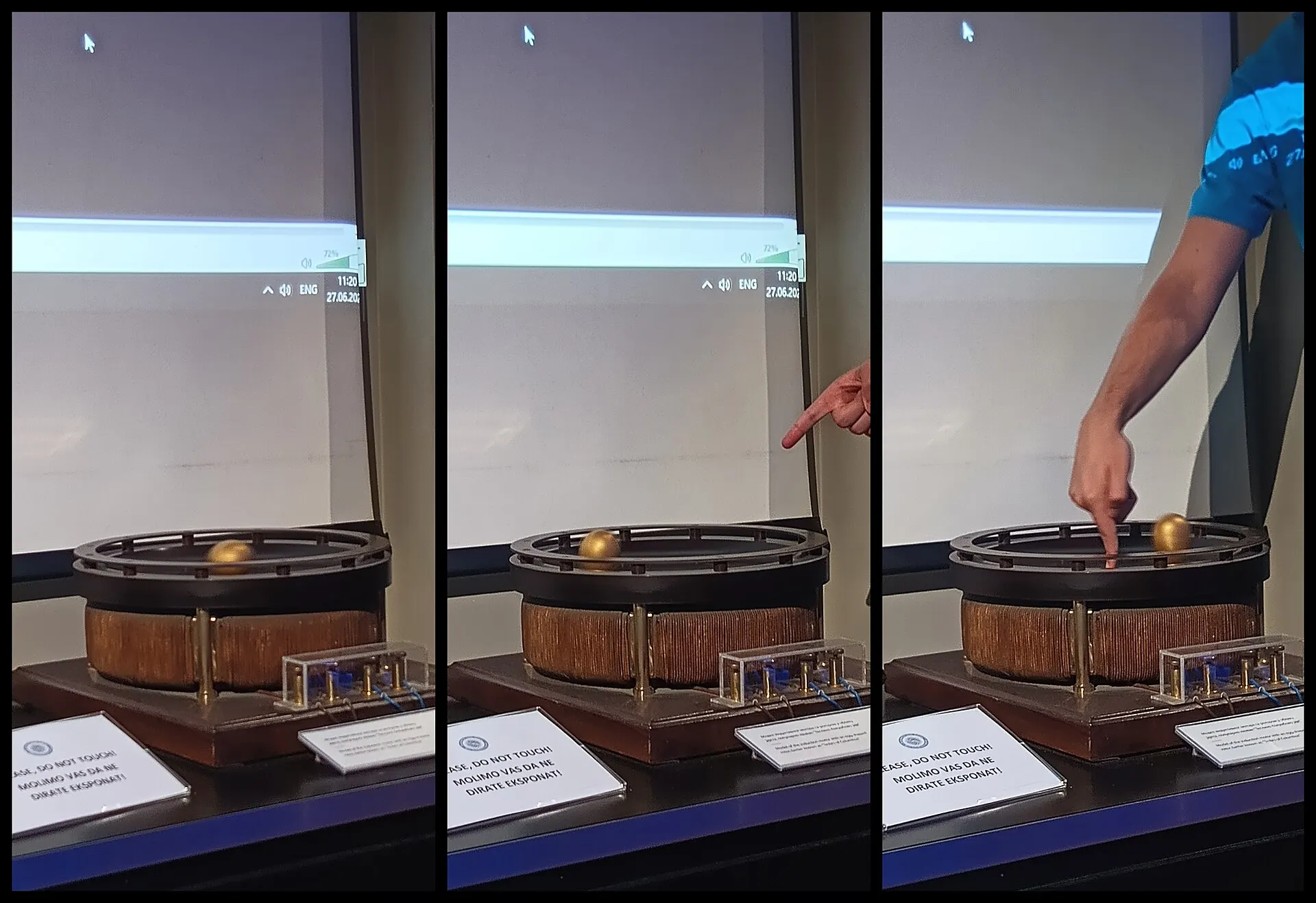
The inventor of alternating-current systems was an ethnic Serb born in what is now Croatia, and his personal archive, notes, drawings and belongings were brought to Belgrade after his death in New York. The museum is small, set in a villa on Krunska Street, but the guided tours are fun: guides demonstrate working models of his induction motor and fire up a Tesla coil, letting visitors hold fluorescent tubes that light up in their hands. The gilded sphere containing Tesla's ashes is displayed in the last room.
TipVisits are built around scheduled guided tours, which run in English several times a day and are often full in summer. Arrive early or book ahead through the museum's website.
- 6
Temple of Saint Sava
Photo: Petar Milošević, CC BY-SA 4.0, via Wikimedia Commons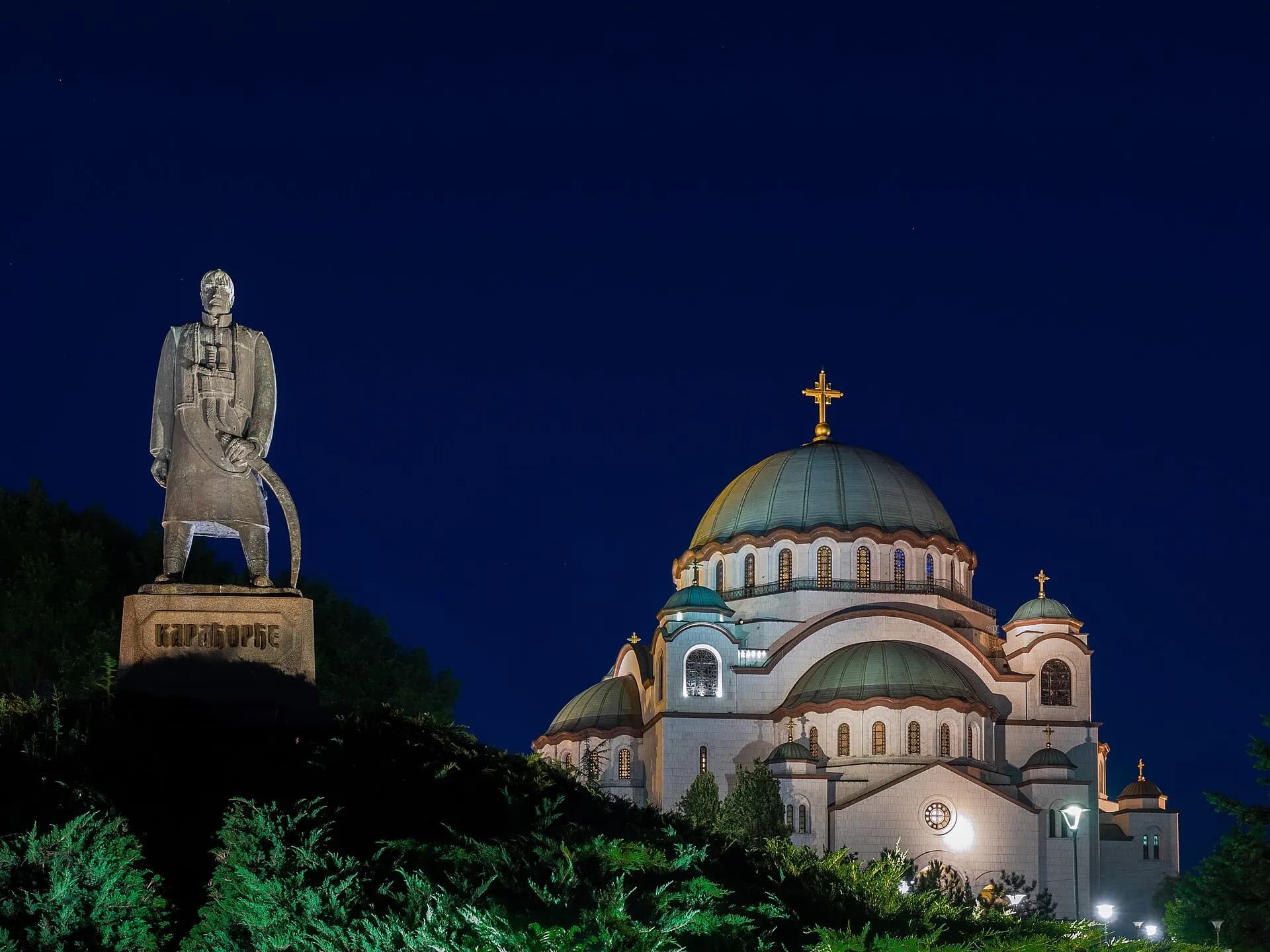
On the Vračar plateau, on the spot where the Ottomans are said to have burned the relics of Saint Sava, founder of the Serbian church, in 1594, rises one of the largest Orthodox churches in the world. Building began in 1935, was halted by war and communism, and resumed only in 1985; the exterior was completed in the 2000s, and the vast interior mosaic, centred on a dome image of Christ, was largely finished in 2020. The gold-covered crypt below, with its shimmering frescoes and mosaics, is the most dazzling part. Entry is free; dress modestly.
- 7
Museum of Yugoslavia and the House of Flowers
Photo: MitkonikovMEDIA, CC BY-SA 4.0, via Wikimedia Commons
On a leafy hill in the Dedinje district, the former residence compound of Josip Broz Tito is now the city's most thought-provoking museum. The House of Flowers, Tito's winter garden, holds his white marble tomb and that of his wife Jovanka, alongside a display of the ornate relay batons that young people carried across Yugoslavia each year for his birthday. The neighbouring Museum of 25 May and the Old Museum hold exhibitions on Yugoslav history and the remarkable gifts presented to Tito by world leaders. It gives a vivid sense of the country that existed here until the wars of the 1990s.
TipBus or trolleybus to the stop near the stadium of Partizan, then walk up the hill. The museum usually opens Tuesday to Sunday; its website has occasionally shown it as closed, so check before setting out.
- 8
Savamala and the riverside
Photo: 12345danNL, CC0, via Wikimedia Commons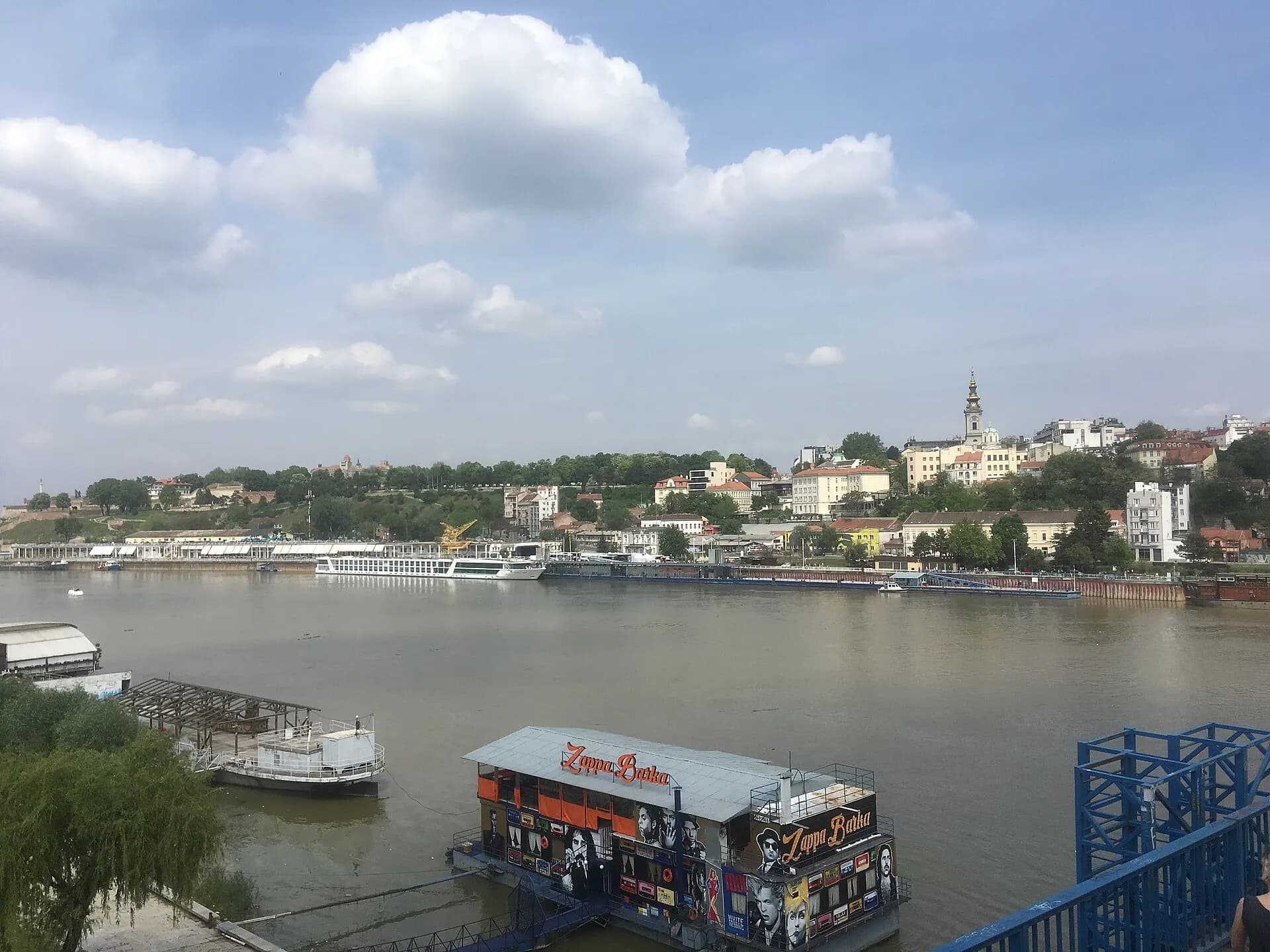
Between the fortress and the main bridges, Savamala was the city's first riverside commercial quarter in the 19th century, then a run-down area of warehouses, before artists and bars revived it in the 2010s. Much of the riverbank to the south has since been redeveloped as Belgrade Waterfront, a controversial project of glass apartment towers, a shopping mall and a riverside promenade where the old main railway station stood. The promenade along the Sava, continuing north under Branko's Bridge to the Beton Hala restaurant strip below the fortress, is a pleasant walk or cycle ride, with the best view of the old town ridge.
- 9
Zemun and Gardoš Tower
Photo: Petar Milošević, CC BY-SA 4.0, via Wikimedia Commons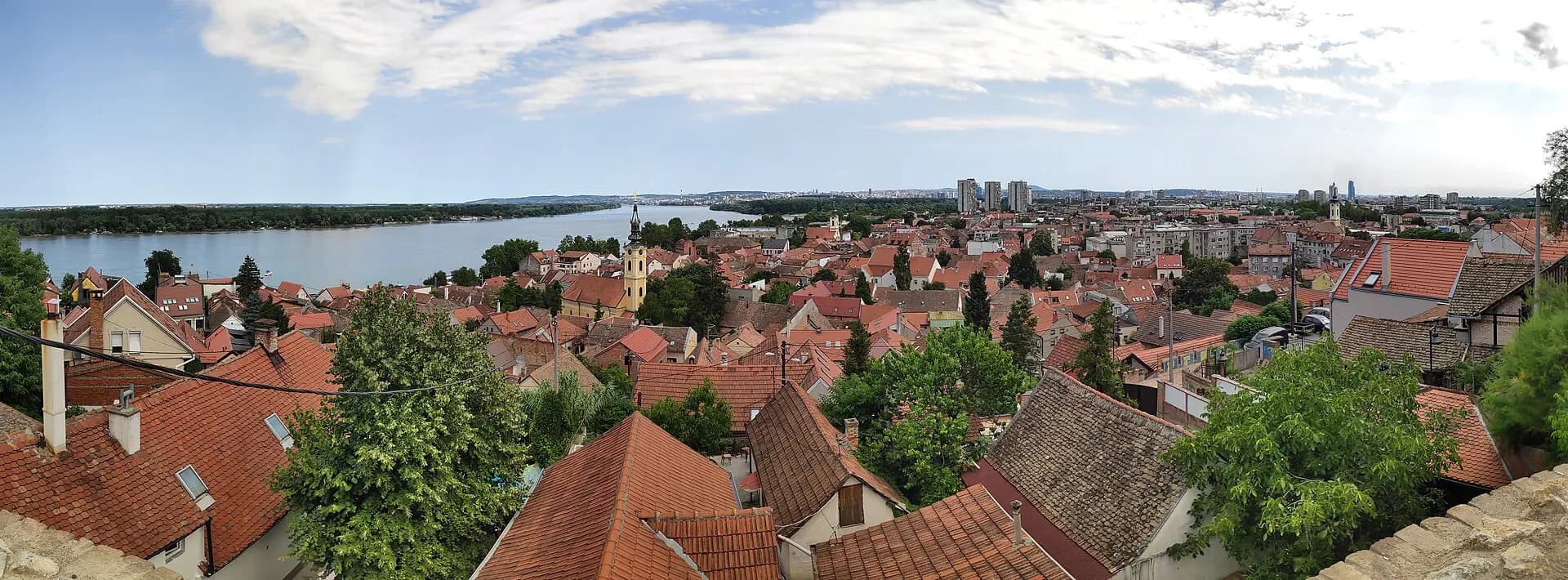
Zemun was a separate town and, until 1918, the southern frontier of the Habsburg empire, with Ottoman Belgrade just across the water; it still feels like a small Central European river town. Climb the lanes of the Gardoš hill to the brick Millennium Tower, built by the Hungarians in 1896 on the ruins of a medieval fortress to mark a thousand years of their state, for a sweeping view of the Danube and the Belgrade skyline. Then come down to the Zemun quay, lined with fish restaurants and cafés.
TipIt is a beautiful 6 km walk or ride along the Danube from Kalemegdan to Zemun via the Ušće park and the New Belgrade riverfront.
- 10
Splavovi (river clubs)
Photo: Mister No, CC BY 3.0, via Wikimedia Commons
Belgrade's nightlife is famous across the Balkans, and much of it floats. Splavovi are raft clubs, restaurants and bars moored along the banks of the Sava and the Danube, especially on the New Belgrade side of the Sava and along the Zemun quay. In summer they range from quiet riverside cafés serving coffee by day to enormous clubs playing turbo-folk or electronic music until dawn. In winter many close or move indoors.
TipBig clubs rarely get going before midnight, and table reservations are often expected for groups. Dress codes and prices vary widely, so check social media pages before heading out.
- 11
Ada Ciganlija
Photo: Nikolina Šepić, CC BY-SA 4.0, via Wikimedia Commons
A former river island on the Sava, joined to the bank by dams to create a long lake, Ada Ciganlija is the city's summer playground, nicknamed the "Belgrade sea". Several kilometres of pebble beaches are crowded on hot weekends, and there are paths for cycling and running all the way round, sports fields, a wakeboard cable and plenty of cafés and bars on the water. Bikes can be rented at the entrance.
- 12
Avala Tower
Photo: Julian Nyča, CC BY 3.0, via Wikimedia Commons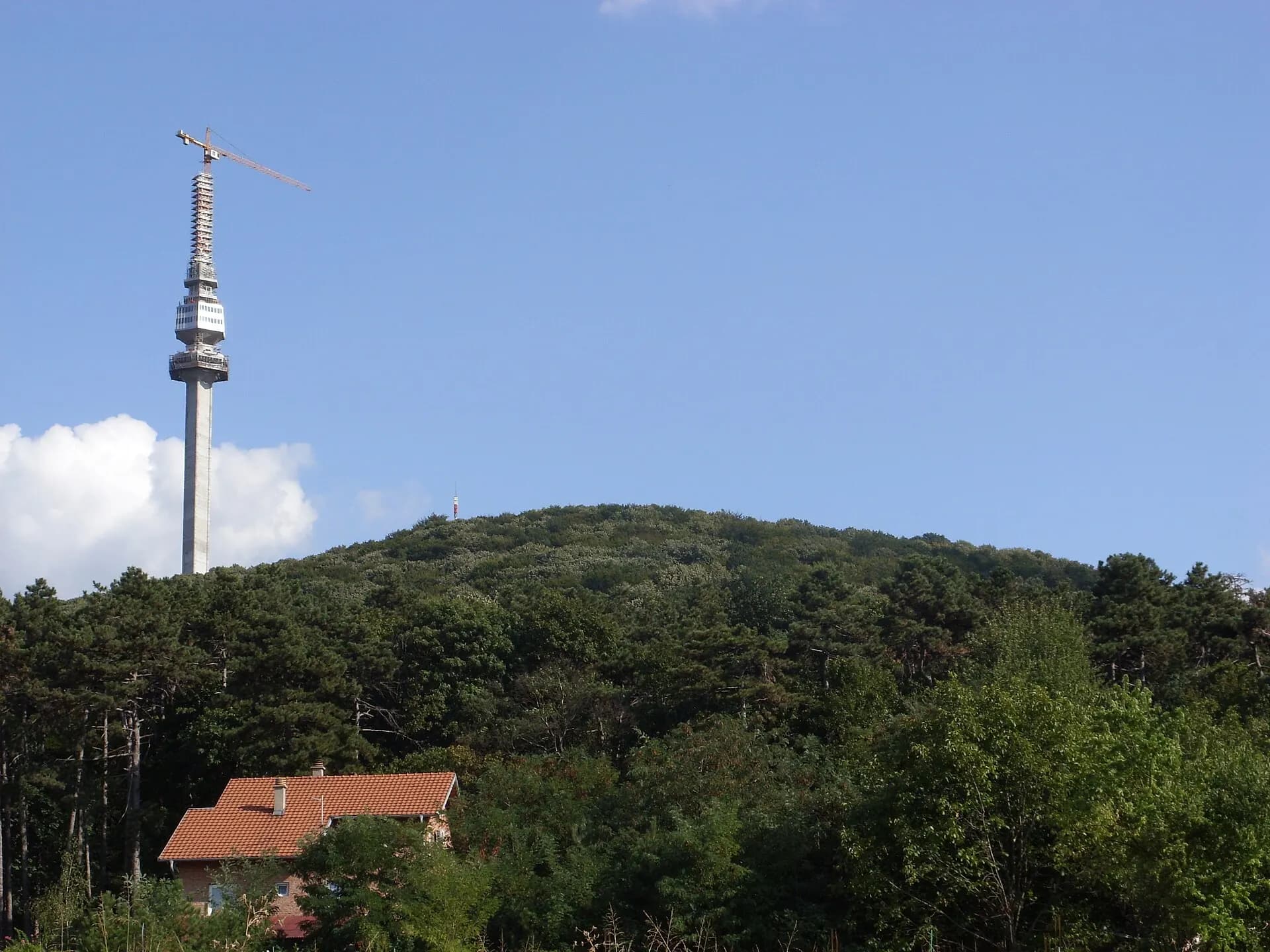
Some 17 km south of the centre, the wooded hill of Avala is crowned by a slender telecommunications tower. The original, completed in 1965, was destroyed by NATO bombing in 1999; the rebuilt tower, a close copy, opened in 2010, and a lift takes visitors to an observation deck with views over the plain towards the city. Nearby stands Meštrović's Monument to the Unknown Hero, a severe black-granite mausoleum from 1938 guarded by figures in regional dress.
- 13
Petrovaradin Fortress and Novi Sad
Photo: Miluša Snidová, CC BY-SA 4.0, via Wikimedia Commons
Serbia's second city, about 80 km north-west on the Danube, is an easy day trip by fast train. The vast Austrian fortress of Petrovaradin, built on a rocky bluff opposite the city between 1692 and 1780, has a famous clock tower whose hands are reversed, with the long hand showing the hours so that boatmen could read it from the river. Below its walls lie miles of military tunnels, which can be visited on a guided tour. Every July the fortress hosts the EXIT music festival. Across the bridge, the pedestrian centre around Liberty Square and Zmaj Jovina Street is relaxed and elegant, with a mix of Serbian, Hungarian and Habsburg architecture.
- 14
Sremski Karlovci
Photo: Opština Sremski Karlovci, Public domain, via Wikimedia Commons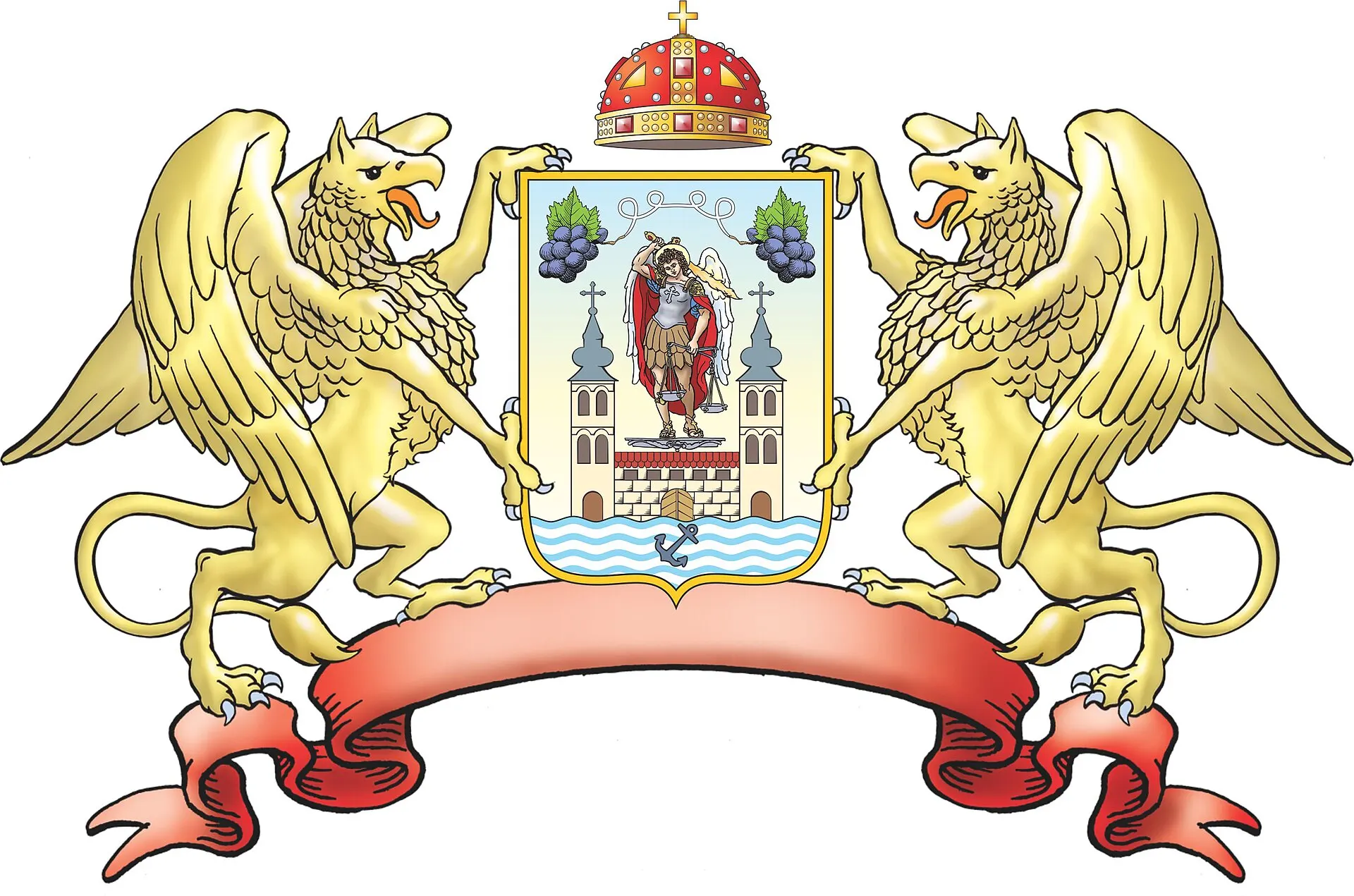
Only 12 km from Novi Sad, this little town was the spiritual and political centre of Serbs living in the Habsburg empire, and its main square is ringed by baroque churches, the Patriarchate palace and the old grammar school. It is set among the vineyards of the Fruška Gora hills, and local wineries pour bermet, a sweet aromatised wine said to have been taken aboard the Titanic. Combine it with Novi Sad in one long day, or continue into Fruška Gora National Park, dotted with Orthodox monasteries.
- 15
Golubac Fortress and the Iron Gates
Photo: Petar Milošević, CC BY-SA 4.0, via Wikimedia Commons
About 130 km east of Belgrade, where the Danube enters the gorges that separate Serbia from Romania, the medieval fortress of Golubac climbs from the water's edge up a cliff in a chain of towers. After a long restoration it reopened to visitors in 2019, with a visitor centre and paths to the upper towers. Beyond it, the road follows the river through Đerdap National Park and the Iron Gates gorge, one of the most dramatic stretches of the Danube, past the Mesolithic site of Lepenski Vir. This is a long day by car or organised tour; staying a night in the gorge makes it far more enjoyable.
TipSummer weekends are busy at Golubac, so arrive early, and check opening times on the official site before the long drive.
When to go
Belgrade has a continental climate with real seasons. Spring arrives in April, and May and June are lovely, warm enough for café terraces and river walks without the heat that follows. July and August are hot, often above 30°C and sometimes close to 40°C, but this is when the splavovi, Ada Ciganlija and the city's open-air festivals are in full swing; many locals leave for the coast in August. September and early October are the other sweet spot, with warm days and the grape harvest in Fruška Gora.
Winters are cold and grey, with frequent fog and occasional snow, and the košava, a gusty south-easterly wind, can make it feel colder still. In return, prices fall and the kafanas are at their cosiest. Orthodox Christmas falls on 7 January and the Serbian New Year (by the old calendar) is also celebrated, on the night of 13 to 14 January. EXIT festival in Novi Sad takes place in July; book rooms early if your dates overlap.
Getting around
Belgrade Nikola Tesla Airport lies about 18 km west of the centre. City bus 72 runs from the airport to Zeleni Venac near the centre in roughly 30 to 40 minutes, and like all regular city lines it is free. The separate A1 minibus to Slavija Square is quicker but charges a fare, usually payable in cash dinars; taxis should be booked from the official counter in the arrivals hall, which issues a voucher at a fixed rate.
Since 1 January 2025, the city's buses, trams and trolleybuses have been free for everyone, with no ticket needed. The network is dense but routes can be confusing; a journey-planner app helps. Taxis are cheap if you use a reputable firm or a ride-hailing app rather than a car waiting at a tourist spot. The centre, from Kalemegdan to Slavija, is walkable, and the riverside paths are excellent for cycling.
For Novi Sad, fast trains run by Srbija Voz from Belgrade Centar (Prokop) station take around 35 to 40 minutes and leave frequently through the day; tickets can be bought online or at the station. Buses link Belgrade with every Serbian town, as well as with Sarajevo, Zagreb and Budapest. The railway north towards Budapest via Novi Sad and Subotica has been rebuilt as a fast line in stages, and cross-border services have changed several times during the work, so check current schedules before planning to go by train; direct coaches are a dependable alternative.
Local tips
- Serbia uses the dinar (RSD). Cards are widely accepted in the centre, but carry cash for markets, small kafanas, taxis without card readers and the A1 airport bus.
- Serbian is written in both Cyrillic and Latin scripts; street signs and menus may use either, so learning the Cyrillic alphabet pays off quickly.
- Smoking is still common in bars and some restaurants, though a law restricts it in many enclosed public places. Ask for a non-smoking area if it matters to you.
- Tipping around 10% in restaurants is appreciated; round up for taxis and in cafés.
- Political demonstrations have been frequent in Belgrade since late 2024, and the UK government's advice (updated October 2026) warns of protests around the parliamentary elections of 25 October 2026. Avoid large gatherings, and expect occasional disruption to roads and public transport.
- If you are coming from Kosovo, check the current entry rules first: Serbia does not recognise Kosovo's independence, and travellers who entered Kosovo from another country may have problems crossing directly into Serbia.
- Tap water in Belgrade is safe to drink.
- Many museums close on Mondays.
Eat and drink
Serbian cooking is built around the grill. Ćevapi (small minced-meat sausages), pljeskavica (a large spiced patty) and mixed grills arrive with raw onion, flatbread and kajmak, a rich, slightly tangy clotted cream. Before the meat comes the meze: šopska salad, ajvar (roasted red-pepper relish), pickled vegetables, smoked ham and cheese. Burek, flaky pastry filled with meat or cheese, is the classic breakfast, eaten with drinking yoghurt from a bakery counter, and Karađorđeva šnicla, a rolled schnitzel stuffed with kajmak, is a Belgrade invention.
The traditional kafana, with its waiters in waistcoats and live music, is an institution, and the best ones are as much about the atmosphere as the food. Rakija, the fruit brandy distilled from plums (šljivovica), quince, apricot or pear, is offered as a welcome and a toast; sip it rather than knock it back. Serbian wine has improved enormously, with good whites from Fruška Gora and reds from the south, and Belgrade has a lively craft-beer and coffee scene, especially in Dorćol and around Cetinjska Street, a courtyard of bars in a former brewery.
Where to stay
Stari Grad, the old town around Knez Mihailova and Republic Square, puts the fortress, museums and Skadarlija within easy walking distance. Dorćol, sloping down from Kalemegdan towards the Danube, is the most characterful area, with independent cafés, bars and small guesthouses. Vračar, around the Temple of Saint Sava and Slavija Square, is a little quieter and more residential, with good restaurants. Savamala and the Belgrade Waterfront have newer hotels near the river and Prokop station, while Zemun suits travellers who want a calmer base with river views. Prices are generally lower than in Western European capitals, but rise during festivals and major events.
A city destroyed and rebuilt
The Celts founded a settlement here in the 3rd century BC, and the Romans built the fortress of Singidunum on the ridge. The Slavs who arrived in the 7th century called it Beograd, the "white city", perhaps after the pale stone of its walls. For centuries it was a frontier between Hungary and the Byzantine world, then between the Habsburg and Ottoman empires; the Ottomans held it from 1521 and it changed hands repeatedly in the wars of the 17th and 18th centuries. Serbia regained it in stages during the 19th century, and the last Ottoman garrison left the fortress in 1867.
Belgrade became capital of the Kingdom of Serbs, Croats and Slovenes in 1918, later Yugoslavia, and was heavily bombed by the Luftwaffe in April 1941. Under Tito it grew enormously, with the planned, modernist city of New Belgrade rising on the marshes across the Sava. The break-up of Yugoslavia in the 1990s brought sanctions, hyperinflation and, in 1999, NATO air strikes during the Kosovo war; some bombed buildings, such as the former army headquarters on Kneza Miloša Street, still stand as ruins. For the wider story of the region's wars and reconciliation, the neighbouring guide to Sarajevo and Mostar makes a thoughtful companion trip.
Responsible travel
Use the free trams and buses, walk the riverside paths or cycle rather than taking taxis everywhere. At the Temple of Saint Sava, the cathedral and monasteries, dress modestly, keep your voice down and ask before photographing services or clergy. Belgrade's recent history is raw and opinions are strongly held, so listen more than you argue when the 1990s or Kosovo come up. On the rivers, choose boat trips and splavovi that dispose of waste responsibly, and at Ada Ciganlija and in Đerdap National Park take your rubbish home. Eat in family-run kafanas and buy from the green markets, which support local producers far more than the chains in the new malls.