Sarajevo and Mostar
Ottoman bazaars, Habsburg façades and hard-won memory, with a stone bridge, emerald rivers and waterfalls between the two cities.
- Best time to go
- May to June and September to October, for warm days without the fierce Herzegovina summer heat
- Local time
- –
- Currency
- Bosnia-Herzegovina Convertible Mark (BAM)
- Reading time
- 17 min
- Language
- Bosnian and Croatian
Few places in Europe pack so much into so small a space as the corridor between Sarajevo and Mostar. In Sarajevo, minarets, Catholic and Orthodox bell towers and a synagogue stand within a few minutes' walk of each other, and the old Ottoman bazaar runs straight into streets of Austro-Hungarian apartment blocks. The city is also where the shots that started the First World War were fired, and where, between 1992 and 1996, residents lived through the longest siege of a capital city in modern European history. That recent past is impossible to ignore, and the museums that tell it are among the most moving anywhere, but Sarajevo today is a warm, sociable, coffee-drinking city that rewards a few unhurried days.
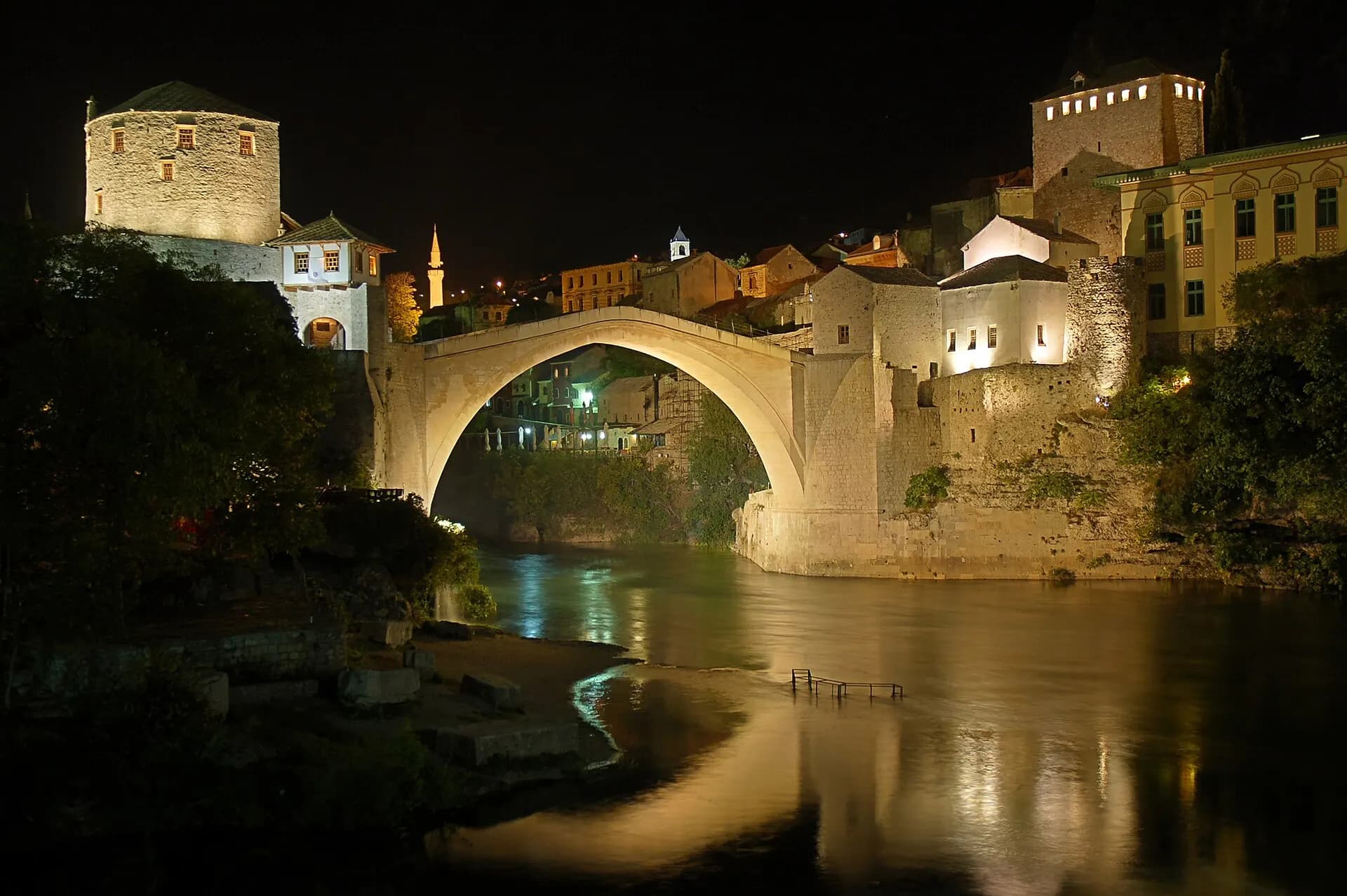
Two hours south-west, through the mountains and down the canyon of the Neretva, Mostar is Herzegovina's capital: hotter, sunnier and built of pale limestone, with its famous sixteenth-century bridge arching over a green river. Around it lie some of the country's loveliest sights, a dervish house at the mouth of a cave spring, a walled hillside village, and a broad, swimmable waterfall. To the north-west, the old royal town of Jajce has a waterfall right in its centre.
The stops below follow a sensible route: a few days in Sarajevo, a detour to Jajce, then Mostar and the Herzegovina sights before heading on to the Croatian coast, where our Split and Dubrovnik guides take over. Allow a week to do it comfortably, or five days if you skip Jajce. Many travellers do it the other way round, crossing from the coast to Mostar first.
The top 18 in Sarajevo and Mostar
- 1
Baščaršija
Photo: en:User:Dark Apostrophe, Public domain, via Wikimedia Commons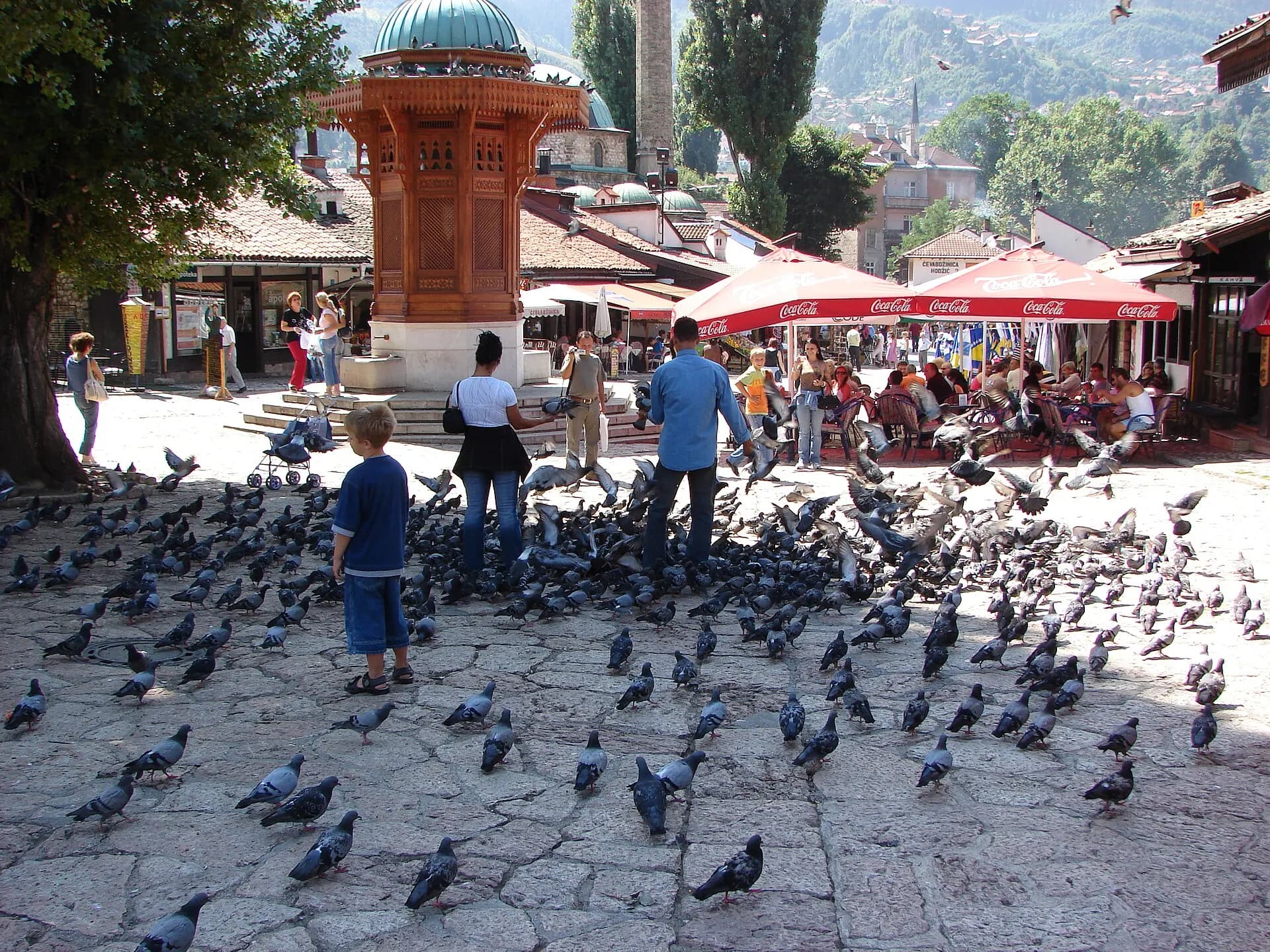
Sarajevo's old bazaar was laid out in the fifteenth century, soon after the Ottomans founded the city, and it still works much as a bazaar should: a grid of low, wooden-shuttered shops grouped by trade, with streets named after the craftsmen who once filled them. Kazandžiluk is still the street of the coppersmiths, tapping out trays, coffee pots and engraved shell casings; elsewhere you'll find cafés serving Bosnian coffee in a copper džezva, ćevapi grills, sweet shops piled with baklava and tufahija, and the covered stone market halls known as bezistans. The caravanserai of Morića Han, with its wooden galleries around a courtyard, gives an idea of where travelling merchants once stayed.
Walk west along Ferhadija and you'll notice a line set into the pavement marked "Sarajevo Meeting of Cultures": on one side the low Ottoman town, on the other the grander Habsburg city built after 1878. It's a neat summary of the place in a single step.
TipShops open late morning and the lanes are quietest early; come back after dark, when the cafés fill and the call to prayer echoes off the rooftops.
- 2
Sebilj
Photo: Fred Romero from Paris, France, CC BY 2.0, via Wikimedia Commons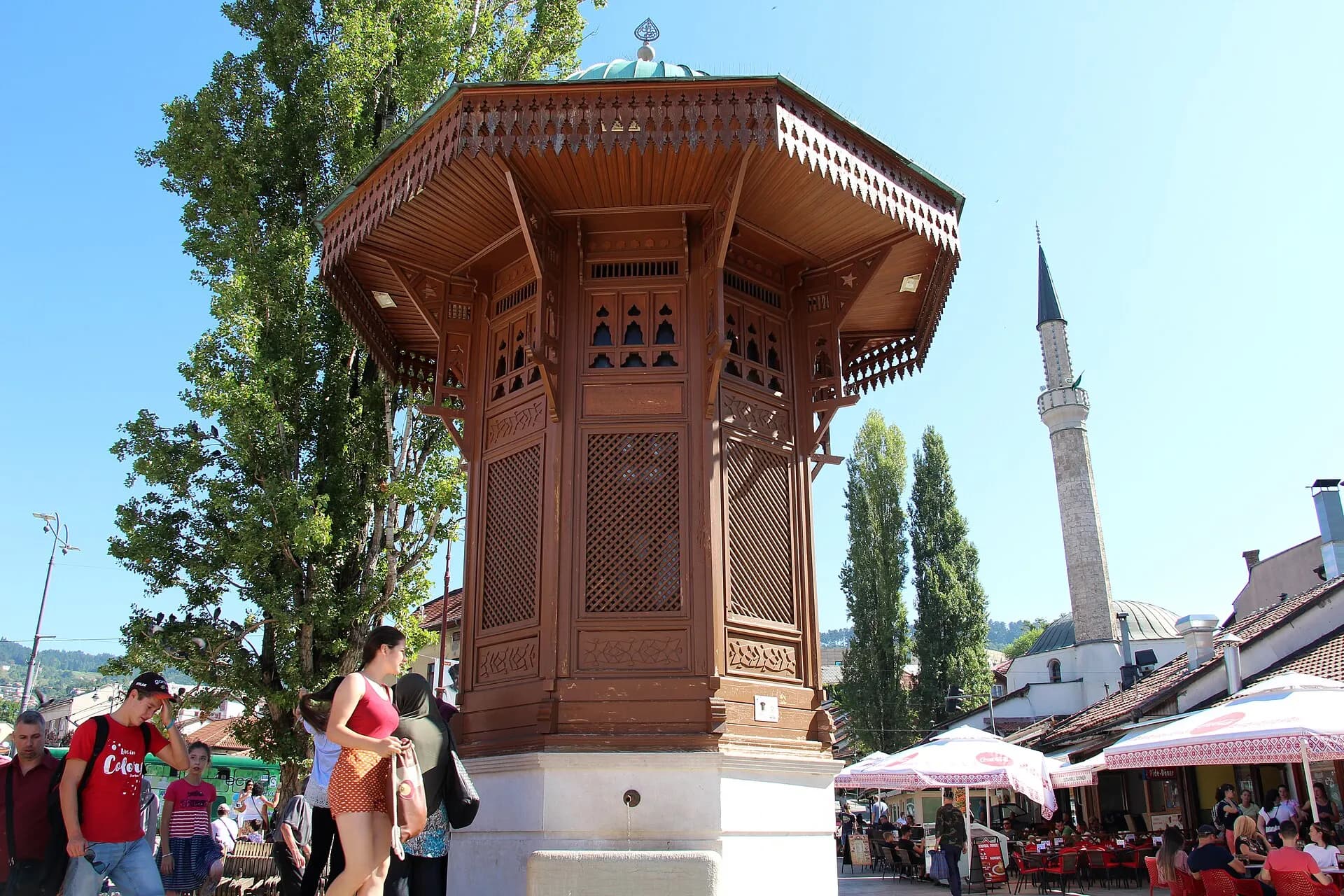
The wooden, kiosk-shaped fountain in the middle of Baščaršija's main square is the city's best-loved symbol and its default meeting point. The original was built by the Ottomans in the eighteenth century; the present one, a pretty pavilion in the Ottoman style, dates from 1891 and was designed by the Czech architect Alexander Wittek, who also designed City Hall. Local lore says that anyone who drinks from it will return to Sarajevo. Expect pigeons, a lot of them, and a constant stream of people taking photographs.
- 3
Gazi Husrev-beg Mosque
Photo: Bernard Gagnon, CC BY-SA 4.0, via Wikimedia Commons
The finest Ottoman building in Bosnia was completed in 1531 for Gazi Husrev-beg, the governor who did more than anyone to turn Sarajevo into a real city, funding a library, a school, a hammam and a covered market as well as this mosque. The domed prayer hall, with a tall slender minaret and a shady courtyard with an ablution fountain, is still the city's principal mosque. Across the street, the founder's medresa and the modern library building that holds his collection of manuscripts continue his endowment almost five centuries later. The mosque was hit repeatedly during the siege and has been carefully restored.
TipVisitors are welcome outside prayer times for a small fee. Cover shoulders and knees; women should bring a scarf, though loan robes are usually available.
- 4
Gallery 11/07/95
In an upper floor of a building next to the Catholic cathedral, this memorial gallery is devoted to the genocide at Srebrenica in July 1995, when Bosnian Serb forces killed more than 8,000 Bosniak men and boys after overrunning a UN-declared "safe area". Photographs, video testimony and documentary films tell the story through the people affected: the mothers who still search for their sons' remains, the forensic work of identifying victims from mass graves, and the failures of the international community. It is harrowing, quiet and essential for understanding modern Bosnia.
TipThe gallery is open daily, with audio guides in several languages. Allow at least an hour and a half, including the documentary films.
- 5
War Childhood Museum
This small museum, which won the Council of Europe Museum Prize in 2018, tells the story of the siege through the eyes of the people who were children at the time. Each exhibit is an ordinary object, a diary, a ballet shoe, a hand-drawn birthday card, a tin of humanitarian rations, donated by its owner and displayed beside his or her own short account of what it meant. The effect is deeply personal and often unexpectedly gentle, full of friendship, games and first love alongside fear and loss. The museum now collects testimony from children affected by other wars too.
TipIt's a short walk uphill from Baščaršija in the Logavina neighbourhood. Booking a time slot on the museum's website is sensible in summer.
- 6
Yellow Fortress
Photo: Bernard Gagnon, CC BY-SA 4.0, via Wikimedia Commons
A steep walk up through the old Kovači quarter, past the cemetery of white Muslim gravestones where many of the siege dead are buried, leads to Žuta tabija, a bastion of the eighteenth-century Ottoman city walls. Today it's a terrace with a café and benches, and the best place in Sarajevo to watch the sun go down over the valley, with the minarets and terracotta roofs below and the mountains closing in on every side. During Ramadan, a cannon is fired from here at sunset to mark the breaking of the fast.
TipArrive half an hour before sunset to get a seat on the wall.
- 7
Sarajevo City Hall
Photo: Julian Nyča, CC BY-SA 4.0, via Wikimedia Commons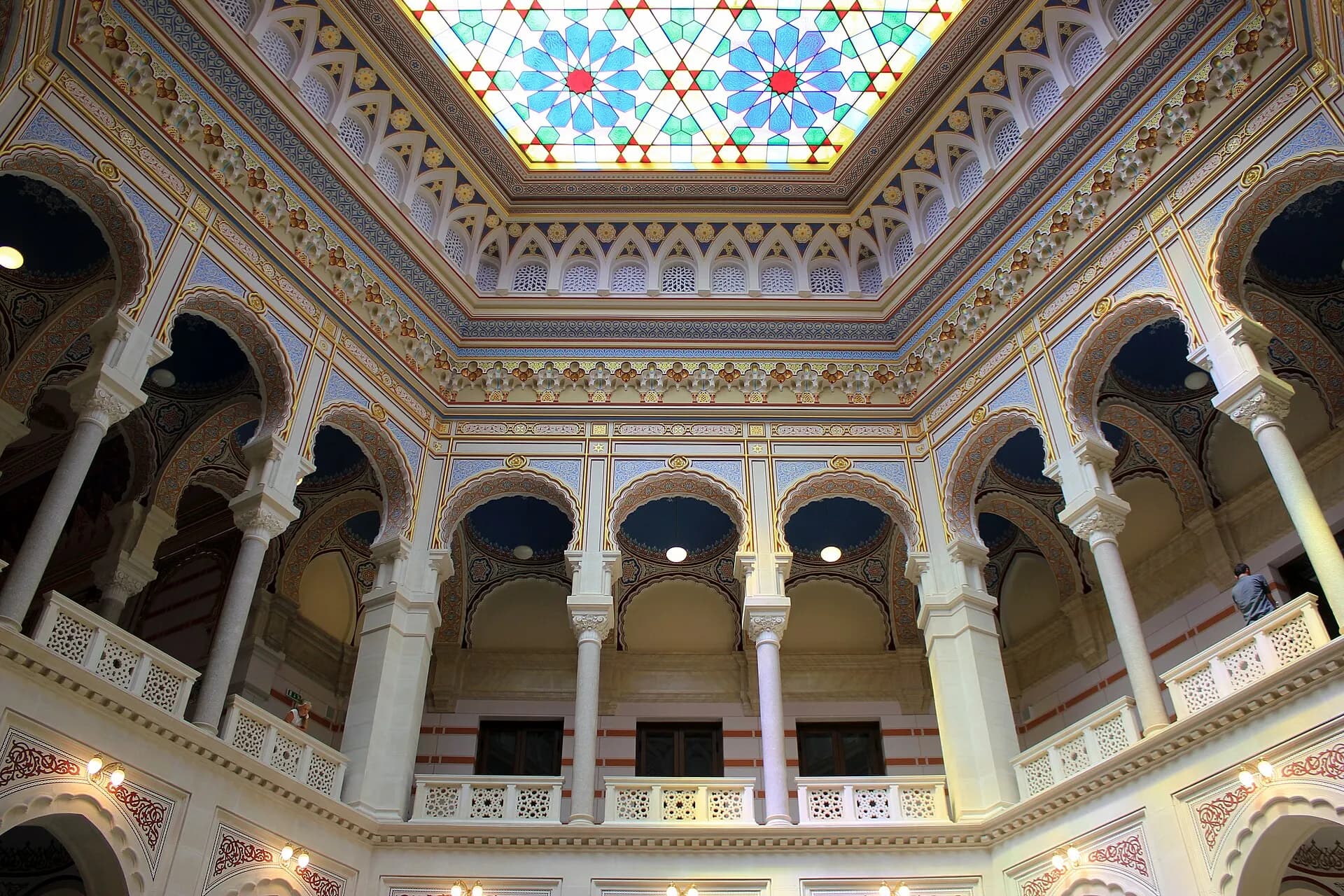
At the eastern end of the old town, on the bank of the Miljacka, the Vijećnica is a striped, horseshoe-arched fantasy in the neo-Moorish style the Austro-Hungarians favoured for their new Bosnian province. It opened in 1896 as the city hall, and Archduke Franz Ferdinand was leaving a reception here on 28 June 1914, shortly before he was shot. After the Second World War it became the National and University Library, and on the night of 25 to 26 August 1992 Bosnian Serb shelling set it alight, destroying the great majority of its books and manuscripts. Painstakingly restored, it reopened in 2014, and its glittering octagonal atrium and stained-glass dome are worth seeing in their own right. Downstairs, an exhibition covers the city's history and the building's destruction.
TipCity Hall is open daily, but may close for events and official ceremonies; check the official site on the day.
- 8
Latin Bridge
Photo: sundeviljeff, CC BY 2.0, via Wikimedia Commons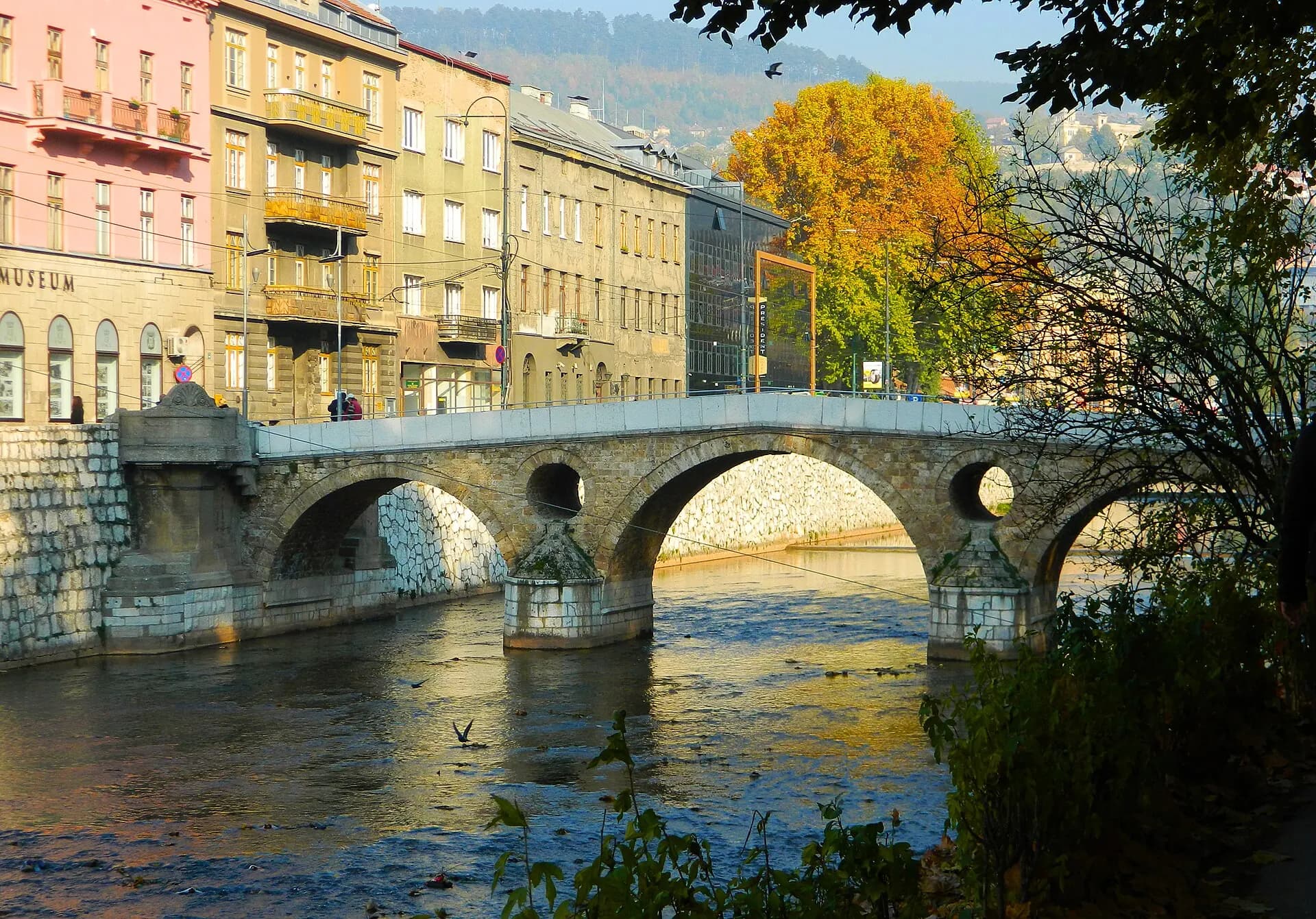
This modest Ottoman stone bridge of several arches over the Miljacka would be just another pretty crossing if it weren't for what happened on the corner by its northern end on 28 June 1914. There, Gavrilo Princip, a young Bosnian Serb nationalist, shot Archduke Franz Ferdinand, heir to the Austro-Hungarian throne, and his wife Sophie, setting off the chain of events that led to the First World War. A small museum on the corner covers Sarajevo under Austro-Hungarian rule from 1878 to 1918, and the assassination itself.
- 9
Trebević cable car and bobsleigh track
Photo: Julian Nyča, CC BY-SA 3.0, via Wikimedia Commons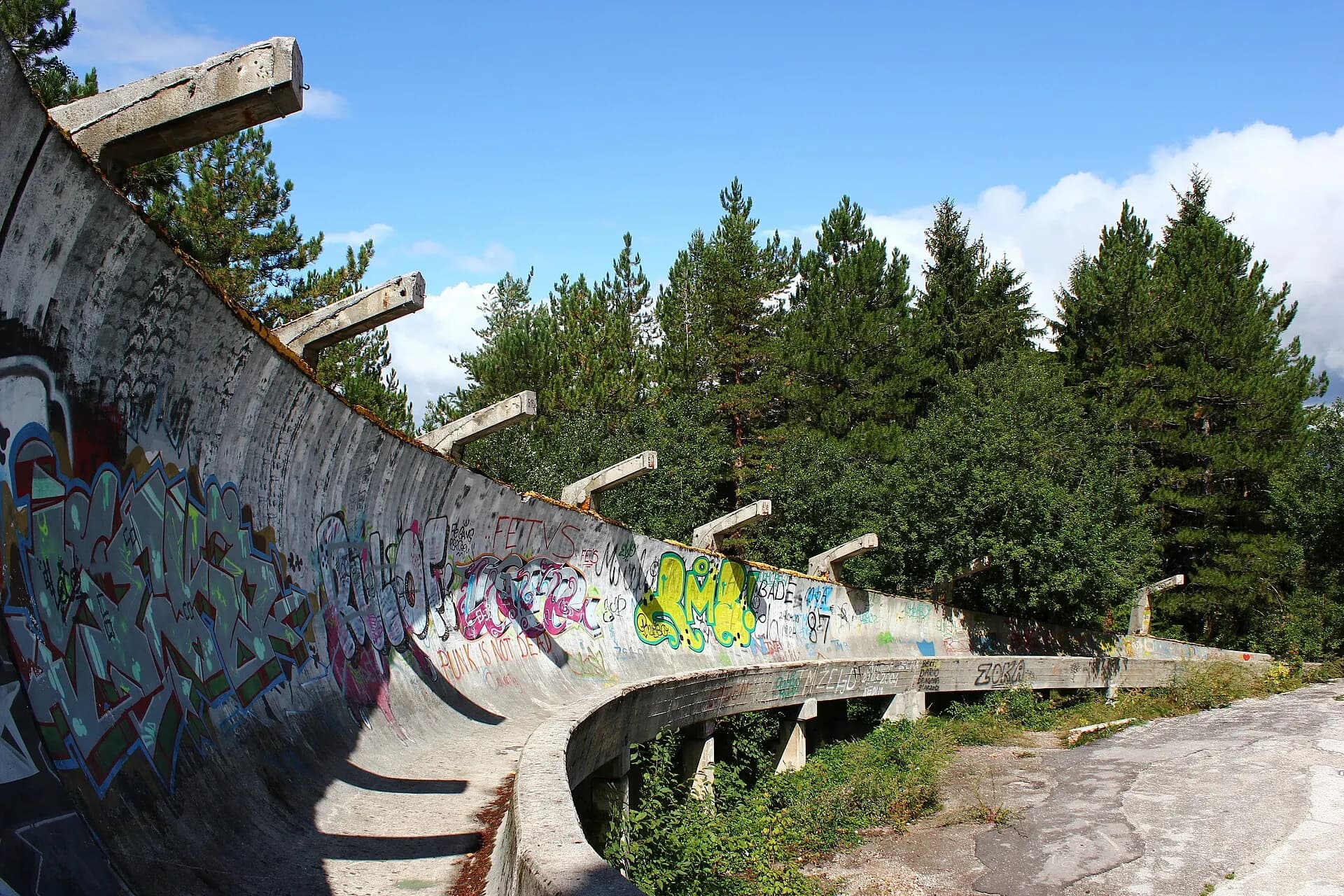
Trebević is the mountain that rises directly above the old town, and Sarajevans have escaped to its woods and viewpoints for over a century. The cable car from the Bistrik neighbourhood was destroyed in the war and only reopened in 2018; its gondolas now glide up in about ten minutes to an upper station with sweeping views of the whole valley. From there it's a short walk through the forest to the concrete bobsleigh and luge track built for the 1984 Winter Olympics, when Sarajevo hosted the world. During the siege the mountain became a front line and the track was used as an artillery position; today the abandoned, graffiti-covered chute winds through the trees and makes a strange, compelling walk.
TipThe cable car's operating days change through the year and it has recently closed early in the week, so check the official timetable before setting out. On Trebević, stay on the track, the roads and clearly marked paths; see the safety note below.
- 10
Tunnel of Hope
Photo: Bernard Gagnon, CC BY-SA 4.0, via Wikimedia Commons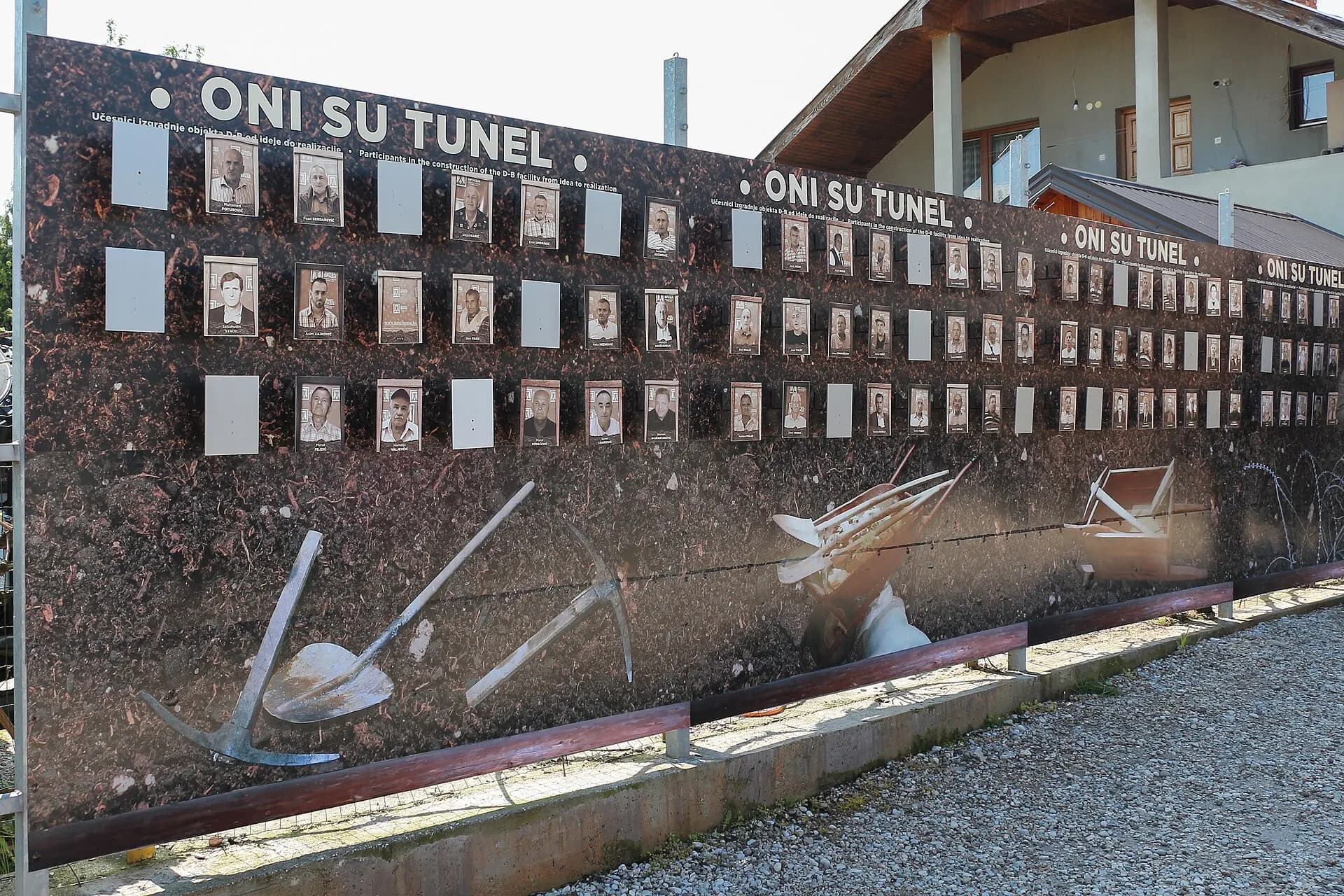
During the siege, the only way in or out of the city that didn't cross the front line was a tunnel dug by hand in 1993 under the airport runway, which was held by UN forces. Around 800 metres long and so low that most people had to stoop, it carried food, fuel, weapons, the wounded and many thousands of people between the besieged city and Butmir, on the free side. The family house that hid its southern entrance is now a museum, with a short stretch of the original tunnel you can walk through, a film and displays of wartime equipment. Bullet holes still pockmark the walls.
TipIt lies near the airport on the city's south-western edge, so combine it with an arrival or departure, or take a taxi or a guided tour. Many local guides who run tours grew up during the siege, which adds a great deal.
- 11
Jajce fortress and old town
Photo: Julian Nyča, CC BY-SA 3.0, via Wikimedia Commons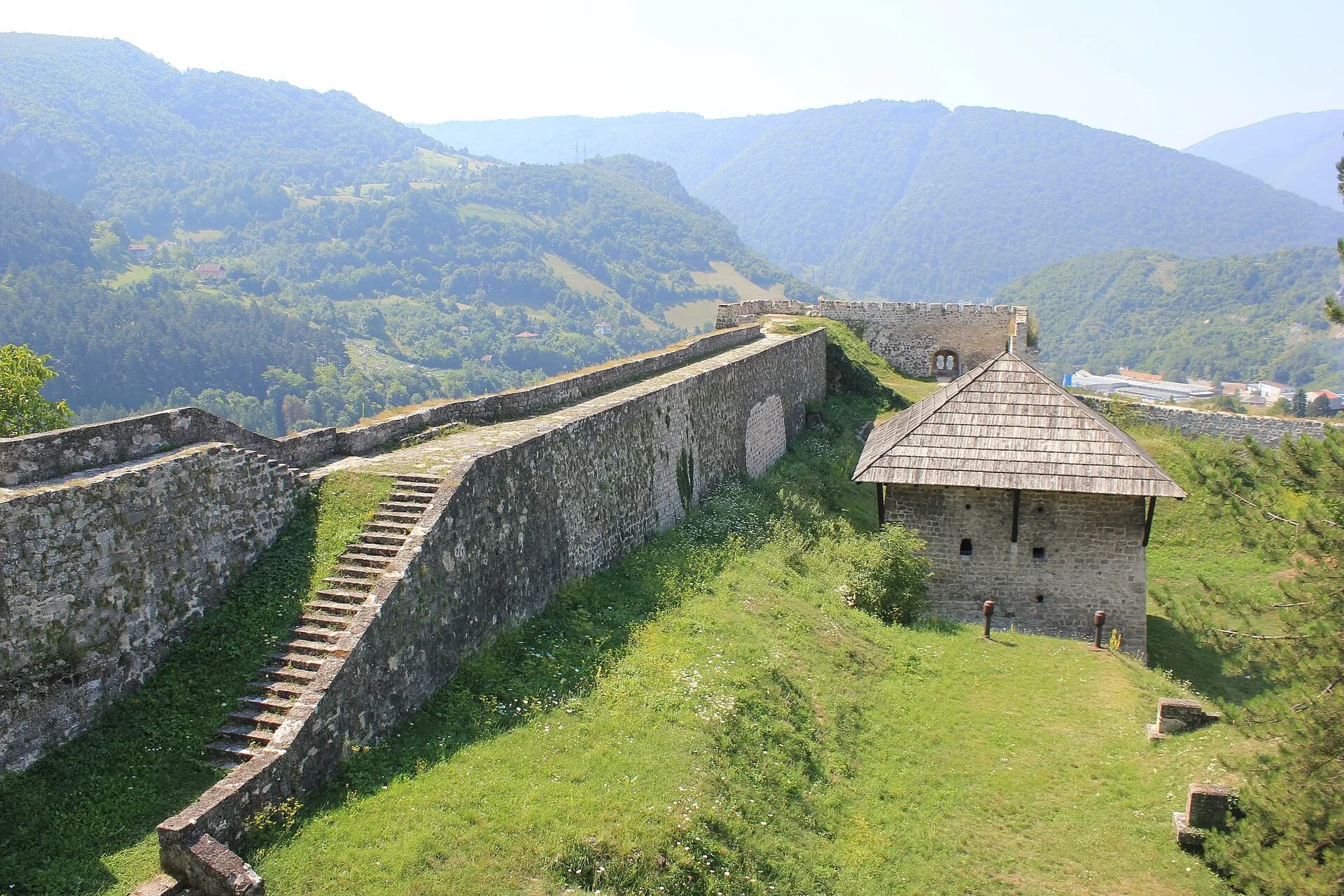
About three hours north-west of Sarajevo, Jajce climbs a rocky hill above the meeting of the Pliva and Vrbas rivers. It was the last royal seat of the medieval Bosnian kingdom before the Ottoman conquest, and its walls run down from a hilltop citadel through a little town of old houses, mosques, a ruined Gothic church with a bell tower and a set of catacombs carved into the rock. In November 1943 the Yugoslav Partisans held the second session of their wartime council, AVNOJ, here, laying the foundations of Tito's post-war federation; a museum in the hall where they met tells the story.
TipJajce fits between Sarajevo and Mostar as a long day's drive, but it's more relaxing to stay overnight.
- 12
Pliva waterfall and watermills
Photo: Adam Harangozó, CC BY-SA 4.0, via Wikimedia Commons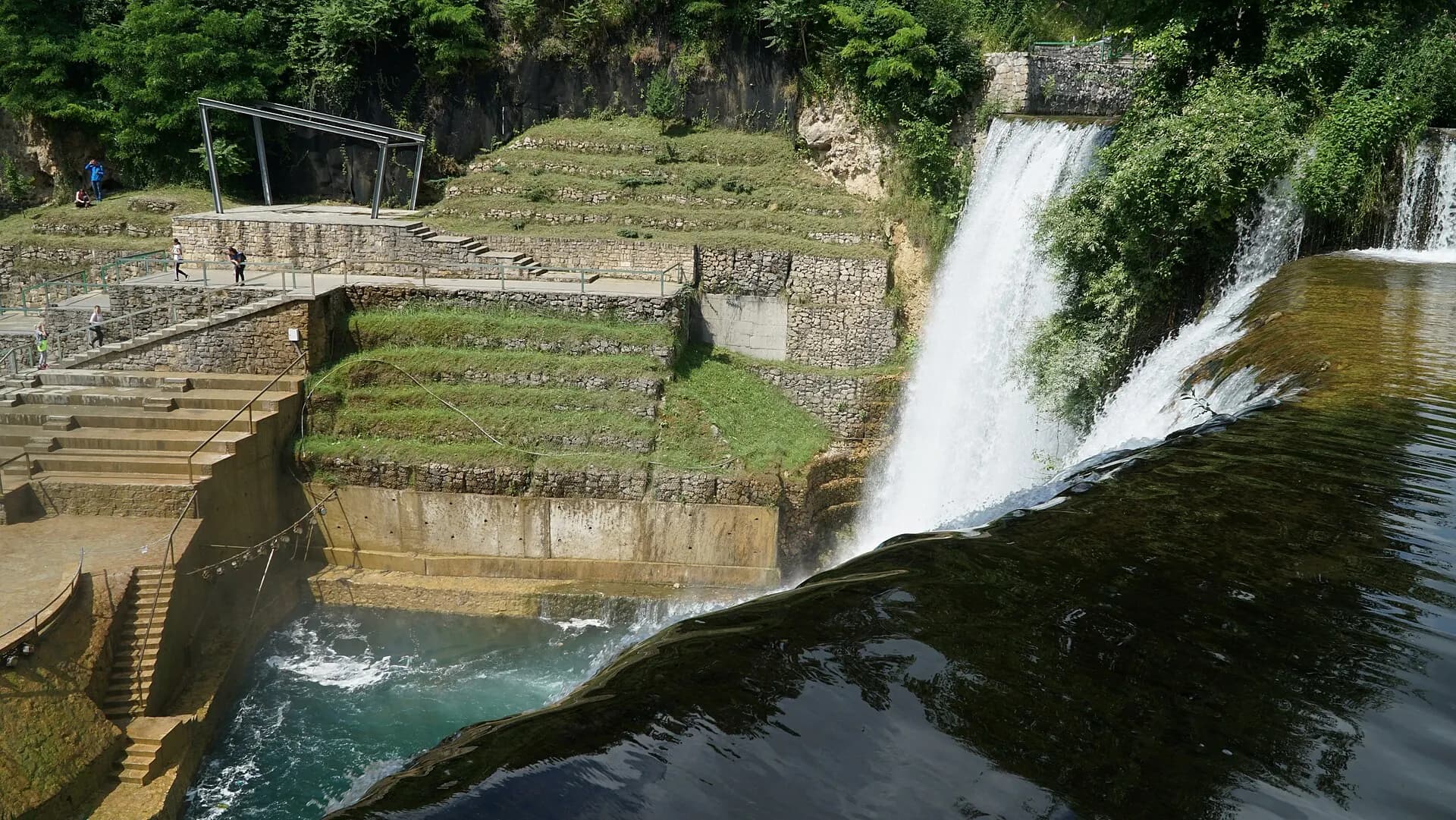
Jajce's great surprise is that the Pliva tumbles over a ledge of travertine around 20 metres high right in the middle of town, before joining the Vrbas below. A viewing platform and steps lead down to the foot of the falls, which are at their most powerful in spring. A few kilometres upstream, beside the Pliva lakes, a cluster of small wooden watermills stands on stilts over the water, a peaceful spot for a walk or a swim on a warm day.
- 13
Koski Mehmed Pasha Mosque
Photo: Pudelek (Marcin Szala), CC BY-SA 3.0, via Wikimedia Commons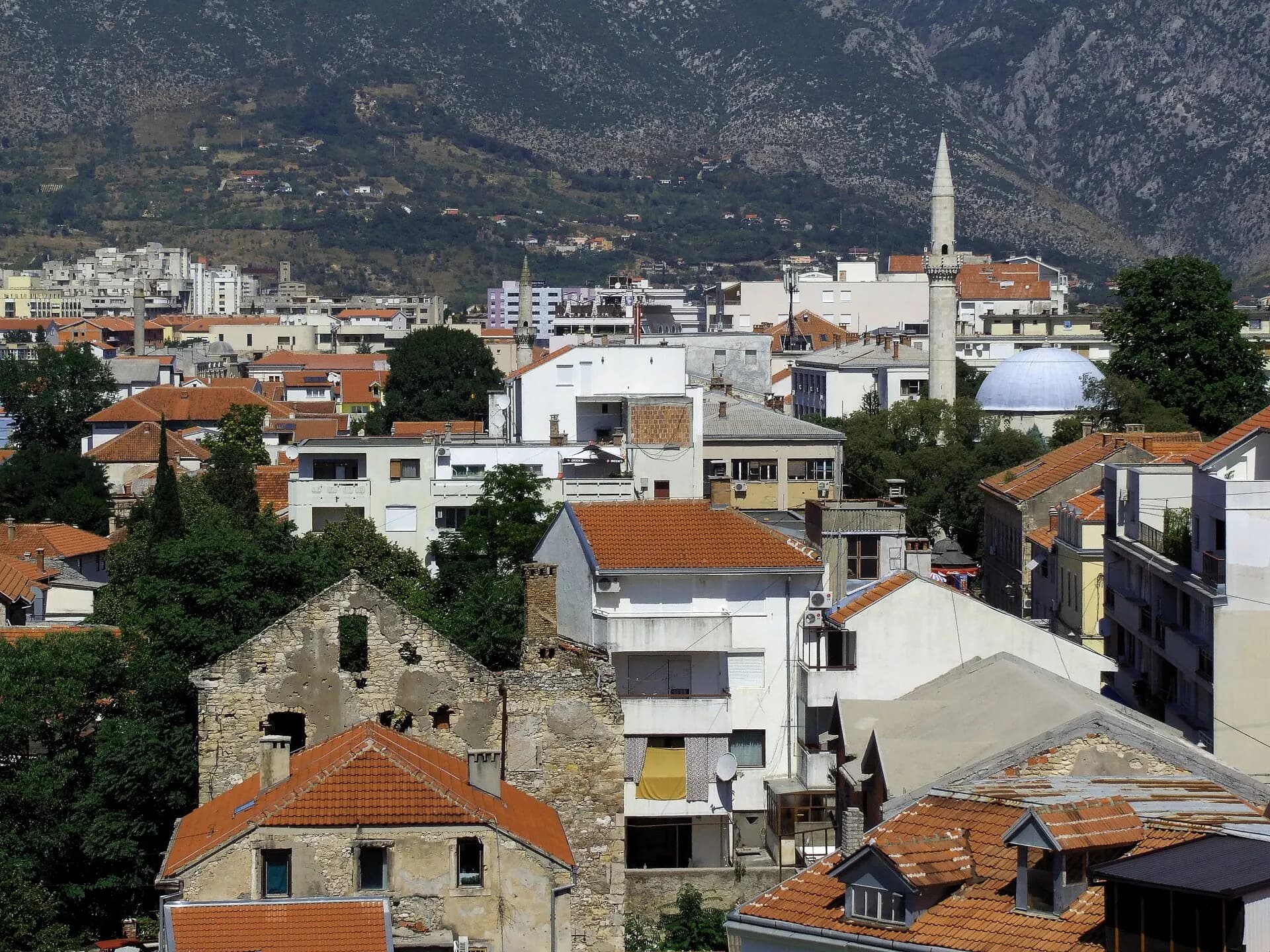
On the east bank of the Neretva just upstream of the Old Bridge, this small mosque of the early seventeenth century has a pretty courtyard and, more to the point for visitors, a minaret you can climb. The narrow spiral staircase emerges on a balcony with the definitive view of Stari Most, the river and the old town; the courtyard terrace over the water gives almost as good a view without the climb.
TipThe minaret stairs are tight and steep. Visit early or late in the day for softer light on the bridge.
- 14
Kujundžiluk
Photo: Berthold Werner, CC BY-SA 4.0, via Wikimedia Commons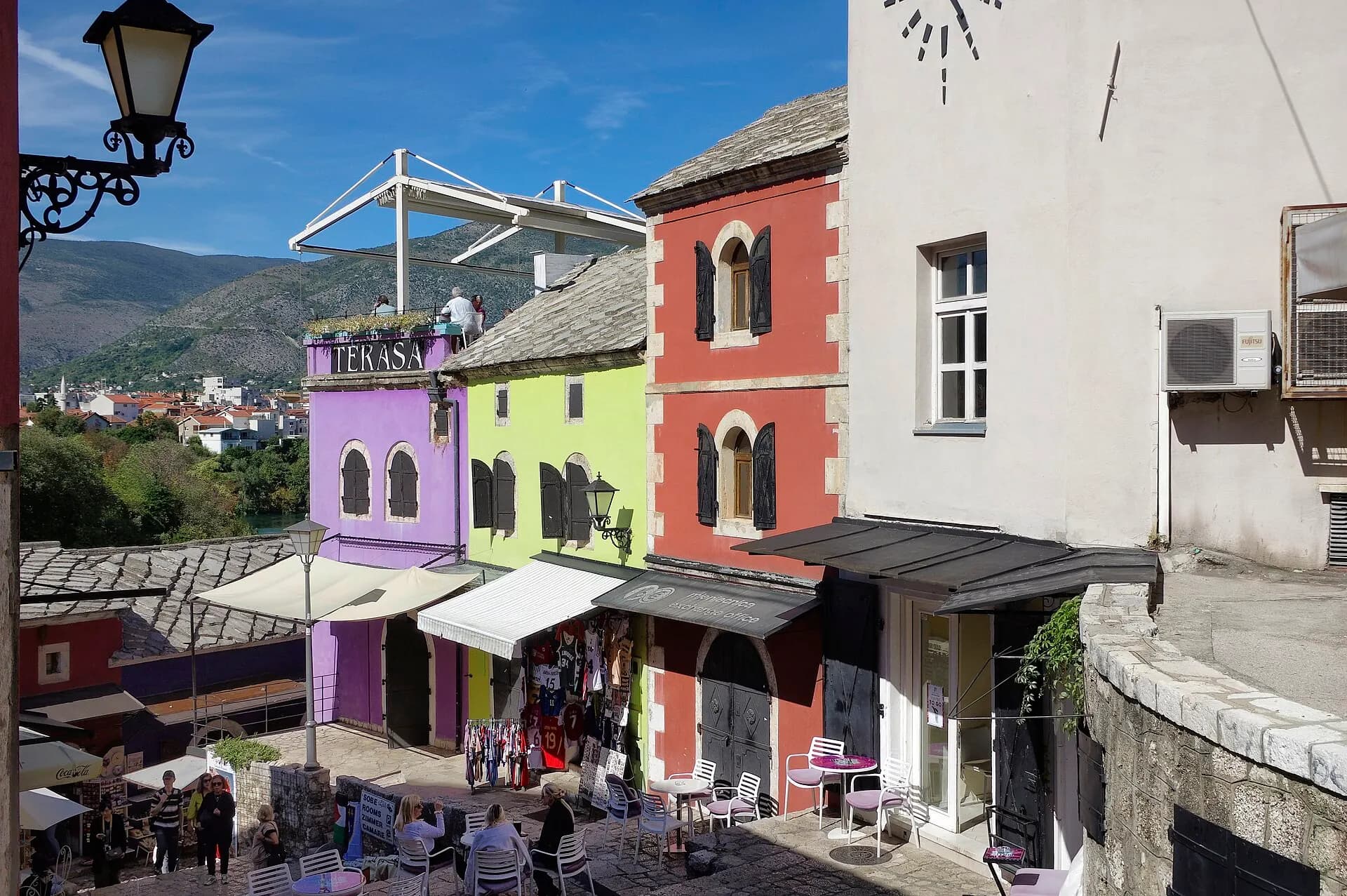
The old bazaar street on the east bank, named after the goldsmiths who once worked here, leads down to the bridge on slippery, polished cobbles. Today it's lined with stalls and workshops selling copperware, carpets and souvenirs, alongside cafés with terraces hanging over the river. It's busy with day trippers from the coast in the middle of the day, but in the early morning and evening it recovers its charm. Just off the street, a couple of beautifully preserved Ottoman family houses, Bišćević and Muslibegović, show how wealthy families lived.
- 15
Stari Most
Photo: Berthold Werner, CC BY-SA 4.0, via Wikimedia Commons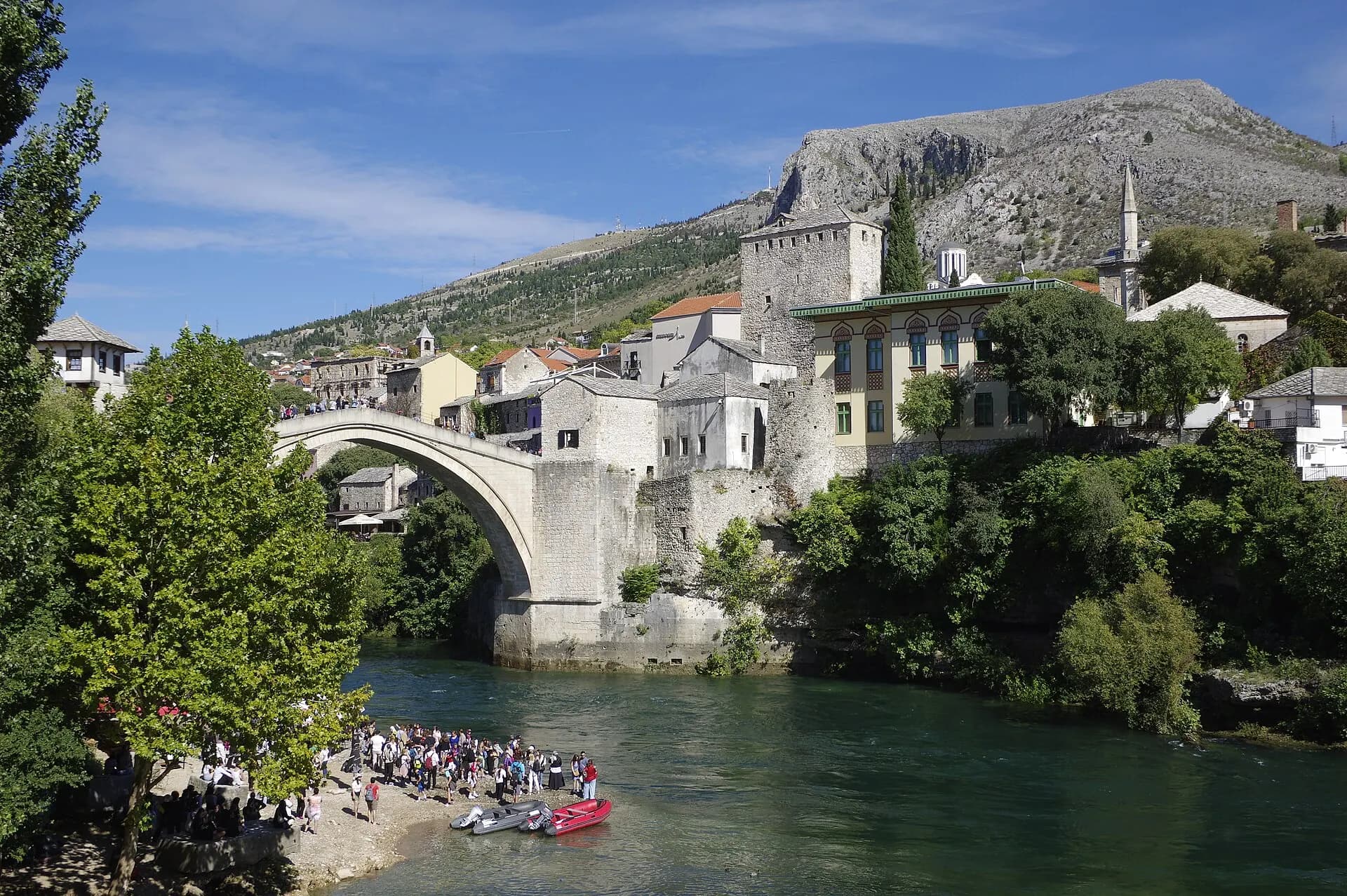
The Old Bridge, a single slender arch of pale stone leaping almost 30 metres across the Neretva, was completed in 1566 by the Ottoman architect Mimar Hayruddin and stood for over four centuries. On 9 November 1993, during the fighting between Bosnian Croat and Bosnian government forces that divided the city, it was shelled and collapsed into the river. It was rebuilt using the original techniques, and largely stone from the same quarries, and reopened in 2004; UNESCO listed the bridge and the old town around it the following year. The rebuilt bridge has become a symbol of reconciliation, though the city remains divided in many ways.
The bridge is also famous for its divers, who jump from the parapet into the cold river some 20 metres below, a tradition that goes back centuries. Members of the local diving club collect money from onlookers before jumping; an annual competition is held in summer, and the bridge has hosted international cliff-diving events.
TipDon't try the jump yourself without training from the divers' club. Wear shoes with grip: the stone of the bridge is worn smooth and slippery, especially after rain.
- 16
Blagaj Tekke
Photo: Julian Nyča, CC BY-SA 3.0, via Wikimedia Commons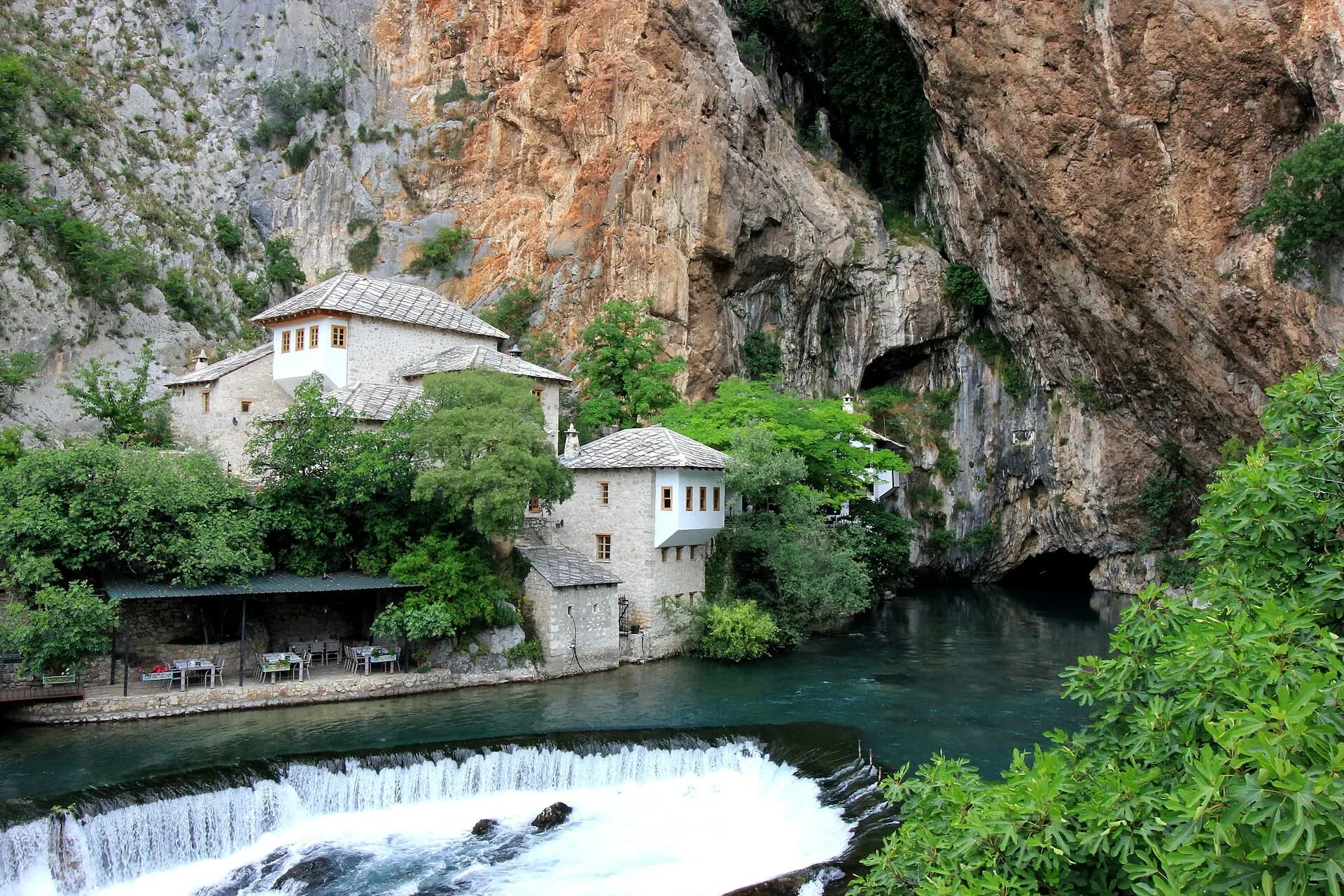
Twenty minutes south-east of Mostar, the river Buna bursts out of a cave at the foot of a 200-metre cliff, one of the largest karst springs in Europe. Beside it, a white house with wooden bay windows overhangs the water: a tekke, or lodge, of dervishes, built in the Ottoman period and still a place of Sufi worship. Inside, rooms are laid with carpets and low divans, and a small tomb holds two dervishes. Outside, restaurants along the riverbank serve fresh trout, and boats take visitors a little way into the mouth of the cave.
TipVisitors are welcome to look around the tekke; women are asked to cover their hair, and robes and scarves are provided. Go early to avoid the coach groups.
- 17
Počitelj
Photo: Pudelek (Marcin Szala), CC BY-SA 3.0, via Wikimedia Commons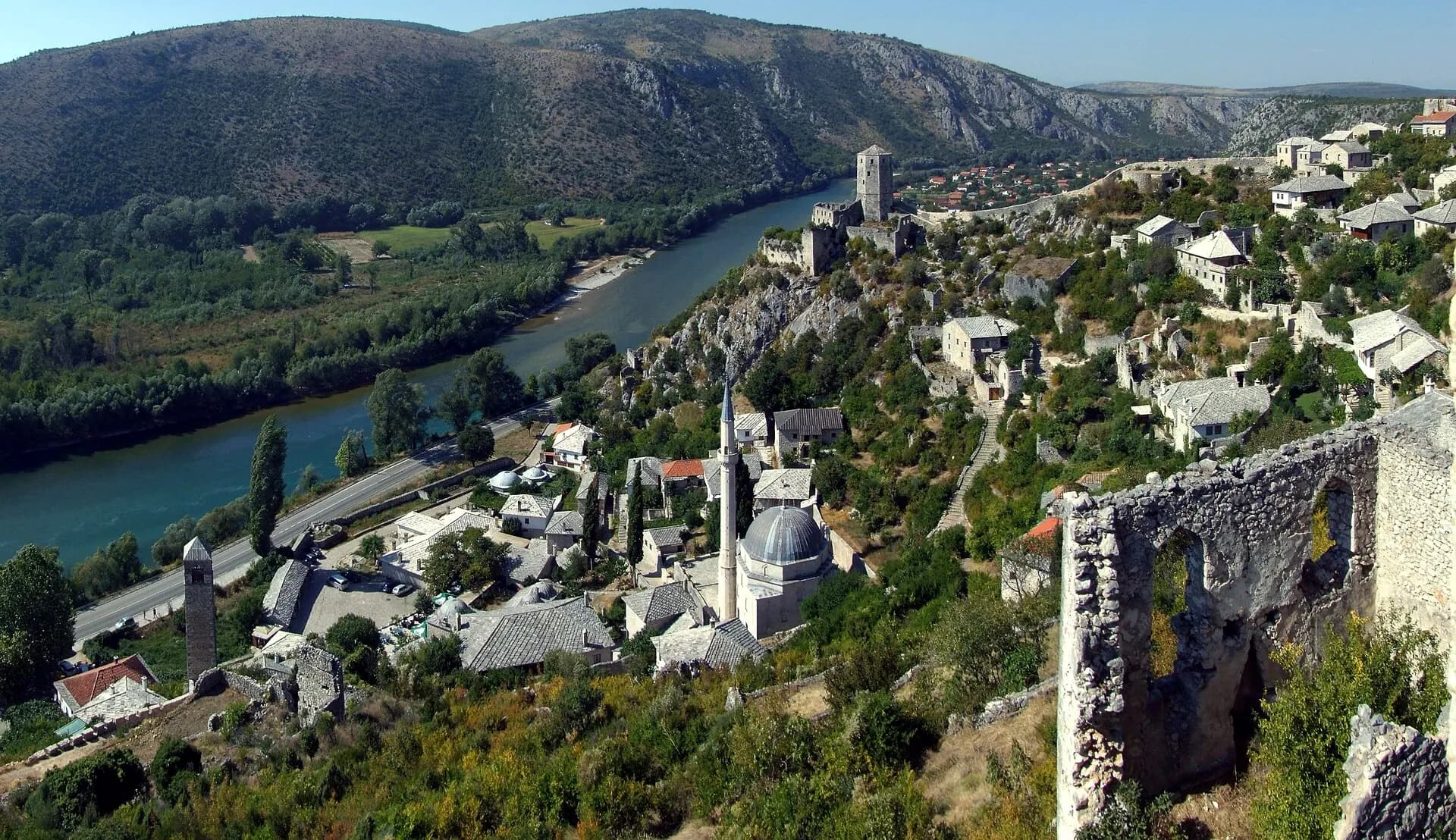
On a terraced hillside above the Neretva, south of Mostar, Počitelj is a fortified village of stone houses, a domed sixteenth-century mosque, a clock tower, a hammam and a hilltop tower, all enclosed by walls that zigzag up the slope. It was badly damaged in the 1990s and has been extensively restored. The climb up through its lanes and steps to the octagonal tower is hot work in summer, but the view along the green river is the reward. In the season, locals sell pomegranates, figs and fresh juice by the gate.
TipThe stone steps are uneven and unshaded; bring water and go in the morning or late afternoon.
- 18
Kravica waterfall
Photo: Shiraz Chakera, CC BY-SA 2.0, via Wikimedia Commons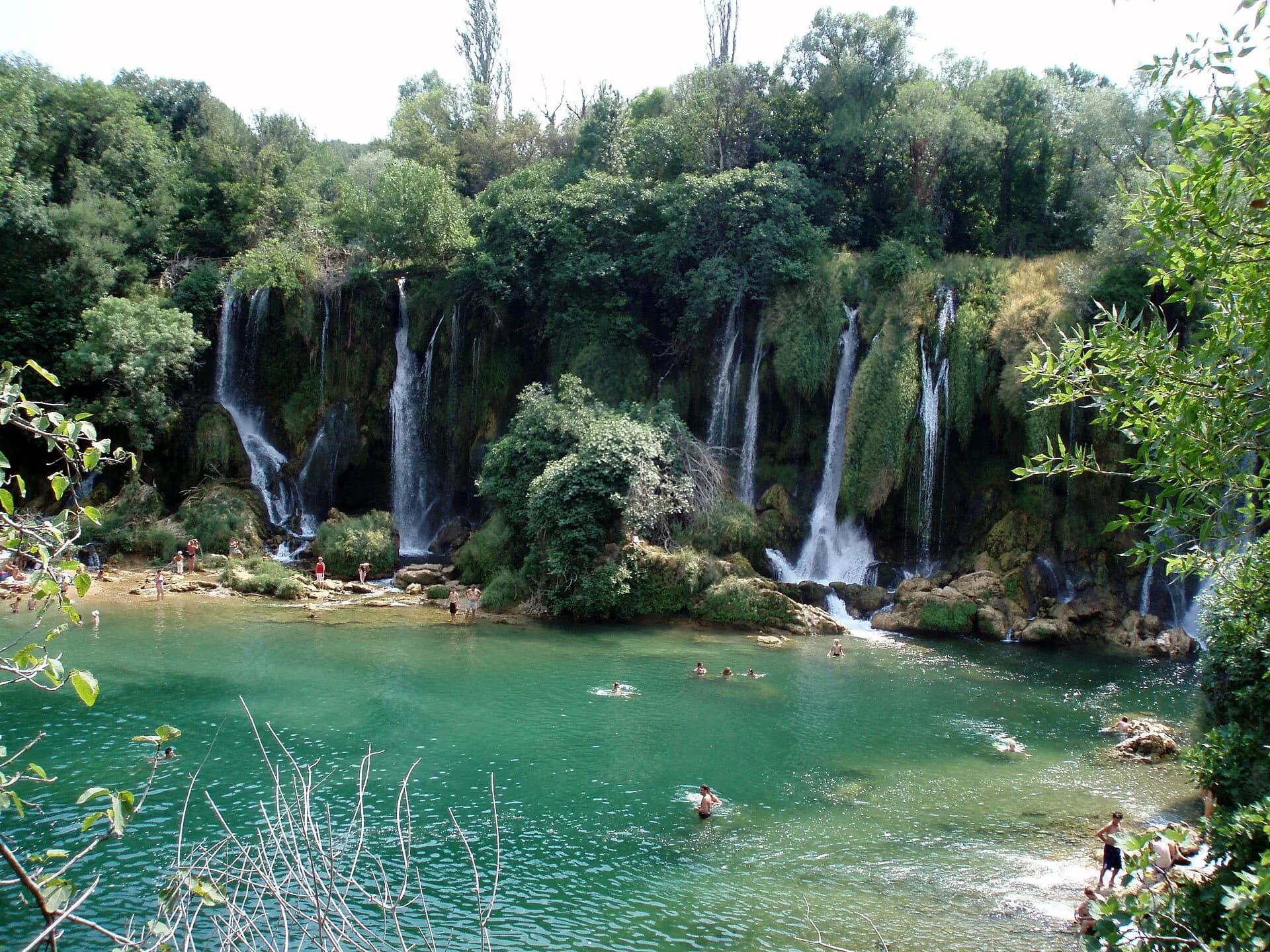
Near Ljubuški, west of Počitelj, the Trebižat river spills over a semicircular wall of travertine about 28 metres high and 120 metres wide into a broad green pool, making a natural amphitheatre of cascades and mist. In summer it's one of Herzegovina's favourite swimming spots, with cafés, rowing boats and shady picnic areas; in spring the falls are at their fullest, and in autumn the crowds disappear. The falls are a short walk down from the car park.
TipEntry for adults is 20 KM, with opening hours that run longer in summer. Swimming is at your own risk, and the travertine edges are fragile, so don't climb on the falls themselves. It's an easy stop on the drive from Mostar to Split or Makarska.
When to go
Late spring and early autumn are the best times. From May to June and from September to October, days in Sarajevo are warm and fresh, the rivers and waterfalls are full, and Mostar is hot but bearable. July and August bring the most visitors and real heat in Herzegovina, where afternoon temperatures in Mostar regularly climb towards 40°C; Sarajevo, higher up in its valley, stays more comfortable, and its film festival fills the city in August. Winter is cold and often snowy in Sarajevo, with skiing on the Olympic mountains of Jahorina and Bjelašnica nearby, but the city can sit under heavy smog on still days, as can Mostar under grey drizzle. Ramadan, whose dates move each year, brings evening crowds to Baščaršija for the breaking of the fast, and some cafés in the old town close during the day.
Getting around
Sarajevo and Mostar are about two to two and a half hours apart. The railway between them, run by Željeznice Federacije BiH, follows the Neretva gorge via Konjic and Jablanica and is one of the most scenic train rides in the Balkans; services have been interrupted by flood damage in recent years, so check the current timetable before relying on it. Frequent buses cover the same route, and minibuses and buses also connect Mostar with Split and Dubrovnik. Jajce is reached by bus from Sarajevo and Banja Luka, though connections are slower.
For Blagaj, Počitelj and Kravica, a car or a tour is much easier than public transport: they're scattered around the countryside south of Mostar, and buses to them are infrequent. Roads are generally good but winding, and drivers can be impatient. Rental companies need to know if you plan to cross into Croatia or Montenegro, and you'll need to show the car's green card insurance. Expect queues at the Croatian border in summer. Within Sarajevo, the old town is compact and walkable, and trams run the length of the valley from Baščaršija to Ilidža. Taxis are inexpensive; use metered taxis or an app rather than accepting rides from touts. Sarajevo airport has flights to many European cities, and Mostar's small airport has a few seasonal routes.
Local tips
- The currency is the convertible mark (KM, or BAM), fixed to the euro. Cards are accepted in hotels and many restaurants, but carry cash for bazaar stalls, small cafés, entry fees and village shops.
- Bosnian coffee is a ritual, not a quick caffeine fix: it arrives in a copper pot with a sugar cube and a piece of rahat lokum, and is meant to be lingered over.
- Bosnia is a multi-faith country. Dress modestly in mosques, churches and monasteries, and be respectful at memorials and cemeteries.
- Talk about the war if people bring it up, and listen, but avoid making assumptions about anyone's background or loyalties. Names, accents and alphabets (Latin and Cyrillic) can be politically sensitive.
- Smoking is still common in cafés and bars, though non-smoking spaces are increasingly available.
- Bosnia and Herzegovina is not in the EU or the Schengen area; check the entry rules for your nationality, and carry your passport when travelling between the country and Croatia.
Landmine safety
Bosnia and Herzegovina is still affected by landmines and unexploded ordnance left over from the war of the 1990s, mainly in the countryside and along former front lines, including parts of the hills around Sarajevo. Cities, main roads and established tourist sites are safe, but outside them the rule is simple: stay on paved roads, marked trails and clearly used paths. Don't wander into fields, woods, abandoned buildings or overgrown areas, and never touch any unfamiliar object. Mine warning signs are usually red with a white skull or the word "Mine" or "Mina", and taped-off areas should always be respected. If you plan to hike in the mountains, go with a local guide or check the BHMAC maps of suspected hazardous areas first.
A short history
For most of the medieval period Bosnia was an independent kingdom, with its own independent Bosnian Church and the carved stone tombstones, stećci, that still dot its hillsides. The Ottomans conquered it in the fifteenth century and over four centuries built most of the mosques, bridges and bazaars that define Sarajevo and Mostar today, while many Bosnians converted to Islam. Austria-Hungary took control in 1878, adding the grand public buildings and trams, and annexed the country in 1908, which led to the assassination of 1914. After both world wars Bosnia became part of Yugoslavia, and Sarajevo's 1984 Winter Olympics were a high point of that era.
As Yugoslavia broke apart, Bosnia and Herzegovina declared independence in 1992, and war followed. Sarajevo was besieged by Bosnian Serb forces from April 1992 to February 1996, with more than 11,000 people killed by shelling and sniper fire; in Mostar, fighting between Bosnian Croat and Bosnian government forces destroyed much of the old town. The war ended with the Dayton Agreement in late 1995, which created the present state of two entities, the Federation and Republika Srpska, with a complex power-sharing government. Look out in Sarajevo for the "Sarajevo roses", shell scars in the pavement filled with red resin to mark where people were killed.
Eat and drink
Bosnian food is hearty, meaty and full of flavour. The essential dish is ćevapi: small grilled minced-meat sausages served in a fluffy flatbread called somun, with chopped raw onion and kajmak, a rich clotted cream. Baščaršija has some of the most famous ćevabdžinicas. Burek, flaky pastry rolled with minced meat, is sold by weight in pita shops, where the cheese version is sirnica, spinach is zeljanica and potato is krompiruša. Look too for begova čorba, a creamy chicken and okra soup; klepe, little meat dumplings; slow-cooked stews such as Bosanski lonac; and dolma, vegetables stuffed with rice and meat. In Herzegovina, food takes on a Mediterranean edge, with trout from the Buna and Neretva, figs, and local cheese.
For dessert, try baklava, tufahija (poached apple stuffed with walnuts and topped with cream) and hurmašice, syrup-soaked biscuits. Herzegovina makes very good wine from local grapes, the white žilavka and the red blatina, best tasted at small wineries around Mostar and Čapljina, and rakija, fruit brandy, is offered everywhere. Sarajevo's own Sarajevsko pivo brewery has been making beer since 1864.
Where to stay
Sarajevo deserves at least two or three nights. Stay in or close to Baščaršija and the old town to walk everywhere; the streets climbing the hillsides above it are quieter and have wonderful views, but involve steep walks home. Mostar's old town is lovely in the evening once the day visitors leave, and staying a night lets you see the bridge lit up and quiet; guesthouses on both banks are good value. Jajce has a few hotels and guesthouses near the old town and the Pliva lakes. If you're short of time, you can visit Blagaj, Počitelj and Kravica in a day from Mostar or on the way to the coast.
Responsible travel
Much of what you'll see in Sarajevo and Mostar concerns events within living memory, and the people you meet may have lost family or homes. Visit the war museums and memorials with respect, avoid posing for jokey photographs at the Tunnel of Hope, the bobsleigh track or bullet-scarred buildings, and ask before photographing people. To go deeper, the Srebrenica Memorial Center in Potočari, in the east of the country, is the place of remembrance for the victims of the 1995 genocide; it is a long day trip from Sarajevo, best made with a respectful local guide. Use local guides, family-run guesthouses and small craft workshops in the bazaars, where the money stays in the community. At Kravica, Blagaj and the Pliva, take your rubbish with you and keep off fragile travertine, and in summer remember that dry Herzegovina hills are at serious risk of wildfires.