Budapest
Two cities joined by the Danube: Buda's castle hill and Pest's grand boulevards, with hot springs and ruin bars in between.
- Best time to go
- April to June and September to October; December for Christmas markets
- Local time
- –
- Currency
- Hungarian Forint (HUF)
- Reading time
- 5 min
- Language
- Hungarian
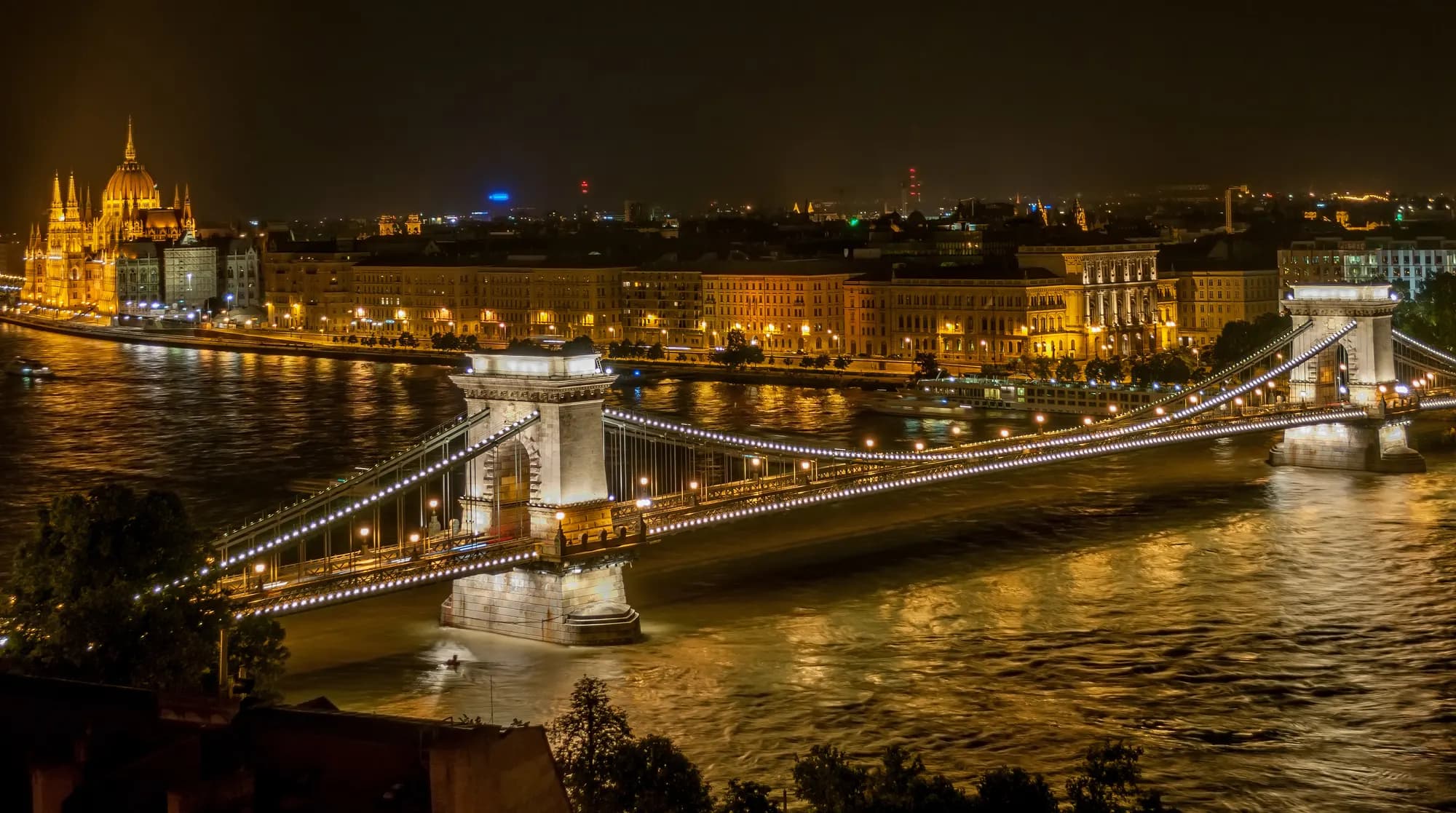
Budapest was formed in 1873 from three towns, Buda, Óbuda and Pest, on either side of the Danube, and the river remains its defining feature. On the west bank, the hills of Buda rise to the castle district; on the east, Pest spreads out in grand nineteenth-century boulevards. Bridges link the two, and the views along the river, especially at night, are some of the finest in Europe.
The city sits on more than a hundred hot springs, and bathing is part of everyday life. Add its grand cafés, its lively bar scene and some of the best value in Central Europe, and it is easy to see why many visitors stay longer than they planned.
The top 11 in Budapest
- 1
The Hungarian Parliament
Photo: Godot13, CC BY-SA 4.0, via Wikimedia Commons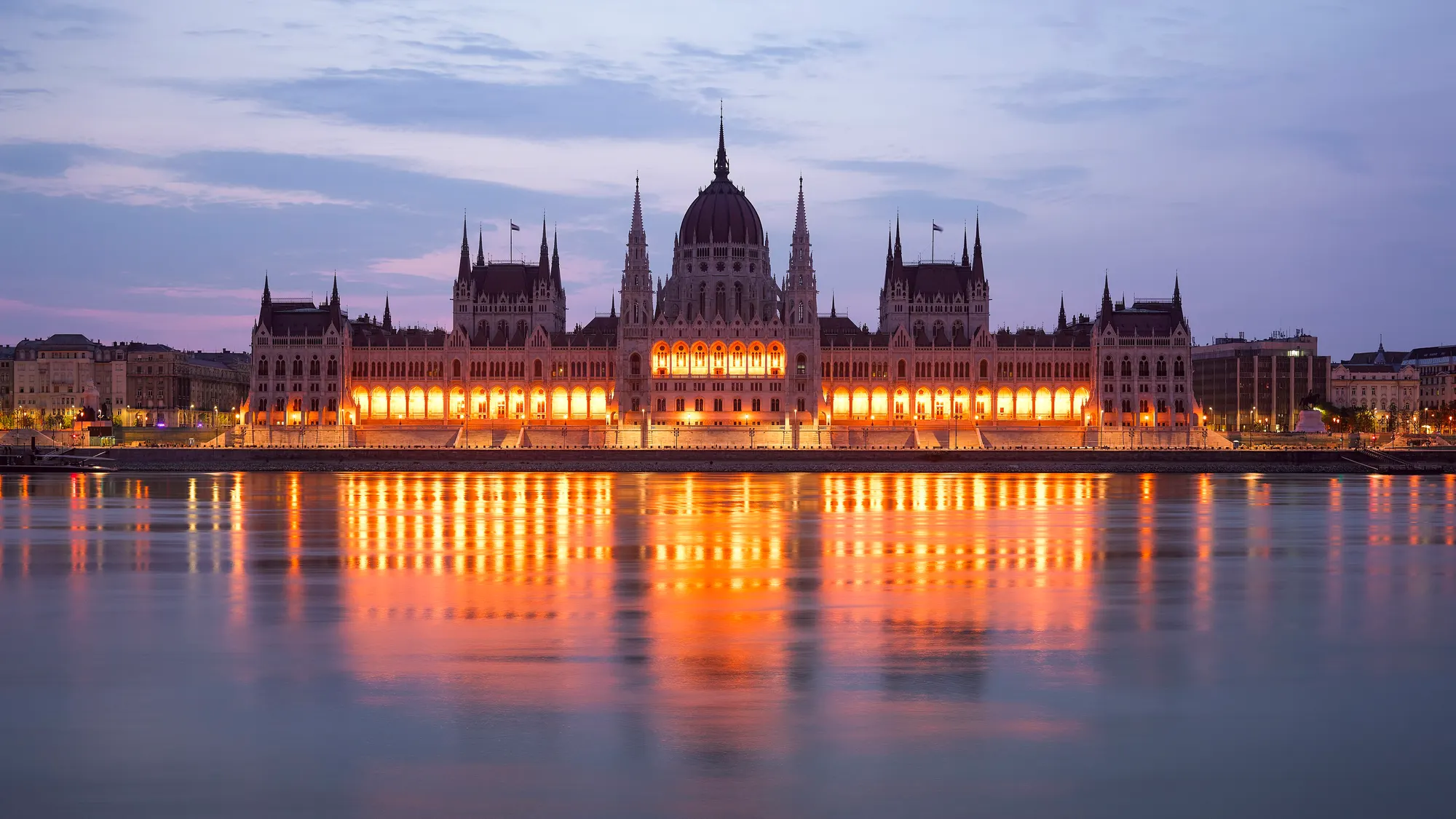
The largest building in Hungary stretches along the Danube in a Gothic Revival style, with a great dome and hundreds of pinnacles. Guided tours visit the grand staircase, the domed hall where the Holy Crown of Hungary is displayed, and one of the old chambers.
TipTours sell out, so book online. For the best view of the building, cross to the Buda bank.
- 2
St Stephen's Basilica
Photo: Jules Verne Times Two, CC BY-SA 4.0, via Wikimedia Commons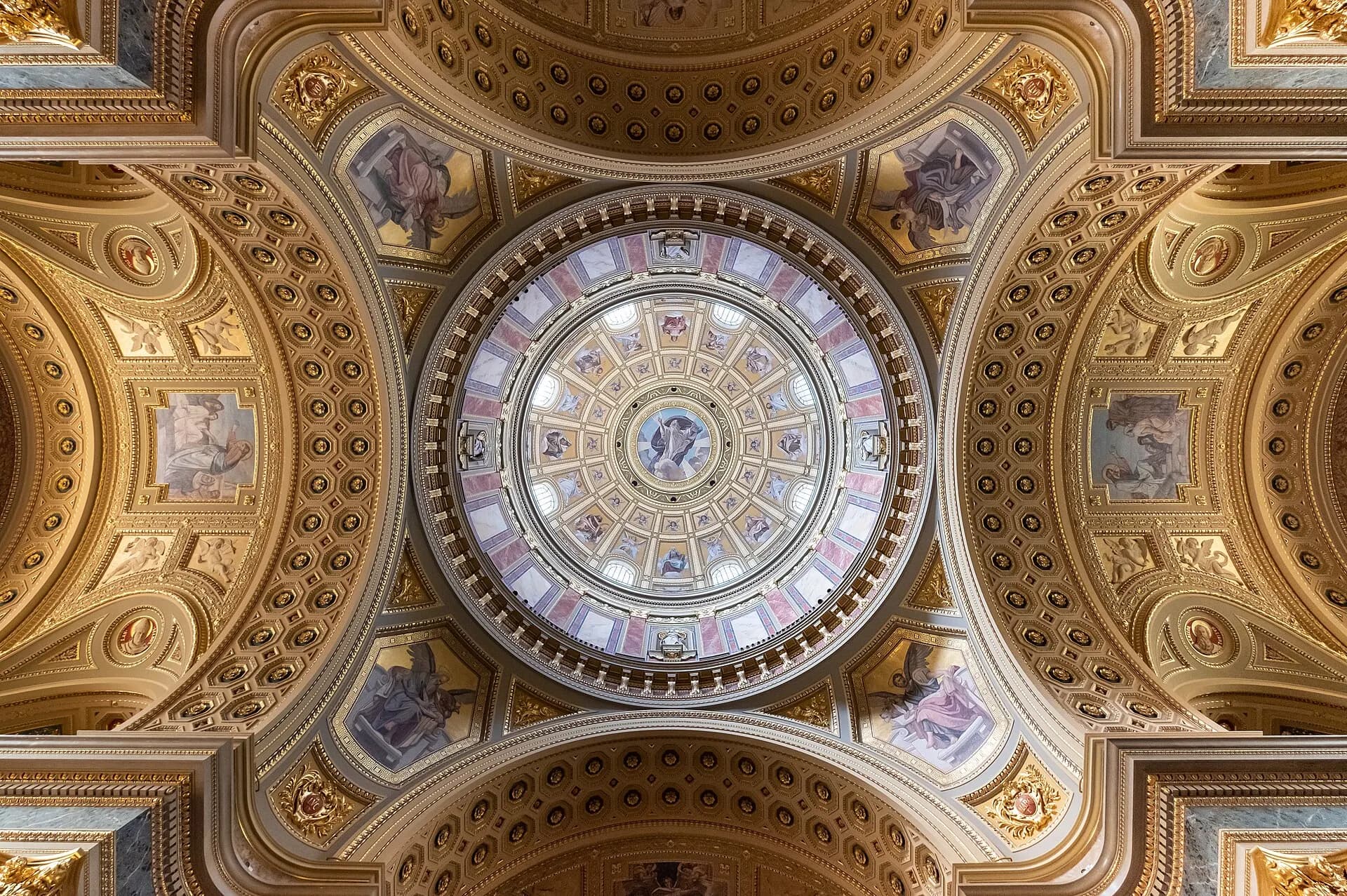
The largest church in Budapest, completed in 1905, is named after Hungary's first king, whose mummified right hand is kept in a chapel inside. Its dome is the same height as the Parliament's, ninety-six metres, and you can climb or take the lift to the panoramic terrace around it.
- 3
Buda Castle
Photo: Jakub Hałun, CC BY-SA 4.0, via Wikimedia Commons
The royal palace on Castle Hill, rebuilt many times since the Middle Ages, now holds the Hungarian National Gallery and the Budapest History Museum. The terraces in front of the palace have wide views across the river to Pest.
TipTake the historic funicular from the Chain Bridge, or walk up the steps and paths, which are free and pleasant.
- 4
Fisherman's Bastion and Matthias Church
Photo: Perituss, CC0, via Wikimedia Commons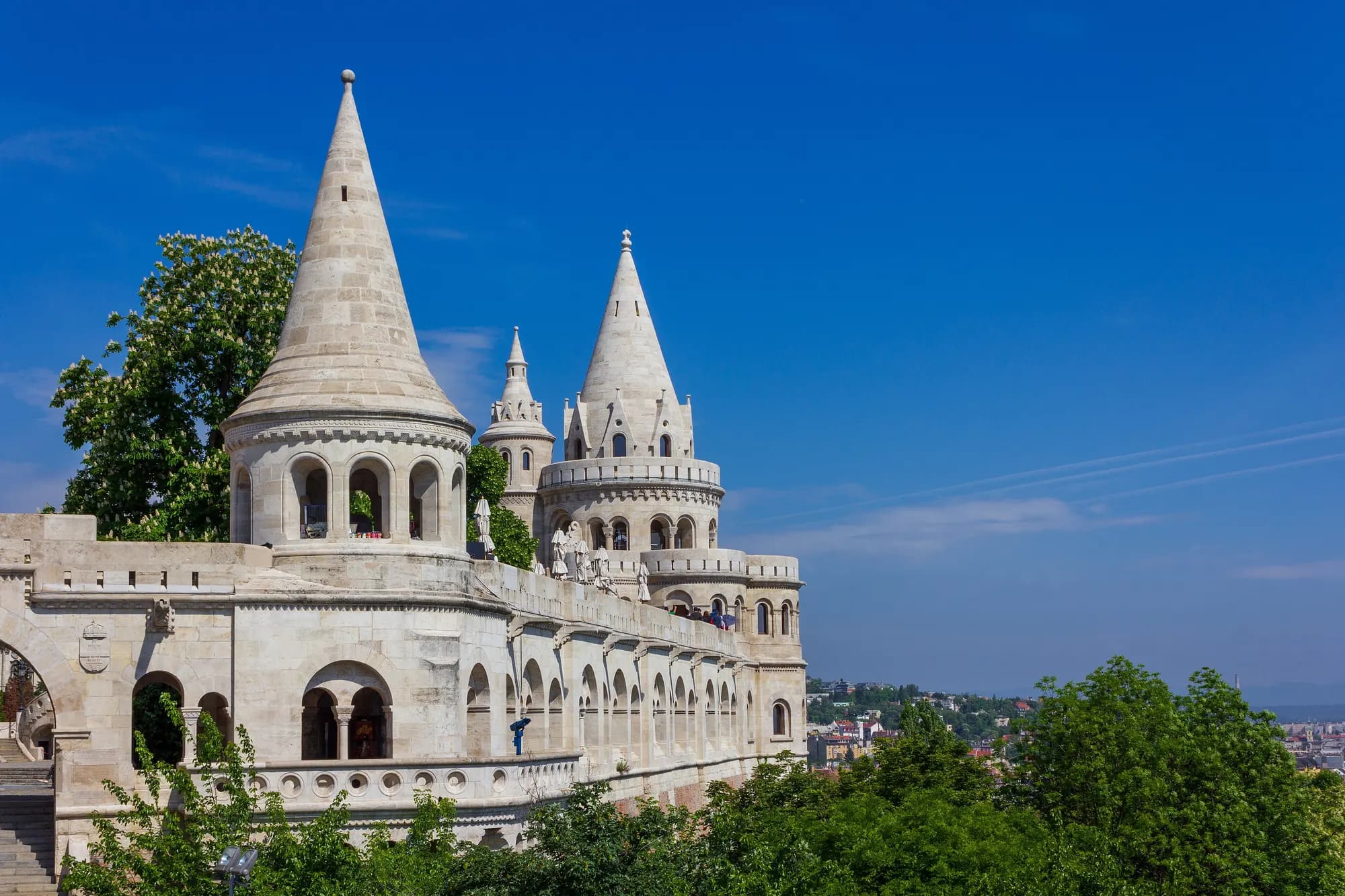
A fairy-tale terrace of white stone turrets, built around 1900 on Castle Hill, with one of the best views of the Parliament across the river. Beside it, Matthias Church has a roof of coloured tiles and an interior painted in rich patterns.
TipArrive early in the morning to have the terraces almost to yourself.
- 5
Széchenyi Thermal Bath
Photo: Robot8A, CC BY-SA 4.0, via Wikimedia Commons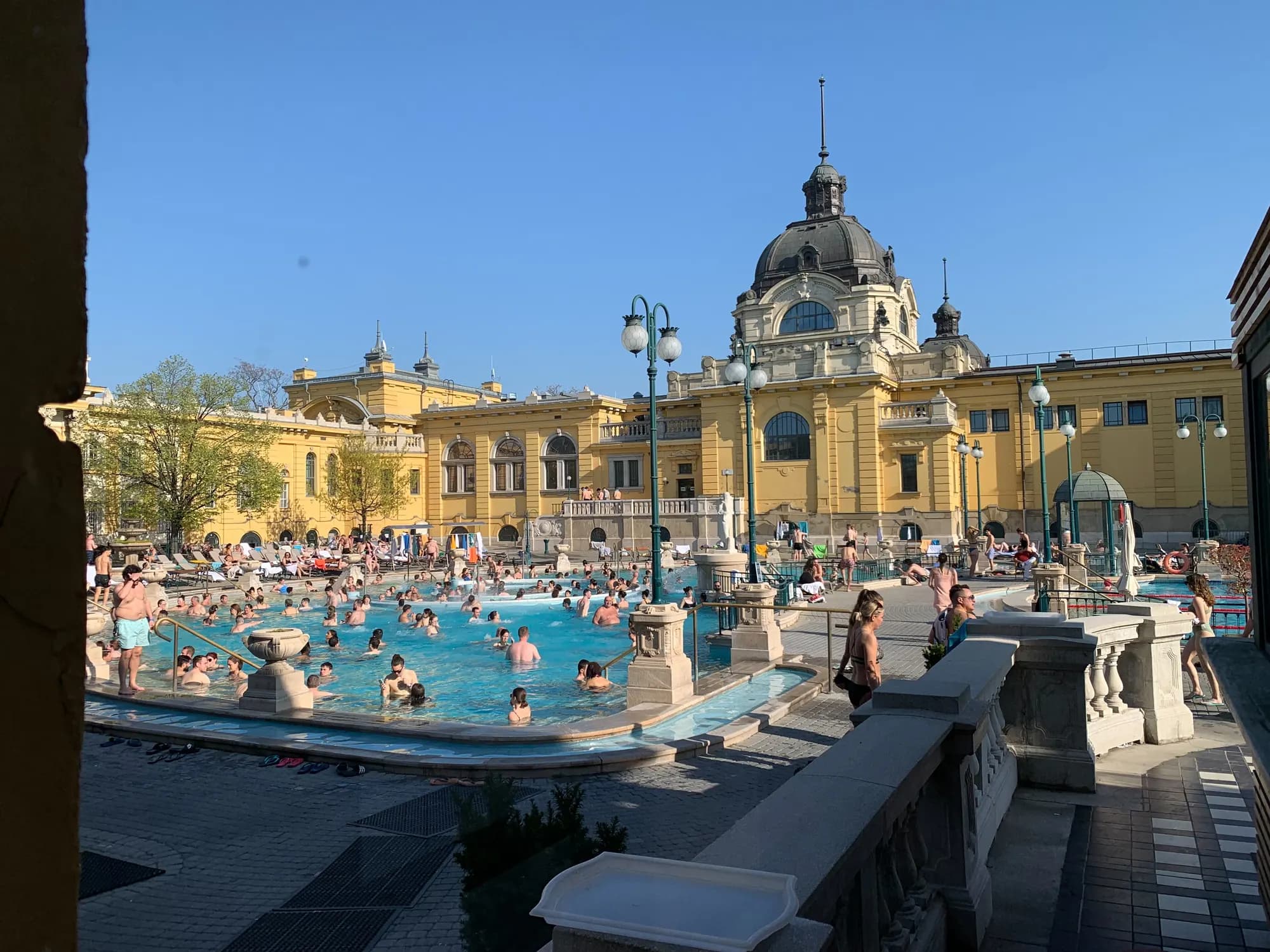
One of the largest bath complexes in Europe, built in 1913 in City Park, with outdoor pools of warm mineral water surrounded by yellow neo-baroque buildings. Bathing outdoors in winter as steam rises around you is unforgettable, and you may see locals playing chess in the water.
TipBring flip-flops and a towel, or rent them there; weekday mornings are the quietest time.
- 6
The Chain Bridge and the Danube embankment
Photo: Wilfredor, CC0, via Wikimedia Commons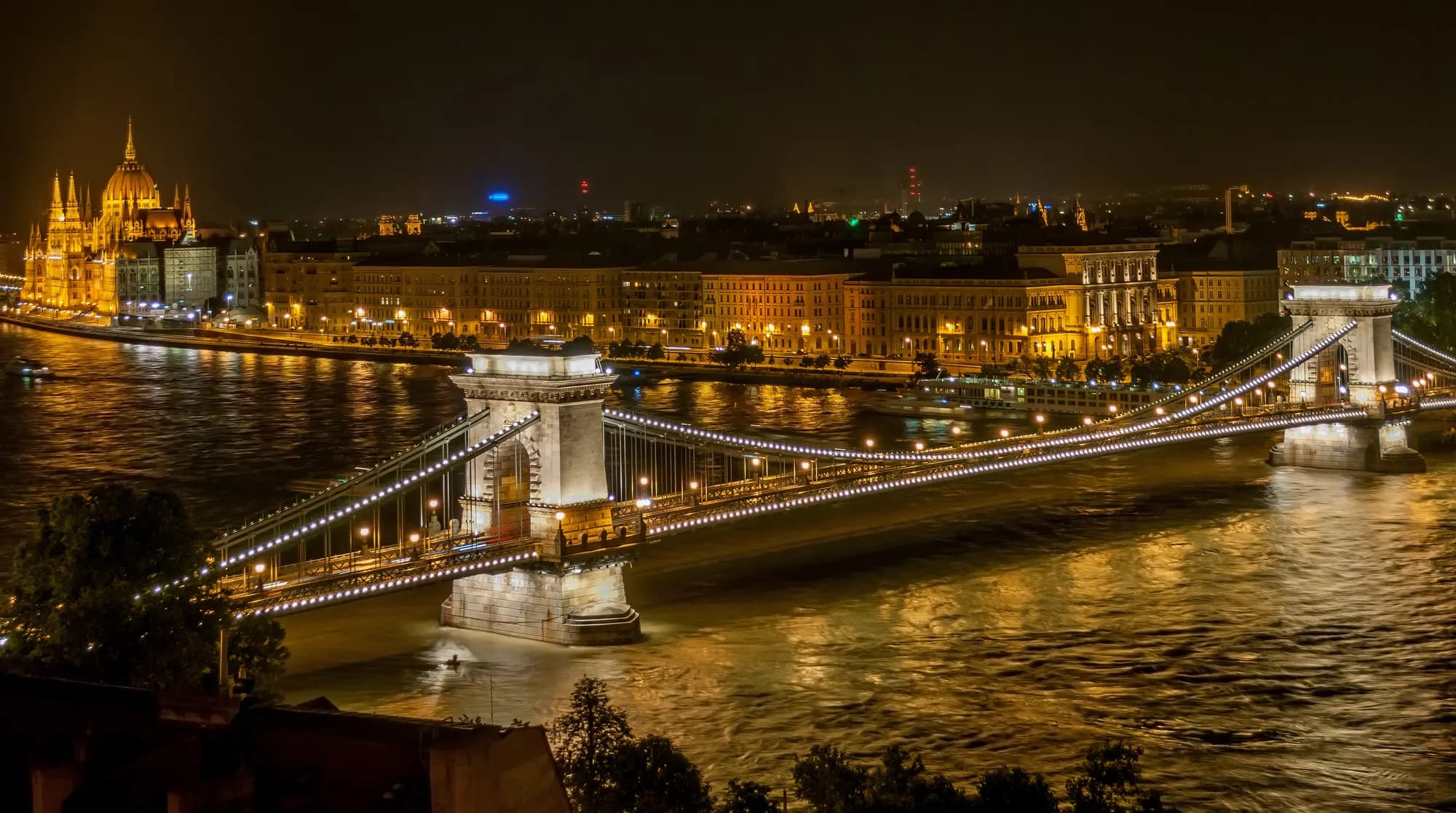
The Széchenyi Chain Bridge, opened in 1849, was the first permanent bridge across the Danube in Budapest. Along the Pest embankment nearby, the Shoes on the Danube Bank memorial honours the Jews who were shot into the river during the Second World War.
- 7
The Jewish Quarter
Photo: Acediscovery, CC BY 4.0, via Wikimedia Commons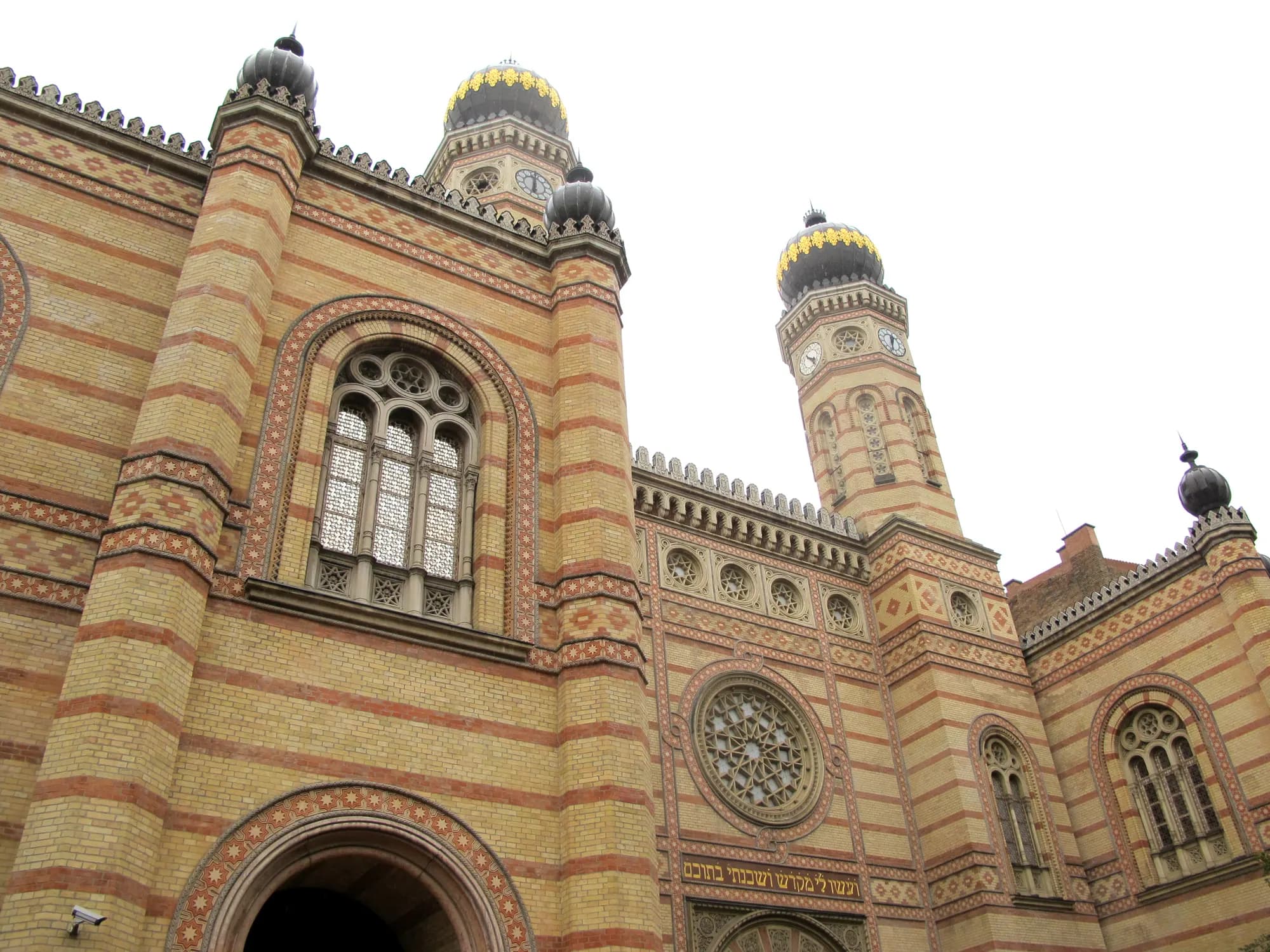
The Dohány Street Synagogue, the largest in Europe, stands at the edge of the old Jewish district, with a museum and a memorial garden. The district's courtyards and crumbling buildings are now home to the famous ruin bars, which began in abandoned buildings, as well as cafés, street art and restaurants.
- 8
- 9
Gellért Hill
Photo: Tamás Mészöly, CC BY-SA 3.0, via Wikimedia Commons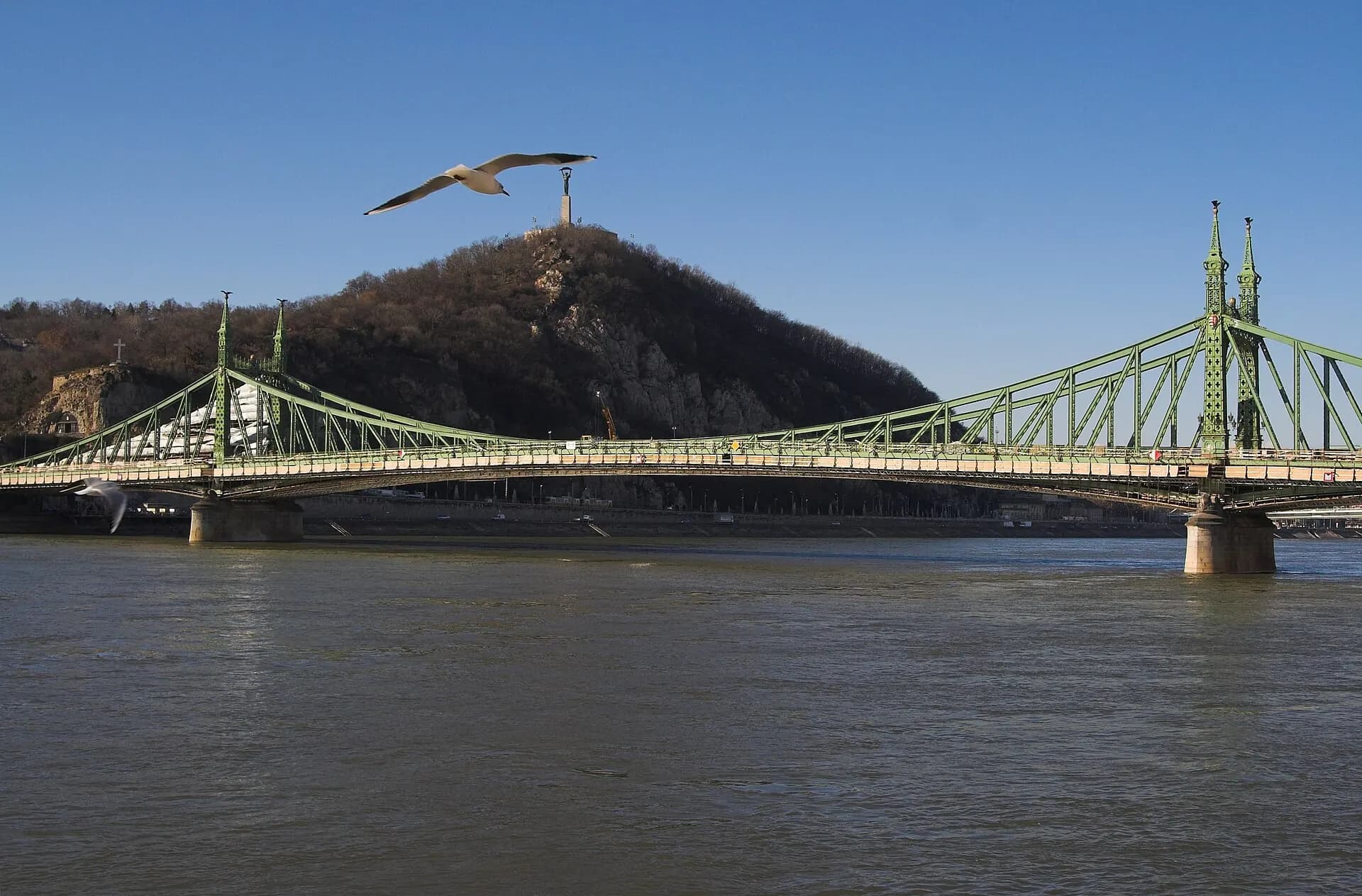
A steep, wooded hill rising straight above the Danube on the Buda side, crowned by the Liberty Statue, with what many consider the finest view of Budapest, across the bridges to the Parliament. Paths climb from the Liberty Bridge and the Elisabeth Bridge, and the Art Nouveau Gellért Baths stand at its foot.
TipClimb in the late afternoon and stay for sunset as the city's lights come on.
- 10
Andrássy Avenue and Heroes' Square
Photo: Paul Mannix, CC BY 2.0, via Wikimedia Commons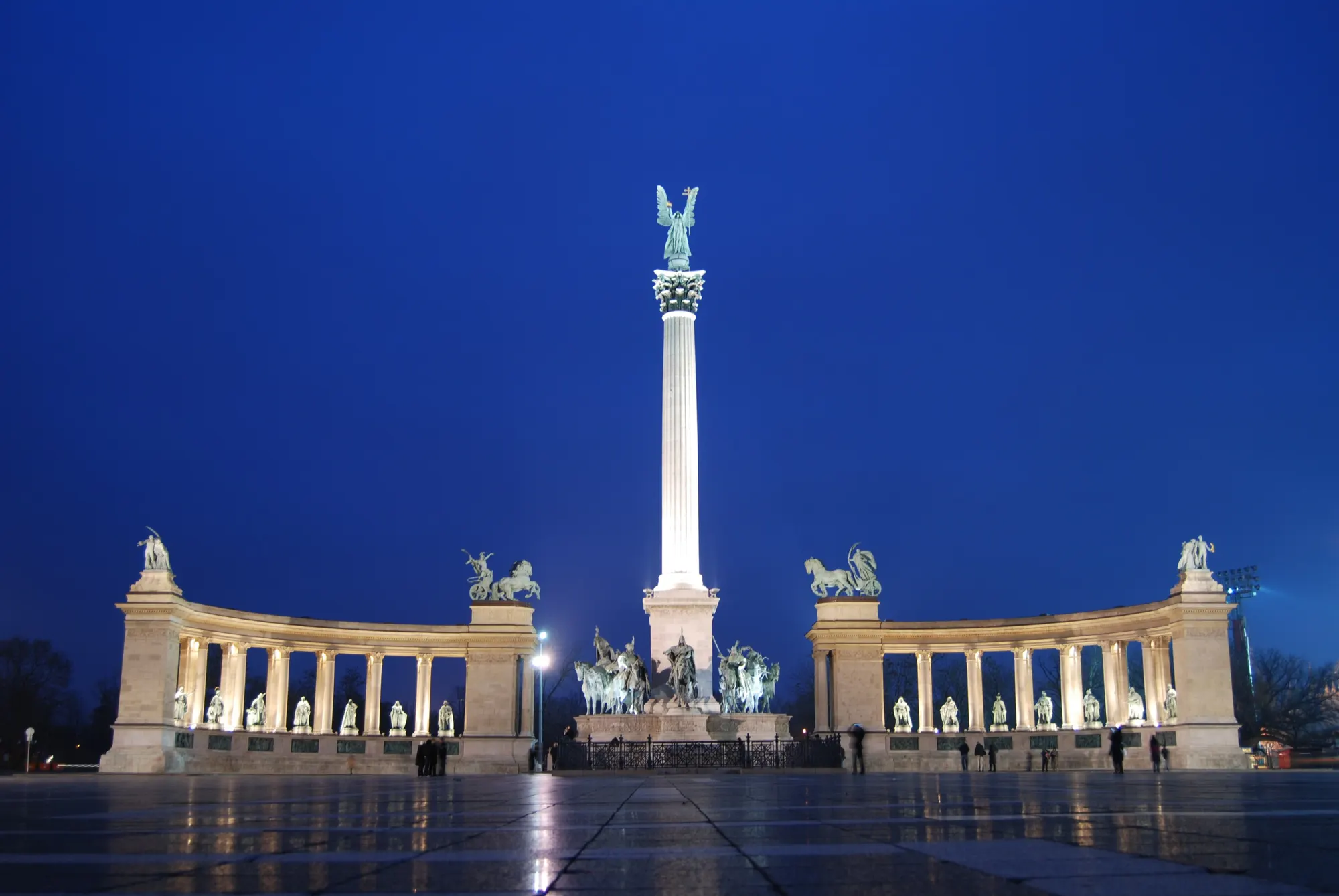
A grand tree-lined boulevard, lined with mansions and the Hungarian State Opera, runs from the centre to Heroes' Square and City Park. Beneath it runs Line 1 of the metro, opened in 1896, the oldest underground railway in continental Europe.
- 11
When to go
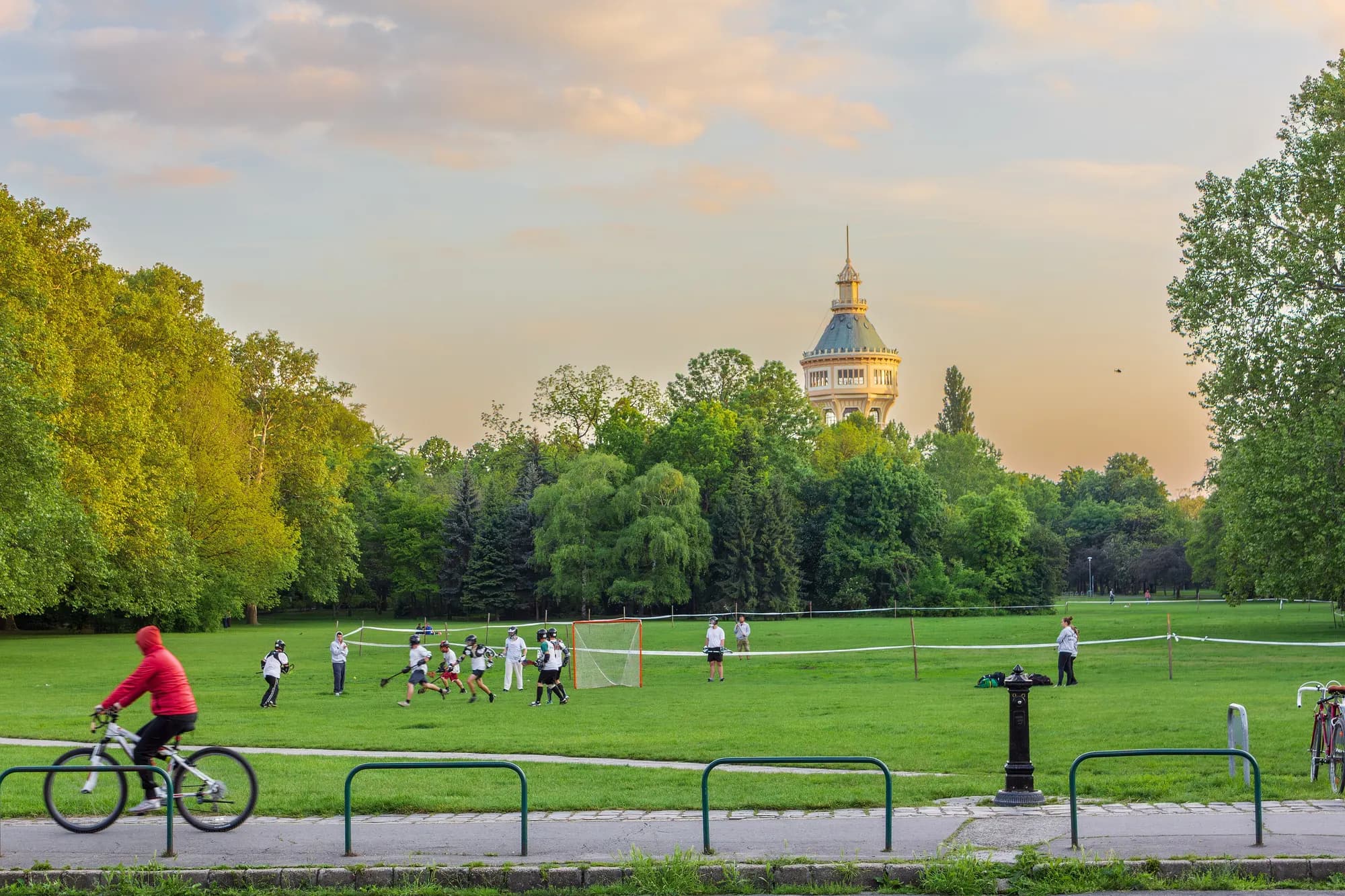
Spring and autumn are the most pleasant times to visit. Summers are hot, but the river, the parks and the outdoor bath pools make them enjoyable. In winter, the city is cold but atmospheric, with Christmas markets in Vörösmarty Square and in front of St Stephen's Basilica, and the thermal baths at their best.
Getting around
Budapest has an efficient network of metro lines, trams and buses. Tram 2, along the Pest riverbank, is one of the most scenic rides in Europe, and trams 4 and 6 run around the Grand Boulevard. Buy tickets or passes from machines or in the BudapestGO app, and validate paper tickets before you travel. The centre is easy to explore on foot.
From the airport, bus 100E runs directly to the city centre, to Deák Ferenc tér. Trains connect Budapest with Vienna in under three hours.
Local tips
- The local currency is the Hungarian forint; cards are widely accepted, but carry some cash for markets.
- When paying by card, choose to pay in forints rather than your home currency.
- Check bills in restaurants: a service charge is often included.
- Use the official taxi companies or apps, and avoid unlicensed drivers.
- Learn to say "köszönöm" (thank you); people appreciate the effort.
- Hungarians traditionally don't clink beer glasses, a custom linked to the defeat of 1849.
Eat and drink
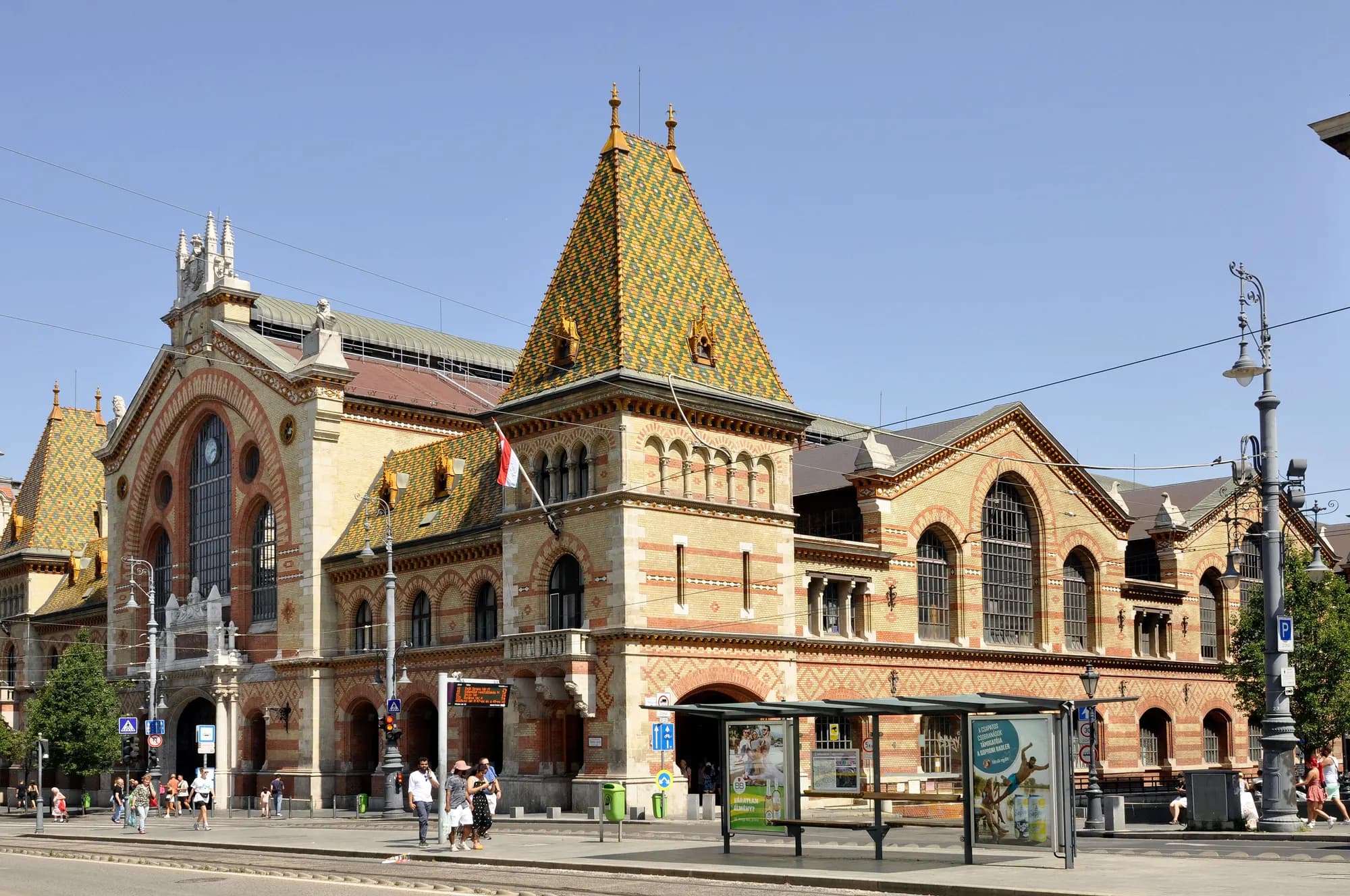
Hungarian cooking is rich and full of paprika. Try gulyás (goulash, which here is a soup), chicken paprikash with dumplings, and lángos, fried dough with sour cream and cheese, at a market. The city's grand cafés serve cakes such as Dobos torte and Esterházy torte. Hungary makes excellent wines, including the sweet Tokaji and the red Bull's Blood of Eger, and pálinka, a strong fruit brandy.
Day trips
North of the city, the Danube makes a dramatic turn between wooded hills known as the Danube Bend. Szentendre, a riverside town of churches, galleries and cobbled lanes, is about forty minutes away on the suburban HÉV railway. Further upstream, the ruined citadel of Visegrád looks down over the bend, and Esztergom has Hungary's largest church, its basilica, on a hill above the river; in summer, boats run along the river between them. To the north-east, the royal palace of Gödöllő was a favourite retreat of Empress Elisabeth. Lake Balaton, Central Europe's largest lake, is a popular summer escape around two hours away by train.