AlUla
A desert valley in north-west Arabia where Nabataean tombs, a ruined mud-brick town and wind-carved sandstone sit beside a long ribbon of palm groves.
- Best time to go
- Late October to March, when days are warm and nights cool; June to September is fiercely hot and some tours pause
- Local time
- –
- Currency
- Saudi Riyal (SAR)
- Reading time
- 12 min
- Language
- Arabic
AlUla is a long, green valley in the sandstone country of north-west Saudi Arabia, about three hours' drive north of Medina. For three thousand years it was a halt on the incense road, the caravan route that carried frankincense and myrrh from southern Arabia to the Mediterranean, and the kingdoms that grew rich on that trade left their mark everywhere: the inscriptions of Dadan and Lihyan, the monumental tombs of the Nabataeans at Hegra, and a medieval town of mud brick that was lived in until the late twentieth century. Around them lies a landscape of tilted mesas, arches and rock towers that would be worth the journey even without the history.
The region only opened to international tourists after Saudi Arabia introduced tourist visas in 2019, and it is managed closely by the Royal Commission for AlUla. That shapes how you visit: the major archaeological sites are seen on timed, guided tours that you book in advance, rather than wandered at will. The stops below run as a loose route from the town north to Hegra, then out to the Sharaan reserve, with Wadi Disah in Tabuk Province as a longer trip. Three to four days covers AlUla itself well. Hegra is the southern sister of Petra, and the two make a remarkable pair; the red-rock scenery will feel familiar to anyone who has been to Wadi Rum.
Check the safety advice before you plan anything. As of late October 2026, the UK Foreign, Commonwealth and Development Office (FCDO) advises against all but essential travel to Saudi Arabia because of regional tensions, including missile and drone attacks by Houthi forces, and against all travel within 10km of the Yemen border. It warns that airports are a particular target and that flight disruption is very likely. Leisure travel is not essential, and travelling against this advice can invalidate your insurance. Read the current advice from your own government and wait for it to change before booking; the rest of this guide is written for when it does.
The top 10 in AlUla
- 1
AlUla Old Town
A maze of hundreds of mud-brick and stone houses, packed so tightly that their outer walls formed the town's defences, climbs towards a hilltop fort on the western side of the valley. The settlement dates back roughly a thousand years, and families lived here until the late twentieth century, when most moved to modern houses nearby. Part of it has been carefully restored, with a market street of cafés, craft shops and small galleries, while much of the rest stands as roofless, atmospheric ruins. Climb to the fort for the view over the lanes, the palms of the oasis and the cliffs beyond.
TipEntry is free and most of the town opens from around 8 or 9 in the morning, but it is liveliest after mid-afternoon, when the heat eases and the cafés fill. A short paid walk with a local storyteller guide brings the lanes to life.
- 2
Harrat Viewpoint
On top of Harrat Uwayrid, the volcanic plateau that rises west of the valley, a viewpoint at more than 1,200 metres looks straight down over the Old Town, the oasis and the sandstone country stretching away to the east. A winding road climbs from the valley floor in about half an hour from town, and the platform has lounge seating, fire pits and a pizzeria. It's the best place to understand the shape of AlUla, a narrow strip of green squeezed between lava and sandstone.
TipIt opens in the afternoon and is free. Come before sunset, stay for the stars, and bring a warm layer, as it's windy and much cooler than the valley.
- 3
Dadan
Photo: Zunkir, CC BY-SA 4.0, via Wikimedia Commons
Long before the Nabataeans, Dadan was the capital of the Dadanite and then the Lihyanite kingdoms, which controlled this stretch of the incense road during the first millennium BC. Excavations on the valley floor are uncovering a temple and the foundations of the city, but the most striking sight is the cliff face above: a row of rock-cut tombs, two of them guarded by carved lions, which are thought to have held members of the ruling elite. Archaeologists from the Royal Commission and international teams are still working here, so the site changes from season to season.
TipDadan is visited on a guided tour combined with Jabal Ikmah, about two hours in all; self-driving onto the site is not allowed. Book ahead, as daily places are limited.
- 4
Jabal Ikmah
Photo: Richard Mortel, CC BY 2.0, via Wikimedia Commons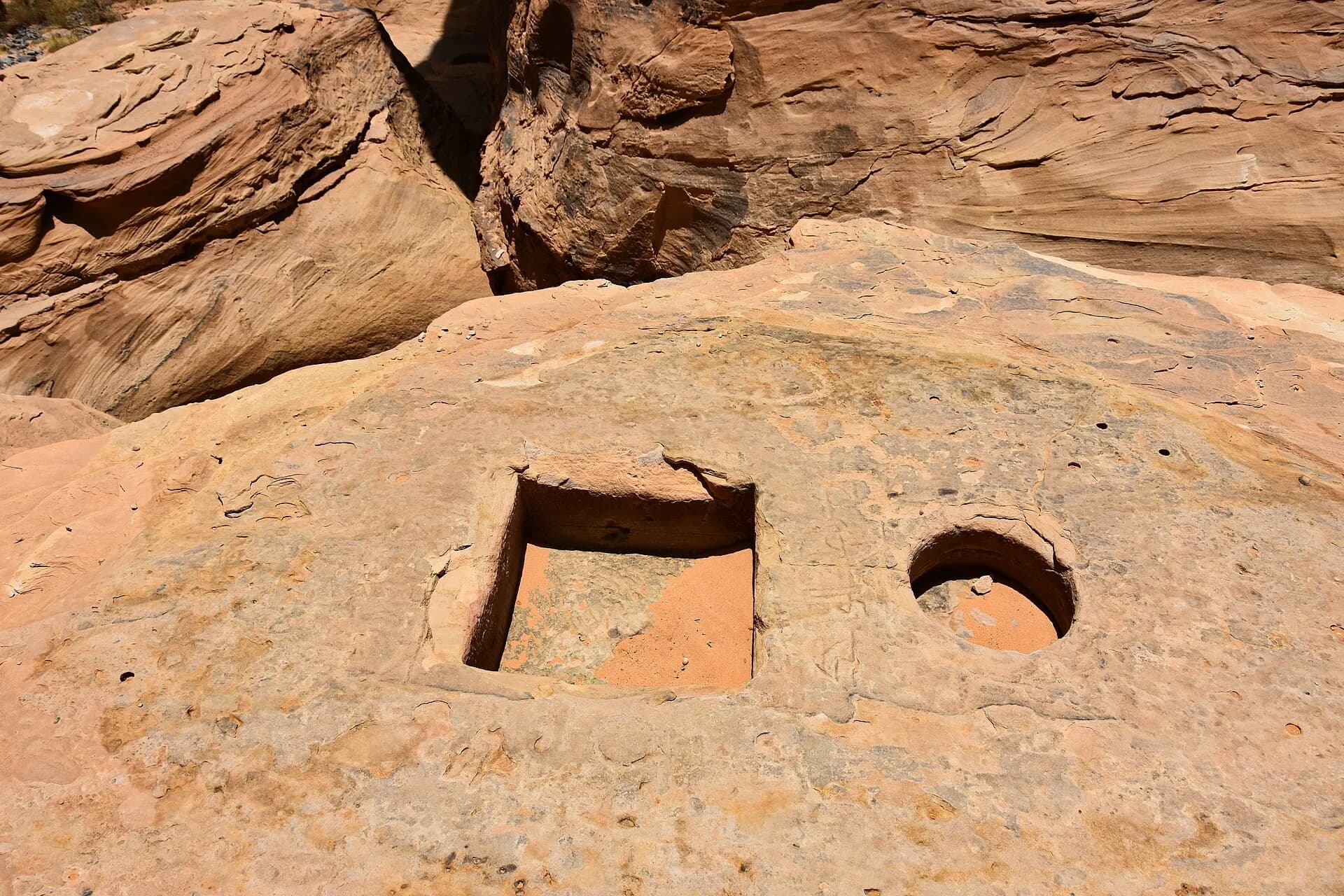
A short drive north of Dadan, a narrow canyon of red sandstone holds one of the richest collections of ancient inscriptions in Arabia, often described as an open-air library. Hundreds of texts and rock drawings, many in the Dadanitic script, record dedications, prayers, laws and names, carved over centuries by people passing through or worshipping here. Guides point out the clearest panels, and it's remarkable how sharp some of the letters remain after more than two thousand years.
TipDon't touch the inscriptions; even clean hands leave oils that damage the rock surface.
- 5
Elephant Rock
Photo: Uhooep, CC BY-SA 4.0, via Wikimedia Commons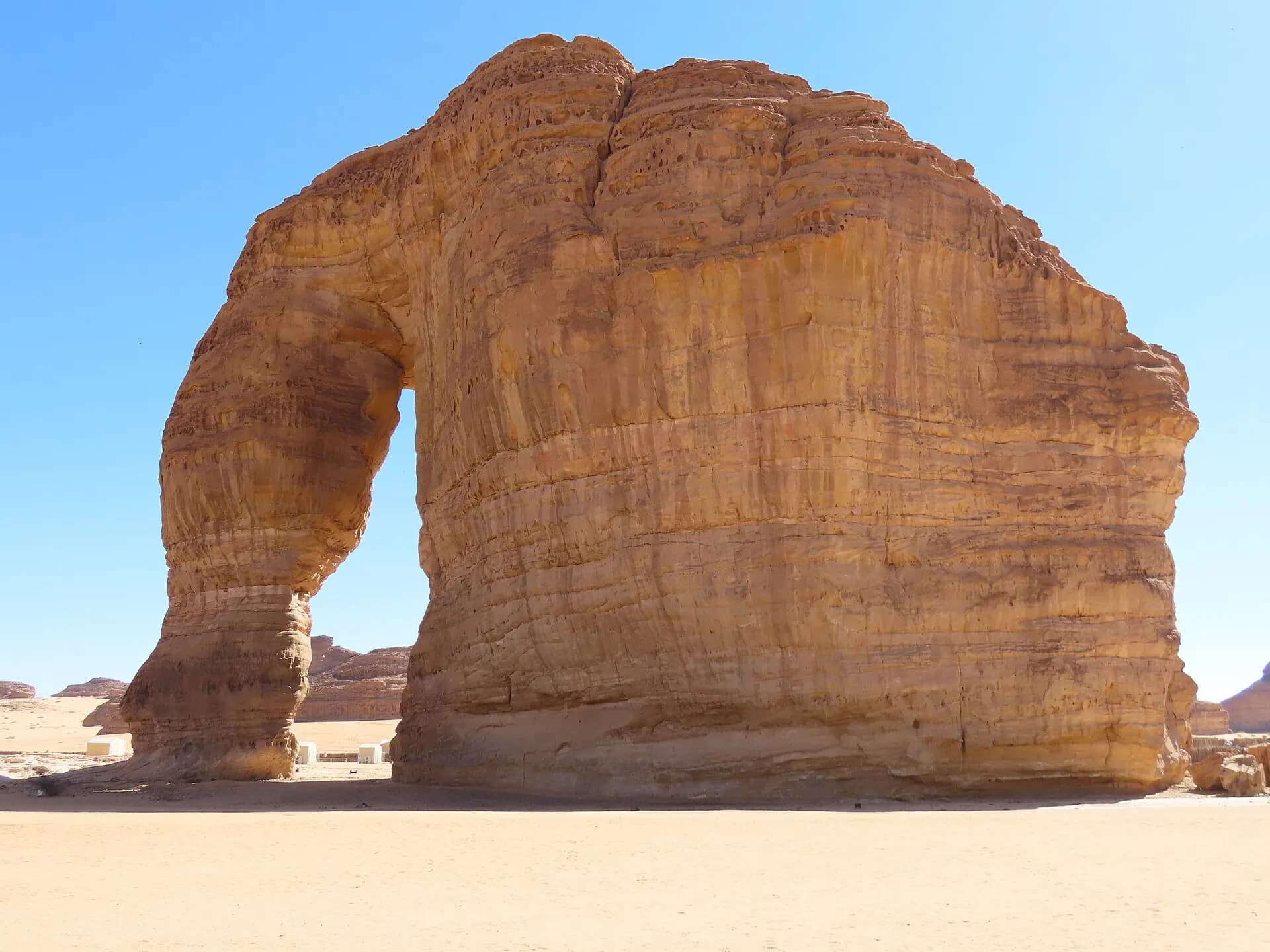
The most famous of AlUla's rock formations, Jabal AlFil is a sandstone outcrop about 50 metres high, eroded so that a long arch hangs down like an elephant's trunk. It stands in a wide sandy plain north-east of the town, surrounded by smaller towers, and has become AlUla's evening meeting place, with sunken seating areas, fire pits, coffee and food trucks. Nearby, smaller formations nicknamed after their shapes make good short detours with a car.
TipThe site opens in the late afternoon. Arrive around sunset, when the rock turns orange and then glows under floodlights.
- 6
Maraya
Photo: Z thomas, CC BY 4.0, via Wikimedia Commons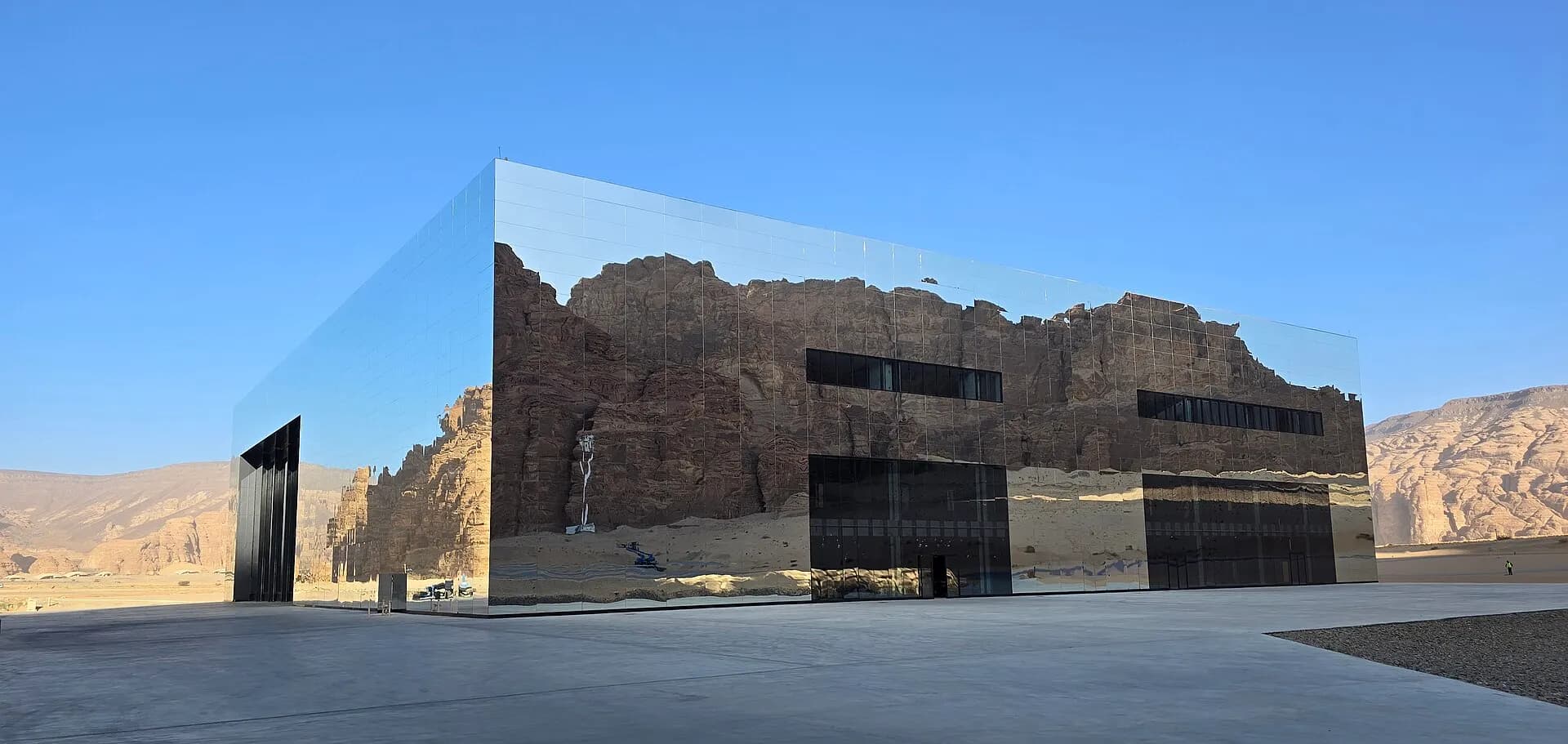
In the Ashar valley, about twenty minutes from town, a concert hall clad in nearly ten thousand mirrored panels reflects the surrounding cliffs so perfectly that it seems to vanish into them. Maraya, Arabic for "mirrors", is listed by Guinness World Records as the largest mirrored building in the world and hosts concerts, exhibitions and conferences. As a piece of architecture it is spectacular from the outside at any time of day, changing colour with the sky.
TipThe interior is not open to casual visitors; go inside only for a ticketed event. Photographing the exterior is fine, but keep well back and don't climb on the panels.
- 7
Hegra and the tomb of Lihyan son of Kuza
Photo: Following Hadrian, CC BY-SA 2.0, via Wikimedia Commons
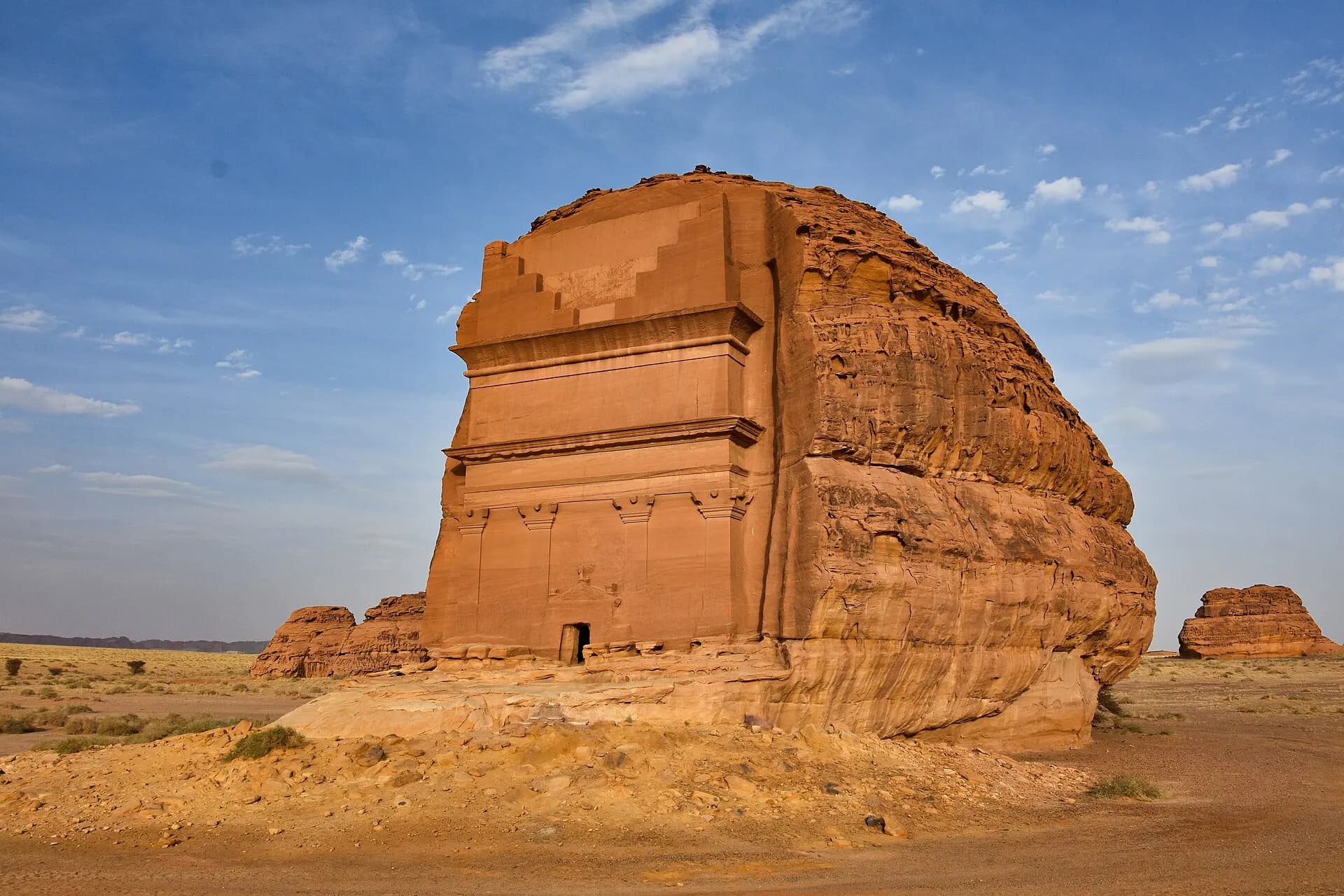
Hegra, also known as al-Hijr or Mada'in Salih, was the Nabataeans' great southern city, and in 2008 it became Saudi Arabia's first UNESCO World Heritage Site. More than a hundred monumental tombs are carved into the sandstone outcrops, many with inscriptions over the door naming the owner and the year, which makes them unusually precise historical records. Tours stop at Jabal Ithlib, a sacred gorge with a rock-cut meeting hall known as the Diwan, and at groups of tombs including Jabal al-Banat and Jabal Khuraymat.
The star is the tomb of Lihyan son of Kuza, better known as Qasr al-Farid, "the lonely castle". Carved from a single free-standing boulder in the first century AD, its four-storey façade was apparently never finished: the lower part is still rough, showing how the masons worked from the top down. It's one of the most photographed monuments in Arabia, and rightly so.
TipHegra can only be visited on an official tour, in a shuttle from the visitor centre or on a premium private-vehicle tour; there is no self-drive or independent walking. Stay on the marked paths, don't enter the tombs and don't touch the carvings. Book well ahead in the cool season.
- 8
Hijaz Railway station at Hegra
Photo: Vyacheslav Argenberg, CC BY 4.0, via Wikimedia Commons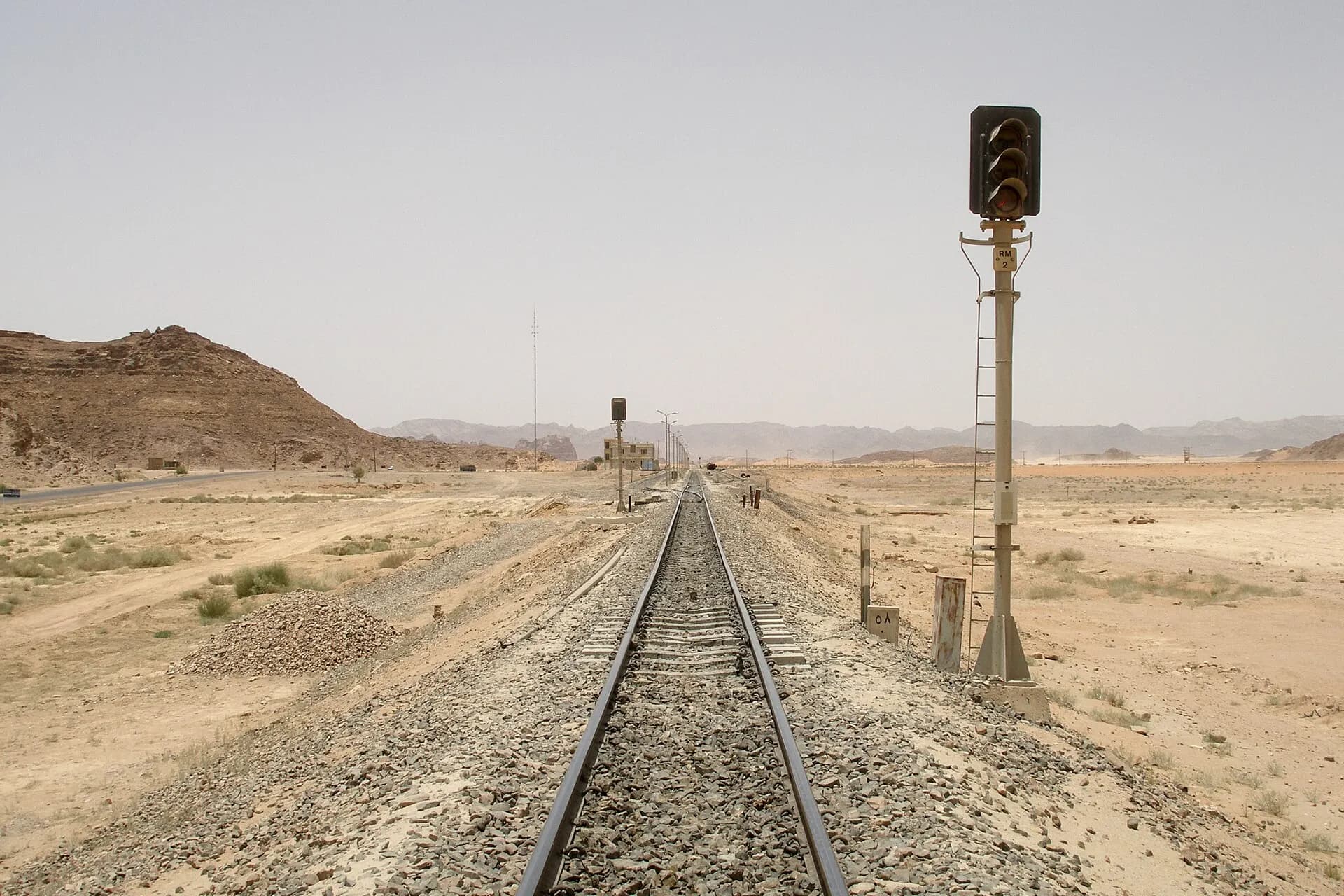
Just north of the tombs, a cluster of stone buildings marks the old Hegra stop on the Hijaz Railway, the line the Ottoman government built in the early twentieth century to carry pilgrims from Damascus to Medina. It opened in 1908 but was badly damaged during the First World War, during the Arab Revolt, and never ran through again. The restored station buildings, workshop and an old locomotive give a glimpse of a much more recent layer of AlUla's history as a crossroads.
TipAsk when booking whether your Hegra tour stops here, as routes vary.
- 9
Sharaan Nature Reserve
Photo: Saudi Press Agency (SPA), CC BY-SA 4.0, via Wikimedia Commons
East of Hegra, the Sharaan reserve protects some 1,500 square kilometres of canyons, sandstone plateaus and volcanic outcrops, and is the centre of a programme to restore wildlife that had all but vanished from the region. Ibex, Idmi gazelles and red-necked ostriches have been released, and the long-term ambition is to bring back the critically endangered Arabian leopard, which is not yet living in the reserve. Visits are by 4x4 safari or guided hike, with time to look for wildlife and to take in the scale of the empty landscape.
TipSafaris pause in summer and resume in the cooler months; children must normally be at least eight. Wear neutral colours and bring a jacket for early starts.
- 10
Wadi Disah
A longer trip into Tabuk Province, Wadi Disah is a deep canyon where sheer sandstone walls rise above a valley floor of springs, reeds and palm trees. Nabataean tomb façades and rock carvings add a human dimension. It lies around 180 kilometres north-west of AlUla as the crow flies, and considerably further by road, so it's best treated as an overnight excursion or as a stop on a road trip between AlUla and Tabuk, and the track through the valley needs a 4x4 and, ideally, a local driver who knows it.
TipServices are very limited, so carry plenty of water, food and fuel. Parts of the wider region are being developed, and access can change; check locally before setting out.
When to go
The season runs from late October to March, when days are warm, between the low twenties and around thirty degrees, and nights in the desert can drop close to freezing in December and January. This is when tours run most often, when the outdoor seating at Elephant Rock and Harrat comes into its own, and when AlUla's programme of cultural events, festivals and concerts is at its busiest. Book Hegra and Dadan tours, flights and rooms well ahead for school holidays and around big events.
From June to September, temperatures regularly climb above forty degrees. Some experiences pause, including the Sharaan safaris, and outdoor sightseeing is only comfortable very early or late in the day. Remember that the Islamic calendar shifts by about eleven days a year: during Ramadan, opening hours change and life moves to the evening, which can be fascinating to see but means fewer daytime services.
Getting around
AlUla has its own airport, a short drive north of town, with domestic flights from Riyadh, Jeddah and Dammam and, in season, a small number of international routes, including from Dubai and Doha. Schedules change between summer and winter, so check the current timetable with the airlines. Medina and Tabuk are each about three hours away by road, and many people fly into one of them and drive.
Inside AlUla, distances are large and public transport is limited, so the official advice is to hire a car, with or without a driver. Desks at the airport handle rentals; bring your licence and an International Driving Permit. Taxis are few, but a local ride-hailing app, Darb AlUla, connects the town with the main sights. For Hegra and Dadan you don't need your own car at all: park free at Winter Park on the edge of town and take the coach to the tour starting points, or park at Hegra's south gate.
Driving is on the right, and the main roads are good. Watch for camels on unfenced roads, especially at dusk, and keep to speed limits, which are enforced by cameras.
Local tips
- Book the guided sites, especially Hegra, on the official Experience AlUla website before you arrive. Places are limited, and late cancellations are not refunded.
- The working week runs from Sunday to Thursday, so Friday and Saturday are the busiest days for domestic visitors.
- Dress modestly. Saudi law and custom expect men and women to wear loose clothing that covers the shoulders and the knees; avoid tight clothes and slogans. Women are not required to wear an abaya or cover their hair, though a light scarf is useful for mosques and for sun and dust.
- Women can travel independently, drive, and check into hotels on their own. Unmarried couples can share hotel rooms. Serious crime is rare, but take the usual care when travelling alone outside towns.
- Alcohol is illegal. Don't bring any into the country, and don't arrive having drunk; possessing, selling or being drunk in public can bring arrest and prison sentences.
- Ask before photographing people, especially women, and never photograph military, government or security sites.
- Carry water, a hat and sun protection even in winter; the desert sun is strong and the air is very dry.
- Mecca's holy sites are open only to Muslims, and so is the central area around the Prophet's Mosque in Medina; if you drive through Medina Province, follow the signs for non-Muslim routes.
Visas and entry
Saudi Arabia's tourist eVisa, launched in 2019, opened the country to holidaymakers from dozens of countries. The UK government lists several electronic options for tourism, depending on nationality: a multiple-entry eVisa valid for a year, with a stay of up to 90 days in total and health insurance included; an electronic travel authorisation; and a single-entry visa waiver. Rules and fees change, so apply only through the official government portal, not through agencies, and check which option applies to your passport.
Your passport needs at least six months' validity on arrival. Overstaying brings heavy fines, detention and a ban on returning. Travel insurance that covers you for Saudi Arabia is essential, and, while the FCDO warning is in place, many standard policies will not.
Eat and drink
AlUla's dining scene has grown fast, with a mix of Saudi home cooking, restaurants run by well-known chefs and casual cafés in the Old Town and AlJadidah arts district. Look out for regional dishes: kabsa and mandi, rice cooked with spiced lamb or chicken; jareesh, cracked wheat slow-cooked with meat or yoghurt; and matazeez, dumplings in a vegetable and meat stew. The valley's dates are famous, especially the soft local varieties, and they're served everywhere with Saudi coffee, pale and flavoured with cardamom, often poured from a dallah pot in small cups.
Citrus fruit and vegetables are grown in the oasis farms, and some open to visitors. Expect evenings to start late: restaurants in the Old Town stay open until after midnight, and in the cool season most people eat outdoors. Alcohol is not served; instead there are fresh juices, mocktails and excellent coffee.
Where to stay
Accommodation splits into two kinds. Out in the canyons and the Ashar valley, a handful of high-end resorts, tented camps and eco-lodges offer secluded villas under the cliffs, with prices to match. In and around the town, mid-range hotels, guesthouses and farm stays in the oasis are cheaper and closer to the Old Town and the Winter Park tour departures. Rooms are scarce during festivals and holidays, so book early; a car makes the more remote resorts far more practical.
Gateways: Riyadh and Jeddah
Most international visitors connect through one of Saudi Arabia's two biggest cities, and both have a UNESCO site that's worth a day if your route allows. On the north-western edge of Riyadh, the At-Turaif district of Diriyah is the mud-brick citadel of the first Saudi state, founded in the eighteenth century and listed by UNESCO in 2010; it's now the heart of a large heritage and dining district. In Jeddah, on the Red Sea, the old town of Al-Balad, listed in 2014, is a warren of tall coral-stone merchant houses with carved wooden balconies, once the port of entry for pilgrims bound for Mecca.
Under the current FCDO advice, however, airports in Riyadh, Jeddah and other cities are considered at heightened risk of attack, and the UK government has specifically advised staying away from Riyadh's King Khalid International Airport following a missile strike in October 2026. Check the latest advice before routing through any Saudi airport.
A short history
The oasis has been settled for thousands of years, but AlUla's golden age came with the incense trade. In the first millennium BC, the kingdoms of Dadan and then Lihyan ruled from the valley, taxing caravans and leaving thousands of inscriptions. By the first century BC, the Nabataeans, whose capital was Petra, had taken control and founded Hegra a little to the north as their southern stronghold, until Rome annexed their kingdom in AD 106.
Later, the walled town of AlUla grew up along the pilgrim route from Syria to Medina and Mecca, and in 1908 the Hijaz Railway brought steam trains through the valley for a few short years. The Old Town was gradually abandoned from the 1970s and 1980s. Since 2017 the Royal Commission for AlUla has been excavating, conserving and opening the region, turning one of Arabia's least-known corners into one of its most ambitious heritage destinations.
Responsible travel
The sites here are fragile, and many are still being studied. Stay on marked paths, never climb on tombs or carved rock, and don't take stones, pottery fragments or anything else from the ground. Off-road driving damages desert soils and plants that take decades to recover, so keep to tracks, and don't drive or camp inside protected areas without permission. Water is precious in the oasis: use it carefully, and take your rubbish away with you from viewpoints and desert camps.