Petra
A city carved into rose-red cliffs by the Nabataeans, reached through a narrow canyon, and bigger than you'll imagine.
- Best time to go
- March to May and September to November, for comfortable hiking temperatures
- Local time
- –
- Currency
- Jordanian Dinar (JOD)
- Reading time
- 4 min
- Language
- Arabic
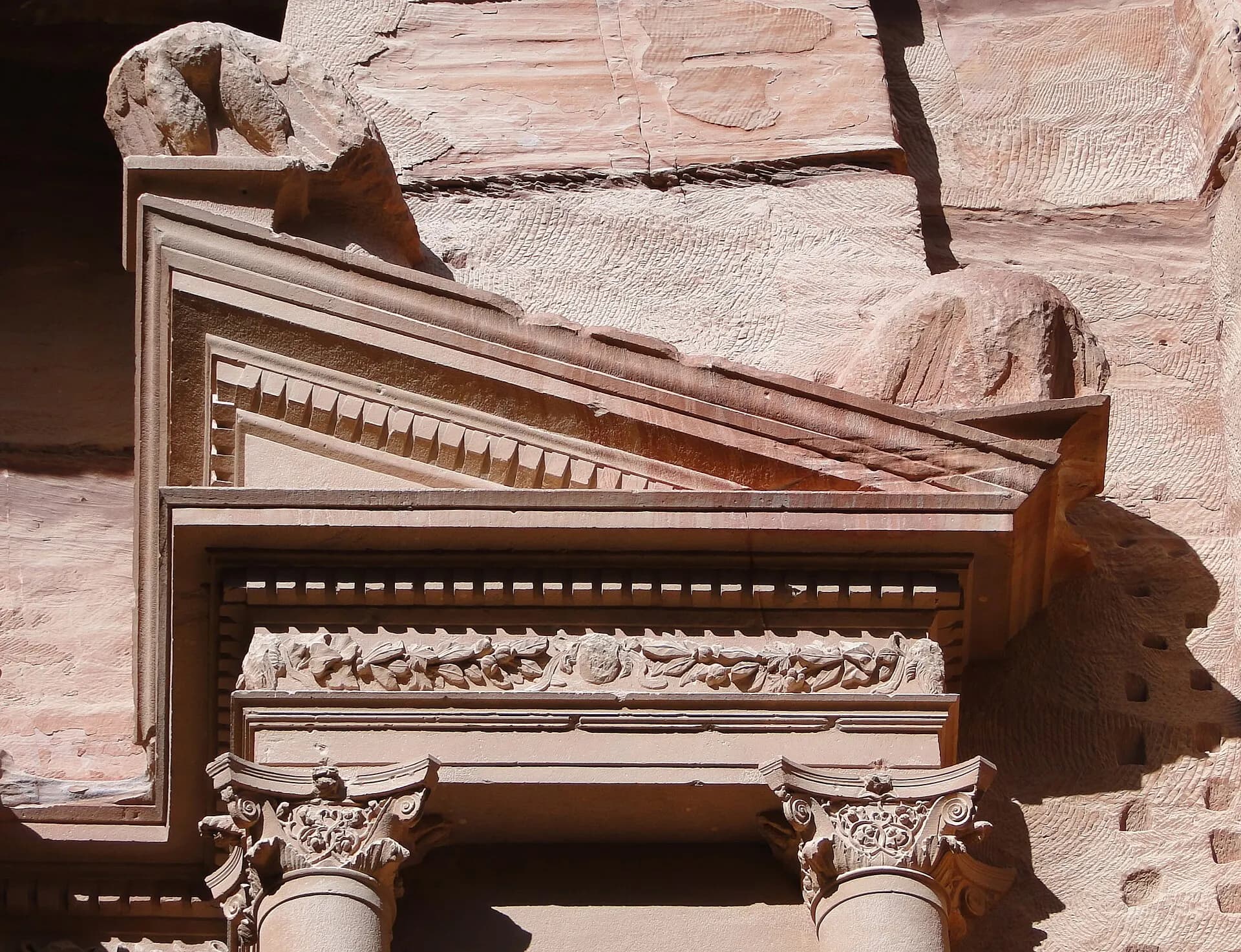
Petra was the capital of the Nabataeans, Arab traders who grew rich on the caravan routes carrying incense and spices more than two thousand years ago. They carved temples, tombs and houses into the soft, rose-coloured sandstone of the mountains of southern Jordan, and built a city with dams and channels to capture the precious rain. Forgotten by the outside world for centuries, it is now Jordan's greatest treasure and one of the most remarkable places on earth.
Most people know Petra for the Treasury, glimpsed at the end of a narrow canyon. But the site is enormous, covering valleys, mountains and hundreds of monuments, and the best experiences come from walking its trails. Allow at least two days if you can, and start early each morning.
The top 7 in Petra
- 1
The Siq
Photo: Bernard Gagnon, CC BY-SA 3.0, via Wikimedia Commons
The main entrance to Petra is a winding canyon over a kilometre long, its walls rising up to eighty metres and sometimes only a few metres apart. Look for the remains of Nabataean water channels cut into the rock and worn carvings of camels and merchants along the way.
- 2
The Treasury (Al-Khazneh)
Photo: Esin Üstün from Istanbul, Turkey, CC BY 2.0, via Wikimedia Commons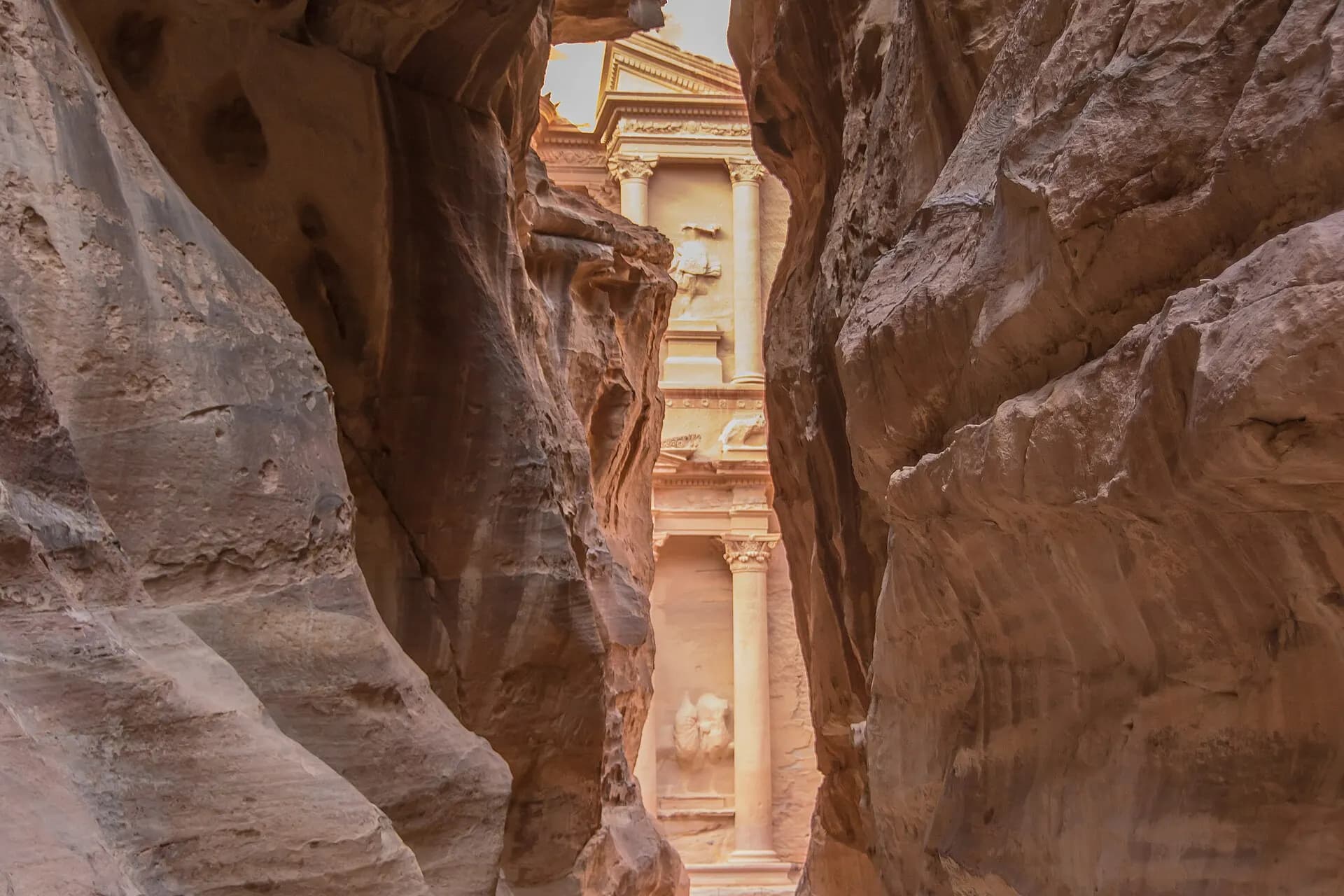
The Siq opens suddenly onto the façade of the Treasury, almost forty metres high, carved into the cliff, one of the most dramatic moments in travel. It was probably built as a royal tomb in the first century AD; the "treasure" of its name comes from a legend about the urn at the top.
TipArrive at opening time to see it with few people; the morning light reaches the façade in the middle of the morning.
- 3
The Street of Façades and the Royal Tombs
Photo: Berthold Werner, Public domain, via Wikimedia Commons
Beyond the Treasury, the valley widens past rows of tombs, a theatre carved into the rock, and the grand Royal Tombs set into the mountainside, their façades streaked with natural bands of red, pink and ochre stone.
- 4
The Colonnaded Street and the Great Temple
Photo: Michael Gunther, CC BY-SA 3.0, via Wikimedia Commons
The heart of the city in Nabataean and Roman times, with a paved street lined with columns, the remains of markets, and the Great Temple, one of the largest buildings in Petra, with a small theatre inside.
- 5
The Monastery (Ad-Deir)
Photo: Diego Delso, CC BY-SA 3.0, via Wikimedia Commons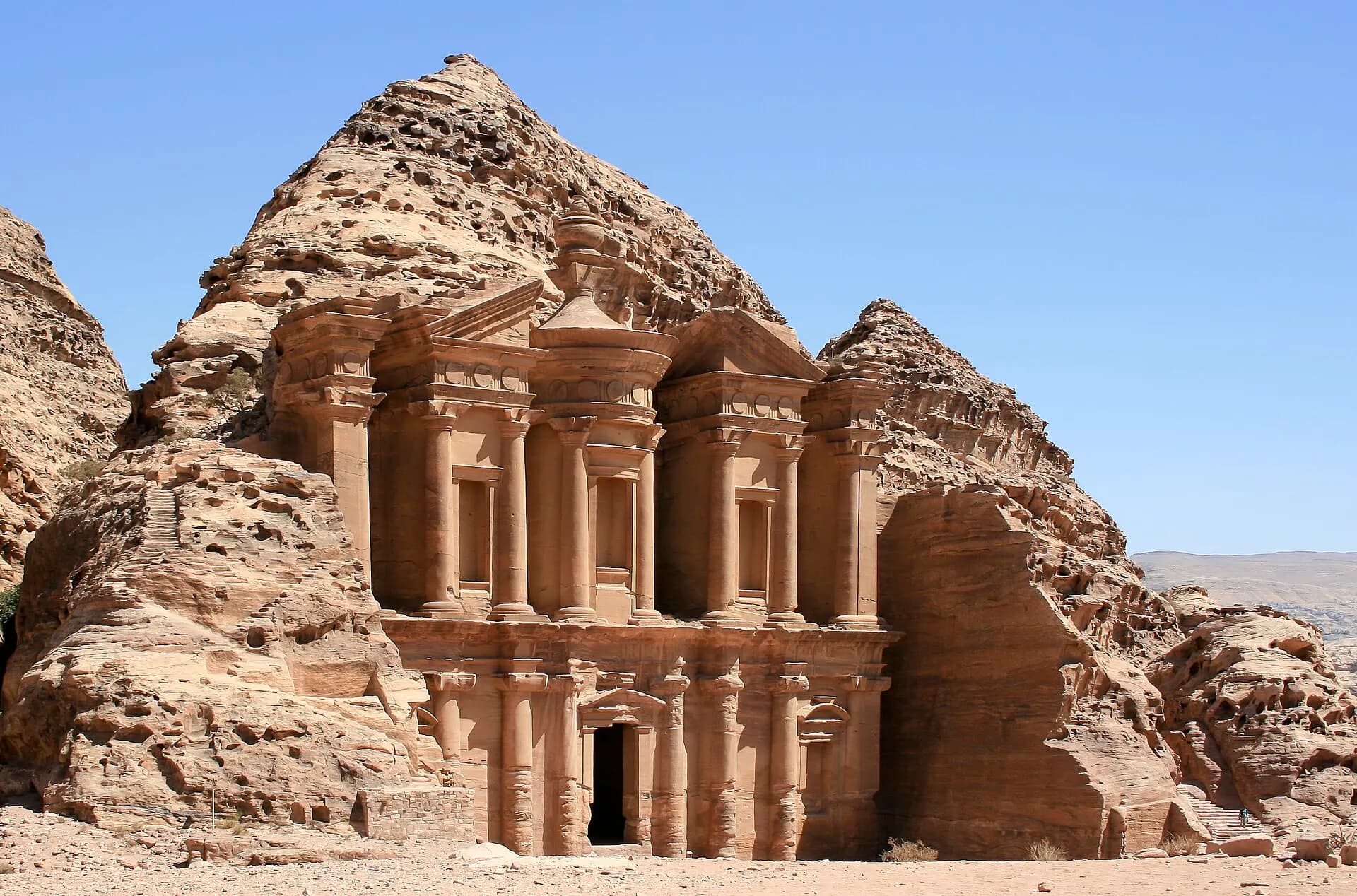
At the top of around 800 rock-cut steps, an hour's climb from the city centre, stands the Monastery, an even larger façade than the Treasury, carved into a mountaintop. Viewpoints nearby look out over the deserts towards Wadi Araba.
TipStart the climb in the morning before the heat; donkeys are offered, but walking is kinder to the animals and the views are better on foot.
- 6
The High Place of Sacrifice
Photo: Dosseman, CC BY-SA 4.0, via Wikimedia Commons
A steep trail climbs from near the theatre to a mountaintop altar used for Nabataean ceremonies, with superb views over the city. Continue down the back of the mountain past the Lion Fountain and the Garden Temple for one of the most rewarding walks in Petra.
- 7
Petra by Night
On some evenings, the Siq and the square in front of the Treasury are lit by over a thousand candles, with music and stories under the stars. It's a separate ticket and runs only on certain nights of the week.
When to go
Spring and autumn are ideal, with warm days and cool nights. Summer is hot, often above 35 °C in the middle of the day, so start very early. Winter days can be cold, with occasional rain or even snow, and flash floods in the Siq, though the site is quieter. Check opening hours, which change with the seasons.
Getting around
The site is explored entirely on foot. Distances add up quickly: the walk from the visitor centre to the Treasury is about two kilometres, and the Monastery is another five or so beyond that. Horse rides through the first section are included in some tickets, and carriages, camels and donkeys are offered; check the animals look well treated before you hire one.
The town of Wadi Musa, at the entrance to the site, has hotels at every price. Petra is about three hours by road from Amman, and two hours from Aqaba. JETT buses run from Amman.
Local tips
- Buy the Jordan Pass before you travel: it covers the visa fee for many nationalities and entry to Petra.
- Tickets for two or three days cost little more than a single day; the site is too big to see properly in one.
- Bring sturdy shoes, a hat, sunscreen and plenty of water.
- Dress modestly out of respect for local customs.
- Bedouin vendors live and work in Petra; a polite "no, thank you" is enough if you're not interested.
- Stay on marked paths, and don't climb on the monuments.
- Toilets, shade and drinks are spread thinly across the site; plan your water for the longer trails.
Eat and drink
Food inside the site is limited to a few simple restaurants and tea stalls, so bring snacks. In Wadi Musa, try mansaf, Jordan's national dish of lamb cooked in a fermented yoghurt sauce, served on rice; maqluba, an "upside-down" rice dish; and mezze such as hummus and mutabbal. Sweet sage tea is offered everywhere.
Beyond Petra
Little Petra (Siq al-Barid), a short drive north, is a smaller canyon with carved buildings, free to enter and far quieter. Wadi Rum, about two hours south, is a desert of red sand and towering sandstone mountains, made famous by Lawrence of Arabia; stay overnight in a Bedouin camp, take a jeep tour and see the stars. Many travellers combine Petra with the Dead Sea, the lowest point on earth, where the salty water lets you float effortlessly. Aqaba, on the Red Sea, has some of the best coral reefs for snorkelling and diving in the region, just offshore.