Wadi Rum
A valley of red sand and towering sandstone mountains, under the starriest skies in the Middle East.
- Best time to go
- March to May and September to November, for warm days and cool nights
- Local time
- –
- Currency
- Jordanian Dinar (JOD)
- Reading time
- 4 min
- Language
- Arabic
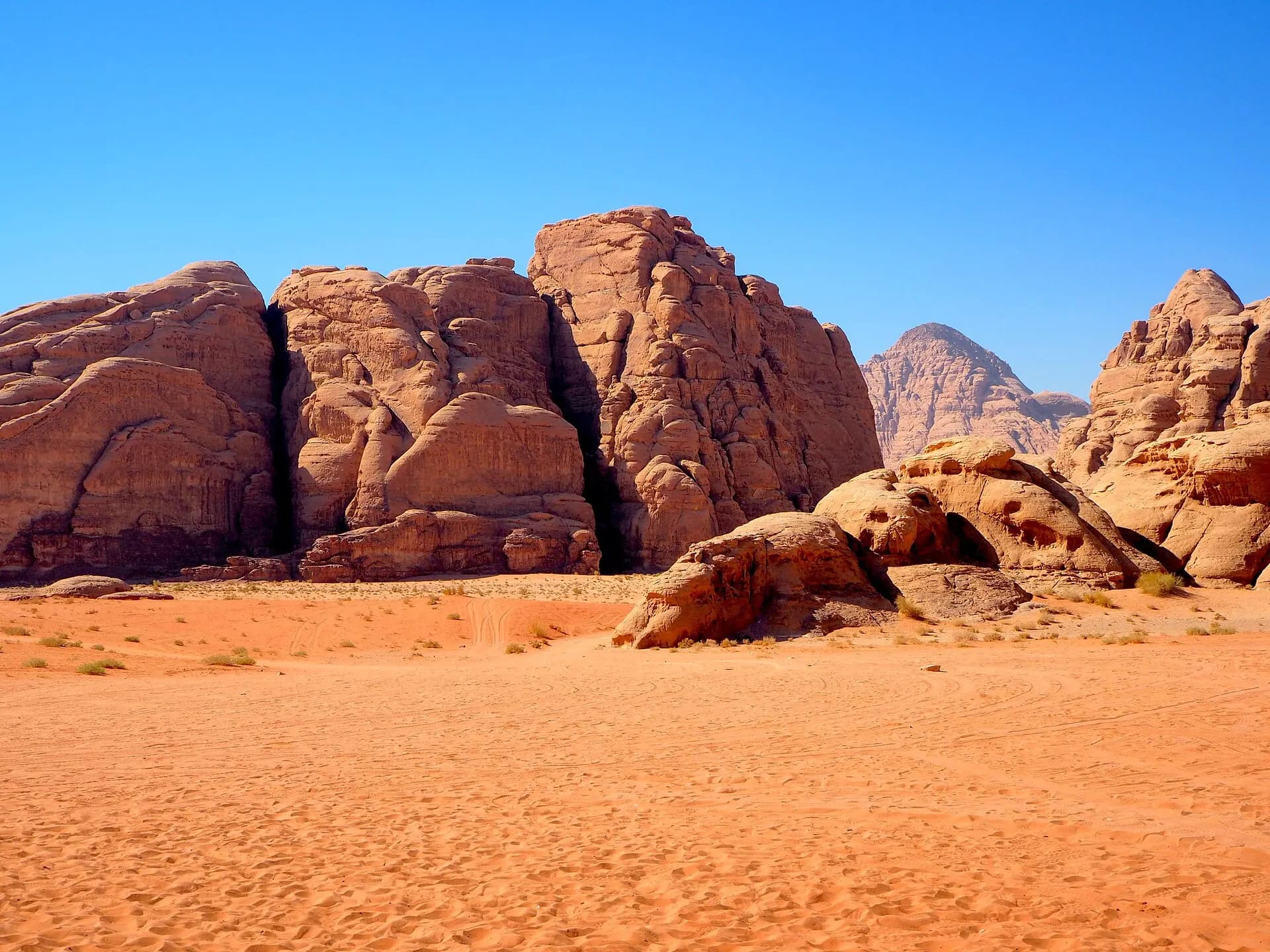
Wadi Rum, in southern Jordan, is a desert of red and orange sand, dramatic sandstone and granite mountains, narrow canyons and natural rock arches. People have lived here for thousands of years, leaving rock carvings and inscriptions, and the Bedouin of the Zalabia tribe still guide visitors through it. Its combination of natural and cultural value has made it a World Heritage Site.
The desert was made famous by T. E. Lawrence, Lawrence of Arabia, who passed through during the Arab Revolt, and it has since stood in for Mars in several films. Most visitors take a jeep tour by day and spend a night in a Bedouin camp under an extraordinary sky of stars. A full day in the desert, with a night in camp, lets you see the landscape change colour from the cool blues of dawn to the deep reds of sunset, and to experience the silence of the desert after dark.
The top 8 in Wadi Rum
- 1
The Seven Pillars of Wisdom
Photo: Bernard Gagnon, CC BY-SA 3.0, via Wikimedia Commons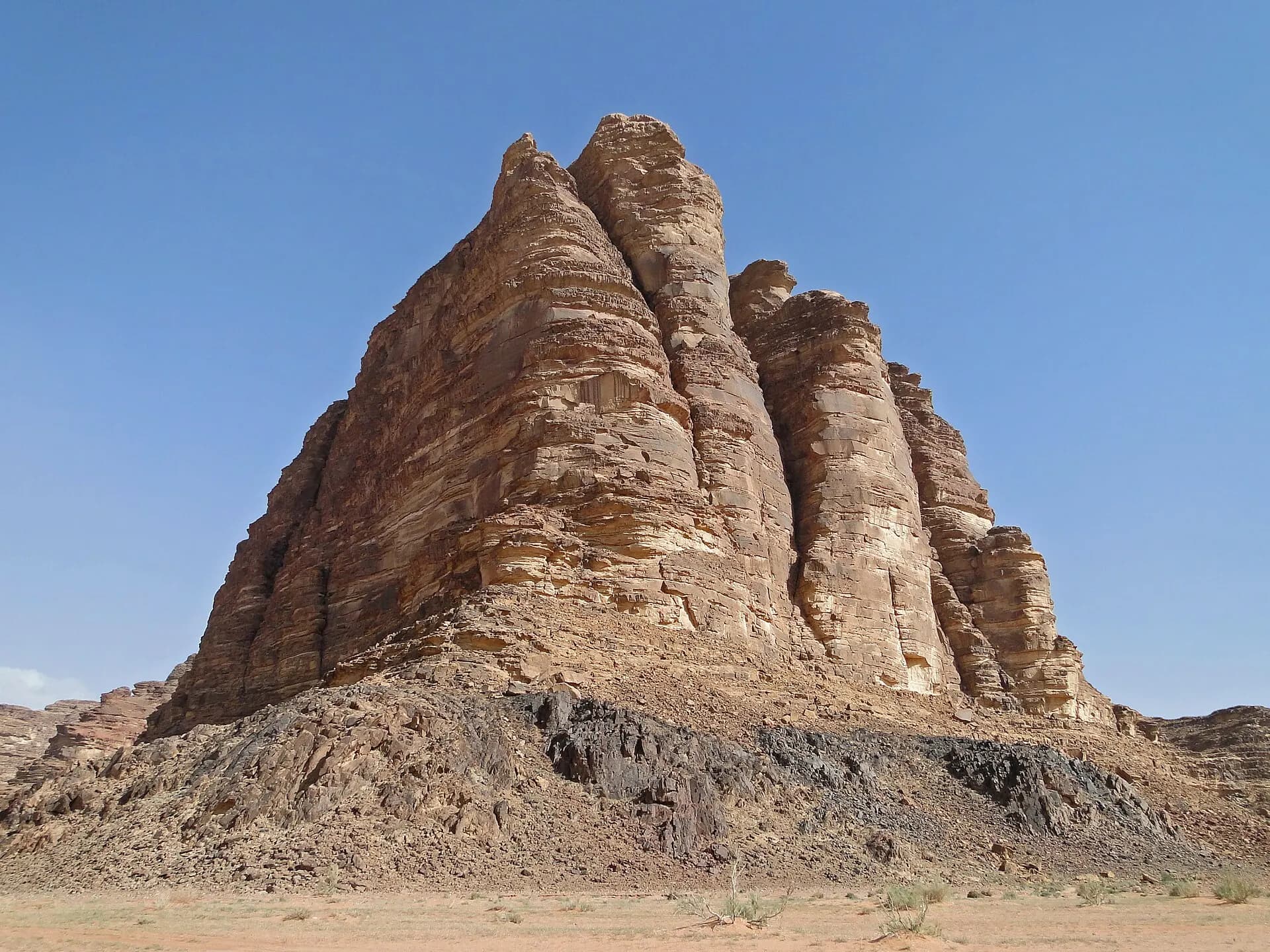
A great rock massif near the visitor centre, its fluted cliffs named after Lawrence's memoir. It's usually the first sight on the drive into the desert.
- 2
Lawrence's Spring
Photo: Berthold Werner, CC BY-SA 3.0, via Wikimedia Commons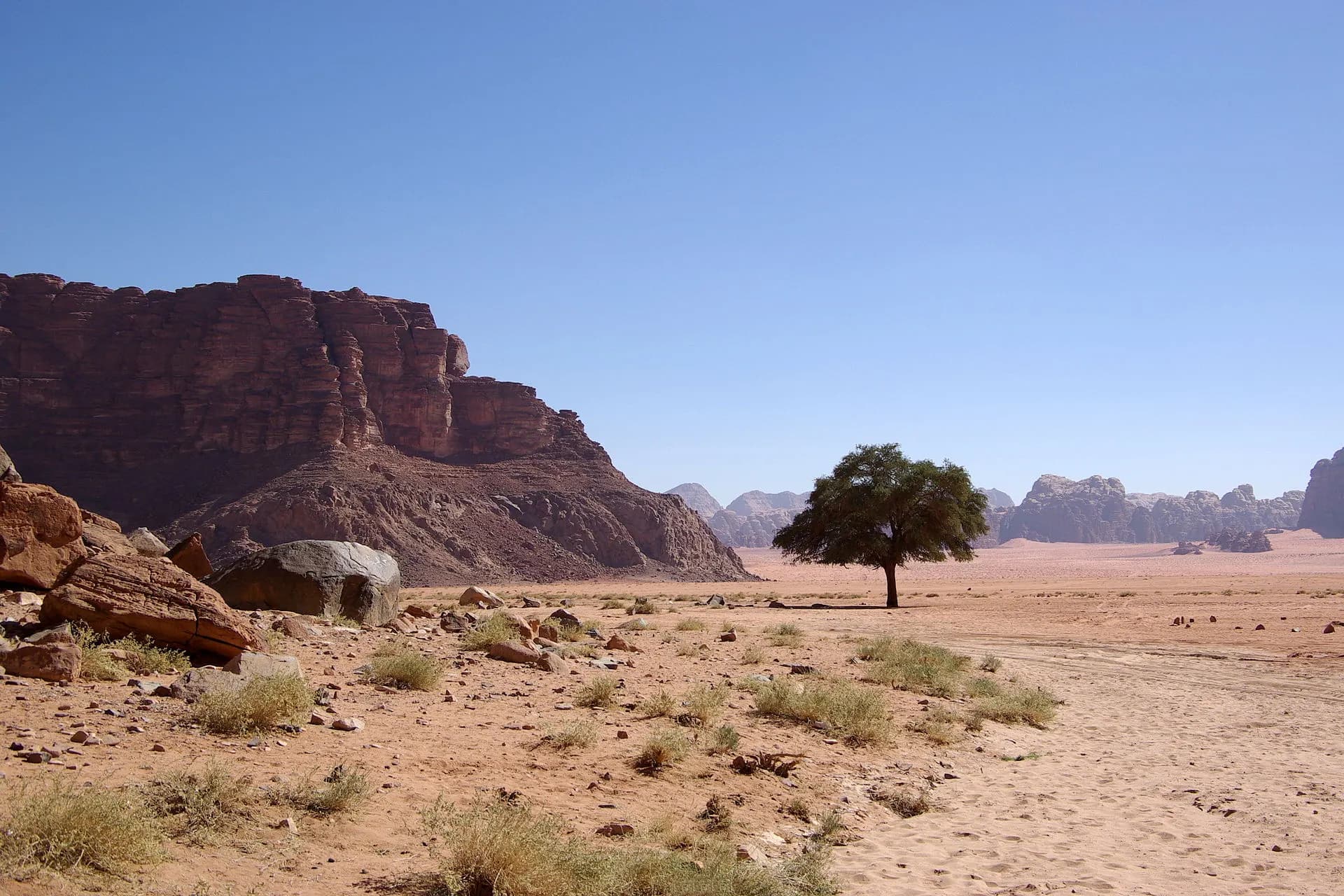
A small spring on the slope of Jebel Rum, where Lawrence is said to have rested, with views over the valley and camels drinking at the troughs below.
- 3
Khazali Canyon
A narrow fissure in a mountain, with ancient Thamudic and Nabataean inscriptions and rock carvings of people and animals on its walls.
- 4
The red dunes
Photo: Berthold Werner, CC BY-SA 3.0, via Wikimedia Commons
Sand dunes of a deep red-orange colour that pile up against the mountains, perfect for climbing and sliding down, and for watching the sunset turn the desert gold.
- 5
Um Fruth rock bridge
A natural arch about fifteen metres high, easy to climb with care, and a classic photo stop on jeep tours.
- 6
Jebel Burdah rock bridge
One of the highest natural arches in the region, about thirty-five metres above the ground, reached by a demanding scramble with a guide.
TipThe climb involves exposed sections; only attempt it with a local guide and proper footwear.
- 7
Lawrence's House
The ruins of a small Nabataean building said to have been used by Lawrence, on a rise with wide views over the desert.
- 8
The night sky
With almost no light pollution, Wadi Rum has spectacular stargazing. Many camps offer telescopes or simply a fire and a blanket under the Milky Way.
When to go
Spring and autumn bring warm days and cool nights, the best conditions for hiking and camping. Summer days are very hot, though nights are pleasant. Winter days are mild and sunny, but nights can be close to freezing; bring warm layers.
Getting around
Private vehicles are not allowed deep into the protected area: visitors explore with local Bedouin guides by four-wheel drive, on camel or on foot. Tours start from the visitor centre or Rum village, and range from two hours to several days. The visitor centre is about an hour from Aqaba and two hours from Petra by road.
Local tips
- The Jordan Pass includes entry to Wadi Rum; otherwise pay at the visitor centre.
- Book camps and tours ahead in peak season; choose operators licensed by the protected area.
- Bring sun protection, water and warm layers for the night.
- Dress modestly out of respect for Bedouin culture.
- Don't leave rubbish or carve the rocks; the desert ecosystem is fragile.
- Drones require permission.
- Mobile signal is patchy in the deep desert; tell your camp your plans.
- Agree in advance exactly which sights a jeep tour includes.
Eat and drink
Bedouin camps serve zarb, a meal of meat and vegetables cooked in an underground oven covered in sand, with rice, salads and flatbread. Sweet sage or cardamom tea and strong Arabic coffee are offered as a sign of hospitality throughout the day.
Where to stay
Camps range from simple Bedouin tents with shared bathrooms to comfortable tented camps and "bubble" domes with clear roofs for stargazing. Staying deep in the desert is quieter than camps near Rum village.
Beyond Wadi Rum
Petra is about two hours north and pairs naturally with a desert night. Aqaba, on the Red Sea, has some of the best snorkelling and diving in the region, and the Dead Sea, the lowest point on earth, is about four hours away.
Hiking and climbing
Wadi Rum is one of the best places in the Middle East for trekking and rock climbing. Routes range from easy walks among the dunes to multi-day treks camping in the desert and scrambling routes up Jebel Rum, the second-highest peak in Jordan. Jebel Umm ad Dami, on the Saudi border, is the country's highest mountain, with a view across the desert towards Saudi Arabia from its summit. Climbing and serious scrambling should only be undertaken with a qualified local guide.
Camels and the Hejaz Railway
A camel trek, from a short ride to a multi-day journey, is a slow and peaceful way to experience the desert, following ancient caravan routes. At the old Wadi Rum station, on the edge of the protected area, the historic Hejaz Railway, built by the Ottomans to carry pilgrims to Mecca and attacked during the Arab Revolt, sometimes runs special excursions with re-enactments of the raids led by Lawrence.
Planning your visit
A half-day jeep tour covers the main sights near the visitor centre, including Lawrence's Spring, Khazali Canyon, the dunes and Um Fruth, while a full day reaches the more distant arches and canyons. Combining a tour with an overnight stay gives you sunset and sunrise, the most beautiful times in the desert. Hot-air balloon flights at dawn offer a different perspective over the mountains, weather permitting.