Marrakech
A red-walled medina of souks and riads, the drama of Jemaa el-Fna at dusk, and the snowy Atlas on the horizon.
- Best time to go
- March to May and October to November, for warm days and cool nights
- Local time
- –
- Currency
- Moroccan Dirham (MAD)
- Reading time
- 4 min
- Language
- Arabic
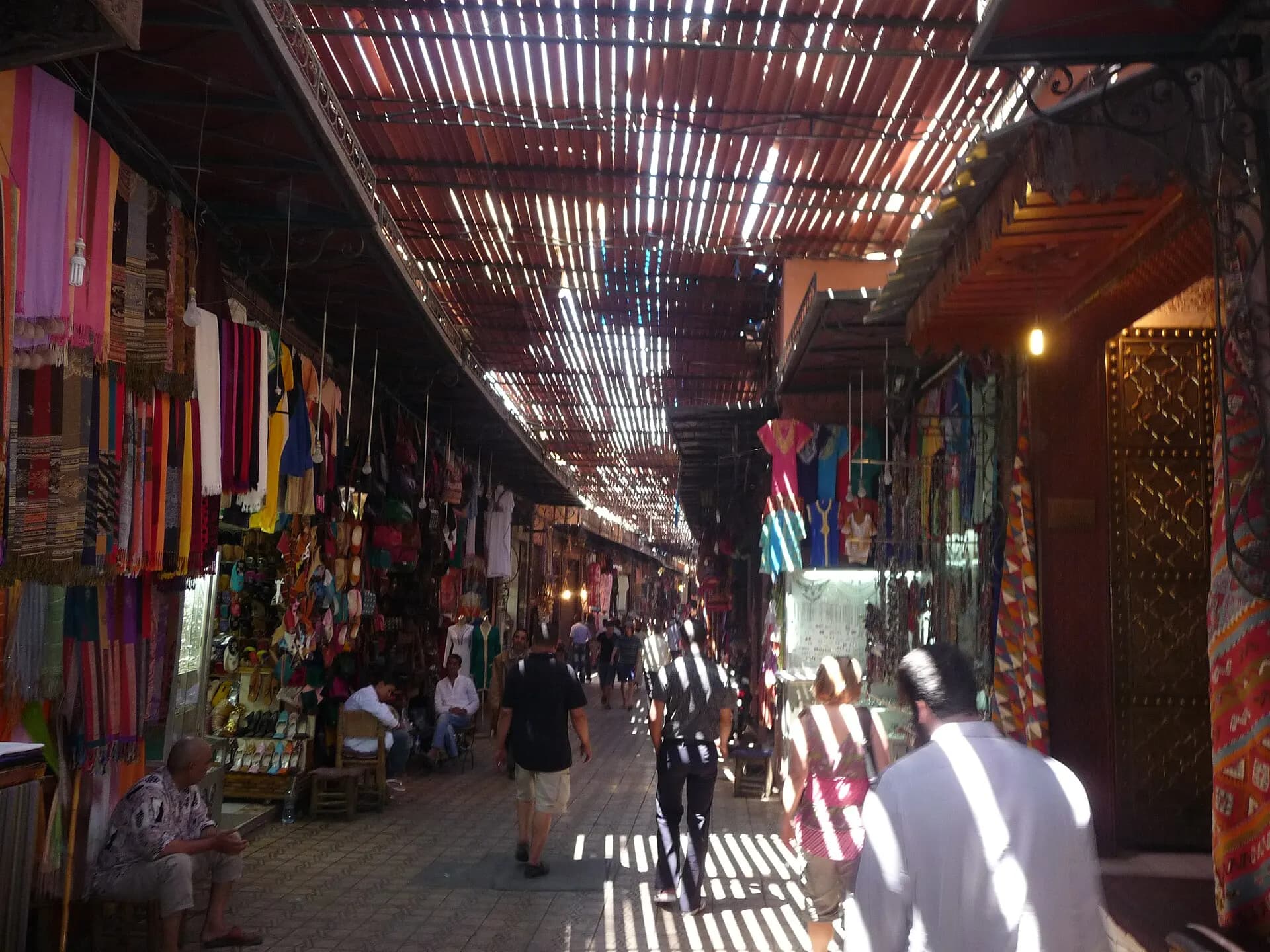
Marrakech was founded in the eleventh century and became one of the great imperial cities of Morocco, a trading hub where caravans from the Sahara met merchants from the north. Its medina, the old walled city of red earth, is a World Heritage Site, a labyrinth of souks, mosques, palaces and hidden courtyard houses called riads.
It is an intense, exhilarating city: the noise, colour and bustle of the medina can be overwhelming at first. Give yourself time to adjust, stay in a riad for a calm retreat, and balance the souks with the city's peaceful gardens. The Atlas Mountains and the desert are within easy reach.
The top 7 in Marrakech
- 1
Jemaa el-Fna
Photo: Michal Osmenda from Brussels, Belgium, CC BY-SA 2.0, via Wikimedia Commons
The great square at the heart of the medina changes throughout the day. In the morning, there are orange-juice stalls and snake charmers; by evening, it fills with food stalls, musicians, storytellers and crowds, smoke rising from the grills. UNESCO lists its storytelling and performances as part of humanity's intangible heritage.
TipWatch the evening transformation from a rooftop café terrace, then dive in. Performers expect a tip if you photograph them.
- 2
The souks
Photo: Petar Milošević, CC BY-SA 4.0, via Wikimedia Commons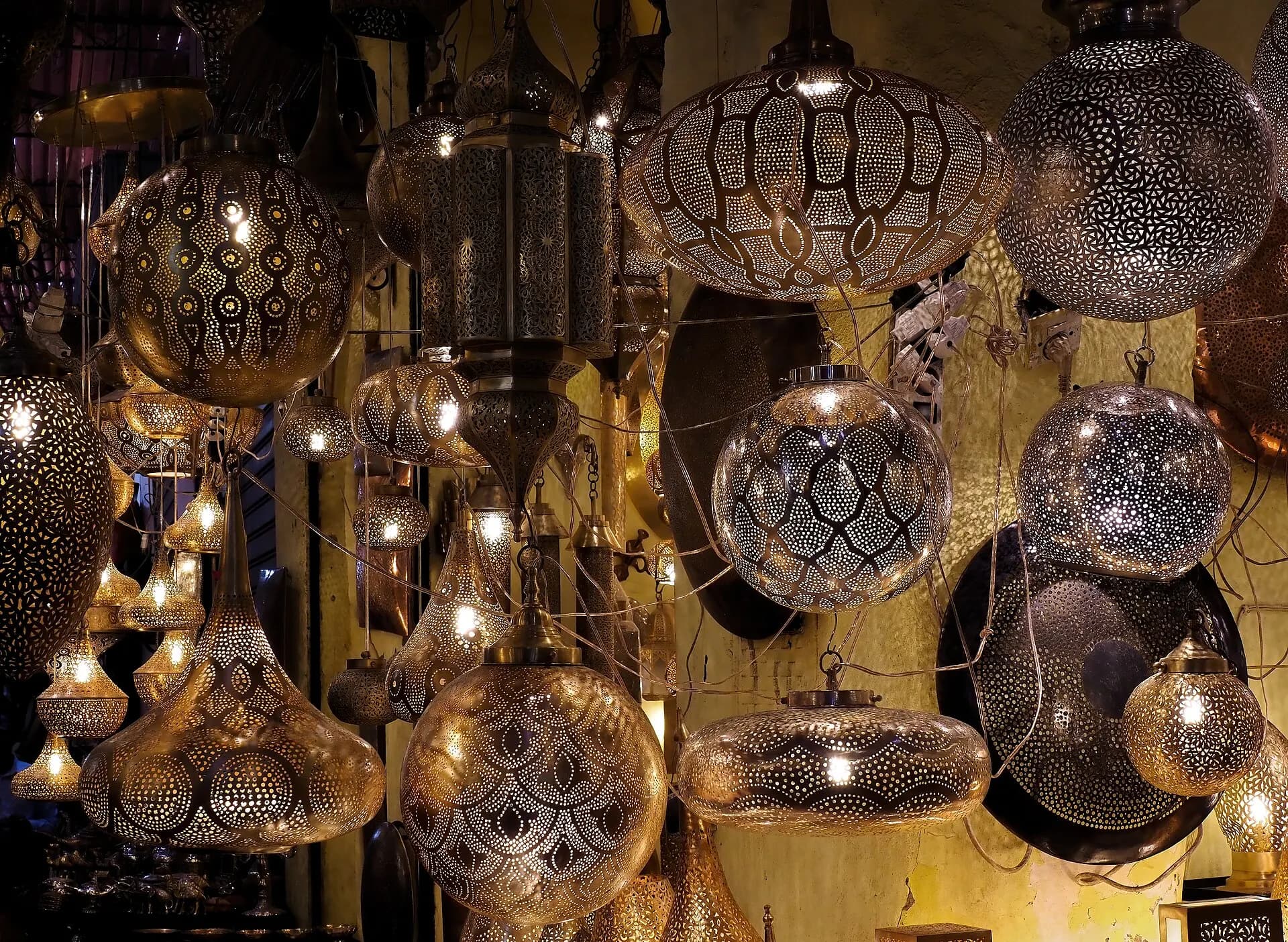
North of the square, a maze of covered lanes is divided into souks by trade: leather, metalwork, carpets, spices, lamps and ceramics. Craftsmen still work in tiny workshops, and the dyers' souk is hung with skeins of coloured wool. For a break from the crowds, Le Jardin Secret, a restored palace garden in the heart of the medina, has fountains, shade and a tower with views over the rooftops.
TipHaggling is expected; start well below the asking price, stay friendly, and only bargain if you intend to buy.
- 3
The Koutoubia Mosque
Photo: Baca12, CC BY-SA 4.0, via Wikimedia Commons
The twelfth-century minaret of the Koutoubia, seventy-seven metres tall, is the city's landmark and a model for other great minarets. Non-Muslims can't enter the mosque, but its gardens are pleasant for a walk, and the call to prayer echoes over the medina.
- 4
The Bahia Palace
Photo: C messier, CC BY-SA 4.0, via Wikimedia Commons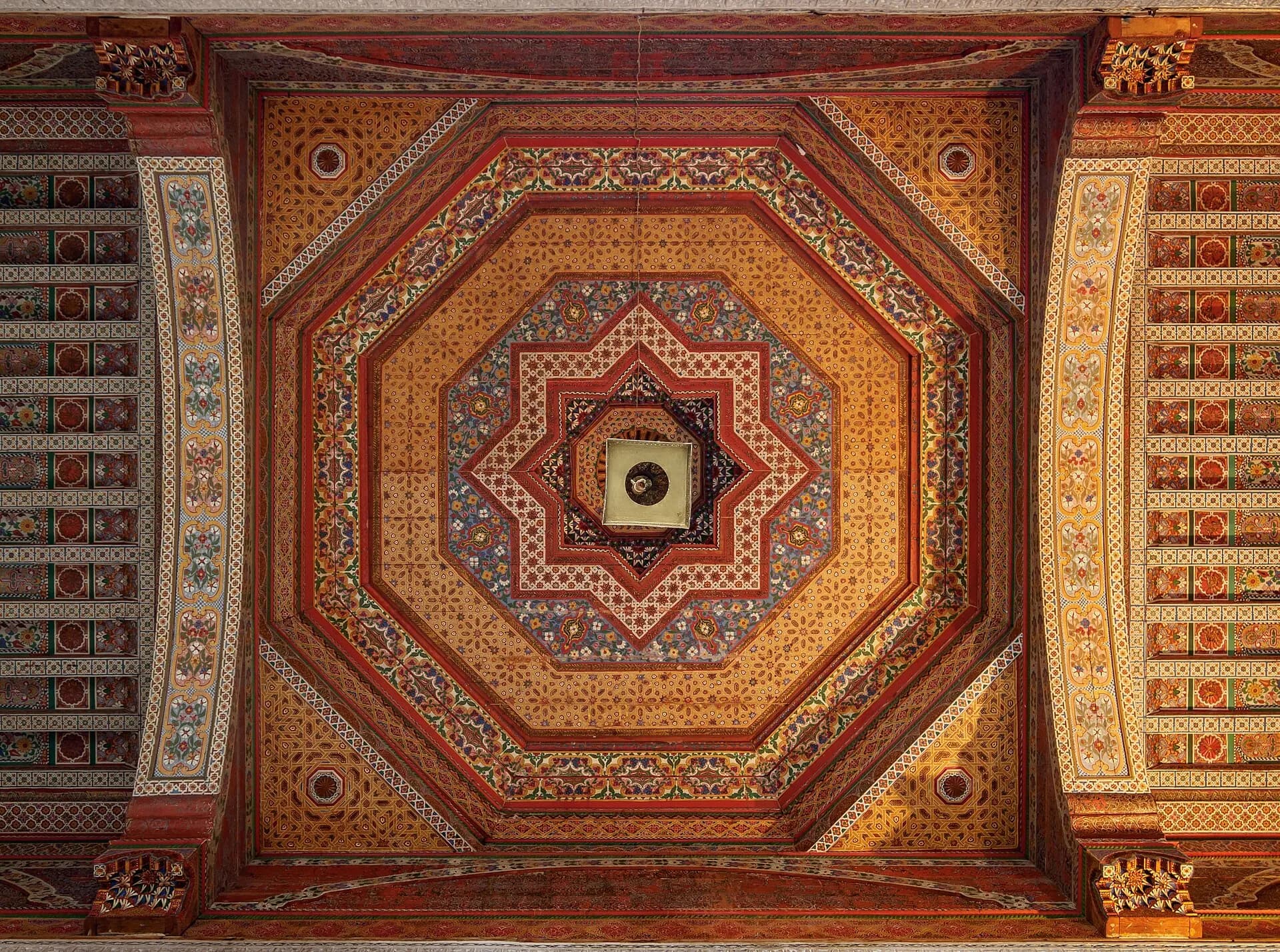
A nineteenth-century palace built for a grand vizier, with courtyards, gardens and rooms decorated in carved cedar, painted ceilings and zellige tilework. It's a superb showcase of Moroccan craftsmanship.
- 5
- 6
The Jardin Majorelle
Photo: Viault, CC BY-SA 4.0, via Wikimedia Commons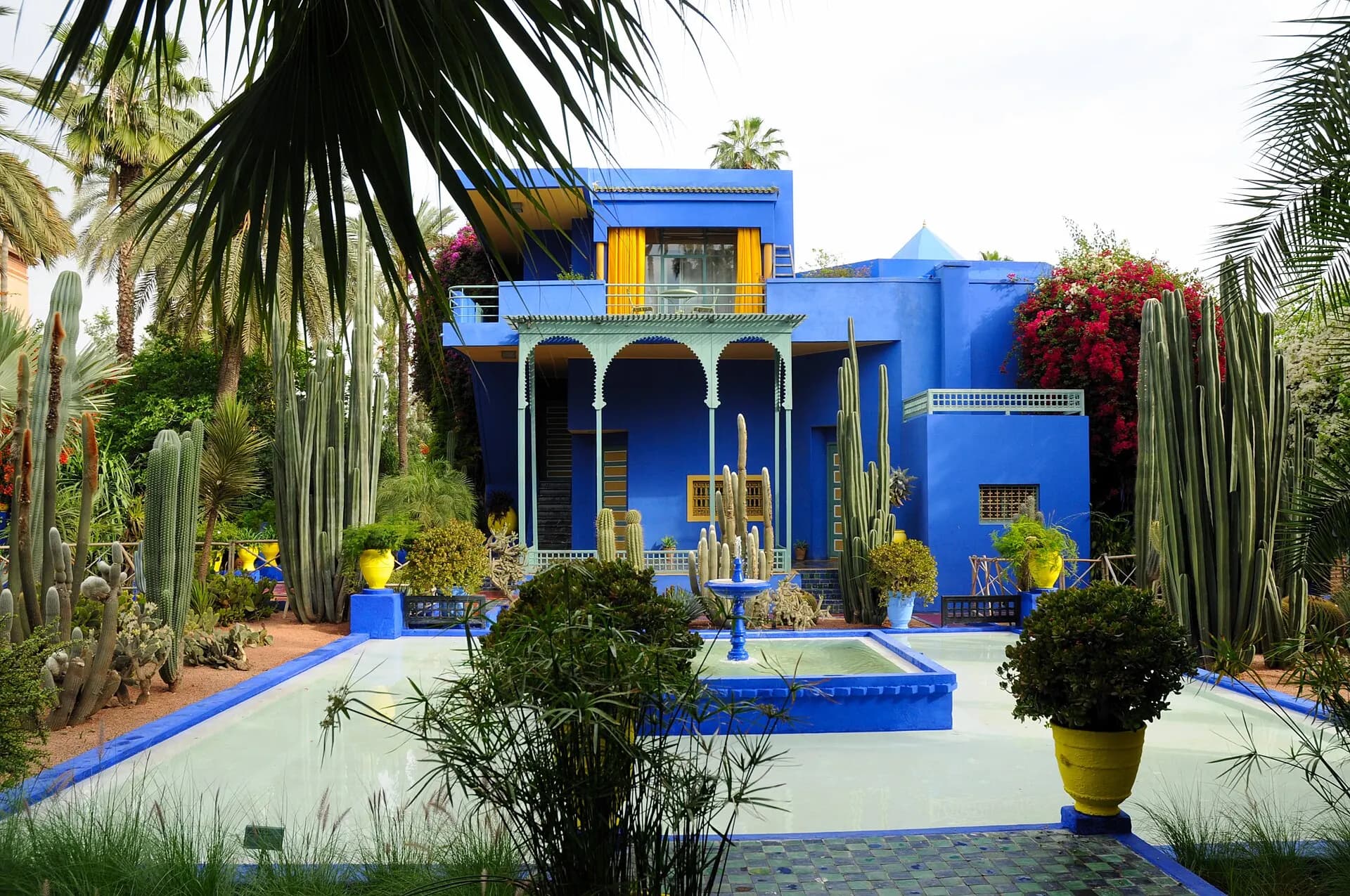
A garden of cacti, palms and bamboo created by the French painter Jacques Majorelle, with a studio painted in an intense cobalt blue. It was later restored by the designer Yves Saint Laurent, and a museum devoted to his work stands nearby.
TipBook tickets online and go at opening time to avoid the queues.
- 7
The Saadian Tombs
Photo: C messier, CC BY-SA 4.0, via Wikimedia Commons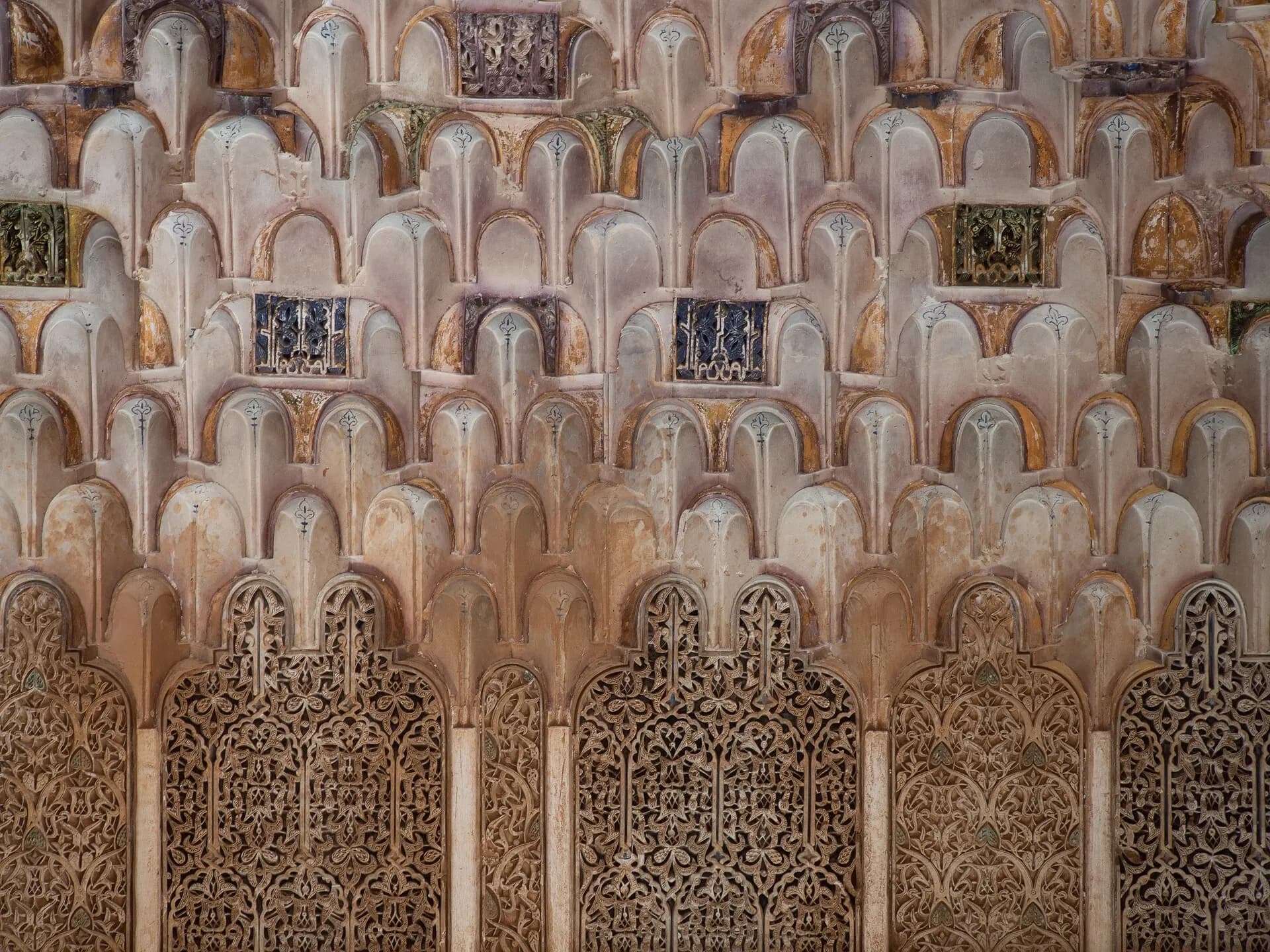
The burial place of the Saadian sultans, sealed up for centuries and rediscovered in 1917, with an exquisite hall of twelve columns decorated with marble, carved stucco and cedar.
When to go
Spring and autumn are ideal, with warm, sunny days and cool evenings. Summer is very hot, with temperatures often above 40 °C. Winter days are mild and sunny, but nights are cold, and the Atlas Mountains are often capped with snow. During Ramadan, life slows during the day, and some restaurants close until sunset, when the city comes alive.
Getting around
The medina is best explored on foot, though its lanes are confusing, and motorbikes squeeze through even the narrowest ones. Petits taxis, small beige cabs, are cheap for short trips; insist on the meter or agree a price first. The new town, Gueliz, has wide avenues, cafés and modern shops.
Marrakech Menara Airport is a short drive from the medina. Trains run north to Casablanca, Rabat, Fez and Tangier, and buses to Essaouira and the Atlas.
Local tips
- Ignore people who say a street is closed or offer to guide you: it's a common way to lead visitors to shops.
- Dress modestly, covering shoulders and knees, out of respect for local customs.
- Ask before photographing people, and expect to tip if they agree.
- Carry small change for tips, taxis and small purchases.
- Drink bottled water.
- Use an official guide, licensed by the tourist office, if you want a guided tour of the medina.
Eat and drink
Moroccan cooking is fragrant and generous. Try tagines slow-cooked in conical clay pots, couscous (traditionally served on Fridays), pastilla, a sweet and savoury pie, and harira, a hearty soup. In Marrakech, look for tanjia, beef or lamb slow-cooked in an urn in the embers of a hammam furnace. Mint tea, poured from a height, is offered everywhere as a sign of welcome.
Day trips
The High Atlas Mountains rise less than an hour south of the city. The village of Imlil is the starting point for hikes in the Toubkal National Park, beneath North Africa's highest peak, and the Ourika Valley has Berber villages and waterfalls. The stony Agafay Desert, about forty-five minutes away, offers camel rides and desert camps. Essaouira, a whitewashed port town on the Atlantic, is about three hours away by bus, with ramparts, a fishing harbour and a windy beach.
Where to stay
For the full experience, stay in a riad inside the medina: a traditional house built around a central courtyard or garden, often with a plunge pool and a roof terrace, quiet behind thick walls. Many are small and family-run, and breakfast on the terrace is a highlight. Their alleys can be hard to find at first, so arrange to be met on arrival. Gueliz and Hivernage, the modern districts outside the walls, have larger hotels and are calmer, while resort hotels with big gardens and pools are found in the Palmeraie, a palm grove on the city's northern edge.