Fes
The world's largest car-free medieval city: a labyrinth of souks, workshops and mosques unchanged for centuries.
- Best time to go
- March to May and September to November, for mild, comfortable days
- Local time
- –
- Currency
- Moroccan Dirham (MAD)
- Reading time
- 4 min
- Language
- Arabic

Fes is Morocco's oldest imperial city, founded in the late eighth century, and its old medina, Fes el-Bali, is one of the largest car-free urban areas in the world and a World Heritage Site. Inside its walls, some nine thousand alleys wind past mosques, madrasas, fountains, caravanserais and workshops where craftsmen still work with techniques passed down through the generations.
It's the spiritual and cultural heart of Morocco, home to one of the oldest universities in the world, and an extraordinary place to experience daily life much as it has been for centuries. It's also famously disorienting: hire a licensed guide for your first day, then enjoy getting lost.
The top 9 in Fes
- 1
Fes el-Bali and the souks
Photo: Christian Rosenbaum, CC BY-SA 3.0, via Wikimedia Commons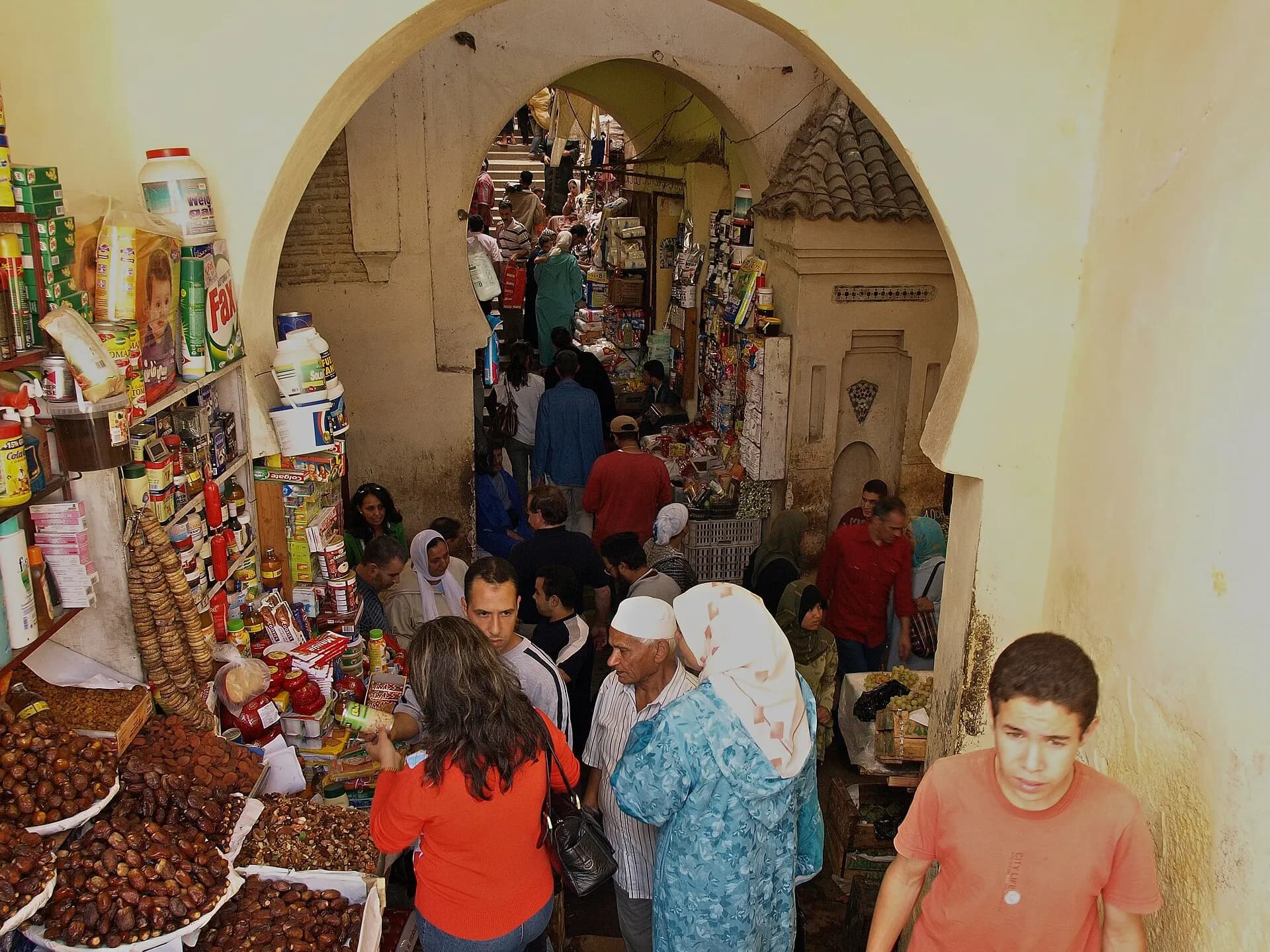
The old medina is a maze of narrow lanes, covered markets and courtyards, organised by trade: coppersmiths hammering in Place Seffarine, weavers, leatherworkers, carpenters, spice and olive sellers. Donkeys and mules still carry goods through alleys too narrow for anything else.
TipShout of "balak!" means "watch out": step aside for a passing donkey or cart.
- 2
Bab Bou Jeloud
Photo: Bjørn Christian Tørrissen, CC BY-SA 3.0, via Wikimedia Commons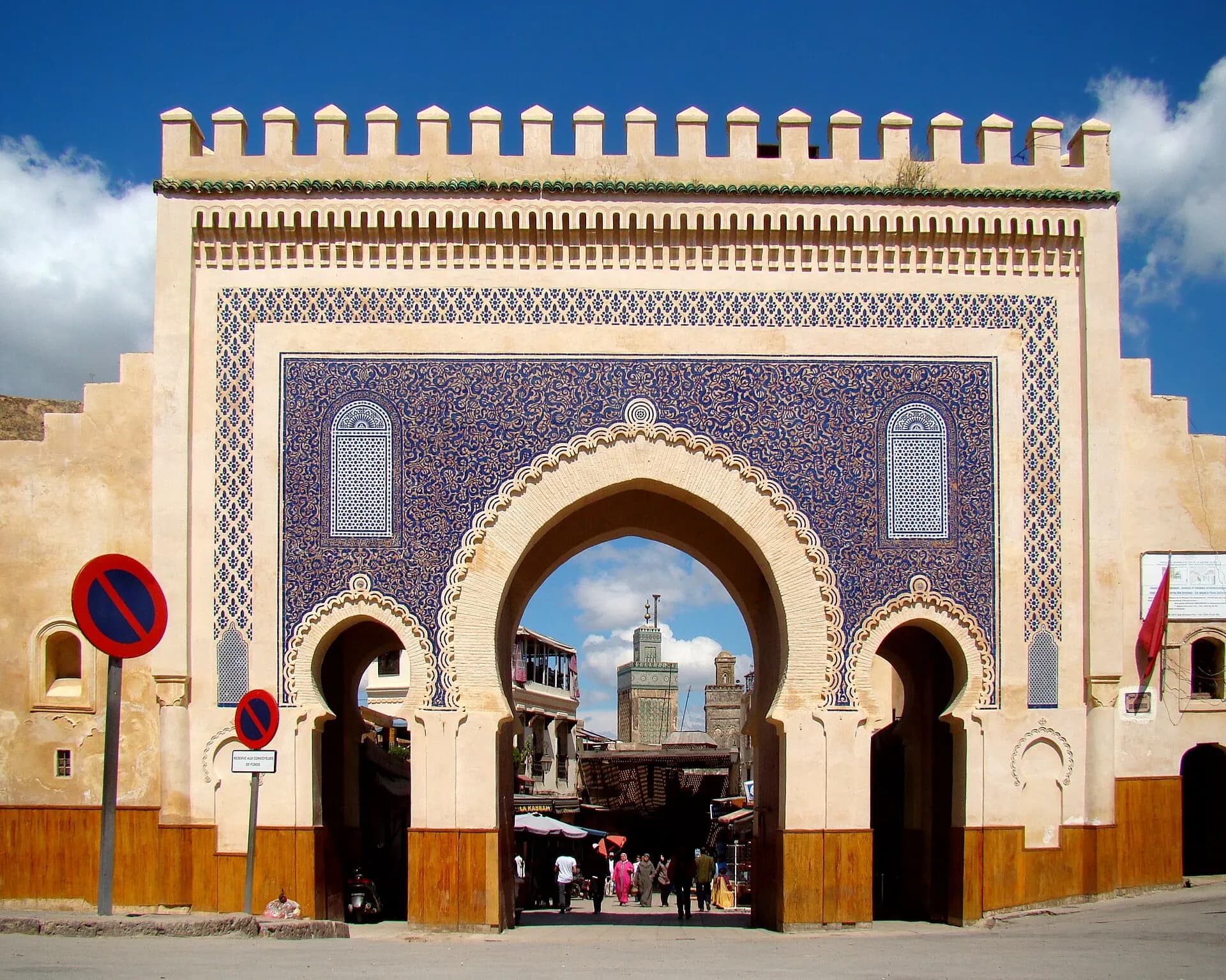
The "Blue Gate", the main entrance to the old medina, decorated with blue tiles on the outside and green, the colour of Islam, on the inside. It frames a view of minarets beyond.
- 3
The Chouara Tannery
Photo: just_a_cheeseburger, CC BY 2.0, via Wikimedia Commons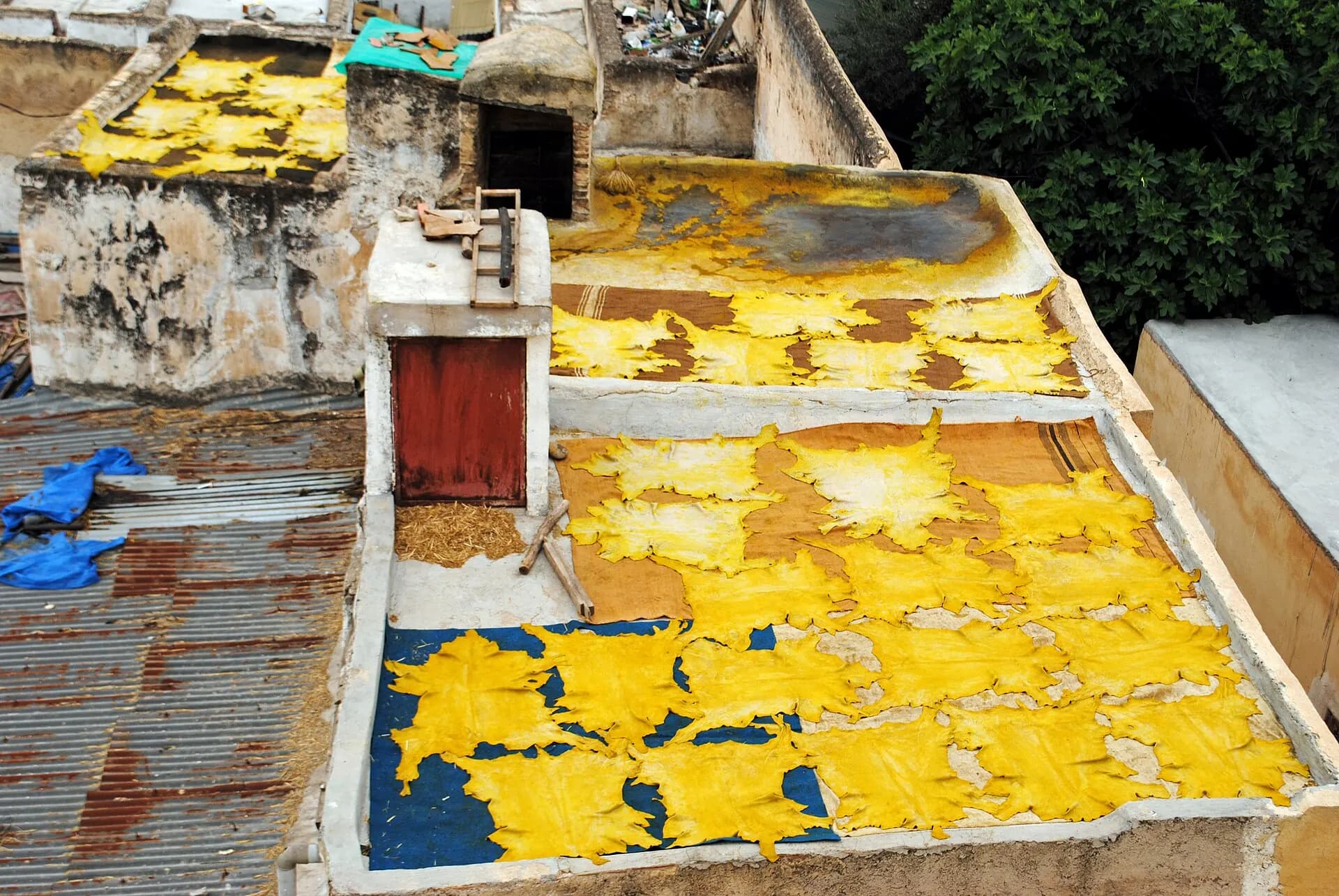
The largest of Fes's medieval tanneries, where leather is soaked and dyed in a honeycomb of stone vats filled with coloured dyes, much as it has been for centuries. The best views are from the terraces of the surrounding leather shops.
TipShops will offer a sprig of mint to help with the smell; enjoy the view, and buy only if you want to.
- 4
Al-Attarine Madrasa
Photo: just_a_cheeseburger, CC BY 2.0, via Wikimedia Commons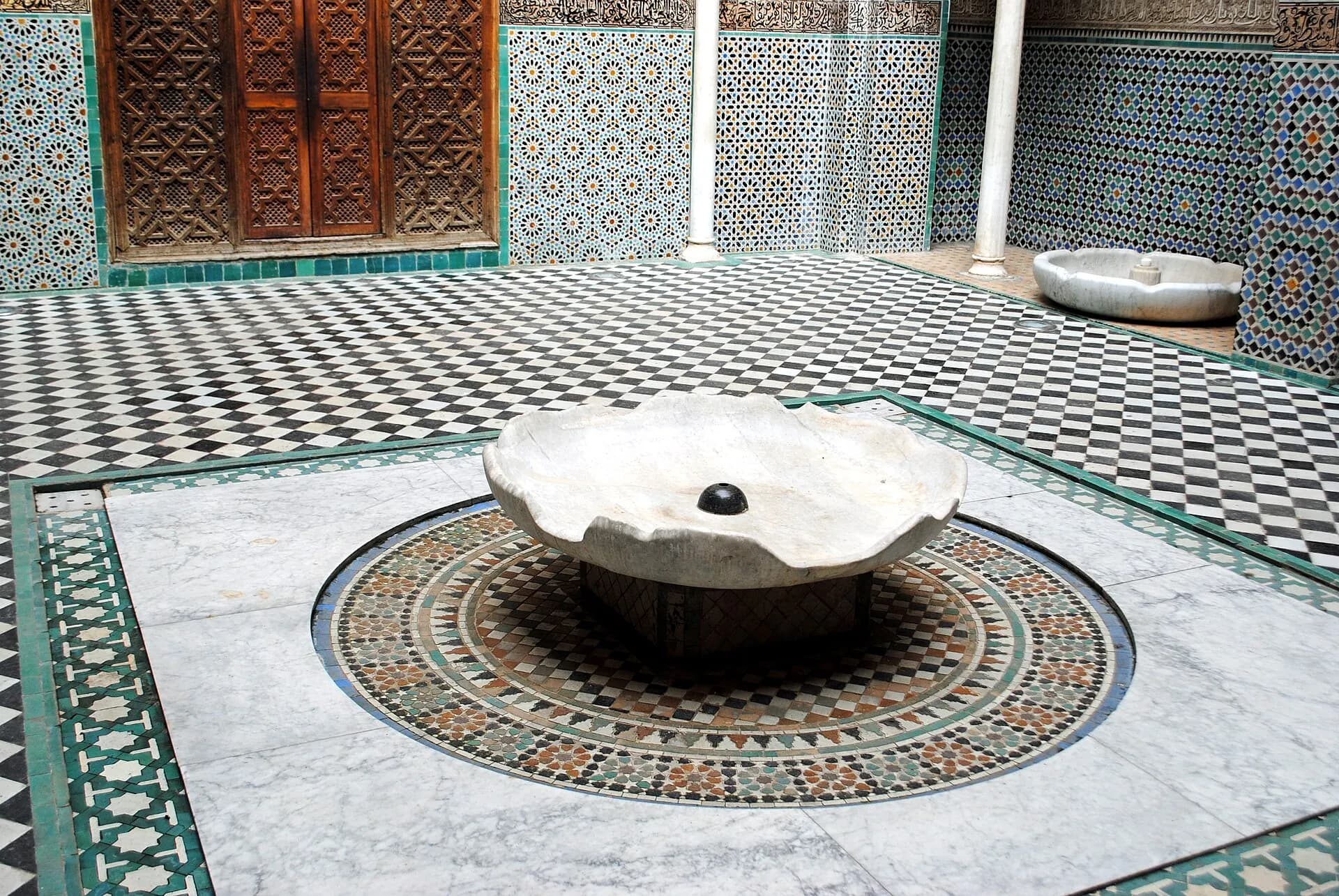
A fourteenth-century Islamic school with one of the most beautiful courtyards in Morocco, covered in intricate zellige tilework, carved cedar and stucco as fine as lace.
- 5
Bou Inania Madrasa
Photo: Petar Milošević, CC BY-SA 4.0, via Wikimedia Commons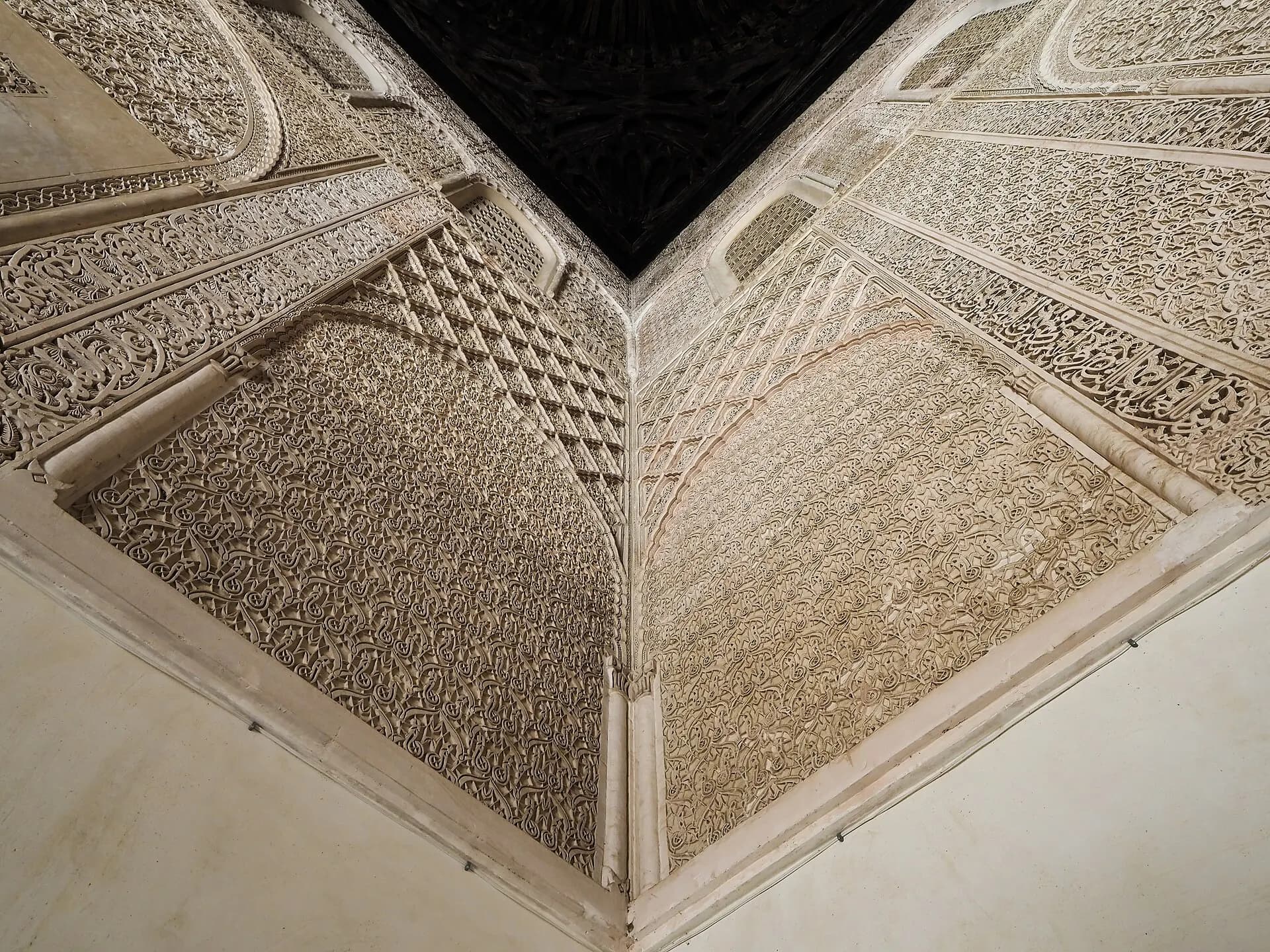
A madrasa built in the fourteenth century by the Marinid sultan Abu Inan, with superb decoration and one of the few religious buildings in Fes that non-Muslims can enter, though the prayer hall itself is closed to visitors.
- 6
Al-Qarawiyyin
Photo: Younesberrada, CC BY-SA 3.0, via Wikimedia Commons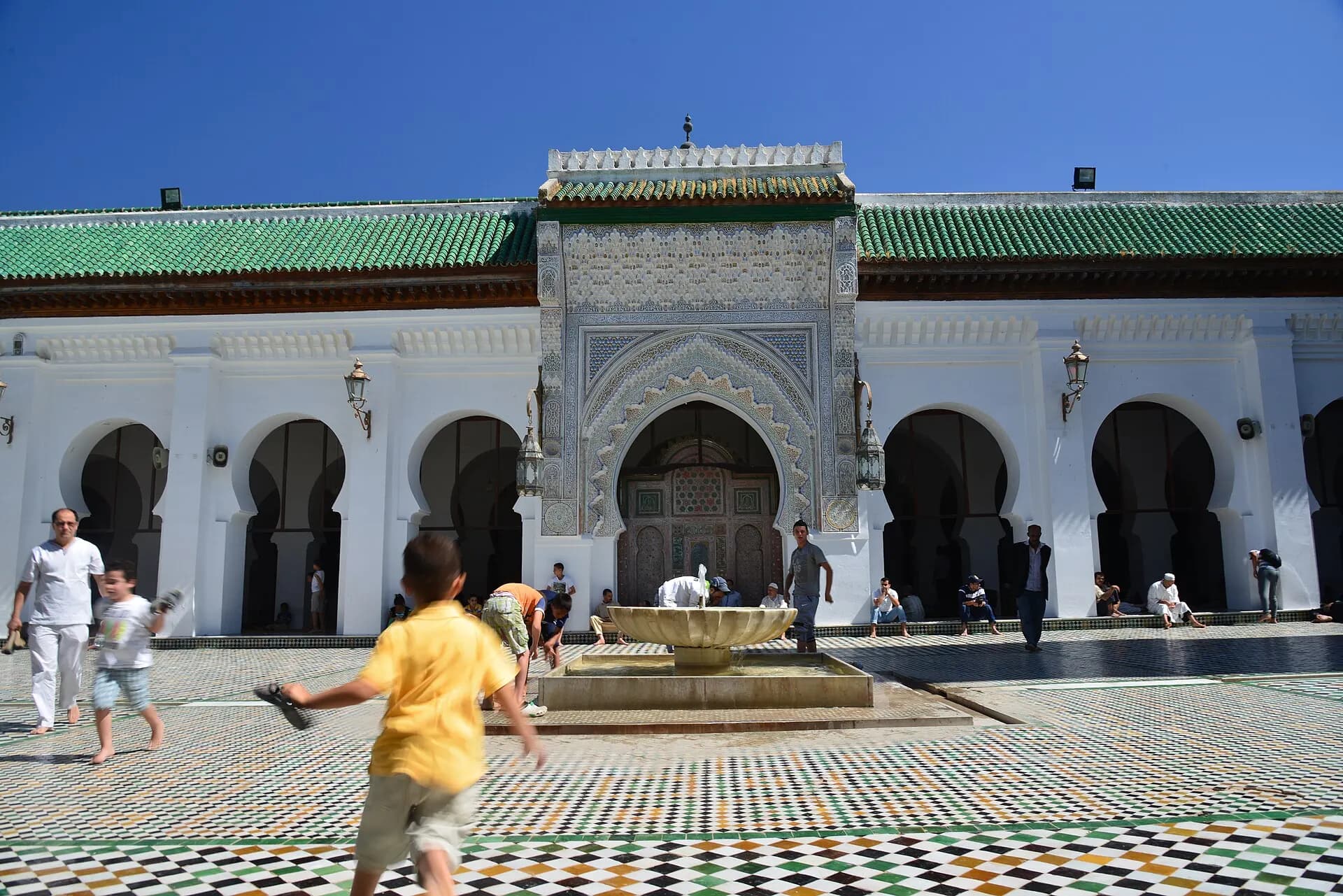
Founded in 859 by Fatima al-Fihri, the daughter of a wealthy merchant, the Al-Qarawiyyin mosque and university is often described as the oldest continuously operating university in the world. Non-Muslims can't enter, but can glimpse the courtyard through the doorways.
- 7
The Royal Palace gates
Photo: Petar Milošević, CC BY-SA 4.0, via Wikimedia Commons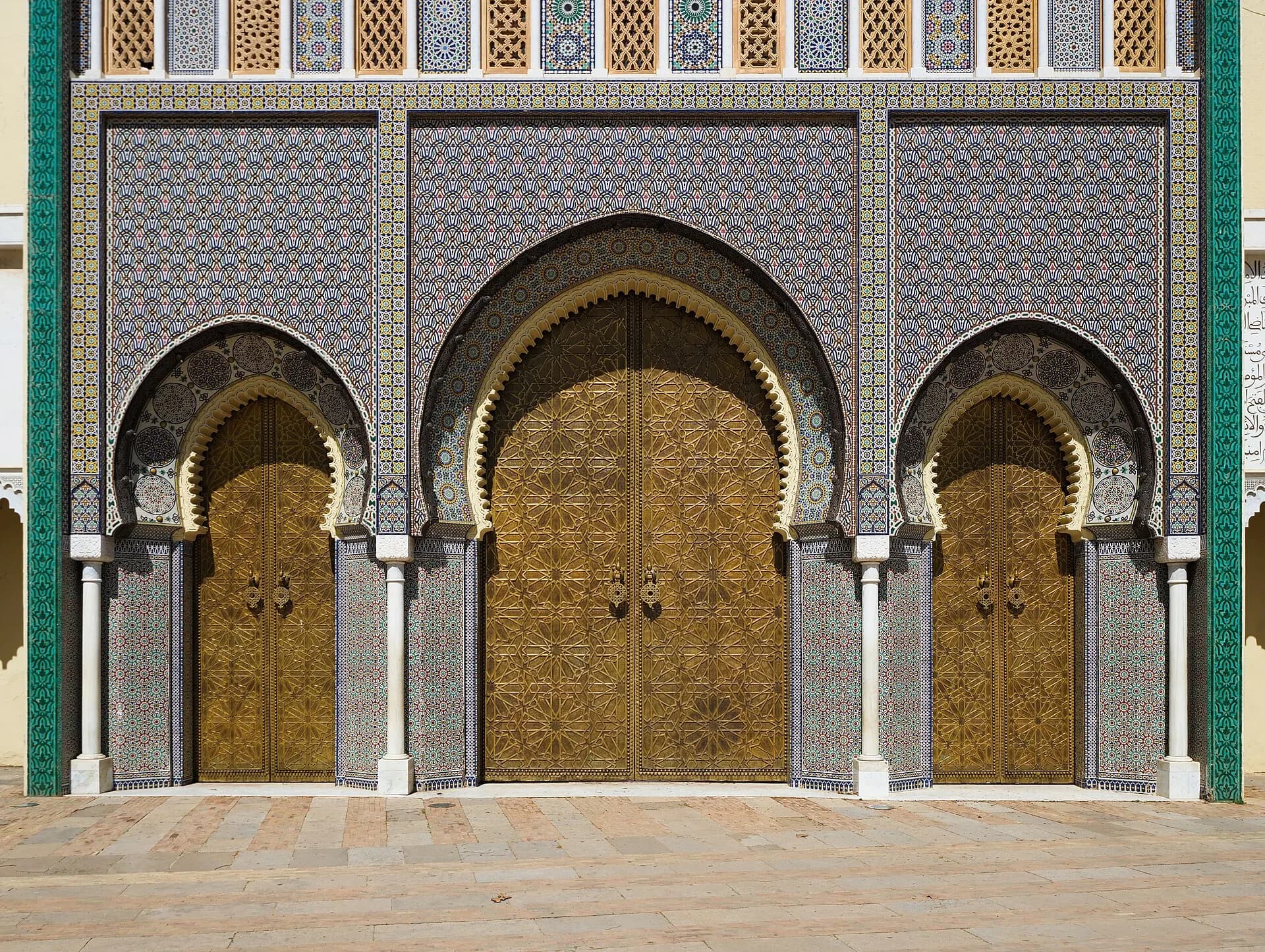
The vast royal palace in Fes el-Jdid, the "new" medina built in the thirteenth century, isn't open to the public, but its seven great brass doors, framed by colourful tilework, are one of the most photographed sights in the city.
- 8
The Mellah
Photo: Josep Renalias, CC BY-SA 3.0, via Wikimedia Commons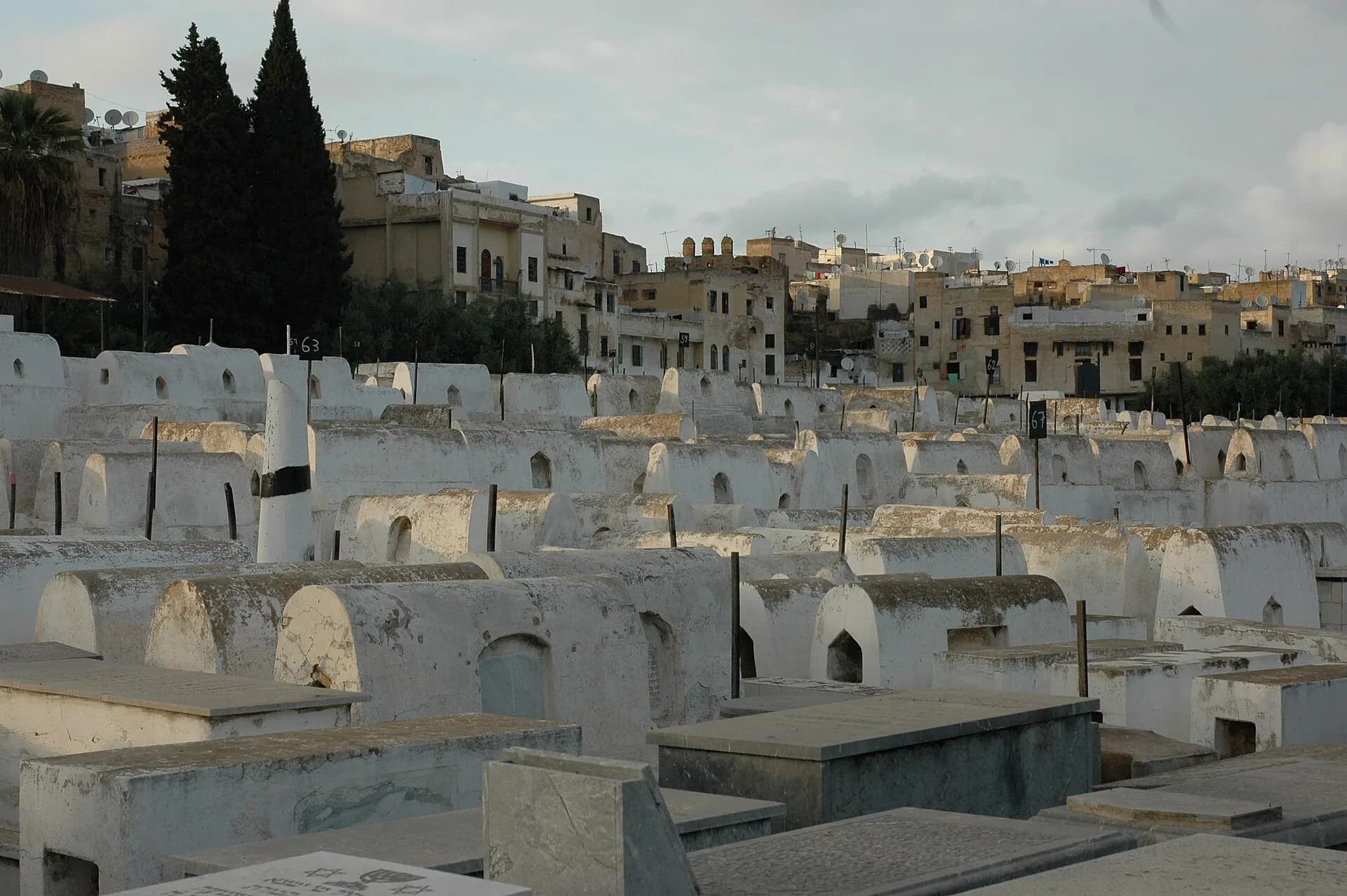
The old Jewish quarter next to the palace, with distinctive houses with open balconies, the restored Ibn Danan Synagogue and a large Jewish cemetery of white tombs.
- 9
The Merenid Tombs
Photo: Mx. Granger, CC0, via Wikimedia Commons
Ruined tombs on a hill north of the medina, with the best view over the whole old city, a sea of rooftops and minarets. Come at sunset, when the call to prayer echoes across the valley.
When to go
Spring and autumn are the best seasons, with warm days and cool evenings. Summer is very hot, often above 35 °C. Winter is cool and can be rainy, and nights are cold. The Fes Festival of World Sacred Music, usually in late spring, brings performers from around the world. During Ramadan, life slows during the day and comes alive after sunset.
Getting around
The medina is entirely on foot, and its lanes are steep and confusing; map apps are unreliable inside. Petits taxis, small red cabs, are cheap for getting to the gates of the medina and the new town; insist on the meter. Ville Nouvelle, the French-built new town, has wide avenues and modern shops.
Fès–Saïs Airport is about twenty minutes from the city. Trains link Fes with Rabat, Casablanca, Tangier and Marrakech, and buses run to Chefchaouen and the desert.
Local tips
- Hire an official guide, licensed by the tourist office, for your first visit; ignore unofficial "guides" who approach you.
- If someone says a street is closed or offers directions, politely decline; it often leads to a shop.
- Dress modestly, covering shoulders and knees.
- Ask before photographing people.
- Bargaining is expected in the souks; agree a price before any service.
- Carry small change for tips, taxis and small purchases.
Eat and drink
Fes is famous for its cuisine. Try pastilla, a flaky pie filled with pigeon or chicken, almonds and cinnamon, dusted with sugar; tagines of lamb with prunes or chicken with preserved lemon; harira soup; and street snacks like sfenj, fried doughnuts, and bissara, a fava-bean soup for breakfast. Mint tea is served everywhere, and many riads offer cooking classes.
Where to stay
The most memorable way to experience Fes is to stay in a riad, a traditional house built around a courtyard, inside the medina, many beautifully restored with tiled fountains and roof terraces. They can be hard to find, so arrange to be met at a gate on arrival. Hotels in the Ville Nouvelle are more modern and convenient for transport.
Day trips
Meknès, another imperial city, about an hour away, has grand gates and royal granaries, and the Roman ruins of Volubilis, with fine mosaics, are nearby. Chefchaouen, the blue-painted town in the Rif Mountains, is about four hours north, best visited overnight.
Crafts of Fes
Fes is Morocco's capital of traditional crafts. Its potters produce the famous blue-and-white Fassi ceramics and the tiny tiles of zellige mosaic, cut by hand into geometric shapes; the potters' quarter of Ain Nokbi, outside the medina, welcomes visitors to watch. In the souks, look for embroidered textiles, brass lanterns, leather slippers called babouches, and cedarwood carvings.