Chefchaouen
A blue-washed mountain town in Morocco's Rif, with quiet lanes, cascading steps and a relaxed pace.
- Best time to go
- March to May and September to November, for mild weather
- Local time
- –
- Currency
- Moroccan Dirham (MAD)
- Reading time
- 4 min
- Language
- Arabic
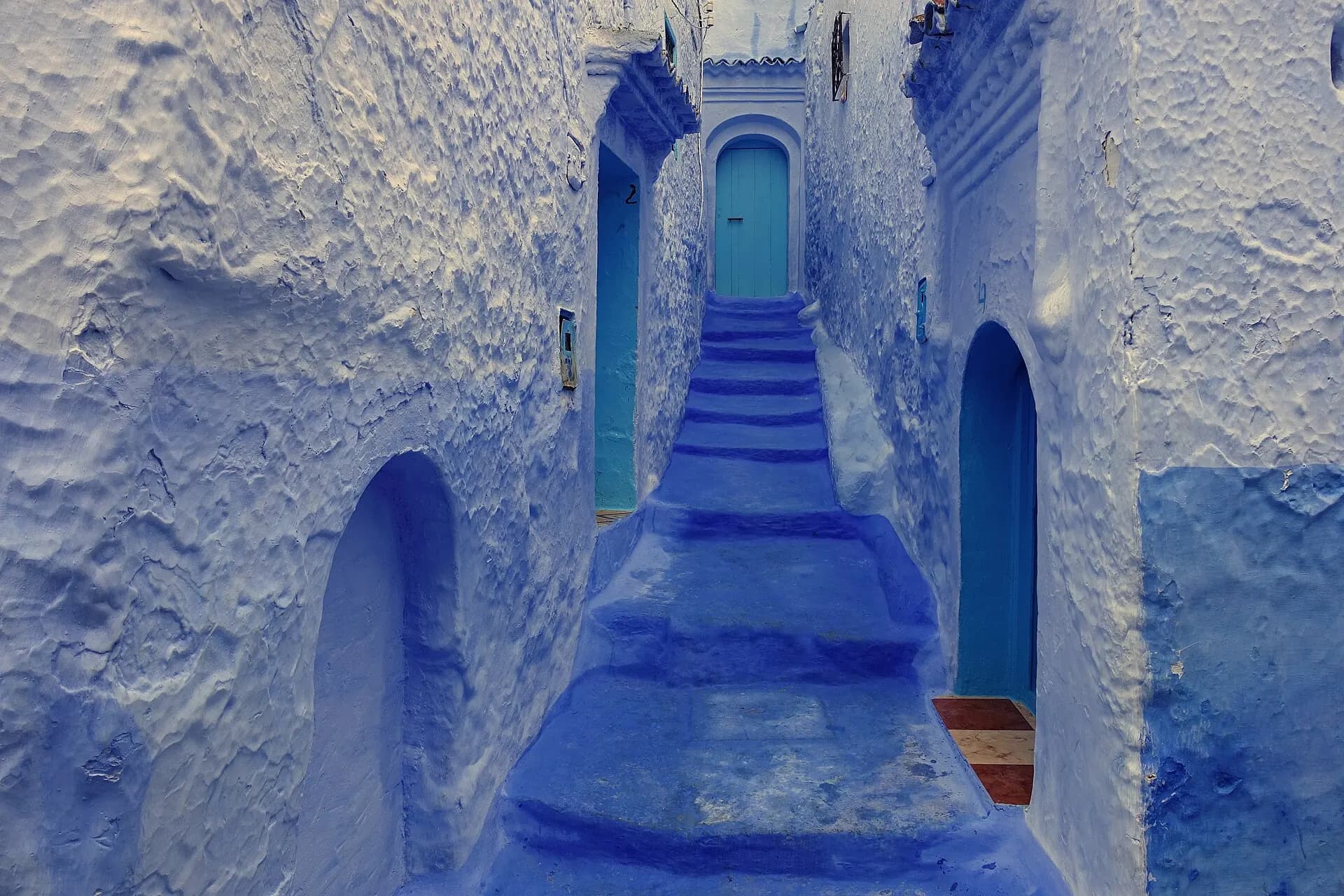
Chefchaouen, in the Rif Mountains of northern Morocco, was founded in 1471 as a small fortress and grew with refugees from Andalusia after the fall of Granada, including Muslims and Jews, whose influence can be seen in its whitewashed houses with tiled roofs. Its medina is famous for walls, doors and stairways painted in every shade of blue, a tradition with various explanations, from Jewish custom to keeping mosquitoes away.
It's a calm, friendly town, a contrast to the bustle of Fes and Marrakech, with a slow pace, mountain air and good hiking in the surrounding national park. Many visitors stay a night or two to enjoy its streets in the quiet of early morning and evening.
The top 7 in Chefchaouen
- 1
The blue medina
Photo: Ekaterina Kvelidze, CC BY-SA 4.0, via Wikimedia Commons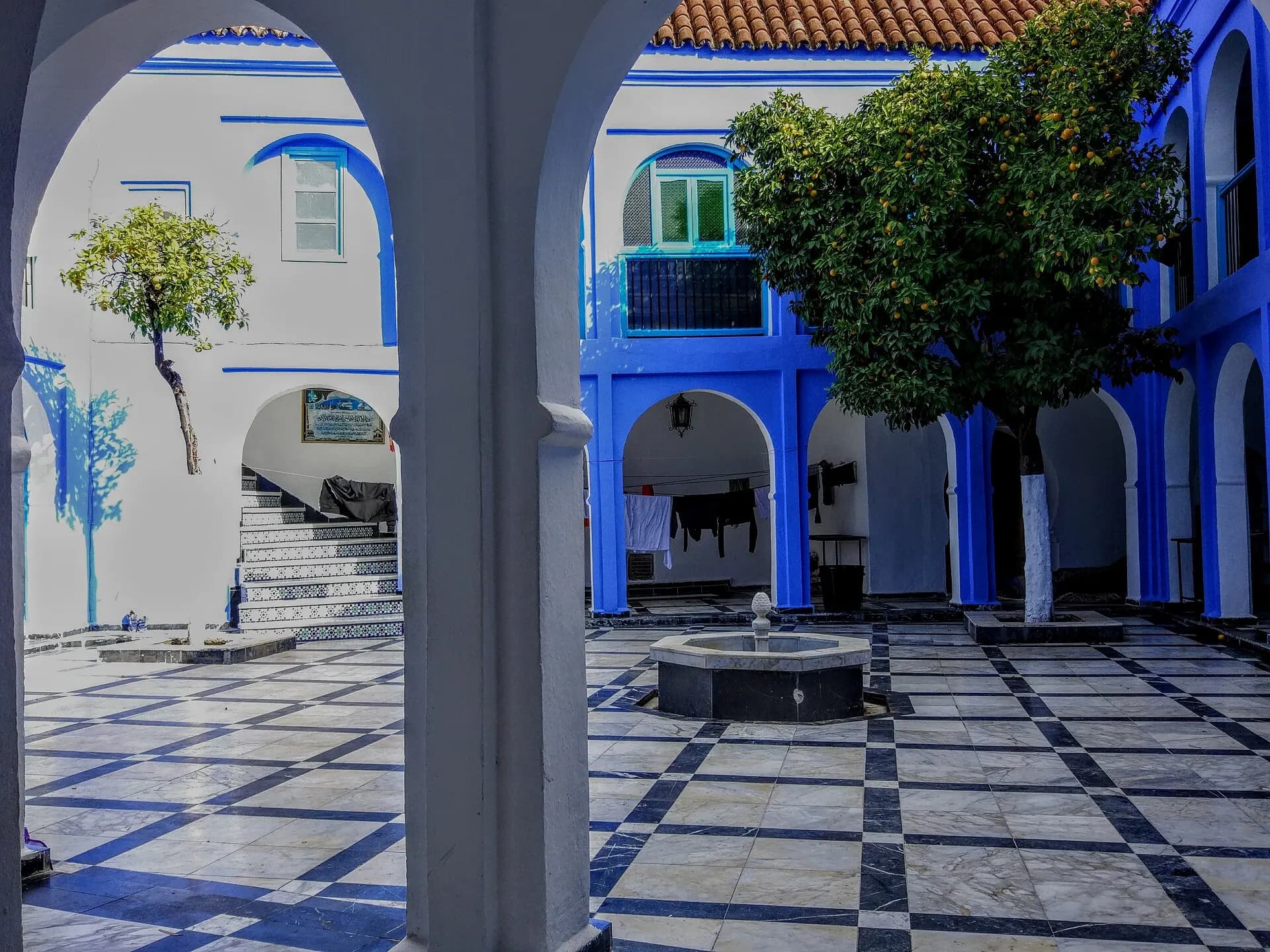
A maze of narrow lanes, stairways and small squares washed in blue and white, with flower pots on the walls and artisans' shops selling weavings, leather and woollen blankets.
TipWander early in the morning for soft light and empty streets; many of the most photographed corners are people's doorsteps, so be respectful.
- 2
Plaza Uta el-Hammam
Photo: Fraguando, CC BY-SA 4.0, via Wikimedia Commons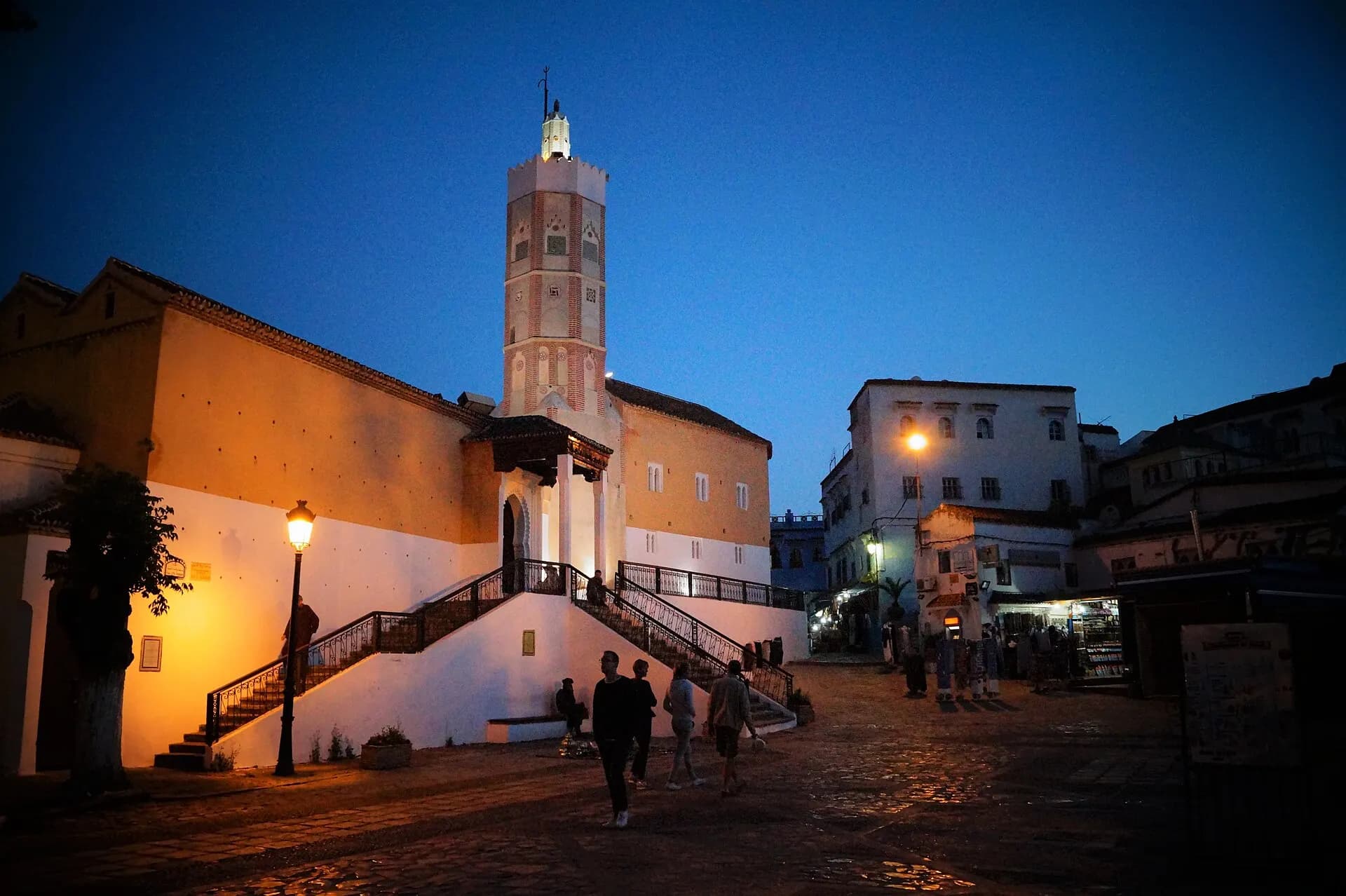
The main square, shaded by trees and lined with cafés, beside the Grand Mosque with its octagonal minaret and the old kasbah. It's the social heart of the town, especially in the evening.
- 3
The kasbah
Photo: Jerzystrzelecki, CC BY 3.0, via Wikimedia Commons
A fifteenth-century fortress of red earthen walls on the square, with a peaceful Andalusian garden, a small ethnographic museum and a tower with views over the rooftops of the medina.
- 4
Ras el-Maa
Photo: YoTuT from United States, CC BY 2.0, via Wikimedia Commons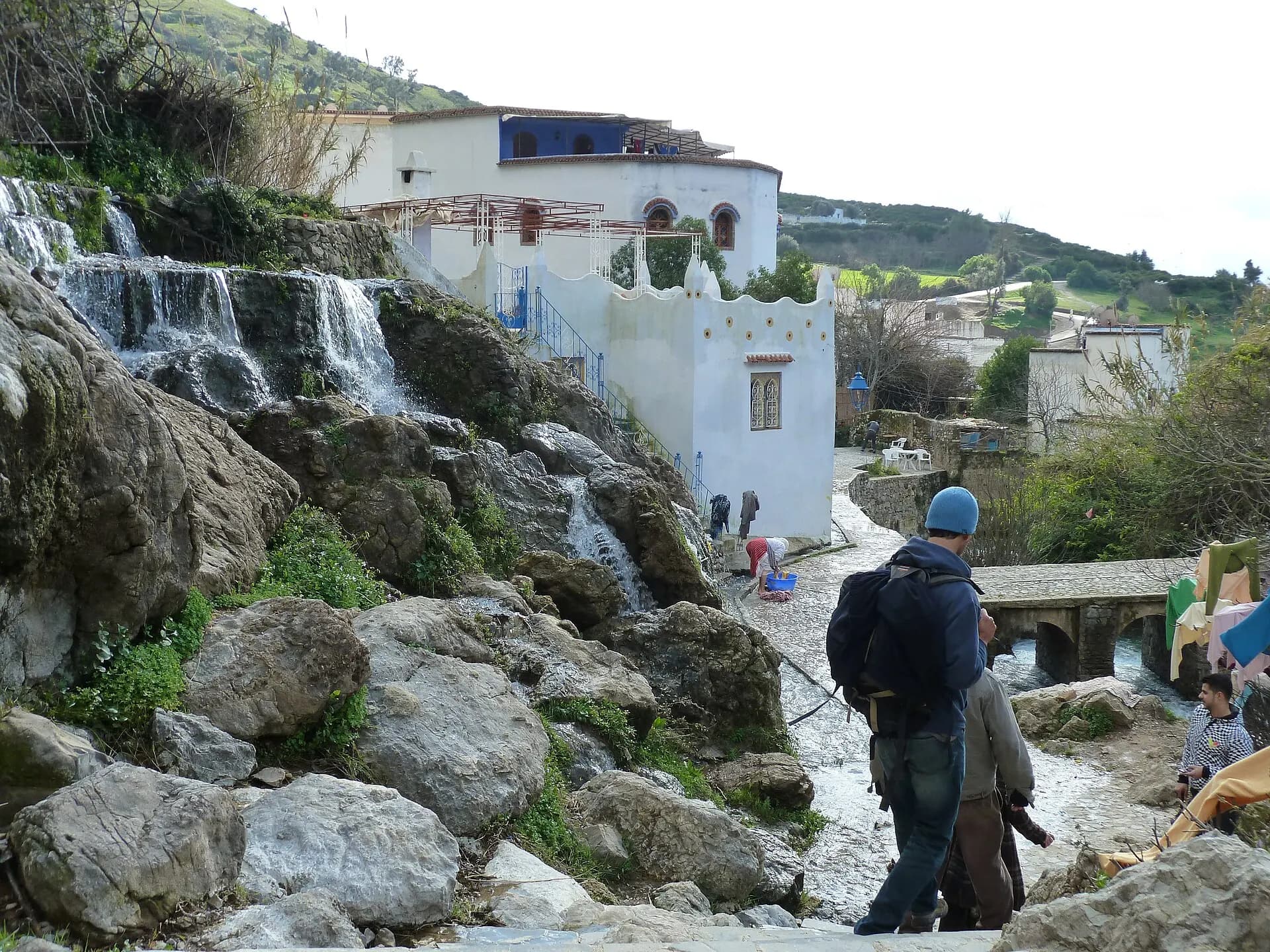
A spring at the edge of the medina where water flows from the mountain, with a small waterfall and stone washbasins where local women still do laundry.
- 5
The Spanish Mosque
Photo: Badr Rachadi, CC BY-SA 4.0, via Wikimedia Commons
A white mosque on a hill east of the town, built by the Spanish in the 1920s and never used, reached by a walk of about half an hour from Ras el-Maa, with the best view over Chefchaouen at sunset.
- 6
Talassemtane National Park
Photo: Othmane.elam, CC BY-SA 4.0, via Wikimedia Commons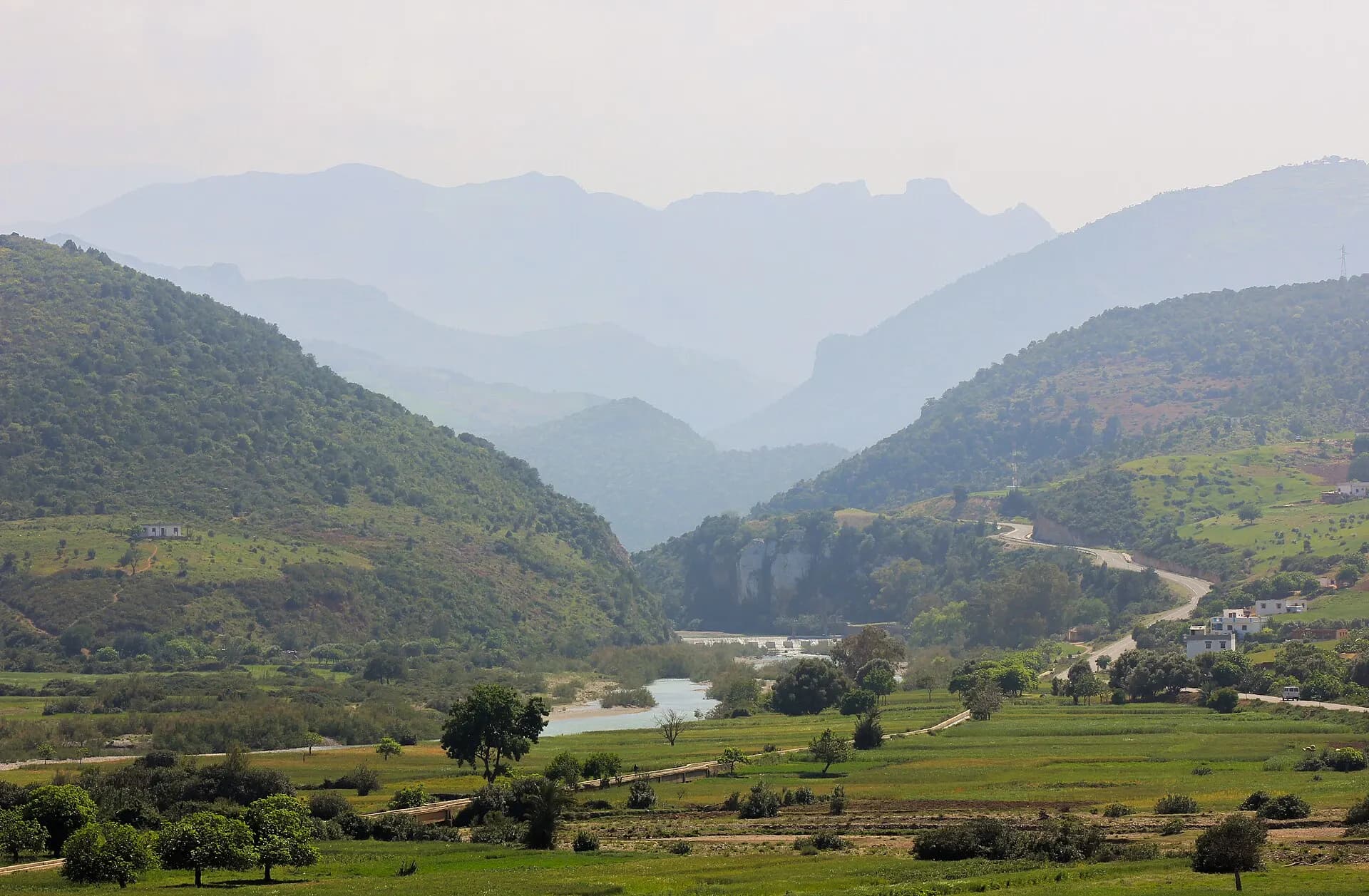
A park of limestone mountains, cedar and fir forests surrounding the town, with hiking trails to villages and viewpoints.
- 7
Akchour and God's Bridge
Photo: Itachoo1, CC BY-SA 4.0, via Wikimedia Commons
About forty-five minutes from town, a valley with waterfalls and pools, and a hike to God's Bridge, a natural rock arch high above a river gorge, one of the most popular day hikes in the Rif.
TipWear sturdy shoes and bring water; the trails are rocky and can be slippery after rain.
When to go
Spring and autumn are the most pleasant seasons, with mild days, green hills in spring and good hiking. Summer is warm and busy with Moroccan tourists. Winter is cold and rainy, sometimes with snow on the mountains, and many buildings have little heating.
Getting around
The medina is small, hilly and best explored on foot. Petits taxis are available outside the medina. CTM and other buses link Chefchaouen with Fes, Tangier, Tetouan and Casablanca. There's no railway station; the nearest airports are Tangier and Tetouan, about two hours away.
Local tips
- Dress modestly, covering shoulders and knees.
- Ask before photographing people, and avoid photographing doorways where residents are sitting.
- The region is known for cannabis cultivation; politely decline offers, as it's illegal for visitors.
- Carry cash; few small shops accept cards.
- Bargain politely in the shops.
- Hire licensed guides for longer hikes in the mountains.
- Nights are cool year-round; bring a warm layer.
Eat and drink
Try local goat cheese, a speciality of the region; tagines; bissara, a fava-bean soup; and fresh bread from the communal ovens. Mint tea is served everywhere, often on rooftop terraces with views of the mountains. Small family restaurants around the main square serve set menus at modest prices, and street stalls sell msemen, flaky pancakes, with honey for breakfast. In the evening, sit on a terrace overlooking the square and watch the town settle down as the call to prayer echoes off the mountains. Alcohol is rarely served.
Where to stay
Chefchaouen has riads and small guesthouses inside the medina, often with roof terraces overlooking the blue town. Staying inside the walls lets you enjoy the medina at its quietest. A few hotels just outside the medina have parking and views.
Day trips
Tetouan, about an hour north, has a white-walled medina, a World Heritage Site, with Andalusian architecture. Tangier, on the Strait of Gibraltar, about two and a half hours away, is a lively port with a storied history and views across to Spain.
Hiking in the Rif
The mountains around Chefchaouen are some of the best hiking country in Morocco, with trails through cedar forest, limestone peaks and terraced Berber villages. From the town, a steep path climbs Jebel el-Kelaa, the mountain directly behind the medina, at about 1,600 metres, for a sweeping view over the valley. Longer treks of several days cross Talassemtane National Park to villages such as Akchour and Bab Taza, staying in simple guesthouses (gîtes) with local families. Local guides know the paths, which are not always well marked, and can arrange mule transport for bags.
Crafts and markets
Chefchaouen is known for its woollen goods, especially heavy striped blankets and the djellaba, the hooded robe worn in the mountains, as well as leather goods and painted ceramics. On Mondays and Thursdays, farmers and craftspeople from the surrounding villages come to the town's weekly market (souk) outside the medina, selling produce, cheese, livestock and household goods; women from the Rif often wear distinctive straw hats with woollen pompoms and red-and-white striped cloths.
Why blue?
Nobody knows for certain why the town is painted blue. Some say Jewish refugees in the 1930s introduced the colour as a symbol of the sky and heaven; others that it keeps houses cool or repels mosquitoes. Whatever the origin, residents repaint walls each year, often in spring.