Vilnius
A green, unhurried capital whose baroque Old Town, bohemian river quarter and layered Jewish and Soviet history repay far more than a weekend.
- Best time to go
- May to September for long light evenings and outdoor terraces; December for the Christmas market and snowy rooftops
- Local time
- –
- Currency
- Euro (EUR)
- Reading time
- 15 min
- Language
- Lithuanian

Vilnius is one of Europe's quieter surprises. Its Old Town, a UNESCO World Heritage Site since 1994, is among the largest surviving medieval and baroque centres in eastern Europe: a tangle of crooked lanes, courtyards and church towers that spreads over the hills where the Vilnia river meets the Neris. For centuries this was the capital of the Grand Duchy of Lithuania, once the largest state in Europe, and later a city where Lithuanians, Poles, Jews, Belarusians and Russians lived side by side. Jewish Vilna was so central to learning that it was called the Jerusalem of the North, a world destroyed in the Holocaust and remembered today with care.
The city wears its history lightly. It's green, walkable and relaxed, with a lively café scene, a self-declared artists' republic across the river, and some of the most powerful museums of the Soviet occupation anywhere in the Baltics. Two or three days cover the centre; add a day each for the island castle at Trakai and the second city, Kaunas, and a long day for the Hill of Crosses in the north. The stops below follow a walking route through the Old Town, then head out to the day trips. To continue north along the Baltic coast, see our Tallinn guide; for another great Catholic and Jewish city of the old Polish-Lithuanian Commonwealth, see Krakow.
The top 17 in Vilnius
- 1
Gates of Dawn
Photo: Marcin Białek, CC BY-SA 3.0, via Wikimedia Commons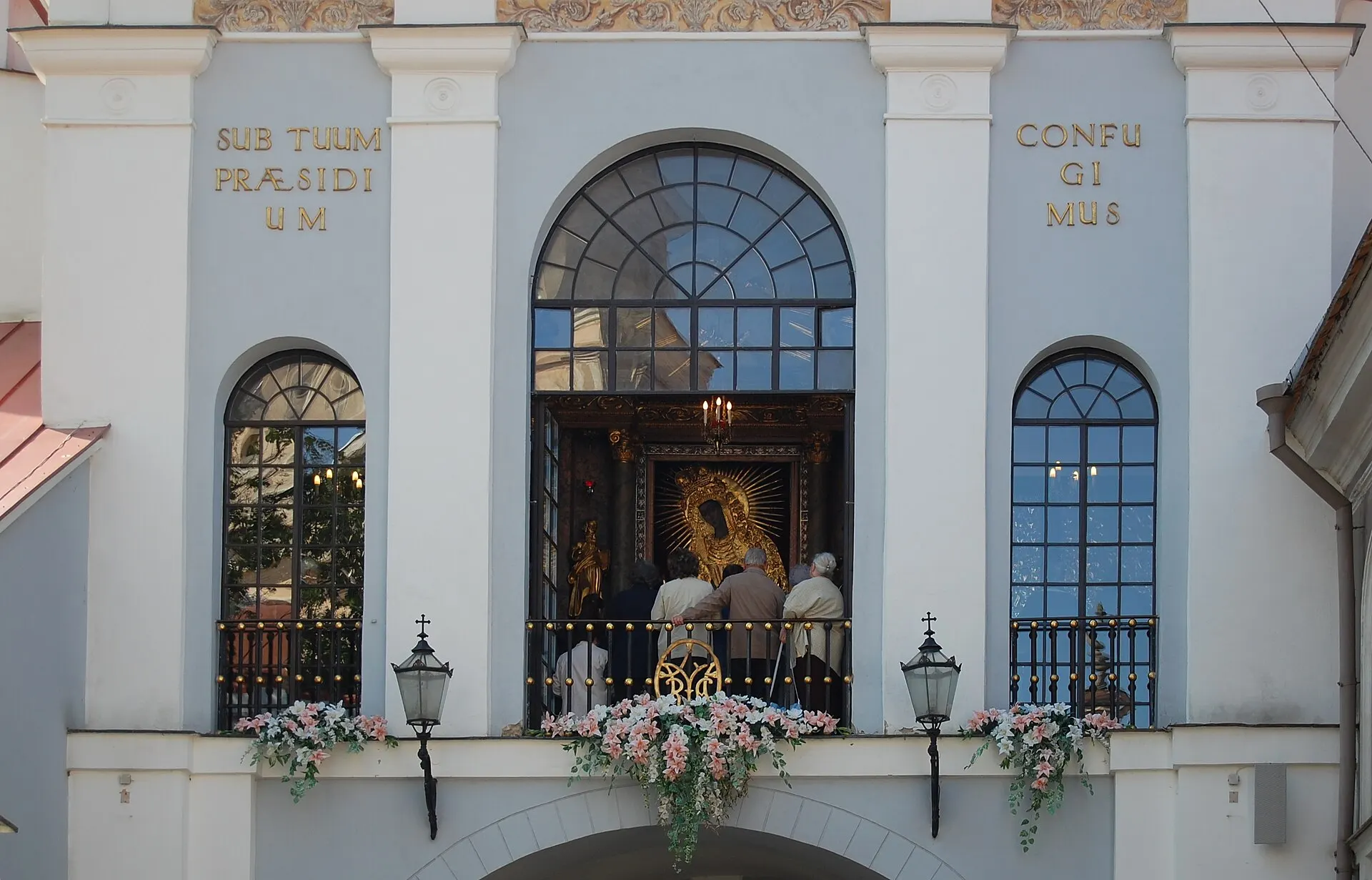
The only one of the city's medieval gates to survive, the Gates of Dawn (Aušros Vartai) mark the southern entrance to the Old Town. Above the archway, a small chapel holds a seventeenth-century painting of the Virgin Mary, covered in gilded silver, which is venerated by Catholics in both Lithuania and Poland and is said to have worked miracles. Worshippers often stand in the street below, and the chapel is reached by stairs from the neighbouring Carmelite church of St Teresa. Walking north through the gate brings you straight onto the Old Town's main artery.
TipThe chapel is an active place of prayer; visit quietly, and keep photography discreet during services.
- 2
Town Hall Square and Didžioji Street
Photo: Diliff, CC BY-SA 3.0, via Wikimedia Commons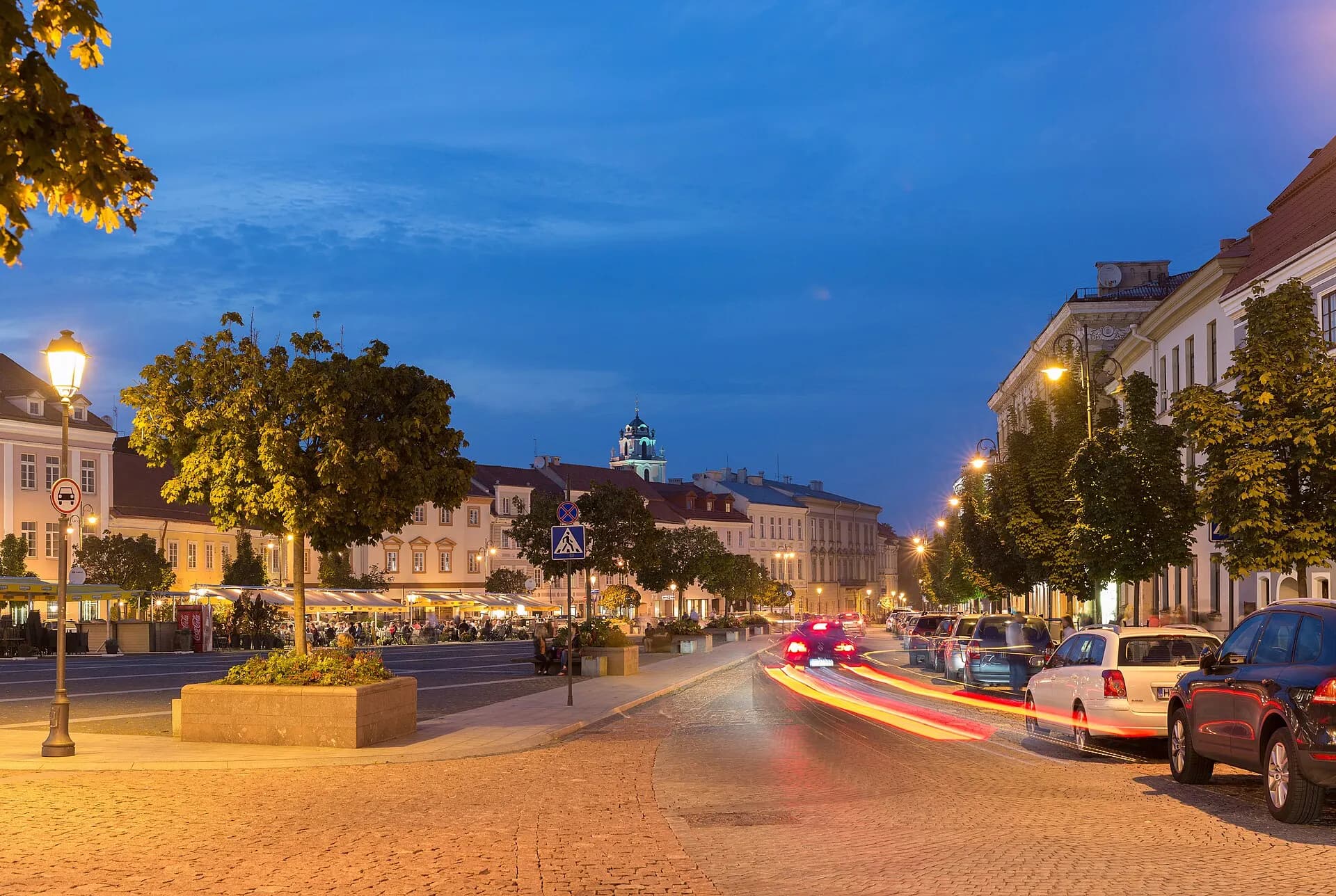
From the Gates of Dawn, Aušros Vartų street becomes Didžioji (Great Street), which widens into the triangular Town Hall Square. The neoclassical town hall, rebuilt in the late eighteenth century, now hosts concerts and events, and the square is the setting for the city's Christmas tree and markets in December. Just off it stands the Church of St Casimir, the city's first baroque church, built by the Jesuits in the early seventeenth century and topped with a distinctive crown. Along the way, side streets lead to the Orthodox Church of the Holy Spirit and the pink-and-white Basilian gate, reminders of how many faiths shared the city.
- 3
Former Jewish quarter
Photo: Avi1111 dr. avishai teicher, CC BY-SA 3.0, via Wikimedia Commons
West of Didžioji, the narrow lanes around Žydų (Jews') and Stiklių streets were the heart of Jewish Vilna. The Great Synagogue, the centre of a courtyard of prayer houses and libraries, stood here until it was damaged in the war and demolished by the Soviet authorities; archaeologists have since excavated its foundations, including ritual baths. A bust marks the memory of the Vilna Gaon, the eighteenth-century scholar Elijah ben Solomon, whose learning made the city a world centre of rabbinic study. During the German occupation, these streets formed part of the two Vilna ghettos, and plaques in Lithuanian and Yiddish mark their gates.
Nearby, the Choral Synagogue on Pylimo street is the only one of the city's pre-war synagogues still in use. The Vilna Gaon Museum of Jewish History runs several sites, including the Tolerance Centre, with exhibitions on Jewish life and culture in Lithuania, and the Holocaust exhibition in the so-called Green House.
TipThe museum's branches have separate opening hours; check them on its website and allow time for reflection rather than rushing through.
- 4
Vilnius University
Photo: Scotch Mist, CC BY-SA 4.0, via Wikimedia Commons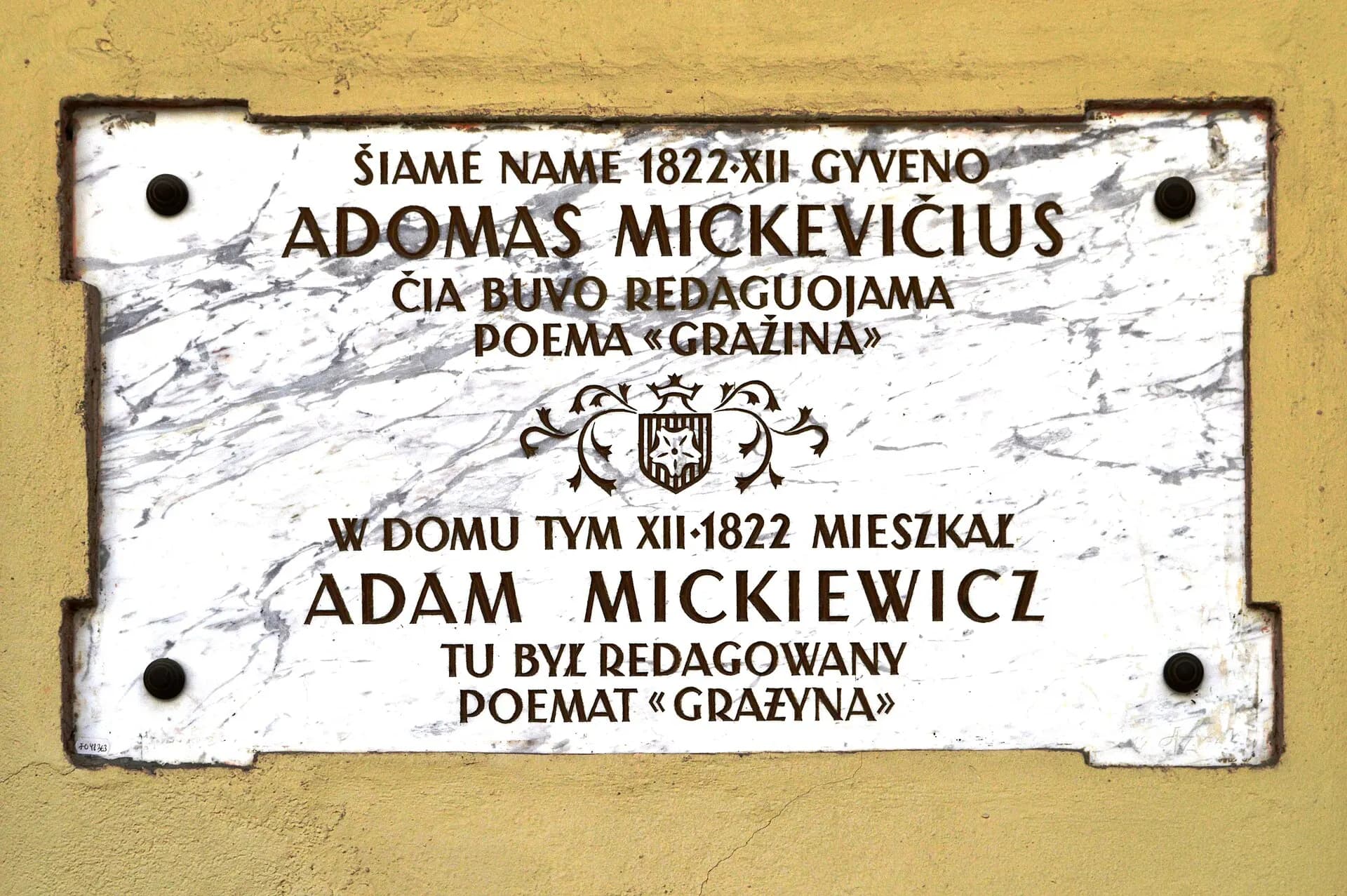
Founded by the Jesuits in 1579, Vilnius University is one of the oldest in central and eastern Europe, and its campus fills a whole block of the Old Town with thirteen interlocking courtyards. The Great Courtyard is framed by arcades and the soaring baroque façade of the Church of St John, whose freestanding bell tower is among the tallest structures in the Old Town. Inside, look for the frescoed reading rooms of the library and the old observatory. Visitors buy a ticket to enter the historic courtyards, and the bell tower can be climbed for views over the rooftops.
TipThe Presidential Palace sits on the square just west of the university; the changing of the guard takes place there on some days.
- 5
Literatų Street
Photo: Jerzy Strzelecki, CC BY-SA 3.0, via Wikimedia Commons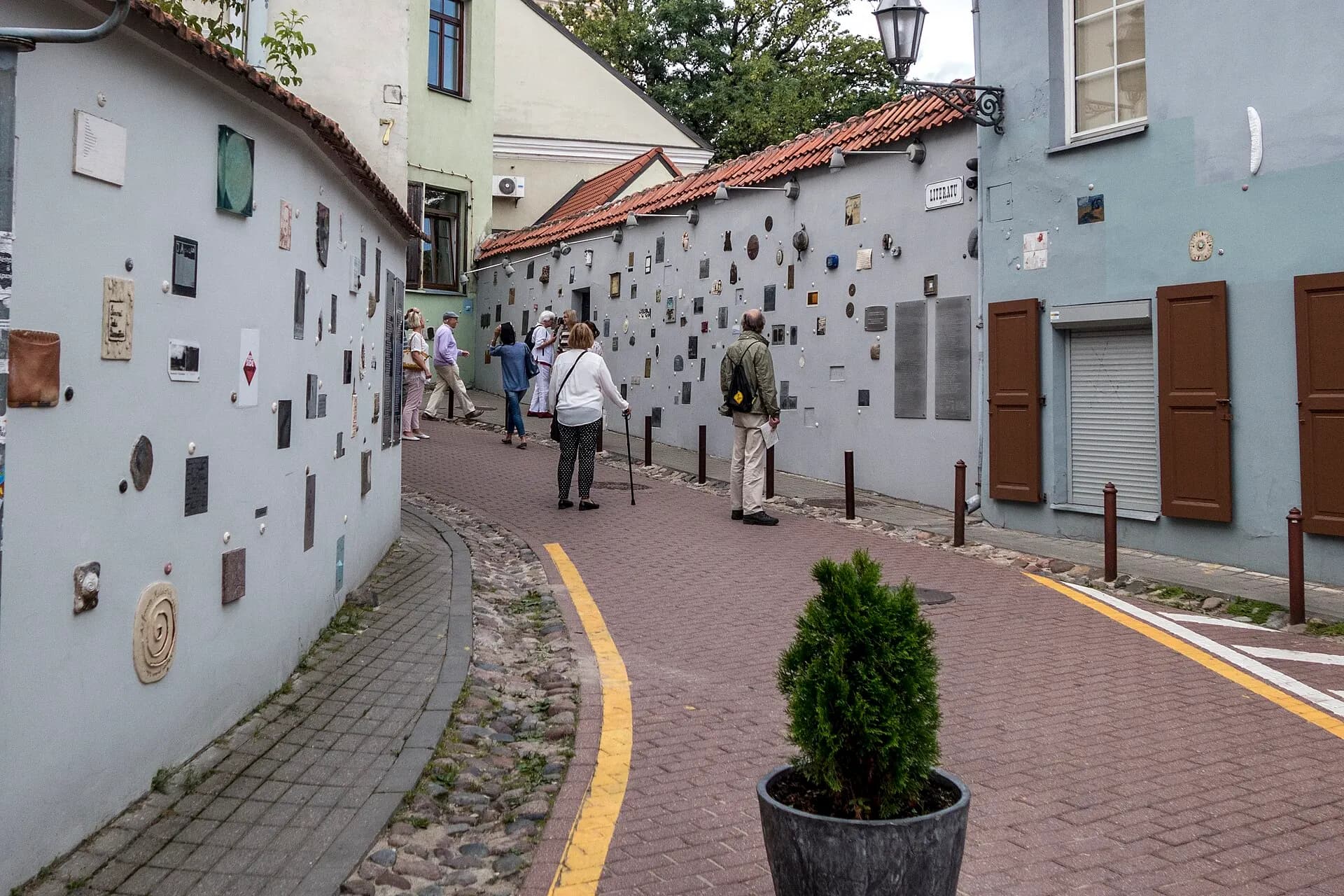
A short, slightly bent lane running between Pilies street and St Anne's, Literatų (Writers') Street is lined with small artworks fixed to its walls: plaques, tiles, sculptures and curiosities, each dedicated to a writer connected with Lithuania, from Adam Mickiewicz, who lived nearby, to modern poets and translators. The project began in 2008 and keeps growing, so there's always something new to find. Pilies street itself, the old road to the castle, is the busiest stretch of the Old Town, with amber shops and cafés.
- 6
St Anne's Church
Photo: Diliff, CC BY-SA 3.0, via Wikimedia Commons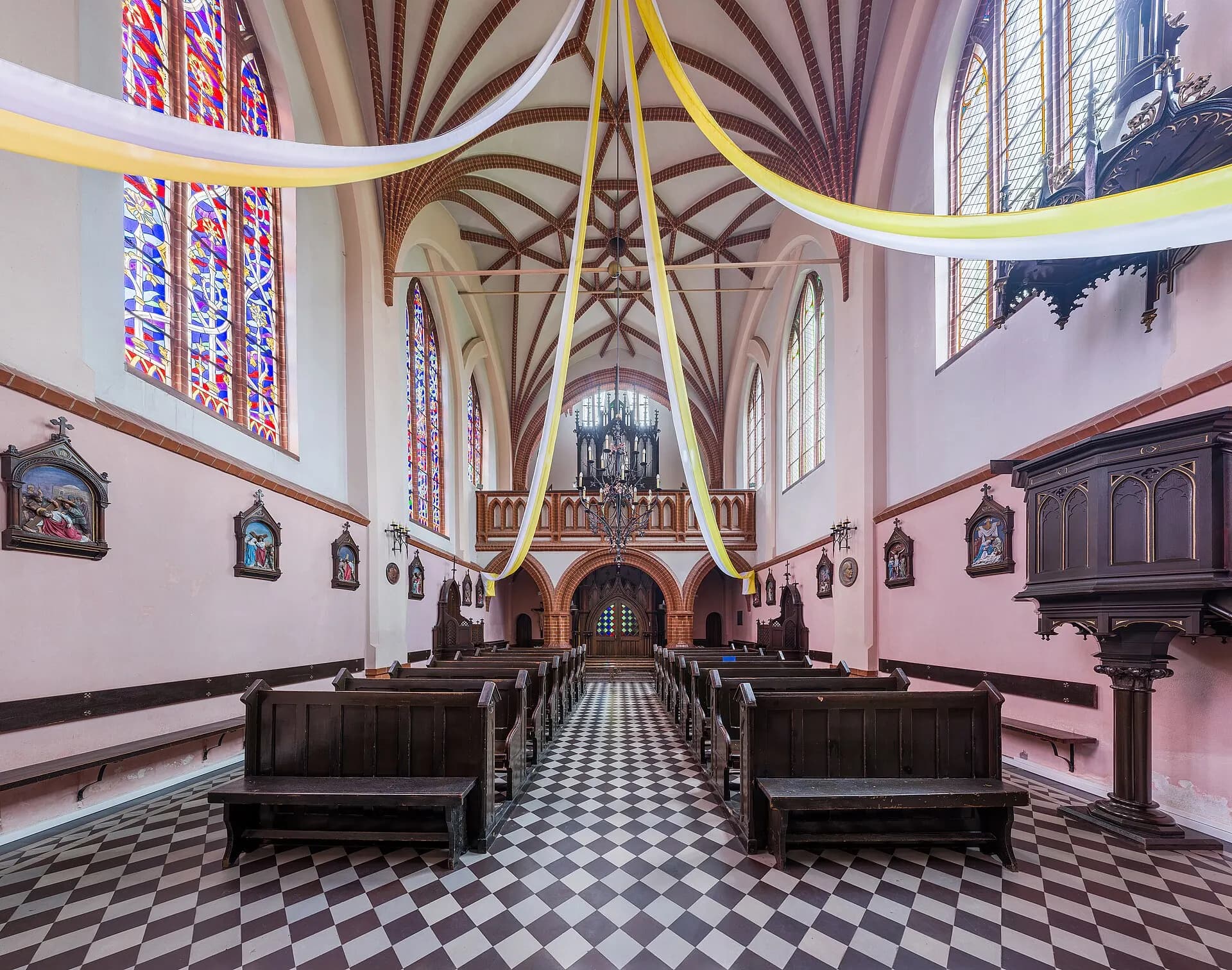
This small church is the most famous example of brick Gothic in Lithuania, built around 1500 with a flamboyant façade of more than thirty kinds of moulded brick, arranged into slender pinnacles and arches. Legend has it that Napoleon, passing through in 1812, wished he could carry it back to Paris in the palm of his hand. Behind it rises the larger Bernardine church and monastery, and together with the Gothic bell tower they form one of the most photographed groups of buildings in the city.
TipThe façade is at its best in late afternoon sun. The Bernardine Gardens, just north, are a fine place to rest.
- 7
Užupis
Photo: t.przechlewski, CC BY 3.0, via Wikimedia Commons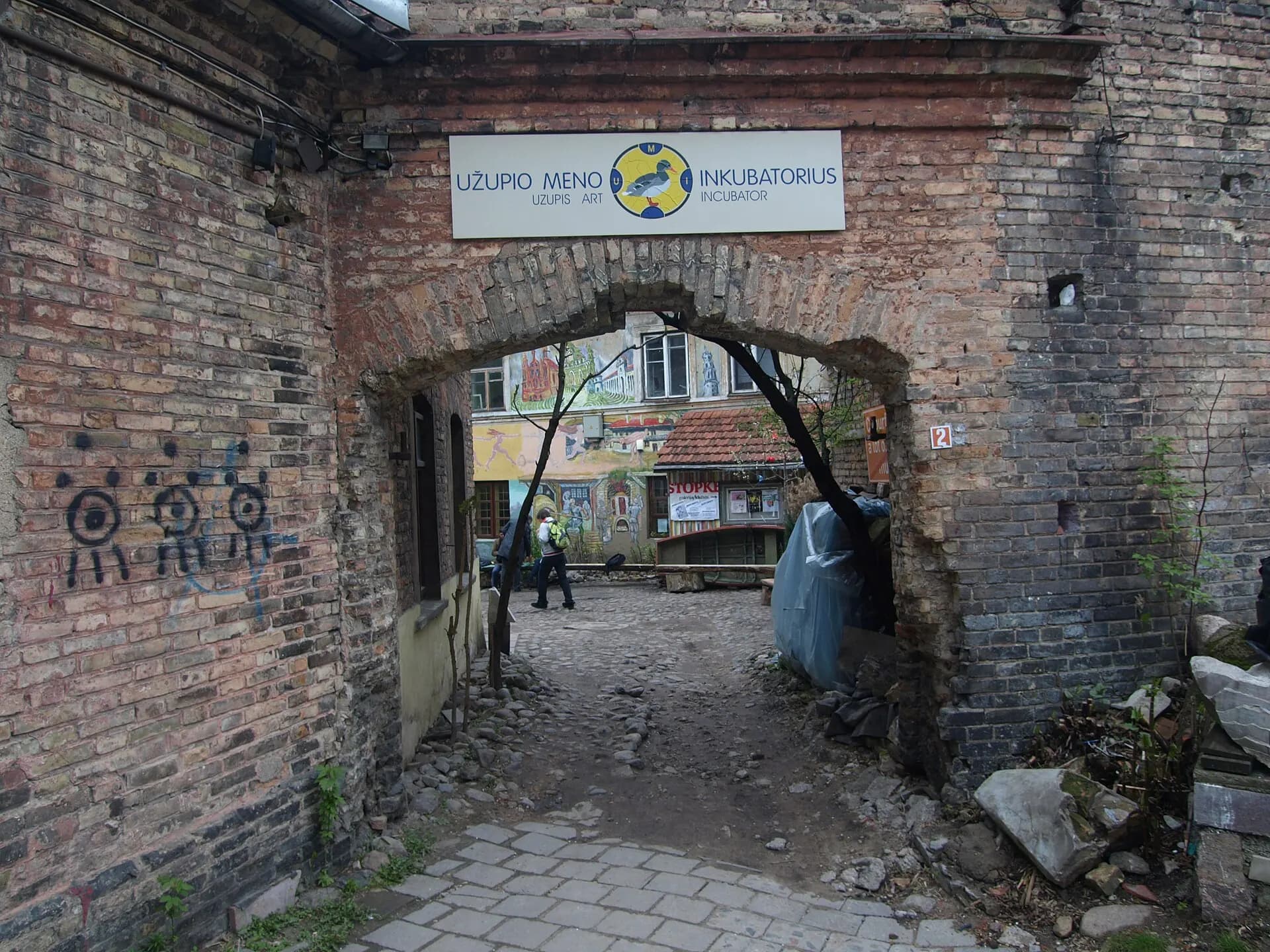
Cross the little Vilnia river from St Anne's and you enter Užupis, a district of crumbling courtyards and workshops that was neglected under Soviet rule and colonised by artists in the 1990s. In 1997 they declared the Republic of Užupis, half art project, half joke, with its own president, anthem and flag, and an Independence Day on 1 April. Its constitution, a list of wry and gentle articles ("Everyone has the right to be happy", "A dog has the right to be a dog"), is displayed on mirrored plaques in dozens of languages on Paupio street. A bronze angel blowing a trumpet stands on a column in the main square.
TipThe riverbank and the old Bernardine cemetery on the far side of Užupis make a peaceful walk away from the crowds.
- 8
Church of St Peter and St Paul
Photo: Scotch Mist, CC BY-SA 4.0, via Wikimedia Commons
A walk or short bus ride north-east of the Old Town, in the Antakalnis district, this church looks plain from outside, but the interior is a masterpiece of the high baroque. Italian craftsmen covered its walls and vaults with around 2,000 white stucco figures: saints, angels, soldiers, mythical creatures, fruit, flowers and scenes from the Bible. The effect is a dazzling, almost weightless snow-white space. A huge boat-shaped chandelier hangs from the dome.
- 9
Hill of Three Crosses
On a wooded hill above the Vilnia, in Kalnai Park, three white concrete crosses stand where, according to legend, Franciscan friars were martyred. Wooden crosses stood here for centuries; the concrete monument of 1916 was blown up by the Soviet authorities in 1950, and its replacement went up in 1989, as Lithuania moved towards independence, making it a symbol of national revival. The hill has one of the best views in the city, across the red roofs and church towers of the Old Town.
TipCome at sunset. Paths are steep and can be slippery in wet or icy weather.
- 10
Gediminas Tower
Photo: Scotch Mist, CC BY-SA 4.0, via Wikimedia Commons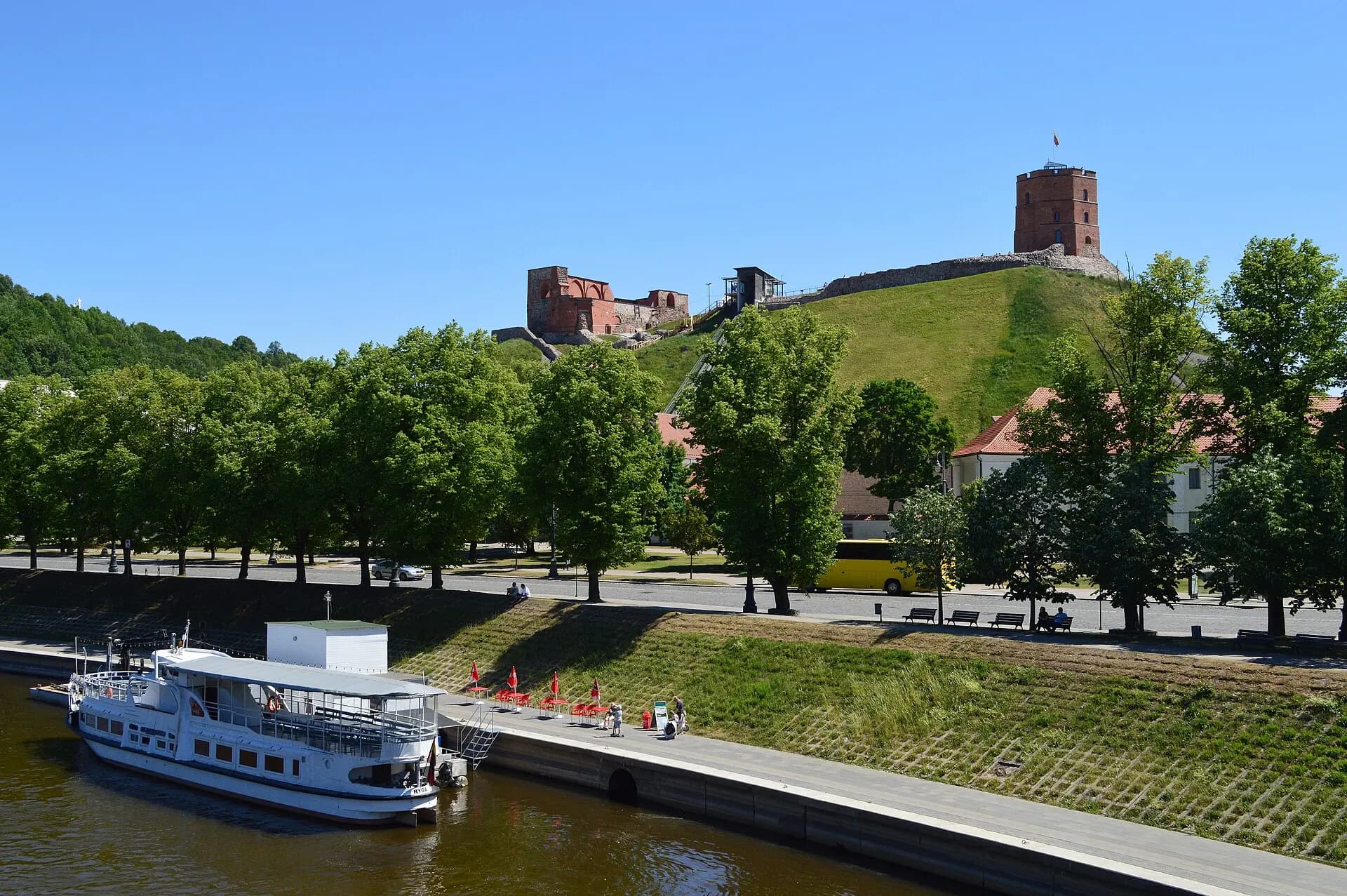
The red-brick tower on Castle Hill is the symbol of Vilnius and of Lithuanian statehood: the remains of the Upper Castle, part of a fortress complex begun in the fourteenth century under Grand Duke Gediminas, the city's legendary founder. Inside, a small exhibition run by the National Museum of Lithuania covers the castles' history, and the observation platform at the top gives a 360-degree panorama. It was here that the Lithuanian flag was raised in 1919, and again in 1988. In recent years the hill has needed extensive work to stabilise its slopes after landslides.
TipYou can walk up from the river side or near the cathedral, or take the funicular from the Old Arsenal courtyard; the funicular has had periods out of service, so check with the National Museum before relying on it.
- 11
Palace of the Grand Dukes
Photo: Pofka, CC BY-SA 4.0, via Wikimedia Commons
Behind the cathedral, the white palace of the Lower Castle was the seat of Lithuania's rulers in the sixteenth and seventeenth centuries, when Renaissance Vilnius was one of the great courts of Europe. It was demolished under Russian rule in the early nineteenth century and rebuilt on its old foundations, opening fully in 2018 for the centenary of the modern state. Routes lead through excavated medieval and Gothic remains in the basements, then reconstructed state rooms with period furniture, tapestries and weapons, telling the story of the Grand Duchy.
TipThere are several separate visitor routes; the main historical route takes at least an hour and a half.
- 12
Cathedral Square and bell tower
Photo: Diliff, CC BY-SA 3.0, via Wikimedia Commons
Vilnius's main square spreads out in front of the neoclassical cathedral, its white portico and statues of saints standing on a site where, tradition says, a pagan temple to the god Perkūnas once stood; Lithuania was the last country in Europe to adopt Christianity, in 1387. Inside, the baroque Chapel of St Casimir, faced in marble, holds the relics of the country's patron saint, and guided tours go down into the crypts. The freestanding bell tower, built on a round defensive tower of the old Lower Castle, can be climbed for views. Look on the paving between cathedral and bell tower for the stebuklas ("miracle") tile, marking where the Baltic Way human chain from Tallinn ended in 1989.
TipFrom here, Gedimino Avenue runs west, the city's main shopping boulevard.
- 13
Museum of Occupations and Freedom Fights
Photo: Pofka, CC BY-SA 4.0, via Wikimedia Commons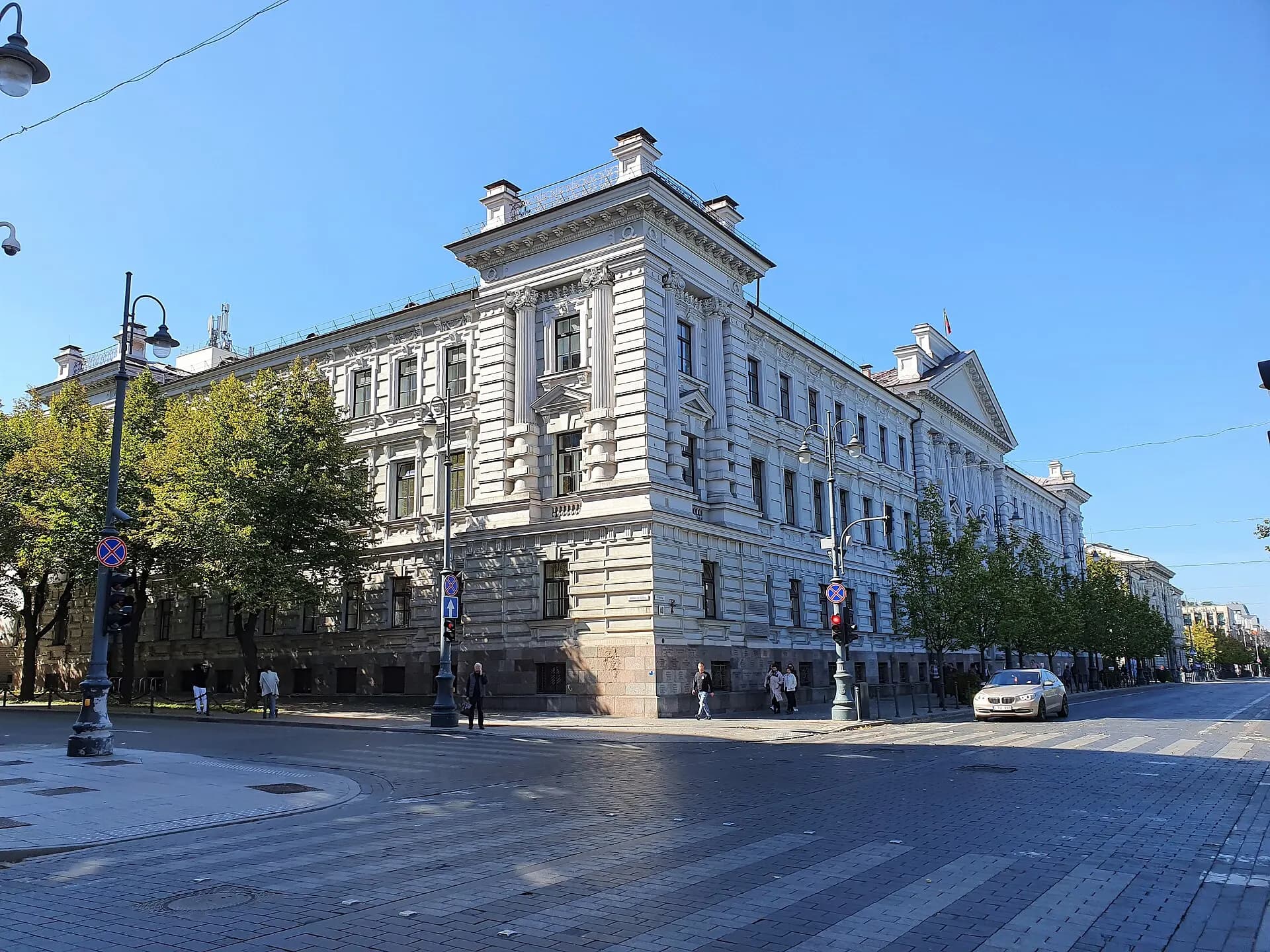
At the far end of Gedimino Avenue, the grand building that housed the Soviet KGB in Lithuania, and before that the Gestapo, is now a sobering museum, still widely known as the KGB Museum. Upper floors trace deportations to Siberia, the post-war partisan resistance and the Soviet surveillance state. The basement holds the preserved prison: cramped cells, a padded isolation room, and the execution chamber, where a glass floor reveals the place where hundreds of people were killed. Names of victims are carved into the outside walls.
TipIt's closed on Mondays and Tuesdays. The basement is distressing and not suitable for young children.
- 14
Paneriai Memorial
Photo: Keith Ruffles, CC BY 3.0, via Wikimedia Commons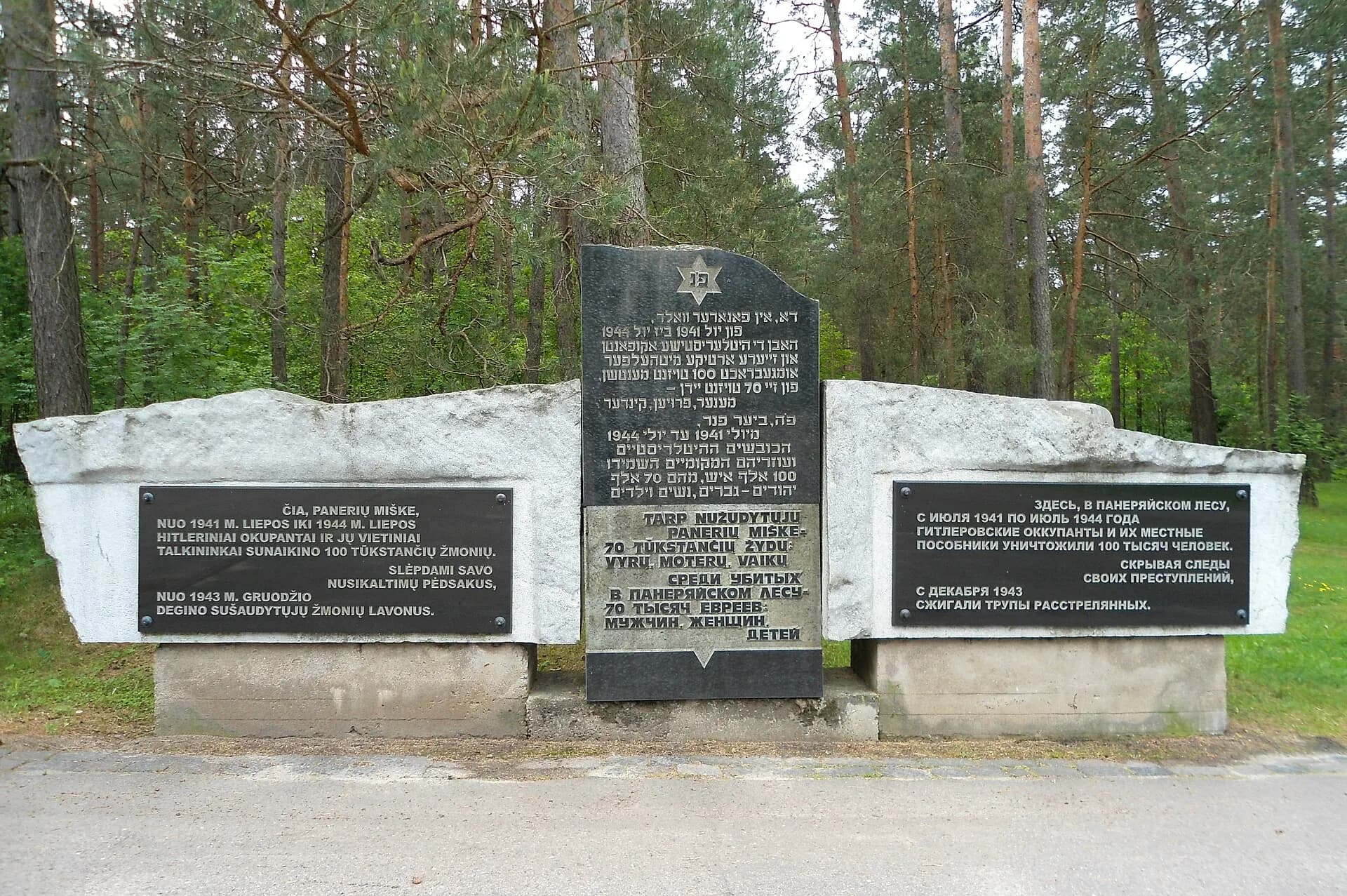
In a pine forest on the south-western edge of the city, Paneriai (Ponary in Polish, Ponar in Yiddish) is where Nazi German forces and their Lithuanian collaborators murdered around 70,000 Jews from Vilnius and the surrounding region between 1941 and 1944, together with thousands of Poles, Soviet prisoners of war and others. The pits, dug before the war for fuel storage, became mass graves. Today the site, cared for by the Vilna Gaon Museum, has memorials to the different victim groups and a small museum building with explanatory displays.
It is a place for quiet remembrance, not sightseeing. Dress modestly, keep voices low and take no photographs of other mourners. Many visitors come with a guide or as part of a Jewish heritage tour of the city.
TipLocal trains to Paneriai station take only a few minutes from Vilnius, and the memorial is a short walk away; check the museum's opening hours, which are seasonal.
- 15
Trakai Island Castle
Photo: Scotch Mist, CC BY-SA 4.0, via Wikimedia Commons
About 28 kilometres west of Vilnius, the red-brick castle of Trakai rises from an island in Lake Galvė, reached by wooden footbridges. Built in the late fourteenth and early fifteenth centuries by Grand Duke Vytautas, it was a royal residence before falling into ruin, and was rebuilt in the twentieth century, partly during the Soviet period. Today it houses the Trakai History Museum, with collections of coins, weapons, glass and pipes in its towers and galleries. Trakai is also home to the Karaim, a small Turkic-speaking community brought from Crimea by Vytautas: look for their wooden houses, each with three windows facing the street, their prayer house (kenesa), and kibinai, their meat-filled pastries.
TipTrains and buses from Vilnius take around 30 to 40 minutes; from the station it's a pleasant walk of half an hour or so through the town to the castle. Ticket prices are higher in summer, and winter hours are reduced, so check the museum's website. In summer you can hire a rowing boat or paddle board on the lake.
- 16
Kaunas
Photo: Christine und Hagen Graf, CC BY 2.0, via Wikimedia Commons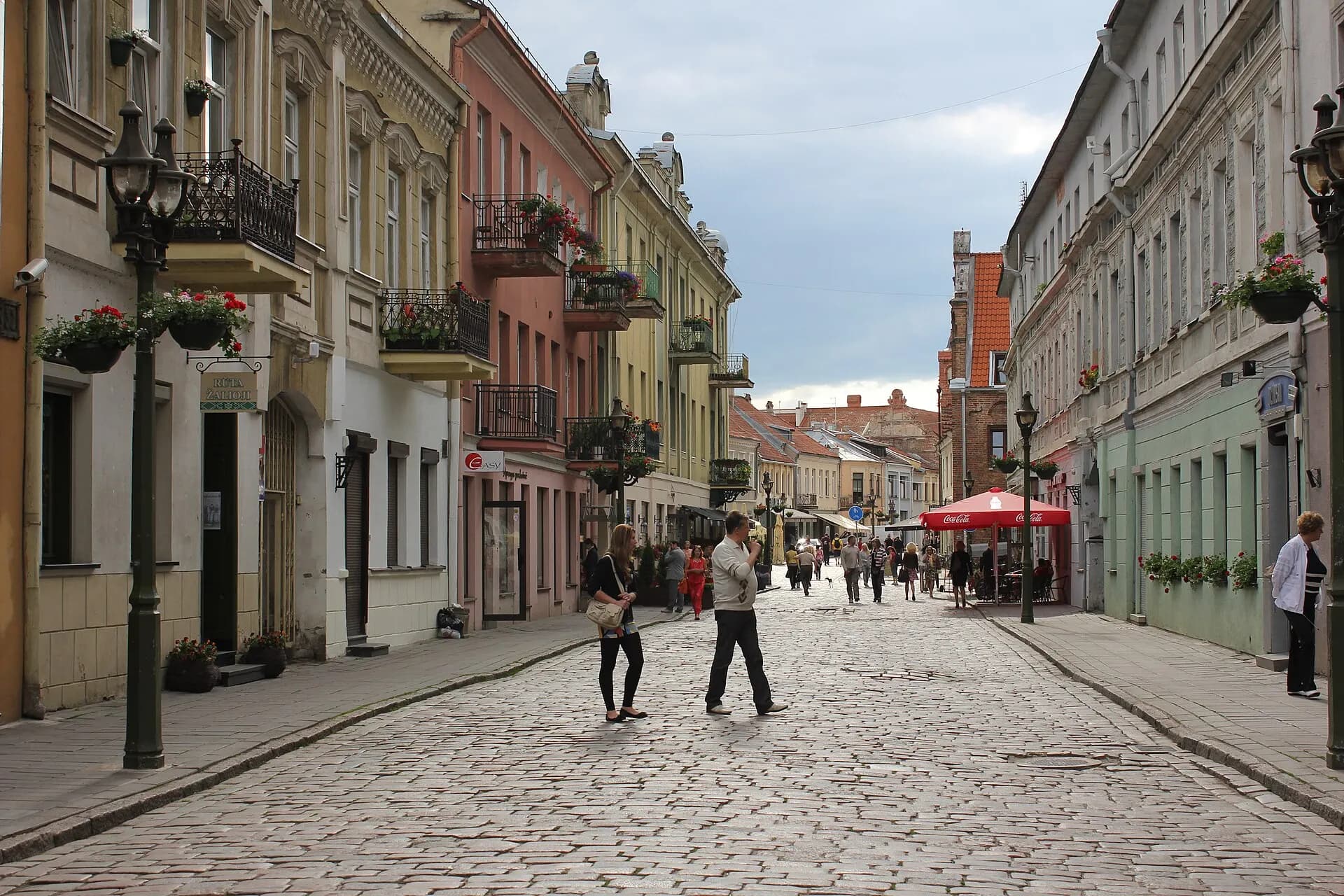
Lithuania's second city, about an hour from Vilnius by express train, was the temporary capital between the wars, when Vilnius was held by Poland, and it shows: the new town is full of modernist architecture of the 1920s and 1930s, recognised with a UNESCO listing in 2023. The compact Old Town, at the meeting of the Nemunas and Neris, has a restored castle, a Gothic cathedral, the white "Swan" town hall and the brick House of Perkūnas. The quirky Devils' Museum collects thousands of devil figures, and the Ninth Fort on the city's edge is a memorial to tens of thousands of people, most of them Jews, murdered there during the war.
TipLaisvės alėja, a long pedestrian boulevard, links the Old Town with the modernist new town. Kaunas works as a day trip, but an overnight stay is more relaxed.
- 17
Hill of Crosses
Photo: Diliff, CC BY-SA 3.0, via Wikimedia Commons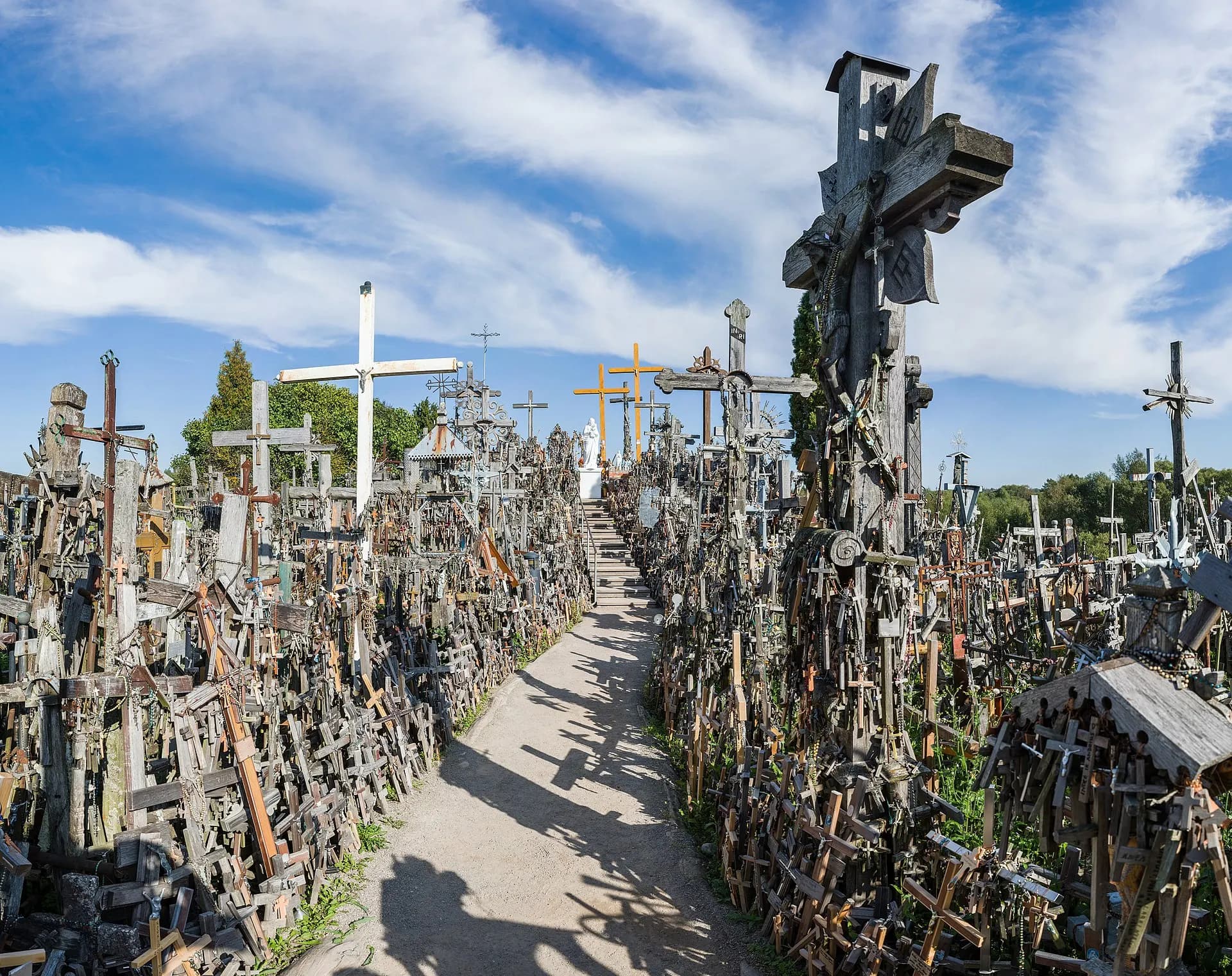
Some 12 kilometres north of the city of Šiauliai, a low hill is covered with crosses of every size, from towering carved wooden ones to tiny rosaries hung in their tens of thousands. People began leaving crosses here in the nineteenth century, probably after the uprisings against Russian rule, and the site became a symbol of quiet resistance in the Soviet era: the authorities bulldozed it several times, and each time crosses reappeared. Pope John Paul II prayed here in 1993. Paths wind between the crosses, and the rattle of rosaries in the wind is unforgettable.
TipThis is a long day from Vilnius, about two and a half to three hours each way by car. By public transport, take a train or bus to Šiauliai, then a local bus or taxi. Visitors are welcome to leave a cross, and small ones are sold at the stalls by the car park.
When to go
Late spring and summer are the easiest seasons. From May to August the days are long, with light until after 10pm around midsummer, café terraces spill into the streets, and parks and lakes are at their best. Midsummer itself, Joninės on 23 to 24 June, is a national holiday with bonfires in the countryside, and many locals leave the city. September is often bright and mild, with autumn colours on the hills.
Winters are cold and dark, with temperatures often below freezing and snow likely from December to February, but the Old Town looks lovely under snow and the Christmas market and tree on Cathedral Square are a highlight. The Kaziuko fair, a big crafts market around St Casimir's Day in early March, fills the streets with stalls selling wicker palms, wooden spoons and gingerbread. Some sites, including Trakai castle, keep shorter hours in winter.
Getting around
The Old Town is compact and best explored on foot, though its cobbles and hills reward comfortable shoes. Buses and trolleybuses run by the city's transport company, JUDU, cover the rest of the city; tickets are bought on the JUDU app, which in 2026 replaced the older m.Ticket app, or with a JUDU card. Ride-hailing apps such as Bolt are widely used and inexpensive, and shared bikes and electric scooters are common in summer.
Vilnius Airport is only around 6 kilometres south of the centre. JUDU buses, including an express route, run to the city, and a short train link connects the airport with the main railway station. Taxis and ride-hailing cars take about 15 minutes.
For day trips, LTG Link trains run frequently to Kaunas, with the fastest taking a little over an hour, and to Trakai in about 40 minutes; buses also serve both from the bus station opposite the railway station. Trains run to Šiauliai for the Hill of Crosses. International trains connect Vilnius with Riga, and there are long-distance buses to Riga, Tallinn and Warsaw. The Rail Baltica high-speed line through the Baltic states is under construction, but not yet open.
Local tips
- Lithuania uses the euro. Cards and contactless payment are accepted almost everywhere, even for small amounts.
- English is widely spoken by younger people; a "labas" (hello) and "ačiū" (thank you) are always appreciated.
- Many museums close on Mondays, and the Museum of Occupations also on Tuesdays. Plan museum days accordingly.
- Churches are active places of worship. Dress modestly and visit outside Mass times.
- The Old Town's cobbles get very slippery in ice and rain; wear shoes with grip in winter.
- Tap water is safe to drink.
- A Vilnius Pass, sold by the tourist office, can be good value if you plan a lot of museums and public transport in a short time.
Eat and drink
Lithuanian cooking is hearty, built on potatoes, rye, pork, mushrooms and dairy. The national dish is cepelinai, large zeppelin-shaped potato dumplings stuffed with meat or curd cheese and served with sour cream and fried bacon. In summer, try šaltibarščiai, a bright pink cold beetroot soup made with kefir and dill, served with hot boiled potatoes on the side. Kugelis is a dense potato bake, and kepta duona, garlicky fried strips of dark rye bread, is the classic beer snack. Kibinai, the half-moon pastries of the Karaim, are a must in Trakai.
Lithuania has a strong craft beer scene, especially farmhouse ales from the north of the country, and bars in Vilnius serve a wide range. Gira is a lightly fermented bread drink, a bit like kvass, and midus is a traditional honey mead. For something sweet, look for šakotis, a tall, spiky "tree cake" baked on a spit, often served at celebrations. The covered Halės market, near the Gates of Dawn, is good for local cheese, smoked meats and bread, and the city has a growing number of creative restaurants reworking traditional ingredients.
Where to stay
The Old Town is the obvious base, with everything within walking distance, a good spread of boutique hotels and guesthouses, and many apartments in historic buildings. Streets near Pilies and Didžioji are the liveliest; quieter corners lie towards the university and the Bernardine Gardens. Užupis has small, characterful places with a village feel, a few minutes' walk from St Anne's. Across the Neris, the Šnipiškės business district has modern high-rise hotels, often with good views back over the Old Town, while the area around the railway station is practical for early trains and day trips, if less attractive.
A short history
According to legend, Grand Duke Gediminas dreamed of an iron wolf howling on a hill, and was told by a priest to build a city there; his letters of 1323 inviting merchants and craftsmen are the first written mention of Vilnius. Pagan Lithuania expanded into a vast state stretching towards the Black Sea, and in 1569 joined Poland in the Polish-Lithuanian Commonwealth, when Vilnius flourished as a centre of Catholic baroque, learning and trade, and of Jewish scholarship.
After the partitions of the late eighteenth century, the city fell to the Russian Empire. Between the wars it was held by Poland, while independent Lithuania governed from Kaunas. The Second World War brought Soviet and then German occupation, and the near-total destruction of the city's Jewish community, which had made up a large part of its population. Soviet rule returned in 1944, with mass deportations and armed resistance in the forests. In 1990 Lithuania became the first Soviet republic to declare independence, and in January 1991 Soviet troops killed fourteen unarmed civilians defending the TV tower. Lithuania joined the EU and NATO in 2004 and the euro in 2015.
Remembering Jewish Vilna
Before the Second World War, Jews made up a large share of Vilnius's population, and the city was a world capital of Yiddish culture and Jewish learning, home to famous yeshivas, publishers, libraries and the YIVO institute, founded here in 1925. Most of that world was annihilated between 1941 and 1944. Today the small community maintains the Choral Synagogue, and the Vilna Gaon Museum of Jewish History tells the story of Litvak life, culture and destruction across its branches and at Paneriai.
Visiting these places respectfully means taking time over them: read the plaques on the walls of the former ghettos, consider a guided walk with a specialist guide, and approach Paneriai and the Ninth Fort in Kaunas as places of mourning. Lithuania's own role in the Holocaust remains a sensitive subject, and the museums address it directly; listening to those histories is part of understanding the city.