Kraków
A royal capital of Gothic churches and a vast market square, with a Jewish quarter full of cafés and history.
- Best time to go
- May to September for long, warm days; December for Christmas markets
- Local time
- –
- Currency
- Polish Zloty (PLN)
- Reading time
- 4 min
- Language
- Polish
Kraków was Poland's royal capital for more than five hundred years, and it escaped the destruction that levelled Warsaw in the Second World War. Its Old Town, ringed by a park where the medieval walls once stood, and the castle on Wawel Hill above the Vistula River were among the first places listed as World Heritage Sites, in 1978.
It's a lively university city with a café and cellar-bar culture, excellent value, and a deep, often painful history. Many visitors use it as a base to visit the Auschwitz-Birkenau memorial and the Wieliczka salt mine. Give the city itself time too: its squares, churches and the old Jewish quarter of Kazimierz reward slow exploring.
The top 8 in Kraków
- 1
The Main Market Square (Rynek Główny)
Photo: Rj1979, Public domain, via Wikimedia Commons
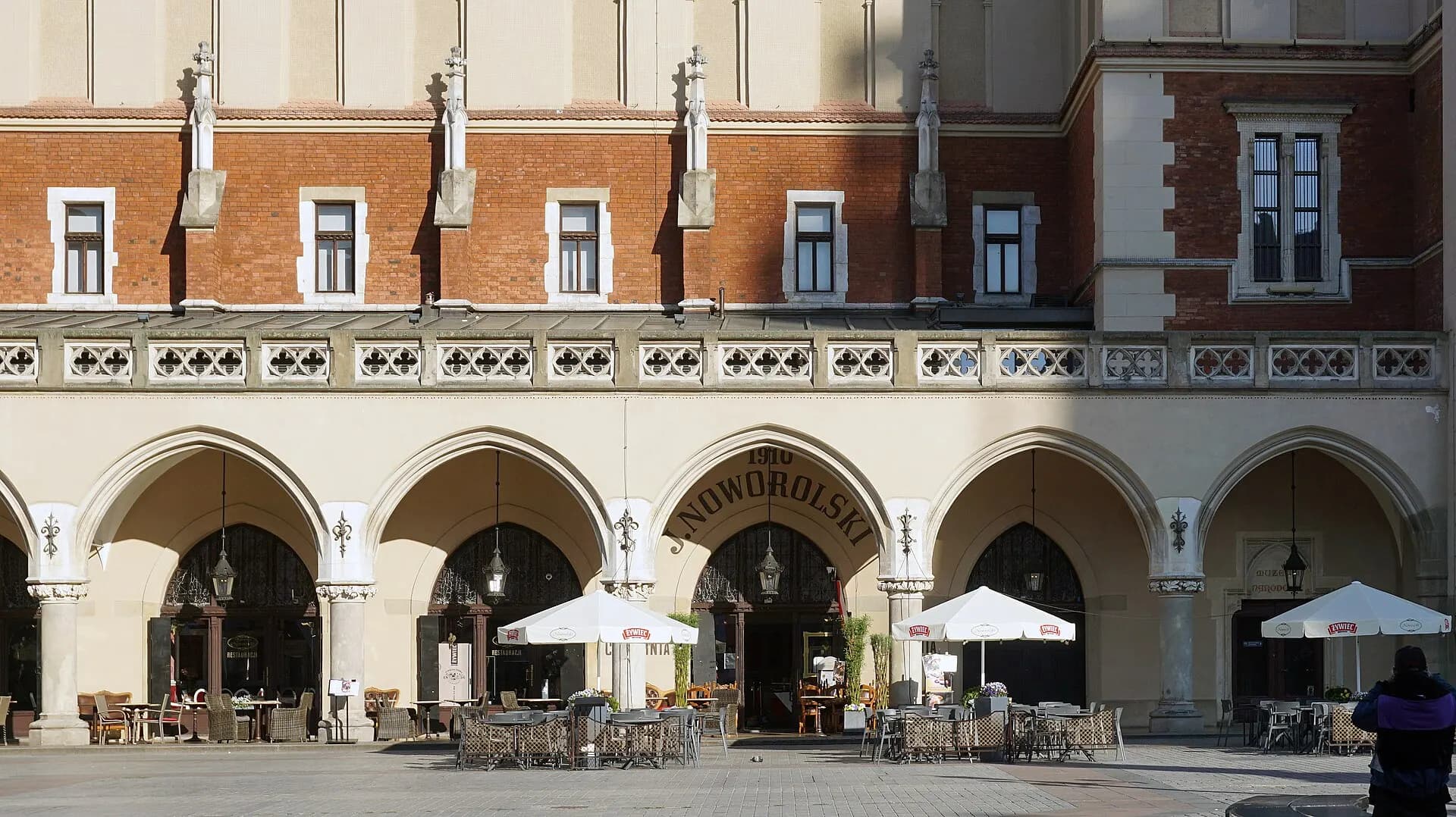
One of the largest medieval town squares in Europe, laid out in 1257, lined with grand houses and café terraces. At its centre stands the Cloth Hall, a Renaissance market hall still filled with stalls selling amber, lace and wooden crafts, with a gallery of Polish art upstairs and an underground museum of the city's history beneath the square.
- 2
St Mary's Basilica
Photo: Ввласенко, CC BY-SA 3.0, via Wikimedia Commons
A Gothic brick church with two unequal towers on the corner of the square. Inside, the carved wooden altarpiece by Veit Stoss, completed in 1489, is one of the great masterpieces of late Gothic art. Every hour, a trumpeter plays a melody, the Hejnał, from the taller tower, breaking off mid-note in memory of a trumpeter said to have been shot during a Mongol attack.
TipThe altarpiece is opened just before noon each day; the church is busy with worshippers, so visit respectfully.
- 3
Wawel Royal Castle and Cathedral
Photo: Ingo Mehling, CC BY-SA 4.0, via Wikimedia Commons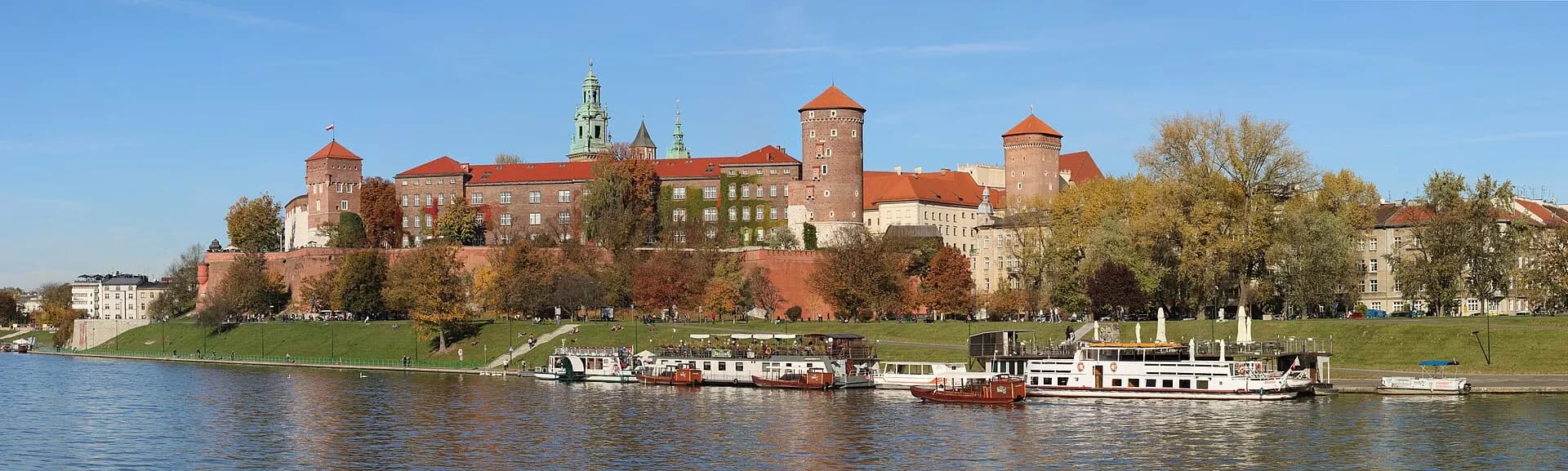
The castle on Wawel Hill was the seat of Polish kings, with a Renaissance courtyard and state rooms hung with Flemish tapestries. Next to it, Wawel Cathedral is where Polish kings were crowned and buried, alongside national heroes and poets; Karol Wojtyła, later Pope John Paul II, celebrated his first Mass in its crypt. Climb the bell tower to see the huge Sigismund Bell.
TipTickets for the castle exhibitions are sold in timed slots and sell out in summer; book online.
- 4
Kazimierz
Photo: Igor123121, CC BY-SA 4.0, via Wikimedia Commons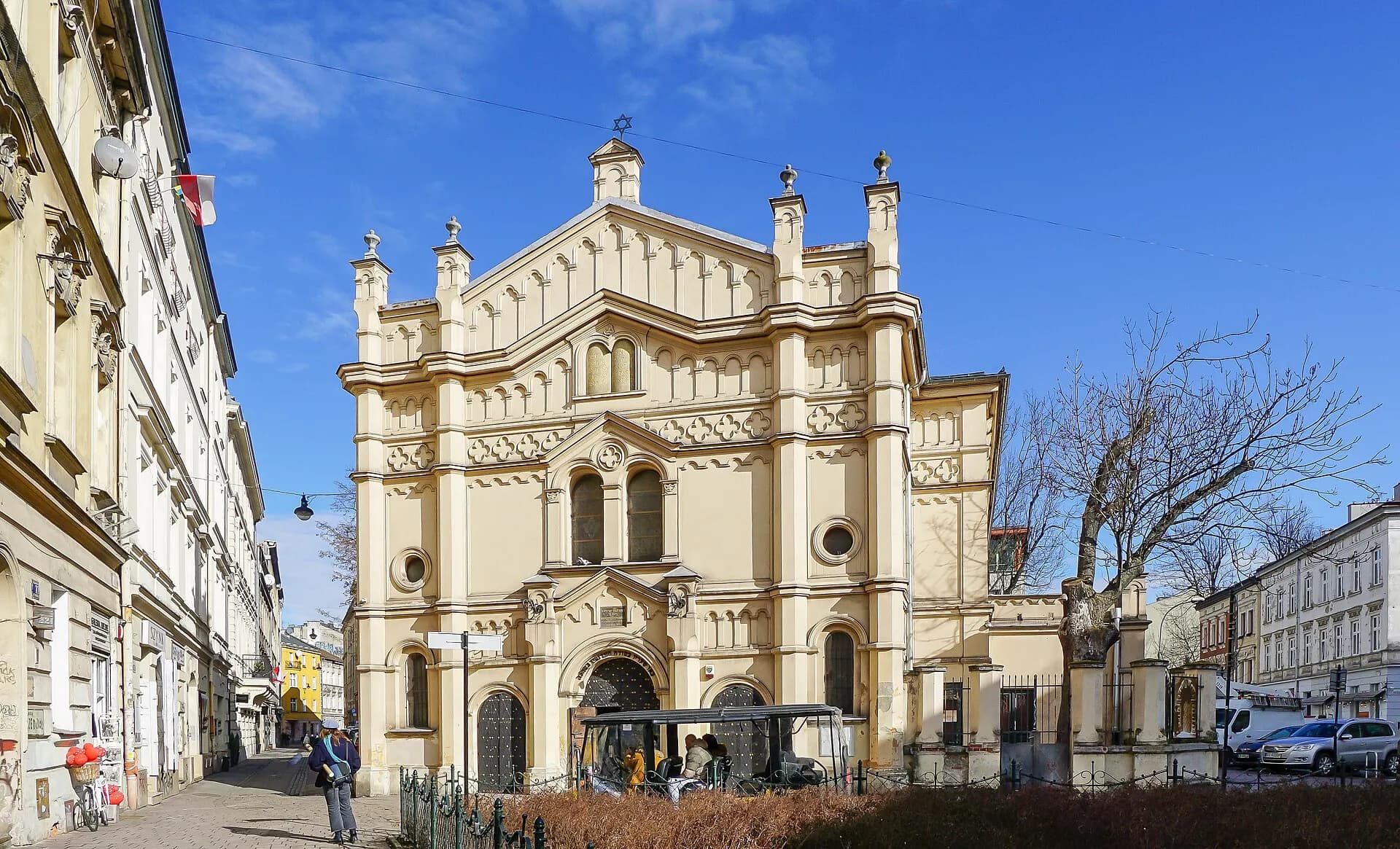
For centuries the centre of Jewish life in Kraków, Kazimierz has seven surviving synagogues, including the Old Synagogue, now a museum, and the Remuh Synagogue and cemetery. Today it's also the city's most atmospheric neighbourhood for cafés, bars and restaurants, especially around Plac Nowy, famous for its zapiekanki, toasted open baguettes.
- 5
Schindler's Factory
Photo: Adrian Grycuk, CC BY-SA 3.0 pl, via Wikimedia Commons
The former enamel factory of Oskar Schindler, who saved more than a thousand Jews during the Holocaust, now houses a museum about Kraków under Nazi occupation from 1939 to 1945, with immersive exhibits about daily life, the ghetto and resistance.
TipBook timed tickets in advance; it's one of the city's most popular museums.
- 6
The Planty and the Barbican
Photo: Igor123121, CC BY-SA 4.0, via Wikimedia Commons
The Planty is a ring of parkland around the Old Town, created in the nineteenth century where the walls once stood. At its northern edge, the Florian Gate and the round, red-brick Barbican are the main surviving parts of the medieval fortifications.
- 7
Auschwitz-Birkenau
Photo: Ingo Mehling, CC BY-SA 4.0, via Wikimedia Commons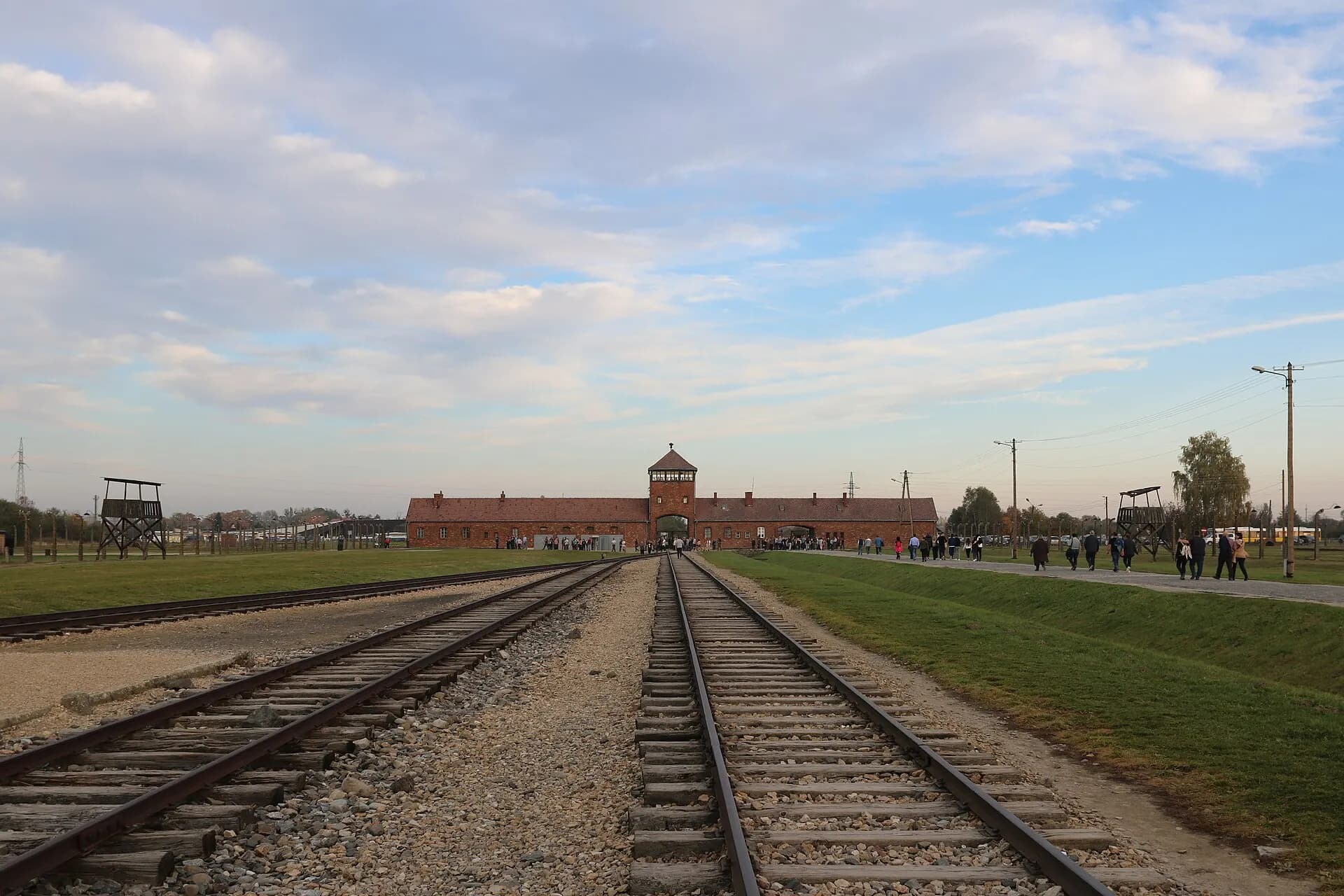
The largest of the Nazi German concentration and extermination camps, about an hour and a half west of Kraków, where more than a million people, most of them Jews, were murdered. The memorial and museum preserve the camps of Auschwitz I and Birkenau as a place of remembrance and education. A visit is deeply moving and essential.
TipEntry must be booked in advance on the museum's website, and guided tours are strongly recommended; allow at least three and a half hours, plus travel.
- 8
Wieliczka Salt Mine
Photo: Jonashtand, CC BY-SA 4.0, via Wikimedia Commons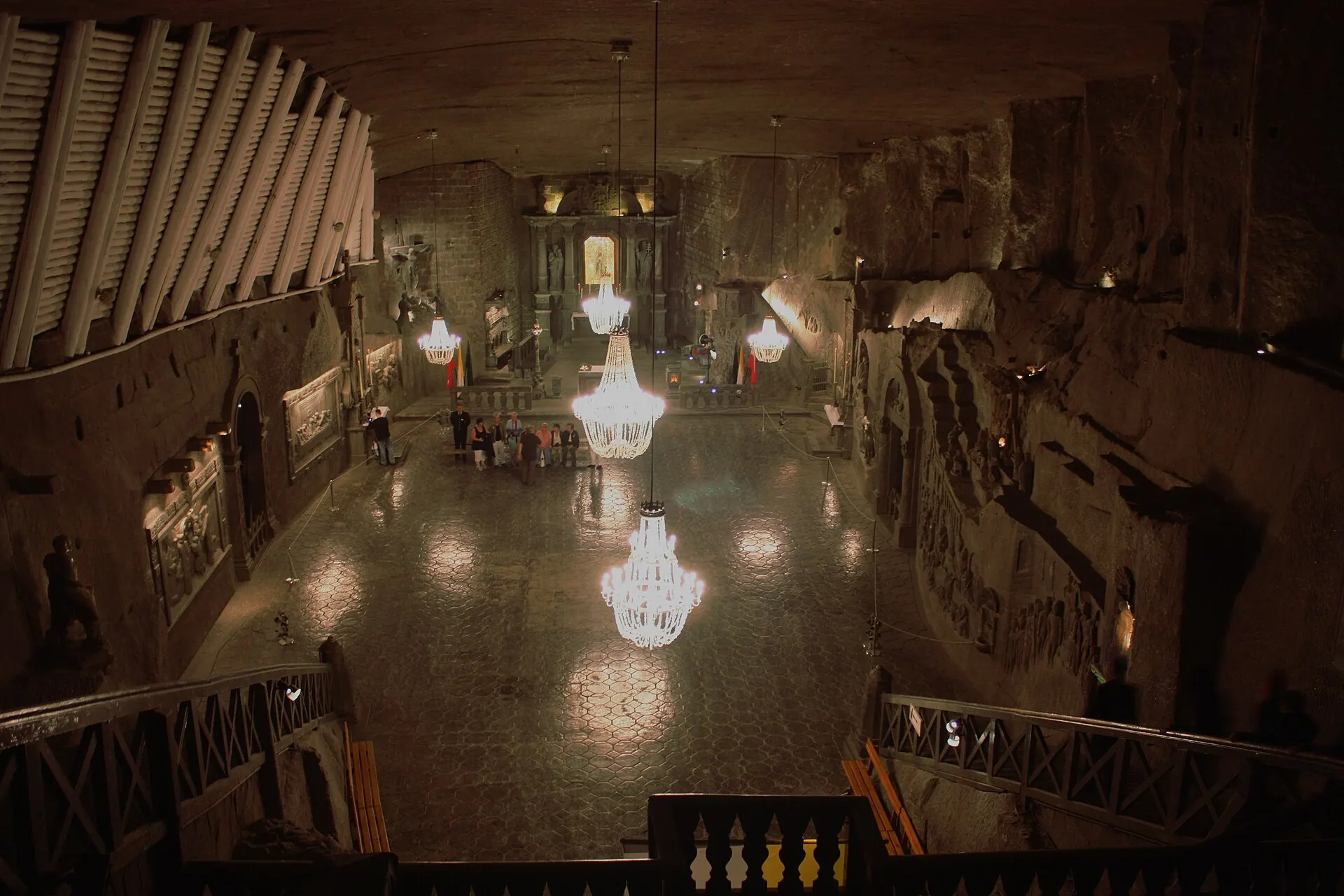
A salt mine worked for seven centuries, just south-east of the city, where miners carved chapels, statues and chandeliers out of the salt itself. The highlight is the vast Chapel of St Kinga, more than a hundred metres underground. Visits are by guided tour, descending hundreds of wooden steps.
When to go
Late spring and summer bring warm weather and outdoor café life, with festivals including the Jewish Culture Festival in late June and early July. Autumn is mild and colourful. Winters are cold, often snowy, but the Christmas market on the Main Market Square and the tradition of szopki, intricate nativity scenes, make December special. Kraków is busy year-round, especially at weekends.
Getting around
The Old Town, Wawel and Kazimierz are close together and best explored on foot. Trams and buses cover the rest of the city; buy tickets from machines and validate them on board, or pay by contactless card where available. Ride-hailing apps are cheap and reliable.
Kraków Airport is about twenty minutes from the centre by train. Trains link Kraków with Warsaw in under three hours.
Local tips
- Book Auschwitz-Birkenau, Wawel and Schindler's Factory well ahead in summer.
- Poland uses the złoty, not the euro; pay by card or withdraw cash from bank machines, not exchange booths with poor rates.
- At Auschwitz, dress and behave respectfully; it's a memorial and cemetery.
- Tipping around 10% is customary in restaurants.
- Many restaurants in the main square charge tourist prices; walk a street or two away.
- Shops may close on most Sundays, though restaurants and museums stay open.
Eat and drink
Try pierogi, dumplings stuffed with potato and cheese, meat or berries; żurek, a sour rye soup served in a bread bowl; bigos, hunter's stew; and obwarzanek, the ring-shaped bread sold from blue carts on street corners, a Kraków speciality. Milk bars (bar mleczny), canteens from the communist era, serve simple, cheap home cooking. Polish vodka comes in many flavoured varieties, and the city's cellar bars serve local craft beer.