The Dead Sea (Jordan)
Float in the saltiest water you'll ever swim in, at the lowest point on earth, below the hills where Moses looked out over the Promised Land.
- Best time to go
- March to May and October to November, when the heat at the shore is bearable
- Local time
- –
- Currency
- Jordanian Dinar (JOD)
- Reading time
- 8 min
- Language
- Arabic
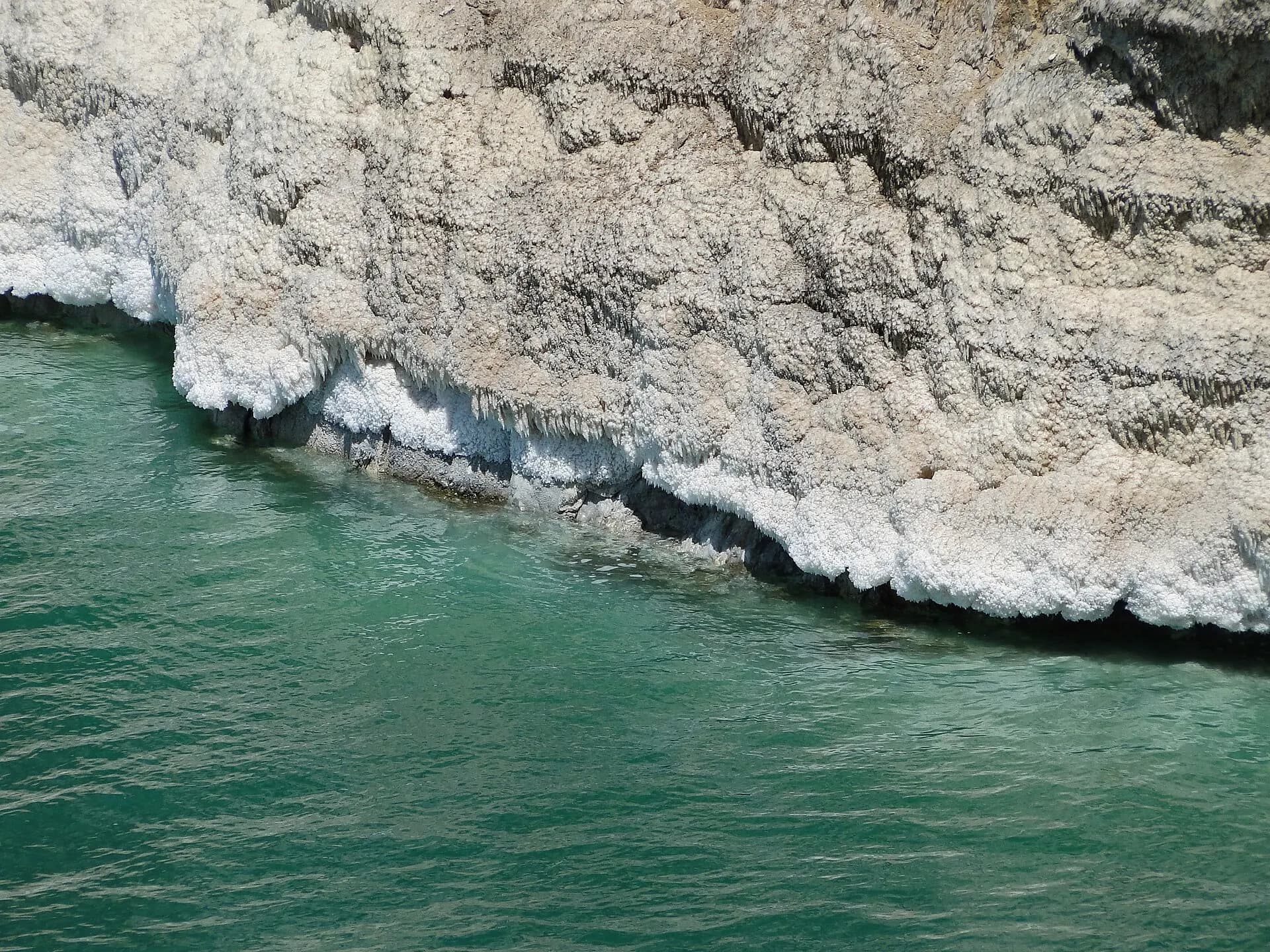
The Dead Sea fills the bottom of the Jordan Rift Valley, its shore around 430 metres below sea level and the lowest land on earth. Its water is roughly ten times saltier than the ocean, so dense that you don't swim in it so much as sit on it, bobbing like a cork while the mountains of Moab rise in bare, golden folds behind you. Nothing lives in it, which gives the sea its name, but the shores around it are full of life and history: the place where John is believed to have baptised Jesus, the mountain from which Moses saw the Promised Land, a mosaic city, and a river canyon you walk up through the water.
This guide covers the Jordanian, eastern shore, an hour's drive from Amman. Most visitors base themselves in the resort strip near Sweimeh at the northern end, float for an afternoon, and use the rest of their time for day trips up into the hills of Madaba. The western shore, with Masada, Ein Gedi and Qumran, is a separate destination reached from Jerusalem, and crossing between the two means a land border with its own rules; it's simplest to treat them as different trips.
The top 9 in The Dead Sea (Jordan)
- 1
The Sweimeh hotel zone
Photo: John Romano D'Orazio, CC BY-SA 4.0, via Wikimedia Commons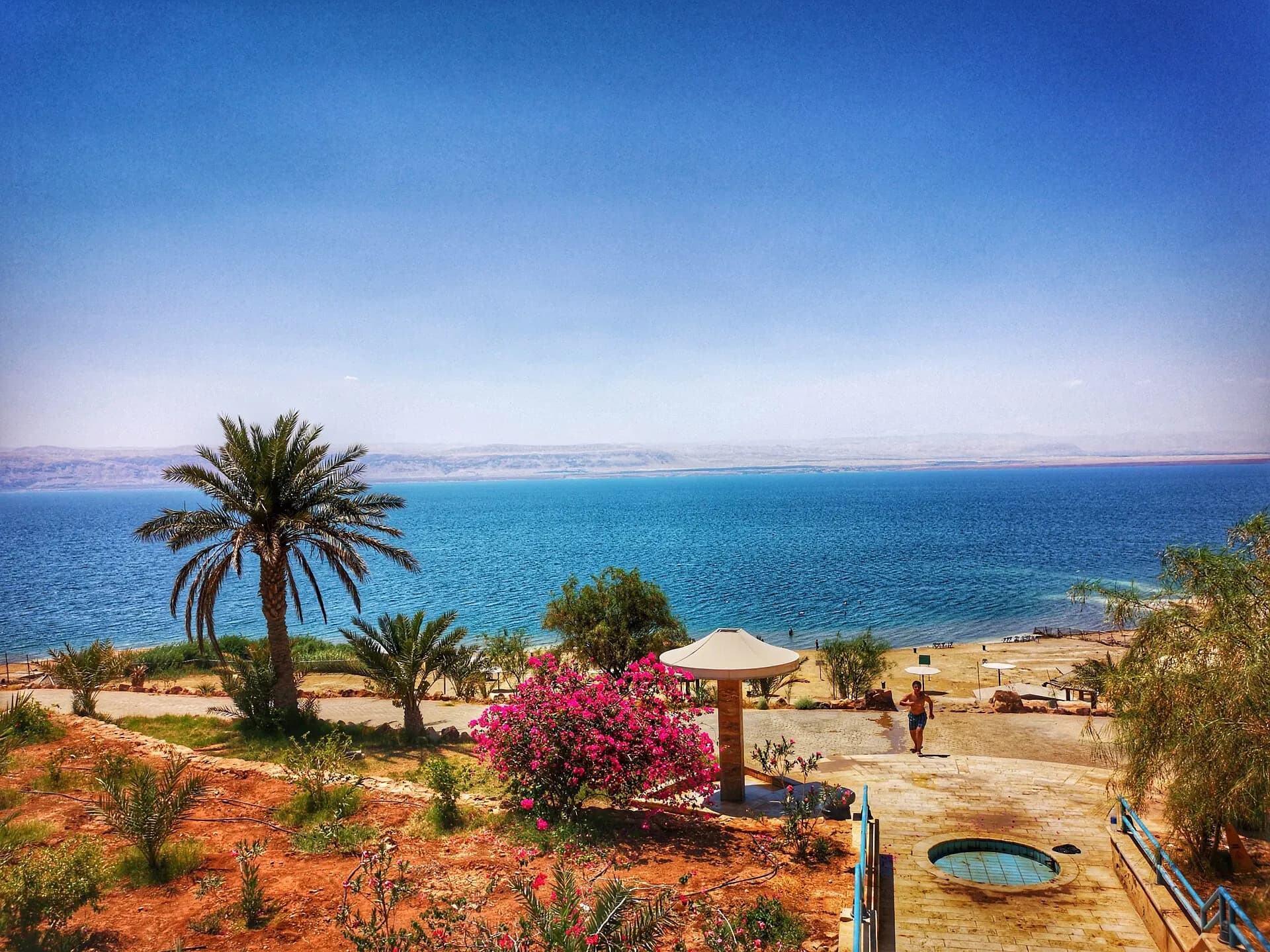
The main resort strip lines the northern shore south of the village of Sweimeh, with large hotels each running a private beach with showers, sunbeds, freshwater pools and spas. Staying at one, or buying a day pass, is the most comfortable way to float: there's shade, fresh water to rinse off, and lifeguards. Many hotels also offer Dead Sea mud for a do-it-yourself treatment on the beach.
TipGo in late afternoon. The sun sets behind the hills across the water, the heat eases, and the sea turns pale pink and silver.
- 2
Dead Sea Tourist Beach (Amman Beach)
Photo: لا روسا, CC BY-SA 4.0, via Wikimedia Commons
The public option, a couple of kilometres south of the hotels, long known as Amman Tourist Beach. It has changing rooms, showers, pools and food, and is popular with Jordanian families, especially on Fridays and holidays. It was being redeveloped under new management in 2026, so check what's open and the current entry fee before you go. Dress more modestly here than at a hotel beach.
- 3
Dead Sea Panorama
Up a winding road above the shore, this complex sits on a cliff edge with one of the finest views of the whole sea, out to the hills of the West Bank on a clear day. There's a small museum about the sea's geology and ecology, a restaurant, and short walking trails along the escarpment. Come for sunset.
- 4
Wadi Mujib and the Siq Trail
Photo: hikinginjordan, CC BY-SA 3.0, via Wikimedia Commons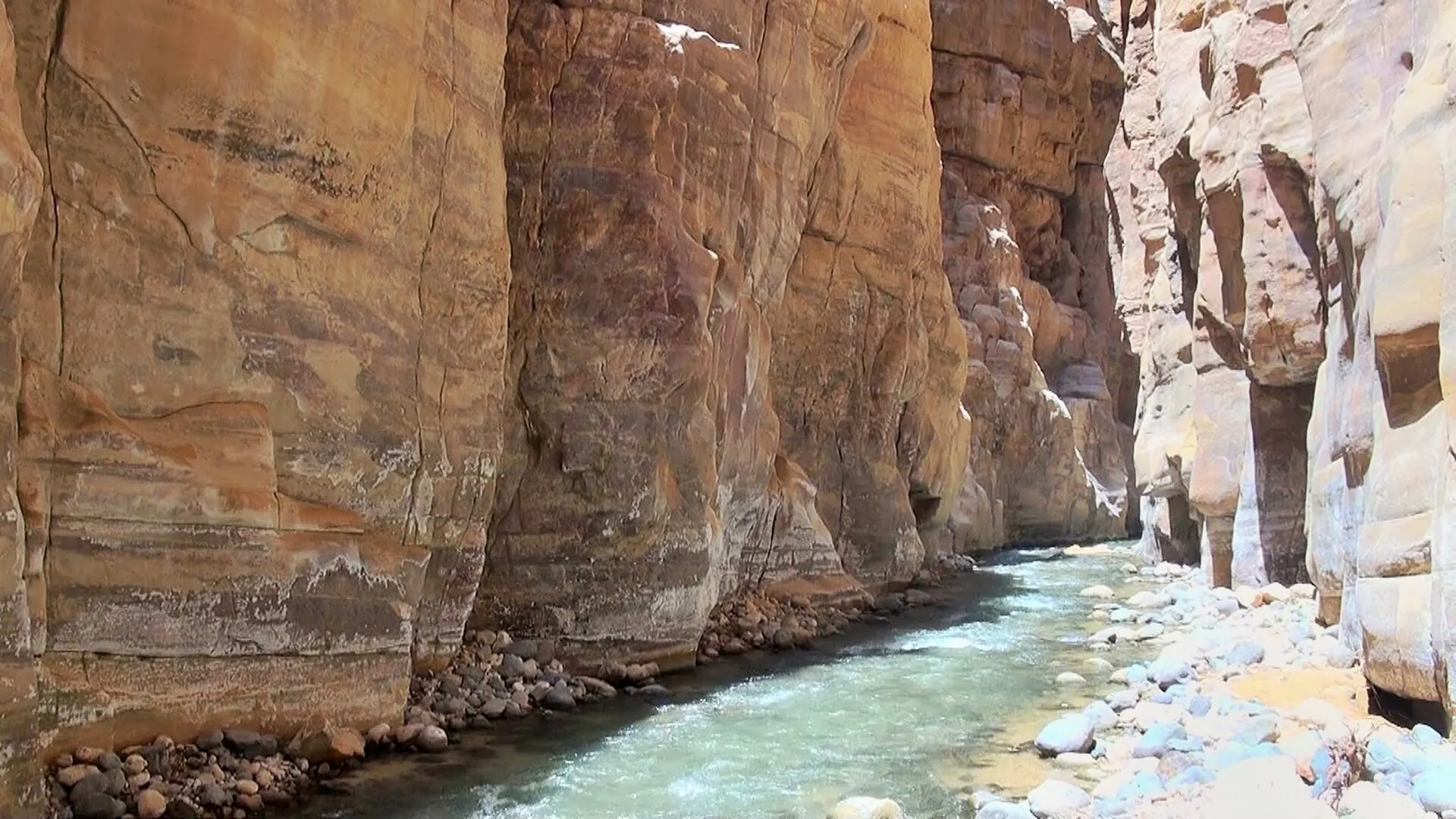
The Mujib Biosphere Reserve, run by the Royal Society for the Conservation of Nature, protects a deep gorge that drops from the plateau to the Dead Sea shore. The Siq Trail starts from the Mujib Adventure Centre on the Dead Sea Highway and wades upstream between towering sandstone walls, over boulders and through pools, to a waterfall. Life jackets are provided and must be worn, and you will be wet from start to finish. The guided Canyon and Malaqi trails add a descent beside a twenty-metre waterfall.
TipThe water trails open only in the warmer months and close in winter for flash floods, and can shut at short notice after rain upstream. Book through RSCN and check the calendar before you drive down.
- 5
Ma'in Hot Springs
Photo: Steffen 962, CC BY-SA 4.0, via Wikimedia Commons
In a steep valley above the sea, hot mineral springs pour over rock ledges in steaming waterfalls, known since Roman times; Herod is said to have bathed here. The site is run by a spa resort, with pools for day visitors as well as hotel guests. Check opening and entry arrangements before you go, as they change.
- 6
Mukawir (Machaerus)
Photo: hikinginjordan, CC BY-SA 3.0, via Wikimedia Commons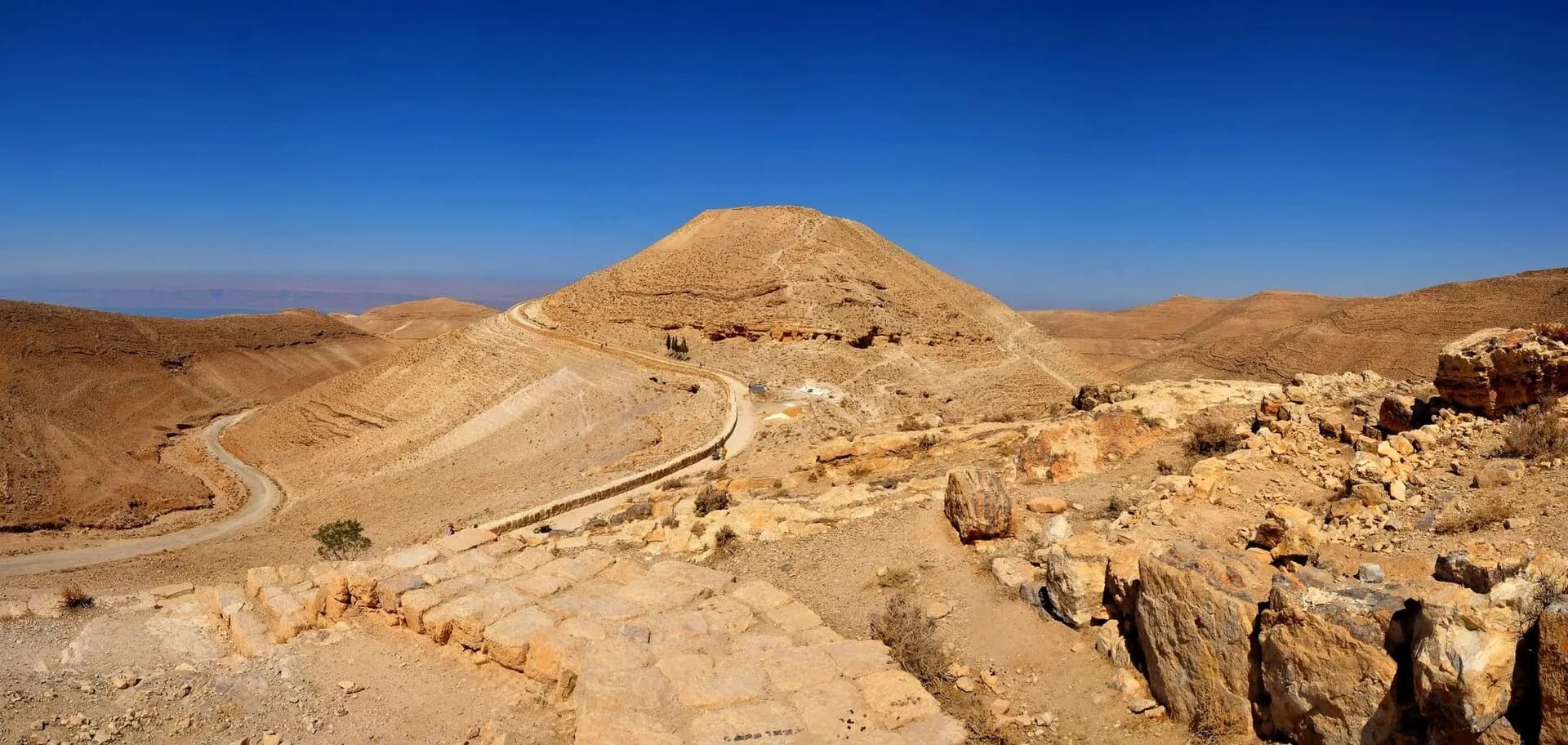
On an isolated conical hill looking down on the Dead Sea stand the ruins of Herod the Great's hilltop fortress, where, according to the historian Josephus, John the Baptist was imprisoned and executed. Little remains but foundations and a few re-erected columns, but the climb is short and the view across the sea at sunset is vast. It's included in the Jordan Pass.
- 7
Madaba
Photo: Carole Raddato from FRANKFURT, Germany, CC BY-SA 2.0, via Wikimedia Commons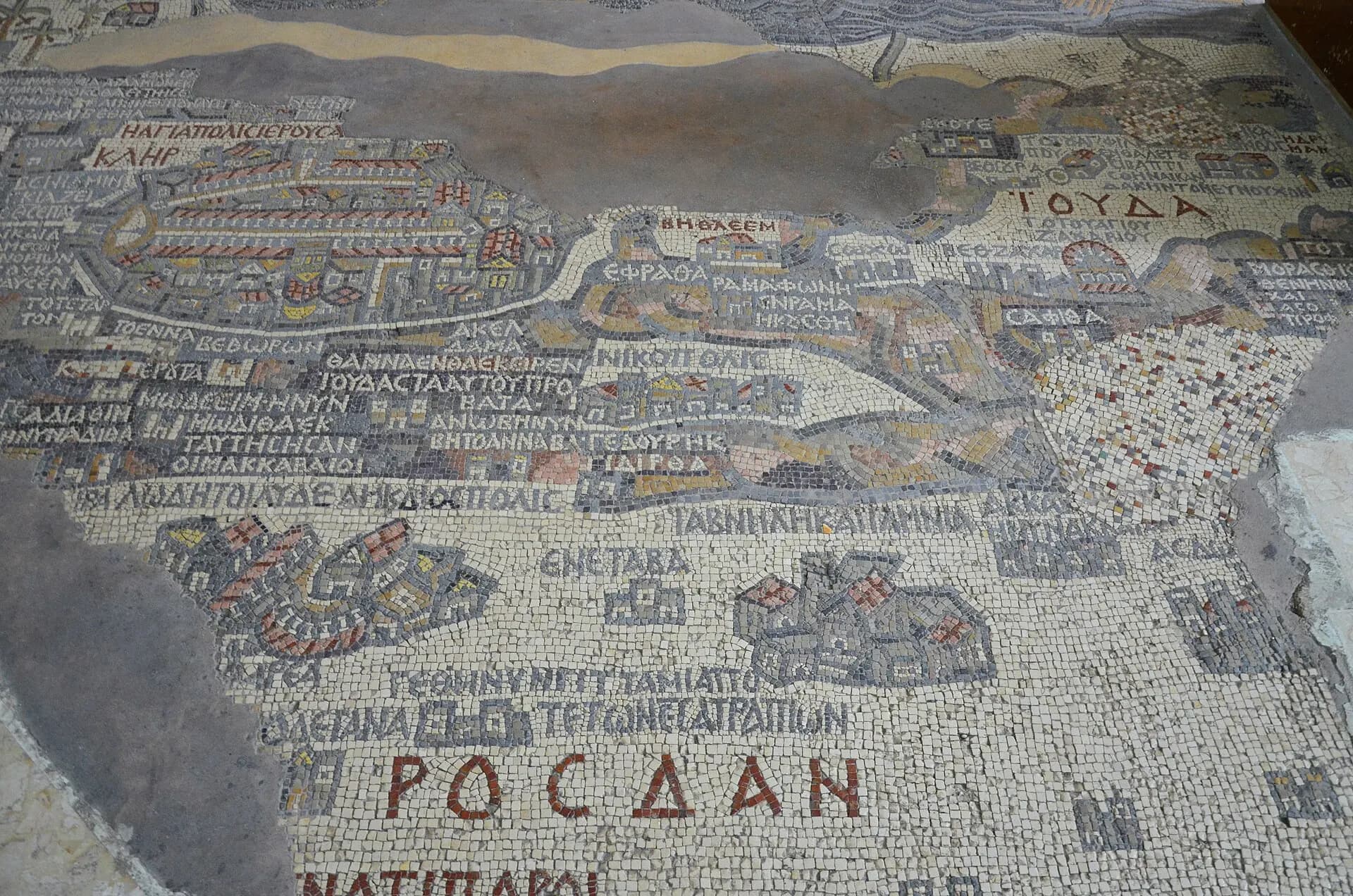
A friendly market town known as the City of Mosaics. In the Greek Orthodox Church of St George lies the Madaba Map, a sixth-century floor mosaic that is the oldest surviving map of the Holy Land, showing Jerusalem with its walls, gates and churches. The Archaeological Park, the Church of the Apostles and the Burnt Palace hold more fine mosaics, and all are included in the Jordan Pass. The town is a calmer, cheaper base than the resorts.
- 8
Mount Nebo
Photo: Berthold Werner, CC BY 3.0, via Wikimedia Commons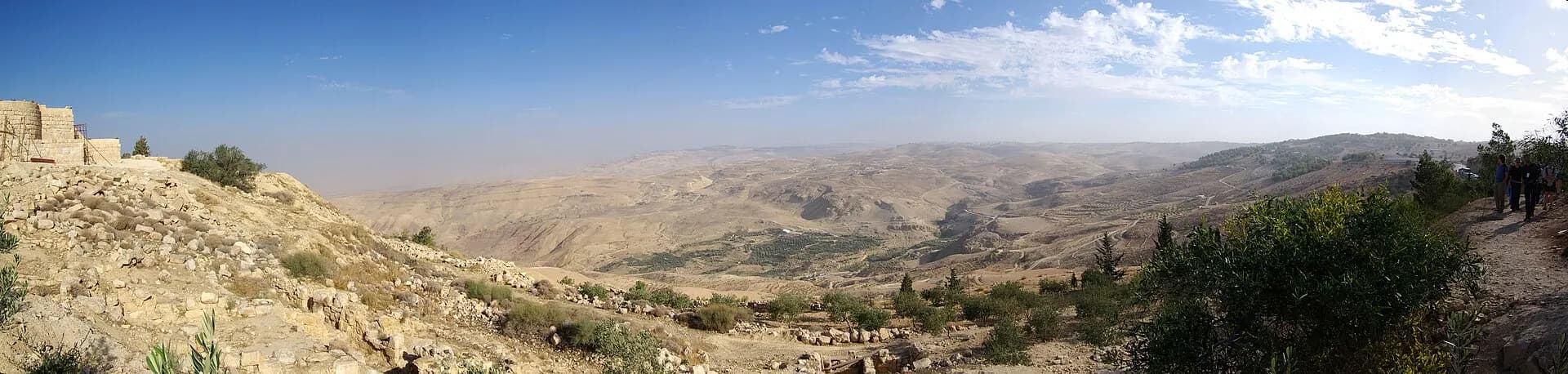
The ridge where, in the Bible, Moses was shown the Promised Land before he died. The Franciscans' Memorial Church of Moses at the summit shelters Byzantine floor mosaics, and from the terrace the view falls away over the Jordan Valley to the Dead Sea, and on very clear days to Jericho and the hills around Jerusalem. It's about twenty minutes from Madaba and on the way down to the sea.
- 9
Bethany Beyond the Jordan (the Baptism Site)
Photo: Berthold Werner, CC BY 3.0, via Wikimedia Commons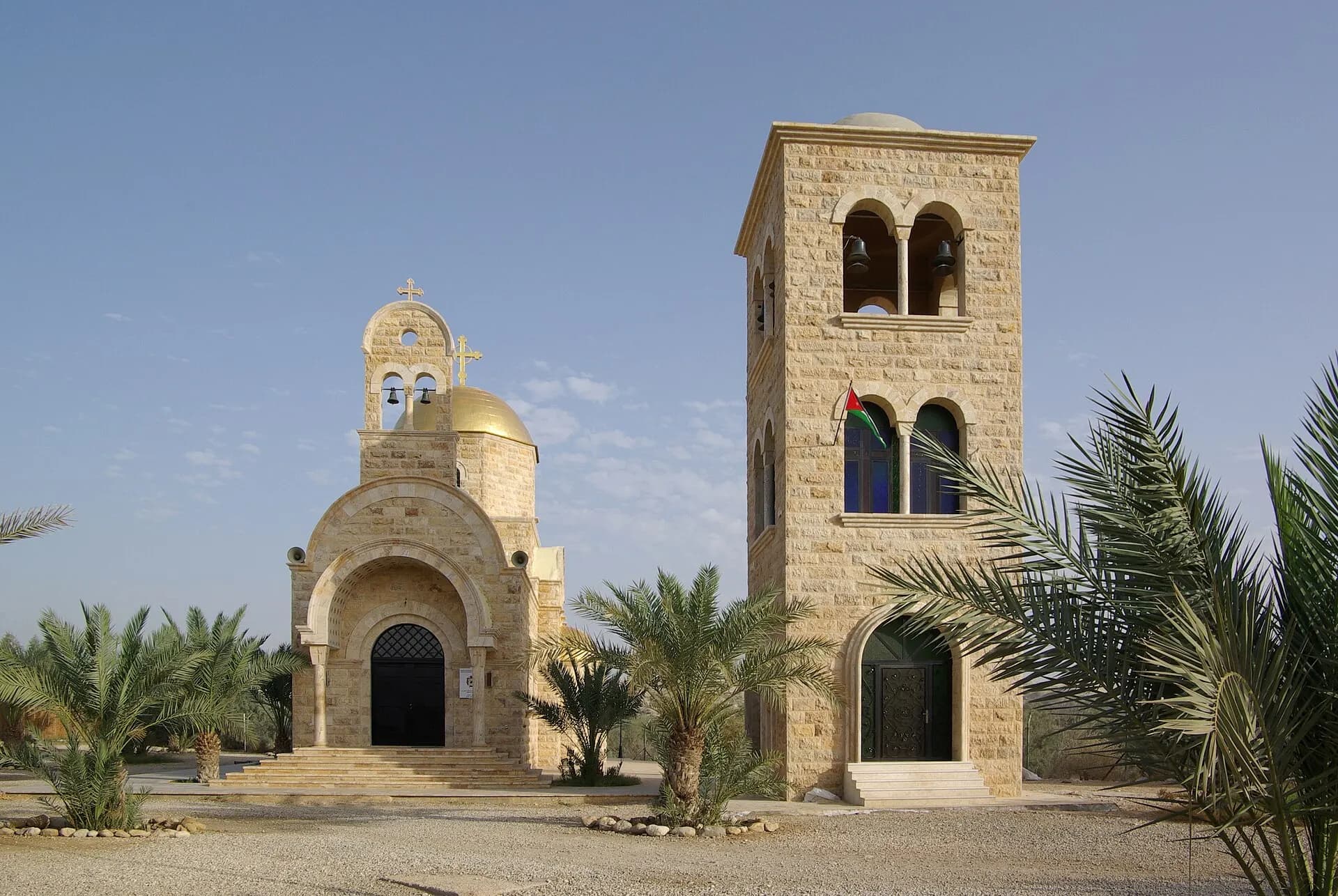
A UNESCO World Heritage Site in the Jordan Valley, revered as the place where John baptised Jesus. Visits follow a set route from the visitor centre, past the remains of Byzantine churches and pools and Elijah's Hill, down to the excavated baptism spot and the narrow, muddy Jordan River itself, with the opposite bank close enough to call across. Dress modestly, covering shoulders and knees.
TipEntry starts at 8 am; last entry is 4 pm from November to March and 5 pm from April to October. Go early to avoid the heat and the tour groups.
When to go
Spring (March to May) and autumn (October to November) are the best times, warm enough to float but not exhausting. Summer at the shore is ferociously hot, regularly above 40 °C, though this is also when the Wadi Mujib water trails are open; plan early starts and spend the middle of the day in the shade. Winter is mild and sunny by day, pleasant for sightseeing, and the water is still warm enough for a quick float, but the canyons are closed for floods. Fridays, Saturdays and Jordanian holidays are much busier, especially at the public beaches.
Getting around
The resort strip is about an hour by road from Amman and roughly the same from Queen Alia International Airport. There's no convenient public bus for visitors, so most people come by taxi, hired car or organised tour, or arrange a transfer through their hotel. A car makes the region easy: the Dead Sea Highway runs the length of the shore, past the Panorama turn-off and Wadi Mujib, and roads climb steeply to Madaba, Mount Nebo and Ma'in. Fill up before driving the southern shore, where services are sparse.
Many travellers combine the Dead Sea with Petra and Wadi Rum; the Dead Sea Highway continues south towards Aqaba, and the King's Highway runs from Madaba through Karak towards Petra.
Local tips
- Buy the Jordan Pass before you travel: for many nationalities it covers the tourist visa fee if you stay at least two nights, and it includes Madaba's sites, Mount Nebo and Mukawir. The Baptism Site is an add-on.
- Never put your head under or splash: the water stings fiercely in the eyes and is dangerous if swallowed. If it gets in your eyes, rinse at once with fresh water.
- Don't shave for a day or two before floating, and cover small cuts; the salt makes them burn.
- Float on your back and don't try to swim on your front, which can tip you face down.
- Limit yourself to around fifteen or twenty minutes at a time, then shower and drink water.
- Wear water shoes: the salt crystals and stones are sharp and the shore can be slippery mud.
- Leave jewellery behind; the minerals can tarnish silver.
- Dress modestly away from hotel beaches, in Madaba, at Mount Nebo and at the Baptism Site.
Eat and drink
The resorts have restaurants and buffets at resort prices, and the Panorama's restaurant is worth it for the view. For more local and cheaper food, head up to Madaba, which has family-run restaurants serving mansaf, maqluba and grilled meats, and bakeries selling za'atar flatbreads and manaqish. Drink far more water than you think you need at the shore; the dry air and heat dehydrate you quickly.
Where to stay
The big resorts near Sweimeh are the most comfortable option, with private beaches and spas, and many visitors stay just one night. Ma'in has its own spa resort in the hot-springs valley. Madaba, half an hour up the hill, has guesthouses and mid-range hotels at much lower prices, cooler nights and an easy drive to the sea, as well as being close to the airport.
The floating experience
The Dead Sea's water is about a third salt, a mix rich in magnesium, potassium and bromine, which makes it dense enough to hold you up without effort. Walk in until the water reaches your waist, then lean back slowly and lift your feet; you'll float with your head and toes above the surface. Getting up again takes a moment: tuck your knees towards your chest and push your feet down. The sea's black mud is said to soothe the skin, and plastering yourself with it, baking dry in the sun and washing off is a ritual for many visitors. People with heart problems, high blood pressure or open wounds should check with a doctor first.
The shrinking sea
The Dead Sea is falling by around a metre a year. Most of the water of the Jordan River, its main source, is now taken upstream for farms and towns, and mineral extraction at the southern end evaporates more. The shoreline has retreated far from where it was a few decades ago; hotels have had to extend steps and walkways to reach the water, and sinkholes have opened along parts of the coast. Old beach facilities stranded high above the waterline are a visible sign of the change.
Holy land of the Jordan Valley
This is one of the richest landscapes for biblical history in the world. Mount Nebo, the Baptism Site and Mukawir together trace stories of Moses, Elijah, John the Baptist and Jesus, and Madaba's Byzantine mosaics show how important the region was to early Christians, with pilgrims travelling here as early as the fourth century. Many of the churches are still active places of worship, so visit respectfully, especially during services.
Responsible travel
Water is precious in one of the most water-scarce countries in the world, so keep showers short and reuse towels at your hotel. Don't take salt crystals or stones from the shore, and stay away from fenced-off areas, which may be sinkhole zones. In Wadi Mujib, follow RSCN guidance, stay with your group, and take all your rubbish out with you. Buy mosaics and crafts in Madaba from workshops that make them locally.