Erbil and Iraqi Kurdistan
An ancient citadel city, deep mountain gorges and the memorials of a hard century, in a region that every visitor should weigh against current travel advice.
- Best time to go
- April to early June for green hills and mild days, and late September to early November; July and August are fiercely hot on the plains
- Local time
- –
- Currency
- Iraqi Dinar (IQD)
- Reading time
- 16 min
- Language
- Arabic and Kurdish
Current advice, October 2026. The US State Department rates the whole of Iraq, the Kurdistan Region included, at Level 4: Do Not Travel. The UK Foreign, Commonwealth and Development Office (FCDO) is more nuanced, and its advice differs between areas. It advises against all but essential travel to the Kurdistan Region of Iraq as a whole, and to most of the rest of the country. Several areas carry the stronger warning against all travel, among them Ninawa province (which includes Mosul), Kirkuk and Salah al-Din. Travelling against FCDO advice can invalidate travel insurance, and consular help is severely limited. This guide describes the region's heritage so that it is ready for when the advice allows; it is not encouragement to go now. Check both governments' pages on the day you plan anything, as the advice changed several times during 2025 and 2026 amid regional tensions.
The Kurdistan Region of Iraq is the self-governing north-east of the country, made up of the provinces of Erbil, Duhok, Sulaymaniyah and Halabja. It has its own government, parliament and security forces, its own visa system, and a landscape very unlike the flat south of Mesopotamia: rolling wheat plains around Erbil give way to the Zagros mountains, with gorges, waterfalls, walnut orchards and snow on the high peaks until late spring. The capital, Erbil, claims to be one of the oldest continuously inhabited cities on earth, and its citadel mound has been occupied for thousands of years.
For most of the past two decades the region was the part of Iraq that independent visitors could reach most easily, and in calmer times a circuit of a week to ten days covers its highlights. The places below are listed as such a loop: Erbil first, as the main gateway, then north along the Hamilton Road into the mountains, west to Amadiya and the Yazidi sanctuary of Lalish, and finally south-east to Sulaymaniyah and Halabja. Further south lie some of the most important ancient sites in the world, Babylon and Ur among them; they are covered as heritage in a separate section, because current advice for those provinces is stricter still.
The top 15 in Erbil and Iraqi Kurdistan
- 1
Erbil Citadel
Photo: JEHAN SHERKO, CC BY-SA 4.0, via Wikimedia Commons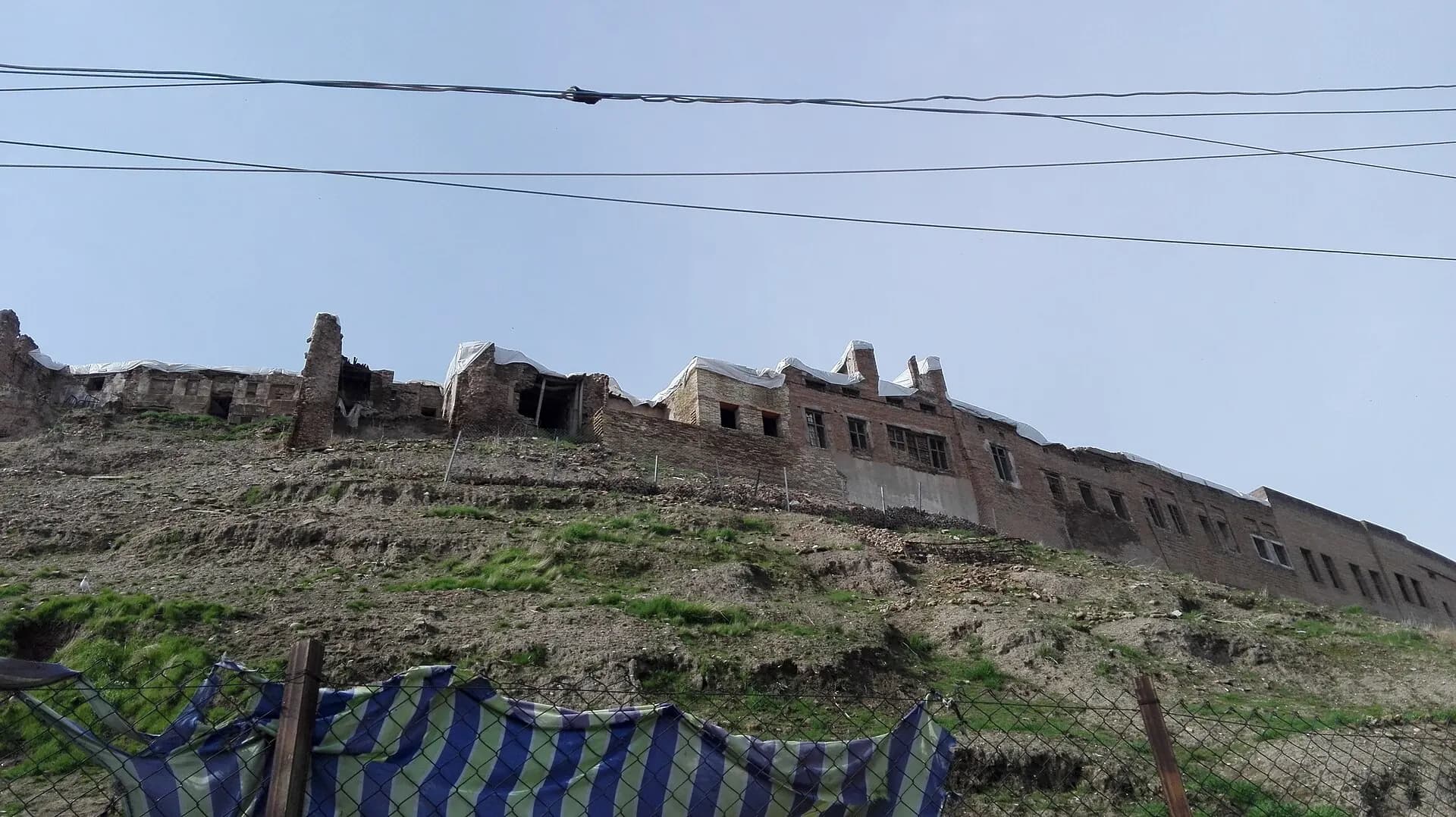
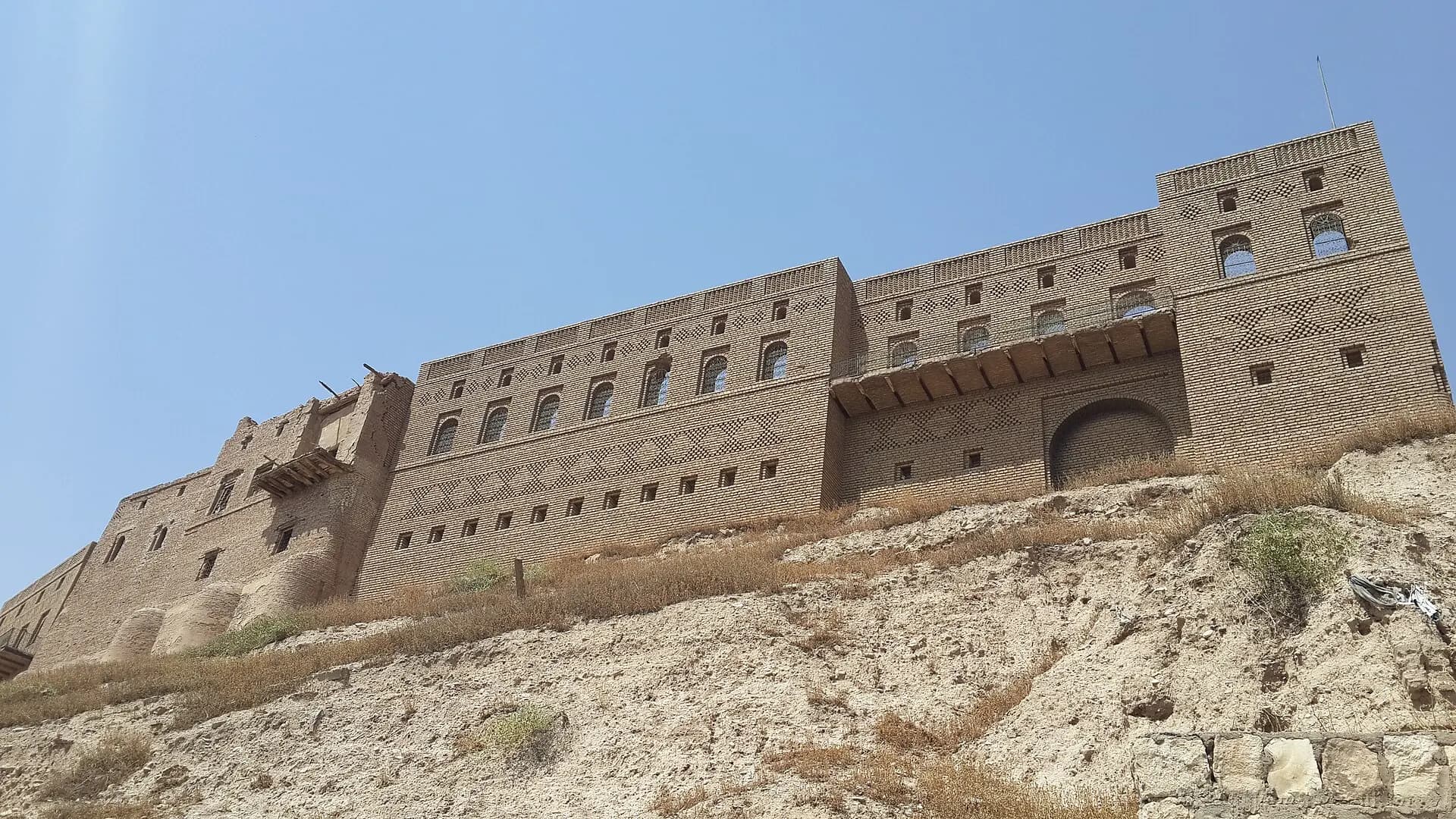
The citadel rises from the middle of Erbil as a great oval mound, about 25 to 30 metres high, built up from the remains of thousands of years of settlement; the city of Arbela appears in Assyrian records, and some claim occupation here going back six millennia or more. The walls you see today are the fronts of houses, mostly from the Ottoman period, pressed together into a continuous ring. UNESCO inscribed the site in 2014. In 2007 almost all of its residents were moved out so that a long restoration could begin, and the work has continued in phases since, so some lanes are open and lively while others are fenced off. Enter by the main southern gate, above the busy square, and walk the central lane past restored mansions, an old bathhouse and a mosque, then out to the edges for views over the flat sprawl of the modern city. Below the gate, a seated statue honours Ibn al-Mustawfi, a medieval historian of Erbil.
TipOpening hours and which buildings are accessible change as restoration progresses. Go in the late afternoon, when the stone turns gold and the square below fills with families.
- 2
Kurdish Textile Museum
Photo: Adam Jones, Ph.D., CC BY-SA 3.0, via Wikimedia Commons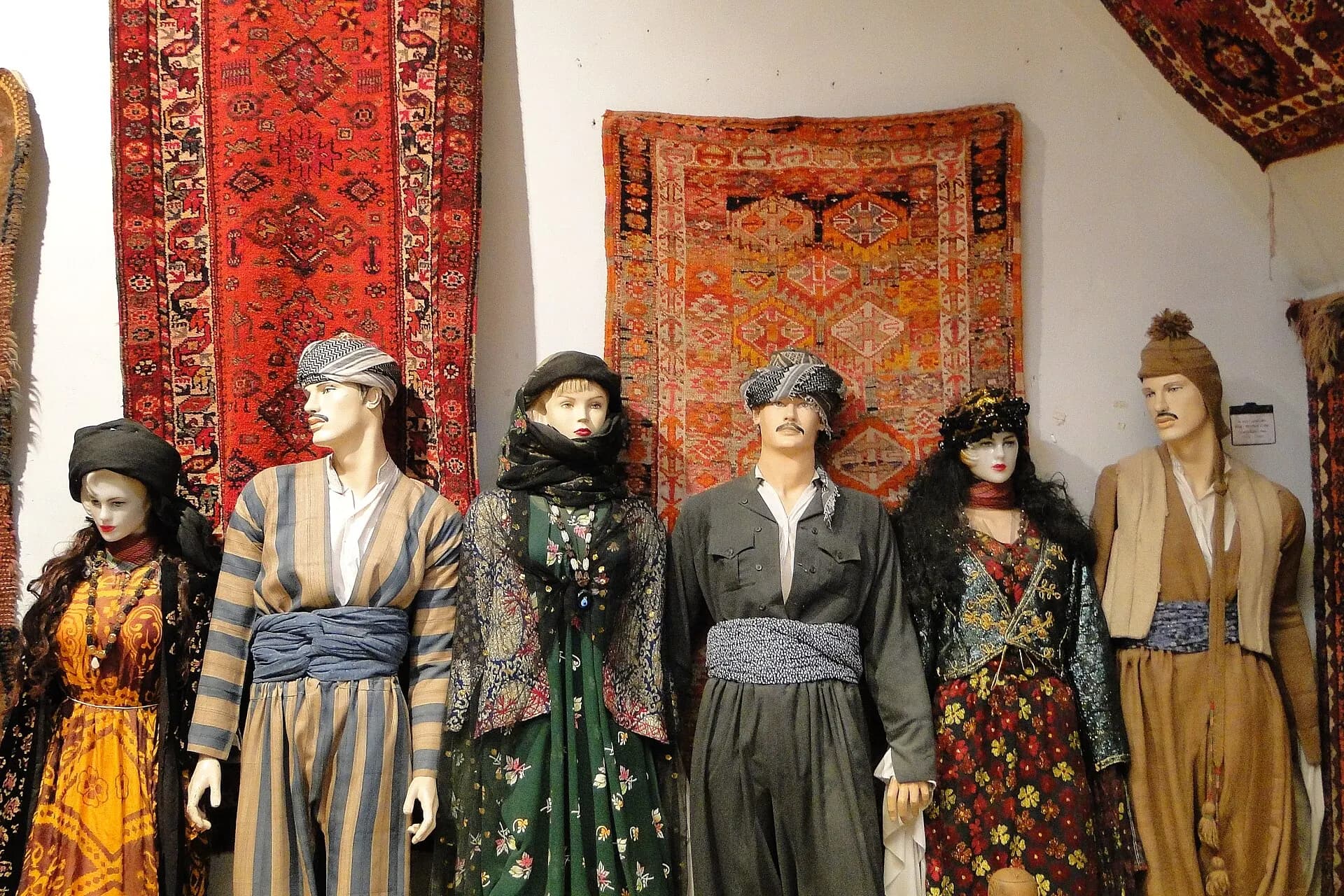
Tucked into a restored courtyard house in the south-east quarter of the citadel, this small museum was founded in 2004 to collect the weaving of the region's nomadic and village communities before it disappeared. Rooms hold kilims and pile rugs, felt, saddlebags, cradle covers and tent bands, with notes on the tribes, dyes and symbols behind them. It is one of the best introductions anywhere to Kurdish material culture, and its shop sells new work by local weavers.
TipIt has closed at times during citadel works; ask locally before making a special trip.
- 3
Qaysari Bazaar
Photo: Lamacchiacosta, CC BY-SA 4.0, via Wikimedia Commons
Spreading south from the foot of the citadel, Erbil's old covered market is a warren of vaulted lanes selling almost everything: spices, dried fruit, honey, sheep's cheese wrapped in skins, gold, fabric, Kurdish baggy trousers and household goods. Parts date back centuries, though much was rebuilt in the twentieth century. The square between the bazaar and the citadel is the city's social heart, with fountains, ice-cream sellers and old tea houses where men play dominoes and drink small glasses of sweet black tea.
TipBargaining is normal for crafts and textiles but not for food. The bazaar is busiest in the early evening, especially on Thursdays.
- 4
Mudhafaria Minaret
Photo: Osama Shukir Muhammed Amin FRCP(Glasg), CC BY-SA 4.0, via Wikimedia Commons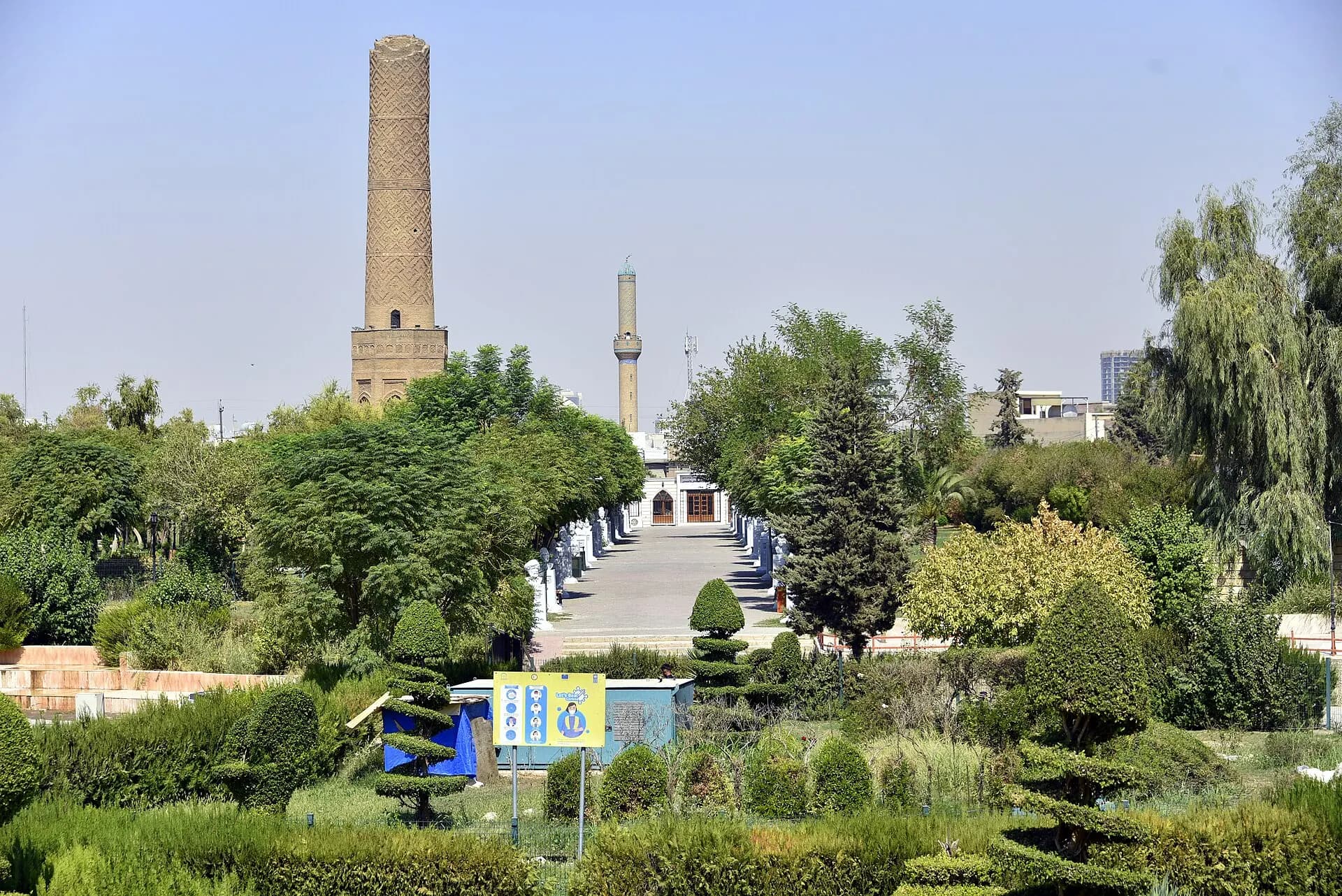
A short ride west of the citadel, a lone brick minaret stands in a park, all that survives of a mosque built in the late twelfth century under Muzaffar al-Din Gökböri, the ruler who made Erbil a centre of learning in the age of Saladin. Its octagonal base is decorated with fine bands of glazed tile and brickwork. It is also called the Choli minaret, and it leans a little; restoration has worked to stabilise it.
- 5
Jalil Khayat Mosque
Photo: Levi Clancy, CC0, via Wikimedia Commons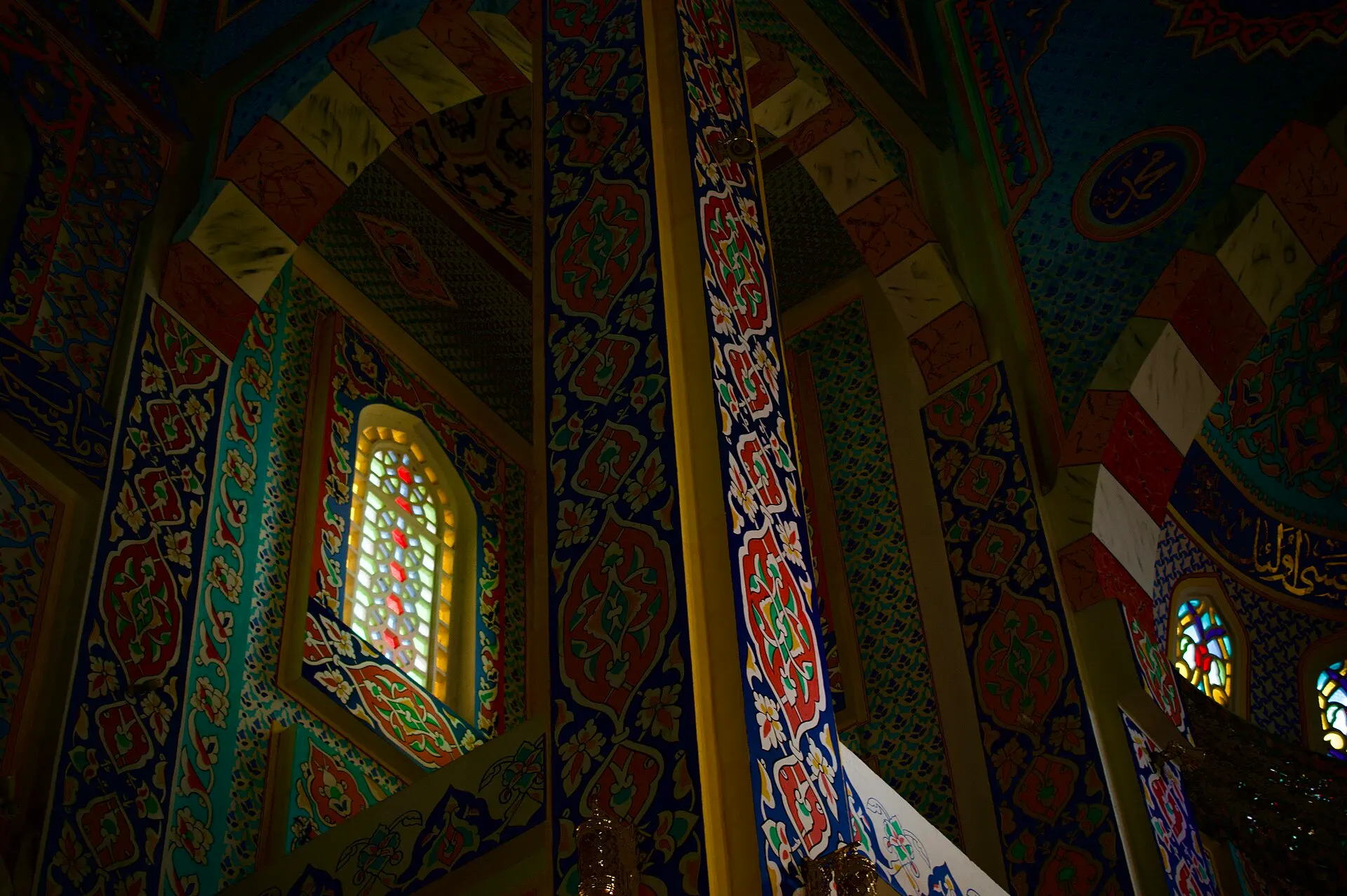
The largest mosque in Erbil is a modern building, completed in the late 2000s, but it is designed in the classical Ottoman manner, with a broad central dome, smaller cascading domes and slender pencil minarets. Inside, the prayer hall is lavishly decorated with tilework and calligraphy, and the whole complex is floodlit at night.
TipVisitors are usually welcome outside prayer times; avoid the midday Friday prayers. Dress modestly, remove shoes, and women should bring a headscarf.
- 6
Gali Ali Beg and the Hamilton Road
Photo: Levi Clancy, CC0, via Wikimedia Commons
North-east of Erbil, the road to the Iranian border climbs into the mountains along a route built between 1928 and 1932 by the New Zealand engineer Archibald Hamilton, who wrote a classic account of the work, Road Through Kurdistan. The most famous stretch threads through Gali Ali Beg, a narrow gorge of sheer limestone walls. A waterfall pours down beside the road, pictured on old Iraqi banknotes, with tea stalls, souvenir sellers and picnicking families around it. The road beyond is one of the great drives of the region.
TipWeekends and holidays bring crowds from all over Iraq; on a weekday morning it is far quieter.
- 7
Bekhal Waterfall
Photo: Khoshhat, CC BY 4.0, via Wikimedia Commons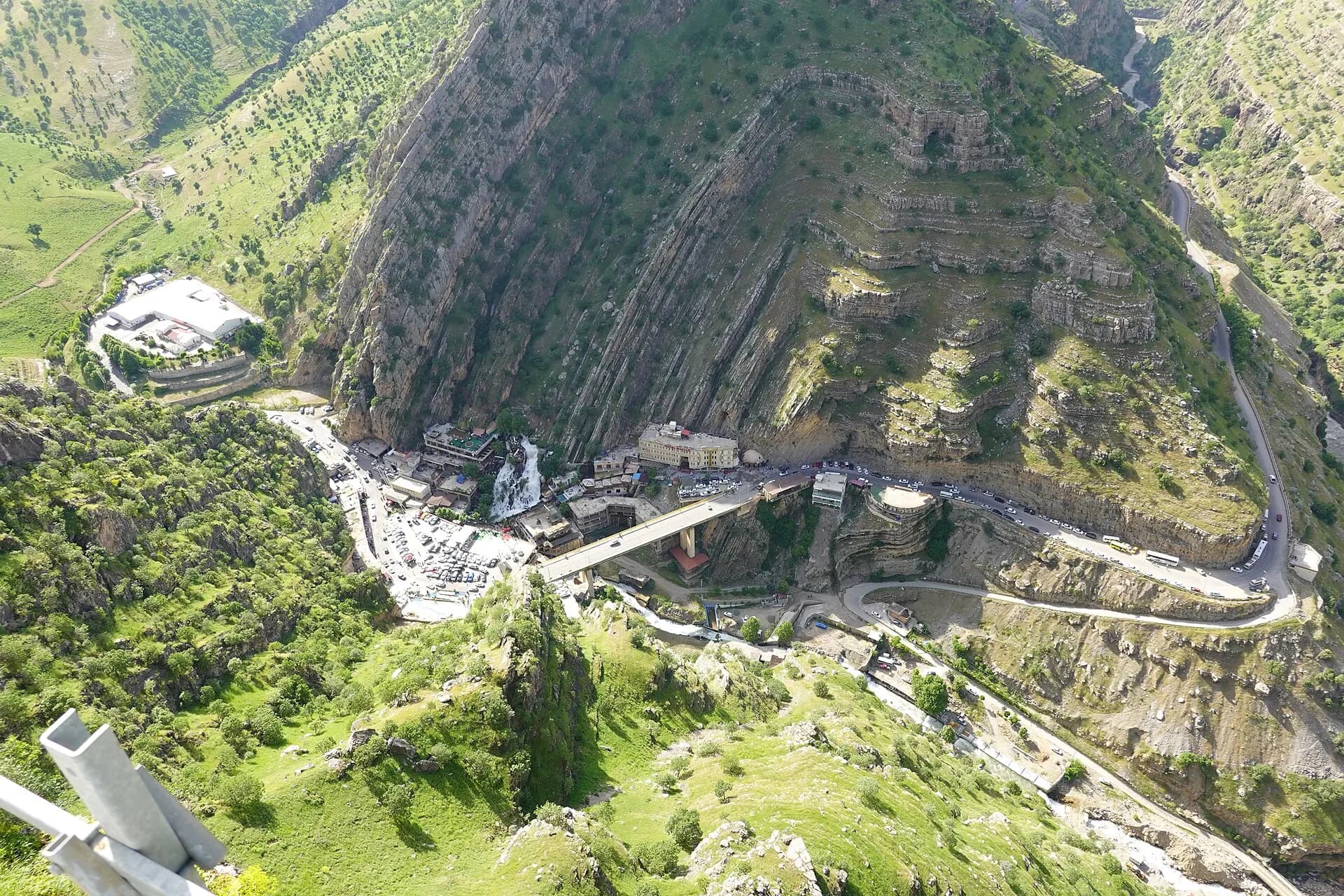
A little further along, near Rawanduz, water gushes from a cave in the mountainside and tumbles in cascades through a wooded valley. Terraces of cafés and restaurants overhang the stream, and in summer local families come to sit with their feet in the cold water. It is less dramatic than Gali Ali Beg but greener, and a pleasant lunch stop.
- 8
Rawanduz
Photo: Hardscarf, CC BY-SA 4.0, via Wikimedia Commons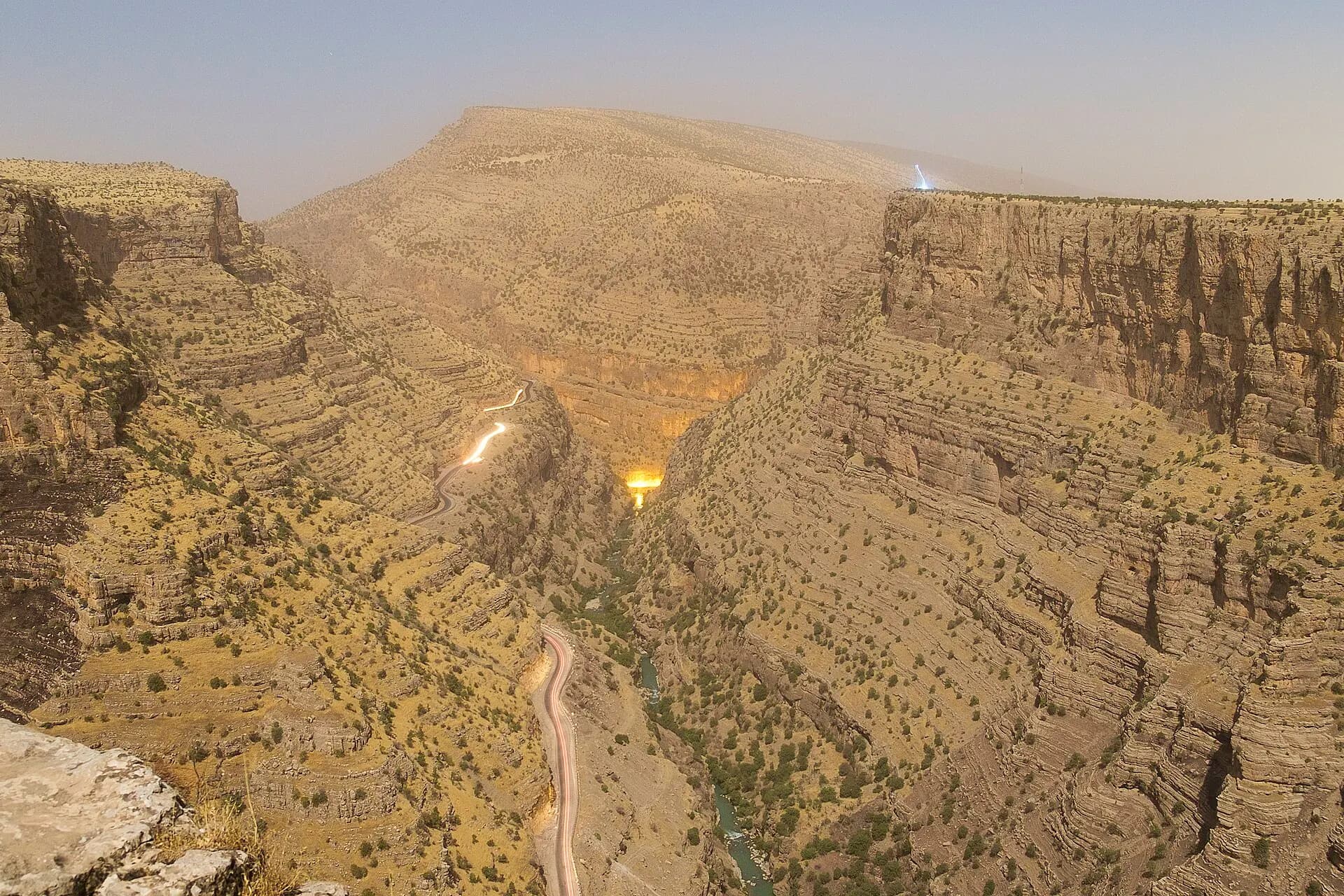
The small town of Rawanduz sits on the edge of a spectacular canyon, where the Rawanduz river has cut a deep, winding chasm through the mountains. In the nineteenth century it was the seat of the Soran emirate, a Kurdish principality whose ruler, known as Mir Kor, briefly controlled much of the region. Viewpoints along the canyon rim give some of the best mountain panoramas in Kurdistan, and the surrounding area, with resorts at Pank and Korek mountain, is a popular summer escape for people from the hot plains.
- 9
Shanidar Cave
Photo: Khoshhat, CC BY-SA 4.0, via Wikimedia Commons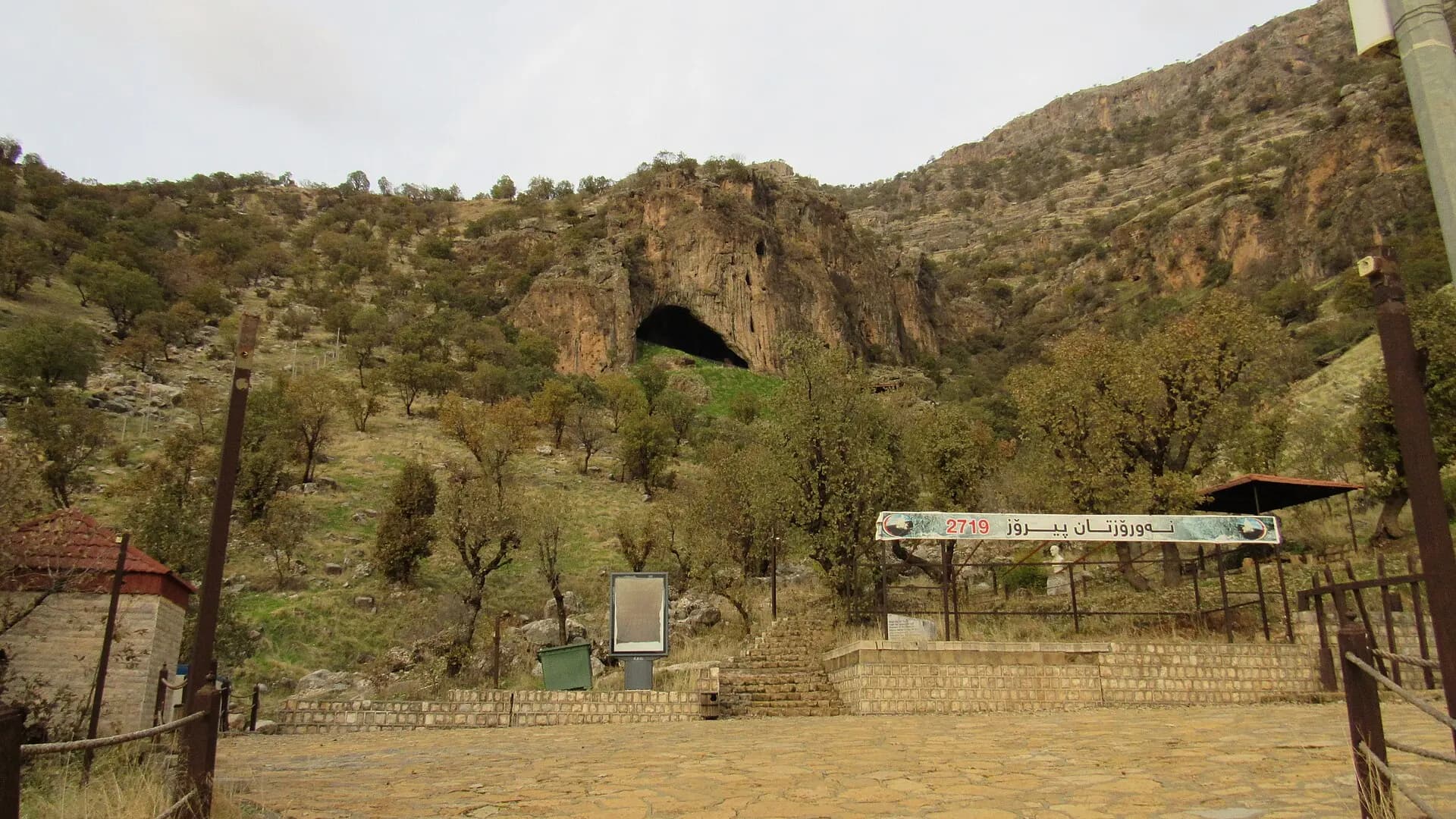
High on a mountainside above the Great Zab river, in the Barzan area, this large cave is one of the most important Neanderthal sites in the world. Excavations led by the American archaeologist Ralph Solecki between 1951 and 1960 found the remains of ten Neanderthal men, women and children, and the discovery of clustered pollen around one burial gave rise to the famous, and still debated, idea of a "flower burial". A new team returned in 2015, and in 2018 found a further skeleton, known as Shanidar Z. The cave mouth looks out over a vast valley.
TipReaching the cave means a steep climb on steps and paths of about half an hour; bring water and sturdy shoes, and do not touch the excavation areas.
- 10
Akre
Photo: Levi Clancy, CC BY-SA 4.0, via Wikimedia Commons
The town of Akre climbs a steep mountainside in tiers of old stone houses, linked by stairways and alleys, below a rocky ridge. It is best known for its celebration of Newroz, the Kurdish new year, around 21 March, when thousands of torch-bearers climb the slopes at night and light bonfires, turning the whole hillside into a river of flame. At other times it is a quiet, photogenic stop between Erbil and Duhok.
- 11
Amadiya
Photo: Hardscarf, CC BY-SA 4.0, via Wikimedia Commons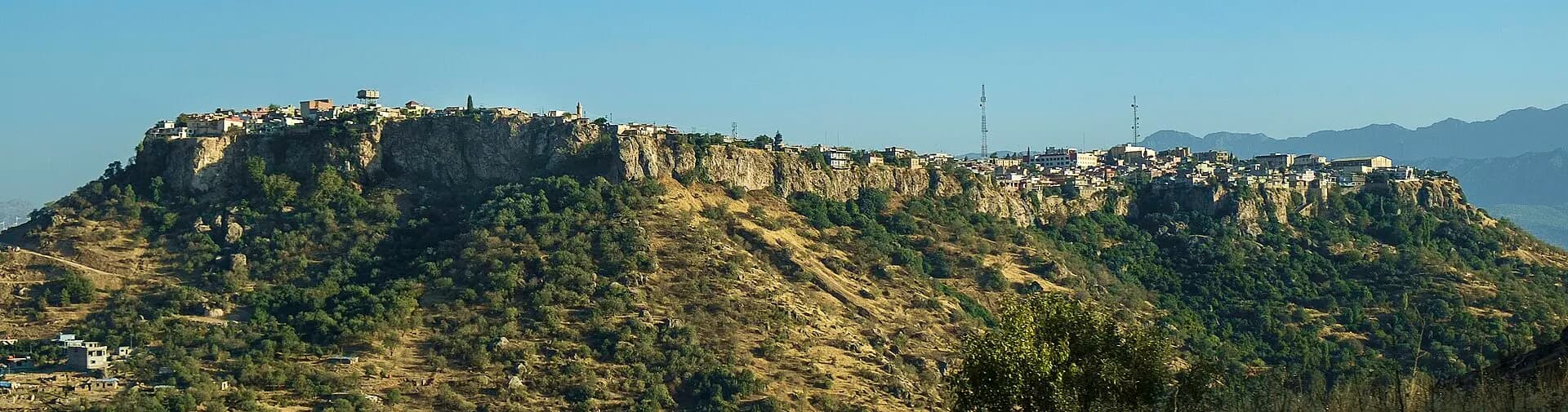
Amadiya, also spelled Amedi, is one of the most striking towns in the Middle East: it covers the whole top of a flat-topped mesa about a kilometre long, with sheer cliffs on every side, in a mountain valley close to the Turkish border. Its position made it a stronghold for centuries, and a Jewish community here was among the oldest in Kurdistan. Look for the old Mosul gate, Bab Zebar, carved with weathered figures, and a tall medieval minaret near the centre. The views down into the valleys, and across to the Gara and Matin ranges, are superb.
TipSunset from the edge of the plateau is the reason to stay into the evening. The nearby resort of Sulav, in a wooded gorge, has guesthouses and riverside restaurants.
- 12
Lalish
Photo: Levi Clancy, CC BY-SA 4.0, via Wikimedia Commons
In a small, wooded valley north-east of Mosul lies Lalish, the holiest place of the Yazidis, a religious community with ancient roots who were the target of genocide by the Islamic State group in 2014. The sanctuary centres on the tomb of Sheikh Adi ibn Musafir, the twelfth-century teacher revered by the faith, crowned by distinctive fluted conical spires, with smaller shrines, the sacred White Spring and stone pilgrim houses on the slopes around it. Yazidis try to make a pilgrimage here at least once in their lives, and in autumn the Feast of the Assembly draws large crowds. Visitors are welcome, but this is a living shrine and the rules matter. Shoes come off before entering the sacred area, and visitors usually go barefoot throughout; thresholds are holy and must be stepped over, never on; and the innermost parts of the shrine are closed to outsiders. Dress modestly, with legs and shoulders covered, ask before photographing people, and avoid visiting during major festivals unless invited.
TipLalish lies in the Shekhan district, which is administered in practice by the Kurdistan Region's security forces but formally belongs to Ninawa province, where the FCDO currently advises against all travel. Check exactly how the advice applies before considering a visit, and go with a local guide.
- 13
Amna Suraka
Photo: Levi Clancy, CC0, via Wikimedia Commons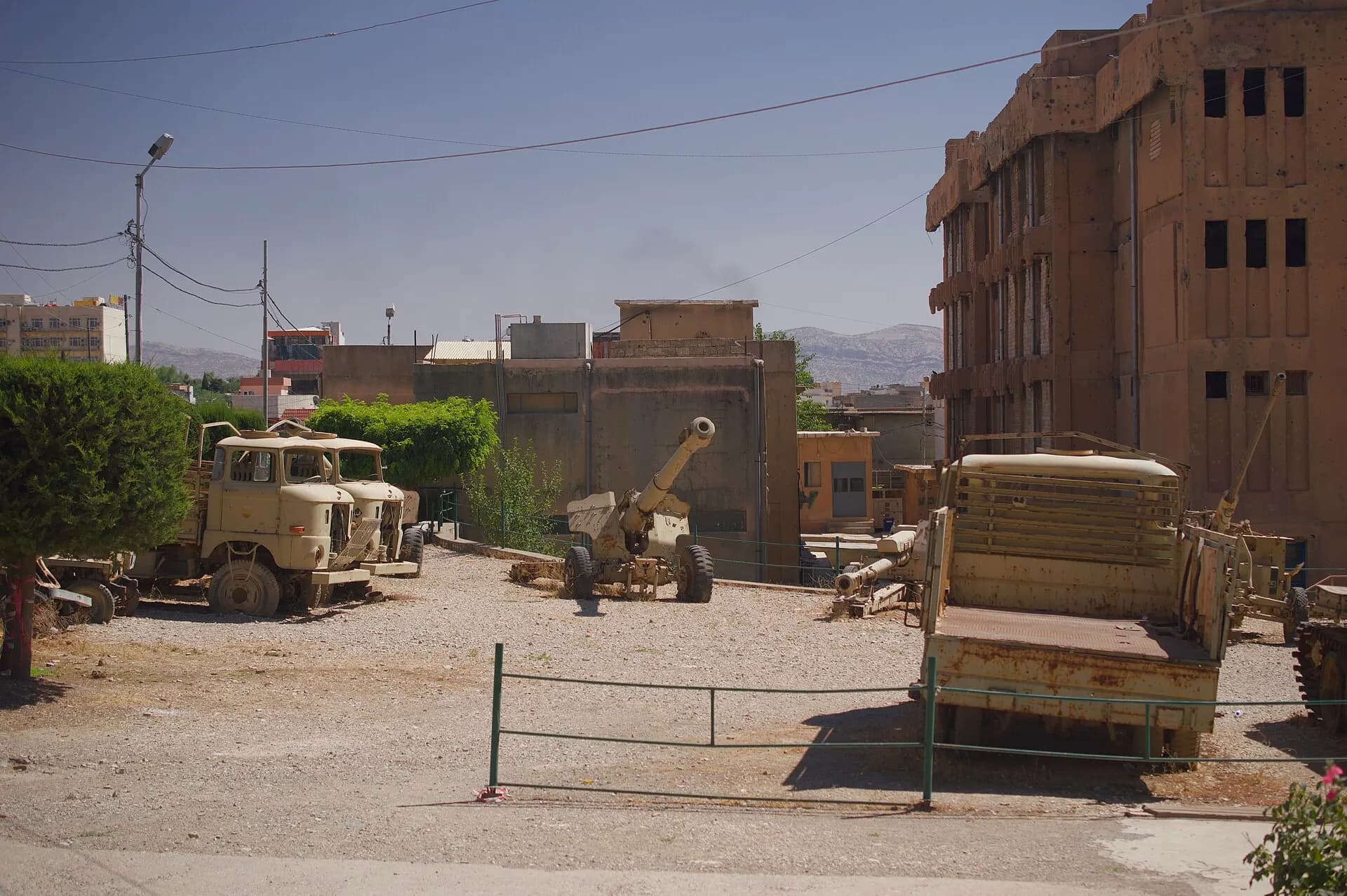
In Sulaymaniyah, the region's second city and its liveliest cultural centre, the former headquarters of the Ba'ath regime's northern intelligence service is now a museum. Kurdish fighters captured the building, the "Red Security", in the 1991 uprising, and its bullet-scarred walls, cells and interrogation rooms have been preserved. The most powerful space is the Hall of Mirrors, lined with about 182,000 mirror fragments, one for each estimated victim of the Anfal campaign of the late 1980s, and some 4,500 small lights for the villages destroyed. Other galleries cover the Kurdish struggle and the fight against the Islamic State group.
TipSome exhibits are graphic and distressing; allow time to take it in, and consider it unsuitable for young children.
- 14
Sulaymaniyah Museum
Photo: Osama Shukir Muhammed Amin FRCP(Glasg), CC BY-SA 4.0, via Wikimedia Commons
A short walk from Amna Suraka, the city museum holds one of the most important archaeological collections in Iraq, second only to the national museum in Baghdad. The galleries run from Palaeolithic tools through Sumerian, Assyrian and Hellenistic finds to Islamic ceramics and manuscripts, with many objects from excavations in the Kurdish hills. It is the best place in the region to see the deep history of Mesopotamia when sites further south are out of reach.
- 15
Halabja Monument
Photo: Aya sh.yusuf, CC BY-SA 4.0, via Wikimedia Commons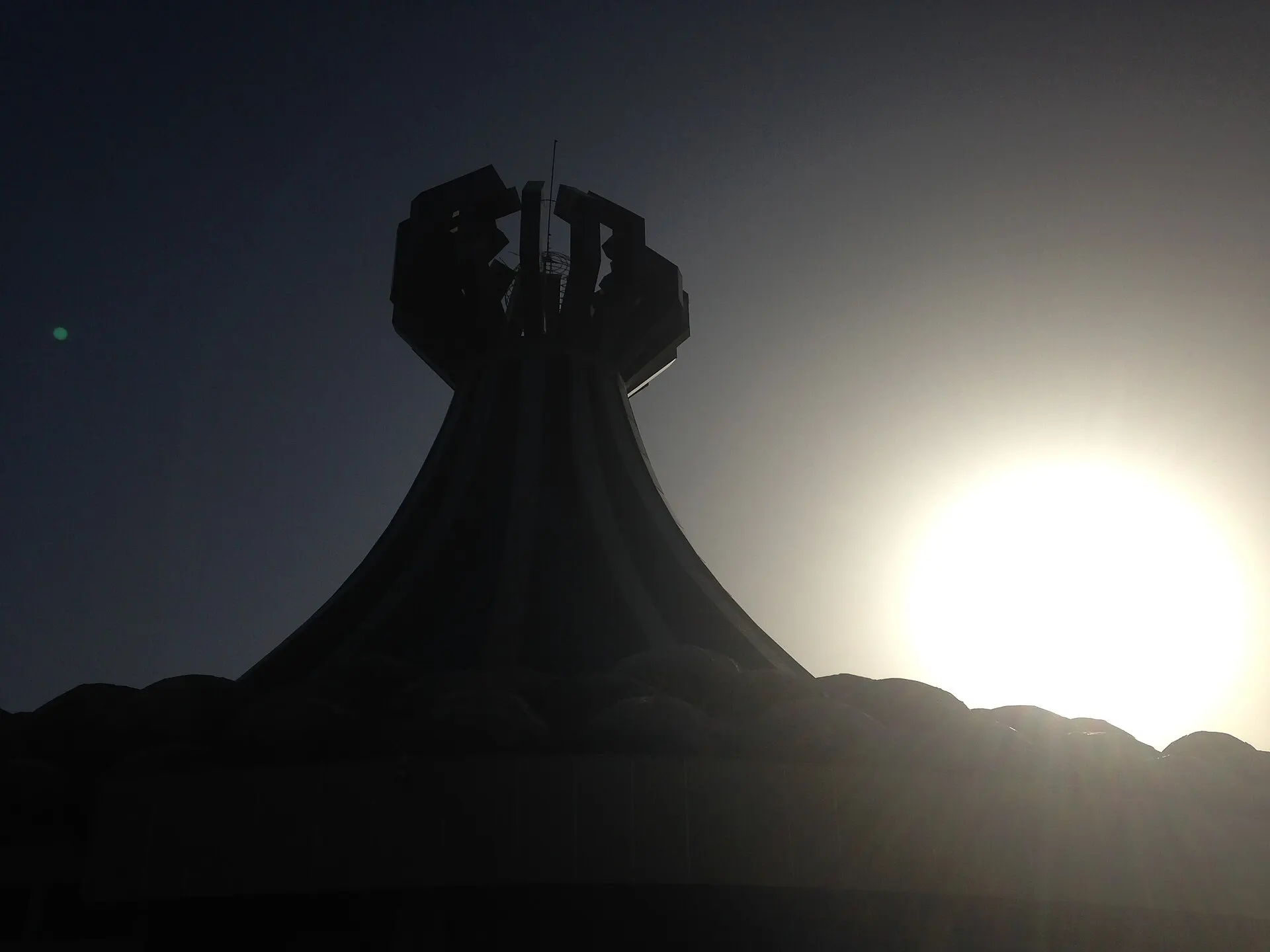
On 16 March 1988, near the end of the Iran-Iraq War, Iraqi forces attacked the town of Halabja, close to the Iranian border, with chemical weapons, killing around 5,000 civilians in a single day and injuring many thousands more. It remains the deadliest chemical attack on a civilian population in history. A memorial and museum opened on the edge of the town in 2003, with photographs, a reconstruction of the streets on the day, and a hall listing the names of the dead; the nearby cemetery holds mass graves. Halabja has since been recognised as a province in its own right.
TipVisit with a guide or local contact, behave as at a cemetery, and keep in mind that many people in the town lost family members.
Safety and current advice
As of October 2026, the two most widely used government advisories differ, and travellers should understand both precisely.
- US State Department: Iraq is at Level 4, Do Not Travel, for the whole country, including the Kurdistan Region. Reasons cited include terrorism, kidnapping, armed conflict and civil unrest, and the US government's limited ability to help citizens. US government staff numbers were reduced during 2026.
- UK FCDO: advises against all but essential travel to the Kurdistan Region of Iraq as a whole. In federal Iraq, it advises against all travel to Ninawa, Kirkuk and Salah al-Din provinces, Diyala (except Baqubah city), parts of Anbar west of Ramadi, Jurf al-Sakr in Babil, Sadr City in Baghdad, and areas within 5km of the Iranian border in Wasit, Maysan and Basra and of the Saudi and Kuwaiti borders. Most of the rest of the country, including Baghdad, Babil, Dhi Qar and Basra, is under all but essential travel.
Other governments publish their own advice, which may differ again. Practical risks noted in recent years include missile and drone strikes linked to regional conflicts (Erbil has been hit several times), cross-border military operations in the mountains near the Turkish and Iranian frontiers, unexploded ordnance and landmines in former front-line areas, and the suspension of flights when airspace closes. Anyone with an essential reason to be in the region should follow local news, register with their embassy where possible, keep away from border zones and military areas, and never walk off marked paths in the mountains.
Heritage beyond the Kurdistan Region
Iraq holds some of the most important ancient sites on earth. The places below lie outside the Kurdistan Region, in provinces where current FCDO advice is against all travel or all but essential travel, and the US advice is against any travel. They are described here as heritage worth knowing, not as recommended trips.
Babylon, on the Euphrates south of Baghdad, was the capital of Hammurabi and later of Nebuchadnezzar II, whose city of glazed-brick gates, temples and palaces became a legend. UNESCO listed it in 2019. Much of what stands is reconstruction, including a 1980s rebuilding of palace walls under Saddam Hussein, and military use of the site after 2003 caused documented damage; the original Ishtar Gate is in Berlin. It lies in Babil province, under all but essential travel advice from the FCDO.
Mosul's old city was devastated in 2017 during the battle against the Islamic State group, which blew up the twelfth-century al-Nouri mosque and its famous leaning al-Hadba minaret. Under UNESCO's Revive the Spirit of Mosul initiative, funded mainly by the United Arab Emirates, the mosque, the minaret, the al-Tahera church and the al-Saa'a convent were rebuilt using surviving materials where possible, and were officially reopened in September 2025. Mosul is in Ninawa province, where the FCDO advises against all travel.
Ur, in Dhi Qar province in the south, was one of the great Sumerian cities, and its ziggurat, built around 2100 BC and partly restored in the twentieth century, is the best-preserved monument of its kind. The royal tombs excavated here in the 1920s yielded some of the finest treasures of the ancient world.
The Mesopotamian marshes, or Ahwar, where the Tigris and Euphrates meet, were listed by UNESCO in 2016 together with Ur, Uruk and Eridu. The Marsh Arabs' reed houses and boats represent a way of life thousands of years old. The marshes were largely drained in the 1990s, partly reflooded after 2003, and remain threatened by drought and upstream dams. Parts lie along the Iranian border, inside the zone where the FCDO advises against all travel.
When to go
Spring, from late March to early June, is the finest season: the hills turn green, wild flowers cover the mountain slopes, the waterfalls are full, and Newroz, the Kurdish new year, brings bonfires, picnics and music around 21 March. Autumn, from late September to early November, is also pleasant, with clear skies and harvest fruit. Summer on the plains around Erbil is extremely hot, often well above 40°C in July and August, though the mountain resorts stay comfortable and fill with domestic tourists. Winter brings cold, rain and snow to the mountains, which can close high roads, while Erbil remains mild by day. Religious holidays such as Eid move through the calendar each year and fill hotels and roads.
Getting around
In normal times, Erbil International Airport and Sulaimaniyah International Airport have direct flights to Istanbul, Dubai, Amman, Doha and some European cities, though services have been suspended or reduced at short notice during regional crises; check with the airports and airlines. The main land crossing from Turkey is at Ibrahim Khalil, near Zakho, used by buses and taxis from south-east Turkey.
There are no passenger railways in the region. Shared taxis, which leave from fixed garages in each city when full, link Erbil, Duhok and Sulaymaniyah cheaply. Most visitors hire a car with a driver, which also helps at the frequent security checkpoints, where passports are checked. Self-drive is possible but roads can be chaotic, and some routes, such as the main road between Erbil and Sulaymaniyah, have at times been diverted around disputed areas like Kirkuk. Checkpoints between the Kurdistan Region and federal Iraq may turn back travellers whose visa covers only one side. Ride-hailing apps operate in Erbil and Sulaymaniyah.
Entry and visas
Iraq has two visa systems, and the difference matters.
- Kurdistan Region visa: citizens of many countries, including the UK, EU states and the US, can get a Kurdistan Region e-visa through the regional government's online portal, or a visa on arrival at Erbil and Sulaymaniyah airports and the main land borders. It has typically been issued for around 30 days, but the fee, duration and list of eligible nationalities have changed several times, so confirm before travel. It is valid only in the Kurdistan Region.
- Federal Iraq visa: for the rest of the country, including Babylon, Mosul and the south, a separate federal e-visa is required, applied for online in advance. The FCDO says visas on arrival are no longer available for British citizens in federal Iraq and that the e-visa costs US$160 for 60 days.
Passports need at least six months' validity on arrival and a blank page, and airlines may ask for an onward ticket. Longer-stay visitors face extra rules, including blood tests; check the FCDO entry requirements page or the nearest Iraqi or Kurdistan Region representation.
Local tips
- Carry your passport at all times; checkpoints are frequent and police may ask for it.
- The Iraqi dinar is the currency, and US dollars are widely used for larger payments. Cash is king: card acceptance is patchy and ATMs that accept foreign cards are few.
- Kurdish (Sorani in Erbil and Sulaymaniyah, Badini in Duhok) is the main language, with Arabic widely understood and English among younger people. A few words of Kurdish, such as spas (thank you), are warmly received.
- Dress conservatively, especially outside central Erbil and Sulaymaniyah and at religious sites.
- Do not photograph checkpoints, military sites, security forces or government buildings.
- Friday is the weekly holiday; many offices close Friday and Saturday.
- Hospitality is generous and invitations to tea are common; accepting a glass is polite even if you cannot stay long.
Eat and drink
Kurdish food overlaps with Turkish, Iranian and Arab cooking but has its own favourites. Dolma, vegetables and vine leaves stuffed with rice, is the great dish for family gatherings; kubba, bulgur shells filled with spiced meat, come fried or simmered in soup; and tashreeb is bread soaked in a rich broth of lamb or chicken. Grilled kebabs, served with flatbread, raw onion, sumac and herbs, are everywhere, and masgouf, river carp split open and slow-cooked beside a fire, is an Iraqi classic. Breakfast often means fresh bread with honey, clotted cream (qaymaq) and sheep's cheese. Tea, sweet, strong and served in small glasses, is drunk all day; dew, a salty yoghurt drink, cools you down in summer. Alcohol is sold in shops and some restaurants in Erbil, especially in the Christian district of Ankawa, but drinking in public is frowned upon.
Where to stay
Erbil has the widest choice, from international chain hotels to simple guesthouses near the citadel; Ankawa, the largely Christian suburb near the airport, has many mid-range hotels and restaurants. Sulaymaniyah has a more relaxed, café-culture feel and good-value hotels near the bazaar. In the mountains, Amadiya, Sulav and the resorts around Rawanduz have small hotels and guesthouses that fill on summer weekends and during Eid. Duhok makes a convenient base for Amadiya and Lalish.
A short history
Erbil was already ancient when the Assyrians knew it as Arbela, a cult centre of the goddess Ishtar; near it, in 331 BC, Alexander the Great defeated the Persian king Darius III at the battle of Gaugamela. The mountains of Kurdistan were long divided between empires, Roman and Parthian, then Byzantine and Persian, Ottoman and Safavid, while local Kurdish emirates such as Soran and Baban ruled much of the land in practice. After the First World War the region became part of the new state of Iraq, and Kurdish demands for self-rule led to decades of revolt and repression, culminating in the Anfal campaign of 1986 to 1989, in which tens of thousands died and thousands of villages were destroyed. After the 1991 uprising, a Western no-fly zone allowed a self-governing Kurdish region to emerge; it was recognised in Iraq's 2005 constitution. In 2014 the region's forces fought the Islamic State group, which reached within a short drive of Erbil, and took in hundreds of thousands of displaced Yazidis, Christians and Arabs, many of whom still live in camps.
Responsible travel
The Kurdistan Region is home to many communities, among them Kurds, Assyrian and Chaldean Christians, Yazidis, Turkmen and Arabs, several of whom have suffered violence within living memory. Treat memorials such as Halabja and Amna Suraka with the respect owed to a cemetery, and at Lalish and in churches and mosques follow the rules of those who worship there. Keep to established paths at archaeological sites and in the mountains, where landmines remain a hazard in some areas, and never buy antiquities: looting has caused severe damage to Iraq's heritage and exporting artefacts is illegal. Spend with locally owned guesthouses, guides and craft shops, such as the weavers supported by the Textile Museum, and travel with a reputable local operator who follows the current security situation. Above all, weigh current government advice honestly before any trip; for other mountain regions of the Middle East with long histories, see our Cappadocia and Armenia guides.