Armenia
The world's oldest Christian nation, where stone monasteries cling to gorges, Mount Ararat fills the horizon and Yerevan's cafés stay busy long after dark.
- Best time to go
- May to June and September to October; July and August are hot in the Ararat plain but fine for Sevan and the hills
- Local time
- –
- Currency
- Armenian Dram (AMD)
- Reading time
- 18 min
- Language
- Armenian and Russian
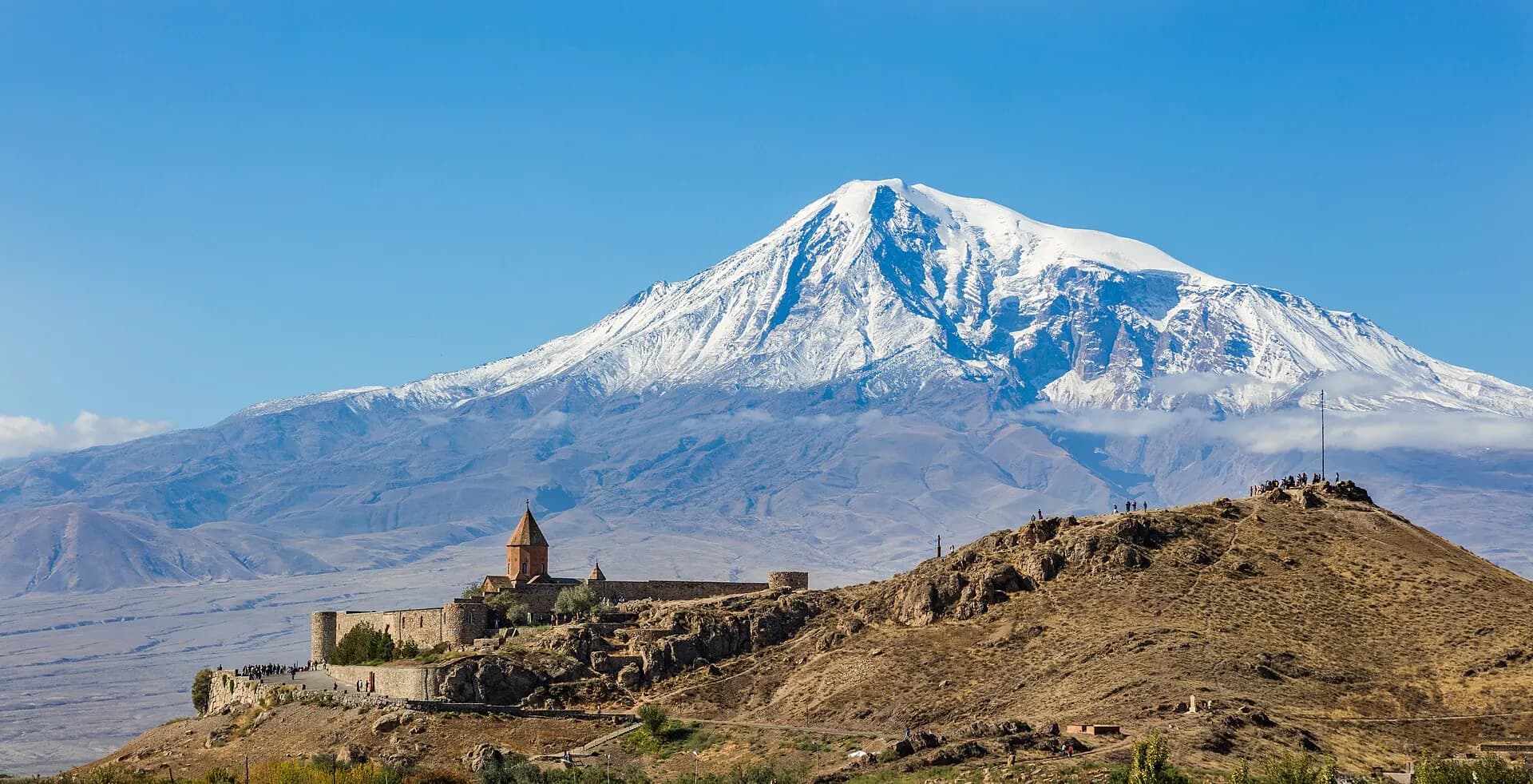
Armenia is a small, mountainous, landlocked country with an outsized history. It adopted Christianity as its state religion in the early fourth century, earlier than any other nation, and the result is a landscape scattered with churches and monasteries of honey-coloured and grey volcanic stone, many of them set in places so dramatic that the architecture seems to grow out of the rock. Above it all, just across the closed border in Turkey, rises Mount Ararat, the snow-capped national symbol that appears on the coat of arms, on brandy labels and in almost every view south from the capital. The alphabet is unique, invented in the fifth century; the food is generous; and the welcome, often involving apricots, coffee or a glass of something stronger, can be overwhelming.
The highlights below run as a route of about ten days to two weeks, using Yerevan as a hub. Spend a few days in the capital, then take day trips east to Garni and Geghard and west to Etchmiadzin and Zvartnots, before heading south through Khor Virap, Areni and Noravank to Tatev. Return north via Yerevan or the mountain roads to Lake Sevan and Dilijan, finishing in the Debed Canyon at Haghpat and Sanahin, which sits conveniently on the road to Georgia, so the trip flows naturally on to Tbilisi. Amberd, on the slopes of Mount Aragats, pairs well with the Etchmiadzin day or makes its own trip from Yerevan. With a week, concentrate on Yerevan, its day trips, Sevan and Dilijan, adding Noravank if you can.
The top 20 in Armenia
- 1
Republic Square
Photo: Diego Delso, CC BY-SA 4.0, via Wikimedia Commons
Yerevan's grand oval centrepiece was laid out in the Soviet period to plans by the architect Alexander Tamanian, and it is framed by monumental buildings in rosy and ochre tuff, the soft volcanic stone that gives the city its warm glow and its nickname, "the pink city". The Government House, the History Museum of Armenia and the National Gallery share the square, and a large musical fountain plays in the evenings during the warmer months, drawing families and couples until late. From here, broad avenues lead north towards Northern Avenue, a modern pedestrian boulevard, and the Opera House.
TipThe History Museum is the best single introduction to the country, from Bronze Age finds to medieval manuscripts. Visit it on your first day to make sense of everything that follows.
- 2
Vernissage market
Photo: Deb Collins, CC BY 2.0, via Wikimedia Commons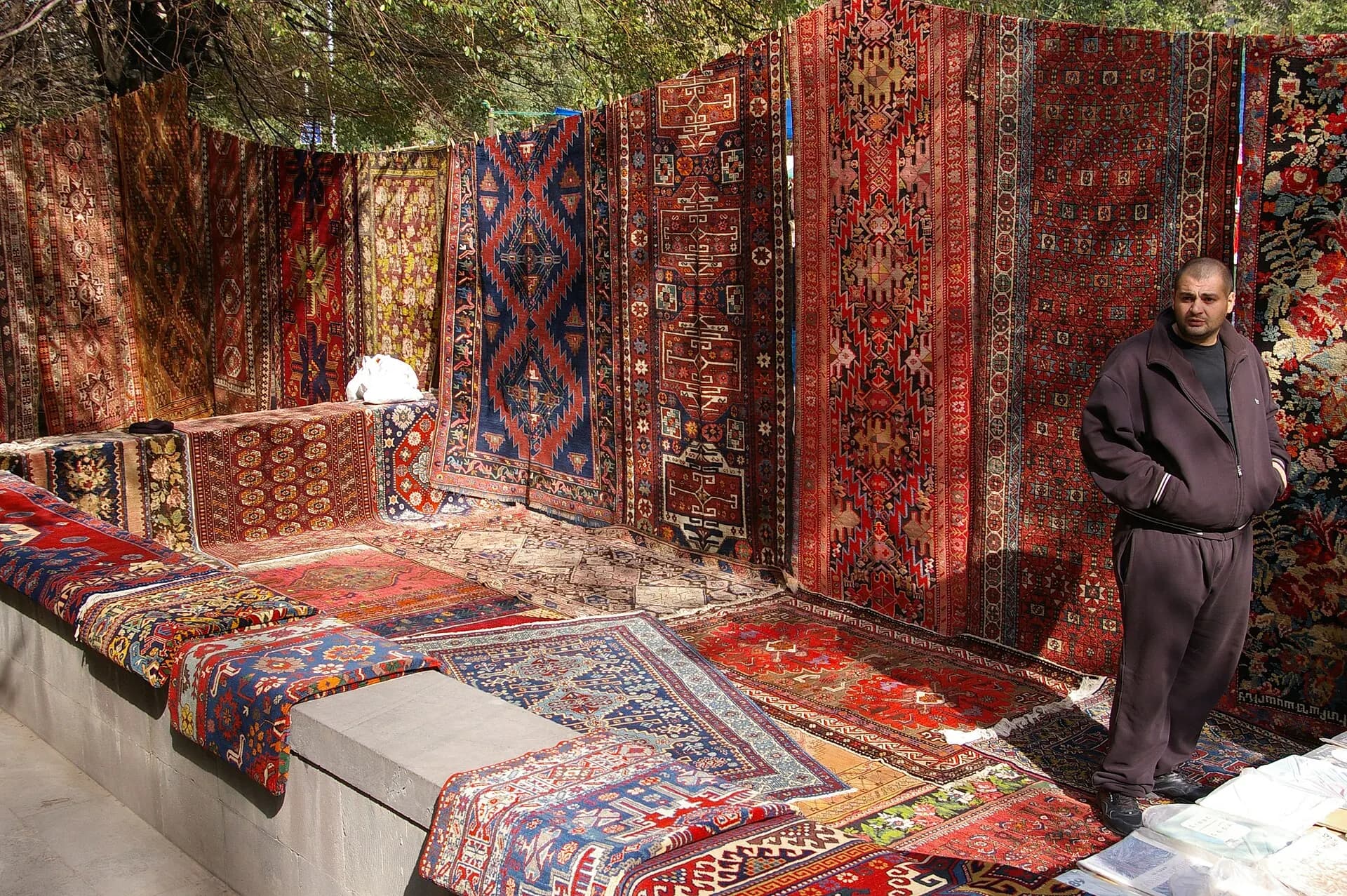
A short walk east of Republic Square, the Vernissage is an open-air market strung along a park, liveliest at weekends. Stalls sell carpets and rugs, carved wood, obsidian jewellery, chess and backgammon sets (nardi is a national passion), Soviet-era badges and cameras, ceramics, paintings and pomegranate-themed everything. It is part flea market and part craft fair, and a pleasant place to wander even if you buy nothing.
TipOld carpets and some antiques need an export certificate to leave the country; reputable dealers can arrange the paperwork, so ask before you pay.
- 3
Matenadaran
Photo: Vyacheslav Argenberg, CC BY 4.0, via Wikimedia Commons
At the top of Mashtots Avenue, guarded by a seated statue of Mesrop Mashtots, the inventor of the Armenian alphabet, the Matenadaran is one of the world's great manuscript libraries. Its collection runs to many thousands of manuscripts and fragments, and the exhibition halls display the finest of them: illuminated Gospels glowing with gold, lapis and vermilion, medieval treatises on medicine, astronomy and philosophy, and texts in Greek, Persian, Arabic and other languages that survive here when originals elsewhere were lost. Even with no interest in books, the miniatures are breathtaking.
TipThe museum opens from Tuesday to Saturday and closes on Sundays, Mondays and public holidays. An English-language guided tour is well worth booking.
- 4
Cascade
Photo: Vyacheslav Argenberg, CC BY 4.0, via Wikimedia Commons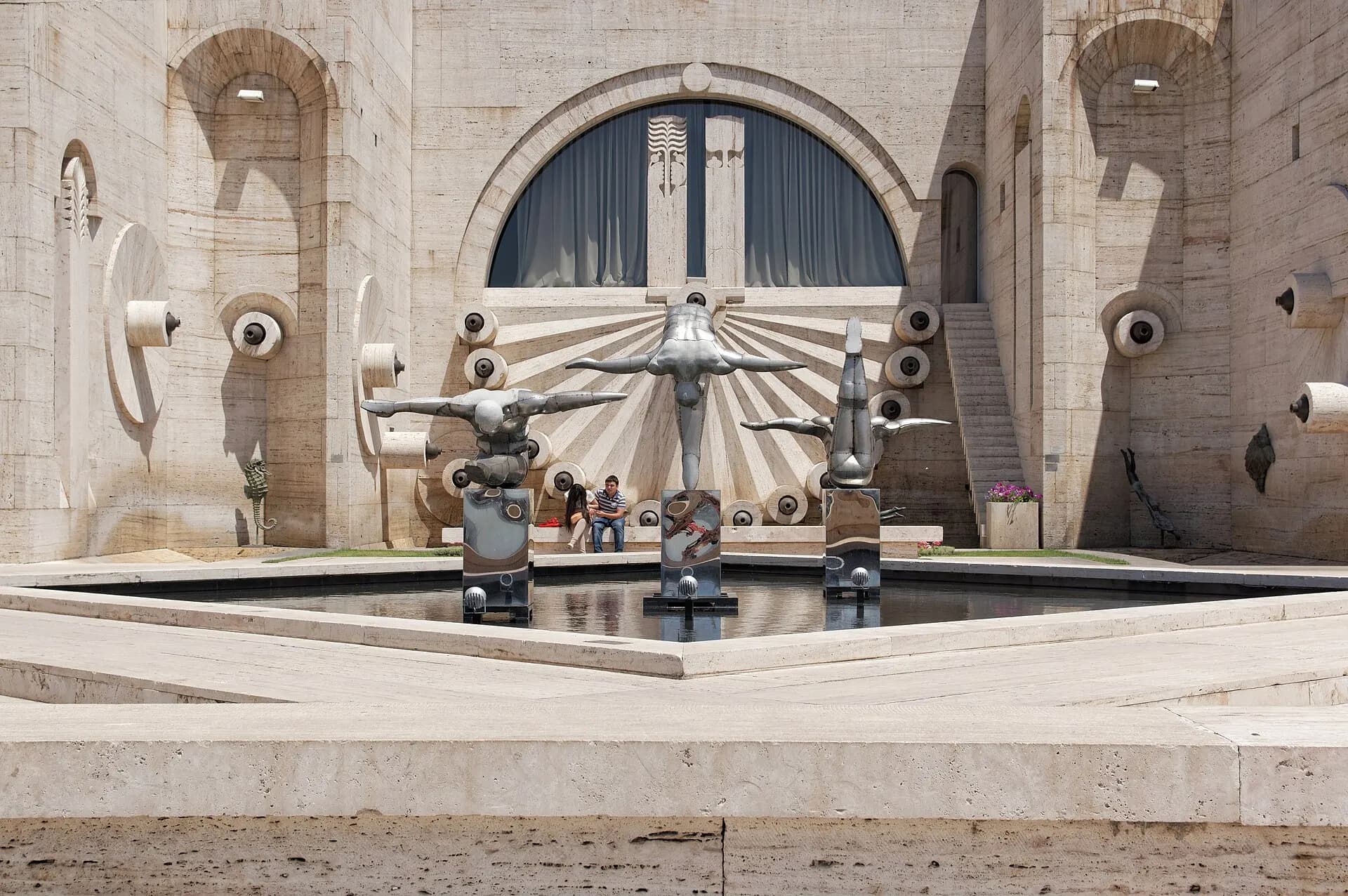
A colossal white limestone stairway climbs the hillside north of the centre, with terraces, fountains and sculptures at every level. It was begun in the Soviet era and completed with the help of the Cafesjian Center for the Arts, whose collection fills the garden at its foot with large modern sculptures, including works by Fernando Botero, and continues inside, where escalators climb the hill beneath the steps. From the top, the whole of Yerevan spreads out below, with Ararat beyond on clear days. The streets at the base are lined with cafés and bars.
TipClimb, or ride the indoor escalators, in the late afternoon and stay for sunset; mornings usually give the clearest view of Ararat.
- 5
Tsitsernakaberd Armenian Genocide Memorial
Photo: User:Matthias Süßen, CC BY-SA 4.0, via Wikimedia Commons
On a hill above the Hrazdan gorge, the national memorial to the victims of the Armenian Genocide of 1915 to 1923 is a place of quiet reflection. Twelve inward-leaning basalt slabs encircle an eternal flame, sunk below ground level so that visitors descend towards it, and a tall split stele beside it symbolises the survival and rebirth of the nation. A long memorial wall carries the names of towns and villages where massacres took place. The Armenian Genocide Museum-Institute, built into the hillside nearby, documents the deportations and killings with photographs, documents and survivors' testimony. Every 24 April, hundreds of thousands of people walk here to lay flowers around the flame.
TipDress and behave as you would at any memorial: speak quietly, and if you wish, bring flowers to lay at the flame, as Armenians do. Check the museum's website for current opening days before going.
- 6
Yerevan Brandy Company
Photo: Vyacheslav Argenberg, CC BY 4.0, via Wikimedia Commons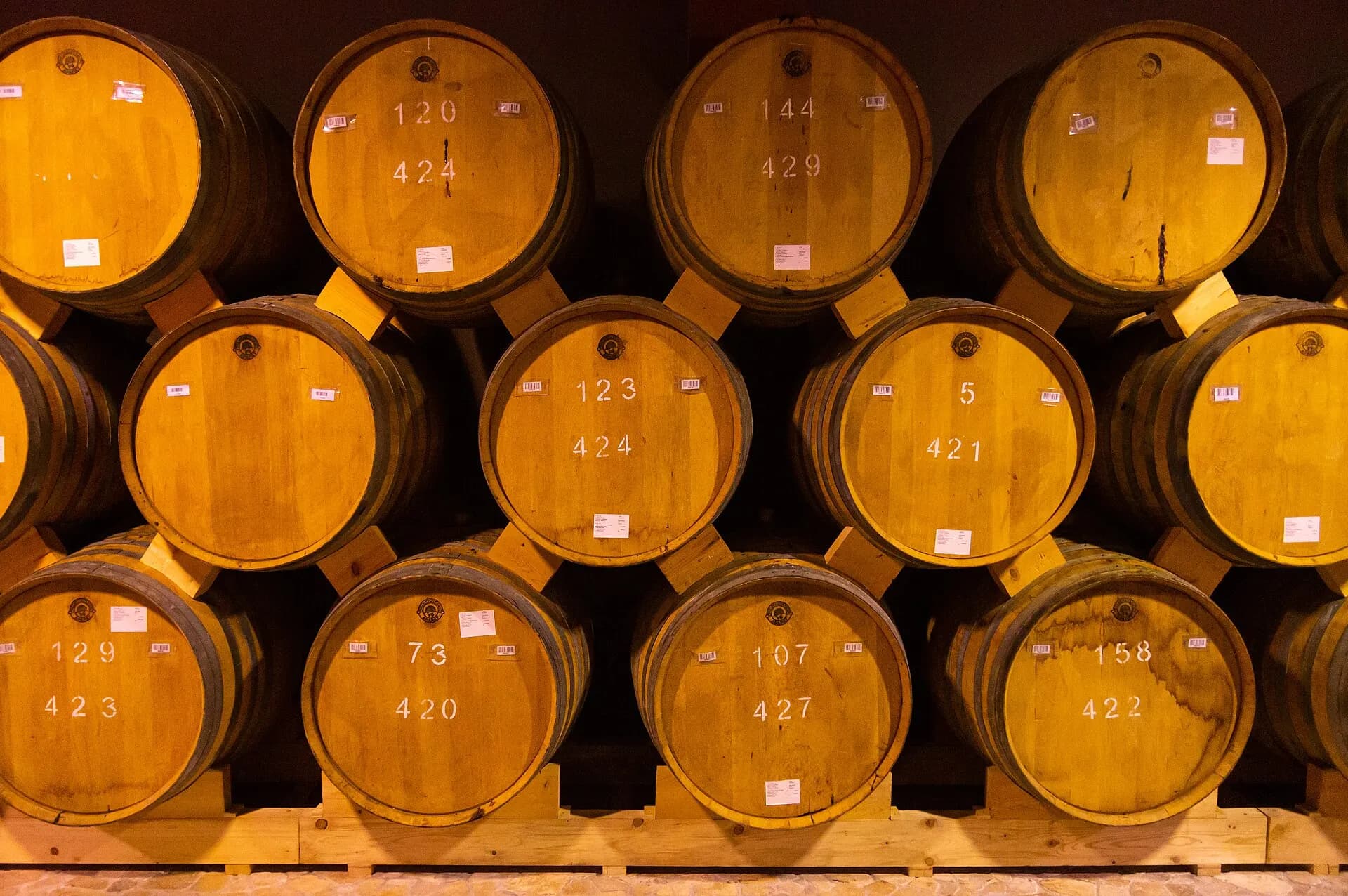
Armenian brandy, known simply as Ararat at home and long celebrated across the former Soviet Union, has been distilled in Yerevan since the late nineteenth century. The handsome factory on a bluff above the Hrazdan river, near the Victory Bridge, offers guided tours of its cellars and museum, where barrels laid down for notable occasions are kept, ending with a tasting of aged brandies. The story of Churchill's supposed fondness for the drink is part of every tour.
TipTours run at set times and fill up in summer, so reserve a day or two ahead, and eat beforehand if you choose a tasting with older brandies.
- 7
Garni Temple
Photo: Diego Delso, CC BY-SA 4.0, via Wikimedia Commons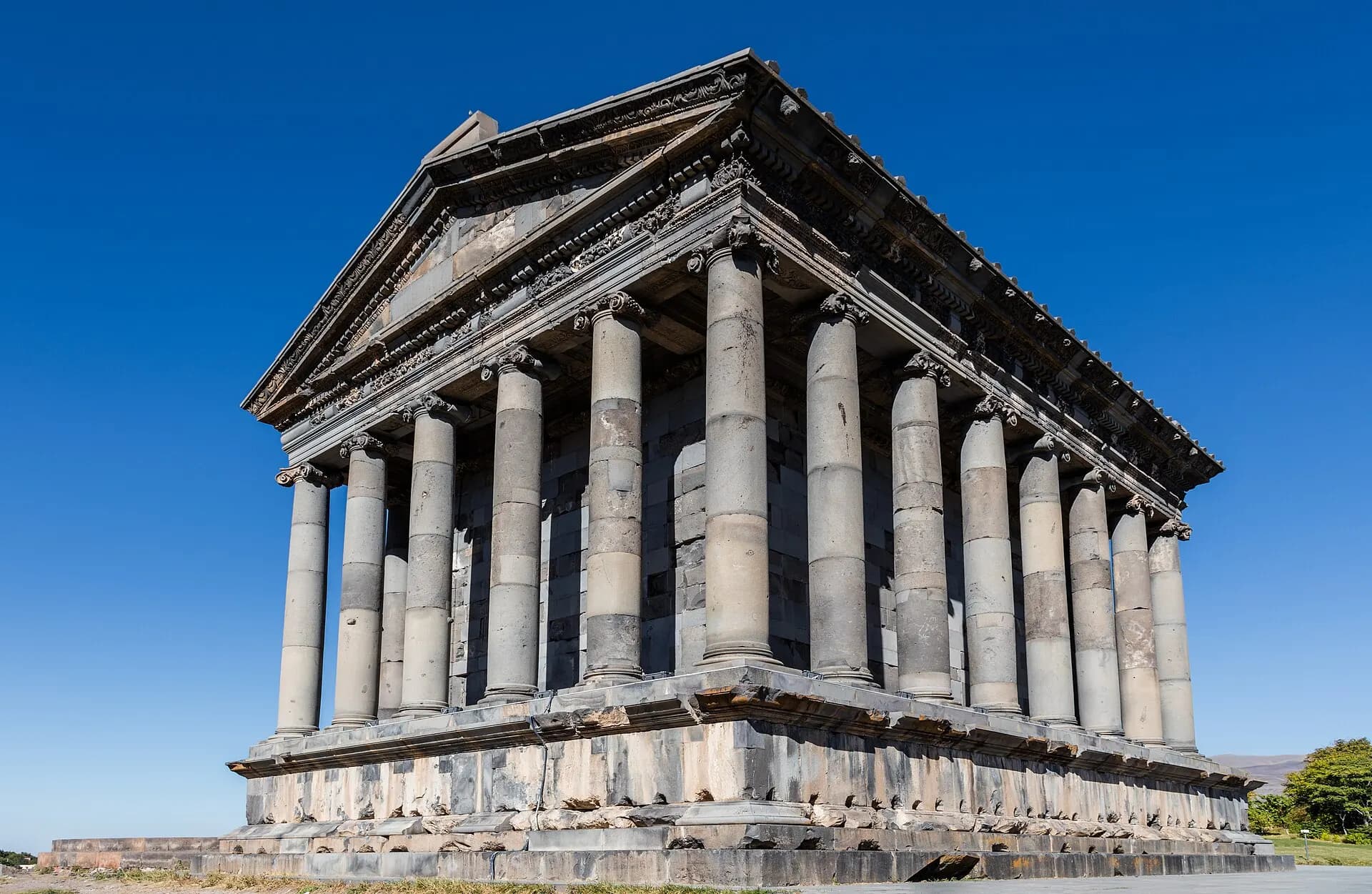
About forty minutes east of Yerevan, the Temple of Garni is the only standing Greco-Roman colonnaded building in the former Soviet world. Built in the first century AD, apparently for the sun god Mihr, it stands at the edge of a triangular promontory above a deep gorge. An earthquake toppled it in 1679, and it was reassembled from its original stones in the 1970s. Around it are the remains of a royal summer palace and a Roman bathhouse with a mosaic floor of sea gods and fish.
- 8
Symphony of Stones
Photo: Diego Delso, CC BY-SA 4.0, via Wikimedia Commons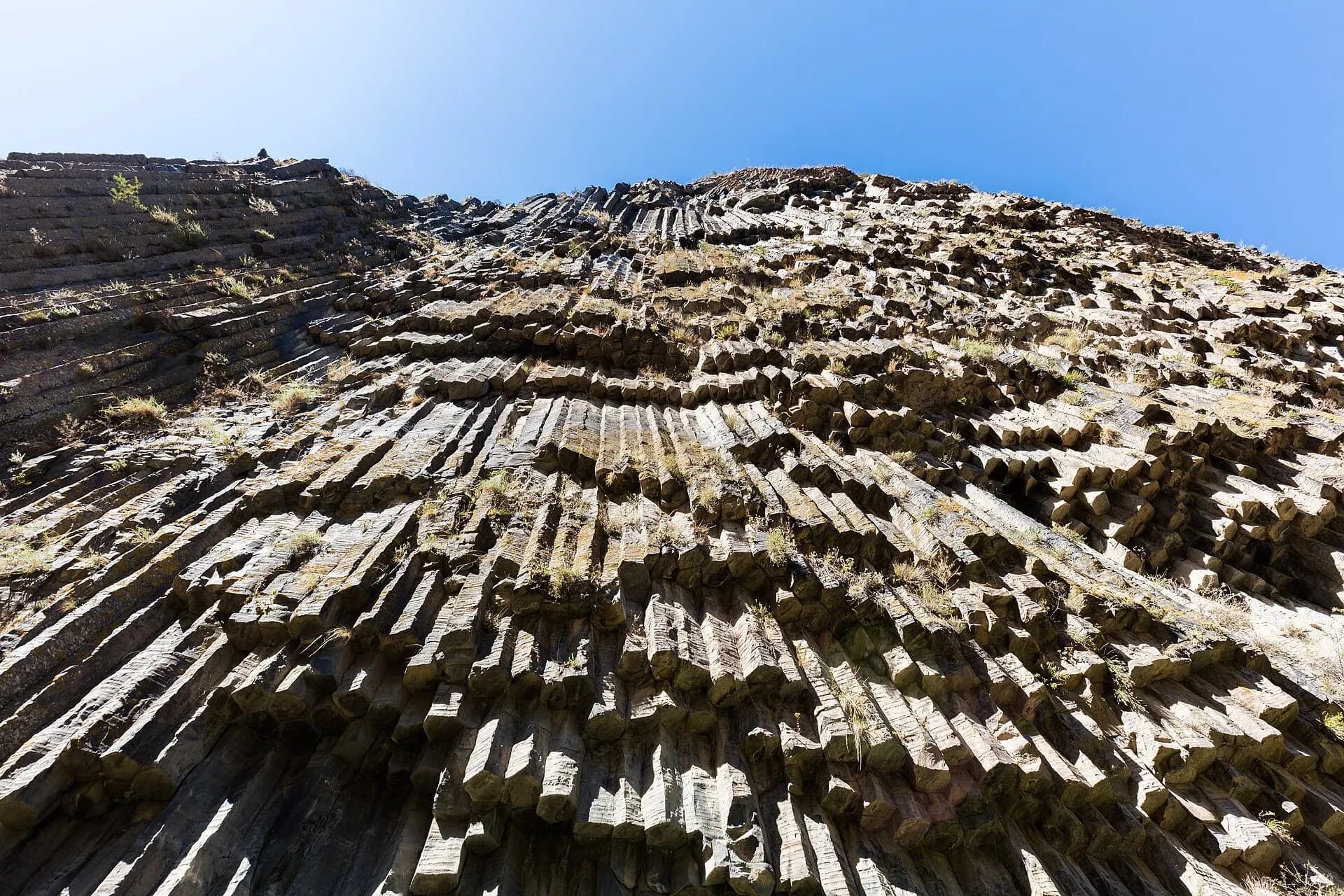
Below the temple, the Azat river has cut through a lava flow to expose towering walls of hexagonal basalt columns, so regular that they resemble the pipes of a vast organ. The formation, nicknamed the Symphony of Stones, is reached by a steep road or footpath down from Garni village; a walk along the river beneath the columns takes an hour or so.
TipLocal drivers with four-wheel-drive vehicles wait in Garni to run visitors down to the gorge and back if you don't want to tackle the steep climb out on foot.
- 9
Geghard Monastery
Photo: Diego Delso, CC BY-SA 4.0, via Wikimedia Commons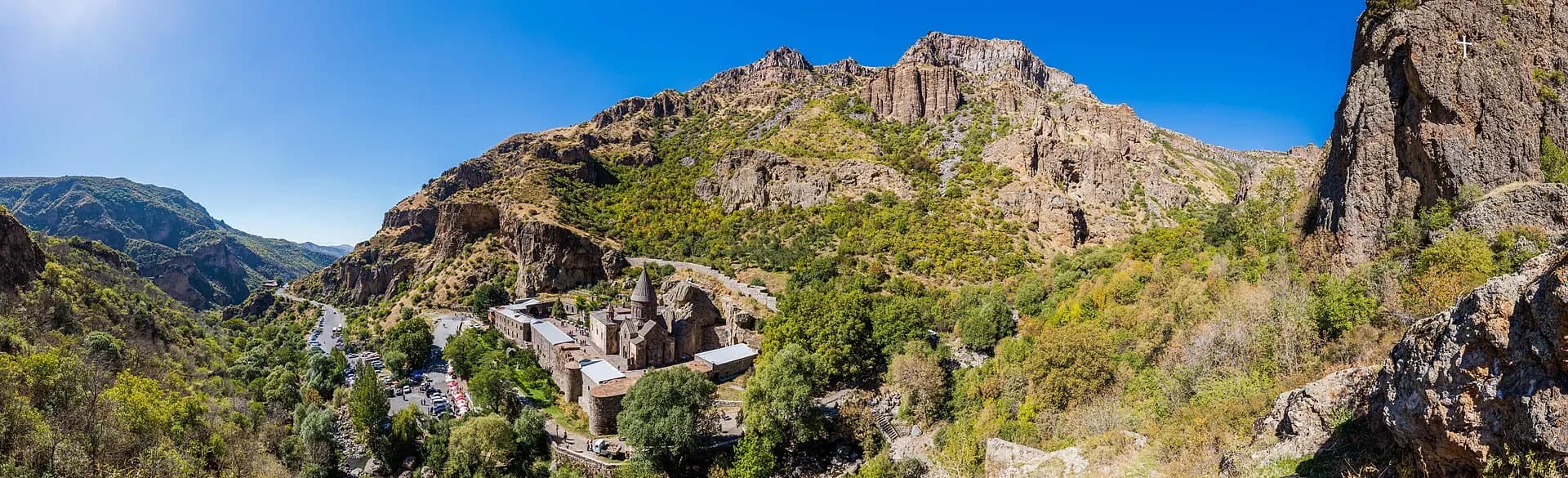
Further up the Azat valley, Geghard is partly built and partly carved out of the cliff. Founded according to tradition in the fourth century around a sacred spring, the present churches date mainly from the thirteenth century, and several of its chambers were hollowed out of the living rock, with domes, columns and carved family crests all cut from the mountain itself. The acoustics are extraordinary, and if a choir or a visiting group begins to sing, the sound seems to come from the stone. Its name refers to the spear said to have pierced Christ's side, once kept here and now in Etchmiadzin. Geghard and the upper Azat valley are a UNESCO World Heritage Site.
TipGarni and Geghard combine easily in a half day from Yerevan by taxi or tour; go early to beat the groups, and buy sweet gata bread from the women at the entrance.
- 10
Etchmiadzin Cathedral
Photo: Antisyntagmatarchos, CC0, via Wikimedia Commons
In the town of Vagharshapat, a half-hour drive west of Yerevan, Etchmiadzin is the spiritual centre of the Armenian Apostolic Church and the seat of its Catholicos. The Mother Cathedral, founded in the early fourth century and rebuilt several times, is often called the oldest cathedral in the world. Its spacious grounds hold the patriarchal residence, a seminary, modern churches and a treasury with remarkable relics. Nearby stand the churches of Saint Hripsime and Saint Gayane, seventh-century masterpieces named after early Christian martyrs. Together with Zvartnots, they form a UNESCO World Heritage Site.
TipSunday morning liturgy, with its chanting and incense, is the most atmospheric time to visit; dress modestly, with shoulders and knees covered.
- 11
Zvartnots Cathedral
Photo: Սարո Հովհաննիսյան, CC BY-SA 4.0, via Wikimedia Commons
On the road between Etchmiadzin and Yerevan, the ruins of Zvartnots, the "cathedral of celestial angels", are all that remain of an ambitious seventh-century round church, three tiers high, that collapsed in an earthquake within a few centuries of its building. Today, columns with carved eagle capitals and basket-weave patterns stand among the foundations against a backdrop of Ararat, and a small museum displays a model of the building as it may have looked.
- 12
Amberd
Photo: Սարո Հովհաննիսյան, CC BY-SA 4.0, via Wikimedia Commons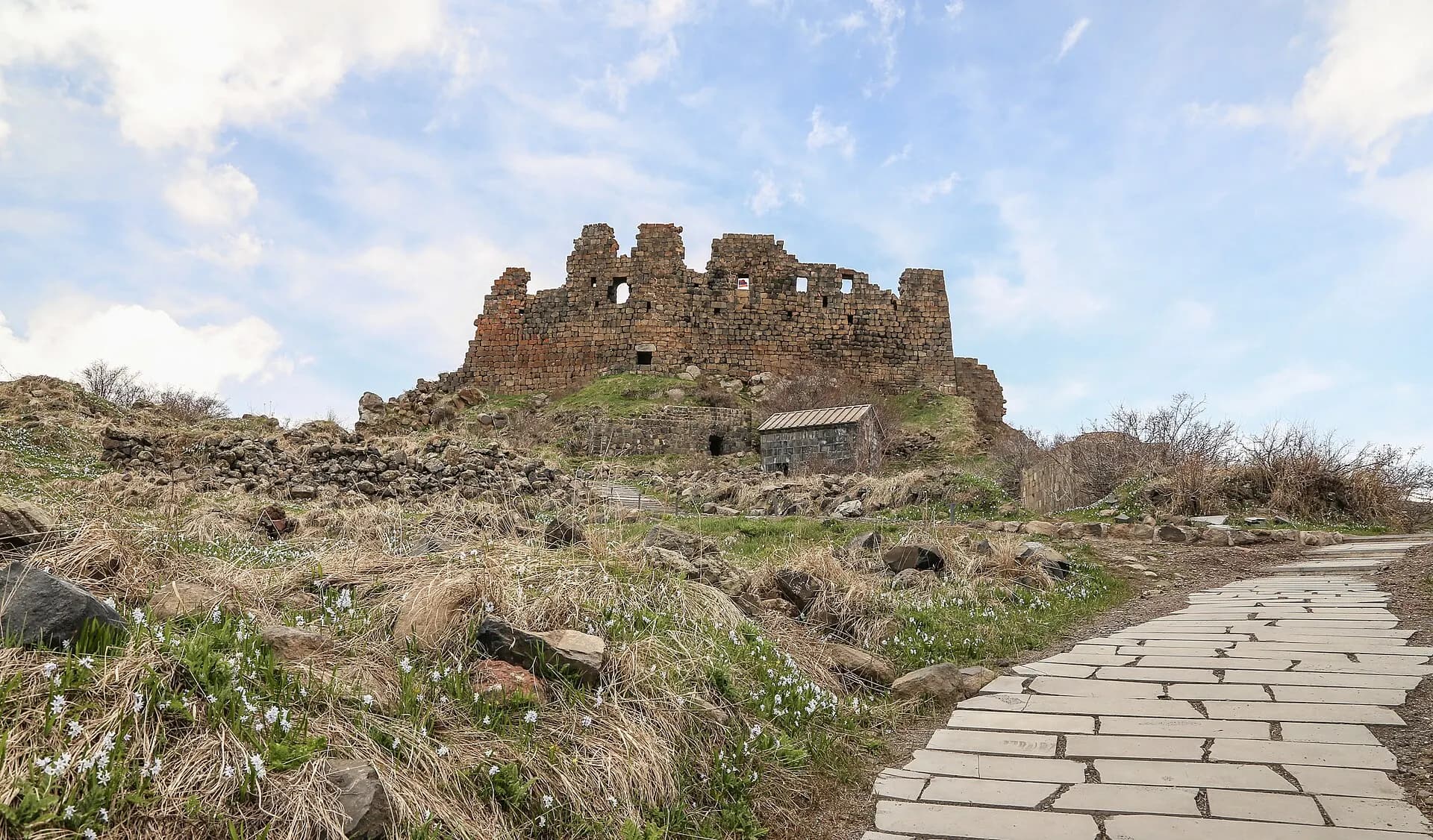
High on the southern slope of Mount Aragats, Armenia's highest peak, the fortress of Amberd and its small eleventh-century church stand on a triangular promontory at the meeting of two gorges, at about 2,300 metres. The fortress walls, built by the Pahlavuni princes, overlook a vast sweep of country, and the meadows around it are carpeted with flowers in early summer. A day trip from Yerevan can combine Amberd with the Armenian Alphabet Monument, a field of giant carved letters near Aparan, and in midsummer with the high-altitude lake of Kari Lich on Aragats.
TipThe road up is usually open only from late spring to autumn, as snow lingers at this altitude; check conditions locally before setting out.
- 13
Khor Virap
Photo: Marcin Konsek, CC BY-SA 4.0, via Wikimedia Commons
The most photographed view in Armenia is of this small monastery on a hillock in the Ararat plain, with the double peak of Ararat looming behind it across the Turkish border. Its significance is older than its buildings: it was here that Gregory the Illuminator was held for years in a pit by King Tiridates III before curing the king and converting him, leading to Armenia's adoption of Christianity. Visitors can climb down a steep ladder into the deep pit beneath one of the chapels, and the walk up the neighbouring hill gives the classic view.
TipArarat is clearest in the early morning and most often hidden by haze or cloud in summer afternoons. Khor Virap is very close to the closed Turkish border; stay on the monastery grounds and marked paths and don't photograph border installations.
- 14
Areni
Photo: Dor Shabashewitz, CC BY 4.0, via Wikimedia Commons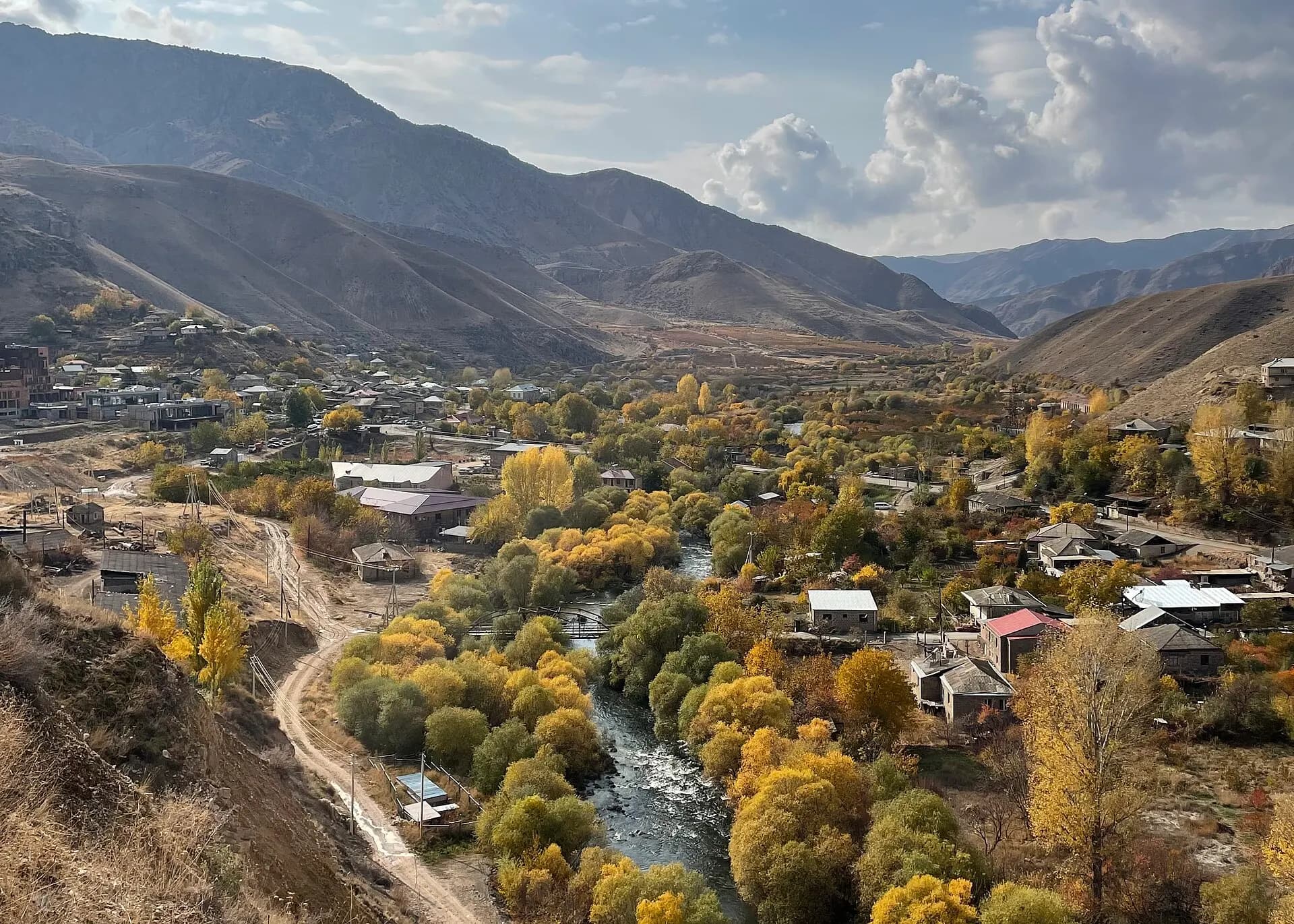
In the Vayots Dzor province, the village of Areni gives its name to Armenia's most distinctive red grape and to a wine-making tradition of remarkable age. Small wineries and family cellars offer tastings, and an annual wine festival is usually held in the autumn. A short distance away, the Areni-1 cave yielded the remains of what archaeologists describe as one of the oldest known wineries, more than six thousand years old, as well as a famously well-preserved leather shoe of similar age. Parts of the cave are open to visitors.
- 15
Noravank
Photo: Diego Delso, CC BY-SA 4.0, via Wikimedia Commons
Up a narrow gorge of red cliffs from Areni, Noravank is a thirteenth-century monastery whose setting rivals its architecture. Its finest building, the two-storey Church of the Holy Mother of God, was designed by the sculptor and architect Momik and is reached by a narrow cantilevered staircase on its façade. The carved tympana over the doorways, with God the Father, the Virgin and Child and other figures, are among the best medieval reliefs in the country. In the late afternoon the cliffs around the monastery turn a deep orange.
TipCombine Khor Virap, Areni and Noravank in a long day trip from Yerevan, or stop on the way south to Tatev. Noravank and Areni lie near the border with Azerbaijan's Nakhchivan exclave, so stay on the main roads and sites.
- 16
Wings of Tatev and Tatev Monastery
Photo: Diego Delso, CC BY-SA 4.0, via Wikimedia Commons
In the southern province of Syunik, the monastery of Tatev crowns a spur above the Vorotan gorge. From the ninth century it grew into one of the great medieval centres of learning, with a university, a library and hundreds of monks, and its fortified walls enclose churches, a bell tower, a refectory and an oil press. The most memorable way to arrive is by the Wings of Tatev, a cable car that crosses the gorge from Halidzor in a single span of about 5.7 kilometres, among the longest reversible aerial tramways in the world, floating some 320 metres above the valley floor in a ride of around a quarter of an hour. Below the monastery, a path leads down to the Devil's Bridge, a natural rock arch with warm springs.
TipThe cable car runs at set times and stops in strong wind or for maintenance; check hours and buy tickets on the operator's website, and book ahead in summer and at weekends. Southern Syunik borders Azerbaijan, so read current official advice before planning any further travel beyond Tatev and Goris.
- 17
Sevanavank
Photo: Anastasiya Lvova, CC BY-SA 4.0, via Wikimedia Commons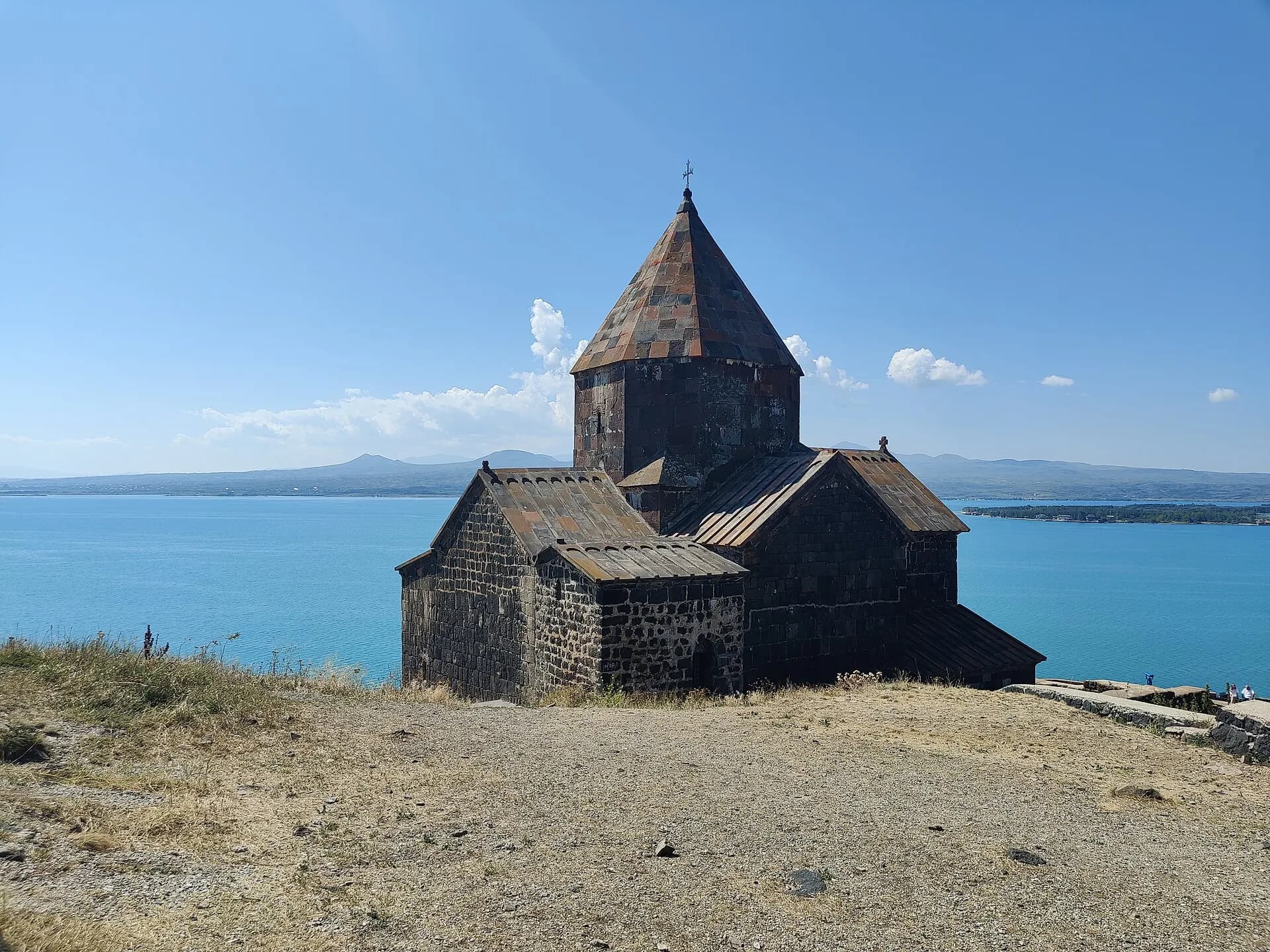
Lake Sevan, at nearly 1,900 metres above sea level, is one of the largest high-altitude freshwater lakes in the world, a huge expanse of blue ringed by bare mountains. On a peninsula at its north-western corner, which was an island until the lake's level was lowered in the Soviet period, the two small dark basalt churches of Sevanavank look out over the water. It is a short climb from the car park, and the view along the lake is lovely. Armenians come to the shore in summer to swim, eat grilled fish and escape the heat of the plain.
TipThe water is cold even in August, and the weather at this altitude changes quickly; bring a warm layer. Ishkhan, the Sevan trout, is the local speciality on lakeside menus.
- 18
Dilijan
Photo: Alexxx1979, CC BY-SA 4.0, via Wikimedia Commons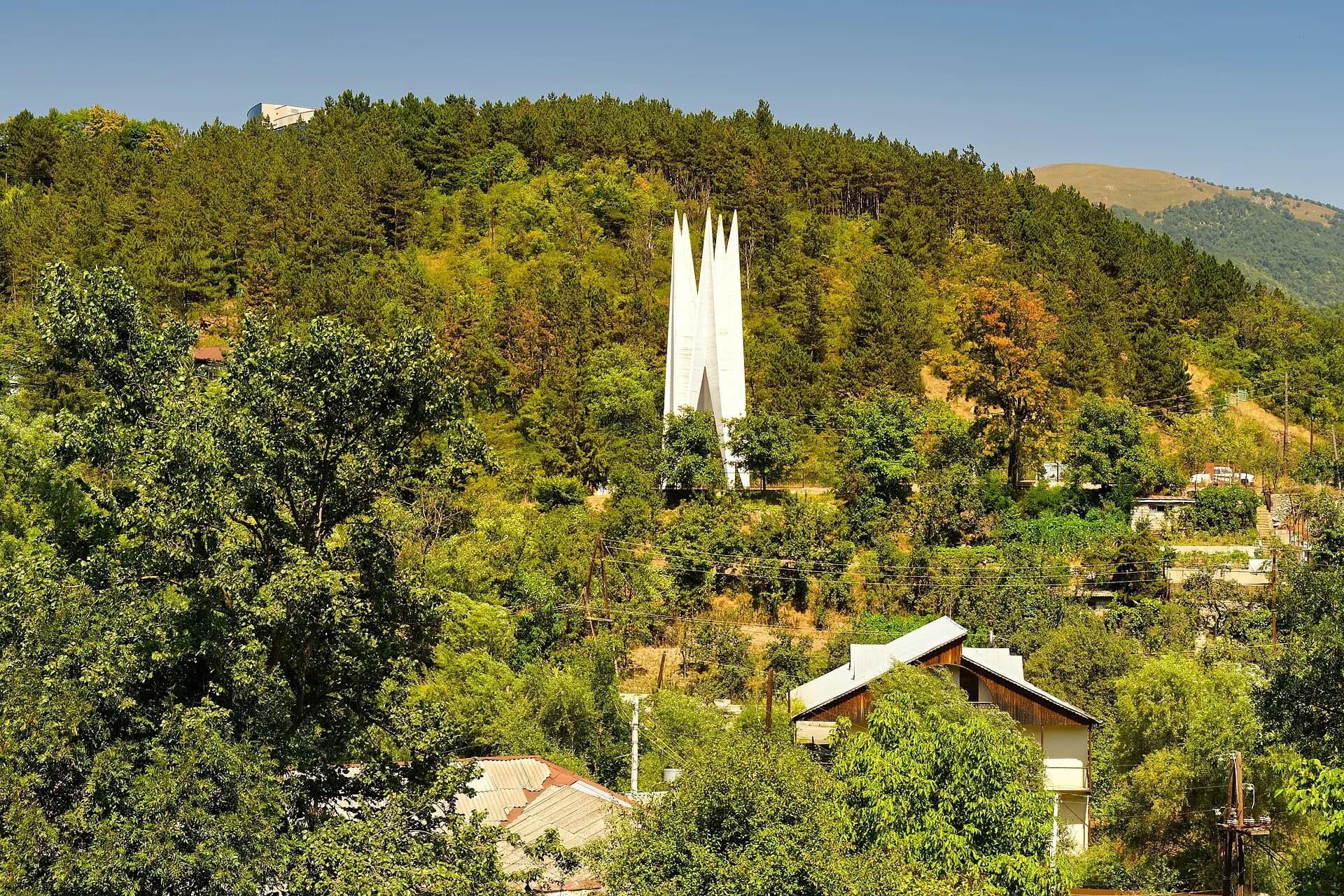
Over the pass north of Sevan the landscape changes completely. Dilijan sits in a valley of thick oak and beech forest, protected as Dilijan National Park, and it was long a favourite retreat of Soviet artists and composers, earning comparisons with Switzerland. A restored lane of nineteenth-century wooden houses, Sharambeyan Street, holds craft workshops and a guesthouse, and the surrounding forest has hiking trails and the medieval monasteries of Haghartsin and Goshavank within half an hour's drive. It makes a peaceful base between Sevan and the north.
TipUse Dilijan as a base to walk sections of the Transcaucasian Trail, but continue north through Vanadzor rather than on the road via Ijevan to Noyemberyan, which current UK advice warns against.
- 19
Sanahin Monastery
Photo: Diego Delso, CC BY-SA 4.0, via Wikimedia Commons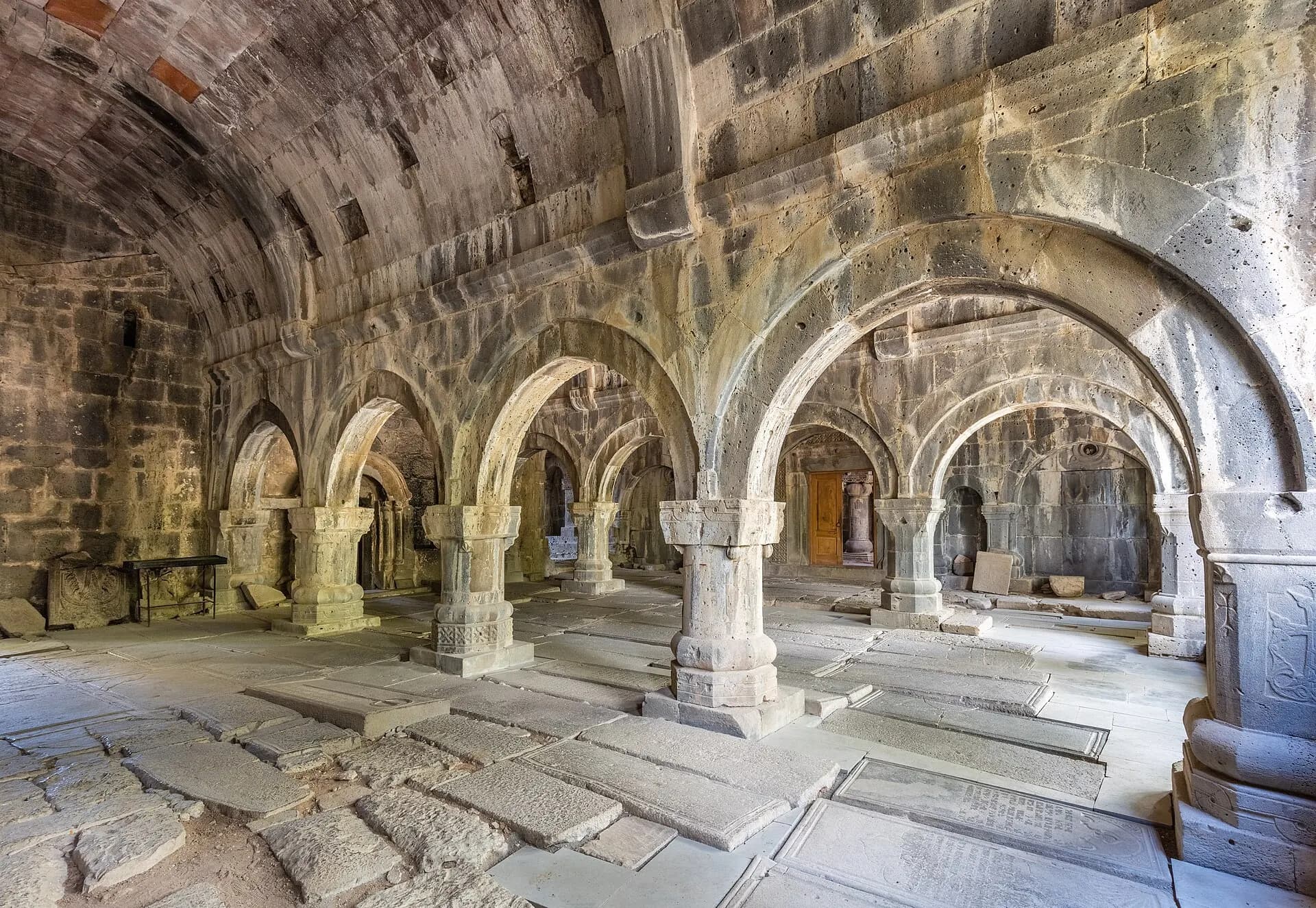
In the Debed Canyon in the far north, near the old copper-mining town of Alaverdi, Sanahin is a tenth-century monastery complex of churches, galleries, a library and a bell tower, darkened by age and wrapped in moss. Its interiors are a maze of vaulted halls whose floors are paved with tombstones, and the carved khachkars, Armenia's intricate cross-stones, are among the finest in the country. The village is also the birthplace of the Mikoyan brothers, one of whom co-designed the MiG fighter jet, which a small museum commemorates.
- 20
Haghpat Monastery
Photo: Սարո Հովհաննիսյան, CC BY-SA 4.0, via Wikimedia Commons
Across the gorge from Sanahin and visible from it, Haghpat is a larger and slightly later monastery, founded in the tenth century and once home to a celebrated scriptorium. Its main church, Surb Nshan, is decorated inside with fragments of frescoes, and a famous khachkar known as the Amenaprkich, the All-Saviour, shows the Crucifixion with unusual delicacy. Haghpat and Sanahin were jointly inscribed on the UNESCO World Heritage List in 1996, together representing the flowering of Armenian religious architecture between the tenth and thirteenth centuries.
TipThe Debed Canyon road is the main route to the Georgian border at Bagratashen–Sadakhlo, so Haghpat and Sanahin make a natural last stop before continuing to Tbilisi.
When to go
Armenia has a dry continental climate with strong contrasts between seasons and altitudes. Late spring, from May to June, is lovely: the hills are green, wildflowers bloom and the temperatures are comfortable for exploring monasteries. September and October bring the grape harvest, golden light, autumn colour in Dilijan and some of the clearest days for seeing Ararat. July and August are hot and dusty on the Ararat plain, with Yerevan often above 35°C, but the city stays lively at night and Sevan, Dilijan and the mountains are pleasantly cool. Winter is cold and snowy in the highlands, with roads to Amberd and some high passes closed, though Yerevan is quieter and atmospheric and the ski resort of Tsaghkadzor operates. Spring and autumn are also when Ararat is most likely to appear, crowned with snow, from the capital.
Getting around
Yerevan's Zvartnots International Airport is the main gateway, with flights from across Europe and the Middle East. Most visitors from the UK, the EU, the United States and many other countries can visit without a visa for up to 180 days a year; others can usually apply for an e-visa on the official portal. Check the Ministry of Foreign Affairs website for your nationality before travelling.
Within the country, distances are short but roads are often slow and mountainous. The simplest options are a hired car with a driver, widely and reasonably available in Yerevan, organised day tours, or a rental car for confident drivers; some secondary roads are rough, and livestock and assertive driving are part of the experience. Ride-hailing apps work well and cheaply in Yerevan and for many day trips. Shared minibuses, known as marshrutkas, link Yerevan with most towns from several bus stations, but timetables are informal and departure points change, so ask locally. The Yerevan metro is handy for a few central stops. The South Caucasus Railway runs a few routes, including a seasonal train between Yerevan and Lake Sevan in summer and an overnight service to Tbilisi; check the operator for current schedules.
The land borders with Turkey and Azerbaijan are closed. Most overland travellers enter or leave via Georgia, which is a straightforward drive or minibus ride from Yerevan through the Debed Canyon or via Gyumri, and there is also a crossing to Iran in the far south.
Local tips
- The currency is the dram (AMD). Cards are widely accepted in Yerevan, but carry cash for markets, monasteries, small guesthouses and rural taxis. ATMs are easy to find in towns.
- Dress modestly in churches: covered shoulders and knees, and women may wish to cover their hair; scarves are often available at the entrance. Light a thin beeswax candle in the sand trays, as Armenians do.
- Many Armenians speak Russian as a second language, and English is increasingly common among younger people in Yerevan, but much less so in villages. Learning to say barev dzez (hello) and shnorhakalutyun (thank you) goes a long way.
- Tap water in Yerevan is generally considered drinkable and comes from mountain springs; the little drinking fountains on street corners, called pulpulaks, run with cold water in summer.
- Don't photograph military sites, equipment or border installations. This is taken seriously and visitors have been questioned for it.
- Toasting is a ritual at Armenian tables. It is fine to sip rather than drain your glass, and to say no to refills.
- Expect to be offered fruit, coffee or a drink by strangers. Accepting graciously is part of the culture, but a polite refusal is also understood.
Borders and safety
Armenia is generally a safe and low-crime country for travellers, and Yerevan feels relaxed by day and night. Its geography, however, is shaped by unresolved conflict with Azerbaijan. Following the wars over Nagorno-Karabakh, the last of which ended in 2023 with the departure of the region's Armenian population, the border between the two countries remains closed, although the two governments have been engaged in a peace process. At the time of writing, the UK Foreign, Commonwealth and Development Office advises against all travel to within 5 kilometres of the entire eastern border with Azerbaijan, and against all travel on the M16/H26 road between Ijevan and Noyemberyan in the north-east. Parts of the main road through Syunik, and stretches of the eastern shore of Lake Sevan, run close to that border.
None of the places in this guide lies within the area the FCDO advises against, but routes to some of them can pass nearby, so plan your driving with an up-to-date map and check your own government's advice before travelling, as it can change at short notice. The border with Turkey is also closed, though there are flights between Yerevan and Istanbul. Travel insurance may be invalidated if you go against official advice.
Eat and drink
Armenian food is hearty, seasonal and built for sharing. Khorovats, meat grilled over coals, usually pork or lamb, is the centrepiece of any celebration, served with grilled vegetables and lavash, the thin flatbread baked against the walls of a clay tandoor oven and listed by UNESCO as intangible cultural heritage. Look for dolma wrapped in vine or cabbage leaves, khash (a rich winter broth of cow's feet eaten early in the morning with garlic and vodka), harissa (a slow-cooked porridge of wheat and chicken), spas (a warm yoghurt soup), and Gyumri-style khashlama, lamb stewed with vegetables. Tables are laden with fresh herbs, salty white cheeses and pickles, and markets such as Yerevan's GUM market overflow with dried fruit, nuts and sujukh, walnuts threaded on a string and dipped in thickened grape juice.
Apricots are a national emblem, best in early summer. Coffee is brewed thick, in the eastern way, and tea made from mountain thyme is common in villages. Armenian brandy remains the famous drink, alongside oghi, a strong fruit spirit often home-made from mulberries, apricots or cornelian cherries. The wine scene has been reborn in recent years, with small producers in Vayots Dzor, Armavir and Tavush making characterful reds from Areni and whites from Voskehat; Yerevan's wine bars are a good place to taste them.
Where to base yourself
Yerevan is the obvious base for at least three or four nights, with day trips to Garni and Geghard, Etchmiadzin and Zvartnots, Amberd, and Khor Virap with Noravank. The centre, within the ring of parks around the Kentron district, is walkable and has the best choice of hotels, guesthouses and restaurants. For the south, spend a night in Goris or at a guesthouse near Tatev, or in Yeghegnadzor for Noravank and the wineries of Vayots Dzor. At Lake Sevan, there are resorts and guesthouses near Sevan town and the peninsula, though many close outside summer. Dilijan has a good range of guesthouses and hotels in the forest, and in the north there are homestays in Haghpat and Alaverdi. From there, continue across the border to Tbilisi.
A short history
The Armenian highlands were home to the Iron Age kingdom of Urartu, whose fortress of Erebuni, founded in 782 BC, marks the beginning of Yerevan. A distinct Armenian kingdom reached its peak under Tigranes the Great in the first century BC, briefly stretching from the Caspian to the Mediterranean, before being squeezed between Rome and Persia. Around 301 AD King Tiridates III adopted Christianity, and in the early fifth century Mesrop Mashtots created the alphabet, laying the foundations of a literary and religious culture that survived centuries of rule by Arabs, Byzantines, Seljuks, Mongols, Persians and Ottomans. The medieval monasteries you see today were built in periods of relative autonomy under local princely families.
In the nineteenth century, eastern Armenia passed to the Russian Empire, while the larger western part remained Ottoman. During the First World War, the Ottoman government carried out the deportation and mass killing of its Armenian population, an atrocity remembered as the Armenian Genocide, in which a very large proportion of the Ottoman Armenians perished and the survivors were scattered into a worldwide diaspora. A short-lived independent republic in 1918 was absorbed into the Soviet Union in 1920. Armenia regained independence in 1991, three years after a devastating earthquake struck the north, and went to war with Azerbaijan over Nagorno-Karabakh; renewed fighting in 2020 and 2023 ended with Azerbaijan taking full control of the region. Today the country, with a diaspora far larger than its home population of around three million, is looking increasingly towards Europe.
Responsible travel
Monasteries are living places of worship as well as monuments: keep your voice down during services, ask before photographing priests or worshippers, and don't climb on walls or khachkars. Stay on marked paths in national parks such as Dilijan, and take litter home, as rubbish collection in rural areas is limited. At Lake Sevan, whose ecology has suffered from Soviet-era drainage, choose operators that respect the protected shoreline. Staying in village guesthouses, eating in family restaurants and buying crafts directly from makers at the Vernissage or in workshops in Dilijan keeps money in local communities. At the Genocide Memorial and in conversations about the conflicts with Azerbaijan, listen more than you speak; these are raw subjects for many families.