Jaipur
The Pink City of Rajasthan: hilltop forts, a palace of winds, and bazaars glowing with colour.
- Best time to go
- October to March, for warm, dry days and cool nights
- Local time
- –
- Currency
- Indian Rupee (INR)
- Reading time
- 4 min
- Language
- Hindi and English
Jaipur was founded in 1727 by Maharaja Sawai Jai Singh II, a ruler fascinated by astronomy and mathematics, who laid out his new capital on a planned grid. In 1876, the old city was painted terracotta pink to welcome the Prince of Wales, and it has kept the colour, and the nickname of the Pink City, ever since. The walled city is now a World Heritage Site.
Jaipur forms the Golden Triangle with Delhi and Agra, and it's the gateway to Rajasthan, a land of forts, palaces and deserts. It's busy, noisy and colourful, with traffic, cows and camels sharing the streets. Start early, take breaks from the heat and bustle, and you'll find it one of India's most rewarding cities.
The top 9 in Jaipur
- 1
Amber Fort
Photo: Diego Delso, CC BY-SA 4.0, via Wikimedia Commons
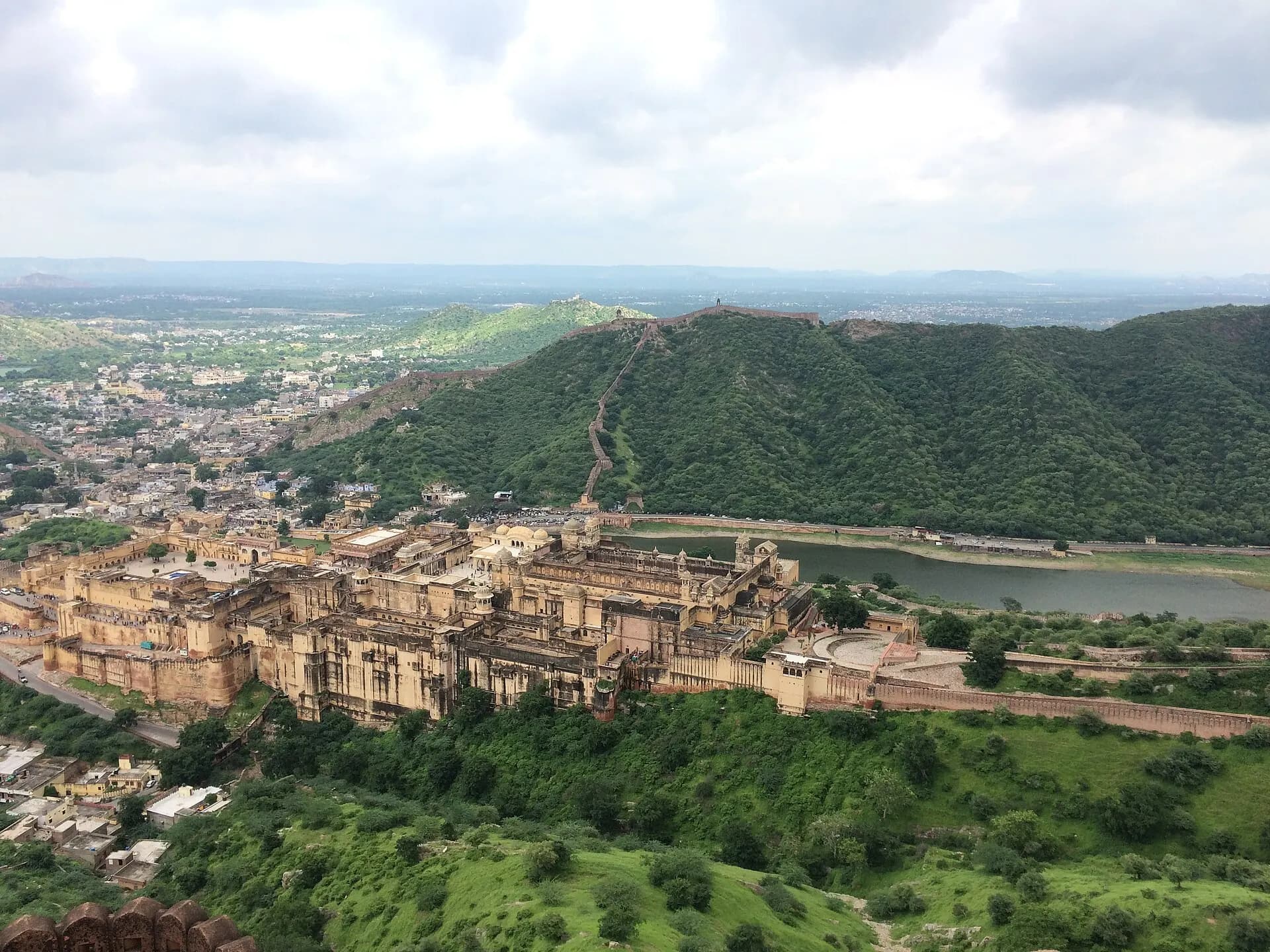
A magnificent hilltop fort-palace of honey-coloured stone above Maota Lake, about eleven kilometres north of the city. Inside, a series of courtyards leads to the Sheesh Mahal, the Mirror Palace, whose walls and ceilings are covered with thousands of tiny mirrors that glitter in candlelight.
TipArrive at opening time to avoid the crowds and the heat; walk up or take a jeep rather than an elephant ride.
- 2
Hawa Mahal
Photo: Chainwit., CC BY-SA 4.0, via Wikimedia Commons
The Palace of Winds, built in 1799, is a five-storey façade of pink sandstone with 953 small latticed windows, designed so that the royal women could watch street life and processions without being seen. The best view is from the cafés across the road.
TipGo early in the morning, when the sun lights up the façade.
- 3
The City Palace
Photo: Jakub Hałun, CC BY-SA 4.0, via Wikimedia Commons
The royal palace in the heart of the old city, a blend of Rajput and Mughal architecture, where the former royal family still lives in part of it. Its museums display costumes, weapons and two enormous silver urns, and the Pritam Niwas Chowk courtyard has four beautiful doorways representing the seasons.
- 4
Jantar Mantar
Photo: Sudipta Maulik, CC BY-SA 4.0, via Wikimedia Commons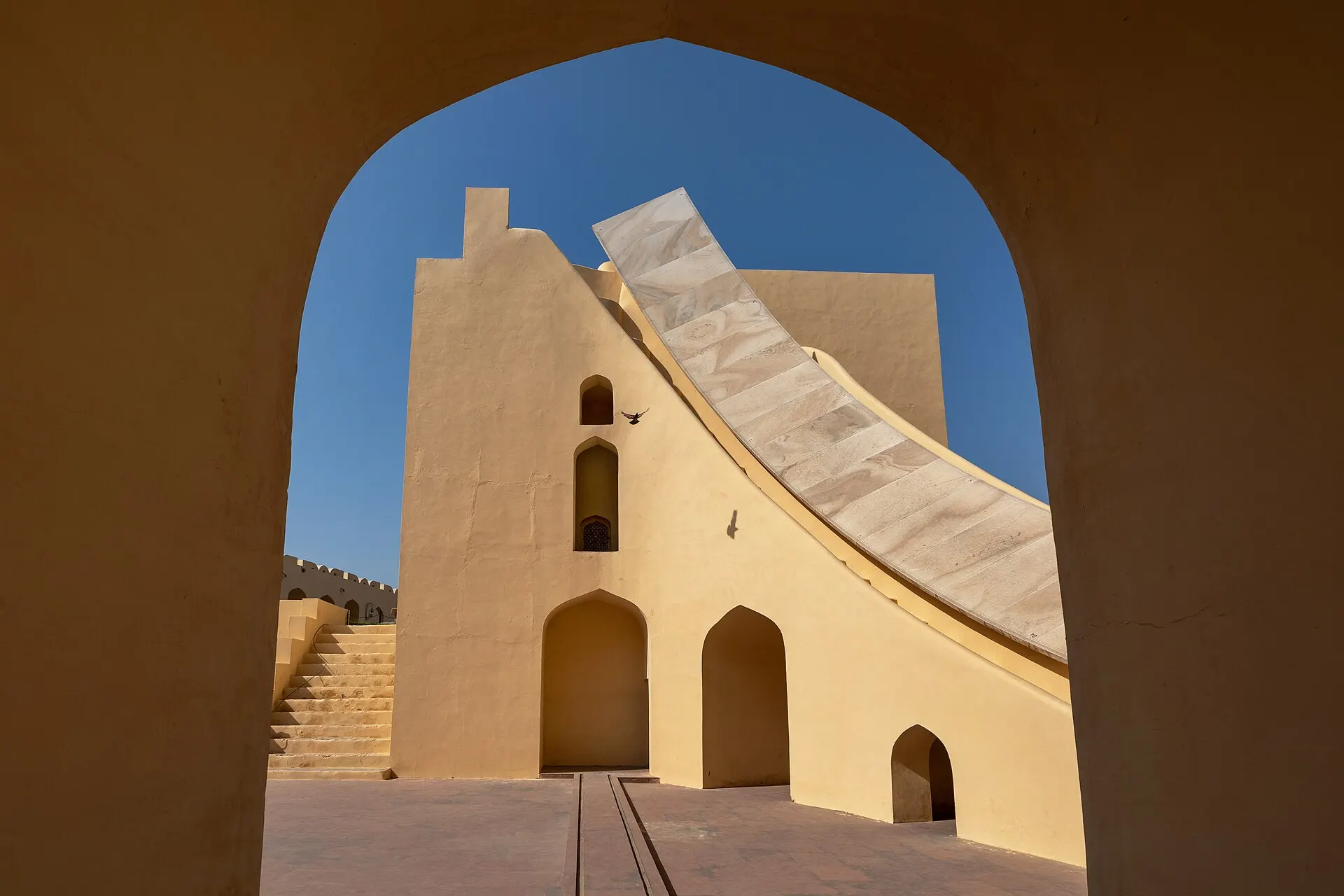
An observatory built by Jai Singh II in the 1720s and 1730s, with nineteen giant astronomical instruments in stone, including the world's largest stone sundial, which tells the time to within a few seconds. It's a World Heritage Site.
- 5
Nahargarh Fort
Photo: Jakub Hałun, CC BY-SA 4.0, via Wikimedia Commons
A fort on the ridge above the city, with a palace of interconnected suites built for the maharaja's queens, and the best views over Jaipur. It's a popular place to watch the sunset.
- 6
Jaigarh Fort
Photo: Jakub Hałun, CC BY-SA 4.0, via Wikimedia Commons
A fortress on the hill above Amber, linked to it by walls and tunnels, home to the Jaivana, once the largest cannon on wheels in the world. Its ramparts look down over Amber Fort and the surrounding hills.
- 7
Jal Mahal
Photo: Jakub Hałun, CC BY-SA 4.0, via Wikimedia Commons
A palace that seems to float in the middle of Man Sagar Lake, on the road to Amber. Visitors can't go inside, but it's beautiful from the lakeshore, especially at sunrise and sunset.
- 8
The bazaars of the old city
Photo: Yamen, CC BY-SA 4.0, via Wikimedia Commons
The old city's bazaars are organised by trade: Johari Bazaar for jewellery and gems, Bapu Bazaar for textiles and leather slippers, and Tripolia Bazaar for brassware and bangles. Jaipur is famous for block-printed fabrics, blue pottery and gemstones.
TipBargain politely, and be wary of drivers or guides steering you to shops where they earn commission, especially for gems.
- 9
Albert Hall Museum
Photo: chetan, CC BY-SA 3.0, via Wikimedia Commons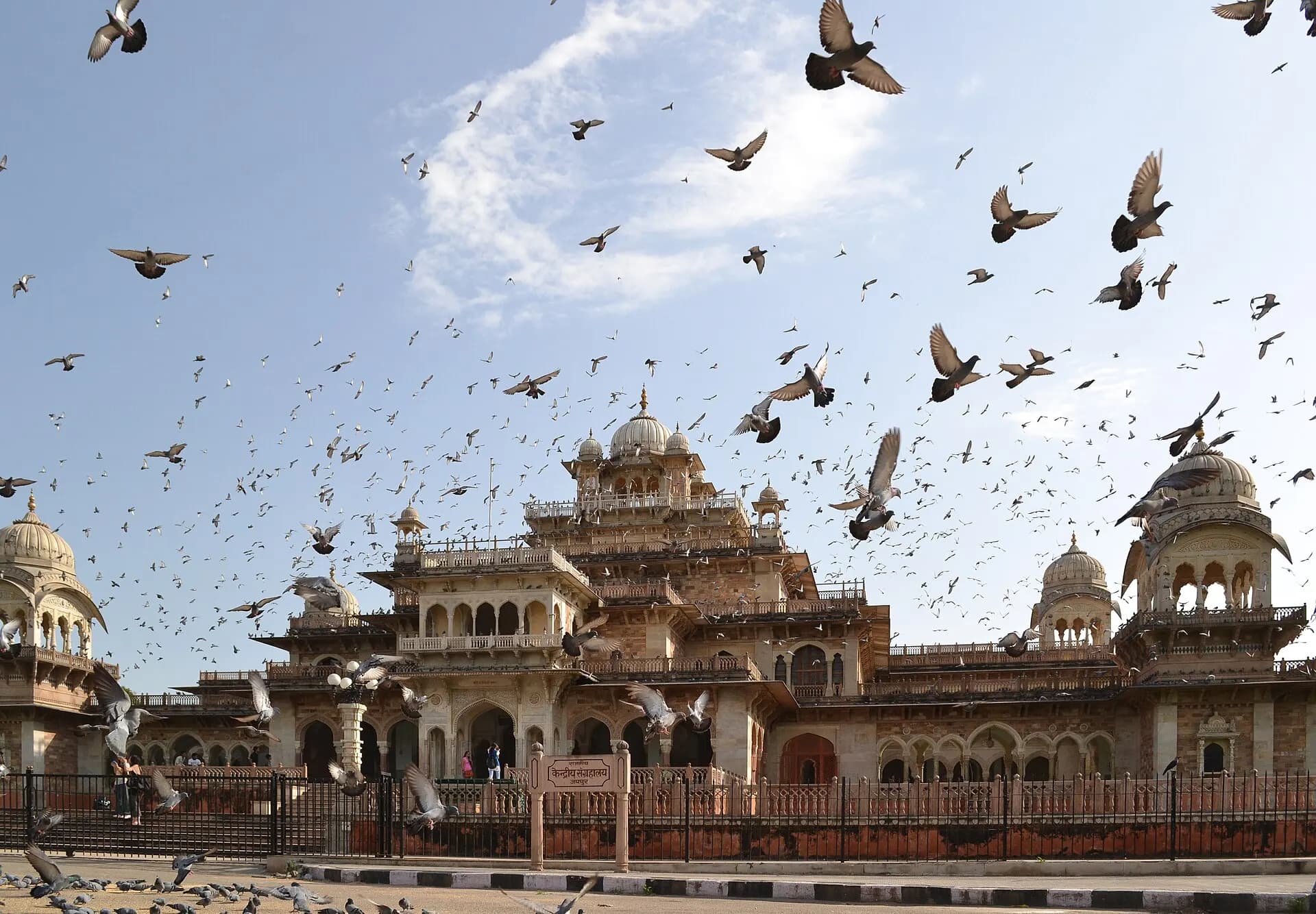
The state museum, in an Indo-Saracenic building in the Ram Niwas Garden, has a varied collection of carpets, sculptures, costumes and an Egyptian mummy. It's beautifully lit at night.
When to go
The best time to visit is from October to March, when the weather is warm and dry. December and January can be cold at night. April to June is very hot, often above 40 °C, and the monsoon arrives in July, bringing rain until September. Festivals include Diwali in autumn, with the city lit up, the Jaipur Literature Festival in January, and Holi in March.
Getting around
Auto-rickshaws and taxis are everywhere; agree on the fare before setting off, or use ride-hailing apps, which are reliable and avoid haggling. The Jaipur Metro is limited but useful for some routes. Hiring a car with a driver for a day is an easy way to visit Amber and the forts. The old city is best explored on foot, though traffic is heavy.
Jaipur International Airport is about thirty minutes from the centre. Trains link the city with Delhi in around four to five hours and with Agra in about four.
Local tips
- Check visa requirements; many nationalities can apply for an Indian e-visa online.
- A composite ticket covers several of the main monuments and saves money.
- Dress modestly, covering shoulders and knees, especially at temples.
- Drink bottled or filtered water, and eat freshly cooked food.
- Ignore touts offering cheap tours or "special" shops.
- Remove your shoes before entering temples.
Eat and drink
Rajasthani cooking is rich and hearty. Try dal baati churma, baked wheat balls with lentils and sweet crumble; laal maas, a fiery mutton curry; and gatte ki sabzi, gram-flour dumplings in yoghurt curry. Jaipur is also known for its sweets, such as ghevar, and for pyaaz kachori, spicy onion pastries, at the city's famous snack shops. Finish with a lassi served in a clay cup.
Beyond Jaipur
Jaipur is a good starting point for exploring Rajasthan. Ranthambore National Park, about three hours south-east by road or train, is one of the best places in India to see wild tigers, among the ruins of a hilltop fort. Pushkar, a holy town around a sacred lake about two and a half hours west, is famous for its ghats, temples and annual camel fair. Further afield, Udaipur's lakes and palaces, Jodhpur's blue city beneath the Mehrangarh Fort, and the desert fort of Jaisalmer make a classic tour of the state. Agra and the Taj Mahal are around four hours east.