Agra
The Taj Mahal at dawn, a red sandstone fort and the riverside tombs and gardens of the Mughal emperors.
- Best time to go
- October to March, though November to January brings smog and fog; February and March are the clearest
- Local time
- –
- Currency
- Indian Rupee (INR)
- Reading time
- 9 min
- Language
- Hindi and English
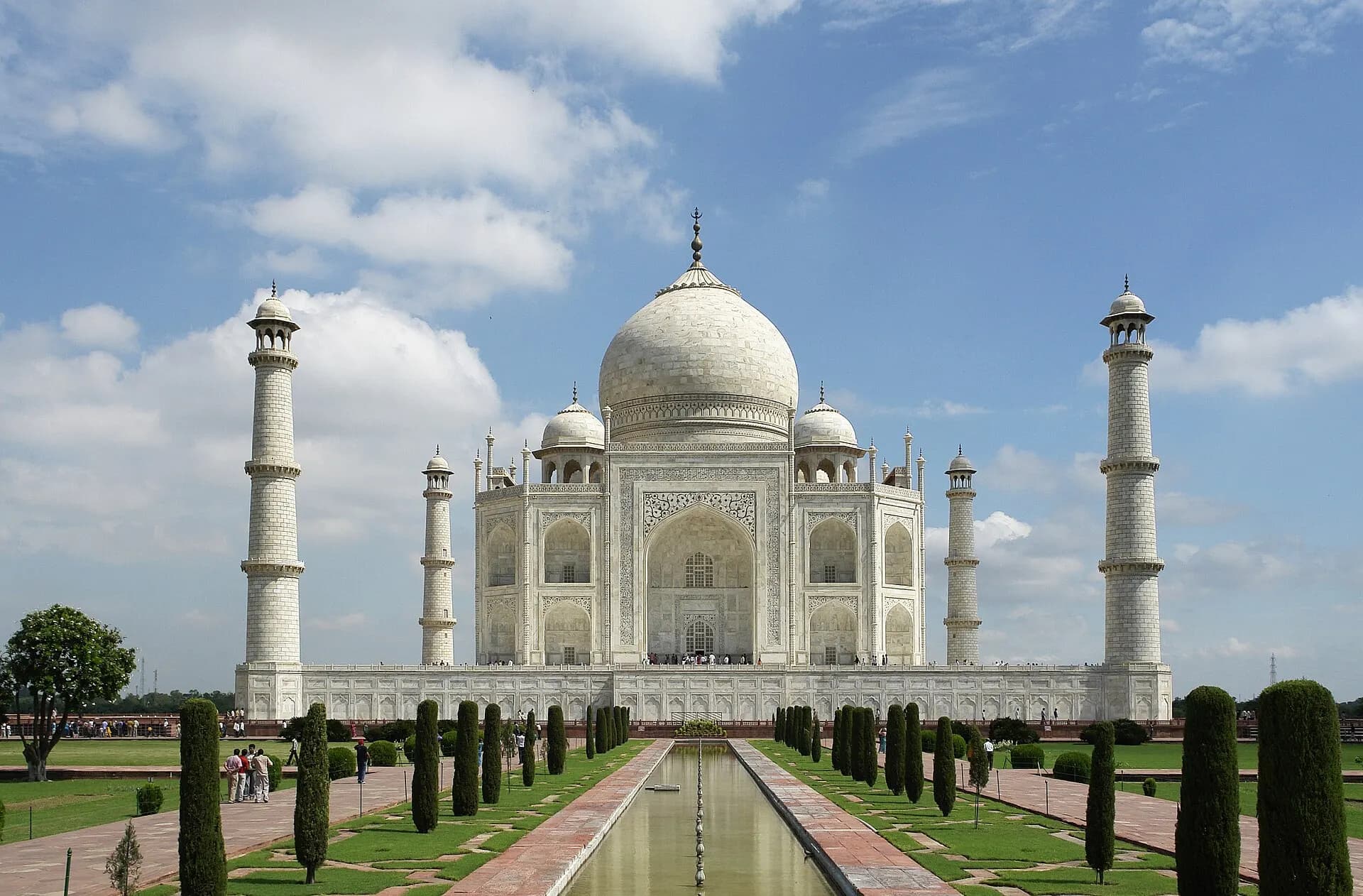
Agra sits on a bend of the Yamuna River in Uttar Pradesh, about 200 kilometres south-east of Delhi, and for much of the sixteenth and seventeenth centuries it was the capital of the Mughal Empire. The emperors left behind three World Heritage Sites: the Taj Mahal, Agra Fort and, a short drive west, the abandoned royal city of Fatehpur Sikri. Strung along both banks of the river are their tombs and pleasure gardens, from the delicate marble "Baby Taj" to the oldest Mughal garden in India.
The modern city is busy, hot, noisy and not always easy to love, and most visitors rush through on a day trip from Delhi. That's a pity. With a night or two, you can see the Taj Mahal at sunrise when the marble turns from grey to pink, watch it again at sunset from across the river, and visit the quieter monuments that most tour groups skip.
The top 10 in Agra
- 1
Taj Mahal
Photo: Philip Nalangan, CC BY 4.0, via Wikimedia Commons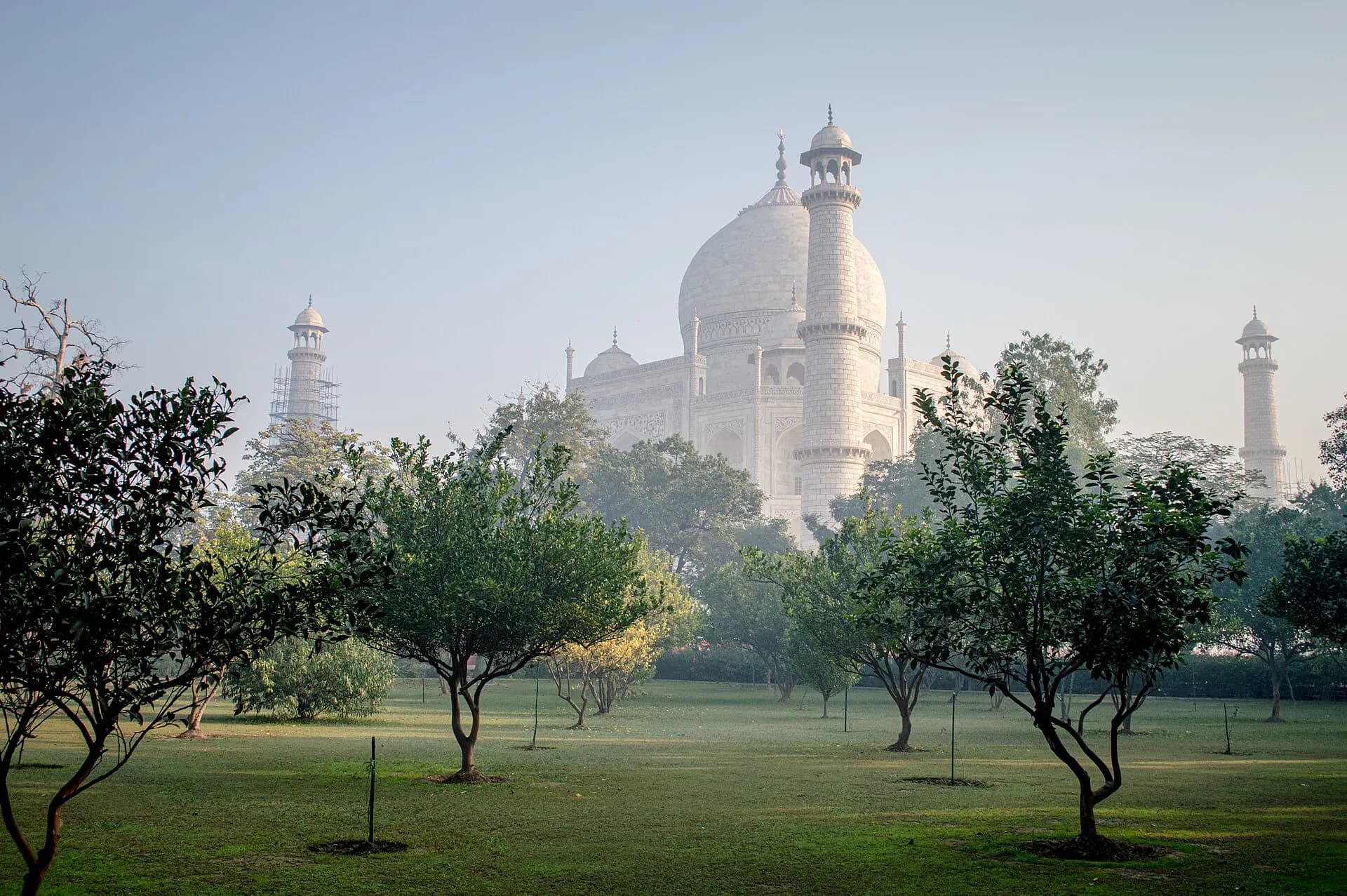
The white marble mausoleum that Shah Jahan built for his wife Mumtaz Mahal, who died in 1631, is every bit as extraordinary as its reputation. The mausoleum was completed by 1648 and the whole complex by around 1653, with a great red sandstone gateway, a long water channel through a four-part garden, a mosque and its mirror-image guest house. Up close, look for the inlaid flowers of semi-precious stone and the Quranic calligraphy that grows larger towards the top so it reads evenly from below. Entry to the inner mausoleum is an optional extra on the ticket, and photography is not allowed inside it. A small museum within the complex displays Mughal paintings and objects.
TipIt's closed on Fridays. Gates open 30 minutes before sunrise; be in the queue early, as crowds and heat build fast.
- 2
Agra Fort
Photo: Anvitj, CC BY-SA 3.0, via Wikimedia Commons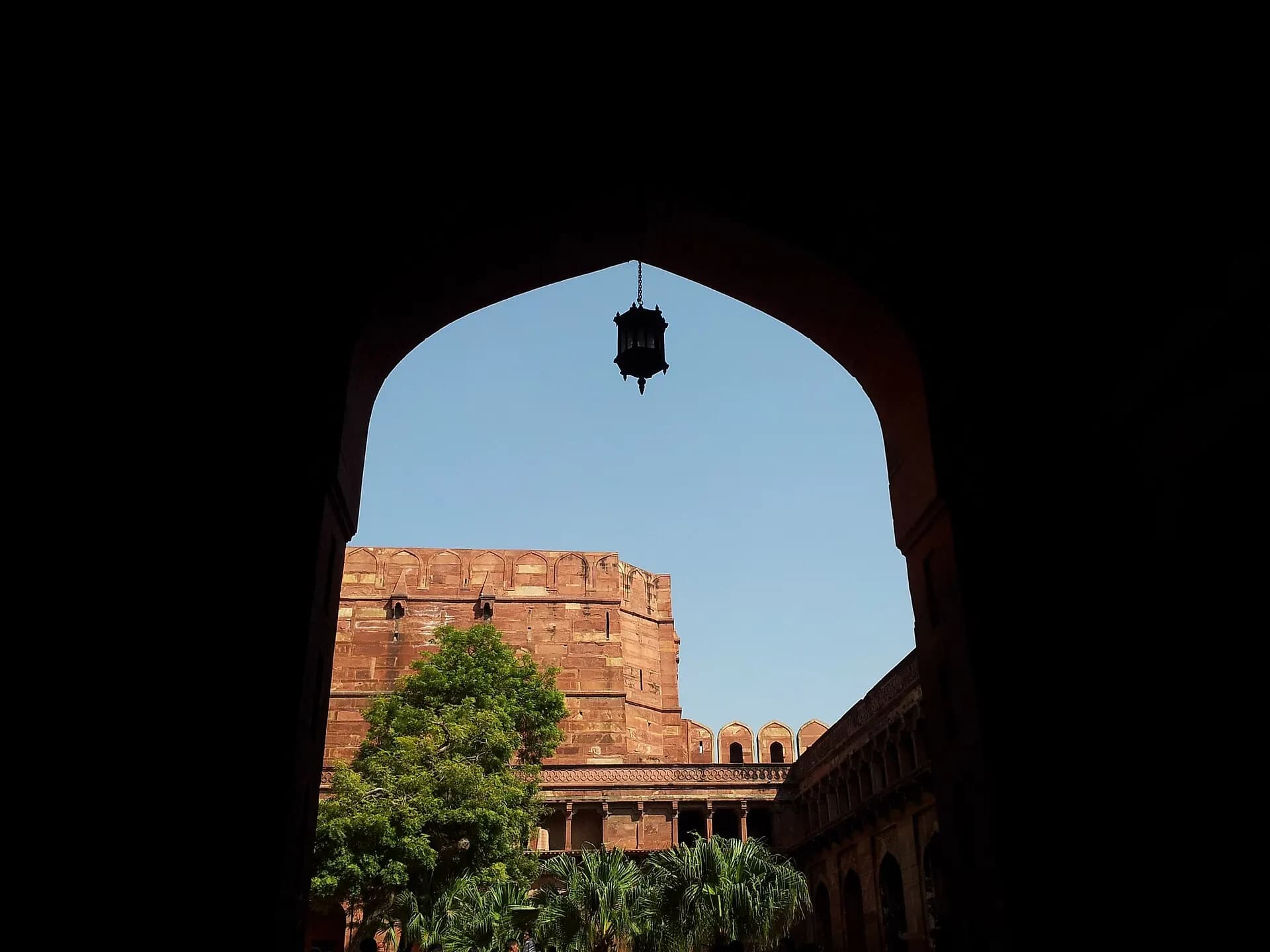
Akbar rebuilt this walled palace city in red sandstone from the 1560s, and his successors added white marble halls. Inside are the Jahangiri Mahal, the halls of public and private audience, and the Musamman Burj, the octagonal tower where Shah Jahan was held by his son Aurangzeb from 1658 until his death in 1666, with a view down the river to his wife's tomb. Visitors enter through the Amar Singh Gate; a large part of the fort, including the northern section, is still used by the Indian Army and closed.
- 3
Jama Masjid and Kinari Bazaar
Photo: Jonathan Freundlich, CC BY-SA 3.0, via Wikimedia Commons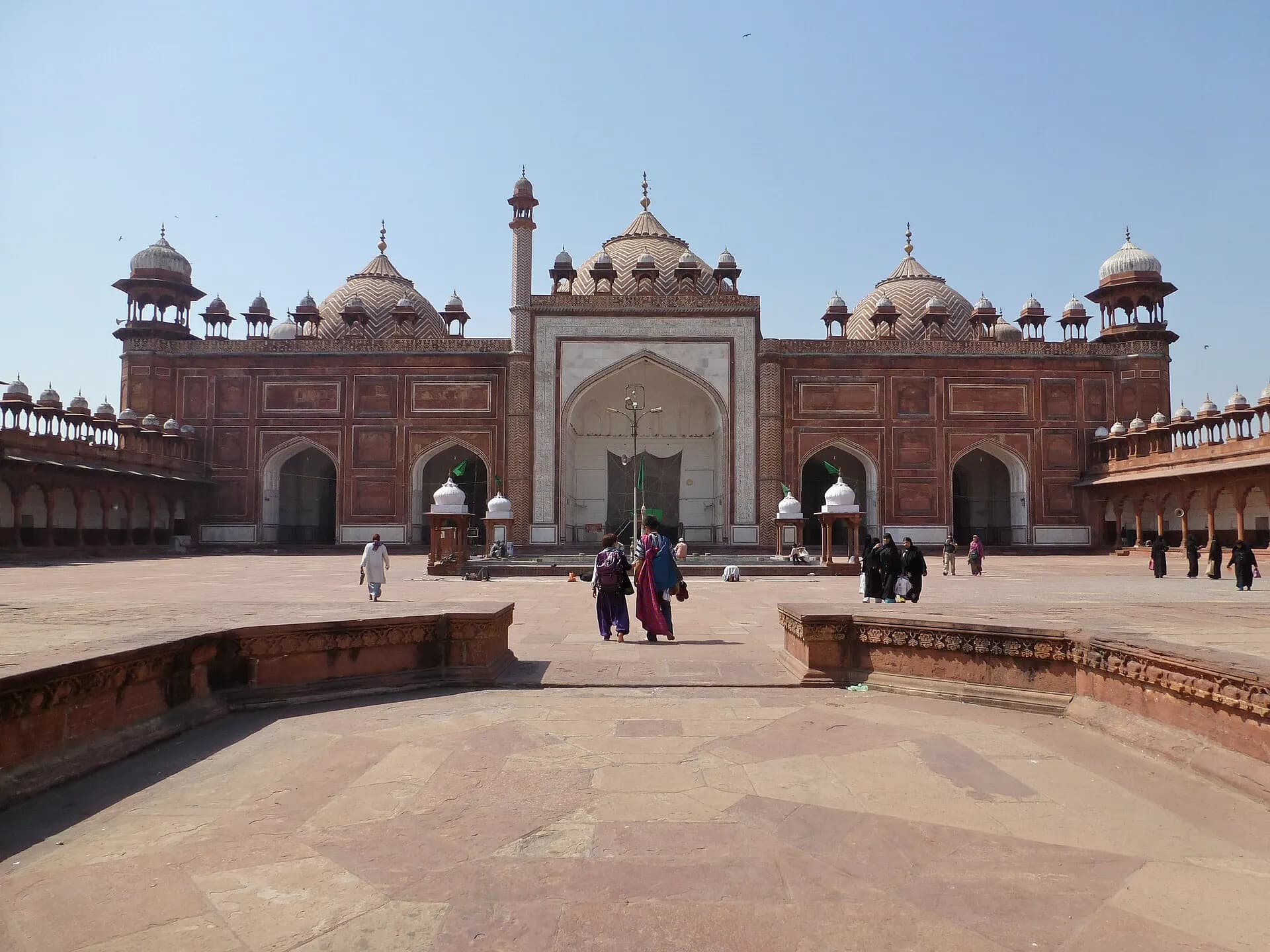
Just west of the fort, this great mosque was built between 1643 and 1648 and funded by Jahanara Begum, Shah Jahan's eldest daughter. Behind it, the lanes of Kinari Bazaar and the old city sell wedding finery, spices, silver and sweets. It's crowded and chaotic, and a world away from the manicured monuments.
TipDress modestly, remove your shoes, and avoid prayer times, especially at midday on Fridays.
- 4
Itmad-ud-Daulah ("Baby Taj")
Photo: Rohit Sharma, CC BY-SA 4.0, via Wikimedia Commons
On the east bank of the river, the empress Nur Jahan built this tomb for her father, Mirza Ghiyas Beg, between 1622 and 1628. It was the first Mughal tomb faced entirely in white marble with inlaid stone, and many see it as a rehearsal for the Taj Mahal. It's small, intricate and usually peaceful.
- 5
Chini ka Rauza
Photo: Rickard Törnblad, CC BY-SA 4.0, via Wikimedia Commons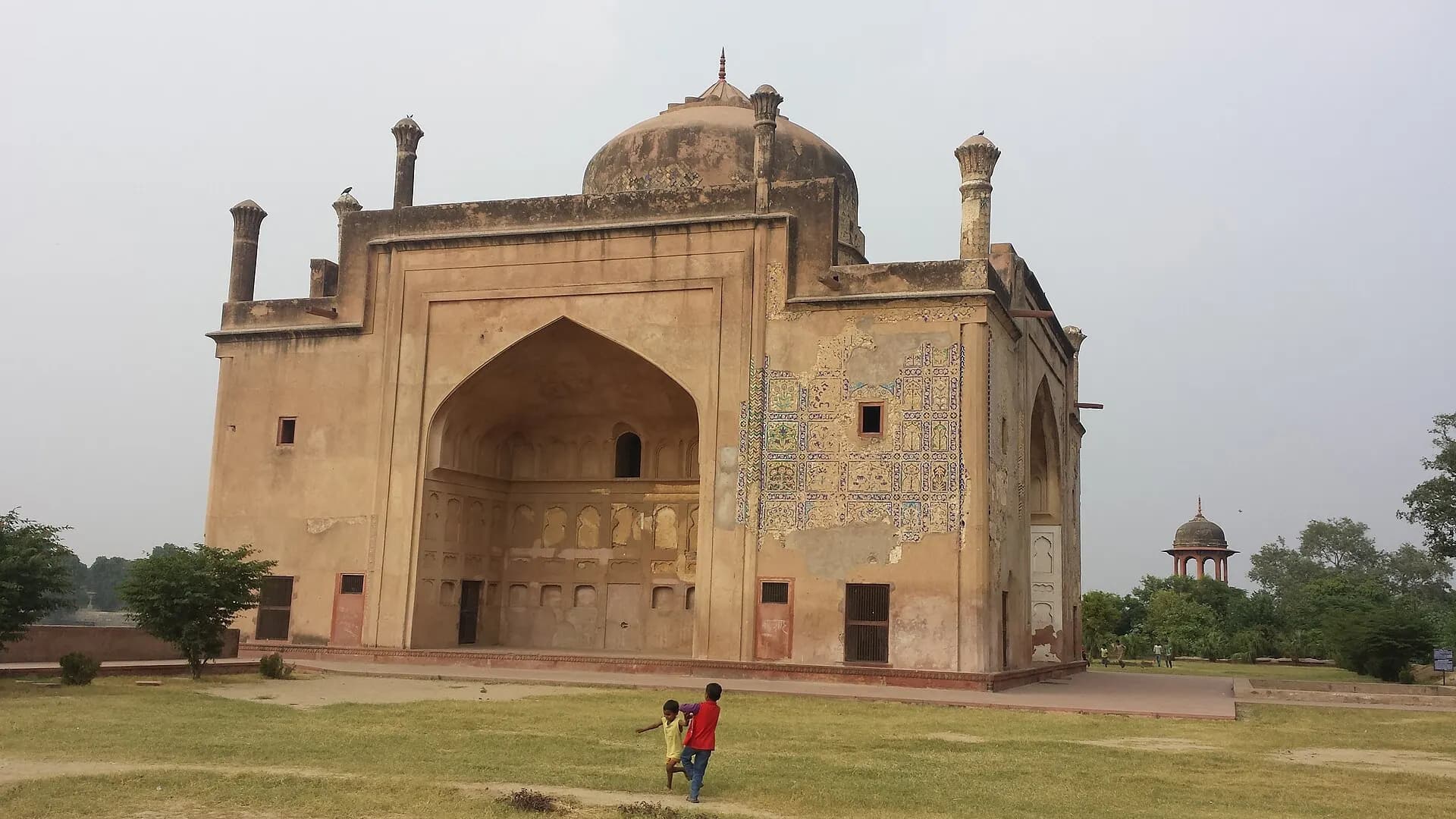
About a kilometre north of the Baby Taj, this is the tomb of Allama Afzal Khan, a poet-scholar who became Shah Jahan's prime minister. Its name, "China tomb", comes from the glazed Persian-style tiles that once covered it; only patches survive, but they show how colourful Mughal buildings could be.
- 6
Ram Bagh
Photo: Rangan Datta Wiki, CC BY-SA 4.0, via Wikimedia Commons
Laid out by Babur, the first Mughal emperor, around 1528 and known in his time as Aram Bagh, the "garden of rest", this is considered the oldest surviving Mughal garden. Its raised walkways, water channels and riverside terraces set the pattern for the gardens that followed.
- 7
Mehtab Bagh
Photo: Antrix3, CC BY-SA 4.0, via Wikimedia Commons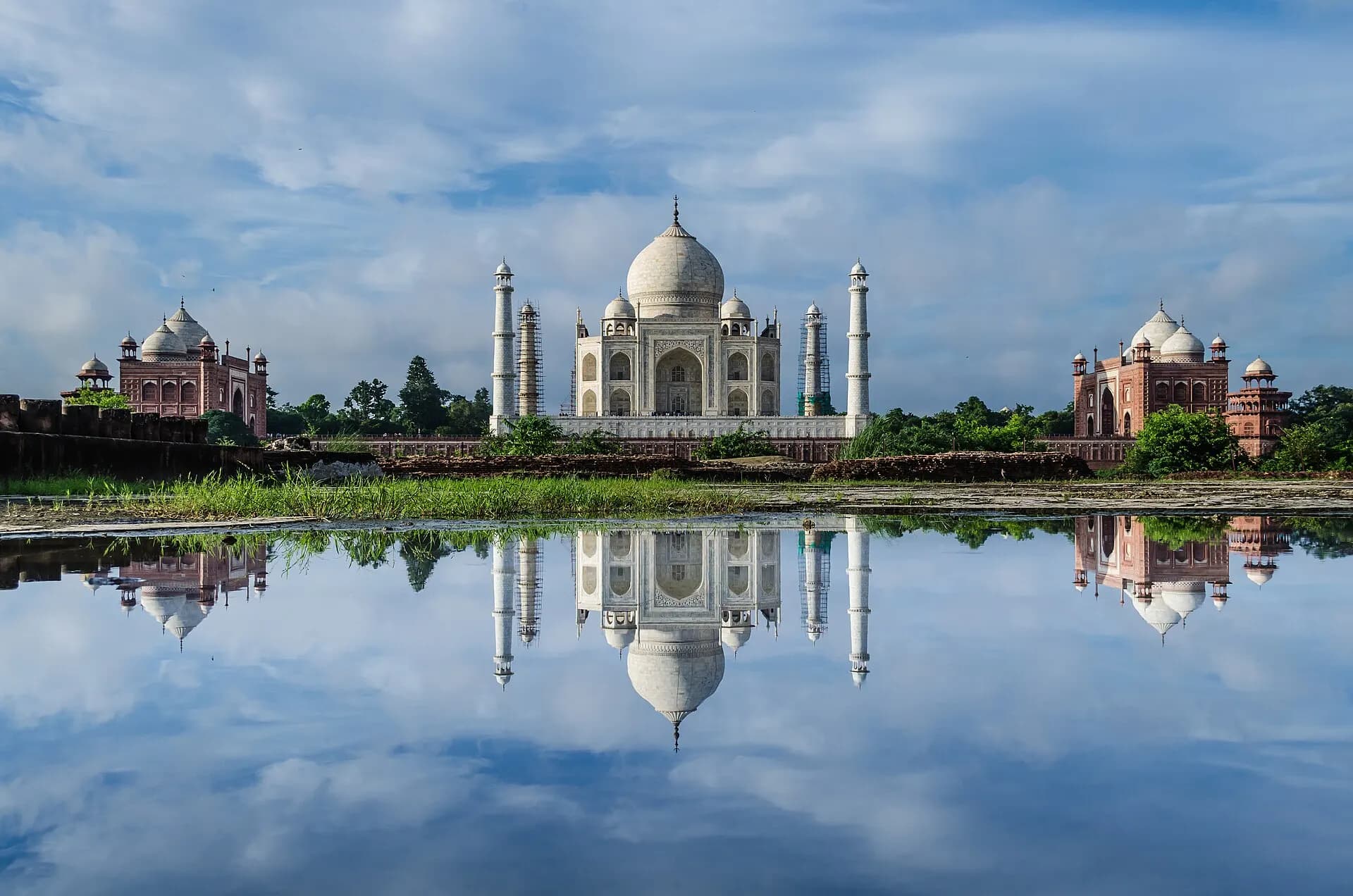
A square Mughal garden on the north bank, directly opposite the Taj Mahal, aligned with it by Shah Jahan as a "moonlight garden". Legend says he planned a black Taj here for himself; excavations found no such thing, only the remains of a pool. It's the best place to see the Taj in late-afternoon light, without the crowds, and it's open every day, including Fridays.
- 8
Akbar's Tomb, Sikandra
Photo: Rohit Sharma, CC BY-SA 4.0, via Wikimedia Commons
Akbar's mausoleum, about ten kilometres north-west of the centre, was completed by his son Jahangir in 1613. The huge southern gateway, with its inlaid geometric patterns and four white marble minarets, is almost as impressive as the tiered tomb itself. Langurs and blackbuck deer roam the grounds.
- 9
Tomb of Mariam-uz-Zamani
Photo: Sauravmitra, CC BY-SA 3.0, via Wikimedia Commons
Near Akbar's tomb, Jahangir built this red sandstone tomb in the 1620s for his mother, Akbar's Rajput wife, often called Jodha Bai. It sees few visitors and pairs easily with Sikandra.
- 10
Fatehpur Sikri
Photo: Kshitiz Sikka, CC BY-SA 4.0, via Wikimedia Commons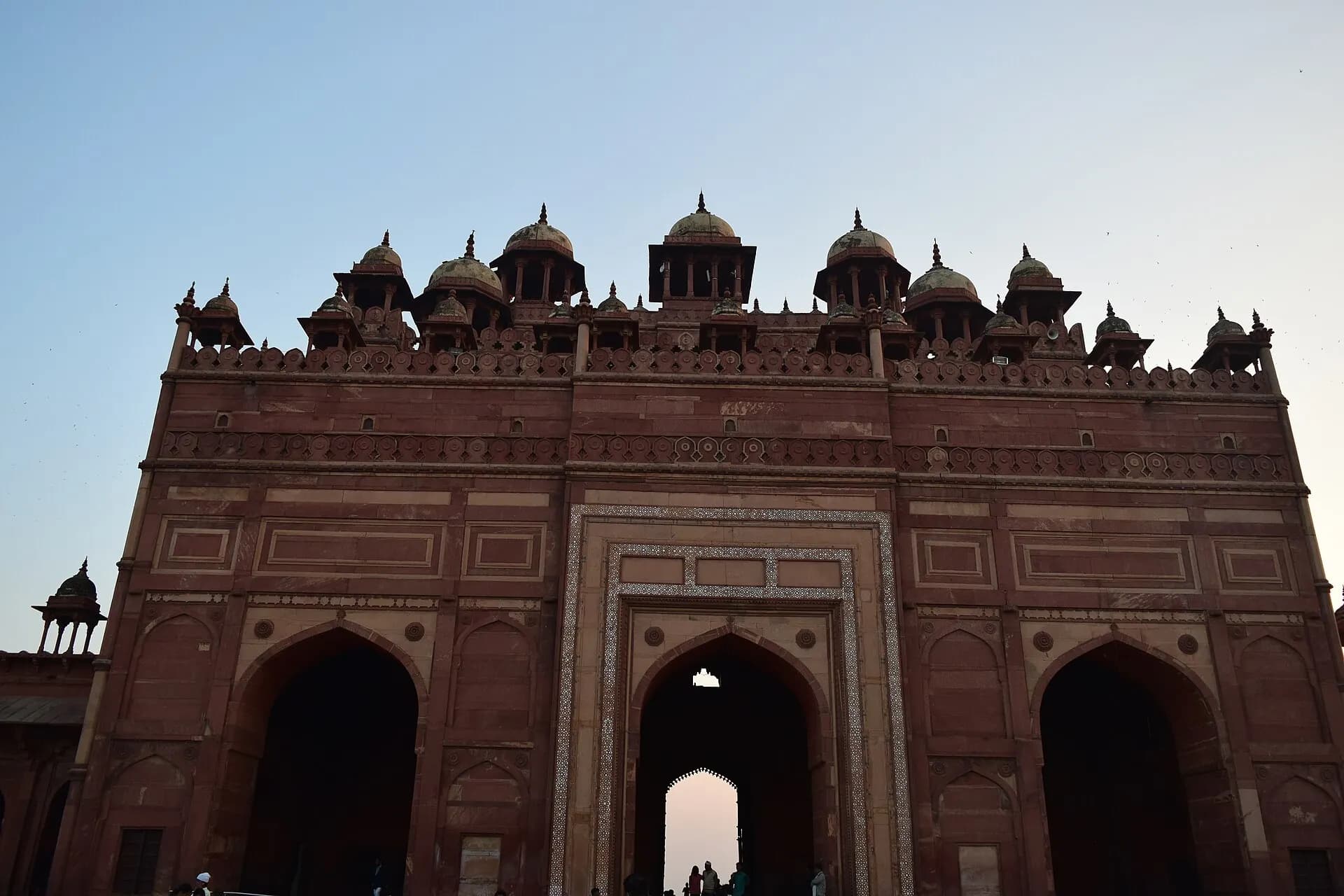
About 40 kilometres west of Agra, Akbar founded this city in 1571 on a ridge where the Sufi saint Salim Chishti lived, and it served as the Mughal capital for about fourteen years before it was largely abandoned. The palace complex is remarkably well preserved: the Diwan-i-Khas with its carved central pillar, the five-storey Panch Mahal, and the palace often called Jodha Bai's. Next door, the Jama Masjid is entered through the towering Buland Darwaza, the Gate of Magnificence, and holds the white marble tomb of Salim Chishti, where pilgrims tie threads on the screens as they make a wish.
TipGo early, and expect persistent touts and unofficial guides at the mosque. The mosque is a living place of worship; cover your head and shoulders.
When to go
October to March is the most comfortable time, with warm days and cool nights; December and January can be surprisingly cold at dawn. The catch is air quality: from late October to January, smoke from crop burning, traffic and winter inversions often shroud the Taj in a grey haze, and dense fog can delay trains for hours. February and March usually bring clearer skies. From April to June, temperatures regularly pass 40°C and can reach the mid-40s, so sightseeing is only bearable early and late. The monsoon, roughly July to September, brings heavy showers, humidity and green gardens. The Taj Mahotsav, a ten-day crafts and culture festival near the Taj's east gate, is held each February.
Getting around
Most visitors arrive by train from Delhi. The Gatimaan Express from Hazrat Nizamuddin reaches Agra Cantt in about 1 hour 40 minutes and runs every day except Friday. Shatabdi trains from New Delhi and Vande Bharat services heading south towards Madhya Pradesh also call at Agra Cantt; book through Indian Railways' IRCTC system and check current timetables. By road, the Yamuna Expressway runs about 165 kilometres from Greater Noida to Agra, so the drive from central Delhi typically takes three to four hours. Agra also has a small airport with limited domestic flights.
In town, auto-rickshaws, app-based cabs and hired cars with drivers are the main options. Polluting vehicles are banned within 500 metres of the Taj; from the car parks at Shilpgram (for the east gate) and Amrood ka Teela (for the west gate), electric buses and golf carts shuttle visitors to the entrance. A car and driver for the day is the simplest way to combine Sikandra or Fatehpur Sikri with the city sights.
Local tips
- The Taj Mahal is closed on Fridays. Other monuments, including Agra Fort and Mehtab Bagh, open daily from sunrise to sunset.
- Buy Taj tickets online through the ASI portal to skip the ticket queue (and get a small discount). Foreign visitors pay a higher fee than Indian and SAARC or BIMSTEC citizens; the inner mausoleum is an optional add-on, and children under 15 enter free. Check the current fees before you go.
- Security at the Taj is strict. Food, tobacco, lighters, knives, headphones, phone chargers, tripods and most electronic goods other than cameras are banned, and drones are strictly prohibited in and around the monument. Leave anything doubtful at your hotel.
- Bring as little as possible: large bags slow the security check. A foreign visitor's ticket includes shoe covers and a small bottle of water.
- Use only ASI-approved guides and photographers, who carry identity cards. Ignore anyone who says the Taj is closed or that you need to buy tickets from them.
- Rickshaw and taxi drivers often earn commission from marble-inlay, carpet and gem shops. Say no firmly to unplanned stops, and never agree to carry or export gems for a stranger.
- Agree fares before you set off, or use app-based cabs.
Eat and drink
Agra is known for petha, a translucent sweet made from ash gourd and sold in dozens of flavours around the city, and for dalmoth, a spiced lentil snack. Breakfast is often bedai or kachori with spicy potato curry, followed by jalebi fresh from the fryer. The chaat stalls around Sadar Bazaar serve tangy snacks such as raj kachori and gol gappe in the evening. Mughlai cooking, with kebabs, rich curries and naan, is a fitting choice after a day among the emperors' tombs. Many hotel restaurants have Taj views from their roofs.
Where to stay
Taj Ganj, the old quarter by the Taj's east and south gates, has budget guesthouses and rooftop cafés within walking distance of the sunrise queue. Fatehabad Road and the area around the Taj's east gate have most of the international and luxury hotels, some with Taj views. The Sadar Bazaar and cantonment area are calmer and handy for Agra Cantt station.
The Mughals in Agra
Babur, a Central Asian prince descended from Timur and Genghis Khan, defeated the Delhi Sultan at Panipat in 1526 and founded the Mughal dynasty, laying out his gardens on the Yamuna at Agra. His grandson Akbar made Agra his capital, rebuilt the fort and, in 1571, founded Fatehpur Sikri, before moving his court again. Akbar ruled over a vast and diverse empire, married into Rajput royal families and welcomed scholars of many faiths to his court, and his architecture blends Persian, Central Asian and Indian traditions. Jahangir and his wife Nur Jahan built the refined tombs of the early seventeenth century, and Shah Jahan, the great builder, created the Taj Mahal before moving the capital to his new city of Shahjahanabad in Delhi. Aurangzeb, his son, seized the throne in 1658 and kept him confined in Agra Fort. Seen in sequence, from Ram Bagh to Sikandra to the Taj, the monuments trace the empire's style shifting from red sandstone to white marble.
Seeing the Taj Mahal
There is no bad time to see the Taj, but light makes a real difference. At sunrise the marble glows soft pink and the gardens are at their quietest; by midday it's dazzling white and the crowds are at their peak. For sunset, Mehtab Bagh across the river frames it with no one in front of you, and the riverside path by the Taj's east side offers another angle.
On five nights each month, the full moon and two nights either side, the ASI opens the Taj for night viewing in eight batches of up to 50 people between 8pm and midnight, each lasting 30 minutes. Night viewing doesn't run on Fridays, when the Taj is closed, and has been suspended during Ramadan in some years; tickets are limited and booked through the ASI portal in advance. You see the mausoleum from a distance, not up close, and on top of the usual prohibited items, mobile phones and video cameras are not allowed; still cameras are allowed. On a hazy or cloudy night, the view can disappoint, so treat it as a bonus rather than the main event.
Responsible travel
The Taj's marble has been yellowed by air pollution, which is why polluting vehicles are banned nearby and a protected zone of more than 10,000 square kilometres around it, the Taj Trapezium Zone, has strict emissions rules. Use the electric shuttles, don't touch or scratch the marble or inlay, and keep your voice down inside the mausoleum, which is a tomb. Don't drop litter in the gardens or along the river. At mosques and shrines, dress modestly and follow local custom. Ride only on rickshaws and in horse-drawn tongas whose animals look healthy, and avoid snake charmers and dancing bears if you meet them on the highway; the latter are illegal in India, and the Agra Bear Rescue Facility at Sur Sarovar, on the Mathura road outside the city, now cares for many bears rescued from that trade.