Provence
Roman arenas, papal palaces, hilltop villages and lavender fields between the Rhône and the Alps, ending at Marseille's limestone coast.
- Best time to go
- May to early July for green hills and lavender (mid-June to mid-July); September and October for warm, quieter days
- Local time
- –
- Currency
- Euro (EUR)
- Reading time
- 19 min
- Language
- French

Provence is the sunlit south-eastern corner of France, running from the Rhône delta in the west to the foothills of the Alps in the east, with the Mediterranean along its southern edge. It is the landscape that drew Van Gogh and Cézanne: plane trees shading village squares, terraced olive groves, cypresses bent by the mistral, limestone ridges and, for a few weeks in early summer, fields striped purple with lavender. The Romans called it simply Provincia, their first province beyond the Alps, and left arenas, theatres and aqueducts that are still in use or still standing. Popes ruled Christendom from Avignon in the fourteenth century, and Marseille, founded by Greek sailors around 600 BC, is the oldest city in France.
Most visitors combine three quite different areas. The west, around Avignon, Arles and Saint-Rémy, is about Roman monuments, markets and the flat wild wetlands of the Camargue. The middle, the Luberon and the Valensole plateau, is the postcard Provence of perched villages and lavender. The south and east bring the drama: the Verdon gorge, Aix-en-Provence, Marseille and the white cliffs of the Calanques. A loop of ten days to two weeks by car covers the stops below, which are listed in route order, from Avignon round to the coast. For the Riviera further east, continue to our Nice guide.
The top 26 in Provence
- 1
Palais des Papes
Photo: Uoaei1, CC BY-SA 4.0, via Wikimedia Commons
When the papacy left a turbulent Rome in the early fourteenth century, seven popes in succession made Avignon their home, and between 1335 and 1352 they built the largest Gothic palace in the world: a fortress-like mass of pale stone with towers, battlements and vast, echoing halls. The rooms are mostly empty now, stripped during the Revolution, but surviving frescoes by the Italian painter Matteo Giovannetti, the private study decorated with hunting and fishing scenes, and the walk along the roof terraces give a sense of its splendour. With the cathedral, the Petit Palais museum and the city walls, it forms a World Heritage Site. In July the whole city fills with theatre during the Festival d'Avignon, and the palace's main courtyard becomes its grandest stage.
TipA combined ticket covers the palace and the Pont d'Avignon. The tablet guide included with entry reconstructs how the empty rooms once looked.
- 2
Pont d'Avignon
Photo: Rolf Kranz, CC BY-SA 4.0, via Wikimedia Commons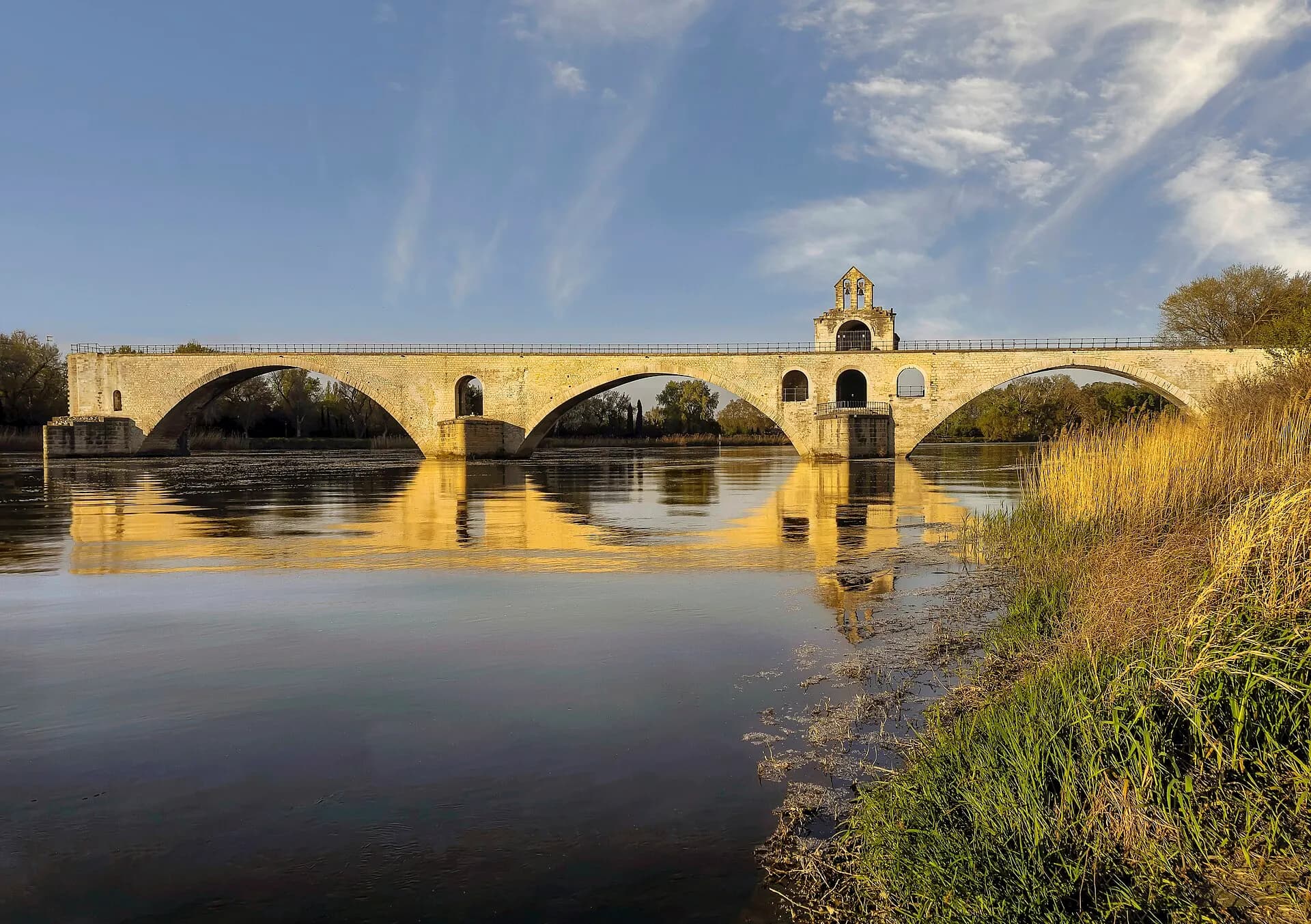
The bridge of the nursery song, properly the Pont Saint-Bénézet, once crossed the Rhône in twenty-two arches. Floods kept carrying them away, and by the seventeenth century the town gave up rebuilding; four arches survive, ending abruptly mid-river, with a small Romanesque chapel on one of the piers. Walking out to the end gives a fine view back to the palace and the ramparts. For the best view of the bridge itself, cross to the Île de la Barthelasse on the free river shuttle boat, or climb to the Rocher des Doms garden above the palace.
- 3
Pont du Gard
Photo: Benh LIEU SONG (Flickr), CC BY-SA 3.0, via Wikimedia Commons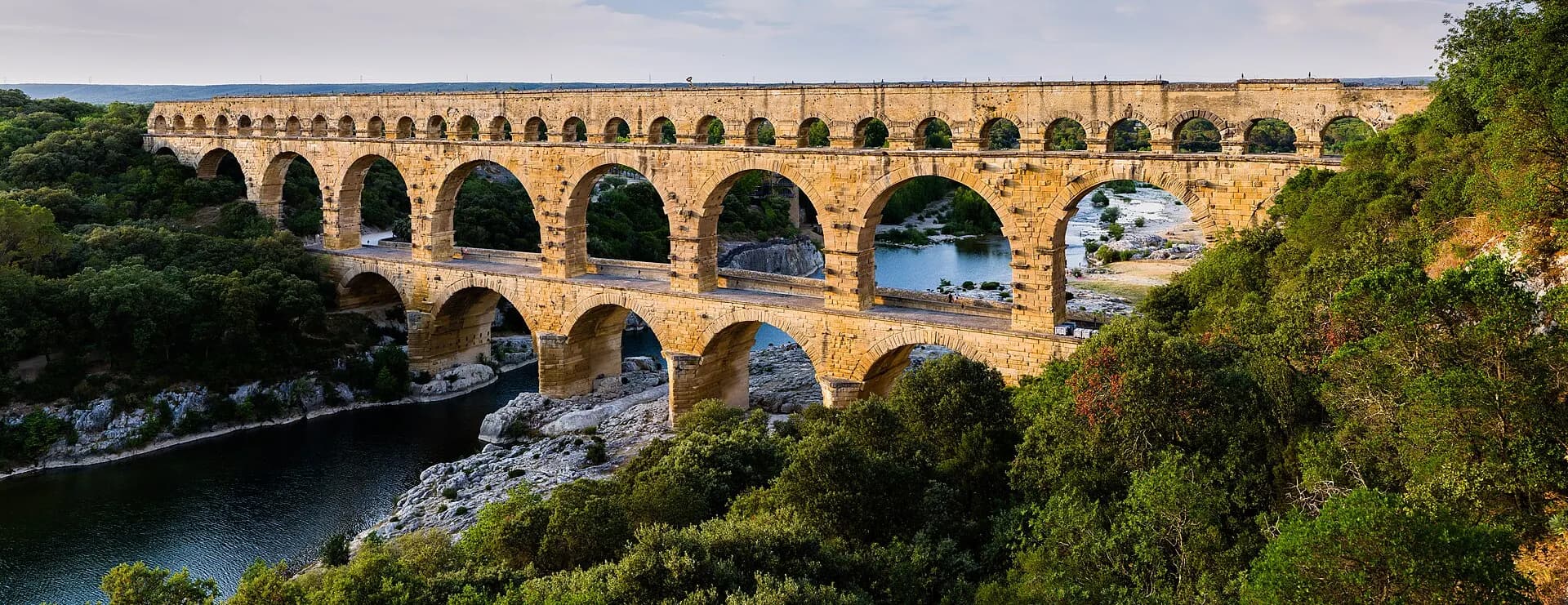
West of Avignon, just over the regional border in the Gard, this three-tiered Roman bridge carried an aqueduct across the Gardon river around the middle of the first century AD, part of a 50-kilometre channel bringing spring water to Nîmes. At almost 49 metres, it is the tallest of all Roman aqueduct bridges, built of huge limestone blocks fitted without mortar, and the precision of the engineering is astonishing: the whole aqueduct drops only around twelve metres along its length. A riverside site has a museum, walking trails through the garrigue and, in summer, swimming and canoeing below the arches.
TipEntry is charged per vehicle or per person, and covers the museum. Come early in the morning or in the evening, when the stone glows and the coach groups have gone; canoes from Collias, upstream, arrive under the bridge from the water.
- 4
Arles Amphitheatre
Photo: Oakenchips, CC BY-SA 4.0, via Wikimedia Commons
Arles was a favourite city of the Roman emperors, and its amphitheatre, built around 90 AD for some 20,000 spectators, is still in use for bullfights, concerts and the Camargue's bloodless course camarguaise, in which raseteurs snatch ribbons from a bull's horns. In the Middle Ages it was packed with houses and a chapel, and three of its defensive towers survive. Nearby are the Roman theatre, the underground galleries of the forum, the Romanesque portal and cloister of Saint-Trophime, and the Alyscamps, an avenue of stone sarcophagi painted by both Van Gogh and Gauguin. Van Gogh lived here in 1888 and 1889, painting some 300 works; the Fondation Vincent van Gogh shows changing exhibitions, while Frank Gehry's shimmering Luma tower now rises over the old railway yards.
TipA pass covering several monuments and museums is better value than single tickets. Arles's Saturday market on the boulevard des Lices is one of the biggest in Provence.
- 5
The Camargue
Photo: Giles Laurent, CC BY-SA 4.0, via Wikimedia Commons
Where the Rhône splits before reaching the sea, it has built one of Europe's great wetlands: lagoons, salt marshes, reed beds and rice fields under enormous skies. It is home to white Camargue horses, black bulls raised by mounted herdsmen called gardians, and thousands of greater flamingos, especially around the Étang de Vaccarès. The Pont de Gau ornithological park, on the road to the sea, has walking paths among the pools where flamingos feed close at hand. At the delta's tip, Saintes-Maries-de-la-Mer is a whitewashed seaside town with a fortified church; each May, Roma pilgrims from across Europe gather here to carry the statue of Saint Sarah into the sea. To the east, the salt works of Salin-de-Giraud turn the lagoons pink.
TipBring insect repellent from late spring to autumn. Horse rides from the ranches along the main road are the classic way to see the marshes, and cycling the sea dike is flat and memorable.
- 6
Les Baux-de-Provence
Photo: Christian Ferrer, CC BY-SA 4.0, via Wikimedia Commons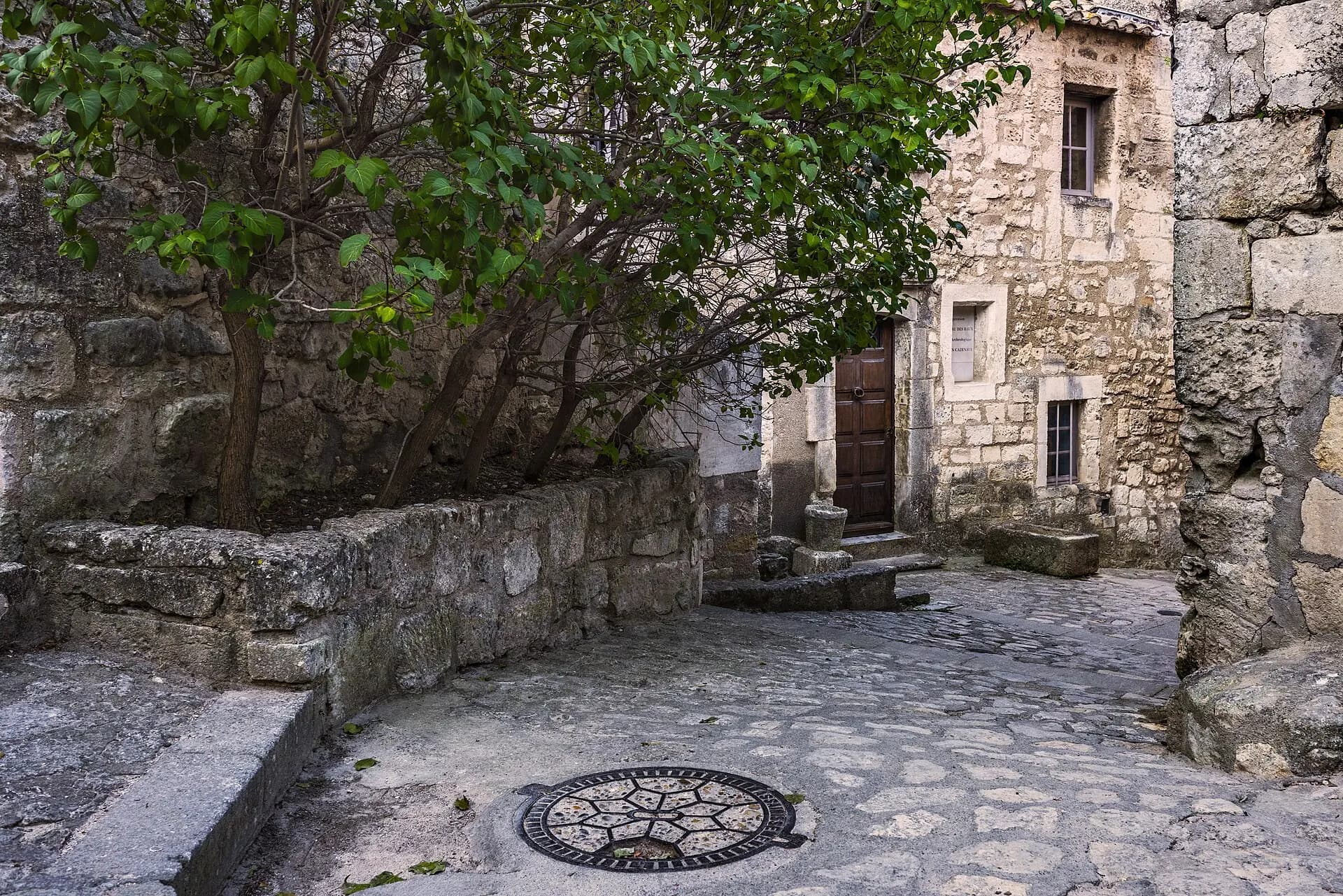
A village and the ruins of a medieval castle stand on a bare limestone spur in the Alpilles hills, the stone of the houses and the rock barely distinguishable. The lords of Baux were among the most powerful in medieval Provence, until Louis XIII had the fortress demolished in 1632. The ruined citadel, with its replica siege engines and views across olive groves to the Camargue, is the main sight, and the lanes below are lined with old mansions, small museums and craft shops. The mineral bauxite takes its name from the village, where it was first identified.
TipLes Baux is one of the most visited villages in France; arrive early or in the evening and use the paid car parks below the village.
- 7
Carrières des Lumières
Just below Les Baux, an old limestone quarry with walls up to fourteen metres high has become one of the best-known immersive art shows in France, projecting moving images of paintings across every surface to music. Each year has a new programme: in 2026 the main show is devoted to Picasso, accompanied by a shorter one on Frida Kahlo. Jean Cocteau filmed parts of his Testament of Orpheus here in 1959, and the quarry's vast pale chambers are impressive even before the lights come on.
TipIt's cool inside all year, so bring a layer in summer. Buy timed tickets online in high season.
- 8
Saint-Rémy-de-Provence
Photo: Christian Ferrer, CC BY-SA 4.0, via Wikimedia Commons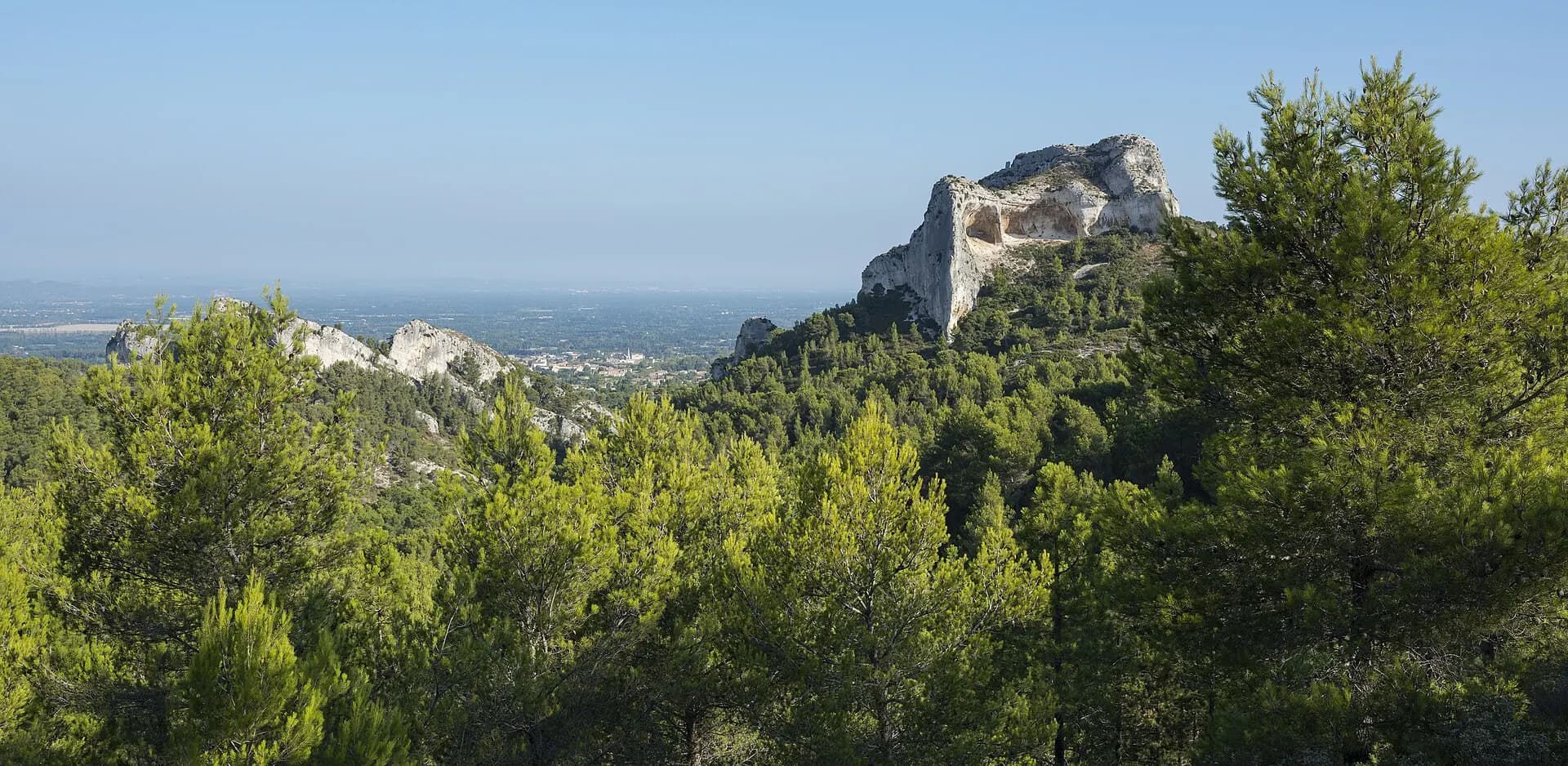
A prosperous small town at the foot of the Alpilles, ringed by a boulevard of plane trees and fountains, with a busy Wednesday market, galleries and some of the region's best restaurants. The astrologer Nostradamus was born here in 1503. Saint-Rémy makes an excellent, slightly calmer base for Les Baux, Arles and Avignon, and the minor roads through the Alpilles, past olive mills and vineyards, are a pleasure to drive or cycle.
- 9
Glanum and Saint-Paul de Mausole
Photo: Marc Ryckaert (MJJR), CC BY 3.0, via Wikimedia Commons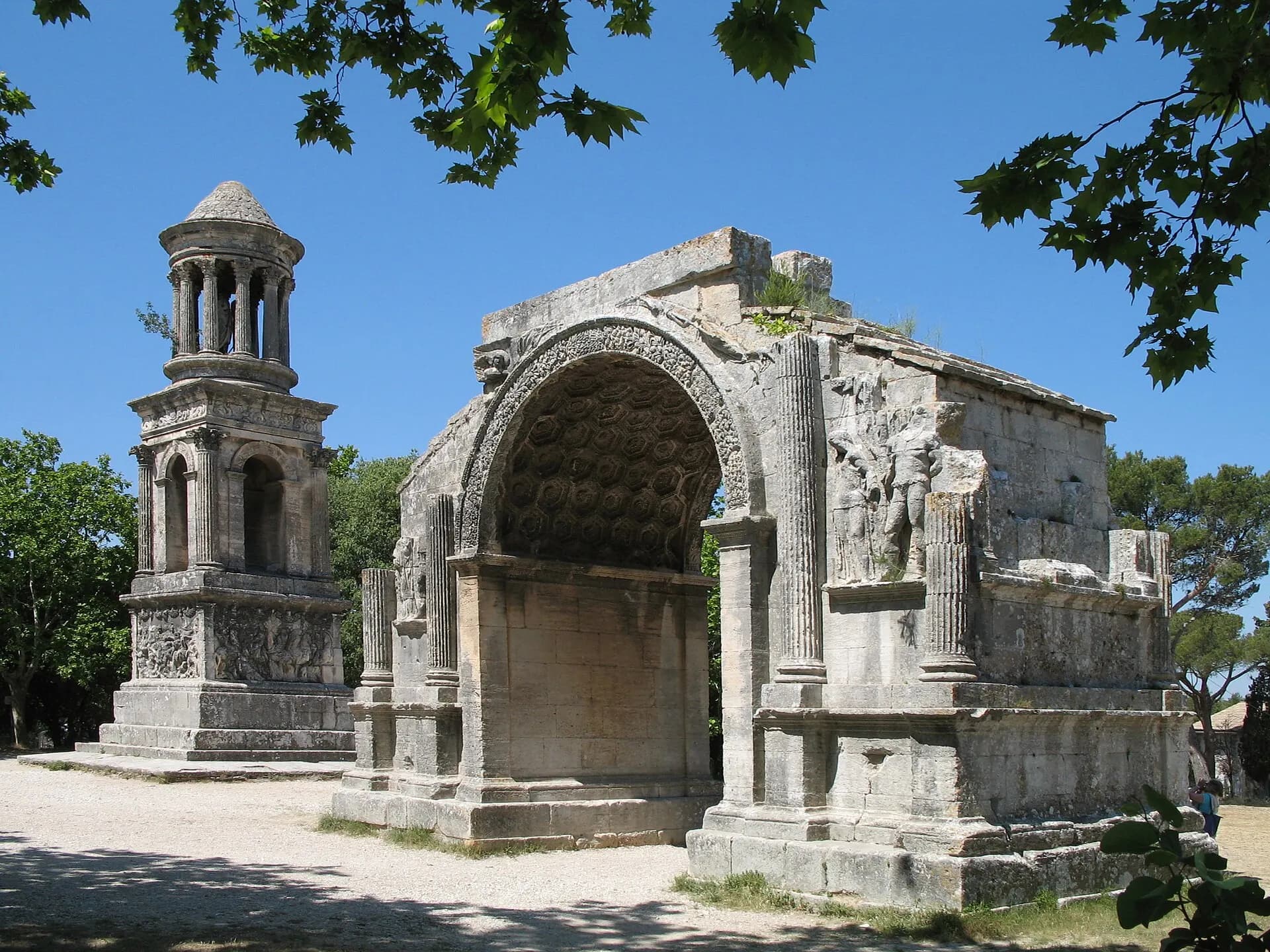
On the southern edge of Saint-Rémy, the ruins of Glanum, a Celtic and Greek town later rebuilt by the Romans, fill a narrow valley in the hills, with temples, baths and houses. Beside the road stand two of the best-preserved Roman monuments in France, a triumphal arch and a tall mausoleum, known together as Les Antiques. Across the road, the monastery of Saint-Paul de Mausole is still a psychiatric clinic, and it was here that Van Gogh voluntarily stayed in 1889 and 1890, painting some 150 canvases, including The Starry Night. A reconstruction of his room, the cloister and the gardens can be visited.
- 10
Fontaine-de-Vaucluse
Photo: Jjpetite, CC BY-SA 4.0, via Wikimedia Commons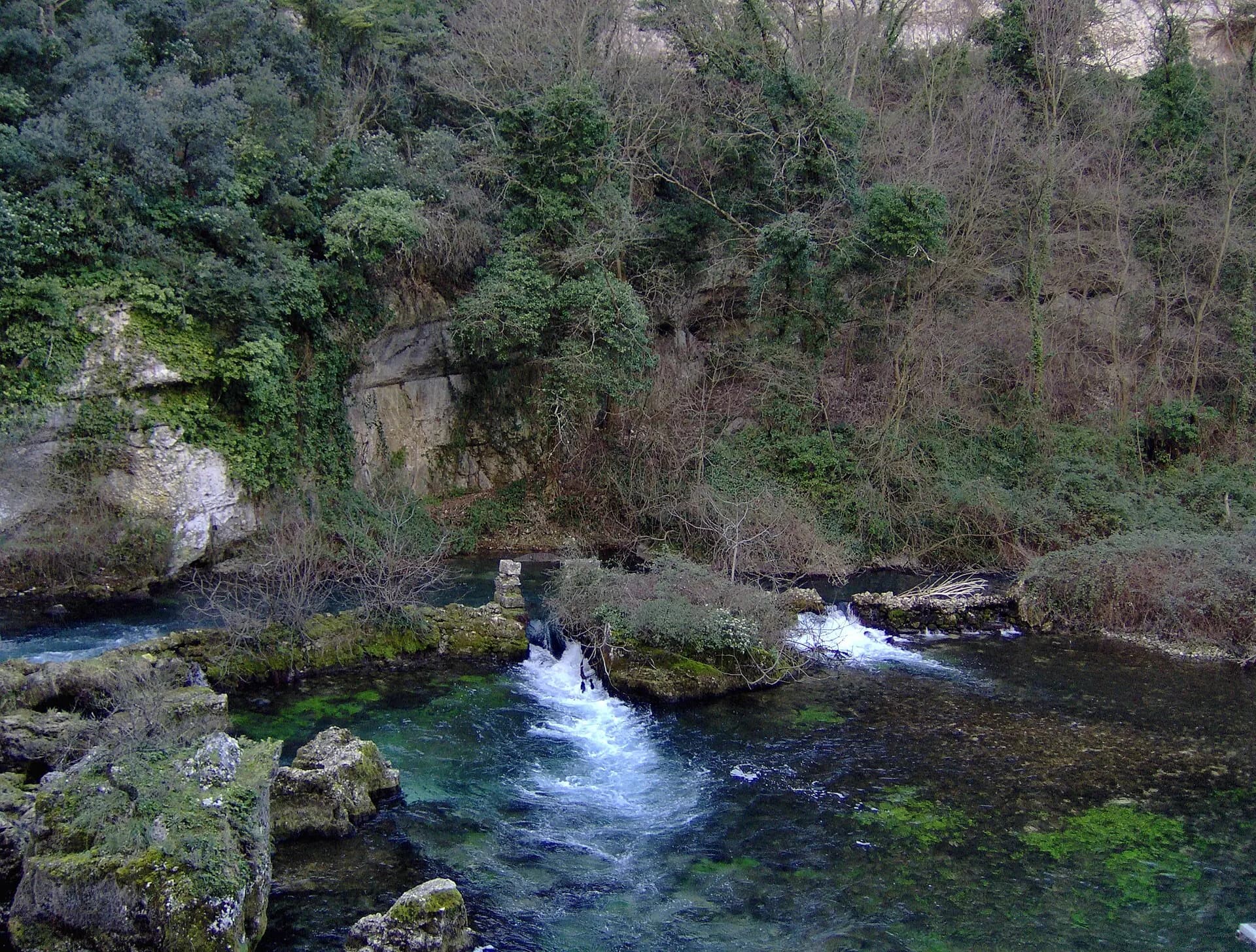
At the head of a closed valley, the river Sorgue rises from a deep cave pool at the foot of a sheer cliff, one of the most powerful springs in Europe; divers and robots have explored it to more than 300 metres without finding the bottom. After winter and spring rain the water wells up and overflows in a rush of emerald green; in late summer it can be calm and low. The Italian poet Petrarch lived in the village in the fourteenth century. Downstream, L'Isle-sur-la-Sorgue, its canals turning old water wheels, is famous for its Sunday antiques market.
- 11
Gordes
Photo: Einaz80, CC BY-SA 4.0, via Wikimedia Commons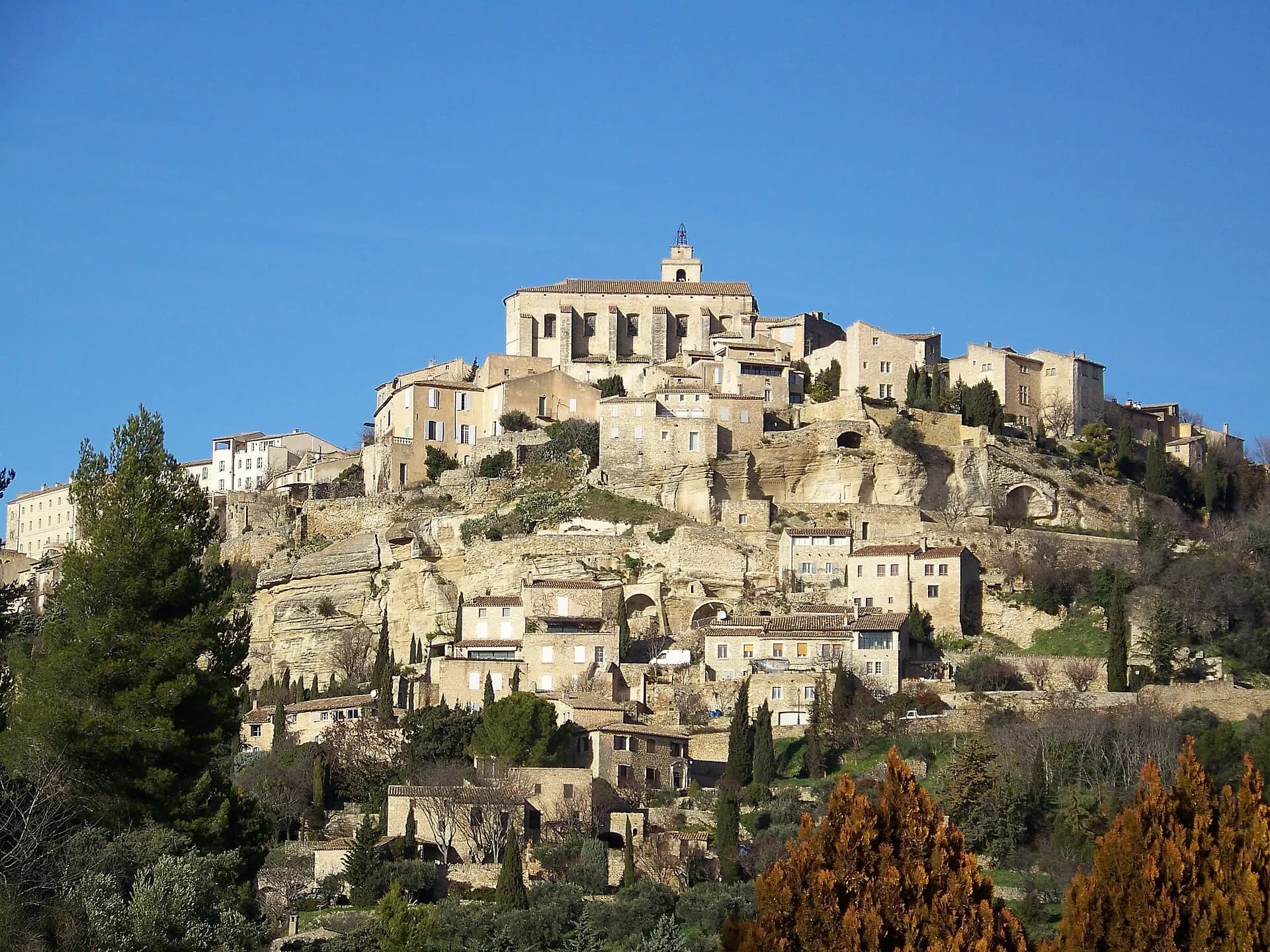
Gordes is the archetypal hilltop village, its pale stone houses stacked in tiers up a rock face above the Luberon valley and crowned by a Renaissance castle. The classic view is from the road coming in from the south-east, best in the late afternoon. In the countryside nearby, the Village des Bories preserves a group of dry-stone huts built without mortar, a traditional technique of the area. Gordes is chic and busy in summer; nearby Ménerbes, Lacoste, Bonnieux and Lourmarin are equally beautiful and often quieter.
- 12
Sénanque Abbey
Photo: Chris Down, CC BY 4.0, via Wikimedia Commons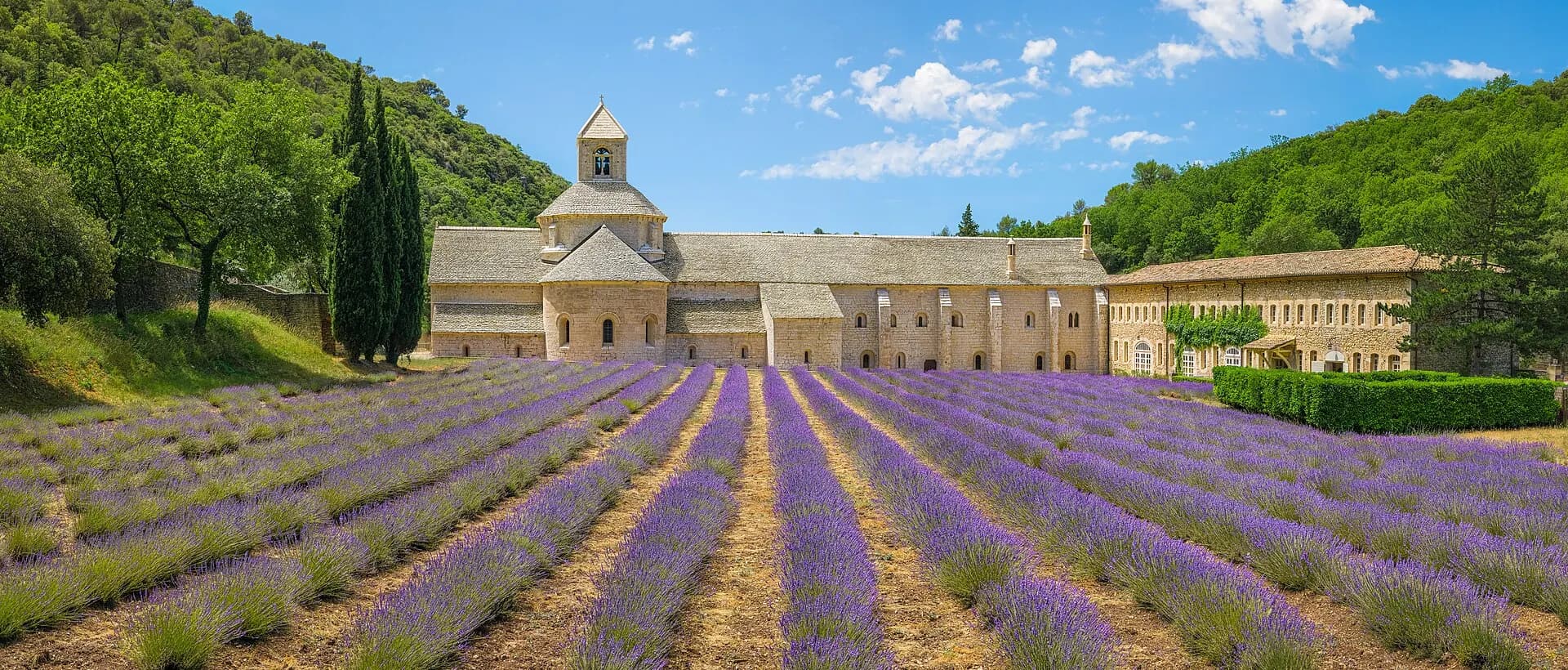
In a narrow valley a few kilometres north of Gordes, a Cistercian abbey founded in 1148 stands in front of rows of lavender, one of the most photographed scenes in France. The architecture is deliberately plain, in the Cistercian way: a church, cloister and dormitory of honey-coloured stone with almost no ornament. A small community of monks still lives here, farming the lavender and keeping bees. The lavender is usually in flower from late June to mid-July, depending on the year.
TipThe church and cloister can only be visited with a ticket, and booking ahead is advised; the grounds outside are free. This is a working monastery, so dress modestly and keep your voice down.
- 13
Roussillon ochre trail
Photo: Own work, CC BY-SA 3.0, via Wikimedia Commons
Roussillon sits on the largest ochre deposit in the world, and its houses are painted every shade from butter yellow to deep red. Below the village, the Sentier des Ocres winds through an old quarry of eroded cliffs and needles in vivid orange and crimson, set against green pines. There are two loops, of around half an hour and an hour, with a small entry fee. The old ochre works at Conservatoire des Ocres, just outside the village, explain how the pigment was washed and dried, and further east the larger Colorado Provençal at Rustrel offers longer walks.
TipWear old shoes and clothes: the sand stains. The trail can close in heavy rain or high summer heat.
- 14
Valensole plateau
Photo: Einaz80, CC BY-SA 4.0, via Wikimedia Commons
The broad, high plateau of Valensole, in the Alpes-de-Haute-Provence, is where the famous endless lavender fields are: row after row of purple running to the horizon, interspersed with golden wheat and almond groves. Most of it is lavandin, a hardy hybrid grown for oil, and the colour peaks from about mid-June to mid-July before harvest, after which the fields are suddenly bare. The village of Valensole holds a lavender festival in July. Pull over only where it's safe, stay on the field edges, and remember the fields are farms, not public parks.
TipEarly morning and sunset give the best light and the fewest people. Distilleries and farm shops along the D6 and D8 sell essential oil and honey.
- 15
Moustiers-Sainte-Marie
Photo: User:Nepomuk (also on fr:Utilisateur:Nepomuk), Public domain, via Wikimedia Commons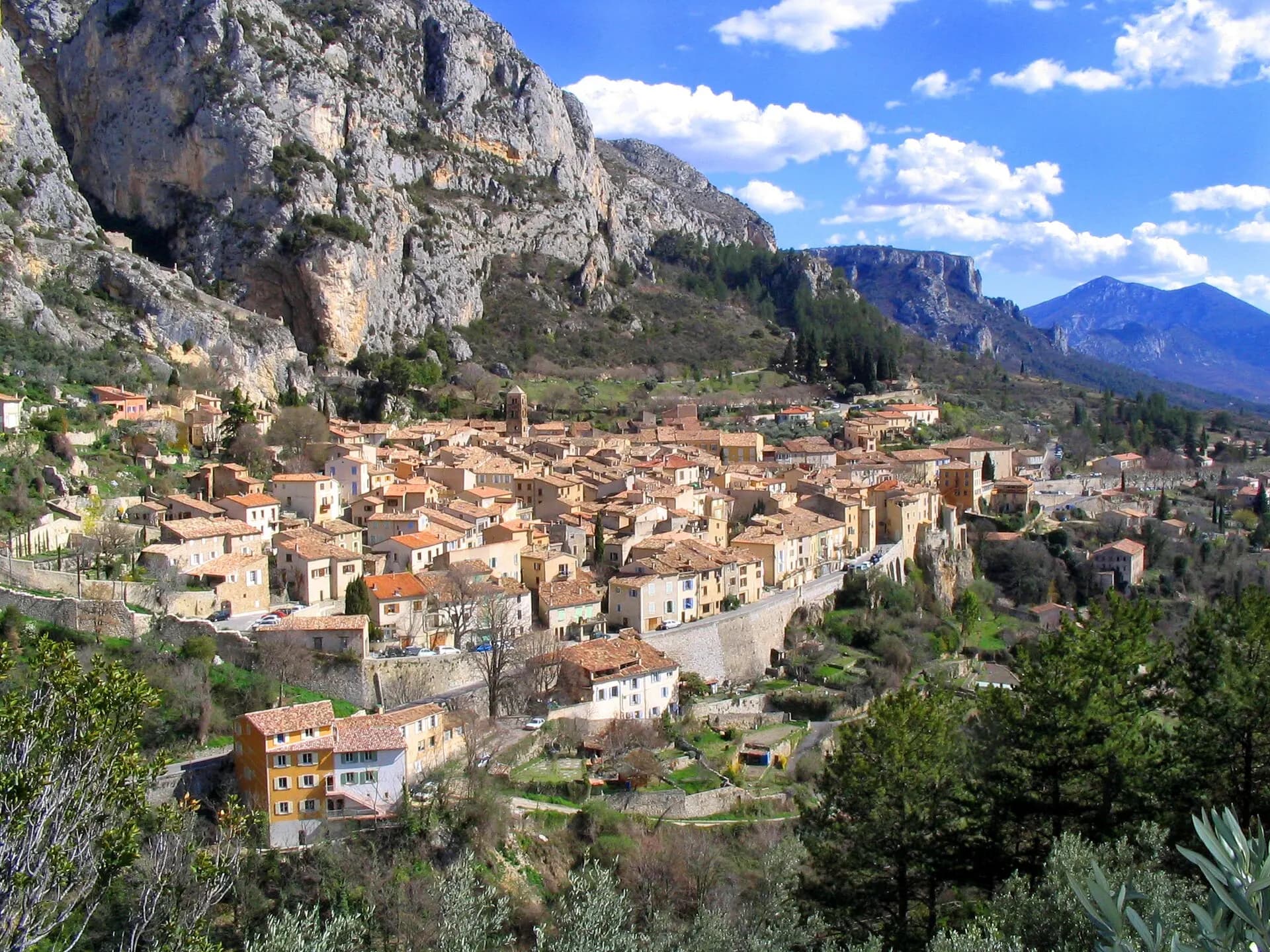
At the western mouth of the Verdon, Moustiers clings to a cleft between two cliffs, with a waterfall running through the village. A gold star hangs from a chain strung across the gorge high above, said to be a crusader's vow, and a long stepped path climbs to the chapel of Notre-Dame de Beauvoir. Since the seventeenth century the village has been known for its painted faience pottery. Just below, the turquoise reservoir of Lac de Sainte-Croix is fringed with beaches, and pedal boats and kayaks can paddle into the lower end of the gorge.
- 16
Gorges du Verdon
Photo: kallerna, CC BY-SA 4.0, via Wikimedia Commons
Europe's grandest canyon cuts some 25 kilometres through limestone, its walls dropping as much as 700 metres to a river of startling jade green. Two roads circle the rim: on the north side the Route des Crêtes, a loop from La Palud-sur-Verdon with a string of viewpoints, and on the south side the Corniche Sublime, with the Balcons de la Mescla. The Point Sublime near Rougon looks into the narrowest upper part of the gorge. Fit walkers can descend to the river on the Sentier Blanc-Martel, a full day's hike through tunnels and along the canyon floor, and the cliffs are among the most famous climbing walls in Europe.
TipThe rim roads are narrow and slow; allow a full day for the loop. Water levels below the dams can rise suddenly when they release, so heed the warning signs, and take a torch for the tunnels on the Blanc-Martel trail.
- 17
Montagne Sainte-Victoire
Photo: Mathieu BROSSAIS, CC BY 4.0, via Wikimedia Commons
The long white ridge east of Aix was Cézanne's obsession: he painted it more than eighty times, and it now appears on almost as many postcards. Footpaths climb from the south side to the Croix de Provence at about 950 metres and the priory just below it, with views over the whole of lower Provence. The scenic D17 runs along its southern foot through the village of Le Tholonet.
TipFrom June to September access to the hills is restricted day by day because of fire risk, and on red-alert days the massif is closed entirely. Check the prefecture's daily map before walking.
- 18
Aix-en-Provence
Photo: JM Campaner, CC BY-SA 3.0, via Wikimedia Commons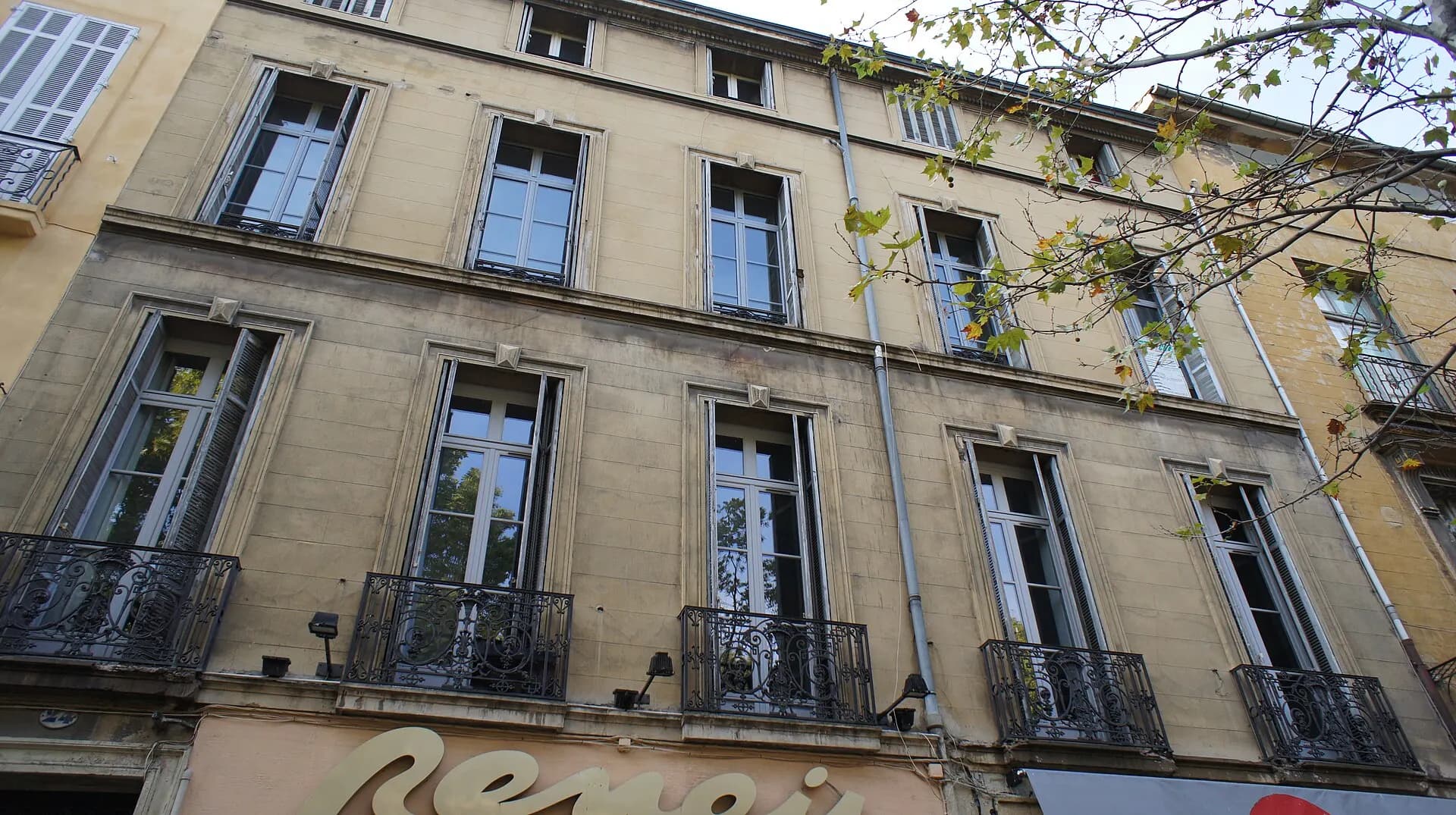
Elegant Aix is the old capital of Provence, a university town of honey-coloured seventeenth- and eighteenth-century mansions, mossy fountains and morning markets. Its spine is the Cours Mirabeau, a broad avenue under plane trees, with cafés on one side and grand hôtels particuliers on the other. North of it lie the medieval lanes of the old town and the Cathédrale Saint-Sauveur, with a baptistery built partly from Roman columns. Paul Cézanne was born here in 1839, and his last studio, the Atelier de Cézanne on the hill to the north, is kept much as he left it, with his coat, easel and the objects from his still lifes. The Musée Granet holds several of his paintings.
TipThe markets on Place Richelme (food, every morning) and the Place des Prêcheurs are best before 11am. Aix is half an hour from Marseille by frequent bus.
- 19
Vieux-Port, Marseille
Photo: Clément Bardot, CC BY-SA 4.0, via Wikimedia Commons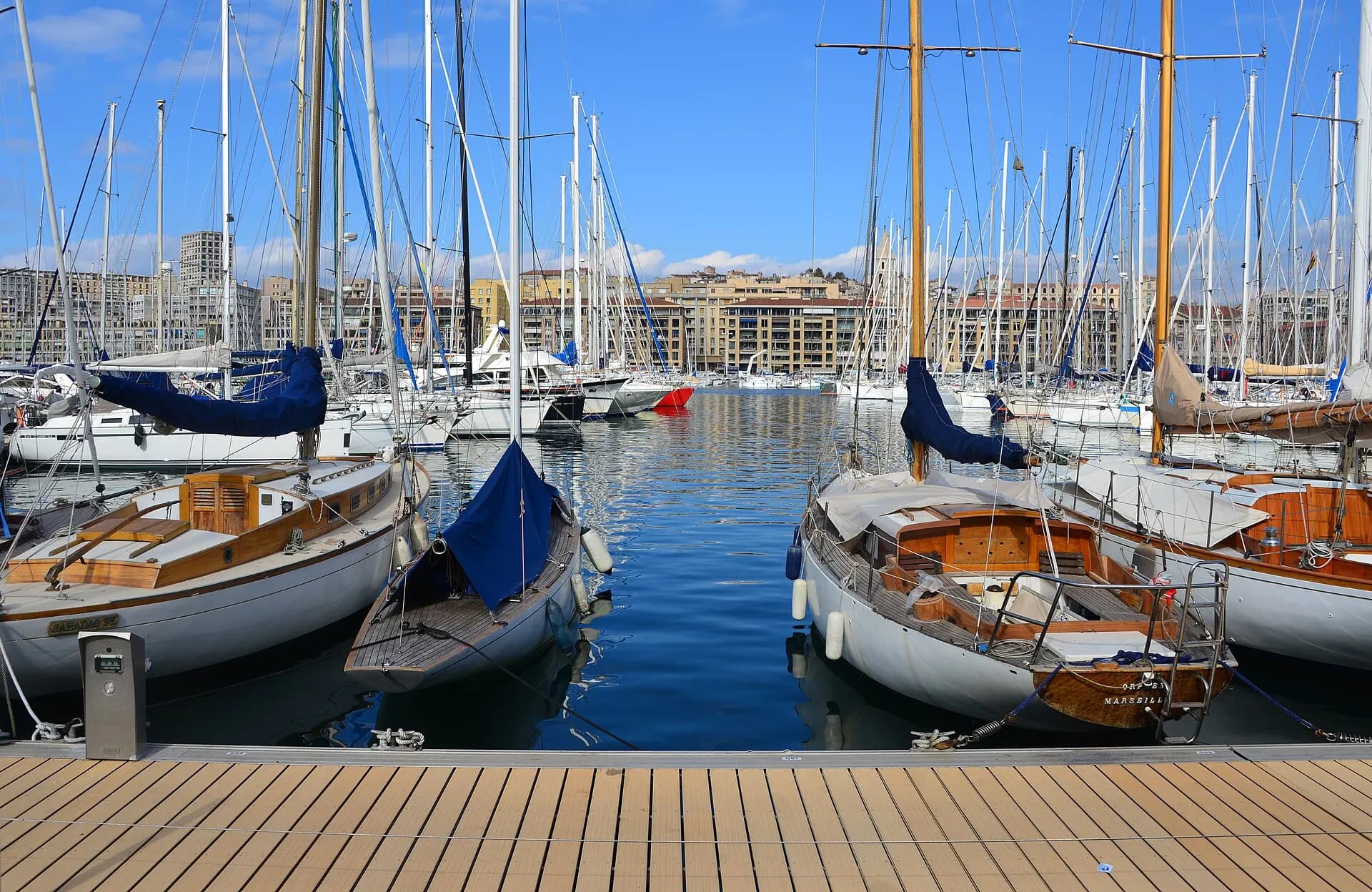
Marseille's natural harbour has been in use for 2,600 years, and it is still the heart of the city: lined with fishing boats and yachts, guarded at its mouth by the forts of Saint-Jean and Saint-Nicolas. Each morning, fishermen sell the night's catch from stalls on the Quai des Belges, beside Norman Foster's mirrored canopy, which reflects the crowds walking beneath it. Ferries leave from here for the Château d'If and the Frioul islands, and for Cassis in summer. France's second city is grittier and livelier than the rest of Provence, a multicultural port of North African markets, street art and excellent food.
- 20
Le Panier
Photo: Benh LIEU SONG, CC BY-SA 3.0, via Wikimedia Commons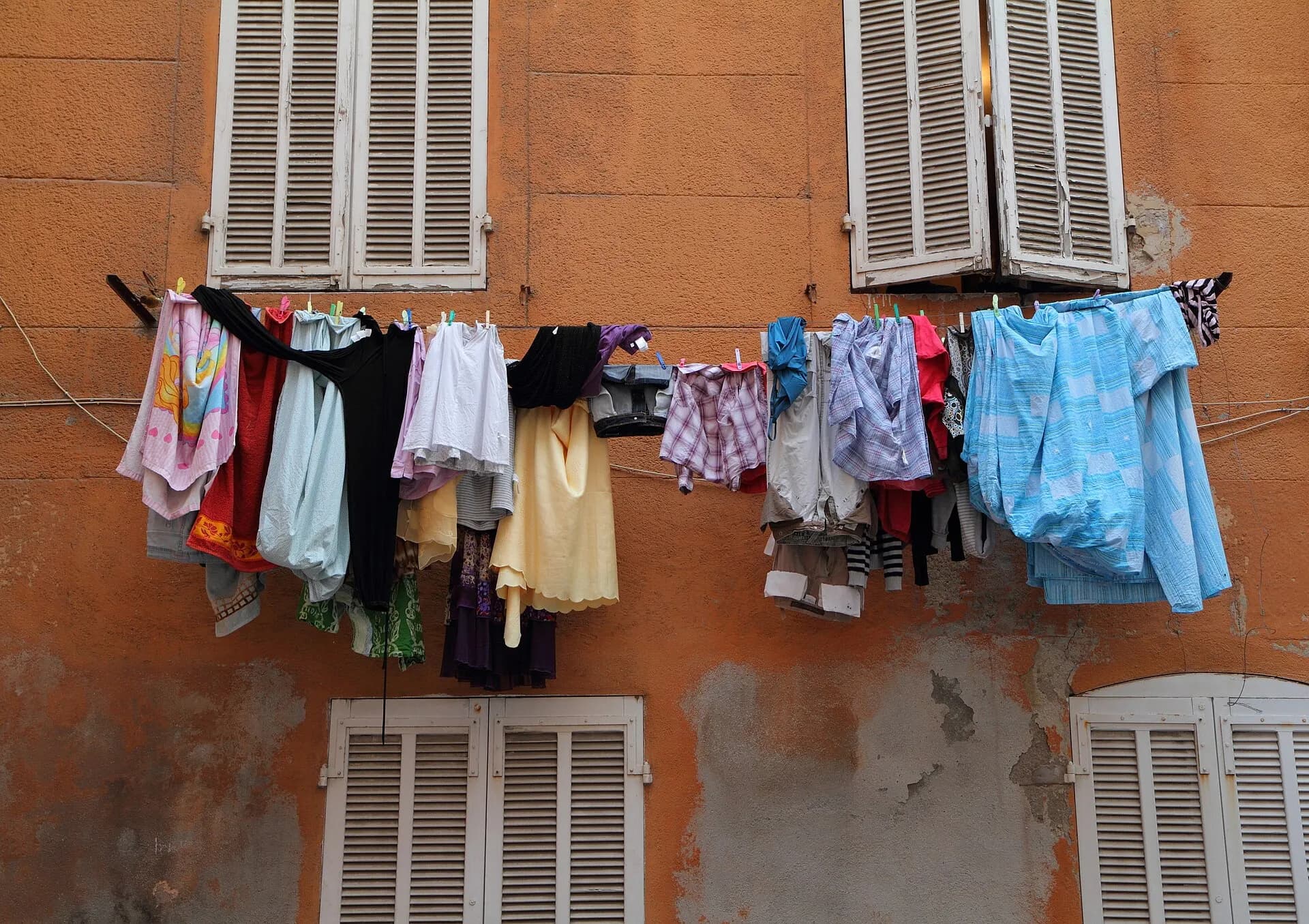
On the hill above the north side of the port is Le Panier, the oldest part of Marseille, where the Greek colonists first settled. Its steep stepped lanes are lined with washing, murals, small shops selling soap and navettes biscuits, and cafés on tiny squares. At its heart, the Vieille Charité, a beautiful seventeenth-century almshouse of pink stone arcades around a domed chapel, now houses museums of archaeology and of African, Oceanic and American art.
- 21
Mucem
Photo: Velvet, CC BY-SA 4.0, via Wikimedia Commons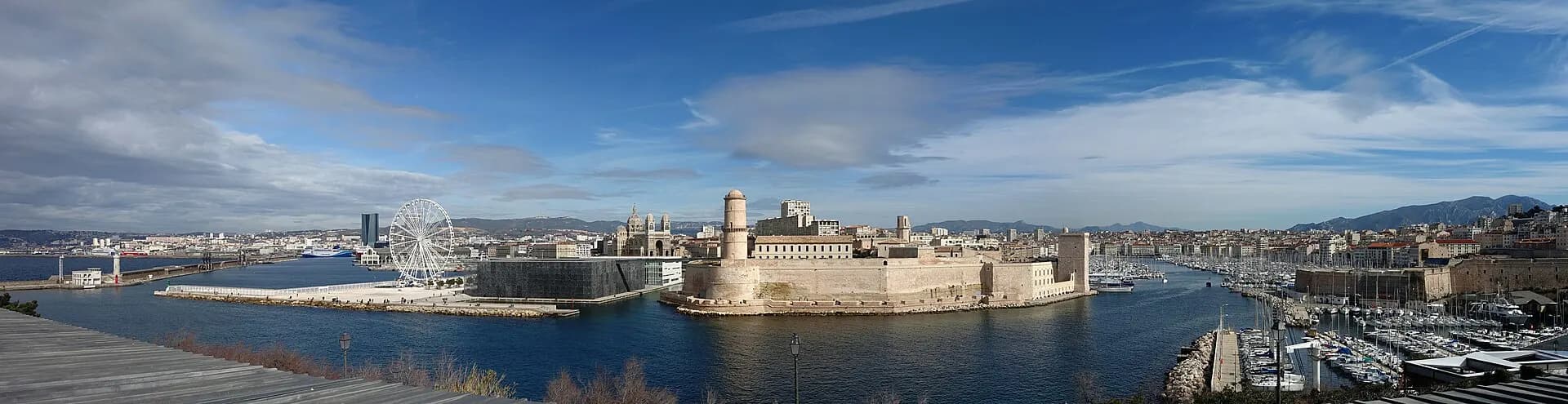
Opened when Marseille was European Capital of Culture in 2013, the Museum of European and Mediterranean Civilisations occupies a striking cube wrapped in a lace-like lattice of concrete, linked by a slender footbridge to the seventeenth-century Fort Saint-Jean. The exhibitions explore the cultures around the Mediterranean, but even without a ticket it's worth wandering the fort's ramparts and gardens and the museum's rooftop terrace, which look across the harbour mouth to the open sea. Next door rises the striped Romano-Byzantine Cathédrale de la Major.
TipAccess to the fort's gardens and walkways is free. Sunset from the rooftop is a Marseille ritual.
- 22
Château d'If
Photo: Rémih, CC BY-SA 4.0, via Wikimedia Commons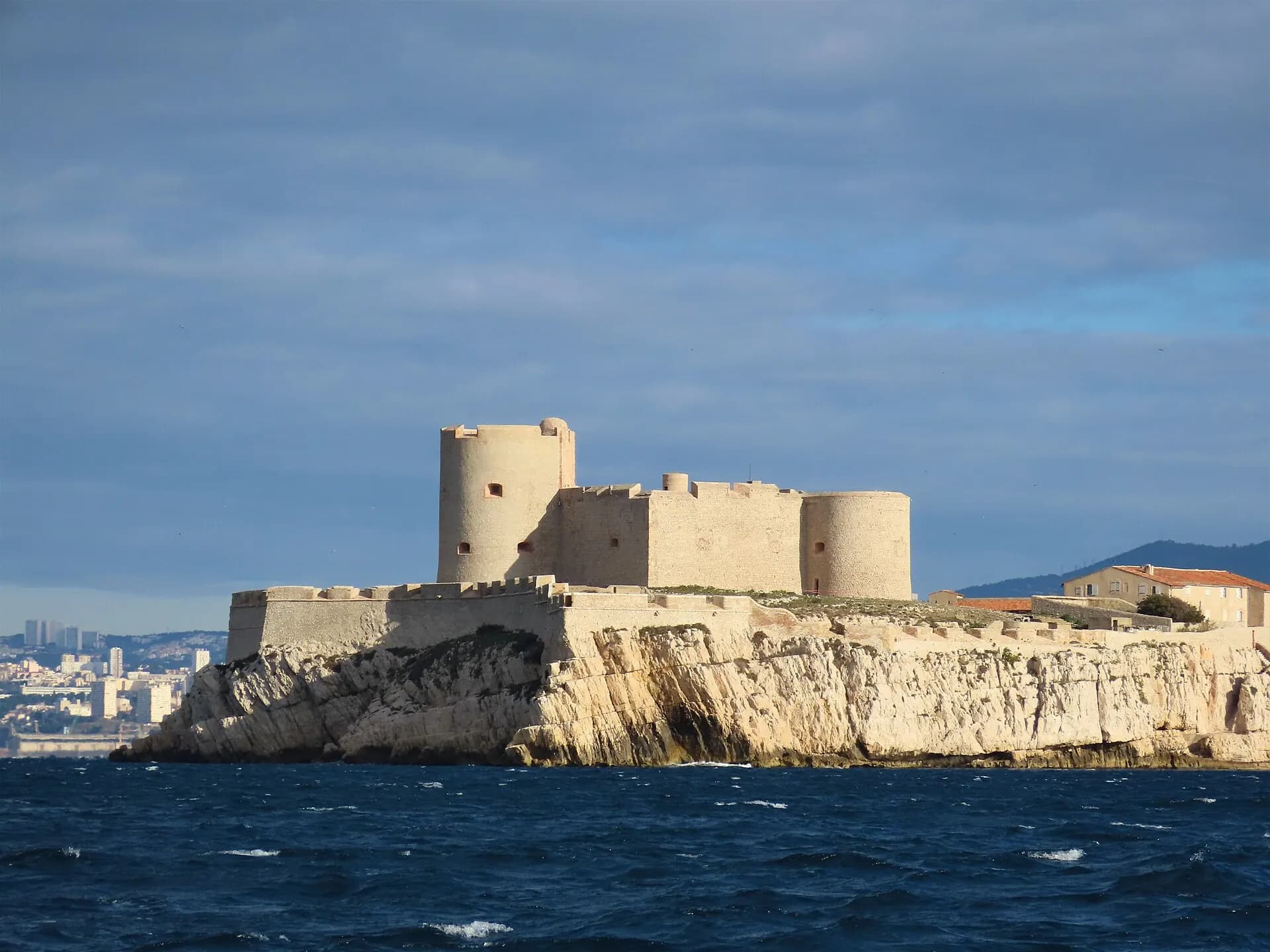
A squat fortress on a tiny rock island in the bay, built under François I in the sixteenth century and later used as a prison. Its fame comes largely from fiction: Alexandre Dumas imprisoned his hero Edmond Dantès here in The Count of Monte Cristo, and visitors still look for the hole the abbé Faria supposedly dug. The boat ride from the Vieux-Port gives excellent views back over the city, and it can be combined with the Frioul islands, which have coves and simple footpaths.
TipCrossings are cancelled when the mistral blows hard; check before you set off.
- 23
Notre-Dame de la Garde
Photo: Vinaciv183, CC0, via Wikimedia Commons
High on a limestone hill south of the port, the nineteenth-century basilica of Notre-Dame de la Garde, crowned by a gilded statue of the Virgin and Child, watches over the city; Marseillais call it the Bonne Mère, the Good Mother. The interior glitters with gold mosaics and is hung with hundreds of votive offerings from sailors and their families: model ships, paintings of shipwrecks and, more recently, football shirts. Bullet marks on the walls date from the battle for the city's liberation in August 1944. The view from the terrace covers the whole city, the islands and the coast.
TipEntry is free. The climb on foot from the port is steep; the number 60 bus and the tourist train go up.
- 24
Calanques National Park and Sugiton
Photo: Tobi 87, CC BY-SA 3.0, via Wikimedia Commons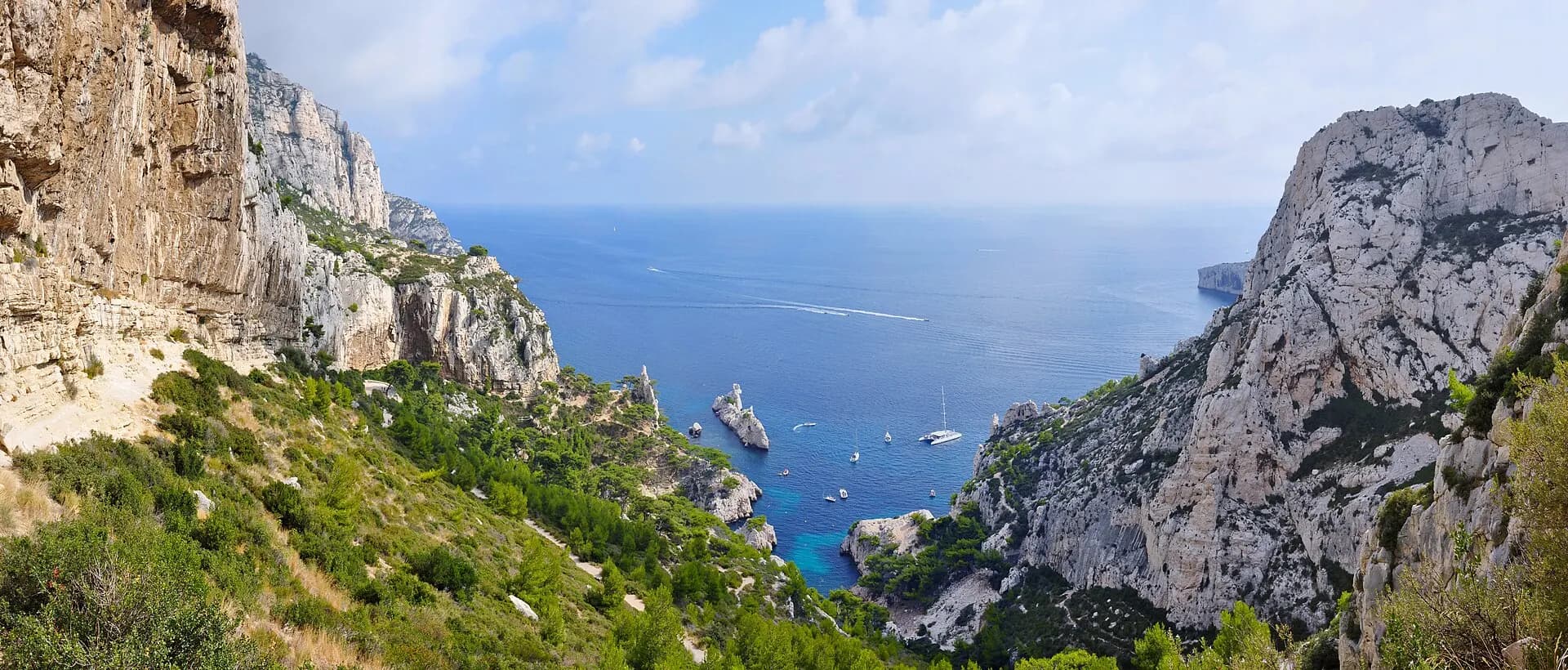
South-east of Marseille, a 20-kilometre stretch of white limestone cliffs is cut by narrow fjord-like inlets, the calanques, with clear blue water at the foot of pine-scented slopes. It became France's first national park to combine land, sea and the edge of a large city in 2012. From the Luminy university campus, a path drops through the woods in about an hour to Sugiton, a small cove with a rock islet, and to the neighbouring beach of Les Pierres Tombées. Erosion from overcrowding led the park to introduce a free booking system on summer days; in 2026 it applied on 20 and 21 June, every day from 27 June to 30 August and on the weekends of 5–6 and 12–13 September, with around 400 places a day, bookable online from three days ahead and shown as a QR code at the trailhead. Outside those dates access is free and unbooked, and the park has said the system will continue in 2027.
TipBring plenty of water and proper shoes; the return climb is hot and steep. From June to September access to the whole massif can be restricted or closed on high fire-risk days, so check the prefecture's daily map the evening before.
- 25
Calanque d'En-Vau
Photo: kallerna, CC BY-SA 4.0, via Wikimedia Commons
Many consider En-Vau the most beautiful of all the calanques: a deep, narrow inlet between towering cliffs and needles, ending in a pebble beach and water of an almost unreal turquoise. Reaching it means a rugged walk of an hour or more each way from the Col de la Gardiole or from Port-Miou near Cassis, passing Port-Pin, a gentler cove shaded by pines, on the way. The final descent is steep and rocky. For those who prefer not to walk, boat trips from Cassis and Marseille sail along the cliffs and into the inlets.
- 26
Cassis
Photo: Michal Osmenda from Brussels, Belgium, CC BY-SA 2.0, via Wikimedia Commons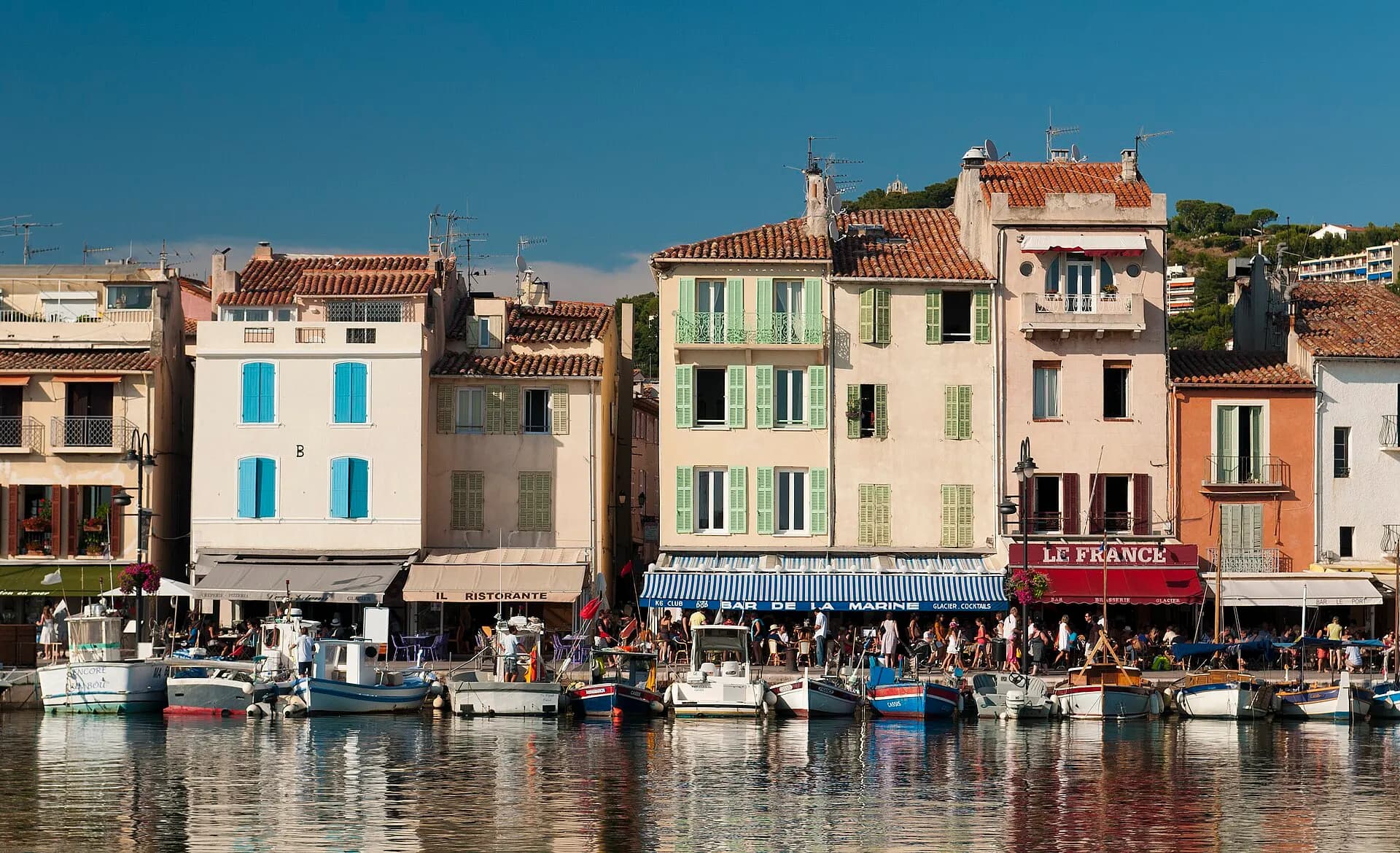
A small fishing port at the eastern end of the Calanques, with pastel houses around the harbour and a castle on the cliff above. Cassis gives its name to a crisp white wine made on the terraced vineyards behind the town, one of the oldest appellations in Provence. To the east, the Route des Crêtes climbs over Cap Canaille, among the highest sea cliffs in France, to La Ciotat, with dizzying views back over the bay.
TipParking is very limited in summer; use the park-and-ride shuttles, or arrive by train to Cassis station and the connecting bus.
When to go
Late spring and early summer are the classic Provence season: in May and June the hills are green, poppies and broom are in flower, and the days are warm but rarely scorching. Lavender is usually at its best from mid-June to mid-July, a little earlier in the lower Luberon and later at altitude, and harvest begins soon after. July and August are hot, often well above 30°C, busy and expensive, with the Avignon festival, the Chorégies opera season in Orange and the Arles photography festival; this is also high fire-risk season, when hill walks can be closed. September and October are excellent, with the grape harvest, warm seas and fewer crowds. Winter is mild and bright but can be cold when the mistral blows, a fierce, dry north wind that can last for days; many village restaurants and hotels close from November to March.
Getting around
A car is almost essential for the villages, the lavender plateaux and the Verdon gorge, where public transport is sparse. Motorways link Avignon, Aix and Marseille quickly, but the real pleasure is the minor roads. Hire cars from Marseille Provence airport or the TGV stations. Many villages and towns have paid car parks on the outskirts; old centres are often pedestrianised or limited-traffic zones, and Marseille has a low-emission zone that applies to older vehicles.
The cities are well connected without a car. High-speed TGV trains reach Avignon TGV, Aix-en-Provence TGV and Marseille Saint-Charles from Paris in around three hours, and regional TER trains link Avignon, Arles, Marseille, Aix and Cassis, and run along the coast towards the Riviera. The regional bus network, ZOU!, reaches many smaller towns, including Saint-Rémy, Les Baux in season, Gordes and Moustiers, though services can be infrequent. In Marseille, the metro, trams, buses and boat shuttles across the port cover most sights, and summer boats run from the Vieux-Port to the Calanques and Cassis.
Local tips
- Market days are worth planning around: Arles on Saturday and Wednesday, Saint-Rémy on Wednesday, L'Isle-sur-la-Sorgue on Sunday, Gordes on Tuesday, and Aix most mornings.
- Restaurants in villages serve lunch from about noon to 2pm and dinner from 7.30pm; outside those hours, finding a meal can be hard.
- Summer heat is serious: sightsee in the morning and evening, and carry water on any walk.
- The fire-risk rules for the Calanques, Sainte-Victoire and other hills are published daily from June to September; fines apply for entering closed areas.
- Leave nothing visible in a parked car, particularly at trailheads and popular viewpoints.
- Many museums close on Mondays or Tuesdays, and churches often close at lunchtime.
Eat and drink
Provençal cooking is built on olive oil, garlic, tomatoes and herbs from the garrigue: thyme, rosemary, savory and the blends sold as herbes de Provence. Look for ratatouille, tian (layered baked vegetables), daube (beef braised in red wine), stuffed vegetables called petits farcis, and tapenade, a paste of olives, capers and anchovies. Aïoli, a pungent garlic mayonnaise, is served as a whole meal on Fridays in many places, with salt cod, vegetables and eggs. In Marseille, bouillabaisse, the fishermen's stew of rockfish served with saffron rouille and croutons, is a serious and expensive affair at proper restaurants; the city also has superb North African food and panisse, chickpea fritters.
The Camargue grows red rice and raises bulls for a slow-cooked stew, gardianne. Sweet treats include Aix's calissons, almond-shaped sweets of melon and almond paste, Marseille's orange-flower navettes, and the thirteen desserts of Christmas. Provence is the world's leading region for rosé wine, best from Bandol and the Côtes de Provence; the southern Rhône around Avignon makes rich reds at Châteauneuf-du-Pape and Gigondas, and pastis, the aniseed aperitif diluted with water, is the drink of every village bar.
Where to base yourself
Two or three bases cover most of the region. Avignon or Saint-Rémy suits the west, for Arles, Les Baux, the Pont du Gard and the Camargue, with Arles itself a good choice for the Camargue. A village mas or guesthouse in the Luberon, around Gordes, Bonnieux or Lourmarin, puts the perched villages, Sénanque and Roussillon on the doorstep. For the Verdon and Valensole, Moustiers or one of the villages around Lac de Sainte-Croix saves long drives. Aix is the most comfortable base for the south, a short hop from Marseille, while Marseille itself or Cassis is best for the Calanques and the coast.
A short history
Greek traders from Phocaea founded Massalia, today's Marseille, around 600 BC, and spread vines and olives along the coast. Rome conquered the region in the second century BC, and Arles, Orange, Nîmes and Glanum grew rich, which is why the area has some of the finest Roman monuments outside Italy. In the Middle Ages the counts of Provence ruled from Aix, and between 1309 and 1377 the popes made Avignon the centre of the Catholic world. Provence became part of France in 1481 but kept its own language, Provençal, a form of Occitan, revived in the nineteenth century by the poet Frédéric Mistral. Its light and landscape then drew painters, from Van Gogh in Arles to Cézanne in Aix, and in August 1944 Allied troops landed on its coast to liberate southern France.
Responsible travel
Provence's beauty draws millions of visitors to a few places, and some of them are fragile. At Sugiton and in the Calanques, use the booking system, stay on marked paths and take every scrap of rubbish home; never pick lavender or walk into the rows, and ask before photographing on private farmland. Wildfire is the greatest threat to the region: in summer, respect closures of the hills, never light a barbecue or drop a cigarette, and report smoke on 112. Water is scarce in dry years, so use it carefully. Spreading your visit into May, June or September, staying in smaller villages and buying from local markets, olive mills and wine estates helps the communities that look after these landscapes.