Nice and the Côte d'Azur
A sunlit old town, pebble beaches and painters' museums, with clifftop villages, Monaco and Cannes a short train ride away.
- Best time to go
- May to June and September to October, warm and less crowded than high summer
- Local time
- –
- Currency
- Euro (EUR)
- Reading time
- 9 min
- Language
- French
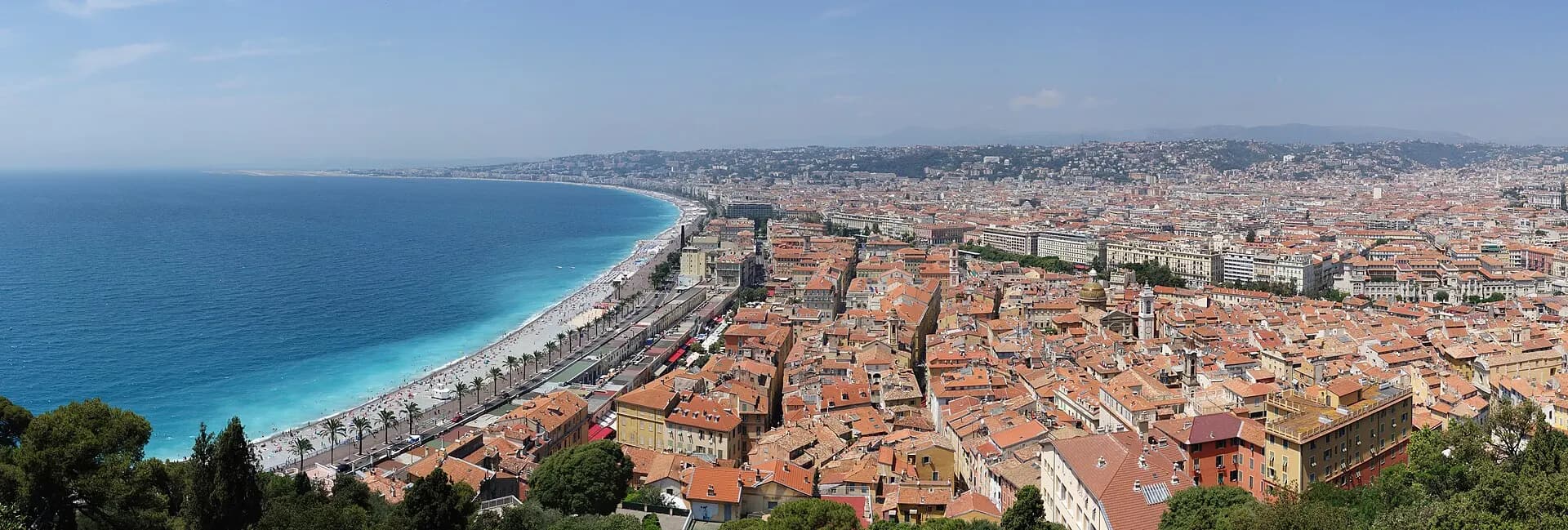
Nice sits on a wide curve of blue water called the Baie des Anges, with the mountains rising close behind it. Its old town is a tangle of ochre and pink lanes full of markets, churches and small restaurants, and its seafront promenade runs for kilometres beside the pebble beach. Matisse and Chagall both chose to live and work here, and the light that drew them still fills the city. In 2021, UNESCO listed Nice as the winter resort town of the Riviera, recognising the villas, hotels and gardens built when wealthy visitors came south to escape northern winters.
Nice also makes an easy base for the whole Côte d'Azur. Coastal trains and buses reach the harbour of Villefranche, the hilltop village of Èze, the principality of Monaco and lemon-scented Menton to the east, and Antibes, Cannes and the perfume town of Grasse to the west, so you can see a great deal without a car and without changing hotels.
The top 17 in Nice and the Côte d'Azur
- 1
Promenade des Anglais
Photo: Tobi 87, CC BY-SA 3.0, via Wikimedia Commons
The famous seafront walk, begun in the 1820s with money raised by the English winter community, runs about seven kilometres along the bay. Walk, cycle or sit in one of the blue chairs, and look out for the domed Hotel Negresco and the Belle Époque villas along the way.
TipCome early in the morning or at sunset, when the light on the bay is softest and the joggers and families are out.
- 2
Vieux Nice and the Cours Saleya
Photo: GFreihalter, CC BY-SA 4.0, via Wikimedia Commons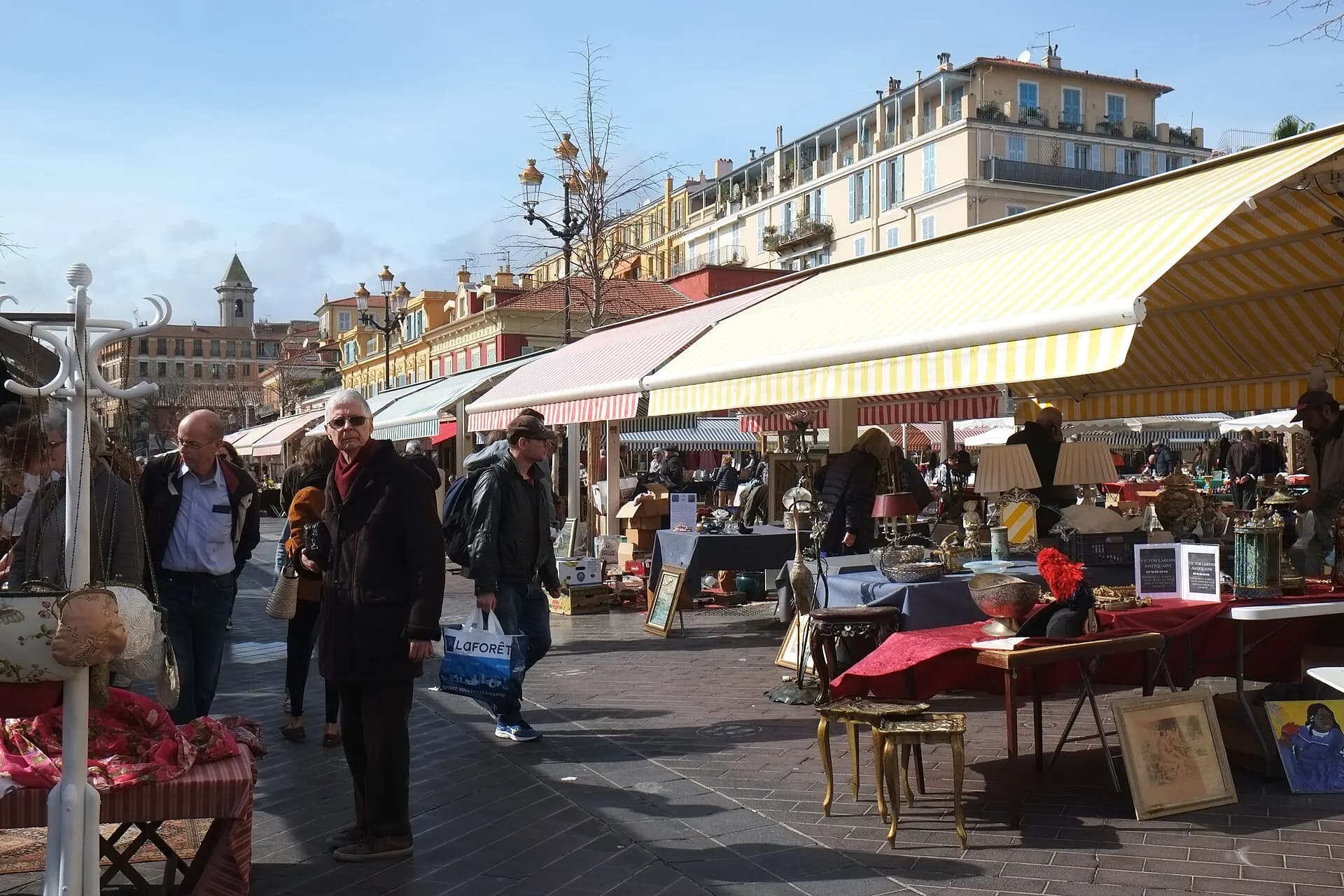
The old town is the heart of the city, with narrow streets, Baroque churches and tall houses painted in warm colours. The Cours Saleya holds a flower and produce market most mornings, and a flea and antiques market on Mondays; in the evening, the square fills with restaurant tables.
TipTry socca, a thin chickpea pancake, hot from the oven at a stall in the old town.
- 3
Castle Hill
Photo: Cayambe, CC BY-SA 3.0, via Wikimedia Commons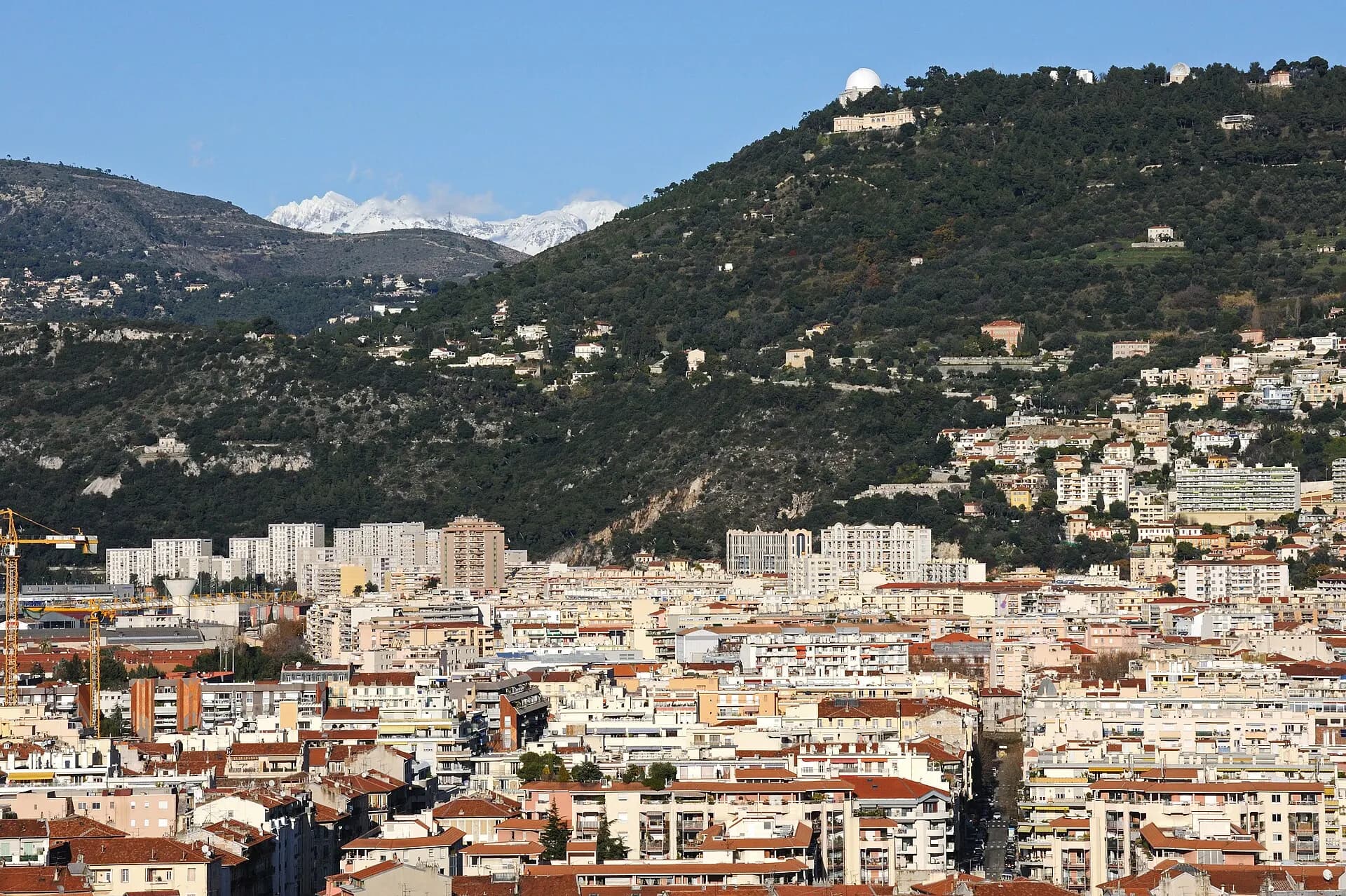
Little remains of the castle that once stood here, but the park on the hill above the old town gives the best views over the Baie des Anges, the port and the rooftops. There's a waterfall, shady paths and a lift for those who don't want to climb the steps.
- 4
Musée national Marc Chagall
Photo: Derbrauni, CC BY-SA 4.0, via Wikimedia Commons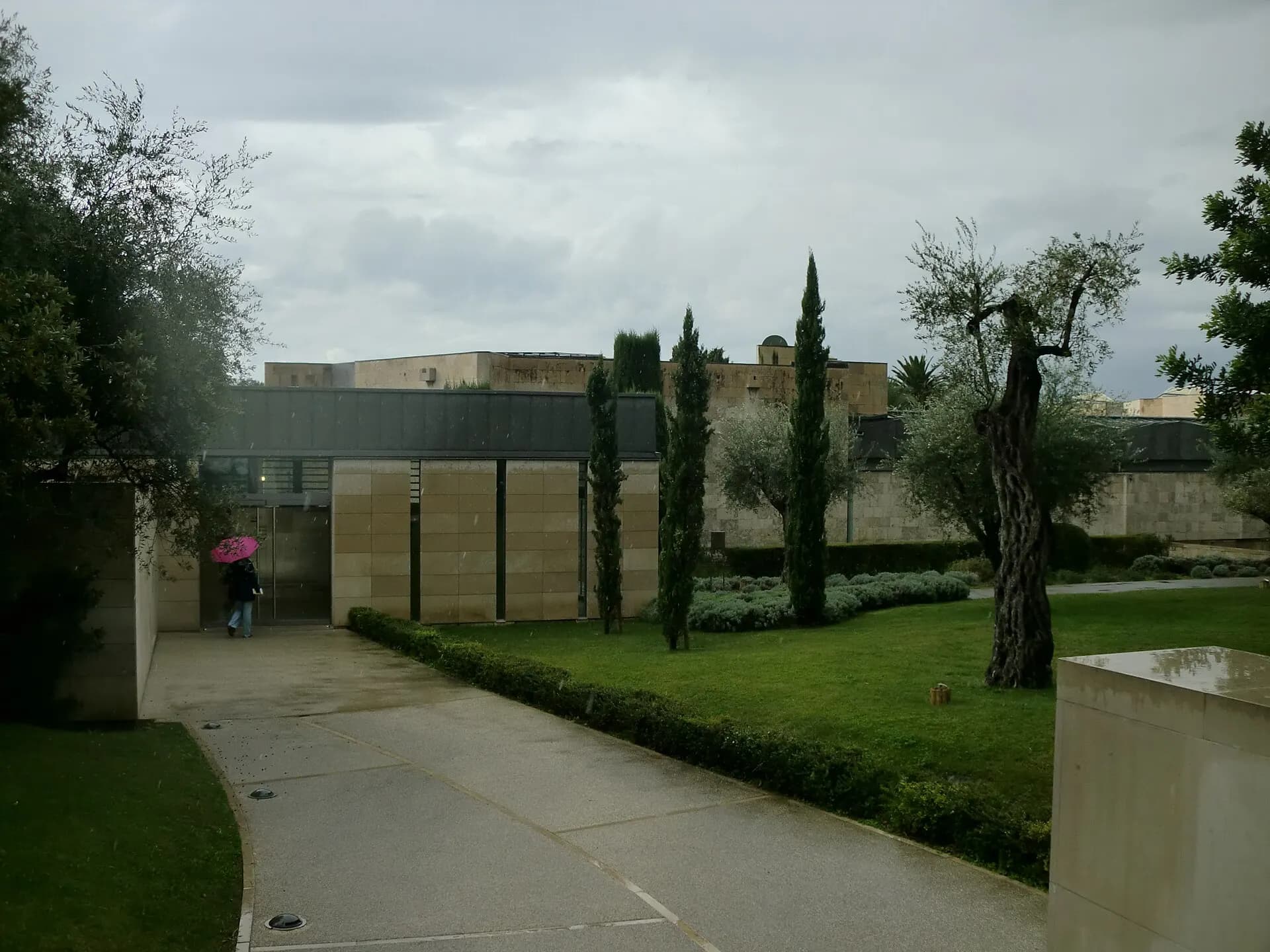
A museum designed around Chagall's Biblical Message, a cycle of large, glowing paintings of scenes from the Old Testament, opened in the artist's lifetime. There's also a concert hall with his stained-glass windows and a quiet garden. It's closed on Tuesdays.
- 5
Musée Matisse
A red Genoese villa among olive trees on the hill of Cimiez holds a collection covering Matisse's whole career, from early paintings to his cut-outs. He lived in Nice for much of his life, and the museum sits beside the remains of the Roman town of Cemenelum. It's closed on Tuesdays.
- 6
Cimiez Monastery and gardens
Photo: Derbrauni, CC BY-SA 4.0, via Wikimedia Commons
A Franciscan monastery with a church full of early Niçois paintings, next to a rose garden with views over the city to the sea. Matisse and his fellow painter Raoul Dufy are buried in the cemetery beside it.
- 7
St Nicholas Russian Orthodox Cathedral
Photo: BrittLysaa, CC BY-SA 4.0, via Wikimedia Commons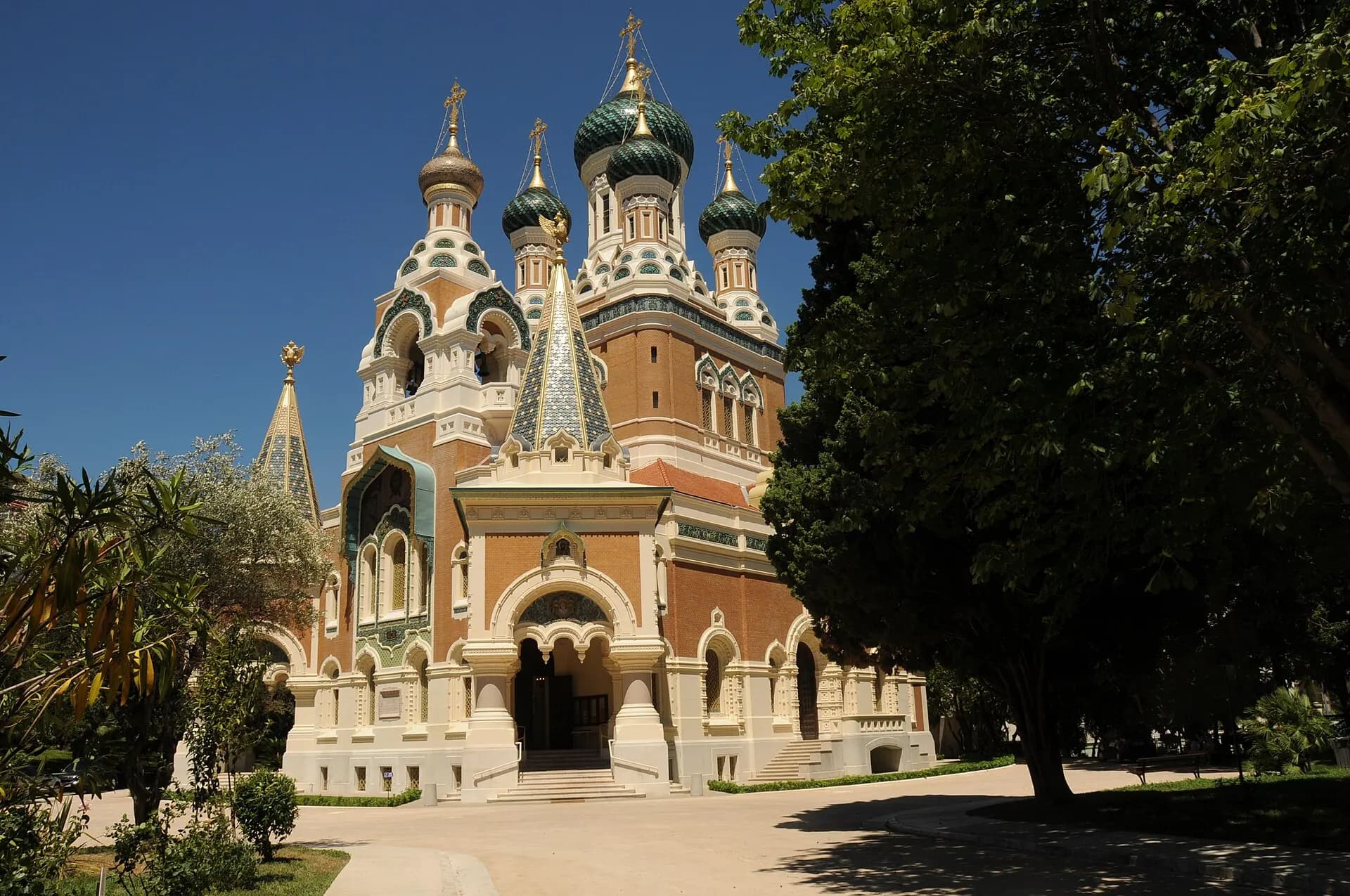
The largest Orthodox cathedral in Western Europe, with green and gold onion domes rising unexpectedly above a residential street. It was built in the early twentieth century for the Russian aristocracy who wintered on the Riviera.
- 8
Villefranche-sur-Mer
Photo: Juancolomina, CC BY-SA 3.0, via Wikimedia Commons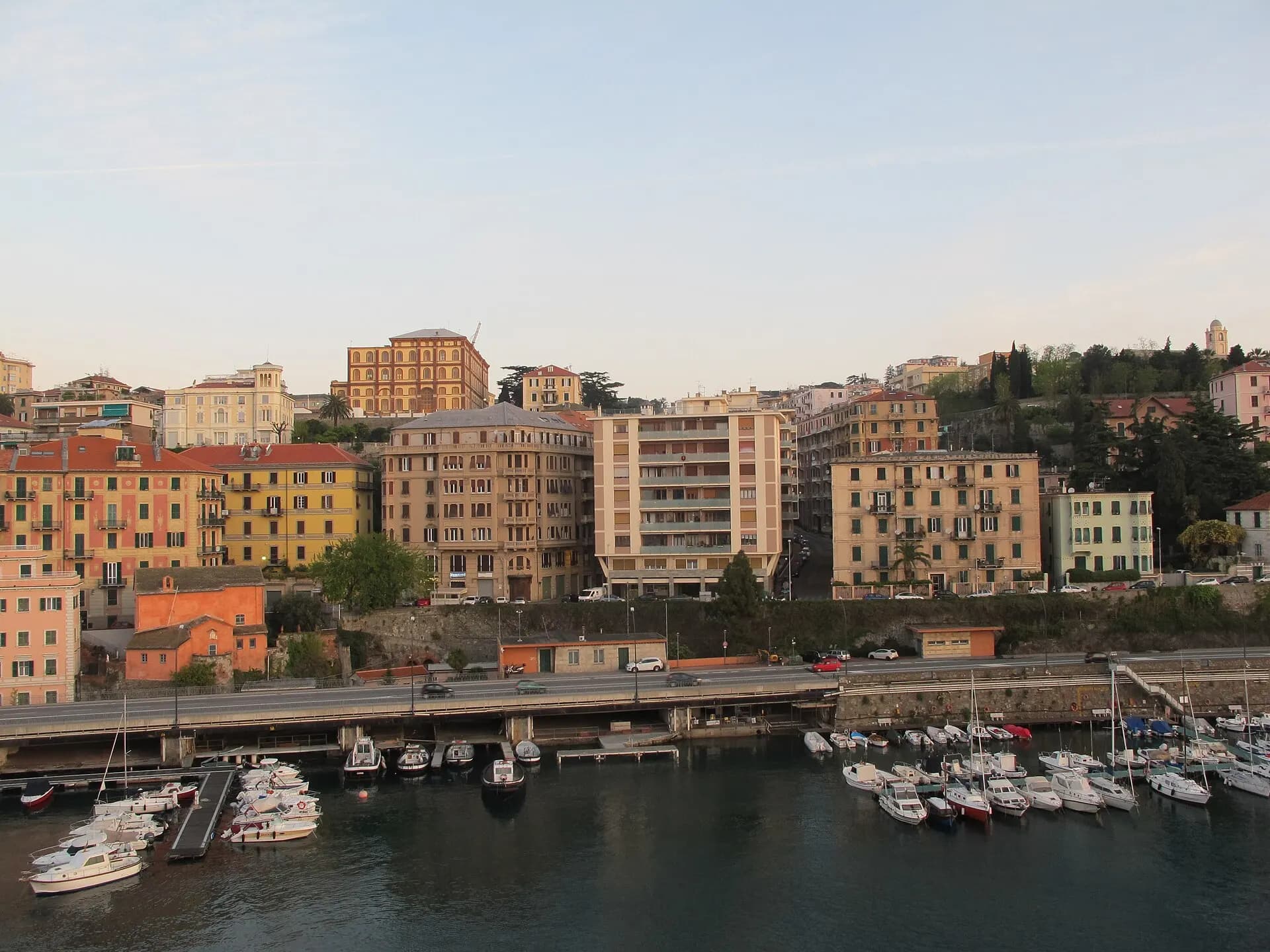
A village of pastel houses around one of the deepest natural harbours on the Mediterranean, just one stop from Nice by train. Wander the vaulted Rue Obscure, visit the small chapel decorated by Jean Cocteau and swim from the sandy beach by the station.
- 9
Villa Ephrussi de Rothschild
Photo: Berthold Werner, CC BY-SA 3.0, via Wikimedia Commons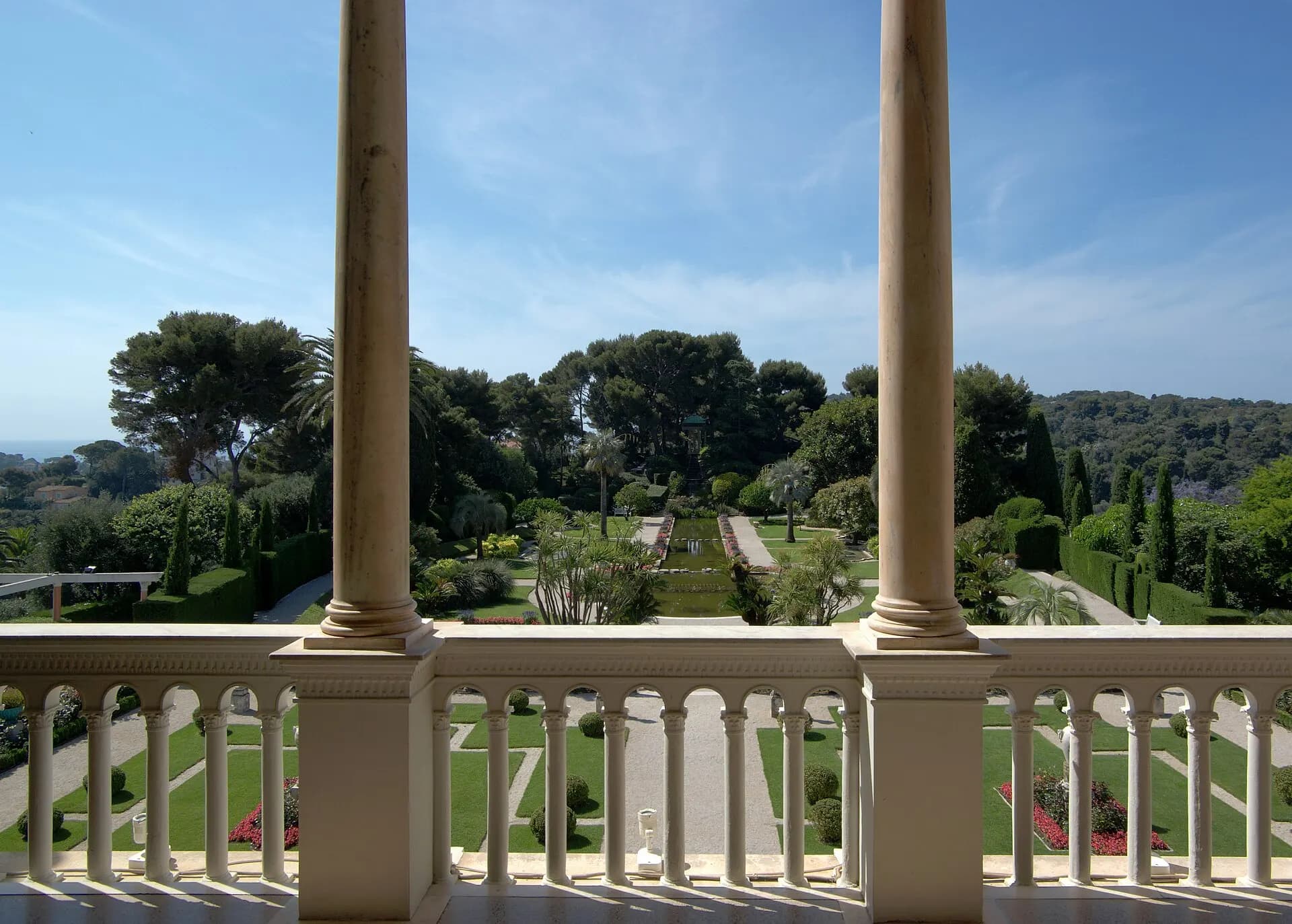
A pink Belle Époque palace built for Béatrice Ephrussi de Rothschild on the narrow neck of Cap Ferrat, with sea on both sides. Its nine themed gardens, from French and Spanish to Japanese and a rose garden, are as much the attraction as the furnished rooms.
TipWalk the coastal paths around Cap Ferrat afterwards; they're among the loveliest on the Riviera.
- 10
Èze
Photo: Cayambe, CC BY-SA 3.0, via Wikimedia Commons
A medieval village perched on a rocky peak more than 400 metres above the sea, with stepped lanes, stone houses and an exotic garden of cacti and succulents among the castle ruins at the top. The views along the coast are tremendous.
TipWalkers can follow the steep Nietzsche path down to the station at Èze-sur-Mer; it takes about an hour going down.
- 11
Monaco and Monte-Carlo
Photo: Fruitpunchline, CC BY-SA 4.0, via Wikimedia Commons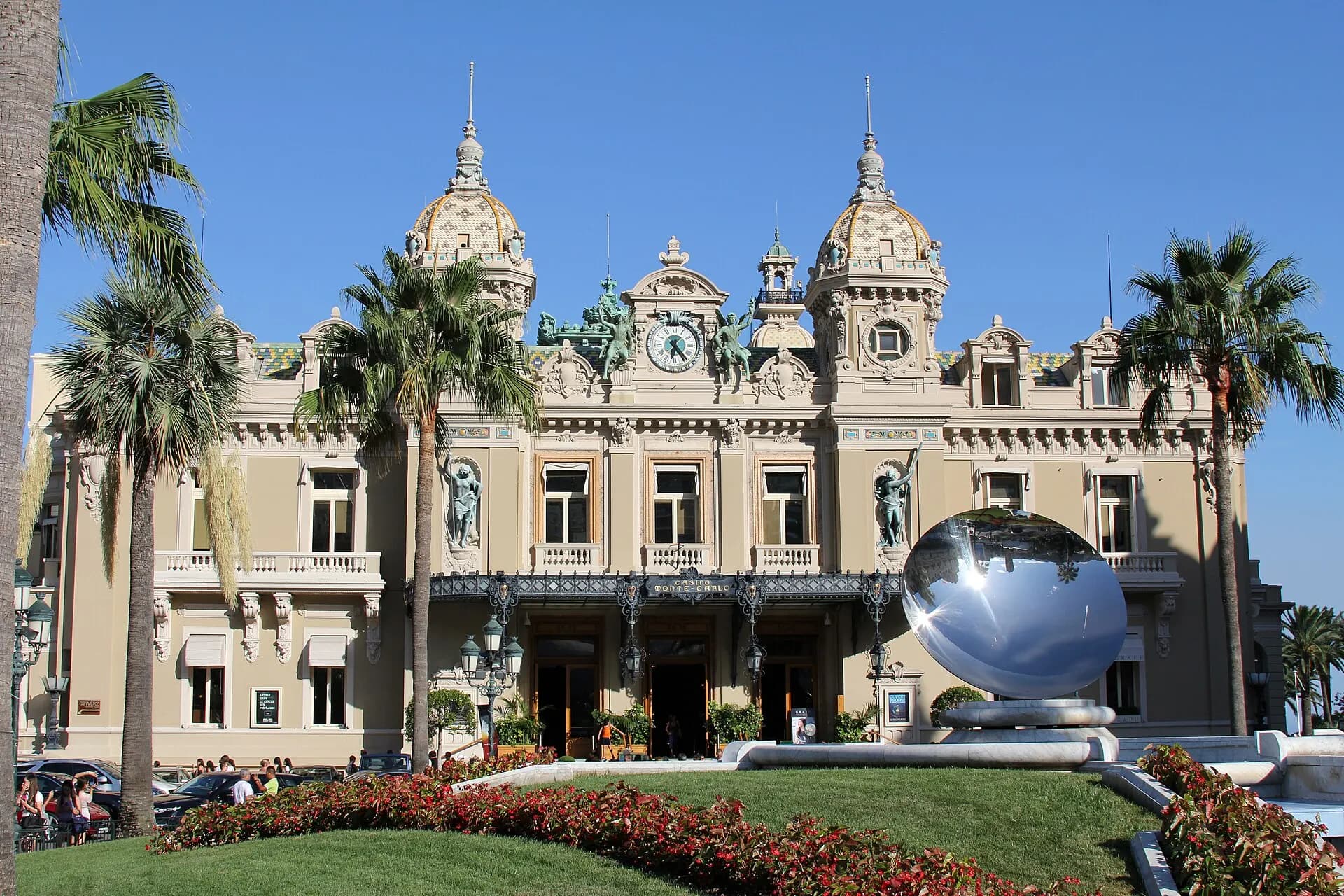
Monaco is a separate country, a tiny principality packed with high-rises, yachts and a glamorous casino, but it's an easy day trip from Nice with no border checks. Visit the old town on the Rock, with the Prince's Palace and the Oceanographic Museum built into the cliff, then walk down to the Casino and its gardens in Monte-Carlo.
- 12
Menton
Photo: Prekmarg, CC BY-SA 4.0, via Wikimedia Commons
The last French town before Italy, with a warm climate, lemon groves and an old town of yellow and orange houses climbing to the Basilica of Saint-Michel. It's known for its subtropical gardens, its Jean Cocteau museum and its Lemon Festival in late winter.
- 13
Saint-Paul-de-Vence
Photo: Yair Haklai, CC BY-SA 4.0, via Wikimedia Commons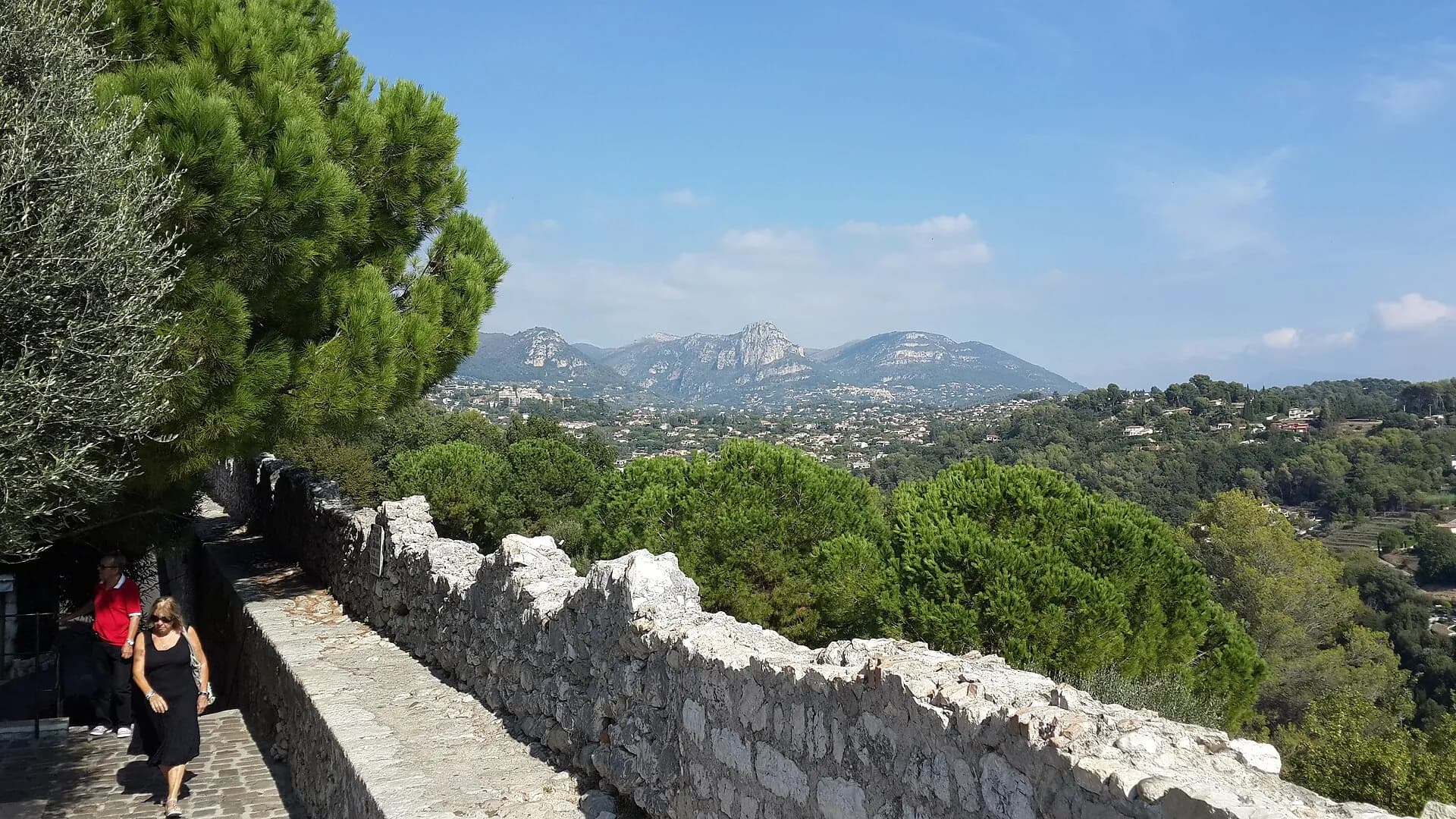
A fortified hilltop village of galleries and cobbled lanes inside sixteenth-century walls, beloved of artists. Chagall is buried in its cemetery, and just outside the walls, the Fondation Maeght has a superb collection of modern art in a building and garden designed around sculptures by Miró and Giacometti.
- 14
Antibes and the Musée Picasso
Photo: Txllxt TxllxT, CC BY-SA 4.0, via Wikimedia Commons
An old town of ramparts and a covered Provençal market, with Port Vauban, one of the largest yacht harbours in the Mediterranean, and the star-shaped Fort Carré. Picasso worked in the seafront Château Grimaldi in 1946, and it's now a museum of the paintings and ceramics he made here and works by other artists.
- 15
Cannes
Photo: M.Strīķis, CC BY-SA 3.0, via Wikimedia Commons
Famous for its film festival in May, Cannes is a seaside town of palm-lined boulevards and sandy beaches. Stroll along the Croisette past the Palais des Festivals and its red carpet steps, then climb to Le Suquet, the old quarter on the hill, for views over the bay.
- 16
The Lérins Islands
Photo: Alexkom000, CC BY 4.0, via Wikimedia Commons
A short boat ride from Cannes, these pine-covered islands feel far from the crowds. On Sainte-Marguerite, the Fort Royal held the mysterious Man in the Iron Mask; on Saint-Honorat, monks still live in an abbey and make wine.
- 17
Grasse
Photo: Copyleft, CC BY-SA 3.0, via Wikimedia Commons
The hill town that became the world's perfume capital, where jasmine, roses and tuberose are still grown for fragrance. Visit the International Perfume Museum and one of the historic perfume houses, some of which offer workshops where you can create your own scent.
When to go
May, June, September and early October are ideal, with warm sea and sunshine but fewer people than in July and August, when the coast is hot, busy and expensive. Winter is mild and sunny, a reminder of why the Riviera became popular in the first place, but the sea is cool and some beach restaurants close. The Carnival of Nice fills the city for two weeks or more each February, with parades of giant figures and the Battle of Flowers; the 2027 edition runs from 9 to 28 February. Cannes is fully booked during the film festival in May, and Monaco during the Grand Prix.
Getting around
Regional TER trains run along the coast from Grasse and Cannes through Antibes, Nice, Villefranche, Èze-sur-Mer and Monaco to Menton and the Italian border, often several times an hour, making them the easiest way to see the Riviera. Engineering works on the line east of Nice have closed it on some late evenings in 2026, with replacement buses, so check the SNCF timetable before planning a late return.
In Nice and the surrounding metropolitan area, the Lignes d'Azur trams and buses use a single, low flat fare, and the tram links the airport with the city centre. Buses also climb to Èze village and the hilltop towns, though routes and line numbers have changed in recent years, so check the Lignes d'Azur website or app before you go. Nice airport is the region's main gateway, with direct flights from across Europe. A car is useful only for the inland villages; parking on the coast is scarce and expensive.
Local tips
- Nice's beaches are made of smooth pebbles: bring water shoes and something soft to lie on, or rent a lounger at a private beach.
- Public beaches are free; private beaches with loungers, umbrellas and restaurants charge for the day.
- Validate your bus or tram ticket every time you board.
- Watch for pickpockets on crowded trains, buses and the Promenade.
- Many museums are closed one day a week, often Monday or Tuesday, so check before you go.
- Monaco doesn't allow swimwear or bare chests away from the beach, so pack a cover-up.
- A tourist tax is charged per person per night on top of the room rate, depending on the type of accommodation.
- The French Riviera Pass gives entry to many museums and sights for 24, 48 or 72 hours, and can be worth it if you plan a busy few days.
- Start early for Èze, Saint-Paul-de-Vence and the Villa Ephrussi to beat the tour coaches.
Eat and drink
Niçois cooking is its own tradition, closer to Italy than Paris. Try socca; pissaladière, an onion tart with anchovies and olives; pan bagnat, a round sandwich of tuna, egg and vegetables; petits farcis, stuffed vegetables; and the true salade niçoise, which locals make without cooked vegetables. Ravioli, gnocchi and daube stew show the Italian influence. Nice even has its own wine, Bellet, grown on the hills behind the city. Menton has lemon tarts and liqueurs, and the markets everywhere are full of olives, fruit and flowers.
Where to stay
Nice has the widest choice and the best transport links, from grand seafront hotels to small guesthouses in the old town. Staying near the old town or the Promenade puts you within walking distance of the main sights, while the area around the main station is handy for trains. For a quieter stay, Villefranche, Antibes or Menton make good bases. Monaco and Cannes are expensive, especially during their big events.
The Riviera of the painters
From the late nineteenth century, the clear light and bright colours of the Côte d'Azur drew artists from all over Europe. Renoir spent his last years among the olive trees of Cagnes-sur-Mer, Matisse came to Nice in 1917 and stayed for most of his life, and Picasso, Chagall, Cocteau, Dufy and Léger all lived and worked along the coast. Many left behind museums, chapels and decorated buildings: the Matisse and Chagall museums in Nice, the Picasso museum in Antibes, Cocteau's chapel in Villefranche and his works in Menton, and the Fondation Maeght near Saint-Paul-de-Vence. Following their trail is one of the best ways to see the region.
Perfume and flowers
Grasse began as a town of leather tanners, and when perfumed gloves became fashionable in the sixteenth and seventeenth centuries, its craftsmen turned to the flowers that grew so well in the surrounding hills. Over time, perfume became its main trade. The skills involved in growing perfume plants, extracting their scent and creating fragrances in the Pays de Grasse are now recognised by UNESCO as intangible cultural heritage. Jasmine is harvested in late summer and the May rose in spring, and some growers open their fields to visitors.
The Carnival of Nice
The Carnival of Nice is one of the oldest and largest in the world, with roots going back to the Middle Ages. Each February, giant painted figures parade through the city centre by day and night, and in the Battle of Flowers, decorated floats roll along the Promenade while performers throw blossoms to the crowd. Most parades take place in ticketed stands and standing areas around Place Masséna and the seafront, so buy tickets in advance for the best views. Menton holds its own Lemon Festival around the same time, with huge sculptures made of citrus fruit.
Responsible travel
The Riviera is one of the most visited coastlines in Europe, so travel outside July and August if you can, and use the trains and buses instead of driving. Stay on marked paths around Cap Ferrat and Èze, where the cliffs are fragile, and take your rubbish with you from beaches and islands. Swim only in marked zones where boats are kept out. Choose Niçois restaurants and local producers, and respect residents in the old towns by keeping noise down at night.