Helsinki
A calm, sea-wrapped Nordic capital of granite churches, island fortresses, world-class design and saunas that open straight onto the Baltic.
- Best time to go
- June to August for white nights and island life; December for Christmas lights; late winter for snow and frozen sea
- Local time
- –
- Currency
- Euro (EUR)
- Reading time
- 16 min
- Language
- Finnish and Swedish

Helsinki sits on a ragged peninsula pushing into the Gulf of Finland, surrounded by more than 300 islands, with the sea never more than a few streets away. Founded by the Swedish king Gustav Vasa in 1550, it was a modest trading town until 1812, when Finland's new Russian rulers made it the capital of their Grand Duchy and rebuilt the centre in grand neoclassical style. Independence came in 1917, and the twentieth century added granite National Romantic buildings, Alvar Aalto's modernism and a design culture that still shapes everything from chairs to libraries.
It is a quiet, orderly, unhurried capital, compact enough to cross on foot in an hour, and it rewards slow travellers: a morning on an island fortress, an afternoon in a museum, an evening in a sauna by the sea. Three days covers the city well; add a fourth for the forests of Nuuksio or the old wooden town of Porvoo. From here, Tallinn is a short ferry ride across the gulf and Stockholm an overnight cruise away.
The top 18 in Helsinki
- 1
Senate Square and Helsinki Cathedral
Photo: JIP, CC BY-SA 4.0, via Wikimedia Commons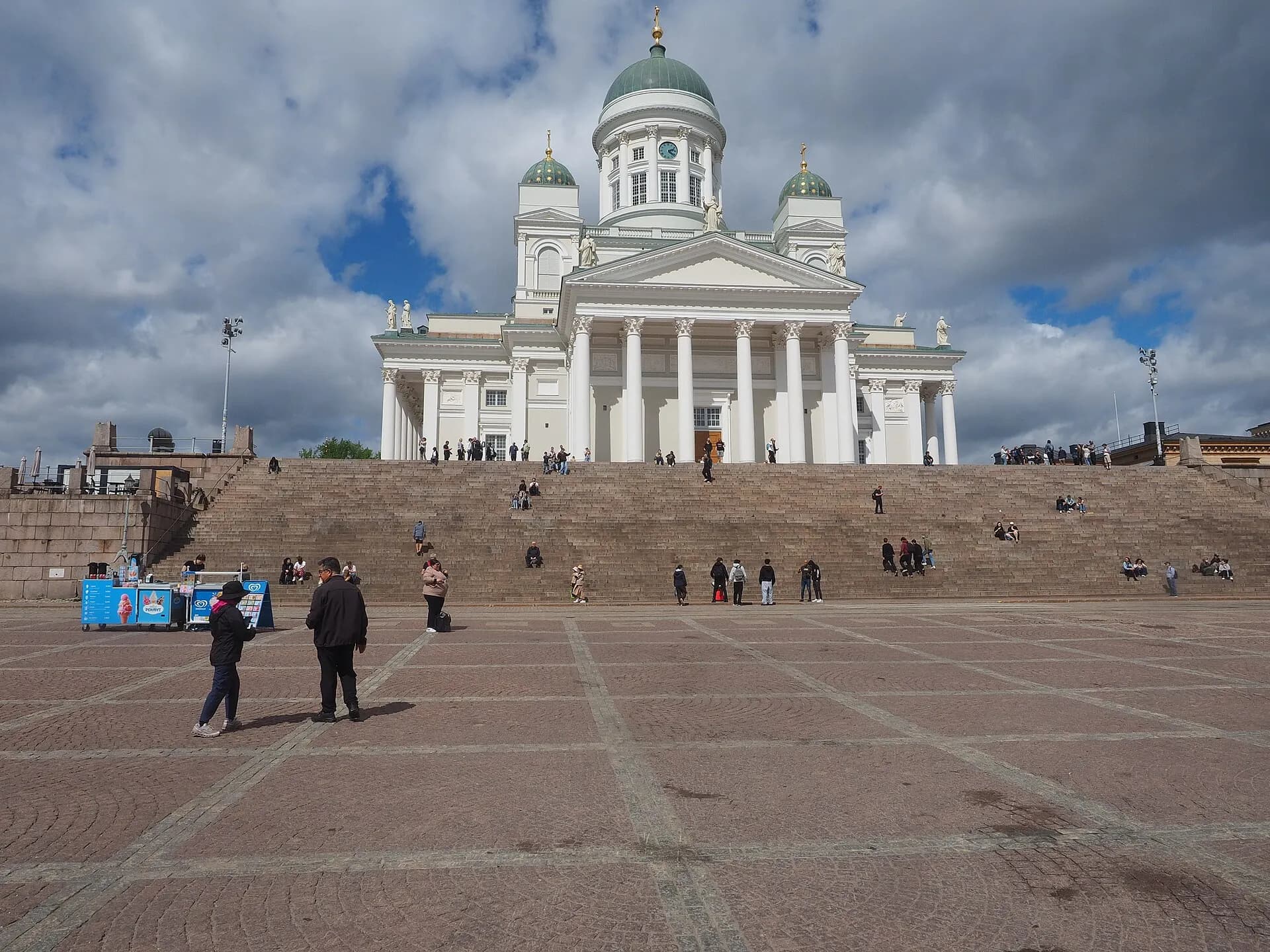
The heart of the Russian-era capital was laid out by the German architect Carl Ludvig Engel, and its unified neoclassical ensemble is one of the finest in northern Europe. On four sides stand the Government Palace, the main building of the University of Helsinki, the old shops and houses of the merchants, and, at the top of a broad flight of steps, the white, green-domed Lutheran cathedral, completed in 1852. A statue of Tsar Alexander II, who was popular here for widening Finnish autonomy, still stands in the middle of the square.
The cathedral's interior is strikingly plain after the drama outside, with white walls and only a few statues of reformers. The real reward is the steps themselves, a favourite place to sit in the evening sun and the stage for New Year's celebrations and the Christmas market in December.
TipThe square is at its most photogenic early in the morning or in the blue light after a winter sunset, when the cathedral is floodlit.
- 2
Uspenski Cathedral
Photo: Virtual-Pano, CC BY-SA 4.0, via Wikimedia Commons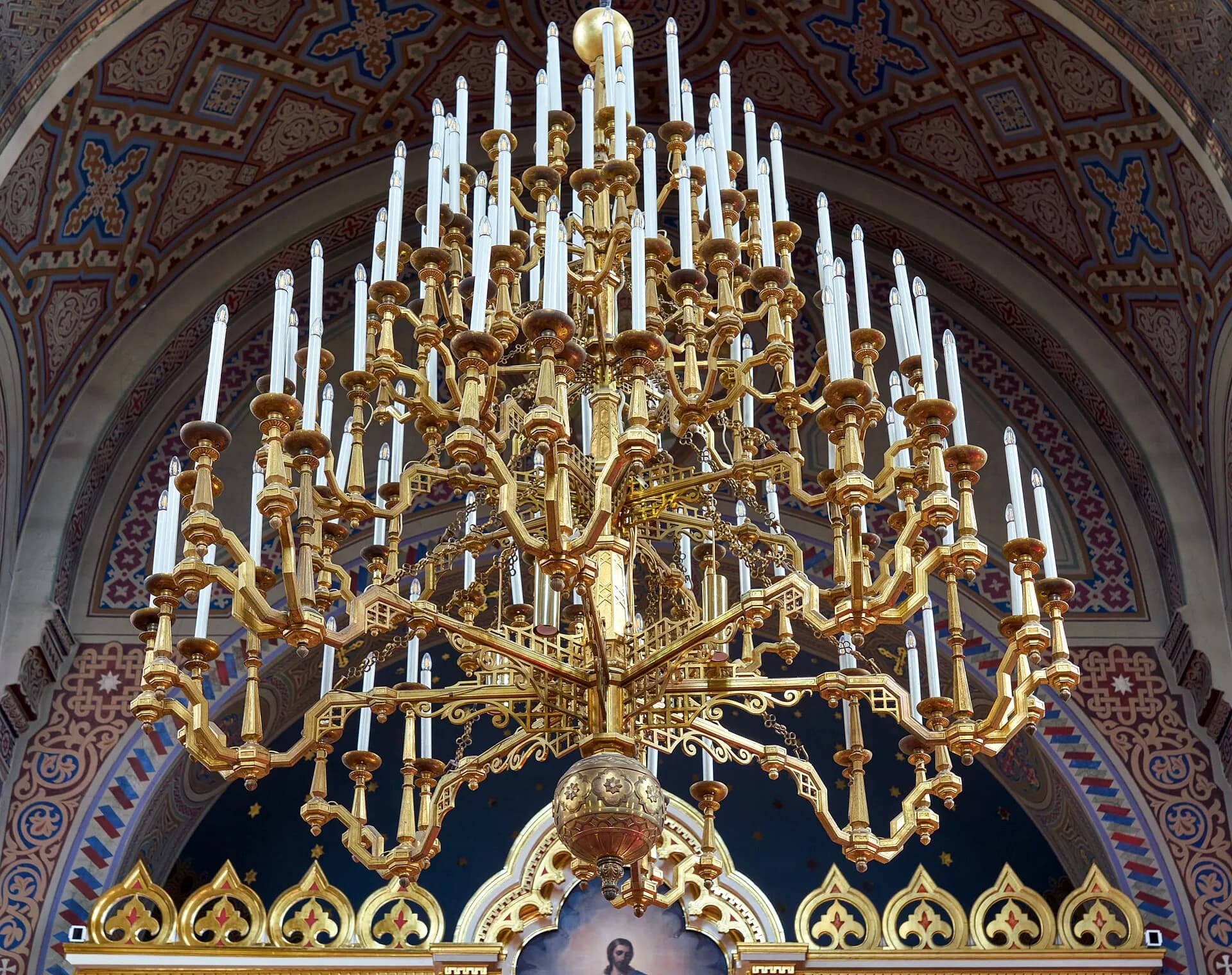
On a rocky hill on the Katajanokka peninsula, a short walk east, the red-brick Uspenski Cathedral is a reminder of the century of Russian rule. Finished in 1868, it is often described as the largest Orthodox church in Western Europe, its thirteen golden onion domes visible from across the harbour. Inside, candlelight flickers over a richly gilded iconostasis. From the hill's terrace you look down on the market, the ferries and the cathedral you have just left.
TipThis is a working church, so dress modestly and expect it to close to visitors during services and special events.
- 3
Market Square and Old Market Hall
Photo: DXR, CC BY-SA 4.0, via Wikimedia Commons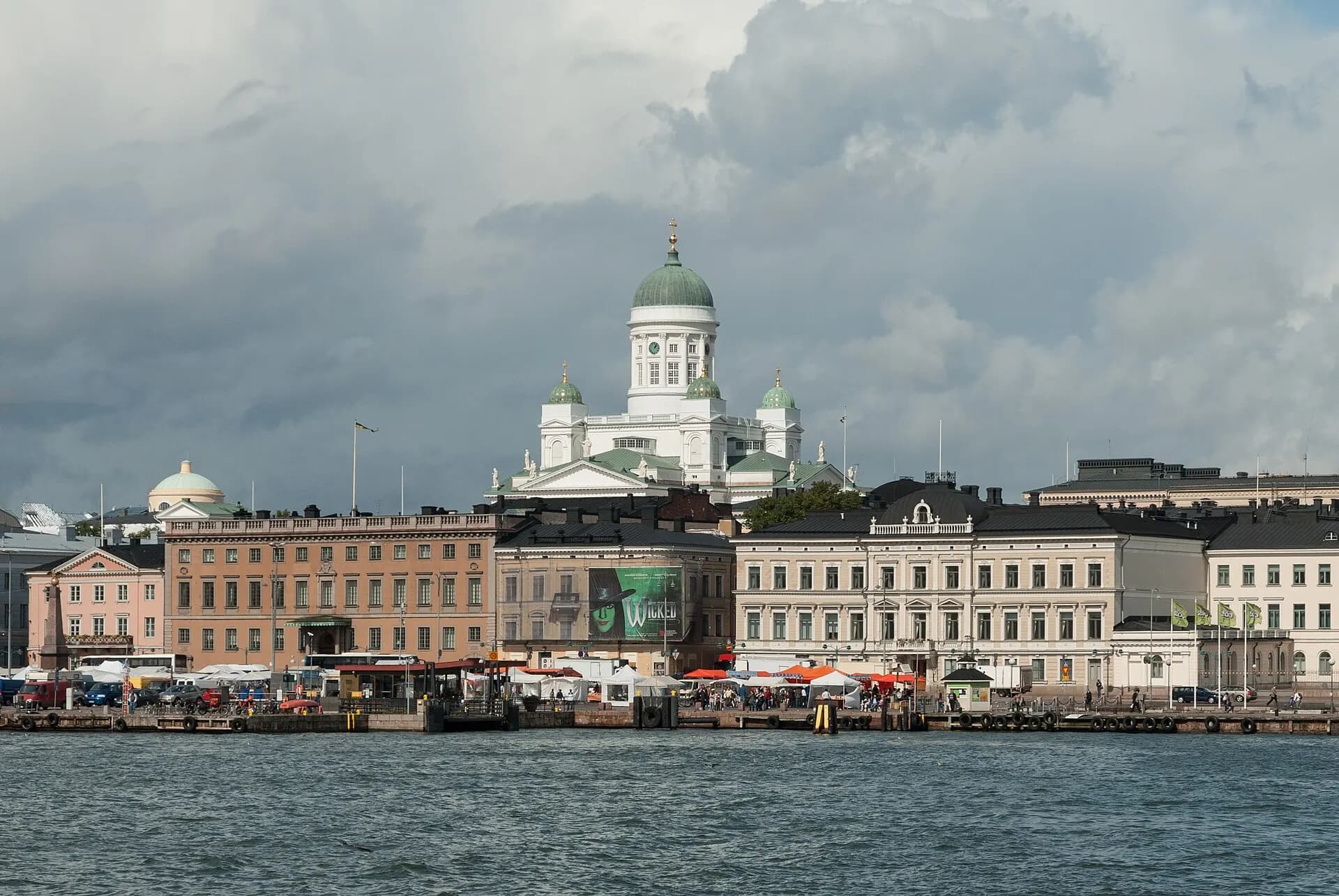
Kauppatori, the harbourside market square, has orange-tented stalls selling berries, new potatoes, smoked fish, reindeer skins and souvenirs, and small cafés where you can eat fried Baltic herring or salmon soup at outdoor tables while gulls watch for an opening. In summer it is busy from early morning; in winter the stalls thin out, but a few hardy coffee tents remain. The obelisk with the double-headed eagle commemorates a visit by the Russian empress in 1833.
Just along the quay, the Old Market Hall of 1889 is a long brick building with carved wooden stalls inside, selling cheese, cured meats, Finnish rye bread, cinnamon buns and fish. It is a good place for a cheap lunch, especially salmon soup, and for picking up rye crisps and berry jams to take home.
TipGuard your food on the outdoor terraces. Helsinki's gulls are bold and quick, and snatching a herring straight off a plate is a daily occurrence.
- 4
Allas Sea Pool
Photo: kallerna, CC BY-SA 4.0, via Wikimedia Commons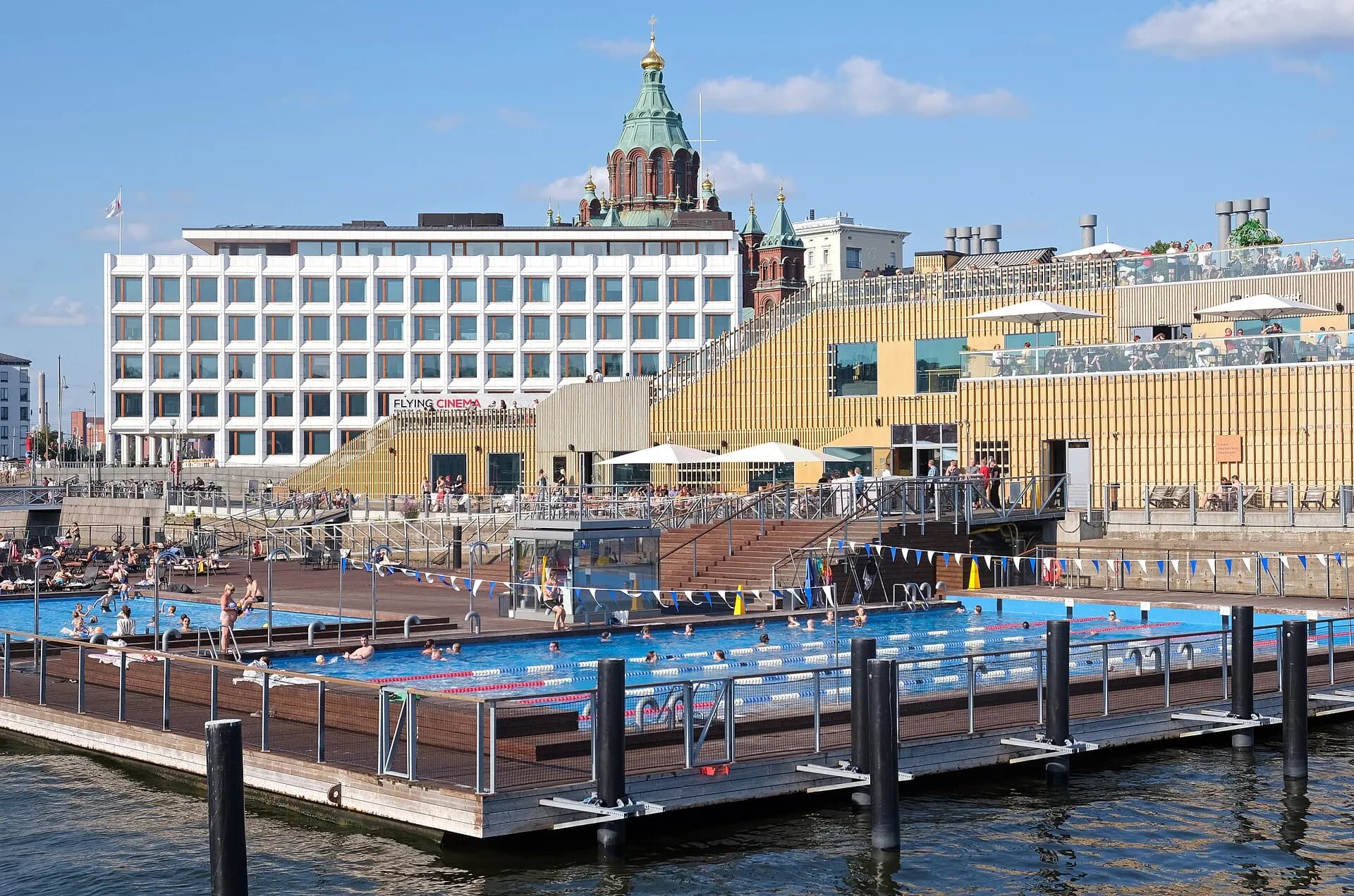
Floating beside the market on a deck between the ferry piers, Allas is a pool and sauna complex with a view of the Presidential Palace, the cathedral domes and the harbour. There is a heated pool of around 27°C and an unheated pool of filtered sea water, which hovers around 11°C or colder, plus several saunas looking out over the water. It is open all year and makes an easy introduction to Finnish sauna life for visitors who only have an hour to spare.
TipSwimming time ends shortly before closing, so arrive with at least an hour in hand. Bring a swimsuit; towels can be rented.
- 5
Suomenlinna
Photo: Jisis, CC BY-SA 4.0, via Wikimedia Commons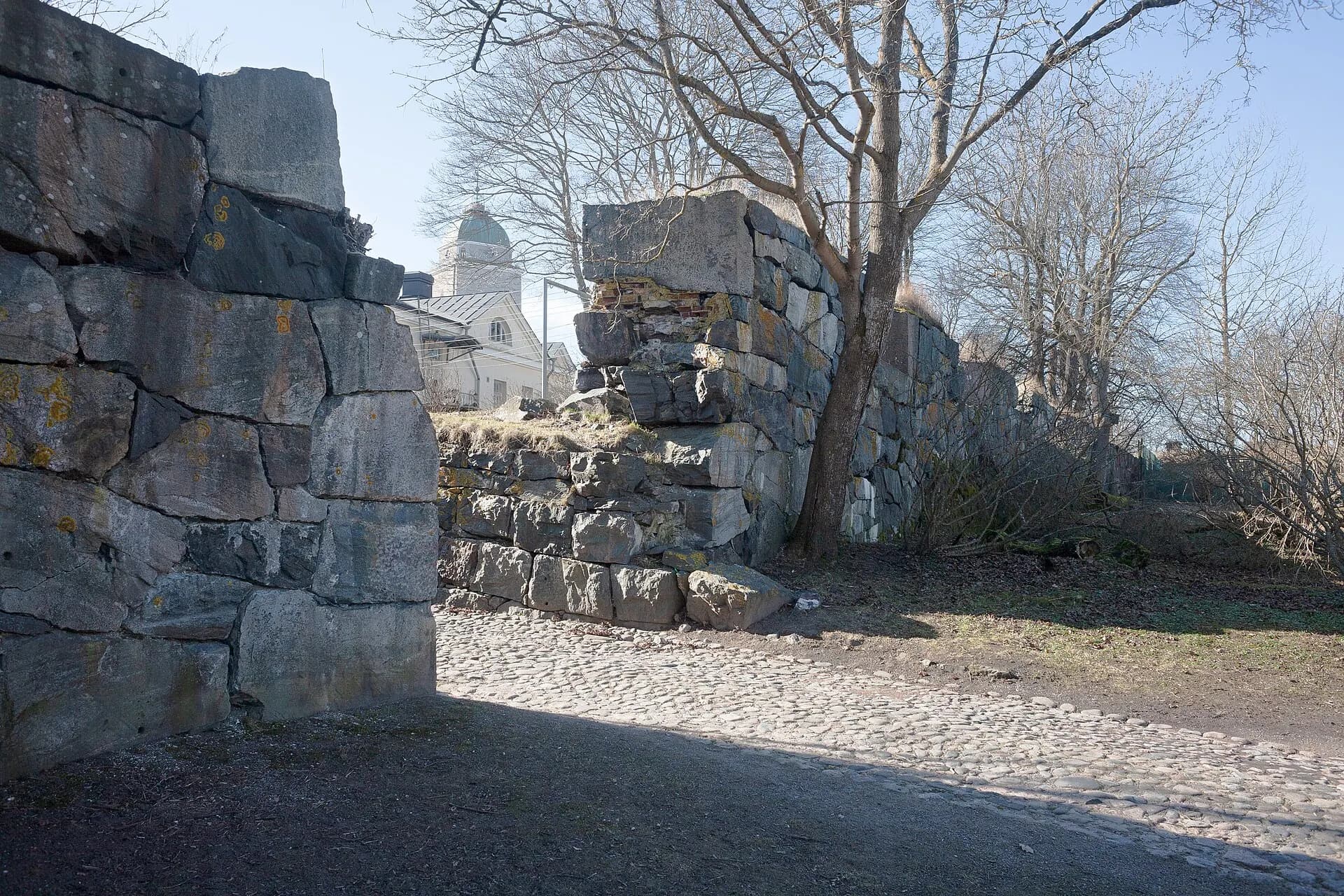
Spread across a cluster of islands at the mouth of the harbour, Suomenlinna is a vast sea fortress begun by the Swedes in 1748 to guard against Russian expansion, then captured by Russia in 1808. It is now a UNESCO World Heritage Site, but also a living district where around 800 people have homes. Walk the grassy ramparts, cannon emplacements and star-shaped bastions to the King's Gate, poke into the low tunnels, and watch the huge cruise ships squeeze through the narrow channel to Tallinn and Stockholm. The Suomenlinna Museum tells the fortress's story, and in summer the Second World War submarine Vesikko and several smaller museums open too.
The HSL ferry leaves from Market Square all year, takes about 15 minutes, and accepts ordinary public transport tickets, since the islands lie in zone A. Entry to the fortress area itself is free. In summer a separate waterbus with its own tickets also makes the crossing.
TipBuy your ticket before boarding, from a machine or the HSL app, as tickets are not sold on the ferry. Pack a picnic and stay for sunset on the southern cliffs.
- 6
Esplanadi
Photo: Diego Delso, CC BY-SA 3.0, via Wikimedia Commons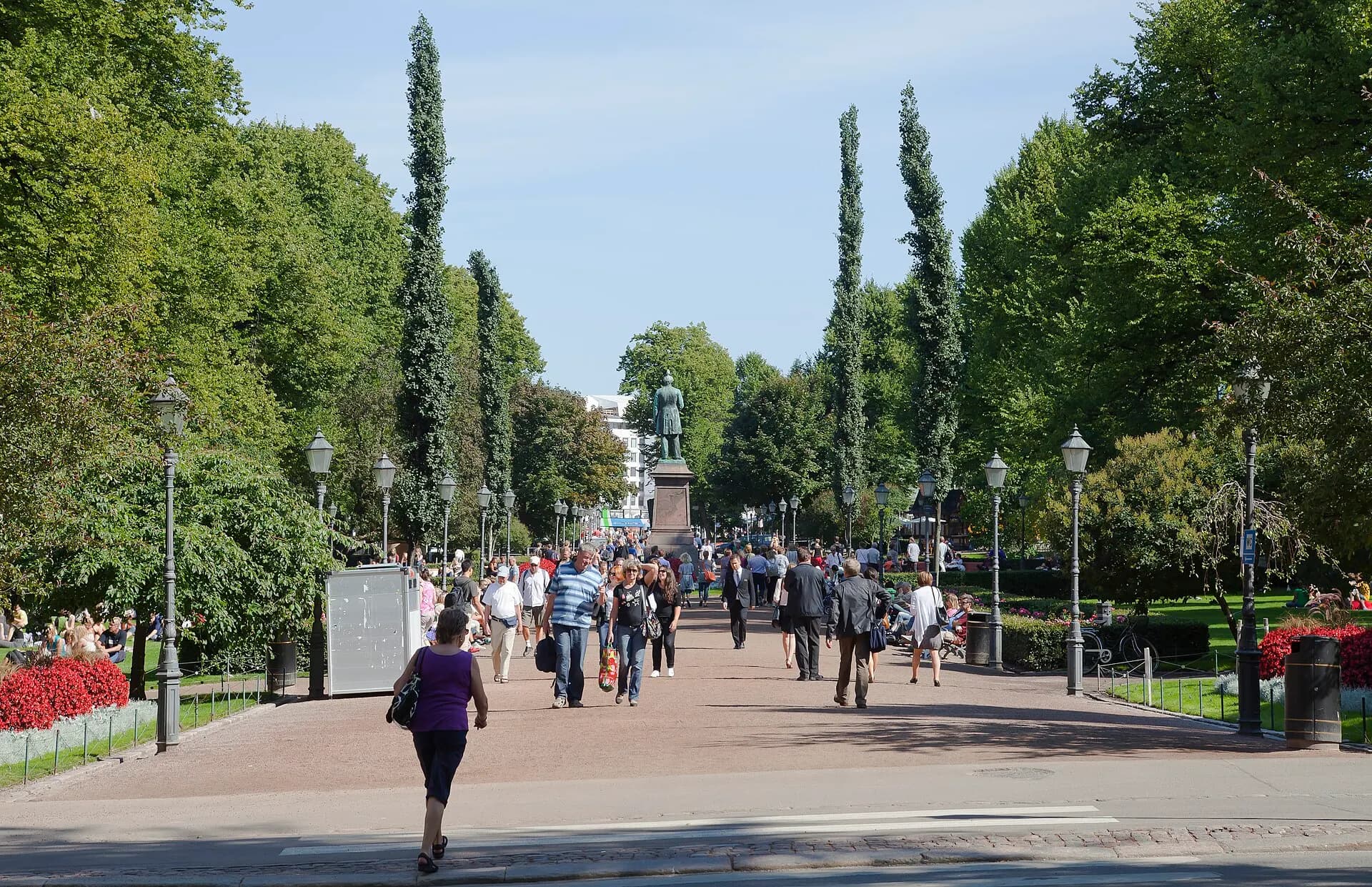
Back on the mainland, the Esplanadi is a long, tree-lined park running west from the harbour, flanked by elegant boulevards of shops. Havis Amanda, a bronze fountain nymph of 1908, stands at the harbour end, where students crown her with a white cap on the eve of May Day. The park's bandstand hosts free concerts in summer, and the glass-fronted Kappeli café has served coffee here since the nineteenth century. The north side is the place to browse Finnish design names such as Marimekko, Iittala and Artek, and the Stockmann department store anchors the far end.
- 7
Design District
Photo: Leonhard Lenz, CC0, via Wikimedia Commons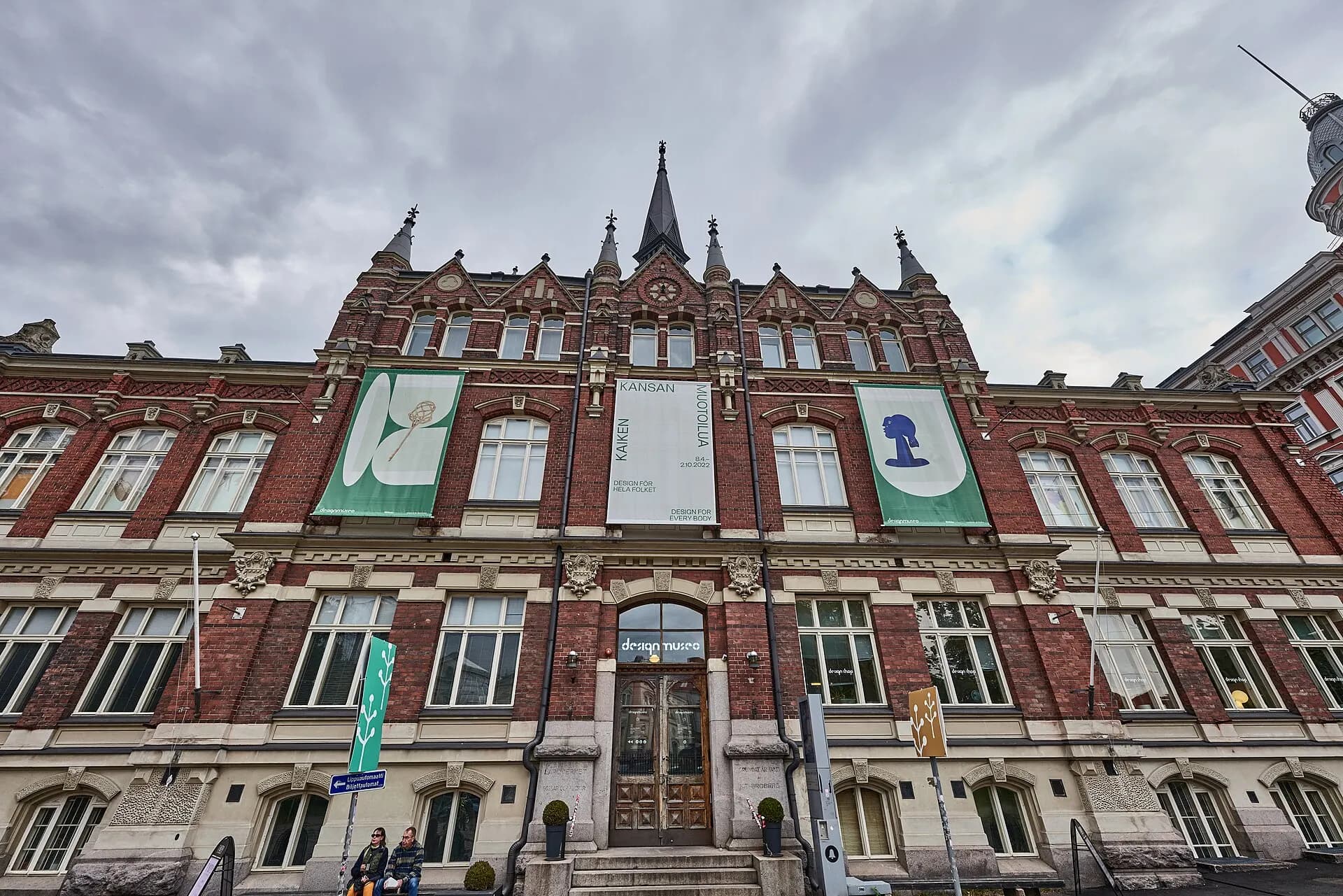
South and west of the Esplanadi, the streets of Punavuori, Kaartinkaupunki and Ullanlinna make up the Design District, a loose network of independent fashion boutiques, vintage shops, galleries, furniture showrooms and cafés, many marked with a sticker in the window. Iso Roobertinkatu, a pedestrian street, makes a good spine. The Design Museum, in a turreted former school, traces Finnish design from the 1870s to the present, and the Museum of Finnish Architecture shares the site.
TipMany small shops open late in the morning and close on Sundays, so plan a weekday afternoon here.
- 8
Löyly and Helsinki's public saunas
Photo: Ximonic (Simo Räsänen), CC BY-SA 4.0, via Wikimedia Commons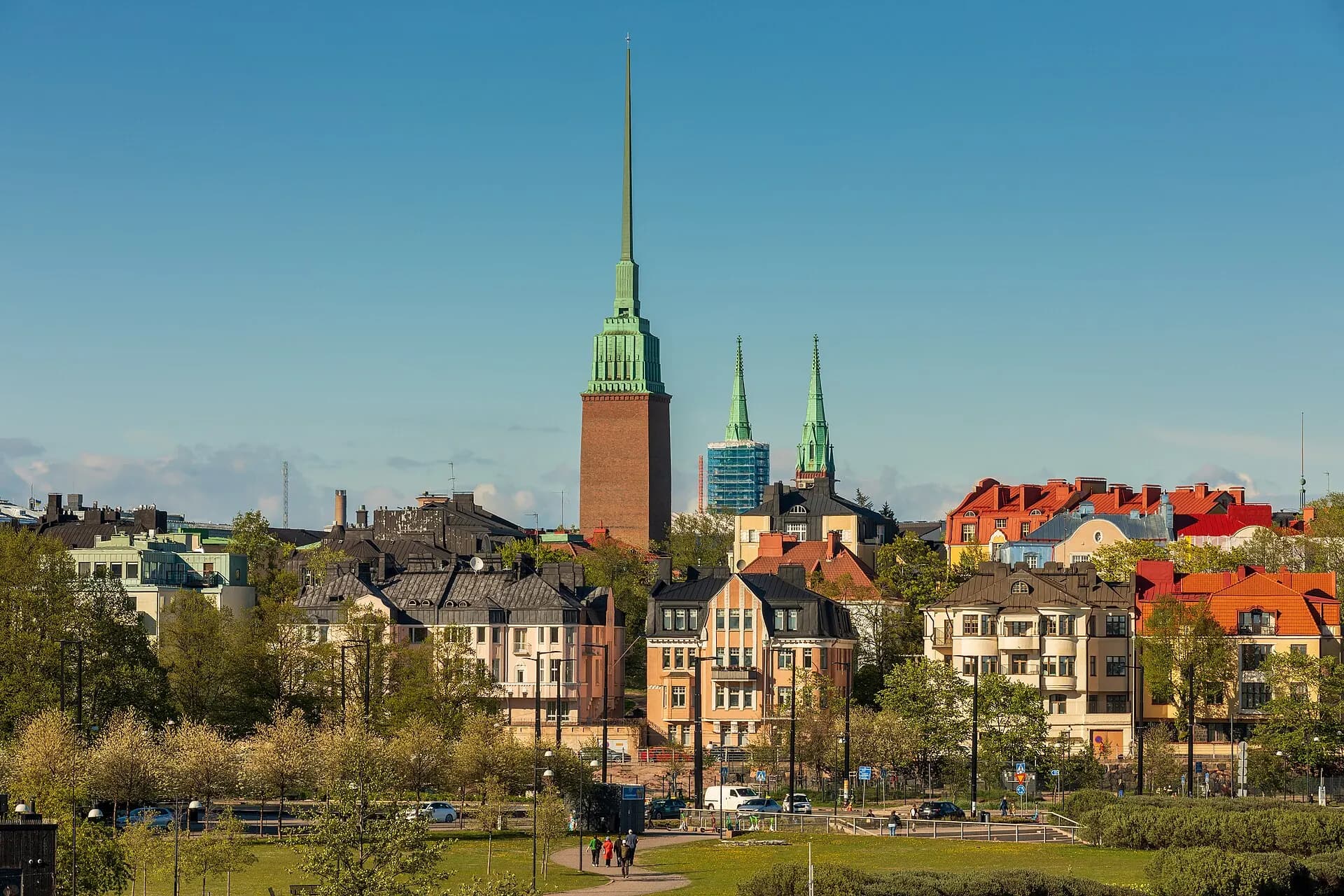
On the Hernesaari shore, Löyly is a striking timber-clad building of angular slats, opened in 2016, that houses public saunas, including a traditional smoke sauna, and a restaurant. A standard visit lasts two hours and costs €29, with towel and toiletries included; the saunas are mixed, so swimsuits are worn throughout. Between rounds you can climb down the steps straight into the Baltic, even in winter when a hole is kept open in the ice.
For an older, more local experience, the wood-heated Kotiharju sauna in Kallio has been running since 1928, and patrons cool off on the pavement outside wrapped in towels. Many swimming halls also have saunas included in the entry price.
TipBook Löyly online, especially for evenings and weekends; cancellations need 24 hours' notice.
- 9
Ateneum
Photo: Htm, CC BY-SA 3.0, via Wikimedia Commons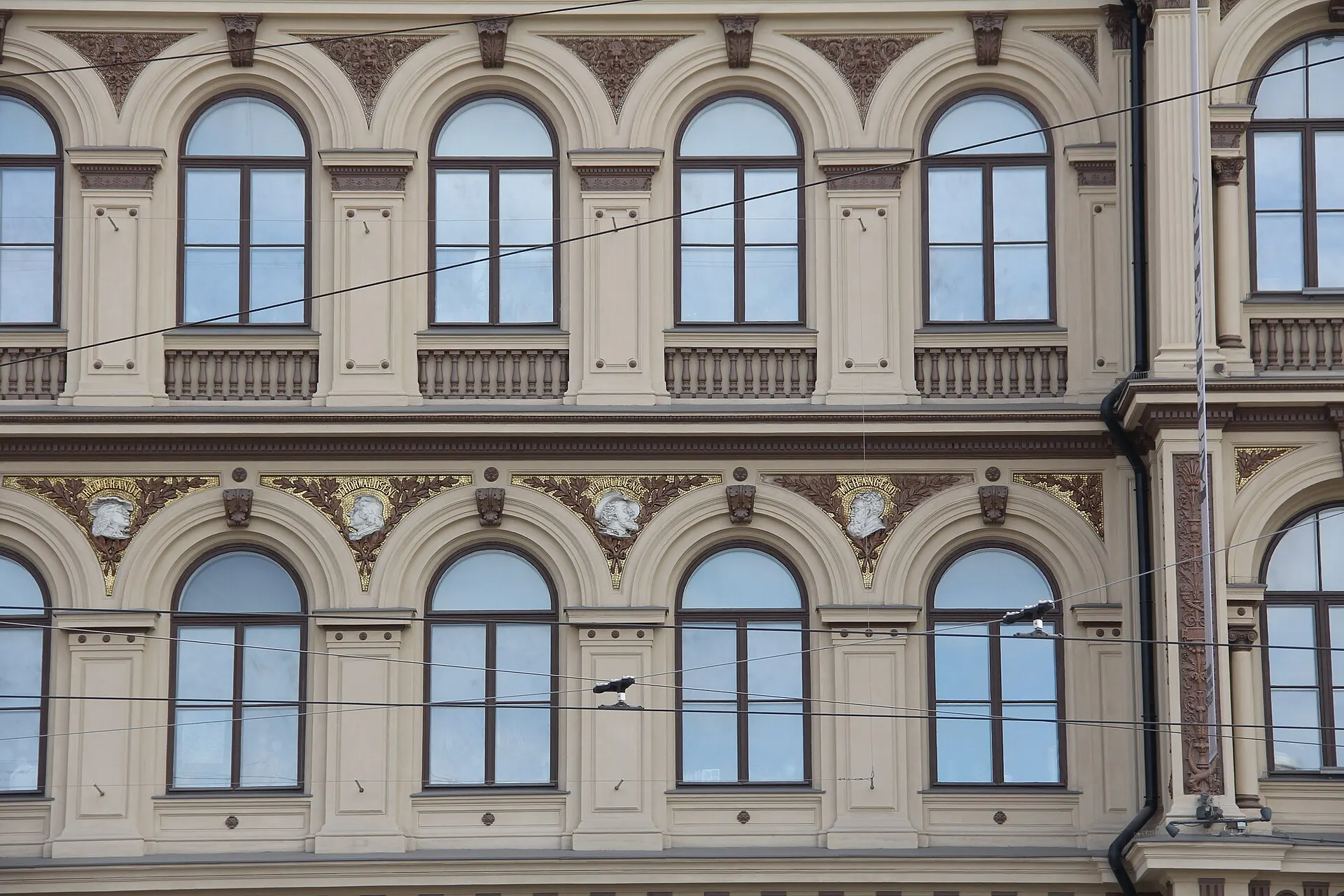
Facing the railway station square, the Ateneum, opened in 1887, is Finland's national gallery of older art and the best introduction to the country's soul. Its core is the so-called Golden Age of Finnish painting around 1900: Akseli Gallen-Kallela's scenes from the Kalevala epic, Albert Edelfelt's luminous portraits and Helene Schjerfbeck's spare, haunting faces. There are also works by Van Gogh, Gauguin and Cézanne. Admission is around €21 to €23 for adults and free for under-18s.
TipBuying online is a little cheaper than at the desk. The Helsinki Card and the Finnish Museum Card both include entry.
- 10
Oodi Central Library
Photo: Sino Yu, CC0, via Wikimedia Commons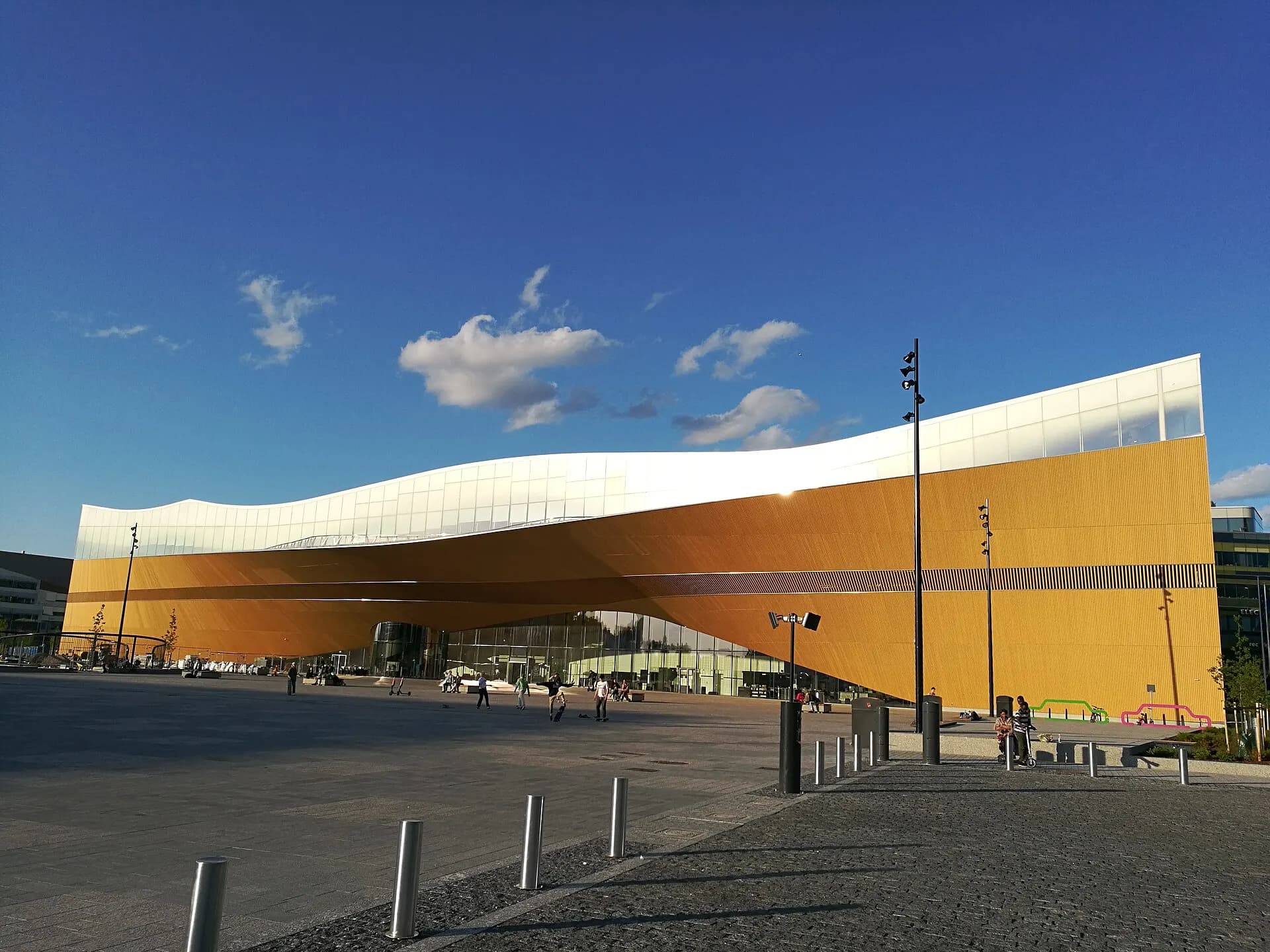
Opened in December 2018, the city's central library is a wave of spruce and glass facing Parliament across Kansalaistori square, and a fine example of Finland's belief in public space. The ground floor is a covered town square with a café and cinema; the middle floor has recording studios, sewing machines, 3D printers and laser cutters anyone can book; the top floor is a vast white reading room under a rippling ceiling, with living trees and a terrace overlooking the square. Entry is free, and it is open daily into the evening.
TipThe top-floor terrace is one of the best free viewpoints in the centre, and the toilets and seating make Oodi a welcome warm-up stop in winter.
- 11
Kiasma
Photo: Diego Delso, CC BY-SA 3.0, via Wikimedia Commons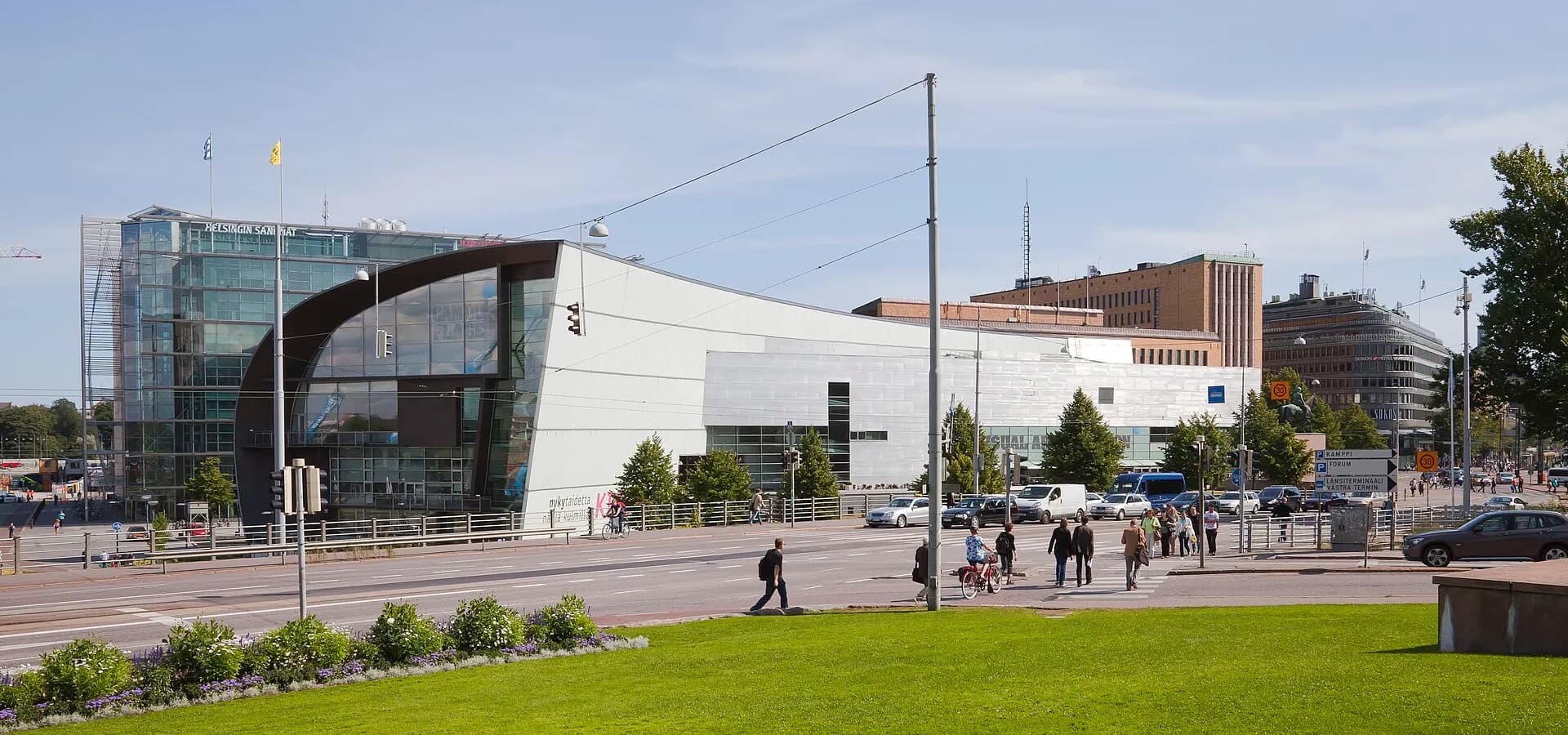
Across the square, the curving, aluminium-clad Kiasma, designed by the American architect Steven Holl and opened in 1998, is the national museum of contemporary art. Exhibitions change regularly and range from installation and video to painting and performance, by Finnish and international artists. The ground-floor café spills onto the square in summer. Kiasma is closed on Mondays and has late opening until 8pm on Tuesdays and Fridays.
- 12
Amos Rex
One of Helsinki's most playful buildings sits mostly underground. Amos Rex opened in 2018 beneath the Lasipalatsi, a functionalist "glass palace" from 1936, and its galleries are lit by skylights that bulge up through the square above as grassy, porthole-studded domes, which children (and adults) treat as climbing frames. Exhibitions tend towards immersive and digital art alongside modern classics.
- 13
Kamppi Chapel
Photo: Vadelmavene, CC BY-SA 4.0, via Wikimedia Commons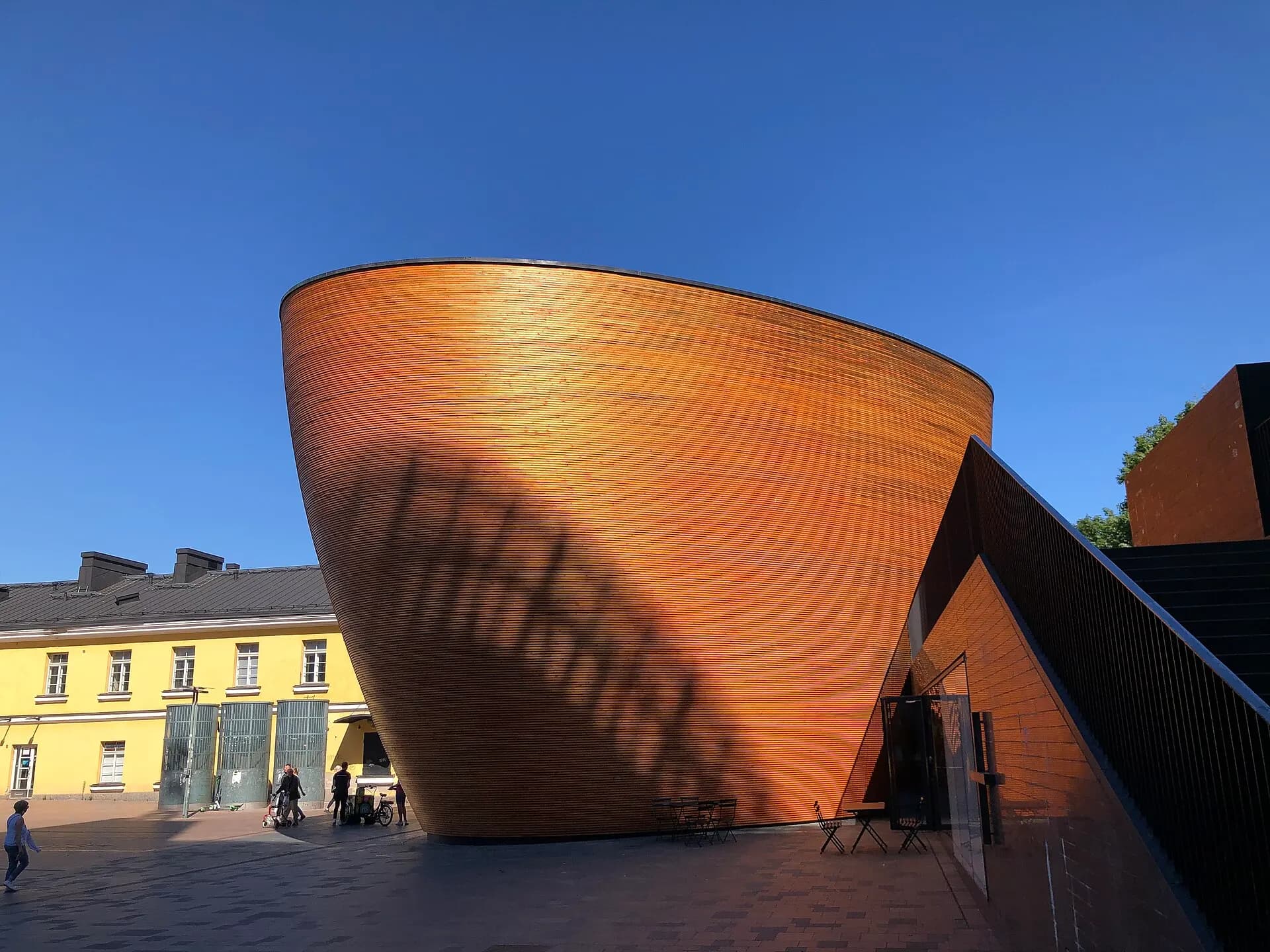
In the middle of busy Narinkka square, beside the Kamppi shopping centre, stands a curved, windowless bowl of spruce wood. Built in 2012, when Helsinki was World Design Capital, the Kamppi Chapel of Silence is not used for services; it is simply a place to step out of the crowds and sit quietly. Soft light falls from a ring around the ceiling onto simple wooden pews, and the hush after the noise outside is remarkable. Entry is free.
- 14
Temppeliaukio Church
Photo: Suicasmo, CC BY-SA 4.0, via Wikimedia Commons
In the residential Töölö district, the brothers Timo and Tuomo Suomalainen blasted a church straight into a granite outcrop, and it opened in 1969. From outside you see little more than a rough stone wall and a low copper dome; inside, the walls are raw, unhewn rock, and daylight pours in through a ring of glass between the stone and a ceiling coiled with copper strips. The acoustics are excellent and concerts are held here often. Adult tickets cost €8 and can be bought at the door or online.
TipThe church closes to visitors during the Sunday morning service, weddings and other ceremonies, and hours are published week by week, so check before walking out.
- 15
Sibelius Monument
In Sibelius Park, near the shore of Töölö Bay, Eila Hiltunen's 1967 tribute to Finland's greatest composer is made of more than 600 welded steel pipes rising like an abstract organ or a frozen waterfall, with a bronze mask of Jean Sibelius set to one side. It caused heated debate when unveiled and is now one of the most visited sights in the city. Go on a windy day and the pipes faintly hum. The red-painted Regatta café, a tiny wooden hut on the shore nearby, is famous for its cinnamon buns and outdoor fire.
- 16
Seurasaari Open-Air Museum
Photo: Tevfik Teker, CC BY 3.0, via Wikimedia Commons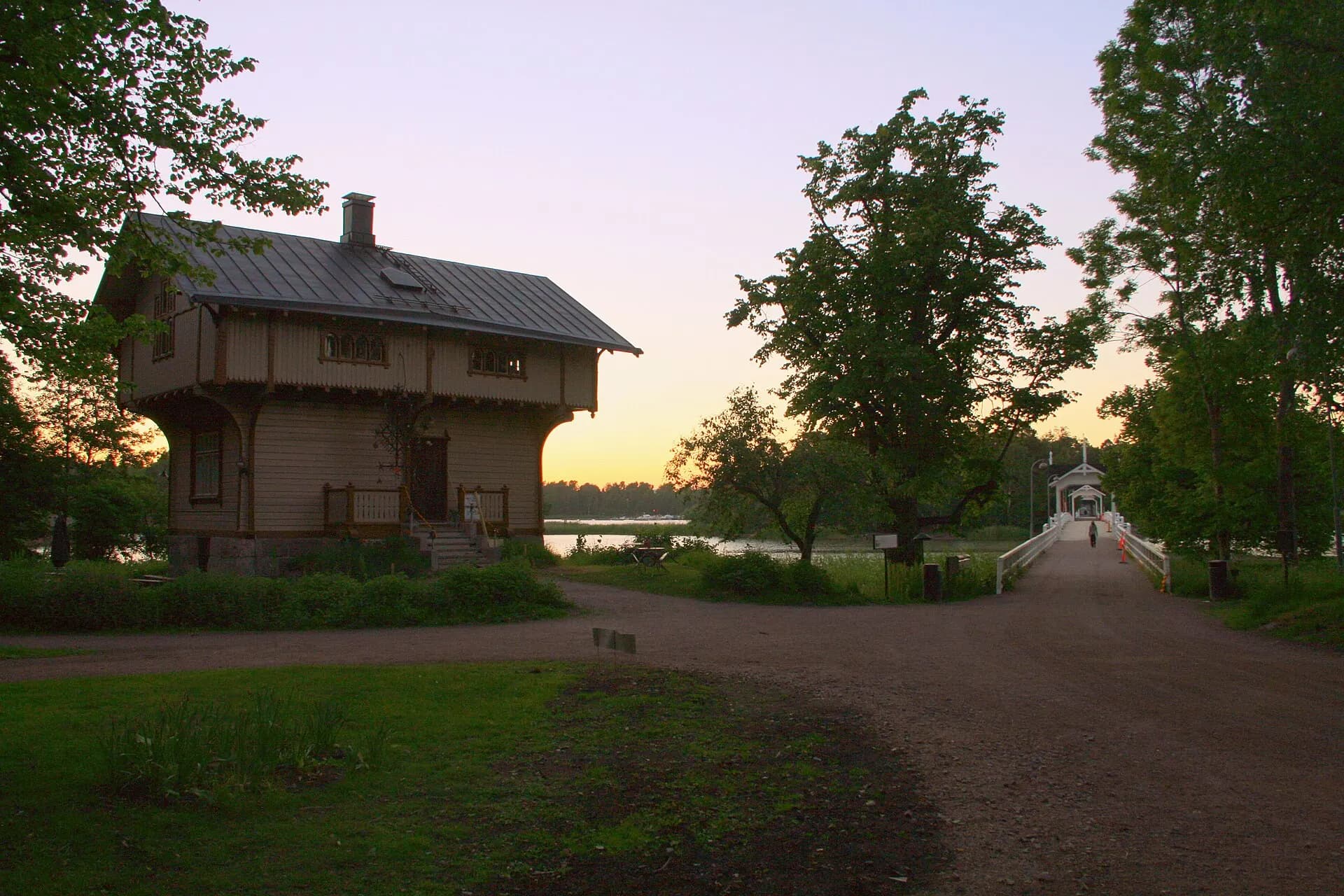
Reached by a white wooden footbridge, the forested island of Seurasaari holds an open-air museum founded in 1909, with farmsteads, manor houses, cottages and a seventeenth-century church moved here from all over Finland to show how rural people lived over four centuries. Guides in period dress demonstrate crafts in summer. The museum buildings open from mid-May to mid-September, but the island itself, with its rocky shores, red squirrels and walking paths, is free to wander all year.
TipOn Midsummer's Eve, Seurasaari hosts the city's best-known bonfire celebration, with folk dancing and boats; tickets sell out.
- 17
Nuuksio National Park
Photo: Stephan van Helden, CC BY-SA 4.0, via Wikimedia Commons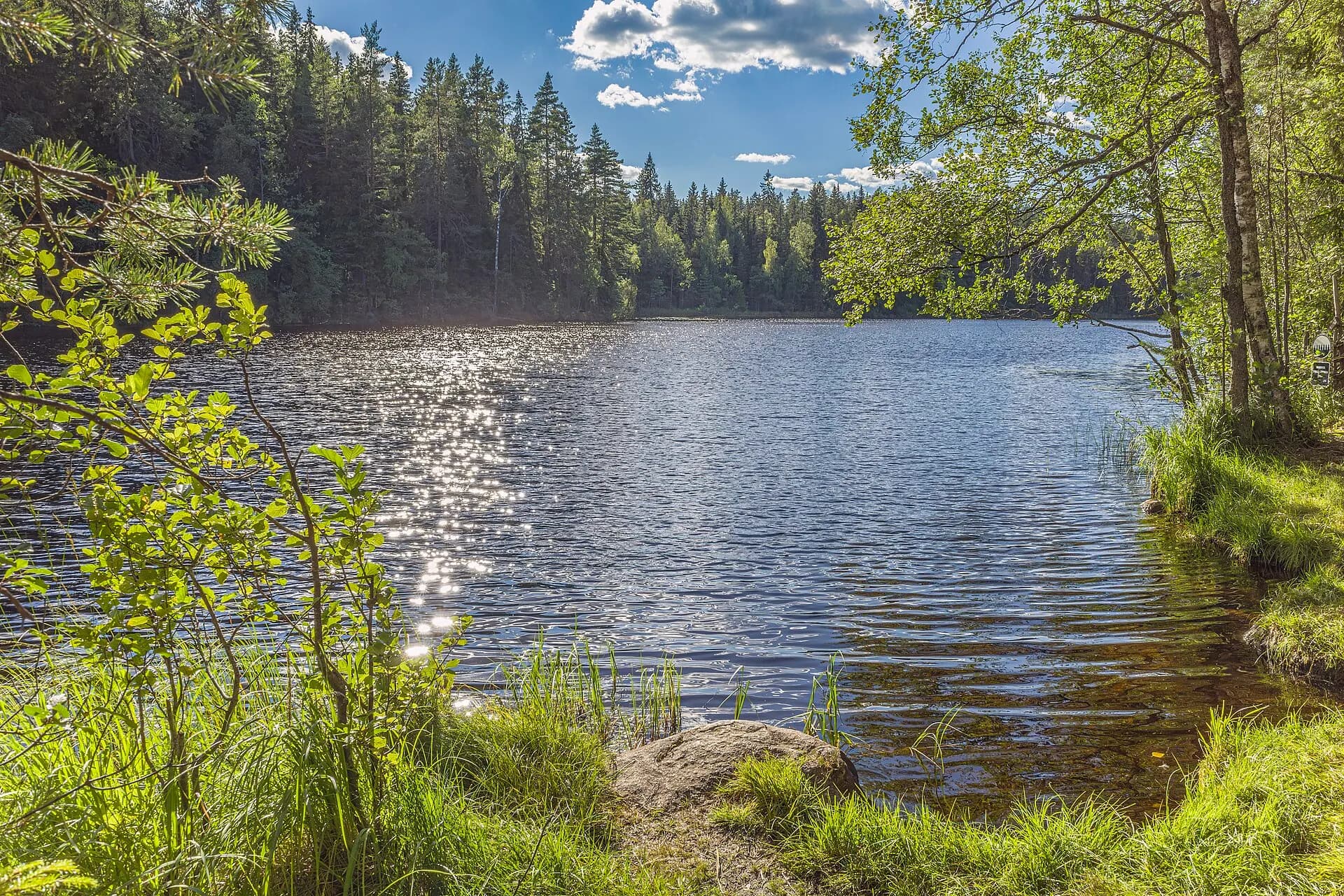
Less than an hour from the centre, Nuuksio is a wilderness of spruce forest, bare rocky ridges, bogs and dozens of small lakes, and a good chance to feel the "everyman's right" to roam that Finns hold dear. Marked trails of a couple of kilometres up to a full day loop around lakes such as Haukkalampi, with fire pits and lean-to shelters along the way. The park is a stronghold of the shy Siberian flying squirrel, whose image appears on Finland's national park signs, and in late summer the forest floor is thick with blueberries and lingonberries.
The Haltia nature centre, at the park's southern edge, has exhibitions on Finnish nature, a restaurant and trail information. To get there by public transport, take a commuter train to Espoo centre and change to the 245 bus (245A in summer, when it runs on to Kattila trailhead). Haltia lies in fare zone C, so an ABC ticket covers the trip from central Helsinki.
TipBring water, snacks and good shoes; the trails are rocky and roots get slippery after rain. In winter, check daylight hours carefully, as darkness falls around 3.30pm in December.
- 18
Porvoo
Photo: Nikowsk, CC BY-SA 4.0, via Wikimedia Commons
About an hour east of Helsinki by bus from Kamppi, Porvoo is one of Finland's oldest towns and its most photographed. The old town climbs a hillside above the river, a maze of cobbled lanes and pastel wooden houses, crowned by a medieval stone cathedral where Tsar Alexander I met the Finnish estates in 1809 to accept Finland into his empire. The image everyone comes for is the row of rust-red wooden shore houses along the river bank, best seen from the old bridge.
The town has craft shops, antique dealers, chocolate makers and cafés, and is the place to try a Runeberg torte, an almond and rum cake named after the national poet Johan Ludvig Runeberg, whose home here is now a museum. Buses run every day of the year, and in summer a boat trip along the archipelago coast makes a scenic alternative.
TipArrive in the morning before the coach tours, or stay the night to see the lanes empty out in the evening.
When to go
Summer, from June to August, is the obvious choice. Days are long, with barely any darkness around Midsummer, temperatures are usually between 18 and 25°C, café terraces fill, and ferries run frequently to the islands. July is the Finnish holiday month, when many locals leave for their summer cottages and some smaller restaurants close, but the city's events calendar is full, and the Helsinki Festival of arts runs from late August into early September.
May and September are pleasant shoulder months with fresh, bright weather and fewer visitors, though evenings are cool. Late autumn, from October to November, is the gloomiest time: grey, wet and increasingly dark. December brightens things with Christmas lights, markets on Senate Square and the glow of candles in every window, despite only six hours of daylight. January to March brings real winter, with snow, temperatures often below -5°C, and in cold years a frozen sea you can see from the shore; this is the season for saunas and ice swimming.
Getting around
Helsinki's centre is compact and very walkable. Beyond it, HSL runs an integrated network of trams, metro, commuter trains, buses and the Suomenlinna ferry, all on the same tickets. The region is divided into fare zones A to E: almost everything a visitor needs in the city, including Suomenlinna and Seurasaari, is within zones A and B, while the airport and Haltia in Nuuksio are in zone C.
From 1 January 2026, a single adult AB ticket costs €3.30 in the HSL app and €3.50 when you tap a contactless bank card or buy from a ticket machine. An ABC single, needed for the airport, is €4.50 in the app or €4.80 contactless. Day tickets are better value if you are making three or more journeys: €10.60 for one day in zones AB and €5.30 for each extra day, or €12.80 for a day in ABC plus €6.40 per extra day. Children aged 7 to 17 pay roughly half, and under-7s travel free. Download the HSL app before you arrive; it also has a journey planner.
From Helsinki Airport, commuter trains on the I and P lines run to the Central Station in around 30 minutes, every 10 minutes or so for most of the day; an ABC ticket covers it. Taxis and ride-hailing cars take about half an hour.
Trams are the most pleasant way to see the centre, and city bikes can be rented from spring to autumn. For Tallinn, frequent fast ferries leave from the West Harbour and take about two hours; for Stockholm, overnight cruise ferries depart from the South Harbour and Katajanokka in the evening. The Helsinki Card bundles public transport with entry to many museums, worth it if you plan several in a day or two.
Local tips
- Finland uses the euro, and cards, including contactless, are accepted almost everywhere, even for a coffee. Many places no longer take cash at all.
- Tipping is not expected; service is included. Rounding up for very good service is appreciated but never required.
- Tap water is excellent and free; ask for it in restaurants.
- Finns value personal space and quiet. Talking loudly on public transport draws looks, and queues are orderly.
- In public saunas, check whether swimsuits are worn (they usually are in mixed saunas) and always shower first. Nudity is normal in single-sex saunas.
- Lunch is the cheapest main meal: many restaurants offer a weekday lunch buffet or set menu, usually from about 11am to 2pm.
- Alcohol stronger than 8 per cent is sold only at state-run Alko shops, which close early on Saturdays and all day on Sundays.
- In winter, wear shoes with good grip; pavements are icy despite the grit, and some locals fit their shoes with spikes.
- Shops and museums often close on Mondays and around public holidays such as Midsummer and Christmas, when the city can feel deserted.
Eat and drink
Finnish food is built on what the forest, lakes and sea provide. Try creamy salmon soup (lohikeitto), fried vendace or Baltic herring, smoked fish from the market, sautéed reindeer with mashed potato and lingonberries, and dense, sour rye bread. Karelian pies, thin rye crusts filled with rice porridge and topped with egg butter, make a cheap snack, and the cinnamon bun (korvapuusti) is the default partner for the strong, light-roast coffee Finns drink in world-leading quantities. In late summer, look out for chanterelles, cloudberries and wild blueberry pies.
The Old Market Hall and Hakaniemi Market Hall are best for casual lunches. Helsinki also has an ambitious modern dining scene built on Nordic ingredients, with several Michelin-starred restaurants and many more good-value bistros, particularly in Punavuori and Kallio. Kallio, north of the centre, is the city's bohemian bar district, with old-school pubs, natural wine bars and craft breweries. Try a long drink (lonkero), a gin and grapefruit soda invented for the 1952 Olympics, which is still a national favourite.
Where to stay
Most visitors base themselves in the centre, around the Esplanadi, Kamppi and the railway station, where everything is walkable and the airport train arrives. The Design District, in Punavuori and Ullanlinna, has smaller boutique hotels and puts you among the best restaurants. Katajanokka is quieter and handy for the ferry terminals, while Kallio offers cheaper rooms and a livelier nightlife, a few tram stops north. Hotel prices are high by European standards and peak in summer and during big events, but many business hotels drop their rates at weekends. Book early for Midsummer and the Helsinki Festival.
Saunas, the Finnish way
Finland has an estimated three million saunas for five and a half million people, and the sauna is part of daily life rather than a luxury. The ritual is simple: shower, sit in the heat, throw water on the stones to raise a burst of steam called löyly, cool off with a swim, a shower or a sit outside, then repeat as many times as you like. Many Finns finish with a cold drink and a sausage.
Helsinki offers every version. Löyly and Allas are stylish and visitor-friendly; Kotiharju is the classic neighbourhood sauna; and the volunteer-run Sompasauna on the Kalasatama shore is a free, open-access set of wood-fired saunas built by locals. Swimming halls, including the Art Deco Yrjönkatu baths, combine saunas with pools. In winter, sea swimming through a hole in the ice is a beloved local habit; take the steps slowly, keep your head above water, and stay in only for a few seconds the first time.
Beyond Helsinki
Finland is big, and Helsinki is only its doorway. The most popular longer trip is to Lapland in the far north, where Rovaniemi sits on the Arctic Circle with its Santa Claus Village, husky and reindeer farms, and, from late August to early April, a good chance of the northern lights on clear nights. It is roughly an hour's flight from Helsinki, or an overnight train journey on the Santa Claus Express, which has sleeper cabins.
Closer to home, Turku, the old capital, has a medieval castle and cathedral two hours west by train, and the lake district around Tampere and Savonlinna is the classic summer-cottage landscape. Many visitors combine Helsinki with a day or two in Tallinn, whose medieval old town lies just across the gulf, or ride an overnight ferry to Stockholm, waking up among the islands of its archipelago.
Responsible travel
Finland's "everyman's right" lets anyone walk, ski, pick berries and mushrooms, and camp for a night in most countryside, but it comes with duties: leave no trace, do not disturb wildlife or nesting birds, keep away from private gardens and homes, and only light fires at designated fire pits, never during forest fire warnings. In Nuuksio, stay on marked trails, which protect the thin soils and mosses on the rocks.
In the city, public transport is excellent, so there is little need for a car. On Suomenlinna, remember that people live in the houses between the sights, and keep your voice down and drones grounded. In Porvoo, the local tourism office asks visitors to treat the old town as a neighbourhood rather than a museum, not stepping into private yards for photographs. Buying from market vendors, local designers and small cafés keeps money in the community.