Baku
A Caspian capital where a medieval walled town sits beneath glass towers that burn with light, and the ground itself still breathes fire.
- Best time to go
- April to June and September to October; July and August are hot, and winter brings the cold Khazri wind
- Local time
- –
- Currency
- Azerbaijani Manat (AZN)
- Reading time
- 14 min
- Language
- Azerbaijani

Baku spreads around a wide bay on the southern shore of the Absheron Peninsula, the thumb of land that pokes into the Caspian Sea. At its heart is Icherisheher, the walled Old City, a hill of honey-coloured stone lanes, mosques, caravanserais and bathhouses, listed by UNESCO together with the Maiden Tower and the Palace of the Shirvanshahs. Around it lies a city built twice over by oil money: first the grand mansions of the 1880s to 1910s boom, when Baku produced around half of the world's oil, and then the twenty-first-century skyline of glass, curves and LED-lit towers.
This is a land of fire in a literal sense. Natural gas seeps out of the ground across the peninsula, and it has fed temples, legends and the country's nickname for centuries. Give Baku three days for the city and its fire sites, add a day for the rock art and mud volcanoes of Gobustan, and if you have longer, head north into the Greater Caucasus for the mountain villages around Quba and the silk town of Sheki.
The top 17 in Baku
- 1
Fountain Square and Nizami Street
Photo: Bernard Gagnon, CC BY 4.0, via Wikimedia Commons
Just outside the Old City walls, Fountain Square is Baku's favourite meeting point: a broad, tree-shaded plaza with fountains, cafés and benches that fills with families on warm evenings. Running west and east from it, pedestrianised Nizami Street is lined with ornate oil-boom façades, carved balconies and stone caryatids above international shops. Walk it slowly and look up, because the architecture is the real attraction.
TipCome back after dark, when the square and the street are lit up and noticeably livelier than during the hot afternoon.
- 2
Palace of the Shirvanshahs
Photo: Bernard Gagnon, CC BY 4.0, via Wikimedia Commons
Climb through the lanes of Icherisheher to the top of the Old City hill and you reach the fifteenth-century seat of the Shirvanshahs, the dynasty that ruled this part of the Caucasus for centuries. The complex is a cluster of buildings on terraces rather than a single palace: the living quarters, a mosque with a slender minaret, a domed mausoleum, a bathhouse and the octagonal Divankhana pavilion with its finely carved portal. Small exhibitions inside show ceramics, textiles and coins found on the site.
The surrounding streets are the best part of Baku to wander without a plan. Look for the stone caravanserais that once lodged merchants from Central Asia and India, the tiny mosques tucked into corners, and the carpet and copper shops that spill out onto the pavements.
TipEnter the Old City through the Double Gates (Qosha Qala) opposite the Philharmonic garden, then walk uphill so you can come down through the lanes towards the Maiden Tower.
- 3
Maiden Tower
Photo: Diego Delso, CC BY-SA 4.0, via Wikimedia Commons
Baku's emblem is a massive, windowless cylinder of stone with a buttress running down one side, rising at the lower edge of the Old City close to where the shoreline once lay. Nobody is entirely sure how old it is or what it was built for; theories range from a fire temple or observatory to a defensive keep, and the name comes from legends rather than history. Inside, each level holds a short exhibition on the tower's story, and the roof gives a fine view over the Old City, the bay and the Flame Towers.
- 4
Baku Boulevard
Photo: Samir Rəsulov, Public domain, via Wikimedia Commons
The seafront promenade, laid out in 1909 and extended many times since, now runs for several kilometres along the bay. It is Baku at its most relaxed: joggers, couples, families with prams, tea houses, fairground rides and paths through palms and pines. Highlights along the way include the Little Venice canals with their small boats, the Baku Eye observation wheel and, at the western end, the Carpet Museum.
TipWalk it in the early evening, when the heat drops, the Caspian breeze picks up and the skyline across the bay begins to glow.
- 5
Azerbaijan National Carpet Museum
Photo: SwissTraveller, CC BY-SA 4.0, via Wikimedia Commons
Carpet weaving is one of Azerbaijan's great arts, recognised by UNESCO as intangible heritage, and this museum is the place to understand it. The building itself is shaped like a partly rolled-up carpet, and inside are hundreds of pieces from the country's regional schools, each with its own motifs and palette, along with embroidery, jewellery and costumes. Displays explain knotting techniques and how to tell the styles of Quba, Shirvan, Karabakh and Ganja apart.
TipVisit before you shop for a carpet; you will be far better placed to judge what you are being offered in the Old City.
- 6
Highland Park and Martyrs' Lane
Photo: Sefer azeri, CC BY-SA 4.0, via Wikimedia Commons
On the ridge above the western end of the Boulevard, Highland Park (Dagustu Park) offers the classic panorama of the whole bay, the Old City and the modern skyline. It is reached by a long flight of steps or by the short funicular from the seafront. Beside it runs Martyrs' Lane (Shehidler Khiyabani), a solemn memorial avenue of graves for those killed when Soviet troops entered Baku in January 1990 and for soldiers who died in the conflicts that followed, ending at an eternal flame.
This is a national place of mourning, and visitors are expected to treat it as one: walk quietly, dress modestly, do not climb on monuments and take photographs with discretion. Official delegations regularly lay flowers here.
TipCome at sunset for the view, then stay as the Flame Towers start their light show behind you.
- 7
Flame Towers
Photo: Diego Delso, CC BY-SA 4.0, via Wikimedia Commons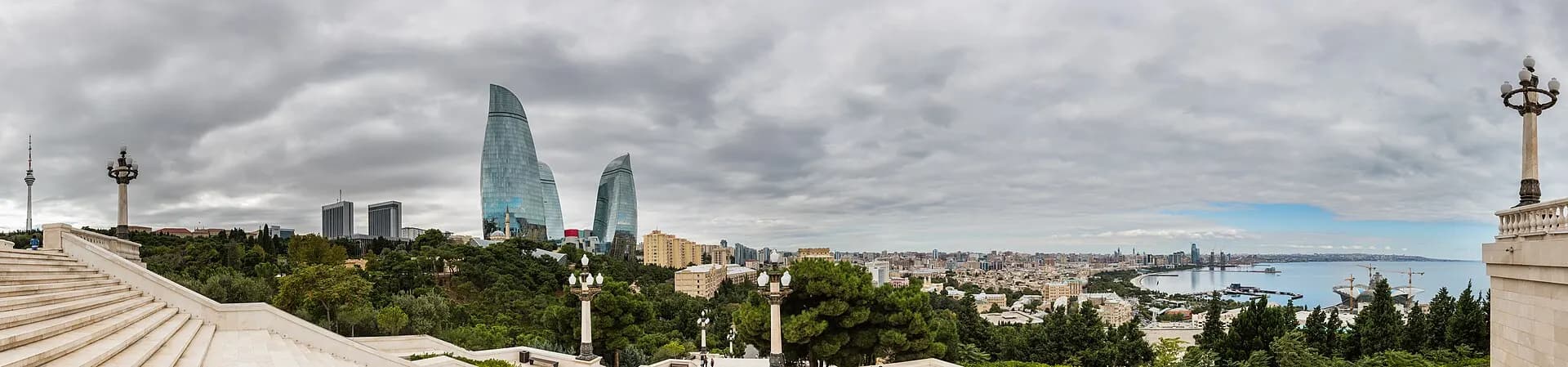
Three curved glass towers, finished in 2012 and shaped like tongues of fire, dominate the hill above the bay and are visible from almost everywhere in the city. They hold a hotel, apartments and offices, but most visitors simply admire them from outside. After dark, thousands of LEDs across the façades turn the towers into flickering flames, the waving Azerbaijani flag and a figure holding a flag, a display best seen from the Boulevard or the Old City walls.
- 8
Heydar Aliyev Center
Photo: Fanti Salms, CC BY-SA 4.0, via Wikimedia Commons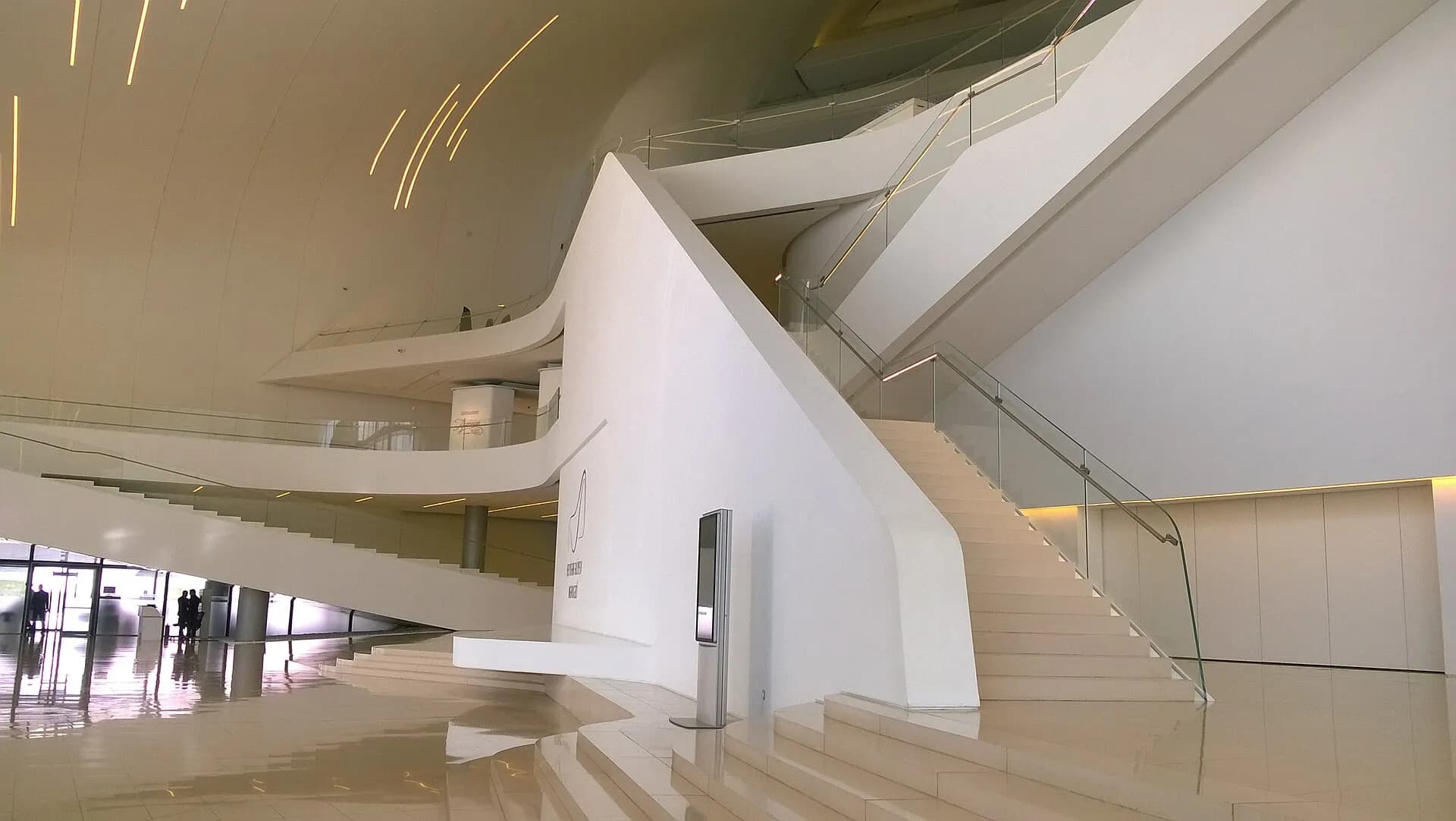
Designed by Zaha Hadid's practice and opened in 2012, this flowing white building seems to rise out of the ground and fold back on itself without a single straight line. It is a cultural centre with a museum on the life of the late president it is named after, a collection of national costumes and musical instruments, and changing art and design exhibitions. The sloping lawns outside, dotted with sculptures, are popular for photographs.
TipThe building is at its most striking in the soft light of early morning or late afternoon; check the official site for opening days and online tickets before you go.
- 9
Yanar Dag
Photo: lumoplank, CC0, via Wikimedia Commons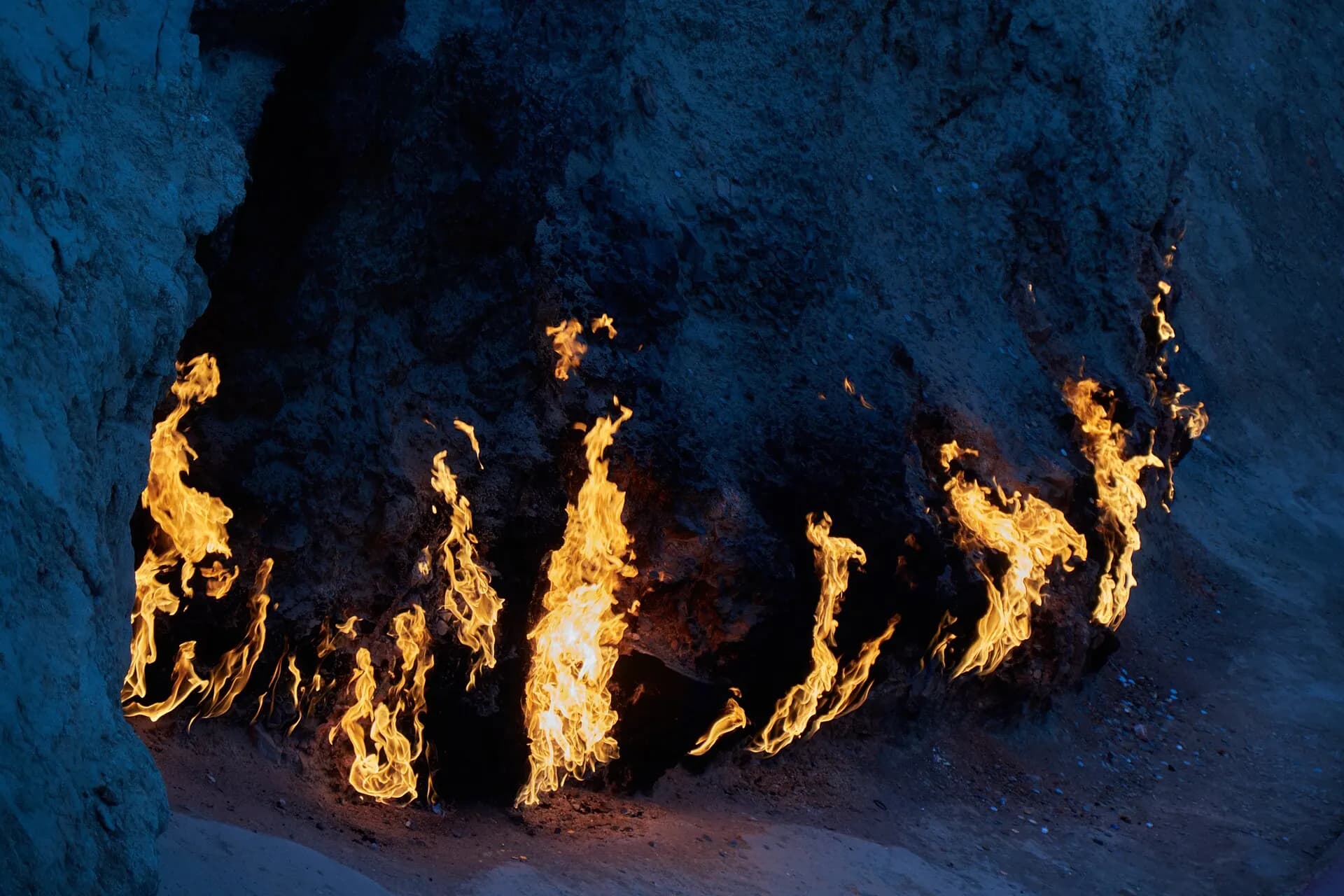
On a low hillside north of the city, a wall of flame several metres long burns continuously where natural gas leaks out of the sandstone. It has burned for as long as anyone remembers and is not put out by rain. The site is now a reserve with a modern museum about fire, Zoroastrianism and the region's gas, plus an open-air display of ancient stones. The reserve website lists it as open daily from 10:00 to 19:00, with tickets sold online.
TipGo at dusk, when the flames look far more dramatic against the darkening sky.
- 10
Ateshgah Fire Temple
Photo: Bernard Gagnon, CC BY 4.0, via Wikimedia Commons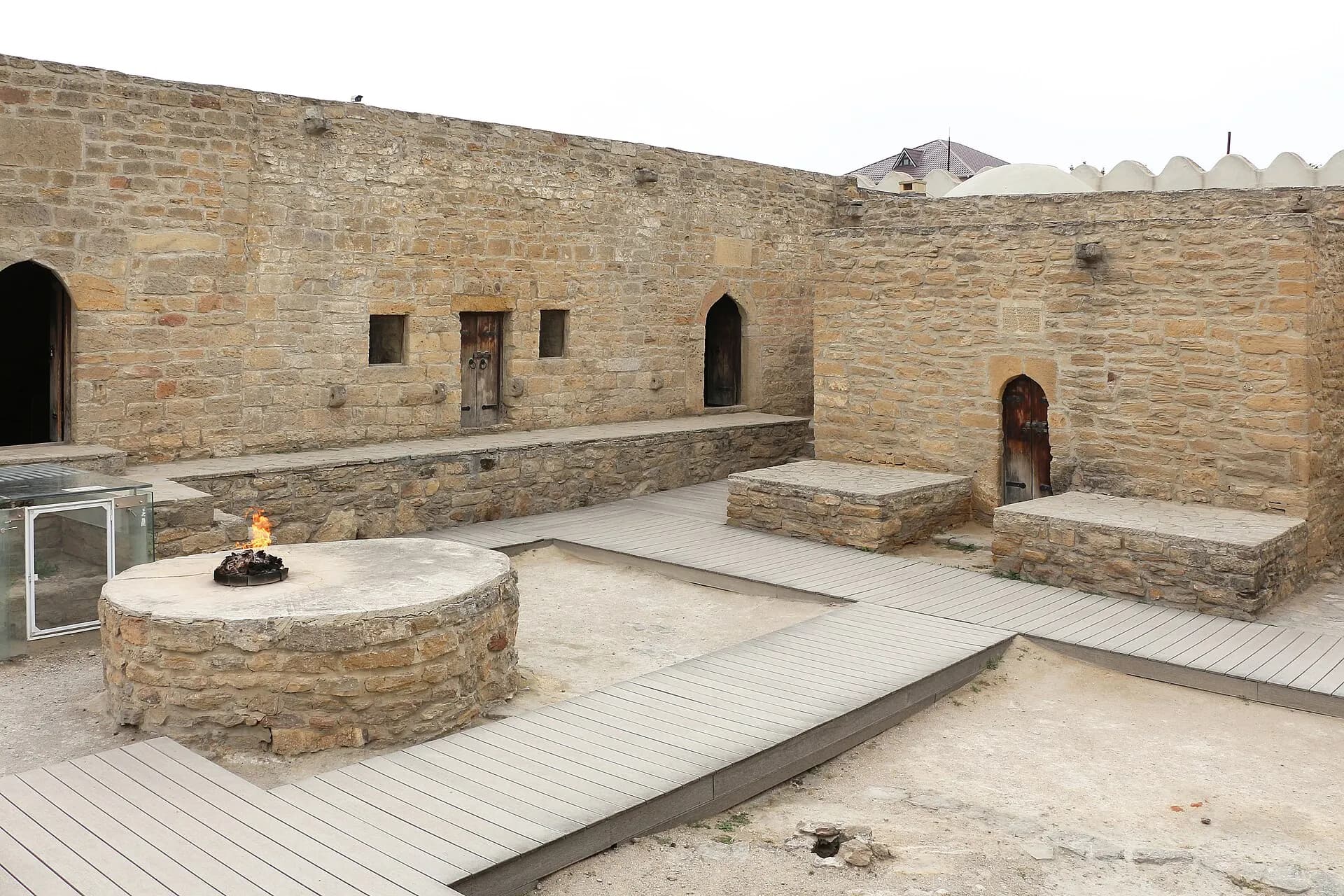
In the suburb of Surakhani, a pentagonal walled courtyard surrounds a small altar where a flame burns under a domed canopy. The present buildings date mainly from the seventeenth and eighteenth centuries, when Indian merchants and ascetics on the trade routes worshipped here; inscriptions in Sanskrit, Punjabi and Persian survive above the cell doors. The natural flame died out in the twentieth century after heavy gas extraction nearby, and today's fire is fed by the mains. The cells around the courtyard hold an engaging museum on the pilgrims who lived here.
TipCombine Ateshgah and Yanar Dag in a single half-day trip by taxi; they are about 25 minutes apart.
- 11
Gobustan Rock Art
Photo: Walter Callens, CC BY 1.0, via Wikimedia Commons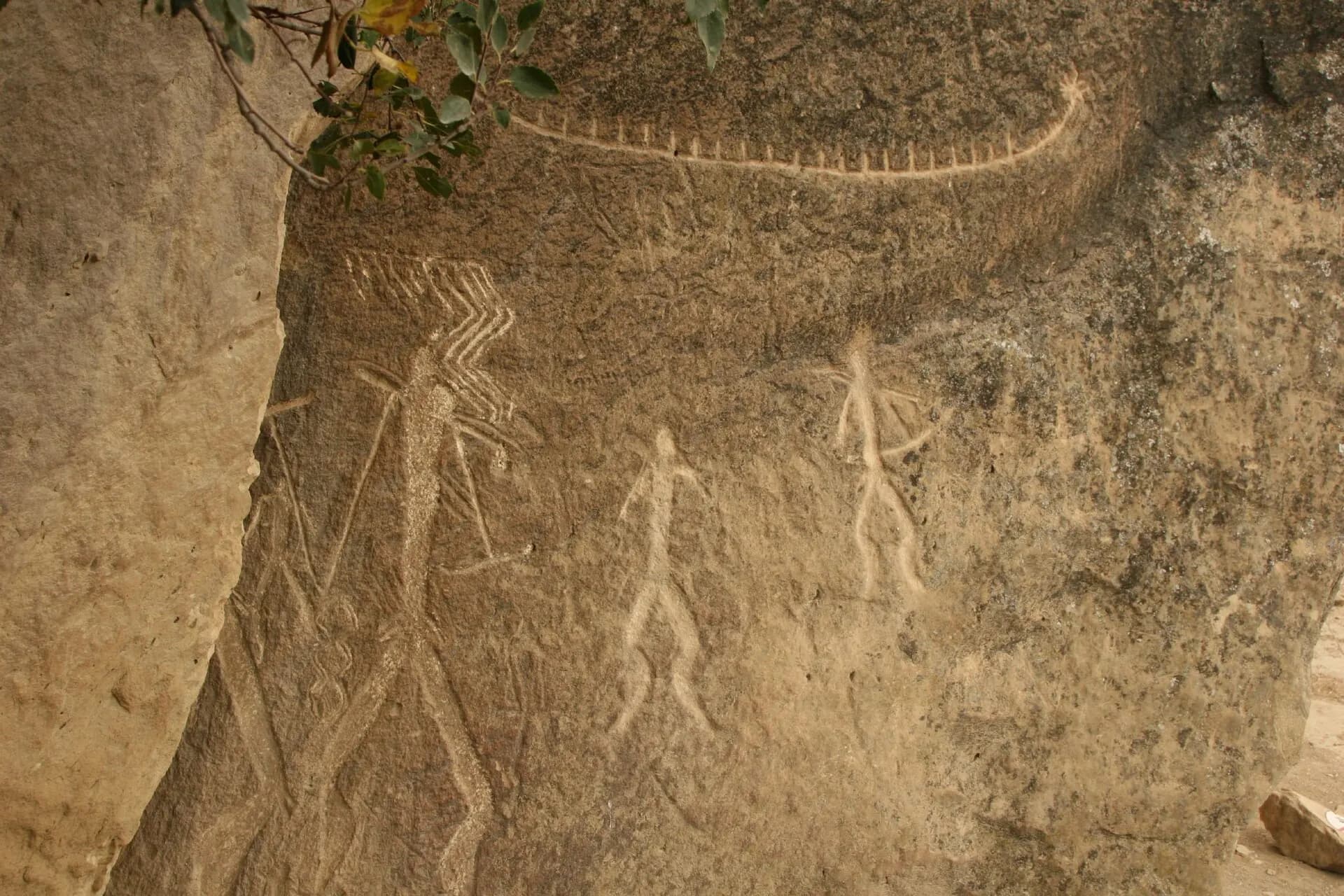
About an hour south-west of Baku, a jumble of boulders on rocky hills above the Caspian holds thousands of petroglyphs carved over many millennia: hunters, boats with oarsmen, dancers, aurochs and goats. The cultural landscape was added to the UNESCO World Heritage List in 2007. A modern museum at the foot of the hill gives the background, and paths then lead up among the carvings. Look out too for the "gaval dash", a flat rock that rings like a drum when struck.
TipThere is very little shade on the hill; bring water and a hat, especially from June to September.
- 12
Gobustan Mud Volcanoes
Photo: Bernard Gagnon, CC BY 4.0, via Wikimedia Commons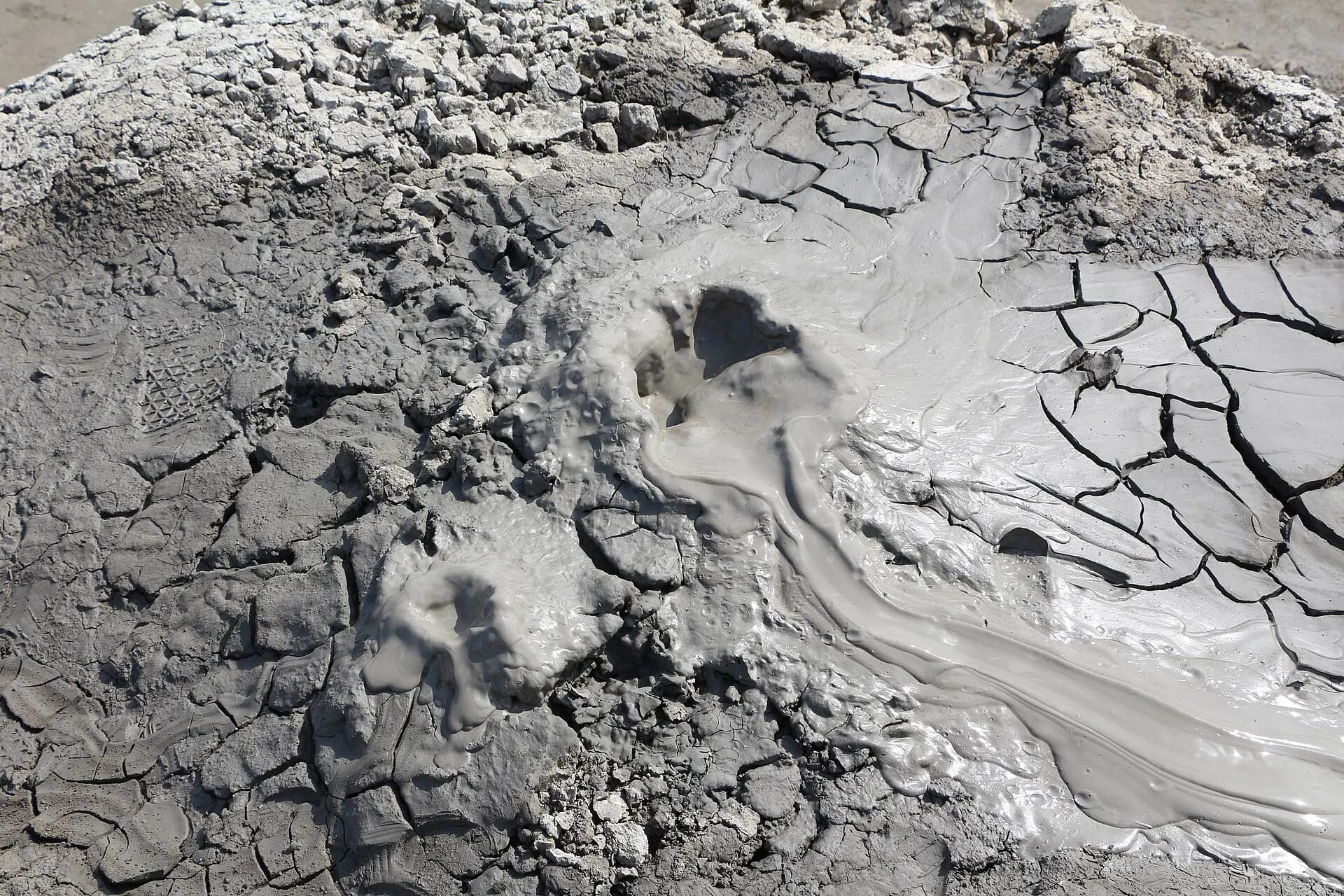
Azerbaijan has more mud volcanoes than almost anywhere on earth, and a cluster of them lies on a bare plateau south of the rock art. These are small grey cones that gurgle, burp and ooze cold, bubbling mud, rather than anything fiery, and the landscape around them feels lunar. The dirt tracks up to them are rough, so most visitors go on a tour or hire one of the local drivers who wait in Gobustan village.
TipSkip the trip after heavy rain, when the tracks turn to slippery clay and drivers may refuse to go up.
- 13
Quba and the Red Settlement
Photo: Gulustan, CC BY-SA 3.0, via Wikimedia Commons
Around three hours north of Baku, the market town of Quba sits among apple orchards at the foot of the Greater Caucasus, and is a good base for mountain trips. Across the river lies Qirmizi Qasaba, the Red Settlement, a town with a long-established Mountain Jewish community and several working synagogues; it is often described as one of the largest Jewish communities in the former Soviet world outside Israel. The town is also famous for its carpets, woven in bold geometric designs.
- 14
Khinalug
Photo: Nizinuri, CC BY-SA 4.0, via Wikimedia Commons
High in the mountains beyond Quba, at well over 2,000 metres, Khinalug is a village of flat-roofed stone houses stacked up a hillside, where people speak their own language, unrelated to Azerbaijani. Its culture and the seasonal shepherds' migration route connected to it were inscribed by UNESCO in 2023. The drive up a winding valley road is spectacular, and simple homestays make it possible to spend a night and walk the surrounding pastures.
TipSnow can close or complicate the road in winter; late spring to early autumn is the time to go, and a local driver is wiser than a hire car.
- 15
Sheki Khan's Palace
Photo: Petar Milošević, CC BY-SA 4.0, via Wikimedia Commons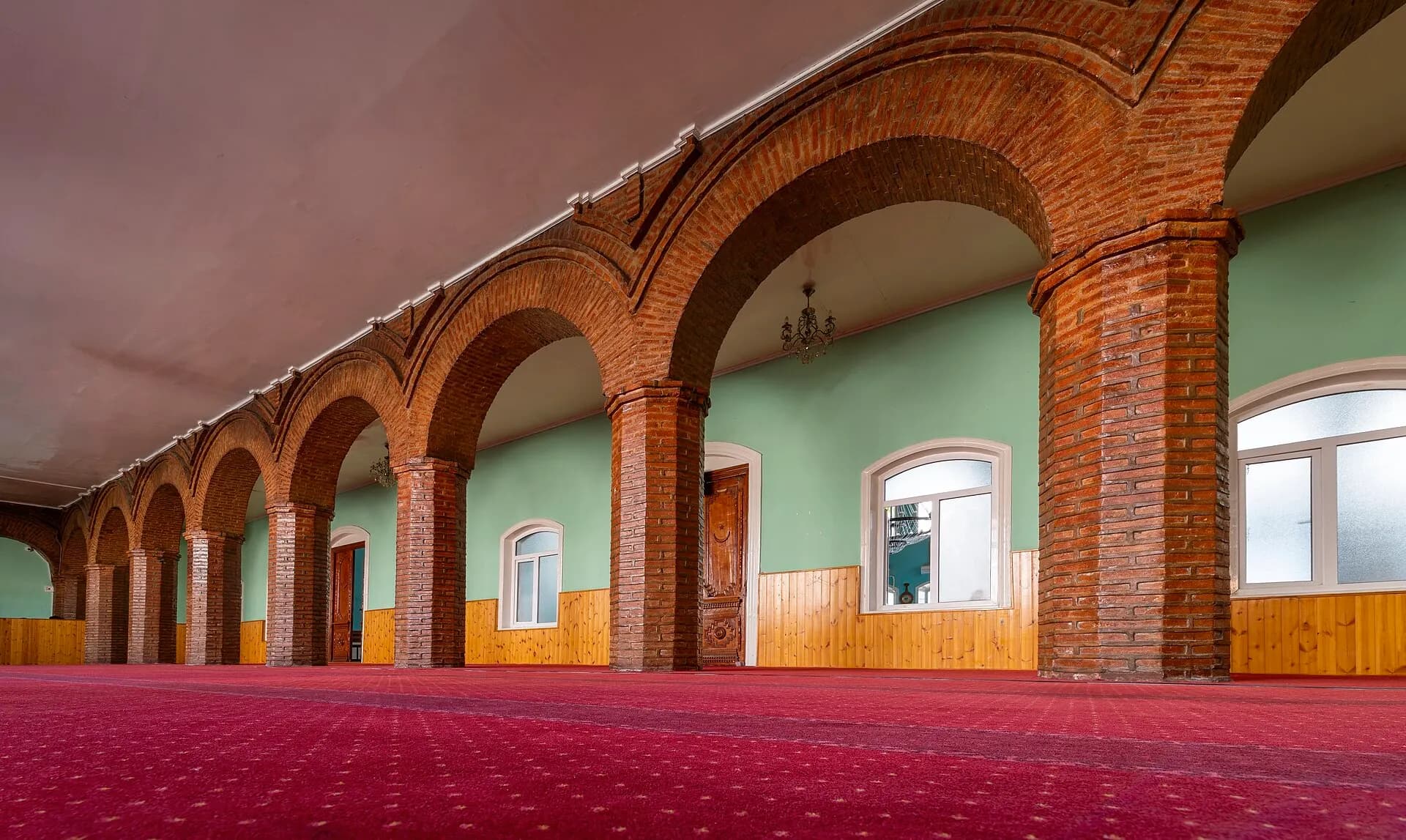
Sheki, about five hours north-west of Baku in green foothills, is the country's most charming small town, and its historic centre, including this palace, joined the UNESCO list in 2019. The eighteenth-century summer residence of the Sheki khans is small but astonishing: its façade is filled with "shebeke", intricate wooden lattice windows assembled without nails or glue around pieces of coloured glass, and the rooms inside are covered in painted hunting scenes, battles and flowers.
TipPhotography inside the palace is usually restricted; enjoy the interiors and save your camera for the façade and the plane trees in the courtyard.
- 16
Sheki Caravanserai
Photo: Matti Blume, CC BY-SA 4.0, via Wikimedia Commons
Down the hill from the palace, the Upper Caravanserai is a vast two-storey courtyard inn built for merchants on the silk routes, with arched galleries around a garden and massive wooden gates. It still works as a hotel, so you can sleep where traders once did, or just wander in for tea. The surrounding old quarter is full of craft workshops selling silk scarves, copperware and the town's famous layered halva.
- 17
Kish Church
Photo: Matti Blume, CC BY-SA 4.0, via Wikimedia Commons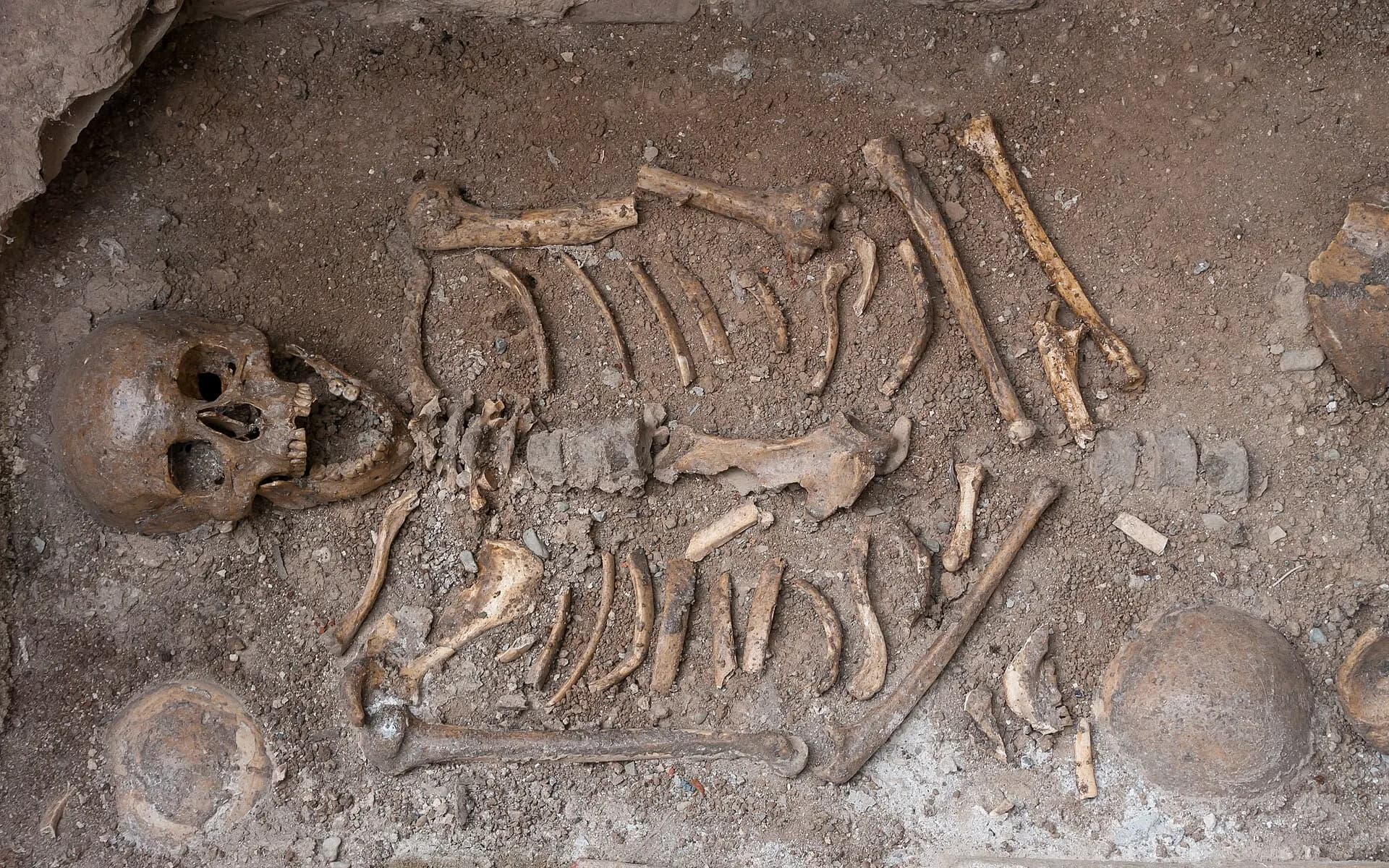
A short drive north of Sheki, in the village of Kish, a small round-apsed stone church stands on what is believed to be one of the oldest Christian sites in the Caucasus, linked to the ancient kingdom of Caucasian Albania (unrelated to the Balkan country). Restored in the early 2000s with Norwegian support, it now holds a small museum, and glass panels in the floor show earlier burials beneath. The walk up through the village lanes, past walnut trees and streams, is part of the pleasure.
When to go
Spring (April to June) and autumn (September to October) are the most comfortable times, with warm days that suit walking the Old City and visiting the semi-desert sites at Gobustan. July and August are hot and often humid in Baku, though the seafront breeze helps, and this is the best time to head for the cooler mountains around Quba, Khinalug and Sheki. Winters are mild by Caucasus standards but grey, and the gusty Khazri wind off the Caspian can make Baku feel much colder than the thermometer suggests; the mountains get snow.
Novruz, the spring new year festival around 20 to 21 March, is the biggest celebration of the year, with bonfires, sweets and street events. Baku also hosts large international events, including a Formula 1 street race that closes roads around the Old City and Boulevard, so check event calendars before booking, as hotel prices jump.
Getting around
Most visitors fly into Heydar Aliyev International Airport, about 25 kilometres north-east of the centre. A dedicated airport express bus runs to the city centre around the clock, and taxis are plentiful; ride-hailing apps such as Bolt are widely used and avoid fare haggling.
Central Baku is walkable: the Old City, Fountain Square, Nizami Street and the Boulevard are all within a few minutes of each other. The Baku Metro, with grand Soviet-era stations, is cheap and efficient for longer hops; you need a rechargeable BakiKart from station machines, and the same card works on city buses. Taxis are inexpensive, and the easiest way to reach Ateshgah, Yanar Dag and the Heydar Aliyev Center if you are short of time.
For Gobustan and the mud volcanoes, a tour or a hired driver for the day is the simplest option. Long-distance buses and shared taxis leave from the main Baku bus station for Quba and Sheki; journeys take roughly three and five hours respectively. Renting a car is possible, but driving in Baku is fast and assertive, and mountain roads demand care.
Borders. Plan to arrive and leave by air unless you have confirmed otherwise. Azerbaijan closed its land borders to most travellers in 2020 and has kept them largely shut since, extending the restrictions repeatedly. In May 2026 the overnight passenger train between Baku and Tbilisi resumed after a six-year break, but at the time of writing the FCDO still describes the land crossings with Georgia and Iran as closed to ordinary road traffic, and leaving by road requires special authorisation. The border with Armenia is closed, so there is no direct route to Armenia; travellers combining the two countries normally go via Georgia. Check the latest position with official sources shortly before you travel.
Local tips
- Visa. Many nationalities need a visa, which is usually obtained online through the official ASAN e-visa system (evisa.gov.az). Apply at least three working days ahead; an urgent service costs more. E-visas are typically single-entry for a stay of up to 30 days, and you should carry a printed copy. Use only the official site, as look-alike agency sites charge extra.
- Registration. If you stay more than 15 days, you must register with the State Migration Service. Hotels often do this for you, but if you rent an apartment the responsibility is yours, and fines apply at departure if it has not been done.
- Passport. Your passport should normally be valid for at least six months from arrival.
- Money. The currency is the manat (AZN). Cards are widely accepted in Baku, but carry cash for markets, small cafés, rural guesthouses and mud-volcano drivers.
- Dress. Baku is cosmopolitan and casual dress is fine in the city, but cover shoulders and knees in mosques, at Martyrs' Lane and in rural villages, and women should carry a scarf for mosque visits.
- Sensitive subjects. The conflict with Armenia remains an emotive topic. Avoid volunteering opinions on it, and be aware that the FCDO advises against travel near the Armenian border and against all but essential travel to districts in the south-west affected by the 2020 and 2023 fighting, where landmines remain a risk.
- Photography. Do not photograph military sites, government buildings, police or border areas.
- Bargaining. Expect to haggle in the Old City's carpet and souvenir shops; for a valuable carpet, ask for a receipt and the paperwork needed to export it.
Eat and drink
Azerbaijani cooking draws on Persian, Turkish and Caucasian traditions, and meals revolve around fresh herbs, lamb, saffron rice and fruit. Plov comes in dozens of versions, often cooked under a golden crust of crisp flatbread with dried fruit and chestnuts. Try dolma wrapped in vine leaves, cabbage or stuffed aubergines and peppers, qutab (thin griddled flatbreads filled with herbs, pumpkin or meat), and lyulya kebab grilled over coals. Dushbara, tiny dumplings in broth, are a Baku comfort food.
In Sheki, the speciality is piti, a lamb and chickpea stew slow-cooked in individual clay pots and eaten in two stages: first the broth with bread, then the meat and vegetables. Sheki halva, layers of rice-flour lace soaked in syrup and nuts, is the classic souvenir.
Tea is the social glue: black tea in pear-shaped glasses, served with jam, sugar cubes and sweets in the traditional chaikhana. Azerbaijan also has a revived wine scene in the foothills, with local grapes such as Madrasa, and the pomegranate turns up in sauces, juices and the famous narsharab syrup.
Where to stay
In Baku, staying in or beside Icherisheher puts you within walking distance of nearly everything, with small boutique hotels in restored stone houses inside the walls. The streets around Fountain Square and Nizami Street are lively and well connected, while the big international hotels line the Boulevard and the hills around the Flame Towers. In Sheki, the Upper Caravanserai offers a memorable night, and simple guesthouses with orchards are common; in Khinalug and around Quba, homestays are the norm, so expect basic facilities and warm hospitality.
Oil, empire and independence
People have lived on the Absheron Peninsula for thousands of years, as Gobustan's carvings show, and the area passed through Persian, Arab, Shirvanshah, Safavid and local khanate rule before the Russian Empire absorbed it in the early nineteenth century. Oil changed everything. From the 1870s, industrial drilling turned Baku into one of the richest cities in the empire, attracting investors such as the Nobel brothers and the Rothschilds, and the mansions they and local oil barons built still line central streets.
Azerbaijan declared a short-lived republic in 1918, often cited as the first parliamentary democracy in the Muslim world, before becoming part of the Soviet Union in 1920. It regained independence in 1991. The decades since have been shaped by conflict with Armenia over Karabakh and by a second oil and gas boom, which paid for much of the modern skyline you see today.
Responsible travel
The Old City is a living neighbourhood where people still raise families, so keep noise down in residential lanes and ask before photographing people or homes. At memorials, mosques and Martyrs' Lane, behave as you would in any place of mourning or worship. In the mountain villages, homestays and local drivers keep money in communities that have few other sources of income; choose them over day trips that only stop for photographs. On the mud volcanoes and at Gobustan, keep to the marked paths, never scratch or touch the carvings, and carry your rubbish back with you.