Tbilisi
Wooden balconies over a river gorge, sulphur baths, ancient churches and the warmest welcome in the Caucasus.
- Best time to go
- April to June and September to October, for warm, pleasant days
- Local time
- –
- Currency
- Georgian Lari (GEL)
- Reading time
- 4 min
- Language
- Georgian
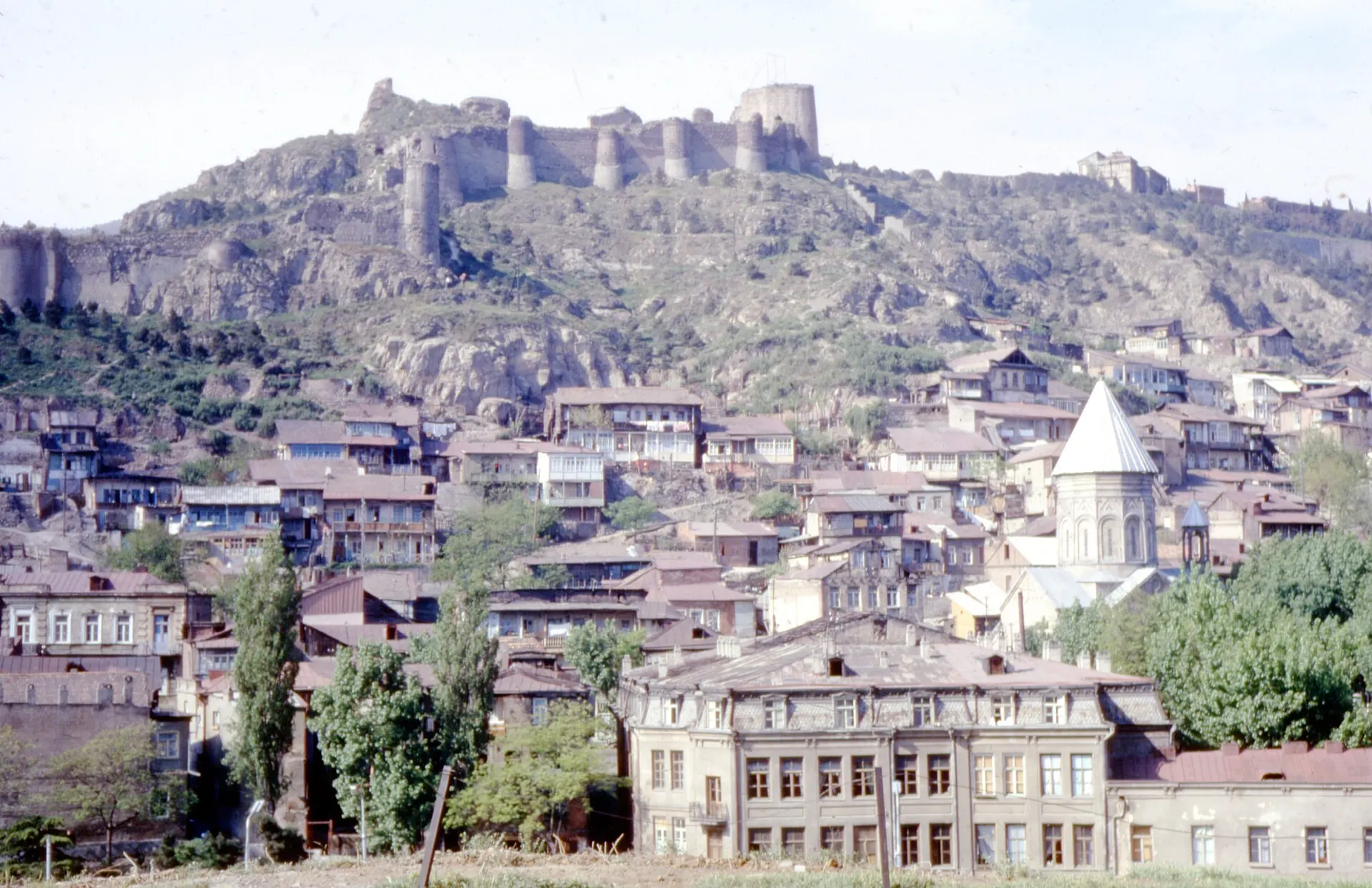
Tbilisi sits in a valley along the Mtkvari River, beneath the walls of an ancient fortress, at a crossroads between Europe and Asia. Founded, legend says, in the fifth century by King Vakhtang Gorgasali, who discovered its hot springs while hunting, the city has been ruled by Persians, Arabs, Byzantines, Mongols and Russians, and its architecture reflects them all.
Today, it's a creative, fast-changing capital where crumbling old houses with carved wooden balconies stand beside bold modern buildings, and where Georgian hospitality, food and wine make visitors feel instantly welcome. It's affordable, walkable and full of character.
The top 10 in Tbilisi
- 1
The Old Town (Dzveli Tbilisi)
Photo: Marcin Konsek, CC BY-SA 4.0, via Wikimedia Commons
A maze of narrow, hilly streets with houses decorated with ornate wooden balconies, small churches, a synagogue and a mosque within a few minutes' walk of each other, and courtyards hung with vines and washing.
- 2
Narikala Fortress
Photo: Diego Delso, CC BY-SA 4.0, via Wikimedia Commons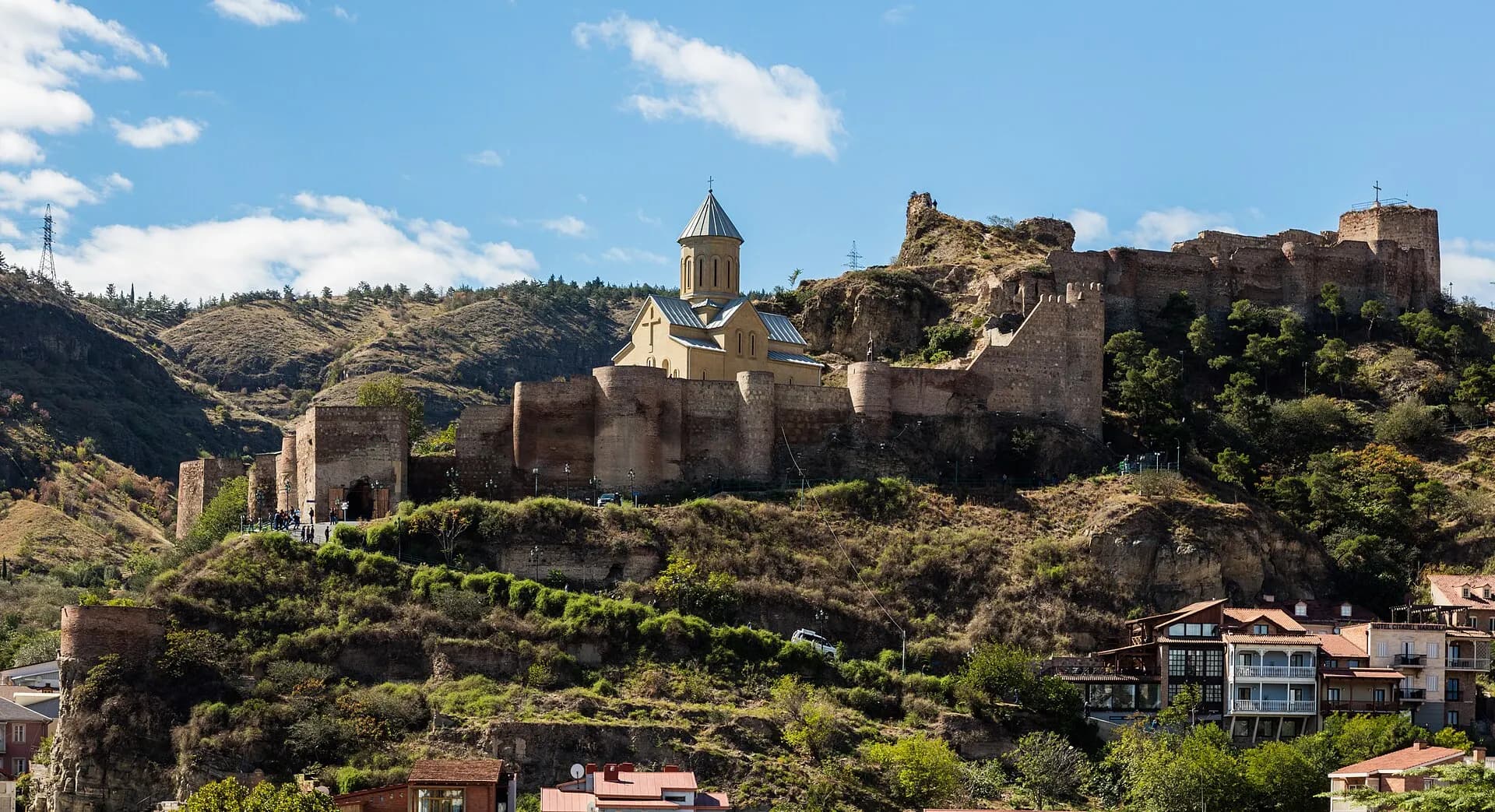
An ancient fortress on a ridge above the old town, dating back to the fourth century, with walls and towers offering the best views over the city. A cable car glides up from Rike Park across the river, and the giant aluminium statue of Kartlis Deda, Mother of Georgia, stands on the ridge nearby, holding a sword and a bowl of wine.
- 3
The sulphur baths of Abanotubani
Photo: Ephraim Stillberg, Public domain, via Wikimedia Commons
A district of brick-domed bathhouses built over natural hot springs, which gave the city its name: "tbili" means warm. The Orbeliani bath, with its turquoise-tiled façade, is the most beautiful. Private rooms can be rented by the hour, with a traditional scrub.
TipBook a private room in advance at weekends.
- 4
The Leghvtakhevi waterfall
Photo: AlexandreAssatiani, CC BY 4.0, via Wikimedia Commons
A short walk up a narrow gorge behind the baths leads to a small waterfall in the middle of the old town.
- 5
Metekhi Church
Photo: Alexxx1979, CC BY-SA 4.0, via Wikimedia Commons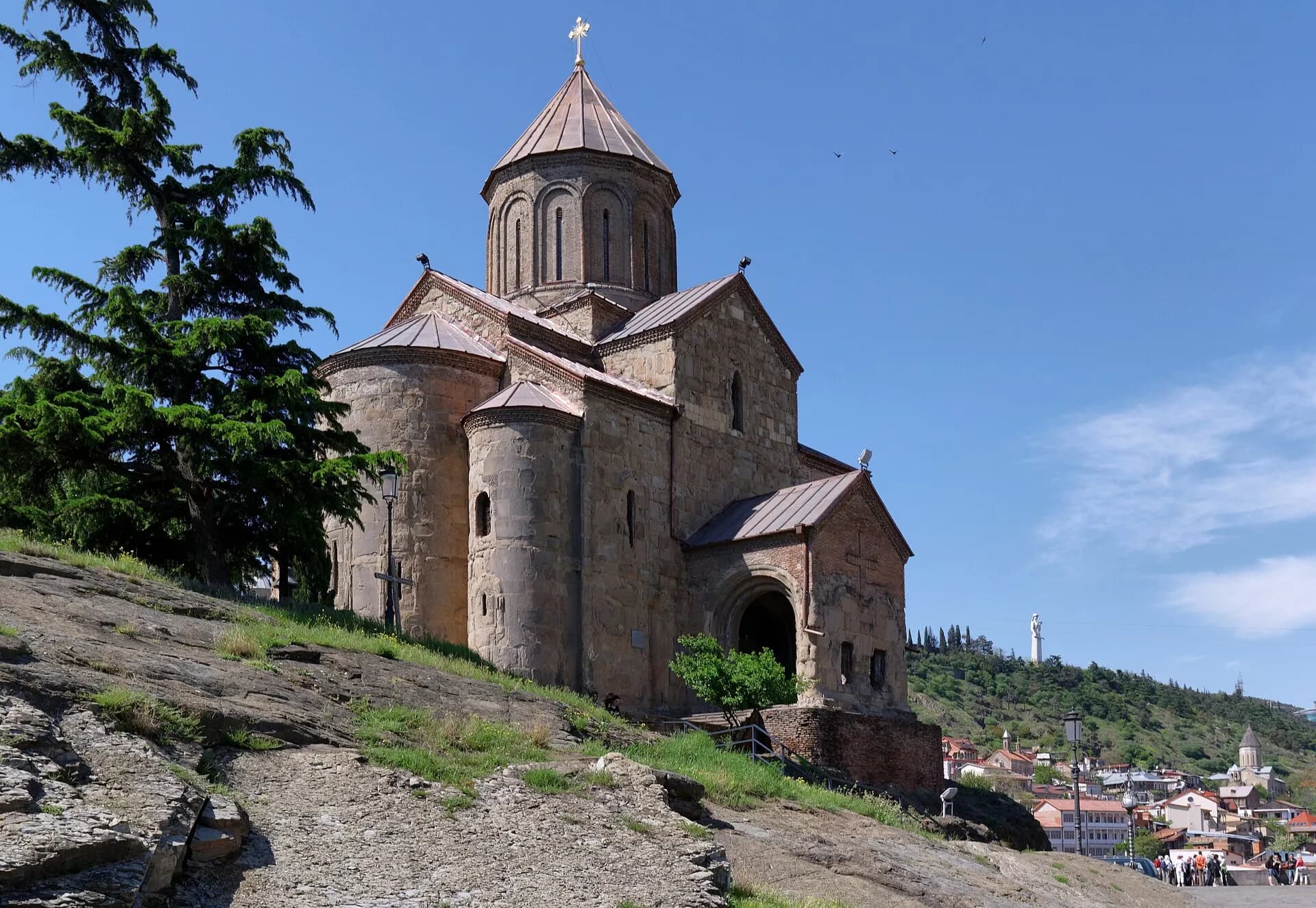
A thirteenth-century church on a cliff above the river, with an equestrian statue of King Vakhtang Gorgasali, the city's founder, and fine views of the old town opposite.
- 6
Sameba Cathedral
Photo: User:Ggia, CC BY-SA 3.0, via Wikimedia Commons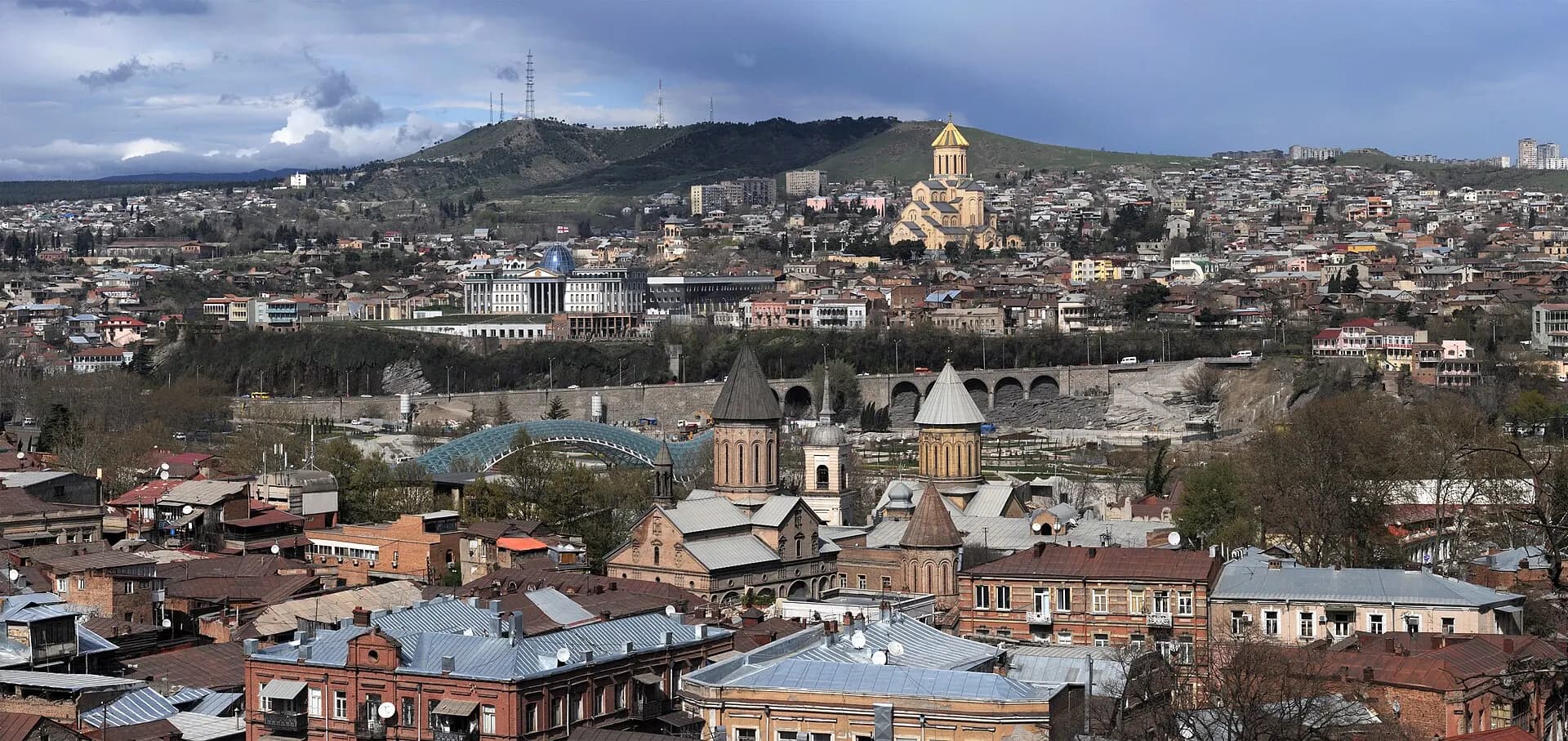
The Holy Trinity Cathedral, completed in 2004, is one of the largest Orthodox churches in the world, its golden dome visible from across the city.
- 7
Rustaveli Avenue and the Georgian National Museum
Photo: Andrew Milligan sumo, CC BY 2.0, via Wikimedia Commons
The city's grand boulevard, lined with theatres, the opera house and the old parliament. The Georgian National Museum has a superb treasury of gold jewellery from ancient Colchis, the land of the Golden Fleece.
- 8
- 9
The Dry Bridge market
Photo: Alexkom000, CC BY 4.0, via Wikimedia Commons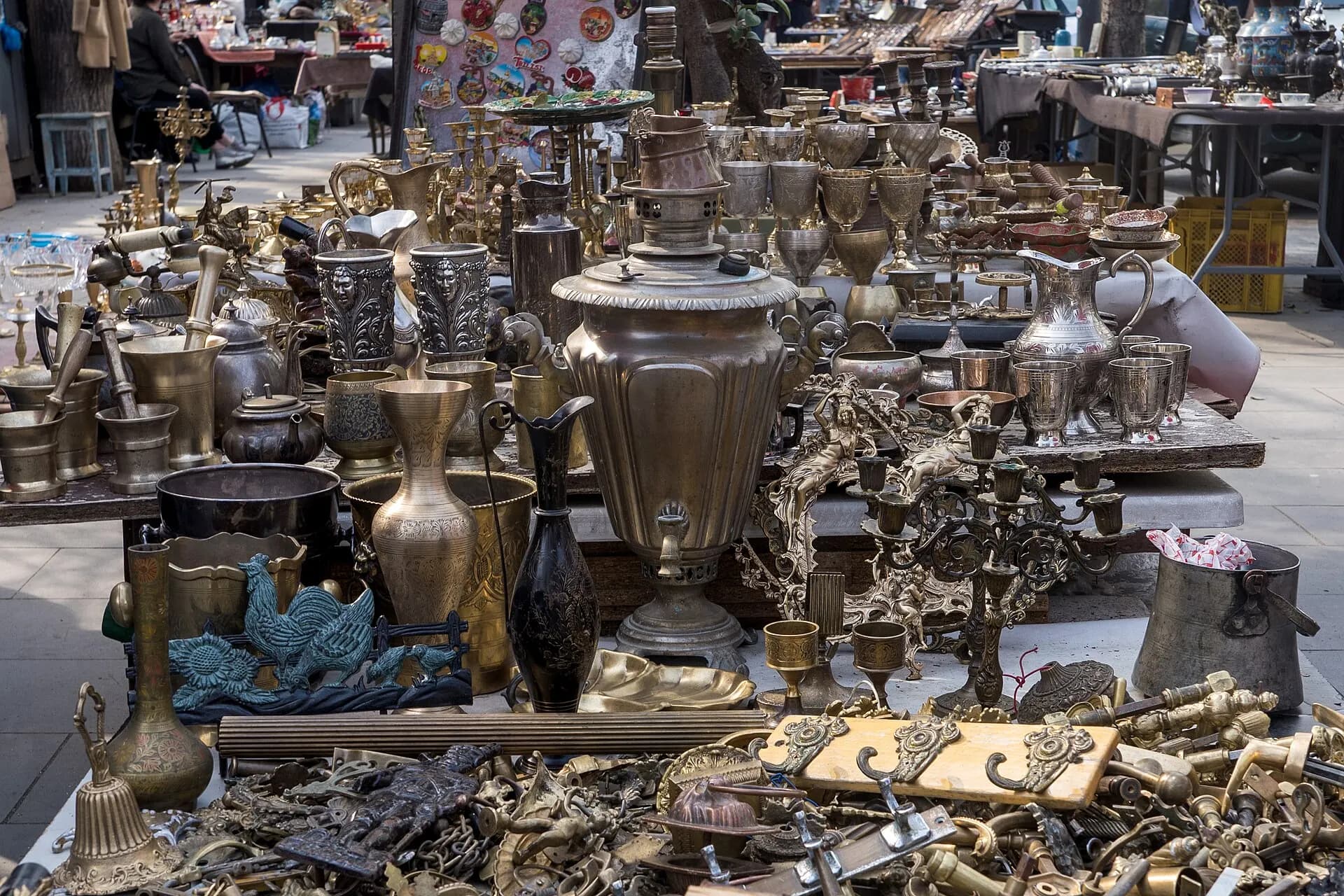
An open-air flea market where locals sell Soviet memorabilia, old cameras, paintings, jewellery and antiques.
- 10
Mtskheta
Photo: Dmitry A. Mottl, CC BY-SA 4.0, via Wikimedia Commons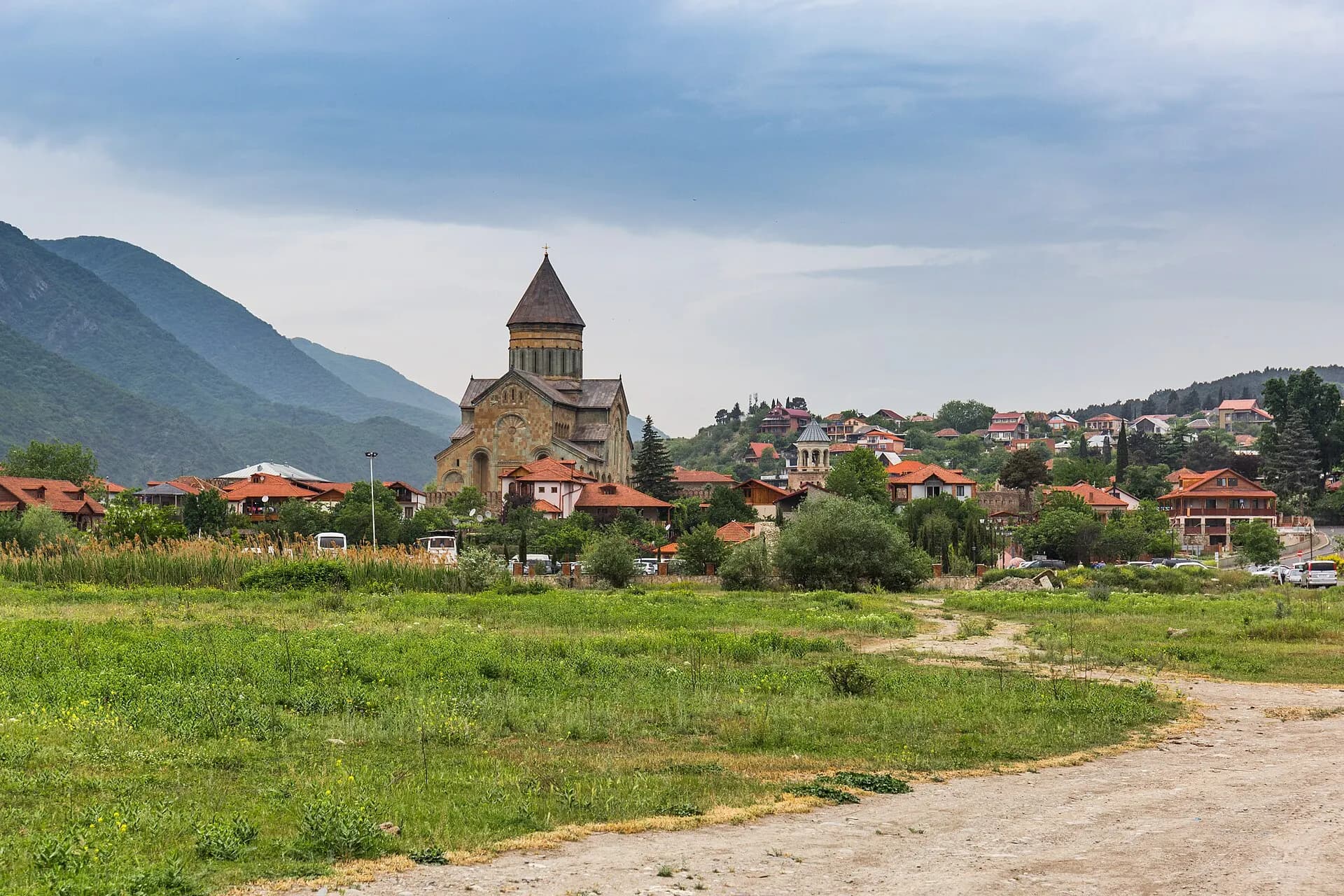
The ancient capital of Georgia, about half an hour north, and a World Heritage Site. Svetitskhoveli Cathedral, said to hold Christ's robe, and the hilltop Jvari Monastery, overlooking the meeting of two rivers, are among the holiest places in Georgia.

When to go
Spring and autumn are the most pleasant seasons, with warm days. Autumn brings the grape harvest, rtveli, celebrated throughout the country. Summer is hot, often above 30 °C, and winter is cold but rarely severe. Tbilisoba, the city's festival, is held in October.
Getting around
The old town is best explored on foot, though its streets are steep. The metro, buses and minibuses are cheap; pay with a Metromoney card or a contactless card. Ride-hailing apps are reliable and inexpensive.
Tbilisi International Airport is about twenty-five minutes from the centre.
Local tips
- Many nationalities can visit Georgia visa-free; check the latest rules.
- Dress modestly in churches; women should cover their heads, often with scarves provided at the door.
- At a supra, a Georgian feast, toasts are led by the tamada, the toastmaster; join in.
- Carry cash in lari for small shops and markets.
- Pavements can be uneven and steep; wear comfortable shoes.
- Tap water is generally safe in the city.
Eat and drink
Georgian food is one of the great discoveries of the Caucasus. Try khachapuri, cheese-filled bread, especially the boat-shaped Adjarian version topped with egg and butter; khinkali, soup-filled dumplings eaten by hand; pkhali, vegetable and walnut pâtés; and churchkhela, strings of nuts dipped in grape juice. Georgia is one of the oldest wine-making regions in the world, with wines fermented in large clay vessels called qvevri.
Day trips
Kakheti, the wine region east of the city, has vineyards, monasteries and the hilltop town of Sighnaghi. The Georgian Military Road leads north into the Caucasus to Kazbegi, where the Gergeti Trinity Church stands below the glaciers of Mount Kazbek. On the way, the Ananuri fortress stands above a turquoise reservoir. To the west, the cave city of Uplistsikhe, carved into rock more than two thousand years ago, and Gori, Stalin's birthplace, with a museum about his life, make an interesting day out. David Gareja, a monastery complex cut into cliffs on the border with Azerbaijan, is a dramatic trip into the semi-desert.
Where to stay
The Old Town and Sololaki, with its grand nineteenth-century mansions and painted entrance halls, put you within walking distance of the baths, the fortress and the best restaurants. Vera, around Rustaveli Avenue, is leafy and residential, with cafés and wine bars. Fabrika, a former Soviet sewing factory turned into a hostel and creative hub with bars and studios, is the centre of the city's young scene. Guesthouses are often run by families, and hospitality is generous.
Wine and nightlife
Tbilisi's wine bars are an easy introduction to Georgian wine, with natural amber wines made in qvevri alongside reds such as Saperavi. The city also has a celebrated electronic music scene, with clubs in old industrial buildings, as well as cosy jazz bars and rooftop terraces with views of the illuminated fortress.