Åland Islands
A demilitarised, Swedish-speaking archipelago of some 6,500 islands between Finland and Sweden, made for slow days by bike and boat.
- Best time to go
- June to August for long light evenings, open museums and frequent ferries; May and September are calmer
- Local time
- –
- Currency
- Euro (EUR)
- Reading time
- 9 min
- Language
- Swedish
Åland is a self-governing region of Finland that feels like a country of its own. It sits at the mouth of the Gulf of Bothnia, roughly halfway between Helsinki and Stockholm, and is made up of around 6,500 islands and skerries, of which about sixty are inhabited. The people speak Swedish, fly a blue flag with a yellow and red cross, issue their own stamps and car number plates, and elect a parliament with wide powers over everything from education to the police. The currency is the euro, as in the rest of Finland.
Its other unusual status is military. Åland has been demilitarised since the end of the Crimean War in 1856, and a League of Nations decision in 1921 confirmed both Finnish sovereignty and the islands' autonomy and neutralisation. There are no garrisons and islanders are exempt from Finnish military service. For visitors the result is a peaceful, low-rise landscape of red wooden farmhouses, pine forest, granite shores polished smooth by the ice, maypoles, medieval stone churches and a small, friendly capital, best explored slowly on two wheels.
The top 8 in Åland Islands
- 1
Mariehamn
Photo: Arild Vågen, CC BY-SA 4.0, via Wikimedia Commons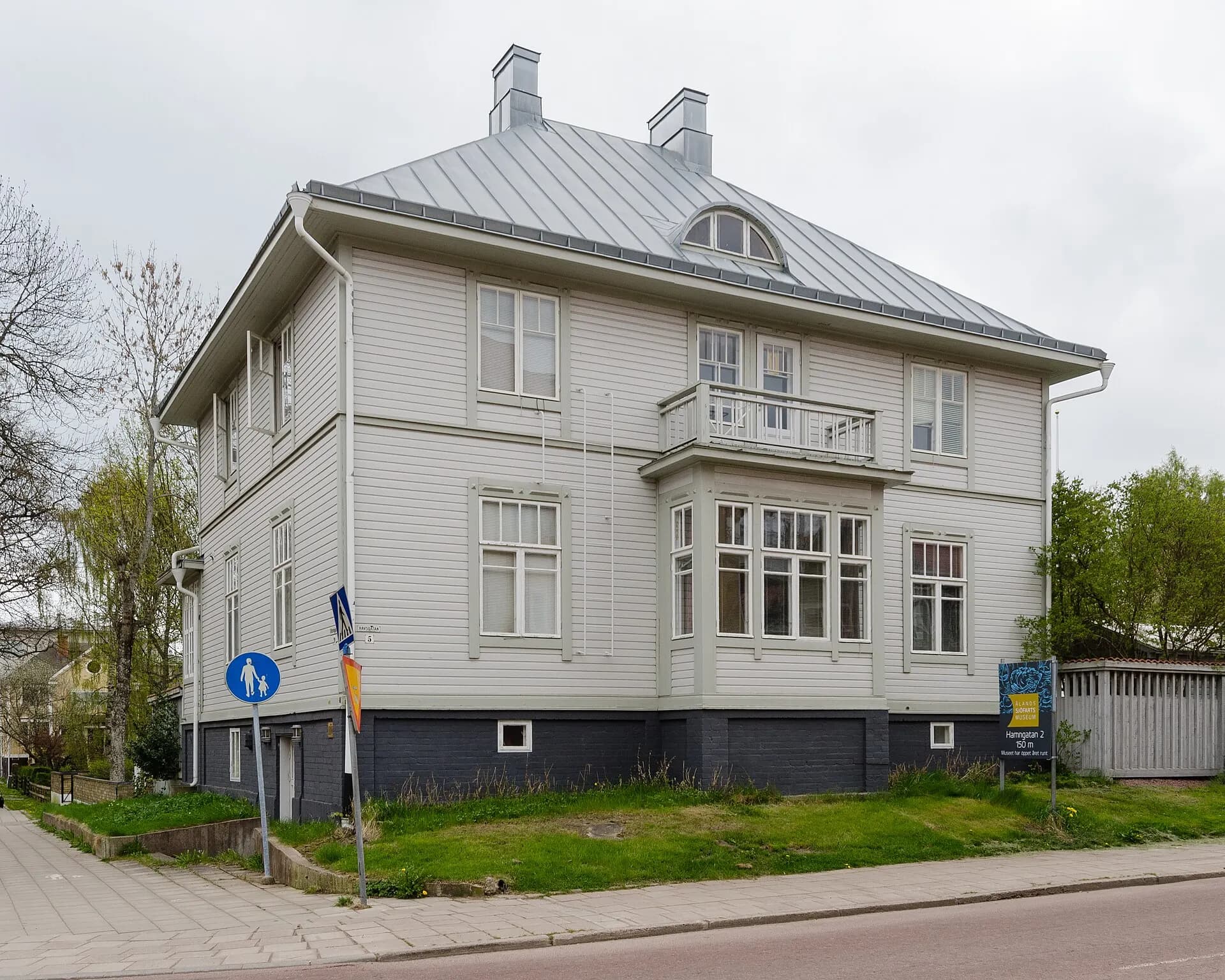
The only town in Åland, founded in 1861 during Russian rule and named after Empress Maria Alexandrovna, has around 12,000 residents and two harbours, one on each side of a narrow peninsula. The West Harbour receives the big ferries from Finland and Sweden; the East Harbour is the guest marina, lined with boat sheds and cafés. Between them runs Esplanadgatan, a long avenue planted with linden trees, and the pedestrian Torggatan with its shops. The town is small enough to cross on foot in twenty minutes and makes the natural base for the whole archipelago.
Ålands museum and Ålands konstmuseum share a building in the centre, telling the islands' story from Stone Age seal hunters through the Viking period and Russian rule to autonomy, with a gallery of Åland painters upstairs.
TipWalk the Sjökvarteret (Maritime Quarter) on the east side, where traditional wooden boats are still built and repaired, and there's a small boatbuilding museum and café.
- 2
Pommern and the Maritime Museum
Photo: Berthold Werner, CC BY-SA 4.0, via Wikimedia Commons
At the West Harbour lies Pommern, a four-masted steel barque built in Glasgow in 1903. She belonged to the Mariehamn shipowner Gustaf Erikson, whose fleet of square-riggers was among the last to carry grain under sail from Australia to Europe in the 1930s, and she is now one of the few ships of her kind still preserved in original condition. Visitors can explore the deck, the crew's cramped quarters, the captain's saloon and the cargo hold, and get a sense of what months at sea round Cape Horn meant.
Right beside her, the Åland Maritime Museum explains why a small island society became one of the great shipowning communities of the Baltic. Models, figureheads, a reconstructed captain's cabin and personal stories of sailors and their families fill the galleries, and shipping still matters to the local economy today.
TipA combined ticket covers the museum and the ship. Pommern is usually open to visitors in the warmer months only, so check the season before you go.
- 3
St Olof's Church, Jomala
Photo: MrFinland, CC BY-SA 3.0, via Wikimedia Commons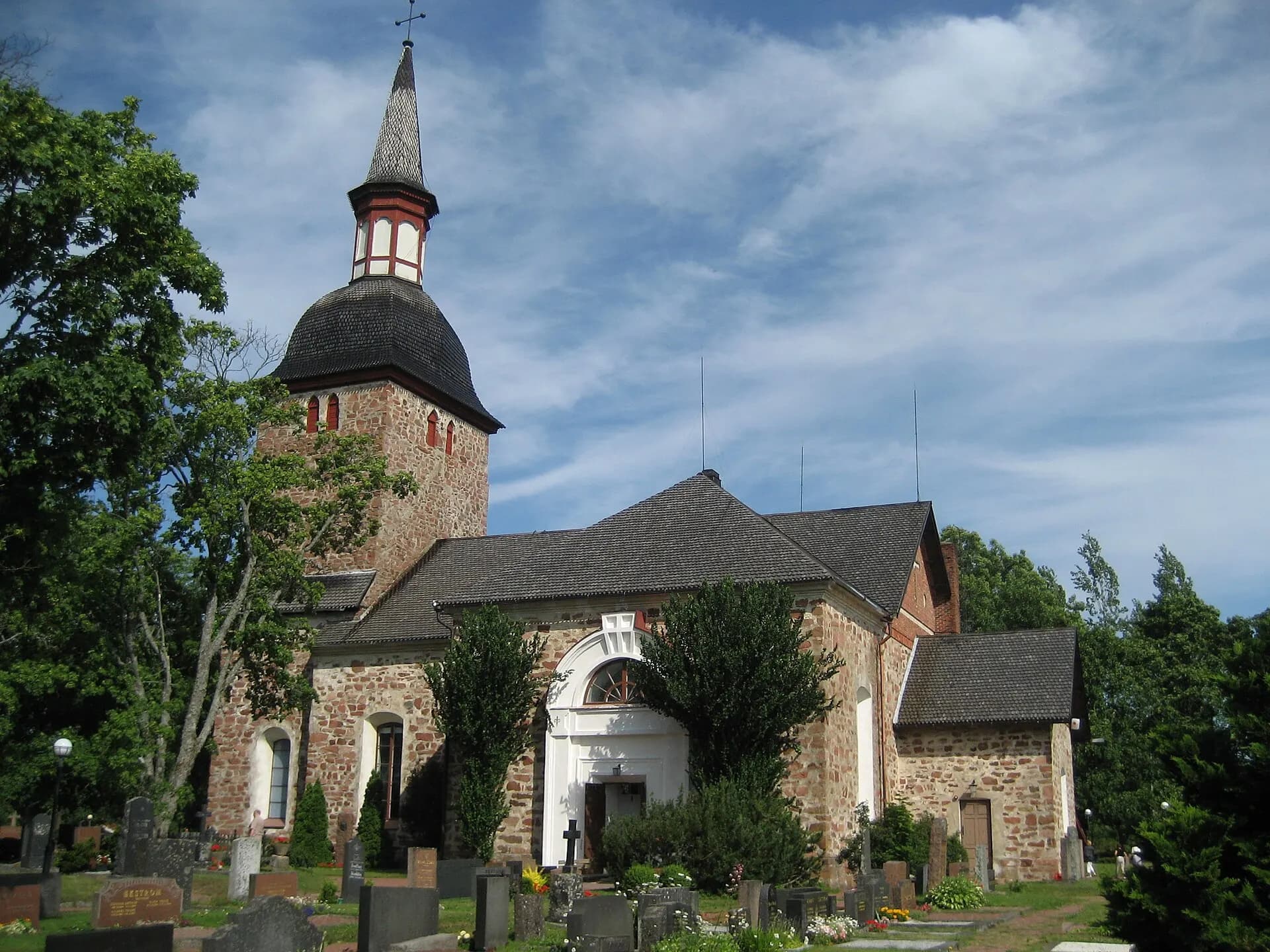
A few kilometres north of Mariehamn, the grey stone church of St Olof in Jomala is often described as the oldest surviving church in Åland, and possibly in all of Finland; its earliest parts are thought to date from the late twelfth or thirteenth century. Inside are medieval wall paintings and old wooden sculptures. Åland has a dozen or so medieval parish churches, a remarkable number for such a small population, and they make natural stops on any cycling or driving loop.
TipChurches are generally open to visitors in summer. Elsewhere, look out for the churches of Sund, Saltvik, Finström and Hammarland.
- 4
Eckerö Post and Customs House
Photo: Vhnk, CC BY-SA 4.0, via Wikimedia Commons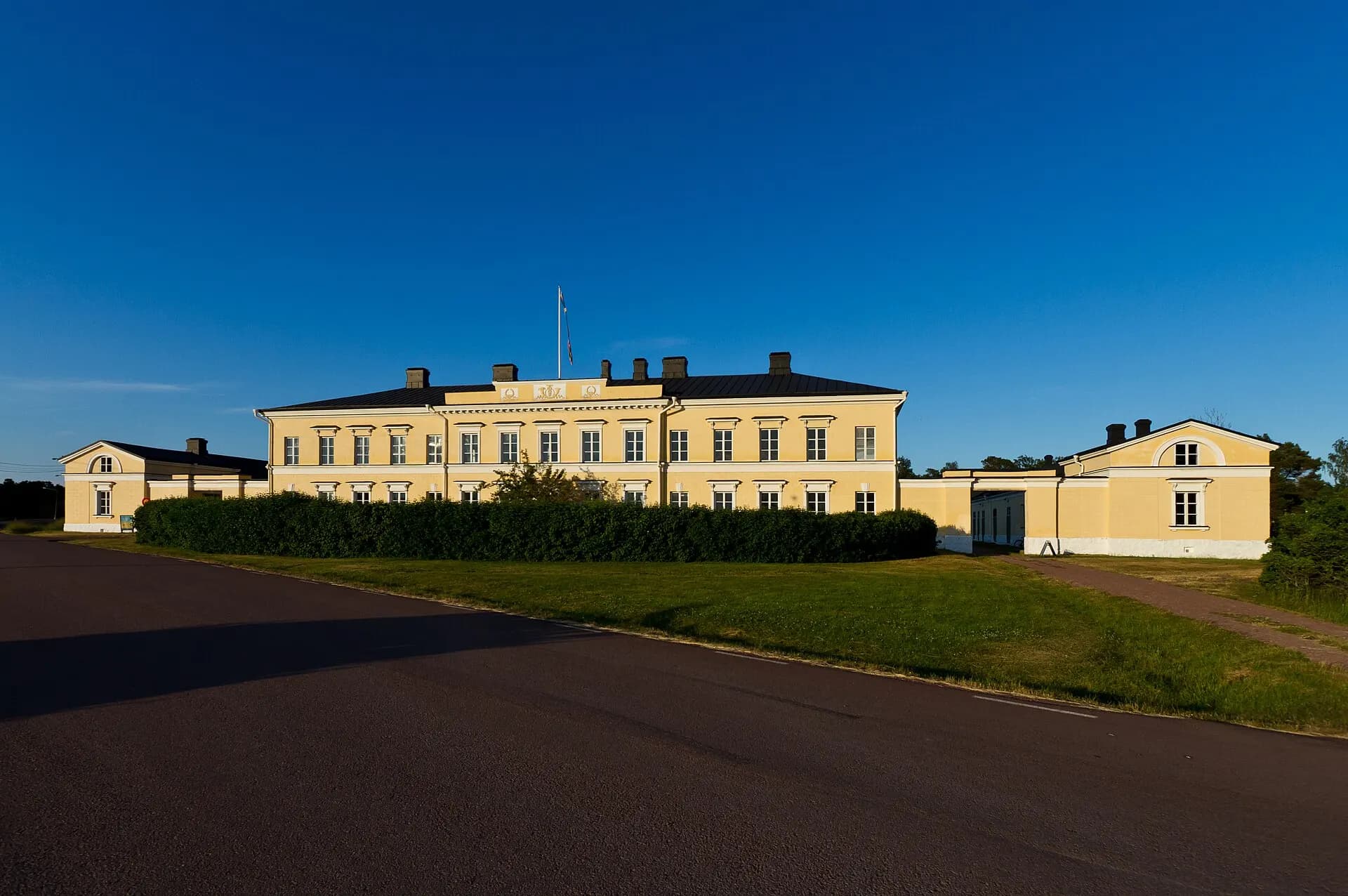
At the western tip of the main island, facing Sweden across the Sea of Åland, stands an unexpectedly grand Empire-style building finished in 1828 to designs associated with Carl Ludvig Engel, the architect of central Helsinki. It was a statement by the Russian Empire, which then ruled Finland: the first thing travellers saw on arriving from Sweden was meant to impress. It served the postal route across the sea, along which mail was rowed and sailed, or dragged over the ice in winter, a hazardous duty that local farmers had to perform.
Today it houses a small post museum, art exhibitions, a café and artists' studios. Every summer a race, the Postrodden, recreates the crossing in open wooden boats from Grisslehamn in Sweden to Eckerö.
TipThe Eckerö Linjen ferry from Grisslehamn docks next door, so this is the first sight if you arrive from Sweden by this route.
- 5
Geta and the Getabergen cliffs
Photo: Håkan Skogsjö, CC BY-SA 4.0, via Wikimedia Commons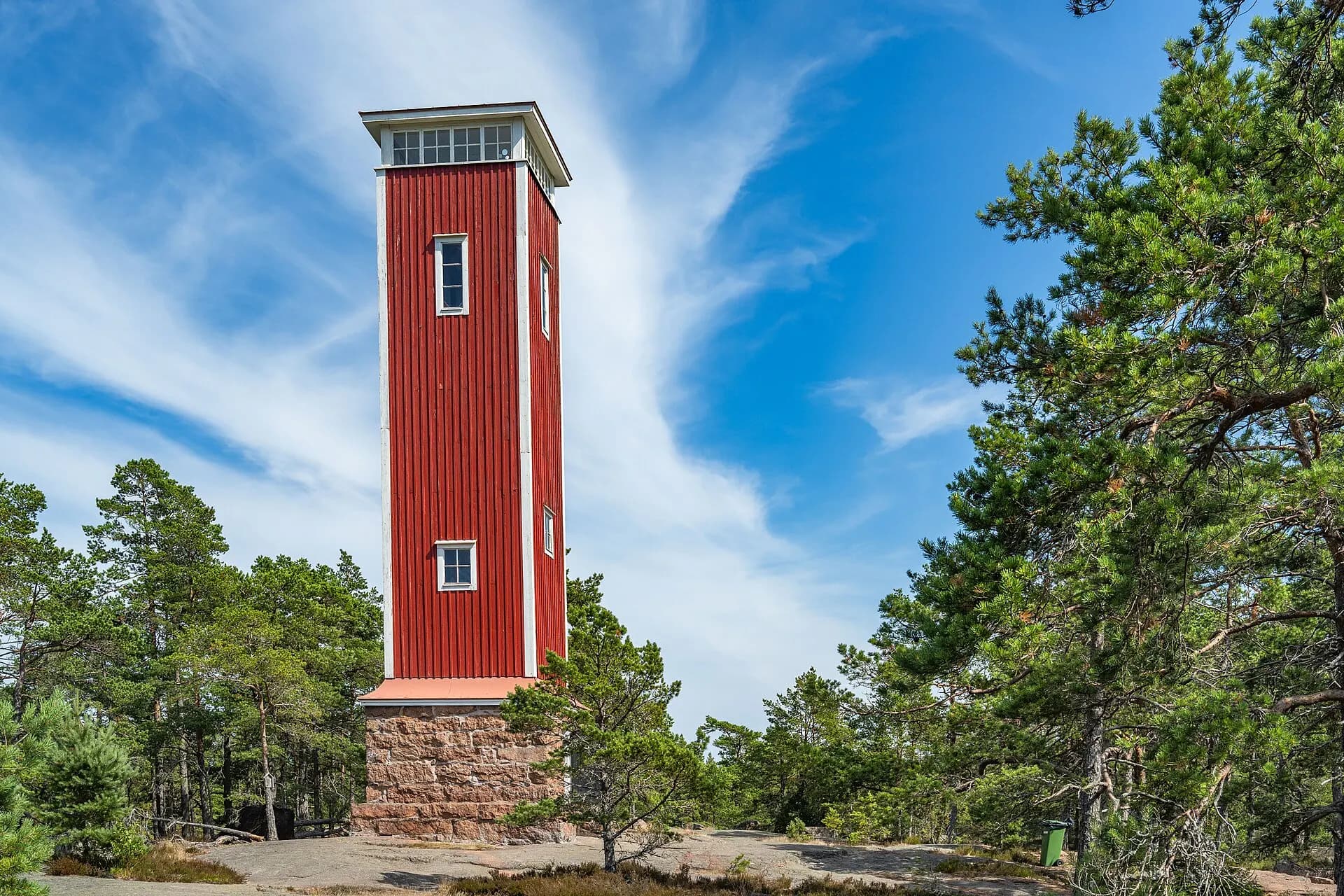
In the far north of the main island, the Geta hills rise to some of the highest ground in Åland, with granite cliffs dropping to the open sea and wide views over scattered islands. A nature trail leads through pine and juniper to Soltuna, where there's a summer café and lookout point, and on to rocky formations including a large boulder cave known as Grottan. It's a fine half-day hike from the car park and one of the wildest corners of the islands.
TipWear proper shoes: the paths cross smooth rock slabs that are slippery when wet.
- 6
Kastelholm Castle and Jan Karlsgården
Photo: Västgöten, CC BY-SA 3.0, via Wikimedia Commons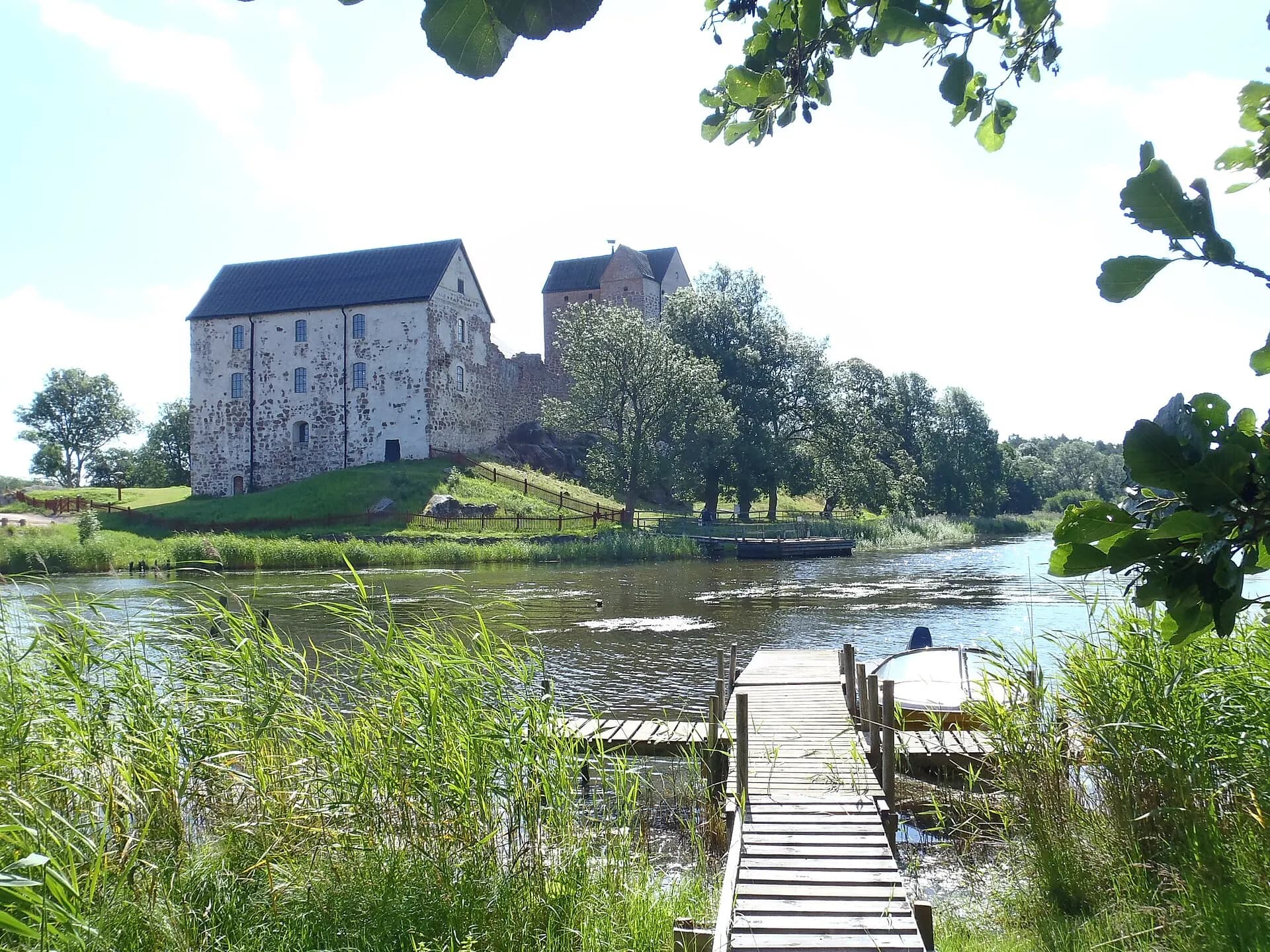
Åland's only medieval castle stands on a former islet in an inlet in Sund, about twenty minutes' drive north-east of Mariehamn. First mentioned in the late fourteenth century, it was the seat of Swedish royal administration over the islands, and its partly restored stone halls and towers tell stories of royal visits, prisoners and fires. The ticket also includes the Vita Björn prison museum, a former jail with cells furnished in the style of different eras.
Next door, the free open-air museum of Jan Karlsgården gathers old wooden farm buildings from around Åland: a farmhouse, barns, windmills and a smoke sauna, with a tall Åland maypole at the centre. Its Midsummer celebrations, when the maypole is dressed and raised, are a highlight of the island year.
TipThe castle is open mainly from May to September. There's a golf course and a restaurant nearby, and the medieval church of Sund is just down the road.
- 7
Bomarsund fortress ruins
Photo: Håkan Skogsjö, CC BY-SA 4.0, via Wikimedia Commons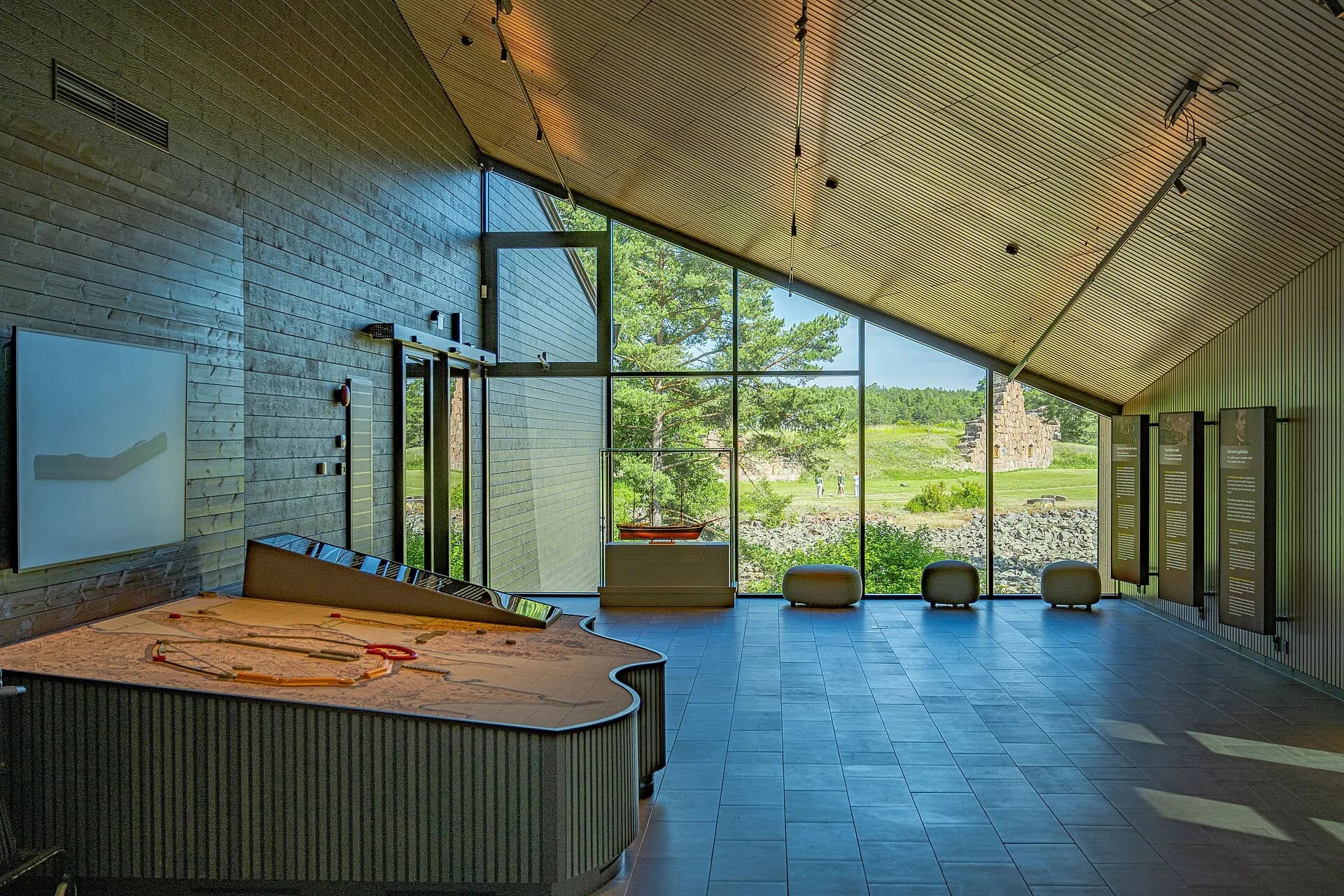
Here are the remains of a huge fortress the Russian Empire began building in the 1830s to command the sea routes towards Stockholm. It was never finished: in August 1854, during the Crimean War, a British and French fleet bombarded it and forced it to surrender, then blew up the main fort. The peace settlement of 1856 forbade any new fortifications, the origin of Åland's demilitarised status. The curved granite walls of the main fortress, the remains of towers and the old garrison cemeteries are scattered over several kilometres on either side of the strait, free to explore.
TipA visitor centre at the guest harbour on Prästö, across the bridge, has displays and models explaining what the fortress would have looked like.
- 8
Kökar
Photo: J Hokkanen, CC BY-SA 4.0, via Wikimedia Commons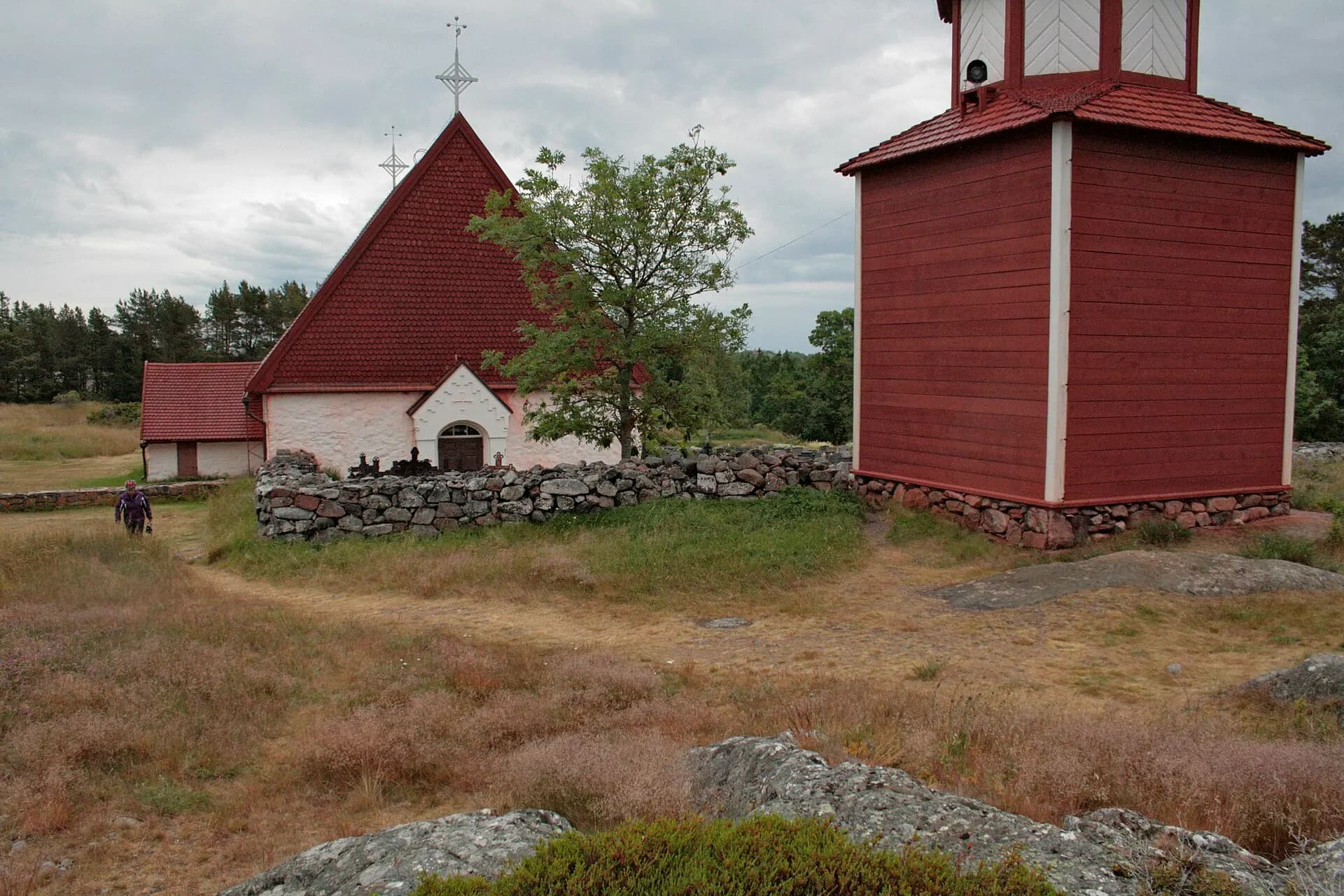
Kökar is the outermost inhabited island group in the south-east, a treeless world of bare, pink granite, low heath and narrow inlets, home to a few hundred people. On the islet of Hamnö are the excavated remains of a medieval Franciscan friary, and the white parish church built in the 1780s on its site is a landmark for boats. There are walking routes over the rocks, a local museum, a handful of guesthouses and restaurants, and a deep sense of being at the edge of the open Baltic.
TipÅlandstrafiken ferries reach Kökar from Långnäs on the main island, a journey of a couple of hours through the southern archipelago. Some ferries also link onwards to the Turku archipelago in Finland, so you can island-hop all the way.
When to go
Summer is the main season. From June to August days are long, with only a brief dusk around Midsummer, sea temperatures become bearable for swimming, museums and island cafés open, and ferry timetables are at their fullest. Midsummer weekend is the great celebration, with maypoles raised in every village. July is the busiest month, when Finnish and Swedish holidaymakers arrive with boats and caravans, so book accommodation early. May and September are quieter and often bright, though some seasonal businesses are closed. Winter is dark and windy, with little open outside Mariehamn, but in cold years the sea freezes and ice roads have occasionally linked nearby islands.
Getting around
Most visitors arrive by sea. Large ferries operated by Viking Line and Tallink Silja call at Mariehamn or Långnäs on routes between Stockholm and Turku or Helsinki, and Finnlines also serves Långnäs. Eckerö Linjen sails from Grisslehamn, north of Stockholm, to Eckerö, a much shorter crossing, and has connecting buses from Stockholm. Because Åland lies outside the EU's VAT area, tax-free sales are allowed on these ferries, which is one reason so many routes stop here. Mariehamn also has a small airport with flights to the Finnish and Swedish mainland.
On the islands, the main island group is linked by bridges and short cable ferries, and buses run from Mariehamn to most villages, though not frequently. A car gives the most freedom, but the islands are flat, distances are short and traffic is light, so bicycles are ideal. The free or cheap Ålandstrafiken road ferries link the outer islands; some routes need advance booking in summer, especially for cars.
Local tips
- Swedish is the official language. Most people also speak good English, and many Finnish speakers live here, but Swedish greetings go down well.
- Allemansrätten, the Nordic right of public access, lets you walk and pick berries on most land, but camp away from homes and don't light fires during dry spells.
- Shops close earlier than in big cities, and many island cafés and restaurants open only from Midsummer to mid-August.
- Card payment is accepted almost everywhere, even at small farm shops and kiosks.
- If you're arriving on a ferry from Sweden, carry ID; Åland is part of Finland but outside the EU tax area, and customs limits apply to alcohol and tobacco.
- Bring a light waterproof and a warm layer even in summer: sea breezes on the outer islands are cool.
Cycling the archipelago
Åland is one of the best places in the Nordic countries for a cycling holiday. Signposted cycle routes cover the main island, with long stretches of quiet road and separate cycle paths near Mariehamn, and bikes can be hired in town. A classic loop of a day or two takes in Jomala, Finström, Geta, Saltvik, Sund with Kastelholm and Bomarsund, and back to Mariehamn. More ambitious riders take the bicycle ferries and road ferries east through Vårdö, Kumlinge and Brändö, or south through Föglö, Sottunga and Kökar, staying in guesthouses and camping on islands that see few cars. Check ferry timetables carefully, as some sailings are only a few times a day and missing one can mean a long wait.
Eat and drink
Åland pancake, ålandspannkaka, is the dish everyone tries: a dense, baked semolina or rice pudding, flavoured with cardamom and served with prune purée and whipped cream. Svartbröd, a sweet, dark rye bread baked slowly with malt and syrup, is traditionally eaten with herring and salted fish. Apples are a big local crop, turned into juice, cider and spirits, and Åland has small breweries and a distillery. Fish from the surrounding waters, including perch, pike-perch and Baltic herring, appears on most menus. Farm shops and summer markets sell local cheese, honey and smoked fish. A late-summer harvest festival, Skördefesten, opens farms and producers to visitors.
Where to stay
Mariehamn has the widest choice of hotels, restaurants and services, and is the logical base if you don't have a car. Outside town, there are cottages, farm stays, guesthouses and camping sites across the main island, many in waterside spots with their own sauna and rowing boat. On the outer islands such as Kökar, Kumlinge and Brändö, accommodation is limited to a few guesthouses and cottages, so book ahead for July. Guest harbours throughout the archipelago serve visitors arriving by sailing boat.
A short history of autonomy
Åland was part of Sweden for centuries until 1809, when Sweden lost Finland, Åland included, to the Russian Empire. After Finland gained independence in 1917, many islanders wanted to rejoin Sweden. The League of Nations settled the dispute in 1921: Åland would stay with Finland, but with extensive self-government, guarantees for the Swedish language and culture, and confirmation of its demilitarised and neutral status. The islands' first parliament met in 1922, a date still celebrated on 9 June as Autonomy Day. Today the arrangement is often cited as a model for resolving disputes between states and minorities.