Zanzibar
The winding lanes and carved doors of Stone Town, white beaches on the Indian Ocean, and the scent of cloves on the breeze.
- Best time to go
- June to October and late December to February, the dry seasons
- Local time
- –
- Currency
- Tanzanian Shilling (TZS)
- Reading time
- 4 min
- Language
- Swahili and English
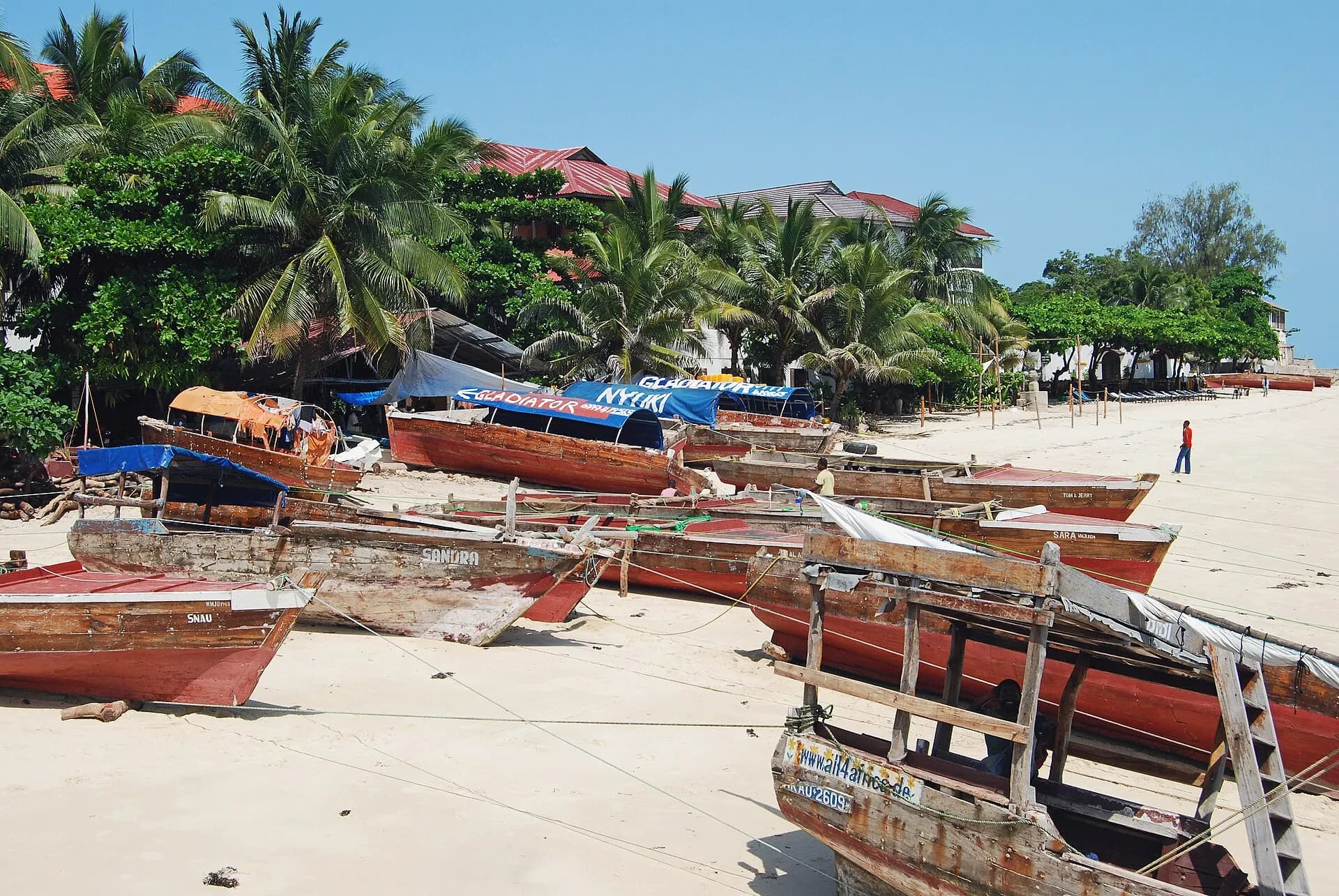
Zanzibar, an archipelago off the coast of Tanzania, was for centuries a crossroads of the Indian Ocean, where Swahili, Arab, Persian, Indian and European influences met through trade in spices, ivory and, tragically, enslaved people. In the nineteenth century, the Sultans of Oman made it their capital, and the island became the world's leading producer of cloves.
Today, its main island, Unguja, combines the historic port of Stone Town, a World Heritage Site, with beaches of white sand and turquoise water on its east and north coasts. It's a Muslim society with its own customs, a relaxed pace of life, and a strong Swahili culture expressed in its food, music and architecture.
The top 9 in Zanzibar
- 1
Stone Town
Photo: Diego Delso, CC BY-SA 4.0, via Wikimedia Commons
The old town of Zanzibar City is a maze of narrow alleys, mosques, markets and coral-stone houses with elaborately carved wooden doors, some decorated with brass studs. Getting lost in its lanes, where children play and men sip coffee on stone benches, is the best way to explore it.
TipDress modestly in Stone Town, with shoulders and knees covered.
- 2
The Old Fort and the House of Wonders
Photo: Luganosamwel, CC BY-SA 4.0, via Wikimedia Commons
On the waterfront stand the Old Fort, built by the Omanis in the late seventeenth century and now a cultural centre, and the House of Wonders, the sultan's ceremonial palace from 1883, the first building in East Africa with electricity. The House of Wonders has been under restoration after a partial collapse.
- 3
Forodhani Gardens
Photo: Diego Delso, CC BY-SA 4.0, via Wikimedia Commons
A waterfront park in front of the Old Fort that becomes a lively night food market at sunset, with stalls grilling seafood, kebabs and "Zanzibar pizza", a stuffed, folded pancake cooked on a griddle.
- 4
The Old Slave Market and Anglican Cathedral
Photo: Erasmus Kamugisha, CC BY-SA 4.0, via Wikimedia Commons
The site of one of the last open slave markets in the world, closed in 1873. A cathedral was built on the spot, its altar said to stand where the whipping post once was. A moving museum and memorial, with underground chambers where enslaved people were held, tells the history of the slave trade.
- 5
A spice farm tour
Zanzibar's fertile interior grows cloves, nutmeg, cinnamon, vanilla, pepper and fruit. Tours of spice farms near Stone Town let you smell, taste and learn about the plants, and often end with a local lunch.
- 6
Prison Island
Photo: Luganosamwel, CC BY-SA 4.0, via Wikimedia Commons
A small island a short boat ride from Stone Town, with a jail built in the 1890s but used as a quarantine station, and a colony of giant Aldabra tortoises, some more than a hundred years old. The surrounding water is good for snorkelling.
- 7
Nungwi and Kendwa
Photo: ObonyoML, CC BY-SA 4.0, via Wikimedia Commons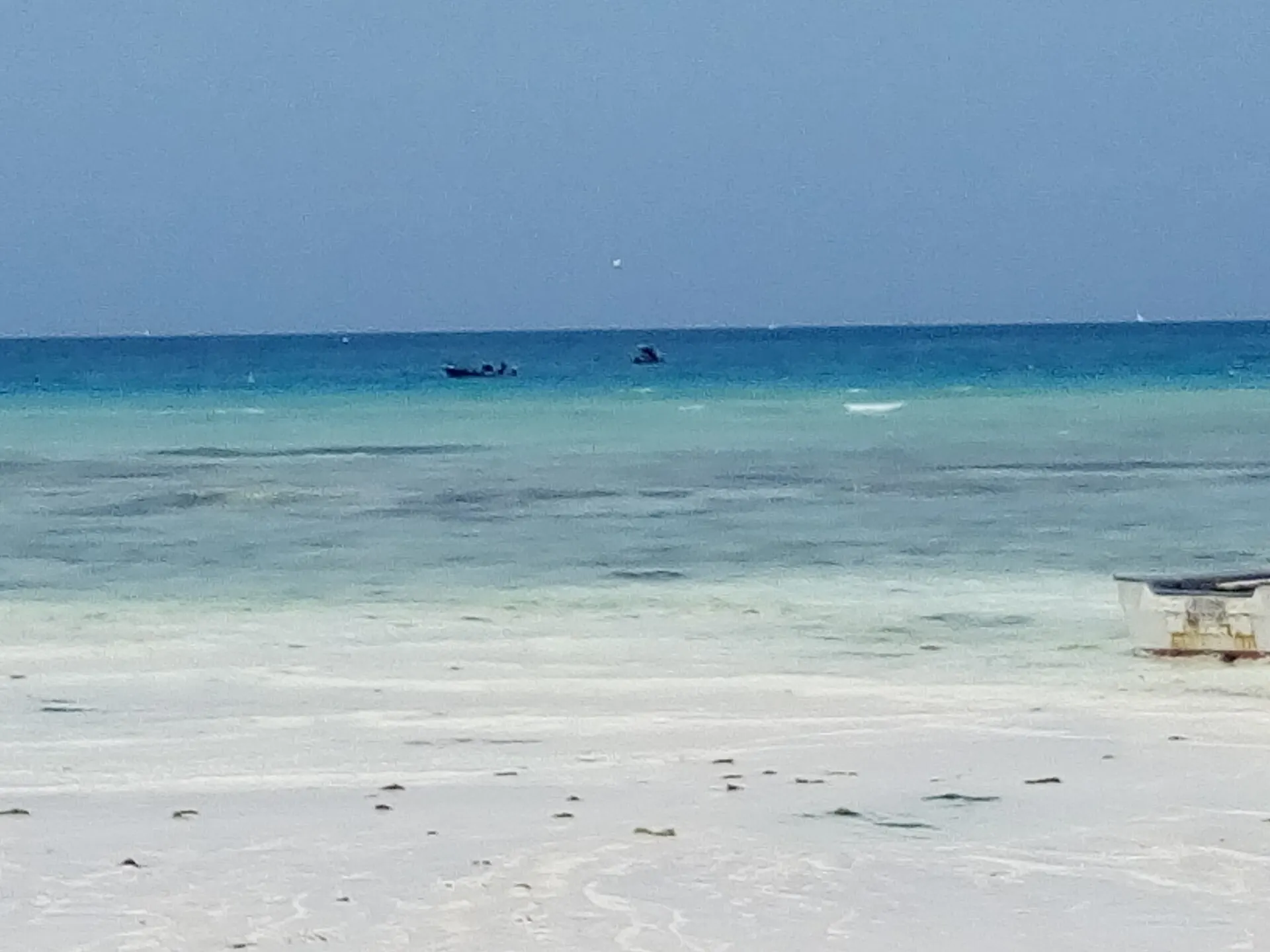
Beaches at the northern tip of the island where the tide changes least, so you can swim at any time of day. They're the liveliest beach areas, with sunset dhow cruises and boat builders still shaping traditional wooden dhows by hand in Nungwi.
- 8
Paje and the east coast
Photo: Rachel Clara Reed, CC BY-SA 4.0, via Wikimedia Commons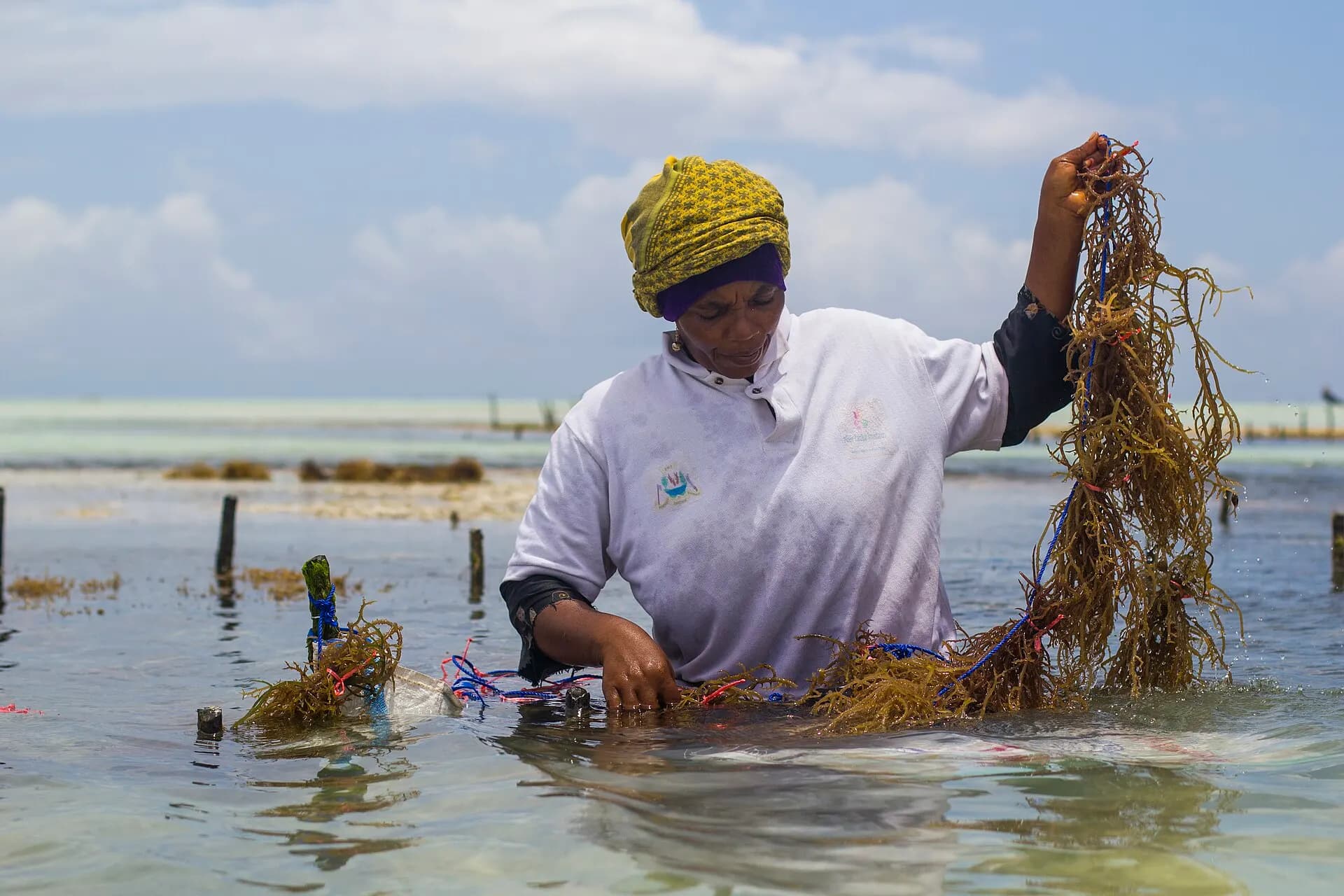
Long white beaches lined with palms, facing a shallow lagoon and an offshore reef. The tide goes out a long way, revealing seaweed farms tended by local women. Paje is a world-class kitesurfing spot, and nearby Jambiani and Bwejuu are quieter.
TipCheck the tide times; at low tide on the east coast, the sea retreats so far that swimming isn't possible.
- 9
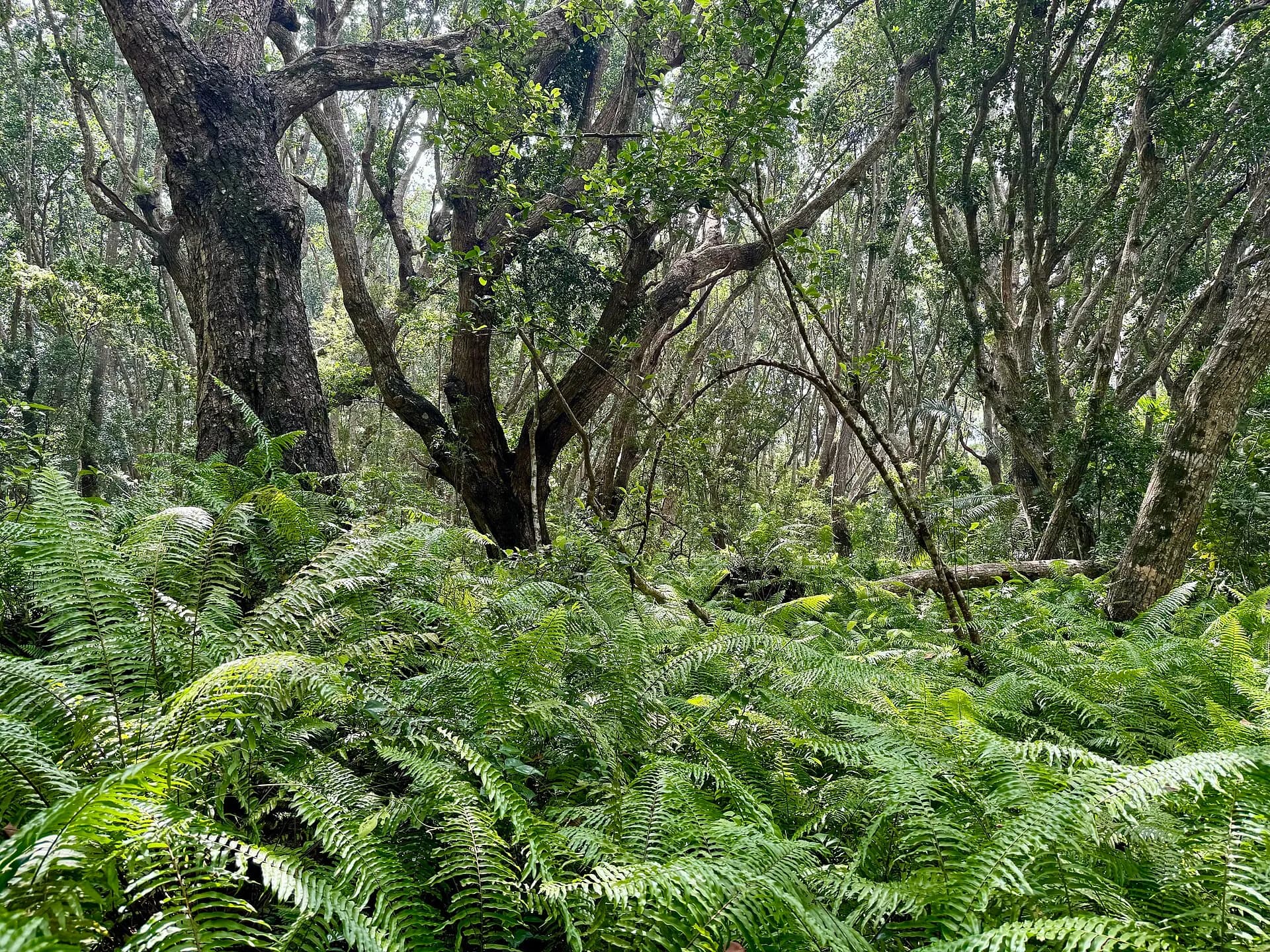
When to go
The main dry season, from June to October, has sunny days and cooler temperatures. December to February is hot and mostly dry, a popular time for beach holidays. The long rains fall from March to May, when some hotels close, and the short rains come in November. During Ramadan, life slows during the day and some restaurants close until sunset, but the evenings are festive.
Getting around
Taxis and private drivers are the easiest way to get around the island; agree the fare beforehand. Dala-dalas, shared minibuses, are cheap but slow and crowded. Renting a car or scooter requires a local permit. Stone Town is best explored on foot.
Abeid Amani Karume International Airport is a short drive from Stone Town, with direct flights from Europe and the Gulf. Fast ferries link Stone Town with Dar es Salaam in about two hours.
Local tips
- Check entry requirements; many visitors can apply for a Tanzanian e-visa online.
- Dress modestly away from beach resorts, covering shoulders and knees; swimwear is for the beach only.
- Ask before photographing people, especially women.
- Public displays of affection are frowned upon.
- Avoid single-use plastic bags, which are banned in Tanzania.
- Agree prices for boat trips, tours and taxis before you set off.
- Swahili greetings go a long way: "jambo" or "mambo" for hello, and "asante" for thank you.
- Choose reputable operators for dolphin trips, and avoid boats that chase or crowd the animals.
Eat and drink
Zanzibari cooking blends African, Arab and Indian flavours and is rich with spices. Try pilau rice, biryani, octopus curry, grilled fish with coconut sauce, and urojo, a tangy "Zanzibar mix" soup. Snack on mandazi, fried dough, and sugarcane juice pressed with ginger and lime. Spiced coffee, served in tiny cups from long-spouted pots, is drunk throughout the day.
Beyond Zanzibar
Mnemba Atoll, off the north-east coast, is a marine conservation area with some of the best snorkelling and diving in East Africa, with turtles and dolphins. Pemba, the northern island of the archipelago, is greener, hillier and far less visited. Many travellers combine Zanzibar with a safari on the mainland, in the Serengeti, Ngorongoro Crater or Selous (Nyerere) National Park.
Where to stay
Spend at least a night or two in Stone Town, in a restored merchant's house or boutique hotel with a rooftop terrace, to enjoy the old town after the day-trippers leave. For the beach, the north coast, around Nungwi and Kendwa, has the most swimmable water and lively sunsets. The east coast, from Matemwe down to Paje and Jambiani, is quieter, with small lodges, kitesurfing and dramatic tides, while the south-west, around Michamvi and Kizimkazi, has secluded resorts.