Serengeti
Endless golden plains and the greatest wildlife spectacle on earth, the Great Migration.
- Best time to go
- June to October for dry-season game viewing; January to February for calving in the south
- Local time
- –
- Currency
- Tanzanian Shilling (TZS)
- Reading time
- 4 min
- Language
- Swahili and English
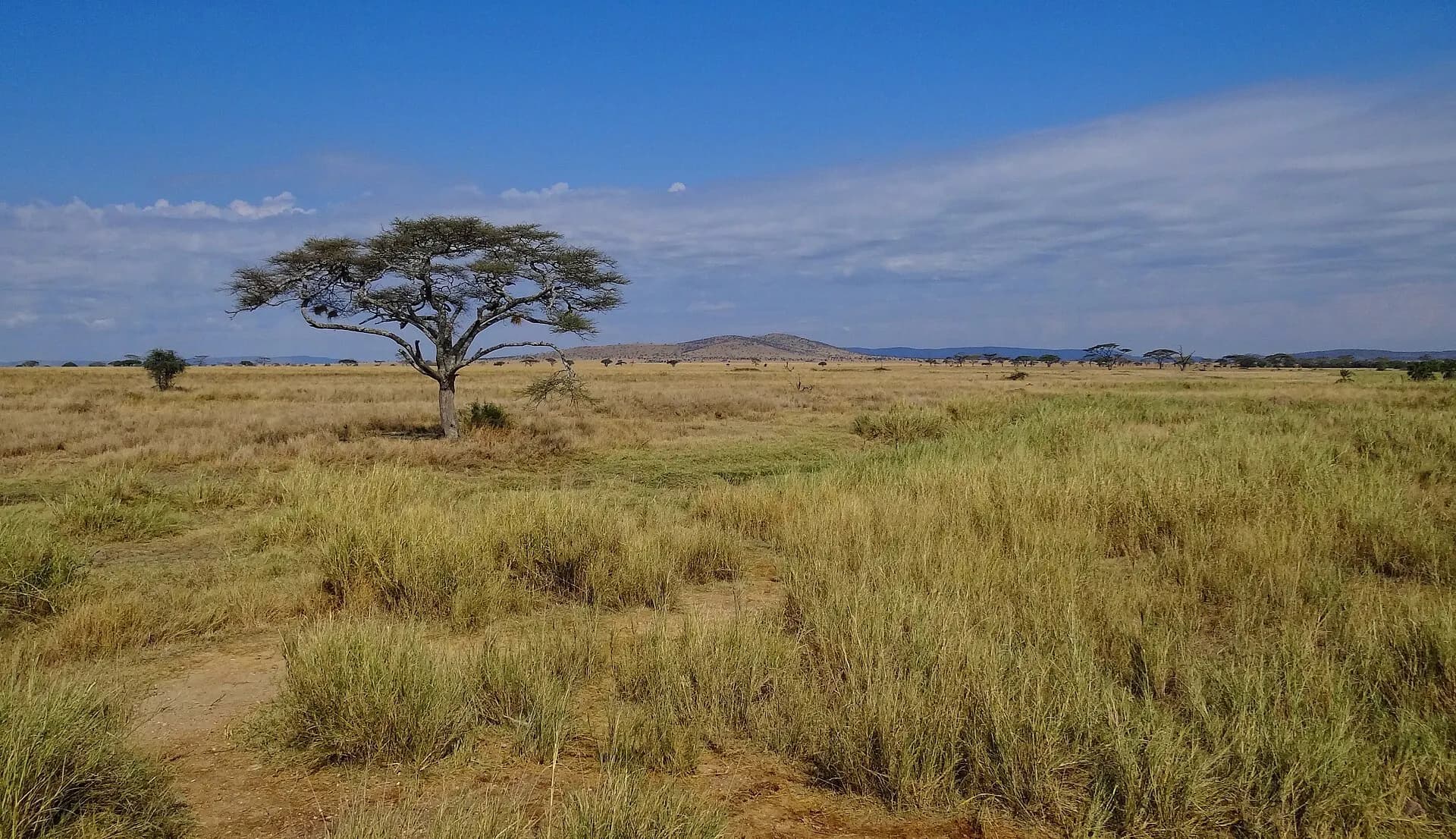
The Serengeti National Park, in northern Tanzania, protects a vast sweep of grassland, woodland and rocky outcrops called kopjes, famous for the greatest wildlife migration on earth. More than a million wildebeest, along with hundreds of thousands of zebra and gazelle, move in a great annual circuit through the Serengeti and Kenya's Maasai Mara, followed by lions, leopards, cheetahs and hyenas. The park is a World Heritage Site.
Its name comes from the Maasai word for "endless plains", and its scale is extraordinary. Most visitors combine it with the Ngorongoro Crater on a safari circuit from Arusha, staying in lodges and tented camps across the park.
The top 8 in Serengeti
- 1
The central Serengeti (Seronera)
Photo: Christoph Strässler, CC BY-SA 2.0, via Wikimedia Commons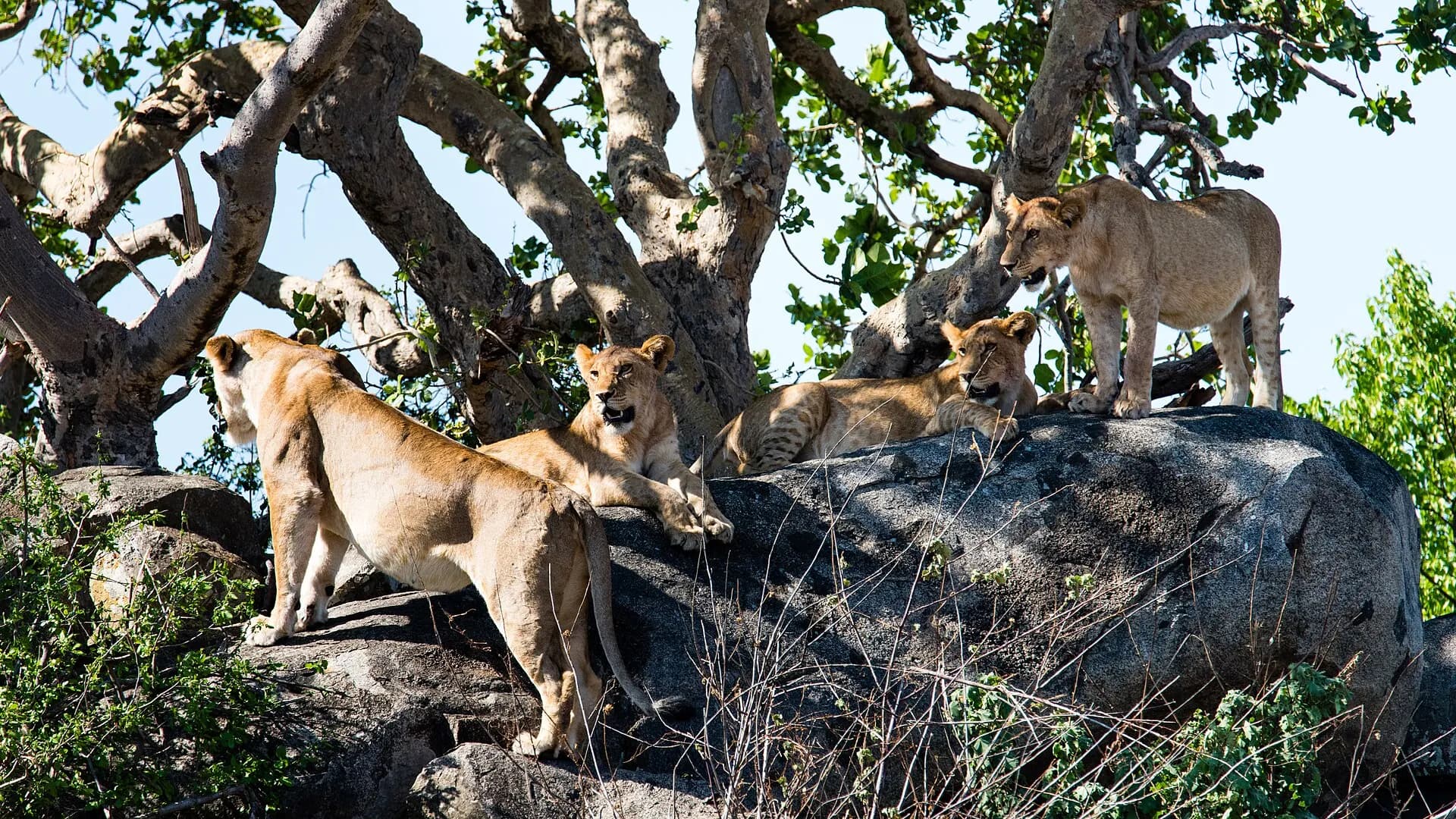
The heart of the park, around the Seronera River valley, has year-round water and some of the best resident wildlife viewing in Africa, especially for big cats, with lions, leopards in the sausage trees and cheetahs on the plains.
- 2
The southern plains and Ndutu
From about January to March, the migrating herds gather on the short-grass plains of the southern Serengeti and Ndutu to give birth, with thousands of calves born each day, attracting predators in great numbers.
- 3
The Grumeti River
In the western corridor, the herds usually cross the Grumeti River around June and July, braving large crocodiles, before heading north.
- 4
The Mara River crossings
Photo: Charles J. Sharp, CC BY-SA 4.0, via Wikimedia Commons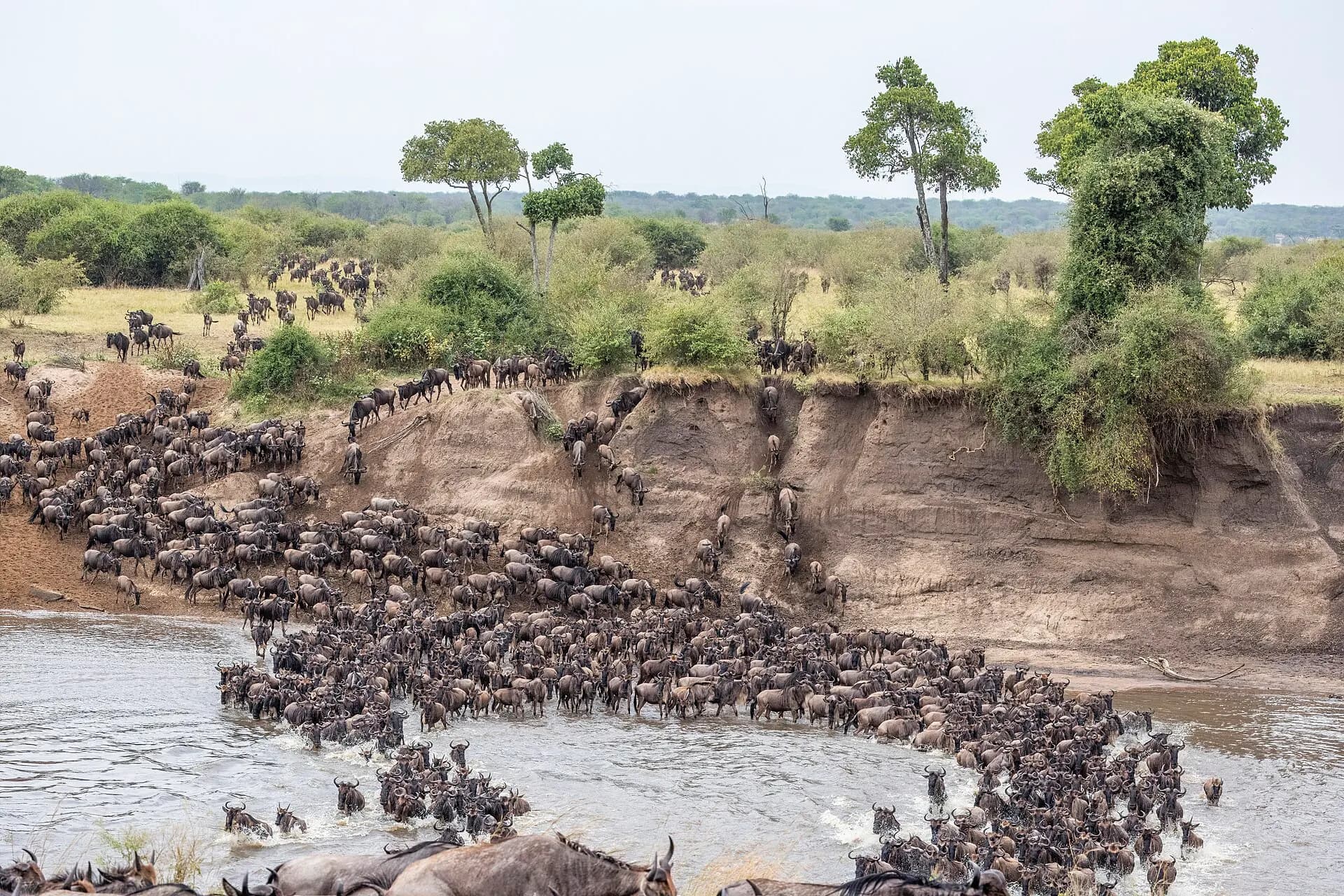
In the far north of the park, from about July to October, the herds cross the Mara River, often in dramatic, chaotic surges, a spectacle shared with Kenya's Maasai Mara.
TipCrossings are unpredictable; staying several nights in the north greatly improves your chances.
- 5
The Moru Kopjes
Granite outcrops in the south-central Serengeti, home to lions and other predators, with Maasai rock paintings and a rock that rings like a gong when struck.
- 6
A balloon safari
Photo: Harvey Barrison from Massapequa, NY, USA, CC BY-SA 2.0, via Wikimedia Commons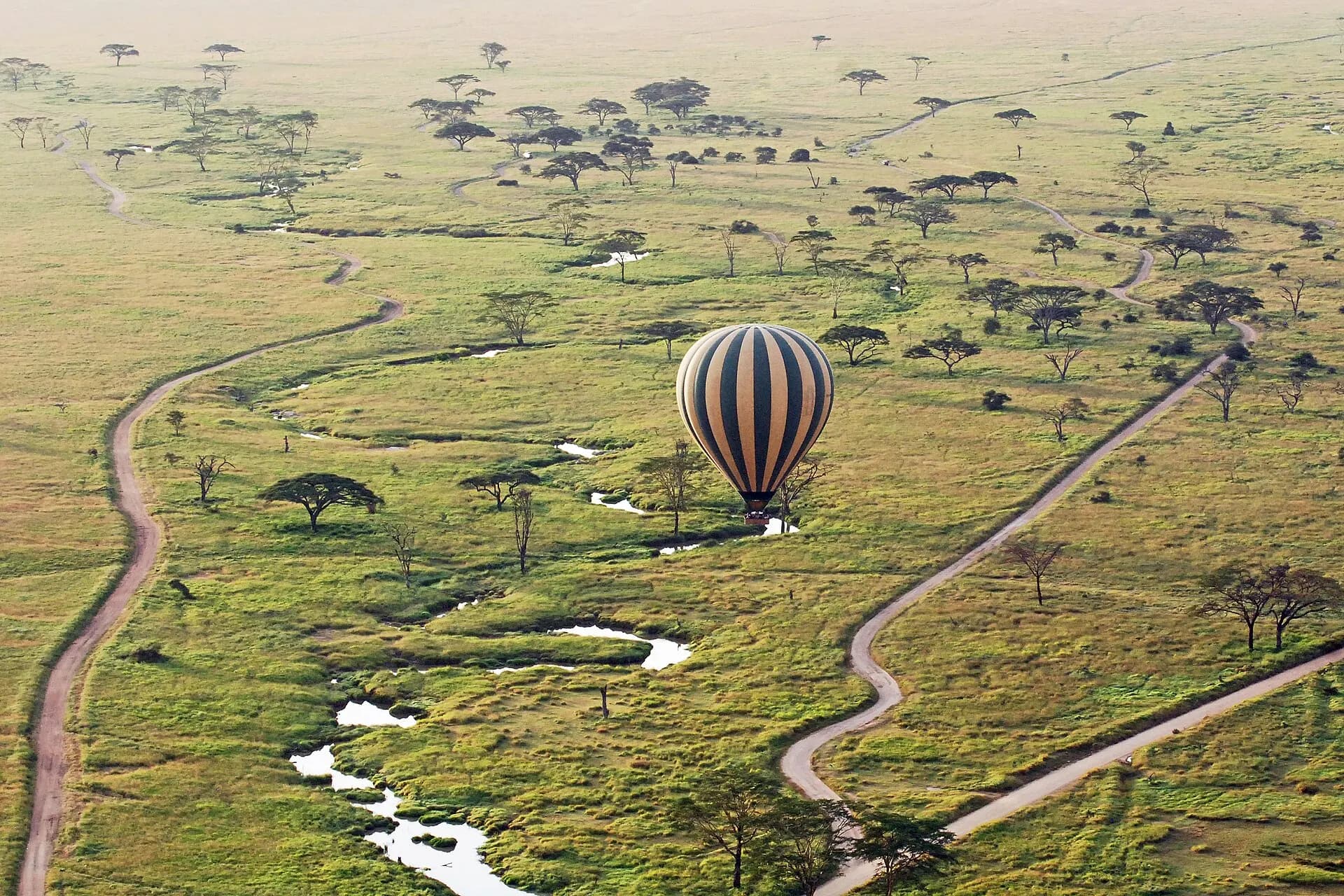
Hot-air balloon flights at dawn drift over the plains and the herds, followed by a bush breakfast, one of the most memorable ways to see the Serengeti.
- 7
Ngorongoro Crater
Photo: Jerry Michalski, CC BY-SA 2.0, via Wikimedia Commons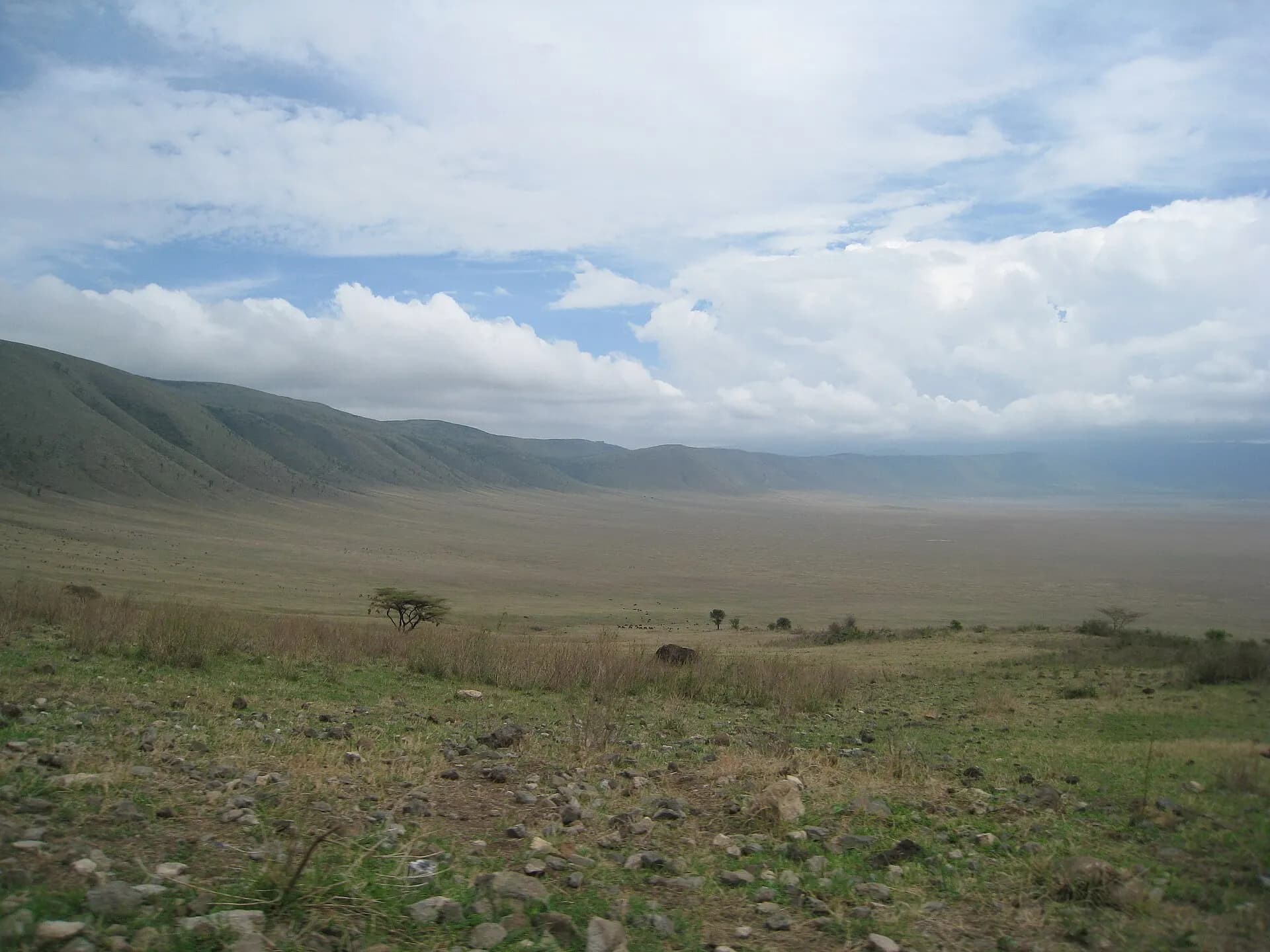
A vast volcanic caldera on the way to the Serengeti, its floor home to dense populations of wildlife, including one of the best chances in Tanzania to see black rhinos. It's part of the Ngorongoro Conservation Area, where Maasai people live alongside wildlife.
- 8
Olduvai Gorge
Photo: Guus Gorter, CC BY-SA 4.0, via Wikimedia Commons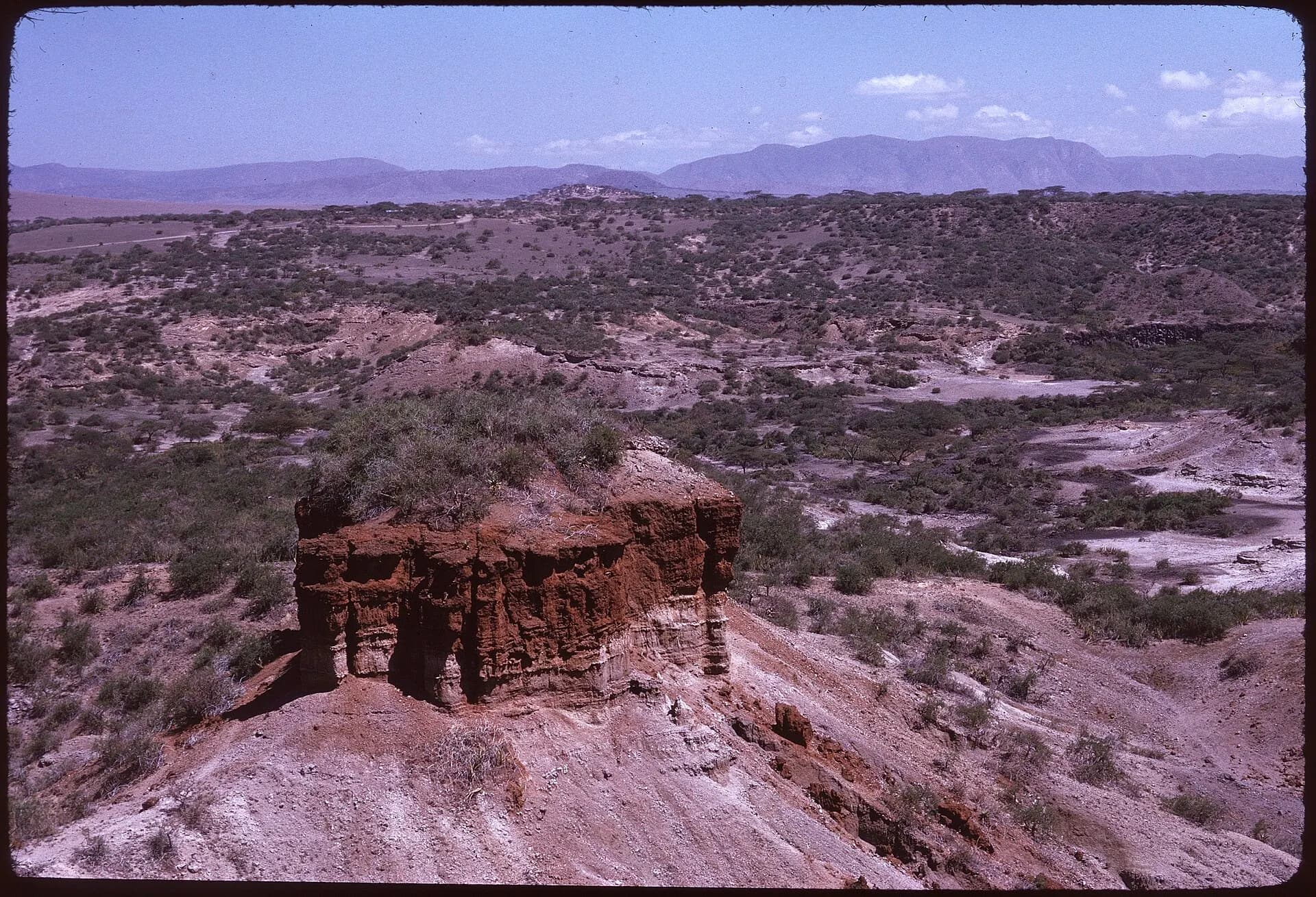
A ravine between Ngorongoro and the Serengeti where fossils and stone tools of early humans have been found, with a museum explaining its importance for our understanding of human origins.
When to go
The Serengeti is excellent all year, but the migration's location changes with the seasons. The dry season, from June to October, has the easiest game viewing, with animals gathering near water, and river crossings in the north. January to March brings the calving season in the south. The long rains, from about April to May, make some roads difficult, and some camps close, though the landscape is green and quiet.
Getting around
Safaris are made in four-wheel-drive vehicles with driver-guides, usually arranged through a tour operator. Driving between Arusha and the Serengeti takes most of a day, via Ngorongoro; light aircraft fly to airstrips across the park, saving time. Kilimanjaro International Airport is the main gateway.
Local tips
- Check visa requirements; many visitors can apply for a Tanzanian e-visa online.
- Park fees are charged per person per day; they are often included in safari prices.
- Wear neutral colours, and avoid dark blue and black, which attract tsetse flies in some areas.
- Never get out of your vehicle except at designated places.
- Single-use plastic bags are banned in Tanzania.
- Malaria is present; take advice on prevention.
- Pack binoculars for every passenger; they transform game drives.
- Dust is constant in the dry season; protect cameras and wear a scarf.
- Tipping guides and camp staff is customary; ask your operator for guidelines.
Eat and drink
Lodges and camps serve generous meals, often with bush breakfasts and sundowners in the wild. Try Tanzanian dishes such as ugali, a maize porridge, nyama choma, grilled meat, and pilau rice spiced with cardamom and cloves. Tanzanian coffee from the slopes of Kilimanjaro is excellent.
Where to stay
Accommodation ranges from public campsites to comfortable lodges and luxury tented camps. Mobile camps move with the migration through the year, putting you close to the herds. Choose your area according to the season to be near the migration.
The Great Migration
The migration is a year-round cycle rather than a single event, driven by rain and fresh grass. Roughly speaking, the herds are on the southern plains from December to March, where they give birth; they move west and north through the central Serengeti and the western corridor from April to June; they reach the far north and the Maasai Mara from July to October; and they return south with the short rains in November. Timing varies from year to year, so a good guide and flexible plans are invaluable.
Wildlife beyond the herds
Even without the migration, the Serengeti has some of the densest populations of predators in Africa. Lions lounge on the kopjes, leopards rest in the branches of sausage and acacia trees, and cheetahs hunt on the open plains. Elephants, giraffes, buffalo, hippos and crocodiles are common, and more than five hundred species of birds have been recorded, from ostriches and secretary birds to vultures and colourful rollers.
Planning your safari
Most safaris last between four and ten days, combining the Serengeti with the Ngorongoro Crater and often Tarangire or Lake Manyara National Parks. Spend at least three nights in the Serengeti, ideally in two different areas. Many travellers finish with a few days on the beaches of Zanzibar, a short flight away.