The Garden Route
South Africa's classic road trip: lagoons, ancient forests, wild beaches and mountains between the sea and the sky.
- Best time to go
- October to April for warm weather; June to November for whale watching
- Local time
- –
- Currency
- South African Rand (ZAR)
- Reading time
- 4 min
- Language
- Afrikaans and English
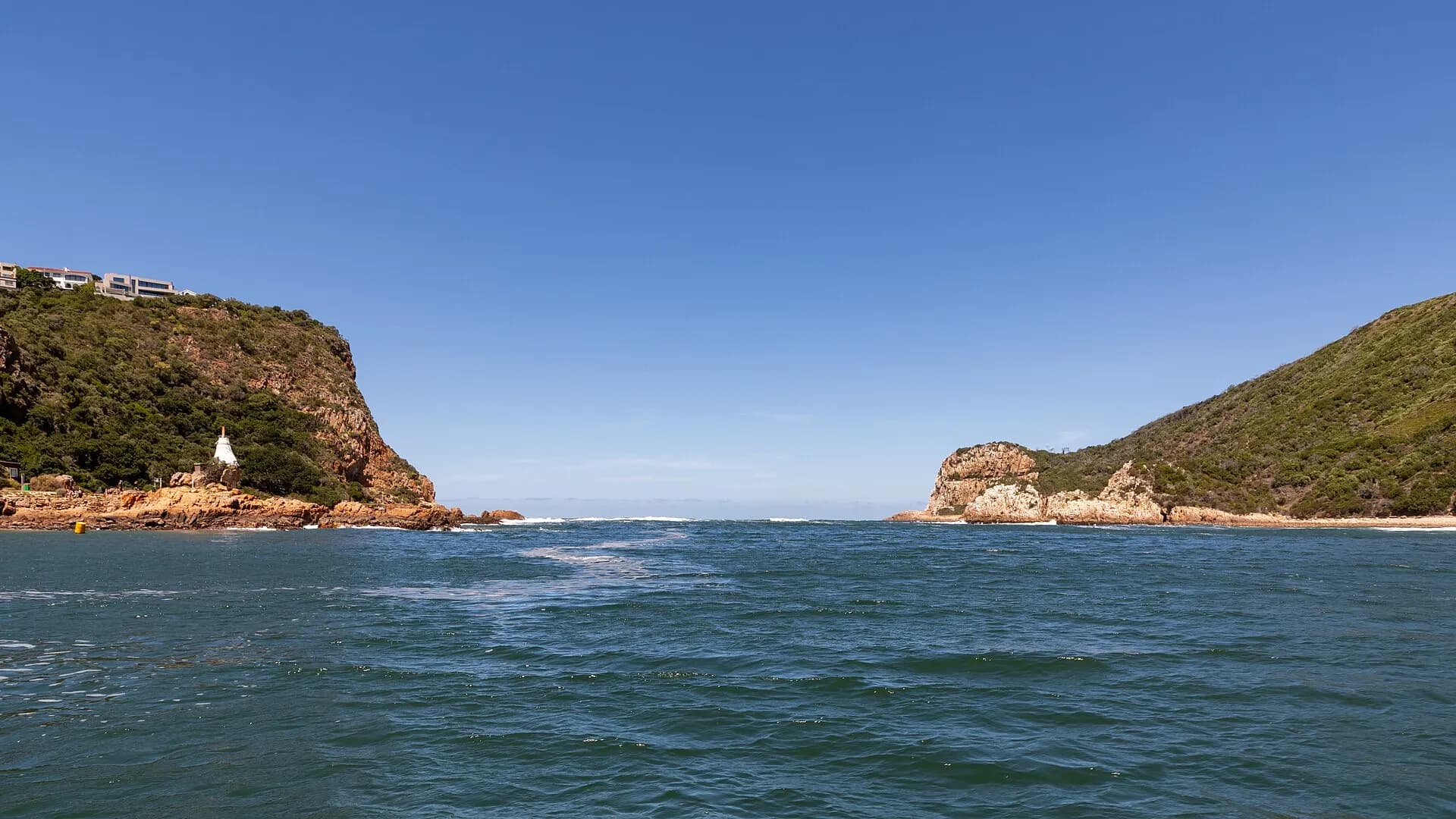
The Garden Route is a stretch of South Africa's southern coast, roughly from Mossel Bay to the Storms River, where the Outeniqua and Tsitsikamma mountains run parallel to the Indian Ocean. Between them lie lagoons, lakes, indigenous forests of giant yellowwood trees, and long beaches backed by dunes and cliffs. It's one of the country's most popular road trips, often combined with Cape Town.
The region is made for slow travel: stop in its seaside towns, walk forest and coastal trails, kayak on the lagoons, and look out for whales, dolphins and seabirds offshore. Most people drive the route over several days, choosing a couple of bases along the way.
The top 8 in The Garden Route
- 1
Knysna and the Heads
Photo: Dietmar Rabich, CC BY-SA 4.0, via Wikimedia Commons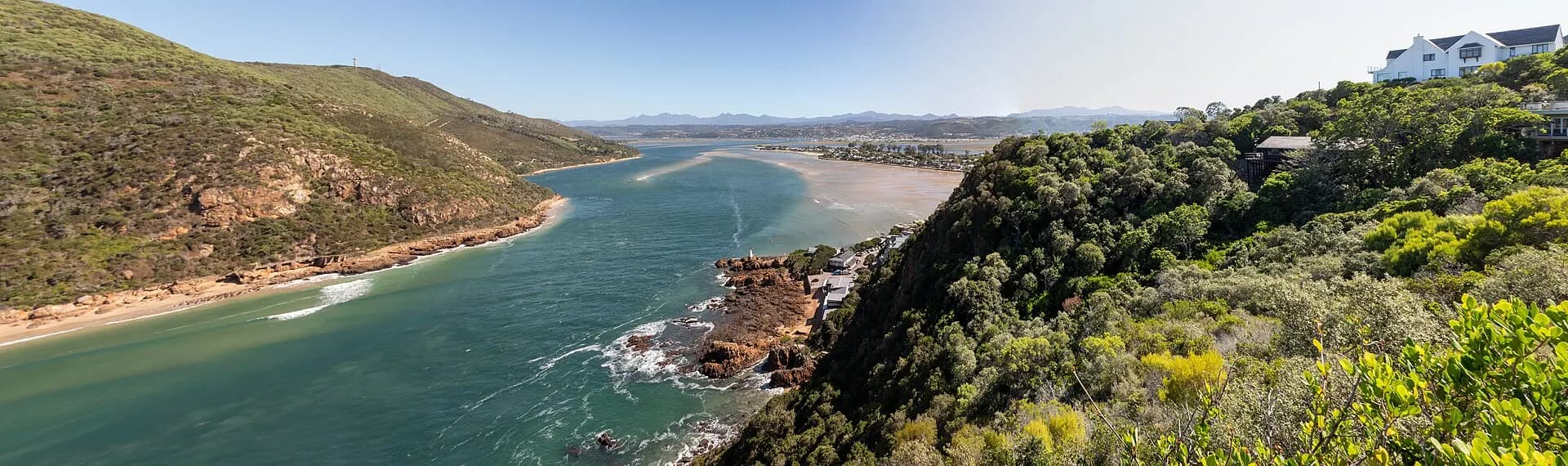
A town on a large tidal lagoon, guarded by two sandstone cliffs, the Heads, where the lagoon meets the sea. Take a boat cruise on the lagoon, eat the local oysters, and walk to the viewpoints on the eastern Head for views out to the ocean.
- 2
Tsitsikamma and the Storms River Mouth
Photo: Ossewa, CC BY-SA 4.0, via Wikimedia Commons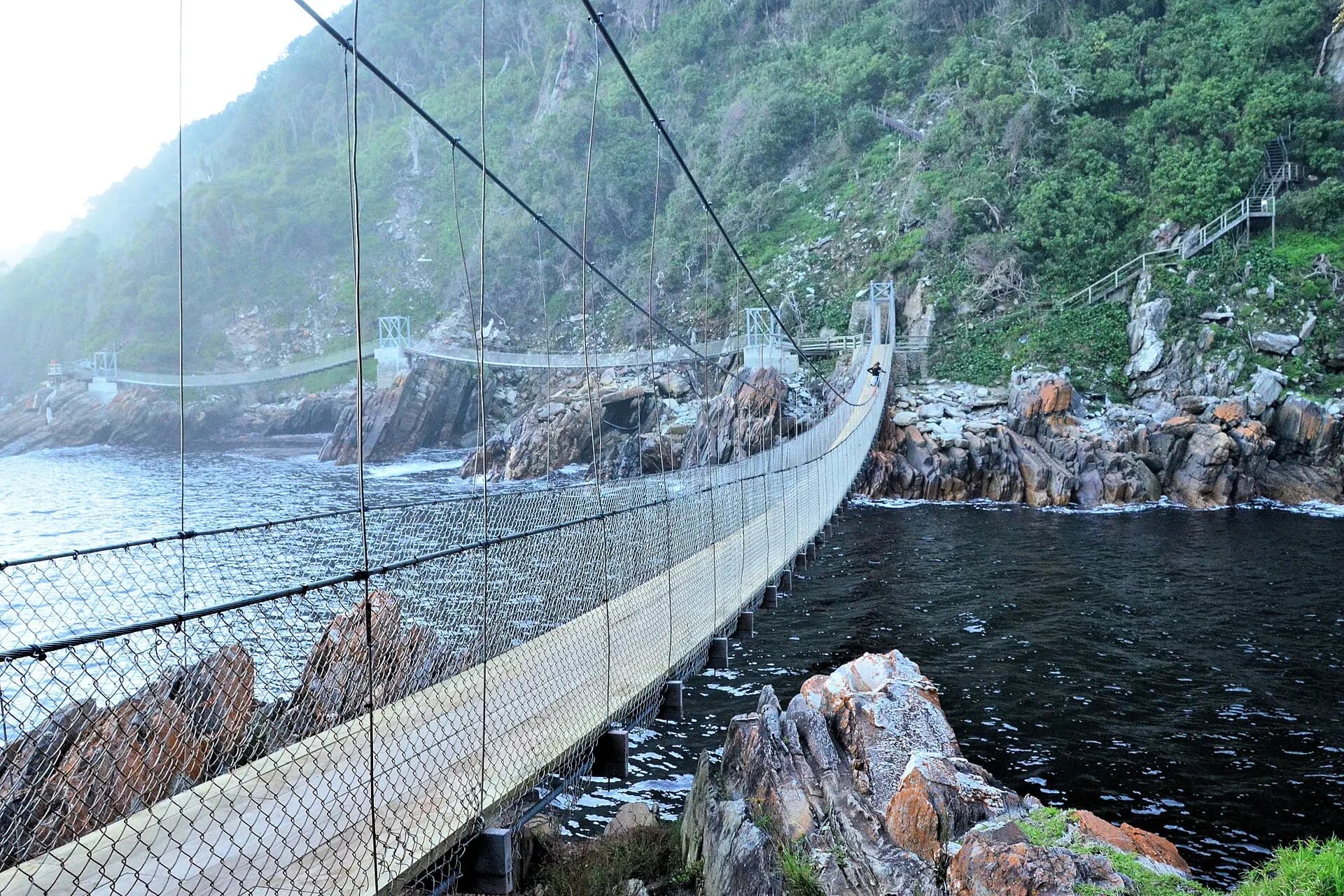
A section of the Garden Route National Park where forested cliffs drop into the sea. A boardwalk trail leads along the rocky shore to a suspension bridge over the mouth of the Storms River, and the multi-day Otter Trail, one of South Africa's most famous hikes, starts here.
TipWalk the waterfall trail along the coast at low tide, and watch for dolphins offshore.
- 3
Plettenberg Bay
Photo: flowcomm, CC BY 2.0, via Wikimedia Commons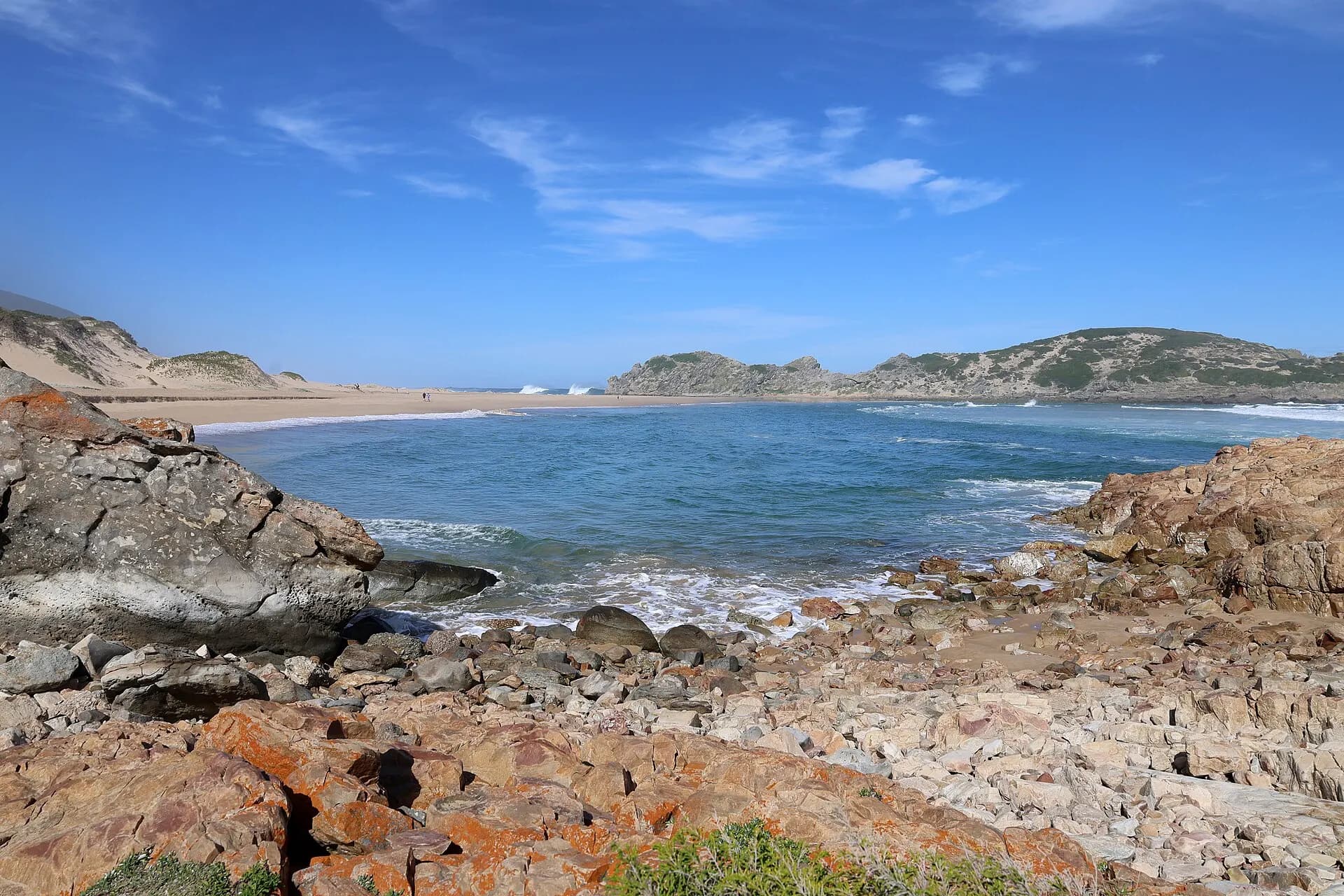
A resort town with long beaches and a lagoon, where whales and dolphins are often seen from the shore or on boat trips. The Robberg Nature Reserve, on a peninsula south of town, has a coastal hike with cliffs, a seal colony and views over the bay.
- 4
The Wilderness lakes
Photo: Bernard DUPONT from FRANCE, CC BY-SA 2.0, via Wikimedia Commons
A section of the national park with a chain of lakes, rivers and wetlands behind a long beach. Kayak up the Touw River and walk a forest trail to a waterfall, or watch for birds on the lakes.
- 5
The Knysna forests
Photo: South African Tourism from South Africa, CC BY 2.0, via Wikimedia Commons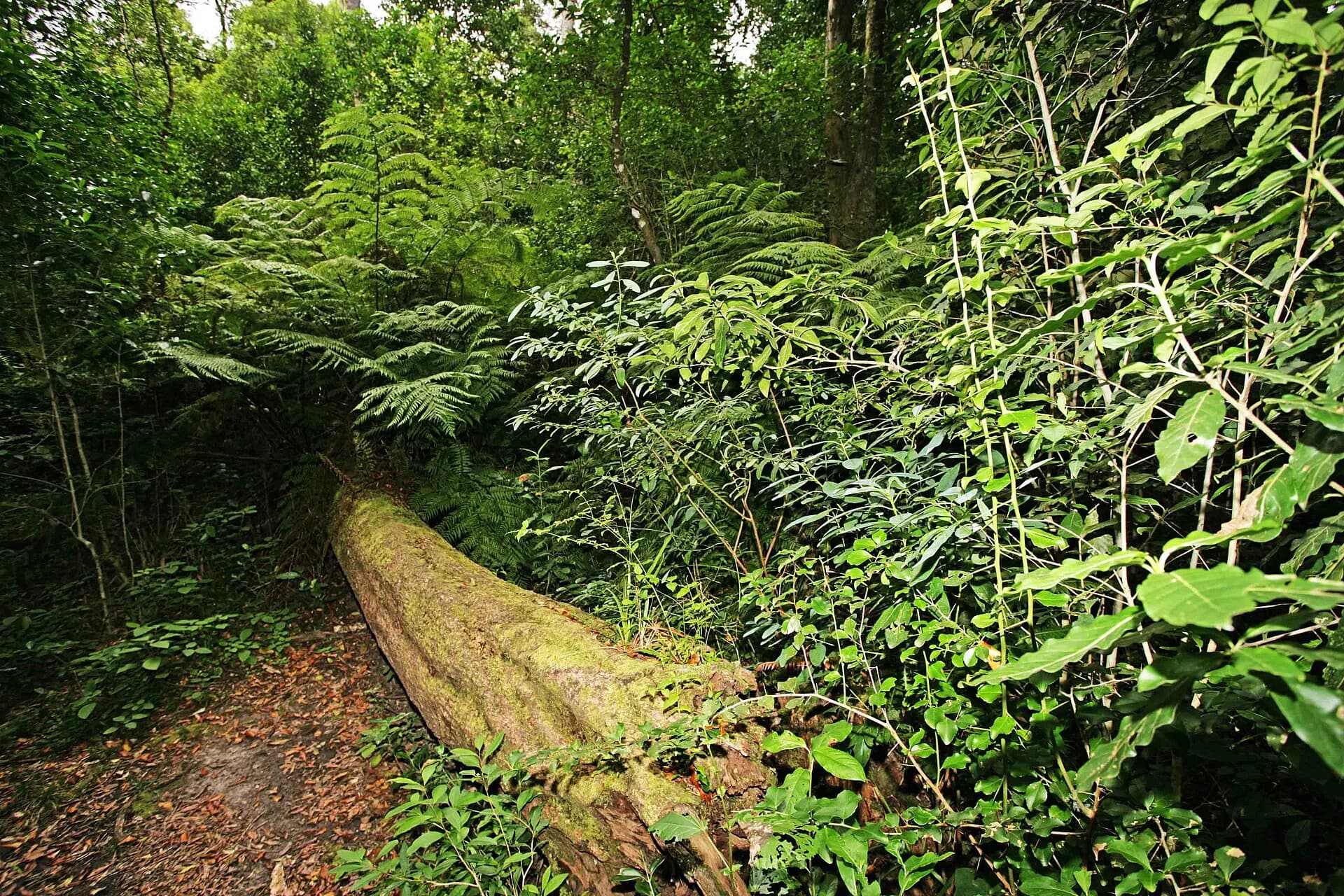
Some of South Africa's largest indigenous forests, with ancient yellowwood trees, ferns and walking trails, such as those in the Diepwalle and Goldfields areas. The forests were once home to a famous population of elephants, now very rarely seen.
- 6
Mossel Bay
Photo: Fihliwe from Hobart, Australia, CC BY-SA 2.0, via Wikimedia Commons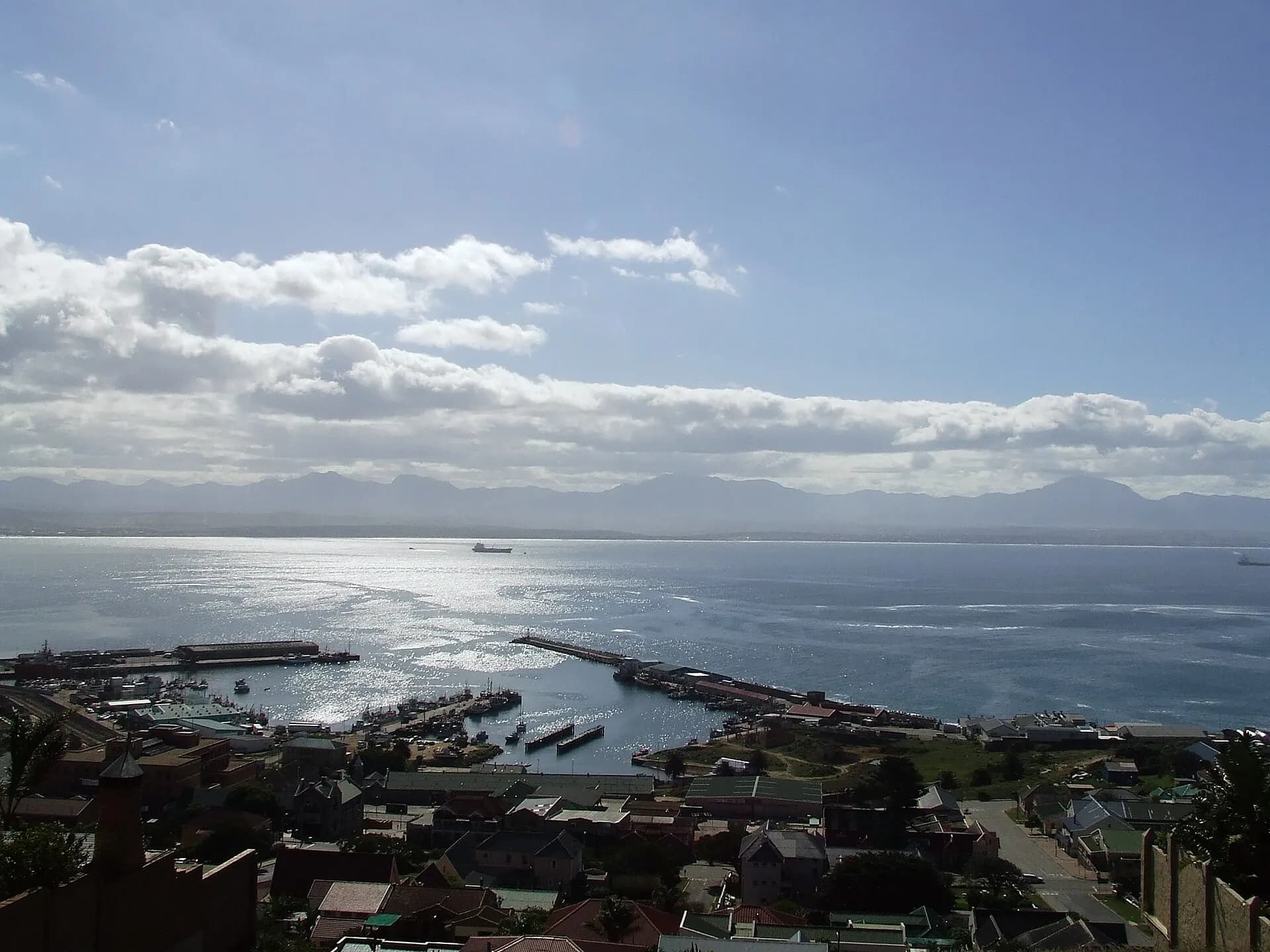
The western gateway to the Garden Route, where the Portuguese explorer Bartolomeu Dias landed in 1488. The Dias Museum Complex has a replica of his caravel, and the St Blaize trail follows the cliffs above the sea.
- 7
Nature's Valley
Photo: michael clarke stuff, CC BY-SA 2.0, via Wikimedia Commons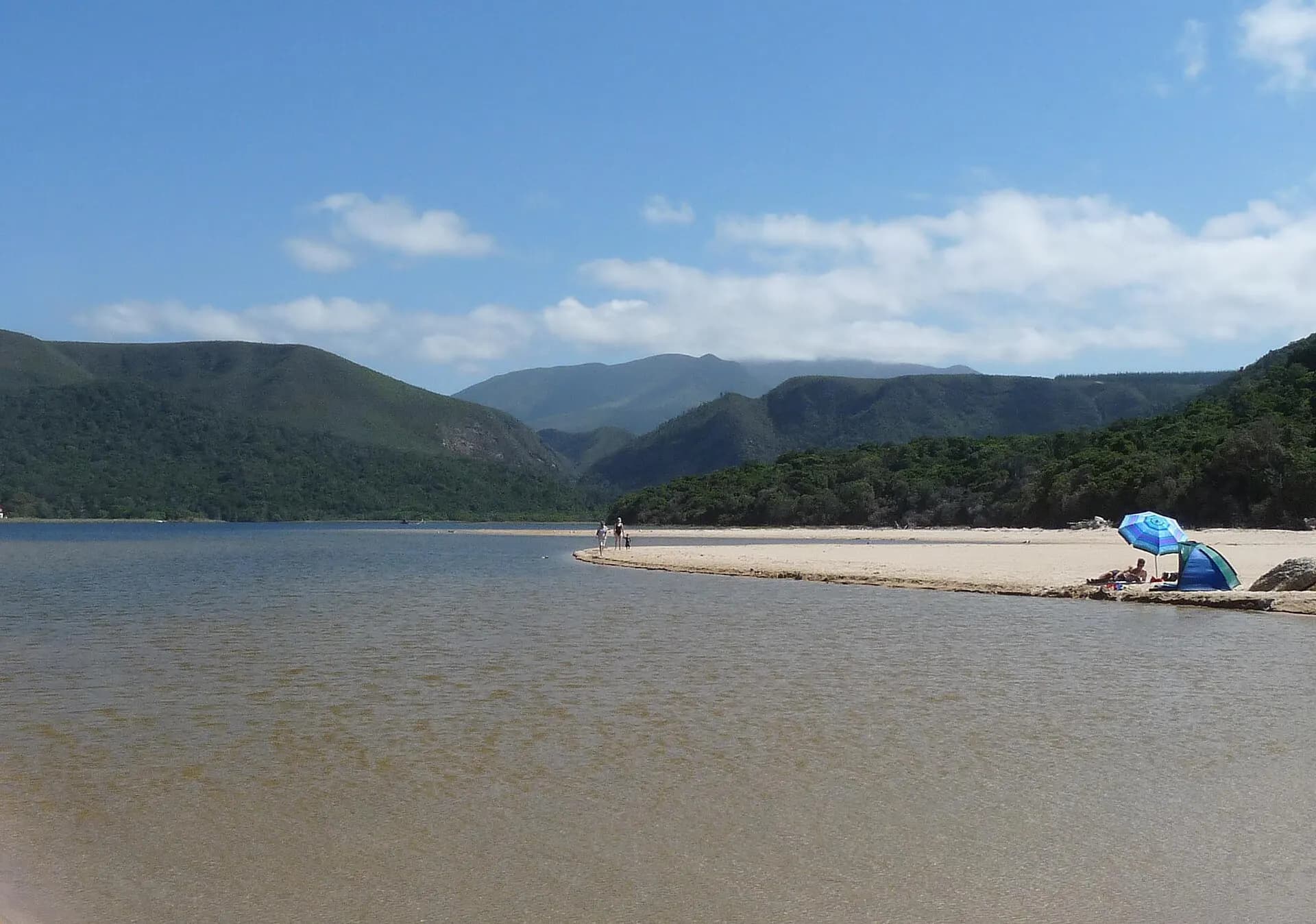
A tiny village surrounded by forest at the mouth of the Groot River, with an empty sweep of beach and a lagoon, the end point of the Otter Trail.
- 8
The Outeniqua Pass and Oudtshoorn
Photo: Satdeep Gill, CC BY-SA 4.0, via Wikimedia Commons
The pass over the mountains from George leads to the Little Karoo, a dry, colourful landscape. Oudtshoorn is famous for ostrich farms and the Cango Caves, a series of dripstone caverns.
When to go
The Garden Route has a mild climate all year, with rain spread across the seasons. Summer, from December to February, is warm and busy, especially during South African school holidays. Spring and autumn are pleasant and quieter. From about June to November, southern right whales come close to the coast to calve, with excellent whale watching from Plettenberg Bay and Mossel Bay.
Getting around
A car is the best way to explore, giving freedom to stop at viewpoints, beaches and trailheads along the N2 highway. The full drive from Mossel Bay to Storms River takes only a few hours without stops, but allow several days. Tour buses and the Baz Bus, a hop-on hop-off backpacker shuttle, are alternatives.
George Airport has flights from Cape Town and Johannesburg, and Gqeberha (Port Elizabeth) airport serves the eastern end. The drive from Cape Town to Mossel Bay takes about four hours.
Local tips
- Avoid driving at night, when animals and pedestrians can be on the roads.
- Never leave valuables visible in a parked car at trailheads or beaches.
- Book the Otter Trail and popular national park accommodation well ahead; places are limited.
- Swim only at beaches with lifeguards; currents can be strong.
- Pay a SANParks conservation fee to enter national park areas, or buy a Wild Card for multiple visits.
- Tipping around 10 to 15% is usual in restaurants.
Eat and drink
The coast is famous for seafood, especially Knysna oysters, fresh line fish and calamari. Try a traditional braai, South African barbecue, and bobotie, a spiced mince dish. Local craft breweries and farm stalls selling pies, biltong and preserves are found all along the route, and the wines of the Western Cape are never far away.
Where to stay
Knysna and Plettenberg Bay make the most popular bases, central to the forests, lagoons and beaches, with a wide choice of guesthouses, hotels and lodges. Wilderness suits those who want quiet lakes and a long beach, while Storms River village and the national park's forest cabins and chalets are ideal for hiking Tsitsikamma.
Adventure on the Garden Route
The region is a playground for outdoor activities. The Bloukrans Bridge, near Storms River, hosts one of the world's highest commercial bridge bungee jumps, at 216 metres. Ziplines run through the Tsitsikamma forest canopy, and the Storms River can be explored by kayak and lilo through a narrow gorge. Paragliders launch from the hills above Wilderness, surfers ride the breaks at Victoria Bay near George, and mountain-bike trails wind through the Knysna forests.
Wildlife
Look for Cape fur seals at Robberg, dolphins in the bays, and the colourful Knysna turaco in the forests. Several private game reserves near Mossel Bay and Plettenberg Bay offer safaris with elephants, lions and rhinos, though they are fenced reserves rather than wild parks.