Ljubljana
A small, green capital of riverside cafés, dragon bridges and a hilltop castle, with the Alps on the horizon.
- Best time to go
- May to September for outdoor café life; December for festive lights
- Local time
- –
- Currency
- Euro (EUR)
- Reading time
- 4 min
- Language
- Slovenian
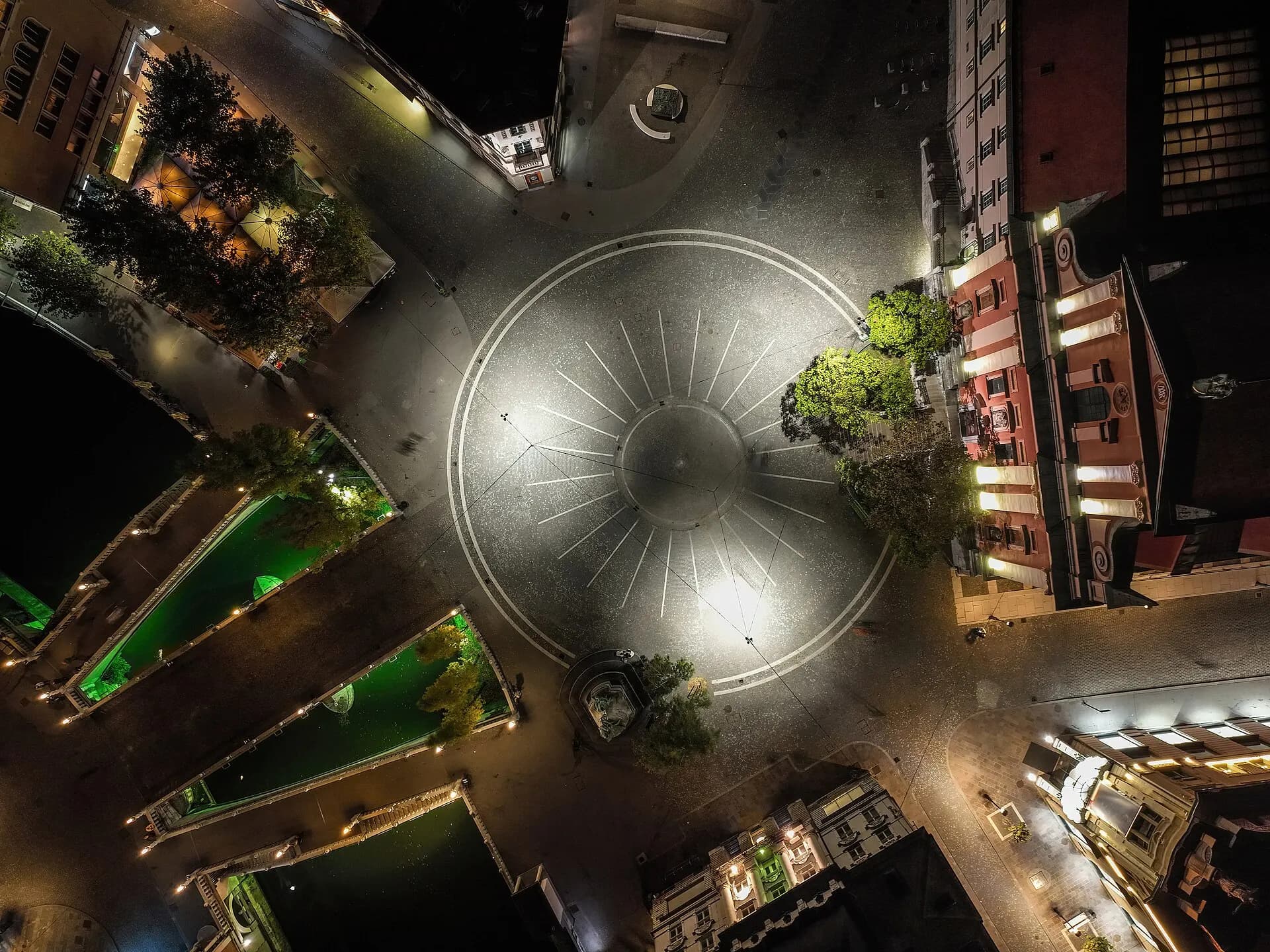
Ljubljana, the capital of Slovenia, is a small, relaxed city on the banks of the Ljubljanica River, beneath a castle on a wooded hill. Its old town, a mix of baroque and Art Nouveau buildings, is largely car-free, and its riverbanks are lined with cafés and willow trees. In 2016 it was named European Green Capital.
Much of the city's character comes from the architect Jože Plečnik, who reshaped Ljubljana in the early twentieth century with bridges, markets, embankments and squares, now a World Heritage Site. It's easy to explore on foot or by bike, and a perfect base for trips to the lakes, caves and mountains of Slovenia.
The top 9 in Ljubljana
- 1
Prešeren Square and the Triple Bridge
Photo: Valerio2468, CC BY-SA 4.0, via Wikimedia Commons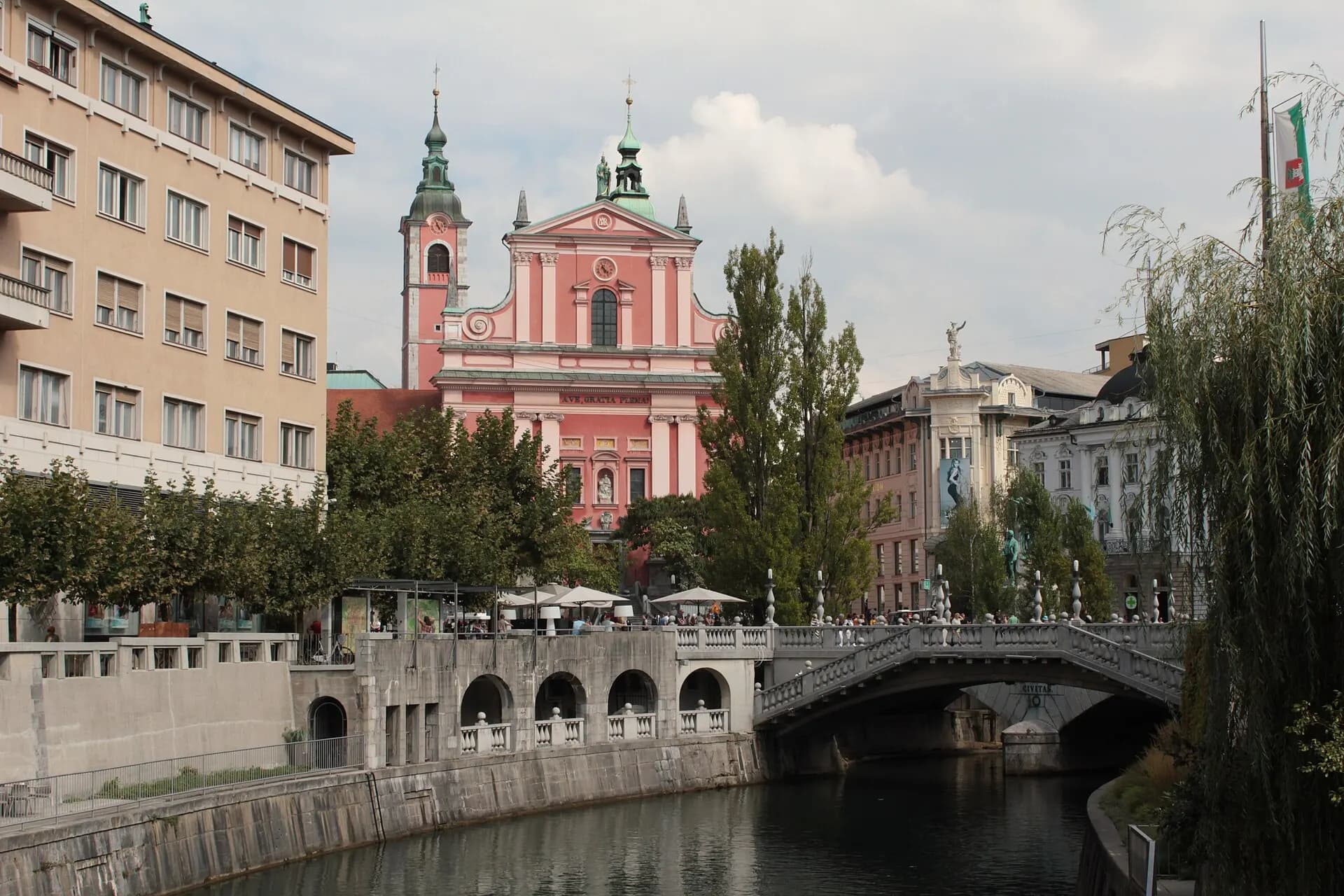
The city's central square, named after Slovenia's national poet, France Prešeren, whose statue stands here, overlooked by the pink Franciscan Church of the Annunciation. Plečnik added two footbridges to an older stone bridge to create the Triple Bridge across the river.
- 2
Ljubljana Castle
Photo: Mihael Grmek, CC BY-SA 3.0, via Wikimedia Commons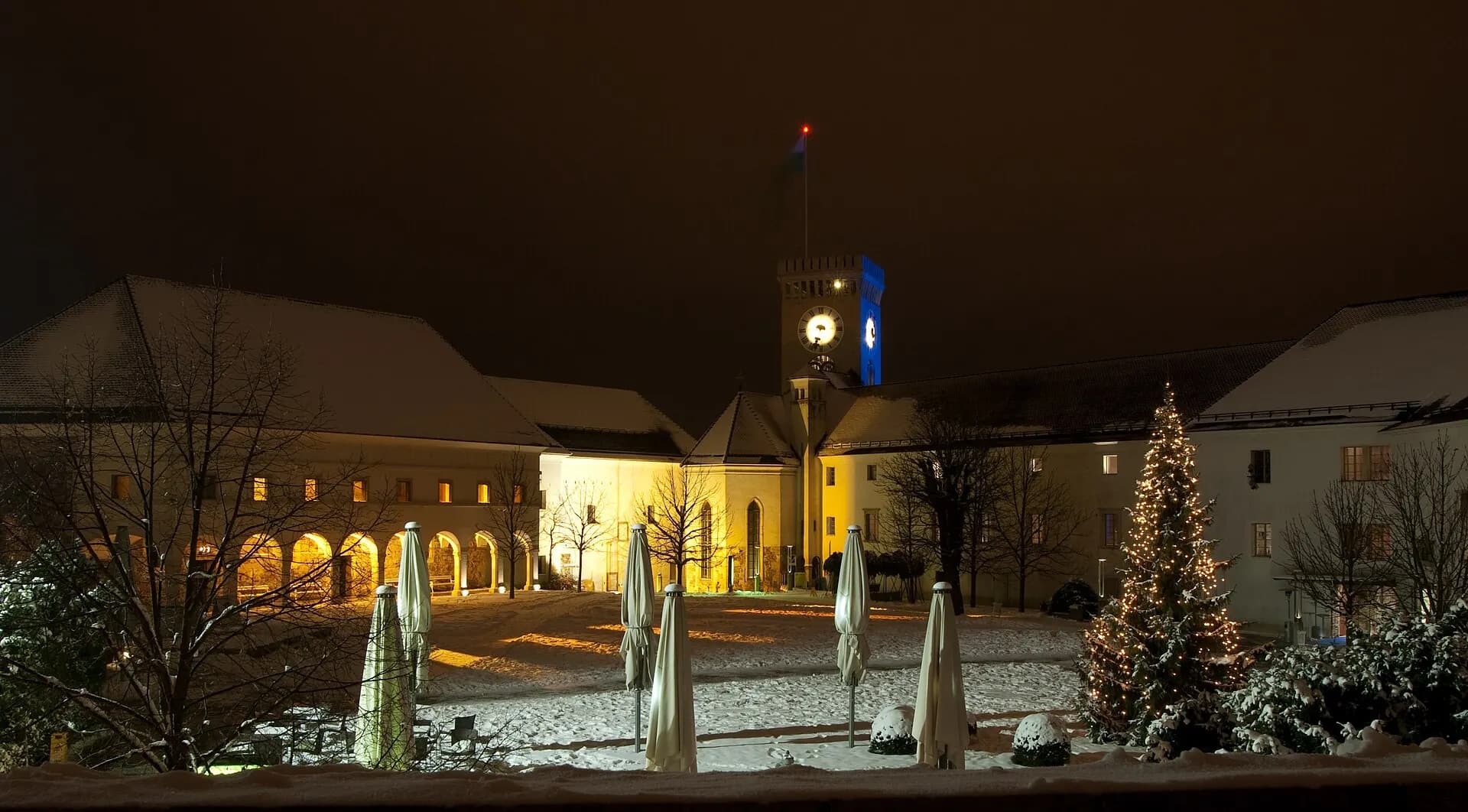
A medieval castle on the hill above the old town, reached by a funicular or a walk through the woods, with a museum of Slovenian history, a chapel and a viewing tower with panoramic views over the city to the Alps.
- 3
The Dragon Bridge
Photo: Thomas Ledl, CC BY-SA 4.0, via Wikimedia Commons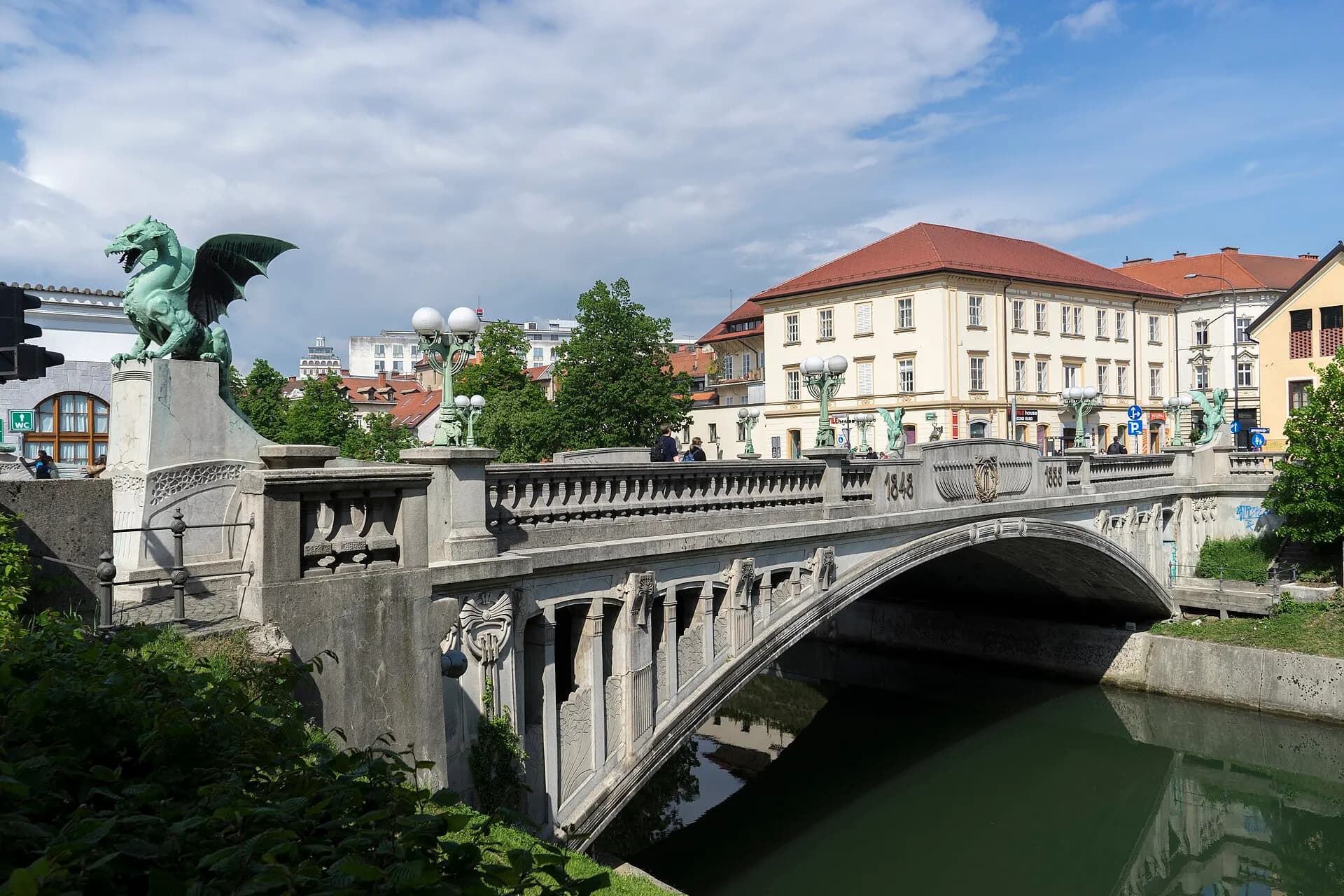
An Art Nouveau bridge from 1901 guarded by four bronze dragons, the symbol of the city, which, according to legend, was founded by Jason and the Argonauts after slaying a dragon.
- 4
The Central Market and Plečnik's Market Colonnade
A lively open-air market of fruit, vegetables, flowers and local produce, beside an elegant colonnade designed by Plečnik along the river. On Fridays in warm months, Odprta Kuhna, an open-air food festival, takes over the nearby square.
- 5
The riverside and old town
Photo: Tournasol7, CC BY 4.0, via Wikimedia Commons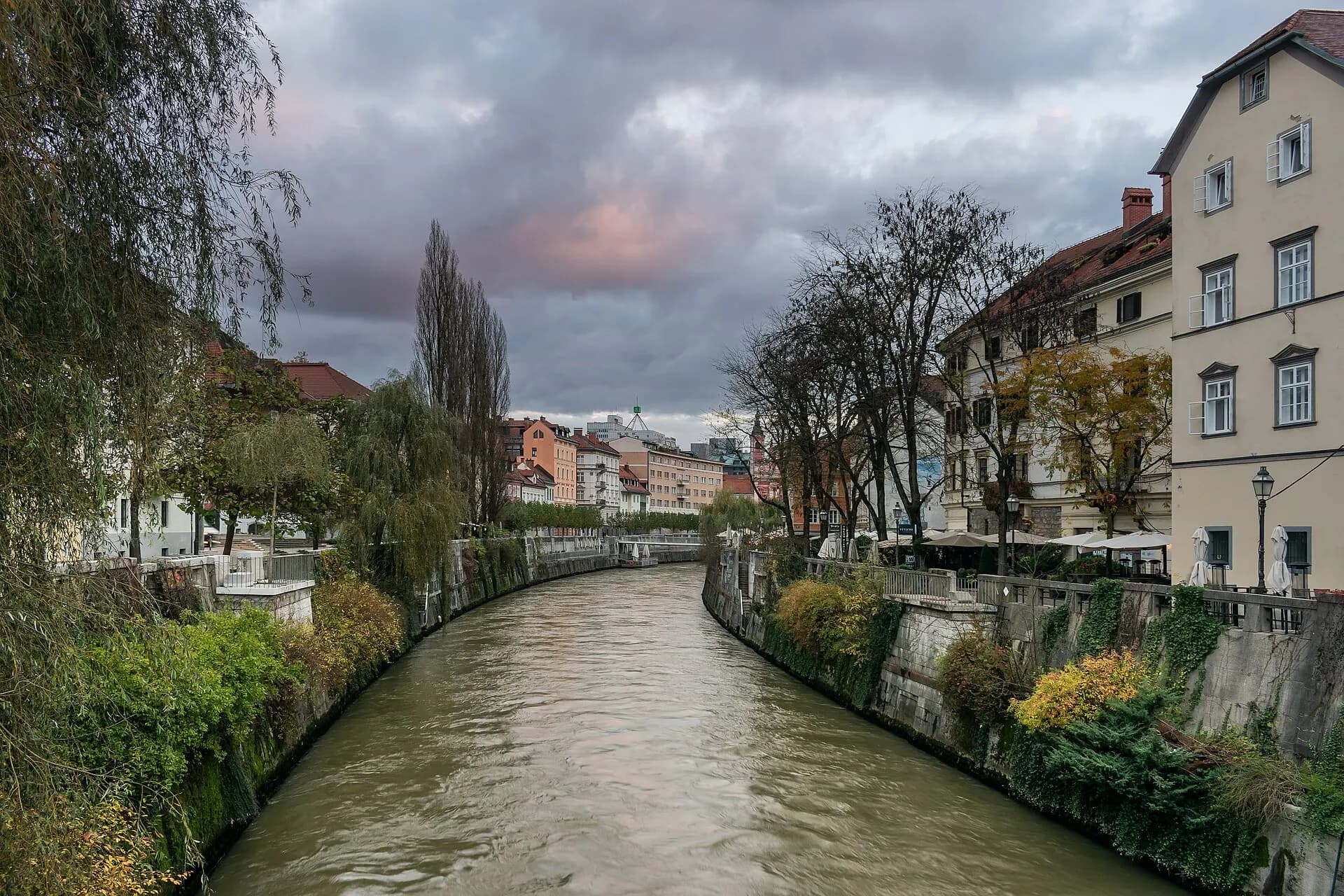
The banks of the Ljubljanica, lined with cafés, bars and weeping willows, are the heart of the city's social life. The old town's streets around Mestni Trg and Stari Trg have baroque façades, the Robba Fountain and the cathedral.
- 6
Tivoli Park
Photo: Dedo70, CC BY-SA 4.0, via Wikimedia Commons
The city's largest park, stretching from the centre to the wooded Rožnik hill, with tree-lined avenues and an open-air photo gallery on Jakopič Promenade, designed by Plečnik.
- 7
Metelkova
A former army barracks occupied by artists in the 1990s, now an autonomous cultural centre covered in street art and sculptures, with alternative clubs, galleries and music venues.
- 8
The National and University Library
Photo: G-Cup, CC BY-SA 4.0, via Wikimedia Commons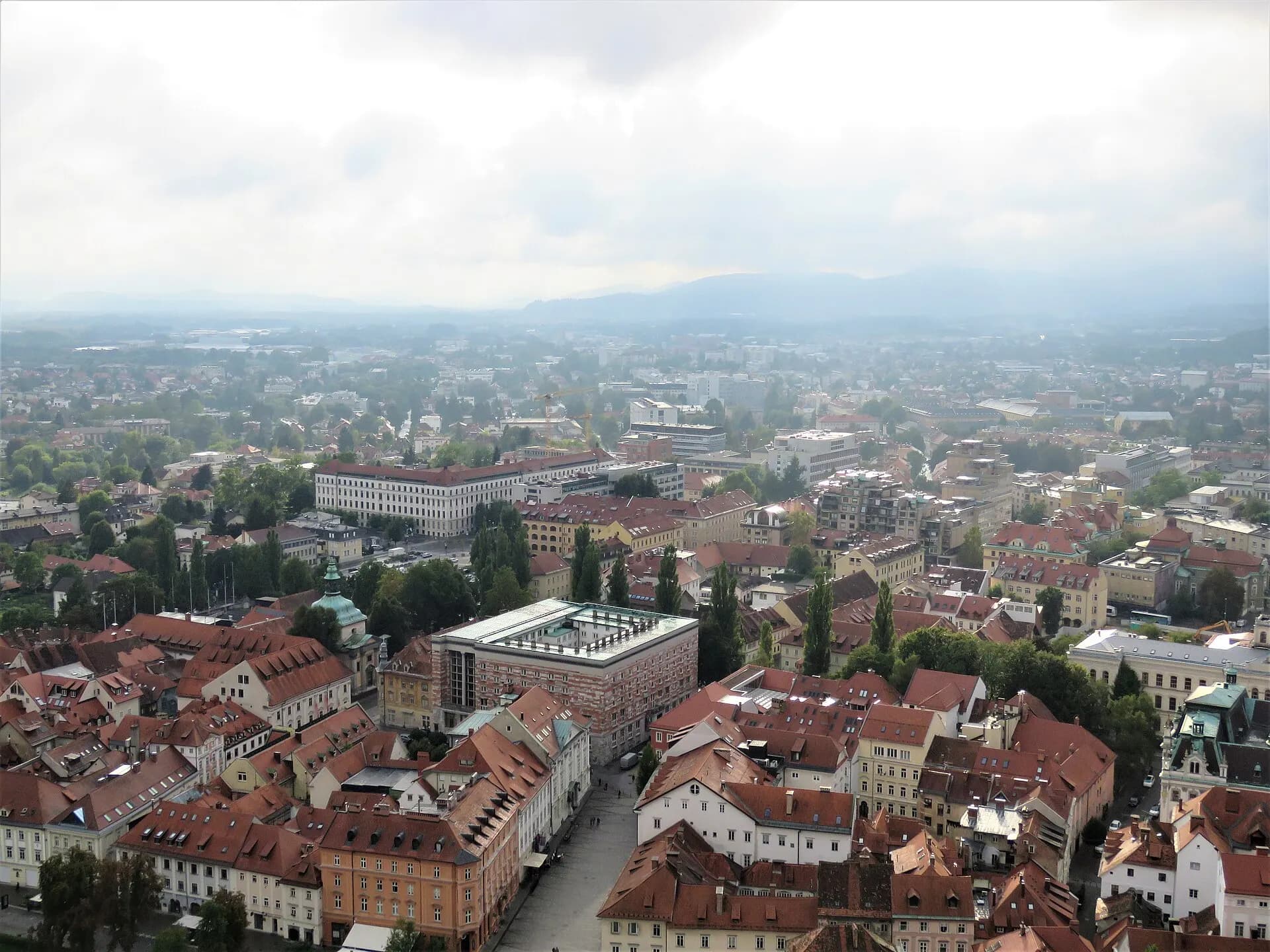
Plečnik's masterpiece, a building of brick and stone with a dark, monumental reading room lit by huge windows, considered one of the most important works of architecture in Slovenia.
- 9
Postojna Cave and Predjama Castle
Photo: Jakub Hałun, CC BY 4.0, via Wikimedia Commons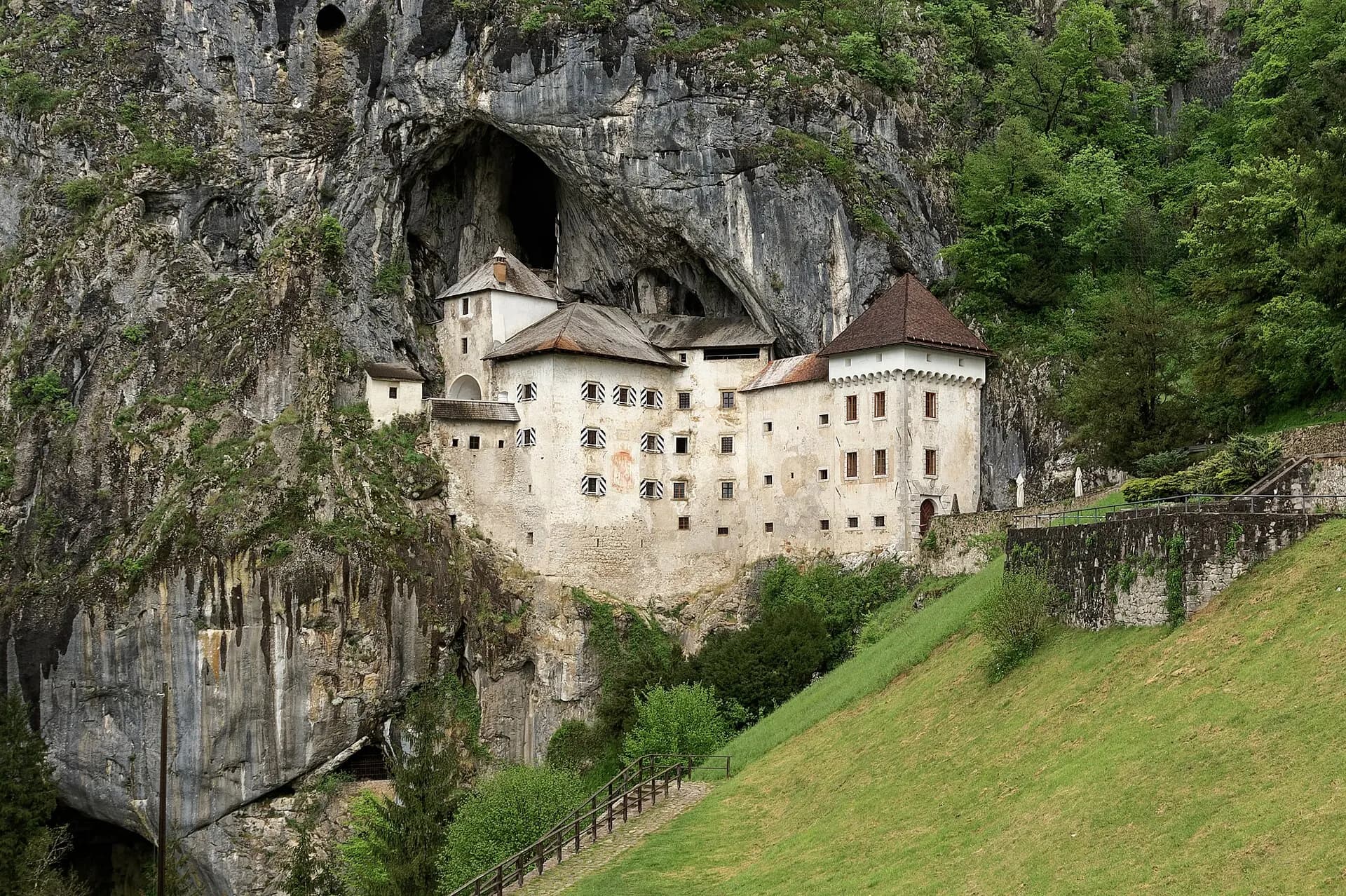
About an hour south-west, Postojna Cave is a vast cave system explored by electric train, with spectacular stalactites and the olm, a blind salamander. Nearby, Predjama Castle is built into the mouth of a cave in a cliff.
When to go
Late spring and summer are the best times, with warm weather, outdoor cafés, festivals and the Ljubljana Festival of music and theatre. Autumn is mild and colourful. December brings festive lights and markets. Winter is cold and often foggy, but the city is quiet and atmospheric.
Getting around
The centre is compact and largely pedestrianised, best explored on foot or by bike, with the BicikeLJ bike-share scheme. Electric shuttles called Kavalir carry passengers around the car-free zone for free. City buses use the Urbana card. Ljubljana Airport is about twenty-five minutes away by road, and trains and buses link the city with Bled, Zagreb, Vienna and Trieste.
Local tips
- Slovenia uses the euro.
- Tap water is excellent; refill bottles at the city's drinking fountains.
- Many museums are closed on Mondays.
- Respect cycle lanes, which are widely used.
- Book trips to Postojna and Bled ahead in summer.
- Tipping around 10% is appreciated.
Eat and drink
Slovenian cooking reflects Alpine, Italian, Austrian and Balkan influences. Try štruklji, rolled dumplings with fillings; kranjska klobasa, a Carniolan sausage; jota, a bean and sauerkraut stew; and potica, a rolled nut cake. Slovenia produces excellent wines, especially whites from the Goriška Brda and Vipava regions.
Where to stay
Staying in the old town or along the river puts you in the heart of things, in boutique hotels and apartments. Hotels near the railway station are convenient for day trips, and the Trnovo district, south of the centre, is a quiet, leafy neighbourhood.
Day trips
Slovenia is small, so much of the country is within easy reach. Lake Bled, with its island church and clifftop castle, is about an hour north by bus, and Lake Bohinj, wilder and quieter, a little further. Škocjan Caves, a World Heritage Site, has a vast underground canyon with a river roaring through it, crossed by a footbridge high above. The Soča Valley, with its emerald river, and the coastal town of Piran, a Venetian gem on the Adriatic, are longer day trips, and the wine regions of Goriška Brda and Vipava are perfect for a day of tastings.
Plečnik's Ljubljana
Between the two world wars, the architect Jože Plečnik transformed his home city, which he imagined as a new Athens. Look for his work across the centre: the Triple Bridge and the Cobblers' Bridge, the riverside Market Colonnade, the embankments of the Ljubljanica, the National and University Library, the Church of St Michael on the marshes south of the city, and the Žale cemetery. His house in Trnovo is now a museum, showing his studio and the objects he designed.
Cafés and evenings
Ljubljana's social life happens outdoors. On summer evenings, the riverside terraces fill with students and locals, and the city's young population keeps the bars of the old town and Metelkova busy late into the night.