Lake Bled
An island church on an emerald lake, a castle on a cliff and the Julian Alps all around.
- Best time to go
- May to June and September to October, for warm days and fewer crowds
- Local time
- –
- Currency
- Euro (EUR)
- Reading time
- 4 min
- Language
- Slovenian
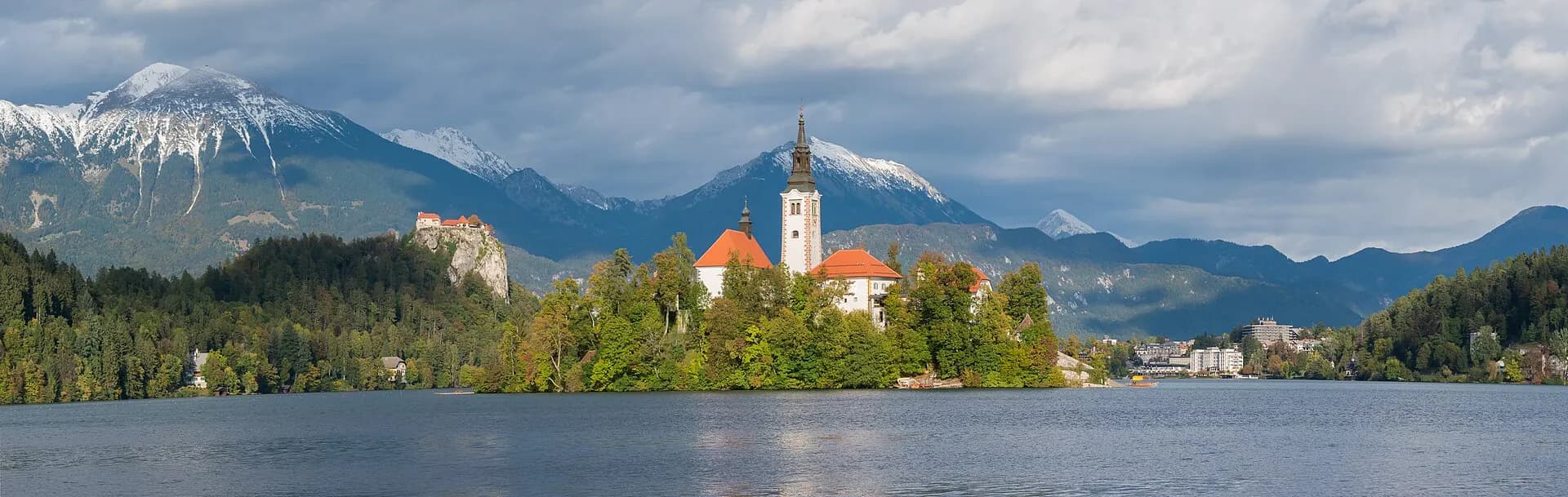
Lake Bled lies in a basin of forested hills at the foot of the Julian Alps in north-west Slovenia, with a tiny island crowned by a church in its middle and a medieval castle perched on a cliff above. It has been a resort since the nineteenth century, when visitors came for its healthy air and spa treatments.
It's one of the most beautiful places in Europe, and also one of the busiest in summer. Walk around the lake early in the morning, row to the island, climb to the viewpoints, and explore the wilder gorges, lakes and mountains of the Triglav National Park nearby.
The top 8 in Lake Bled
- 1
Bled Island and the Church of the Assumption
Photo: Jakub Hałun, CC BY 4.0, via Wikimedia Commons
The only natural island in Slovenia, reached by a traditional wooden boat called a pletna, rowed by a standing oarsman, or by rowing boat. Climb the 99 stone steps to the baroque Church of the Assumption, where visitors ring the "wishing bell" for good luck.
TipRent a rowing boat and go early in the morning, when the lake is calm and quiet.
- 2
Bled Castle
Photo: amanderson2, CC BY 2.0, via Wikimedia Commons
A castle on a cliff more than a hundred metres above the lake, first mentioned in 1011 and one of the oldest in Slovenia, with a museum, a printing workshop, a wine cellar and a terrace with the best view over the lake and the island.
- 3
The lakeside walk
A path of about six kilometres runs around the lake, through meadows, woods and lakeside villas, with changing views of the island, the castle and the mountains. It takes about an hour and a half on foot.
- 4
Ojstrica and Mala Osojnica viewpoints
Photo: Meiko21, CC BY 3.0, via Wikimedia Commons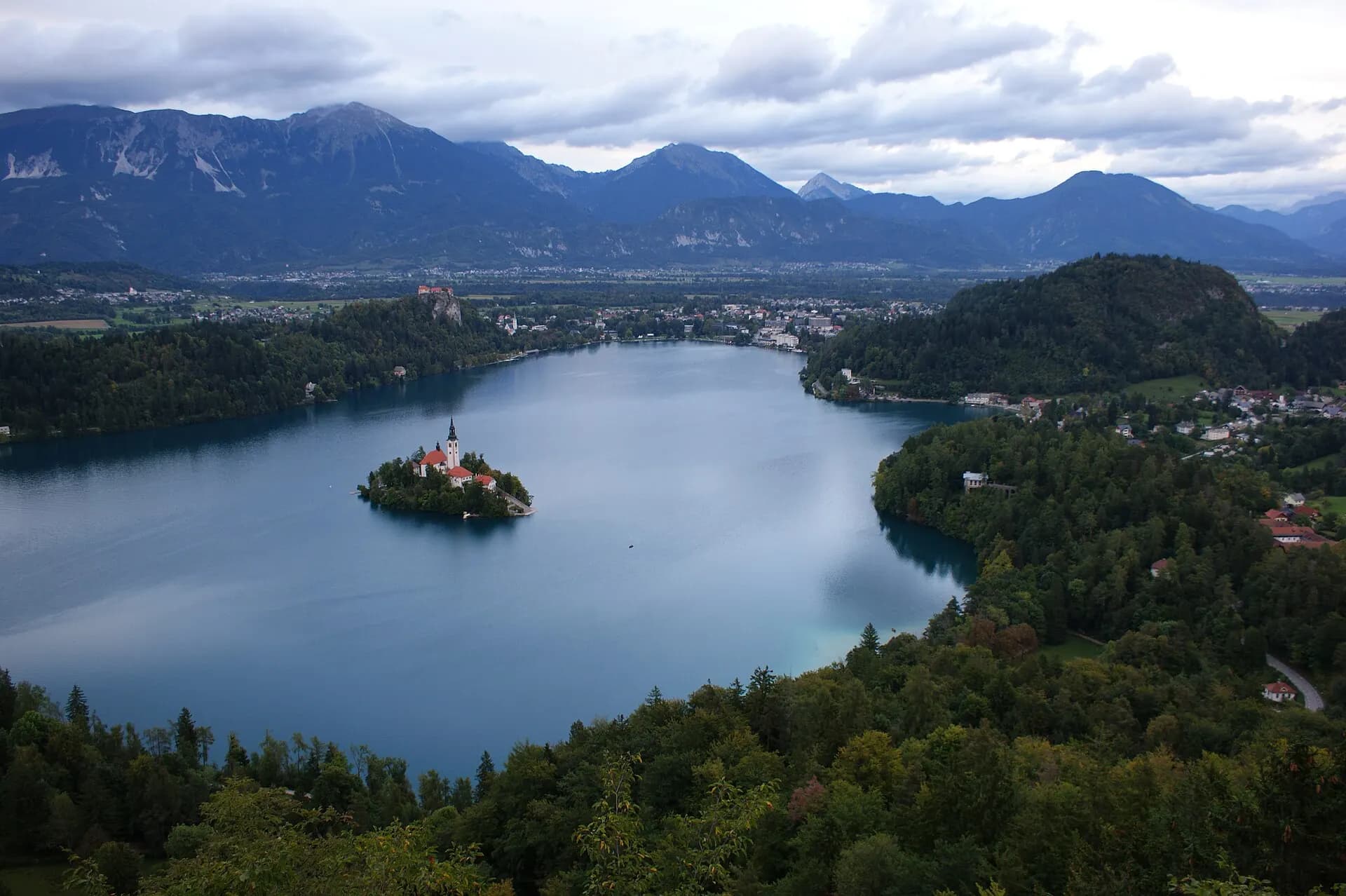
Short but steep hikes from the western end of the lake lead to viewpoints with the classic view of the island, the church and the castle, framed by the Alps.
TipGo for sunrise or late afternoon light; the trails are rooty and slippery when wet.
- 5
Vintgar Gorge
Photo: Luke Price from Rotterdam, Netherlands, CC BY 2.0, via Wikimedia Commons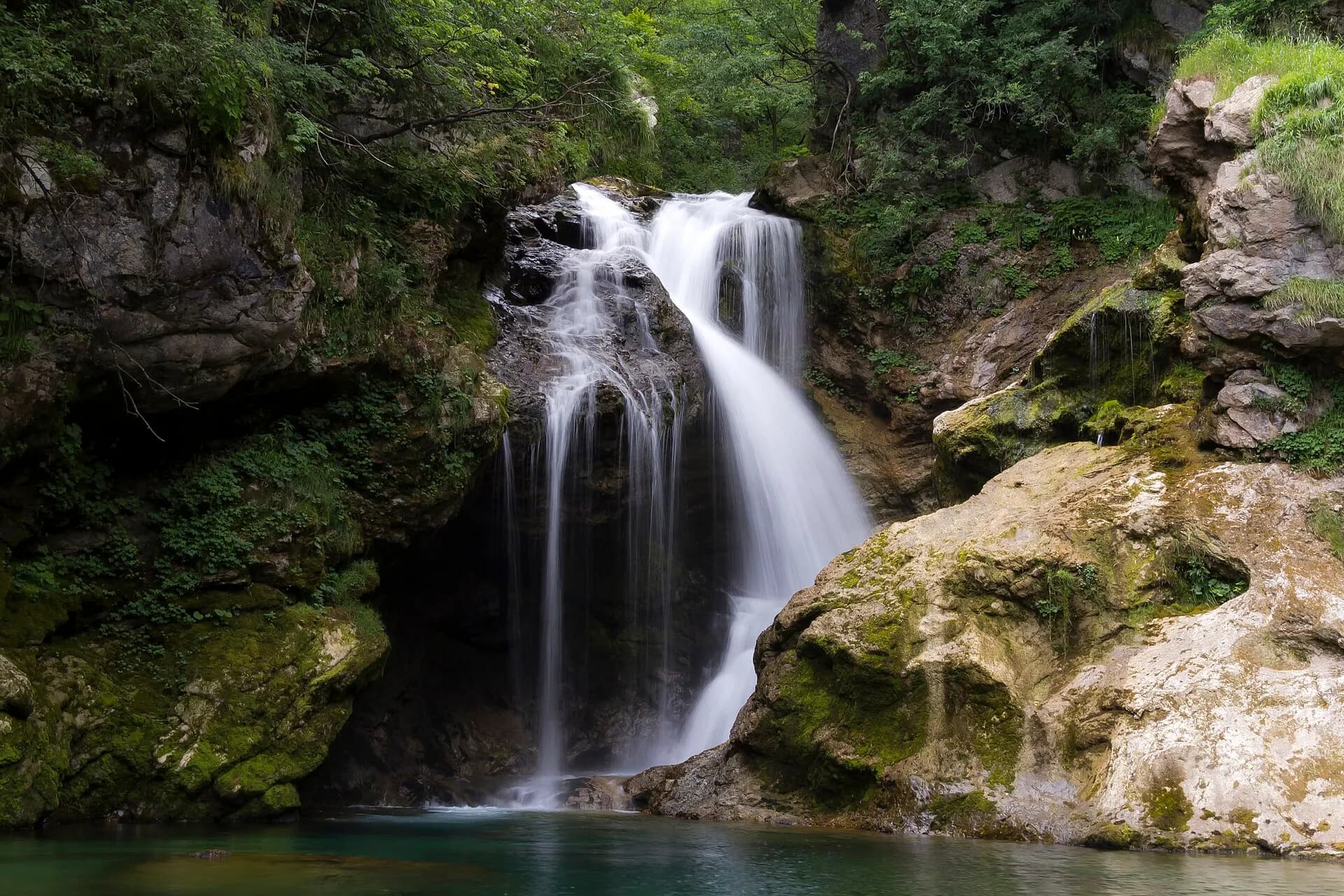
A narrow gorge carved by the Radovna River, about four kilometres from Bled, with wooden walkways along the rushing turquoise water and the Šum waterfall at its end.
TipThe gorge is now walked in one direction only, and entry is by timed ticket in peak season.
- 6
Lake Bohinj
Photo: Carsten Steger, CC BY-SA 4.0, via Wikimedia Commons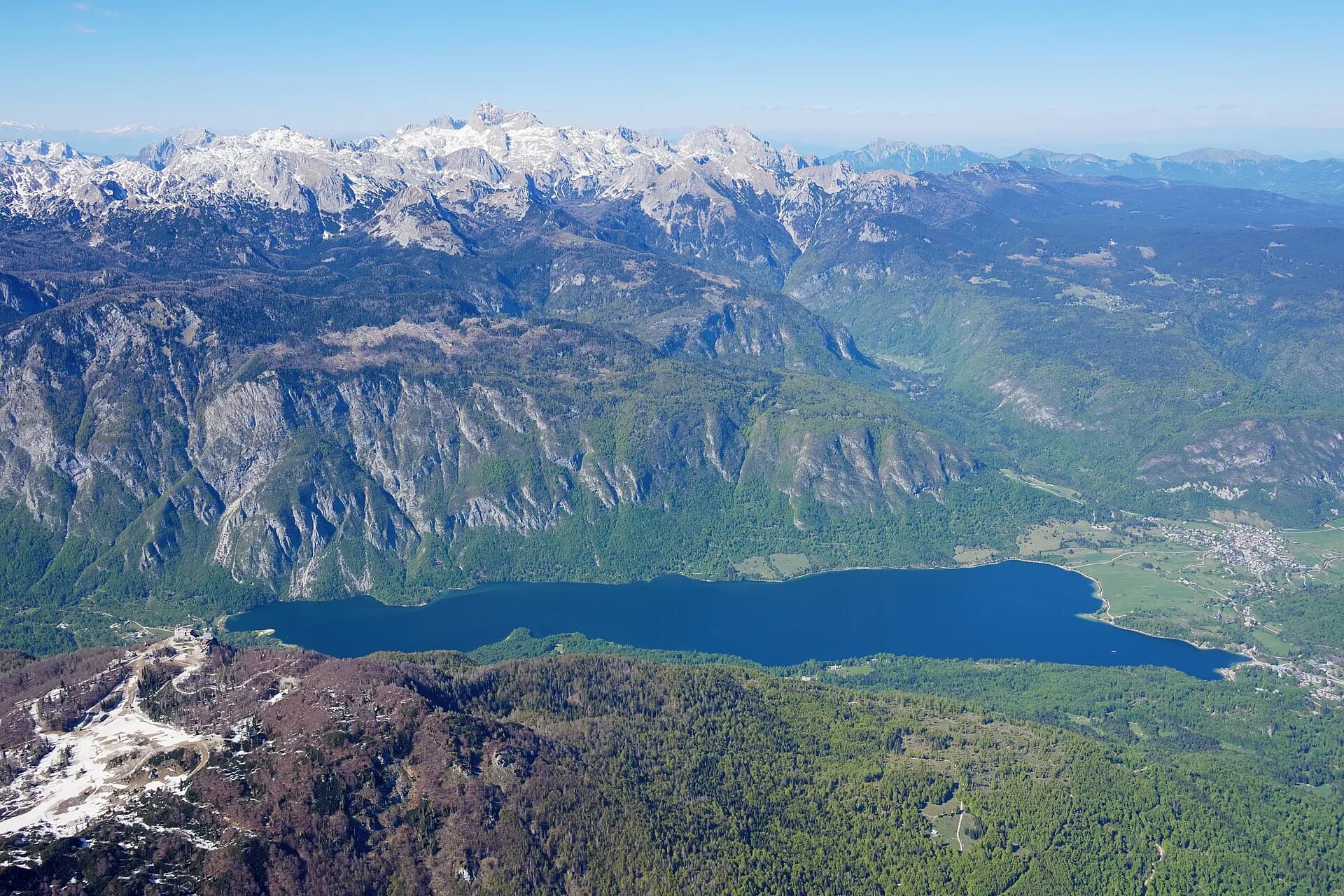
A larger, wilder glacial lake about half an hour away, inside the Triglav National Park, surrounded by mountains, with the stone church of St John the Baptist at its edge. A cable car climbs Mount Vogel for views over the Julian Alps.
- 7
Savica Waterfall
Photo: Frerk Meyer from Buchholz in der Nordheide, Niedersachsen, CC BY-SA 2.0, via Wikimedia Commons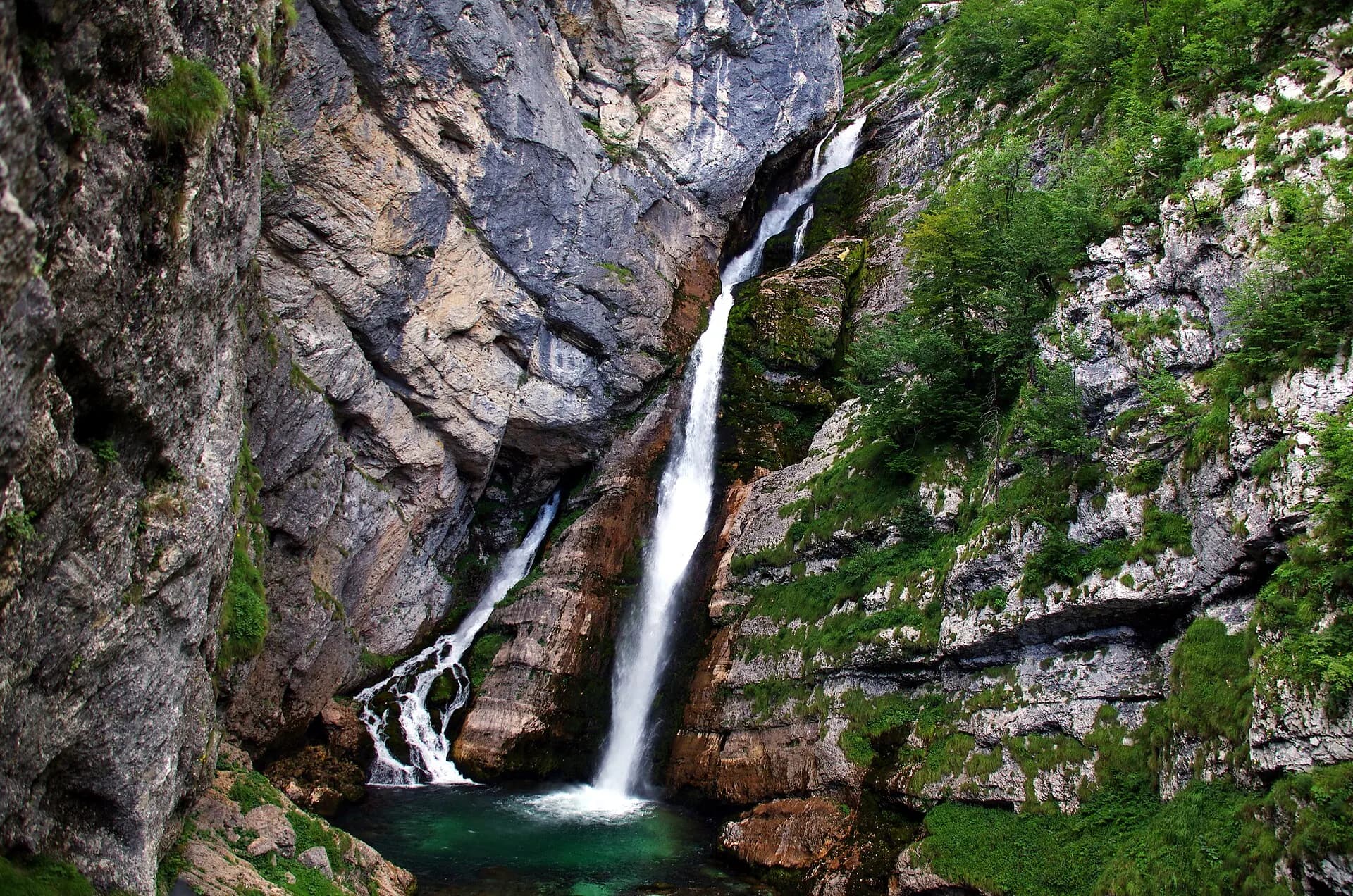
A waterfall above Lake Bohinj, reached by a forest path with more than five hundred steps, falling in two streams into an emerald pool.
- 8
Triglav National Park
Photo: Javier Sanchez Portero from Santa Cruz de Tenerife, España, CC BY-SA 2.0, via Wikimedia Commons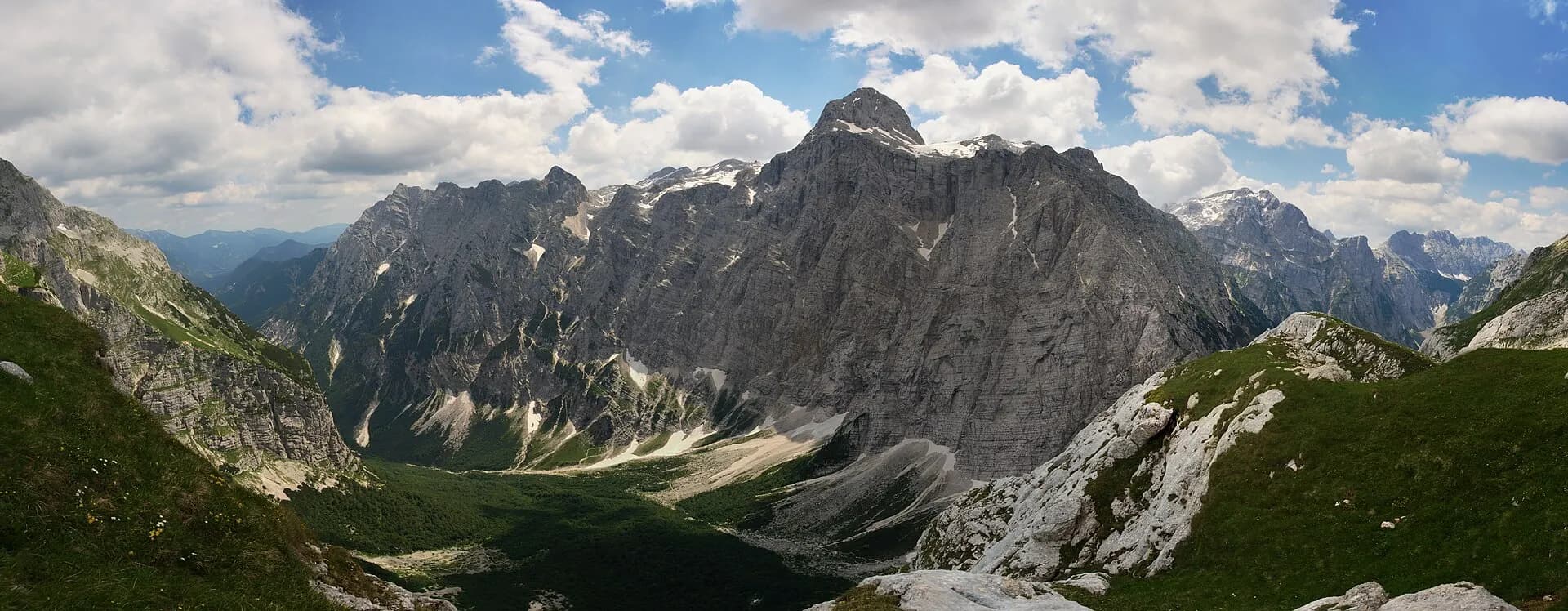
Slovenia's only national park, centred on Mount Triglav, the country's highest peak and national symbol, with alpine valleys, lakes and hiking trails for all levels. Its image appears on the Slovenian flag.
When to go
Late spring and early autumn are the most pleasant times, with warm weather and fewer visitors. July and August are busy, with warm water for swimming. Autumn brings golden colours to the forests. Winter is cold, sometimes with snow and a frozen lake, and the castle and island look magical under snow.
Getting around
Bled is small and walkable, and bicycles can be rented to explore the lake and nearby villages. Buses link Bled with Ljubljana in about an hour and a quarter, and with Lake Bohinj. The nearest railway station, Lesce-Bled, is a short bus or taxi ride away. Ljubljana Airport is about thirty-five minutes by road.
Local tips
- Visit the island and viewpoints early in the day to avoid crowds.
- Swimming is allowed in the lake at designated areas, including the public lido below the castle.
- Parking around the lake is limited and charged; use public transport where possible.
- Book Vintgar Gorge tickets online in summer.
- Respect the Triglav National Park rules: no drones, camping only in campsites.
- Carry layers: mountain weather changes quickly.
Eat and drink
Bled's famous treat is the kremšnita, or Bled cream cake: a layer of vanilla custard and whipped cream between flaky pastry, served in the lakeside cafés since the 1950s. Try Slovenian dishes such as štruklji, rolled dumplings, trout from the mountain rivers, and buckwheat specialities, with local wines from the Vipava or Goriška Brda regions.
Where to stay
Bled has hotels and guesthouses around the lake, many with views of the island, and villas set in the hills. Staying in the villages around Lake Bohinj is quieter and closer to the mountains. Ljubljana, Slovenia's charming capital, is an easy day trip or a base for the region.
Activities around Bled
Bled is a base for outdoor adventures in the Julian Alps. In summer, you can swim, paddleboard or kayak on the lake, cycle through the valleys, and go white-water rafting or canyoning on the Sava Bohinjka river. Paragliders launch from Mount Straža, a small hill above the lake with a summer toboggan run. Hikers can tackle routes in the Triglav National Park, from gentle valley walks to the multi-day climb of Mount Triglav itself, which should only be attempted with experience or a guide. In winter, small ski areas nearby and the larger resort of Vogel above Lake Bohinj offer skiing with views over the mountains.
Day trips
Ljubljana, about an hour away, is a green, charming capital with a castle on a hill, a riverside old town, and bridges and buildings by the architect Jože Plečnik. The Soča Valley, over the Vršič Pass, the highest mountain pass in Slovenia, has a river of astonishing emerald colour and sites from the First World War. The Postojna Cave and the clifftop Predjama Castle, built into the mouth of a cave, are about an hour and a half south.