Gdańsk
A Hanseatic port of colourful merchant houses, where the Second World War began and Solidarity changed history.
- Best time to go
- May to September for warm days and the Baltic beaches
- Local time
- –
- Currency
- Polish Zloty (PLN)
- Reading time
- 4 min
- Language
- Polish
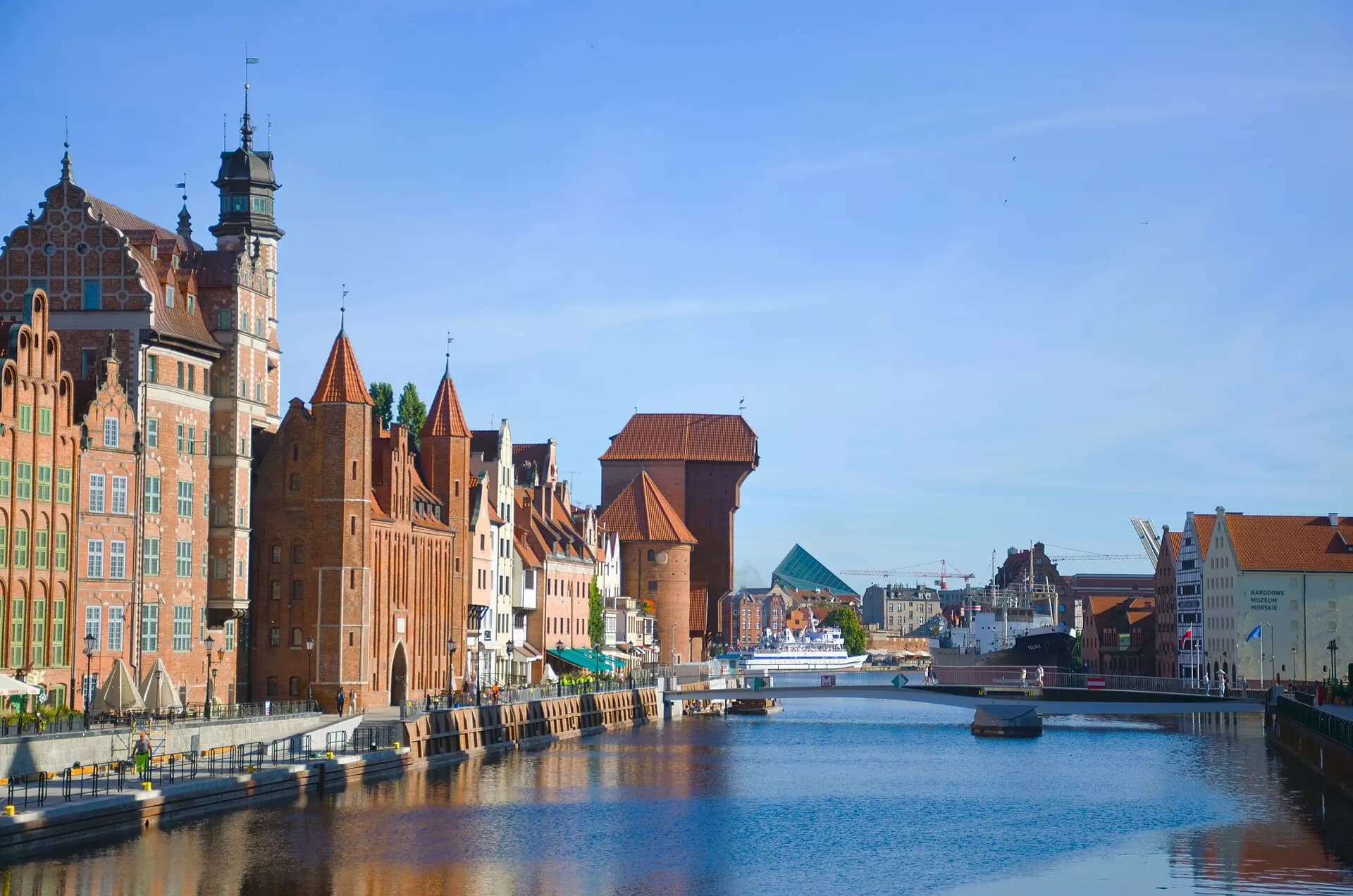
Gdańsk, on the Baltic coast of northern Poland, was for centuries one of the richest ports in Europe, a member of the Hanseatic League that grew wealthy on the grain trade. Its old town, with tall, narrow merchant houses, Gothic churches and the waterfront along the Motława River, was almost completely destroyed in 1945 and painstakingly rebuilt after the war.
The city is also central to modern European history: the Second World War began here on 1 September 1939 at Westerplatte, and in 1980 strikes at the Gdańsk Shipyard gave birth to the Solidarity movement, which helped bring down communism. Together with nearby Sopot and Gdynia, it forms the Tricity, with beaches along the Baltic.
The top 10 in Gdańsk
- 1
Długi Targ and the Royal Way
Photo: Marcin Białek, CC BY-SA 4.0, via Wikimedia Commons
The old town's main street, the Long Market, runs from the Golden Gate to the Green Gate past grand merchant houses with ornate gables, the Neptune Fountain and the Main Town Hall, whose tower you can climb. Artus Court, a medieval merchants' meeting hall, has a vast tiled stove.
- 2
The waterfront and the Crane
Photo: Gerda Arendt, CC0, via Wikimedia Commons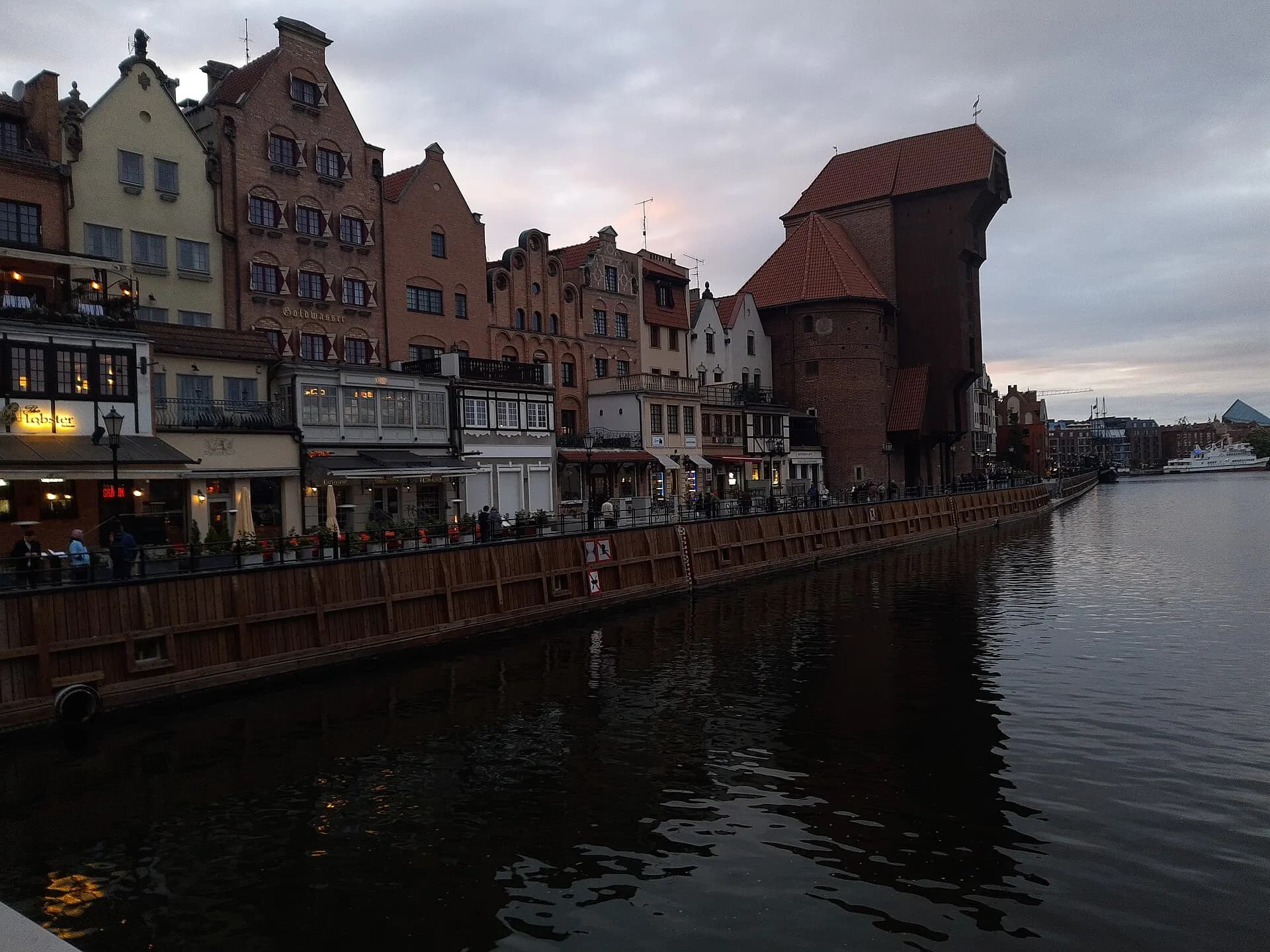
The Long Embankment along the Motława River is lined with restaurants, amber shops and boats. The medieval wooden Crane, a huge port crane built into a gate in the fifteenth century, is part of the National Maritime Museum.
- 3
Mariacka Street
Photo: 1bumer, CC BY-SA 3.0 pl, via Wikimedia Commons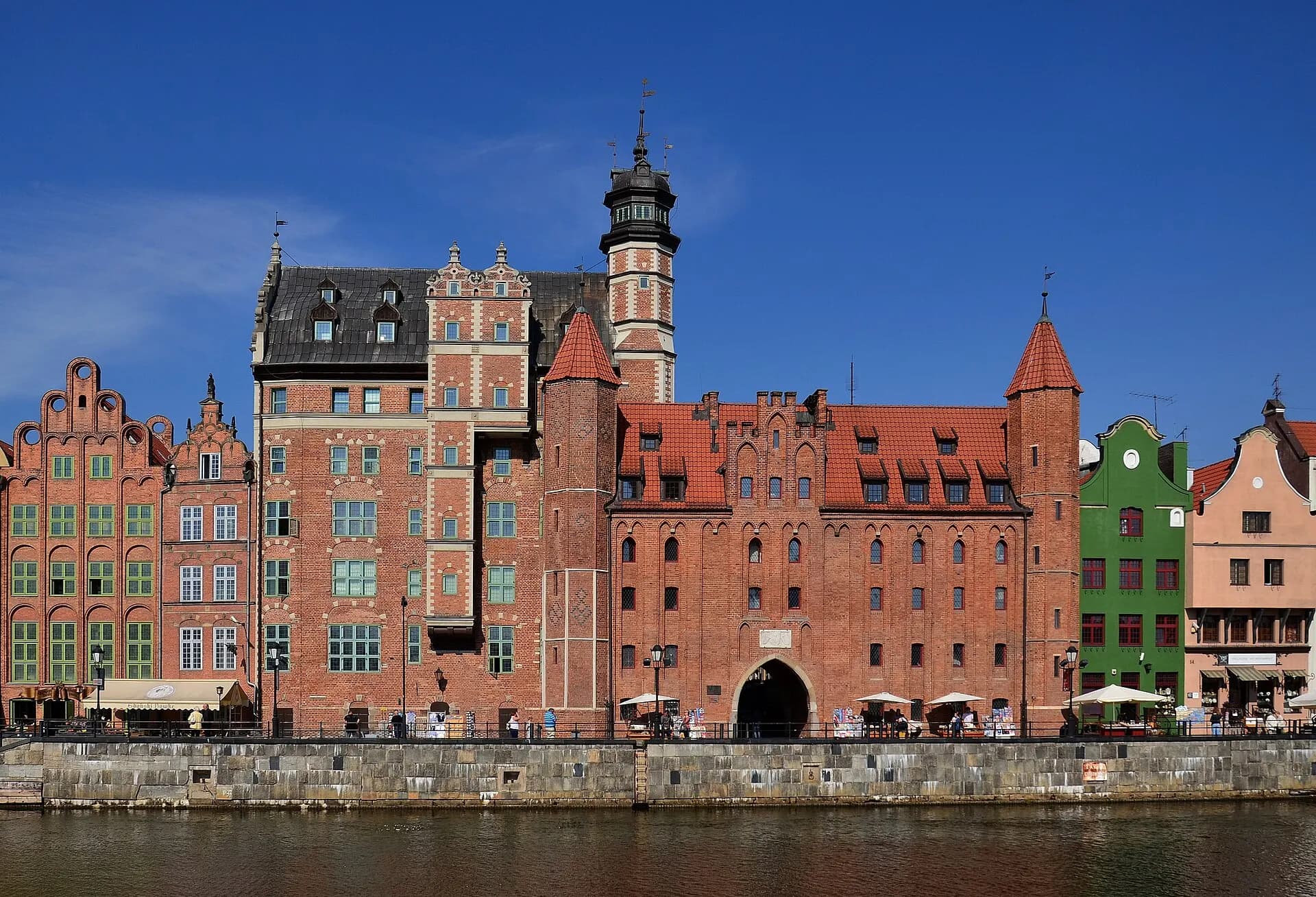
A picturesque street of terraces with stone steps and gargoyles, leading to St Mary's Church. It's known for its amber jewellery shops.
- 4
St Mary's Church
One of the largest brick churches in the world, begun in the fourteenth century, with an astronomical clock and a tower with more than four hundred steps and a view over the city.
- 5
The European Solidarity Centre
Photo: Fallaner, CC BY-SA 4.0, via Wikimedia Commons
A museum and cultural centre at the gates of the former Lenin Shipyard, telling the story of the Solidarity movement led by Lech Wałęsa and the fall of communism in Central Europe. The Monument to the Fallen Shipyard Workers stands outside.
- 6
The Museum of the Second World War
Photo: Adrian Grycuk, CC BY 3.0 pl, via Wikimedia Commons
A striking modern museum telling the story of the war, with a focus on its impact on civilians across Europe. It's large and moving; allow several hours.
- 7
Westerplatte
Photo: Virtual-Pano, CC BY-SA 4.0, via Wikimedia Commons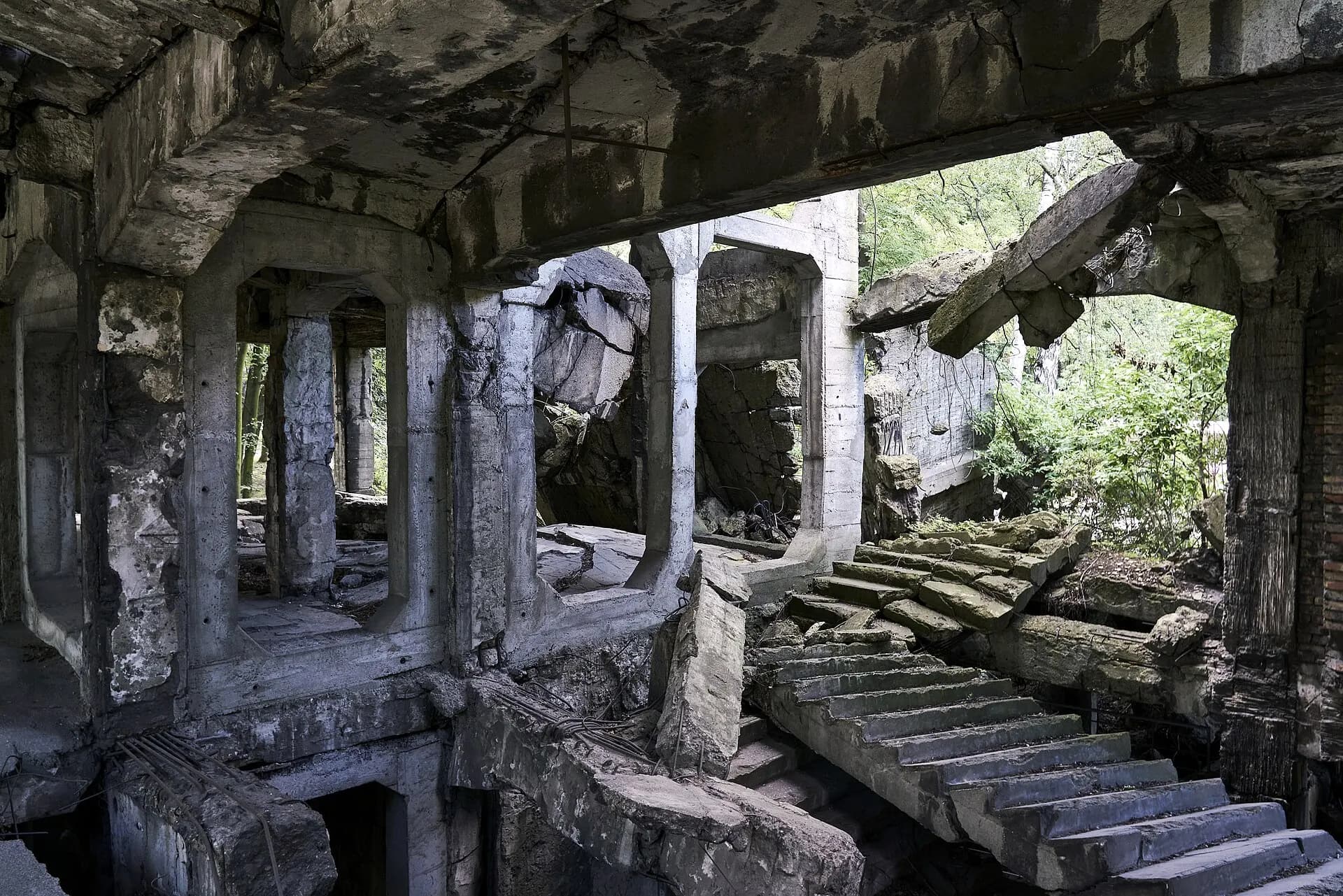
A peninsula at the harbour mouth where German forces attacked the Polish garrison on 1 September 1939, the first battle of the Second World War. Ruins, a monument and an outdoor exhibition mark the site, reached by bus or boat.
- 8
Oliwa Cathedral and Park
Photo: Fallaner, CC BY-SA 3.0, via Wikimedia Commons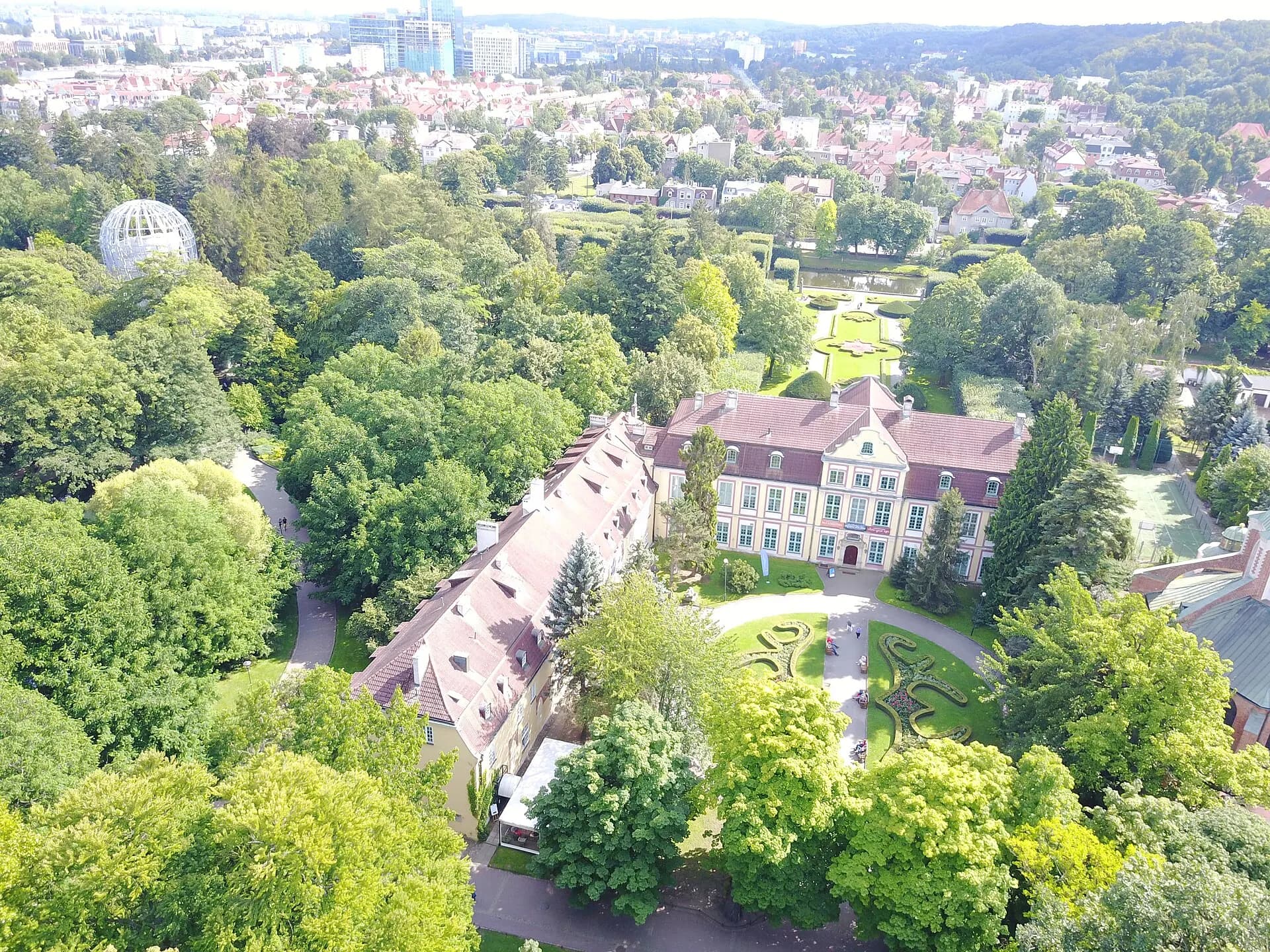
A cathedral with a famous baroque organ, which gives short recitals, set beside a park and the former abbots' palace in the leafy district of Oliwa.
- 9
Sopot
Photo: Diego Delso, CC BY-SA 3.0, via Wikimedia Commons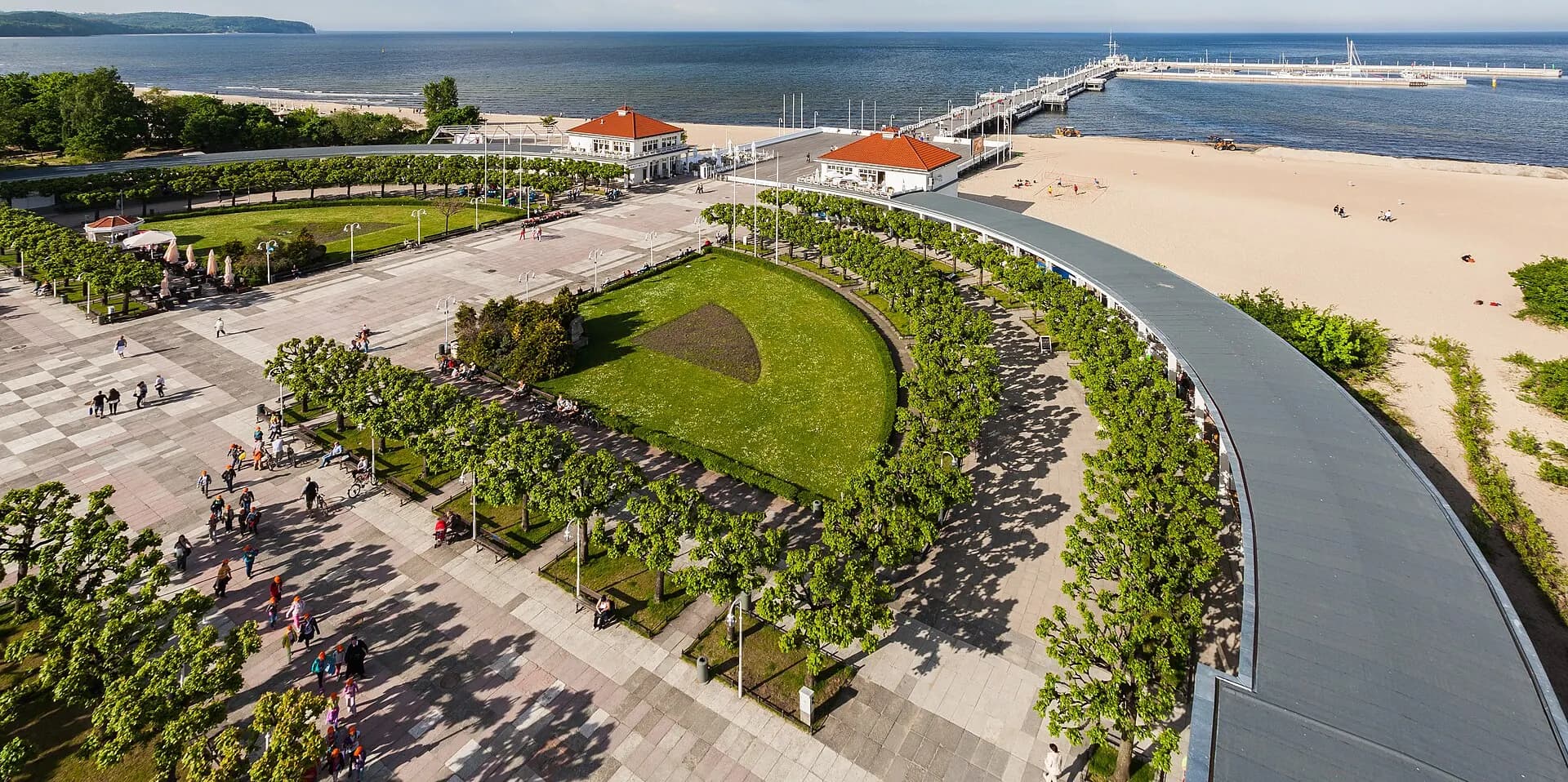
A seaside resort with a long sandy beach and Europe's longest wooden pier, stretching about half a kilometre into the Baltic, as well as lively bars and the quirky Crooked House.
- 10
Malbork Castle
Photo: DerHexer; derivate work: Carschten, CC BY-SA 3.0, via Wikimedia Commons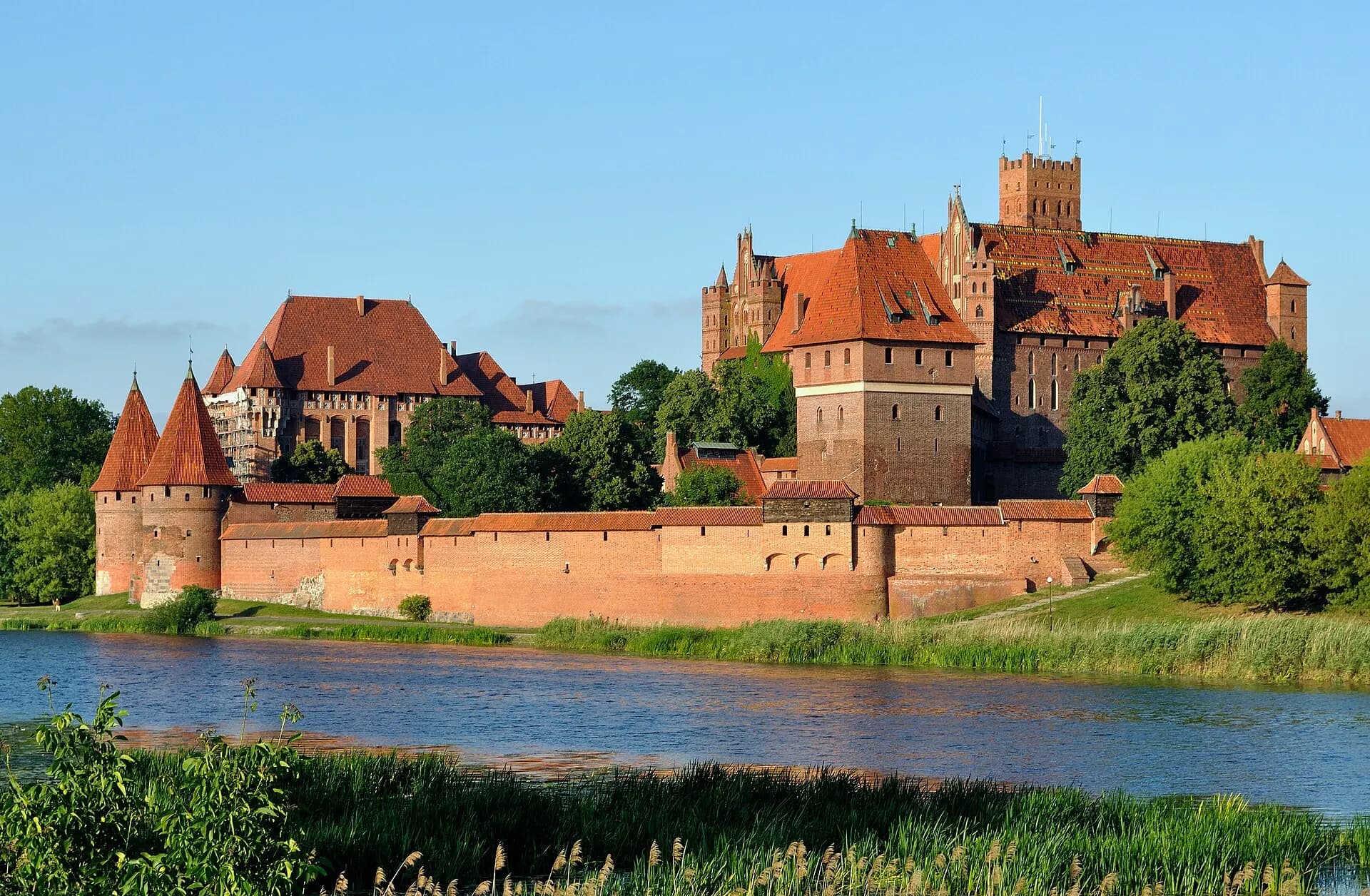
The largest castle in the world by area, a vast brick fortress built by the Teutonic Knights, about an hour away by train. It's a World Heritage Site.
When to go
Summer, from June to August, brings warm weather, beaches and the St Dominic's Fair, one of Europe's largest outdoor markets, in late July and August. Late spring and early autumn are pleasant and quieter. Winters are cold and grey, but the Christmas market brightens the old town in December.
Getting around
The old town is compact and walkable. Trams, buses and the SKM commuter train link Gdańsk with Oliwa, Sopot and Gdynia. Gdańsk Lech Wałęsa Airport is about twenty-five minutes from the centre by train or bus. Trains reach Warsaw in under three hours.
Local tips
- Poland uses the złoty; pay by card or withdraw cash from bank machines, not exchange booths.
- Buy amber from reputable shops, where certificates of authenticity are provided.
- Book the Museum of the Second World War ahead in summer.
- The Baltic water is cool even in summer.
- Many museums are closed on Mondays.
- Tipping around 10% is customary in restaurants.
Eat and drink
Try pierogi, Polish dumplings; żurek, sour rye soup; fresh Baltic fish such as herring and cod; and gingerbread. Goldwasser, a herbal liqueur with flakes of gold leaf, was first made in Gdańsk. The city has a growing craft-beer scene, and milk bars serve cheap home cooking.
Where to stay
The Main Town, in the old centre, puts you near the sights. Hotels on Granary Island and the waterfront have views over the river. Sopot offers a beach-resort stay, with easy trains into the city.
Amber
Gdańsk has been a centre of the amber trade for centuries, with fossilised resin washed up on Baltic beaches. The Amber Museum, in the old town's Prison Tower, displays pieces with insects trapped inside and amber artworks, and workshops on Mariacka Street craft jewellery in traditional styles.
The Tricity and the Baltic coast
Gdańsk, Sopot and Gdynia run together along the Bay of Gdańsk, linked by the SKM commuter train. Gdynia, a modernist port city built in the 1920s and 1930s, has the museum ships Dar Pomorza and Błyskawica and an Emigration Museum telling the story of Poles who left for the Americas. North of the Tricity, the Hel Peninsula is a narrow spit of sand, pine forest and fishing villages stretching thirty-five kilometres into the Baltic, popular for beaches, cycling and kitesurfing. To the west, the shifting dunes of Słowiński National Park, some more than thirty metres high, are among the largest in Europe.
History in the streets
Before 1945 Gdańsk was the Free City of Danzig, with a largely German-speaking population, and its rebuilding after the war was a political as well as an architectural project. Look out for the Polish Post Office, defended by its staff on 1 September 1939 and now a museum, and the many plaques and monuments that mark the city's turbulent past.