The Lofoten Islands
Jagged peaks rising straight from the Arctic sea, red fishing cabins on stilts and racks of drying cod, far above the Arctic Circle.
- Best time to go
- Late May to mid-July for the midnight sun and hiking, September to March for the northern lights
- Local time
- –
- Currency
- Norwegian Krone (NOK)
- Reading time
- 9 min
- Language
- Norwegian and Norwegian Bokmål
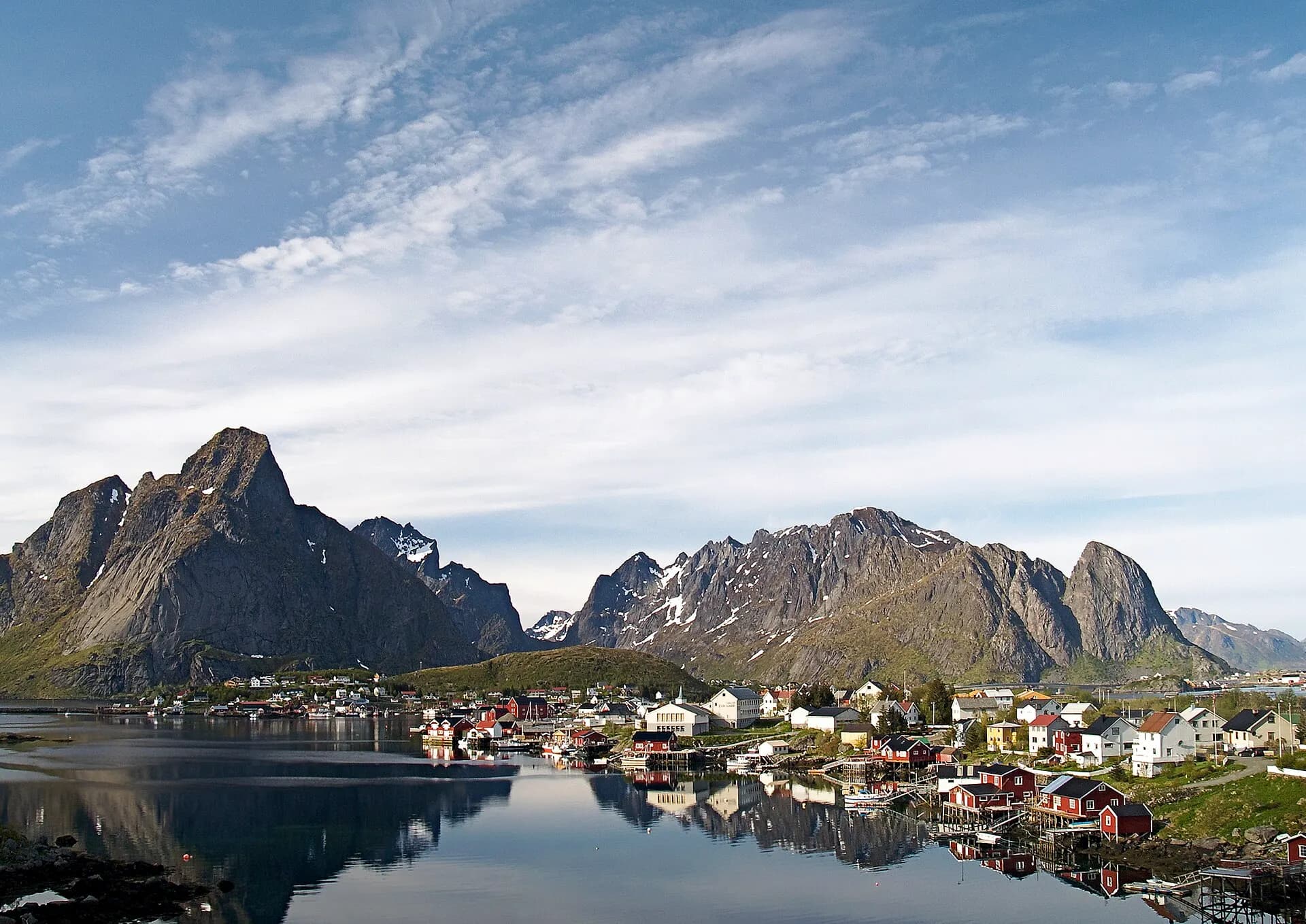
The Lofoten Islands curve out into the Norwegian Sea from the coast of Nordland, a chain of steep granite peaks with fishing villages squeezed onto every scrap of flat shore. Though they lie well above the Arctic Circle, the Gulf Stream keeps the climate surprisingly mild for the latitude. For a thousand years the islands have lived from the cod, or skrei, that arrive each winter to spawn, and the wooden racks of drying fish, the red rorbuer cabins on stilts and the busy harbours are still part of everyday life.
The main islands are linked by bridges and tunnels along the E10, the road that runs from the mainland down to its end at the village of Å. Most visitors come either for the endless light of early summer, with hiking, beaches and surfing, or for the dark months, when the northern lights flicker over snowy peaks. Lofoten's popularity has grown fast, and in high summer the narrow roads, small villages and famous trails can feel overwhelmed, so plan ahead and travel gently.
The top 13 in The Lofoten Islands
- 1
Å
Photo: Ximonic (Simo Räsänen), CC BY-SA 3.0, via Wikimedia Commons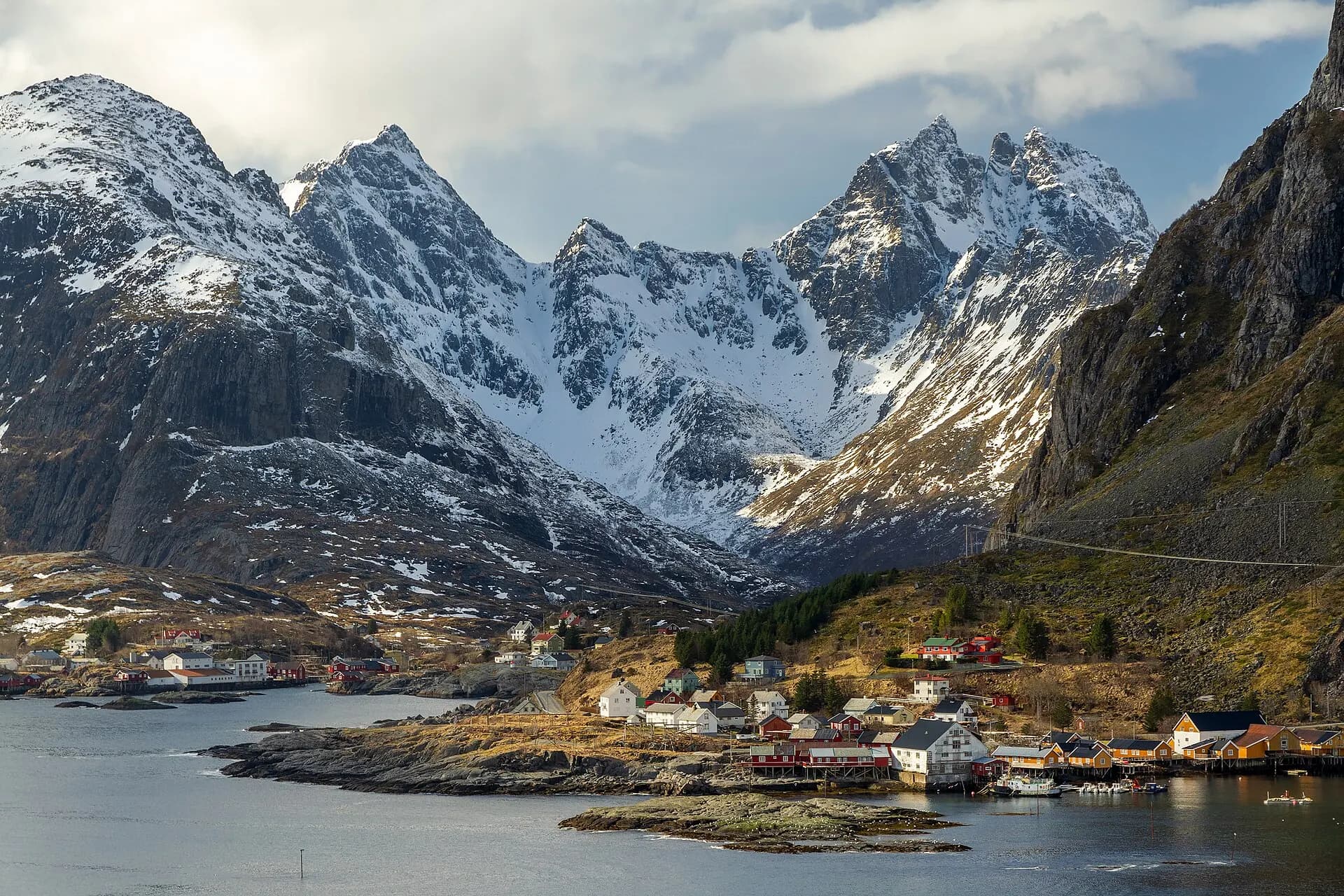
The village at the very end of the E10 is a cluster of red and white buildings around a sheltered harbour. It's home to two museums: the Norwegian Fishing Village Museum, spread through old boathouses, a cod-liver-oil factory and a bakery, and the Lofoten Stockfish Museum, set in an old fish landing station, which explains how cod is hung, dried, graded and exported.
TipThe Stockfish Museum mainly opens in summer, so check opening times before you drive down.
- 2
Reinebringen
Photo: Wolfgang Hägele, CC BY-SA 4.0, via Wikimedia Commons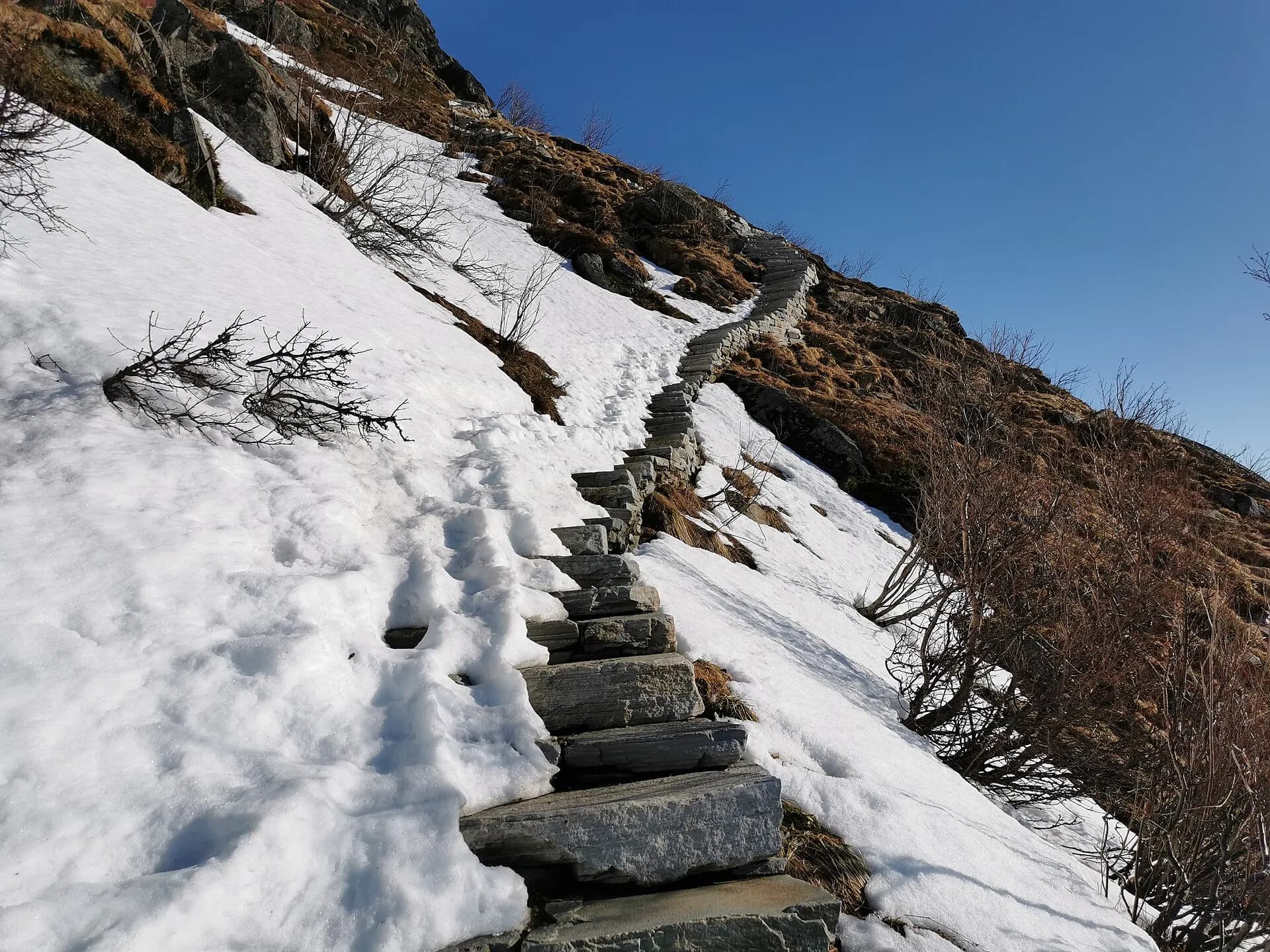
The view from Reinebringen, 484 metres above Reine, is the most famous in Lofoten: the village, its fjord and a ring of peaks laid out below. A Sherpa-built stone staircase now climbs the once badly eroded slope, with around 1,974 steps as of 2024, though the last part beyond the stairs is very steep. Allow one to two hours for the 2 kilometre round trip from the trailhead outside the tunnel south of Reine.
TipDon't climb it with snow on the mountain. Visit Lofoten strongly advises against the hike in winter, and it isn't suitable for children or dogs.
- 3
Reine and Hamnøy
Photo: Svein-Magne Tunli - tunliweb.no, CC BY-SA 4.0, via Wikimedia Commons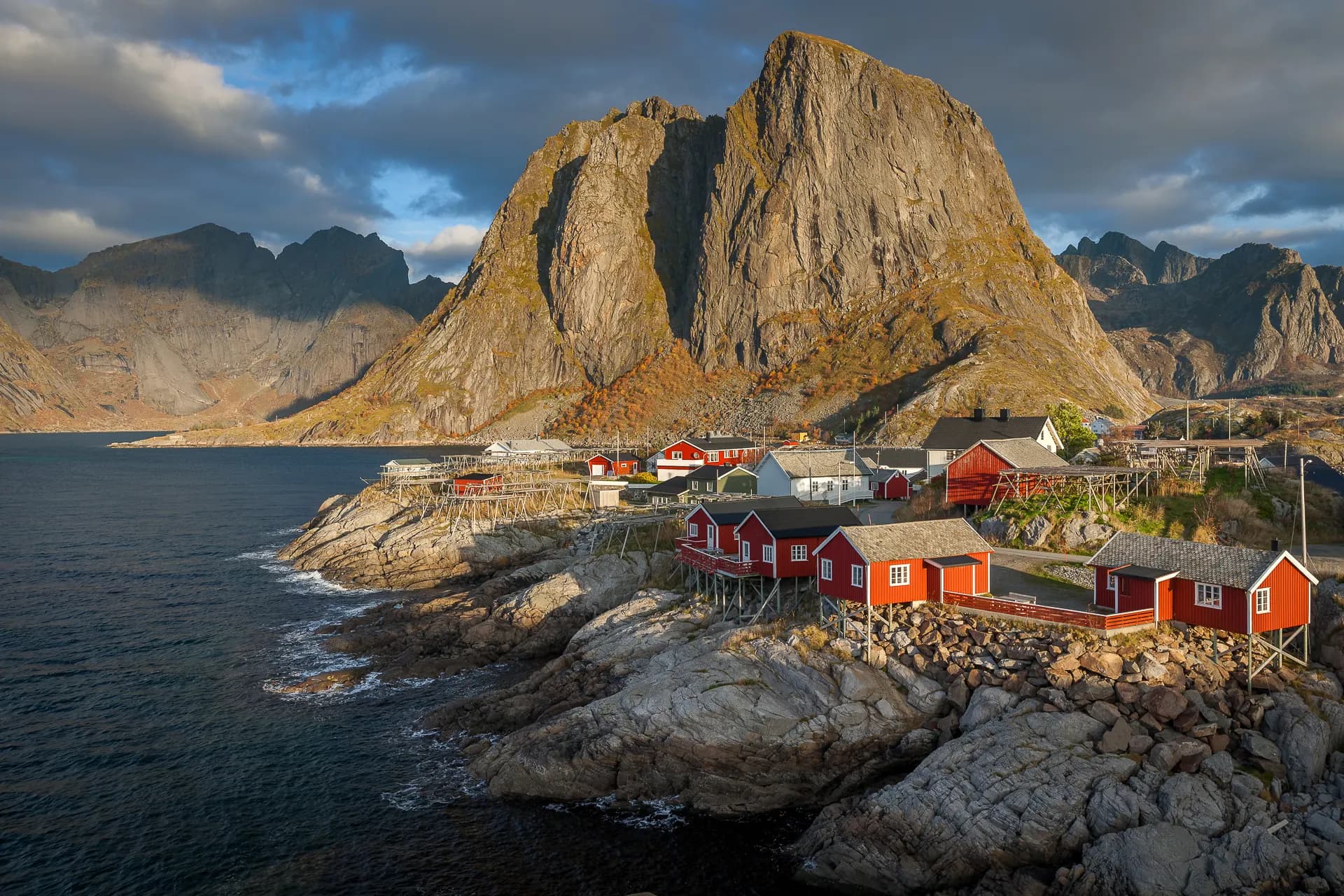
Reine sits on a narrow strip of land between the sea and the Reinefjord, its red rorbuer reflected in the water beneath sheer mountains. A short drive east, the tiny fishing village of Hamnøy and its bridges give the other classic view back towards the peaks. Small boats run in summer from Reine up the Kjerkfjord to Vindstad, a good starting point for walks to the beach at Bunes.
- 4
Kvalvika and Ryten
Photo: Raf24~commonswiki, CC BY 4.0, via Wikimedia Commons
From the trailhead near Fredvang, a path partly laid with boardwalks climbs over a pass and down to Kvalvika, a sandy beach enclosed by cliffs and open only to the ocean. Fitter walkers can carry on to the summit of Ryten for the view straight down onto the beach. It's a half-day outing, and the path is muddy after rain.
- 5
Nusfjord
Photo: Ximonic (Simo Räsänen), CC BY-SA 3.0, via Wikimedia Commons
One of the oldest and best-preserved fishing villages in Norway, hidden in a narrow inlet on the south side of Flakstadøya. Its wooden warehouses, cod-liver-oil factory, old shop and rorbuer are now run largely as a resort, and visitors may be asked to pay an entry fee to walk around the village in summer.
- 6
Haukland and Uttakleiv beaches
Photo: Michele Agostini, CC BY-SA 2.0, via Wikimedia Commons
Two of Lofoten's loveliest beaches lie on the west side of Vestvågøya, with pale sand and clear turquoise water that looks tropical until you dip a toe in. An old gravel road around the headland links them on foot, and Uttakleiv, facing north-west, is a favourite spot for the midnight sun.
- 7
Unstad
Photo: Gerd Eichmann, CC BY-SA 4.0, via Wikimedia Commons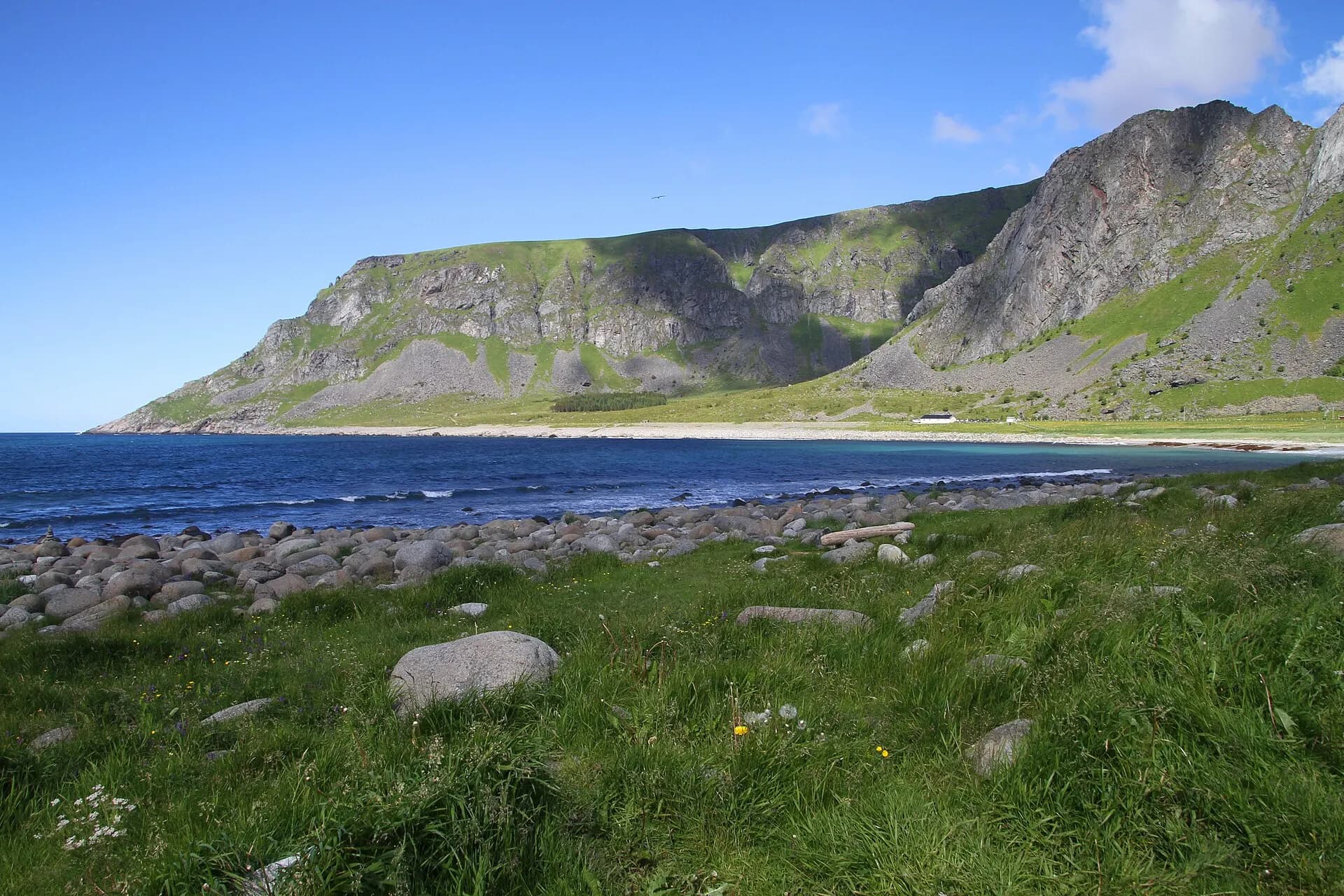
A remote bay at the end of a narrow road, facing straight into the Atlantic swell, Unstad is where Arctic surfing in Norway took off. Surf schools rent thick wetsuits, hoods and boots, and run lessons for beginners. Winter brings the most consistent waves, sometimes surfed under the northern lights.
- 8
Lofotr Viking Museum
Photo: Paul Berzinn, CC BY-SA 3.0, via Wikimedia Commons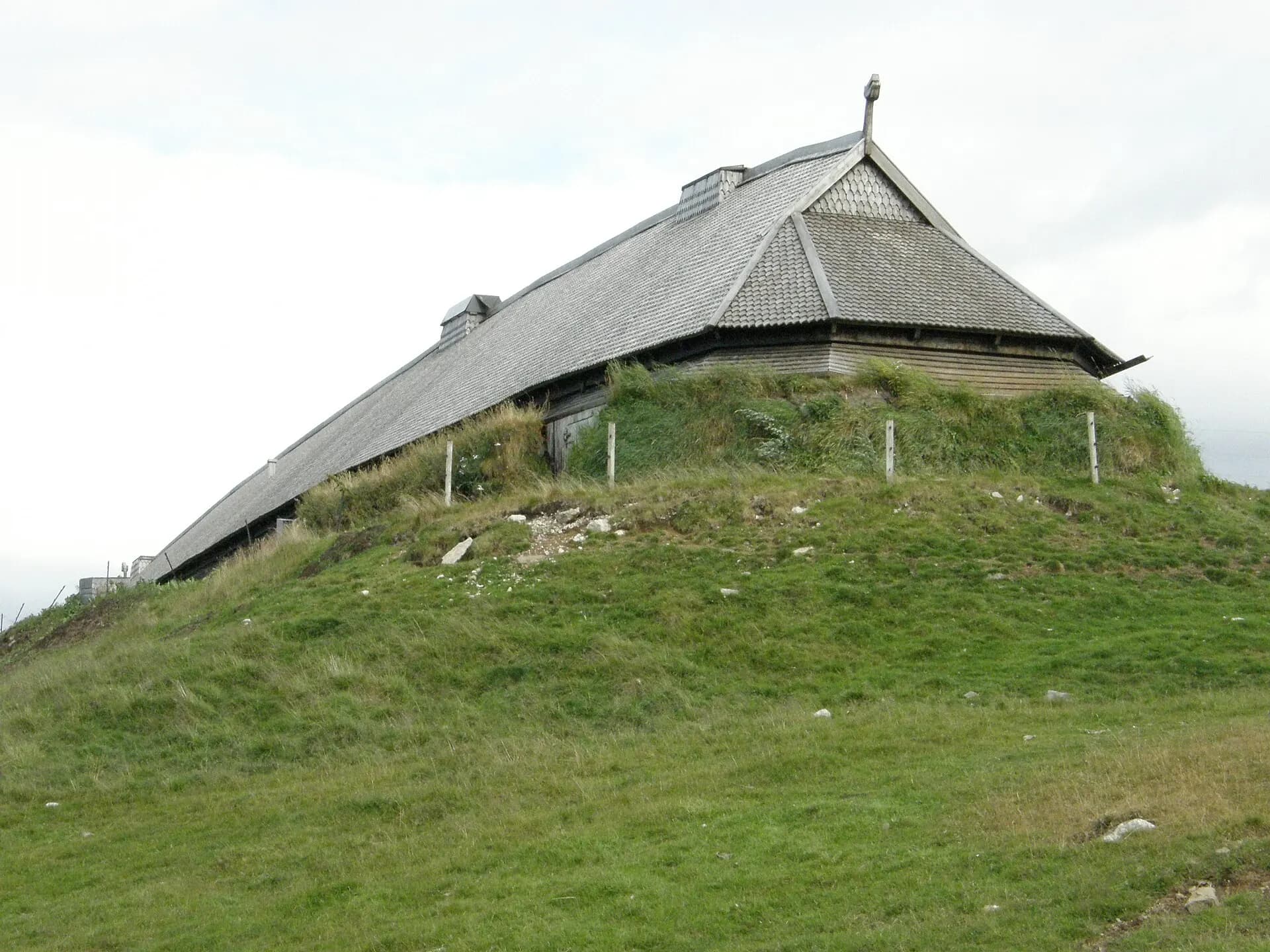
At Borg on Vestvågøya, archaeologists uncovered the remains of a Viking chieftain's longhouse, one of the largest known anywhere. A full-size reconstruction now stands on the hill, where you can sit by the fire in the great hall, and in summer there are Viking boats to row, smithing and costumed guides.
- 9
Gimsøy
Photo: Ximonic (Simo Räsänen), CC BY-SA 3.0, via Wikimedia Commons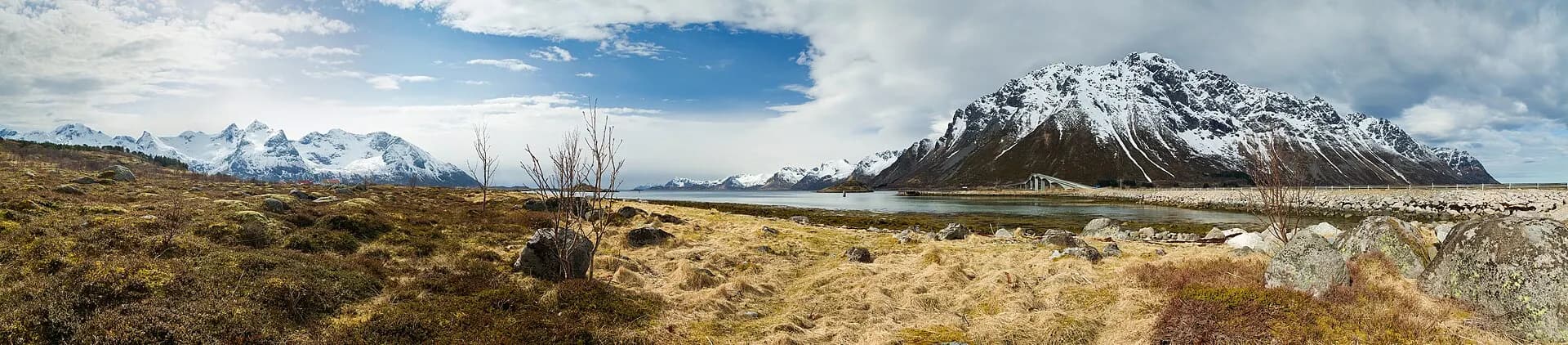
This flatter, quieter island between Vestvågøya and Austvågøya has wide beaches, marshland and big open skies, which makes it a good place to watch the midnight sun or the northern lights away from village lights. There's a golf course at Hov and a small white church at Gimsøysand.
- 10
Henningsvær
Photo: Patrice78500, CC BY-SA 4.0, via Wikimedia Commons
Spread across a string of small islands south of Austvågøya and joined to it by bridges, Henningsvær is a lively fishing village with galleries, cafés and stockfish racks. Its football pitch, wedged between bare rocks at the southern tip of the village with the sea on three sides, has become one of Lofoten's most photographed sights.
TipThe pitch is a local sports ground. Look from the edges and stay off it when people are training or playing.
- 11
Kabelvåg and the Lofoten Cathedral
Photo: Carlos Delgado, CC BY-SA 3.0, via Wikimedia Commons
Kabelvåg was the first known town in northern Norway, known as Vågar, and the centre of the great winter cod fishery. Vågan Church, a yellow wooden church built in 1898 and seating about 1,200 people, is nicknamed the Lofoten Cathedral: it's the largest wooden building in northern Norway, built to hold the thousands of fishermen who came each winter. The village also has the Lofoten Museum and an aquarium.
- 12
Svolvær
Photo: Diego Delso, CC BY-SA 4.0, via Wikimedia Commons
Lofoten's biggest town and main transport hub is a working harbour with hotels, restaurants and galleries, overlooked by the twin horns of the Svolværgeita pinnacle. A short walk along the breakwater on Svinøya leads to the statue of the Fisherman's Wife, and steep trails climb behind the town to viewpoints such as Fløya.
- 13
The Trollfjord
Photo: Ximonic (Simo Räsänen), CC BY-SA 3.0, via Wikimedia Commons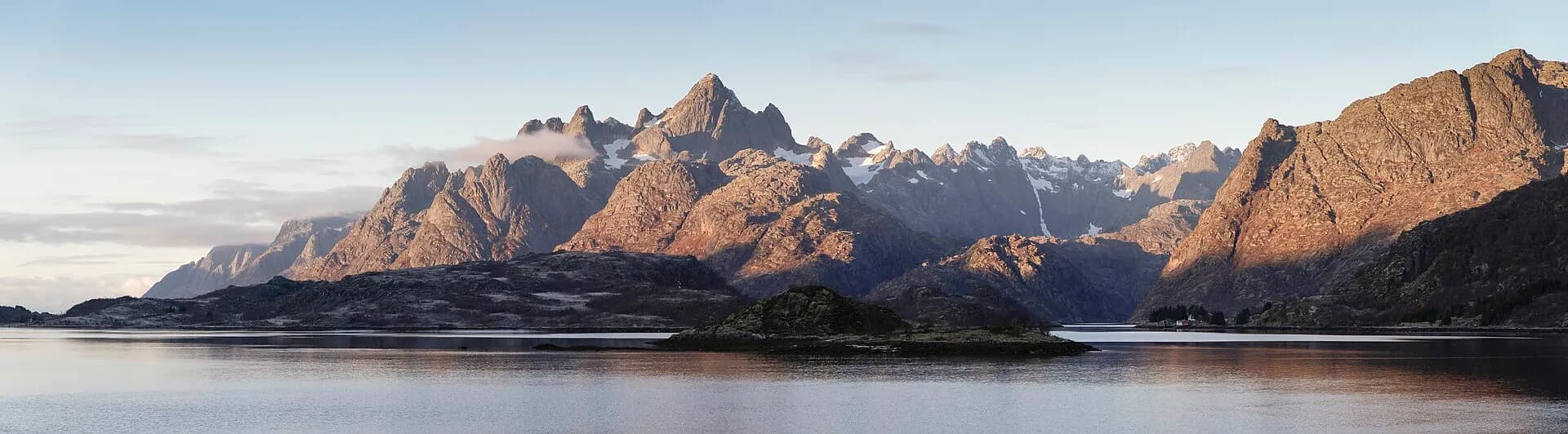
This narrow fjord, only about 2 kilometres long, cuts into Austvågøya from the Raftsundet strait between walls of mountain. It can be reached only by boat or on a long, rugged hike, and boat trips from Svolvær, including quieter electric boats, run for much of the year. Sea eagles are often seen along the way.
When to go
From around 28 May to 14 July the sun doesn't set in Lofoten, and the long, bright days of June and July are the best time for hiking, beaches and kayaking. They are also by far the busiest, with Norwegian holidays peaking in July. Late August and September bring autumn colour, fewer people and the return of dark nights.
The northern lights can be seen from about late August to mid-April, whenever the sky is dark and clear, most often between about 9 pm and 1 am. For a few weeks around midwinter the sun stays below the horizon, but there are still hours of blue twilight around midday. From February to April the skrei fishery fills the harbours, and the drying racks hang heavy with cod. Winter is mild for the Arctic but windy and changeable, and snow, ice and storms can close roads and cancel ferries.
Getting around
The fastest way in is to fly. Widerøe flies from Bodø several times a day to Svolvær and Leknes, both small airports. Harstad/Narvik Airport at Evenes, about 170 kilometres from Svolvær, has more direct flights from Oslo and seasonal routes from elsewhere in Europe, and is often cheaper, with bus 300 connecting it to Lofoten. Car ferries also sail from Bodø to Moskenes, near Reine, in about three to three and a half hours on direct sailings, with some calling at Værøy and Røst on the way. Foot passengers without a reservation travel free, a share of space can be reserved for a fee, and every passenger must register their details through a QR code at the quay. The Hurtigruten coastal ships call at Stamsund and Svolvær daily.
A car is by far the easiest way to see the islands, as buses are infrequent, especially outside summer. Book hire cars well ahead, from Svolvær, Leknes, Evenes or Bodø. The E10 is narrow, with single-lane bridges and many cyclists in summer, so take your time and use passing places.
In winter, roads can be icy for months. Hire cars come with winter tyres; in Nordland studded tyres may be used from 16 October to 30 April. Drive slowly, keep a long gap, watch for the dangerous mix of rain on ice, and check road conditions and ferry status before setting off.
Local tips
- Book accommodation, cars and the ferry early for June to August.
- Fill up and shop when you can: shops and petrol stations are spread out and hours are short on Sundays.
- The weather changes quickly. Pack waterproofs, warm layers and a hat even in July.
- Pull fully into lay-bys to take photos, never stop on the road or on bridges.
- Expect paid parking at popular beaches and trailheads, usually paid by app.
- Wine and spirits are sold only at Vinmonopolet shops, in the larger towns.
- Cards are accepted almost everywhere.
- Bring an eye mask for the midnight sun.
Eat and drink
Cod is king. Try fresh skrei in winter, bacalao stewed with tomatoes and potatoes, fish cakes and fish soup, and stockfish, which is soaked and cooked or eaten dried as a snack. Lofoten lamb, reindeer, stockfish pizza in some cafés and fresh halibut also appear on menus. Svolvær and Henningsvær have the widest choice, and many villages have a small café or bakery serving cinnamon buns and waffles. Lofoten has small breweries and distilleries, but alcohol is expensive, so many visitors self-cater.
Where to stay
Staying in a rorbu, a fisherman's cabin standing on stilts over the water, is the classic Lofoten experience. Once used by visiting fishermen during the winter season, many are now comfortable self-catering cabins, from simple to luxurious, in Reine, Hamnøy, Svolvær, Henningsvær, Nusfjord and other villages. Svolvær has the most hotels. Campsites with facilities are spread along the E10, and remote cabins, guesthouses and a few hostels fill the gaps. Base yourself in two places, in the west and the east, to cut down on driving.
Stockfish and the winter fishery
Each winter, from January to April, Arctic cod swim down from the Barents Sea to spawn in the Vestfjord, and for over a thousand years fishermen have followed them to Lofoten. The fish are gutted, tied in pairs and hung on wooden racks, called hjell, to dry in the cold wind for months, without salt or smoke. The resulting stockfish keeps for years and was traded through Bergen across Europe from the Middle Ages; it is still one of the region's most important exports, with much going to Italy. The A-shaped racks stand empty for much of the year, but in late winter and spring they're hung with thousands of fish.
Northern lights and midnight sun
Lofoten sits close to the auroral oval, so the northern lights are common on clear, dark nights. Check the weather and aurora forecasts, drive away from village lights to beaches facing north, such as Uttakleiv, Unstad or Gimsøy, and give it time: displays come and go. For photos, use a tripod, turn off the flash, focus manually and bring spare batteries, as the cold drains them quickly. In summer, the sun circles the sky all night, and late evening light on the peaks and beaches is the best of the day.
Responsible travel
Norway's right to roam, allemannsretten, lets you walk and camp on uncultivated land, but with duties: pitch a tent at least 150 metres from the nearest house or cabin, stay no more than two nights in the same place, and leave no trace. Open fires are banned from 15 April to 15 September. Camping at large trailheads, in shelters and on playgrounds isn't allowed, and camping on farmland needs the landowner's permission. Motorhomes may stop in lay-bys for up to two nights unless signs say otherwise, but must never drive off the road, and toilets must only be emptied at proper stations.
Lofoten has struggled with these rules in recent summers. Popular beaches and trailheads such as Kvalvika and Reinebringen have suffered from litter, worn paths and human waste where there are few or no toilets, and residents have grown tired of camper vans parked everywhere. Destination Lofoten's own code asks visitors to use campsites where possible, stay on marked paths, never build cairns or stone rings, take all rubbish away, and use proper toilets. Where there are none, dig a hole well away from water and paths, and pack out paper and wet wipes. Give cyclists plenty of room, keep dogs on a lead, don't disturb sheep or nesting birds, and leave the fish on the drying racks alone: they are someone's livelihood.