Bergen and the Fjords
A Hanseatic port between seven mountains, the gateway to the deepest, narrowest and most dramatic fjords in Norway.
- Best time to go
- May to September, with June and July for the longest days and late May for Hardanger's fruit blossom
- Local time
- –
- Currency
- Norwegian Krone (NOK)
- Reading time
- 9 min
- Language
- Norwegian and Norwegian Bokmål
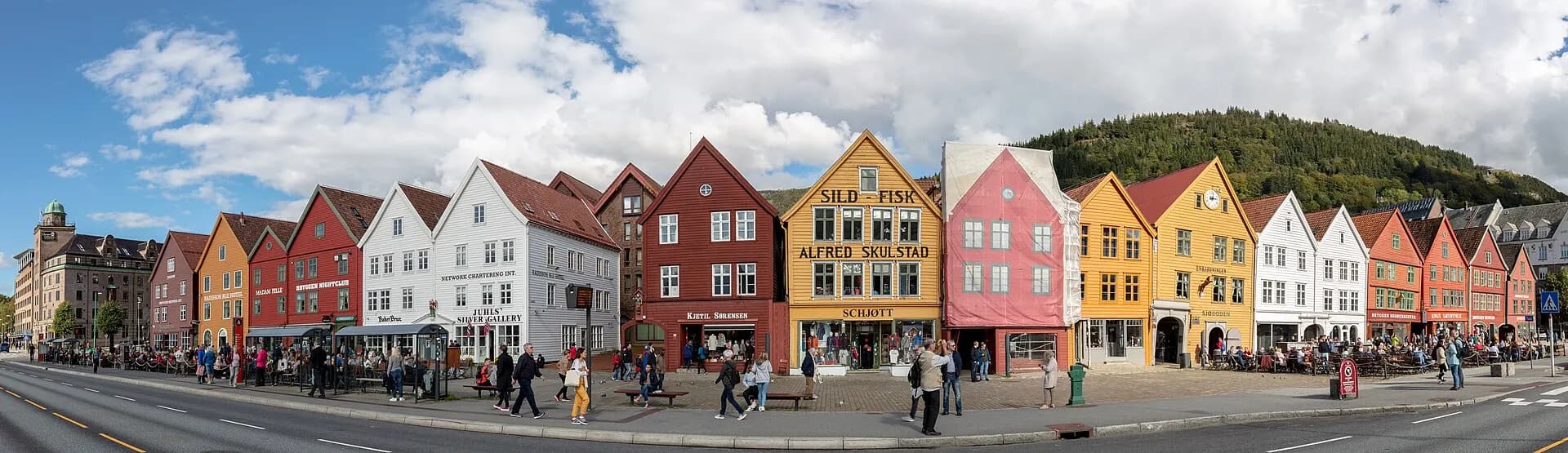
Bergen, Norway's second city, sits on a curving harbour on the west coast, hemmed in by seven mountains and facing the North Sea. For centuries it was the country's largest town and a key port of the Hanseatic League, and the wooden merchants' houses of Bryggen on the quayside are now a World Heritage Site. It's a compact, lively city of fish markets, art museums, steep lanes of white timber houses and mountains you can reach by funicular in minutes.
Bergen is also the natural starting point for the fjords of Vestland. Within a few hours lie the Sognefjord, the longest and deepest fjord in Norway, its narrow World Heritage arm the Nærøyfjord, the orchards and waterfalls of the Hardangerfjord, and the famous Flåm Railway. Further north, the Geirangerfjord makes a longer but spectacular extension. Expect rain, high prices and some of the most beautiful scenery in Europe.
The top 16 in Bergen and the Fjords
- 1
Bryggen
Photo: JoachimKohler-HB, CC BY-SA 4.0, via Wikimedia Commons
The row of gabled wooden buildings along the harbour's eastern side was the base of the German Hanseatic merchants who controlled the stockfish trade for about four hundred years. Rebuilt many times after fires, most recently in the early eighteenth century on the medieval plan, it's a warren of narrow passages, leaning walls and workshops. Bryggens Museum, nearby, shows what archaeologists found beneath it.
TipWalk the back alleys early in the morning, before the cruise passengers and tour groups arrive.
- 2
The Fish Market
Photo: Rüdiger Stehn from Kiel, Deutschland, CC BY-SA 2.0, via Wikimedia Commons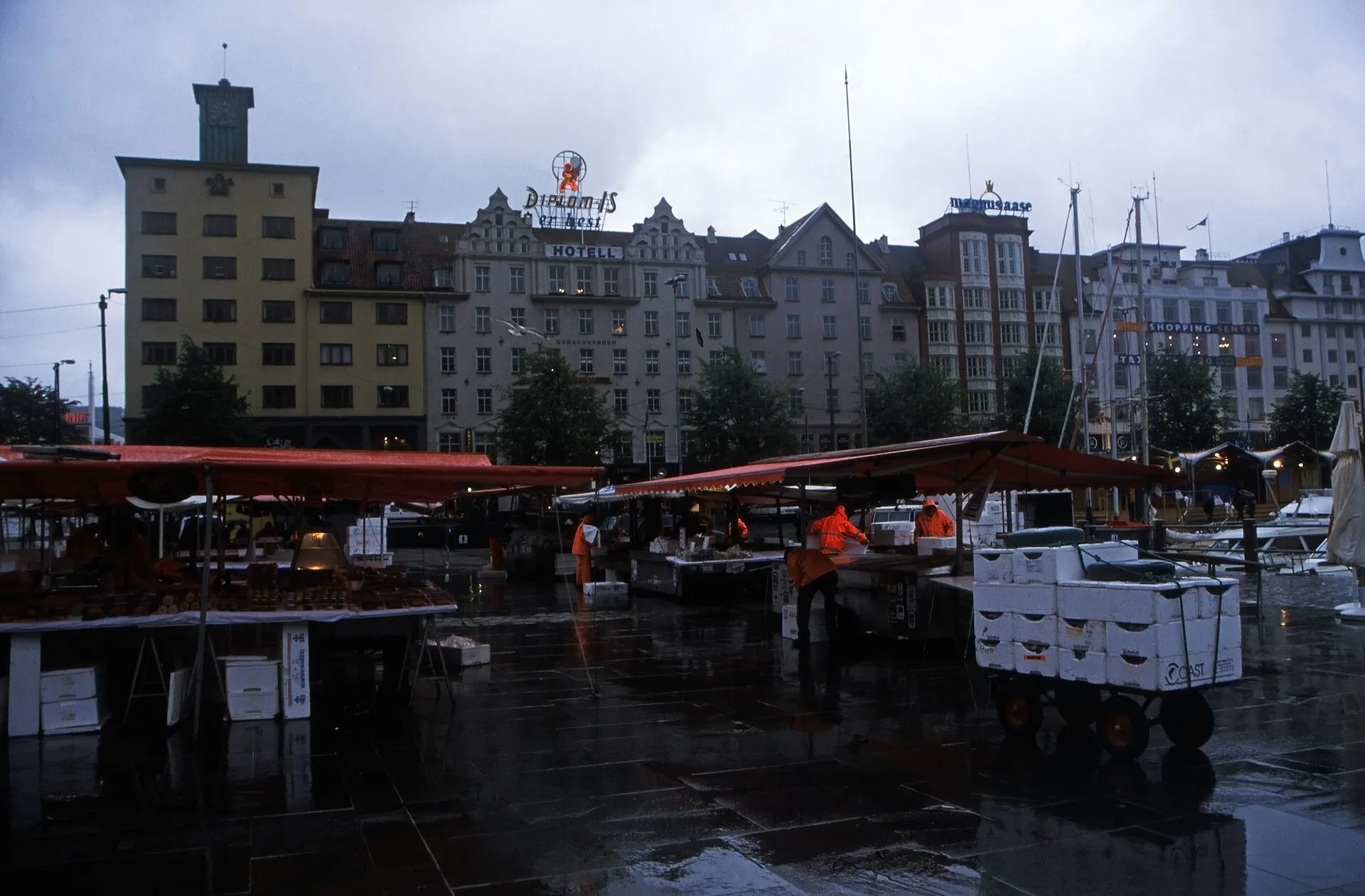
Bergen's fish market has stood at the head of the harbour, Vågen, since the Middle Ages. Today it's part outdoor stalls and part indoor hall, selling shellfish, smoked salmon, whale and fish cakes, and many stalls cook to order. It's touristy and not cheap, but a good place to try the local seafood.
- 3
Fløyen and the Fløibanen funicular
Photo: JoachimKohlerBremen, CC BY-SA 4.0, via Wikimedia Commons
The Fløibanen funicular climbs from the city centre to the top of Mount Fløyen, about 320 metres up, in a few minutes. The view over the harbour, the islands and the sea is the classic image of Bergen. From the top, easy trails lead through forest to lakes, and you can walk back down through the old wooden houses.
- 4
KODE art museums
Photo: Ryan Hodnett, CC BY-SA 4.0, via Wikimedia Commons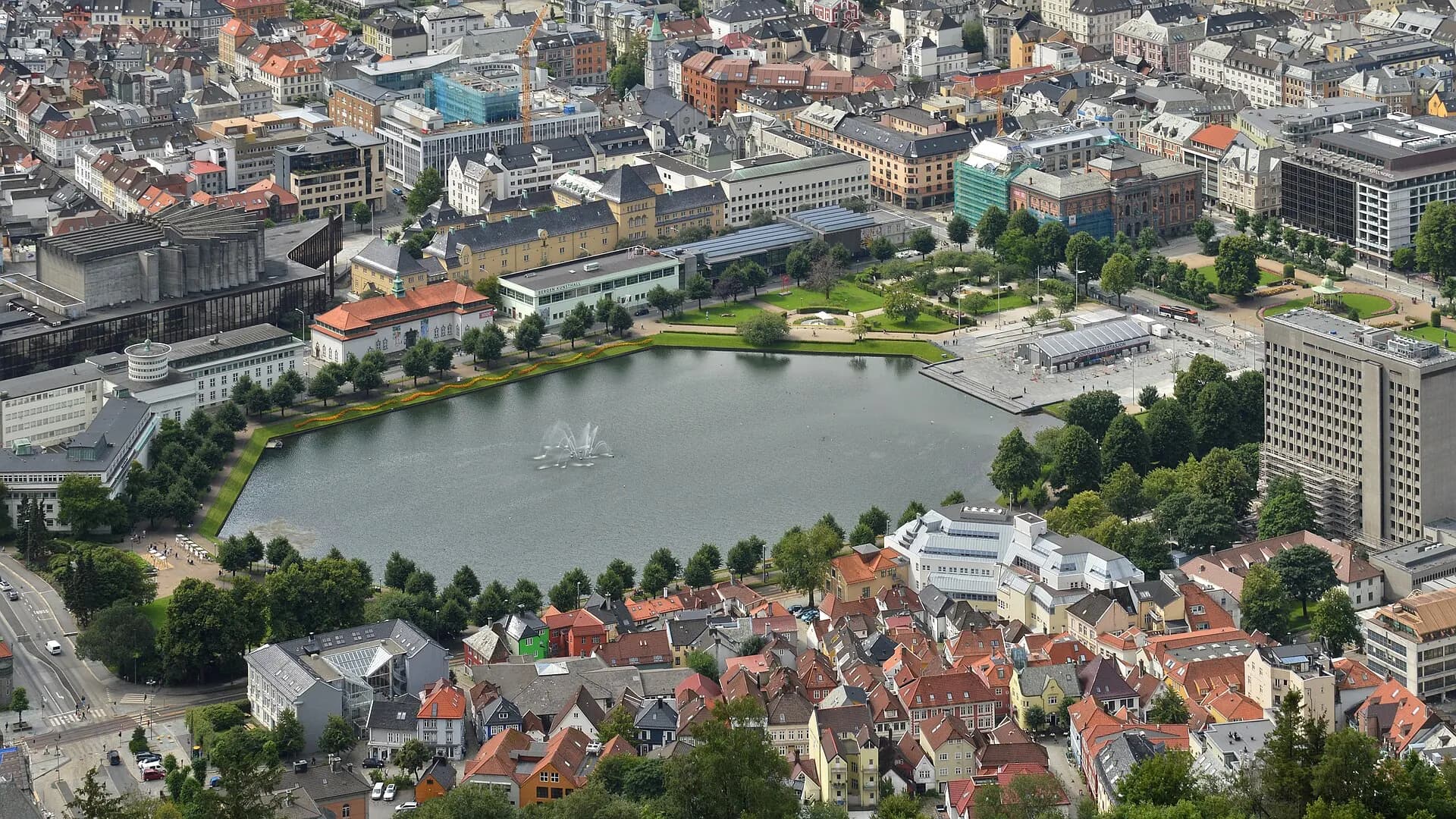
KODE is one of the largest art museums in Scandinavia, spread across several buildings along the lake Lille Lungegårdsvann in the city centre. The highlights include a fine collection of works by Edvard Munch, Norwegian landscapes by J.C. Dahl and the vivid paintings of Nikolai Astrup, as well as design, silver and contemporary art.
- 5
Ulriken
Photo: SureshHARDIYA, CC BY-SA 4.0, via Wikimedia Commons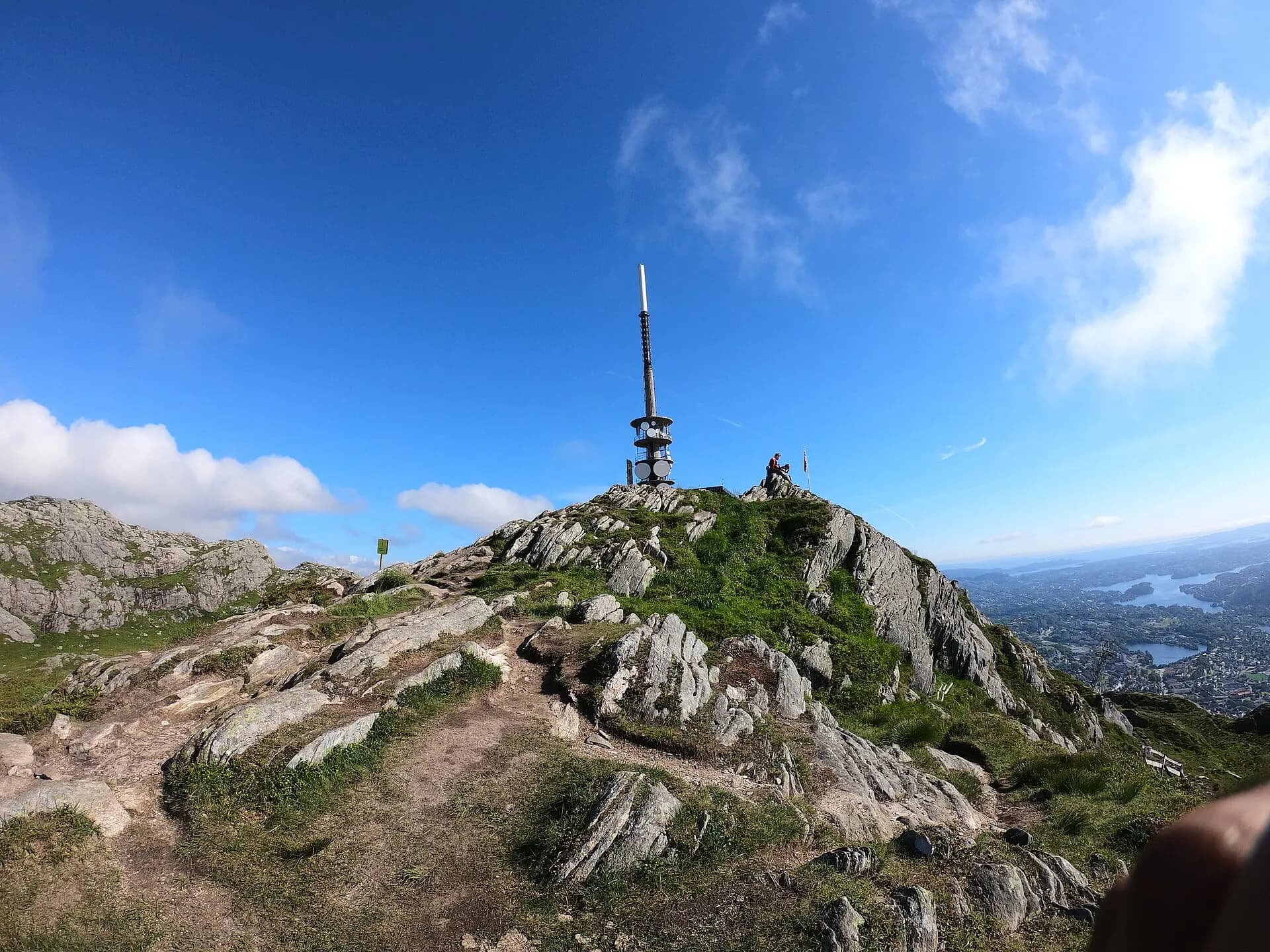
At about 640 metres, Ulriken is the highest of Bergen's seven mountains, reached by the Ulriksbanen cable car. The open, treeless summit gives wide views over the city, fjords and mountains. Fit walkers can hike the Vidden trail across the plateau between Ulriken and Fløyen, a full day in good weather.
TipThe weather can change quickly on the plateau. Take waterproofs, warm layers and a map even in summer.
- 6
Troldhaugen
Photo: Holger Uwe Schmitt, CC BY-SA 4.0, via Wikimedia Commons
The composer Edvard Grieg lived in this painted wooden villa on a lake south of the city for the last twenty-two years of his life. You can see his home, the small hut where he composed, and the tomb where he and his wife Nina are buried in the cliff above the water. Concerts are held in the Troldsalen hall, with a window looking out over the lake.
- 7
The Hardangerfjord
Photo: Holger Uwe Schmitt, CC BY-SA 4.0, via Wikimedia Commons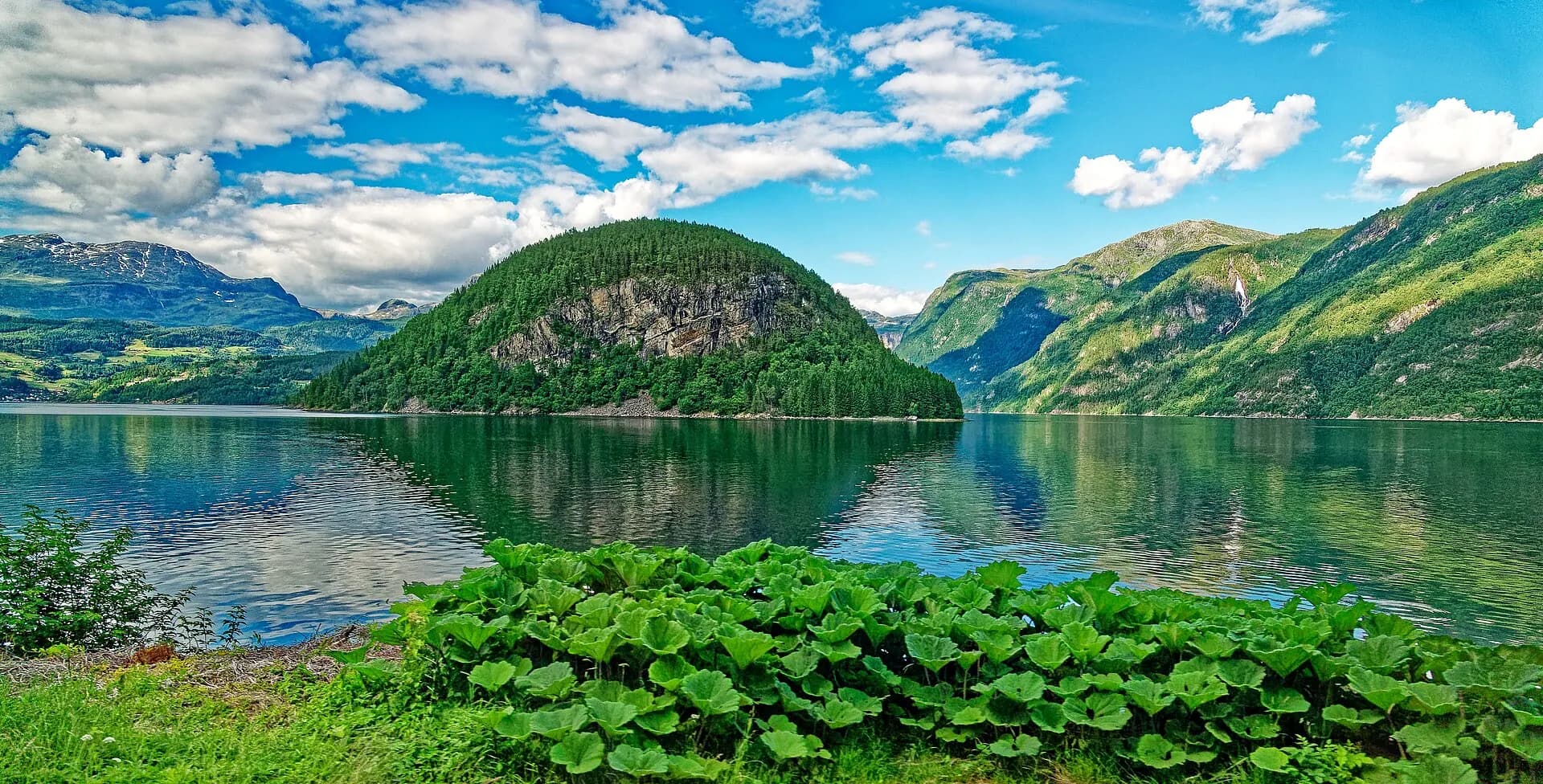
Norway's second longest fjord is gentler than the Sognefjord, lined with orchards, small villages and glaciers on the skyline. In May the apple, cherry and plum trees blossom along its shores, and farms sell juice and cider made from the fruit. Villages such as Utne, Lofthus and Eidfjord make peaceful bases.
- 8
Trolltunga
Photo: Julia Caesar juliacaesar, CC0, via Wikimedia Commons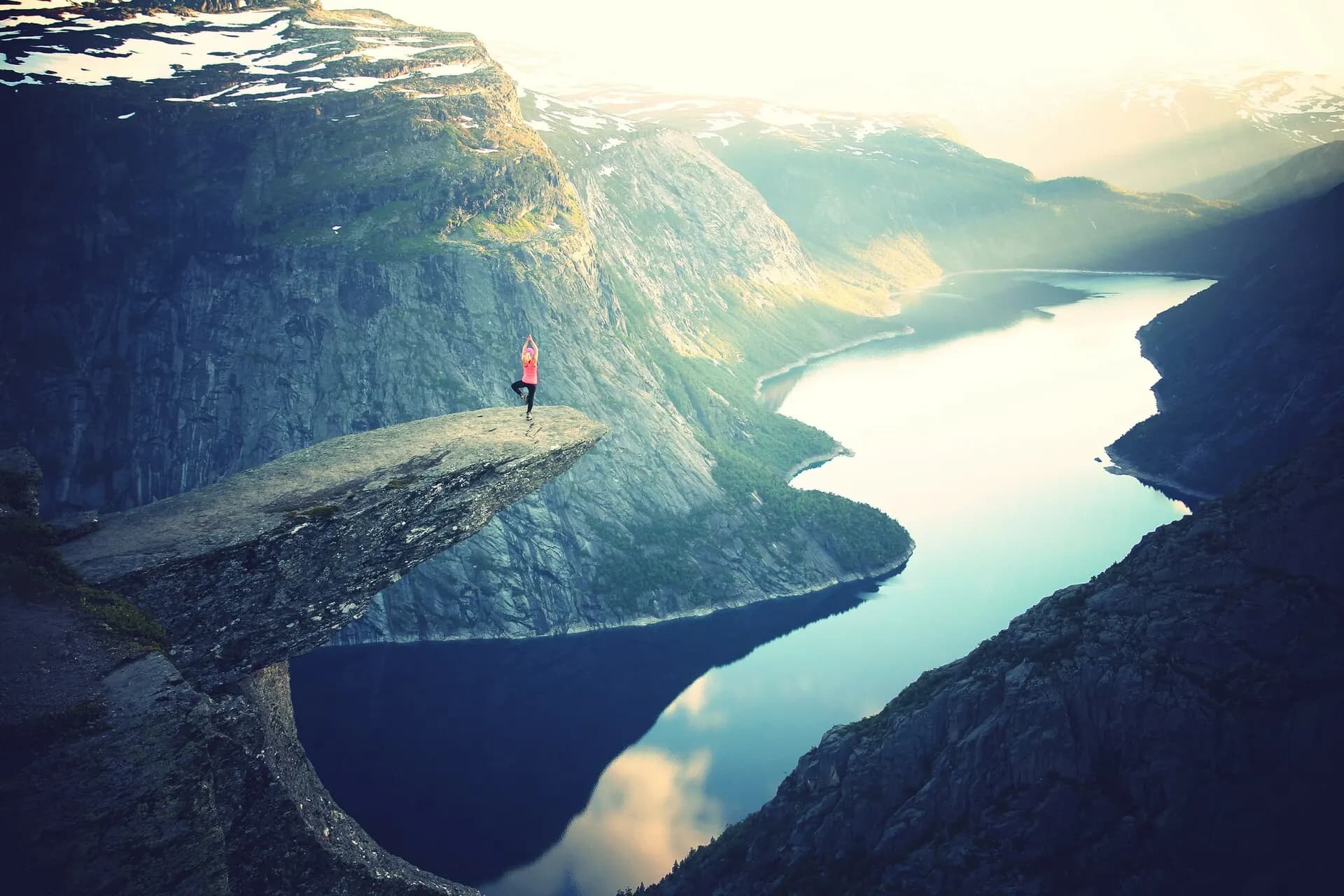
The "troll's tongue", a slab of rock jutting out some 700 metres above the lake Ringedalsvatnet near Odda, is one of Norway's most famous hikes. It's long and demanding: from the parking area at Skjeggedal it's about 27 kilometres return and 8 to 12 hours, and from Mågelitopp, which must be booked, about 20 kilometres and 7 to 10 hours.
TipBetween October and May, go only with a guide. Snow, fog and short days make the route dangerous.
- 9
Vøringsfossen
Photo: Netha Hussain, CC BY-SA 4.0, via Wikimedia Commons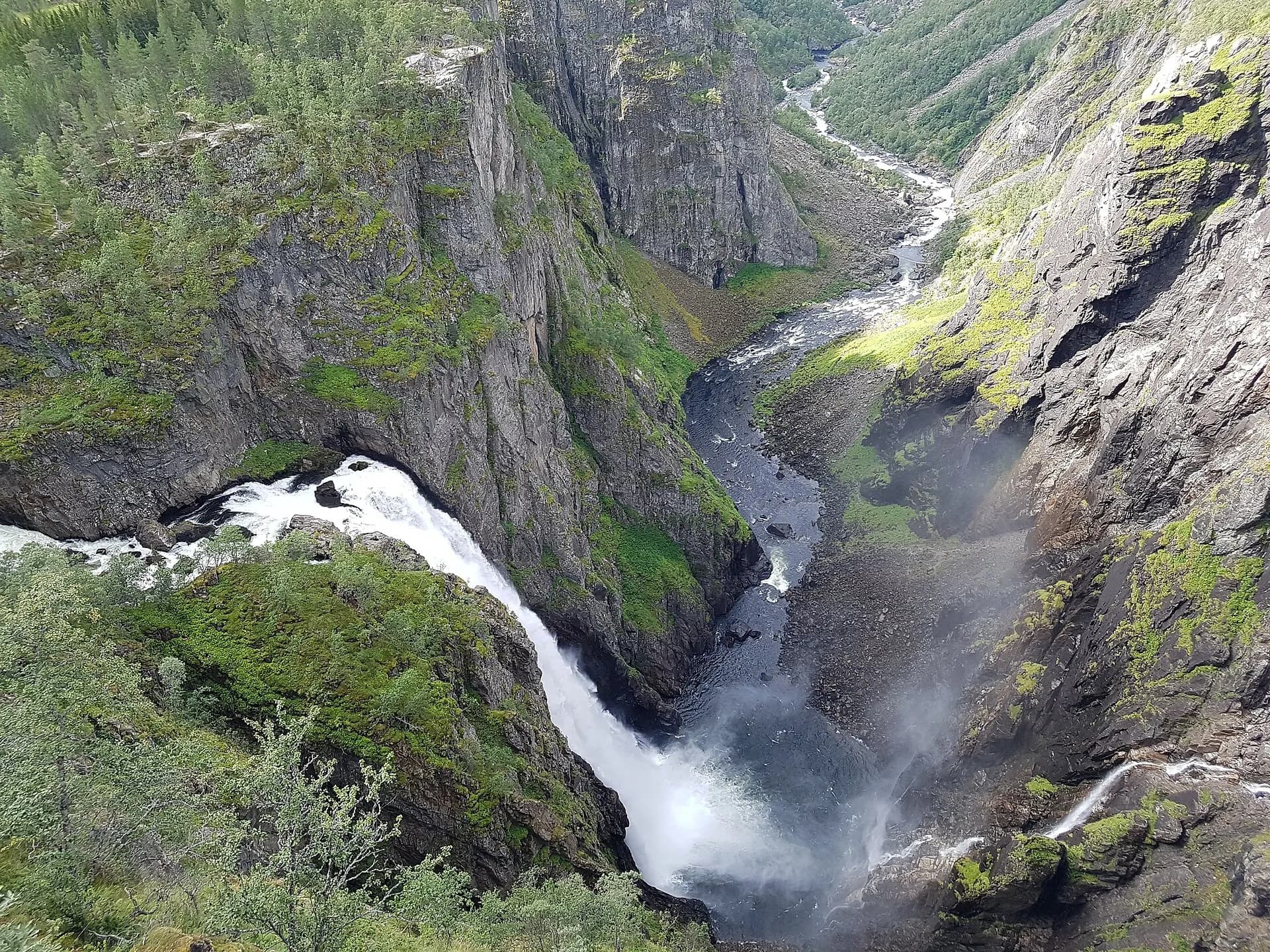
One of Norway's best-known waterfalls plunges around 180 metres into the Måbødalen gorge on the edge of the Hardangervidda plateau, above Eidfjord. Viewing platforms near the old Fossli Hotel and a stair bridge across the gorge give dizzying views straight down into the spray.
- 10
The Nærøyfjord and Gudvangen
Photo: Acediscovery, CC BY 4.0, via Wikimedia Commons
This arm of the Sognefjord is about 19 kilometres long and in places only 250 metres wide, between mountains rising to around 1,800 metres and laced with waterfalls. It's part of the West Norwegian Fjords World Heritage Site. Quiet electric boats sail between Gudvangen, at its head, and Flåm, and you can also paddle it by kayak.
- 11
Flåm
Photo: Harvey Barrison from Massapequa, NY, USA, CC BY-SA 2.0, via Wikimedia Commons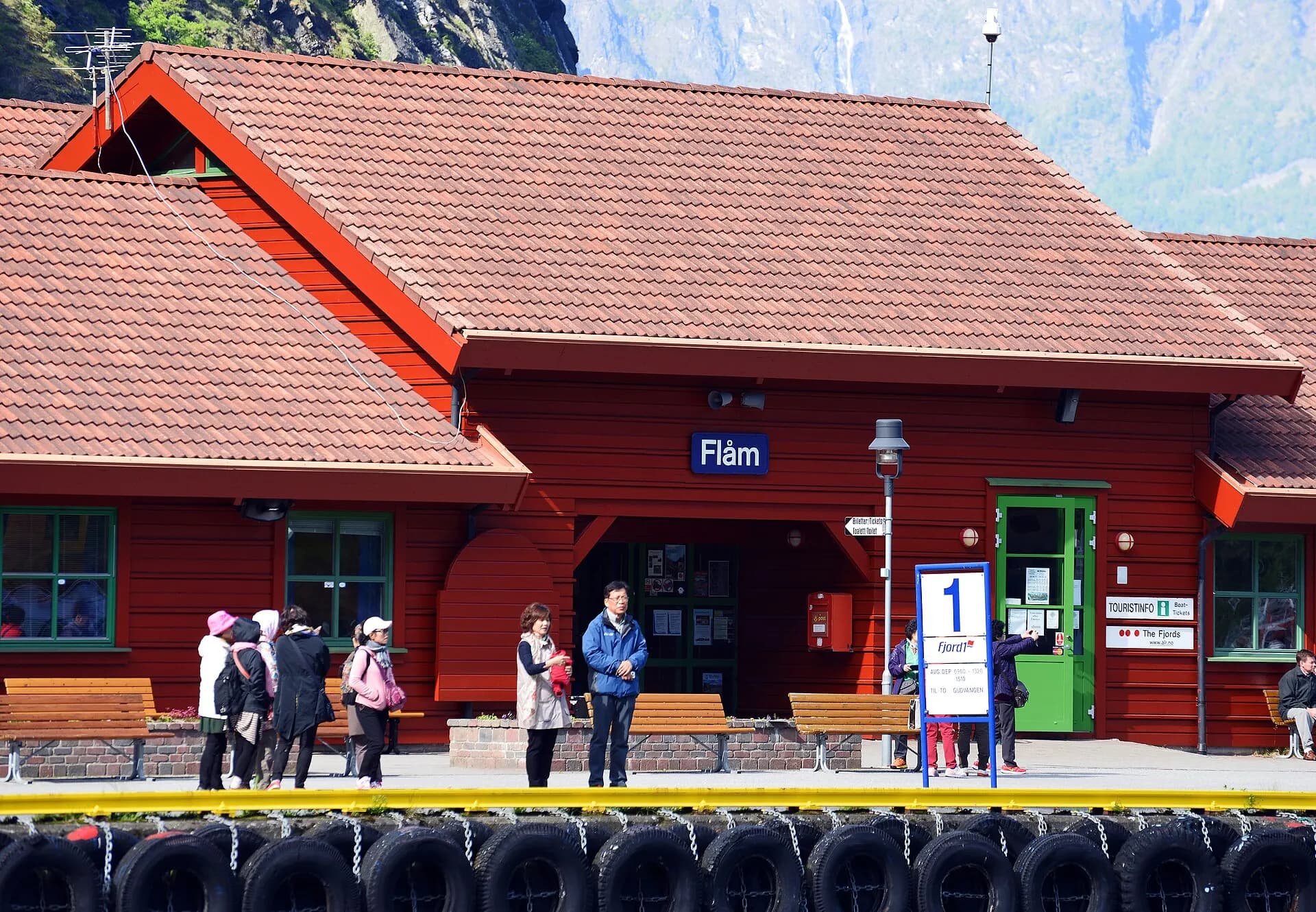
A small village at the head of the Aurlandsfjord, set in a deep green valley. It's the terminus of the Flåm Railway and a stop on the Norway in a Nutshell route, so it can be very busy in summer, but it has a railway museum, a brewery and walks up the valley.
- 12
The Flåm Railway
Photo: Alasdair McLellan, Public domain, via Wikimedia Commons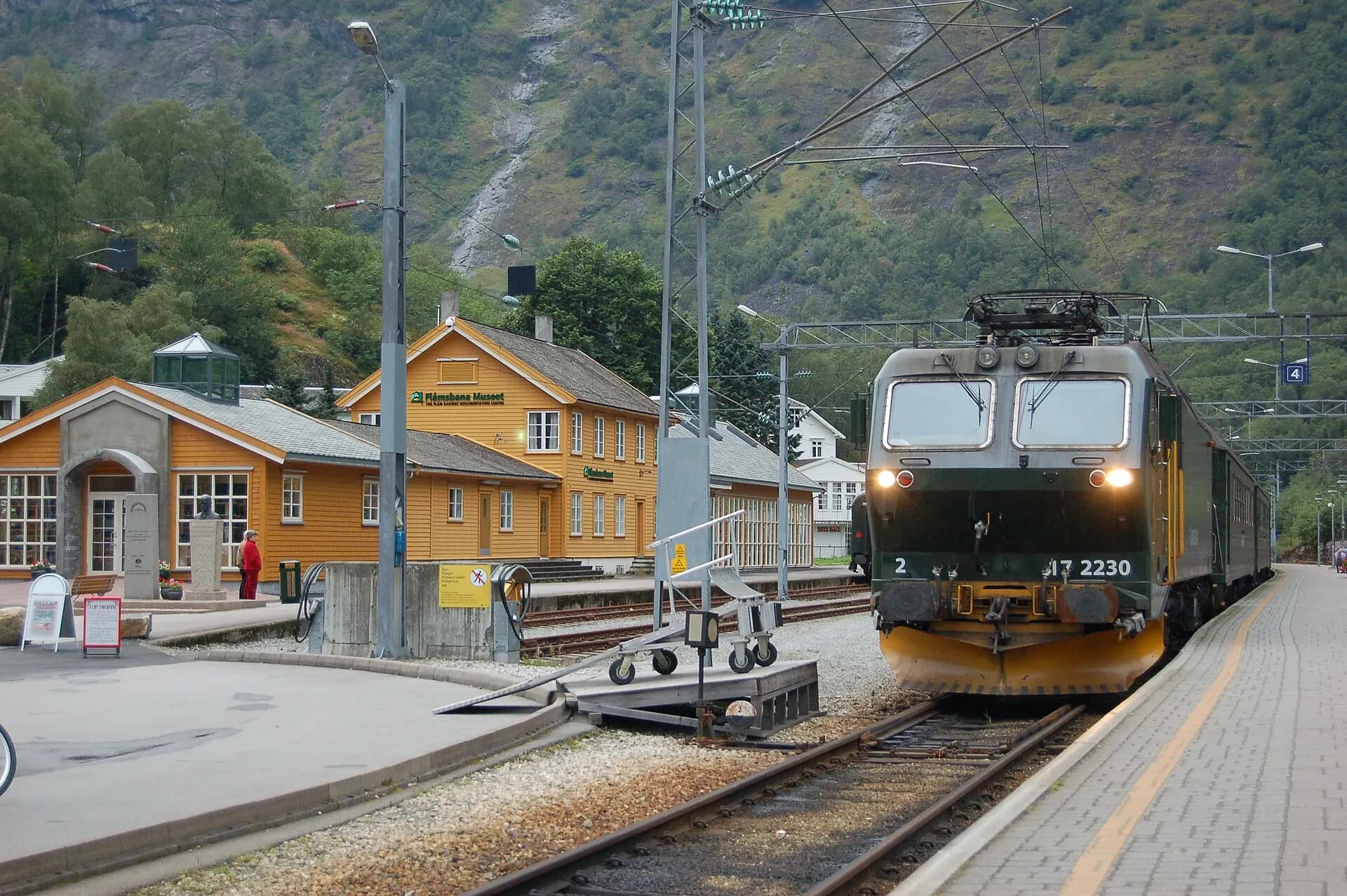
The Flåm Railway, or Flåmsbana, runs for 20 kilometres between Flåm, near sea level, and Myrdal, about 867 metres up on the Bergen Line, in roughly an hour. Most of the route is at a gradient of 5.5 per cent, making it one of the steepest standard railways in the world. The train stops for about five minutes at the Kjosfossen waterfall, which can be reached only by train.
TipFor the best views going down from Myrdal, sit on the left side of the train.
- 13
Stegastein
Photo: Ximonic (Simo Räsänen), CC BY-SA 4.0, via Wikimedia Commons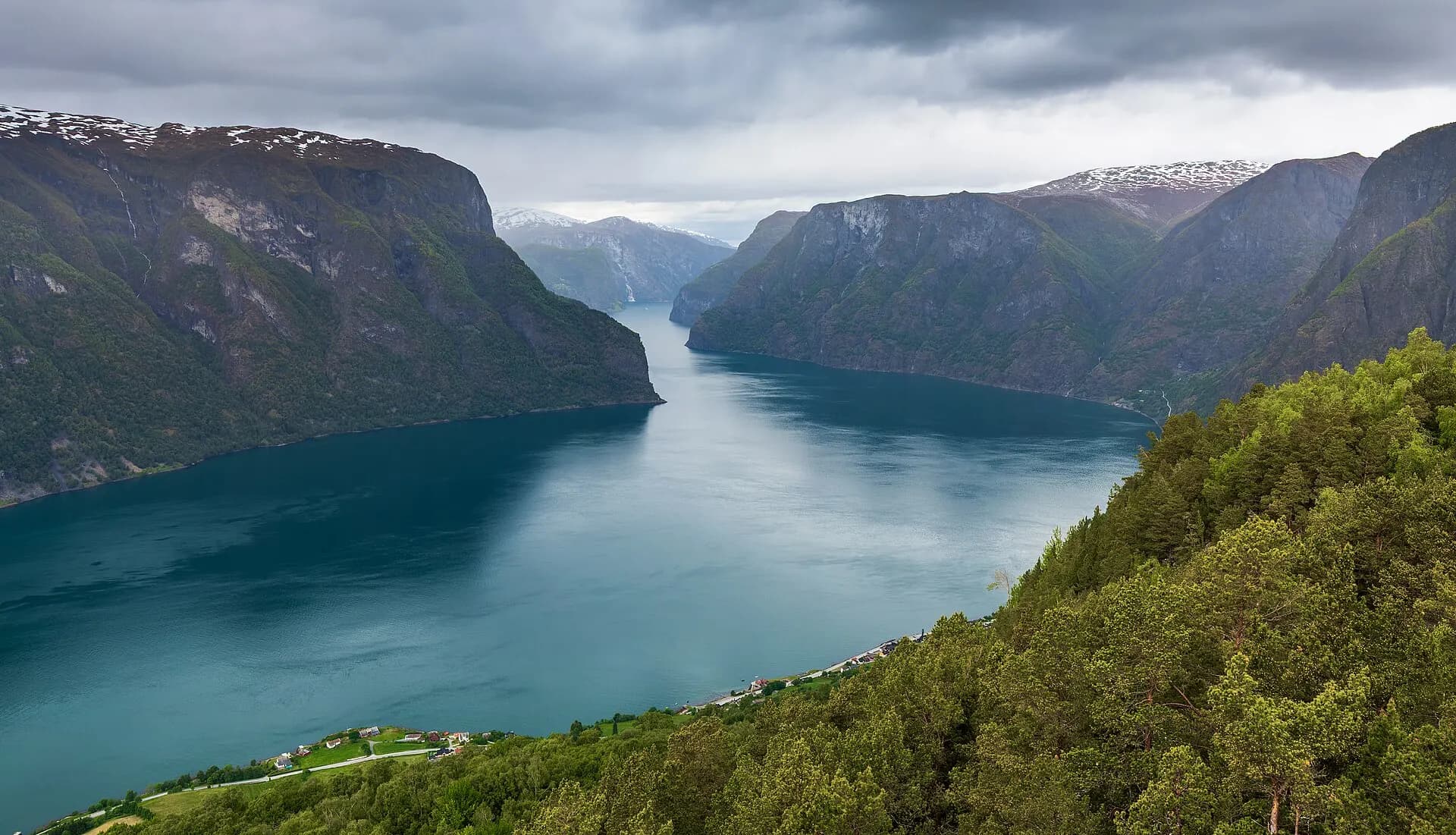
A wooden viewing platform that juts out from the mountainside some 650 metres above the Aurlandsfjord, on the road climbing from Aurland. The view of the fjord curving away below is one of the finest in Norway. The road is narrow and winding, and buses and tours run up from Flåm in summer.
- 14
Urnes Stave Church
Photo: Bjørn Erik Pedersen, CC BY-SA 4.0, via Wikimedia Commons
Built in the twelfth century, Urnes is the oldest of Norway's stave churches and a World Heritage Site in its own right, famous for its intricate woodcarvings of intertwined animals. It stands above the Lustrafjord, an inner arm of the Sognefjord, and is reached by a short ferry from Solvorn. It's open with guided tours in the summer season.
- 15
Balestrand and the Sognefjord
Photo: Bjørn Christian Tørrissen, CC BY-SA 4.0, via Wikimedia Commons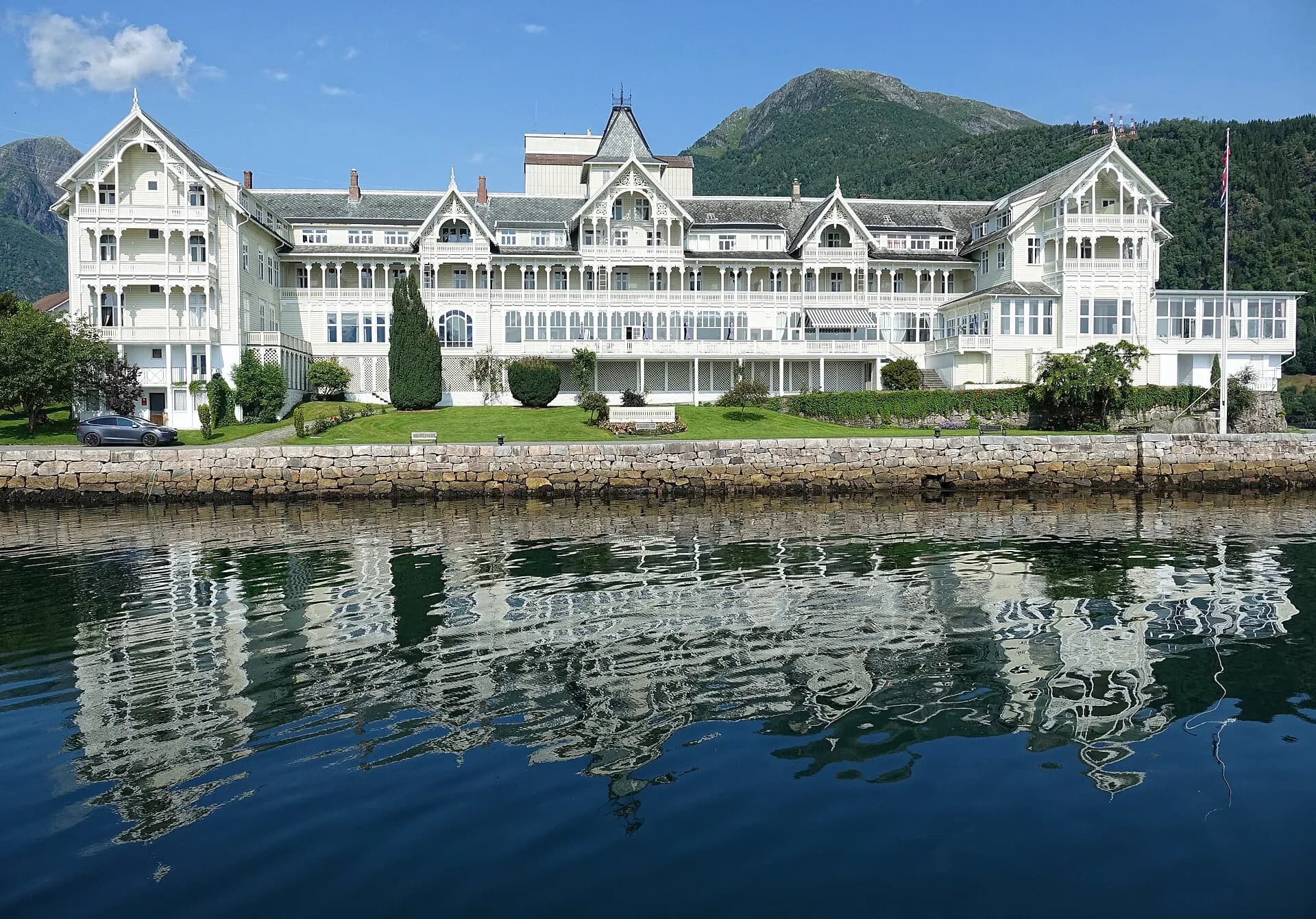
The Sognefjord runs for more than 200 kilometres inland, and is over 1,300 metres deep in places. Balestrand, on its northern shore, has been a resort since the nineteenth century, when artists and the German Kaiser came to paint and holiday here. Its wooden villas, historic hotel and small stave-style church make it a calm stop between the inner fjords and Bergen.
- 16
The Geirangerfjord
Photo: Carsten Steger, CC BY-SA 4.0, via Wikimedia Commons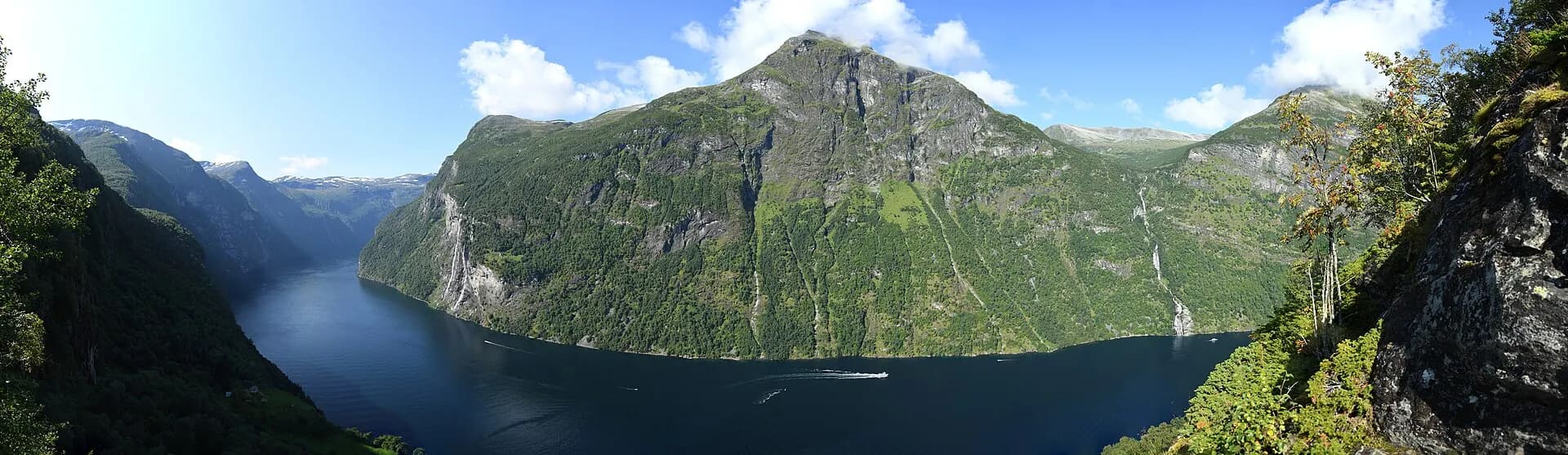
Further north, in the Sunnmøre region, the Geirangerfjord is the other half of the World Heritage Site: a narrow, winding fjord with the Seven Sisters and Suitor waterfalls facing each other across the water, abandoned farms clinging to ledges, and hairpin roads climbing to viewpoints. It's a long day's travel from Bergen, so plan to stay at least one night.
When to go
Summer, from June to August, brings the longest days, with daylight late into the evening, the warmest weather and the full timetable of boats, buses and tours, but also the biggest crowds. May and September are quieter, with lower prices, spring blossom or autumn colour, though some services run less often. Winter is dark and wet in Bergen and snowy in the mountains; the Flåm Railway and fjord boats keep running, and the snow-covered landscape is beautiful.
Whenever you come, expect rain. Bergen is one of the wettest cities in Europe, and showers can come through at any time of year. Pack good waterproofs rather than relying on the forecast.
Getting around
Bergen's centre is easily walkable. The Bybanen light rail runs from the airport, Flesland, to the city centre, and the Bergen Card covers the light rail and local buses, plus free or discounted entry to many museums and attractions.
Trains on the Bergen Line run east to Voss and Myrdal, where you change for the Flåm Railway, and on to Oslo in about seven hours. Express boats run from Bergen along the Sognefjord, and car ferries cross the fjords on many roads. Driving gives the most freedom, but roads are narrow and slow, with many tunnels and some mountain roads closed in winter; allow more time than the distances suggest, and check ferry timetables.
Local tips
- Bring a waterproof jacket and good walking shoes whatever the season.
- Norway is expensive. Supermarket picnics, the Bergen Card and combined tickets help keep costs down.
- Cards are accepted almost everywhere, and cash is rarely needed.
- Tap water is excellent: carry a refillable bottle.
- Wine and spirits are sold only in state Vinmonopolet shops; supermarkets sell beer, but only until early evening and not on Sundays.
- Book the Flåm Railway, fjord cruises and summer accommodation in Flåm well ahead.
- Check road and ferry conditions before driving, especially from autumn to spring.
- Tipping isn't expected, though rounding up for good service is appreciated.
Eat and drink
Seafood is the highlight: try Bergen fish soup, a creamy soup with fish and vegetables, as well as fish cakes, salmon, prawns and cod. Bergen's own bun, the skillingsbolle, is a large cinnamon roll sold in bakeries. Traditional dishes include raspeballer, potato dumplings, and in winter pinnekjøtt, cured lamb ribs. In the fjords, look for goat's cheese from Undredal, brown cheese, cider and juice from Hardanger's orchards, and local beer from the Flåm brewery.
Where to stay
Bergen has the widest choice, from hotels near Bryggen and the harbour to apartments and guesthouses in the old wooden quarters. In the fjords, Flåm and Aurland are convenient for the railway and Nærøyfjord, Balestrand for the Sognefjord, and Lofthus, Eidfjord or Odda for Hardanger and Trolltunga. Many places book out in summer, and some small hotels close in winter.
Bryggen and the Hanseatic League
From the fourteenth century, the Hanseatic League, a powerful network of German trading cities, ran an office, or kontor, on the Bryggen wharf. Stockfish, cod dried on racks in northern Norway, was shipped to Bergen and traded across Europe in exchange for grain. The merchants lived and worked in long wooden buildings, where apprentices spent years learning the trade under strict rules. The Hanseatic presence faded in the eighteenth century, but the wharf survived, and the narrow buildings still stand on the medieval plan.
Norway in a Nutshell
"Norway in a Nutshell" is a popular route linking Bergen with the fjords in a single long day, or more comfortably over two. Travelling by train from Bergen to Voss, by bus to Gudvangen, by boat through the Nærøyfjord to Flåm, then up the Flåm Railway to Myrdal and back on the Bergen Line, you see the best of the region by public transport. It can be bought as a package or put together yourself with separate tickets, and it can also be done in reverse or as part of a journey to or from Oslo.
Hiking safely in the fjords
The mountains rise straight from the fjords, and many of the best hikes, from Trolltunga to the trails above Bergen, are long and steep. Check the weather forecast and conditions before you set out, start early, and turn back if wind, rain or fog sets in. Wear proper boots and carry waterproof and warm layers, food and water, as it's much colder on the plateau than by the fjord. Stay away from cliff edges, especially when the rock is wet. In an emergency, call 112.
Responsible travel
Norway's right to roam, allemannsretten, lets everyone walk and camp on uncultivated land, but it comes with duties: pitch a tent at least 150 metres from the nearest house or cabin, stay no more than two nights in one place without permission, leave no trace and take your rubbish home. Lighting fires in or near forests is banned from mid-April to mid-September.
To protect the World Heritage fjords, Norway has introduced zero-emission rules: from 2026, passenger ships under 10,000 gross tonnes must sail the Nærøyfjord, Aurlandsfjord, Geirangerfjord and neighbouring fjords without emissions, with larger cruise ships to follow from 2032. Choosing electric fjord boats, trains and small-group tours keeps your footprint light. In busy villages such as Flåm and Geiranger, visit early or late, and respect farmland, private property and grazing animals.