Berlin
A city that has reinvented itself again and again: history on every corner, world-class museums and a nightlife like nowhere else.
- Best time to go
- May to September for long days, lakes and outdoor life; December for Christmas markets
- Local time
- –
- Currency
- Euro (EUR)
- Reading time
- 4 min
- Language
- German

Berlin has been the capital of Prussia, of the German Empire, of Nazi Germany and of communist East Germany, and for almost thirty years it was divided by a wall. Since reunification in 1990, it has rebuilt itself as a creative, open and diverse capital, while confronting its history honestly in memorials and museums found across the city.
It's a spread-out city of distinct neighbourhoods, or Kieze, each with its own character, linked by an excellent transport network. Mix the history and the museums with time in its parks, lakes, cafés and markets, and, if you're so inclined, its famously late nightlife.
The top 10 in Berlin
- 1
The Brandenburg Gate and Pariser Platz
Photo: Thomas Wolf, www.foto-tw.de, CC BY-SA 3.0, via Wikimedia Commons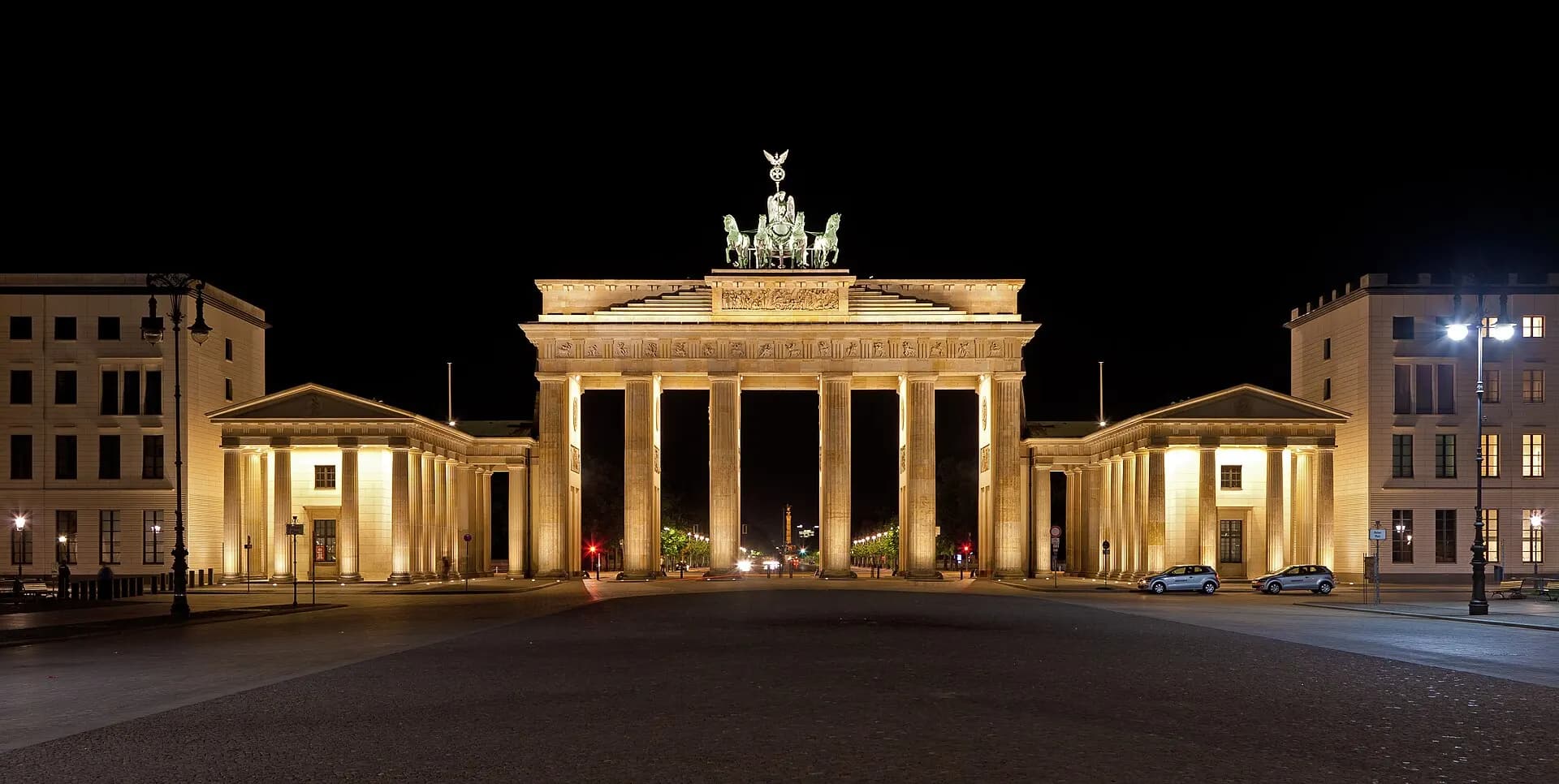
Built in 1791, the gate became a symbol of the divided city when it stood in the no man's land beside the Wall, and of reunification when crowds gathered here in 1989. Pariser Platz in front of it is lined with embassies and hotels.
- 2
The Reichstag
Photo: Ole Neitzel, CC BY-SA 4.0, via Wikimedia Commons
The home of the German parliament, the Bundestag, with a glass dome designed by Norman Foster. A spiral ramp inside the dome gives views over the city and down into the debating chamber.
TipEntry to the dome is free but must be booked in advance online.
- 3
The Memorial to the Murdered Jews of Europe
Photo: Jorge Láscar from Australia, CC BY 2.0, via Wikimedia Commons
A field of 2,711 concrete slabs of different heights on undulating ground, near the Brandenburg Gate, which visitors walk through. An underground information centre tells the stories of individual victims of the Holocaust.
- 4
Museum Island
Photo: Thomas Wolf, www.foto-tw.de, CC BY-SA 3.0, via Wikimedia Commons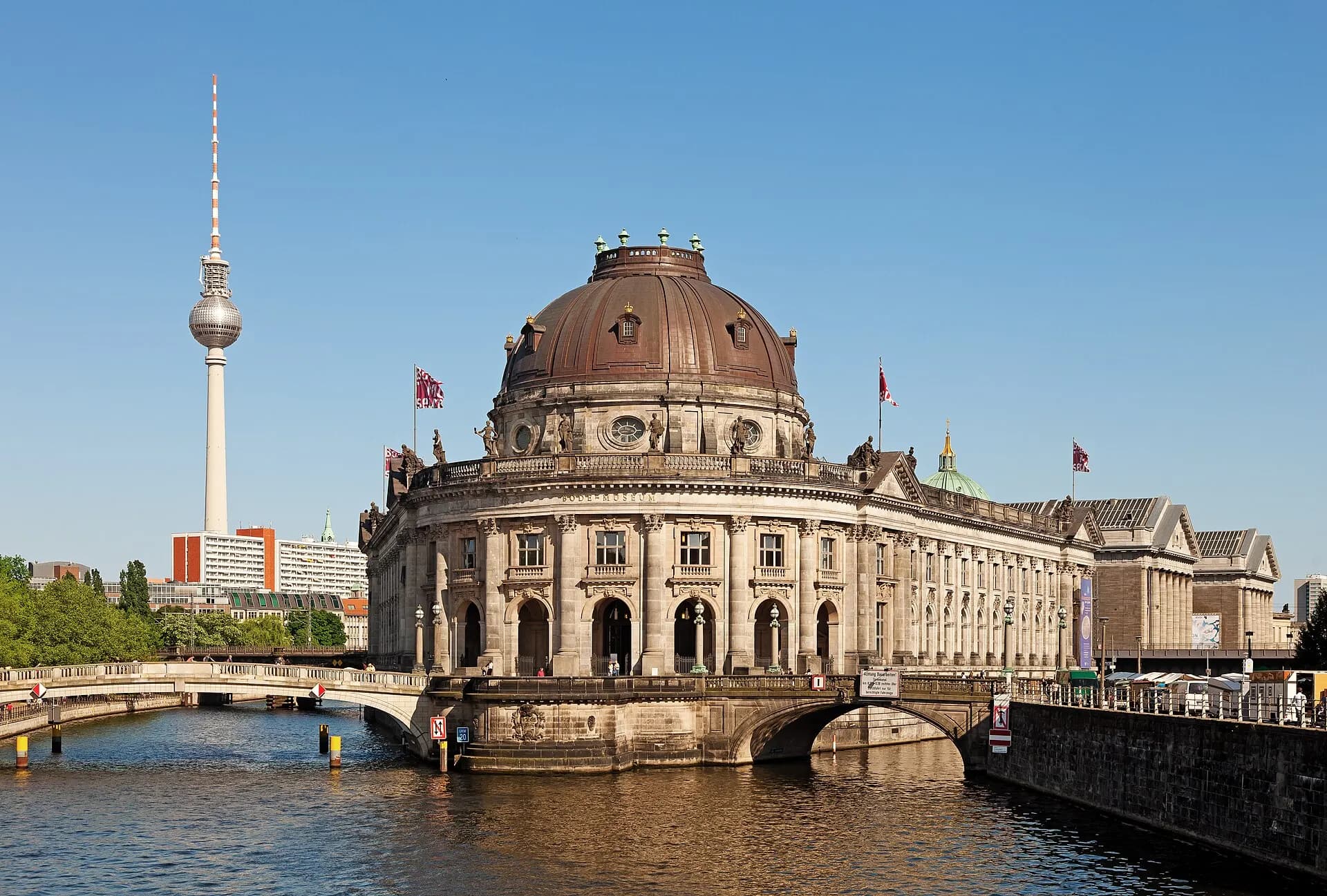
A World Heritage complex of five major museums on an island in the River Spree, including the Pergamon Museum (largely closed for renovation until the late 2020s), the Neues Museum with the bust of Nefertiti, and the Altes Museum and Bode Museum. The Berlin Cathedral stands next to them.
TipA Museum Island pass covers all the museums for a day; check which galleries are currently open.
- 5
The Berlin Wall Memorial
Photo: Einaz80, CC BY-SA 4.0, via Wikimedia Commons
On Bernauer Strasse, a stretch of the Wall has been preserved with its "death strip" and a watchtower, with an outdoor exhibition and a documentation centre with a viewing platform. It's the best place to understand what the division of the city meant.
- 6
The East Side Gallery
Photo: Ansgar Koreng, CC BY-SA 4.0, via Wikimedia Commons
The longest surviving section of the Wall, more than a kilometre along the Spree, covered in murals painted by artists from around the world after its fall in 1989.
- 7
Checkpoint Charlie and the Topography of Terror
Photo: Gzen92, CC BY-SA 4.0, via Wikimedia Commons
The former crossing point between the American and Soviet sectors is now a busy tourist spot. Nearby, the free Topography of Terror documentation centre, on the site of the Gestapo and SS headquarters, documents the crimes of the Nazi regime.
- 8
Kreuzberg and Neukölln
Photo: De-okin (talk) 17:08, 22 June 2009 (UTC), CC BY 3.0, via Wikimedia Commons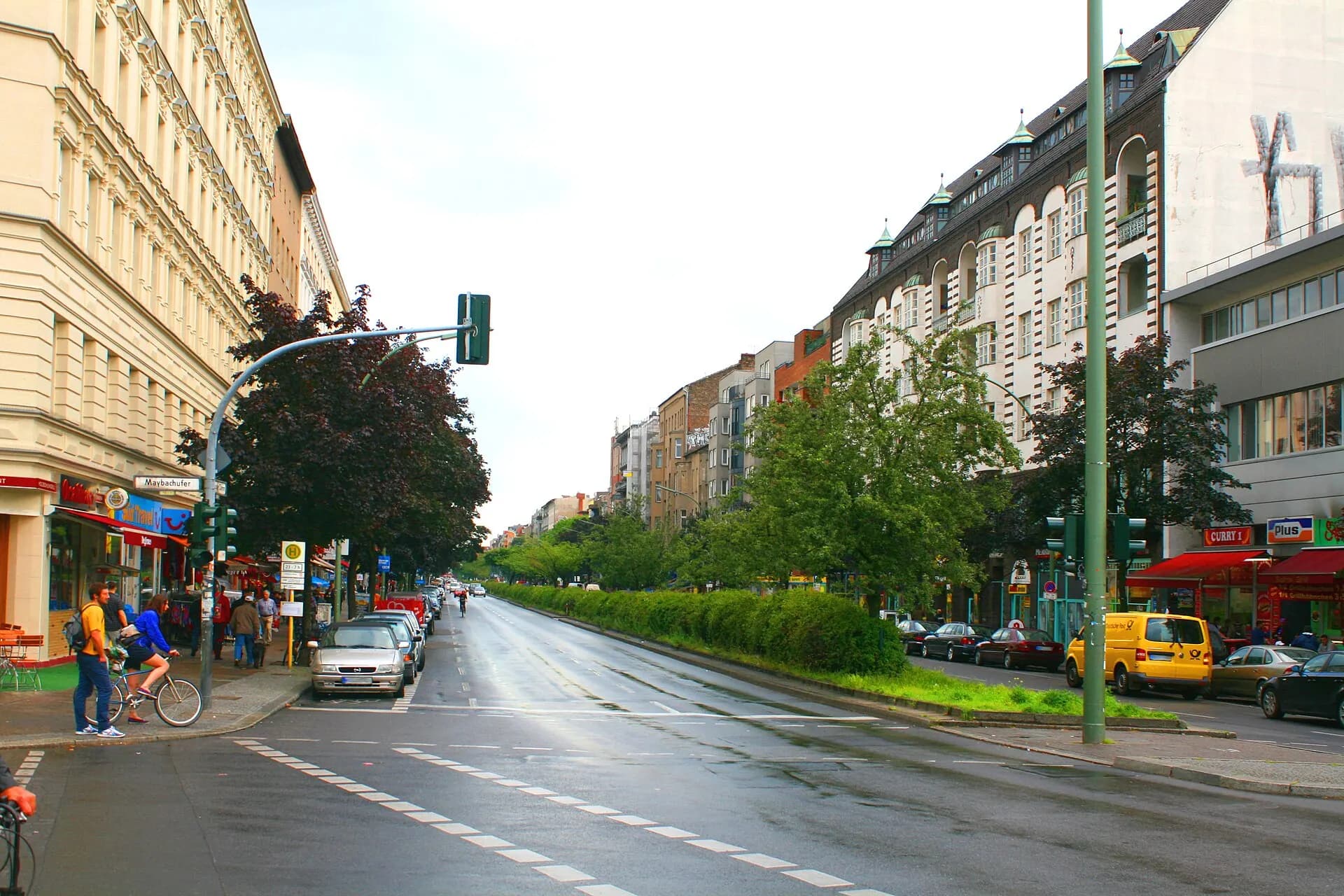
Diverse, creative neighbourhoods south-east of the centre, with Turkish markets, street art, canal-side cafés, bars and clubs. Tempelhofer Feld, a former airport turned into a vast park, is nearby; you can walk or cycle down its runways.
- 9
Charlottenburg Palace
Photo: Thomas Wolf, www.foto-tw.de, CC BY-SA 3.0 de, via Wikimedia Commons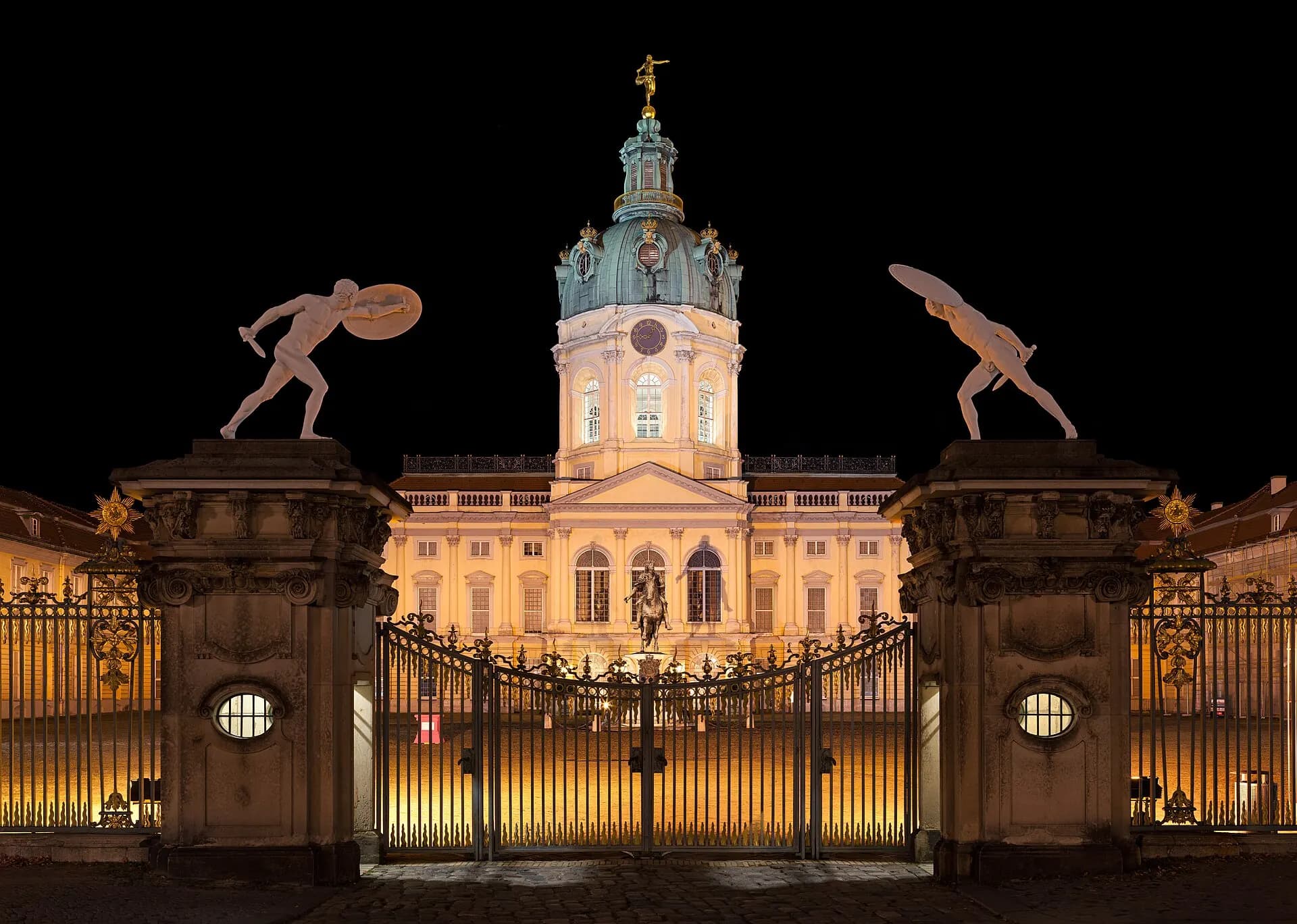
The largest palace in Berlin, a baroque summer residence of the Prussian royal family, with ornate state rooms and formal gardens beside the Spree.
- 10
Potsdam
Photo: Flocci Nivis, CC BY 4.0, via Wikimedia Commons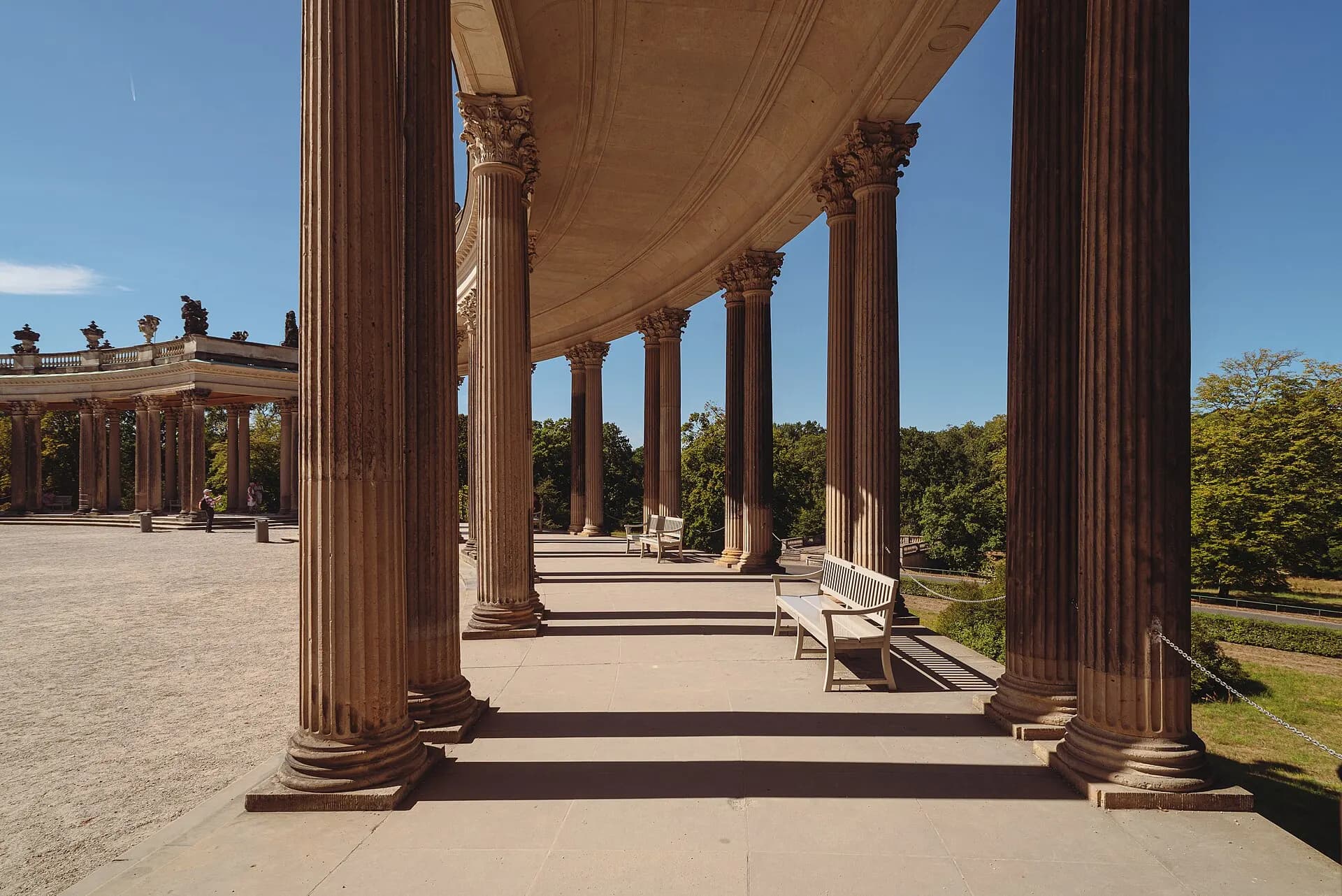
About forty minutes away by train, the former Prussian royal residence has palaces and parks that form a World Heritage Site, including Sanssouci, the rococo summer palace of Frederick the Great, set above terraced vineyards.
When to go
Late spring and summer are the best times, with long evenings, open-air cinemas, beer gardens and swimming in the lakes around the city. Autumn is pleasant and cultural life is in full swing. Winter is cold and grey, but the Christmas markets, from late November, are magical. Many events fill the calendar, from the Berlinale film festival in February to the Carnival of Cultures in spring.
Getting around
Berlin's U-Bahn, S-Bahn, trams and buses are efficient and run all night at weekends. Buy tickets for zones A and B for the city, or AB plus C for the airport and Potsdam, and validate paper tickets before travelling, or use the BVG app. The city is flat and great for cycling, with bike lanes and bike-share schemes.
Berlin Brandenburg Airport is around thirty to forty minutes from the centre by train.
Local tips
- Book the Reichstag dome and popular museums in advance.
- Most shops are closed on Sundays, though museums, cafés and flea markets are open.
- Carry some cash: smaller cafés, bars and Spätis (corner shops) may not take cards.
- Jaywalking at red lights is frowned upon, and cyclists use the bike lanes; don't walk in them.
- Respect the memorials: don't climb or jump on the slabs of the Holocaust Memorial.
- Club door policies are strict and unpredictable; dress down rather than up.
Eat and drink
Berlin's food reflects its diversity. Try currywurst, sausage with curry ketchup, a city institution; döner kebab, which Berlin proudly claims as its own; and Berliner Pfannkuchen, jam doughnuts. Turkish, Vietnamese and Middle Eastern restaurants are excellent, and the Markthalle Neun in Kreuzberg hosts a weekly street-food evening. Drink local beer in a beer garden, or a Berliner Weisse, a sour wheat beer.
Where to stay
Mitte, the historic centre, puts you within walking distance of Museum Island, the Brandenburg Gate and the government quarter. Prenzlauer Berg, to the north, is leafy and residential, with cafés, Sunday flea markets at the Mauerpark and handsome old apartment buildings. Kreuzberg and Friedrichshain are the places for nightlife and street culture, and Charlottenburg, in the west, is elegant and quieter, near the shopping avenue of the Kurfürstendamm.
Day trips
Besides Potsdam, the Sachsenhausen Memorial, the site of a Nazi concentration camp just north of the city, is a sobering and important visit. The Spreewald, a forested wetland laced with canals about an hour south-east, is explored by flat-bottomed punts and famous for its pickled gherkins. Dresden, with its rebuilt baroque old town, is about two hours away by train.