Shanghai
Colonial-era banks on the Bund, a forest of towers across the river, plane-tree streets and dumpling shops in the old lanes.
- Best time to go
- April to May and October to November, between the damp winter and the hot, humid summer
- Local time
- –
- Currency
- Chinese Yuan (CNY)
- Reading time
- 10 min
- Language
- Chinese
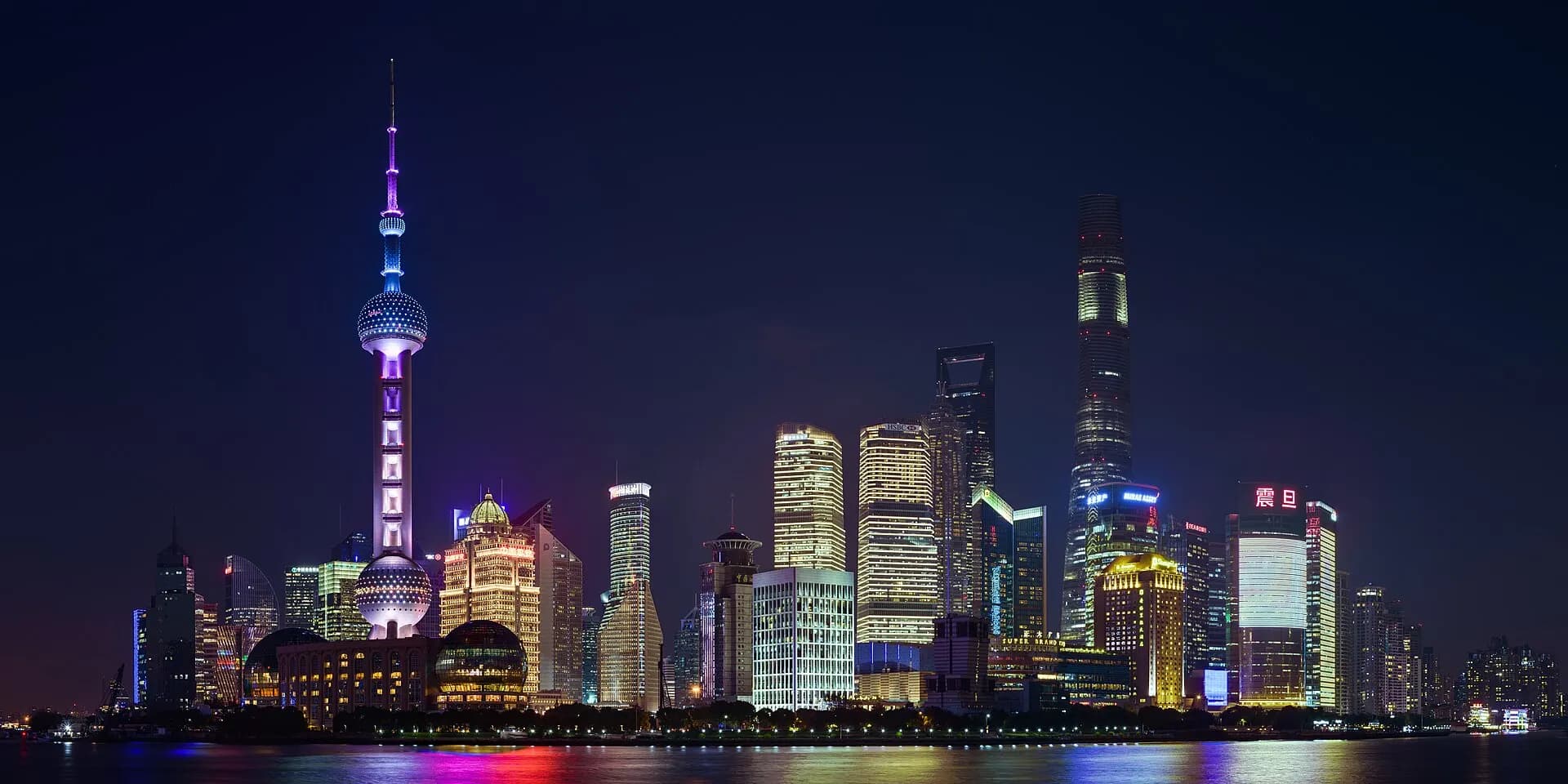
Shanghai grew from a walled county town on the Huangpu River into one of the great ports of Asia after it was opened to foreign trade in 1843. British, American and French settlements built banks, trading houses and villas along the river and in the streets behind it, and by the 1930s the city was famous for its jazz clubs, department stores and cosmopolitan mix. Across the river, the farmland of Pudong has since become Lujiazui, a skyline of towers that rose almost entirely after 1990, and the view between the two banks is the defining image of modern China.
Today Shanghai is China's largest city by most measures, a fast, stylish and well-organised place with an excellent metro, world-class museums and some of the best food in the country. Three or four days cover the main sights comfortably: one for the Bund, Nanjing Road and People's Square, one for the former French Concession, one for the Old City and Pudong, and a fourth for a water town or the West Bund galleries.
The top 14 in Shanghai
- 1
The Bund
Photo: xiquinhosilva, CC BY 2.0, via Wikimedia Commons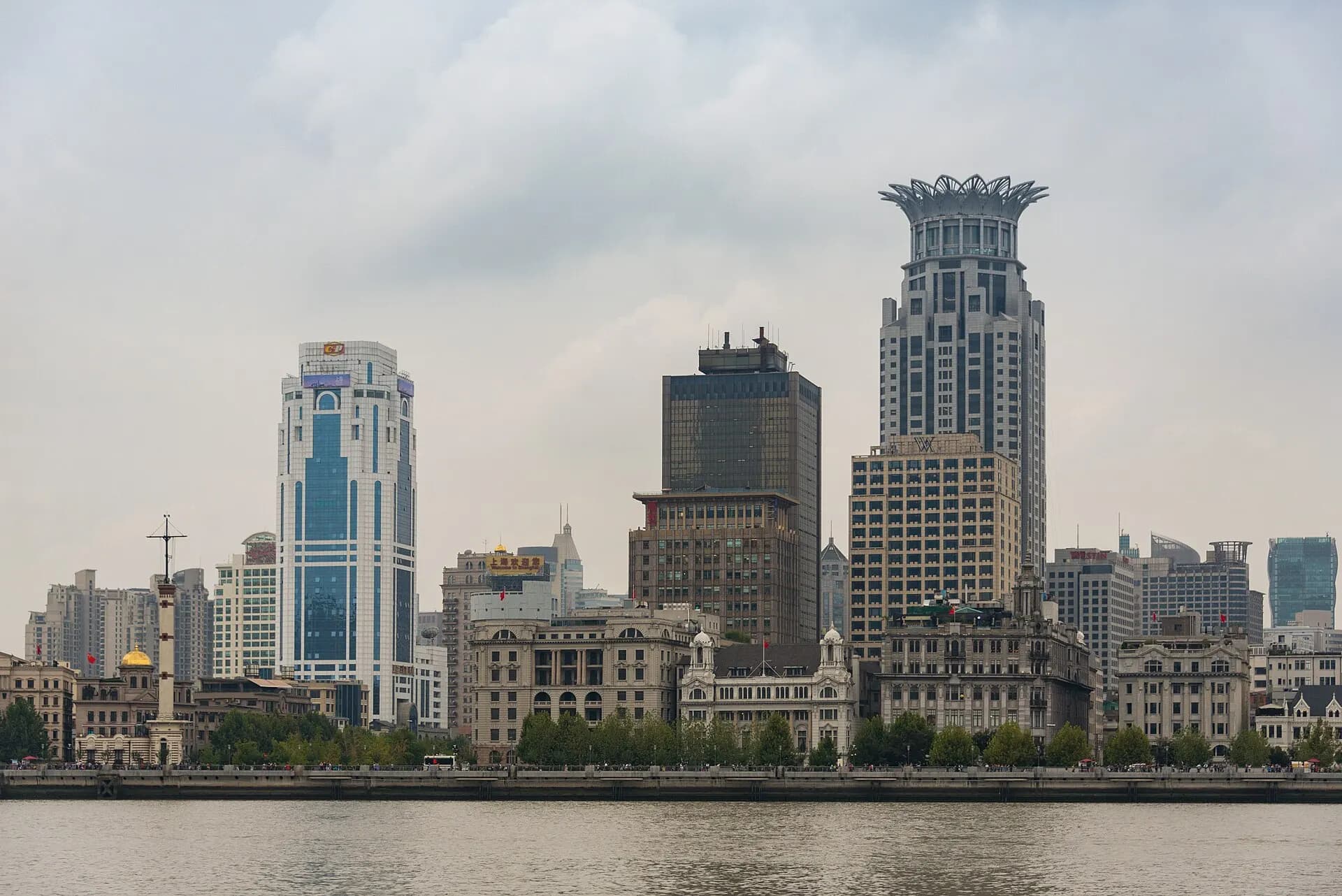
A riverside promenade lined with more than fifty grand buildings from the late nineteenth and early twentieth centuries, in styles from neoclassical to Art Deco: the domed former HSBC building, the Customs House with its clock tower, and the green pyramid roof of the Fairmont Peace Hotel. Across the water rises the Lujiazui skyline. Come once in the day to look at the architecture, and again after dark, when both banks are lit up.
TipThe lights are usually switched off around 10pm; aim for the hour after sunset, and expect big crowds at weekends and holidays.
- 2
Nanjing Road
Photo: Hermann Luyken, CC0, via Wikimedia Commons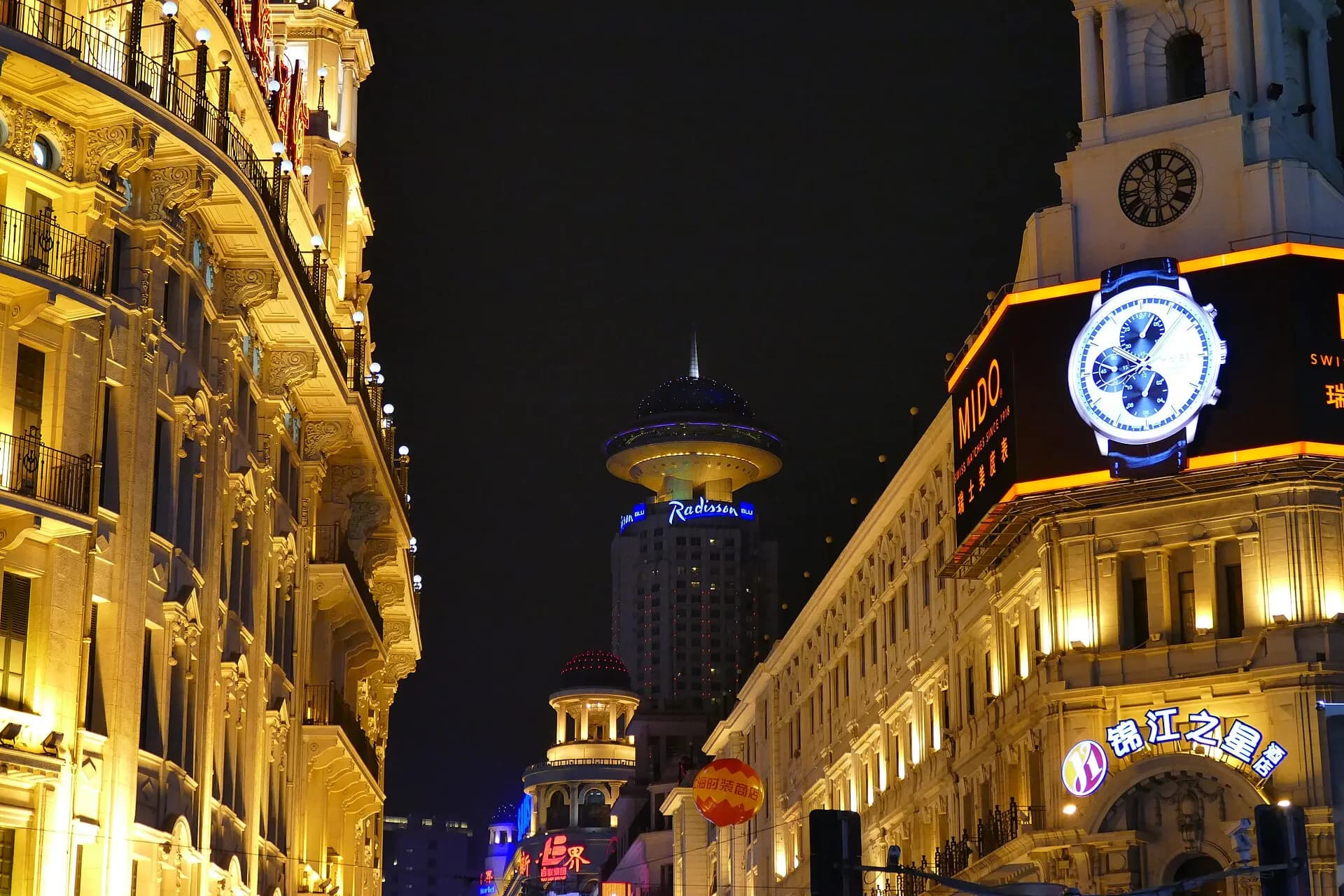
China's most famous shopping street runs west from the Bund, with a long pedestrian section on Nanjing Road East lined with historic department stores, neon signs and food halls. It's busy rather than refined, but walking it from the river to People's Square is a classic Shanghai experience, especially in the evening.
- 3
People's Square and the Shanghai Museum
Photo: Gary Todd, CC0, via Wikimedia Commons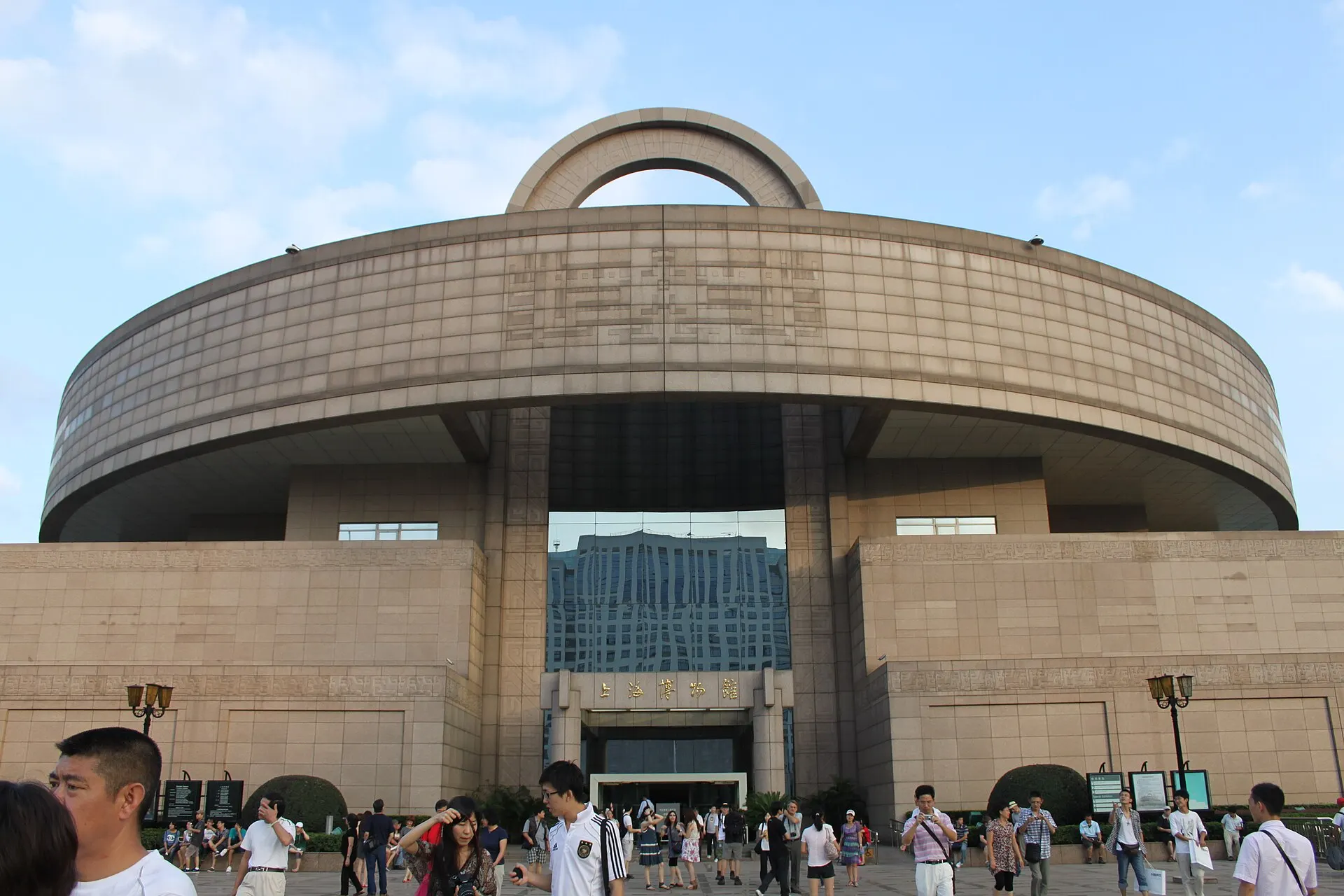
The former racecourse of the international settlement is now a park and civic square surrounded by museums, the Shanghai Grand Theatre and the Art Deco Park Hotel. The Shanghai Museum's original building, shaped like an ancient bronze cauldron, stands at the southern side and now focuses on major special exhibitions alongside its galleries. Individual visitors no longer need to book for normal days, but reservations are still required for some exhibitions and during holidays and school breaks.
TipThe People's Square building is closed on Mondays except national holidays; bring your passport for entry.
- 4
Jing'an Temple
Photo: Chainwit., CC BY 4.0, via Wikimedia Commons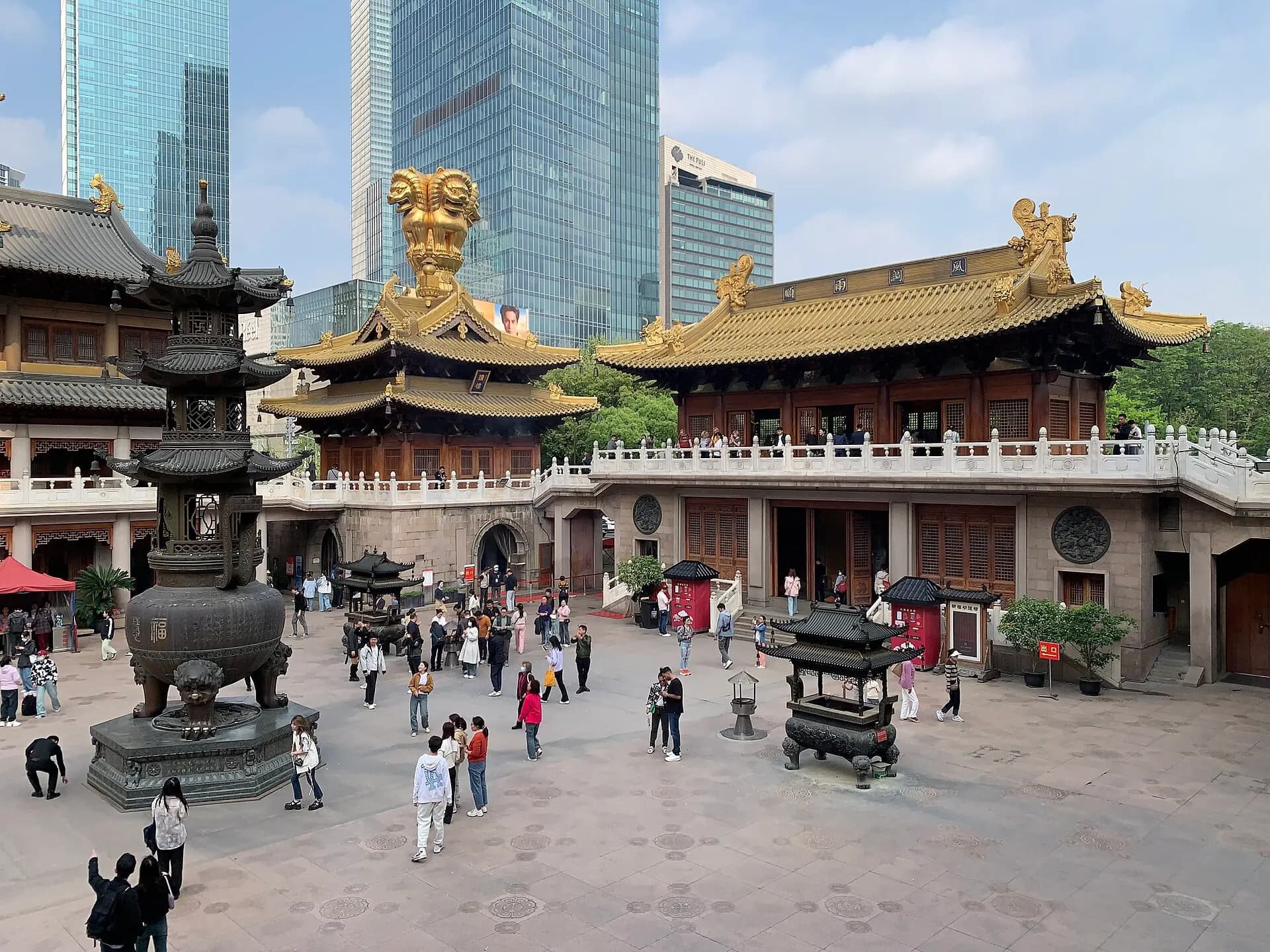
A Buddhist temple with gilded roofs and a golden pagoda, set improbably among the shopping malls and office towers of West Nanjing Road. It was rebuilt in recent decades, but it's an active place of worship with incense, prayer and a calm courtyard. The older Jade Buddha Temple, with its seated Buddha carved from white jade, is a short taxi ride north.
- 5
Wukang Road and the former French Concession
Photo: N509FZ, CC BY-SA 4.0, via Wikimedia Commons
The streets west of the centre, shaded by plane trees, are lined with garden villas, lane houses and apartment blocks from the early twentieth century. Wukang Road is the most photogenic, starting at Wukang Mansion, a wedge-shaped apartment building designed by the architect László Hudec in the 1920s, and running north past former residences, cafés and small shops. Walking or cycling these streets, with detours along Anfu Road and Fuxing Road, is one of the great pleasures of Shanghai.
TipThe spot opposite Wukang Mansion gets crowded with photographers; come early in the morning for a quieter view.
- 6
West Bund
Photo: Lcsun, CC BY-SA 4.0, via Wikimedia Commons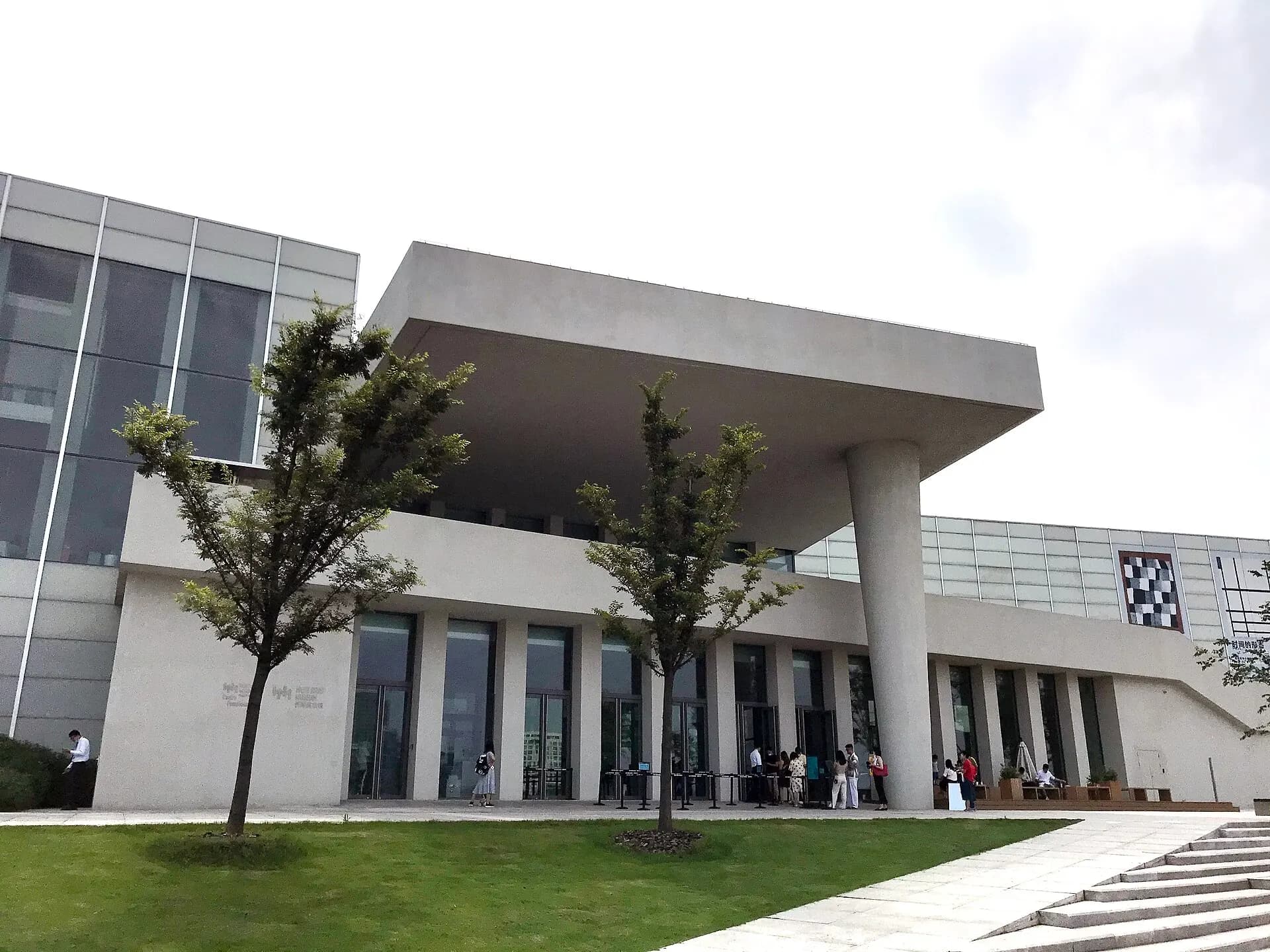
A former industrial waterfront in Xuhui, south of the centre, transformed into a long riverside park with cycle paths and some of the city's leading contemporary art spaces. The Long Museum, built around old coal-loading bunkers, the Yuz Museum in a converted aircraft hangar and the West Bund Museum are all within walking distance of each other. Check opening days, as many galleries close one day a week, often Monday.
- 7
Tianzifang
Photo: xiquinhosilva, CC BY 2.0, via Wikimedia Commons
A maze of narrow shikumen lanes off Taikang Road, where workshops and family homes have been turned into small shops, studios, bars and cafés. It's touristy and crowded, but the lane architecture, with its stone-framed gates and tangle of balconies, is genuine, and people still live upstairs.
- 8
Xintiandi
Photo: Can Pac Swire from Toronto, Canada, CC BY-SA 2.0, via Wikimedia Commons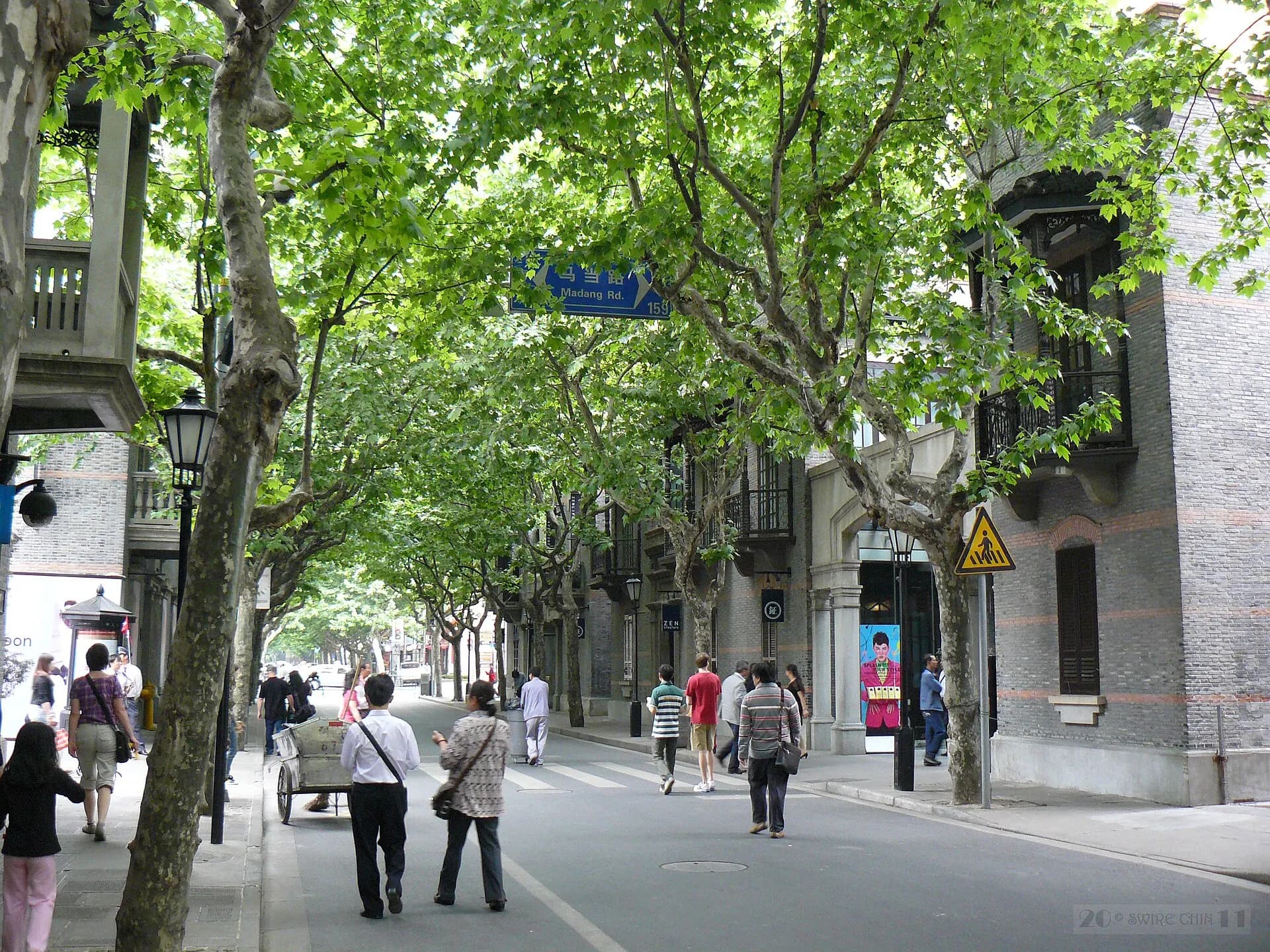
A block of restored shikumen houses, now a polished district of restaurants, bars and boutiques. It also holds the memorial hall on the site where the Communist Party of China held its First National Congress in 1921, which is free to visit with your passport, though advance booking may be needed.
- 9
Yu Garden and the Old City
Photo: Stefan Fussan, CC BY-SA 3.0, via Wikimedia Commons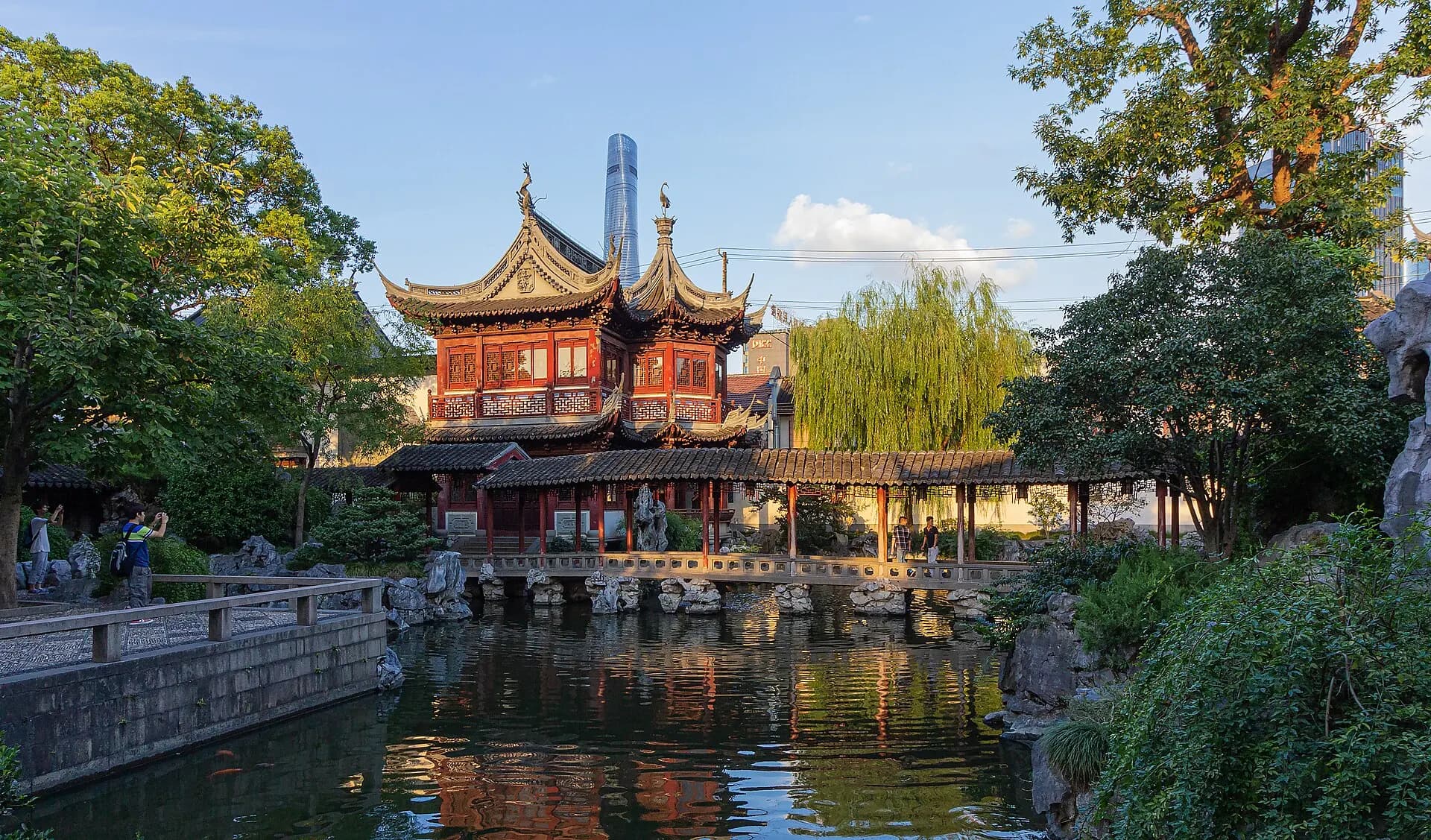
The heart of the old walled Chinese town, where a Ming-dynasty official built a classical garden of rockeries, ponds, carp and pavilions in the sixteenth century. Around it, the Yuyuan bazaar is a dense cluster of rebuilt traditional-style buildings, snack shops and the zigzag bridge to the Huxinting teahouse, with the City God Temple nearby. The streets just beyond, around Fangbang Road, give a glimpse of the old lanes.
TipVisit the garden at opening time on a weekday; it gets very crowded by late morning and on holidays.
- 10
Oriental Pearl Tower and the Lujiazui riverside
Photo: Ermell, CC BY-SA 4.0, via Wikimedia Commons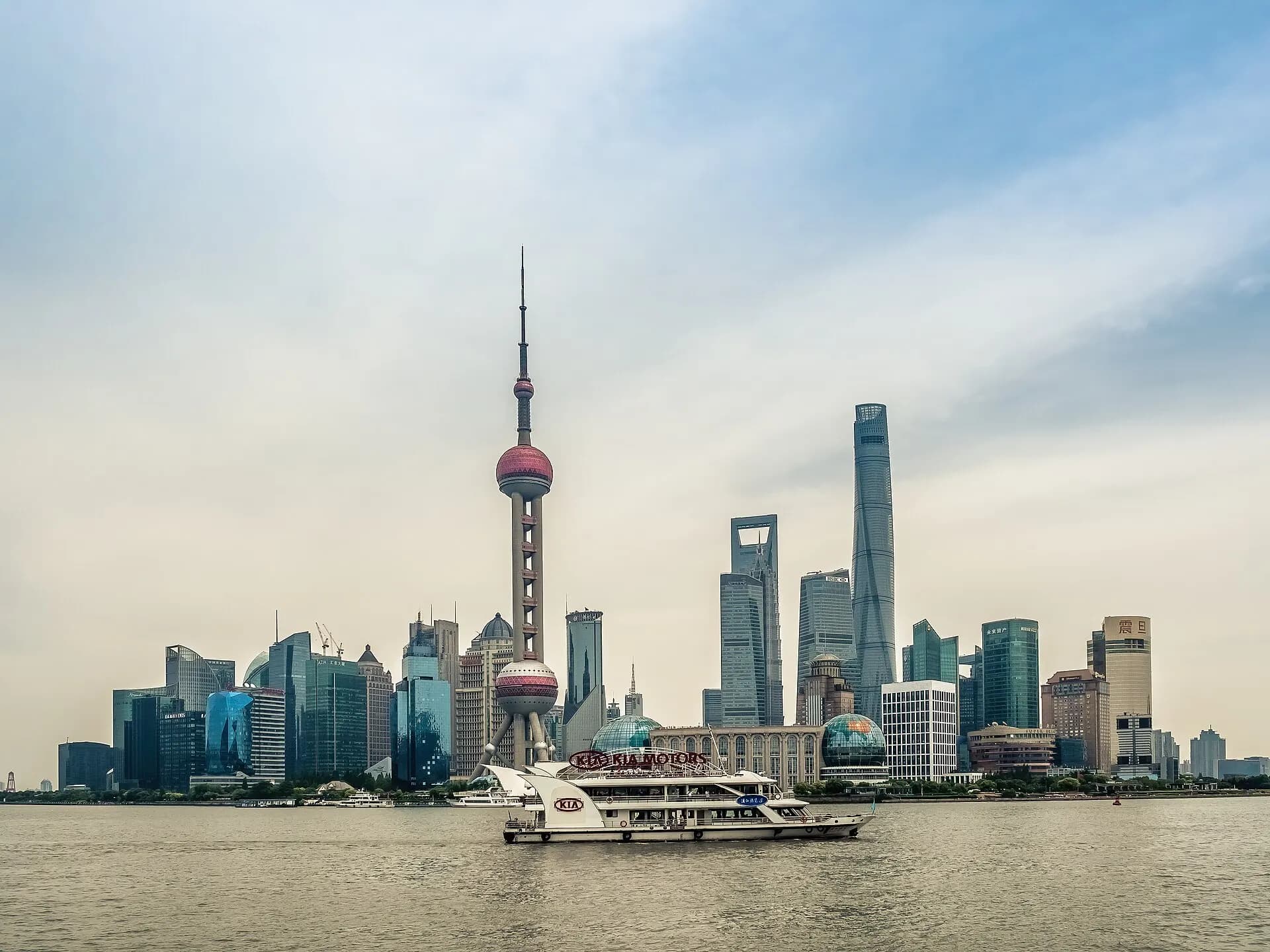
The pink-spheres-on-legs television tower, opened in 1994, was the first landmark of the new Pudong and is still the most recognisable. Even if you don't go up, walk the riverside promenade below it for the reverse view of the Bund. The cheap public ferry between Jinling Road East on the Bund side and Dongchang Road in Pudong is a fun way to cross.
- 11
Shanghai Tower
Photo: King of Hearts, CC BY-SA 4.0, via Wikimedia Commons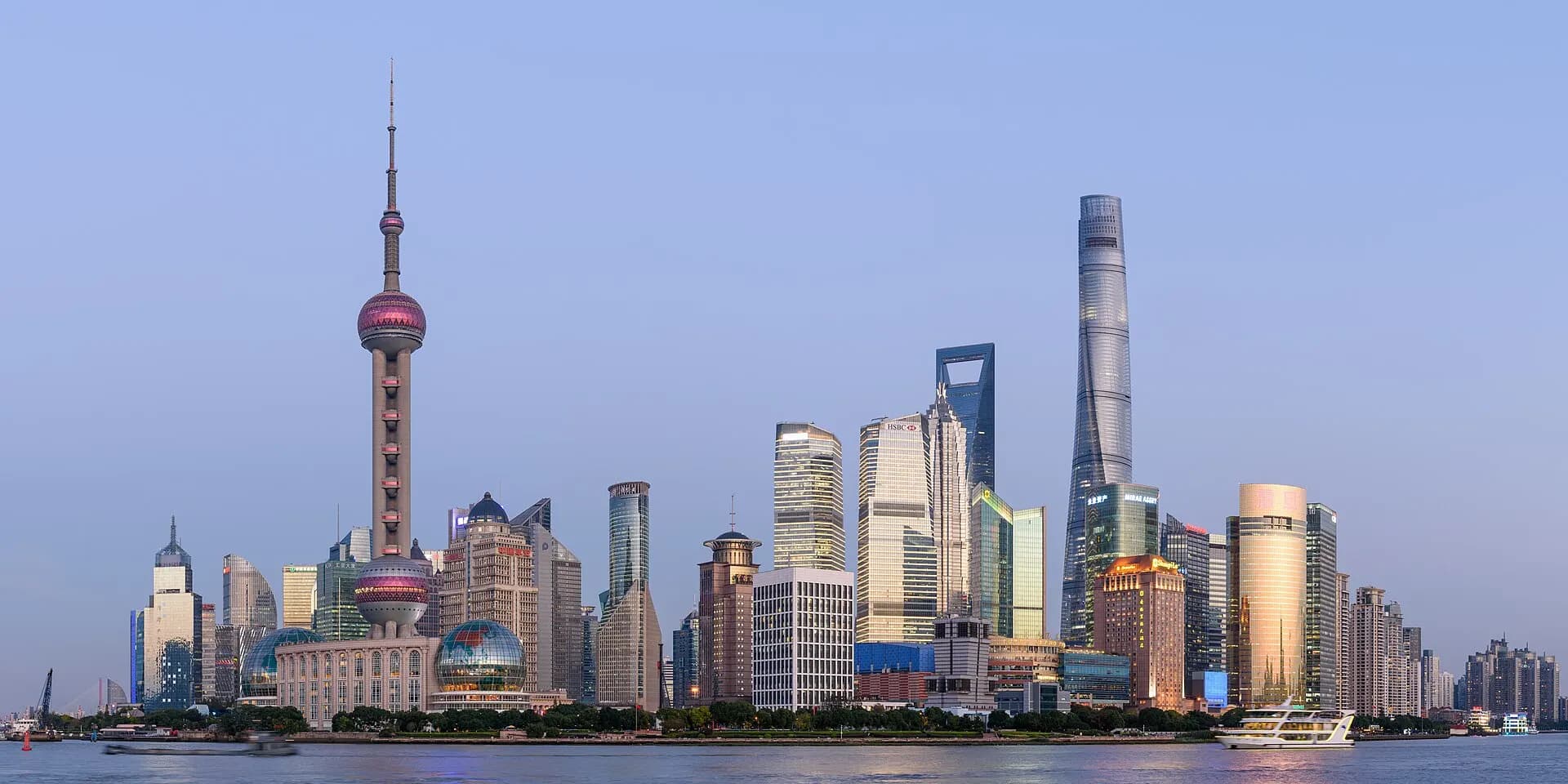
China's tallest building, a twisting glass spire of 632 metres beside the Jin Mao Tower and the Shanghai World Financial Center. Its observatory, Top of Shanghai, is on the 118th floor at 546 metres above the ground, reached by some of the world's fastest lifts, with a 360-degree view across the city and the river.
TipGo on a clear day, ideally late afternoon to see the city by day and as the lights come on; visibility can be poor in haze or rain.
- 12
Shanghai Museum East
Photo: Nat4Eben, CC BY-SA 4.0, via Wikimedia Commons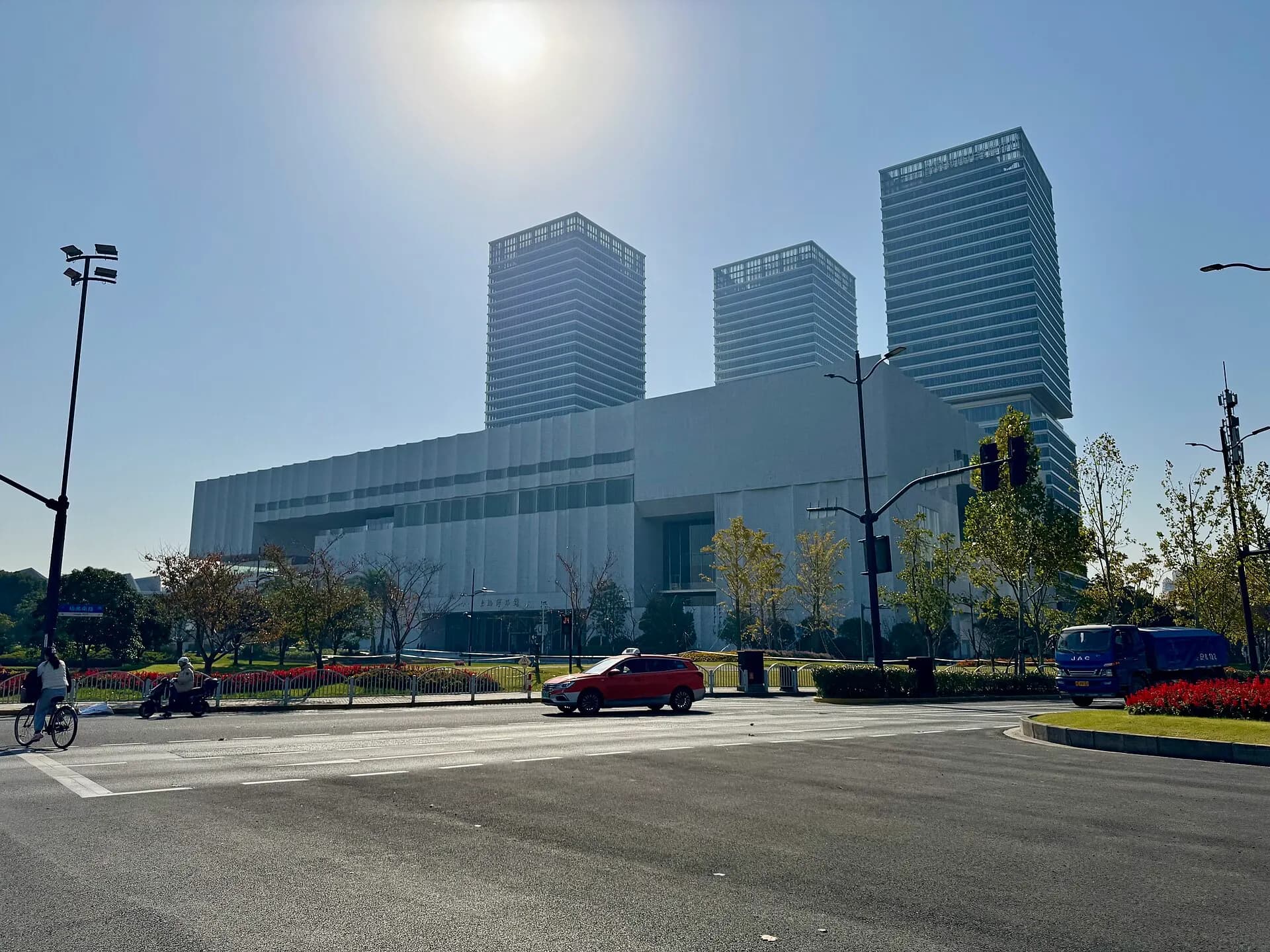
The Shanghai Museum's new Pudong branch, fully opened in December 2024, now houses most of its permanent collection: bronzes spanning more than three thousand years, jade, ceramics, sculpture, calligraphy and painting, coins and seals, in thirteen galleries. It's one of the finest collections of Chinese art anywhere. Individual visitors don't need to book; bring your passport. It's open 10am to 6pm and closed on Tuesdays, except public holidays.
- 13
Qibao
Photo: Jakub Hałun, CC BY-SA 4.0, via Wikimedia Commons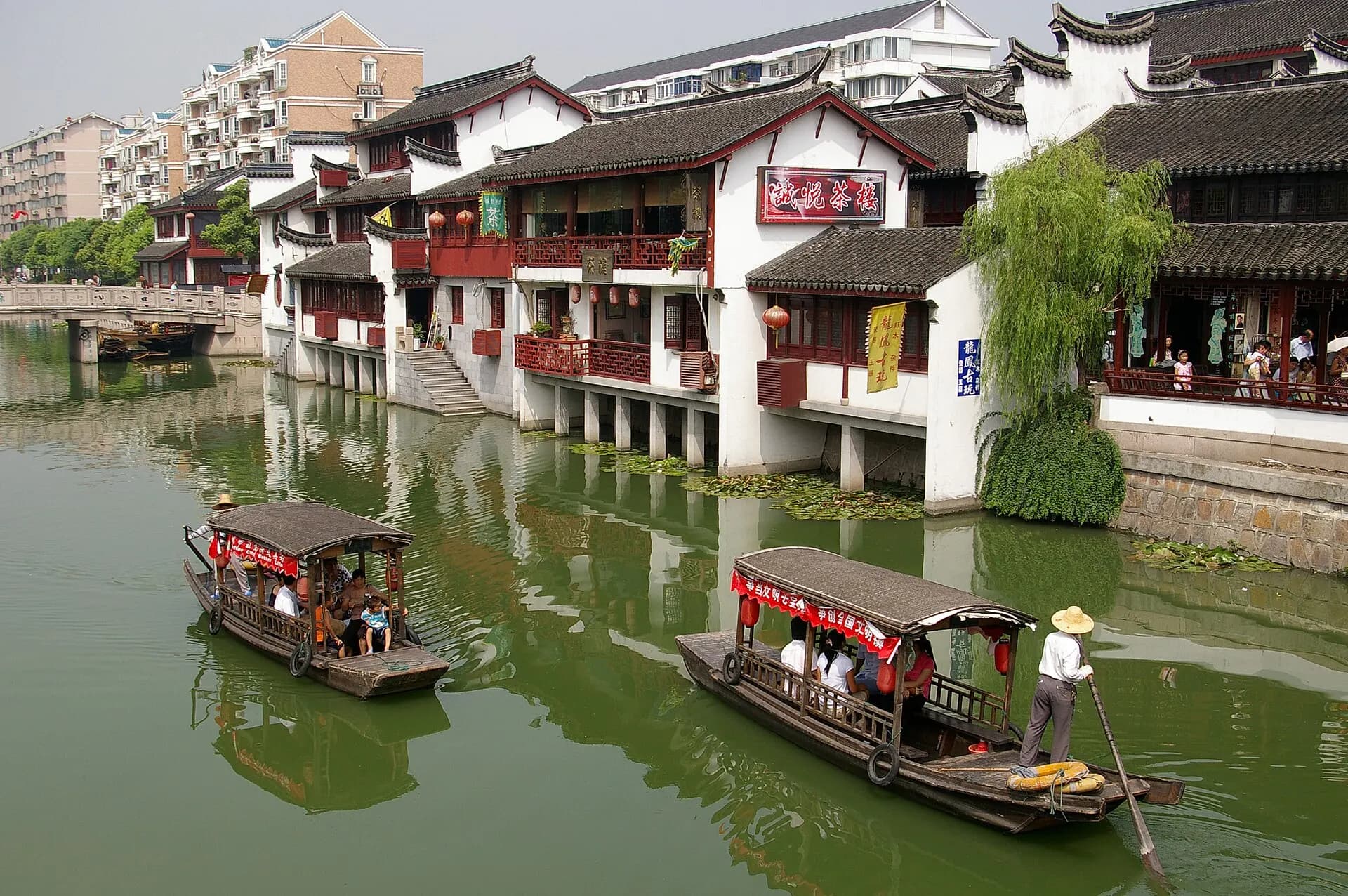
An old canal town absorbed into the southwestern suburbs, easily reached on Metro Line 9. Its compact core of stone bridges, waterside houses and snack streets is very busy at weekends, but it's the quickest way to get a taste of the water-town landscape without a long journey.
- 14
Zhujiajiao
Photo: Bjoertvedt, CC BY-SA 4.0, via Wikimedia Commons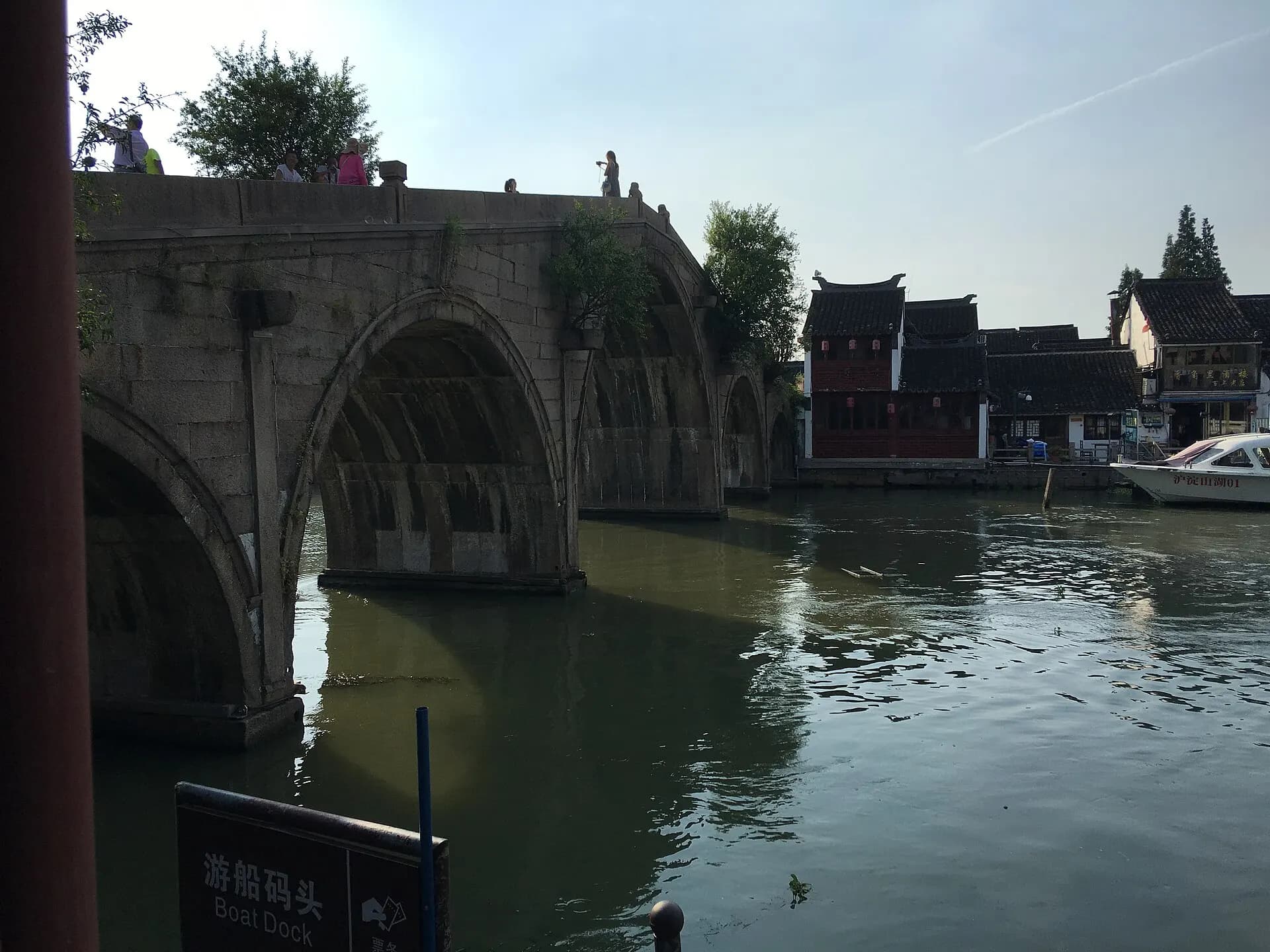
A larger and more atmospheric water town in Qingpu, about fifty kilometres west of the centre and now on Metro Line 17. Canals, stone bridges and Ming and Qing houses make it a classic day out; the five-arched Fangsheng Bridge is the most famous, and small boats are poled along the waterways.
TipGo on a weekday and stay into the late afternoon, after the tour groups leave.
When to go
Spring (April and May) and autumn (October and November) bring the most comfortable weather, with mild temperatures and lower humidity. The plum rain season, a spell of damp, overcast weather, usually arrives from mid-June to early July, followed by hot and very humid summers, with temperatures often in the mid-thirties and occasional typhoons from July to September. Winters are short but raw and damp, a few degrees above freezing, with many older buildings poorly heated. Avoid the national holidays around 1 May and the first week of October if you can, when sights, trains and hotels are at their busiest.
Getting around
Shanghai has two airports. Pudong, the main international airport, is linked to the city by Metro Line 2 and by the Maglev, a magnetic levitation train that covers the 30 kilometres to Longyang Road station in about eight minutes; from there you change to the metro. Hongqiao, in the west, handles mostly domestic flights and is next to Hongqiao Railway Station, the hub for high-speed trains to Beijing, Suzhou, Hangzhou and Nanjing. The airport link line also connects the two airports. The metro is one of the largest in the world, clean, cheap and signed in English, with security checks at every station; pay with the metro QR code in Alipay, or tap a contactless foreign bank card at many gates. Taxis and ride-hailing through DiDi (also available inside Alipay) are inexpensive. Central Shanghai is good for walking, and shared bicycles make the French Concession and the riverside paths easy to explore.
Local tips
- Carry your passport at all times; you'll need it for hotel check-in, train tickets, museum entry and some security checks.
- Set up Alipay or WeChat Pay before you arrive and link a foreign card; both accept major international cards, and many places don't take cash. Carry some yuan as a backup.
- Many foreign websites and apps, including Google services and most Western social media, are blocked in China. Download offline maps and a translation app before you travel, and understand the rules on VPNs before relying on one.
- Museums and galleries close one day a week, usually Monday, though Shanghai Museum East closes on Tuesday.
- Metro stations and many sights offer luggage storage, which is handy on arrival or departure days.
- Have hotel and restaurant addresses written in Chinese for taxi drivers.
Eat and drink
Shanghai's signature is the xiaolongbao, delicate steamed dumplings filled with pork and a mouthful of hot broth; bite a small hole, sip the soup, then eat the rest with a little black vinegar and ginger. Shengjian bao, their pan-fried cousins with crisp bottoms and sesame on top, are the classic breakfast. Try hongshao rou, red-braised pork belly in a sweet soy glaze, scallion-oil noodles, and drunken chicken. In autumn, roughly September to November, hairy crab from the nearby lakes is a seasonal obsession. The city also has a huge café culture, cocktail bars in old villas and some of China's best international restaurants. Tap water isn't safe to drink; use bottled or boiled water.
Where to stay
The area around the Bund and People's Square puts you close to the main sights, with historic hotels in the old bank and trading buildings as well as large international hotels. The former French Concession and Jing'an are leafier and more residential, with boutique hotels, cafés and bars. Lujiazui in Pudong has high-rise hotels with river views, convenient for the Maglev but quieter in the evenings. Hotels register foreign guests with the police, so check that yours accepts foreigners before booking.
Visas and entry
China's entry rules have relaxed in recent years, but they vary by nationality and change often, so check the National Immigration Administration and your nearest Chinese embassy before you book. Ordinary passport holders of more than forty countries, including most of the European Union, the United Kingdom, Australia, New Zealand, Japan and South Korea, can currently enter visa-free for up to thirty days for tourism; this arrangement runs until 31 December 2026, so check whether it has been extended if you're travelling later. Citizens of 57 countries, including the United States, can use the 240-hour visa-free transit policy: you must be travelling on to a third country or region with a confirmed onward ticket, arrive at a designated port, which in Shanghai means Pudong or Hongqiao airport or the Shanghai cruise port, and stay within the permitted area, which includes Shanghai, Jiangsu and Zhejiang. The ten days are counted from midnight after your arrival. Anyone who doesn't qualify needs a visa in advance.
Shikumen and the lane houses
Much of old Shanghai was built as lilong, lanes of terraced houses entered through a single gateway from the street. The most typical are shikumen, "stone-gate" houses that mixed Chinese courtyard plans with Western terraced rows, built in their thousands from the 1870s to the 1930s. Families once crowded into single rooms, with cooking and washing spilling into the alleys. Many lanes have been demolished for redevelopment, while others, such as Tianzifang and Xintiandi, have been converted into shops and restaurants. To see lanes that are still lived in, wander the side streets of the French Concession and Jing'an, and look through the gateways; be respectful, as these are homes.
The two riverbanks
The best way to understand Shanghai is to see it from the Huangpu. River cruises leave from the Bund in the evening and run past both banks, and the riverside paths now stretch for many kilometres on each side, from the old shipyards and warehouses in the north to the West Bund in the south, linking parks, art spaces and former industrial buildings. Suzhou Creek, which joins the Huangpu at the northern end of the Bund, has a pleasant waterside walk past historic bridges and warehouses, including the striking Art Deco Broadway Mansions.
Responsible travel
Shanghai's historic lanes are under constant pressure from redevelopment and tourism; spend your money in small family businesses, ask before photographing residents, and keep your voice down in residential alleys. In the water towns, choose quieter times and stay overnight if you can, rather than joining the busiest day-trip crowds. Use the metro rather than taxis where possible, carry a reusable bottle, and refuse unnecessary plastic bags and packaging. Respect security checks and avoid photographing police or government buildings.