Vienna
Imperial palaces, grand coffee houses, Klimt's gold and music in every corner. Europe's most elegant capital.
- Best time to go
- April to June and September to October; late November to December for Christmas markets
- Local time
- –
- Currency
- Euro (EUR)
- Reading time
- 5 min
- Language
- German
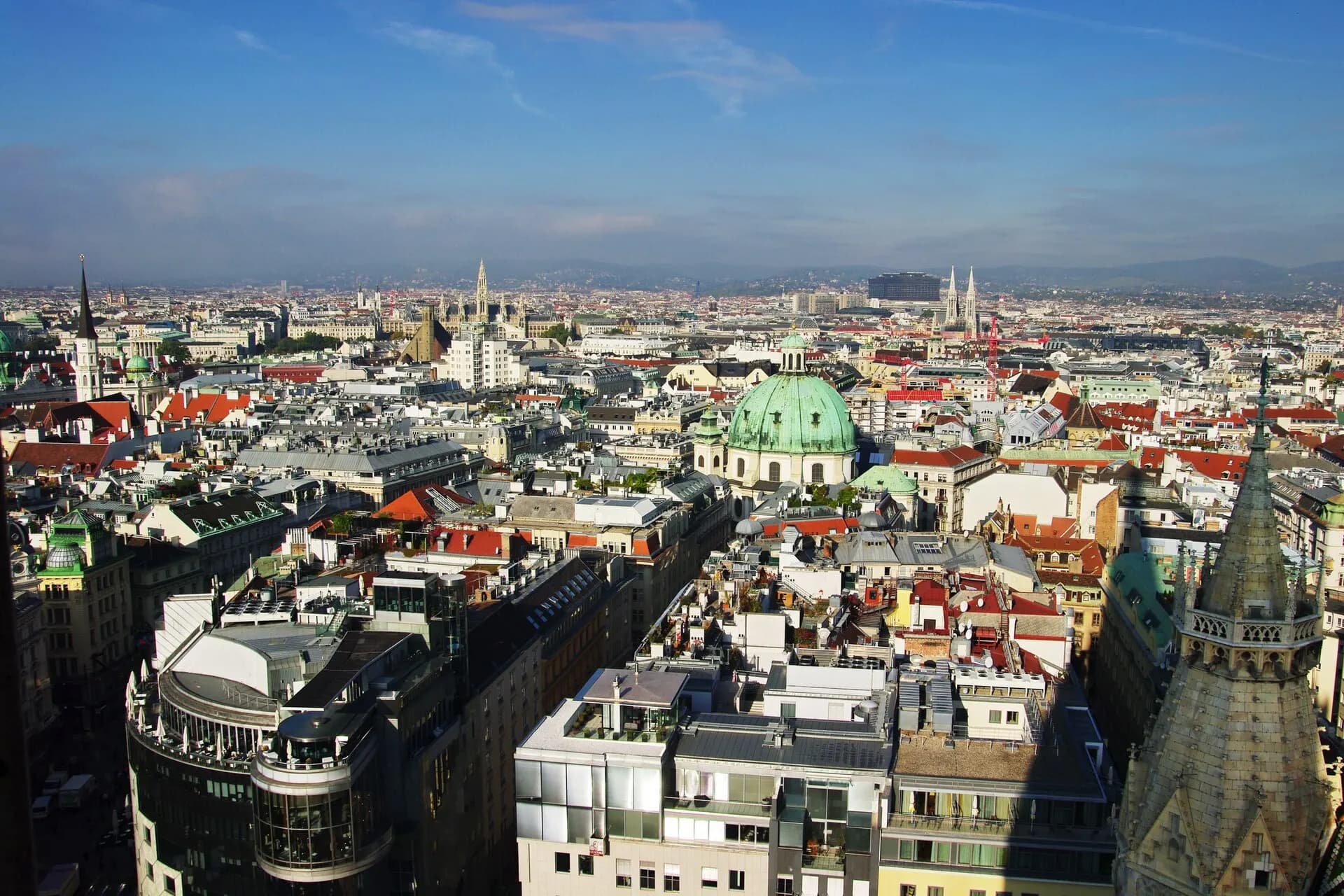
For six centuries Vienna was the capital of the Habsburgs, who ruled a vast empire from its palaces. The city's grand boulevard, the Ringstrasse, is lined with opera houses, museums and parliament buildings, and its coffee houses, where locals linger for hours over a newspaper, are recognised as part of Austria's cultural heritage.
Vienna was also home to Mozart, Beethoven, Schubert, Freud and Klimt, and music and art are still everywhere. It is a safe, clean and remarkably liveable city, and its excellent public transport makes it easy to explore. Take your time: the Viennese way is to slow down.
The top 10 in Vienna
- 1
Schönbrunn Palace
Photo: Thomas Wolf, www.foto-tw.de, CC BY-SA 3.0 de, via Wikimedia Commons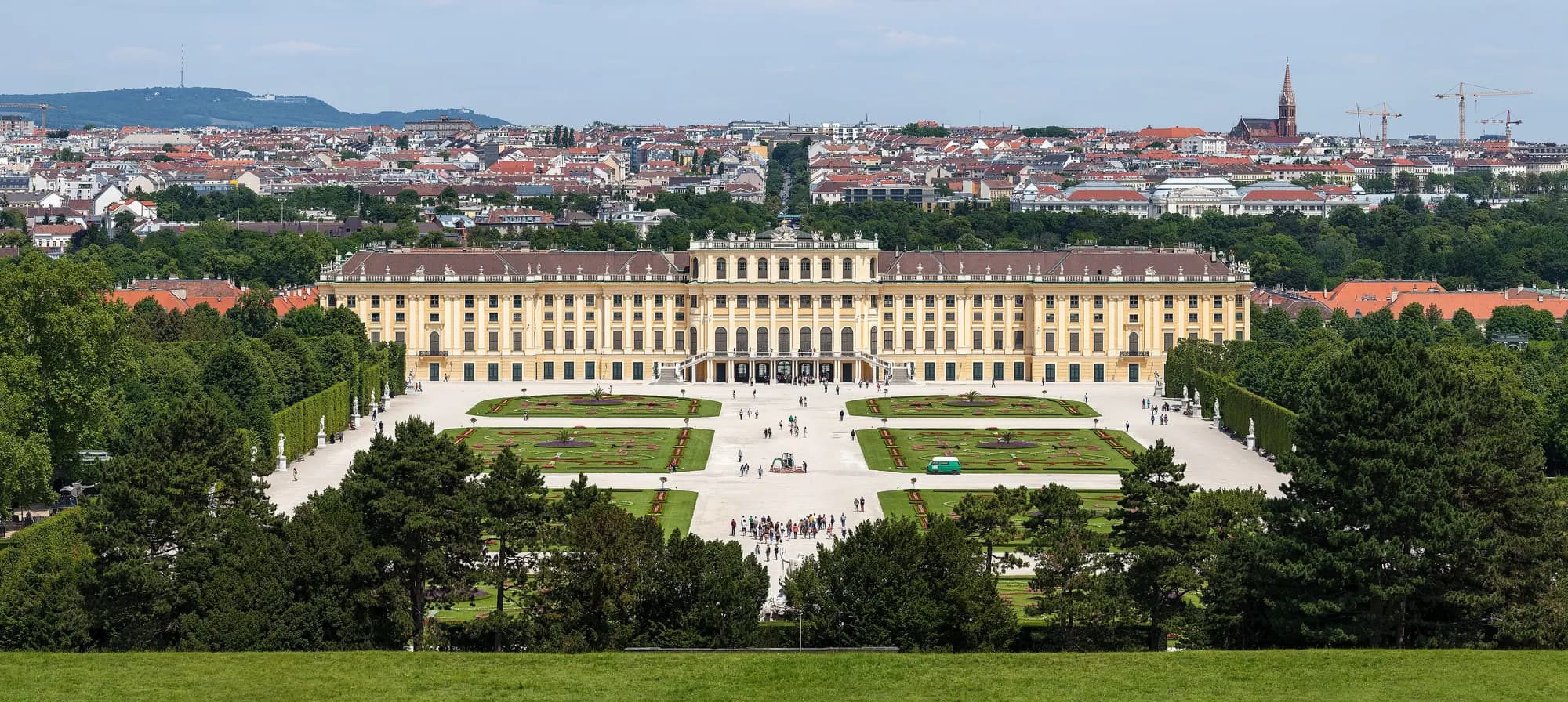
The Habsburgs' summer palace has more than a thousand rooms, of which around forty can be visited, from the state rooms where Mozart performed as a child to the apartments of Emperor Franz Joseph and Empress Elisabeth (Sisi). The formal gardens, free to enter, climb to the Gloriette, a colonnade with a view over the city.
TipBook a timed ticket and go first thing in the morning; the gardens are lovely to walk after your visit.
- 2
The Hofburg
Photo: Gunnar Klack, CC BY-SA 4.0, via Wikimedia Commons
The Habsburgs' winter palace in the centre of the city is a complex of courtyards and wings built over seven centuries. It houses the Imperial Apartments, the Sisi Museum, the Imperial Silver Collection and the Spanish Riding School, where the white Lipizzaner horses perform.
- 3
St Stephen's Cathedral
Photo: derivative from Jebulon, CC0, via Wikimedia Commons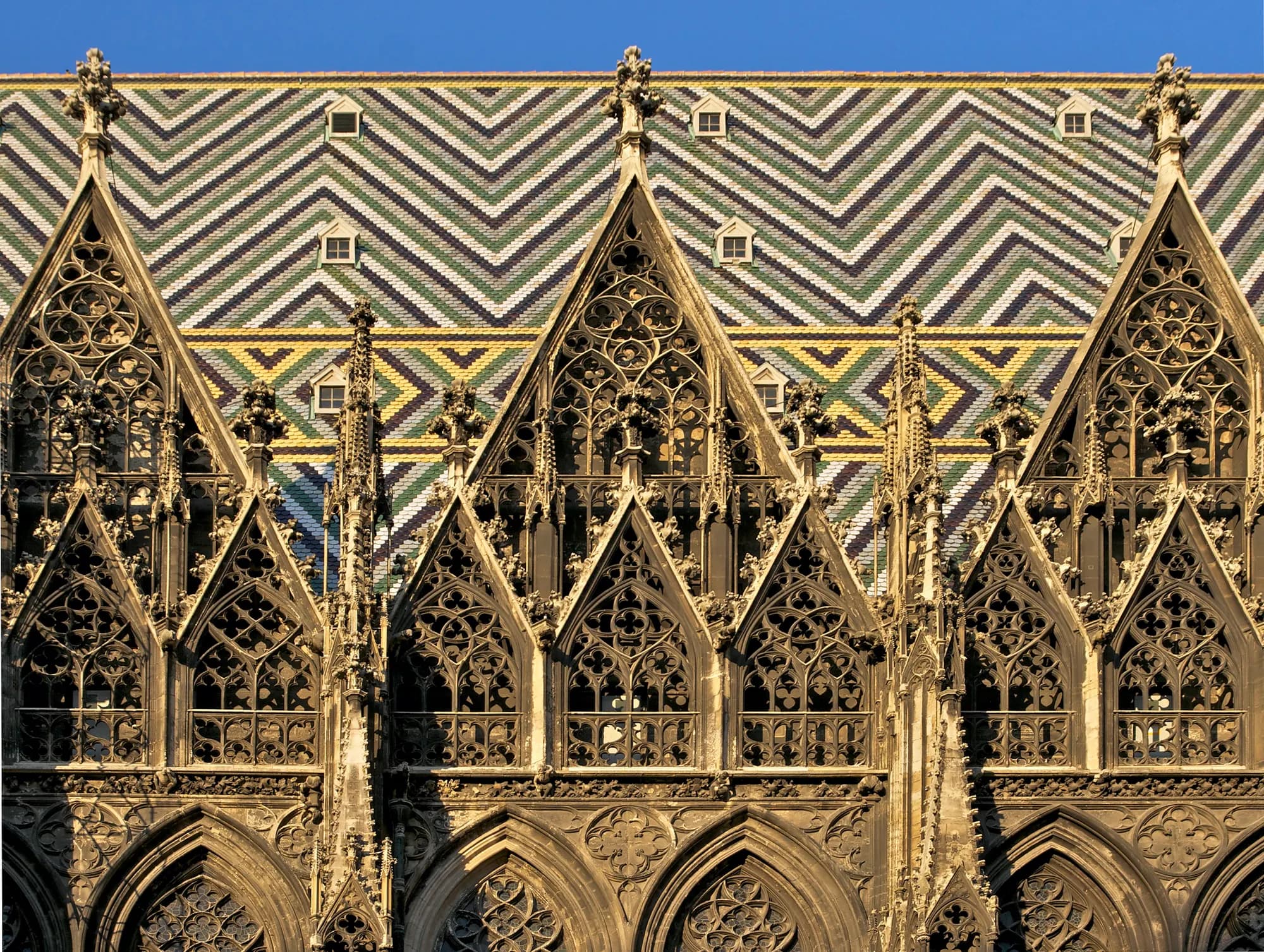
The Gothic cathedral at the heart of Vienna, with its soaring south tower and a roof of glazed tiles in a zigzag pattern. Climb the south tower's spiral stairs or take the lift up the north tower to see its great bell and views across the old city.
- 4
The Belvedere
Photo: Diego Delso, CC BY-SA 4.0, via Wikimedia Commons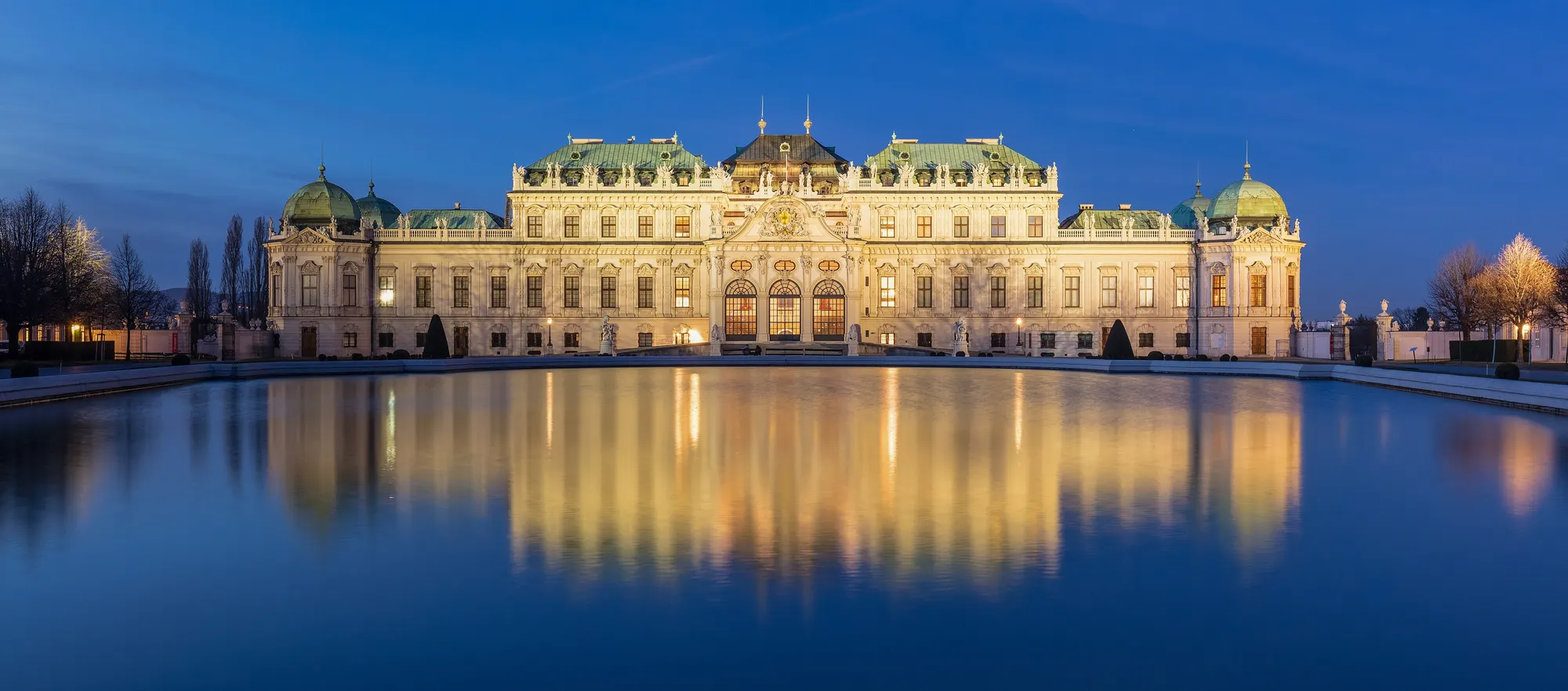
Two baroque palaces facing each other across formal gardens, built for Prince Eugene of Savoy. The Upper Belvedere holds the world's largest collection of paintings by Gustav Klimt, including The Kiss, as well as works by Egon Schiele and the Viennese art of 1900.
- 5
Hundertwasserhaus
Photo: Dietmar Rabich, CC BY-SA 4.0, via Wikimedia Commons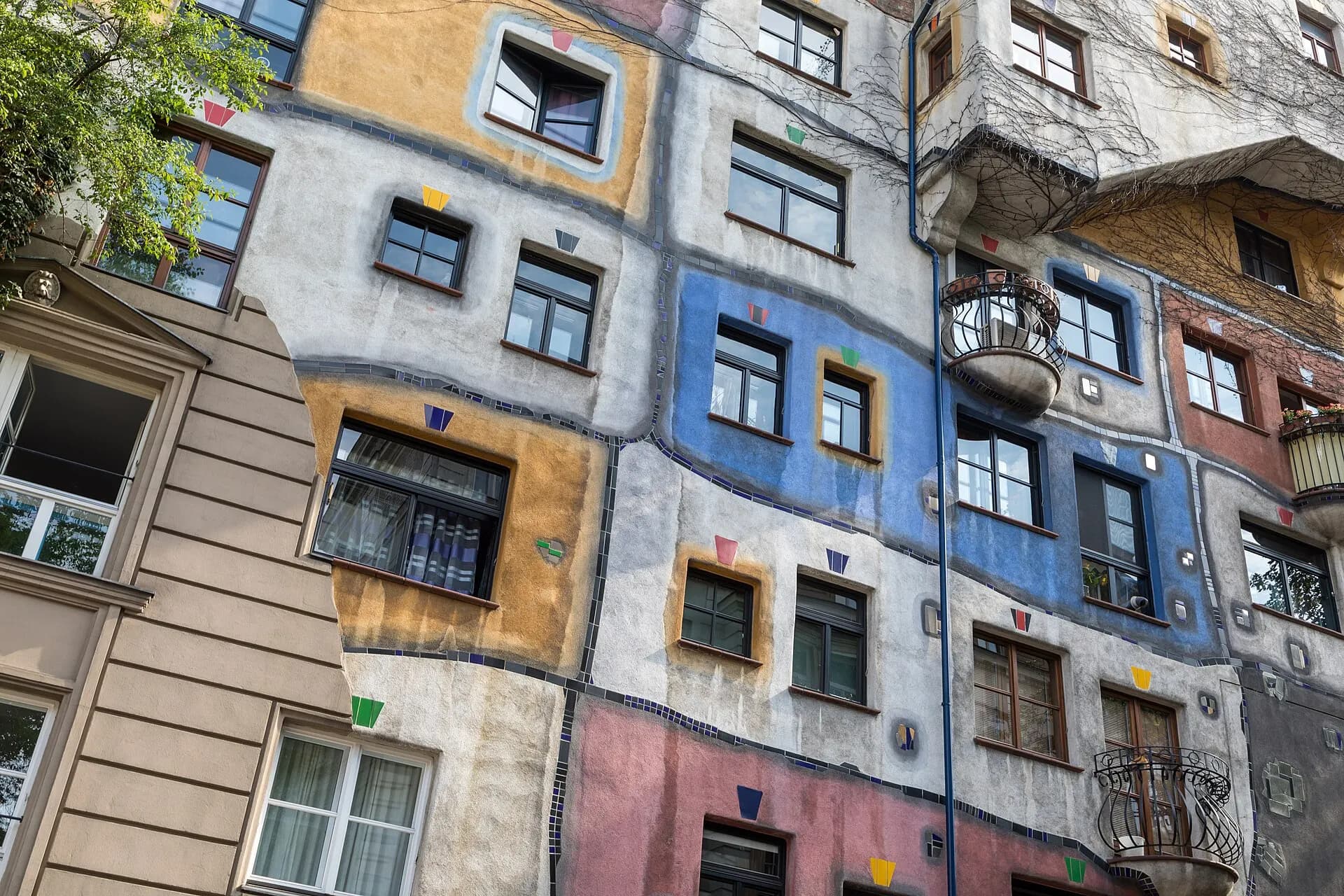
A colourful public housing block designed by the artist Friedensreich Hundertwasser, with uneven floors, onion domes, trees growing from the balconies and not a straight line in sight. It's still lived in, so it's viewed from outside; the nearby Kunst Haus Wien, also his design, has a museum of his work.
- 6
The Kunsthistorisches Museum and MuseumsQuartier
Photo: Sandor Somkuti, CC BY-SA 2.0, via Wikimedia Commons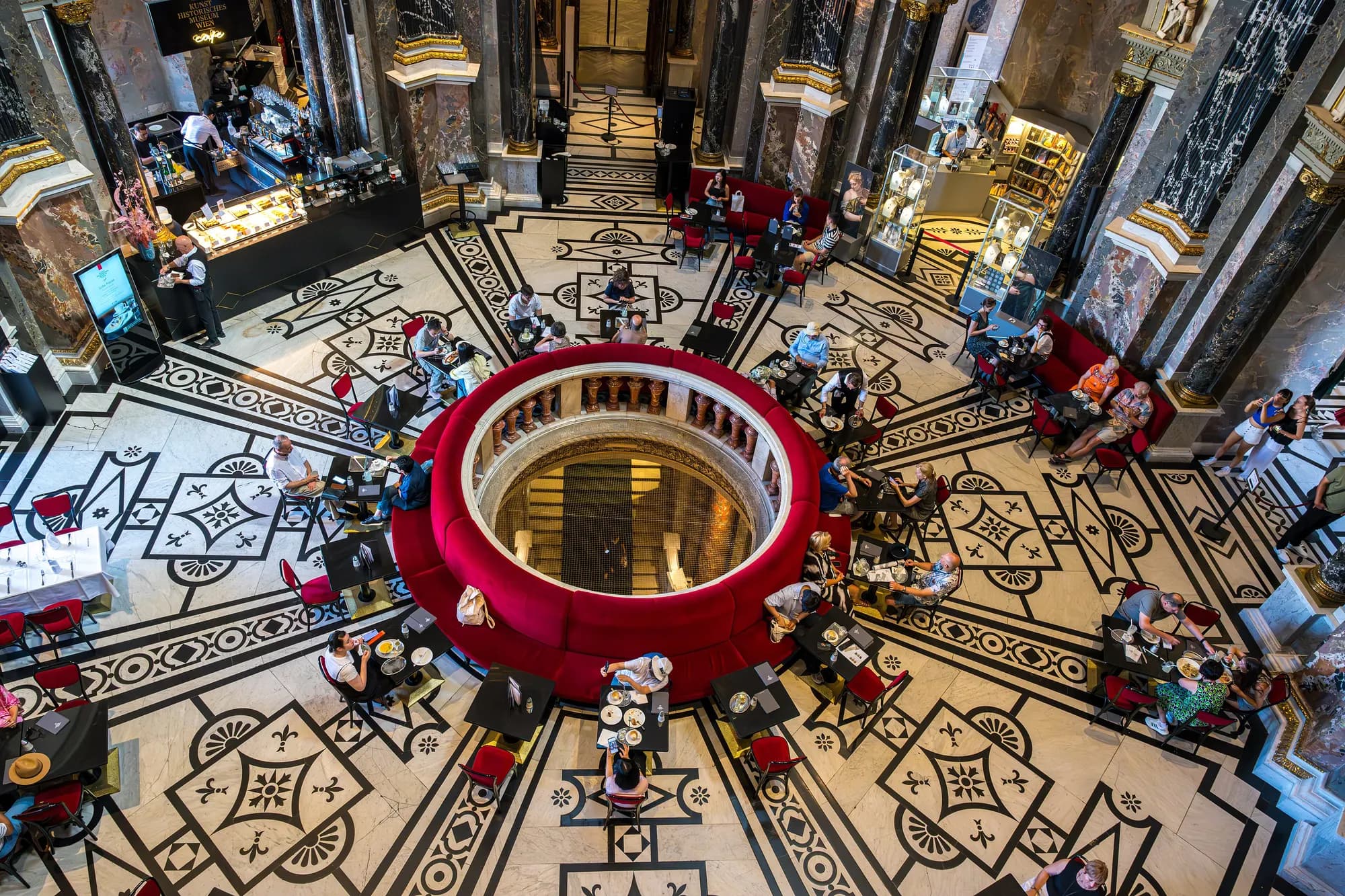
The Museum of Art History, in a magnificent building on the Ring, holds the Habsburgs' collections, including the world's largest group of paintings by Pieter Bruegel the Elder. Across the road, the MuseumsQuartier is a lively complex of modern museums, including the Leopold Museum, with its Schiele collection, and courtyards where locals gather on summer evenings.
- 7
The Vienna State Opera
Photo: P e z i, CC BY-SA 3.0 at, via Wikimedia Commons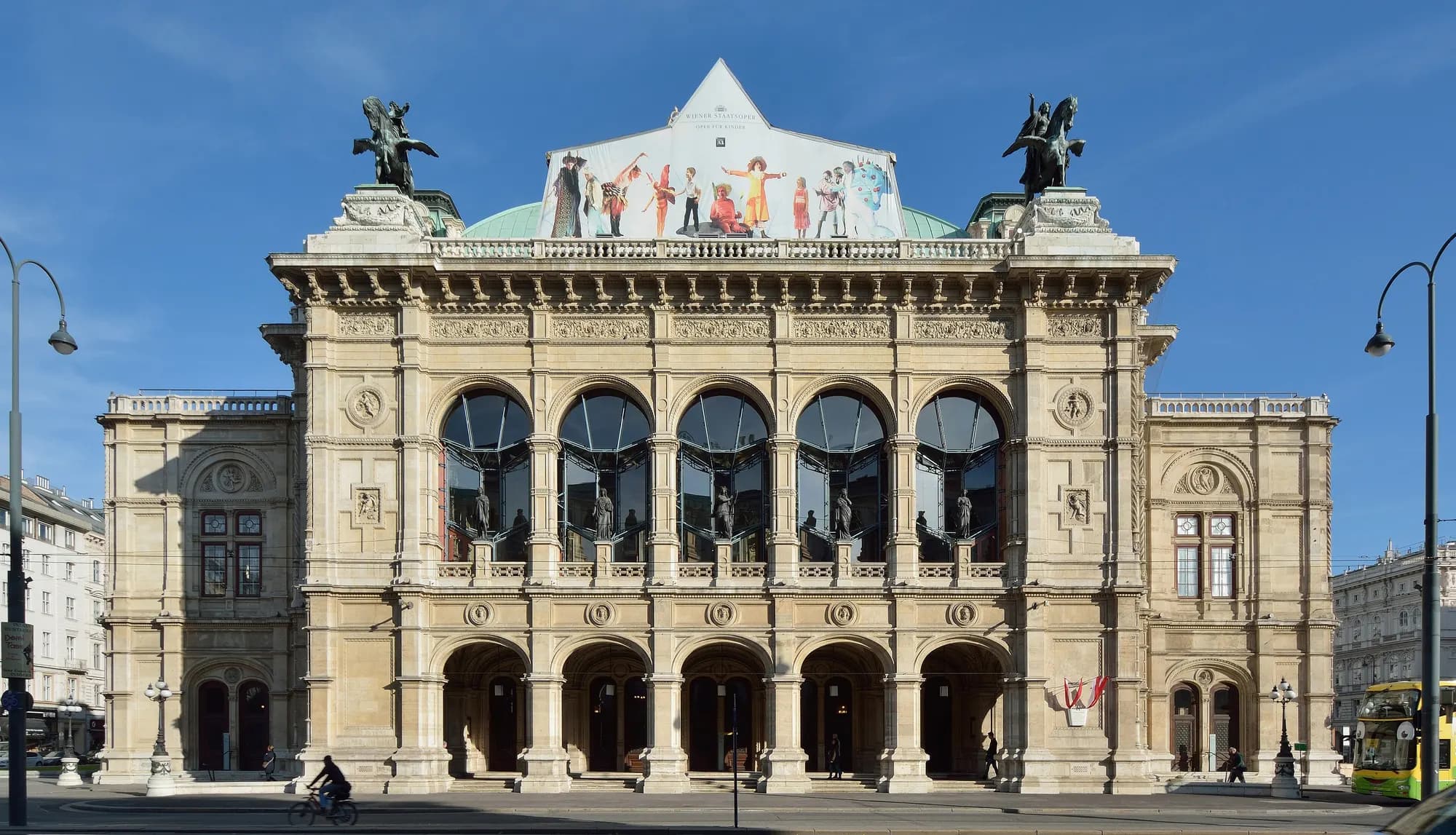
One of the world's great opera houses, with performances on most nights of the season. Guided tours show the building, but the best way to see it is at a performance.
TipStanding-room tickets, sold online and at the box office, cost just a few euros and are a Viennese tradition.
- 8
The Albertina
Photo: C.Stadler/Bwag, CC BY-SA 4.0, via Wikimedia Commons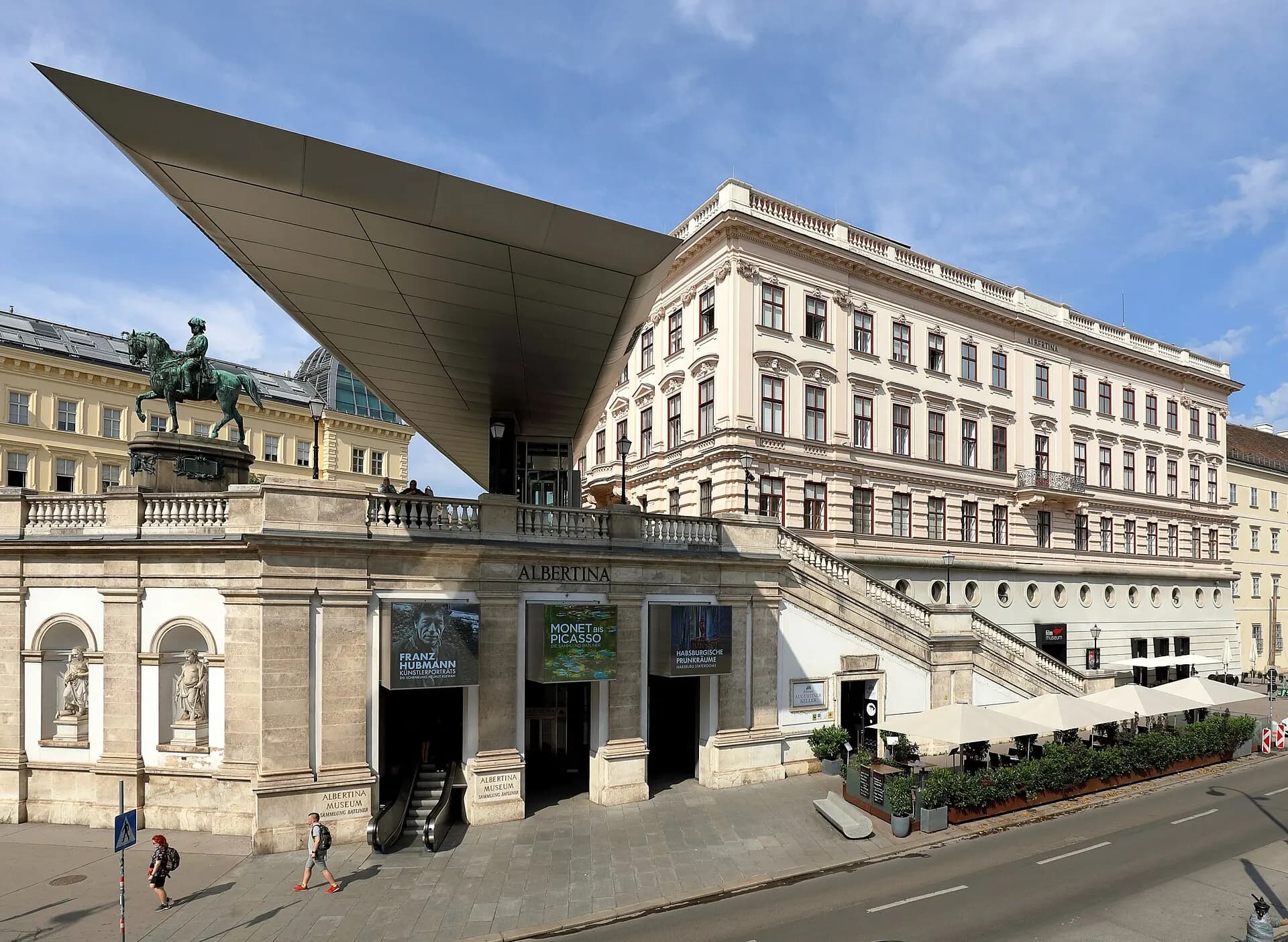
A Habsburg palace on the old city ramparts that houses one of the world's great collections of drawings and prints, including Dürer's Young Hare, and a superb collection of modern art from Monet to Picasso. The terrace in front looks across to the State Opera.
- 9
The Naschmarkt
Photo: Dietmar Rabich, CC BY-SA 4.0, via Wikimedia Commons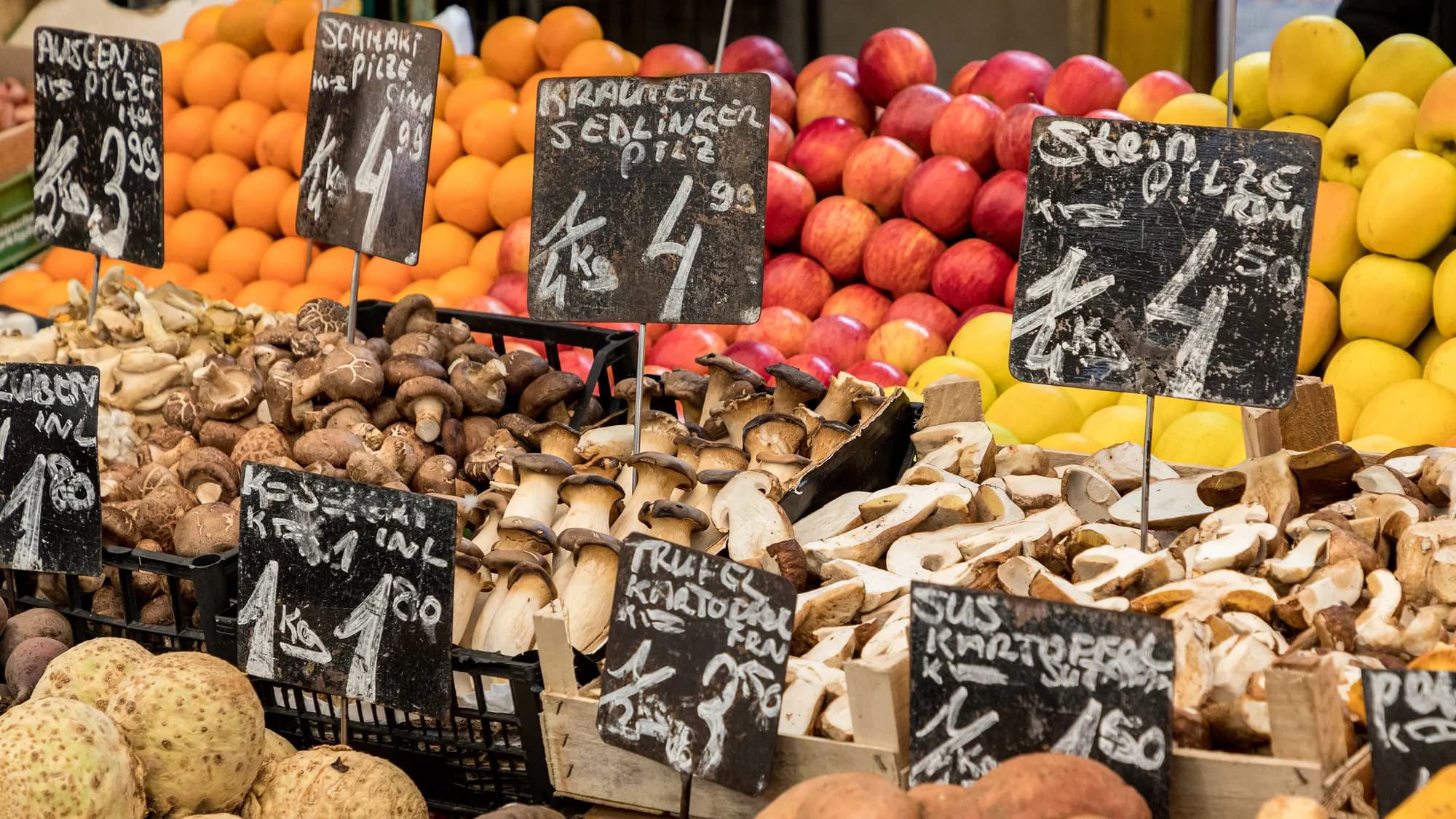
Vienna's most popular market stretches for about one and a half kilometres along the Wienzeile, with stalls selling spices, cheese, olives and fresh produce, and many small restaurants. On Saturdays, a flea market adds to the bustle.
- 10
The Prater
Photo: Dietmar Rabich, CC BY-SA 4.0, via Wikimedia Commons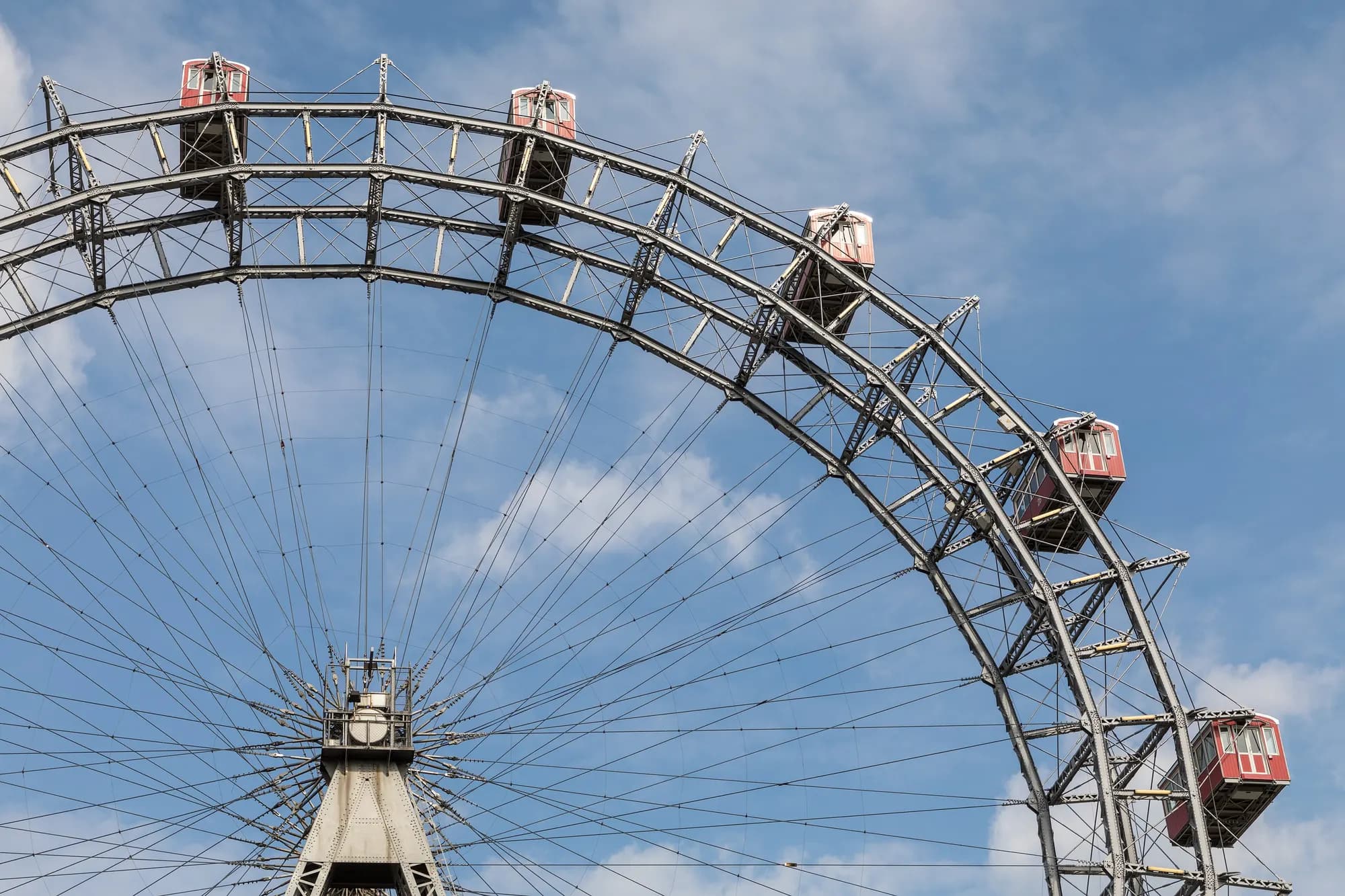
A former imperial hunting ground, now a vast park with long chestnut avenues and the Wurstelprater amusement park. Its giant Ferris wheel, the Riesenrad, built in 1897 and famous from the film The Third Man, gives views over the city.
When to go
Spring and autumn are mild and pleasant. Summer is warm and lively, with outdoor film festivals and concerts, though the opera and many concert halls take a break in July and August. From mid-November, Christmas markets fill the squares in front of the town hall, Schönbrunn and other landmarks. January and February are the ball season, when hundreds of formal balls are held.
Getting around
Vienna's public transport is excellent: the U-Bahn underground, trams and buses cover the whole city, and tickets for 24, 48 or 72 hours are good value. The tram lines around the Ringstrasse are a lovely way to see its grand buildings. The city is also good for walking and cycling, with many bike lanes.
From the airport, the City Airport Train (CAT) reaches Wien Mitte in about sixteen minutes, and the S-Bahn line S7 is a cheaper alternative. Trains connect Vienna with Budapest, Prague, Salzburg and Munich in a few hours.
Local tips
- Greet staff with "Grüß Gott" or "Guten Tag" when you enter a shop or café.
- In coffee houses, it's fine to sit for hours with one coffee; a glass of water comes with it.
- Many shops are closed on Sundays, though museums and cafés are open.
- Validate paper tickets before boarding; inspectors are common and fines are steep.
- Book popular concerts and the Spanish Riding School well ahead.
- Round up the bill or tip around 10% in restaurants and cafés.
Eat and drink
Viennese cooking reflects the variety of the old empire. Try Wiener schnitzel, a thin veal cutlet fried in breadcrumbs; Tafelspitz, boiled beef with horseradish; and goulash. Coffee houses serve cakes such as Sachertorte and apple strudel. On the edge of the city, wine taverns called Heuriger serve the local wine with simple food among the vineyards.
Day trips
The Wachau, a stretch of the Danube valley west of Vienna, is a World Heritage landscape of vineyards, apricot orchards and medieval villages. The baroque Melk Abbey, high above the river, is about an hour away by train, and in season boats run downstream to the wine village of Dürnstein, with the ruined castle where Richard the Lionheart was imprisoned. Bratislava, the capital of Slovakia, is about an hour away by train or by fast boat along the Danube, with a compact old town and a castle on the hill. Salzburg, Mozart's birthplace, is around two and a half hours away by train and is best visited overnight. For a walk in nature, the Vienna Woods begin at the edge of the city, with vineyards and taverns on their slopes.