Hallstatt
A salt-mining village squeezed between lake and mountain, at the heart of Austria's loveliest lake district.
- Best time to go
- May to June and September to October; early mornings and evenings year-round to dodge day-trip crowds
- Local time
- –
- Currency
- Euro (EUR)
- Reading time
- 11 min
- Language
- German

Hallstatt clings to a narrow ledge between the steep flank of the Dachstein massif and the dark water of the Hallstätter See, a jumble of wooden balconies, church spires and pastel houses that looks almost too neat to be real. It is real, and old: salt has been mined in the mountain above for some seven thousand years, so long that archaeologists named a whole phase of European Iron Age culture after the village. Since 1997 Hallstatt and its surroundings have been a UNESCO World Heritage cultural landscape.
Fame has a cost. Fewer than 800 people live here, yet on a summer day many thousands pour off coaches and trains, and the village has become a byword for overtourism. Visit thoughtfully, ideally staying overnight, and Hallstatt is still magical in the quiet hours. It also makes a superb base for the wider Salzkammergut, a lake district of mountains, imperial spa towns and steam railways between Salzburg and the Dachstein. The places below run as a route: the village first, then the Dachstein heights and Gosausee, then north to Bad Ischl, Traunsee and finally Wolfgangsee on the road to Salzburg.
The top 13 in Hallstatt
- 1
Hallstatt viewpoint
Photo: Kevin Poh, CC BY 2.0, via Wikimedia Commons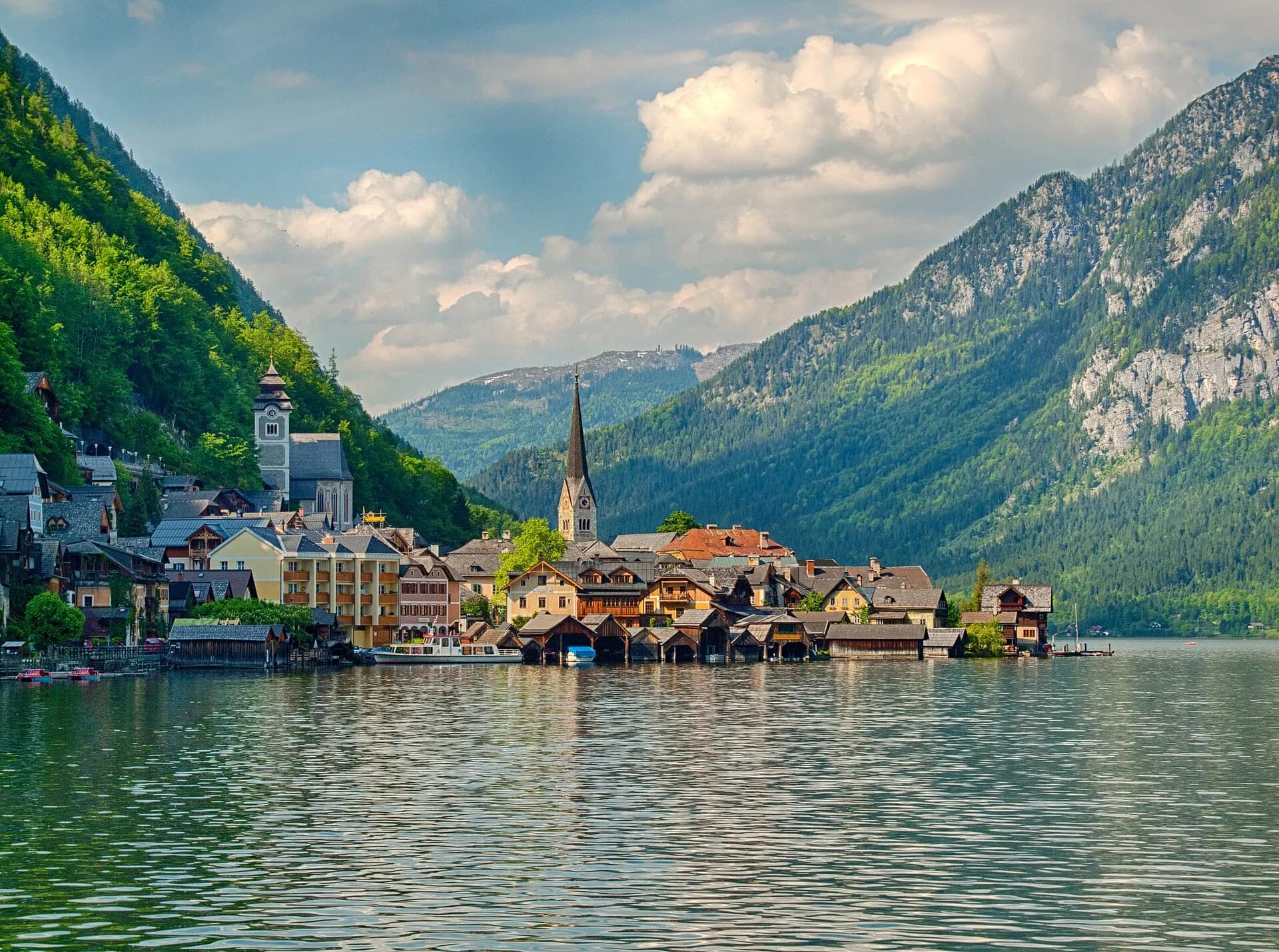
The postcard view, with the slender spire of the Lutheran church in front of a cluster of houses and the mountains behind, is taken from the lakeside lane at the northern edge of the old village. It is the most photographed spot in Austria, and at midday there's a queue for it. Come at dawn or after the last coaches leave, when the lake is often mirror-calm and you'll have it largely to yourself.
TipThis is a residential street, not a stage. Keep the lane clear, don't climb on walls or private jetties, and move on once you have your picture.
- 2
Marktplatz
Photo: Liberaler Humanist, CC BY-SA 3.0, via Wikimedia Commons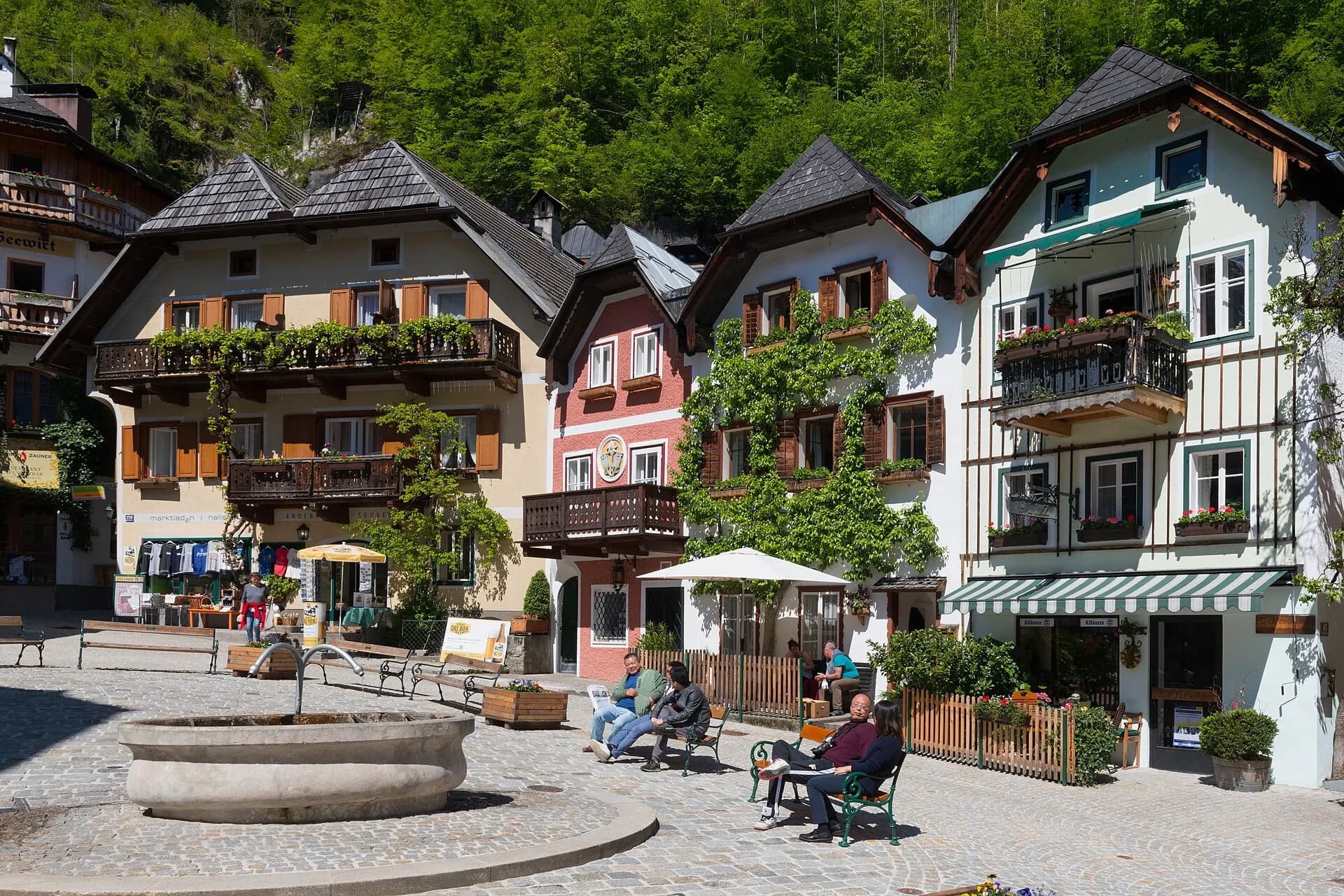
The little market square is the heart of the village, ringed by painted houses with window boxes and anchored by a stone fountain with a statue of the Holy Trinity. Most of the buildings went up after a fire destroyed the centre in 1750. From here narrow lanes and stairways climb between the houses, and the lakeshore promenade leads to the ferry landing and the small Lutheran Christ Church, built in the 1860s.
TipThe Hallstatt Museum, a short walk away, explains the prehistoric finds that made the village famous among archaeologists.
- 3
Bone House (Beinhaus)
Photo: Wolfgang Sauber, CC BY-SA 4.0, via Wikimedia Commons
Beside the Catholic parish church, reached by steps above the rooftops, the tiny churchyard is so cramped that graves were traditionally reused after a decade or two. The exhumed bones were bleached, and from the eighteenth century many skulls were painted with garlands of flowers or ivy, along with the person's name and dates. Around 1,200 skulls are kept in St Michael's Chapel, roughly half of them painted, making this one of the most moving small sights in the Alps.
TipThere's a modest entry fee. The churchyard is still in use, so keep voices low and don't wander among the graves during funerals or services.
- 4
Skywalk "Welterbeblick"
A steel platform juts out from the cliff some 350 metres above the village, giving a bird's-eye view down onto the rooftops and along the length of the lake to Obertraun and the Dachstein. It sits at the top station of the Salzbergbahn funicular, which climbs from the southern end of Hallstatt in a few minutes; you can also walk up a steep zigzag path in under an hour.
TipRide up early, before the tour groups, and walk down if your knees allow: the path passes the Rudolfsturm, a medieval tower guarding the mine valley, which now houses a restaurant.
- 5
Salzwelten Hallstatt salt mine
Photo: Andrew Bossi, CC BY-SA 3.0, via Wikimedia Commons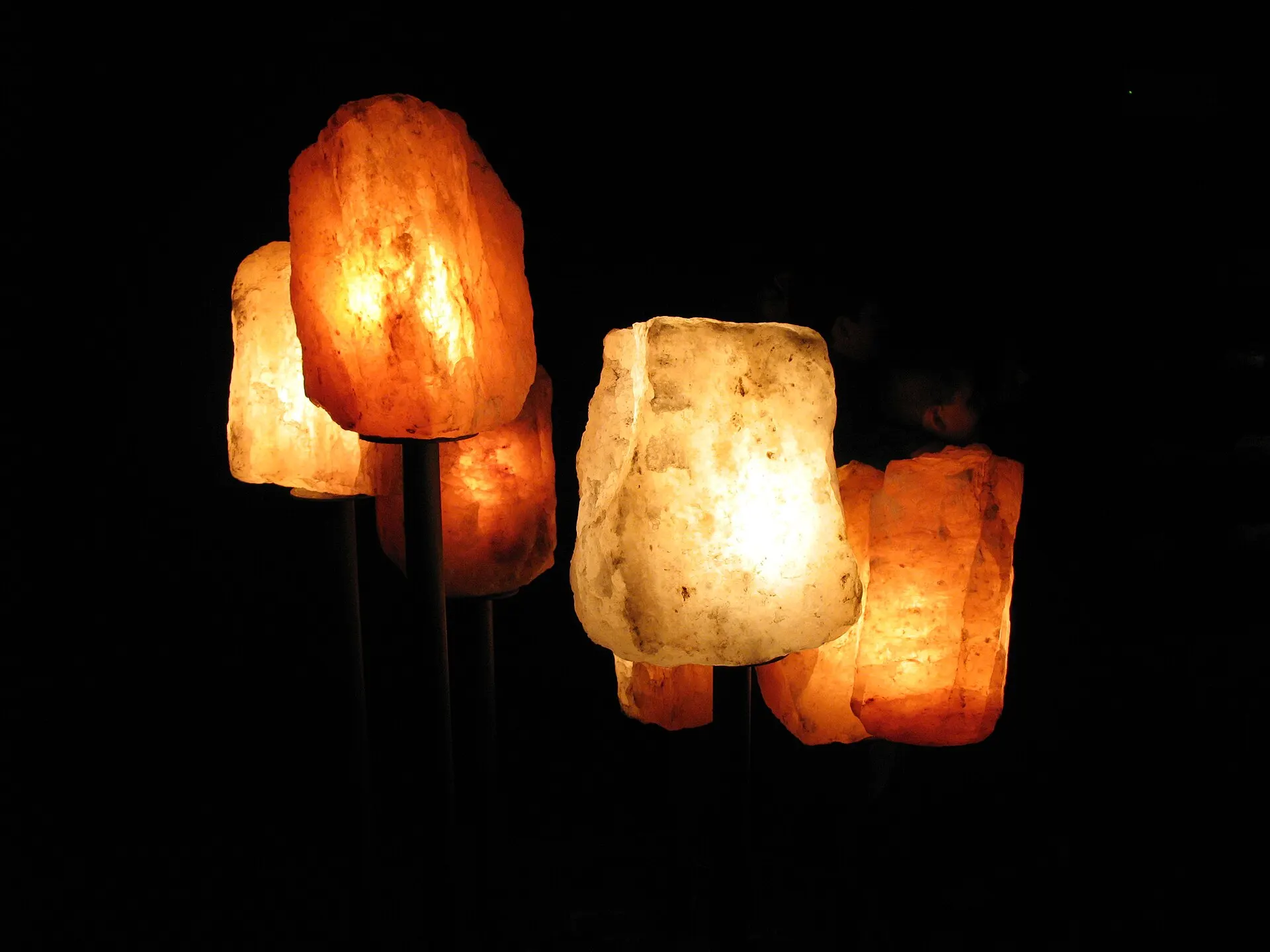
Beyond the Skywalk, a gentle walk up the high valley leads to the entrance of what is billed as the world's oldest salt mine. Guided tours take you in on a miners' train, down long wooden slides polished by generations of visitors, past an underground salt lake and through displays on Bronze Age miners, whose leather caps, tools and even a preserved body, the "Man in Salt" found in 1734, survived in the salt. The surrounding high valley also holds an important prehistoric cemetery.
TipIn autumn 2026 the combined mine and funicular ticket costs €49 for adults, tours start until 4.30pm, and the mine stays open into early January. Inside it is about 8°C all year, so bring a layer.
- 6
Dachstein Krippenstein and 5fingers
Photo: Balou46, CC BY-SA 4.0, via Wikimedia Commons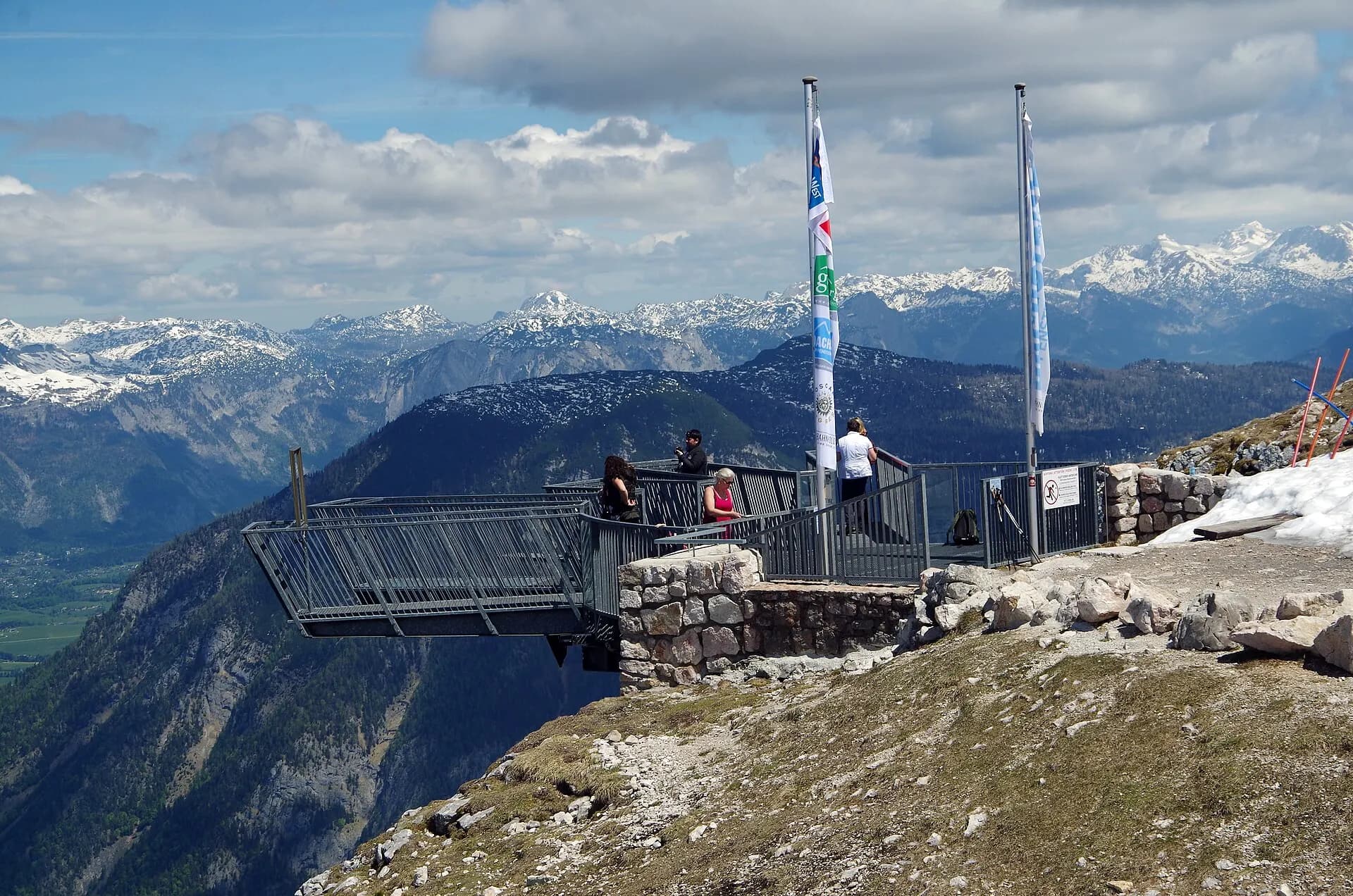
At the other end of the lake, cable cars rise from Obertraun to the Krippenstein, just over 2,000 metres up on the edge of the vast limestone Dachstein plateau. A short walk from the top station leads to 5fingers, a hand-shaped viewing platform whose five "fingers" project over a drop of around 400 metres; one has a glass floor and another a frame for photos. Hallstatt and its lake lie far below. Nearby trails lead to the Welterbespirale, another viewing platform, and the Heilbronn Cross memorial.
TipThe summer cable cars run daily until early November, starting at 8.40am. Check the webcams first: in cloud you'll see nothing from 5fingers.
- 7
Dachstein Giant Ice Cave and Mammoth Cave
Photo: Tigerente, CC BY-SA 4.0, via Wikimedia Commons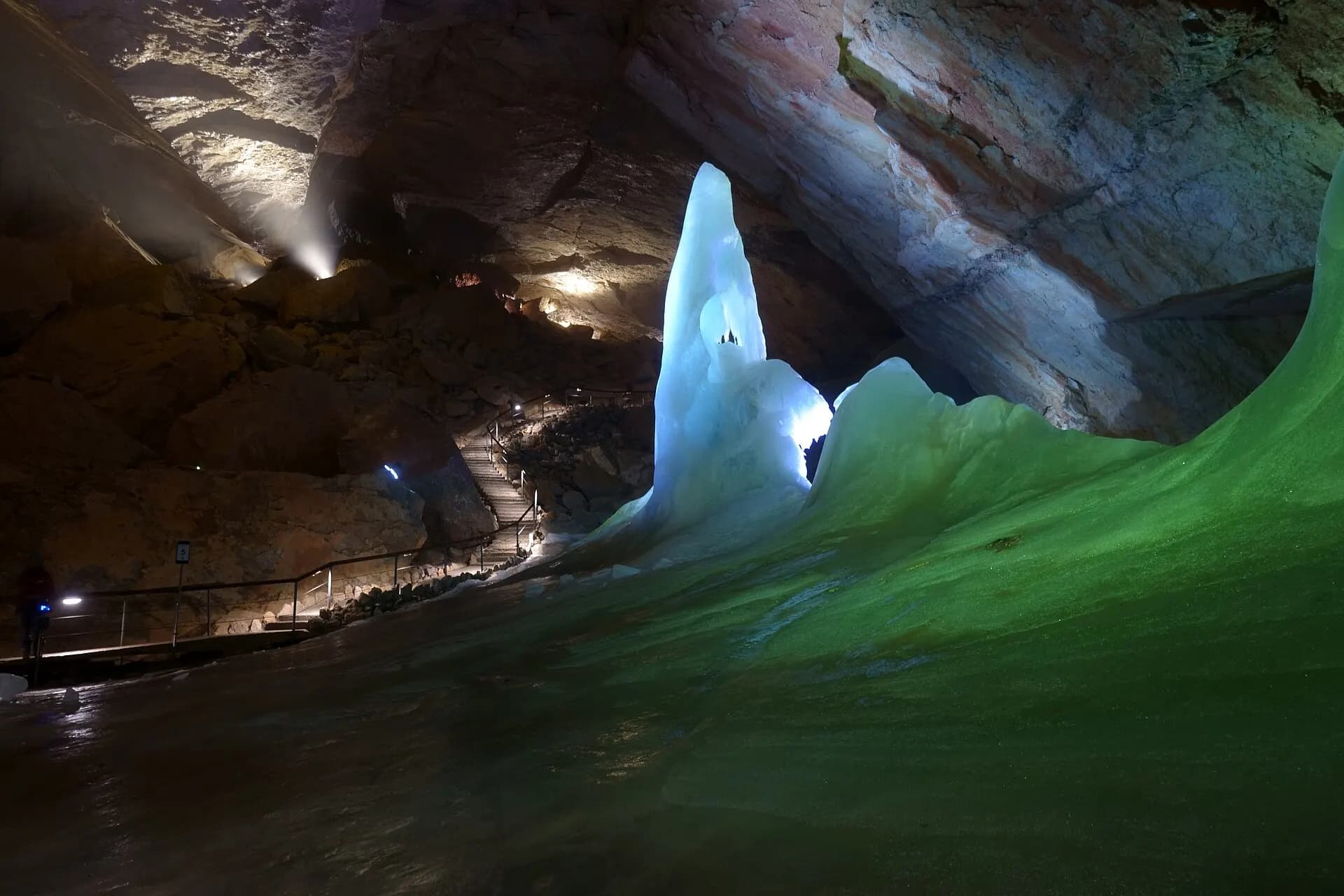
Both caves are reached from Schönbergalm, the first cable-car station above Obertraun. The Giant Ice Cave (Rieseneishöhle) is filled with frozen waterfalls and columns of ice up to many metres thick, formed as cold winter air sinks into the cave and freezes the meltwater; tours run for about an hour along walkways and stairs. The Mammoth Cave (Mammuthöhle) is a dry system of enormous tunnels carved by ancient rivers, with a lighting installation in its great halls. They share the cable-car season, so both are closed in winter.
TipThe ice cave hovers around freezing even in August, so pack a warm jacket and sturdy shoes. Allow most of a day for cable cars, both caves and 5fingers.
- 8
Gosausee
Photo: AtterseeMM, CC BY-SA 4.0, via Wikimedia Commons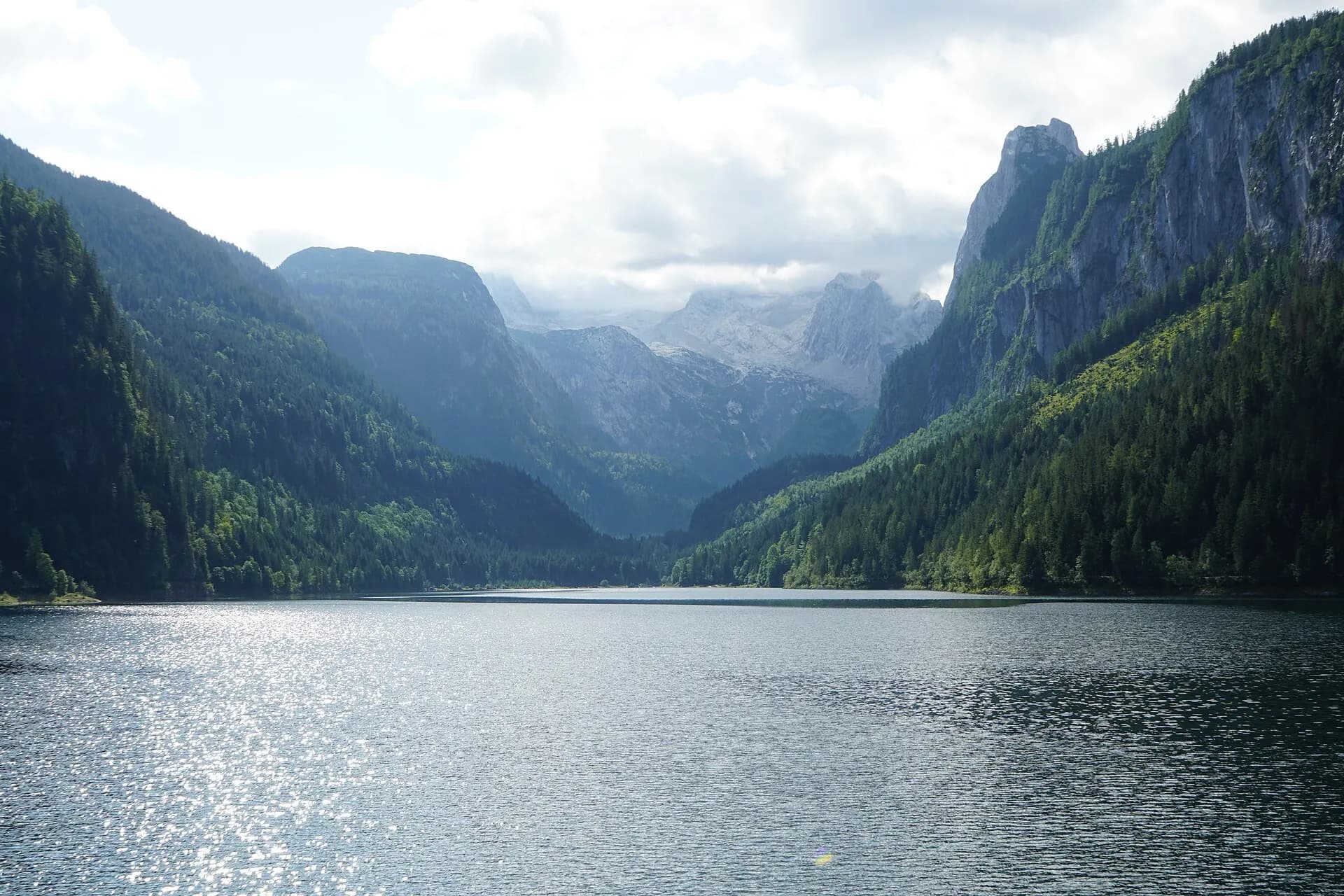
West of Hallstatt, a road winds up the Gosau valley to the Vorderer Gosausee, a small, clear lake that reflects the glaciers and jagged towers of the Dachstein and the Gosaukamm. A flat path circles the lake in around an hour, and longer trails continue to the Hinterer Gosausee. On calm mornings the reflection is near-perfect; in late afternoon the sun lights the mountain faces.
TipThere's a large car park at the lake, and in summer regional buses run up the valley from Bad Goisern and Bad Ischl. The Gosaukammbahn cable car climbs from here to the Zwieselalm for more views.
- 9
Bad Ischl and the Kaiservilla
Photo: Toffel, Public domain, via Wikimedia Commons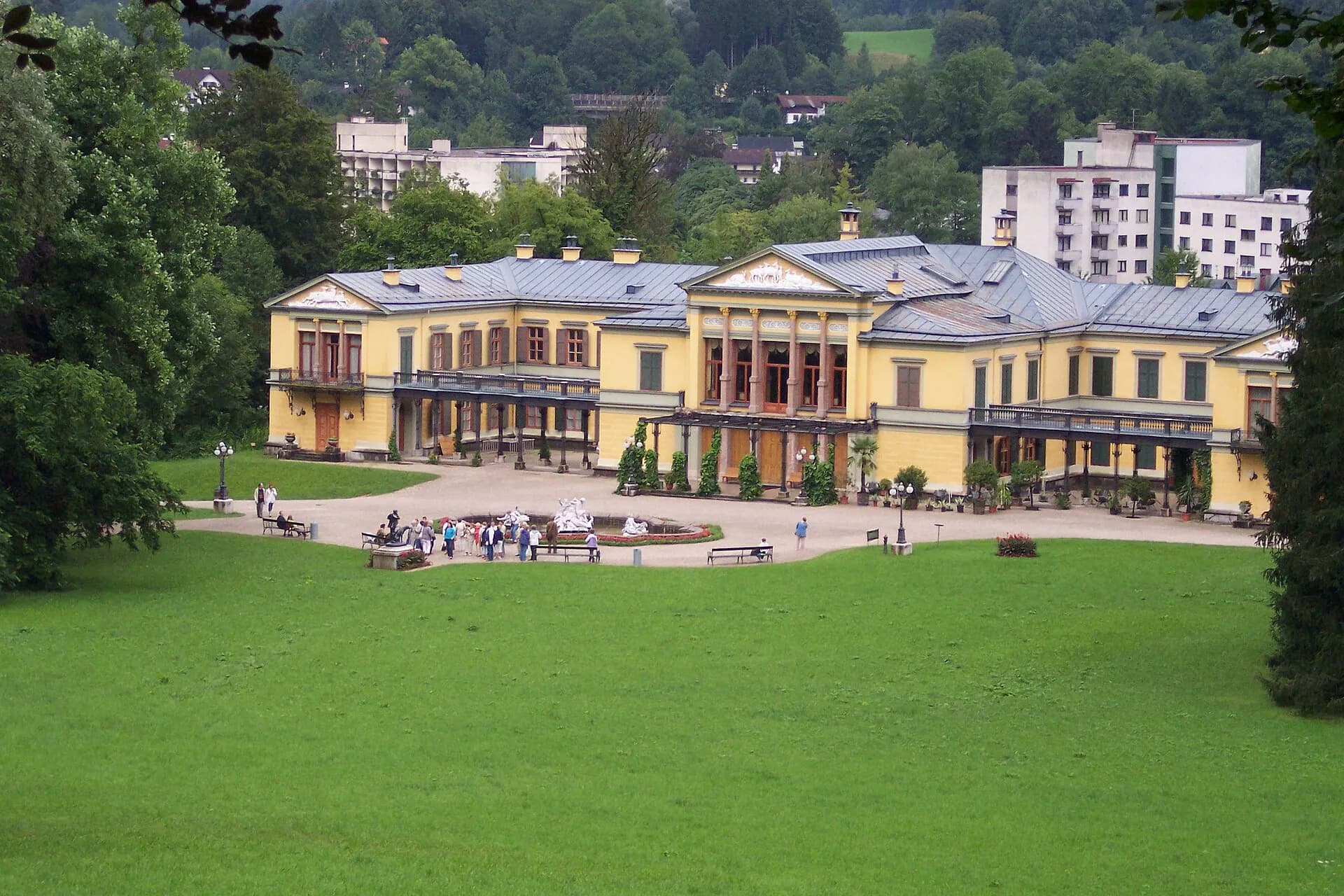
The spa town of Bad Ischl was the summer capital of the Habsburg empire. Emperor Franz Joseph spent most summers of his long reign at the Kaiservilla, a wedding present from his mother after his engagement here to Elisabeth, "Sisi". Guided tours show the family rooms, still full of hunting trophies, and the desk where in 1914 he signed the declaration of war on Serbia that set off the First World War. The landscaped park has a small marble palace that Sisi used as a retreat. The town itself, European Capital of Culture in 2024, has an elegant riverside promenade, old spa buildings and the Zauner pastry shop, which once supplied the imperial court.
TipThe villa is still owned by the Habsburg family and visits are by guided tour only; it closes in the depths of winter, so check opening times before you travel.
- 10
Gmunden and the Traunsee
Photo: Isiwal, CC BY-SA 4.0, via Wikimedia Commons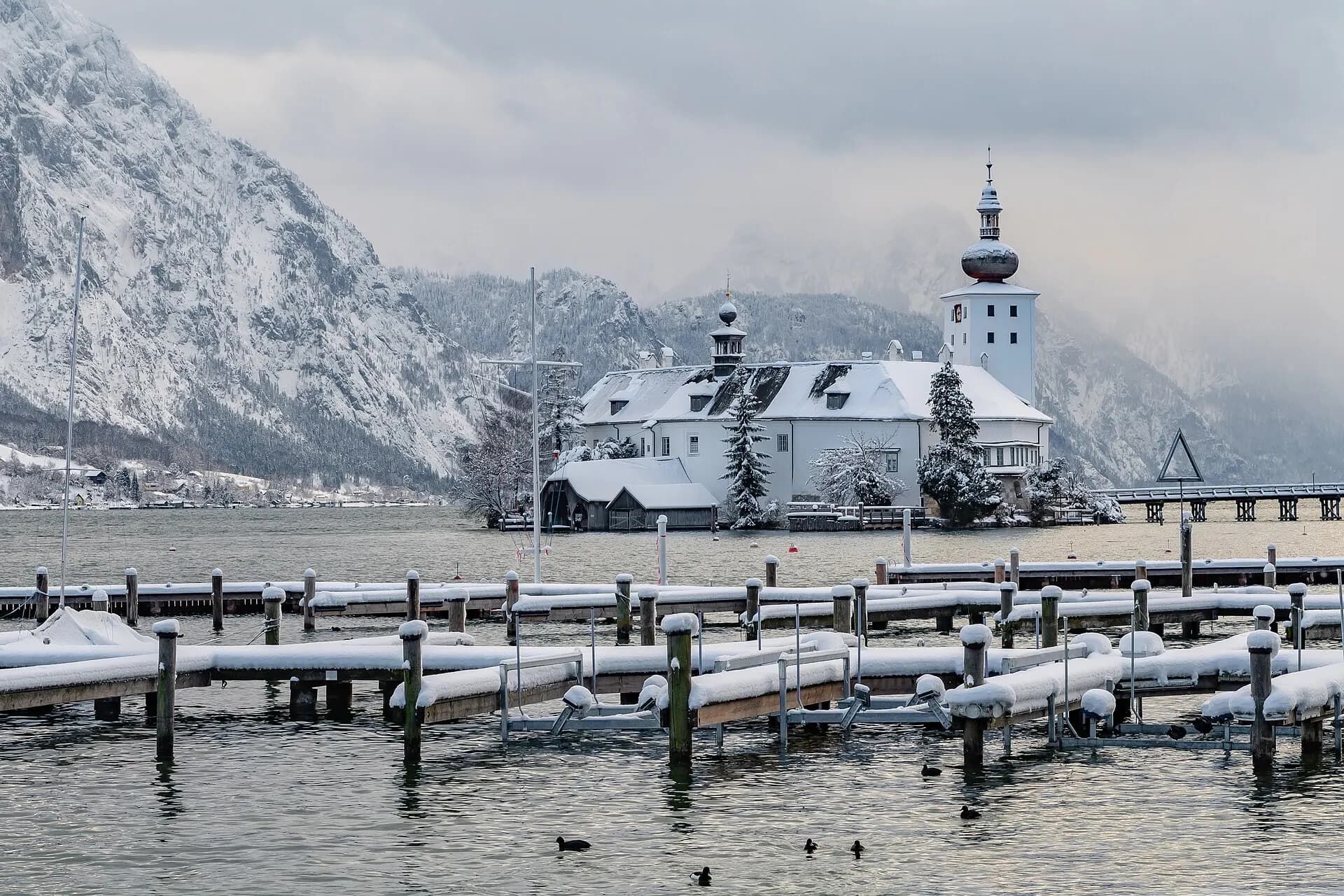
At the northern tip of the Traunsee, Austria's deepest lake, Gmunden is a stately old salt-trading town with a long lakeside esplanade. Its symbol is Seeschloss Ort, a small castle on an island linked to the shore by a wooden causeway, made famous by a long-running TV series. The town is also known for Gmundner Keramik, hand-painted pottery with green and white patterns. Across the water rises the bare cliff of the Traunstein, and the Grünberg cable car gives views over both.
TipA historic paddle steamer, the Gisela, still plies the lake on summer excursions.
- 11
St Wolfgang
Photo: Dmitry A. Mottl, CC BY-SA 4.0, via Wikimedia Commons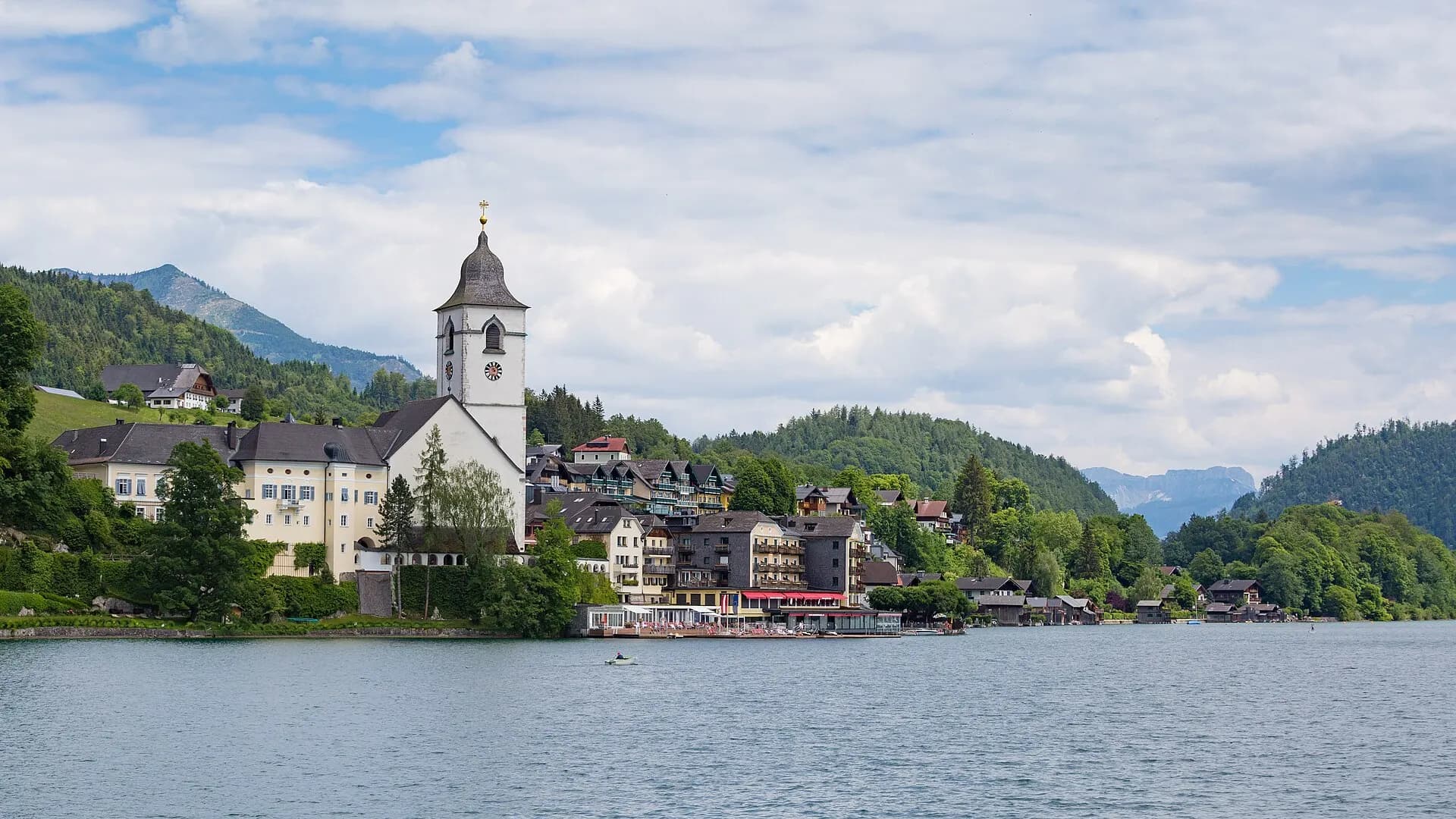
On the north shore of the Wolfgangsee, St Wolfgang grew up as a medieval pilgrimage village, and its parish church holds one of the great works of late Gothic art: Michael Pacher's winged altarpiece of 1481, a gilded wooden shrine with painted panels that open on special days. Down by the water stands the Hotel Im Weissen Rössl, setting of the operetta "The White Horse Inn". The village is pretty but small and busy in summer, and much of the charm lies in arriving by boat.
TipWolfgangsee ships link St Wolfgang with Strobl and St Gilgen, a much nicer way to travel than the narrow lakeside roads.
- 12
Schafberg and the SchafbergBahn
A rack railway has climbed from St Wolfgang to the summit of the Schafberg since 1893, the steepest in Austria. The ride takes a little over half an hour, partly behind historic and modern steam locomotives, up meadows and limestone slopes to the top station at 1,732 metres. The summit, at 1,783 metres, has one of the finest panoramas in the Alps: a dozen lakes, including the Mondsee, Attersee and Wolfgangsee, spread out below, with the Dachstein to the south.
TipIn 2026 the railway runs daily from late April to 1 November. Ascents need no reservation, but you pick your return train when you buy the ticket, so allow time at the top.
- 13
St Gilgen
Photo: Tsungam, CC BY-SA 4.0, via Wikimedia Commons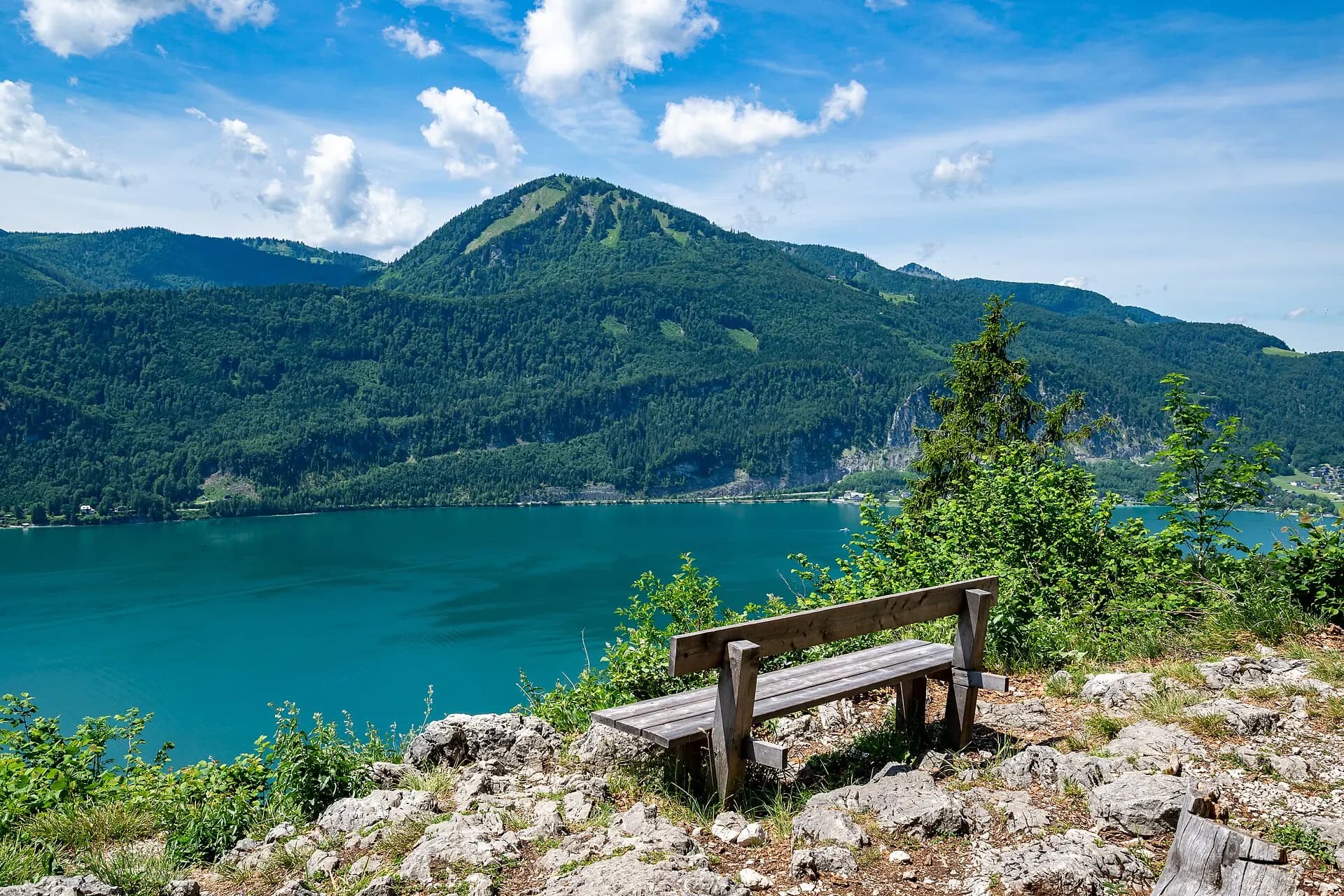
At the western end of the Wolfgangsee, just inside Salzburg province, St Gilgen is a cheerful lakeside village of flower-decked houses. Mozart's mother, Anna Maria Pertl, was born here, and his sister Nannerl later lived in the same house, now a small museum. The Zwölferhorn cable car rises from the village to a viewpoint over the lake, and the village is a short bus ride from Salzburg, which makes it a natural last stop on a Salzkammergut loop.
TipFrom St Gilgen, Postbus services head to Salzburg in under an hour, and buses also run east to Strobl and Bad Ischl.
When to go
Late spring and early autumn are ideal. In May and June the meadows are green, the waterfalls full, and the lakes calm; September and October bring clear, crisp days, autumn colours and thinner crowds, though the high-altitude attractions close in early November. July and August are warm enough for swimming in the lakes but are also the peak of the day-trip crush in Hallstatt and on the Wolfgangsee. Winter is quiet and atmospheric, with snow on the rooftops, Advent markets and Krampus runs, but days are short, the Dachstein caves and Schafberg are closed, and some hotels shut for a few weeks. Whatever the season, the best Hallstatt hours are early morning and evening: the coaches typically arrive mid-morning and leave by late afternoon.
Getting around
Arriving by train is the most relaxing way in. Hallstatt station is on the Salzkammergut railway between Attnang-Puchheim and Stainach-Irdning, run by ÖBB, but it stands on the opposite shore of the lake. The little ferry Stefanie runs every day of the year between the station and Hallstatt Markt, timed to connect with the trains; the crossing takes only a few minutes and costs a few euros, paid in cash. From Salzburg, take the Postbus to Bad Ischl and change there to the train; from Vienna, change at Attnang-Puchheim. The ferry waits a short while for late trains, but departure times can shift if connections run late.
Drivers must leave cars outside the village, which is closed to non-resident traffic. Use the signposted P1 and P2 car parks at the edge of Hallstatt and walk in through the road tunnel. Tour coaches have needed a booked entry and exit slot at the terminal since 2020; from May 2026 the charge is €126 per coach, with a minimum stay of about two hours, and coaches must then wait at a park about 1.5 km away. Fewer independent drivers and group operators arriving at peak times means less congestion for everyone.
For the wider region, regional buses link Hallstatt, Gosau, Bad Goisern, Bad Ischl, St Wolfgang and St Gilgen, while boats serve the Hallstätter See, Traunsee and Wolfgangsee in season. Ask your accommodation for a guest card: the Salzkammergut summer card brings discounts on many lifts, boats and sights, and it is free with stays of three nights or more in participating places. A car still makes combining Gosausee, Bad Ischl and the Wolfgangsee in a day far easier.
Local tips
- Stay at least one night in or near Hallstatt; the village is a different place once the day-trippers leave.
- Obertraun, Bad Goisern and Gosau are cheaper, quieter bases a short bus or ferry ride away.
- Bring cash: the station ferry and some small cafés and huts don't take cards.
- Many lifts, caves and boats run only from spring to early November; check seasonal timetables before planning.
- Shops and restaurants in Hallstatt close fairly early, and many kitchens stop serving by 9pm.
- The lakes are cold even in summer, but swimming spots at Obertraun, Bad Goisern and on the Wolfgangsee are lovely on hot days.
Overtourism and etiquette
Hallstatt's residents live inside what has become one of the most photographed places on Earth, and some days the visitor numbers dwarf the population many times over. Signs around the village ask visitors to respect private property, and the community has repeatedly struggled with tourists peering into windows, walking into gardens and flying drones past balconies. A little care goes a long way.
- Stay on public lanes and paths; don't step onto doorsteps, jetties, gardens or boat landings that belong to homes.
- Don't fly drones over the village, and keep noise down, especially early and late.
- Treat the churches and churchyard as places of worship and mourning, not photo sets.
- Spend locally: eat in Hallstatt's restaurants, stay in its guesthouses and buy from its shops, rather than simply passing through for a selfie.
- Arrive by train, or come before 10am or after 4pm, to avoid the peak.
Eat and drink
Lake fish is the speciality. Char (Saibling) and whitefish (Reinanke) from the Hallstätter See are grilled, fried or smoked, sometimes over open fires at village restaurants; smoked char makes a good picnic. Mountain huts on the Krippenstein and around the Gosausee serve hearty Austrian staples such as Kaiserschmarrn, shredded and caramelised pancake with fruit compote, Kasnocken, cheese dumplings with fried onions, and Brettljause, a board of cold meats, cheese and bread. In Bad Ischl, the imperial pastry tradition lives on at Zauner, known for the Zaunerstollen, a nutty chocolate confection. Salt from the local mines, sometimes flavoured with herbs, makes a light, practical souvenir.
Where to stay
Hallstatt itself has a limited stock of hotels and guesthouses, many in old lakeside houses, and they book up early for summer. Staying here gives you the village at its best in the evening and early morning. Obertraun, at the southern end of the lake, is handy for the Dachstein cable cars and has a lakeside beach; Bad Goisern, on the train line north of the lake, is cheaper and well placed for Gosau. Bad Ischl works best as a central hub for exploring the whole Salzkammergut by train and bus, and St Wolfgang or St Gilgen suit a slower stay on the Wolfgangsee within easy reach of Salzburg.
Seven thousand years of salt
Salt, the "white gold", explains almost everything about Hallstatt. Miners were working the mountain by the fifth millennium BC, and the wealth of the Iron Age community here is preserved in a huge cemetery in the high valley above the village, excavated from 1846 onwards. Its richly furnished graves gave their name to the Hallstatt culture, which spread across much of central Europe between about 800 and 450 BC. Under the Habsburgs, salt was a state monopoly and the Salzkammergut, literally the "salt chamber estate", was run as a closed industrial domain; brine has flowed down to the saltworks at Ebensee through a pipeline begun in 1595, among the oldest in the world. Salt is still extracted today, which makes this one of the few UNESCO landscapes where the industry that shaped it carries on.