Victoria Falls
The "smoke that thunders": a mile-wide curtain of water plunging into a gorge, with adventures on the river below.
- Best time to go
- April to July for the most water; August to December for clearer views and Devil's Pool
- Local time
- –
- Currency
- Zimbabwean Gold (ZWG) / US Dollar (USD) / South African Rand (ZAR) / Botswanan Pula (BWP) / British Pound (GBP) / Australian Dollar (AUD) / Chinese Yuan (CNY) / Indian Rupee (INR) / Japanese Yen (JPY)
- Reading time
- 4 min
- Language
- English and Shona
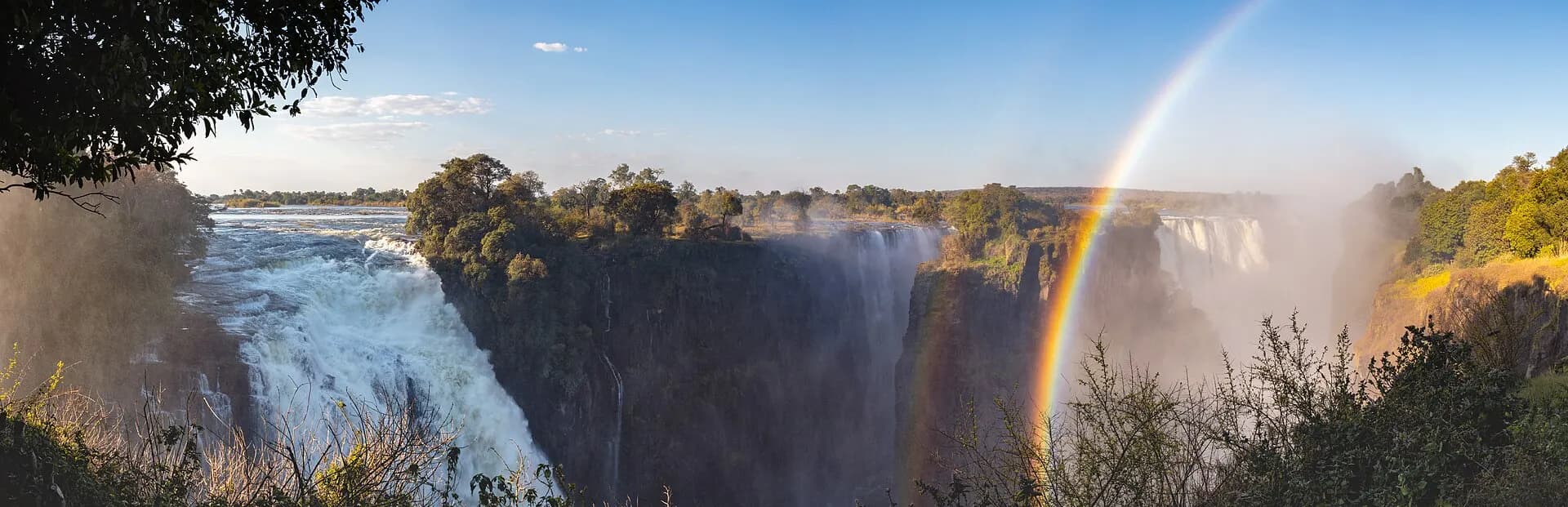
On the border between Zimbabwe and Zambia, the Zambezi River drops into a narrow gorge along a front more than 1.7 kilometres wide, creating the largest sheet of falling water in the world. Its local name, Mosi-oa-Tunya, means "the smoke that thunders", for the plume of spray that rises hundreds of metres into the air and can be seen from far away.
The falls can be seen from both countries: the town of Victoria Falls in Zimbabwe and Livingstone in Zambia. The area is also a centre for adventure, from rafting and bungee jumping to river cruises, and a gateway to some of Africa's best wildlife parks.
The top 7 in Victoria Falls
- 1
Victoria Falls National Park (Zimbabwe)
Photo: Bernard Gagnon, CC BY-SA 4.0, via Wikimedia Commons
The Zimbabwean side has the most extensive views, along a path through a rainforest kept green by the spray, with sixteen viewpoints facing the Main Falls and the Devil's Cataract. At high water, you'll be drenched.
TipRent or bring a raincoat in high-water months, and protect cameras and phones.
- 2
Mosi-oa-Tunya National Park and the Knife-Edge Bridge (Zambia)
Photo: Dicklyon, CC BY-SA 4.0, via Wikimedia Commons
On the Zambian side, a footbridge over a gorge leads to viewpoints of the Eastern Cataract and the Boiling Pot, where the river swirls at the bottom of the gorge. In the dry season, you can walk along the top of the falls.
- 3
The Victoria Falls Bridge
Photo: Diego Delso, CC BY-SA 4.0, via Wikimedia Commons
A steel arch bridge built in 1905 across the Zambezi gorge, linking the two countries, with views of the falls. It's home to a famous bungee jump and a bridge swing, and historical tours explain its construction.
- 4
Devil's Pool
Photo: Rudolph.A.furtado, CC BY 4.0, via Wikimedia Commons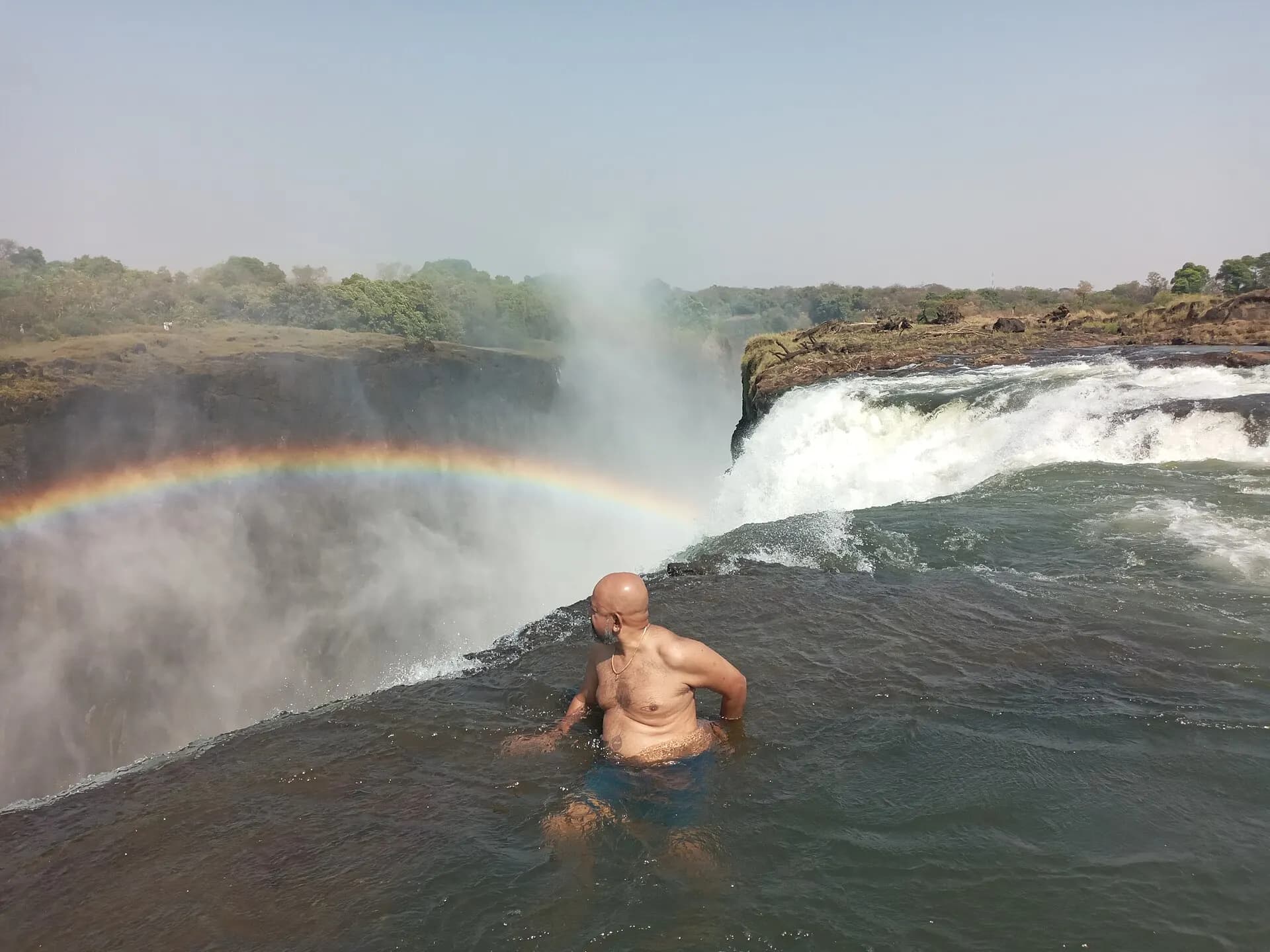
A natural rock pool on the very edge of the falls, reached via Livingstone Island on the Zambian side, where you can swim at the lip of the drop when the water is low, usually from around August to January.
TipAccess is only with authorised guided tours, which run depending on water levels.
- 5
A sunset cruise on the Zambezi
Photo: Matti Blume, CC BY-SA 4.0, via Wikimedia Commons
Boats cruise the wide upper Zambezi above the falls in the evening, passing hippos, crocodiles and elephants coming down to drink as the sun sets.
- 6
White-water rafting in the Batoka Gorge
Below the falls, the Zambezi rushes through the Batoka Gorge in some of the world's most famous rapids, best rafted in the low-water season.
- 7
Chobe National Park
Photo: 25-south.com, CC BY-SA 4.0, via Wikimedia Commons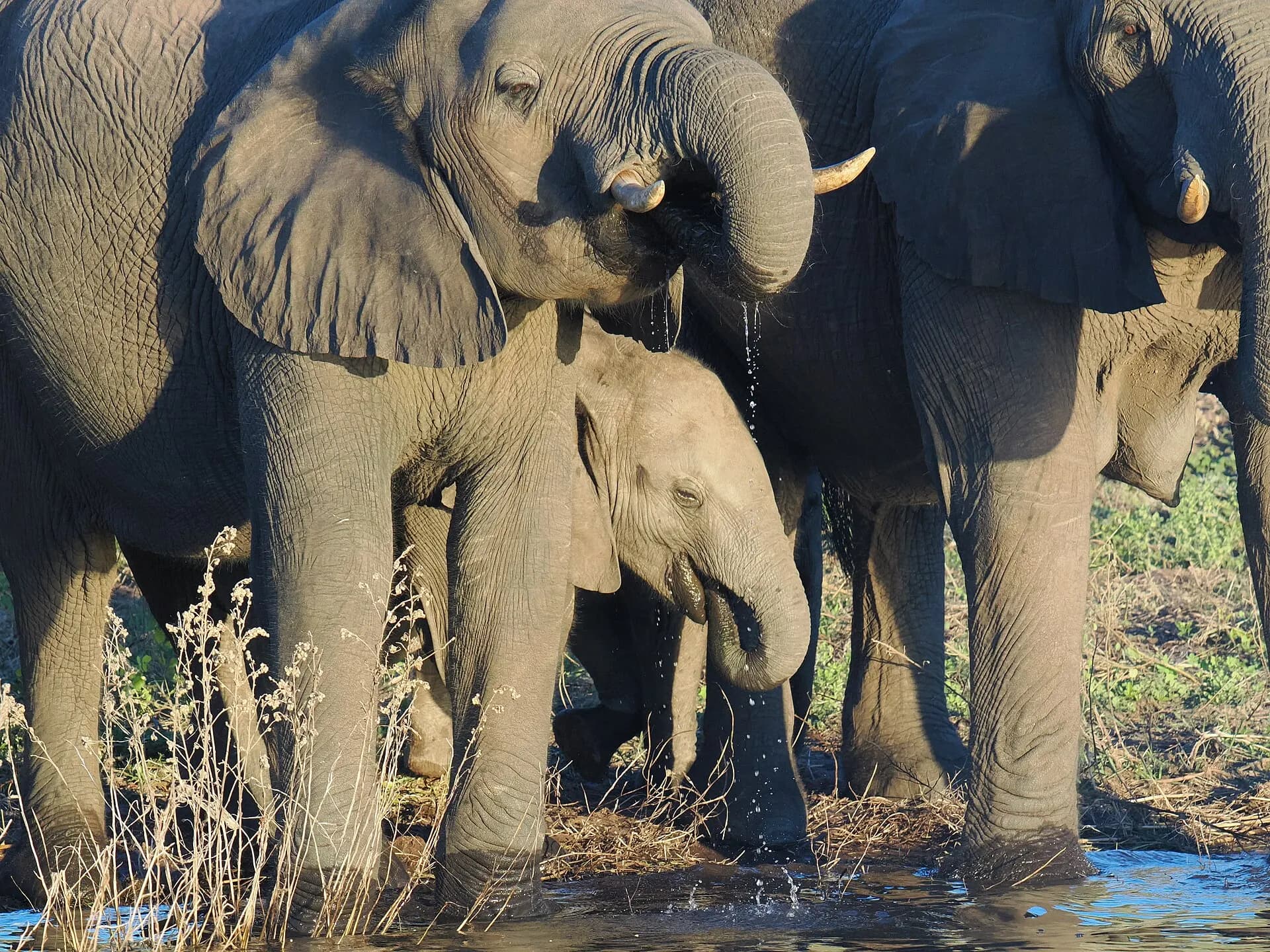
About an hour and a half away in Botswana, Chobe has one of the largest elephant populations in Africa. Day trips cross the border for a boat safari on the Chobe River and a game drive.
When to go
The falls are at their fullest from about April to June, after the rainy season, when the spray is so heavy that views can be obscured. From August to December, the water is lower, the views clearer and the Zambian side may become a series of separate falls, but the rafting is at its best. The rainy season, from November to March, brings green landscapes and afternoon storms.
Getting around
The town of Victoria Falls is small, and the falls are within walking distance of most hotels. Taxis and hotel transfers cover the rest. Crossing to Zambia is easy on foot or by taxi over the bridge, with border formalities on each side. Livingstone is about ten kilometres from the bridge.
Victoria Falls Airport in Zimbabwe and Harry Mwanga Nkumbula International Airport in Livingstone both have regional and some international flights.
Local tips
- Check visa requirements; the KAZA UNIVISA allows travel between Zimbabwe and Zambia, and day trips to Chobe, with a single visa when available.
- Carry US dollars in small notes, widely used in Zimbabwe.
- Don't walk around town at night, as elephants and other wildlife wander through.
- Bring a waterproof jacket and a dry bag in high-water months.
- Malaria is present; take advice on prevention and use repellent.
- Book adventure activities with reputable operators.
- Baboons and monkeys around the viewpoints will snatch food; keep snacks out of sight.
- The rainforest path is slippery when wet; wear shoes with good grip.
Eat and drink
Hotels and lodges serve international food, often with a southern African twist. Many lodges also offer boma dinners, outdoor feasts around a fire with traditional dancing and drumming. Try sadza, a thick maize porridge eaten with stews, the staple of Zimbabwe; game meats such as kudu and warthog; and bream from the Zambezi. Afternoon tea on the terrace of the historic Victoria Falls Hotel, with a view of the bridge and the spray, is a tradition.
Beyond the falls
Hwange National Park, about two hours south, is Zimbabwe's largest park, with huge herds of elephants and good chances of seeing lions and painted dogs. Lake Kariba, a vast reservoir on the Zambezi, offers houseboats and fishing, and Botswana's Okavango Delta is a short flight away. Livingstone also has a good museum covering the explorer David Livingstone, after whom the town is named, and the history of the region.
Where to stay
On the Zimbabwean side, the town of Victoria Falls has everything from backpacker lodges to grand hotels, many within walking distance of the falls; the Edwardian Victoria Falls Hotel, opened in 1904, looks straight down the gorge to the bridge. On the Zambian side, Livingstone is a larger town, and lodges along the upper Zambezi offer river views, sundowners and the chance of hippos and elephants passing through the garden. Many visitors stay on one side and visit the other on a day trip.
Seeing the falls from the air
A helicopter or microlight flight over the falls, sometimes called the "flight of angels", gives the best sense of their scale: the zigzag gorges below, the river above and the column of spray rising from the chasm. Flights last from about twelve minutes and are most dramatic when the water is high.