Dubai
The world's tallest tower, old souks by the creek, golden beaches and the desert at the edge of the city.
- Best time to go
- November to March, when days are warm and sunny rather than scorching
- Local time
- –
- Currency
- United Arab Emirates Dirham (AED)
- Reading time
- 4 min
- Language
- Arabic

Half a century ago Dubai was a small trading port on a creek, known for pearl diving and its busy souks. Today it is a global city of glass towers, artificial islands and vast malls, built at astonishing speed. It is easy to dismiss as all spectacle, but the old Dubai still survives along the creek, and the city's mix of people from all over the world gives it a unique energy.
It is a safe, well-organised city, with excellent hotels, beaches and restaurants. It is also a place with its own customs and laws, which visitors are expected to respect. Come in the cooler months, mix the modern landmarks with the old town and the desert, and you'll see both sides of the city.
The top 8 in Dubai
- 1
Burj Khalifa
Photo: Jimmy Baikovicius from Montevideo, Uruguay, CC BY-SA 2.0, via Wikimedia Commons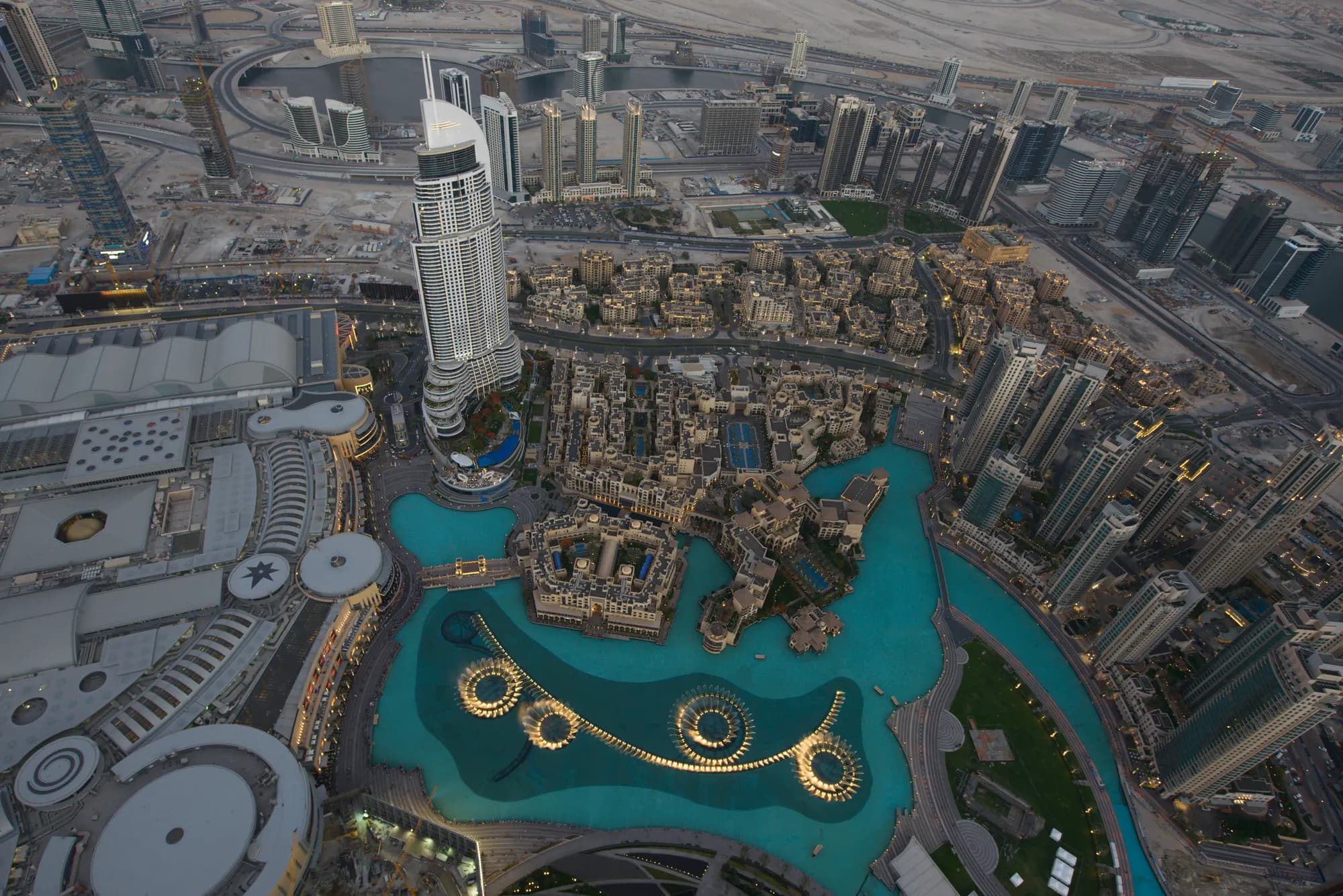
At around 828 metres, the Burj Khalifa has been the world's tallest building since it opened in 2010. Its observation decks, on the 124th and 125th floors and higher still on the 148th, give an extraordinary view over the city, the coast and the desert.
TipBook a time slot online in advance; the hour before sunset is the most popular and the most beautiful.
- 2
The Dubai Mall and the Dubai Fountain
Photo: Donaldytong, CC BY-SA 3.0, via Wikimedia Commons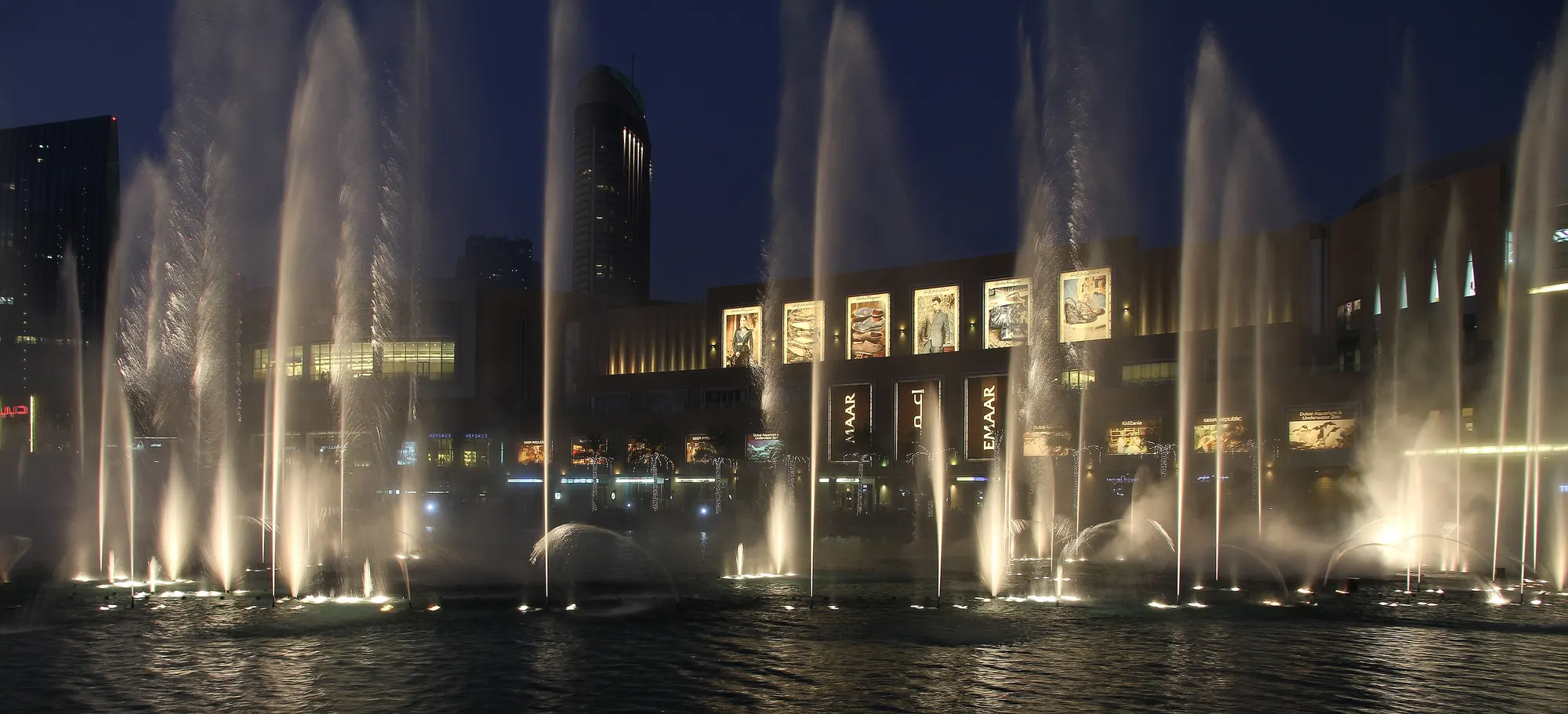
One of the world's largest shopping malls, with an aquarium, an ice rink and hundreds of shops. Outside, on the lake at the foot of the Burj Khalifa, the Dubai Fountain performs choreographed shows to music in the evenings, with jets of water shooting high into the air.
TipWatch the fountain from the waterside promenade or one of the bridges; the shows are free.
- 3
Al Fahidi Historical Neighbourhood
Photo: Delta.jpg, CC BY-SA 4.0, via Wikimedia Commons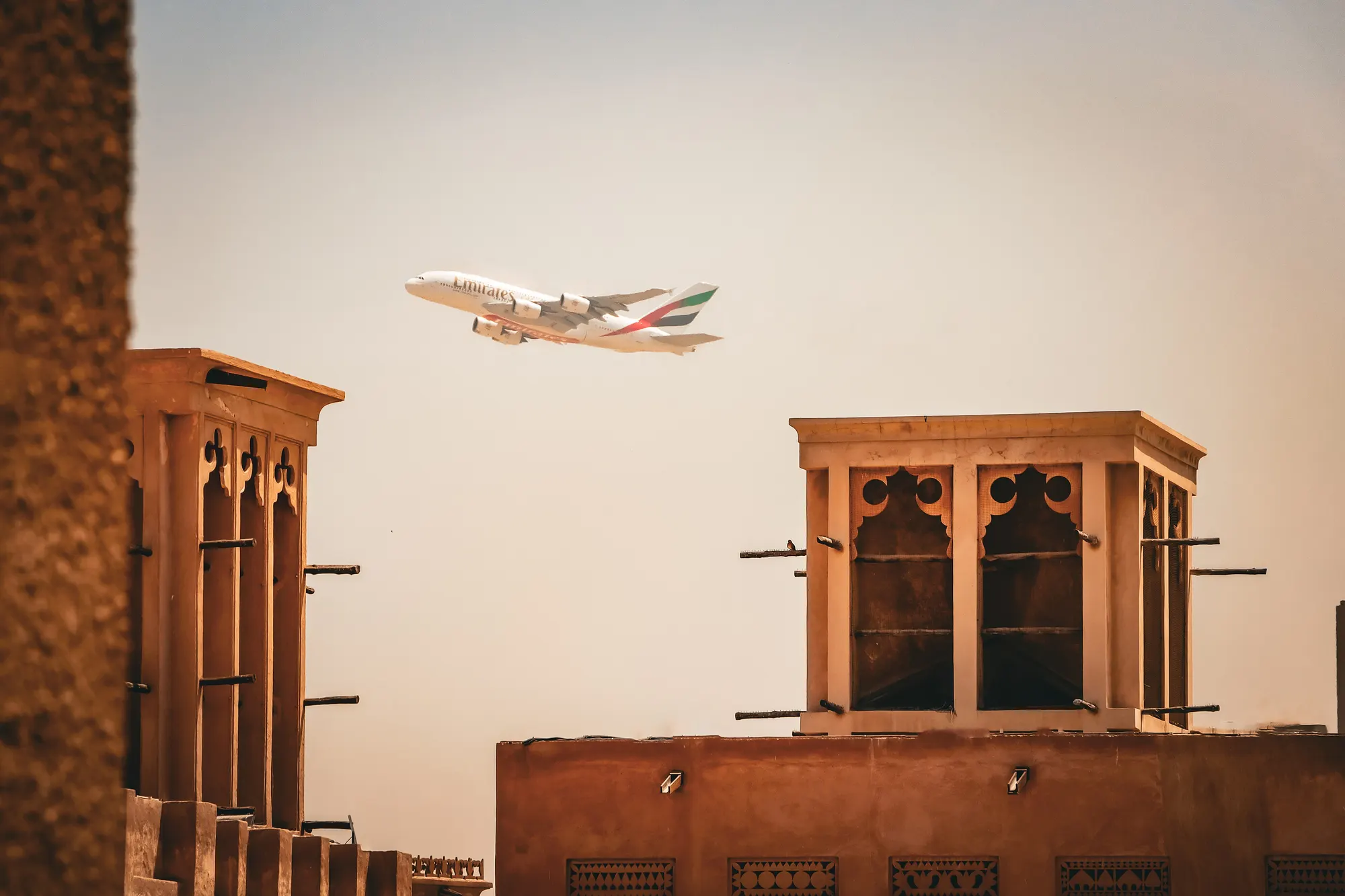
A restored quarter of traditional houses built of coral stone and gypsum, with narrow lanes and wind towers, the old form of air conditioning. It holds small museums, galleries and cafés, and is the best place to imagine the city before oil.
- 4
Dubai Creek and the abras
Photo: Phil6007, CC BY-SA 4.0, via Wikimedia Commons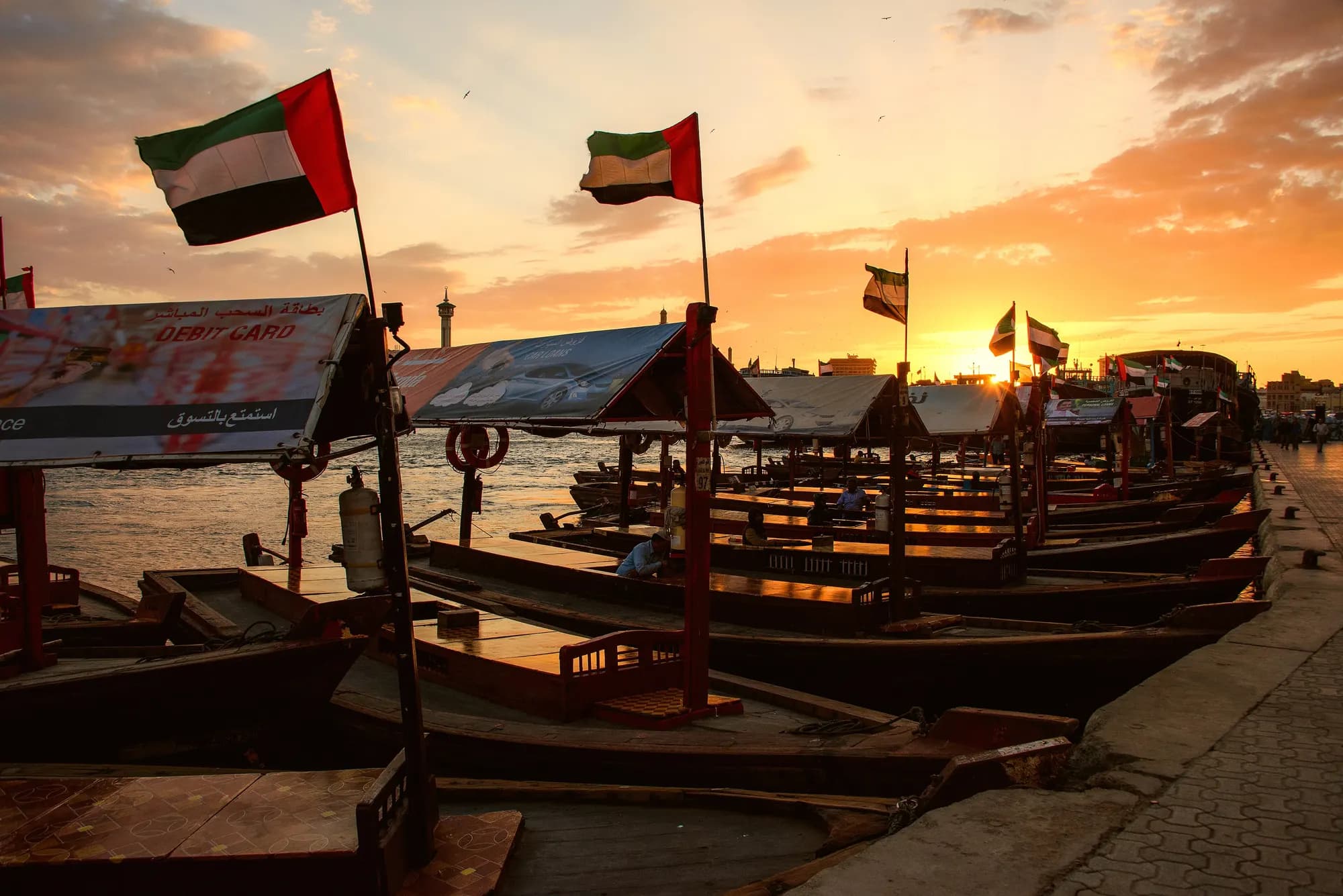
The creek divided old Dubai into two halves, Bur Dubai and Deira, and the traditional wooden boats called abras still carry passengers across for a tiny fare. The ride takes a few minutes and is one of the most memorable experiences in the city.
- 5
The Gold and Spice Souks
Photo: Rob Young from United Kingdom, CC BY 2.0, via Wikimedia Commons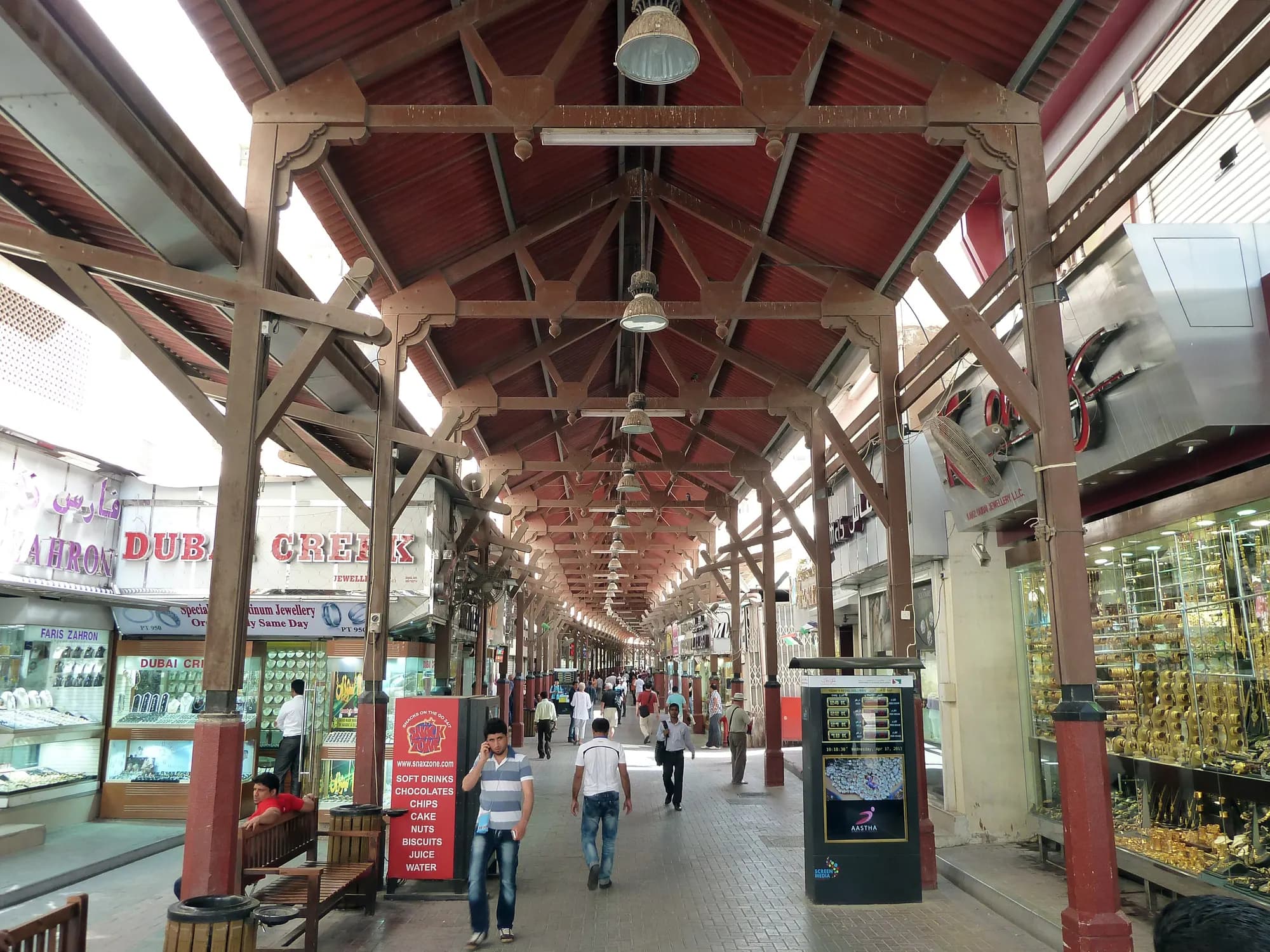
In Deira, the covered lanes of the Gold Souk glitter with jewellery shops, and the Spice Souk nearby is fragrant with saffron, frankincense, dried lemons and herbs. Bargaining is expected.
- 6
- 7
- 8
When to go
The best time to visit is from November to March, when temperatures are warm and pleasant and outdoor life is at its best. From June to September, the heat is intense, often above 40 °C, though hotel prices fall and life moves indoors. During Ramadan, the city remains open, but the rhythm of life changes, and visitors should be considerate, for example by avoiding eating or drinking in public places during daylight.
Getting around
The Dubai Metro, with its red and green lines, is clean, fast and inexpensive, and links the airport with the old town, the Burj Khalifa and the Marina. Pay with a Nol card, which also works on buses, trams and water buses. Some carriages are reserved for women and children, and there is a premium Gold Class. Taxis are plentiful and reasonably priced, and ride-hailing apps are widely used.
Dubai International Airport is close to the city and on the metro's red line.
Local tips
- Dress modestly in public places such as malls and souks, covering shoulders and knees; swimwear is fine at beaches and pools.
- Public displays of affection are frowned upon, and offensive gestures or language can lead to fines.
- Alcohol is served only in licensed venues, usually in hotels; drinking in public or being drunk in public is illegal.
- Ask before photographing people, especially women, and avoid photographing government buildings.
- Some medications that are legal at home are controlled in the UAE; check the rules before travelling.
- Friday is the main day of prayer; the weekend is Saturday and Sunday.
Eat and drink
Dubai's restaurants reflect its international population. Try Emirati dishes such as machboos (spiced rice with meat), luqaimat (sweet dumplings with date syrup) and camel-milk treats, and the excellent Lebanese, Iranian, Indian and Pakistani food served across the city, especially in the old districts of Deira and Karama. Arabic coffee is often served with dates as a sign of hospitality.
Beyond the city
The desert begins at the edge of Dubai, and an evening desert trip is the most popular excursion: a drive into the dunes, sometimes with sandboarding or a camel ride, followed by dinner at a camp under the stars. Choose a licensed operator, and if dune driving doesn't appeal, look for quieter tours focused on wildlife in the Dubai Desert Conservation Reserve.
Abu Dhabi, the capital of the United Arab Emirates, is about an hour and a half away by road. Its Sheikh Zayed Grand Mosque, one of the largest and most beautiful in the world, is open to visitors, and the Louvre Abu Dhabi, under its vast latticed dome, sits on the waterfront of Saadiyat Island. To the east, the town of Hatta, in the Hajar Mountains, offers kayaking on a mountain reservoir and hiking trails.