Amsterdam
Gabled houses leaning over quiet canals, world-class art, and more bicycles than people. A small city with a big personality.
- Best time to go
- April to May for tulips and spring light, and September for mild weather and fewer crowds
- Local time
- –
- Currency
- Euro (EUR)
- Reading time
- 4 min
- Language
- Dutch

Amsterdam's centre is a seventeenth-century city that still works much as it did in the Dutch Golden Age, when it was the richest port in the world. Its ring of canals, lined with tall merchants' houses and crossed by hundreds of bridges, is a World Heritage Site, and much of its charm lies simply in walking or cycling beside the water.
It is a compact city, with outstanding museums, cosy brown cafés and lively neighbourhoods beyond the centre. Its popularity means the old core can feel crowded, and the city now actively discourages rowdy tourism. Come for the art, the canals and the local way of life, and you'll find Amsterdam at its most welcoming.
The top 9 in Amsterdam
- 1
The Rijksmuseum
Photo: C messier, CC BY-SA 4.0, via Wikimedia Commons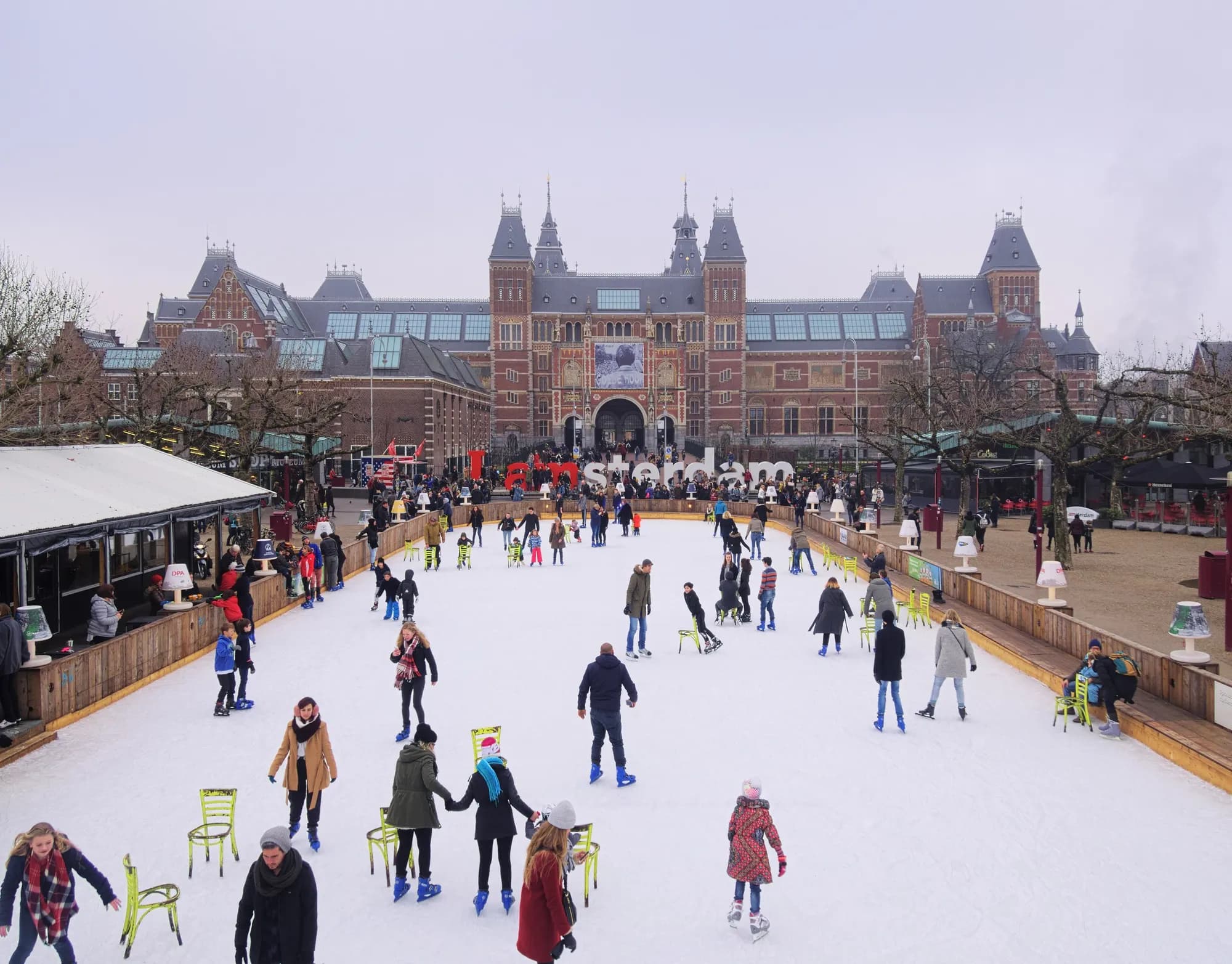
The national museum of the Netherlands tells the story of Dutch art and history over eight centuries. Its Gallery of Honour leads to Rembrandt's The Night Watch, and nearby hang Vermeer's The Milkmaid and other masterpieces of the Golden Age, alongside ship models, Delftware and dolls' houses.
TipBook a timed ticket online and go early or late in the day. The gardens around the museum are free to walk.
- 2
The Van Gogh Museum
Photo: C messier, CC BY-SA 4.0, via Wikimedia Commons
The world's largest collection of works by Vincent van Gogh, with paintings, drawings and letters arranged to follow his short, intense career, from the dark early works to the sunflowers and wheatfields of his final years in France.
TipTickets are sold online only, for a time slot; book ahead, especially at weekends.
- 3
The Anne Frank House
Photo: Dietmar Rabich, CC BY-SA 4.0, via Wikimedia Commons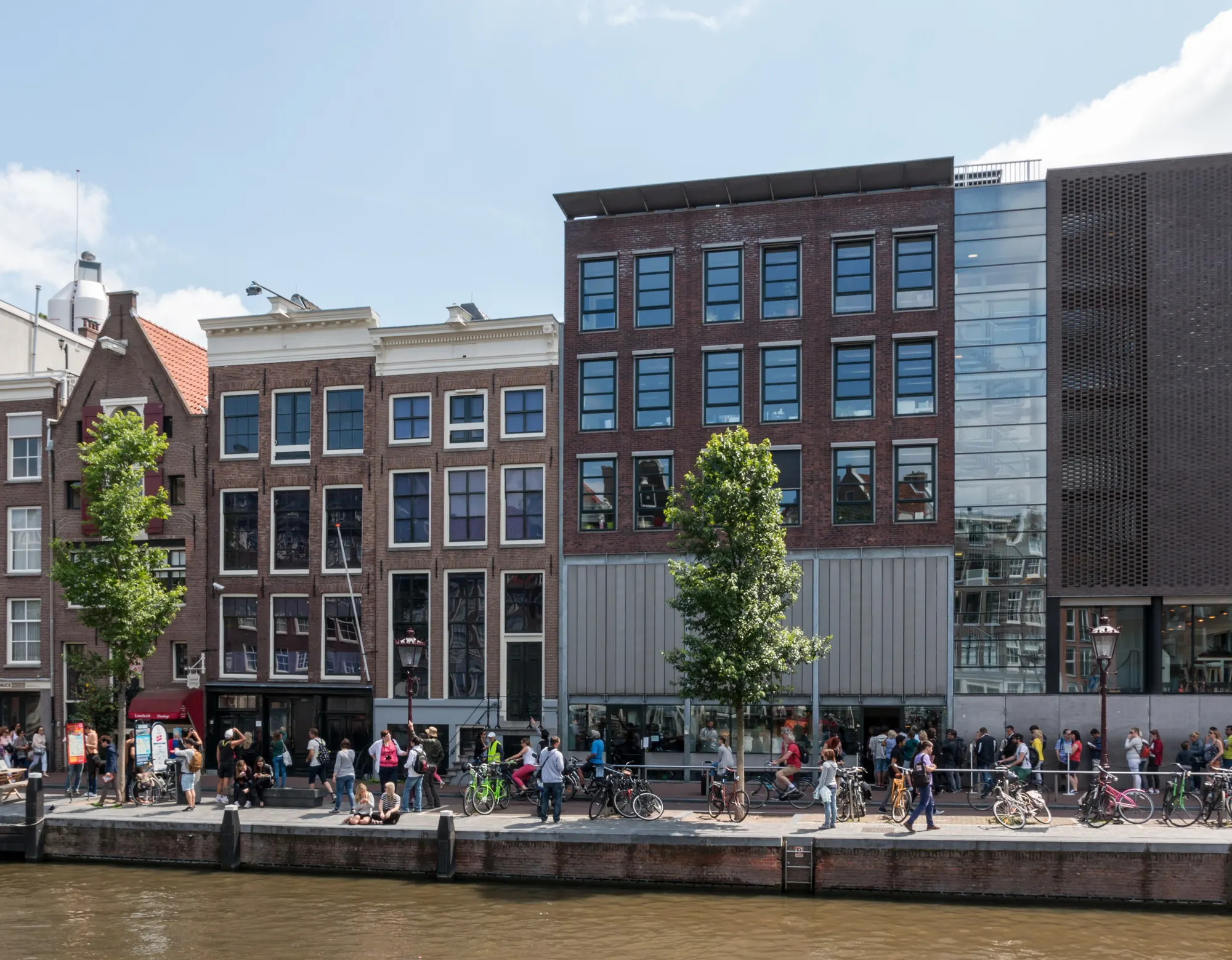
The canal house where Anne Frank and her family hid from the Nazis for more than two years, and where she wrote her diary. The rooms of the secret annex behind the bookcase have been kept empty, as her father wished, and the visit is quiet and deeply moving.
TipTickets are sold only online, released in advance, and sell out quickly; book as soon as you know your dates.
- 4
The Begijnhof
Photo: Dietmar Rabich, CC BY-SA 4.0, via Wikimedia Commons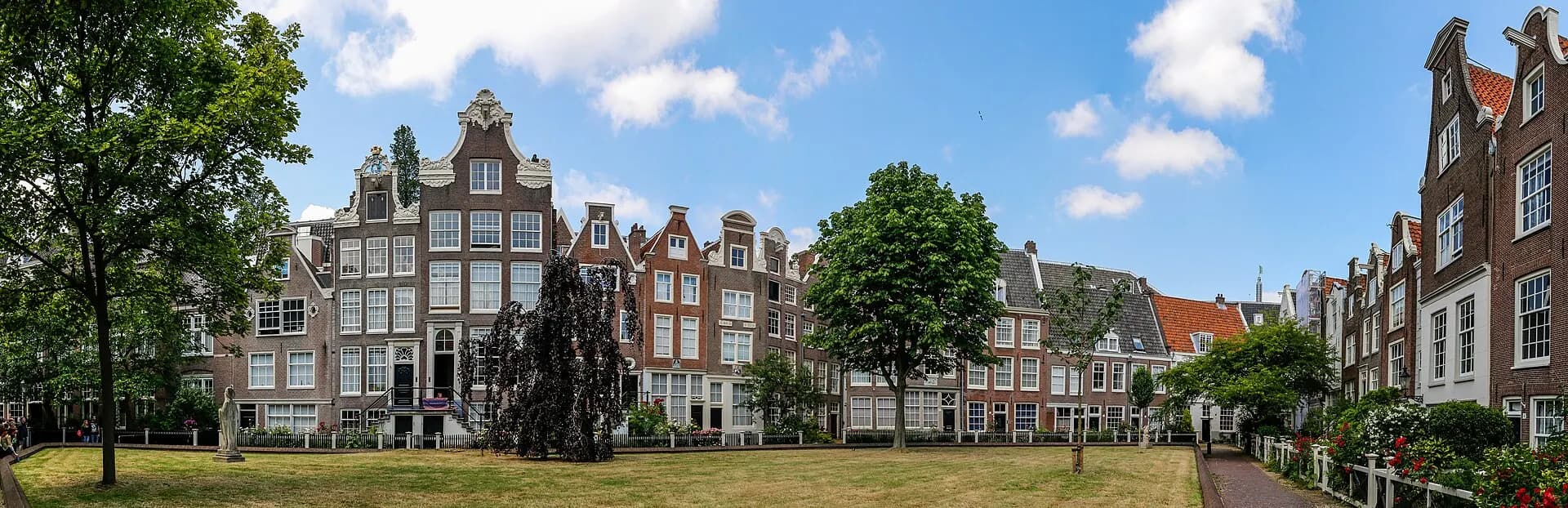
A hidden courtyard of houses around a garden, reached through an unmarked doorway near the Spui square, built for a community of religious women in the Middle Ages. It holds Amsterdam's oldest surviving wooden house, from around 1528, and a small hidden church. Residents still live here, so visit quietly.
- 5
The Canal Ring and the Jordaan
Photo: Diliff, CC BY 2.5, via Wikimedia Commons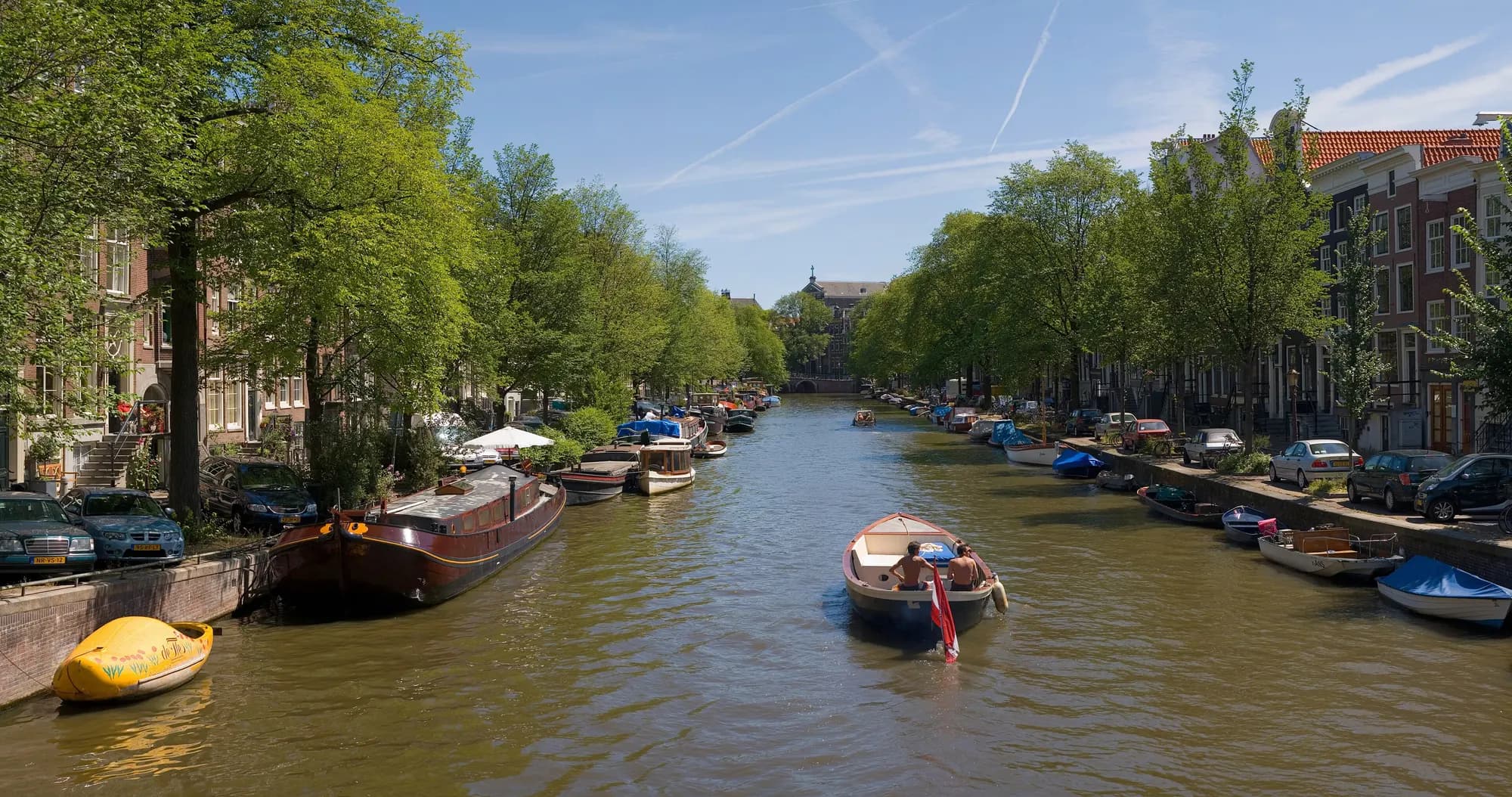
The three main canals, Herengracht, Keizersgracht and Prinsengracht, form concentric rings around the old centre. To the west, the Jordaan is a former working-class district of narrow streets, independent shops, hidden courtyard almshouses and neighbourhood cafés, and the Nine Streets (De 9 Straatjes) are full of boutiques.
TipA canal boat tour is a great introduction; smaller open boats are quieter than the big glass-roofed tour boats.
- 6
Vondelpark
Photo: John Salatas, CC BY-SA 4.0, via Wikimedia Commons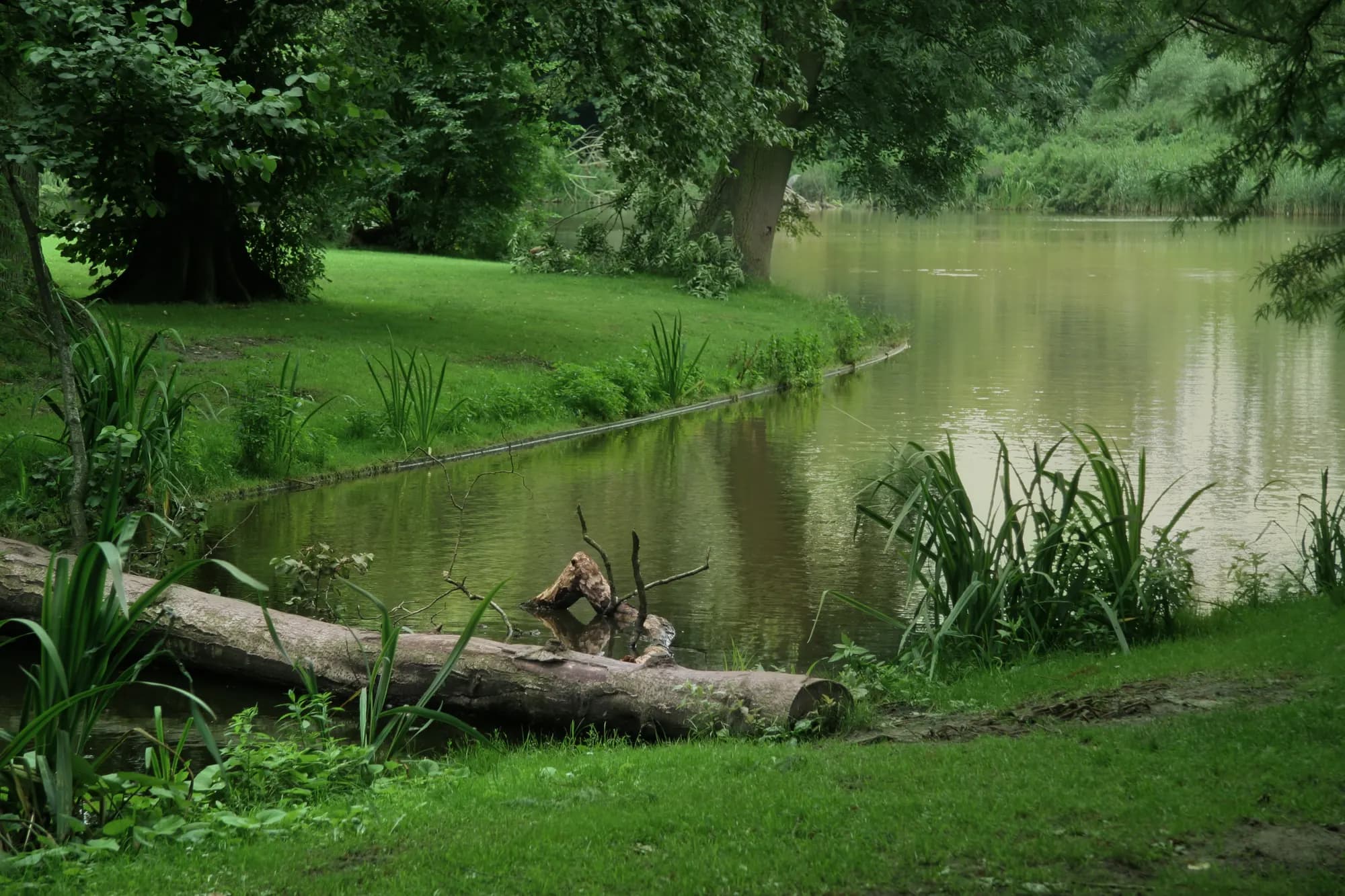
The city's best-loved park, with ponds, lawns and an open-air theatre in summer. On sunny days it seems as if all of Amsterdam is here, cycling, picnicking and enjoying the weather.
- 7
De Pijp and the Albert Cuyp Market
Photo: Guilhem Vellut from Annecy, France, CC BY 2.0, via Wikimedia Commons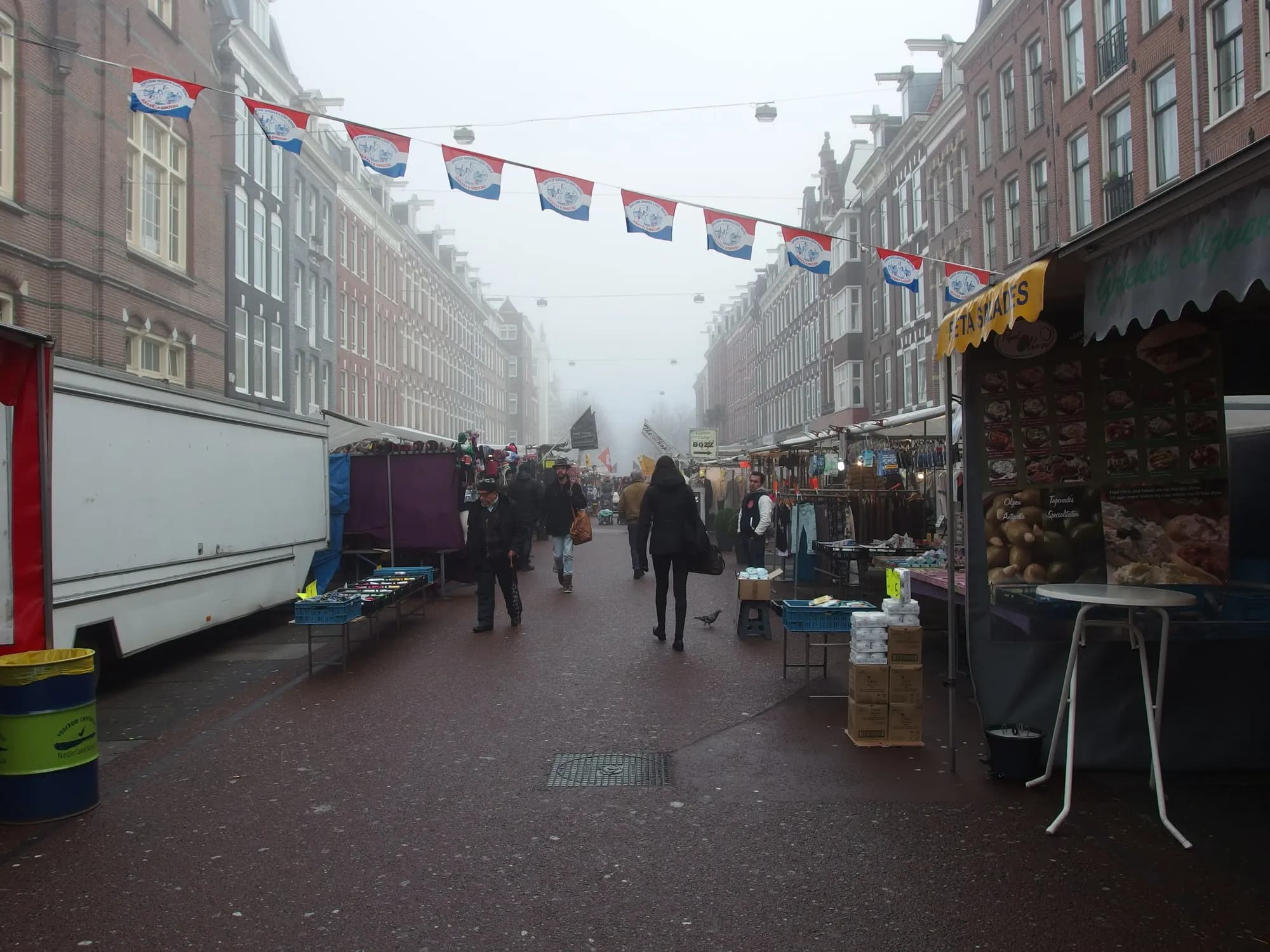
A lively, multicultural neighbourhood south of the centre, known for its restaurants and bars. Its heart is the Albert Cuyp Market, one of Europe's largest street markets, with stalls selling cheese, fish, fruit and stroopwafels, fresh and warm.
- 8
Amsterdam Noord and the A'DAM Lookout
Photo: Henk Monster, CC BY 3.0, via Wikimedia Commons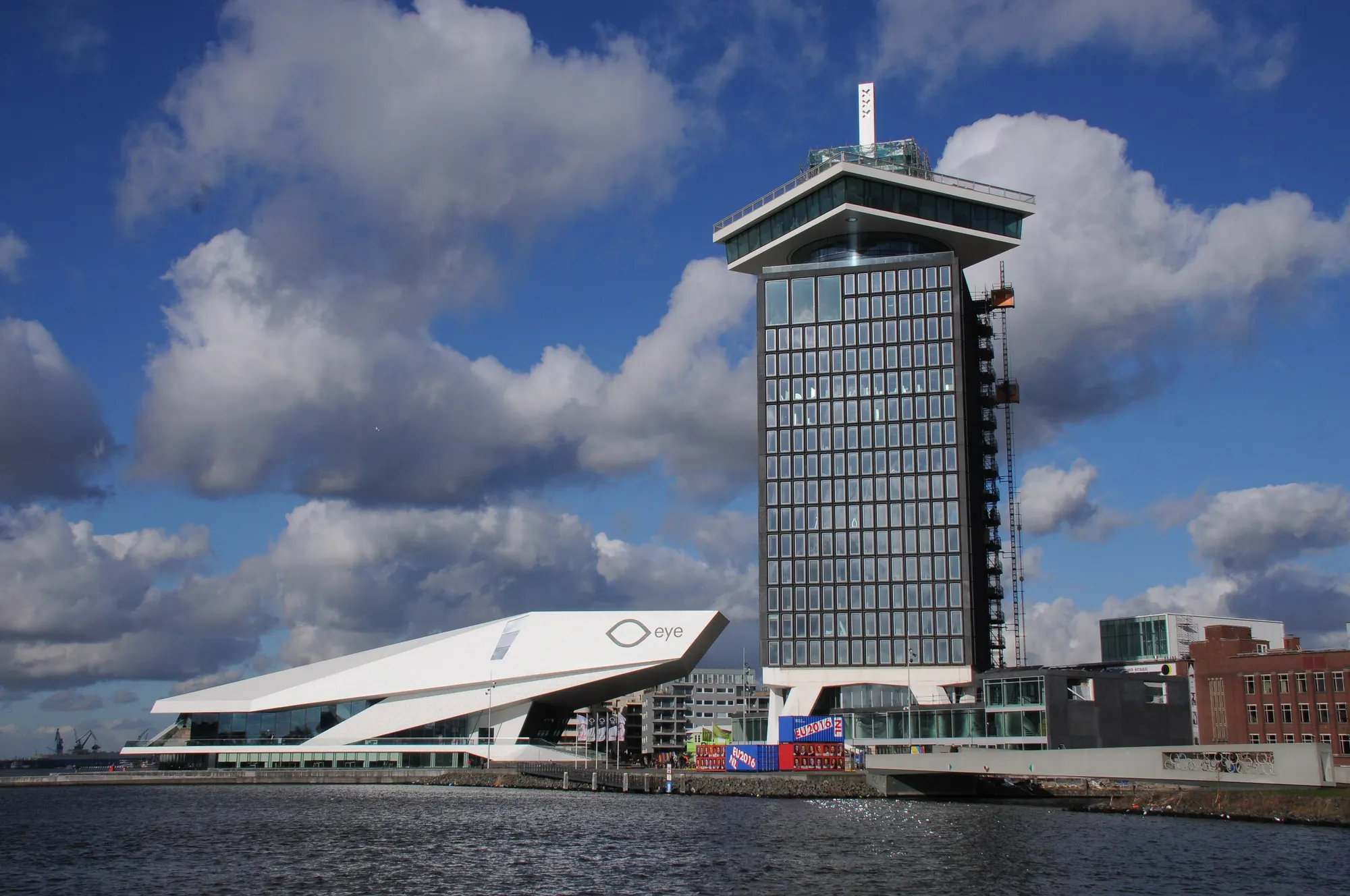
Free ferries cross the IJ river from behind Central Station to the north bank, where old shipyards have been turned into creative spaces, restaurants and festival grounds. The A'DAM Tower has an observation deck with views over the whole city, and the EYE Film Museum sits next to it on the water.
- 9
The Rembrandt House
Photo: Bysmon, CC BY-SA 4.0, via Wikimedia Commons
The house where Rembrandt lived and worked for nearly twenty years has been restored to look as it did in his time, with his studio, his collection of curiosities and many of his etchings. It is on the edge of the old Jewish quarter, near the Jewish Museum and the Portuguese Synagogue.
When to go
Spring is the most popular time: the tulip fields outside the city bloom from late March to early May, and on King's Day, 27 April (the 26th when the 27th is a Sunday), the whole country celebrates with street parties and markets, everyone dressed in orange. Summer is pleasant but busy. Autumn is mild and quieter, with cultural events. Winter is cold and damp, but the city is cosy and less crowded, and the Amsterdam Light Festival brightens the canals.
Getting around
The centre is small enough to walk, and the trams, buses, metro and ferries run by GVB cover the rest of the city. Tap in and out with a contactless bank card or phone, or buy a day ticket. Cycling is the local way to get around: bike rental shops are everywhere, but traffic is fast and confident, so ride carefully and follow the rules.
Trains from Schiphol Airport reach Amsterdam Centraal in about fifteen to twenty minutes. International trains link the city with Brussels, Paris, London and Germany.
Local tips
- Never walk on bike lanes, which are usually red; cyclists won't stop for you.
- Lock a rented bike to something fixed, with both locks.
- Smoking cannabis is not allowed in the streets of the old centre, and drinking alcohol in public is banned in many areas.
- Taking photos of people working in the Red Light District is forbidden and disrespectful.
- Book museums and the Anne Frank House online before you travel.
- Stay outside the centre, in neighbourhoods such as Oud-West or De Pijp, for better value and a more local feel.
Eat and drink
Dutch food is hearty: try raw herring with onions from a fish stall, bitterballen (crisp fried snacks) with a beer, apple pie, and stroopwafels. Amsterdam is also known for its Indonesian food, a legacy of the colonial era, especially the rijsttafel, a feast of many small dishes. End the day in a brown café, the traditional wood-panelled pubs, for local beer or jenever, the Dutch gin.