Sossusvlei
The world's tallest sand dunes glowing red at sunrise, and ghostly dead trees in a white clay pan.
- Best time to go
- May to September, the cooler dry months, though it's dry and dramatic all year
- Local time
- –
- Currency
- Namibian Dollar (NAD) / South African Rand (ZAR)
- Reading time
- 4 min
- Language
- English and Afrikaans

Sossusvlei, in the Namib-Naukluft National Park in southern Namibia, is a clay pan surrounded by some of the highest sand dunes in the world, rising more than three hundred metres from the desert floor. Their deep red and orange colour, from iron oxide in the sand, glows most intensely in the low light of sunrise and sunset. The surrounding Namib Sand Sea, one of the oldest deserts on earth, is a World Heritage Site.
It's one of Namibia's most spectacular sights and part of almost every road trip through the country. The key is timing: be at the gate at dawn, climb a dune for sunrise, and explore the pans before the midday heat.
The top 6 in Sossusvlei
- 1
Deadvlei
Photo: Giles Laurent, CC BY-SA 4.0, via Wikimedia Commons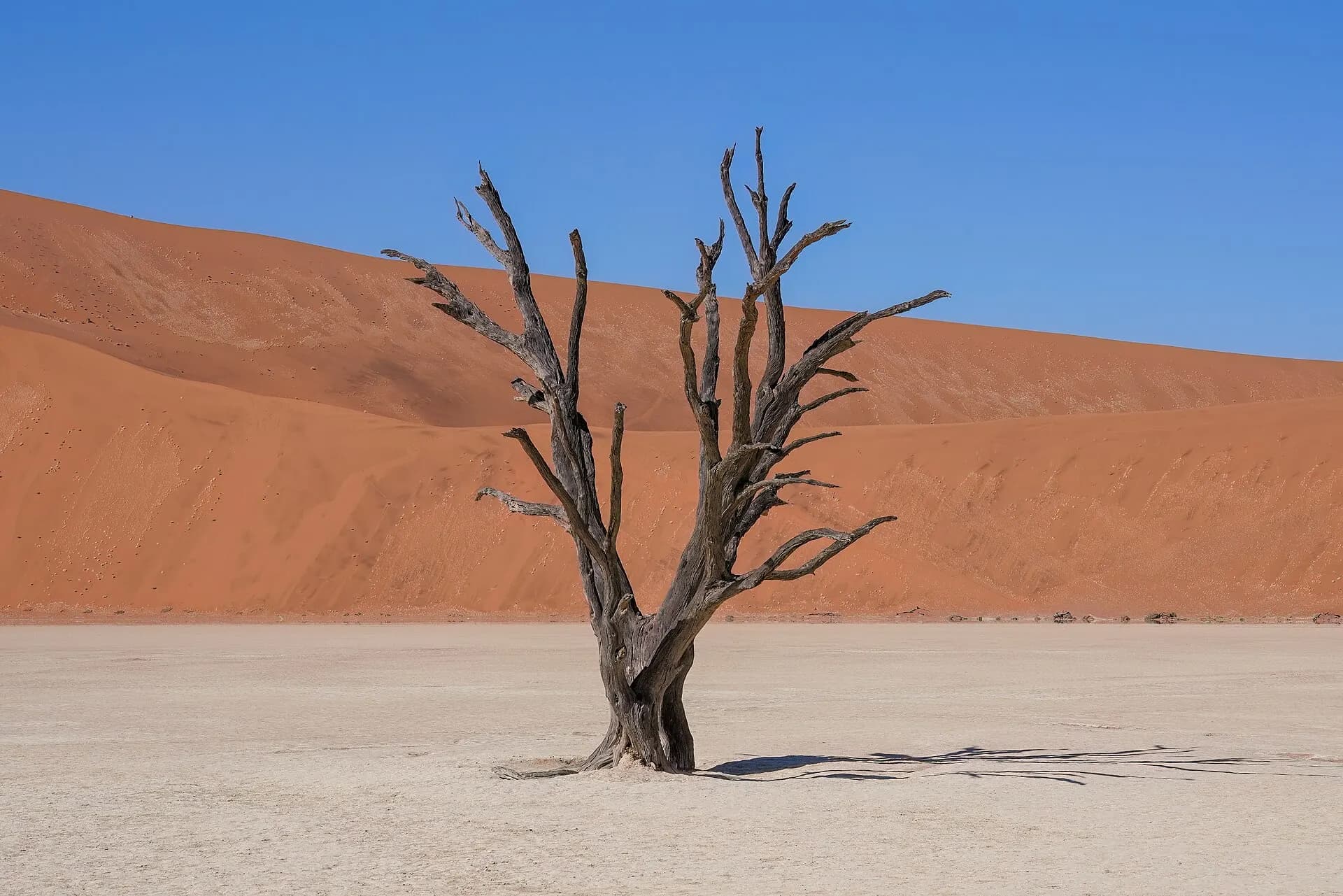
A white clay pan where camelthorn trees, which died hundreds of years ago when the river that fed them was cut off by the dunes, still stand, blackened by the sun and preserved by the dry air, against a backdrop of towering red dunes. It's one of the most photographed landscapes in Africa.
TipFrom the parking area, it's a walk of about a kilometre over soft sand; bring water and a hat.
- 2
Big Daddy
Photo: Diego Delso, CC BY-SA 4.0, via Wikimedia Commons
One of the tallest dunes in the area, rising above Deadvlei. The climb along its crest is long and tiring in the soft sand, but the view over the sea of dunes is extraordinary, and you can run straight down its steep face into Deadvlei.
- 3
Dune 45
Photo: Giles Laurent, CC BY-SA 4.0, via Wikimedia Commons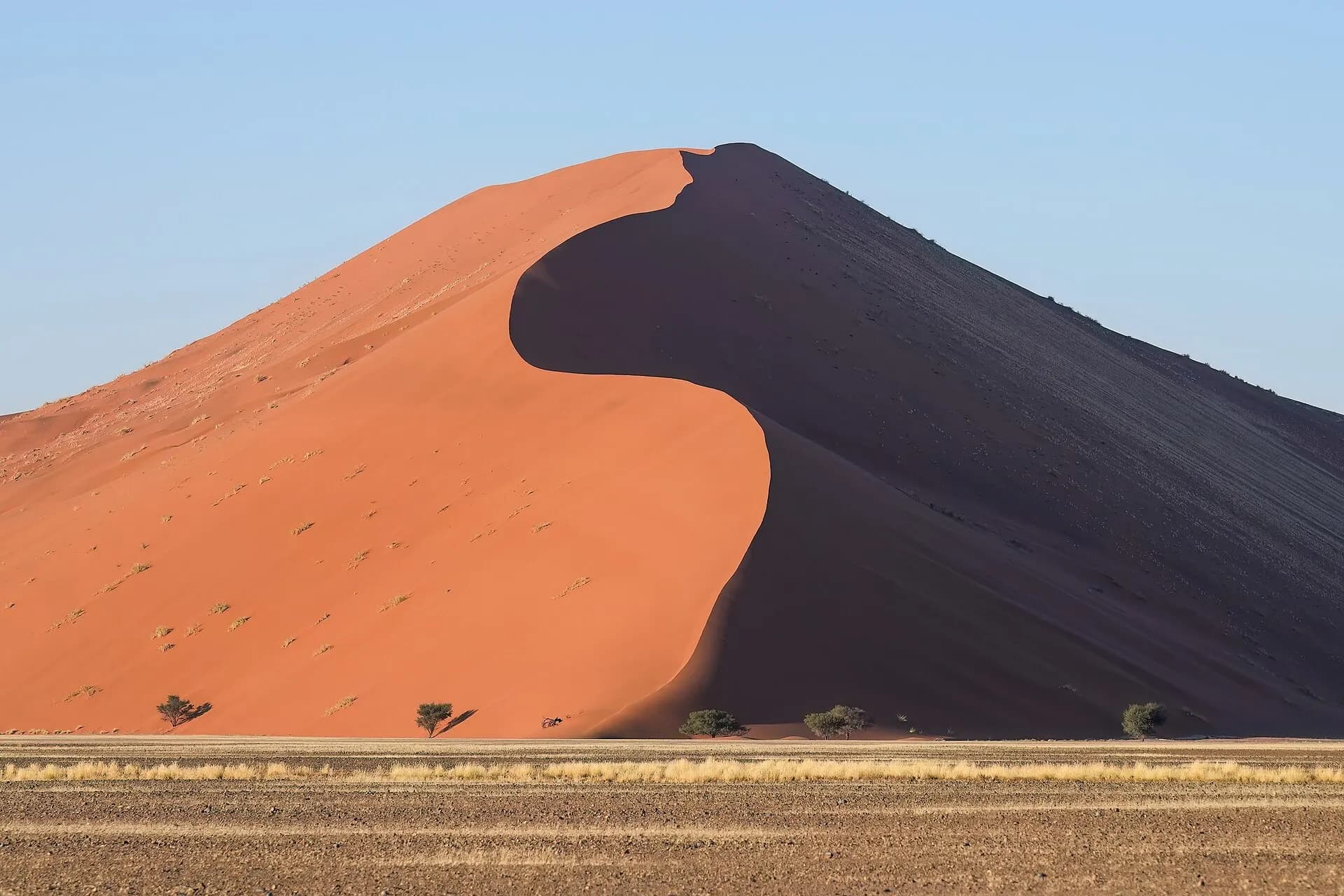
A star dune about forty-five kilometres from the Sesriem gate, beside the road, and the most popular dune to climb for sunrise, with a ridge leading to the top in about half an hour.
- 4
Sossusvlei pan
Photo: Diego Delso, CC BY-SA 4.0, via Wikimedia Commons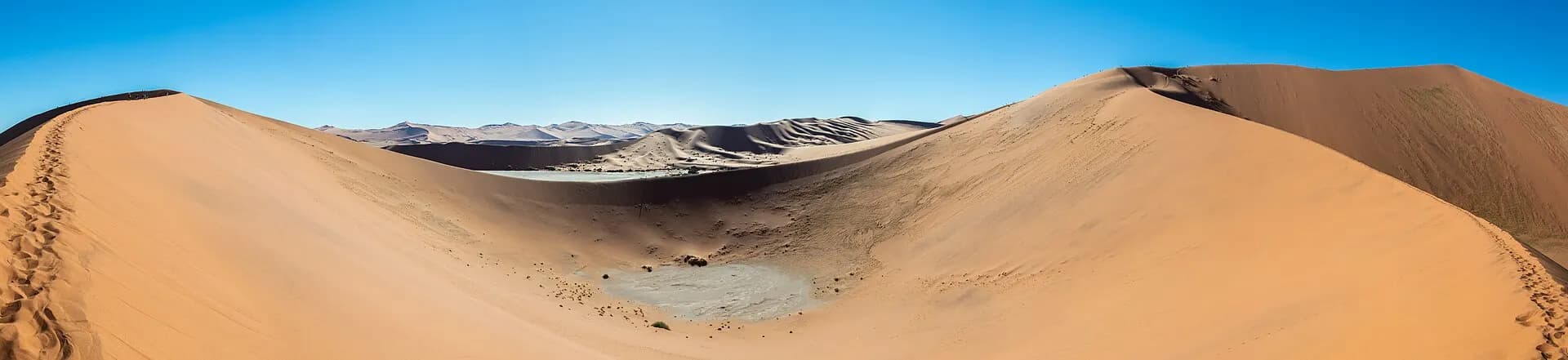
The pan that gives the area its name, where the Tsauchab River ends in the dunes. In rare years of good rain, it fills with water, attracting birds; most of the time it's a dry, cracked white floor.
- 5
Sesriem Canyon
Photo: Diego Delso, CC BY-SA 4.0, via Wikimedia Commons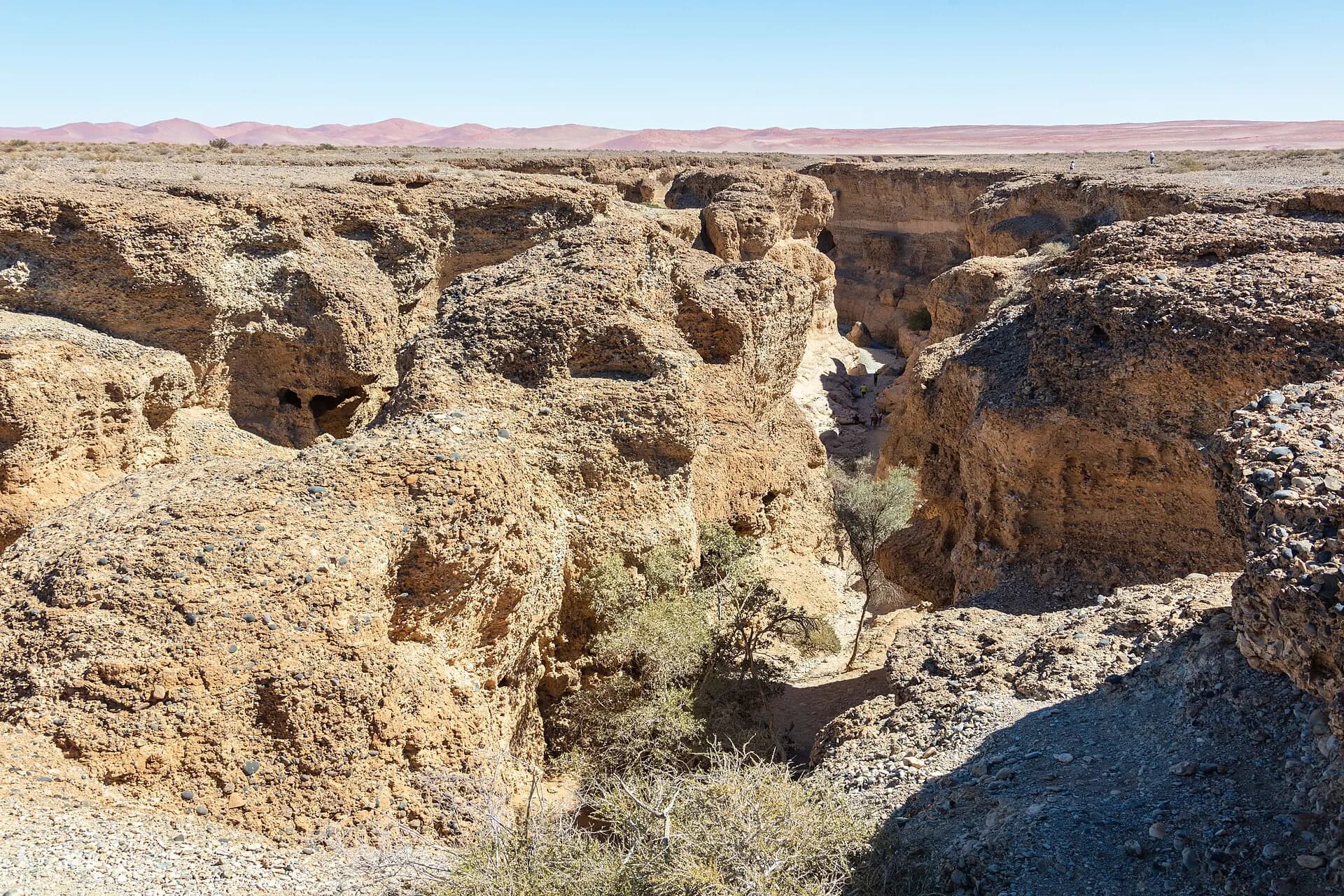
A narrow canyon about a kilometre long and up to thirty metres deep, carved by the Tsauchab River into layers of sedimentary rock near the park gate. You can walk along its floor, which offers shade in the heat of the day.
- 6
The NamibRand Nature Reserve
Photo: Martin Cígler, CC BY-SA 3.0, via Wikimedia Commons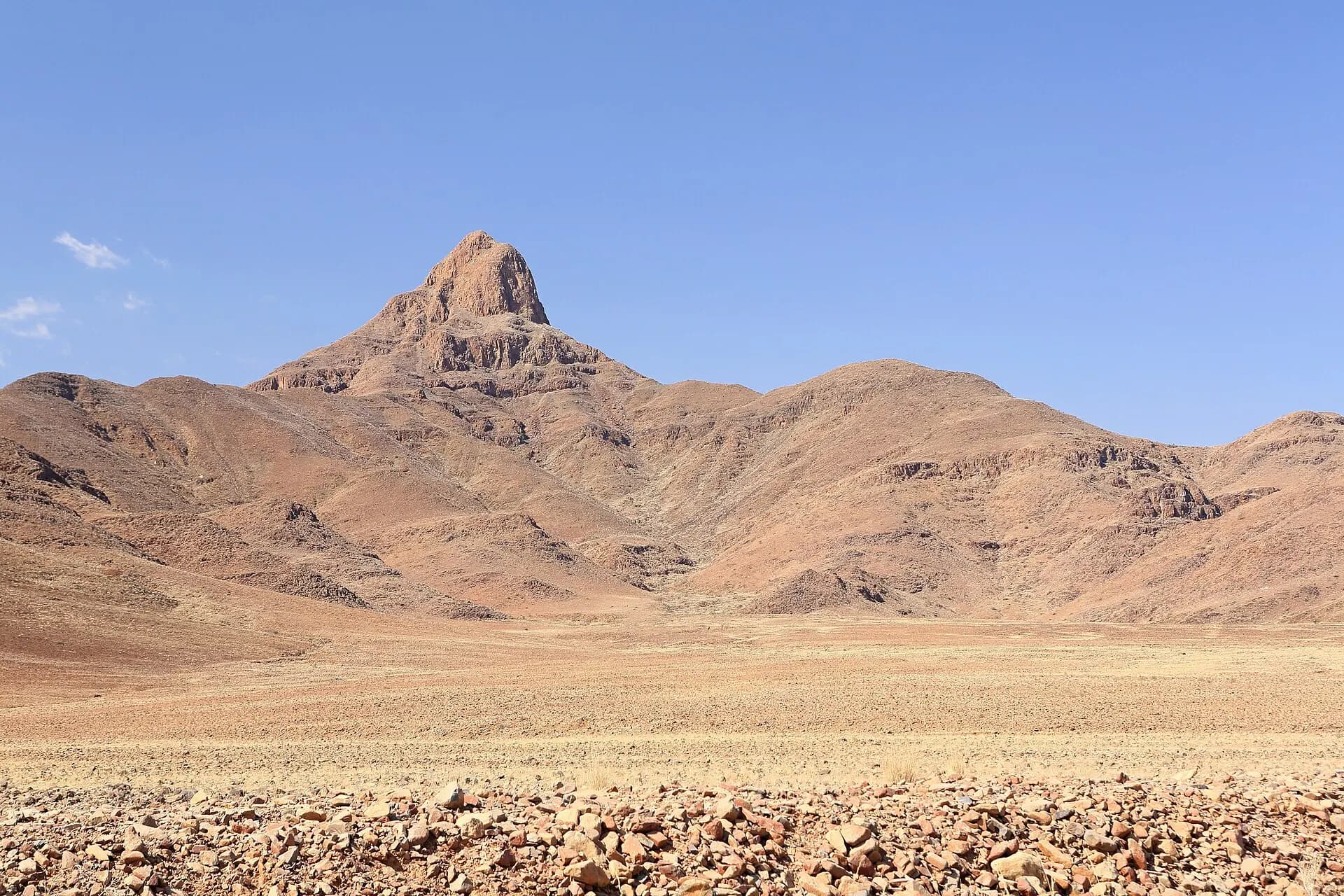
One of the largest private nature reserves in southern Africa, south of Sossusvlei, protecting desert landscapes, wildlife such as oryx and zebra, and the mysterious "fairy circles", bare patches in the grassland. It's also an International Dark Sky Reserve, with spectacular stargazing.
When to go
The cooler months, from May to September, are the most comfortable, with warm days and very cold nights. From October to April, temperatures in the middle of the day can exceed 40 °C, so sightseeing should be done early. The desert rarely sees rain, but brief storms can occur in summer. Sunrise is always the best time to visit.
Getting around
The only way into the dune area is through the park gate at Sesriem. A paved road runs about sixty kilometres to the 2x4 parking area; the last five kilometres to Sossusvlei and Deadvlei are deep sand, only for four-wheel-drive vehicles with experience, and shuttle vehicles carry everyone else. Most visitors arrive on a self-drive road trip from Windhoek, about five to six hours away on gravel roads, or on a guided tour or scenic flight.
Local tips
- Stay inside the park or at Sesriem: guests there can enter earlier and leave later than those staying outside, getting to the dunes for sunrise.
- Fill up with fuel at Sesriem and carry plenty of water.
- Drive slowly on gravel roads, where accidents are common; keep both hands on the wheel and watch for animals.
- Walk on the dunes early, before the sand gets too hot.
- Respect the dead trees of Deadvlei: don't touch or climb them.
- Bring layers: desert nights are cold.
Eat and drink
Lodges serve hearty meals, often with game such as oryx and kudu, and traditional South African-style braais. In Namibian towns, try potjiekos, a stew slow-cooked in a cast-iron pot, and Namibian lagers brewed under German purity laws, a legacy of the colonial era. Apple pie at Solitaire, a tiny settlement on the road to Sossusvlei, is a famous stop.
Where to stay
Accommodation ranges from campsites and a lodge inside the park gate at Sesriem to lodges and tented camps on private land nearby, and luxury desert camps in the NamibRand reserve. Booking well ahead is essential in high season, especially for places inside the park.
Beyond Sossusvlei
Swakopmund, on the Atlantic coast, is a seaside town with German colonial architecture and adventure activities in the dunes, and Walvis Bay, nearby, offers boat trips to see seals, dolphins and flamingos. Further north, Etosha National Park is one of Africa's great wildlife parks, centred on a vast salt pan, with waterholes where elephants, lions and rhinos gather.
Desert life
The Namib looks lifeless, but it supports a remarkable range of species adapted to the extreme conditions, many relying on the fog that rolls in from the Atlantic. Look for oryx, the elegant antelope that symbolises Namibia, springbok and ostriches on the gravel plains, and, on the dunes, beetles that collect fog droplets on their backs, lizards that dance to cool their feet, and the tracks of geckos and sidewinding adders in the morning sand. Guided nature drives and walks reveal much that the casual visitor misses.
Seeing the dunes from the air
Scenic flights by light aircraft and hot-air balloon rides at dawn give an extraordinary perspective on the sand sea, revealing the patterns of the dunes stretching to the horizon. Some longer flights continue to the Skeleton Coast and its shipwrecks.