Bagan
Thousands of ancient Buddhist temples scattered across a plain beside the Irrawaddy River.
- Best time to go
- November to February, the cool dry season
- Local time
- –
- Currency
- Myanmar Kyat (MMK)
- Reading time
- 4 min
- Language
- Burmese
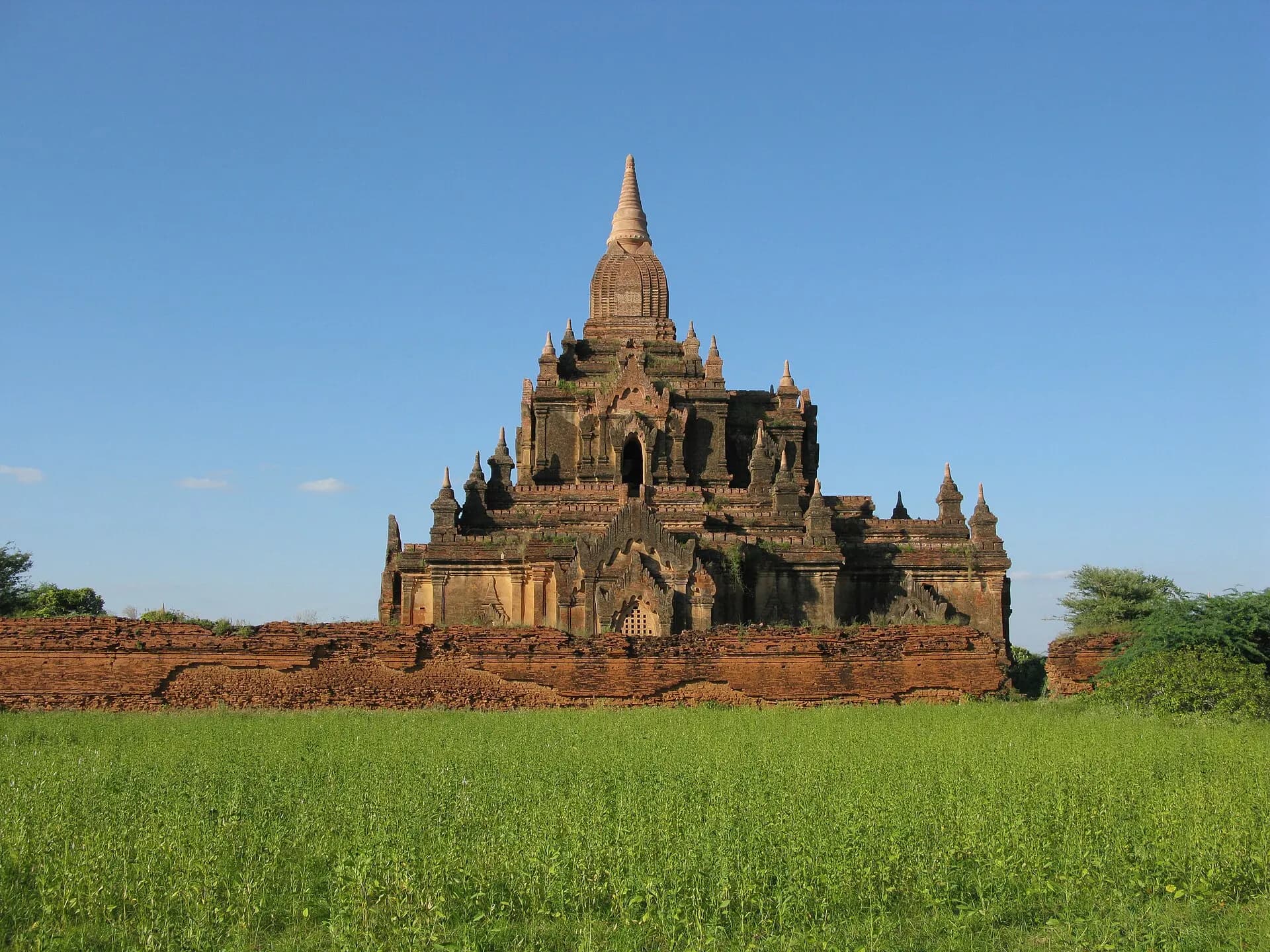
Between the eleventh and thirteenth centuries, Bagan was the capital of the first kingdom to unite the lands that make up today's Myanmar, and its rulers and people built more than ten thousand Buddhist temples, stupas and monasteries on a plain beside the Irrawaddy River. More than two thousand survive, their brick spires rising above fields and palm trees, and the site was inscribed as a World Heritage Site in 2019.
An important note before planning a visit: since the military coup of February 2021, Myanmar has been affected by armed conflict and political instability, and many governments advise against all or most travel to the country. Check your own government's latest travel advice before considering a trip; this guide describes the site for when travel is advisable.
The top 9 in Bagan
- 1
Ananda Temple
Photo: Jakub Hałun, CC BY-SA 4.0, via Wikimedia Commons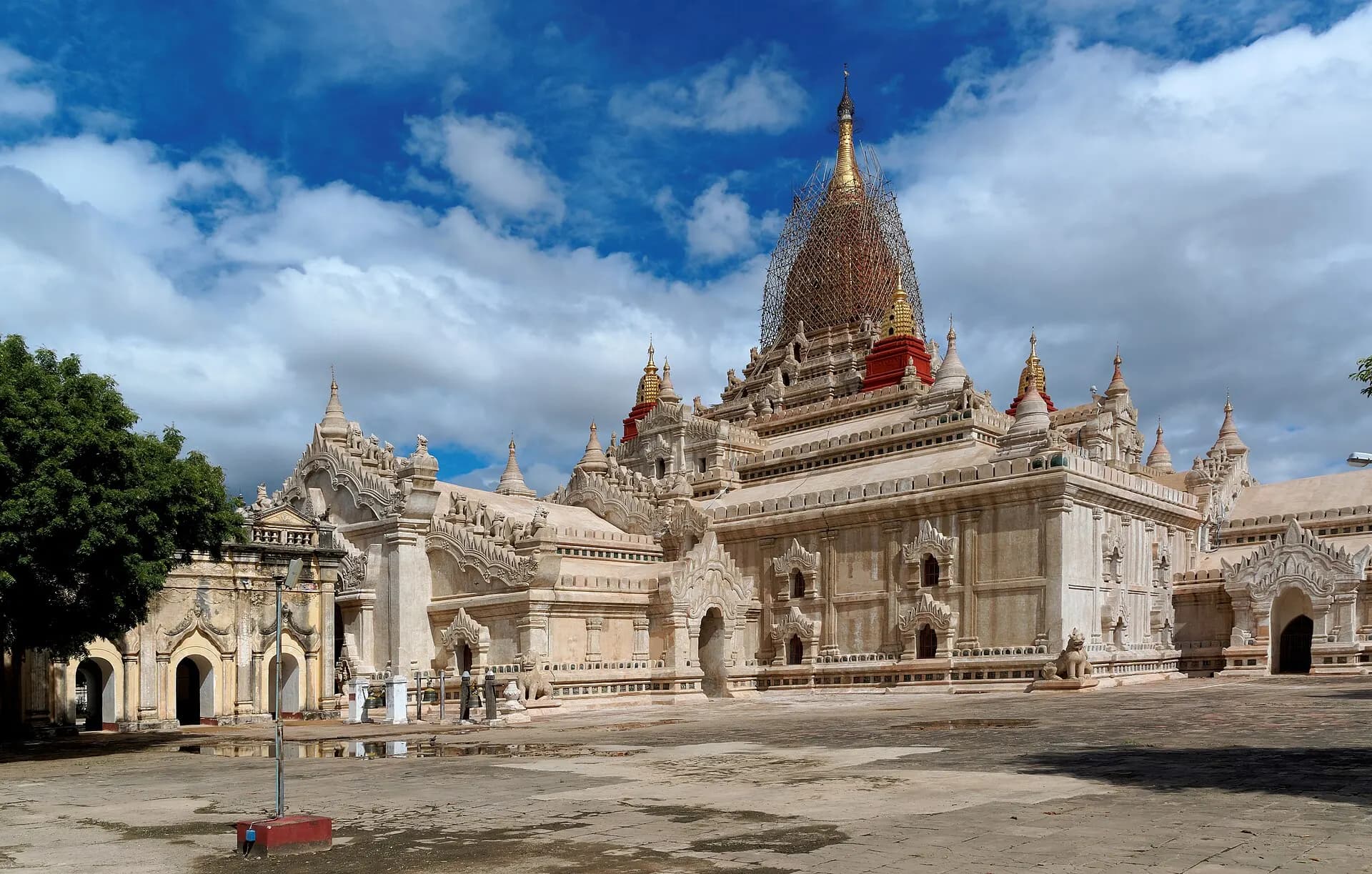
One of the finest and best-preserved temples in Bagan, completed around 1105, with a gilded spire, a cross-shaped plan and four colossal standing Buddhas, one facing each direction, in its halls.
- 2
Shwezigon Pagoda
Photo: DIMMIS, CC BY-SA 3.0, via Wikimedia Commons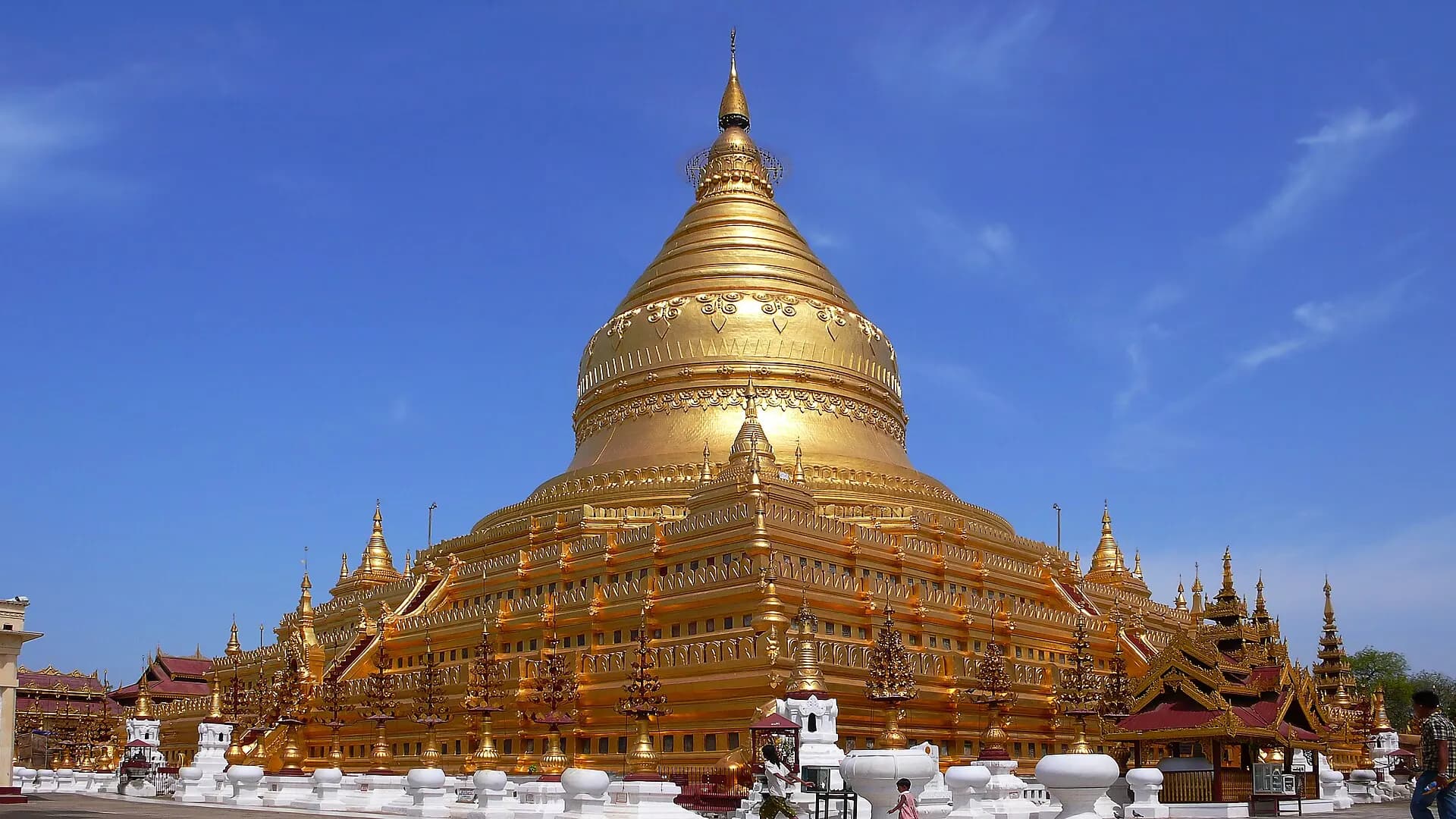
A great gilded stupa near the town of Nyaung-U, begun by King Anawrahta in the eleventh century and believed to hold relics of the Buddha. It became a model for later stupas across Myanmar and is still an active place of pilgrimage.
- 3
Dhammayangyi Temple
Photo: Justin Vidamo, CC BY 2.0, via Wikimedia Commons
The largest temple in Bagan, a massive pyramid of brick built by King Narathu in the twelfth century, with inner passages that were bricked up for reasons still debated.
- 4
Thatbyinnyu Temple
Photo: kallerna, CC BY-SA 4.0, via Wikimedia Commons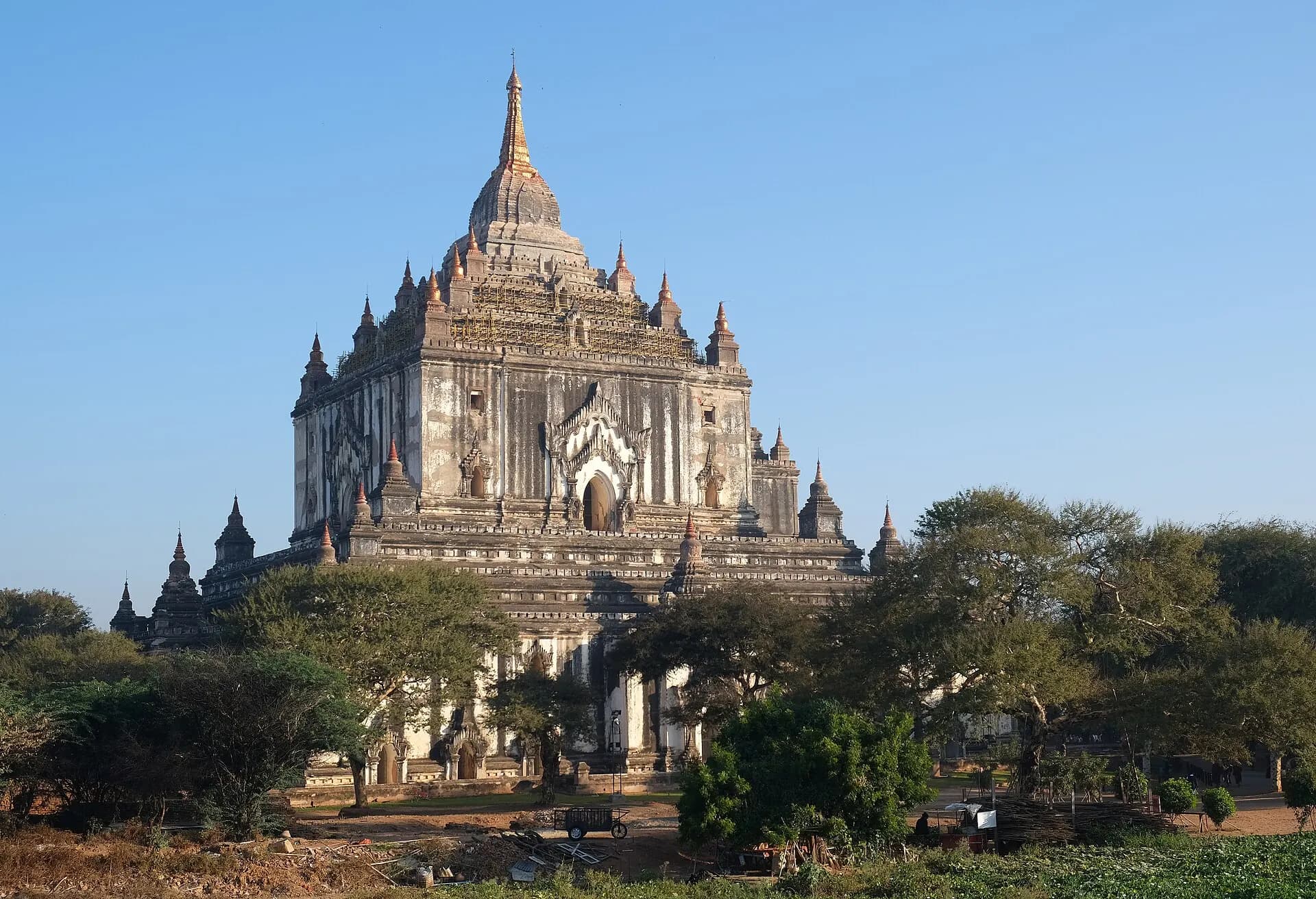
The tallest temple in Bagan, rising more than sixty metres, built in the twelfth century near the old city walls.
- 5
Shwesandaw Pagoda
Photo: Christophe95, CC BY-SA 4.0, via Wikimedia Commons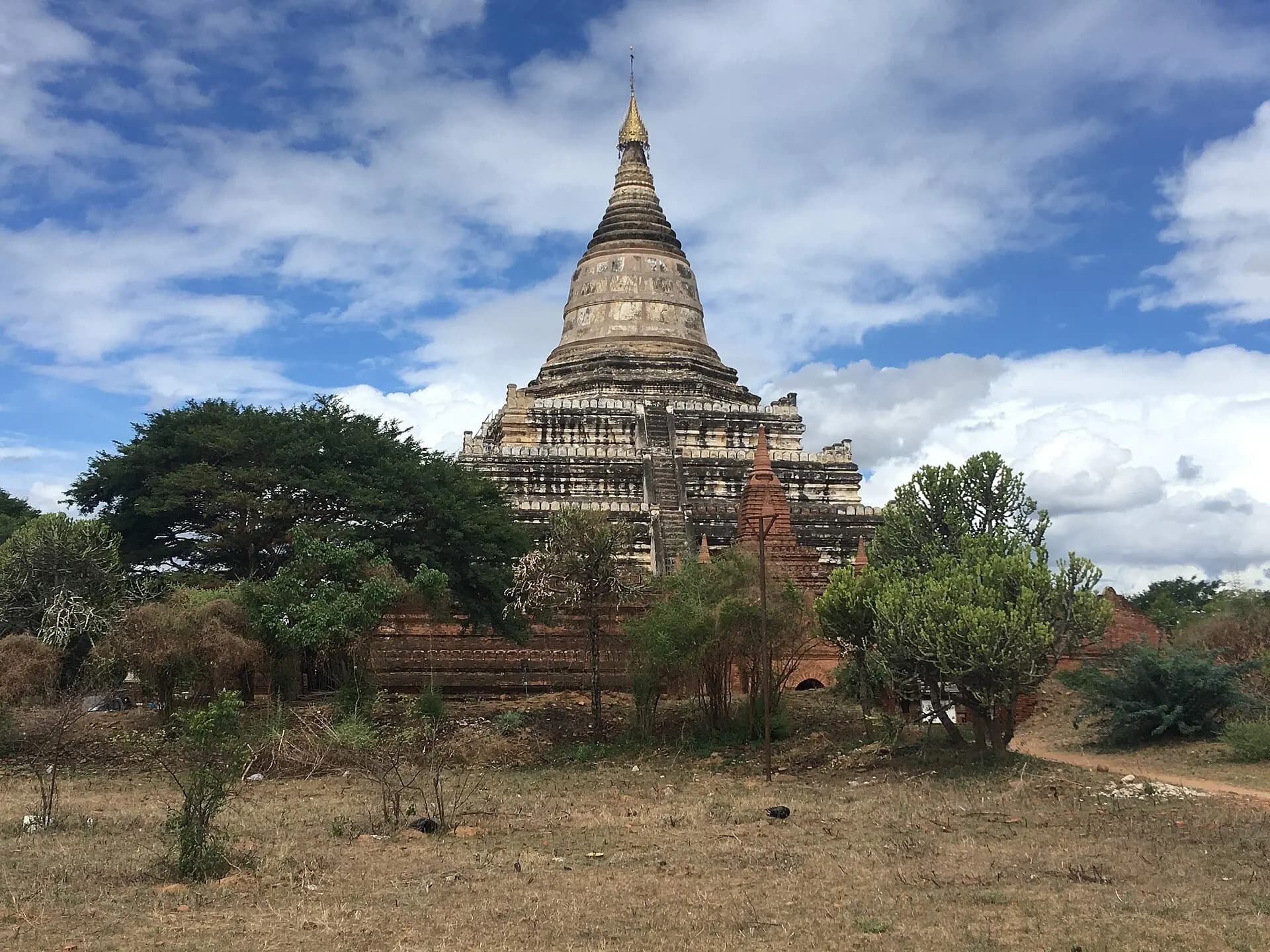
A tall stupa with terraces, long popular as a viewpoint over the plain. Climbing temples has since been restricted to protect the monuments.
TipRespect any signs restricting access; designated viewing mounds have been built for sunrise and sunset.
- 6
Old Bagan
Photo: Vyacheslav Argenberg, CC BY 4.0, via Wikimedia Commons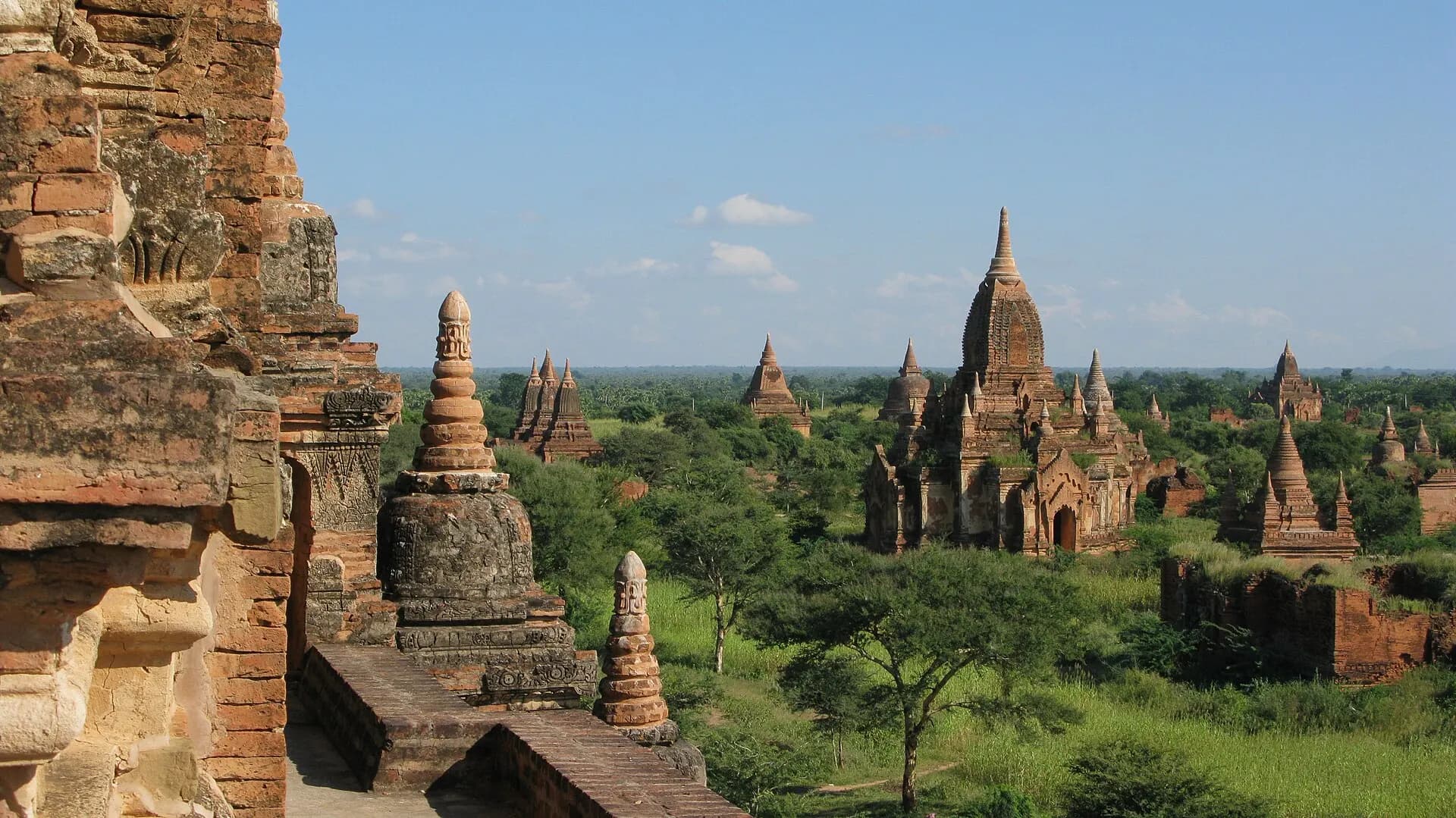
The walled area of the ancient royal city, with the Tharabha Gate, the remains of the palace and some of the most important temples, beside the Irrawaddy.
- 7
The Bagan Archaeological Museum
Photo: Ninjastrikers, CC BY-SA 4.0, via Wikimedia Commons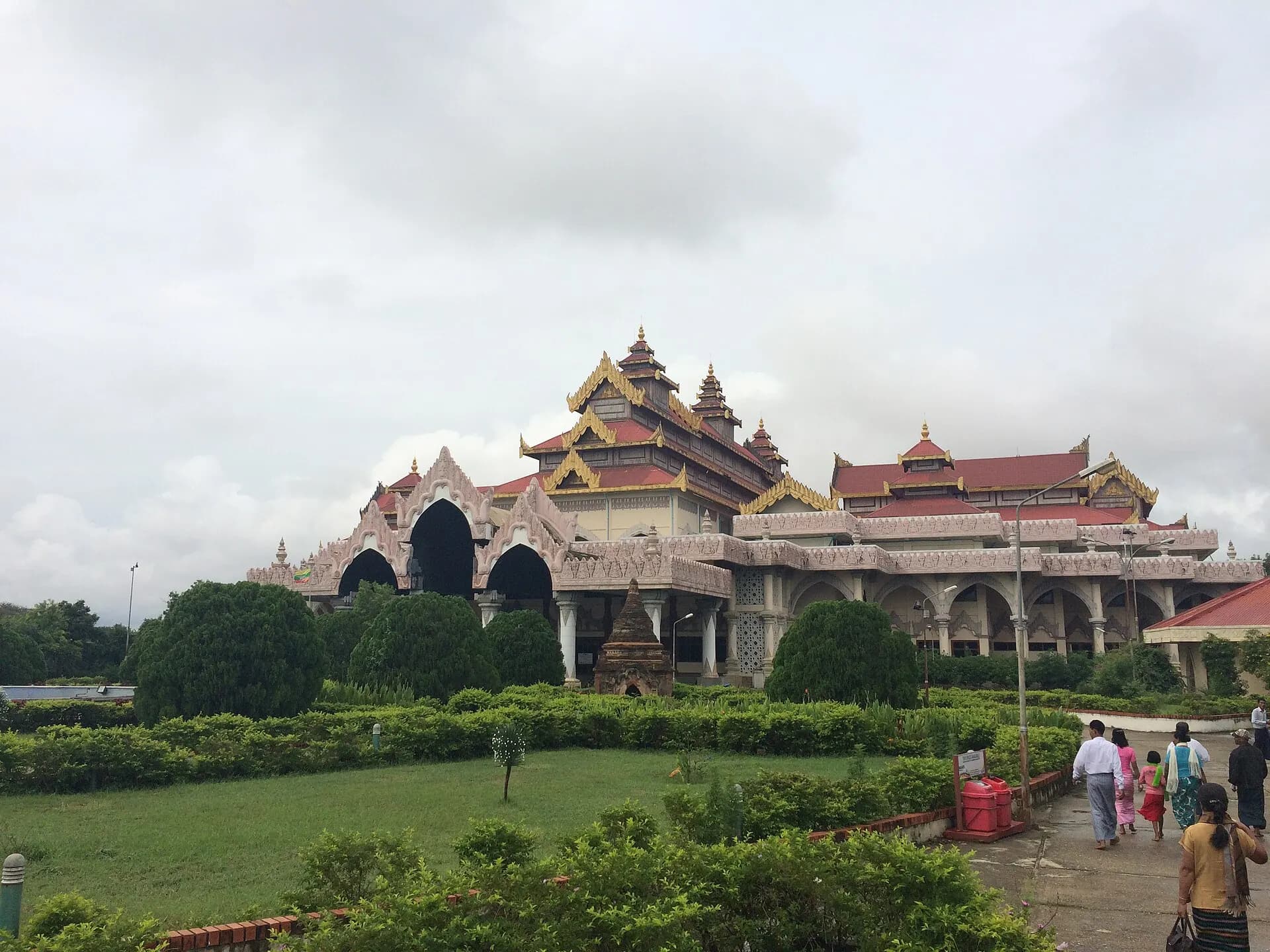
A museum displaying sculptures, inscriptions and artefacts from the temples, explaining Bagan's history and architecture.
- 8
A boat on the Irrawaddy
Boat trips on the wide river at sunset give views of temples along the bank, and slow boats once linked Bagan with Mandalay upstream.
- 9
A hot-air balloon flight
Photo: kallerna, CC BY-SA 4.0, via Wikimedia Commons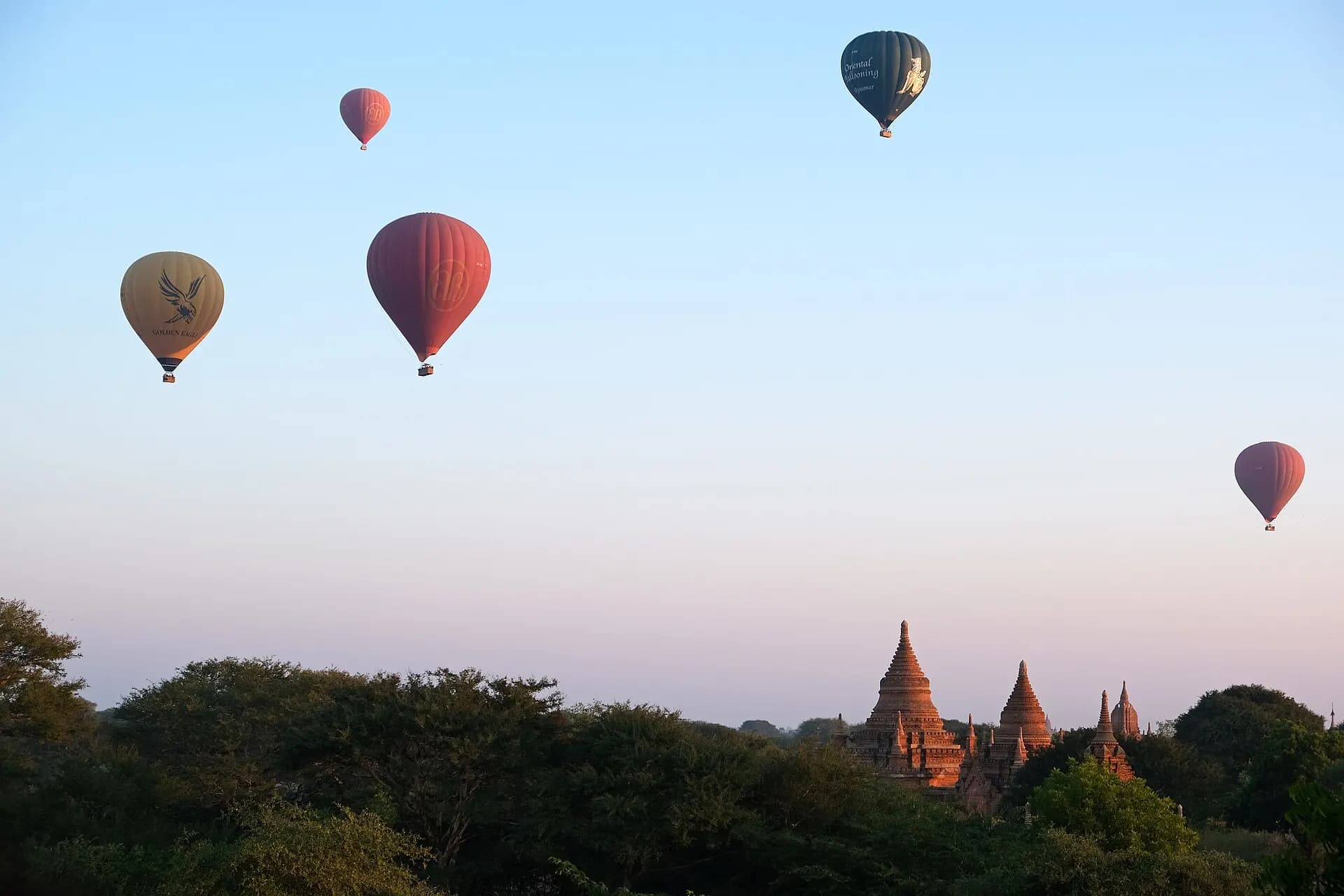
Balloon flights at dawn over the misty temple plain were one of Bagan's signature experiences in the dry season, when operating.
When to go
The cool, dry season from November to February has the most comfortable temperatures and clear skies. March to May is extremely hot. The monsoon, from June to October, brings rain and green landscapes. Bagan is in the dry zone, so rainfall is lower than elsewhere in the country.
Getting around
Electric bikes and bicycles are the classic way to explore the temple plain, along sandy tracks; horse carts and taxis can also be hired. Nyaung-U airport served domestic flights, and buses and boats linked Bagan with Mandalay and Yangon. Check current transport options and security conditions before any travel.
Local tips
- Check your government's latest travel advice; many advise against travel to Myanmar.
- Dress modestly and remove shoes and socks before entering temple grounds.
- Don't climb temples where it's prohibited; many were damaged in a 2016 earthquake.
- A zone fee applied to foreign visitors entering the archaeological area.
- Carry cash; card payments and ATMs were limited.
- Visit early in the morning and late afternoon to avoid the midday heat.
- Bring sandals that slip on and off easily for temple visits.
- Carry water and sun protection; there's little shade on the plain.
Eat and drink
Burmese food is a mix of influences from India, China and Thailand. Try mohinga, a fish noodle soup eaten for breakfast; tea-leaf salad (laphet thoke); Shan noodles; and curries served with many small side dishes. Tea shops are a social hub, serving sweet milky tea and snacks.
Where to stay
Accommodation was spread across Nyaung-U, the most lively and affordable area; New Bagan, quieter, with guesthouses; and Old Bagan, with a few upmarket hotels inside the archaeological zone.
Conservation
Bagan's temples are fragile: many were restored in the late twentieth century with methods criticised by experts, and a strong earthquake in 2016 damaged hundreds of monuments. The World Heritage listing came with commitments to better protection, and climbing temples, once common at sunset, has been restricted to prevent further damage. Visitors can help by staying on paths, respecting signs and supporting local guides and businesses.
The kingdom of Pagan
Bagan, historically called Pagan, rose to power under King Anawrahta, who came to the throne in 1044 and is credited with unifying the region and establishing Theravada Buddhism as the main faith. Over the next two and a half centuries, kings, nobles and ordinary people built religious monuments as acts of merit, creating one of the densest concentrations of Buddhist architecture in the world. The kingdom declined after Mongol invasions at the end of the thirteenth century, and Bagan was never again a capital, which is partly why so many of its temples survived.
Art inside the temples
Many temples hold remarkable mural paintings from the eleventh to thirteenth centuries, showing scenes from the life of the Buddha, the Jataka tales of his previous lives, and daily life in the kingdom. Others contain glazed terracotta plaques, stucco carvings and inscriptions in Pali, Mon and early Burmese, which are among the oldest surviving written records of the Burmese language. Light inside is dim, and flash photography damages the paintings, so bring a small torch and look closely.