Kotor
A walled Venetian town tucked into a fjord-like bay, with fortress walls zigzagging up the mountain above.
- Best time to go
- May to June and September to October, avoiding the busiest cruise days
- Local time
- –
- Currency
- Euro (EUR)
- Reading time
- 4 min
- Language
- Serbian and Bosnian

Kotor lies at the innermost corner of the Bay of Kotor, a deep, winding inlet of the Adriatic surrounded by steep mountains, often compared to a fjord. Its old town, ruled for centuries by Venice, is a maze of stone lanes, squares, churches and palaces enclosed by walls that climb dramatically up the mountainside to a fortress far above. The town and bay form a World Heritage Site.
Kotor is small and very popular, especially with cruise ships, so the old town can be crowded in the middle of the day. Explore early or late, climb the walls, and use the town as a base for the villages of the bay and the mountains of Montenegro.
The top 8 in Kotor
- 1
The old town
Photo: Rakoon, CC0, via Wikimedia Commons
A triangle of narrow lanes and squares behind the sea gate, with Venetian palaces, churches and cafés. It's famous for its many cats, which have become a symbol of the town.
TipCheck cruise-ship schedules and visit early in the morning or in the evening when ships are in port.
- 2
The city walls and San Giovanni Fortress
Photo: Falk2, CC BY-SA 4.0, via Wikimedia Commons
Kotor's walls run up the mountain behind the town to the fortress of San Giovanni, about 260 metres above, reached by a climb of around 1,350 steps past a small church. The view over the town and bay is spectacular.
TipGo early in the morning or at sunset, bring water and sturdy shoes, and avoid the midday heat.
- 3
The Cathedral of St Tryphon
Photo: Diego Delso, CC BY-SA 3.0, via Wikimedia Commons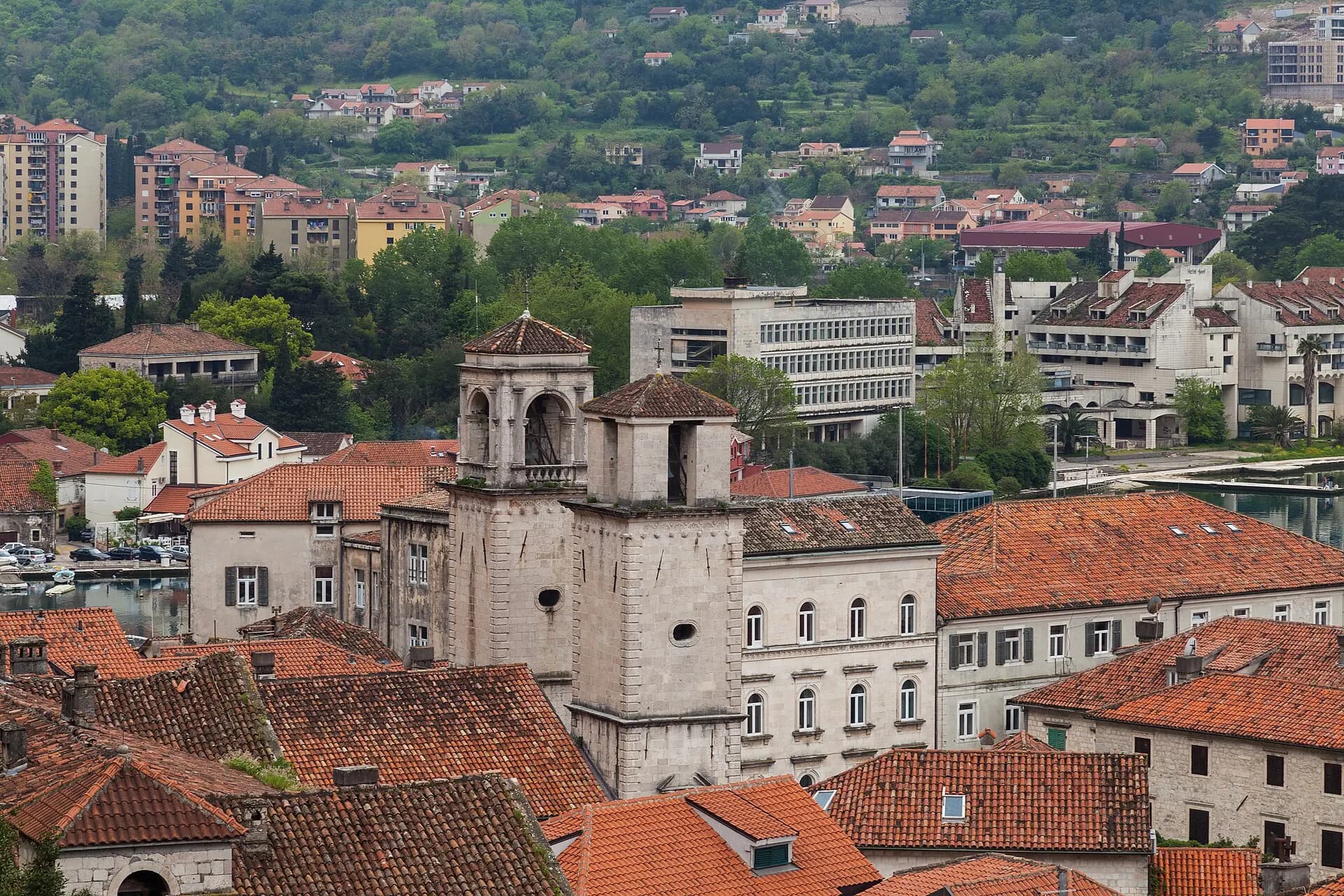
A Romanesque cathedral consecrated in 1166, dedicated to the town's patron saint, with twin towers and fourteenth-century frescoes inside. Its treasury holds relics and silver.
- 4
The Maritime Museum
Photo: Diego Delso, CC BY-SA 3.0, via Wikimedia Commons
A museum in a baroque palace telling the story of the bay's long seafaring history, with ship models, weapons and portraits of captains.
- 5
Perast
Photo: Marcin Konsek, CC BY-SA 4.0, via Wikimedia Commons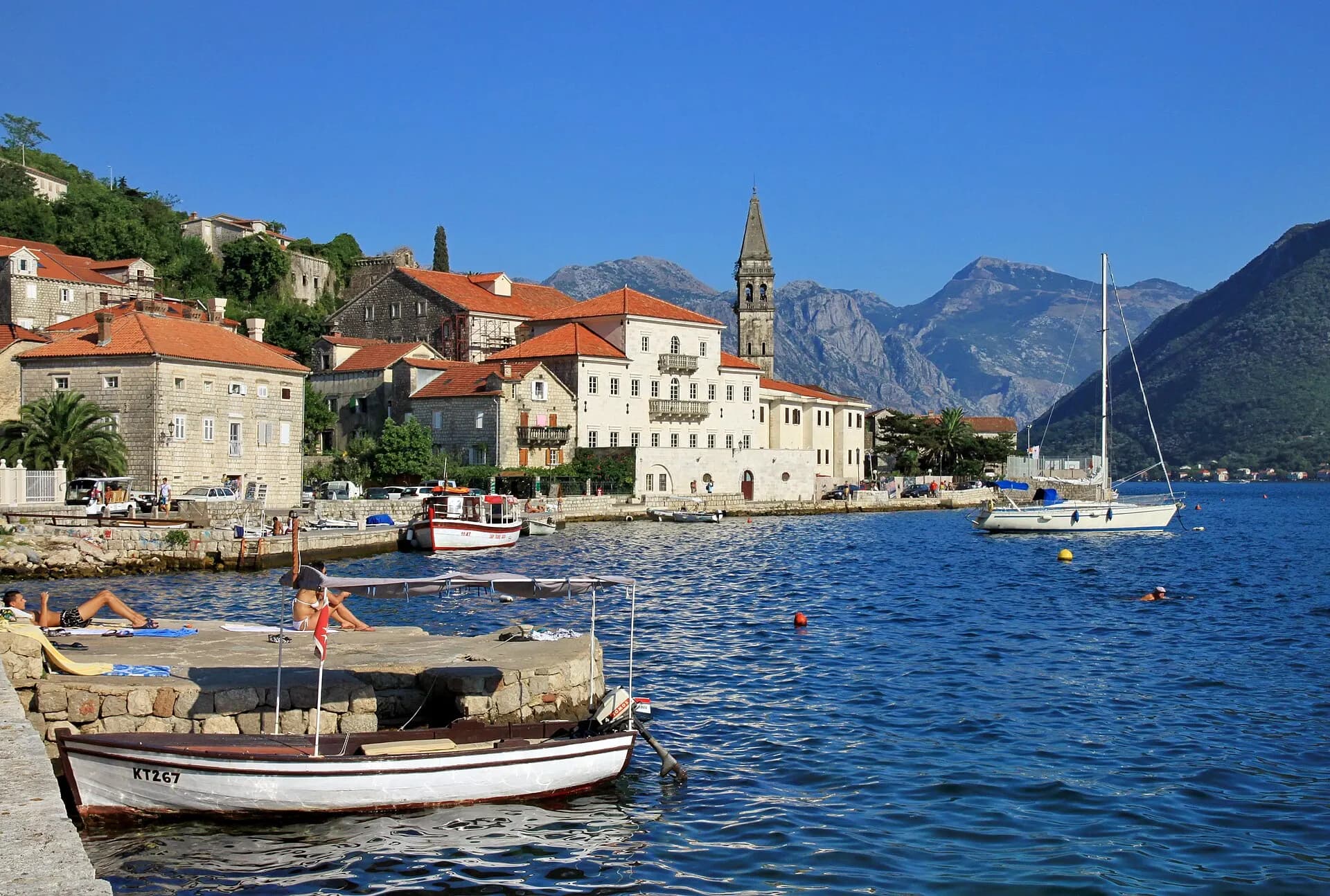
A small, elegant town about twenty minutes along the bay, with baroque palaces and churches built by wealthy sea captains, and fine views over the water.
- 6
Our Lady of the Rocks
Photo: Oktoober, CC BY-SA 4.0, via Wikimedia Commons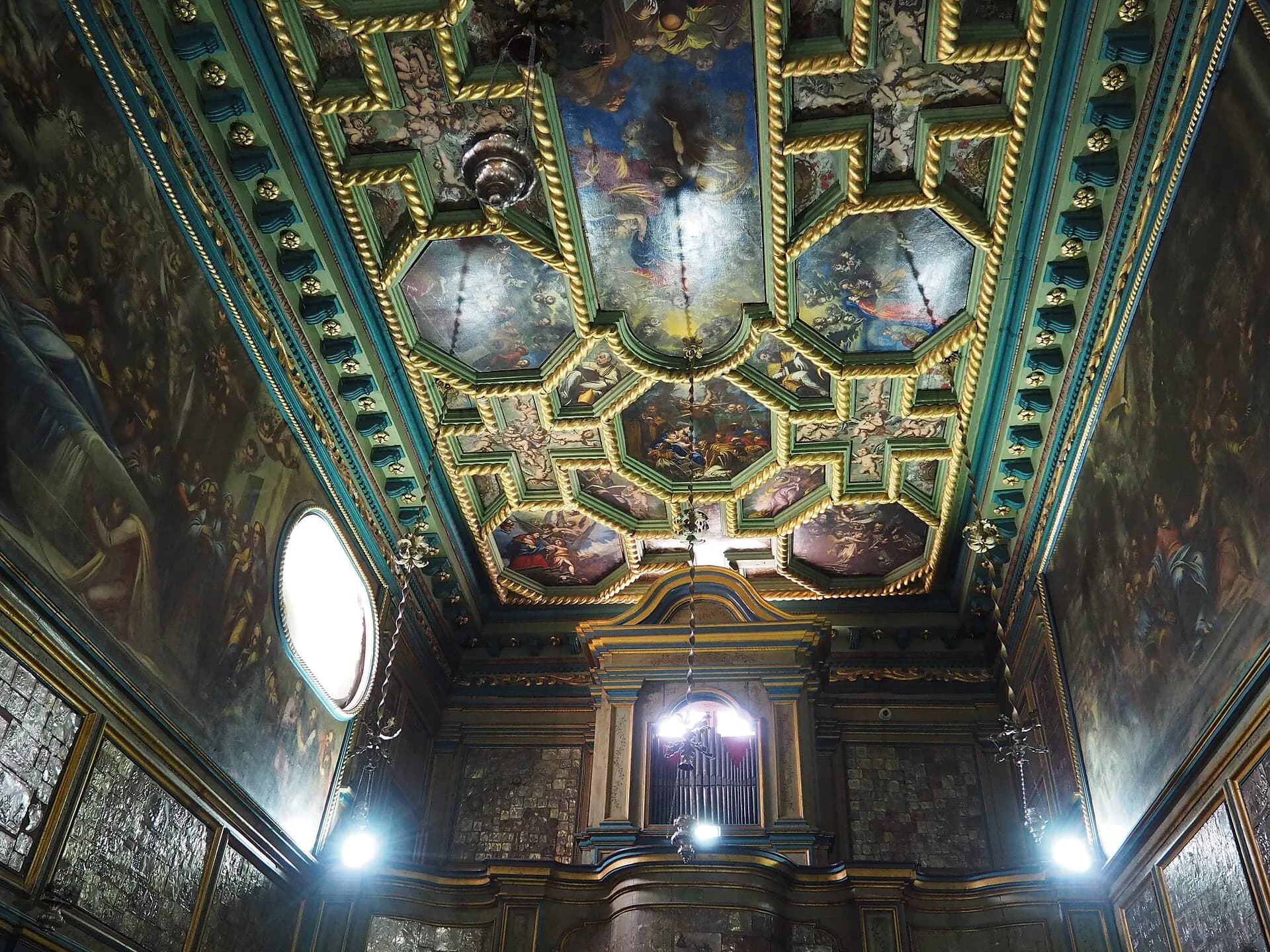
An artificial island off Perast, built up over centuries by local sailors dropping rocks and sunken ships, topped by a blue-domed church filled with paintings and votive offerings. Boats run from Perast.
- 7
Lovćen National Park
Photo: Daniya.Mostovaya, CC BY-SA 4.0, via Wikimedia Commons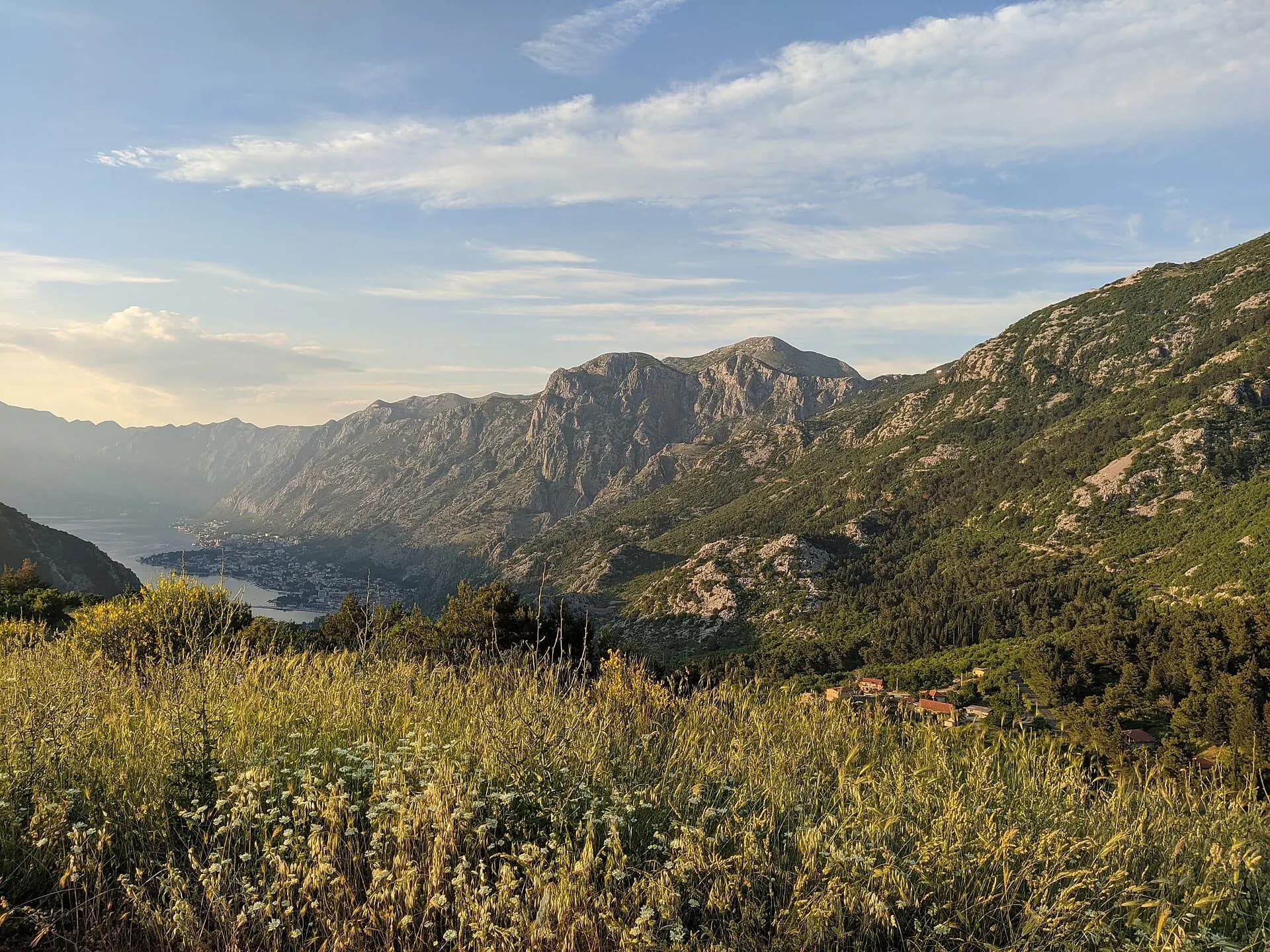
A mountain park above Kotor, reached by a spectacular road of switchbacks, with the mausoleum of Petar II Petrović-Njegoš, prince-bishop and poet of Montenegro, on its summit, and views over much of the country.
- 8
Budva
Photo: Jaakko Luttinen, CC BY-SA 4.0, via Wikimedia Commons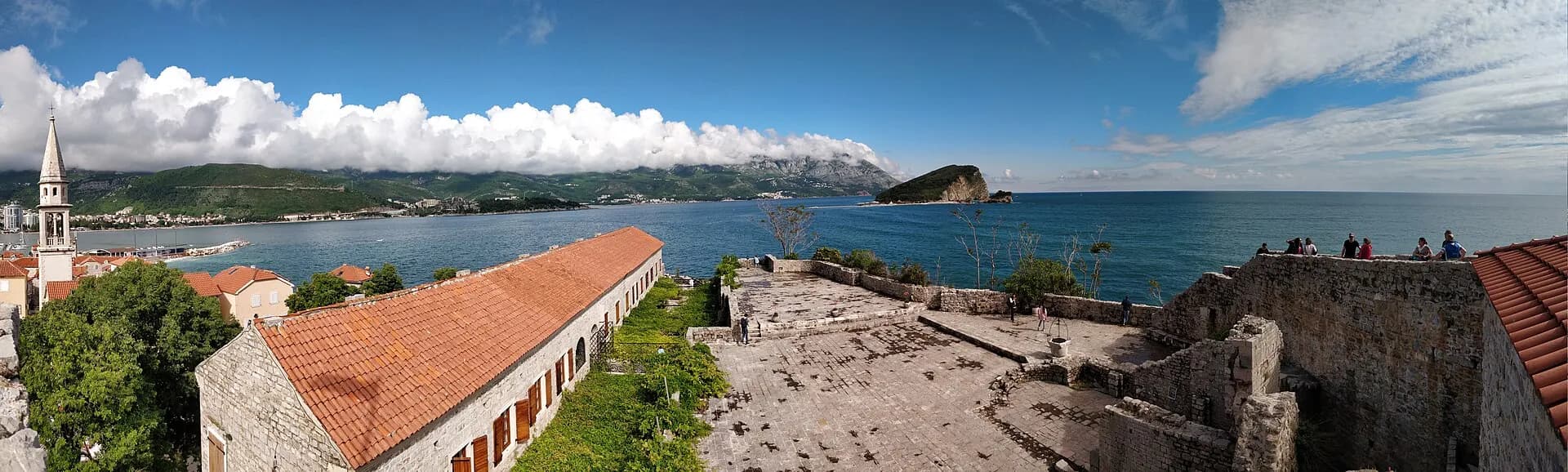
A resort town on the open Adriatic coast, about half an hour away, with a walled old town, beaches and lively nightlife. The island of Sveti Stefan, nearby, is a famous view.
When to go
Late spring and early autumn bring warm weather, swimmable water and fewer crowds. July and August are hot and very busy. Winter is mild and quiet but rainy, and some businesses close. The Kotor Carnival and summer festivals bring music and celebrations to the old town.
Getting around
Kotor's old town is pedestrian. Buses link Kotor with Budva, Herceg Novi and other towns around the bay, and boats and water taxis run to Perast and other villages. A car is useful for Lovćen and the mountains, though traffic and parking around Kotor are difficult in summer. Tivat Airport is about twenty minutes away; Podgorica and Dubrovnik airports are about ninety minutes.
Local tips
- Montenegro uses the euro.
- Visit the old town early or late on busy cruise days.
- Wear good shoes for the fortress climb and the polished stone streets.
- Carry water and sunscreen in summer.
- Drive carefully on the narrow coastal and mountain roads.
- Bring your passport for any trip to Croatia or Bosnia and Herzegovina.
- A small fee is charged to climb the fortress walls during the day.
- Water taxis and boat tours are the most pleasant way to see the bay.
Eat and drink
Try fresh seafood such as grilled fish, black risotto and mussels from the bay, as well as Njeguški pršut, smoked ham from the village of Njeguši in the mountains, served with local cheese. Montenegrin wines, especially the red Vranac, are worth trying.
Where to stay
Staying in the old town is atmospheric but can be noisy. Dobrota and Prčanj, along the bay, have quieter seafront guesthouses and apartments. Perast offers peace in the evenings, and Tivat has modern hotels near its marina.
Around the bay
The Bay of Kotor is lined with small stone villages, each with a waterfront church and old captains' houses. Dobrota and Prčanj, just north of Kotor, have long seaside promenades. Risan has Roman mosaics from a villa, and Herceg Novi, near the entrance to the bay, is a sunny town of stairways, fortresses and botanical gardens. Boat trips explore the bay, stopping at Perast and Our Lady of the Rocks, and sometimes the Blue Cave on the Luštica peninsula, where sunlight turns the water a brilliant blue.
The serpentine road
The old road from Kotor up to Lovćen and the village of Njeguši climbs the mountainside in twenty-five hairpin bends, with breathtaking views down over the bay at every turn. It's narrow and busy in summer, so drive with care and use the passing places. At the top, Njeguši is famous for its smoked ham and cheese, and the road continues to Cetinje, the old royal capital of Montenegro, with its monastery, palaces and former embassies.
Beaches
Kotor itself has only small pebbly beaches, and many people swim from concrete platforms along the bay. For sandier beaches, head to the open coast at Budva, Bečići and Petrovac, or to the coves of the Luštica peninsula, where clear water and small beach bars make a relaxed day out.