Luang Prabang
Gilded temples and saffron-robed monks on a quiet peninsula where the Mekong meets the Nam Khan.
- Best time to go
- November to February, the cool dry season
- Local time
- –
- Currency
- Laotian Kip (LAK)
- Reading time
- 4 min
- Language
- Laotian
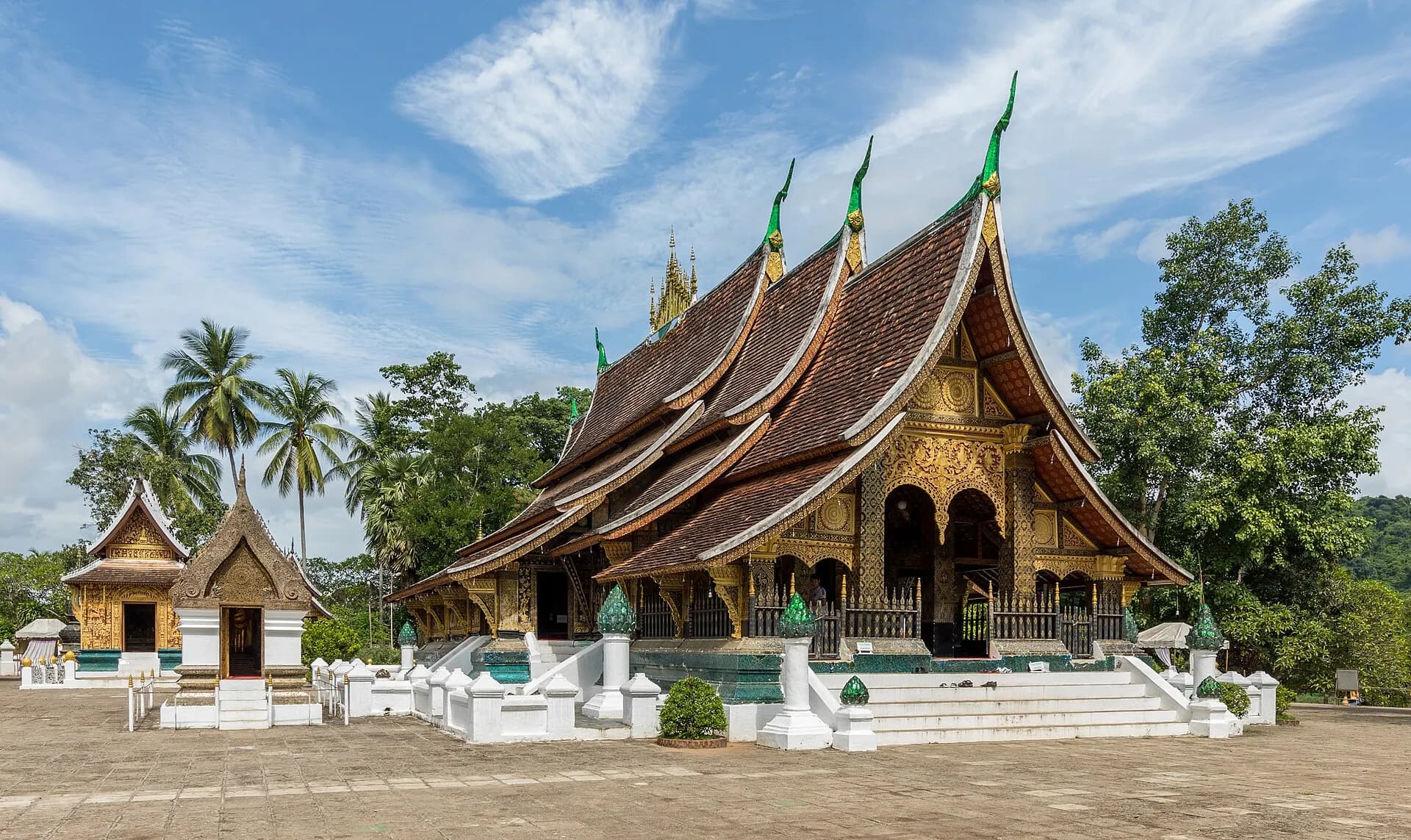
Luang Prabang was the royal capital of the kingdom of Lan Xang, "the land of a million elephants", and remained the seat of the Lao monarchy until 1975. Set on a narrow peninsula where the Nam Khan River flows into the Mekong, surrounded by green mountains, it's a town of more than thirty Buddhist temples, French colonial villas and traditional wooden houses, and a World Heritage Site.
It's one of the most peaceful and beautiful towns in Southeast Asia, with a slow pace of life shaped by its monasteries. Start your days early to watch the monks collect alms, explore the temples and markets, swim at turquoise waterfalls, and end them with sunset over the Mekong.
The top 9 in Luang Prabang
- 1
Wat Xieng Thong
Photo: Basile Morin, CC BY-SA 4.0, via Wikimedia Commons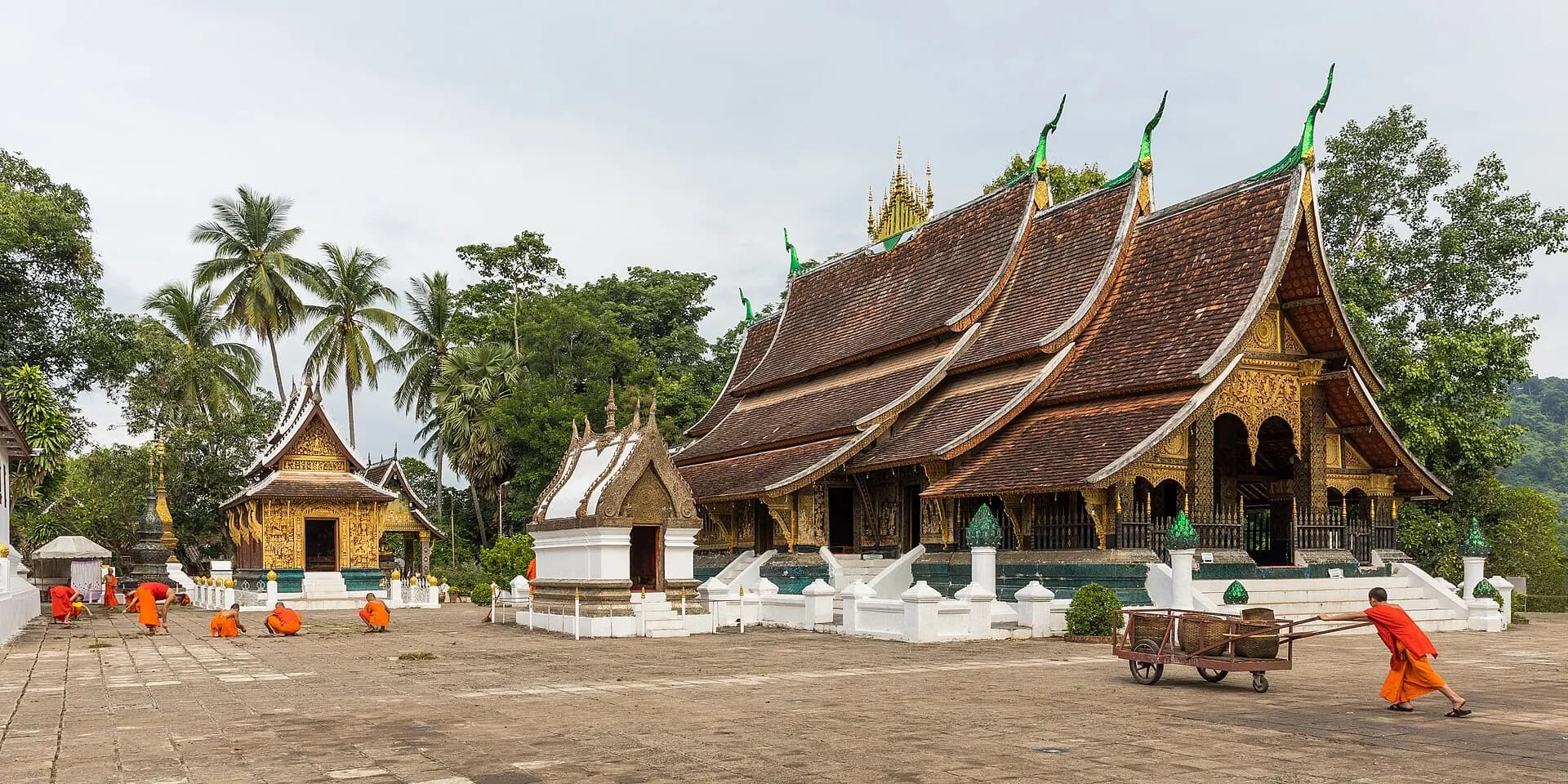
The most important and beautiful temple in Luang Prabang, built in 1560, with a sweeping, low roof that almost touches the ground, and walls decorated with gold stencilling and a "tree of life" mosaic of coloured glass. A chapel holds the royal funeral carriage.
- 2
The morning alms giving (Tak Bat)
At dawn, hundreds of monks walk in silent lines through the streets to receive offerings of sticky rice from kneeling residents, a daily ritual of merit making.
TipWatch from a respectful distance on the opposite side of the street, never use flash, and don't block the procession. Only take part if it's meaningful to you, and buy rice from a local vendor rather than tourist stalls.
- 3
Mount Phousi
Photo: Allie Caulfield, CC BY 2.0, via Wikimedia Commons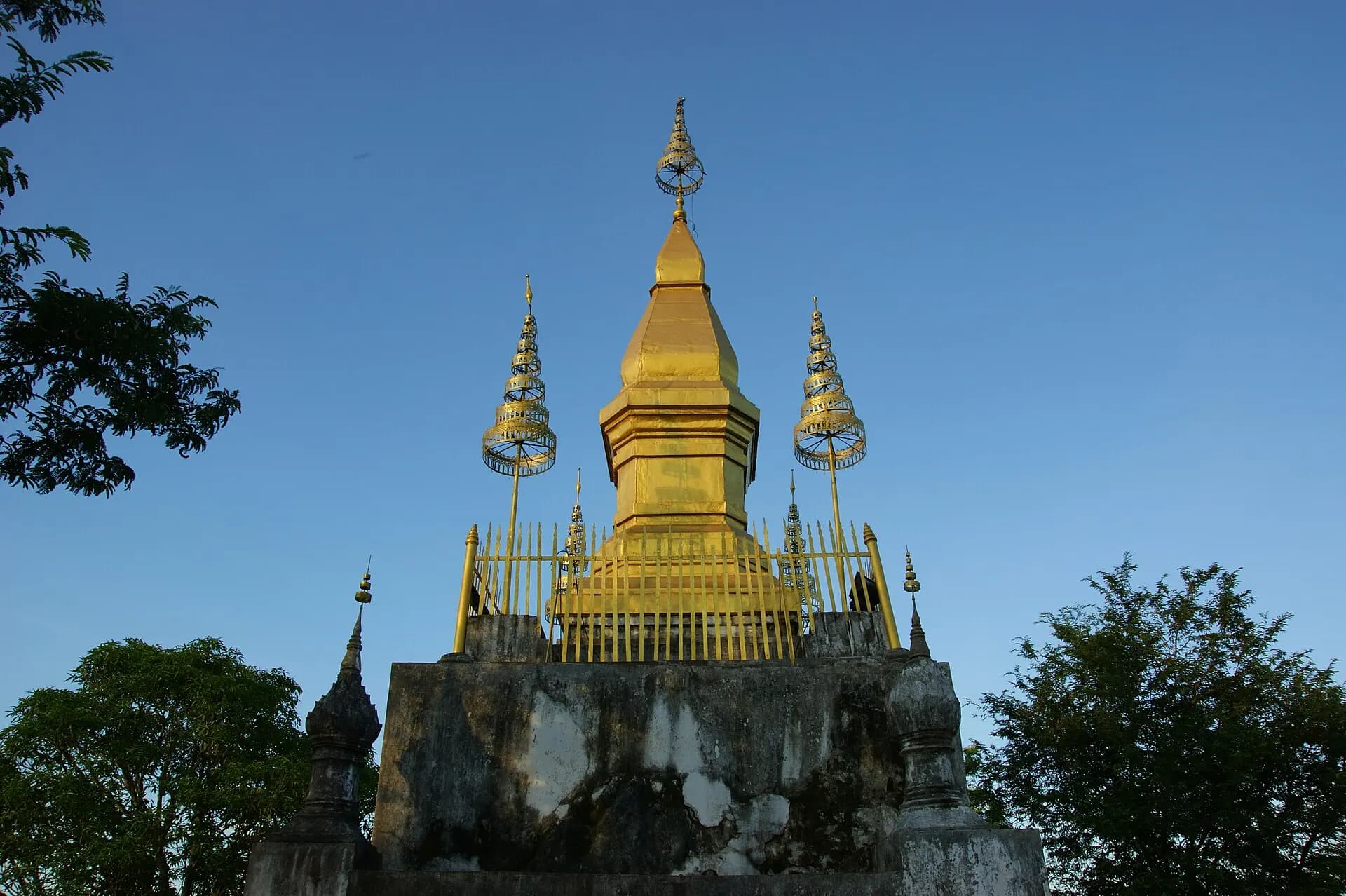
A hill in the centre of town, climbed by around 330 steps past shrines and Buddha images, with a golden stupa, That Chomsi, on top and panoramic views over the town, the rivers and the mountains. It's busy at sunset.
- 4
The Royal Palace Museum
Photo: Jakub Hałun, CC BY-SA 4.0, via Wikimedia Commons
The former royal palace, built in 1904 during the French colonial period, displays royal treasures, gifts from foreign heads of state and a throne room decorated with glittering mosaics. Next to it, the ornate Haw Pha Bang temple houses the Phra Bang, the sacred golden Buddha image that gave the town its name.
TipDress modestly, with shoulders and knees covered; bags must be left in lockers.
- 5
The night market
Photo: Ekrem Canli, CC BY-SA 4.0, via Wikimedia Commons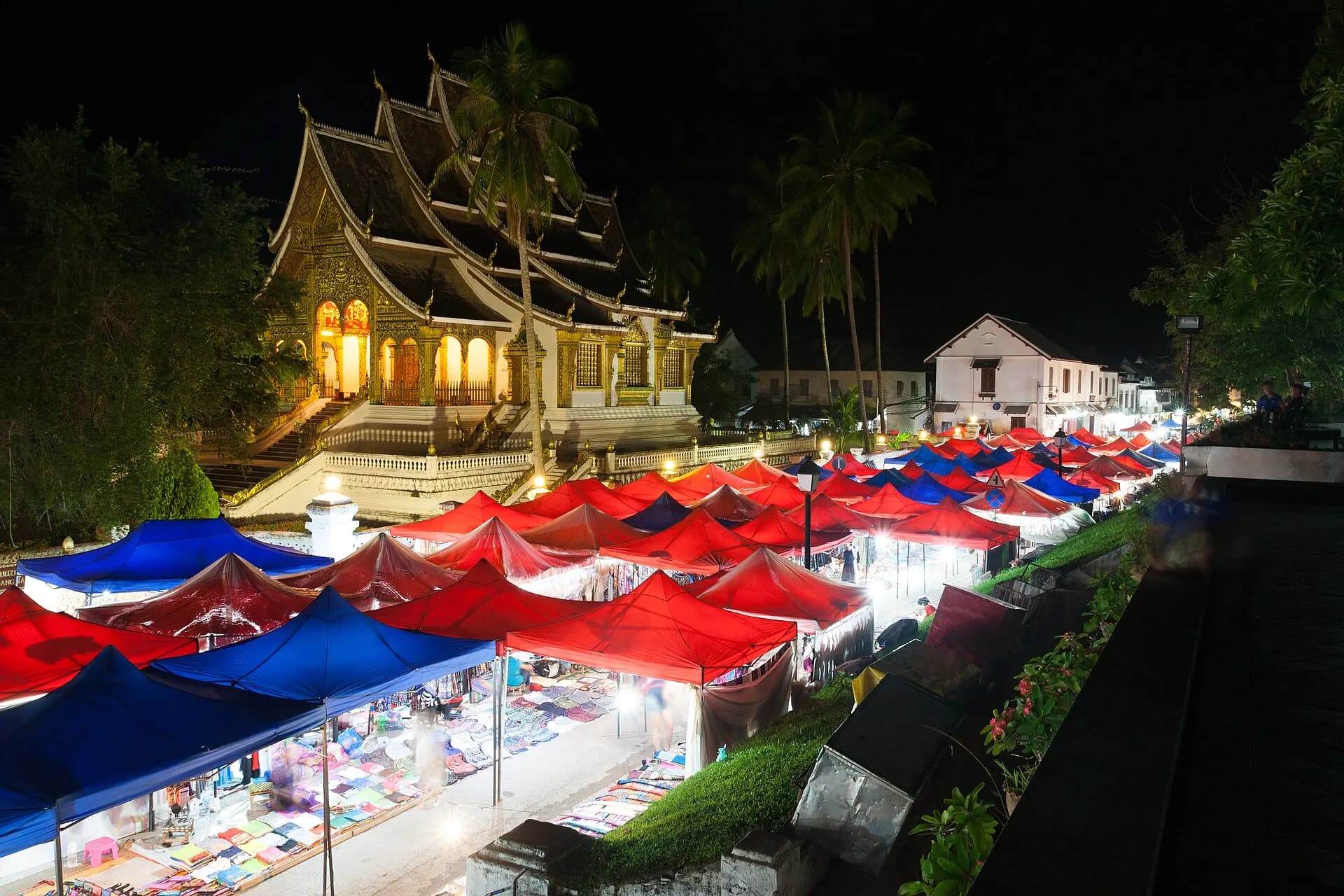
Every evening, Sisavangvong Road closes to traffic and fills with stalls selling textiles, paper lanterns, silver and handicrafts, many made by ethnic minority groups. A narrow lane nearby is lined with food stalls.
- 6
Kuang Si Falls
Photo: Basile Morin, CC BY-SA 4.0, via Wikimedia Commons
A series of cascades and turquoise pools in the forest about thirty kilometres south of town, where you can swim in designated areas. A rescue centre for Asiatic black bears, rescued from poachers and the bile trade, is near the entrance.
TipGo early in the morning, before the tour groups arrive, and bring a swimsuit and a cover-up.
- 7
The Pak Ou Caves
Photo: CEphoto, Uwe Aranas, CC BY-SA 3.0, via Wikimedia Commons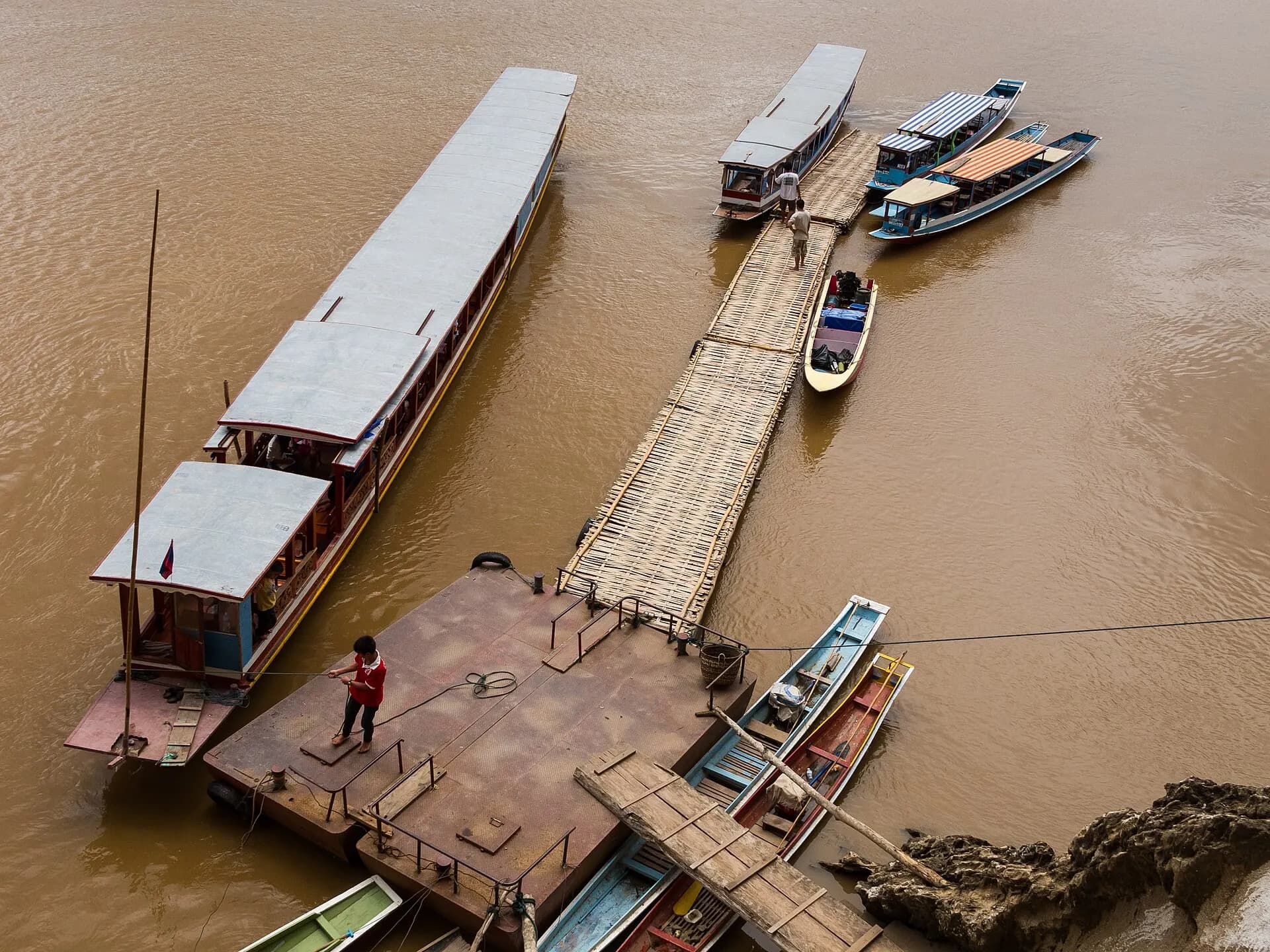
Two caves in a limestone cliff above the Mekong, about two hours upriver by boat, filled with thousands of old Buddha images left by pilgrims over the centuries. Boat trips often stop at a village where rice whisky is distilled.
- 8
Traditional Arts and Ethnology Centre
Photo: Christophe95, CC BY-SA 4.0, via Wikimedia Commons
A small, excellent museum explaining the cultures, clothing and crafts of the many ethnic groups of Laos, including the Hmong, Khmu and Akha.
- 9
Sunset on the Mekong
Photo: Basile Morin, CC BY-SA 4.0, via Wikimedia Commons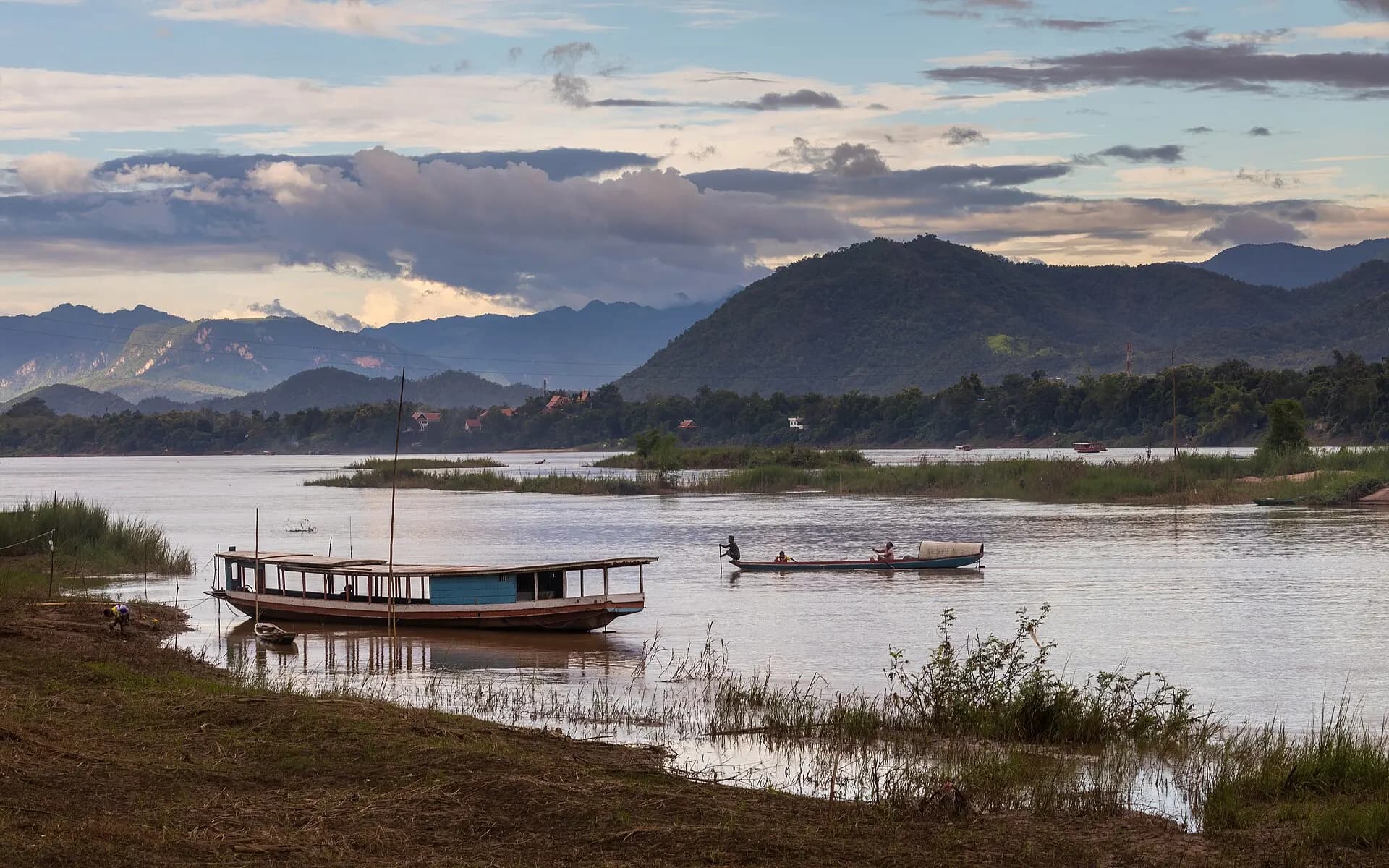
The riverside road along the Mekong is lined with cafés and restaurants, perfect for watching the sun go down over the hills on the far bank. Boats offer sunset cruises.
When to go
The cool, dry season from November to February is the most pleasant, with sunny days and cool mornings. March to May is hot, and the burning season can bring haze and poor air quality. The rainy season, from June to October, is green and quieter, with waterfalls at their fullest. Lao New Year, Pi Mai, in mid-April, is celebrated with water throwing and processions.
Getting around
The old town is compact and easily explored on foot or by bicycle. Tuk-tuks wait on the main streets for trips to the waterfalls and outskirts; agree the price first. Boats on the Mekong go to the Pak Ou Caves and further upstream.
Luang Prabang International Airport is a short drive from town. The Laos–China Railway links Luang Prabang with Vientiane in about two hours and with Vang Vieng, and slow boats travel down the Mekong from the Thai border over two days.
Local tips
- Check visa requirements; many visitors can get a visa on arrival or apply for an e-visa.
- Dress modestly and remove shoes before entering temples.
- Women should not touch monks or hand things to them directly.
- Respect the alms ceremony: watch quietly from a distance.
- Carry cash in kip; cards are not widely accepted outside larger hotels.
- Many businesses close early; bars and restaurants generally shut around 11 pm.
- Ask permission before photographing monks or villagers.
Eat and drink
Lao cooking is built on sticky rice, eaten with the hands, and fresh herbs. Try laap, a minced meat salad with herbs and lime; "or lam" (also spelled aw lam), a peppery stew with a woody, bitter herb; kaipen, crispy river weed with sesame; and Luang Prabang sausage. French colonial influence lives on in the town's bakeries and baguettes. Beerlao is the national beer, and fruit shakes are sold on every corner.
Where to stay
Most visitors stay on the peninsula, in guesthouses and boutique hotels in restored colonial villas and wooden houses, close to the temples, river and night market. Hotels on the far bank of the Nam Khan, reached by a bamboo bridge in the dry season, are quieter, and resorts in the hills outside town offer views over the mountains and rice fields.