Almaty
Kazakhstan's leafy former capital, where Soviet boulevards run straight up to snow peaks and canyons, desert dunes and alpine lakes lie a day's drive away.
- Best time to go
- May to June and September to early October for city walks, mountain lakes and canyons; December to March for skiing and skating; July and August are hot in town but ideal up high
- Local time
- –
- Currency
- Kazakhstani Tenge (KZT)
- Reading time
- 13 min
- Language
- Kazakh and Russian

Almaty sits on a gently sloping plain at the foot of the Trans-Ili Alatau, the northernmost wall of the Tien Shan, and almost every street seems to point uphill towards snow. It was Kazakhstan's capital until 1997, when the government moved north to Astana, and it is still the country's largest city, its commercial and cultural centre and by far its most relaxed place to visit. Wide avenues lined with poplars, elms and irrigation channels give it the feel of a garden city; the Soviet-era apartment blocks and modernist landmarks sit beside glass towers, coffee bars and a lively food scene.
What makes Almaty special, though, is how close it is to wild country. A bus ride takes you from the city centre to an Olympic-sized outdoor skating rink and a ski resort at over 3,000 metres. A couple of hours further out lie turquoise mountain lakes, a red-rock canyon often compared with the American south-west, petroglyphs listed by UNESCO and a sand dune that hums in the wind. The stops below run from the city centre into the mountains above it, then out on the classic loops: west to Tamgaly, and east through Altyn-Emel, Charyn and the Kolsai and Kaindy lakes. Allow three or four days for the city and the near mountains, and another three to four for the eastern loop.
The top 13 in Almaty
- 1
Green Bazaar
Photo: Bgag, CC0, via Wikimedia Commons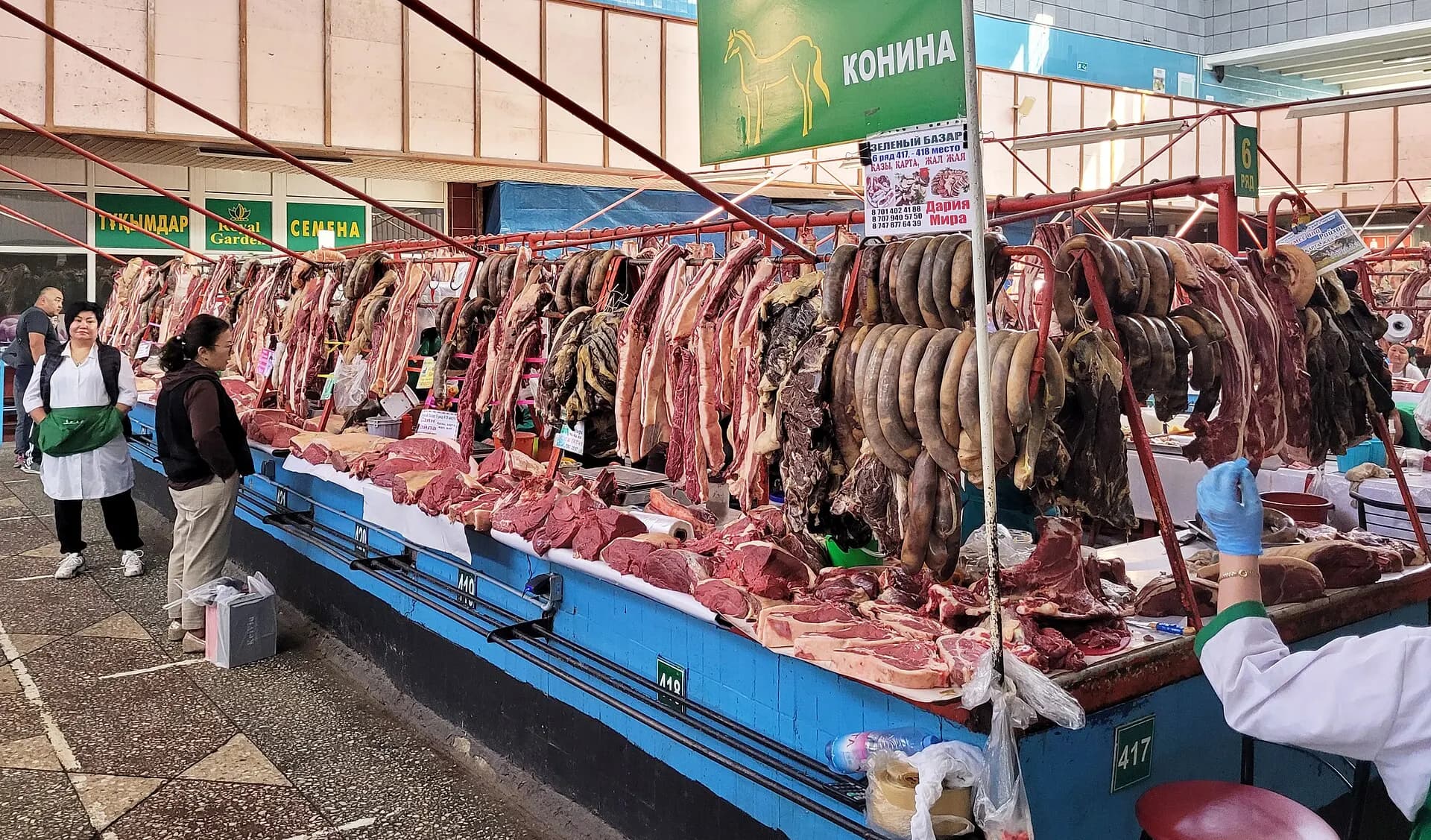
Almaty's main market, the Kok Bazar, fills a large Soviet-era hall and the streets around it a few blocks north of Panfilov Park. Inside, traders build careful pyramids of dried apricots, raisins, walnuts and Kazakh sweets, and the dairy section sells kurt, hard balls of dried salty cheese, alongside kumys, fermented mare's milk, and shubat, fermented camel's milk. The meat hall is not for the squeamish, with horse sausage (kazy) and cuts of every kind on display. Upstairs and outside, stalls sell spices, Korean salads brought by the Koryo-saram community deported here in the 1930s, and fresh bread.
TipTraders will happily offer tastes. Go in the morning, when it is busiest and freshest.
- 2
Panfilov Park and Zenkov Cathedral
Photo: Bgag, CC0, via Wikimedia Commons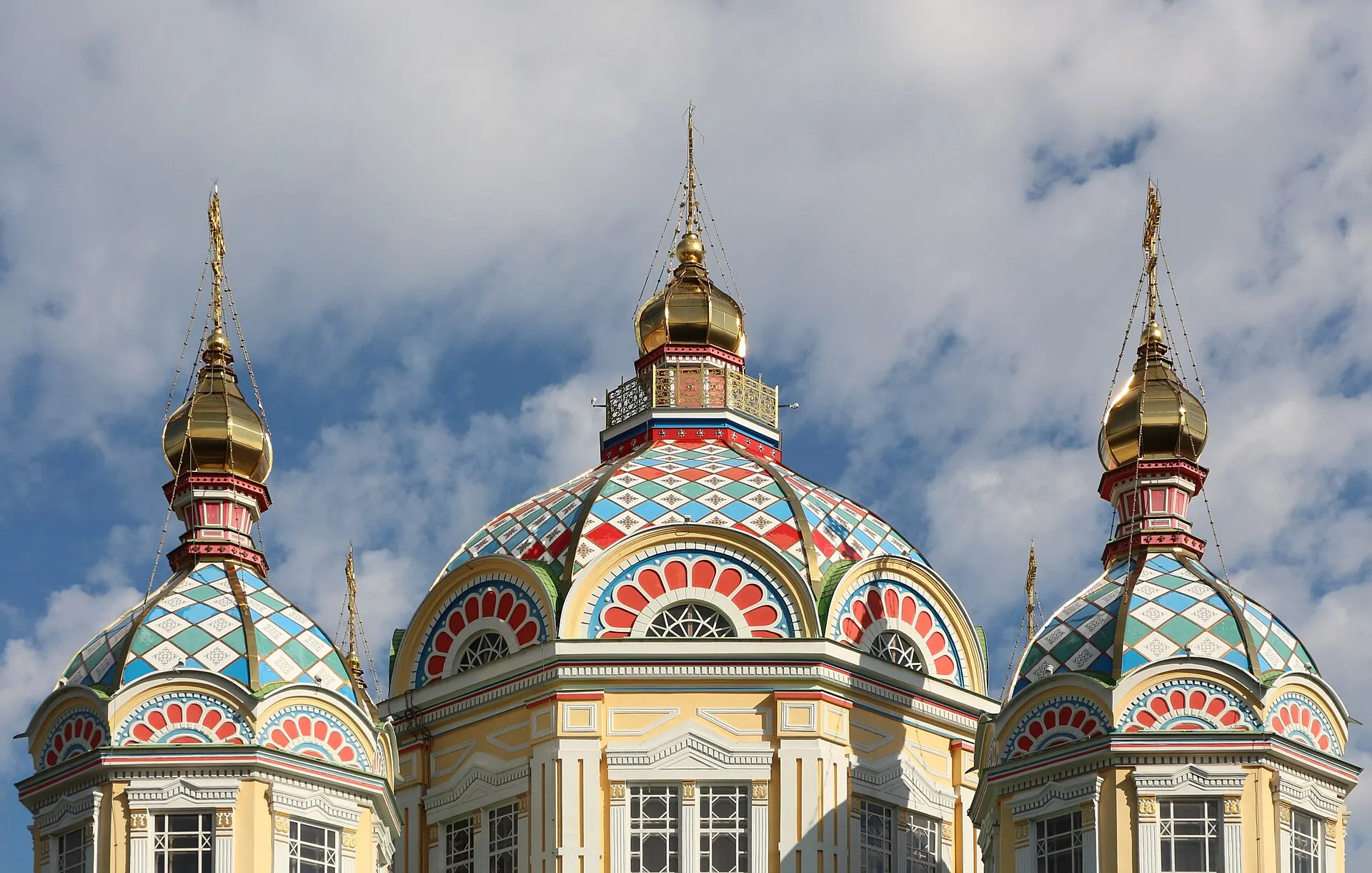
The city's favourite park is named after the 28 Panfilov Guardsmen, soldiers of a division raised in Almaty who were celebrated for defending Moscow in 1941. A huge bronze war memorial and an eternal flame stand at its eastern end. At its heart is the Ascension Cathedral, usually called Zenkov Cathedral after its architect, Andrei Zenkov: a tall Russian Orthodox church finished in 1907, built almost entirely of wood and painted in sweet-shop pinks, yellows and blues. It survived the earthquake of 1911 that flattened much of the town, and was later used as a museum and concert hall before returning to the church after independence.
On the same grounds, the Museum of Kazakh Folk Musical Instruments occupies another of Zenkov's wooden buildings and displays dombras, kobyz fiddles and other instruments, sometimes with live demonstrations.
TipCover shoulders and knees inside the cathedral; women may want a headscarf. Weekend afternoons, when families stroll the park, are the liveliest time.
- 3
Arbat (Zhibek Zholy)
Photo: Алексей Тараканов, CC BY-SA 2.0, via Wikimedia Commons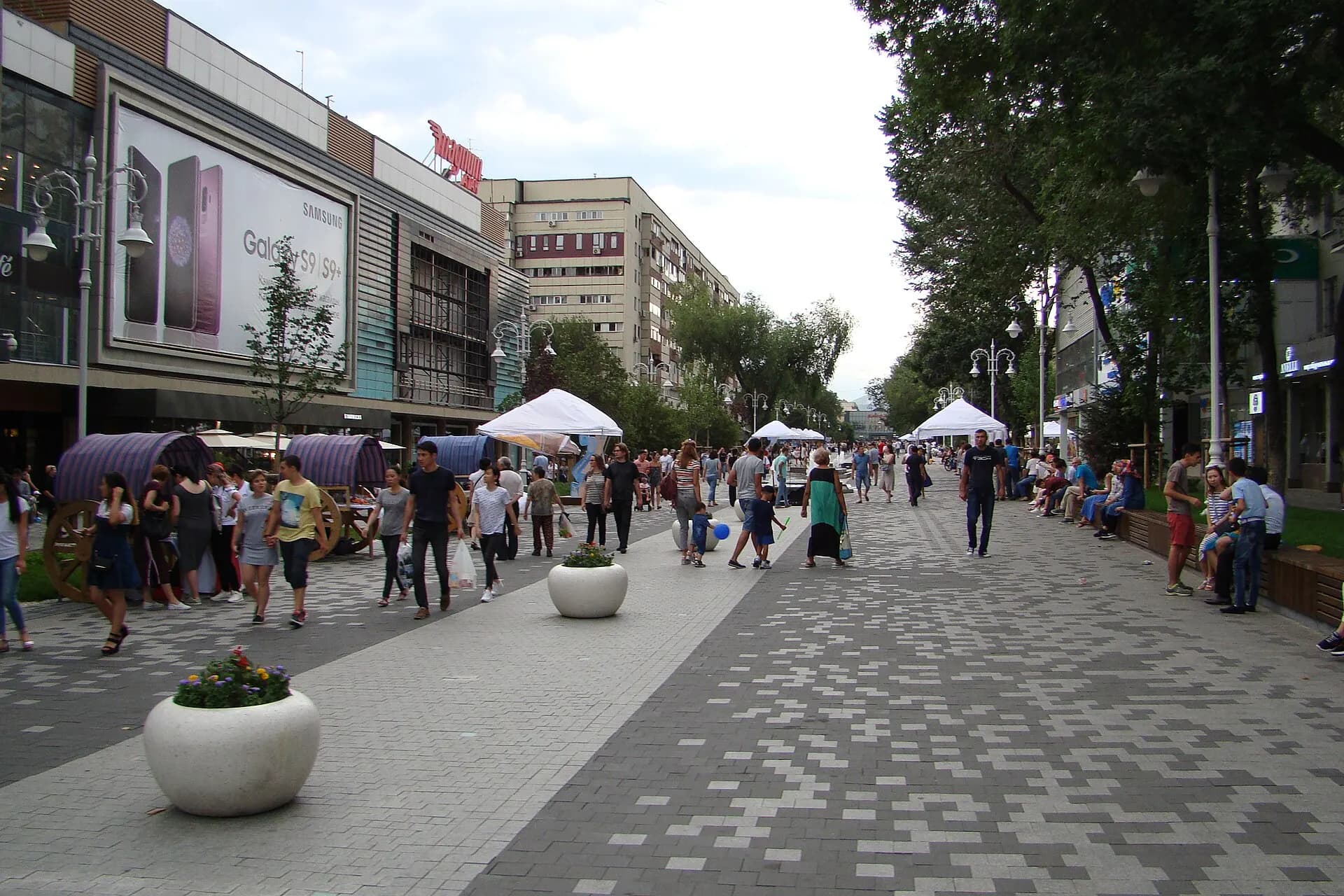
The pedestrian stretch of Zhibek Zholy, the "Silk Way" avenue, is known to everyone as the Arbat, after the famous street in Moscow. It runs west from near Panfilov Park past the TsUM department store, with buskers, portrait artists, souvenir sellers and cafés under the trees. It's a good place to get your bearings and to people-watch in the evening, and it links neatly with the market to the north and the old shopping streets around it.
- 4
Central State Museum
Photo: Interfase, Public domain, via Wikimedia Commons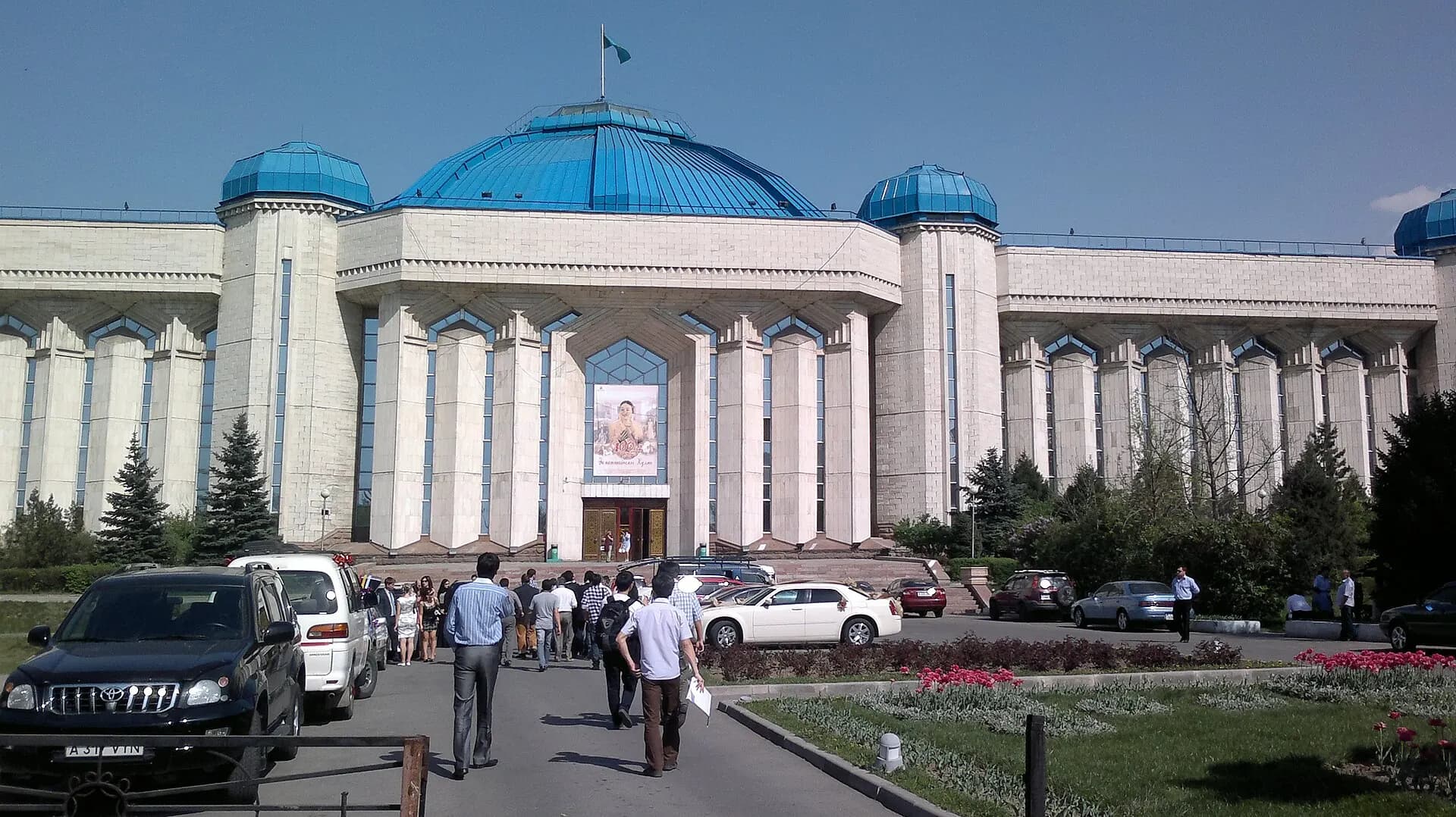
Kazakhstan's main history museum, in a large blue-domed building near Republic Square, is the best introduction to the country you'll be travelling through. Its galleries trace the region from Stone Age finds and bronze-age petroglyph art through the Saka nomads and their gold-adorned warrior burials, the Silk Road cities and the Kazakh khanates, to the Soviet period and independence. The ethnography rooms are a highlight, with a fully furnished yurt, saddles, jewellery and embroidered felt.
Republic Square itself, with its Independence Monument, is a short walk away and was the scene of the 1986 Zheltoqsan protests, an early crack in Soviet rule.
TipEnglish labelling is patchy in places; an audio guide or a local guide adds a lot.
- 5
Kok-Tobe
Photo: Edgarpo01, CC BY-SA 3.0, via Wikimedia Commons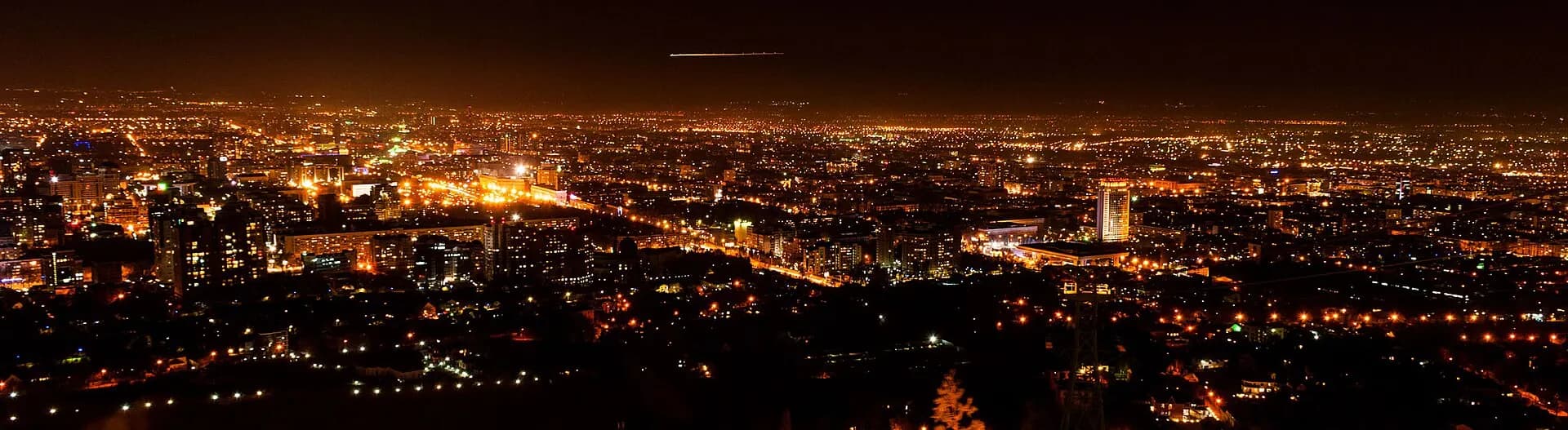
The "Green Hill" rises on the south-eastern edge of the centre, crowned by the city's television tower. A cable car climbs up from a station on Abay Avenue, beside the Palace of the Republic, in a few minutes, and there's also a road for buses and taxis. At the top are viewing terraces looking over the grid of the city and up to the mountains, a small amusement park, cafés and a statue of the Beatles, a long-standing local curiosity.
TipGo for sunset and stay as the city lights come on. On hazy days, especially in winter when smog settles over the basin, the views are best in the morning after rain or wind.
- 6
Medeu
Photo: Екатерина Борисова, CC BY-SA 4.0, via Wikimedia Commons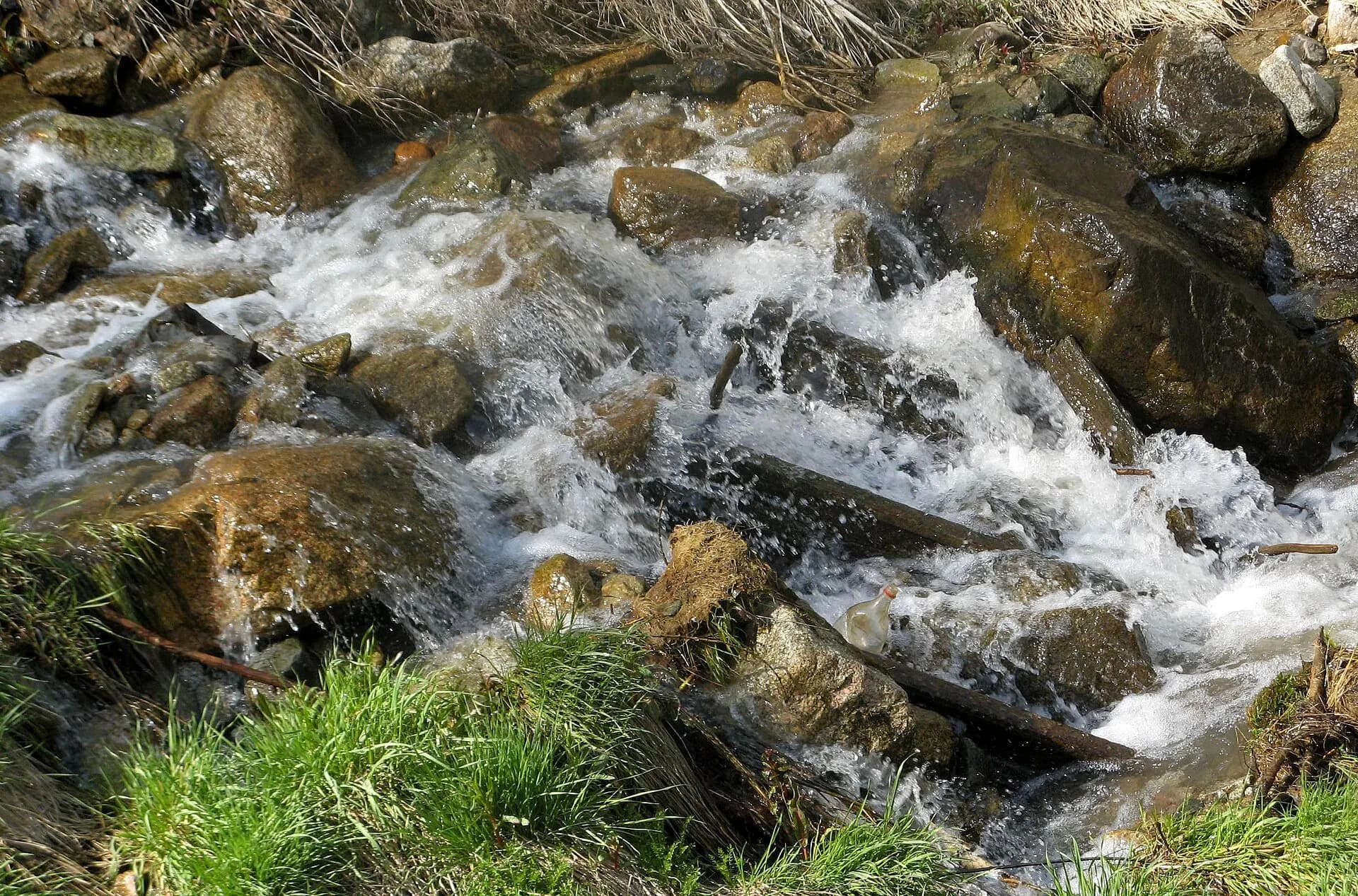
At around 1,700 metres in the Malaya Almatinka valley, Medeu is a vast outdoor speed-skating rink built in 1972, where dozens of world records were set in its heyday thanks to the thin air and mountain water used for the ice. In winter it is open to the public for skating, with skate hire and music, and it is one of the most atmospheric things to do in Almaty on a cold clear evening. Above it rises the huge mudflow dam, built after floods threatened the city; climbing its long staircase gives a fine view down the valley.
TipCity buses run from the centre to Medeu in about half an hour. In summer the rink hosts events rather than skating.
- 7
Shymbulak
Photo: Matti Blume, CC BY-SA 4.0, via Wikimedia Commons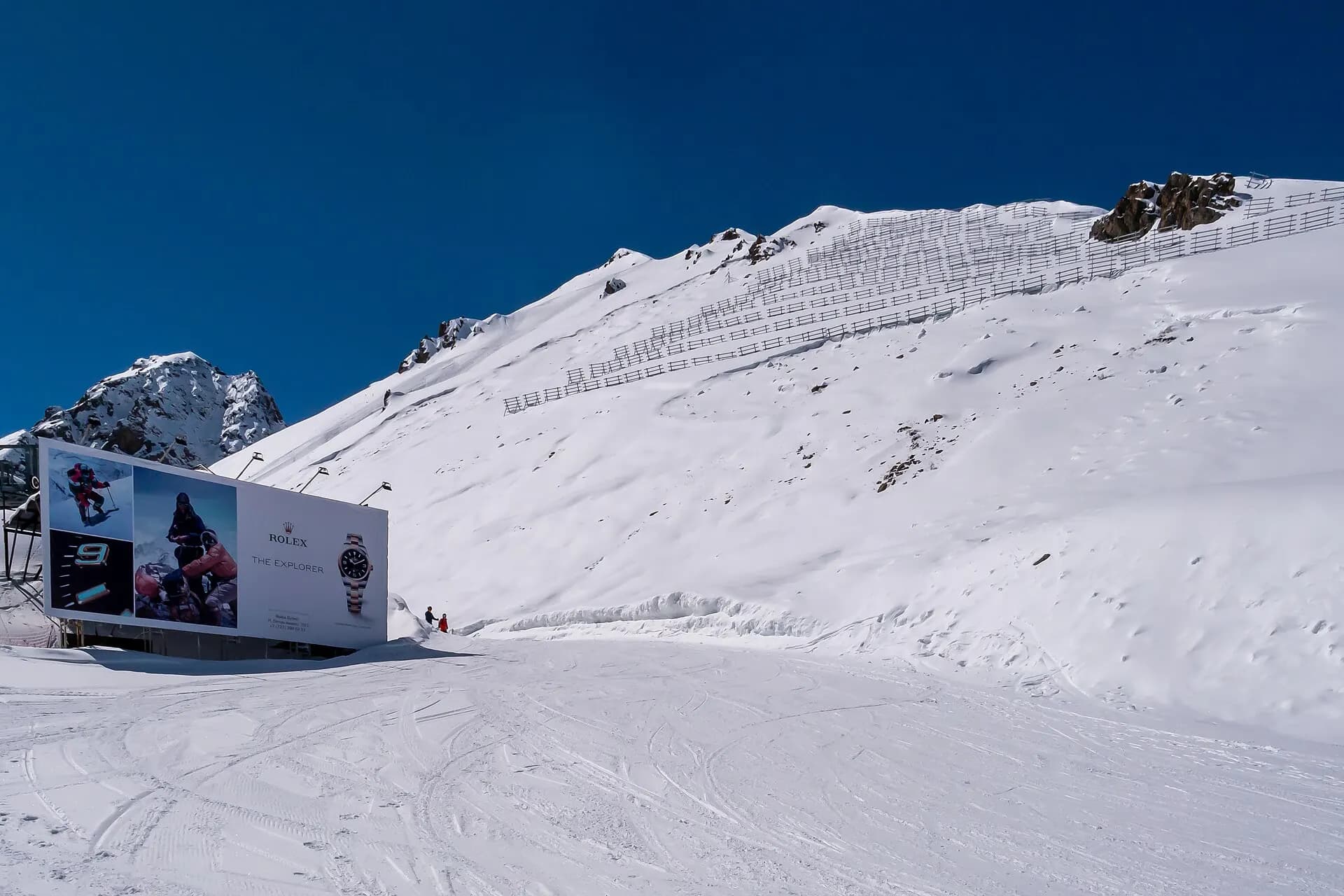
Central Asia's best-known ski resort sits above Medeu, reached by a long gondola that starts beside the skating rink. From the resort base at around 2,200 metres, further chairlifts and gondolas continue to the Talgar Pass, over 3,000 metres up, with sweeping views of glaciers and jagged peaks. In winter there are pistes for all levels, ski schools and equipment hire; from late spring to autumn the lifts carry walkers and sightseers, and the cafés at the top terraces are busy all year.
TipTickets are sold for each stage or as combined passes, and prices rise in the New Year holiday period; check the resort's website before you go. Bring warm layers even in summer, as the top station can be near freezing.
- 8
Big Almaty Lake
Photo: BitLord~ruwiki, CC BY-SA 4.0, via Wikimedia Commons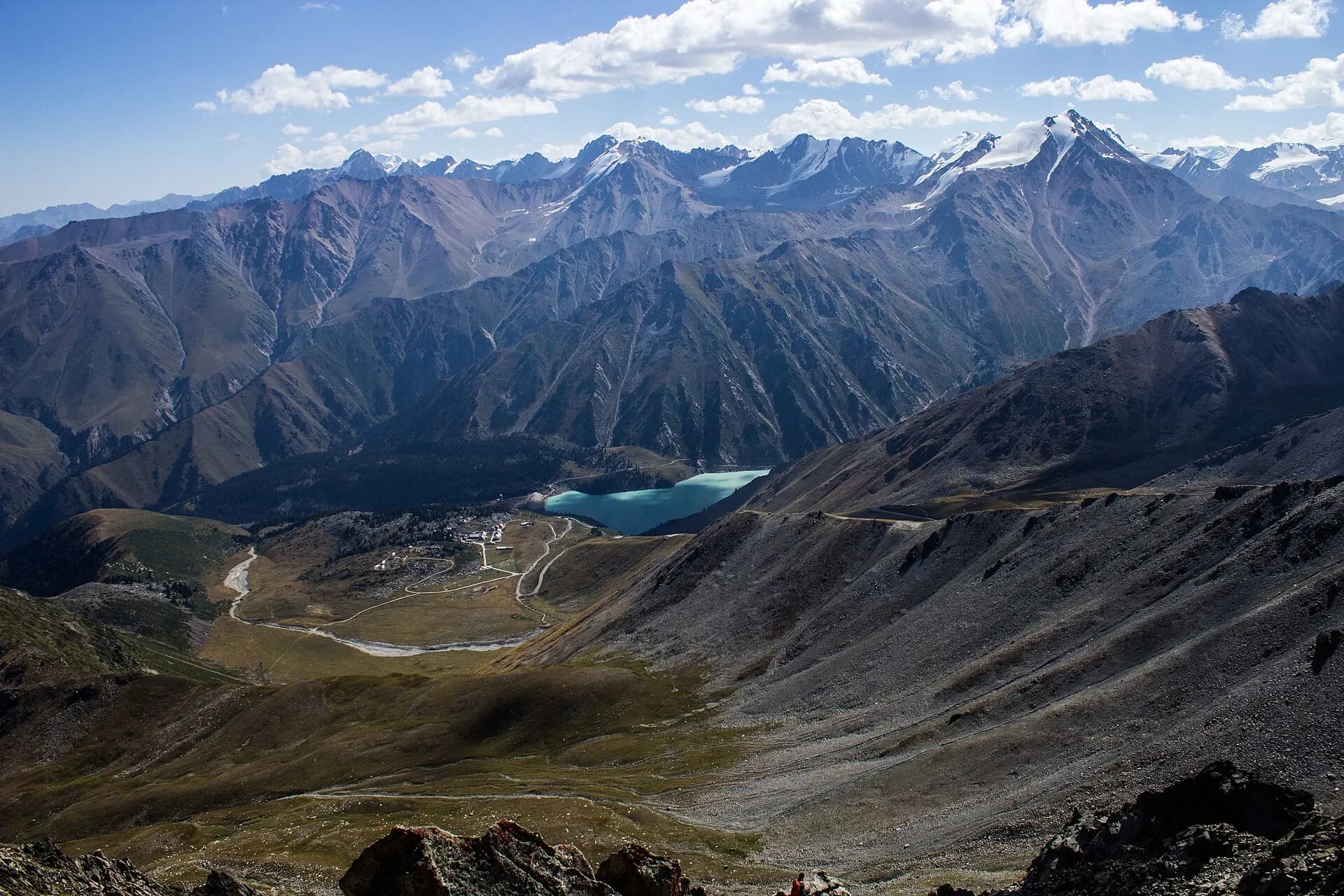
High in the Ile-Alatau National Park at around 2,500 metres, this reservoir is held back by a natural moraine and a dam, and its water changes colour through the day from milky green to deep turquoise, with the triple-peaked Sovetov mountains behind. It is one of the most photographed views in Kazakhstan and lies only about 30 kilometres from the city centre.
Access rules matter here. The lake is part of Almaty's drinking-water supply and lies close to the Kyrgyz border, so swimming, fishing, camping and fires are forbidden, and the shoreline is fenced in places. The road up passes a national park checkpoint, where an eco-fee is charged and passports may be checked. In recent seasons the authorities have restricted private vehicles on the upper road, and rules can change at short notice; check the national park's current guidance, or go with a licensed tour or registered taxi.
TipCarry your passport. Beyond the lake, a road climbs to the Tien Shan Astronomical Observatory and a pass on the border; going further requires a border permit.
- 9
Tamgaly petroglyphs
Photo: Stomac, CC BY 3.0, via Wikimedia Commons
About 170 kilometres north-west of Almaty, in a quiet gorge of dark rocks in the Chu-Ili hills, some 5,000 images were pecked into the stone over three thousand years, from the Bronze Age to the medieval period. The most famous show "sun-headed" figures, deities with rayed haloes, along with dancers, hunters, bulls, horses and chariots. UNESCO listed the site in 2004 as the Petroglyphs within the Archaeological Landscape of Tamgaly (now officially Tanbaly), which also includes ancient settlements, burial mounds and altars.
TipThere is little shade and no food at the site. Allow a full day by car and stick to the marked paths so you don't scuff the carvings.
- 10
Altyn-Emel and the Singing Dune
Photo: Sane4o, CC BY-SA 4.0, via Wikimedia Commons
Altyn-Emel National Park covers a huge stretch of semi-desert between the Ili river and the Dzungarian Alatau, now within the Zhetisu Region. Its best-known sight is the Singing Dune, a pale ridge of sand roughly 150 metres high and three kilometres long, set in a flat valley and, when the sand is dry and slides, giving off a deep hum like a distant aircraft. Further east are the Aktau mountains, chalky hills banded in white, ochre, red and green, and the darker Katutau volcanic outcrops. The park is also home to herds of goitered gazelles and reintroduced kulans, the Asiatic wild ass.
TipPermits are bought at the park office in Basshi village or online in advance. Distances inside the park are long and tracks are rough, so many visitors hire a 4x4 with driver in Basshi; carry plenty of water.
- 11
Charyn Canyon
Photo: dmccarhty, CC BY-SA 3.0, via Wikimedia Commons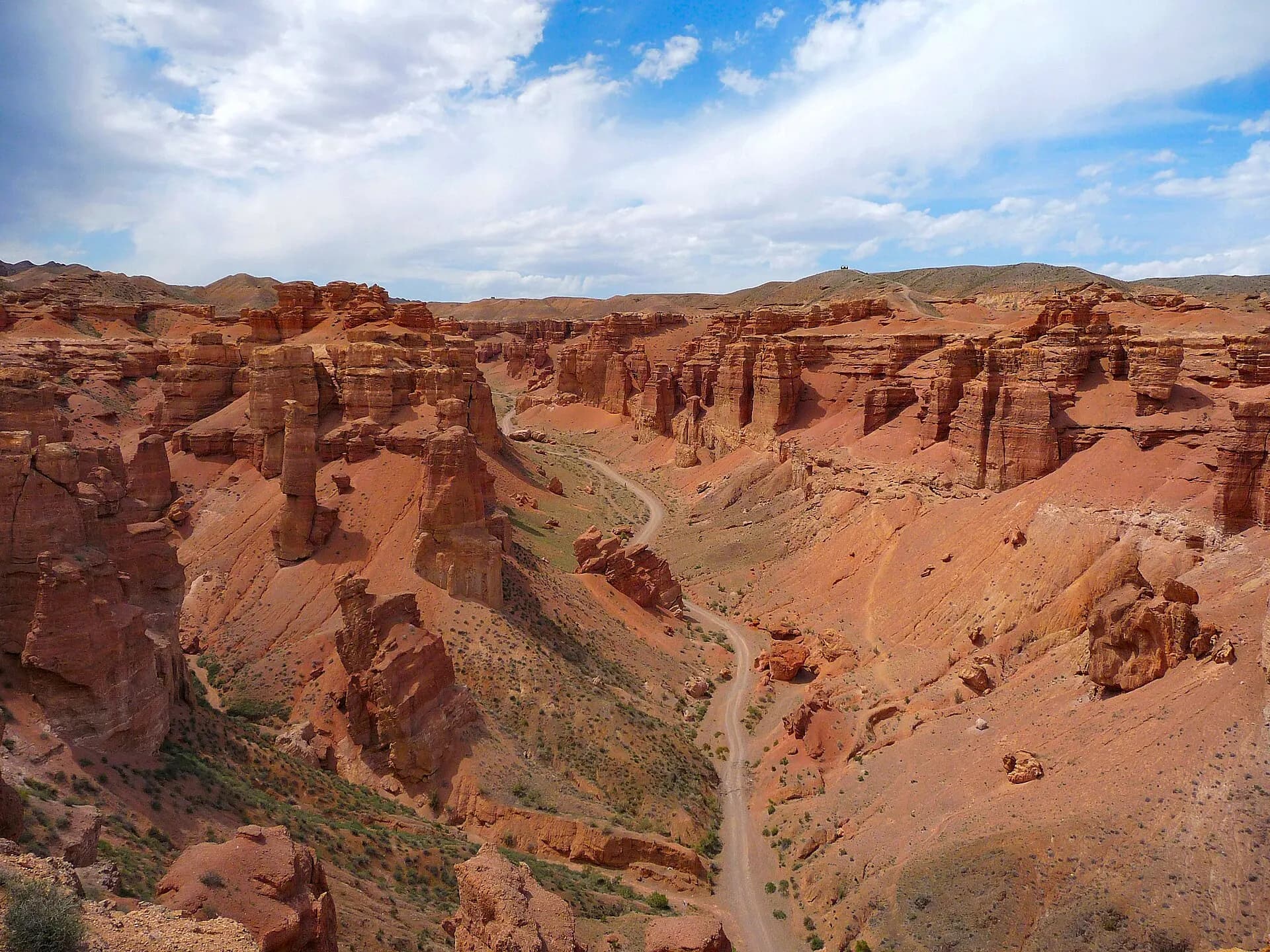
About 200 kilometres east of Almaty, the Charyn river has cut a deep canyon into soft red sediment. The most visited stretch, the Valley of Castles, is a walk of a couple of kilometres down a dry side gorge between towers, buttresses and fins of rock that glow orange in low sun, ending at the riverbank where there are basic eco-camps and cafés. The national park also protects a rare grove of Sogdian ash, a relict tree from before the last ice age.
TipAn eco-fee is charged at the entrance. The walk is easy going down but hot coming back up in summer; start early, wear a hat and bring water.
- 12
Kolsai Lakes
Photo: Dimash Kenesbek, CC BY-SA 4.0, via Wikimedia Commons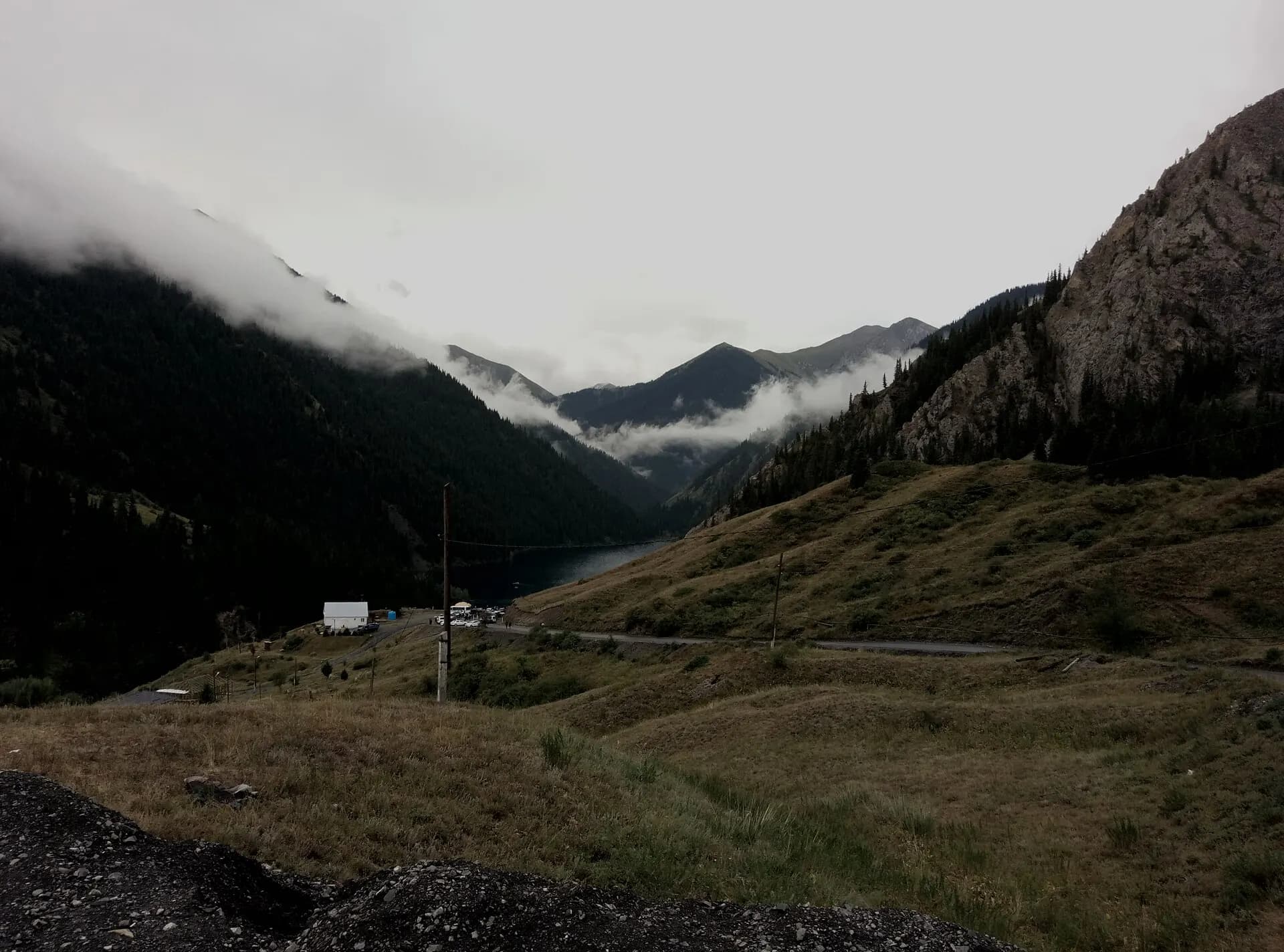
Three lakes step up a forested valley in the Kungey Alatau, close to the Kyrgyz border, surrounded by Tien Shan spruce and alpine meadows. The lower lake, reached by road, is the easy one, with a lakeside path, rowing boats and guesthouses in the nearby village of Saty. A marked trail, or a horse hired locally, leads up through the forest to the second lake, the largest, in a few hours; the upper lake lies higher still near the border and needs more time and, in places, permission.
TipIt's worth staying overnight in Saty, which makes the lakes and Kaindy a relaxed two days instead of a punishing return drive.
- 13
Kaindy Lake
Photo: Katariyakartikey, CC0, via Wikimedia Commons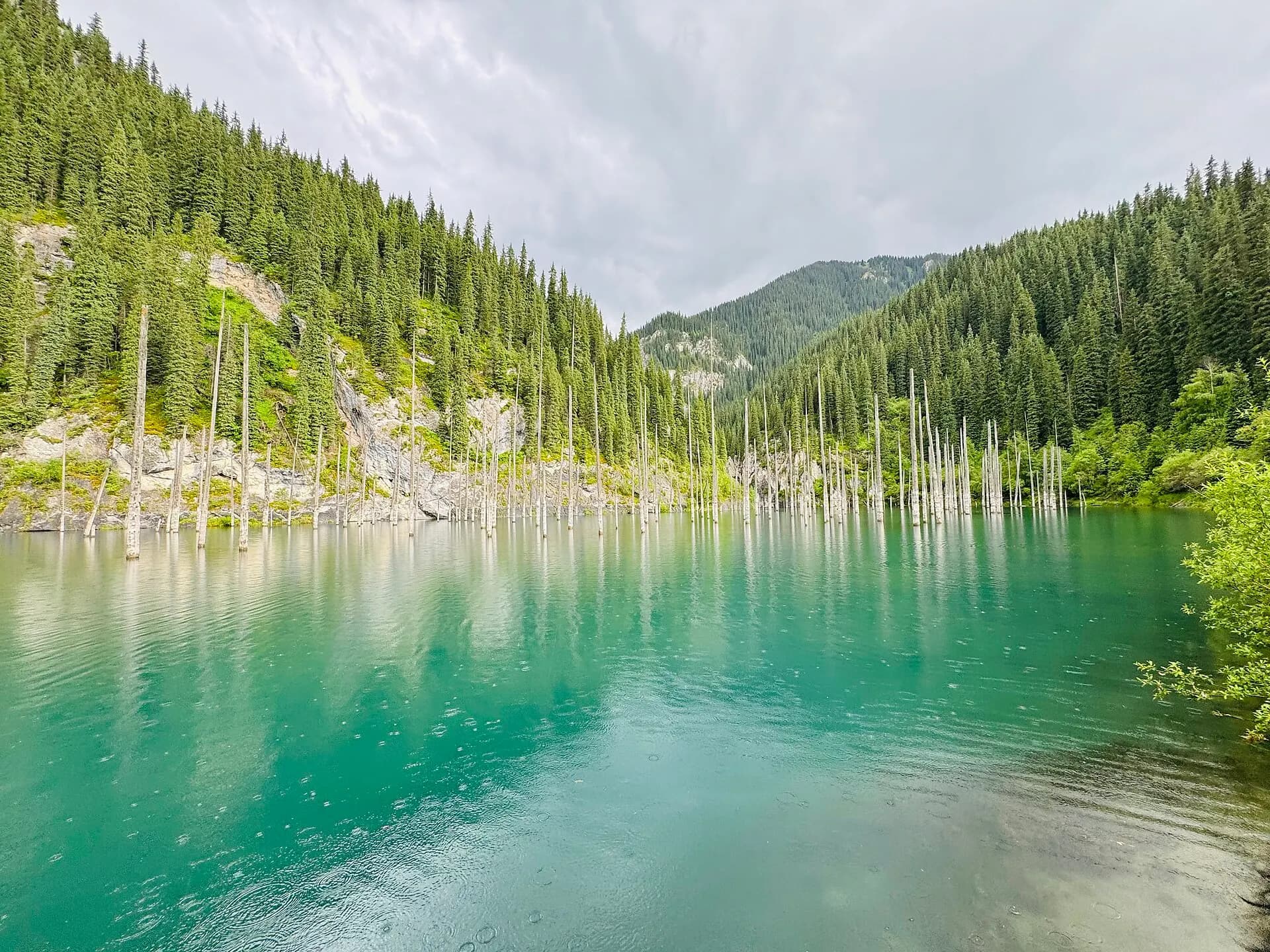
The strangest lake in the region formed after the earthquake of 1911, when a landslide dammed a narrow gorge and the rising water drowned a stand of spruce trees. Their bleached trunks still stand upright out of the cold blue-green water, the branches long gone beneath the surface. The last stretch of the track from Saty is very rough; visitors usually switch to local 4x4s or walk the final section, then descend a short steep path to the shore.
TipLight is best in the morning, when the water is calm and the trunks reflect clearly.
When to go
Almaty has a continental climate with real seasons. Spring (April to early June) is lovely in the city, with blossom and green parks, though the higher mountains keep snow until June. Summer (July and August) brings hot afternoons in town, often over 30°C, but it's the best season for the high lakes, Kolsai's upper trails and the Talgar Pass. Autumn (September to mid-October) is perhaps the best all-round time: golden poplars, settled weather, harvest fruit at the bazaar and comfortable temperatures for Charyn and Altyn-Emel, which are uncomfortably hot in midsummer.
Winter (December to March) is cold and often smoggy in the city basin, but clear and sunny above it, with skating at Medeu and skiing at Shymbulak. Remote roads to Kaindy and the upper valleys can be snowbound. The Nauryz spring festival on 21 to 23 March brings yurts, food stalls and music to the parks.
Getting around
Arriving. Almaty International Airport lies north-east of the centre, with flights across Central Asia, the Gulf, Turkey, Europe and Asia; a taxi booked through an app takes 30 to 40 minutes to the centre. Many nationalities, including citizens of the UK, the US, the EU, Australia and others, can currently visit Kazakhstan without a visa for a limited stay (often 30 days), but the list and limits change; check with the Ministry of Foreign Affairs or your nearest Kazakh embassy before travelling.
In the city. Almaty's single metro line runs under Abylai Khan and Abay avenues and is clean and quick, though it covers only part of the city. Buses go almost everywhere, including up to Medeu; fares are paid by bank card or with a transport card. Ride-hailing apps such as Yandex Go are cheap, widely used and avoid haggling. The centre is walkable, but remember that south means uphill and north means downhill, a handy way to stay oriented.
Beyond the city. There's little public transport to Charyn, Kolsai, Kaindy, Altyn-Emel or Tamgaly. Most travellers join a small-group tour, hire a car and driver, or rent a car; roads are generally good on the main routes but rough on the final approaches. Long-distance trains, including faster day services, link Almaty with Astana and Turkistan, and tickets are sold on the national railway's website. Buses and shared taxis run to Bishkek in Kyrgyzstan in about four to five hours, and there are flights and trains to Tashkent for onward travel in Uzbekistan.
Local tips
- The currency is the tenge. Cards are accepted almost everywhere in the city, but carry cash for markets, villages, guesthouses and park fees.
- Russian is widely spoken in Almaty alongside Kazakh; English is less common outside hotels and younger crowds, so a translation app helps.
- Carry your passport when heading into the mountains or near the Kyrgyz and Chinese borders; checkpoints are common.
- Many national parks charge a small eco-fee per person and per vehicle; keep the receipt until you leave.
- Mountain weather changes fast, and mudflow and avalanche warnings are taken seriously. Check forecasts, and don't hike alone in the high valleys.
- Tea is the centre of Kazakh hospitality. If you're invited home, bring a small gift, and expect your cup to be topped up repeatedly; turning it over or leaving a little signals you've had enough.
- Smog can be heavy in winter. If air quality matters to you, spend time up at Medeu, Shymbulak or Kok-Tobe on bad days.
Eat and drink
Kazakh cooking comes from the nomadic table and centres on meat, especially mutton and horse. The national dish, beshbarmak, is boiled meat served over broad flat noodles with onion broth, traditionally eaten by hand at celebrations. Look for kazy and shuzhuk, horse-meat sausages, plov, rice cooked with carrots and meat, manty, large steamed dumplings, and baursak, puffy fried dough served with tea. Lagman, hand-pulled noodles, comes from the Uyghur kitchen, which is strong in Almaty and the east; samsa and shashlik grilled over charcoal are everywhere.
Almaty also claims to be the home of the apple: wild apple forests still grow in the foothills, and the city's very name is often linked to the Kazakh word for apple. In autumn the bazaar fills with apples, pears and melons. Coffee culture is lively, and Kazakh brandy and beer are widely available, while adventurous visitors can try kumys or shubat.
Where to stay
The Golden Square, the grid of streets between Abay, Furmanov, Zheltoksan and Satpaev, is the most convenient base, close to the metro, parks, restaurants and cable car to Kok-Tobe. Around Panfilov Park and the Arbat you'll find cheaper hotels and hostels within walking distance of the bazaar. Hotels higher up along Al-Farabi Avenue are quieter and closer to the mountains, and staying at Shymbulak itself is popular in ski season. For the eastern loop, simple guesthouses in Saty (for Kolsai and Kaindy) and Basshi (for Altyn-Emel), and the eco-camps at Charyn, save hours of driving.
A brief history
The foothills of the Trans-Ili Alatau were settled by Saka nomads, whose gold-adorned burial mounds have been found across the region, and later lay on branches of the Silk Road. The modern city began in 1854 as the Russian fort of Verny, which grew into a garden town of wide streets planted with trees. Earthquakes in 1887 and 1911 levelled much of it, which is why Zenkov's resilient wooden buildings became so celebrated.
Renamed Alma-Ata in 1921, the city became the capital of Soviet Kazakhstan in 1929, and grew with evacuated factories and people during the Second World War and with ambitious modernist buildings afterwards. The Zheltoqsan protests of December 1986 were among the first open challenges to Soviet rule. Kazakhstan declared independence in December 1991, and in 1997 the capital moved to Astana, leaving Almaty free to become the country's business and cultural hub.
Longer trips: Astana and Turkistan
Kazakhstan is the ninth-largest country in the world, and Almaty is only one corner of it. Astana, the capital, rises from the northern steppe about an hour and a half away by air or overnight by train, a showcase of futuristic architecture: the Baiterek observation tower, the glass pyramid of the Palace of Peace and Reconciliation and the giant Khan Shatyr tent. In the south, Turkistan is home to the great unfinished Mausoleum of Khoja Ahmed Yasawi, commissioned by Timur in the late fourteenth century and listed by UNESCO, a major pilgrimage site whose turquoise dome rivals the monuments of Uzbekistan, just across the border. Trains link both cities with Almaty, and Turkistan combines neatly with an onward trip to Tashkent and Samarkand.
Responsible travel
The mountain lakes and canyons are fragile and increasingly popular. Take all rubbish back with you, as bins are few and wind scatters litter far across the steppe; stay on paths at Kaindy, Charyn and Big Almaty Lake, where erosion is visible; and never climb on or touch the Tamgaly carvings. Respect the ban on swimming and camping at Big Almaty Lake, which supplies the city's water. Keep a distance from wildlife in Altyn-Emel and don't drive off the tracks, which scars the desert for decades. Pay park eco-fees, which fund rangers, and spend money in local guesthouses in Saty and Basshi, where tourism is an important source of income.